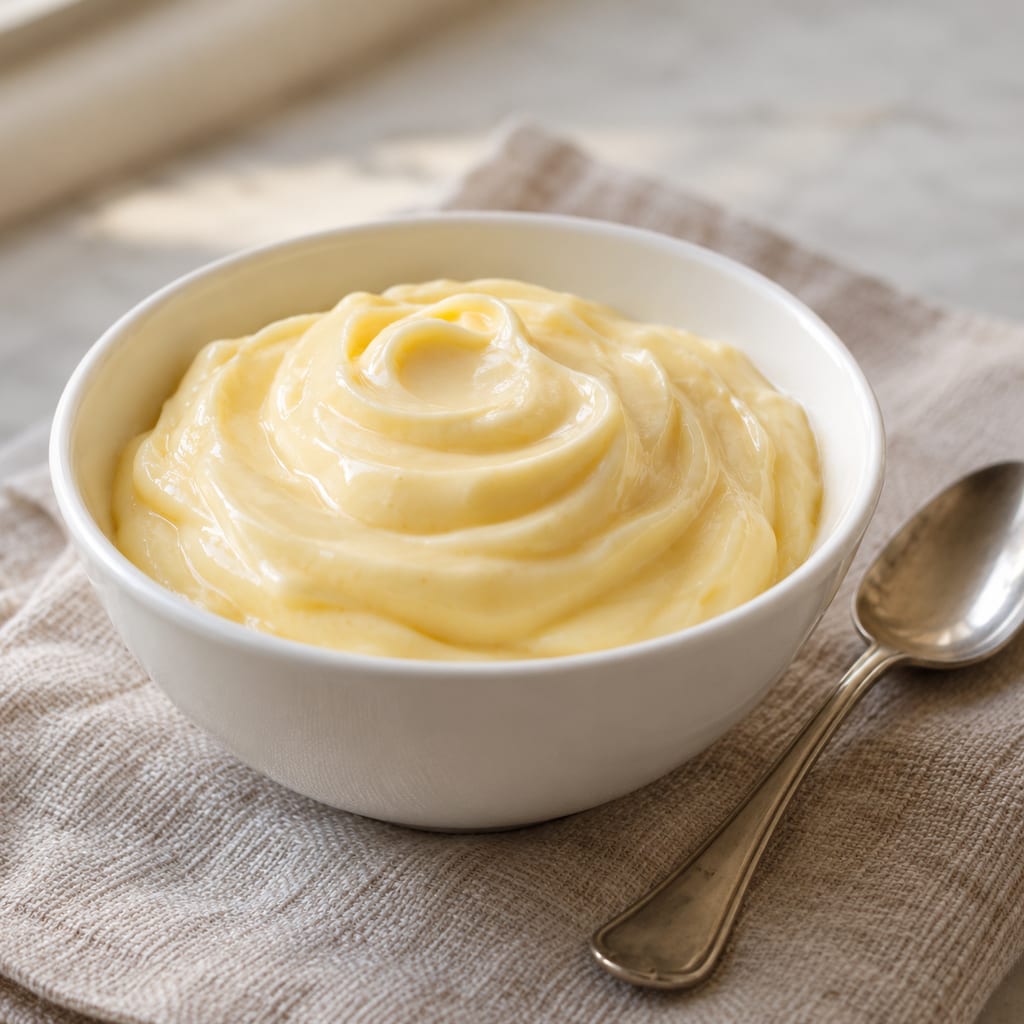
Cooked mayonnaise
A cooked-yolk mayonnaise documented in the University of Tennessee Extension’s 2007 Egg University Handbook. The egg mixture is heated before oil is emulsified into it.
 FermenteaWhere food goes to change
Modern method
An untested 265 g garlic mayonnaise made by whisking pasteurised yolk with vinegar, water and Dijon, then slowly emulsifying neutral oil with mild extra-virgin olive oil.
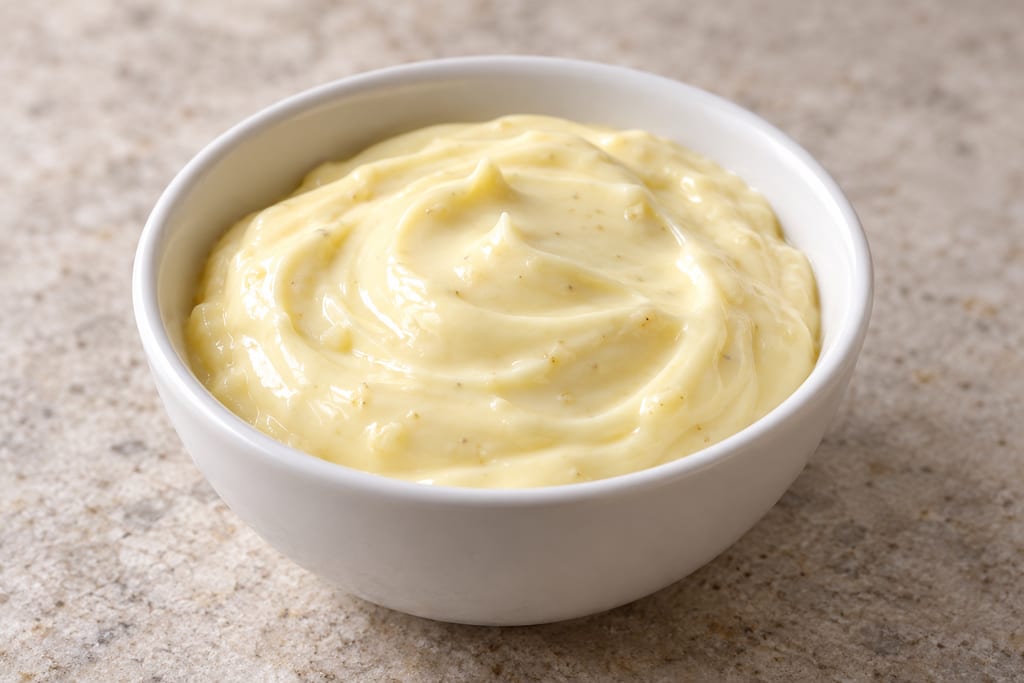
This is a modern, untested garlic mayonnaise formula derived from the report's neutral mayonnaise development. It combines neutral refined oil with mild extra-virgin olive oil, uses pasteurised yolk as the egg component, and folds in fresh crushed garlic after the emulsion forms. The listed yield is nominal, and the formula has not been kitchen-tested, sensory-validated or evaluated for shelf life.
The name and ingredients invite comparison with allioli, but this record describes an egg-yolk mayonnaise with garlic. El Comidista distinguishes a traditional Catalan-style allioli made from garlic and oil in a mortar from a blender version containing yolk, which it describes as garlic mayonnaise. That article supplies a useful distinction; it does not establish a place or historical date for this particular formula. Its origin and earliest attestation remain unknown.
The recipe begins with a water-based mixture of vinegar, drinking water, salt, yolk and Dijon. The first small portion of oil is whisked in gradually; once the mixture looks glossy and cohesive, the remaining neutral oil and then the olive oil are added in thin streams. This follows the gradual-addition approach in the cited mayonnaise method. The recipe then stirs the crushed garlic into the formed emulsion, so the garlic is distributed through the finished sauce rather than blended into the starting liquid. Use a stable bowl and whisk so both hands can control the oil stream.
The formula assigns most of the oil to a neutral refined oil and a smaller share to mild extra-virgin olive oil. The intended effect is a less assertive base with a distinct olive-oil note; this is a prediction from the listed ingredients, not a tasting result. Fresh garlic is measured at 3 g, with 1 g offered as a gentler starting point for a later development batch. Sugar is omitted. No version of this exact formula has been tasted or compared, so the likely balance between garlic, acidity, salt and olive oil remains unconfirmed.
This is an uncooked egg preparation. FDA guidance recommends pasteurised egg products for recipes served raw or undercooked, which is why the formula specifies commercially pasteurised yolk. Clean utensils and equipment before and after contact with egg-containing foods. Refrigerate perishable food promptly and keep the refrigerator at 4°C or below, following general FoodSafety.gov guidance. That advice does not provide a shelf-life limit for this recipe: no final pH, pathogen reduction or storage duration has been validated. The vinegar quantity is a flavour-formula amount, not a tested preservation step. Do not can or store this sauce at room temperature.
This is an untested modern house formula derived from a neutral mayonnaise development. El Comidista distinguishes traditional Catalan-style allioli made with garlic and oil from blender garlic mayonnaise containing yolk; that comparison does not date or locate this exact formula.
Yield 265 g nominal · Scaling: source batch only
The yolk is not cooked in this sauce, so contamination in an untreated egg can remain relevant.
Hazard sourceThis freshly prepared uncooked sauce has no measured microbiological shelf-life or validated final pH.
Hazard sourceUse commercially pasteurised egg yolk in this uncooked preparation.
Control sourceKeep clean utensils and equipment; promptly refrigerate the perishable sauce at 4°C or below. This is general cold-handling guidance, not a recipe-specific shelf-life validation.
Control sourceUntested development formula: not kitchen-tested, sensory-validated or shelf-life tested.
The added vinegar amount is not evidence of a measured pH or pathogen kill.
Do not can or store at room temperature. Discard timing for this specific formula has not been validated.
This modern untested formula is not given a traditional origin. The cited article describes Catalan-style allioli separately; it does not locate this exact formula.
A cooked-yolk mayonnaise documented in the University of Tennessee Extension’s 2007 Egg University Handbook. The egg mixture is heated before oil is emulsified into it.
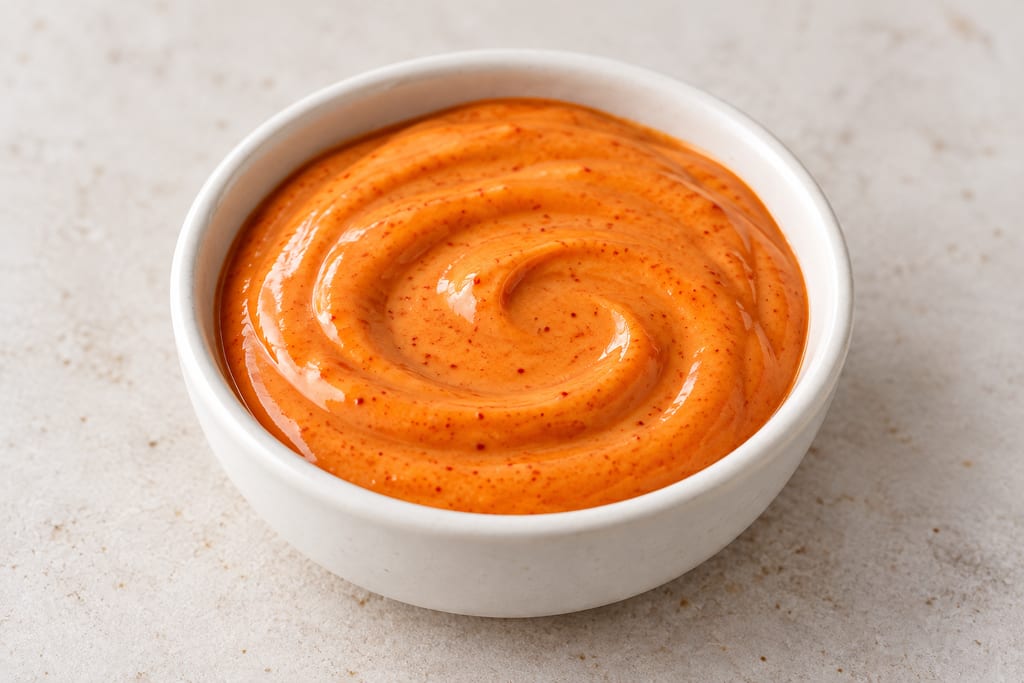
A contemporary, untested mix of finished mayonnaise, gochujang and rice vinegar, with starting amounts per 100 g mayonnaise.
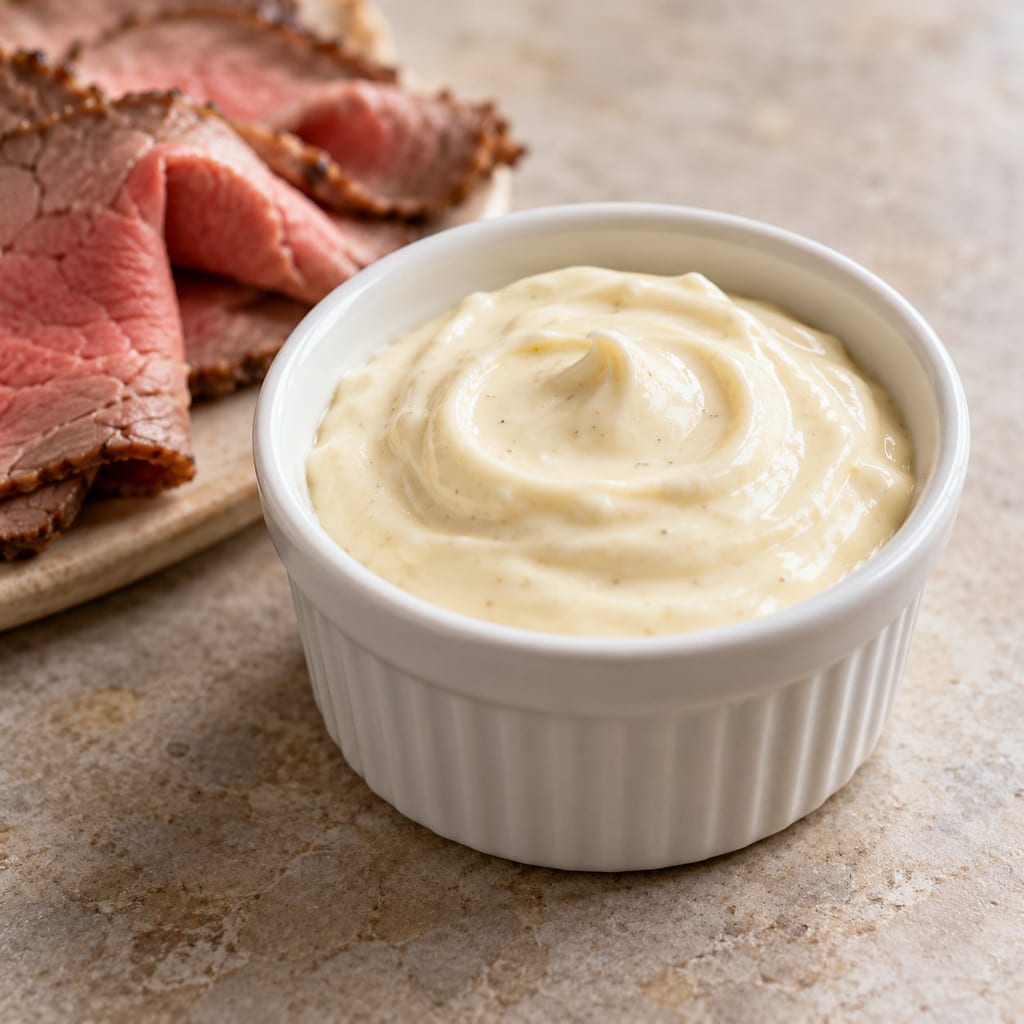
Prepared horseradish and lemon sharpen finished mayonnaise into a fresh accompaniment for roast meat or fish; the archived ratio has not been tested.
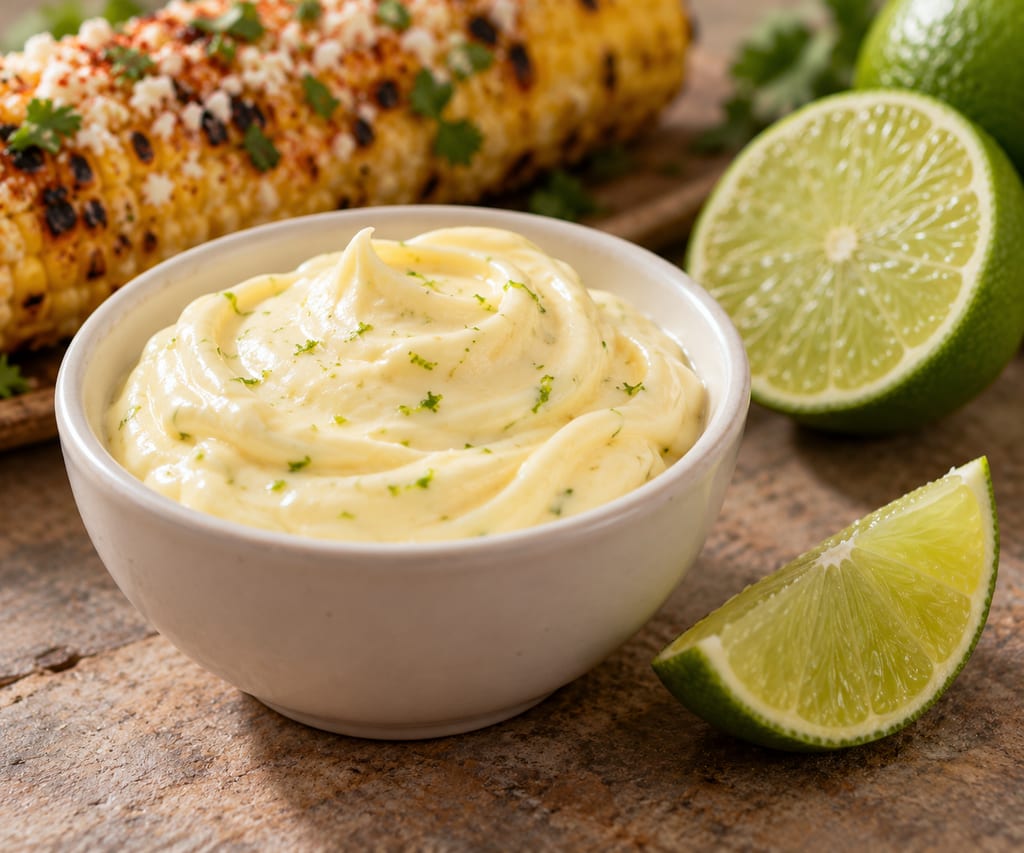
An untested mayonnaise variation that replaces part of a neutral base’s vinegar with lime juice and finishes with optional lime zest.
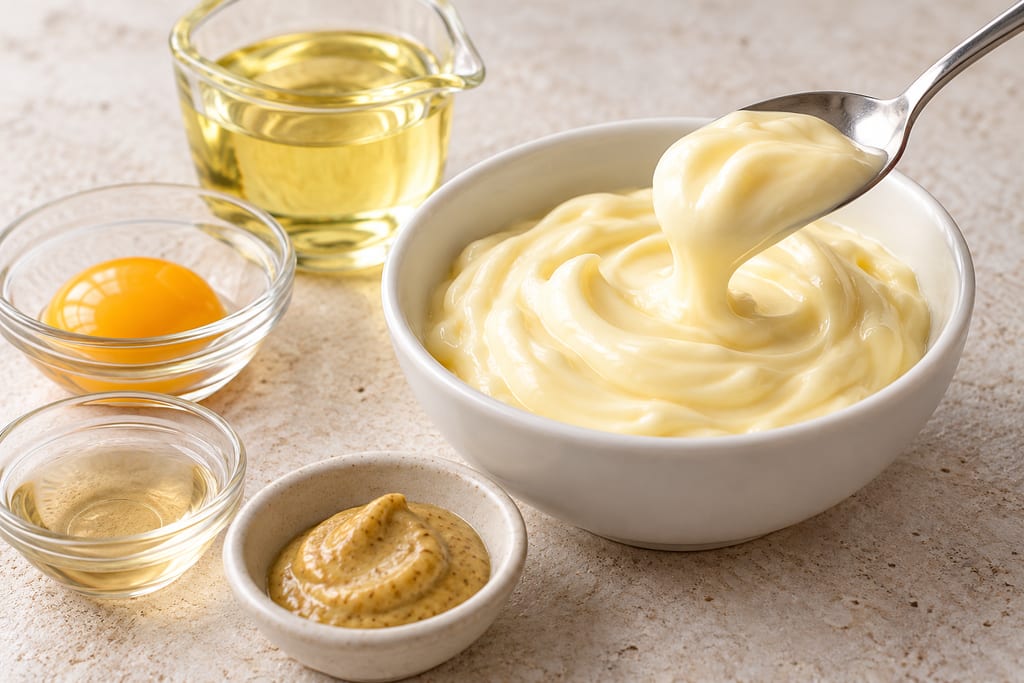
A plain mayonnaise of 200 g refined neutral oil emulsified into pasteurised yolk, vinegar, water and a little Dijon mustard: a clean base for tasting, comparing and flavouring.
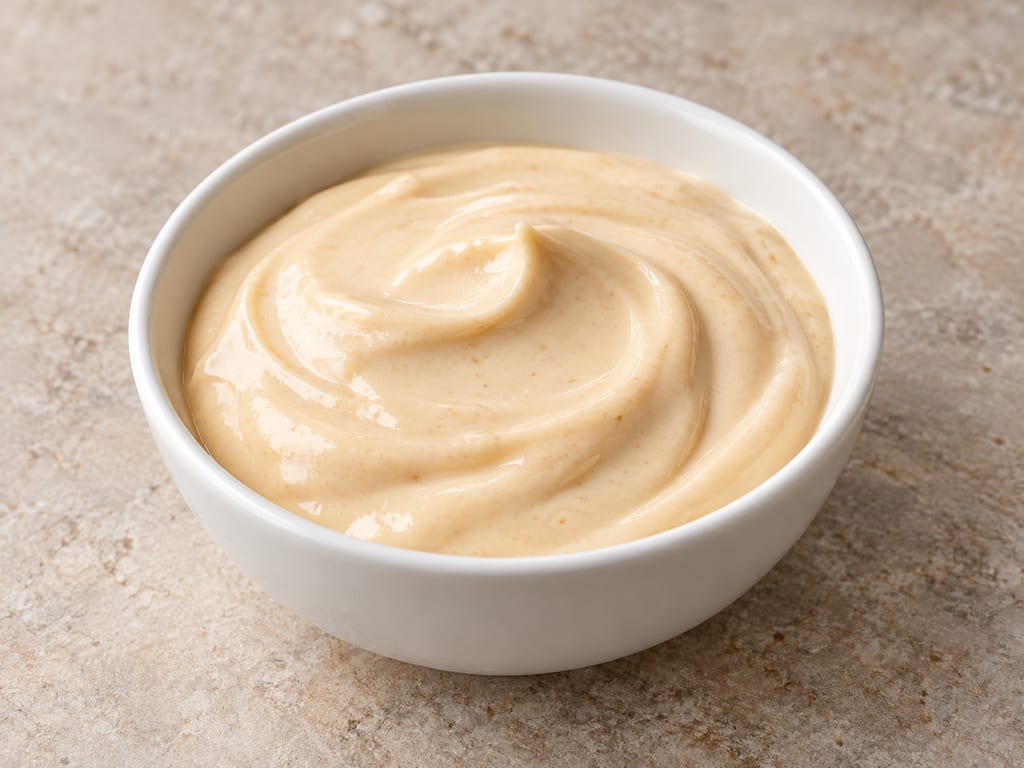
A sesame-forward, fresh sauce made by mixing tahini, toasted sesame oil and rice vinegar into finished mayonnaise; the archived amounts are untested starting points.
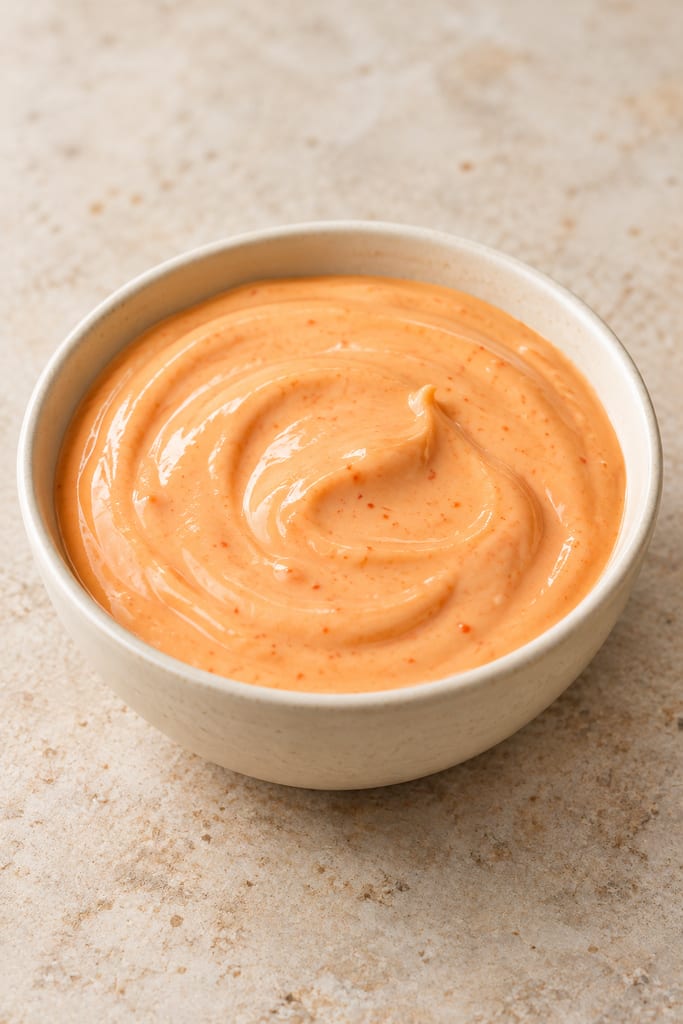
A contemporary, untested mix of finished mayonnaise, sriracha and lime juice, with starting amounts per 100 g mayonnaise.
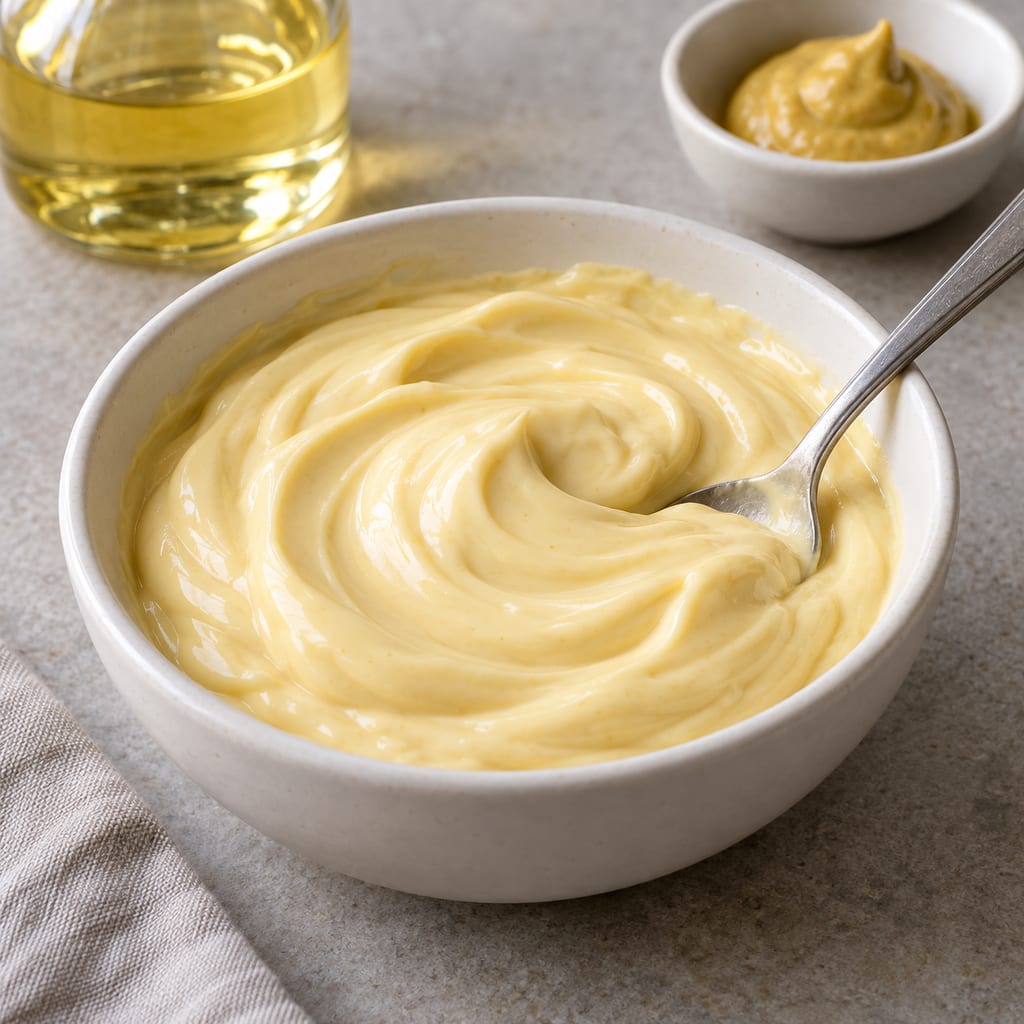
An untested mayonnaise variation made with refined sunflower oil and more Dijon mustard than a neutral base.
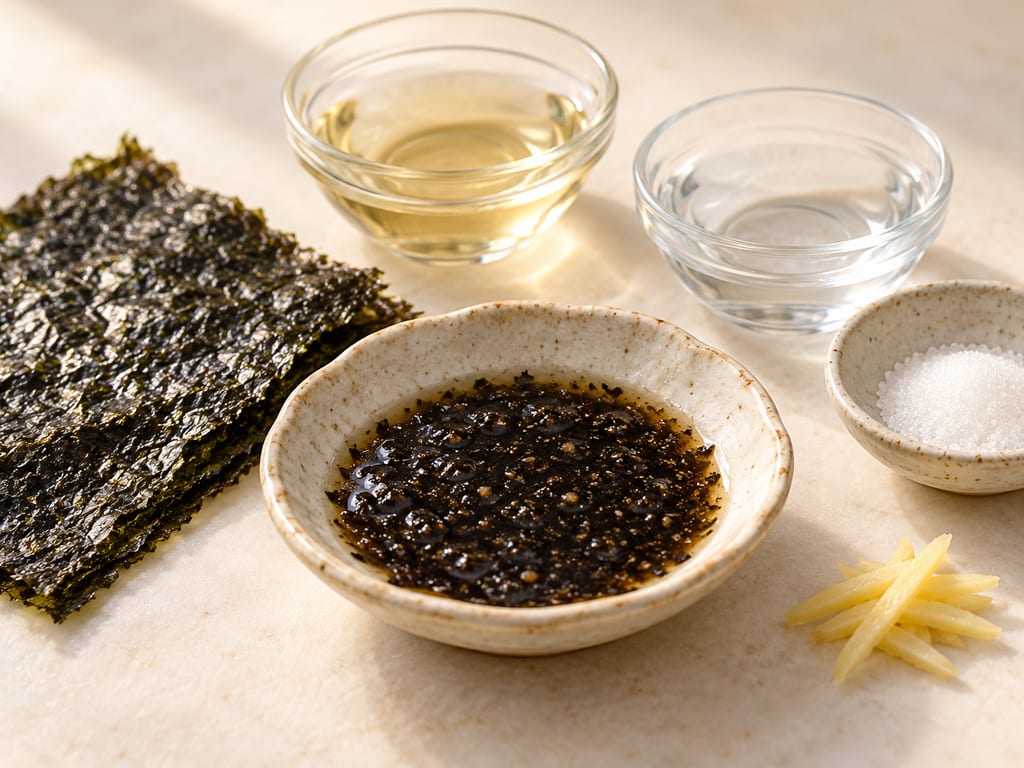
A fresh condiment in which crumbled nori softens in lightly sweetened vinegar and water. It is not vinegar fermented from seaweed.
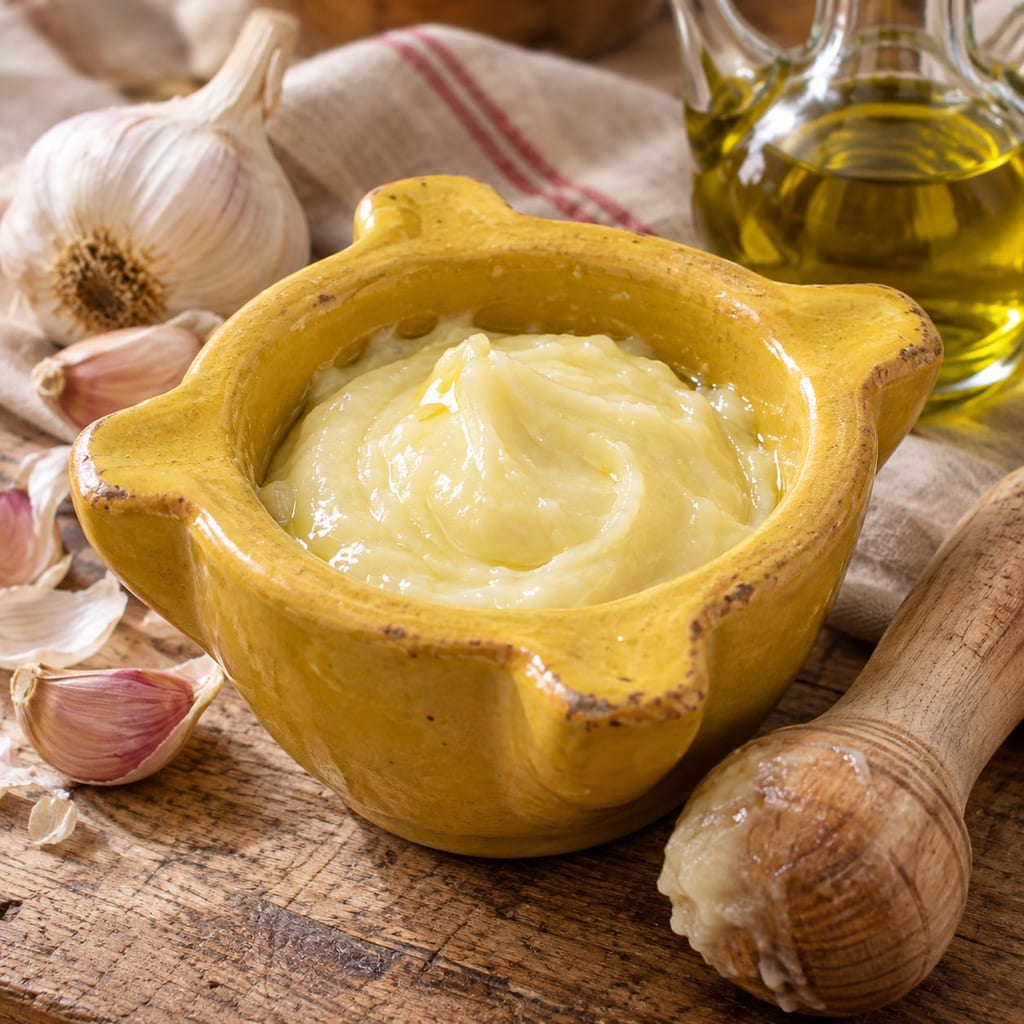
Traditional Catalan allioli is a dense emulsion of garlic, olive oil and salt made slowly in a mortar. This measured Barcelona-style version keeps egg-based garlic mayonnaise distinct.
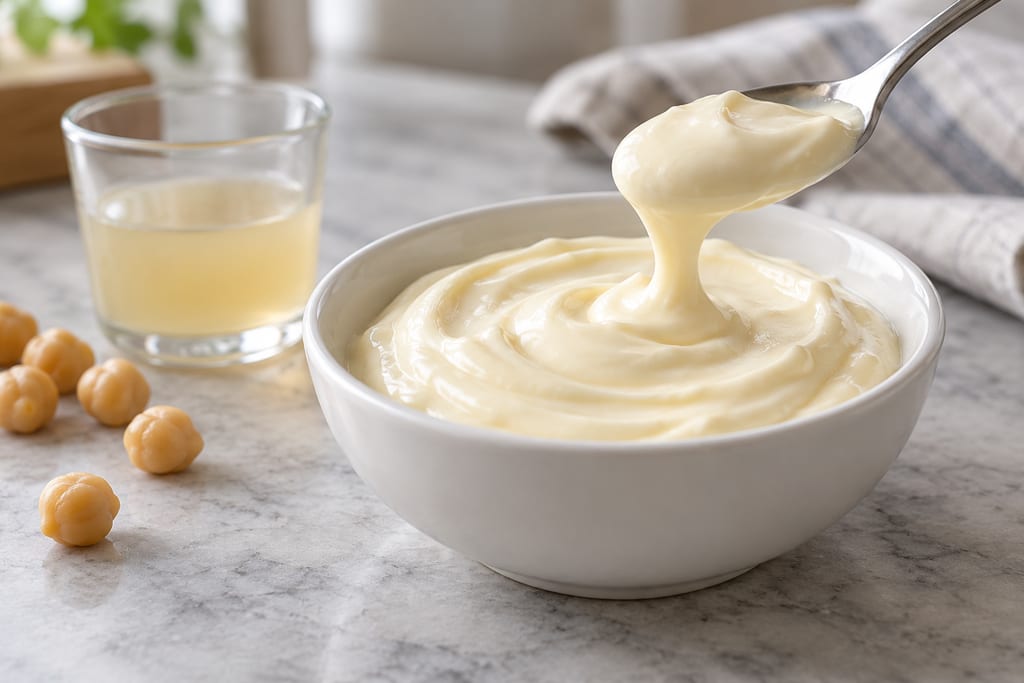
An eggless, untested emulsion made with canned chickpea liquid. Nominal yield 255 g.
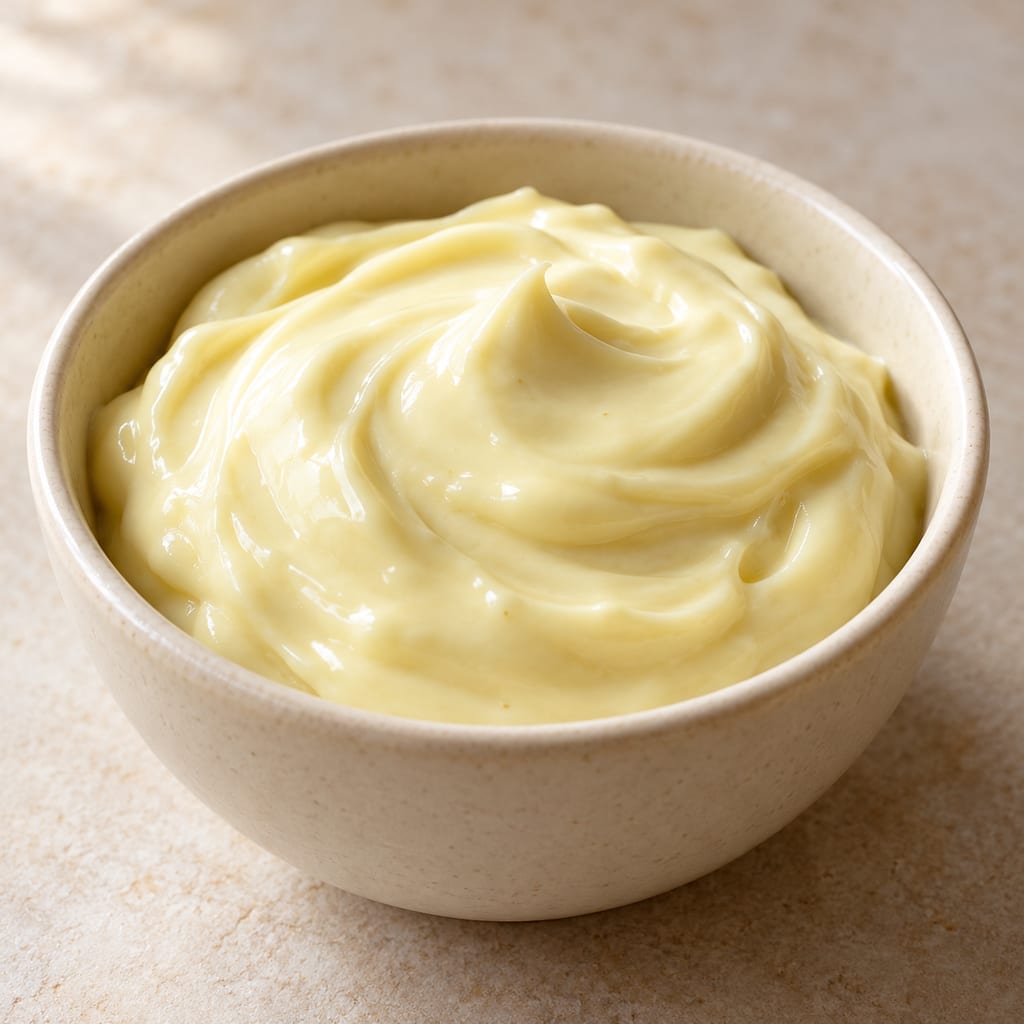
Avocado-oil mayonnaise is an ordinary egg-and-oil emulsion in which avocado oil supplies the oil phase. The oil changes flavour and colour, and it does not preserve the sauce.

Bechamel is a white sauce of milk thickened with a butter and flour roux, one of the French mother sauces, and the base from which Mornay and other cheese and cream sauces are made.
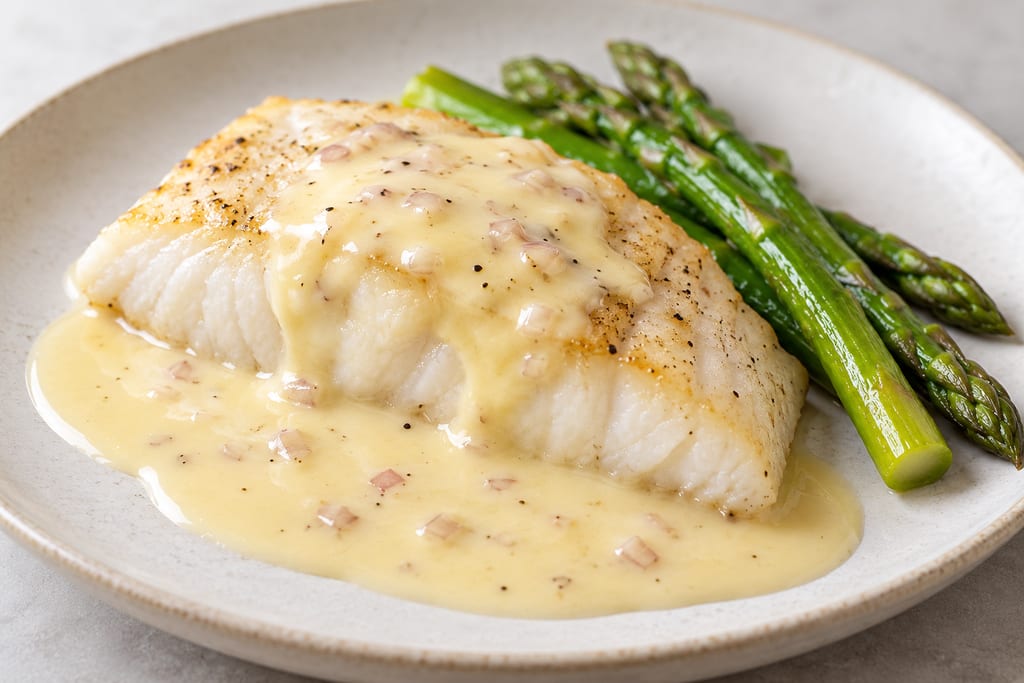
Beurre blanc is a warm emulsion of cold butter whisked into a reduction of white wine, vinegar or lemon juice and shallot, a sauce from the Loire Valley and its red-wine version, beurre rouge.
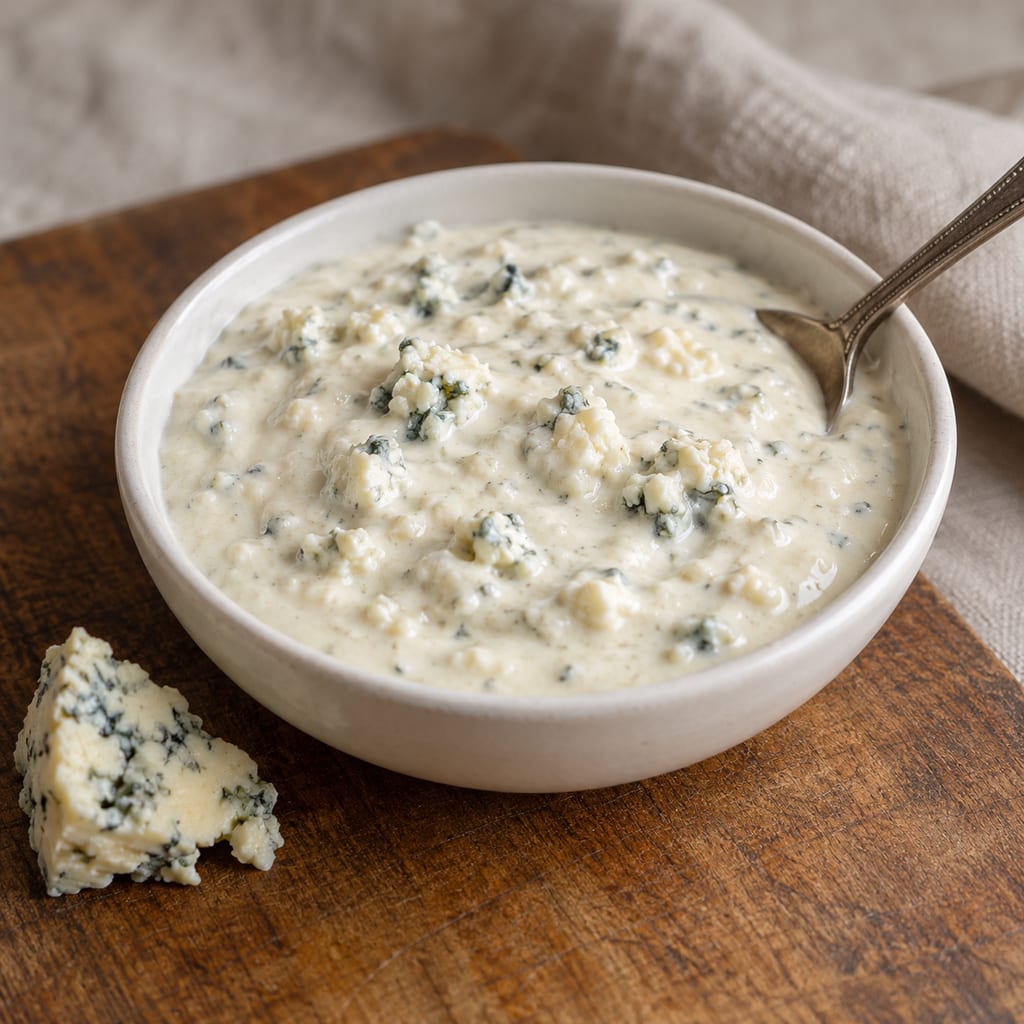
Blue cheese dressing is a creamy dressing built on crumbled blue cheese mashed into buttermilk, with sour cream, mayonnaise, vinegar and seasoning, and kept cold for up to two weeks.
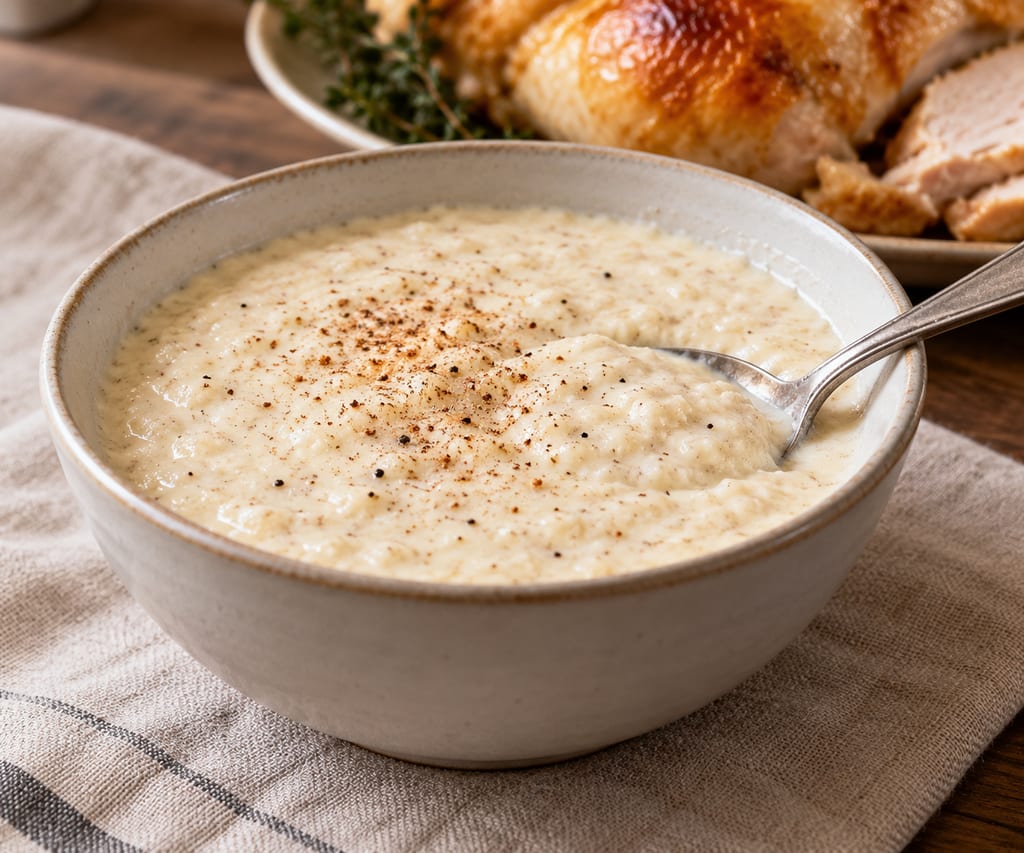
Bread sauce is a British sauce of milk infused with onion, clove and bay, thickened with stale breadcrumbs and finished with butter, served with roast chicken or turkey.
No community contributions have been published for this entry yet.
Sign in to contribute. Published comments and photos are free to read.
L’Atelier des ChefsMethod inspiration
Recette Sauce mayonnaiseWhisk the yolk and mustard, then add oil gradually until the emulsion forms. This source is method context; the quantities in this record are an untested development formula, not the source recipe.
Cited in: Overview; Building the emulsion; Ingredients and expected flavor
El Comidista / EL PAÍSCulinary context · Geography distinction
Patatas con alioli, una tapa de toda la vida fácil de preparar en casaThe article distinguishes traditional Catalan-style garlic-and-oil allioli made in a mortar from a blender version with yolk that it describes as garlic mayonnaise. It does not establish an origin for this exact house formula.
Cited in: A related sauce, not an origin claim; Ingredients and expected flavor
U.S. Food and Drug AdministrationSafety guidance
What You Need to Know About Egg SafetyUse pasteurised eggs or egg products in recipes served raw or undercooked; clean utensils and equipment that contact raw eggs or egg-containing foods.
Cited in: Safety and storage
FoodSafety.govCold handling guidance
4 Steps to Food SafetyRefrigerate perishable foods promptly; refrigerator should be 4°C/40°F or below. This general advice does not establish this sauce’s shelf life.
Cited in: Safety and storage