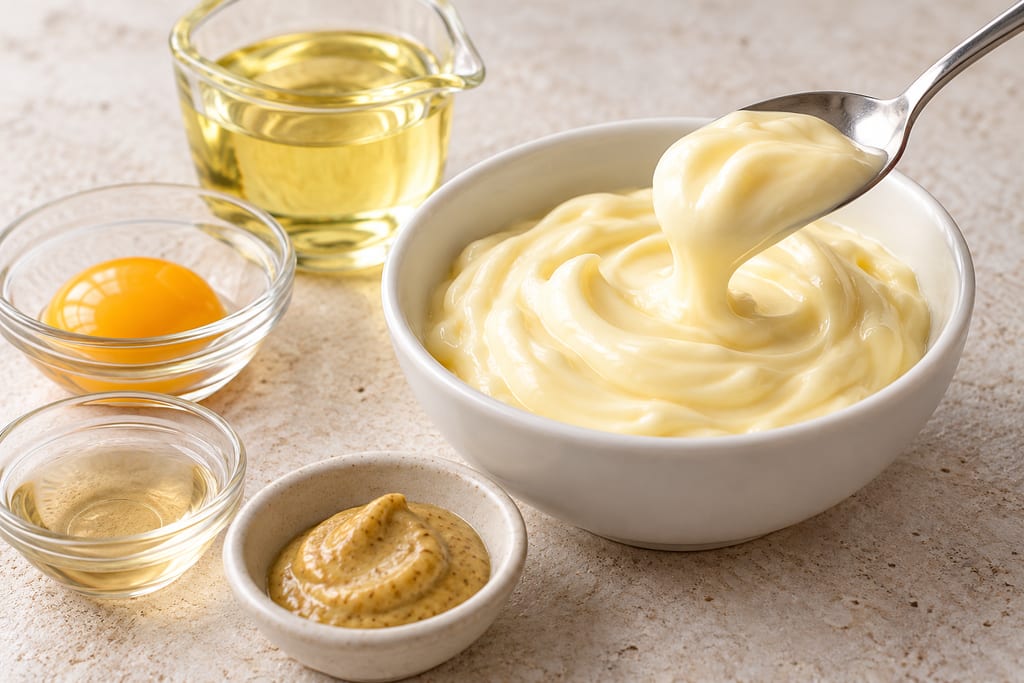
Neutral classic mayonnaise
A plain mayonnaise of 200 g refined neutral oil emulsified into pasteurised yolk, vinegar, water and a little Dijon mustard: a clean base for tasting, comparing and flavouring.
 FermenteaWhere food goes to change
A sesame-forward, fresh sauce made by mixing tahini, toasted sesame oil and rice vinegar into finished mayonnaise; the archived amounts are untested starting points.
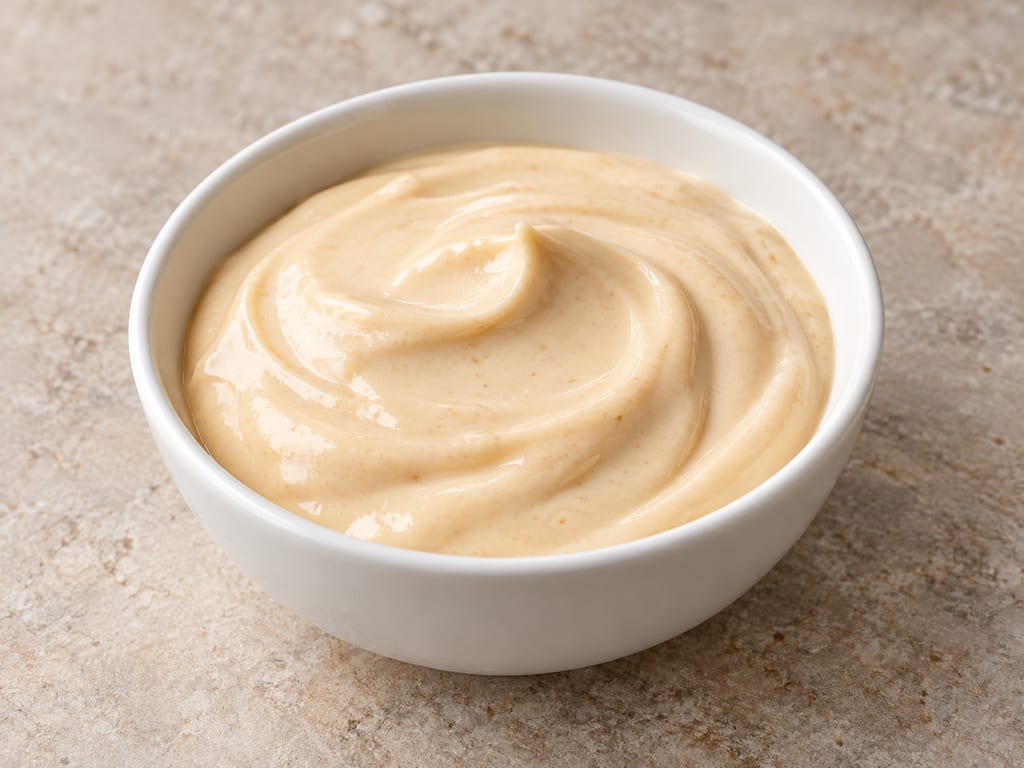
This sesame mayonnaise begins with mayonnaise that is already made. It is a mixing recipe, not a method for producing the base. The documented starting amount is 100 g finished mayonnaise, to which 4 g tahini, 3 g toasted sesame oil and 3 g rice vinegar are added. The guide describes it as sesame-forward and slightly looser, but the formula has not been kitchen-tested or sensory-validated. Treat these amounts as starting points, not a tested target.
The three additions stay distinct. Tahini is sesame paste; toasted sesame oil is a separate aromatic oil; rice vinegar adds an acidic ingredient. The exact mayonnaise brand, tahini style, vinegar acidity and oil brand are not stated. Products with different salt, sugar or acid levels may taste different, and this record does not give substitutions or a preservation claim.
Weigh each addition, then stir it through the finished mayonnaise with a clean utensil. No blending, heating or resting period is documented. Taste a little with the intended food, since the sauce is meant to be judged in that pairing; no tested adjustment schedule is available. The quantities total 110 g before bowl loss, but no measured batch yield is reported.
Sesame is an allergen in this formula. The base may contain egg, so check its ingredient and allergen label. For an uncooked sauce, use commercial mayonnaise made with pasteurised egg or prepare the base with pasteurised egg products. Keep utensils and additions clean, prevent cross-contamination, refrigerate promptly and serve the mixture promptly. Rice vinegar and sesame oil are flavour ingredients here, not measured preservation controls.
The exact sesame-flavoured ratio is documented as a contemporary house serving combination. The guide gives it no historical origin, regional tradition or dated attestation.
Scaling: source batch only
The finished mixture is served without cooking; the base may contain raw egg unless the product or egg ingredient is pasteurised.
Hazard sourceUse commercial mayonnaise made with pasteurised egg or make the base with pasteurised egg products. Keep hands and utensils clean and prevent cross-contamination.
Control sourceRefrigerate promptly, follow the base product's label, and make only the amount needed for the meal.
Control sourceThis mixture has no product-specific safety or shelf-life validation. Do not infer safety from smell, taste or appearance.
Do not can it or store it at room temperature. The guide's 24-hour working policy is a house convention, not a measured shelf life or a universal mayonnaise limit.
The flavoured mixture is new food; do not assume it inherits the base mayonnaise's opened-jar date.
The documented guide gives this as a house serving formula but does not locate this exact mixture.
A plain mayonnaise of 200 g refined neutral oil emulsified into pasteurised yolk, vinegar, water and a little Dijon mustard: a clean base for tasting, comparing and flavouring.
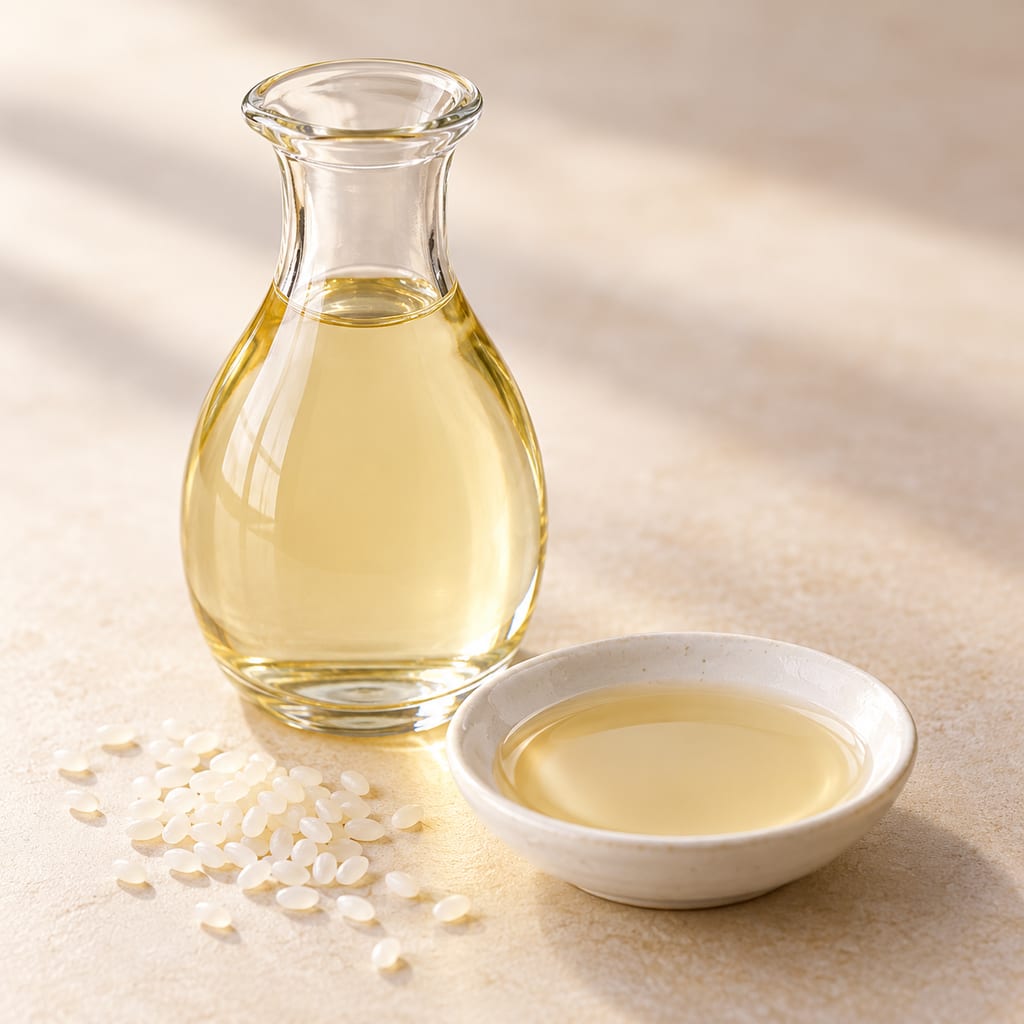
Japanese komezu is a pale, unseasoned rice vinegar made through alcoholic and acetic fermentation; rice, water, koji and yeast shape its character.
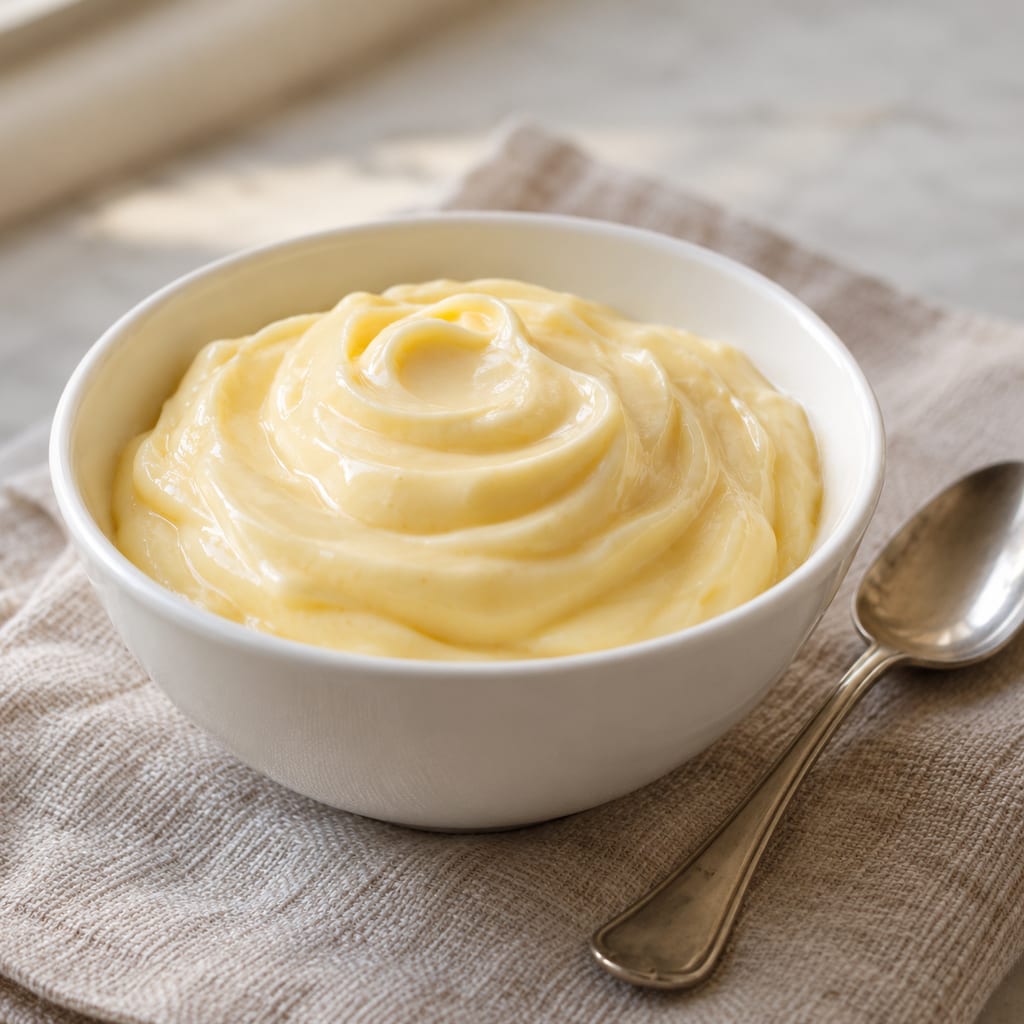
A cooked-yolk mayonnaise documented in the University of Tennessee Extension’s 2007 Egg University Handbook. The egg mixture is heated before oil is emulsified into it.
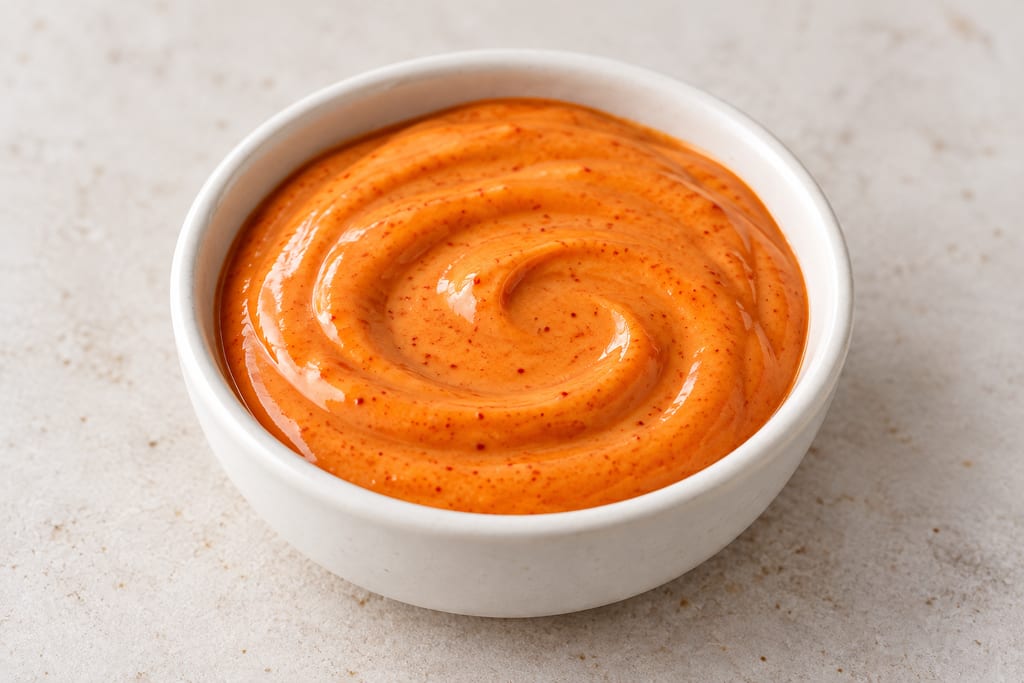
A contemporary, untested mix of finished mayonnaise, gochujang and rice vinegar, with starting amounts per 100 g mayonnaise.
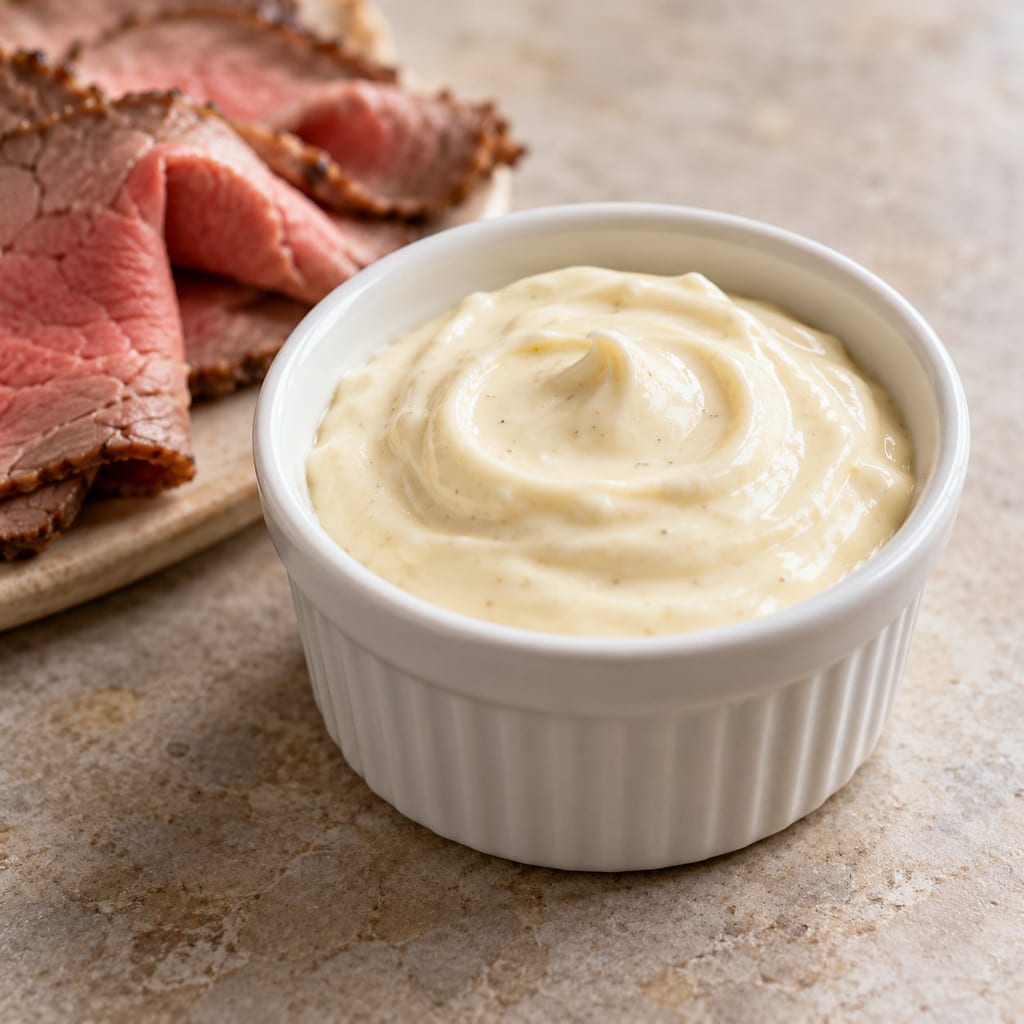
Prepared horseradish and lemon sharpen finished mayonnaise into a fresh accompaniment for roast meat or fish; the archived ratio has not been tested.
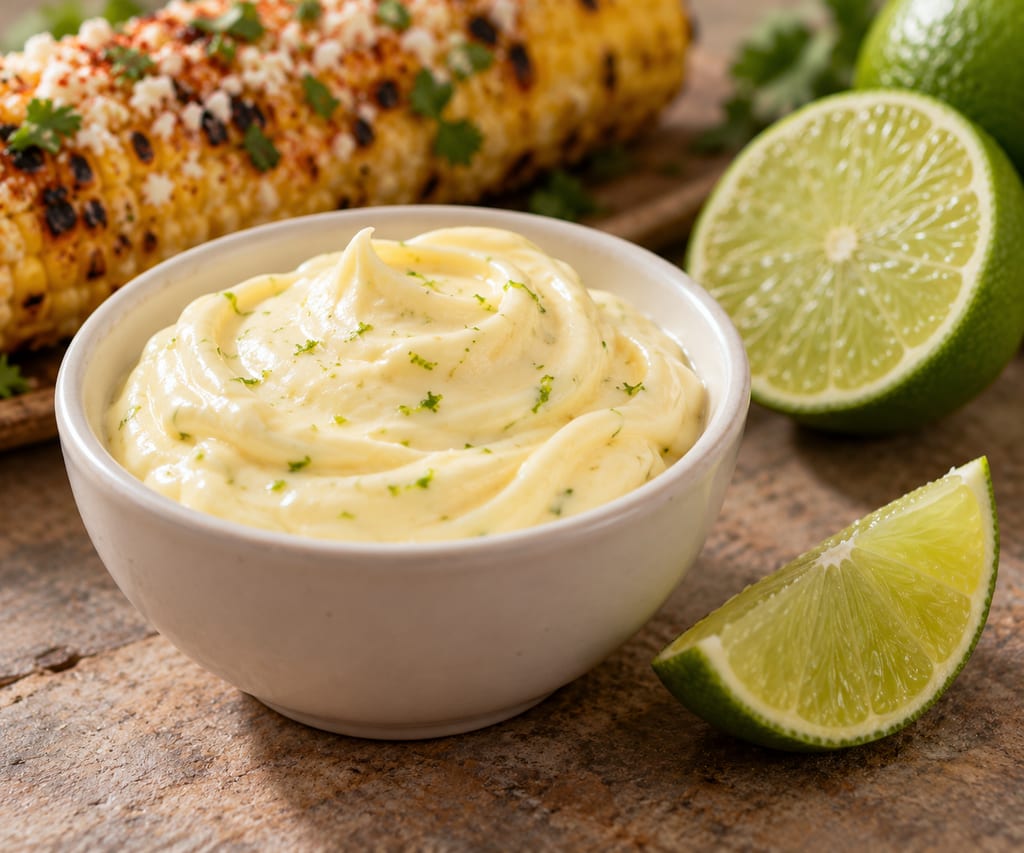
An untested mayonnaise variation that replaces part of a neutral base’s vinegar with lime juice and finishes with optional lime zest.
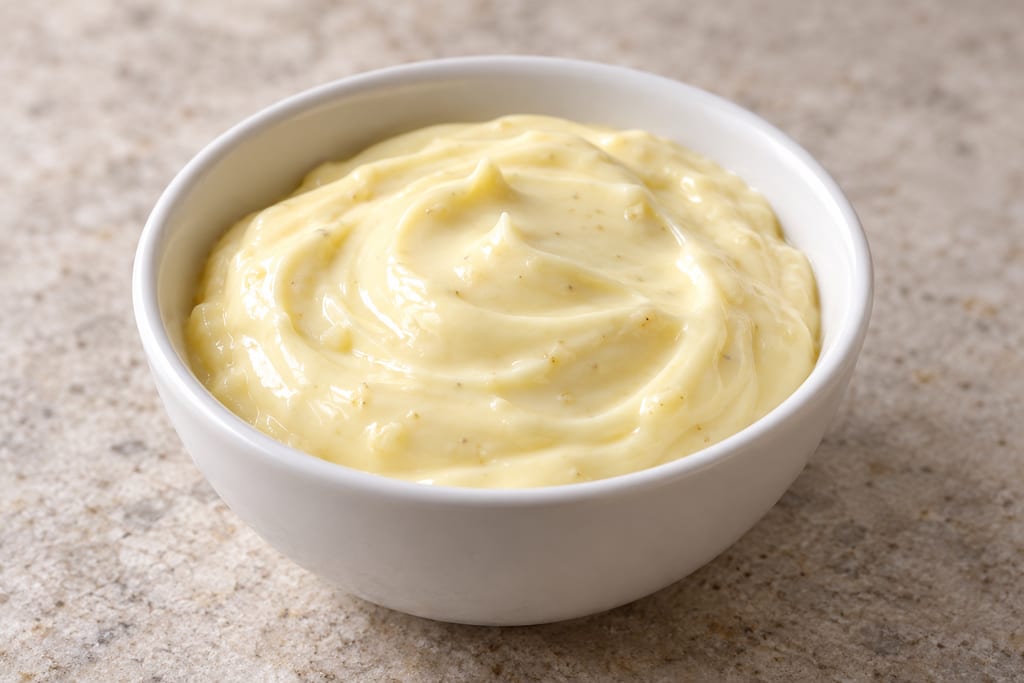
An untested 265 g garlic mayonnaise made by whisking pasteurised yolk with vinegar, water and Dijon, then slowly emulsifying neutral oil with mild extra-virgin olive oil.
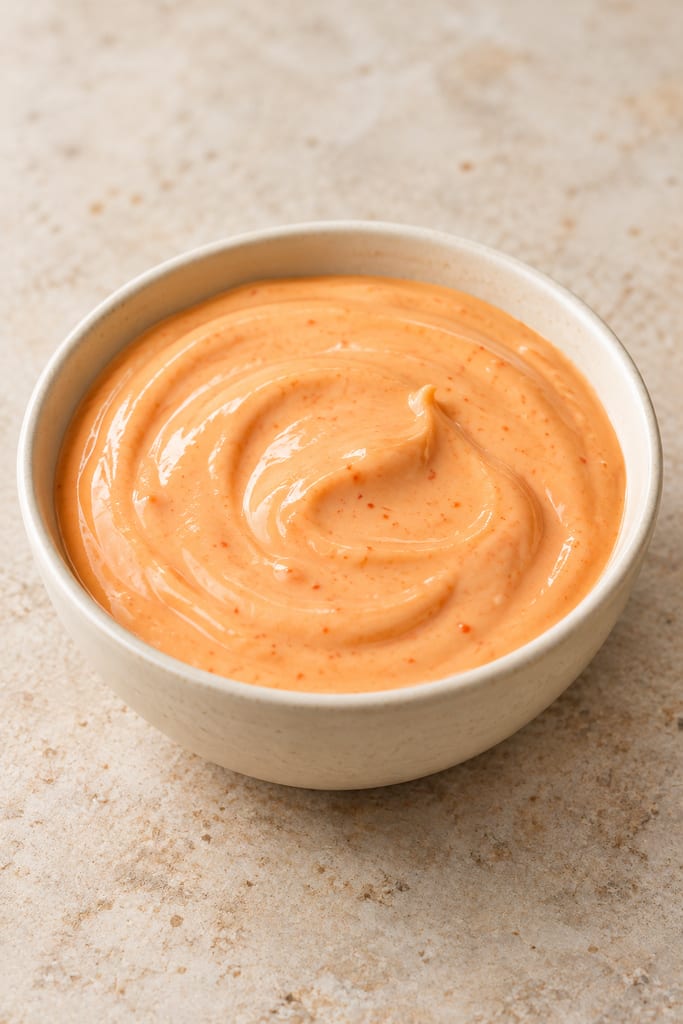
A contemporary, untested mix of finished mayonnaise, sriracha and lime juice, with starting amounts per 100 g mayonnaise.
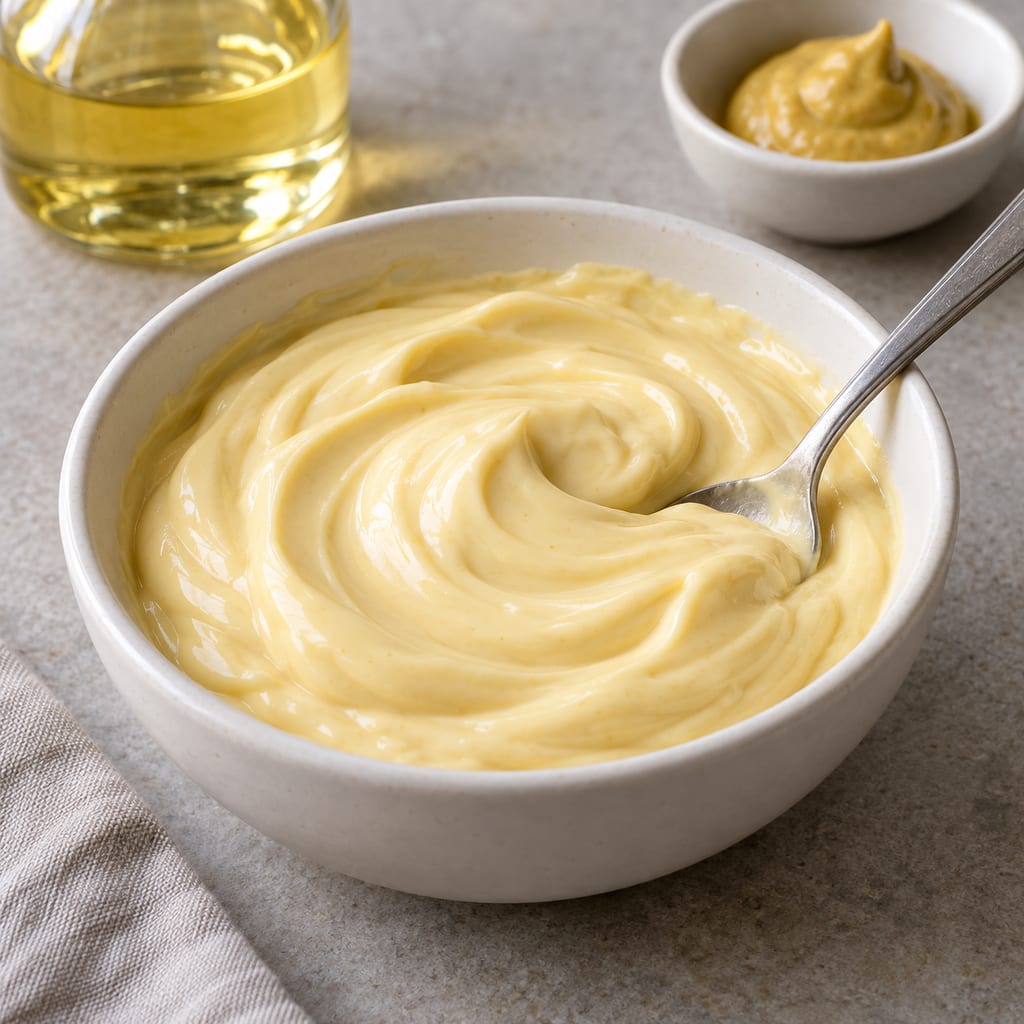
An untested mayonnaise variation made with refined sunflower oil and more Dijon mustard than a neutral base.
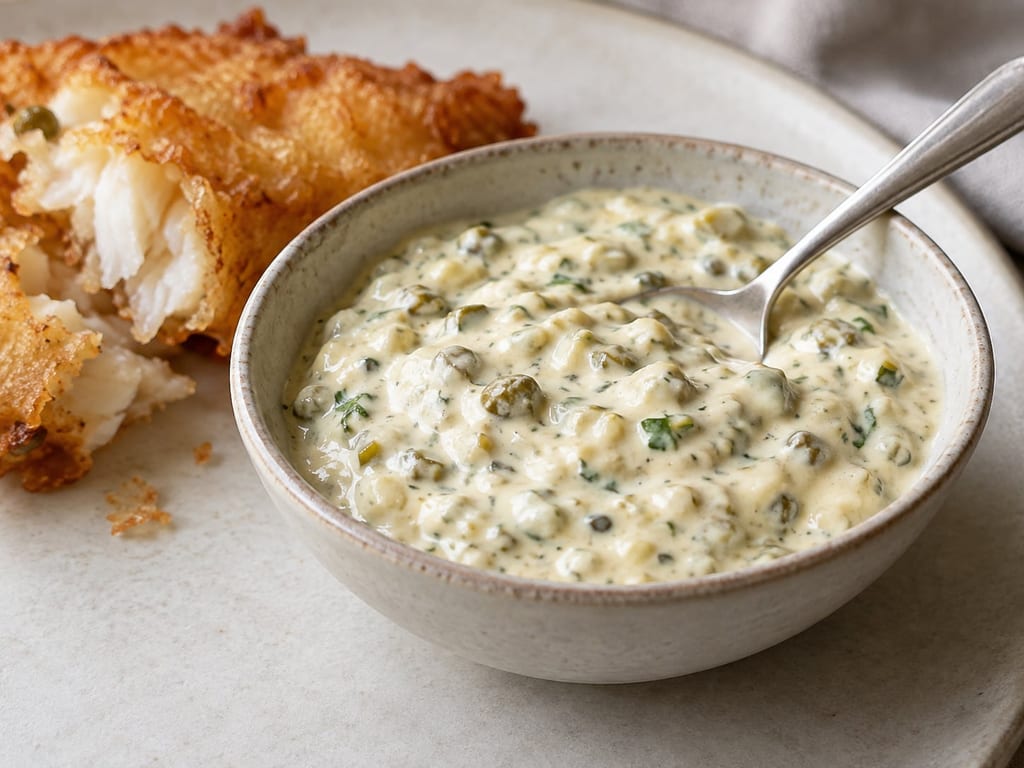
Drained pickled cucumber, capers and unspecified herbs turn finished mayonnaise into a fresh fish and seafood accompaniment; these archived amounts are untested starting points.

Ajvar is a cooked Balkan pepper preserve built around roasted red peppers, peeled, drained, ground and slowly fried with oil and seasoning. Leskovac’s protected version is a pepper specialty; regional versions vary.

Amlou is a nutty, lightly sweet Moroccan spread of roasted almonds, culinary argan oil and honey. The almonds are ground first, then loosened with oil and sweetened; the balance can range from a thick spread to a dip.

Apple sauce for goose and pork is a plain English accompaniment: cooked apples pulped with water, then sweetened with sugar and finished with a little butter.

A warm dip of garlic, anchovy and olive oil, often enriched with butter, that Piedmont serves over a flame with raw and cooked vegetables and bread.

A sweet-hot table sauce of ripe banana simmered with vinegar, sugar, onion, garlic and fresh chilli, in the manner of Philippine banana ketchup. An untested development batch of about 500 g.

A Georgian walnut sauce of ground walnuts, garlic, vinegar and spices, thinned with water or broth. It is served with poultry, vegetables and bread, and is the sauce of the dish satsivi.

A pourable dessert sauce of brown sugar, butter and cream, with a little corn syrup and salt. It is the sauce form of the butterscotch confection and is made without water, unlike caramel.

Byzantine murrī is a cooked imitation of murrī from the medieval Arabic repertoire, made from scorched honey, toasted bread, walnuts, quince, carob and spices rather than from a long grain fermentation.
No community contributions have been published for this entry yet.
Sign in to contribute. Published comments and photos are free to read.
FermenteaFormula · Method · Use
The Condiment Table: Ketchup, Mayonnaise, Mustard and the Sauces of the WorldThe combination's starting quantities, addition to 100 g finished mayonnaise, clean mixing, intended-food tasting and prompt service; it is a house starting point, not a tested tradition.
Cited in: A fresh variation on a finished sauce; Mixing, serving and handling
Food Standards ScotlandSafety
Advice on the safe storage, handling and use of eggs for cateringGuidance on pasteurised egg products for uncooked dishes, cross-contamination prevention and prompt service or chilling.
Cited in: Mixing, serving and handling
Food Standards AgencySafety
Safe Catering: Your GuideUse pasteurised egg in foods that will not be cooked or only lightly cooked.
Cited in: Mixing, serving and handling
FoodSafety.govRefrigeration
Cold Food Storage ChartsRefrigerator guidance is 4°C or below; this does not set a shelf life for these sauces.
Cited in: Mixing, serving and handling