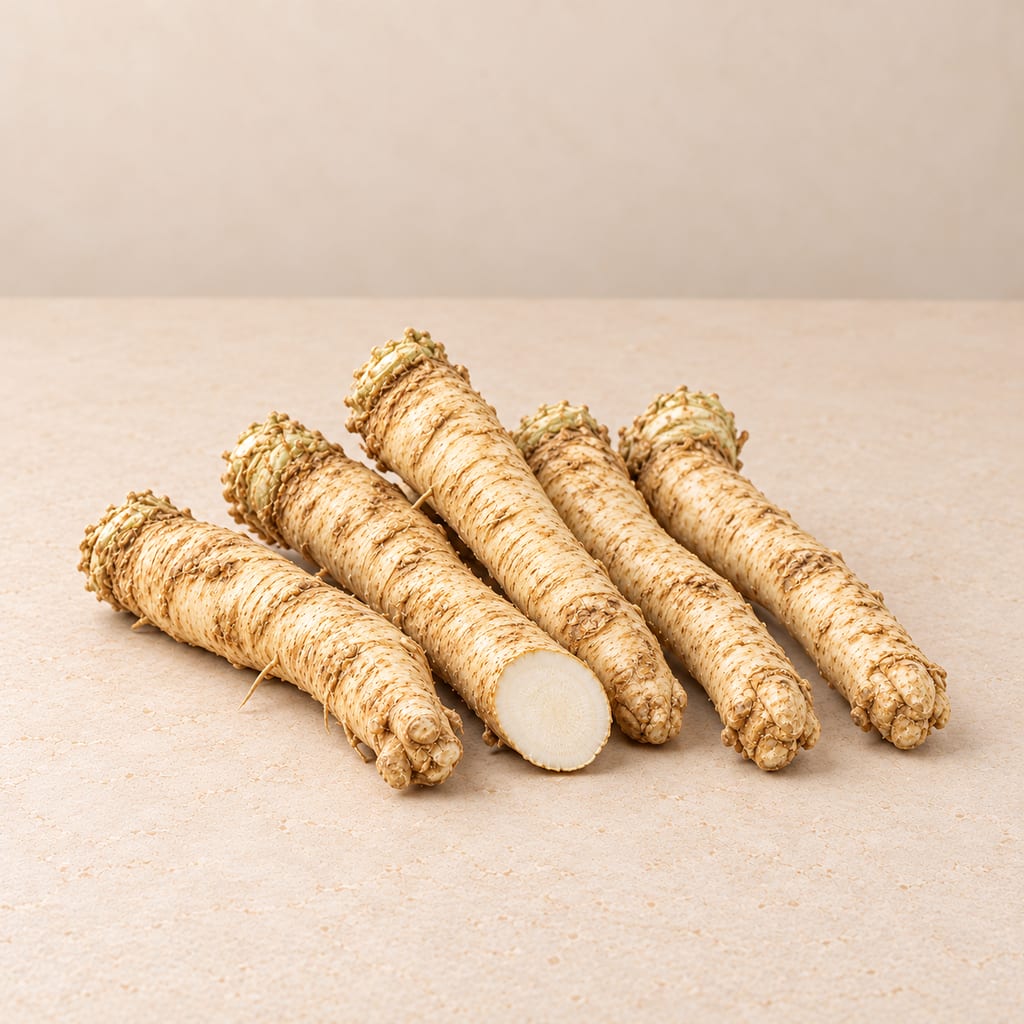
Horseradish root
Horseradish is the long white root of Armoracia rusticana, a perennial of the mustard family. Grated, it releases a sharp, nose-clearing heat that vinegar fixes in the sauce.
 FermenteaWhere food goes to change
Prepared horseradish and lemon sharpen finished mayonnaise into a fresh accompaniment for roast meat or fish; the archived ratio has not been tested.
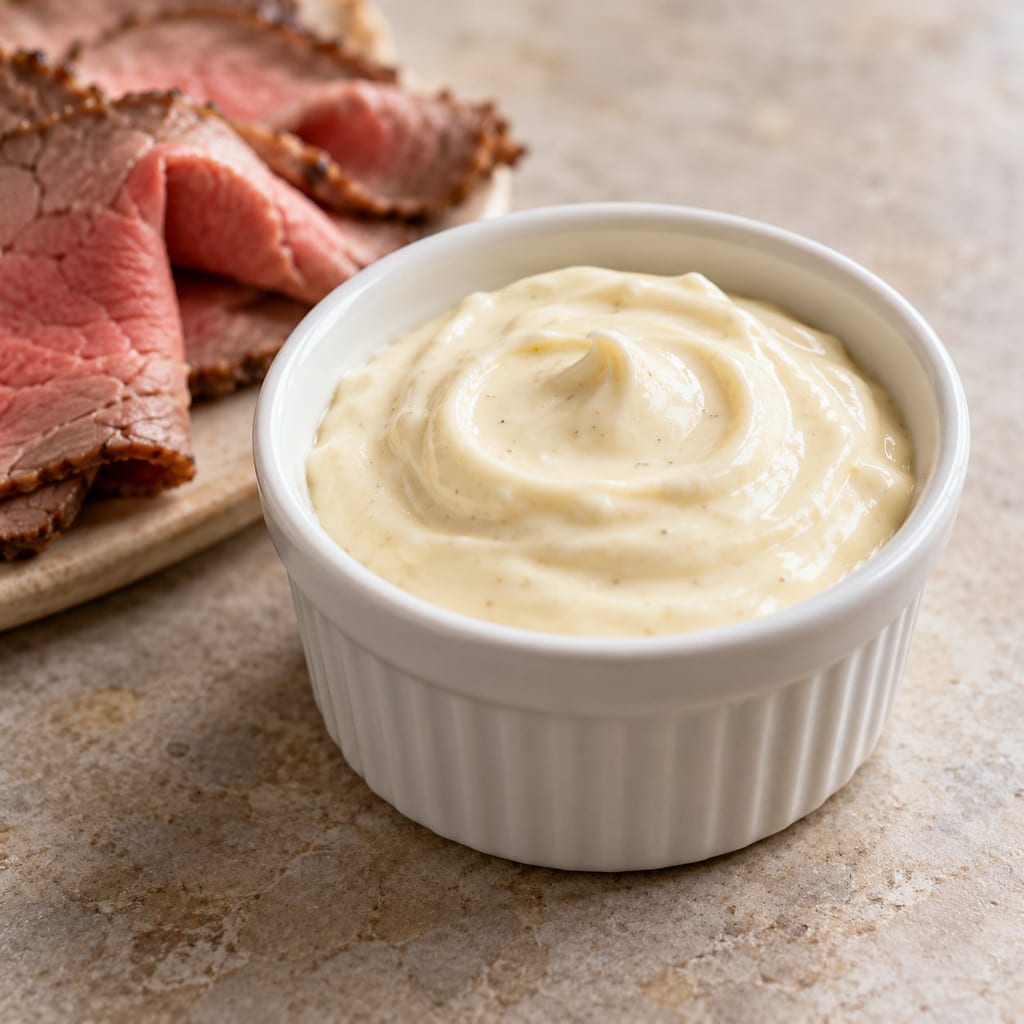
This formula folds prepared horseradish into mayonnaise that has already been made. It does not make either the horseradish condiment or the base mayonnaise. The archive gives 100 g finished mayonnaise, 8 g prepared horseradish and 2 g lemon juice as a starting combination. It calls the sauce sharp and suggests roast meat or fish, but reports no kitchen test or sensory validation.
Prepared horseradish is the named ingredient. It is not interchangeable with freshly grated root: prepared products can include vinegar and other ingredients, and the guide names no brand or composition. Lemon juice adds flavour. Neither its quantity nor the horseradish condiment's own acid content is shown to preserve the complete mixture.
Maximilian de Loup's 1909 American Salad Book names horseradish mayonnaise and describes adding grated horseradish to plain mayonnaise. For prepared horseradish it suggests using the vinegar in which it is packed. The book recommends that sauce with cold beef and fish salads. This is an early twentieth-century US attestation to a related sauce name and use, not evidence for the origin of this recipe or for its quantities: the present formula combines 8 g prepared horseradish and 2 g lemon juice with each 100 g mayonnaise.
The exact mixture has no documented place or date. Its use with roast meat or fish remains a serving suggestion, not a claim that one region owns the formula.
Weigh the finished mayonnaise, prepared horseradish and lemon juice, then mix with a clean utensil. No heating or resting time is given. Taste a small portion with the intended food, then serve promptly. The combined nominal weight is 110 g before bowl loss; this is arithmetic from the listed amounts, not a measured yield.
The base may contain egg. Use commercial mayonnaise made with pasteurised egg, or prepare it with pasteurised egg products when it will be served without cooking. Clean hands and utensils, prevent cross-contamination and keep the sauce cold. No product-specific pH or shelf-life study is available. Do not can it or keep it at room temperature, and do not assume the flavoured mixture inherits the base jar's opened-date.
A related horseradish mayonnaise appears in an 1909 US salad book, but its proportions differ. The exact formula here is a contemporary house serving mixture with no established origin.
Scaling: source batch only
The finished mixture is served without cooking; the base may contain raw egg unless the product or egg ingredient is pasteurised.
Hazard sourceUse commercial mayonnaise made with pasteurised egg or make the base with pasteurised egg products. Keep hands and utensils clean and prevent cross-contamination.
Control sourceRefrigerate promptly, follow the base product's label, and make only the amount needed for the meal.
Control sourceThis mixture has no product-specific safety or shelf-life validation. Do not infer safety from smell, taste or appearance.
Do not can it or store it at room temperature. The guide's 24-hour working policy is a house convention, not a measured shelf life or a universal mayonnaise limit.
The flavoured mixture is new food; do not assume it inherits the base mayonnaise's opened-jar date.
The documented guide gives this as a house serving formula but does not locate this exact mixture.
Horseradish is the long white root of Armoracia rusticana, a perennial of the mustard family. Grated, it releases a sharp, nose-clearing heat that vinegar fixes in the sauce.
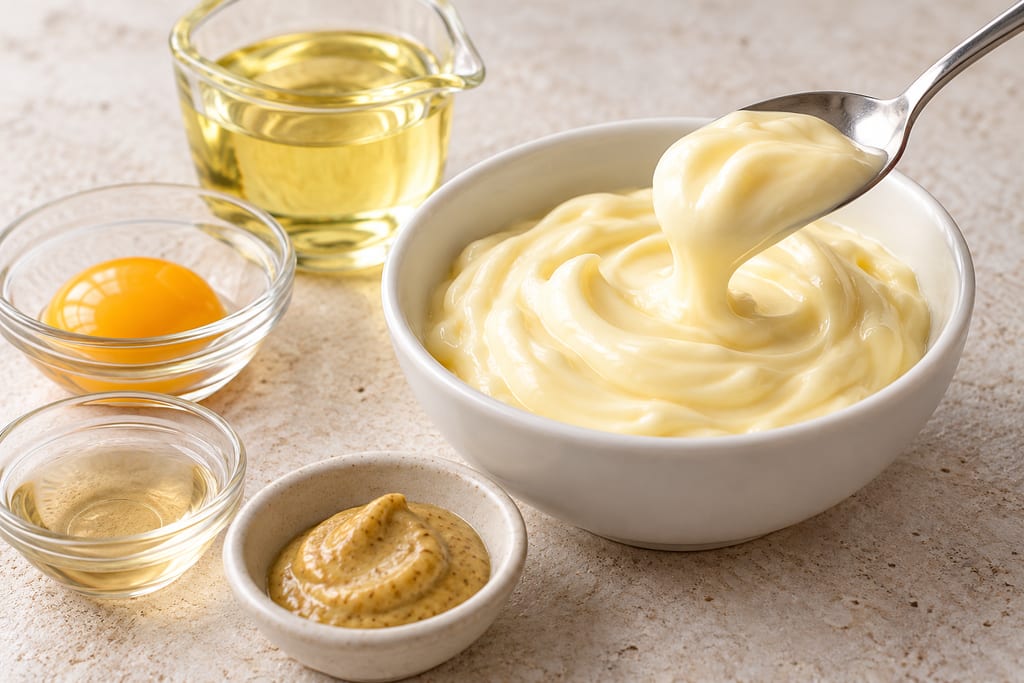
A plain mayonnaise of 200 g refined neutral oil emulsified into pasteurised yolk, vinegar, water and a little Dijon mustard: a clean base for tasting, comparing and flavouring.
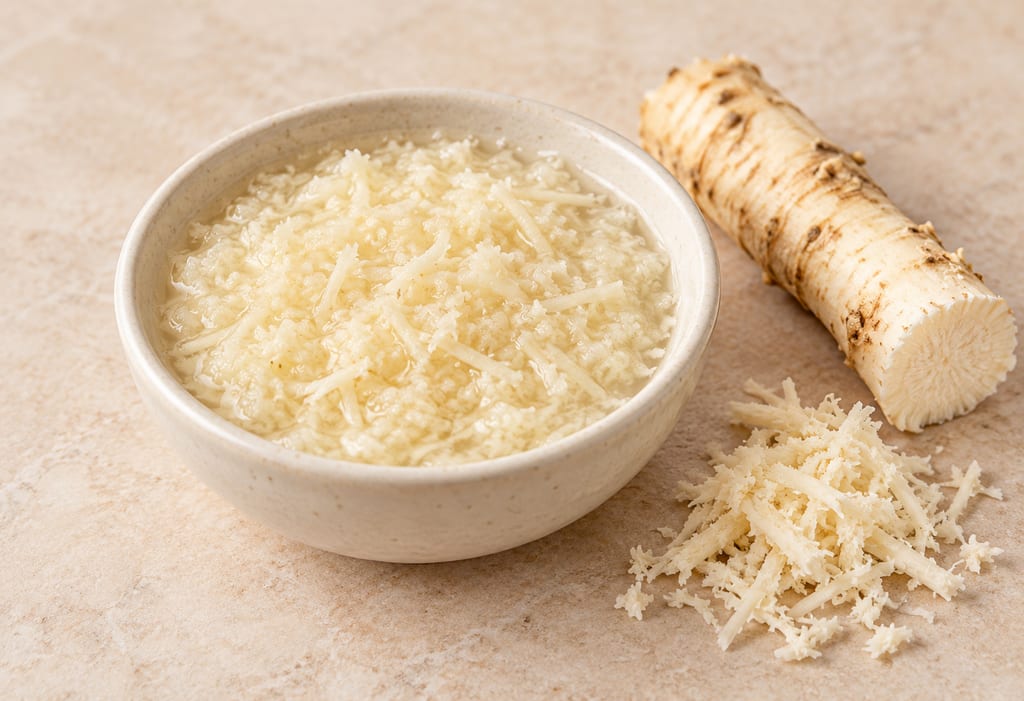
Prepared horseradish is freshly grated horseradish root mixed with vinegar and salt. This refrigerated relish holds the root’s sharp, nasal pungency in a spoonable form.
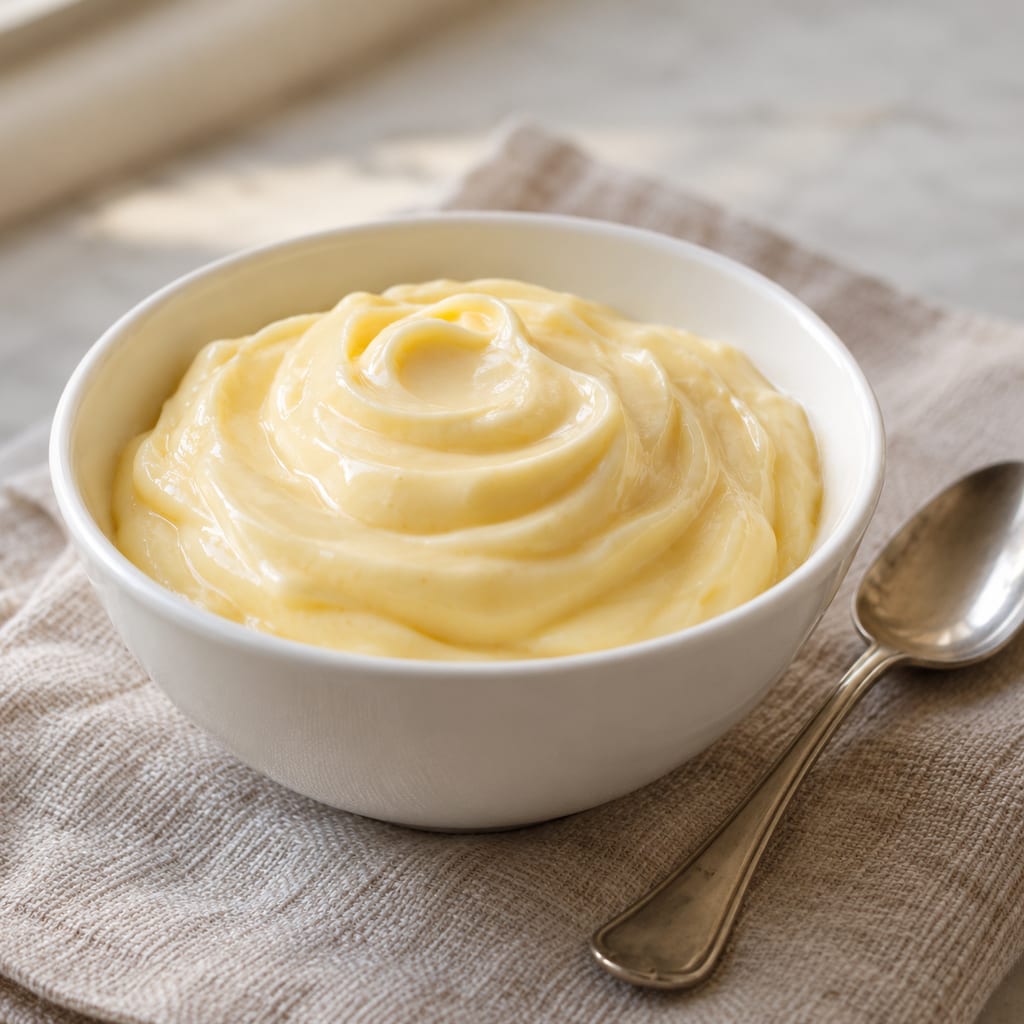
A cooked-yolk mayonnaise documented in the University of Tennessee Extension’s 2007 Egg University Handbook. The egg mixture is heated before oil is emulsified into it.
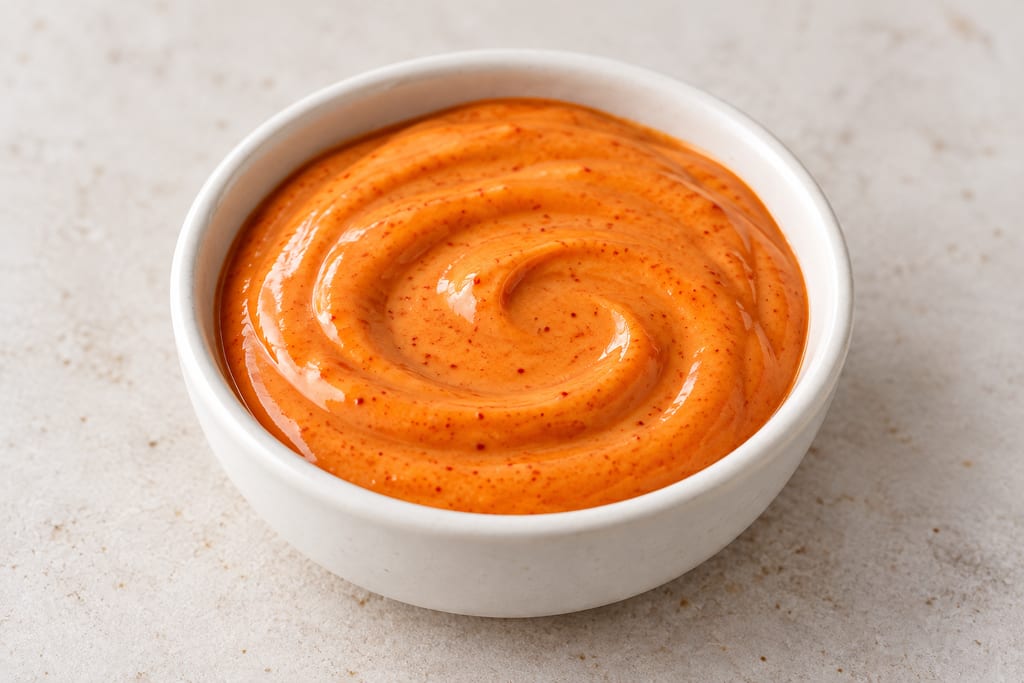
A contemporary, untested mix of finished mayonnaise, gochujang and rice vinegar, with starting amounts per 100 g mayonnaise.
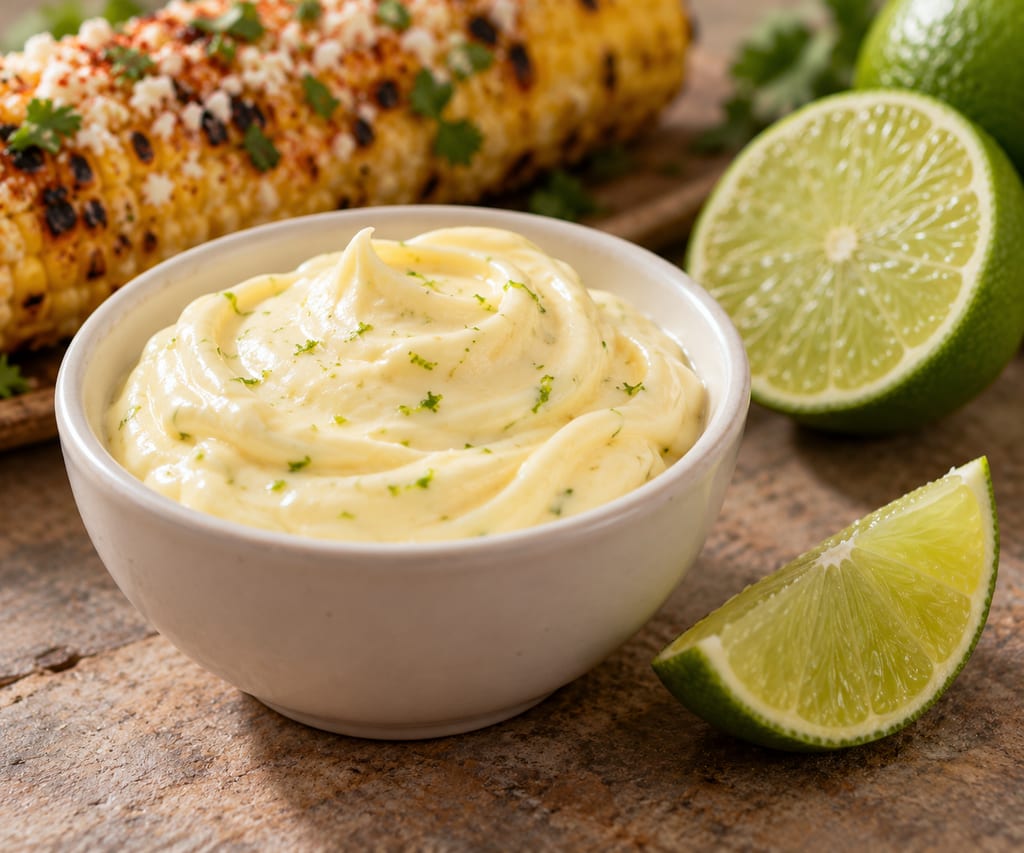
An untested mayonnaise variation that replaces part of a neutral base’s vinegar with lime juice and finishes with optional lime zest.
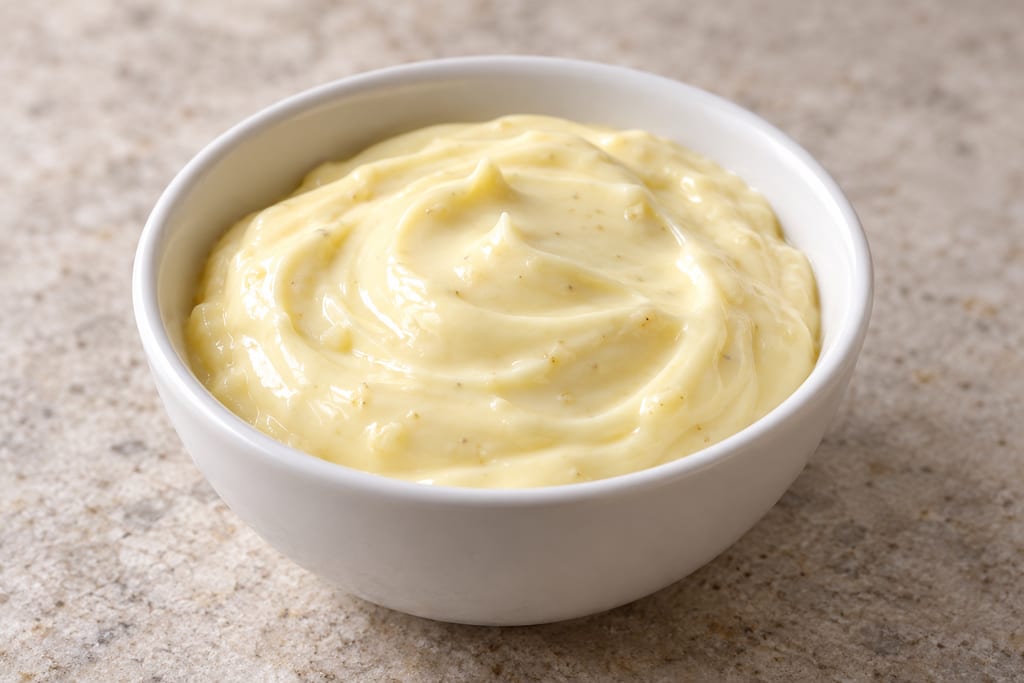
An untested 265 g garlic mayonnaise made by whisking pasteurised yolk with vinegar, water and Dijon, then slowly emulsifying neutral oil with mild extra-virgin olive oil.
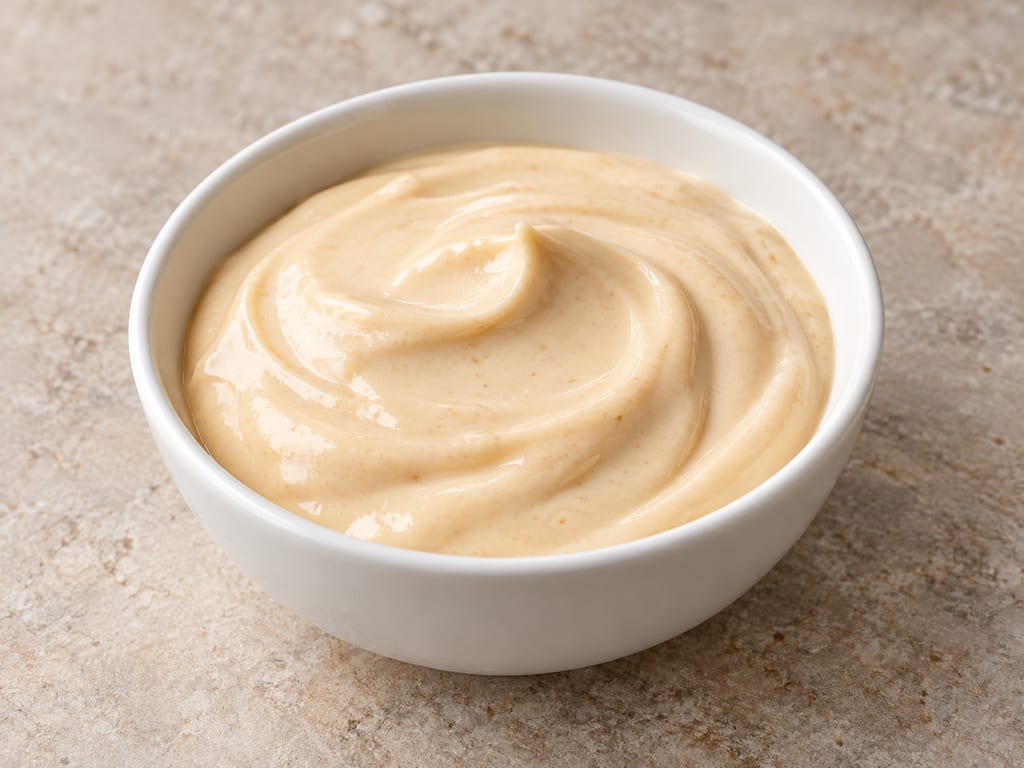
A sesame-forward, fresh sauce made by mixing tahini, toasted sesame oil and rice vinegar into finished mayonnaise; the archived amounts are untested starting points.
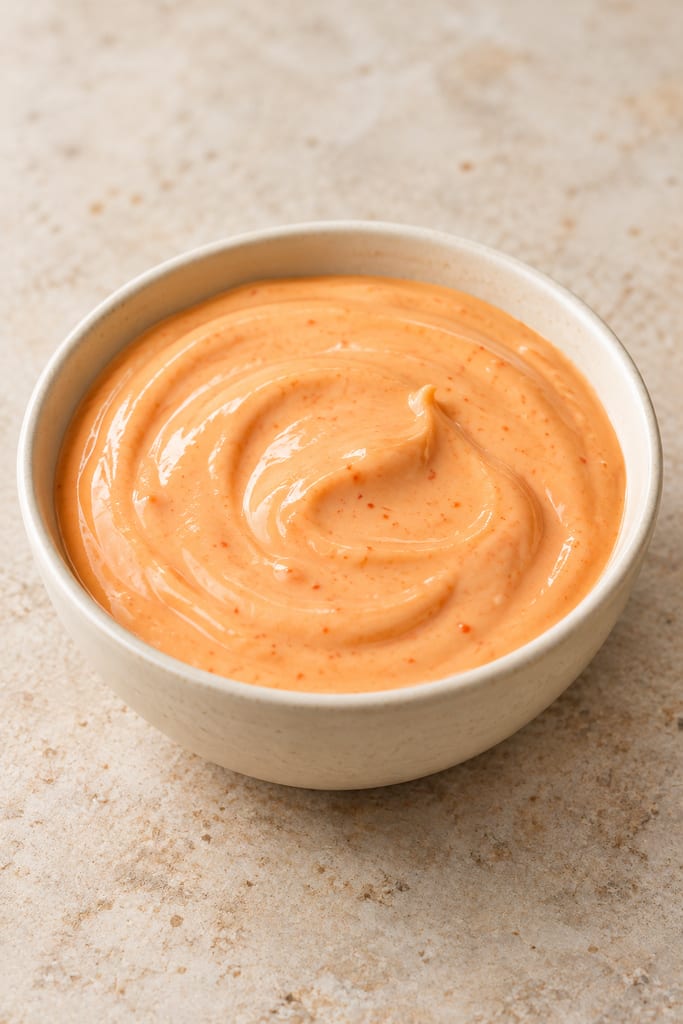
A contemporary, untested mix of finished mayonnaise, sriracha and lime juice, with starting amounts per 100 g mayonnaise.
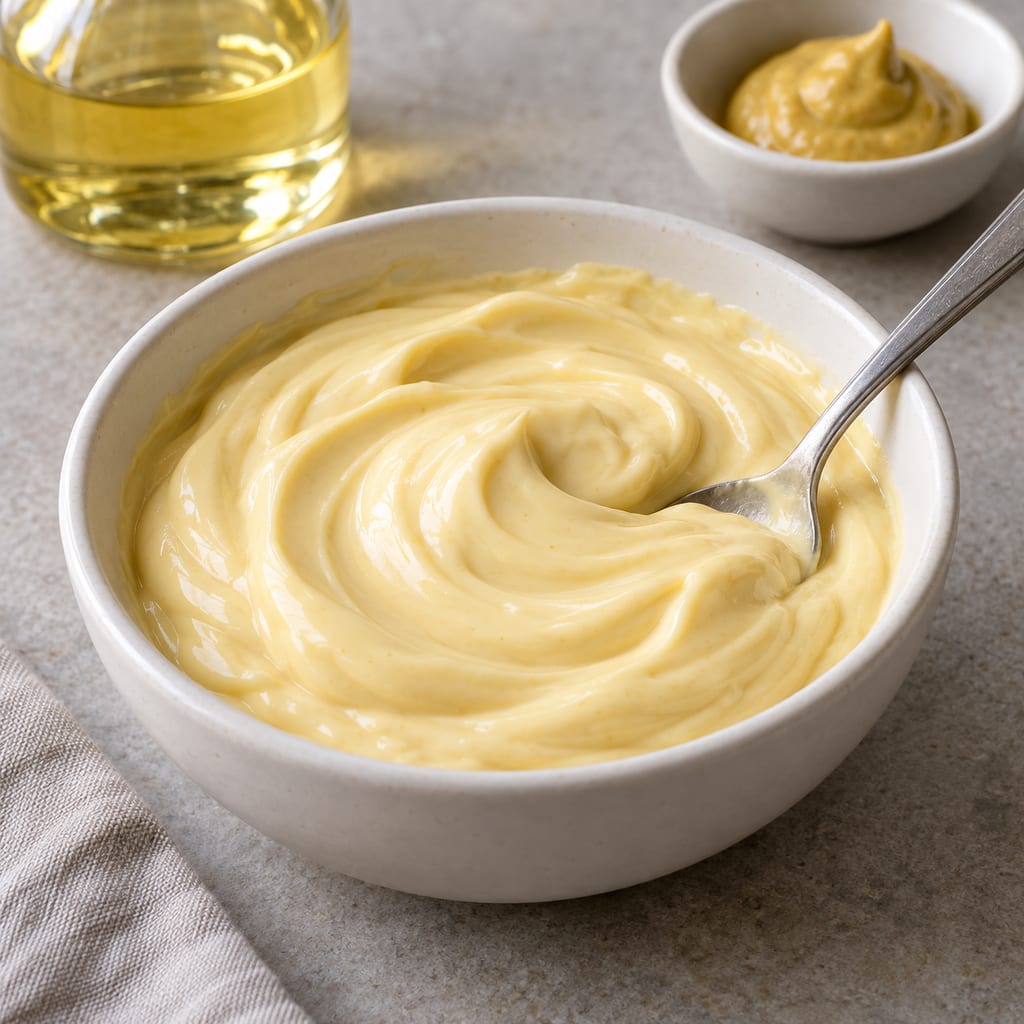
An untested mayonnaise variation made with refined sunflower oil and more Dijon mustard than a neutral base.
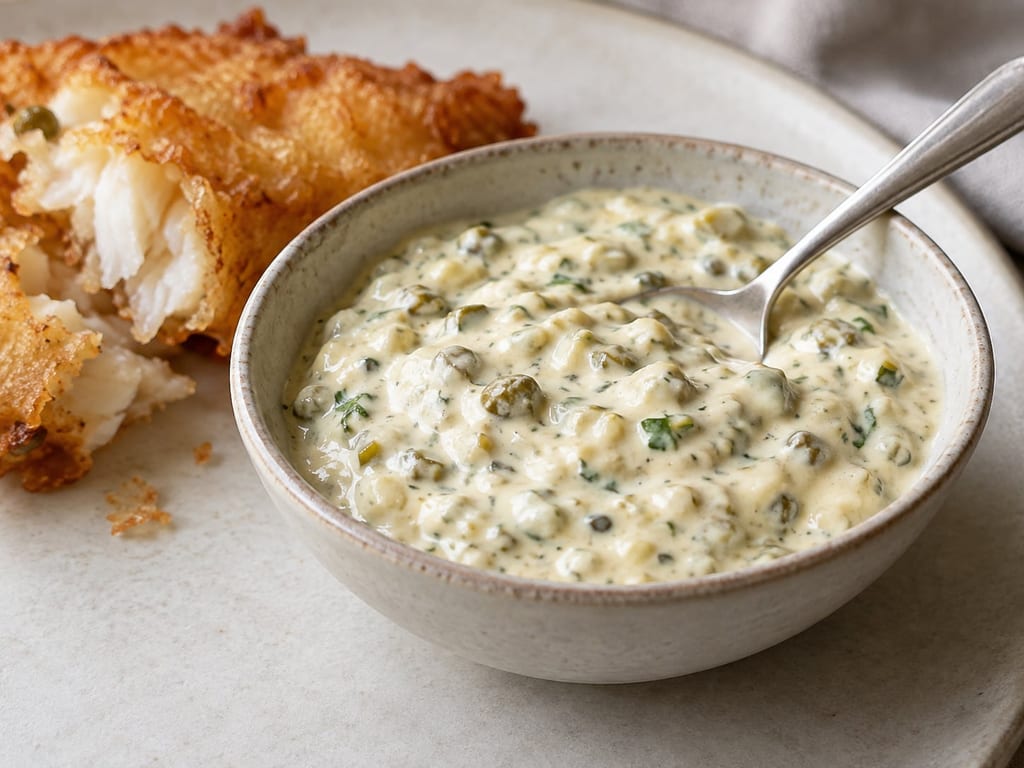
Drained pickled cucumber, capers and unspecified herbs turn finished mayonnaise into a fresh fish and seafood accompaniment; these archived amounts are untested starting points.
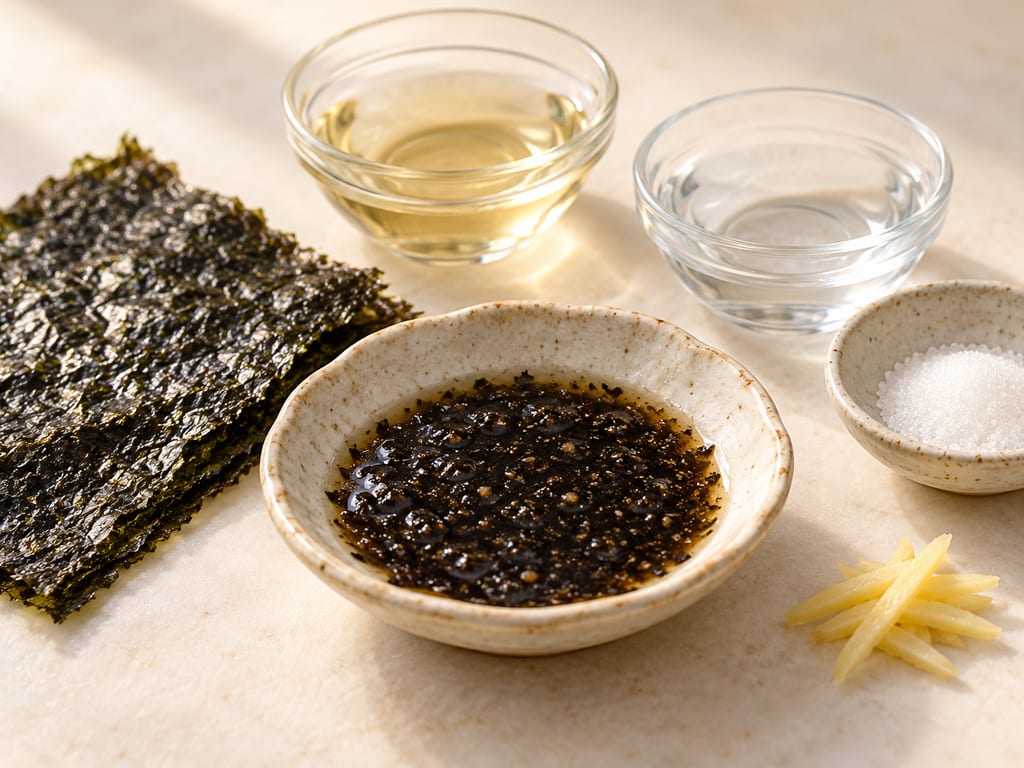
A fresh condiment in which crumbled nori softens in lightly sweetened vinegar and water. It is not vinegar fermented from seaweed.
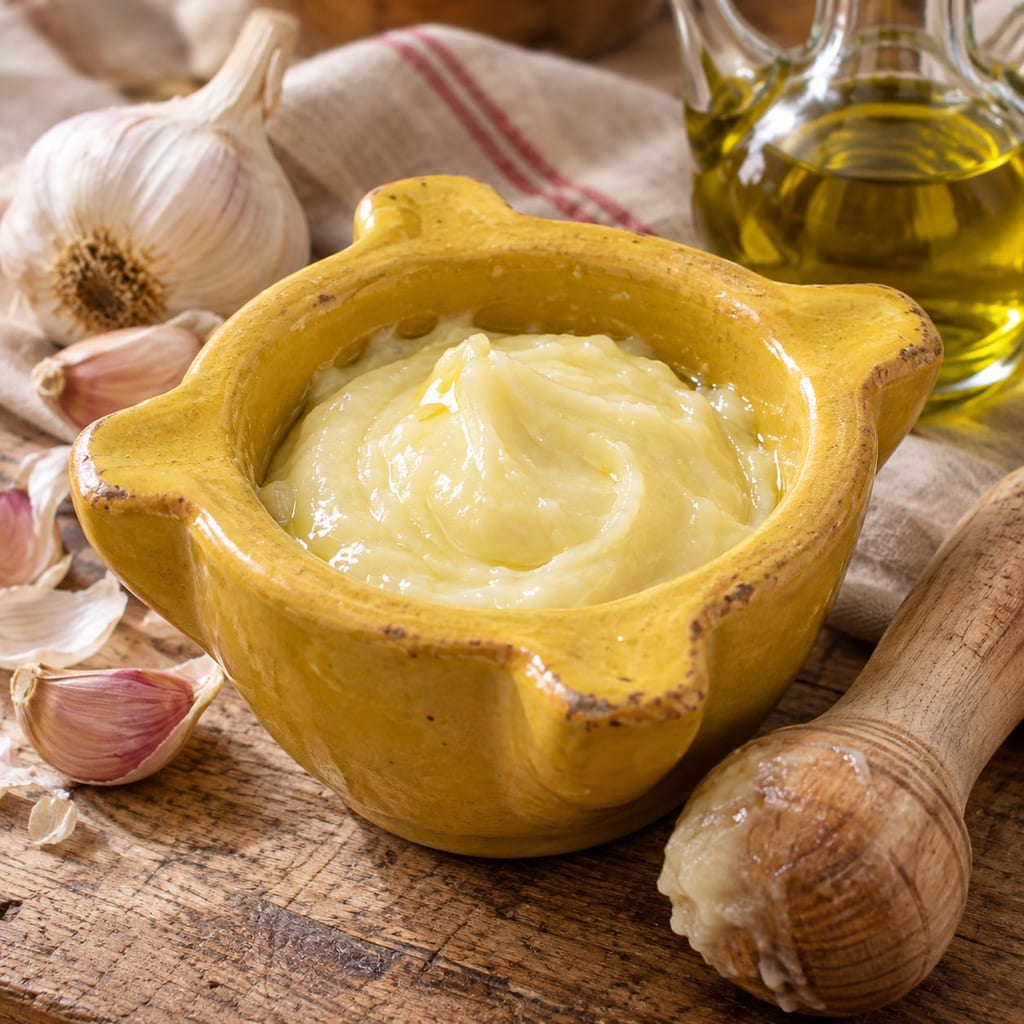
Traditional Catalan allioli is a dense emulsion of garlic, olive oil and salt made slowly in a mortar. This measured Barcelona-style version keeps egg-based garlic mayonnaise distinct.
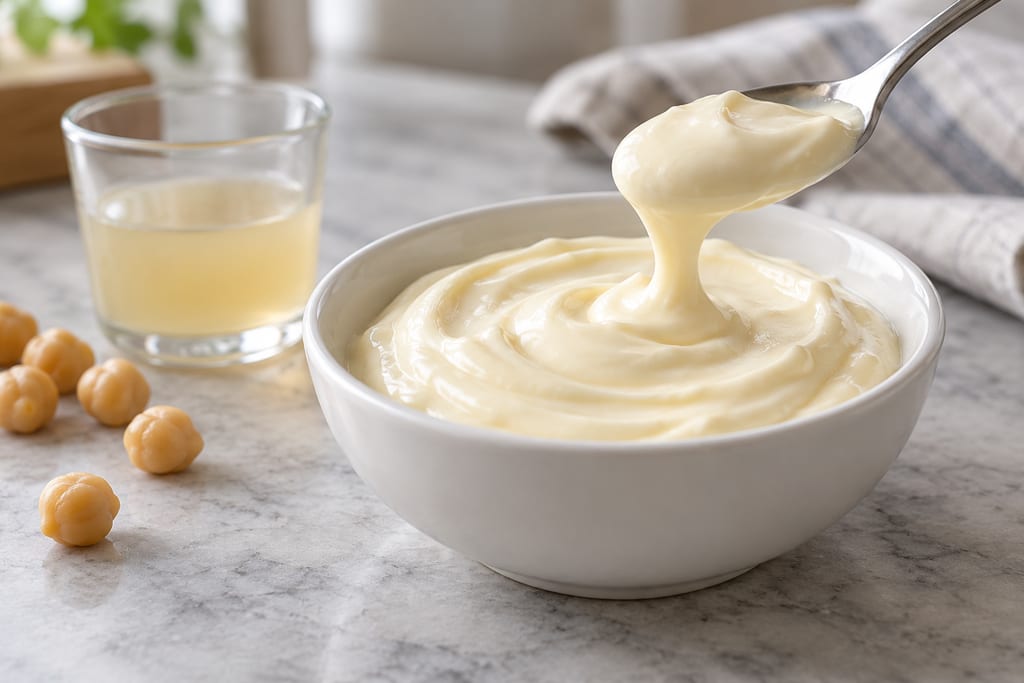
An eggless, untested emulsion made with canned chickpea liquid. Nominal yield 255 g.
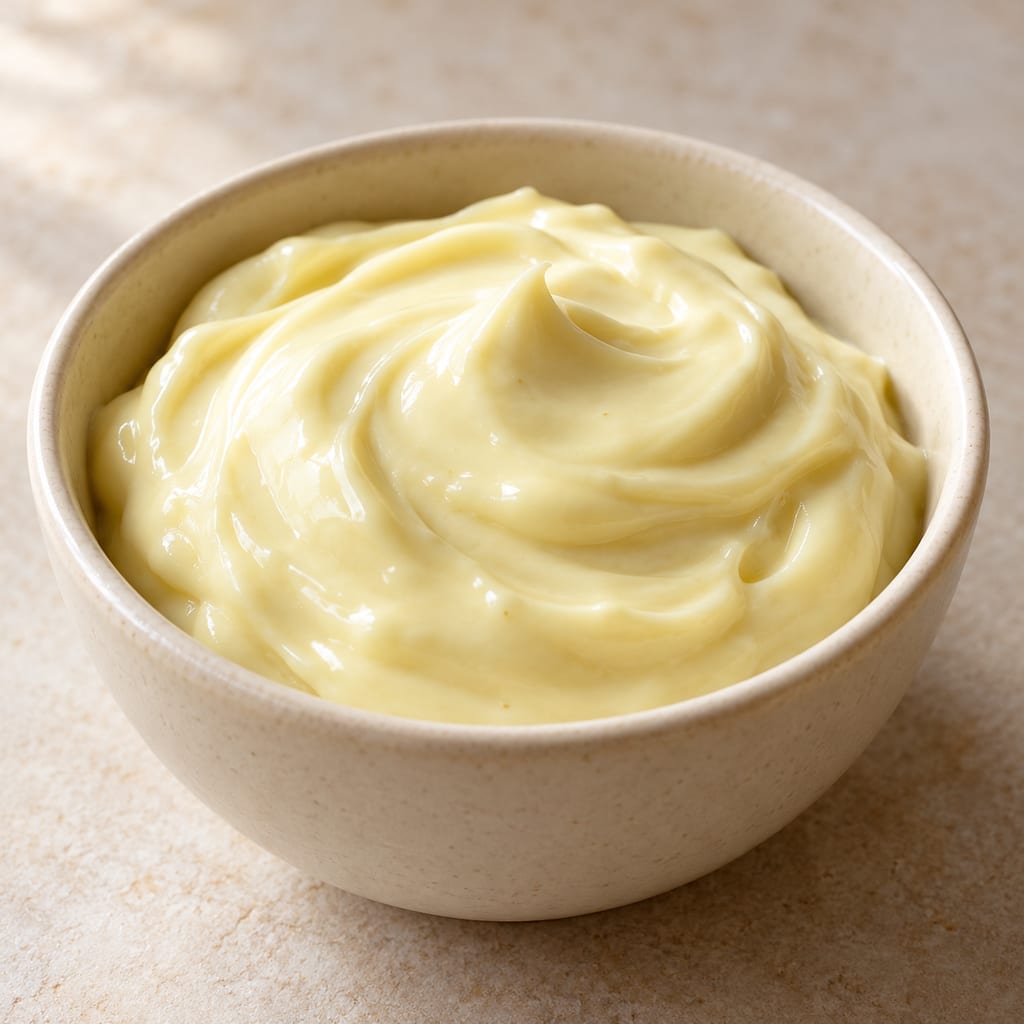
Avocado-oil mayonnaise is an ordinary egg-and-oil emulsion in which avocado oil supplies the oil phase. The oil changes flavour and colour, and it does not preserve the sauce.

Bechamel is a white sauce of milk thickened with a butter and flour roux, one of the French mother sauces, and the base from which Mornay and other cheese and cream sauces are made.
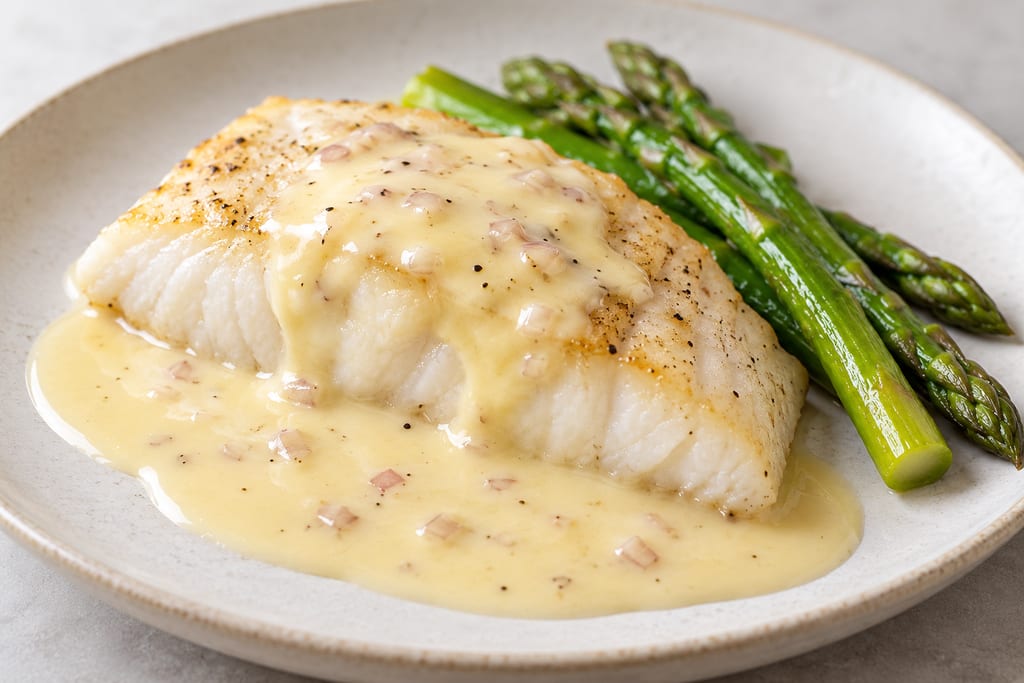
Beurre blanc is a warm emulsion of cold butter whisked into a reduction of white wine, vinegar or lemon juice and shallot, a sauce from the Loire Valley and its red-wine version, beurre rouge.
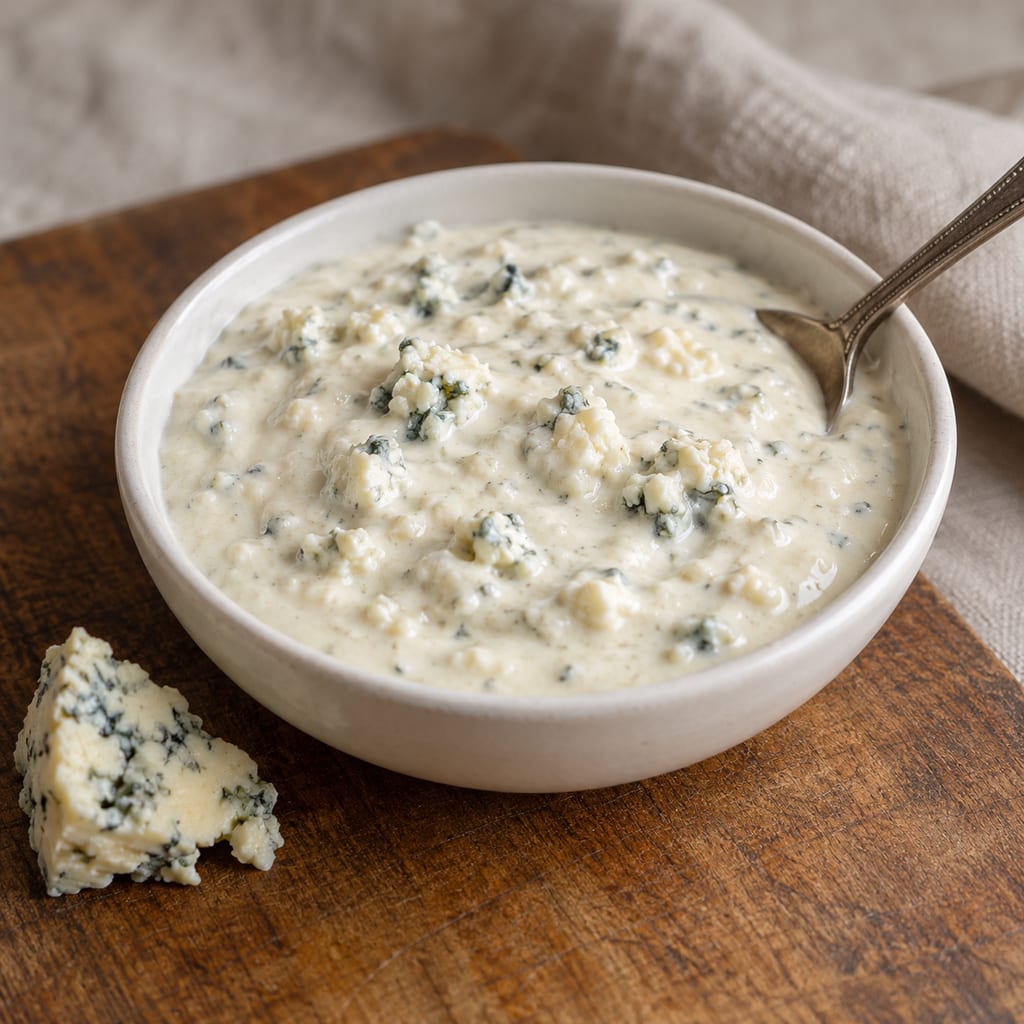
Blue cheese dressing is a creamy dressing built on crumbled blue cheese mashed into buttermilk, with sour cream, mayonnaise, vinegar and seasoning, and kept cold for up to two weeks.
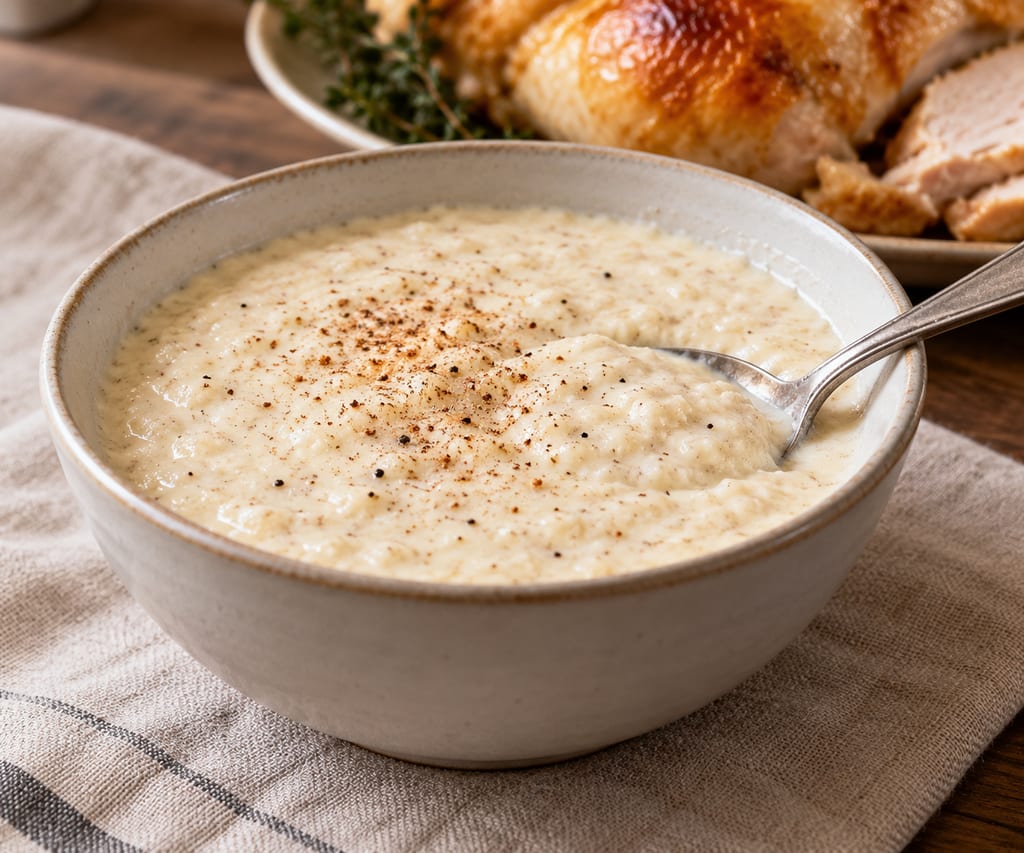
Bread sauce is a British sauce of milk infused with onion, clove and bay, thickened with stale breadcrumbs and finished with butter, served with roast chicken or turkey.
No community contributions have been published for this entry yet.
Sign in to contribute. Published comments and photos are free to read.
FermenteaFormula · Method · Use
The Condiment Table: Ketchup, Mayonnaise, Mustard and the Sauces of the WorldThe combination's starting quantities, addition to 100 g finished mayonnaise, clean mixing, intended-food tasting and prompt service; it is a house starting point, not a tested tradition.
Cited in: Prepared horseradish in mayonnaise; A related sauce in a 1909 cookbook; Mixing and safe service
Food Standards ScotlandSafety
Advice on the safe storage, handling and use of eggs for cateringGuidance on pasteurised egg products for uncooked dishes, cross-contamination prevention and prompt service or chilling.
Cited in: Mixing and safe service
Food Standards AgencySafety
Safe Catering: Your GuideUse pasteurised egg in foods that will not be cooked or only lightly cooked.
Cited in: Mixing and safe service
FoodSafety.govRefrigeration
Cold Food Storage ChartsRefrigerator guidance is 4°C or below; this does not set a shelf life for these sauces.
Cited in: Mixing and safe service
Doubleday, Page & CompanyHistorical attestation
The American Salad BookThe 1909 fourth edition names related horseradish mayonnaise and mayonnaise tartare. Its proportions and ingredients differ from this archive formula and do not establish its origin.
Cited in: Prepared horseradish in mayonnaise; A related sauce in a 1909 cookbook; Mixing and safe service