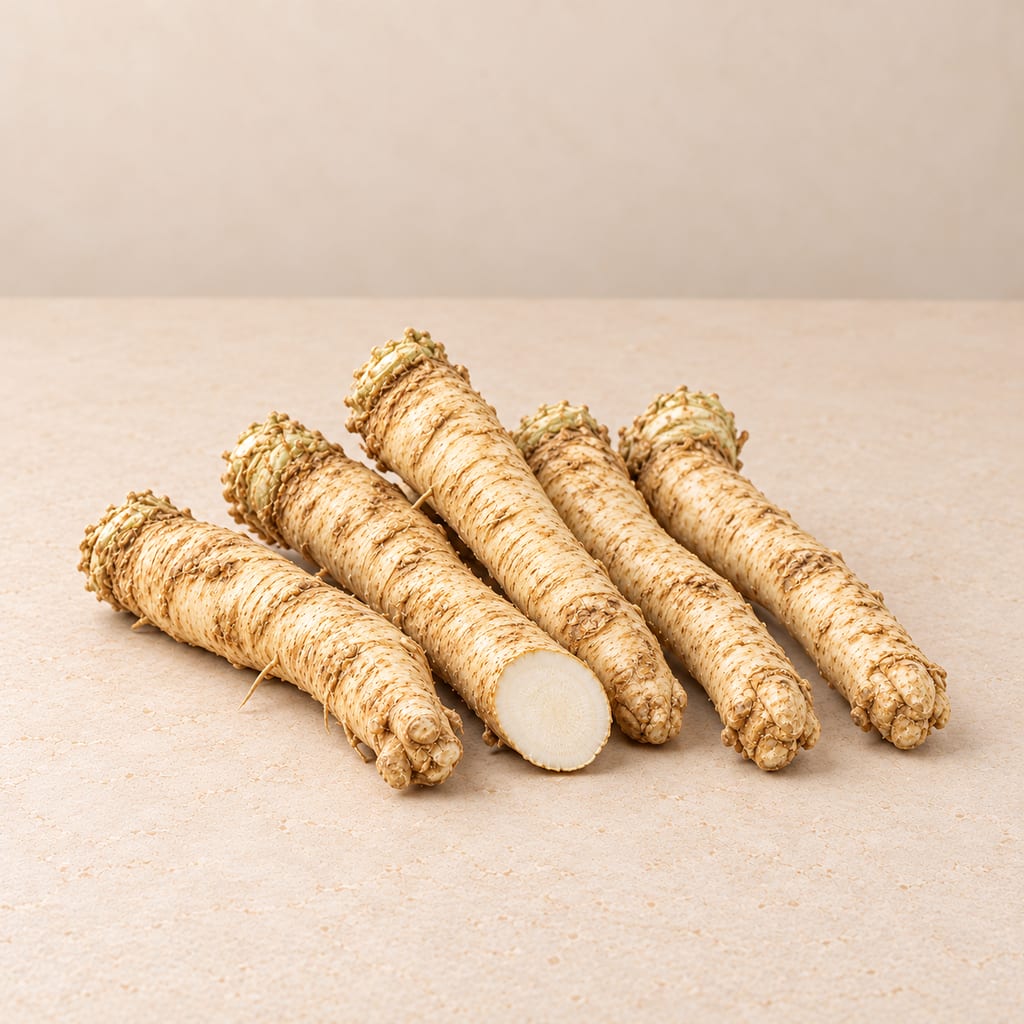
Horseradish root
Horseradish is the long white root of Armoracia rusticana, a perennial of the mustard family. Grated, it releases a sharp, nose-clearing heat that vinegar fixes in the sauce.
 FermenteaWhere food goes to change
Horseradish relish · Grated horseradish in vinegar
Prepared horseradish is freshly grated horseradish root mixed with vinegar and salt. This refrigerated relish holds the root’s sharp, nasal pungency in a spoonable form.
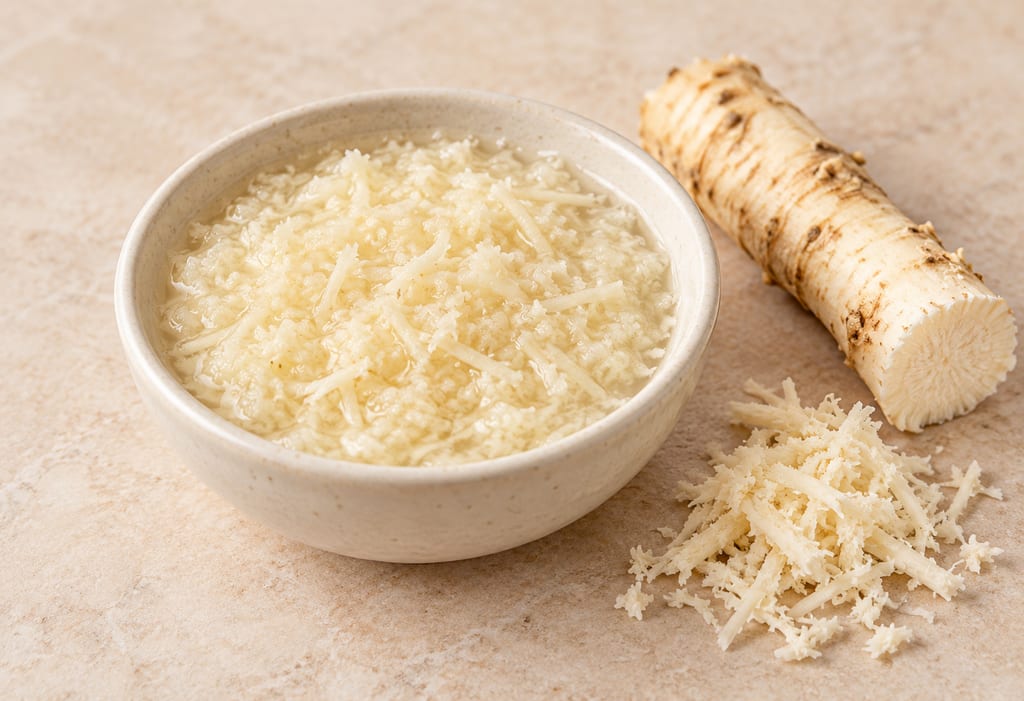
Prepared horseradish is not a fermented sauce. It is grated or ground horseradish root mixed with vinegar and, in the tested Oregon State Extension formula, salt and powdered ascorbic acid. The result is a refrigerated relish: pale, moist and fibrous, with a concentrated pungency that rises sharply into the nose and fades quickly. Its defining feature is the root itself, held in a spoonable form by a simple acid-and-salt mixture.
The plant, Armoracia rusticana, belongs to the mustard family, Brassicaceae. The thick taproot has a rough light-tan skin and a pale interior; the plant is a hardy perennial, though commercial growers often manage it as a crop. The condiment’s flavor does not exist at full strength inside an intact root. Cutting, grating or grinding ruptures the root’s cells and brings naturally separated substances into contact. The chemical reaction that follows is why freshly prepared horseradish smells more forcefully pungent than the whole root.
The name covers more than one style. In its simplest form, prepared horseradish is grated root in vinegar, often with salt. Commercial jars may add oil, sugar, thickening agents or other seasonings. Some Eastern European and Jewish preparations add beetroot to make a vivid red chrain; creamy versions mix the root with dairy or mayonnaise. These are related condiments, but they are not the same formula. This page’s method follows Oregon State Extension’s refrigerator relish with vinegar, salt and ascorbic acid, while noting the distinct regional variations rather than combining them into an invented universal sauce.
Horseradish has a long European culinary history, but the exact origin of the modern vinegar-preserved relish is not pinned to one date or place. An Italian Academy of Cuisine account traces references to horseradish in a fourteenth-century version of Liber de Coquina, where chopped root appears with vegetables or fruit cooked with vinegar-rich preserves. The same essay notes a mid-sixteenth-century culinary manuscript that lists the root among other pungent roots and greens. These records show that cooks were already using it as a seasoning, not that the modern jarred product had been invented.
A 1542 herbal by Leonhart Fuchs is reported by the Herb Society of America as mentioning horseradish as a condiment. The guide also recounts its use in Europe with roast beef and other foods by the seventeenth century, alongside medicinal claims. Culinary evidence and medicinal belief are different kinds of history: a plant’s traditional reputation does not establish a medical benefit. Horseradish’s role at table is more concretely visible in the sauces, meat accompaniments and relishes preserved in regional writing.
In Trieste and the surrounding Friuli-Venezia Giulia food culture, the root appears in many forms. The Accademia article describes cold sauces combining horseradish with vinegar, apples, citrus or egg, and warm preparations using broth, breadcrumbs, saffron, fish stock or other ingredients. It also records an 1806 household provision list pairing young pork with horseradish in the family’s own vinegar. Those examples make clear that vinegar-preserved grated root was one branch of a broader repertoire, not the only way the root was eaten.
The commercial story developed alongside cultivation. The Herb Society guide reports that immigrants began planting horseradish for sale in northeastern Illinois in the mid-nineteenth century and credits the Sass family with helping establish the regional trade. It records John Henry Heinz’s bottled sauce in 1869 as an early American commercial condiment. This account places bottled horseradish within the growth of nineteenth-century packaged foods; it does not turn that date into the invention of the condiment itself.
The recipe lists from Trieste also show how cooks softened or redirected the root’s sharpness without making one standard sauce. Grated apple and vinegar provide a tart, fruitier relish; egg yolk and oil make a richer dressing; broth turns the root into a warm sauce. These documented forms differ in texture, ingredients and service, and the source provides no common ratio that would make them interchangeable. They remain useful culinary comparisons, not variations of the measured refrigerator formula above.
Horseradish’s sharpness comes from glucosinolates and the enzyme myrosinase that are brought together when tissue is damaged. Sinigrin is a major glucosinolate in the root. Crushing lets myrosinase hydrolyse it, producing allyl isothiocyanate among the pungent volatile compounds. Because these compounds readily reach the nasal passages, the sensation is often described as a quick, penetrating heat rather than the lingering mouth burn associated with chilli peppers.
The texture of the grind influences how much tissue is disrupted and how quickly the aroma develops. A fine grater or food processor produces a more uniform paste and exposes more cut surface than a few rough shavings. This is not fermentation: no starter culture or microbial growth is involved in the recipe. The transformation is enzymatic and begins as soon as the root is cut.
Vinegar changes that reaction. The review describes acid as slowing or stopping the enzyme-driven formation of pungent compounds and helping stabilize the flavor of the ground root. Adding vinegar promptly therefore makes the heat more predictable and preserves a brighter, steadier character than leaving freshly grated root exposed for a long time. The amount and timing of the acid matter: Oregon State Extension’s measured recipe uses one cup of 5% white vinegar for two cups of grated root. Altering that proportion changes both flavor and acidity, so the cited formula should not be casually diluted or modified for preservation.
Salt contributes seasoning and a familiar relish flavor, while ascorbic acid is included in the Extension formulation. The recipe does not describe ascorbic acid as a safety control or provide an independent shelf-stability result. The acid and ingredients function together in a tested refrigerator preparation; none of their effects makes this product suitable for unrefrigerated storage.
Oregon State Extension gives a compact batch: two cups, or about three-quarters of a pound, of freshly grated horseradish; one cup of white vinegar labeled at five percent acidity; half a teaspoon of canning or pickling salt; and a quarter teaspoon of powdered ascorbic acid. The source estimates a yield of about two half-pint jars. It is a household refrigerator relish, adapted from a USDA home-canning bulletin but not presented as a shelf-stable canned product.
Begin by washing the roots thoroughly and peeling off the brown skin. The peel is a thin outer layer; removing it leaves the pale interior to be grated. A food processor can grate it, or the peeled root can be cut into small cubes and put through a grinder. The extension method also allows the root to be blended with vinegar to reach the desired consistency. Since damaged horseradish releases volatile compounds that irritate eyes and nose, ventilation makes the preparation more comfortable.
Once grated, combine the root with the vinegar, salt and ascorbic acid. The acid is added in the same mixture rather than after a long open rest, both to season the root and to moderate the enzymatic pungency as the paste forms. Pack the mixture into clean, sterilized jars, leave a quarter inch of headspace, seal and refrigerate. The jar and headspace instructions describe this small refrigerated batch; they do not constitute a boiling-water canning process.
The finished relish is not required to become smooth. A fine grind yields a close, even texture; a coarser grind leaves visible strands and a firmer bite. Either way, its sharpness changes over time as volatile compounds are lost. The Extension guide says pungency fades within one to two months even in the refrigerator and advises making small batches that can be used during that interval. This is a quality observation, not a safety deadline or a guarantee that a jar remains safe for that length of time.
Bavarian Meerrettich, also called Bayerischer Kren, is a geographically defined preparation whose registration application describes grated horseradish with vinegar, oil and spices. The application specifies a Bavarian production area and a product style recognized for its pungency and aroma. Its additional oil and spices distinguish it from the plain refrigerator relish here, which uses vinegar, salt and ascorbic acid. A protected regional preparation is evidence of a named local tradition, not proof that all prepared horseradish originated in Bavaria.
In Trieste, horseradish has been used freshly grated over warm pork and prosciutto, as well as in vinegar-based cold sauces and cooked sauces. The historic examples are not interchangeable formulas: apple and vinegar bring fruit sweetness and acid; citrus and wine make a different sauce; egg and oil create a richer texture; broth turns the root into a warm condiment. Each method balances the root’s pungency differently, and should be treated as its own preparation when quantities and stages matter.
Red chrain mixes horseradish with beetroot, bringing color, sweetness and earthy flavor. It is associated with Jewish and Slavic culinary traditions and is served in some communities with gefilte fish and other fish dishes. White chrain leaves the beet out and keeps a pale color. North American prepared horseradish often means grated root held in vinegar, while cream-style products soften its intensity with dairy. These forms share horseradish’s enzyme-generated pungency, but their added ingredients change color, texture, richness and use.
The variations also show why a jar label matters. A product called prepared horseradish may be pure root and vinegar, or a seasoned sauce with oil, sugar, cream, beet or stabilizers. Those changes are not merely packaging differences: they produce distinct condiments and can alter how the product behaves in a sauce. This recipe’s ingredient list stays with the documented Extension formula and does not suggest that every commercial style can be substituted without changing the result.
A spoonful of prepared horseradish cuts through fatty or mild foods with sharp aroma rather than adding bulk. Central and Eastern European traditions pair the root with boiled or smoked meats, sausages and some fish; the Trieste account highlights warm pork and prosciutto. In North American kitchens it appears in meat sauces and seafood condiments, and a little can sharpen mayonnaise or cream sauces. The root is assertive, so it is commonly served as an accompaniment, where diners can control the amount.
Heat changes the experience. Freshly grated horseradish is at its most vivid soon after it is cut; warmth softens the sharp aromatic impression, which is why regional cooks sometimes stir it into a warm preparation near serving. A creamy sauce mutes the root’s edge through dilution and fat, while vinegar keeps the characteristic sharpness clearer. These are useful culinary contrasts, not safety controls.
Keep the finished relish refrigerated, as the extension recipe directs. Its pungency declines over time, and the cited guide advises producing a small amount for this reason. It does not give an exact refrigerator temperature or establish a shelf-stable life. Do not infer that a sharp smell, clean color or familiar appearance proves safety.
The National Center for Home Food Preservation explains that the acidity of pickled products matters to safety and cautions against changing vinegar, food or water proportions in tested preservation recipes. This recipe’s ratio should not be treated as a canning formula. It is not a fermented pickle, and it should not replace vinegar of known acidity in a shelf-stable canning recipe. A reader who wants a preserved product for pantry storage needs a tested process explicitly written for that purpose.
Freshness changes the condiment before any seasoning does. A firm, mature root gives the grater a sound surface and carries the glucosinolates that become pungent when its cells break. Extension descriptions distinguish broad-leaved common types from narrower-leaved Bohemian types; growers value the latter for disease resistance, while the root’s culinary quality depends on the cultivar and growing conditions. The relish method does not specify a variety, so no cultivar should be treated as mandatory. It does specify freshly grated root, and that detail matters: the volatile compounds that make the relish sharp escape and weaken as the mixture stands.
Prepared horseradish is simply grated root stabilized with vinegar. Horseradish sauce is a different preparation: cream or mayonnaise is added to the prepared condiment, softening its heat and changing its body. Bottled products may also include oil, sugar or other ingredients, so a jar labeled horseradish is not necessarily this four-ingredient refrigerator relish. Japanese wasabi is a different plant, though commercial green pastes may use horseradish as a component; color alone does not identify the root. At home, keep the measured relish separate from cream-based sauces until serving, so each has a clear ingredient list and the simple vinegar formula remains intact.
Horseradish appears in medieval and early-modern European culinary records, while the specific vinegar-preserved grated relish has many regional forms; no single invention date or birthplace is established by the sources used here.
Yield 2 half-pint jars · Scaling: source batch only
This recipe is formulated for refrigeration and does not provide a validated canning process or shelf-stable acidity determination.
Hazard sourceChanging vinegar or vegetable proportions can change acidity; the NCHFP warns that minimum uniform acidity is important to food safety in pickled products.
Hazard sourceUse the recipe's 5% vinegar in the stated proportion and keep the prepared relish refrigerated.
Control sourceDo not treat this refrigerator relish as shelf-stable or substitute it for tested canning or pickling recipes.
Control sourceThis is a refrigerated condiment, not a shelf-stable canning recipe.
Do not infer preservation strength from pungency, smell, taste or color.
Grating horseradish releases sharp volatile compounds that can irritate the eyes and nose; work with ventilation.
Protected Bavarian horseradish is a documented regional variation, not the sole origin of prepared horseradish.
The culinary account documents horseradish in Trieste and northern Italian cuisine; it does not claim invention here.
The Herb Society guide describes nineteenth-century commercial cultivation and bottled condiment development; this is not an origin claim.
Horseradish is the long white root of Armoracia rusticana, a perennial of the mustard family. Grated, it releases a sharp, nose-clearing heat that vinegar fixes in the sauce.
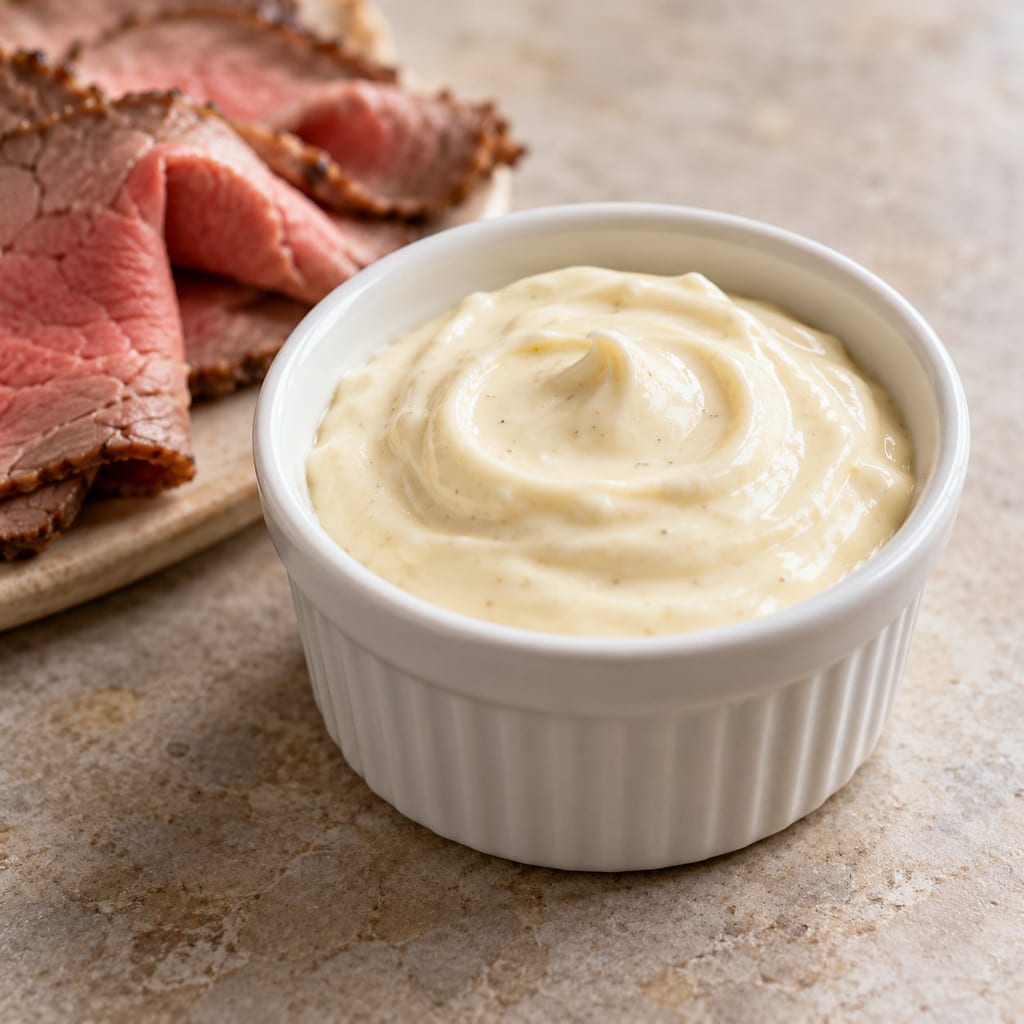
Prepared horseradish and lemon sharpen finished mayonnaise into a fresh accompaniment for roast meat or fish; the archived ratio has not been tested.
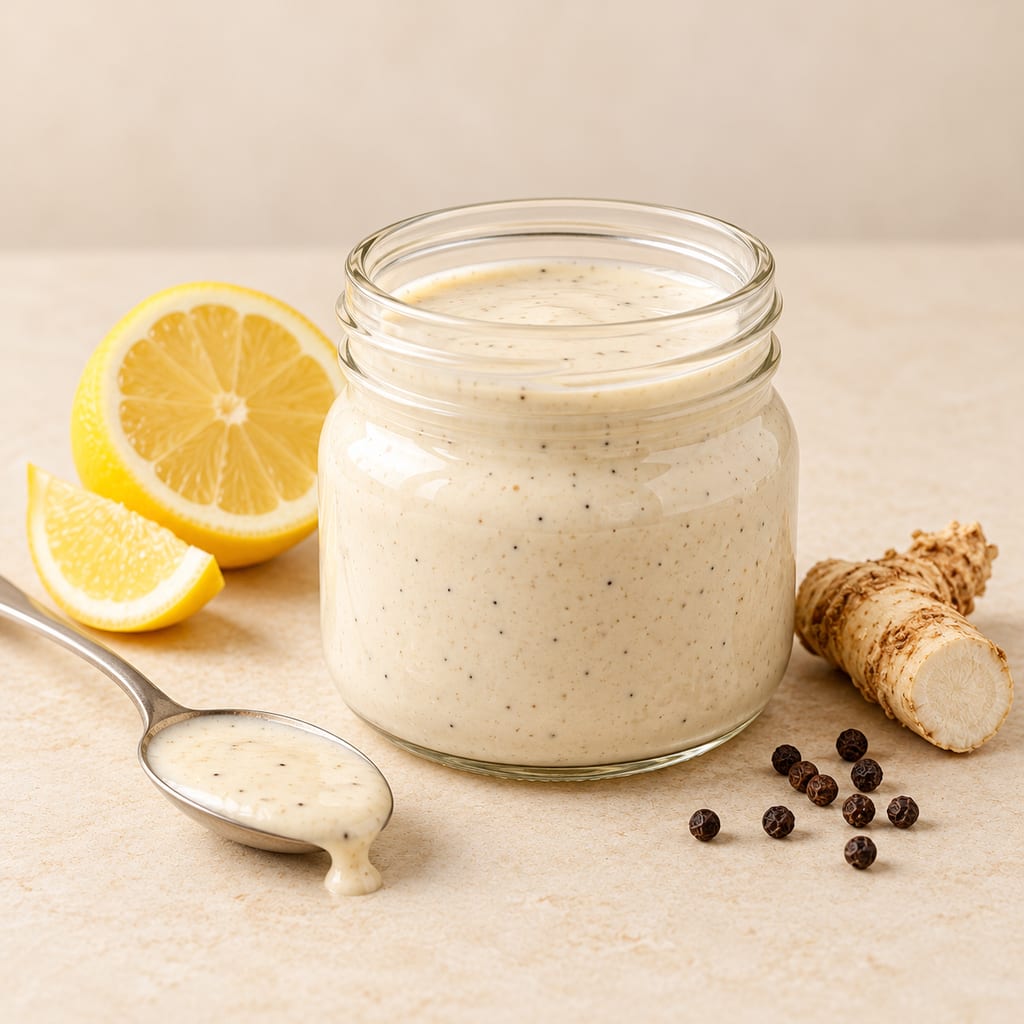
A whisked, mayonnaise-based Alabama-style sauce with vinegar, lemon, honey and horseradish. The measured batch below comes from a contemporary published recipe; it is not presented as Big Bob Gibson’s original or secret formula.
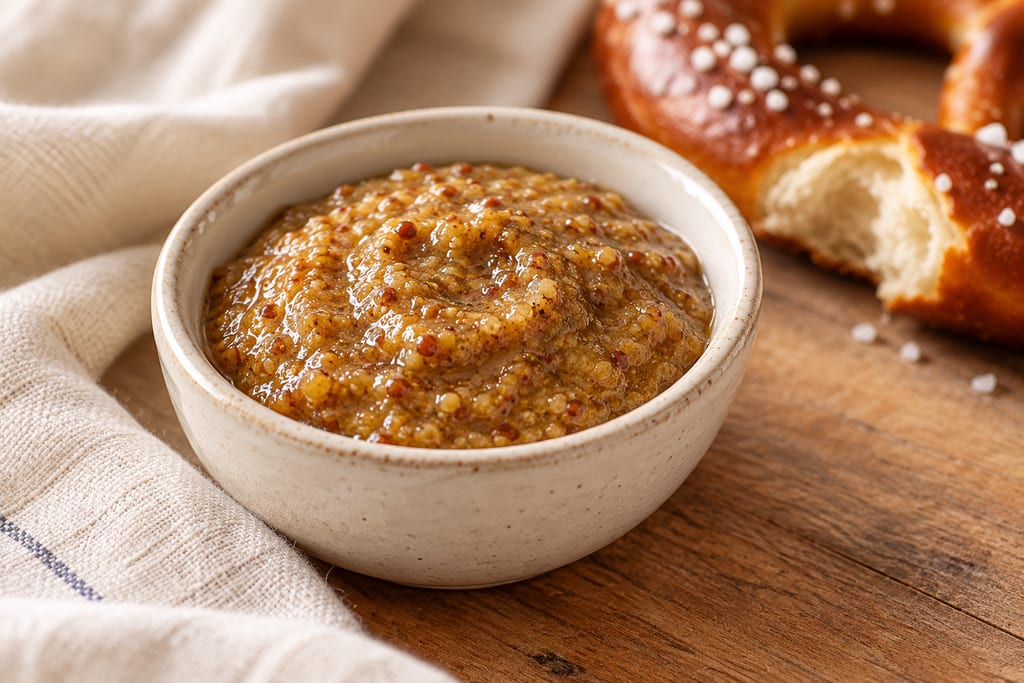
A coarse, sweet Bavarian-style mustard of yellow and brown seed in a cooked brown-sugar and vinegar base, made to eat with Weisswurst; an original refrigerated formula.

Allgäu Dampfnudeln are enriched wheat buns proofed in a covered casserole and cooked in milk and butter until the liquid nearly cooks away.
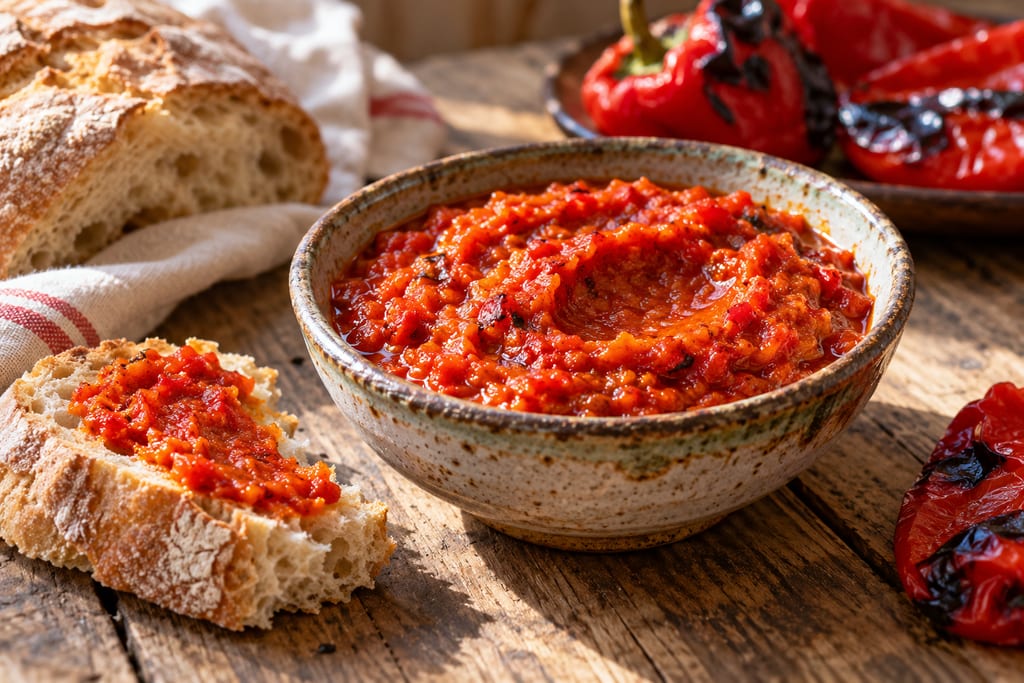
Ajvar is a cooked Balkan pepper preserve built around roasted red peppers, peeled, drained, ground and slowly fried with oil and seasoning. Leskovac’s protected version is a pepper specialty; regional versions vary.
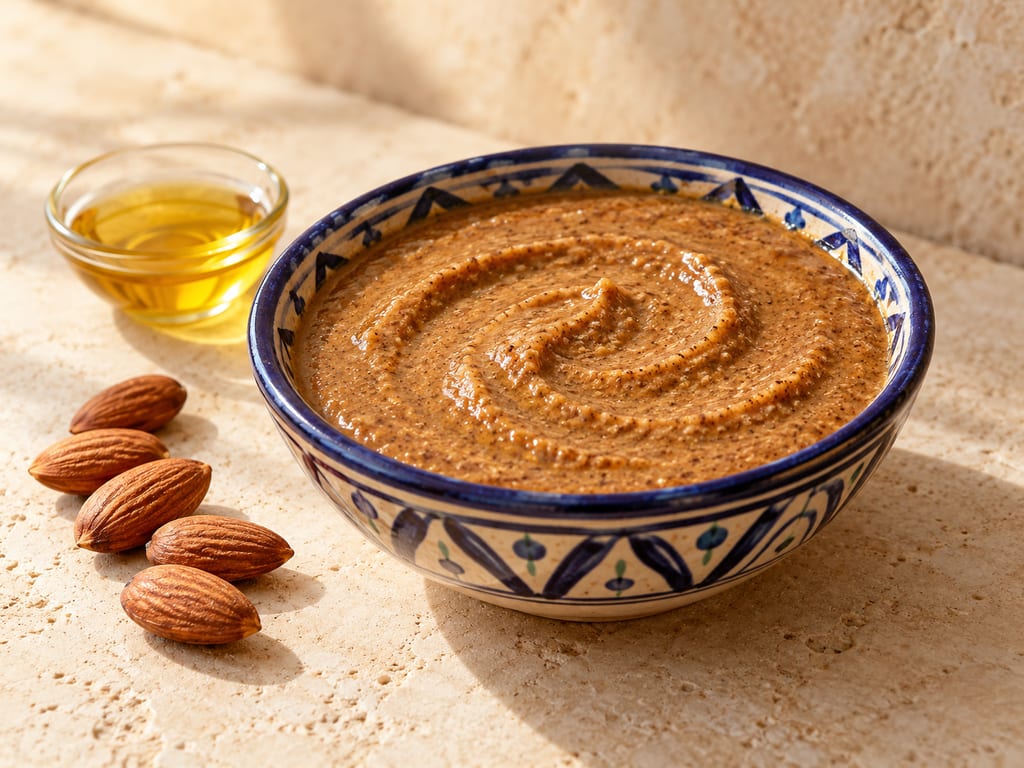
Amlou is a nutty, lightly sweet Moroccan spread of roasted almonds, culinary argan oil and honey. The almonds are ground first, then loosened with oil and sweetened; the balance can range from a thick spread to a dip.
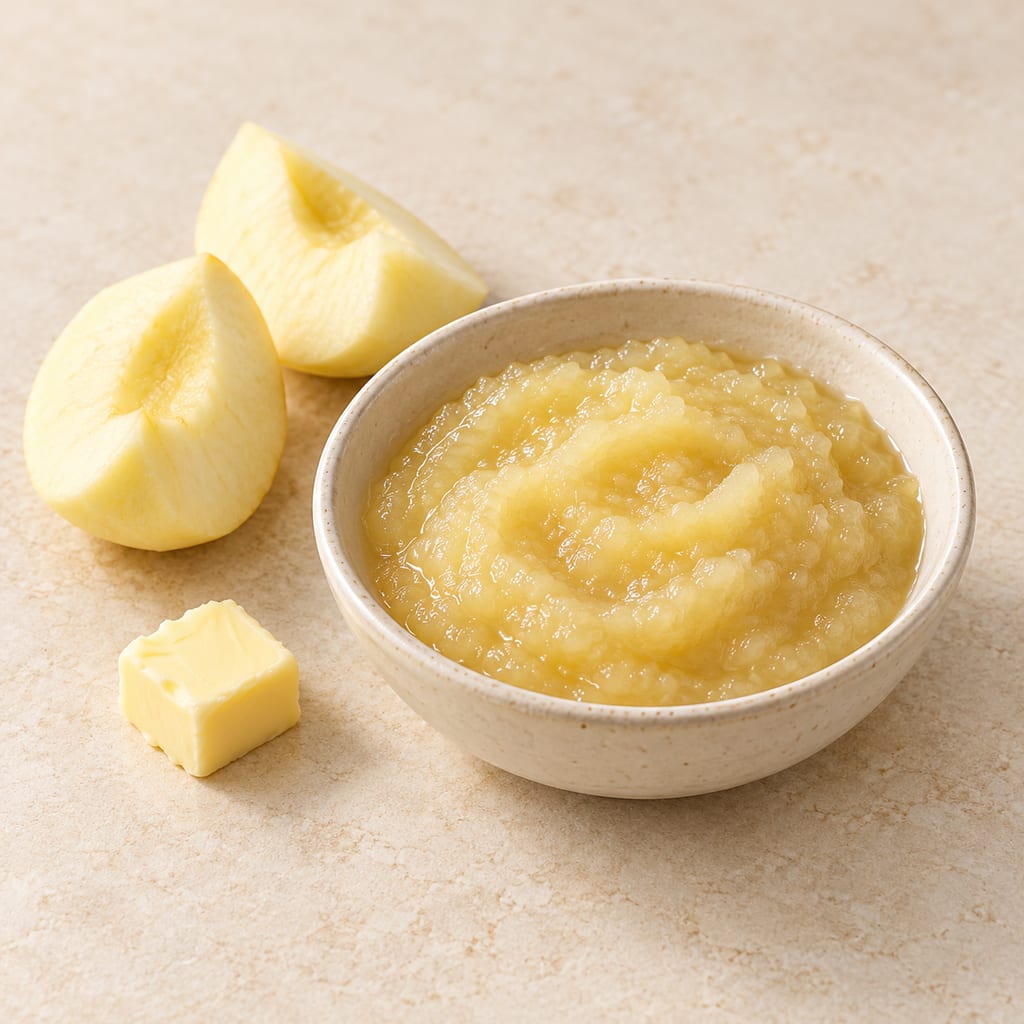
Apple sauce for goose and pork is a plain English accompaniment: cooked apples pulped with water, then sweetened with sugar and finished with a little butter.

A warm dip of garlic, anchovy and olive oil, often enriched with butter, that Piedmont serves over a flame with raw and cooked vegetables and bread.
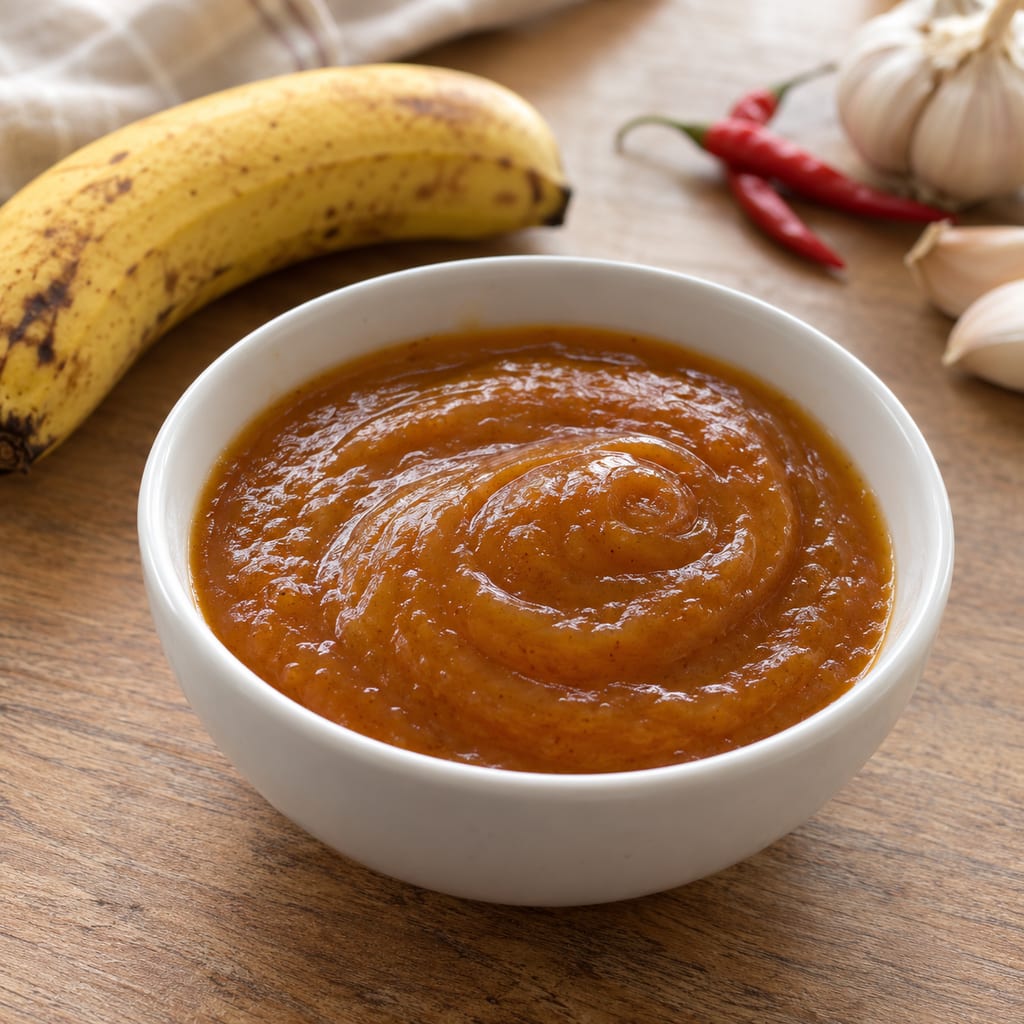
A sweet-hot table sauce of ripe banana simmered with vinegar, sugar, onion, garlic and fresh chilli, in the manner of Philippine banana ketchup. An untested development batch of about 500 g.
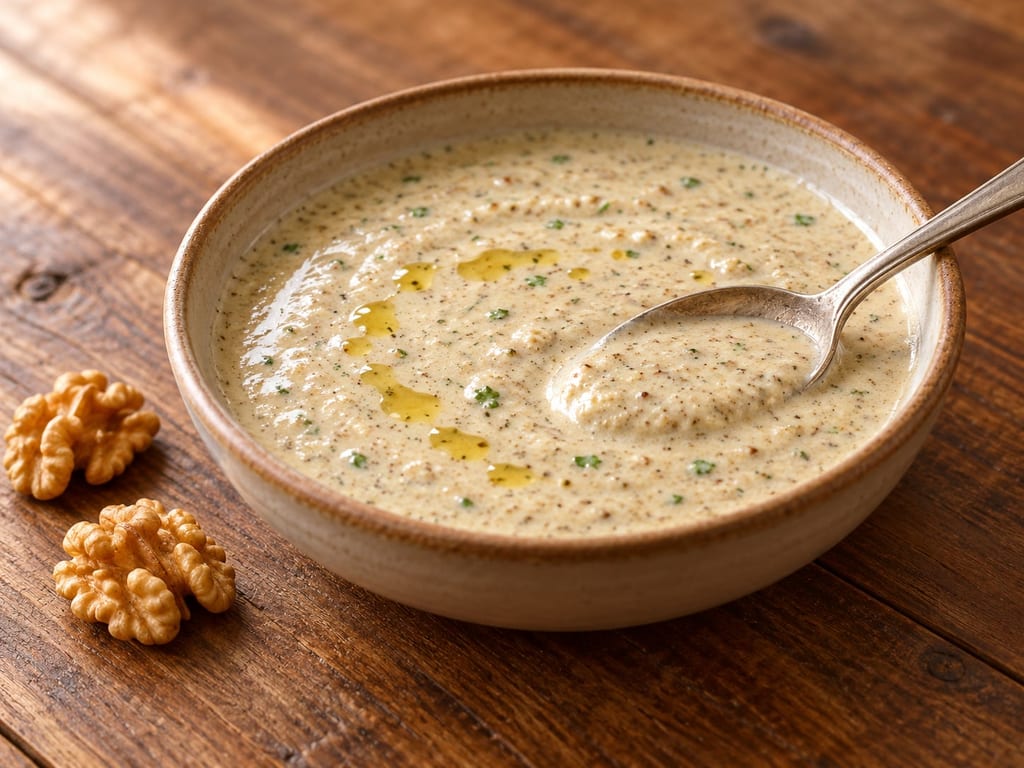
A Georgian walnut sauce of ground walnuts, garlic, vinegar and spices, thinned with water or broth. It is served with poultry, vegetables and bread, and is the sauce of the dish satsivi.
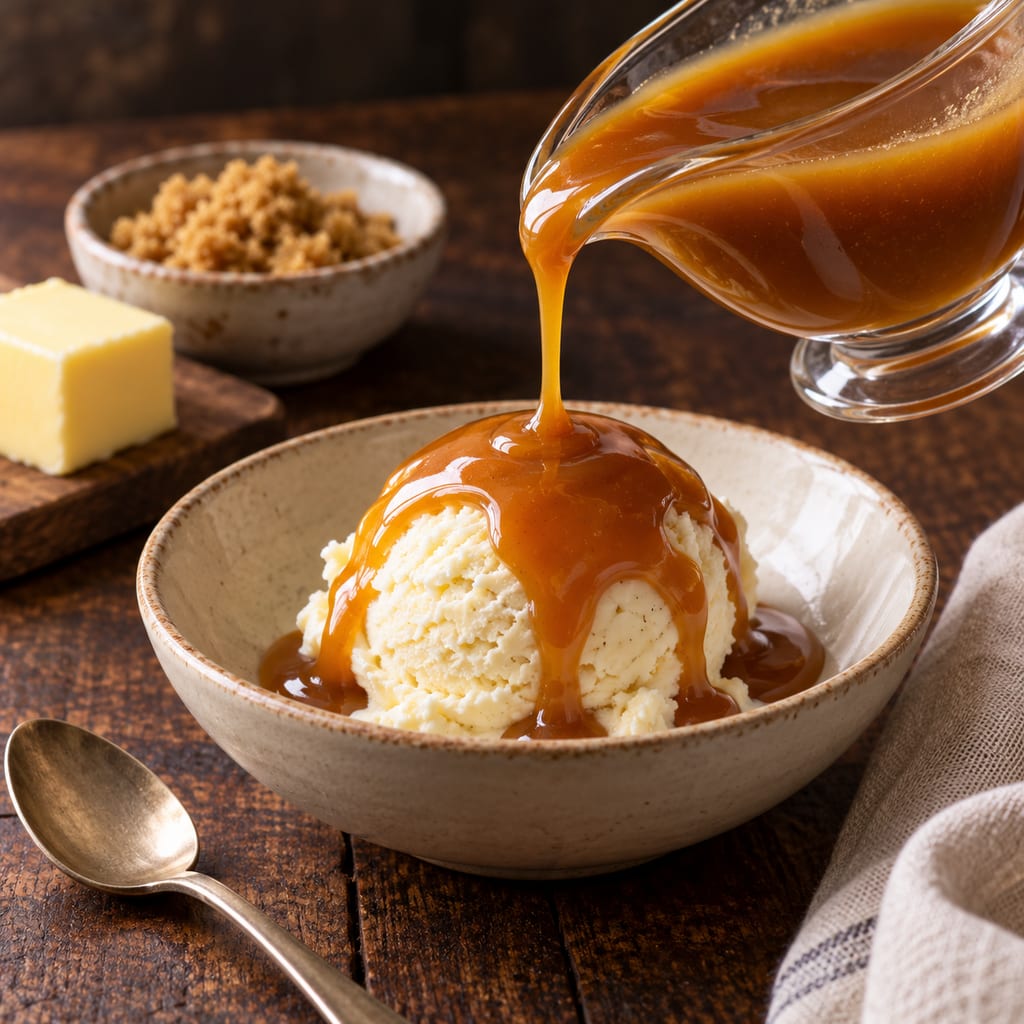
A pourable dessert sauce of brown sugar, butter and cream, with a little corn syrup and salt. It is the sauce form of the butterscotch confection and is made without water, unlike caramel.
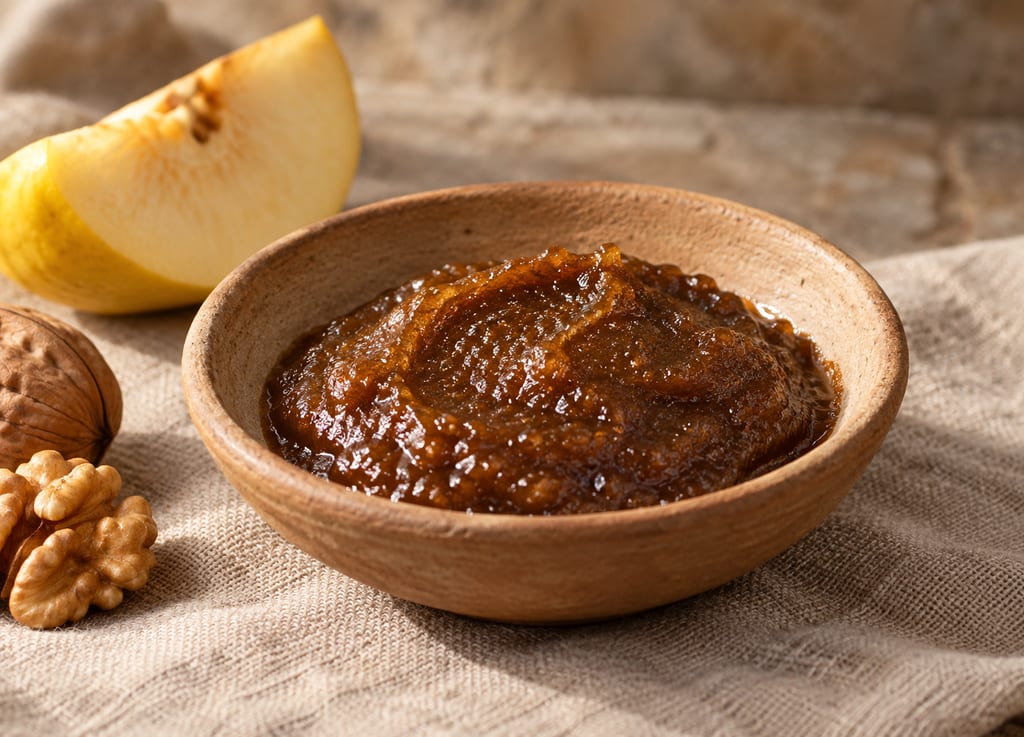
Byzantine murrī is a cooked imitation of murrī from the medieval Arabic repertoire, made from scorched honey, toasted bread, walnuts, quince, carob and spices rather than from a long grain fermentation.
No community contributions have been published for this entry yet.
Sign in to contribute. Published comments and photos are free to read.
Oregon State University Extension ServiceMethod · Safety · Storage
Preserving horseradishRefrigerated relish method: 2 cups (¾ pound) grated horseradish, 1 cup 5% white vinegar, ½ teaspoon canning salt and ¼ teaspoon powdered ascorbic acid; about two half-pints.
Wash and peel roots, grate or grind, combine, pack into sterilized jars with ¼-inch headspace, seal and refrigerate; pungency fades within one to two months even under refrigeration.
Cited in: The root behind the relish; Why grating makes it pungent; The measured refrigerator method; At the table and in the refrigerator; Choosing the root and keeping its character
National Center for Home Food Preservation, University of GeorgiaSafety · Method
General Information on FermentingThe NCHFP distinguishes non-fermented fresh-pack products acidified with vinegar from fermented foods and warns that vinegar, food or water proportions must not be altered in preservation recipes; uniform acidity matters for safety.
The Herb Society of AmericaHistory · Culinary use · Geography
The Herb Society of America’s Essential Guide to HorseradishThe guide documents historical culinary and medicinal use, a 1542 mention as a condiment, use with roast beef by the 1600s, and nineteenth-century commercial growing in Illinois and other U.S. states.
It describes horseradish root, varieties, pungency, cultivation and a home method for vinegar-preserved horseradish.
Cited in: The root behind the relish; A long record, many kitchens; At the table and in the refrigerator
Accademia Italiana della Cucina, Civiltà della Tavola, no. 251History · Regional variation · Culinary use
That Root with the Pungent AromaThe article reports horseradish in the fourteenth-century Liber de Coquina and mid-sixteenth-century writing, then gives a range of regional preparations in and around Trieste, including vinegar, apples, egg, broth, oil, salt and Terrano wine.
It links horseradish to boiled and smoked meat, sausages and fish in Central and Eastern European cookery and records its use in Friuli-Venezia Giulia.
Cited in: A long record, many kitchens; Regional forms and what changes; At the table and in the refrigerator
Official Journal of the European UnionRegional variation · Geography
Application for registration of ‘Bayerischer Meerrettich’ or ‘Bayerischer Kren’The registration application describes a Bavarian grated horseradish preparation made with horseradish, vinegar, oil and spices and identifies its defined Bavarian production area.
Cited in: Regional forms and what changes
HorticulturaeScience · Culinary use
Horseradish: A Neglected and Underutilized Plant Species for Improving Human HealthReview describes myrosinase acting on glucosinolates when root tissue is crushed, formation of pungent isothiocyanates, and vinegar’s role in halting the reaction and stabilizing flavor; it also reviews European, Jewish and North American condiment variations.
Cited in: Why grating makes it pungent; Regional forms and what changes
University of Wisconsin–Madison Division of ExtensionIngredient selection · Science · Culinary use
Horseradish, Armoracia rusticanaWisconsin Extension distinguishes prepared horseradish, grated root mixed with vinegar, from horseradish sauce with cream or mayonnaise; it describes the pale color and common uses with meats, chicken, seafood and sandwiches.
The article describes common and Bohemian horseradish types and explains that damaged cells release pungent mustard-oil compounds; vinegar stops their degradation.
Cited in: Choosing the root and keeping its character