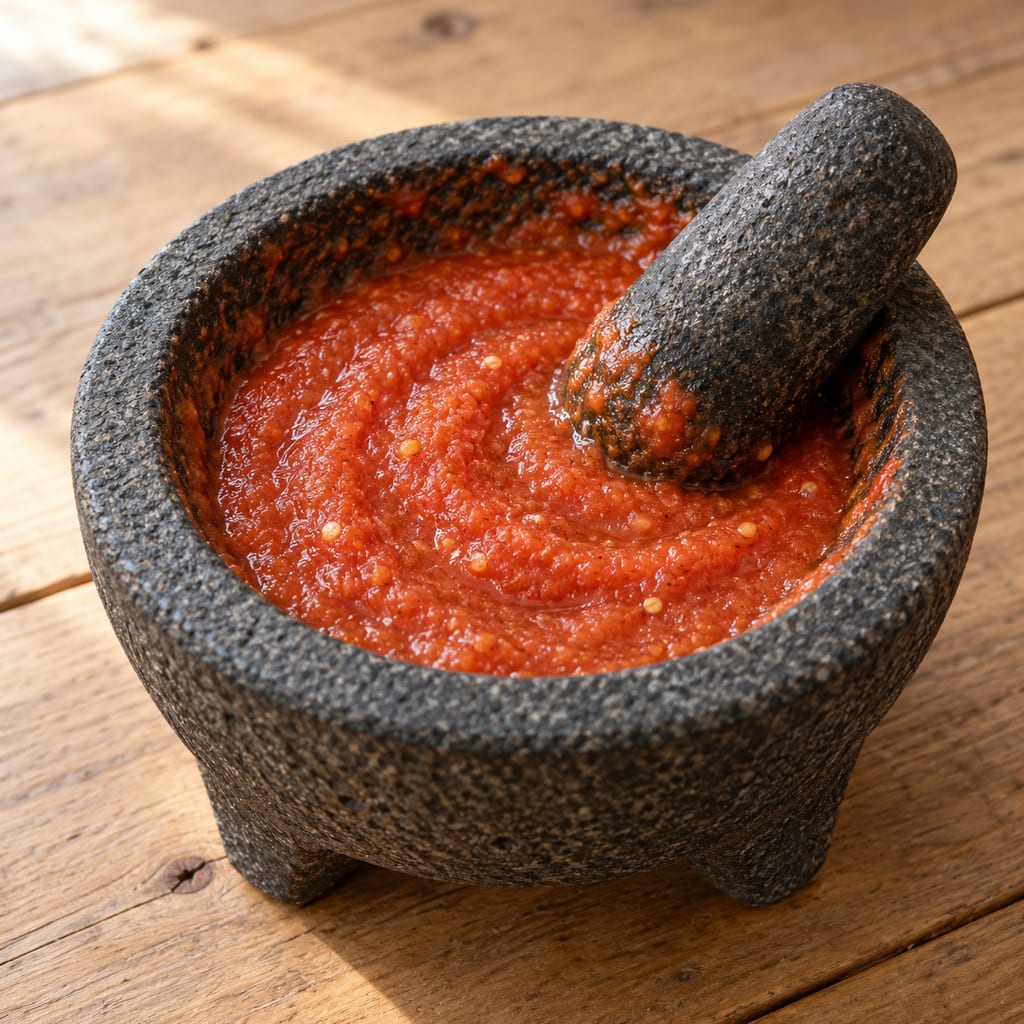
Chancho en piedra
Chancho en piedra is a Chilean sauce of tomato, garlic, cumin and chilli, ground by hand in a stone mortar. Its name refers to the stone, not to pork.
 FermenteaWhere food goes to change
merkén · Merken · Mérken · Mapuche smoked chile seasoning
Merkén is the Mapuche seasoning of dried, smoked and ground ají cacho de cabra chile, sometimes with toasted coriander seed and salt, made in the Maule and La Araucanía regions of Chile.

Merkén is a seasoning of smoked chile, ground to a powder. It belongs to the Mapuche of south-central Chile, and the chile behind it is ají cacho de cabra, the goat's-horn chile. A Universidad Católica del Maule manual for family farming in the Maule region describes it as dried, smoked and ground ají with salt and other seasonings that vary by family or place, and treats the smoke-dried chile as the key raw material, separate from the later grinding and blending.
That sequence, dry, smoke, toast, grind, is common to the accounts. What differs is the time, the fire, the fuel and whether coriander goes in. The page gives one account as the main method and the other as a documented variation. Neither is the one correct merkén; the producer from Cholchol notes herself that flavour changes with region, chile type, growing method, soil, smoking time and wood.
The recipe taught by a Mapuche cook of Longaví, in the Maule region, and presented by Chile's national directorate for Indigenous peoples, uses ají cacho de cabra alone. The chiles are tied by the stems and dried in full sun for at least a day, then smoked over a fire that gives smoke but no flame for about five hours until fully dry. The best deep-red chiles are kept, the seeds are taken out, and the flesh is toasted over a strong flame for about 45 to 60 minutes, stirred constantly, until it crackles. It is ground in a mill or an electric grinder, with good ventilation advised throughout.
The producer from Cholchol, in La Araucanía, describes a slower sequence. Her chiles are harvested in March and April and were historically put on the shelf above the cooking hearth and smoked over the hearth's wood fire for two to three months. They are cleaned, the stems removed, and toasted over moderate heat in a clay callana or a wood-fired oven. She grinds them by hand on a stone until granular and mixes in toasted coriander seed and salt. She says that is the whole recipe.
The two differ in drying and smoking time, in fuel, in how the chile is toasted and in whether coriander is added. They are not merged here.
The Cholchol producer describes merkén as a gourmet condiment that was historically kept for guests and important people. It was served in a small dish with a spoon, added to prepared dishes, or mixed with pork fat, called la color, and used on legumes. A Mapuche cookbook presents Ana Anticoy's pishku, a legume and vegetable dish, with smoked merkén among its ingredients; the entry gives no quantities or method, so it shows a use, not a recipe.
In Palmilla, in the Maule region, rural families smoke ají in structures called zarandas. A 2024 study of that tradition separates whole smoked peppers, sold as capi, from ground ají puro and from later value-added products, and it does not make every Palmilla smoked pepper into merkén or set out one regional recipe. The Palmilla book and the Mapuche accounts overlap in place and crop but not in method: they describe different structures, products and purposes, so neither is read as the origin of the other.
None of the sources reviewed gives a date for the first merkén, a standard apparatus, a universal ingredient mix, a monitored endpoint or a storage life. Smoked chile is dry and sold dry, but no source gives a moisture or water-activity figure, and smell or colour is not a test of safety. Each account is a local method with its own steps and limits.
Merkén is presented as a Mapuche food, historically kept for guests and important people and made from chiles smoked over the hearth. No source reviewed gives a date for its beginning.
Scaling: source batch only
No account gives a validated moisture or water-activity figure or a storage life. Smell and colour do not show that the chile is dry enough to keep.
Hazard sourceThe Maule recipe advises good ventilation during preparation.
Hazard sourceDry the chiles fully before grinding and work in a ventilated place.
Control sourceThese are local methods, not validated processes.
Do not judge dryness or safety by smell or colour.
A national directorate for Indigenous peoples presents a merkén taught by a Mapuche cook of Longaví in the Maule region.
A producer from Cholchol describes the method she follows and the hearth smoking that was done historically.
Chancho en piedra is a Chilean sauce of tomato, garlic, cumin and chilli, ground by hand in a stone mortar. Its name refers to the stone, not to pork.

Chipotle is a ripe jalapeño pepper smoke-dried in a wood-fired cocedor. Camargo, Chihuahua, documents a large-scale version of the process; its source accounts do not establish a complete home batch or validated safety endpoint.
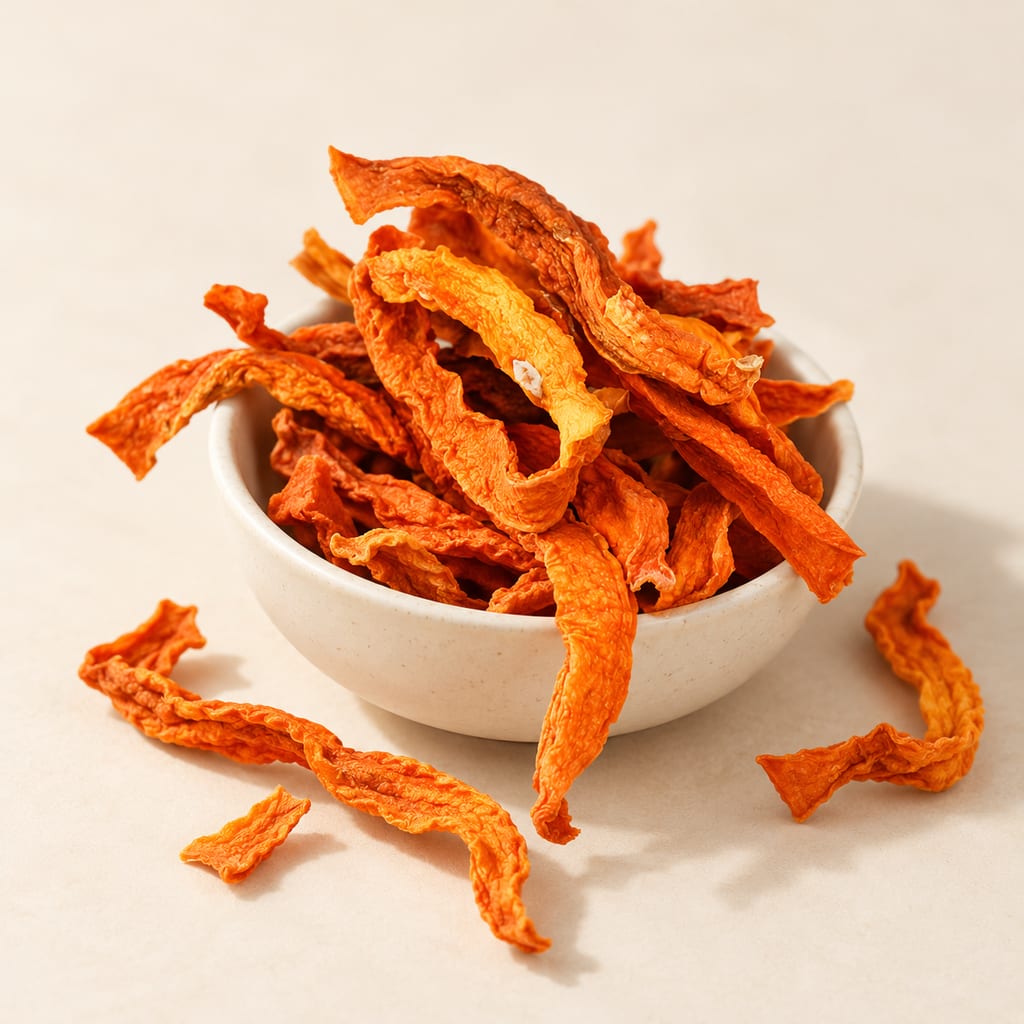
Steam-blanched pumpkin dried until brittle, kept as pieces or ground into powder, with pumpkin-specific packaging and quality guidance.
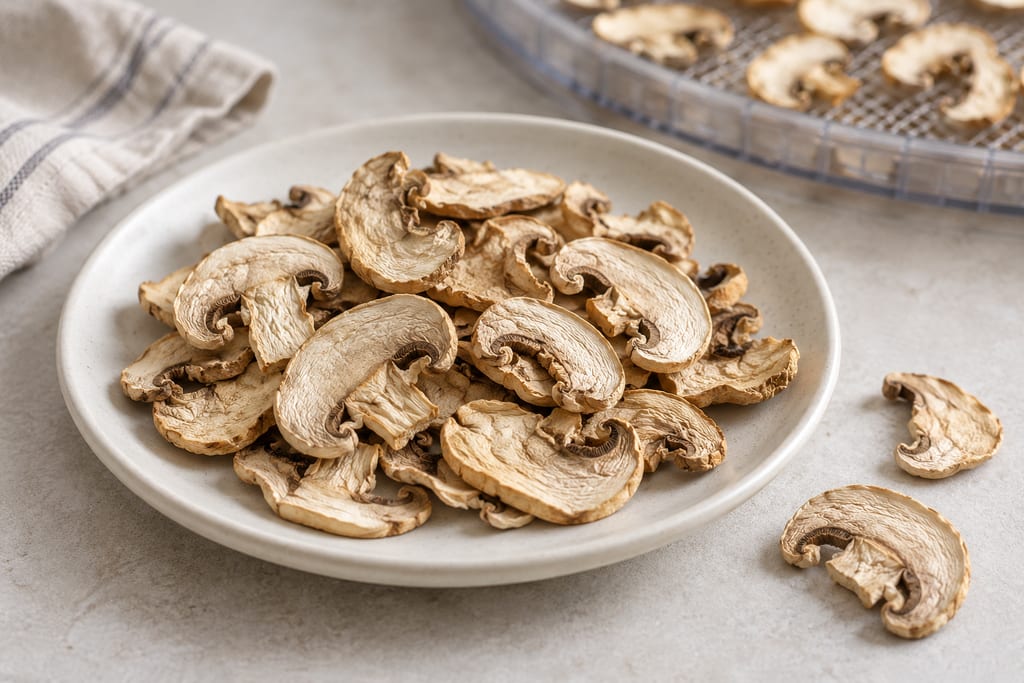
Hot-air dehydrated mushrooms are sliced mushrooms dried in a dehydrator or dryer with heated, moving air; a 2011 study dried button mushroom slices at 60 °C and compared them with microwave-vacuum and freeze-drying.
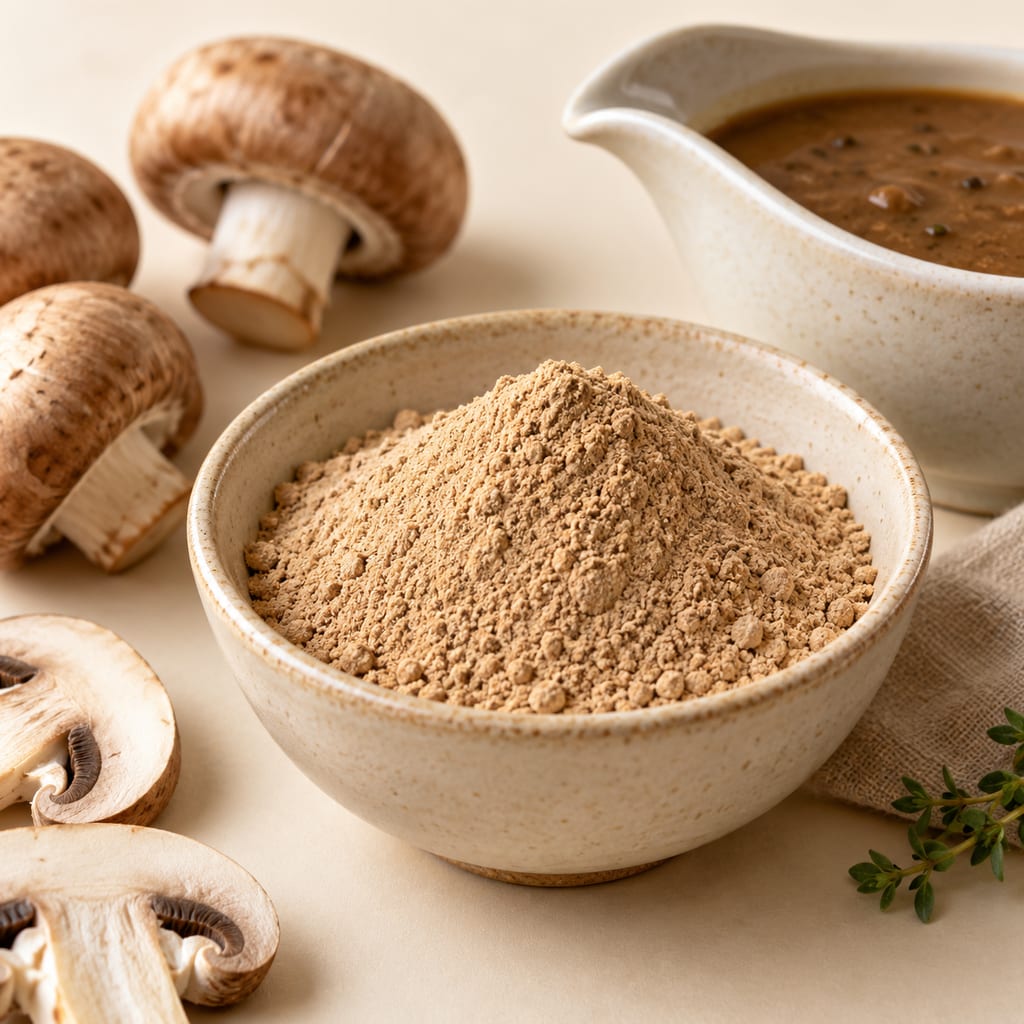
Mushroom powder is dried mushroom tissue ground to a fine powder and added to gravies and sauces. Victorian cooks made it from fresh cultivated mushrooms when fresh ones were not to hand.
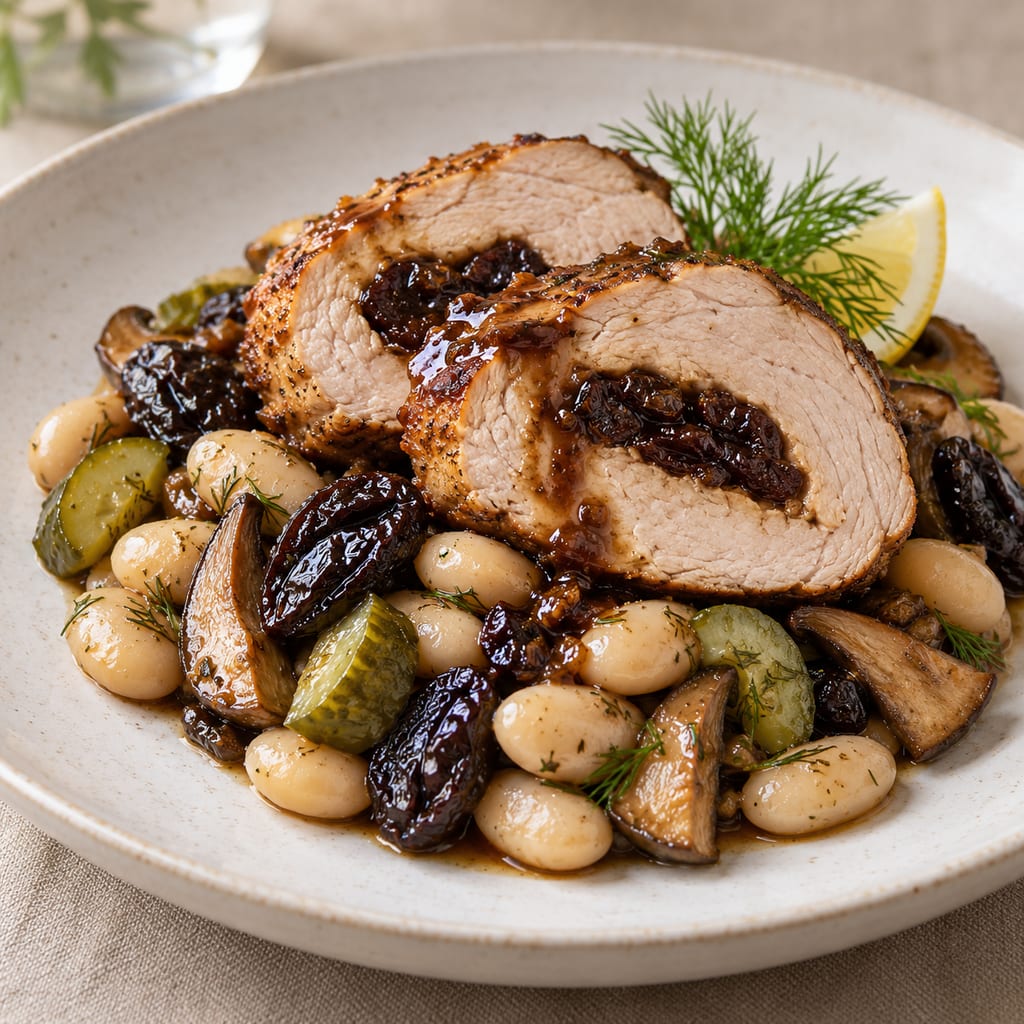
This Polish competition recipe stuffs pork loin with suska and serves it with a bean salad containing more smoked-and-dried plums.
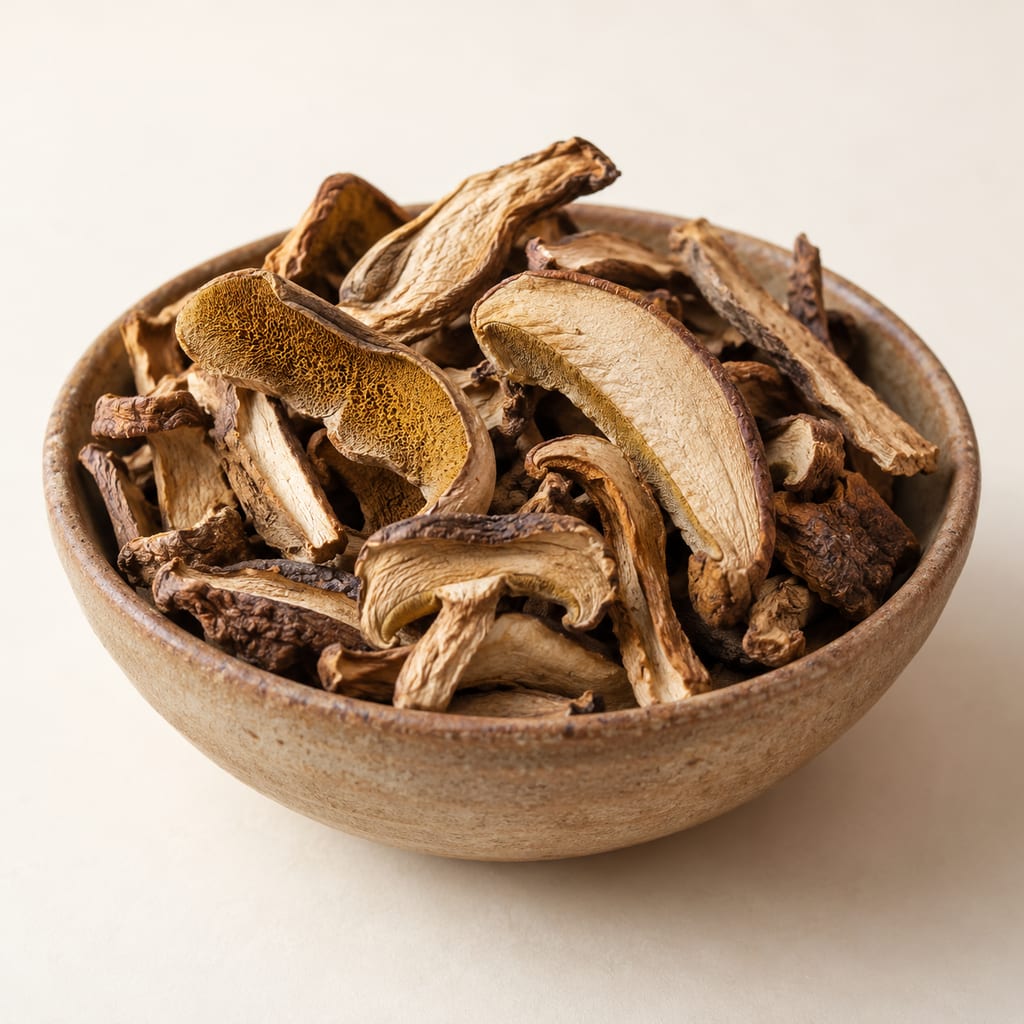
Protected solar-dried mushrooms are slices of wild Suillus luteus dried under a shade cover, a fitotoldo, rather than in open sun, as tested in an experimental study from Apurímac, Peru.
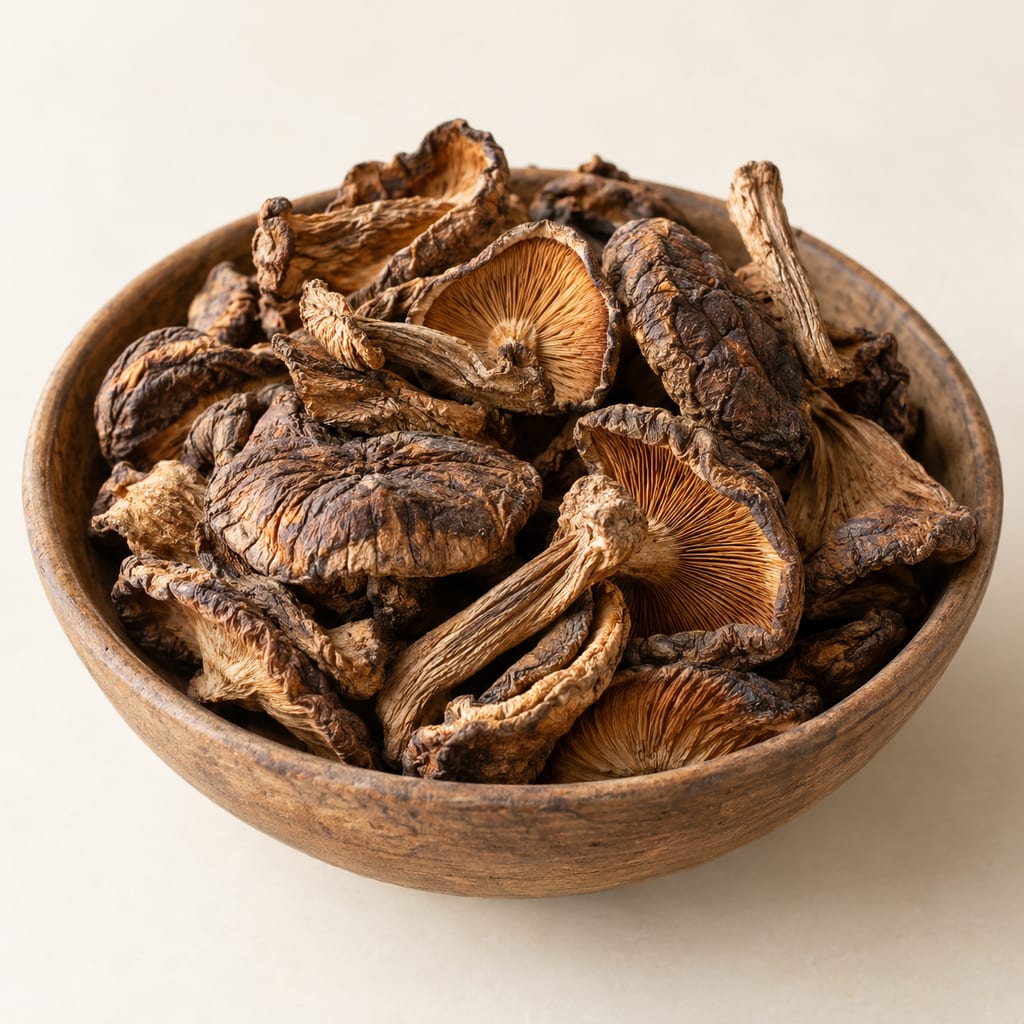
Hearth-dried mushrooms are dried on shelves above a cooking fire, so heat and smoke reach them. Tanzanian records describe the method; a Vietnamese study tested smoke-dried shiitake for fuel-dependent contaminants.
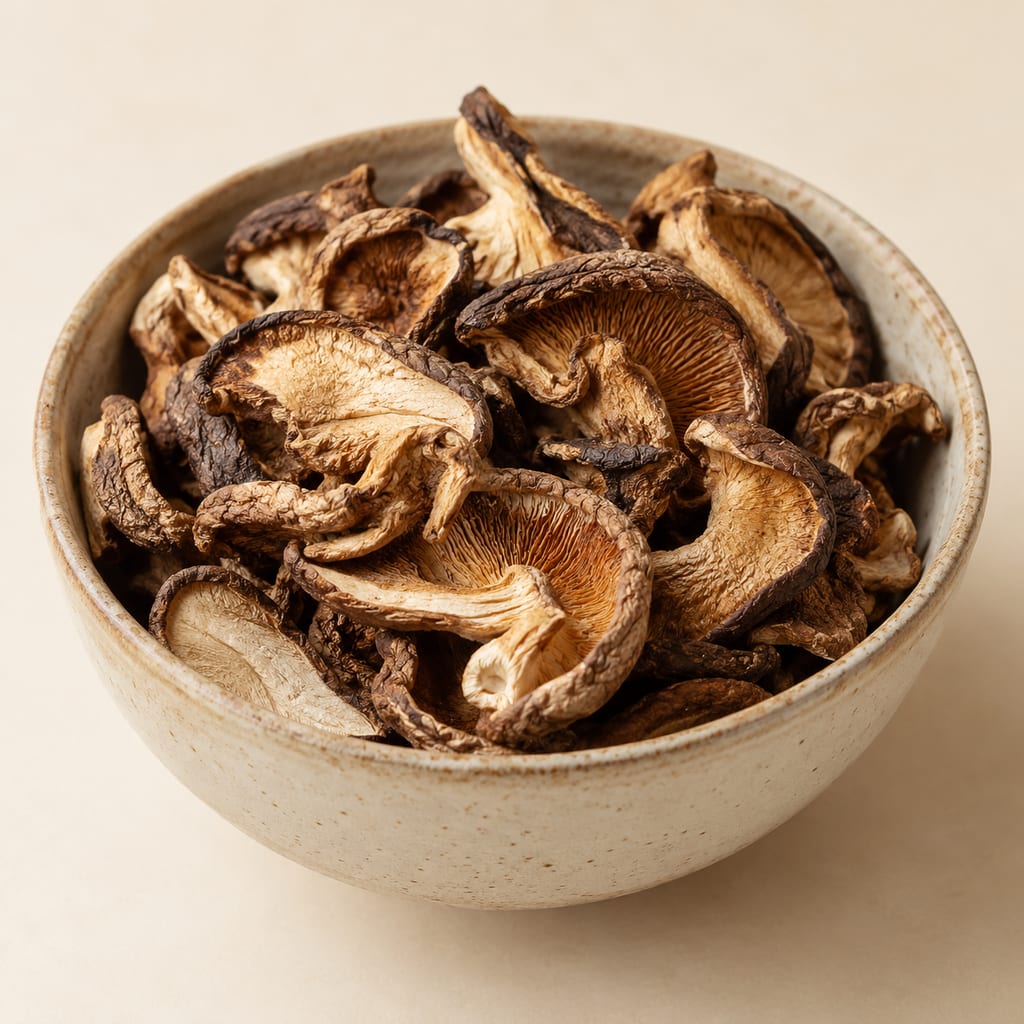
Sun-dried mushrooms are mushrooms spread in open sunlight and left to lose their water to solar heat and moving air, a method recorded in Nigeria, Tanzania, Mexico and among Algerian desert truffle gatherers.
No community contributions have been published for this entry yet.
Sign in to contribute. Published comments and photos are free to read.
Subdirección Nacional de Pueblos Originarios, Chile; presenter Francisca Curihual PérezMethod
Receta kiñe: merken y café de trigo, mapucheMerkén from ají cacho de cabra only, taught by a cook of Longaví in the Maule region
Tie by stems, sun-dry at least a day, smoke about five hours over fire with smoke but no flame
Keep best deep-red chiles, remove seeds, toast 45 to 60 minutes with constant stirring until it crackles, grind
Work with good ventilation
Cited in: Two Mapuche methods; What the accounts leave open
Instituto de Desarrollo Agropecuario (INDAP), Araucanía; 13 September 2022Method · Use · History
Productora de Cholchol Ginette Rivera Tralma cuenta el secreto del "verdadero merkén mapuche"Cacho de cabra chiles harvested in March and April
Historically smoked two to three months on the shelf above the hearth
Toasted in a clay callana or wood-fired oven, hand-ground on a stone, mixed with toasted coriander seed and salt
Flavour varies with region, chile type, growing method, soil, smoking time and wood
Served in a small dish with a spoon, added to dishes, mixed with pork fat (la color) for legumes
Cited in: Smoked chile, ground; Two Mapuche methods; How it is used; What the accounts leave open
Universidad Católica del Maule, Ají Maule project, 2017Method
Manual del procesamiento de ají para la agricultura familiar campesina en la Región del MauleMerkén described as dried, smoked and ground ají with salt and other seasonings that vary
Smoke-drying is distinguished from later grinding and blending
Cited in: Smoked chile, ground; Palmilla smoked ají is a separate tradition
Universidad Católica del Maule with Junta de Vecinos de Palmilla, 2024History
Tradición campesina de ahumado de ají en zarandas de Palmilla: patrimonio rural del MaulePalmilla zarandas smoke ají for whole smoked peppers (capi), ground ají puro and later products
The book does not make every Palmilla smoked pepper into merkén
Cited in: Palmilla smoked ají is a separate tradition
Subsecretaría de Turismo / SERCOTEC, Universidad de La Frontera, Campus PucónUse
Carta Cocina Mapuche: Küme Mogen / El buen vivirPishku, a legume and vegetable dish by Ana Anticoy, lists smoked merkén among its ingredients; no quantities or method
Cited in: How it is used