
Merkén
Merkén is the Mapuche seasoning of dried, smoked and ground ají cacho de cabra chile, sometimes with toasted coriander seed and salt, made in the Maule and La Araucanía regions of Chile.
 FermenteaWhere food goes to change
Chanco en piedra
Chancho en piedra is a Chilean sauce of tomato, garlic, cumin and chilli, ground by hand in a stone mortar. Its name refers to the stone, not to pork.
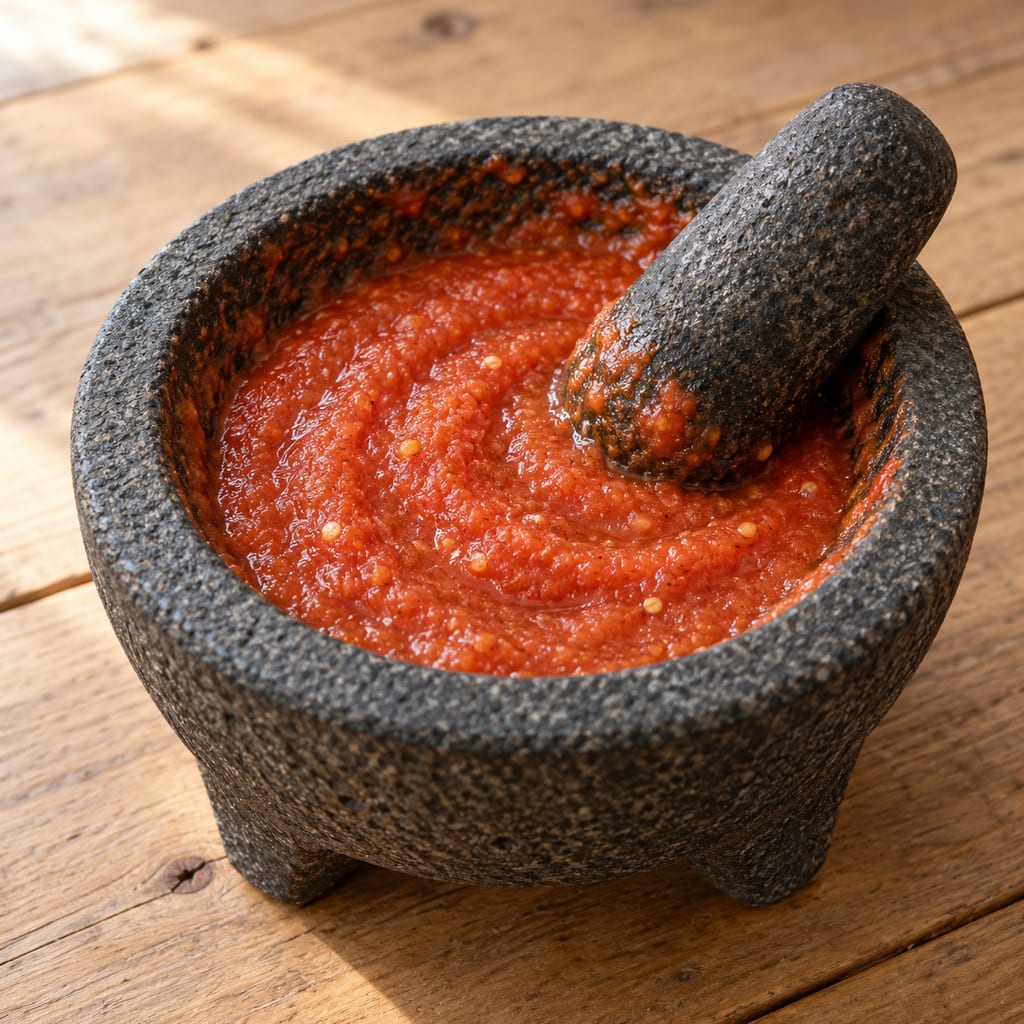
Chancho en piedra is a Chilean sauce of tomato, garlic, cumin and chilli, ground to a smooth paste in a stone mortar. Its name does not refer to pork. The Spanish Wikipedia article says the name refers to the stone used for grinding. It suggests a possible origin in the Quechua chanco or chancar, meaning to crush or grind, a word miners used for crushing ore, but presents this as a possibility only.
The sauce is closely related to pebre. Pebre is commonly chopped; chancho en piedra is ground in a mortar. One written account describes a homogeneous tomato paste, while regional accounts also document rustic pounded versions.
The earliest written account the sources cite is Eugenio Pereira Salas's Apuntes para la historia de la cocina chilena, which first appeared in 1943. Pereira Salas places the dish in Talca and describes it as a grinding of tomato, chilli, garlic and onion, seasoned with salt, oil and pepper.
Oreste Plath's 1957 chapter on the pebre family names chancho en piedra as a regional variant alongside pebre en piedra. That places the name in the Chilean written record by the mid-twentieth century, without giving an origin date.
A popular story links the sauce to the Chilean War of Independence. In it, the guerrilla leader Manuel Rodríguez joined bandits led by Neira, and the two groups combined their ingredients on Piedra Peña hill. A bandit named Martínez is said to have joked that they looked like pigs eating off a stone. The article treats this as tradition, and no primary source is cited for it.
The cited Spanish Wikipedia account describes grinding cumin and garlic first, then grinding whole tomatoes fully into a homogeneous paste. A regional Maule account also documents a rustic result made by pounding tomato with garlic, chilli and salt in the mortar. Texture therefore varies between the documented versions; the defining method is crushing in a mortar rather than chopping alone.
The whole-tomato instruction belongs to the account describing the homogeneous version; regional recipes may cut or pound ingredients differently. The sauce is best served fresh. The sources do not say why stone changes the texture, and this page does not guess.
The sources cite no tested preservation method and no storage duration. The Spanish Wikipedia article reports that some recipes add about 1 g of potassium sorbate per litre for preservation. That figure is a report of practice, not a validated process, and this page does not present the sauce as shelf-stable. Serve it fresh.
Eugenio Pereira Salas, in Apuntes para la historia de la cocina chilena (first published 1943; cited here from the 1977 second edition, p. 88), records the dish as a grinding of tomato, chilli, garlic and onion and places its origin in Talca. Oreste Plath's 1957 chapter names chancho en piedra as a regional variant of pebre en piedra. The popular Independence-era legend is recorded by the Spanish Wikipedia article but is not documented.
No tested preservation method or storage duration is cited. One source reports that some recipes add about 1 g of potassium sorbate per litre; this page does not treat the sauce as shelf-stable.
Pereira Salas places the origin of the dish in Talca. This is a written attribution in a 1943 book, not a dated origin.
Documented as a Chilean sauce; the sources do not establish one precise birthplace.
Merkén is the Mapuche seasoning of dried, smoked and ground ají cacho de cabra chile, sometimes with toasted coriander seed and salt, made in the Maule and La Araucanía regions of Chile.
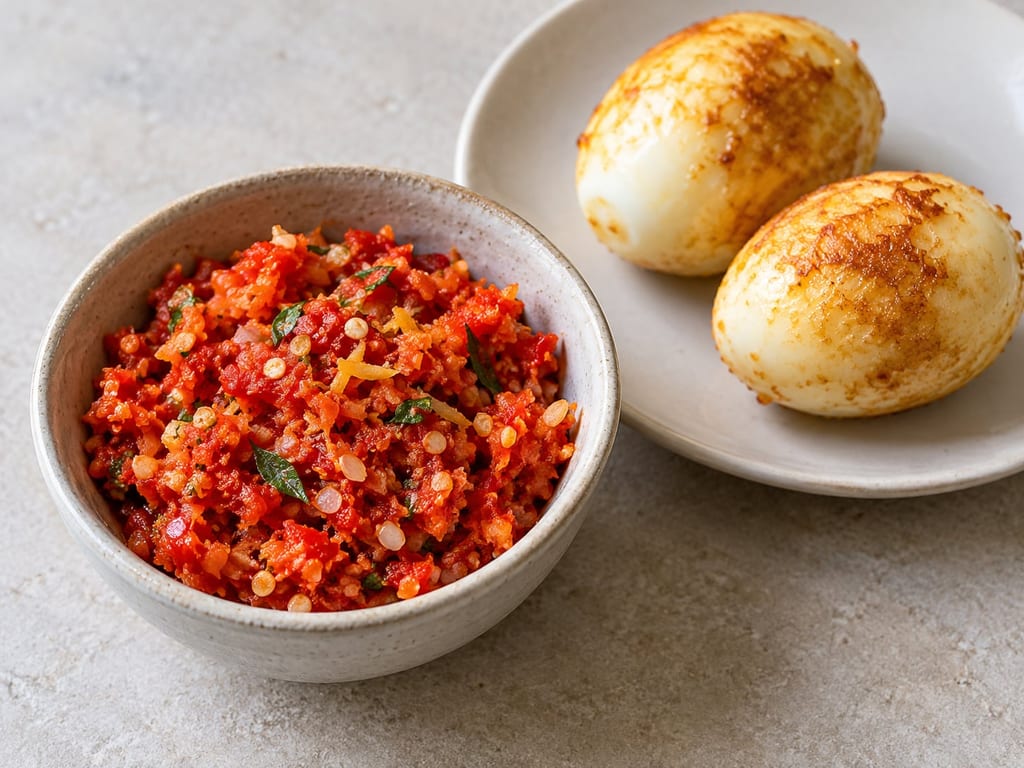
Ai-manas is described as a very hot chilli paste served with Timorese meals. One published version blends fresh chillies, shallots, garlic, Thai basil, ginger, lemon and salt, and serves it with eggs. Sources do not establish a standard formula, precise birthplace or earliest date.
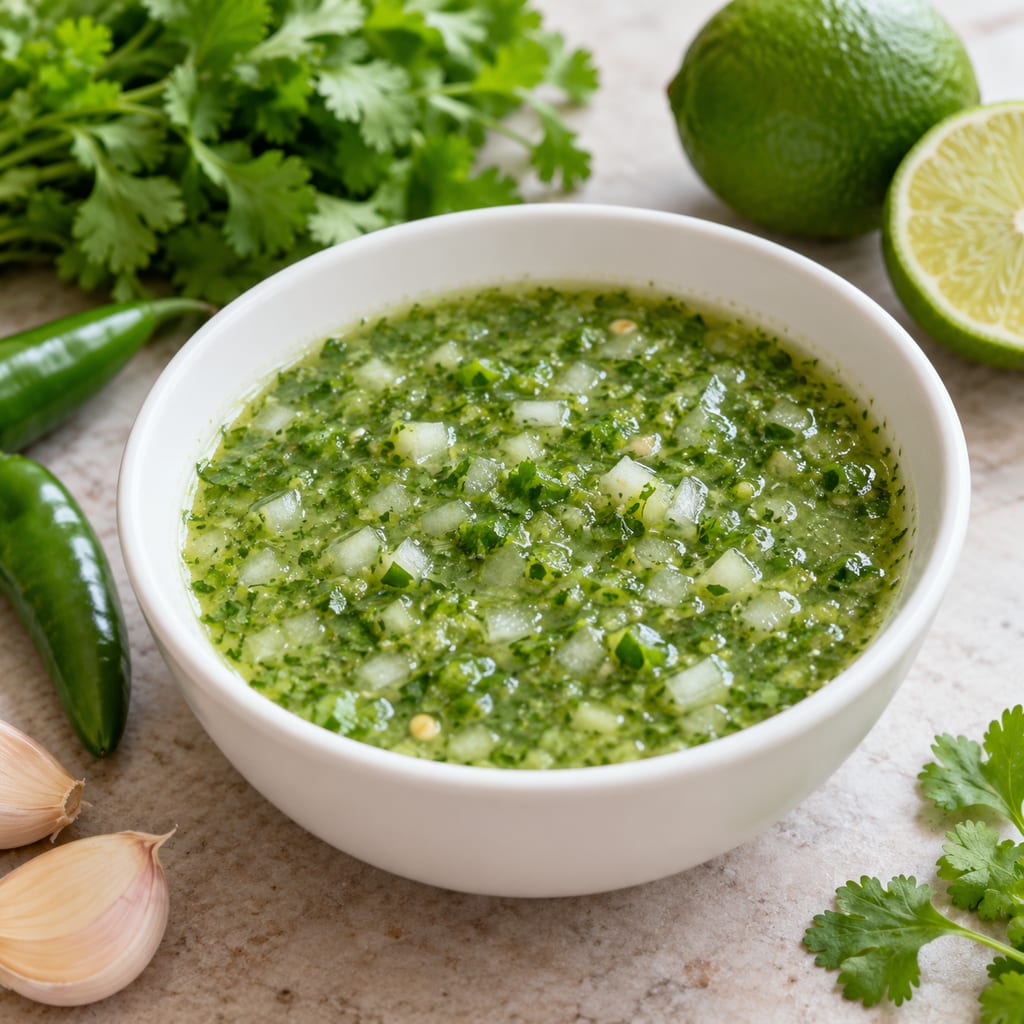
A fresh, uncooked Ecuadorian table sauce of hot pepper, cilantro, garlic and lime, served with most everyday dishes.
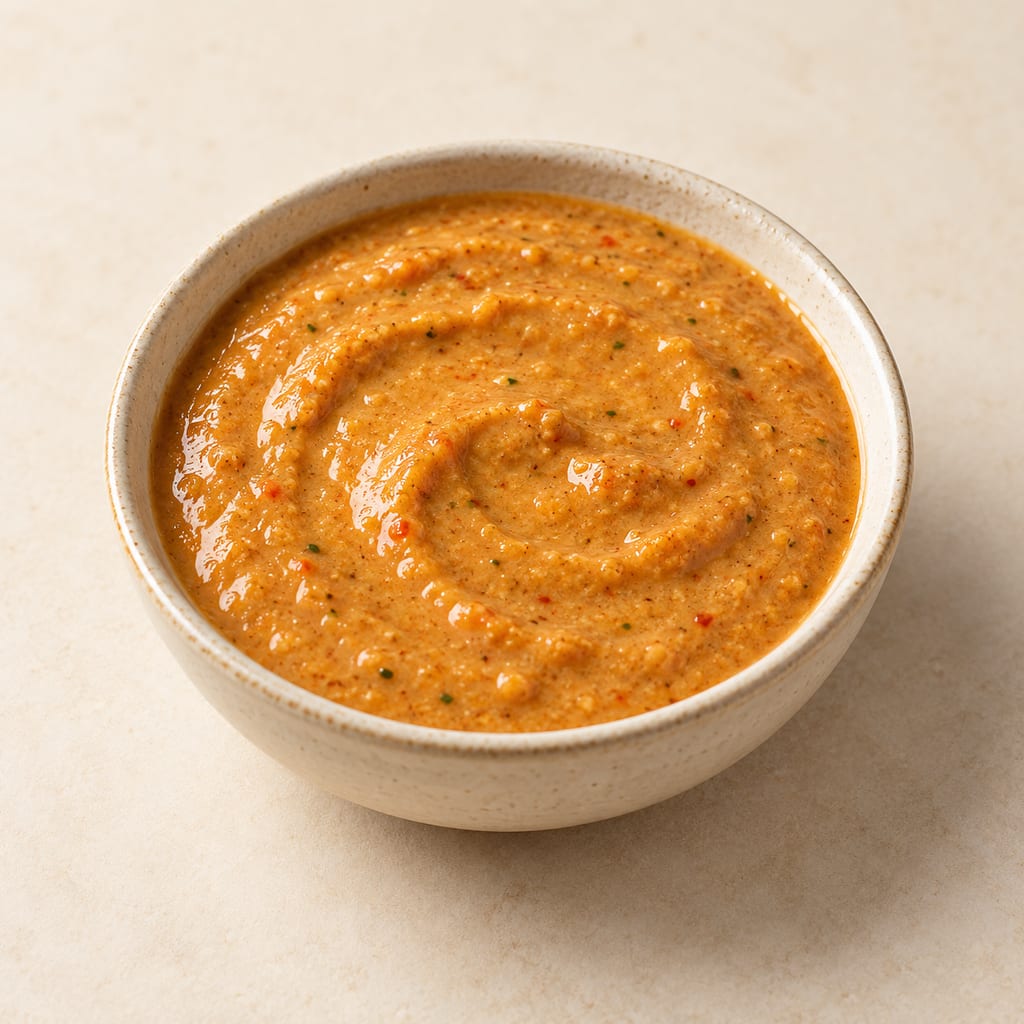
A spicy peanut hot sauce from the Popayán and Cauca region of Colombia, traditionally served with pipián empanadas and tamales.
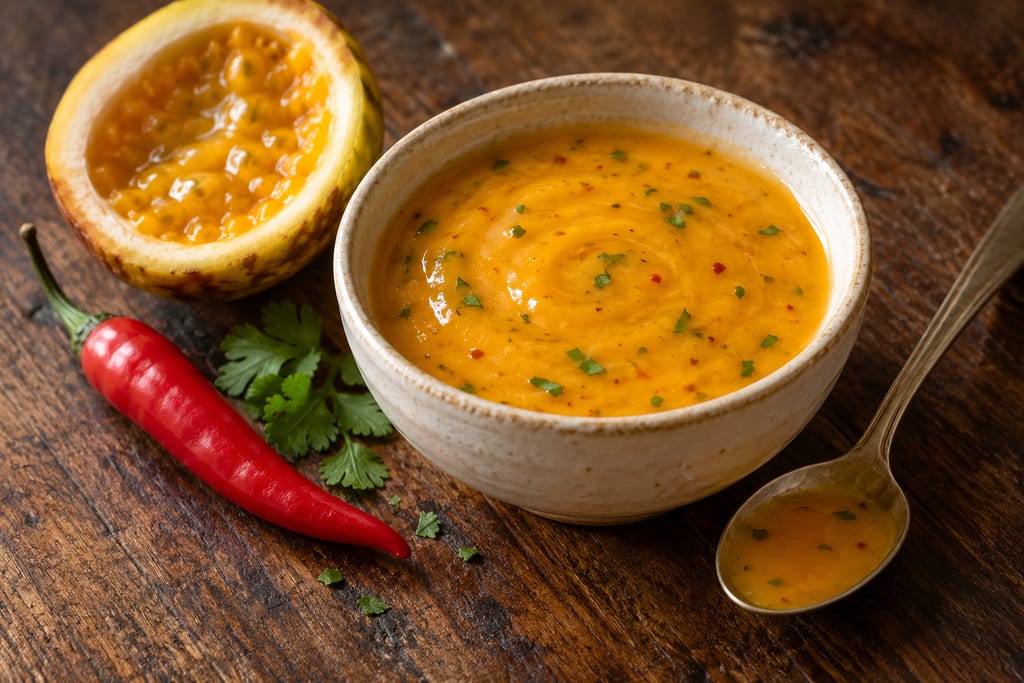
A contemporary Ecuadorian hot sauce that pairs passion fruit juice with boiled chile peppers, oil and lime.
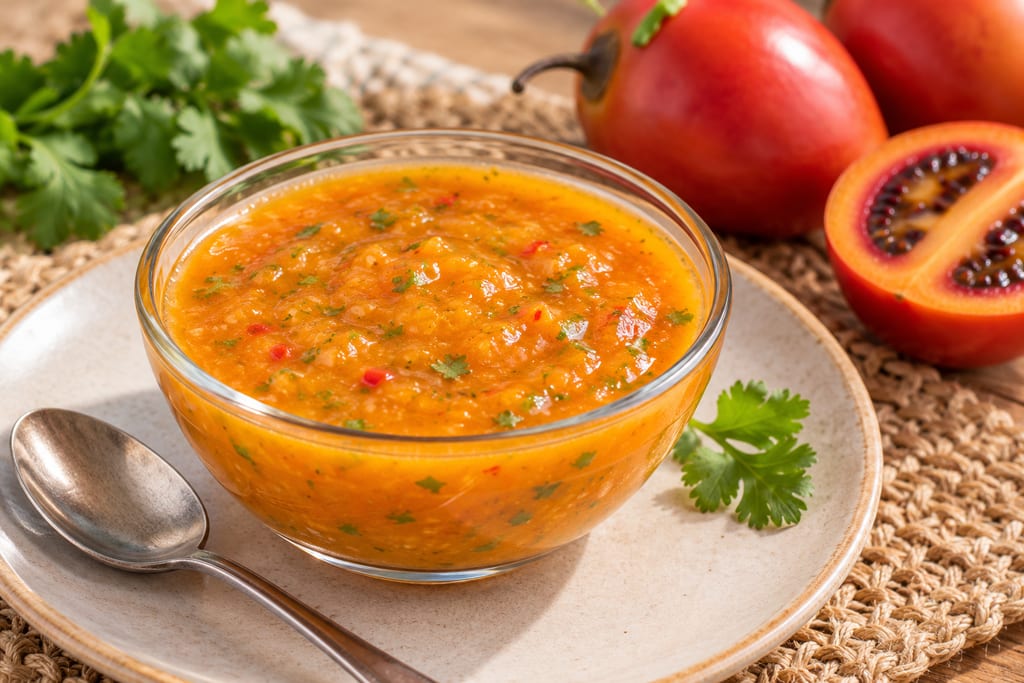
An Ecuadorian hot sauce built on tamarillo, a tart fruit that gives a sharper, fleshier base than ordinary tomato salsa.
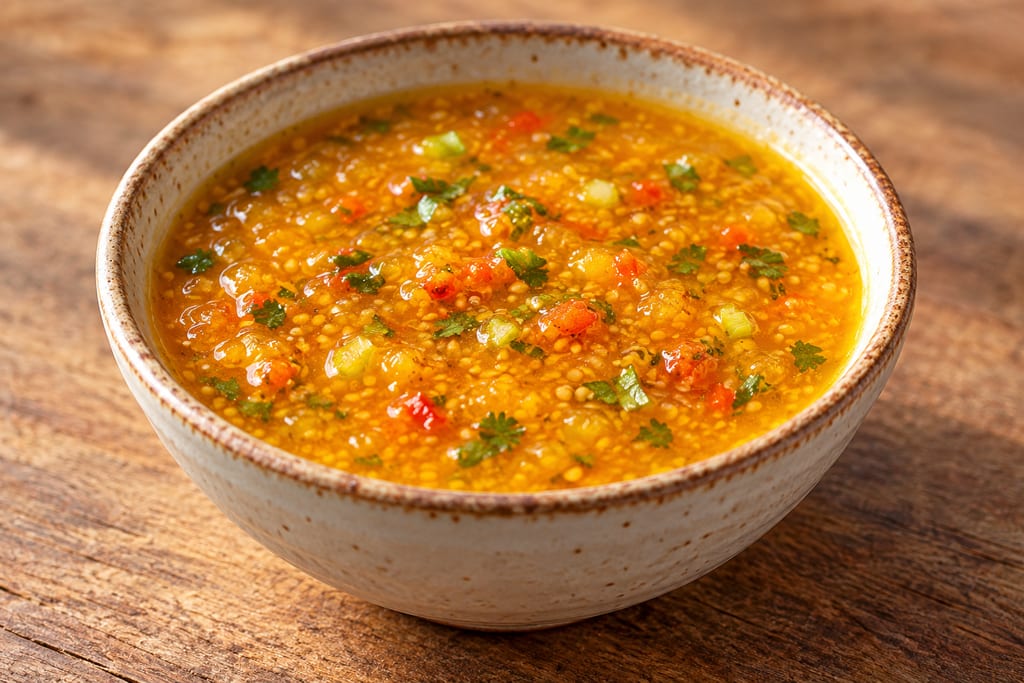
A sweet, tart and spicy Colombian sauce of uchuva, the yellow physalis fruit, with hot pepper, scallion, cilantro and lime.
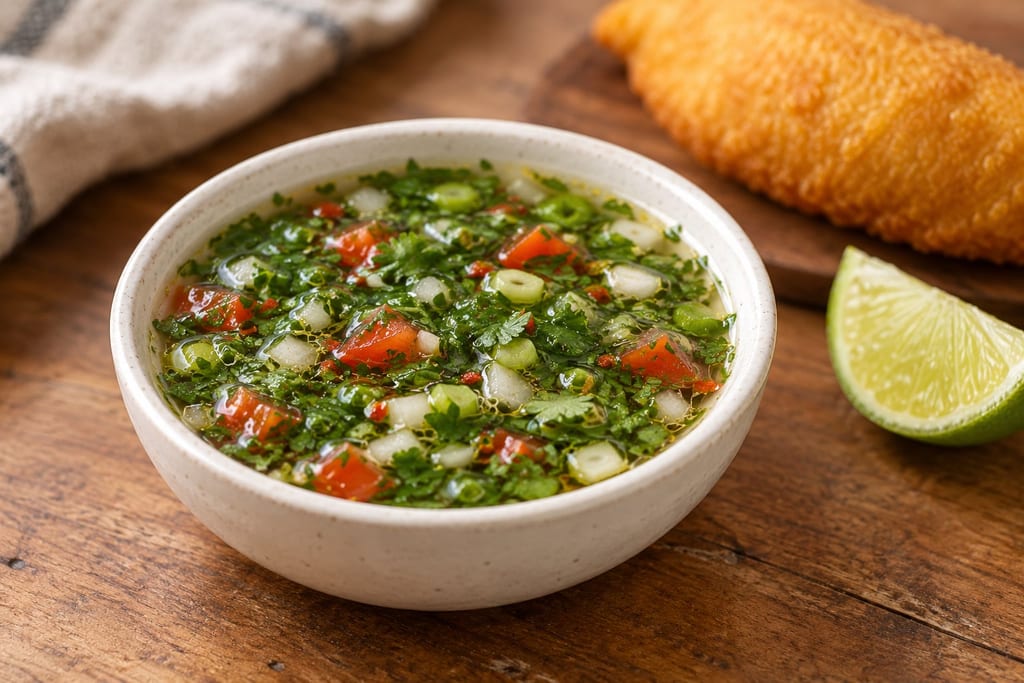
A fresh Colombian table condiment of chopped herbs, scallion and tomato in a vinegar and chile base, served beside fried and filled dishes.
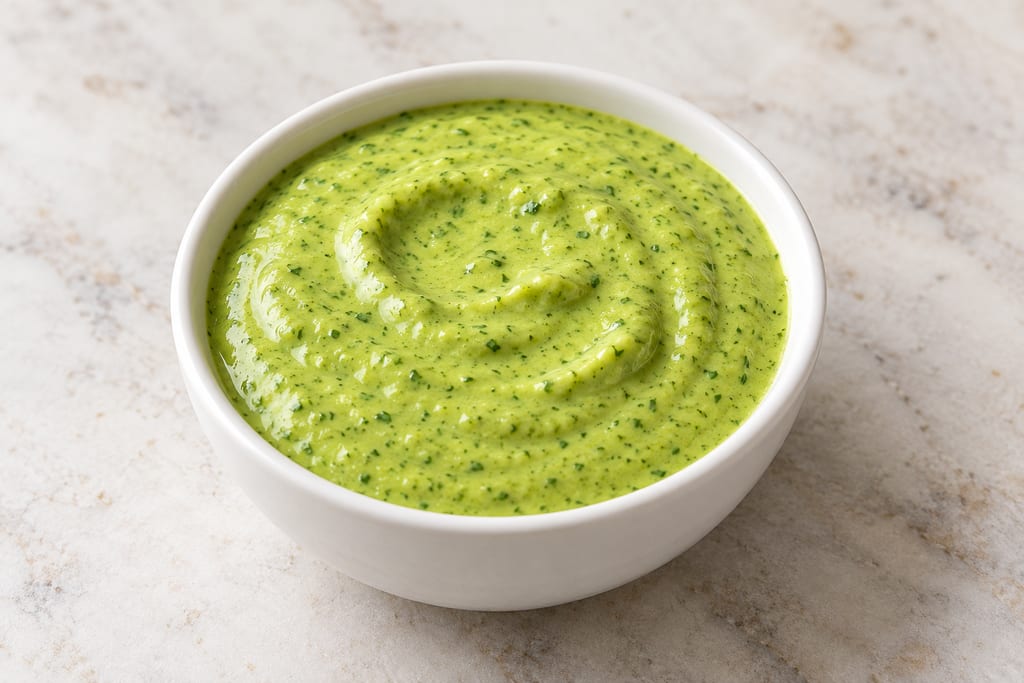
Ají verde is a Peruvian green sauce of coriander, chilli, onion and garlic in a mayonnaise or cheese base. It is best known through Peruvian restaurant cooking abroad.

Soft, spreadable Calabrian pork sausage made with a great deal of red chilli and fatty pork, stuffed into natural casings, sometimes smoked and matured while staying soft.

A way to add independent temperature logging to an existing food dehydrator without changing its built-in controls or protections. It is a monitoring method, not a rewiring plan.

Pleurotus cystidiosus is the abalone mushroom, a cultivated oyster-type fungus with dark brown caps that grows more slowly and is more demanding than other Pleurotus species.

A dark, balanced vinegar from Emilia-Romagna made by combining cooked or concentrated grape must with wine vinegar, then acetifying and refining it in wood under a protected specification.

A living dairy inoculum that starts controlled cream fermentation, developing acidity and aroma before sour cream or cultured butter is finished.

A small electric incubator holds jars at a selected temperature for yogurt and other documented warm food preparations. Controls, capacity and vessel arrangement vary by model.

Adygean salt is a seasoned table salt associated with Adygea and the wider North Caucasian culinary tradition. Salt is blended with garlic and a variable selection of herbs and spices; the exact mix depends on the named style and maker.

The African Caesar-group mushroom, Amanita masasiensis, is a wild ectomycorrhizal species of central and southern African woodlands, eaten locally. The genus contains deadly poisonous species, so identification needs care.
No community contributions have been published for this entry yet.
Sign in to contribute. Published comments and photos are free to read.
Wikipedia (es)History · Method · Etymology · Ingredients
Chancho en piedra (salsa)Eugenio Pereira Salas, Apuntes para la historia de la cocina chilena (1943; 2nd ed. 1977, p. 88): dish from Talca, grinding of tomato, chilli, garlic and onion.
Ingredients: tomatoes, whole cumin, garlic, optional pepper, green chilli, salt, oil; method: grind cumin and garlic, add whole tomatoes, add salt; optional raw chilli or paprika.
Some recipes add about 1 g of potassium sorbate per litre; the name refers to the stone mortar; Independence-era legend recorded as tradition.
Cited in: A sauce with no pork in it; Origins in the record; Making it by hand; Keeping and safety
Biblioteca Nacional de ChileHistory · Variant
Geografía gastronómica de Chile: artículos reunidos (1943–1994)Chapter Estampa del pebre (En Viaje no. 290, December 1957) names pebre en piedra and chancho en piedra as regional variants.
Cited in: A sauce with no pork in it; Origins in the record
Fundación para la Innovación Agraria (FIA)History · Method · Variant · Use
Patrimonio Alimentario Maule — Chancho en piedra (p. 110)Chancho en piedra is closely associated with Maule and especially Talca, though its origin is not fully established.
Maule accounts describe the common use of a mortar to pound or crush tomatoes and vary other ingredients.
The quoted regional preparation uses ripe tomatoes, garlic, optional onion and chilli ground in the mortar; rustic pounded versions are documented.
It is served with pan amasado, tortillas, and other foods; the sauce is especially popular with humitas at summer afternoon meals.
Cited in: A sauce with no pork in it; Making it by hand