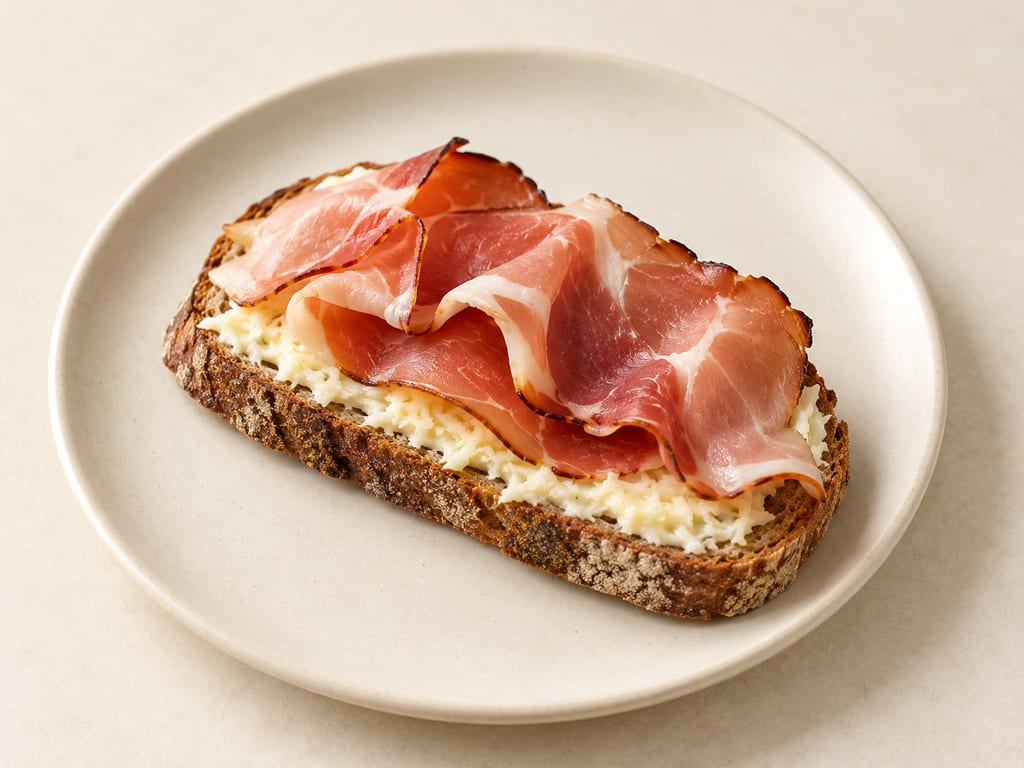
Schwarzwälder Schinken Vesper
A regional Vesper preparation pairs bread and protected Schwarzwälder Schinken with apple-horseradish butter. The accepted source gives butter, apple and horseradish amounts, but not the bread or ham quantities.
 FermenteaWhere food goes to change
Dehydrator-dried mushrooms · Convective hot-air dried mushrooms · Controlled hot-air dried mushrooms
Hot-air dehydrated mushrooms are sliced mushrooms dried in a dehydrator or dryer with heated, moving air; a 2011 study dried button mushroom slices at 60 °C and compared them with microwave-vacuum and freeze-drying.
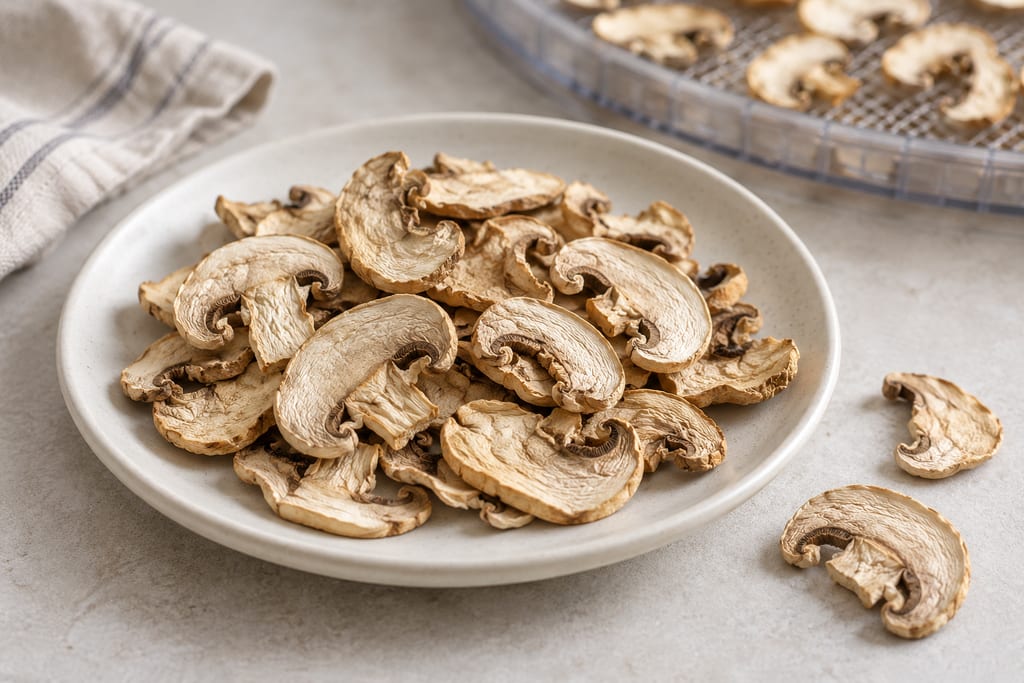
Controlled hot-air dehydration removes water from sliced mushrooms by blowing heated air across them in a dehydrator or a processing dryer. The air carries the moisture away, and the heat drives it out of the tissue. The method is the modern counterpart of sun drying: the same moisture leaves the food, but the temperature and airflow are set by the machine rather than by the weather. It is the dryer process that the extension guidance and the comparison studies in this record describe.
A 2011 study from Stuttgart compared three ways of drying button mushrooms. It sliced caps to 5 millimetres, pretreated some slices for five minutes in 0.25 per cent potassium metabisulfite and 0.1 per cent citric acid, and dried them in hot air at 60 degrees Celsius. The air moved at 0.9 metres per second over a layer about 30 millimetres deep. The hot-air samples reached a final moisture of 0.065 grams per gram of dry matter and took 250 minutes to equilibrate. The study did not state the endpoint water activity for those samples. Potassium metabisulfite is a sulfiting agent. FDA notes that sulfiting agents can cause adverse reactions, including asthma, in sensitive people; omit this optional treatment if you have a sulfite sensitivity.
The same paper dried slices by a combined hot-air and microwave-vacuum process, and freeze-dried a third set. Those routes are different equipment and are not part of this page's method.
Hot-air drying changed the mushroom's form. The study measured its apparent density at 0.88 grams per cubic centimetre for hot air, against 0.59 for the combined process and 0.23 for freeze-drying. Porosity rose in the same order. The authors describe hot-air drying as causing considerable shrinkage, though the numerical shrinkage is not stated in the text.
Colour changed under hot air. The lightness value fell from a fresh reference of 86.3 to 80.35, and the overall colour difference was 24.26. Freeze-drying changed the colour least. On rehydration the hot-air samples were the hardest. The authors concluded that freeze-drying gave the best colour and the softest rehydrated texture, while combined drying gave a puffed, crisp product.
The endpoint is the stage that matters most, and it is the one a home dryer does not report. The study measured moisture and equilibrated its samples at a known relative humidity before taking a water-activity reading. The air humidity that a dryer controller displays describes the surrounding air, not the finished mushroom. Water activity and moisture content are separate measurements, and a dried food needs the right one for its storage limit.
The record therefore gives the drying conditions but not a storage duration. A cook who wants a stable product has to measure the endpoint, and the page does not supply a number the sources do not give.
The experiment used cultivated Agaricus bisporus bought at a market. The conditions describe that species in one dryer setting. Other mushrooms, other slice thicknesses and other dryers will not reproduce the same numbers, and wild species are outside the study. Identify the mushroom before any processing, and keep the air temperature, airflow and endpoint as the variables a comparison has to record.
The method is a modern dryer process. The 2011 experiment is the source here, and it records no traditional use.
Scaling: source batch only
A dryer's air humidity is not the water activity of the food. The study measured the product after equilibration; a home setup usually does not.
Hazard sourceThe study used cultivated button mushrooms bought at a market. Wild mushrooms are not covered by the experiment.
Hazard sourceThe optional pretreatment contains potassium metabisulfite, a sulfiting agent. FDA notes sulfiting agents can cause adverse reactions, including asthma, in sensitive individuals.
Hazard sourcePeople with a sulfite sensitivity should omit the optional potassium metabisulfite pretreatment.
Control sourceThe study is an experiment on one species and one dryer setting. It does not establish a validated safe moisture target.
Colour and texture after drying are not safety checks. Store the dried product protected from moisture.
The optional pretreatment uses potassium metabisulfite; omit it if you are sensitive to sulfites.
The mushrooms were bought at a local market in Stuttgart for a laboratory comparison. The study is an experiment, not a household tradition.
A regional Vesper preparation pairs bread and protected Schwarzwälder Schinken with apple-horseradish butter. The accepted source gives butter, apple and horseradish amounts, but not the bread or ham quantities.
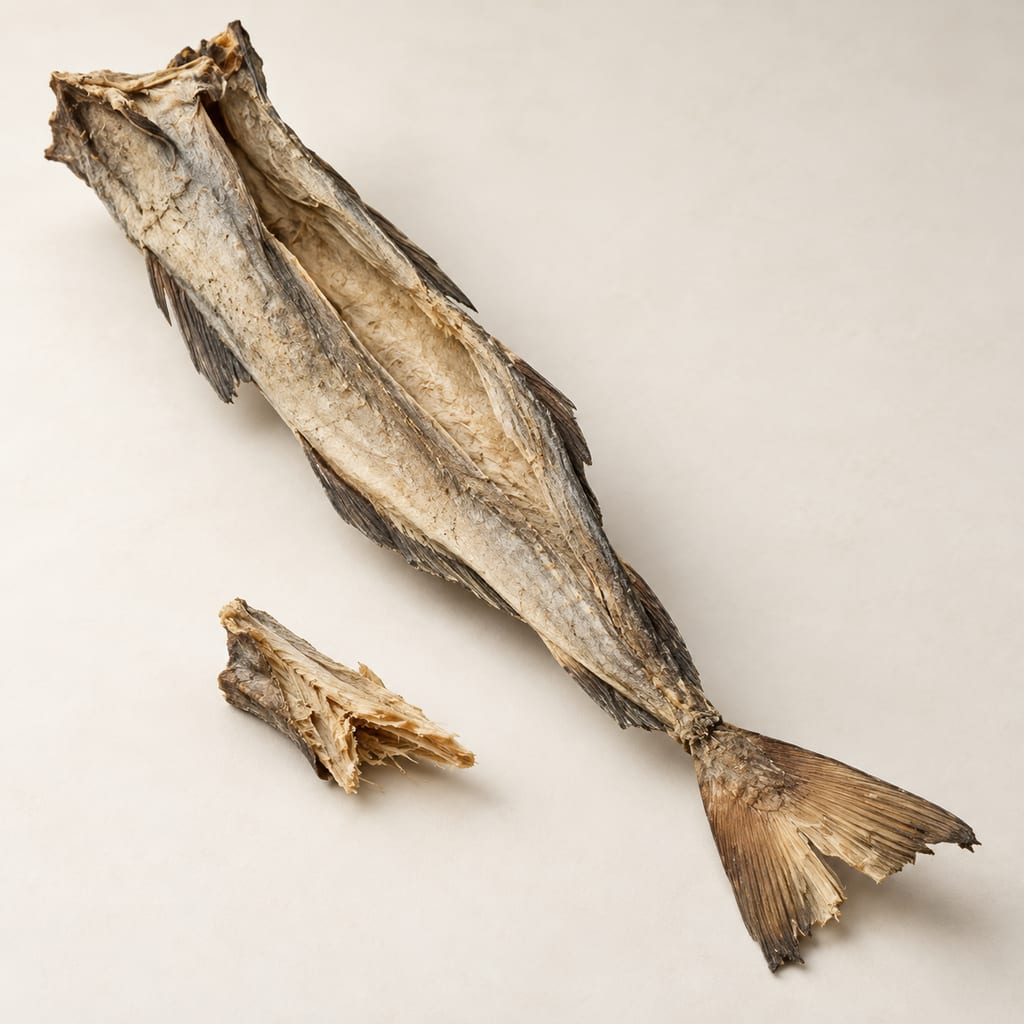
Cod hung on open racks in cold northern air until most of its water has gone, leaving a hard, light, unsalted fish that keeps and travels and must be soaked for days before cooking.
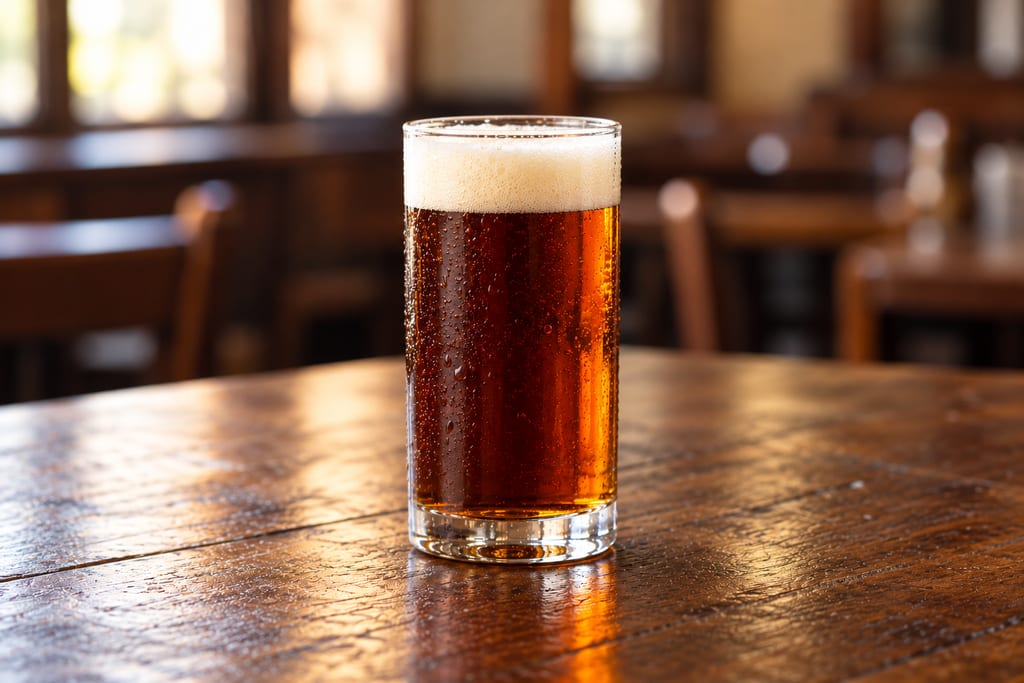
A source-specific modern extract adaptation of Düsseldorf Altbier, with specialty malts, two hop additions and an ale yeast. It is distinct from a brewery's commercial Altbier process and from Kölsch.
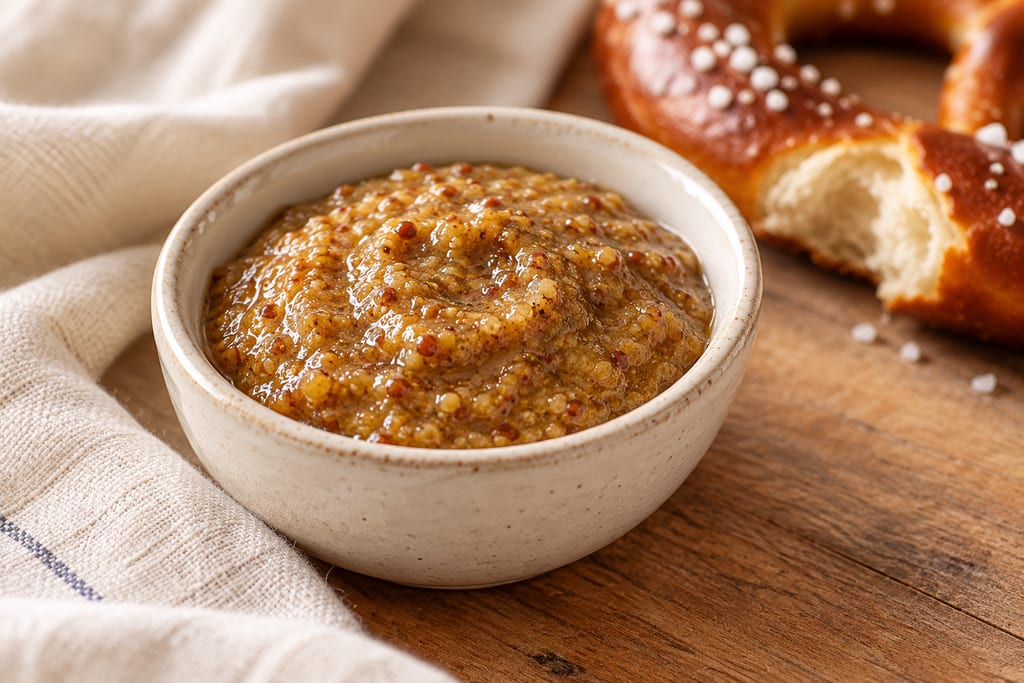
A coarse, sweet Bavarian-style mustard of yellow and brown seed in a cooked brown-sugar and vinegar base, made to eat with Weisswurst; an original refrigerated formula.
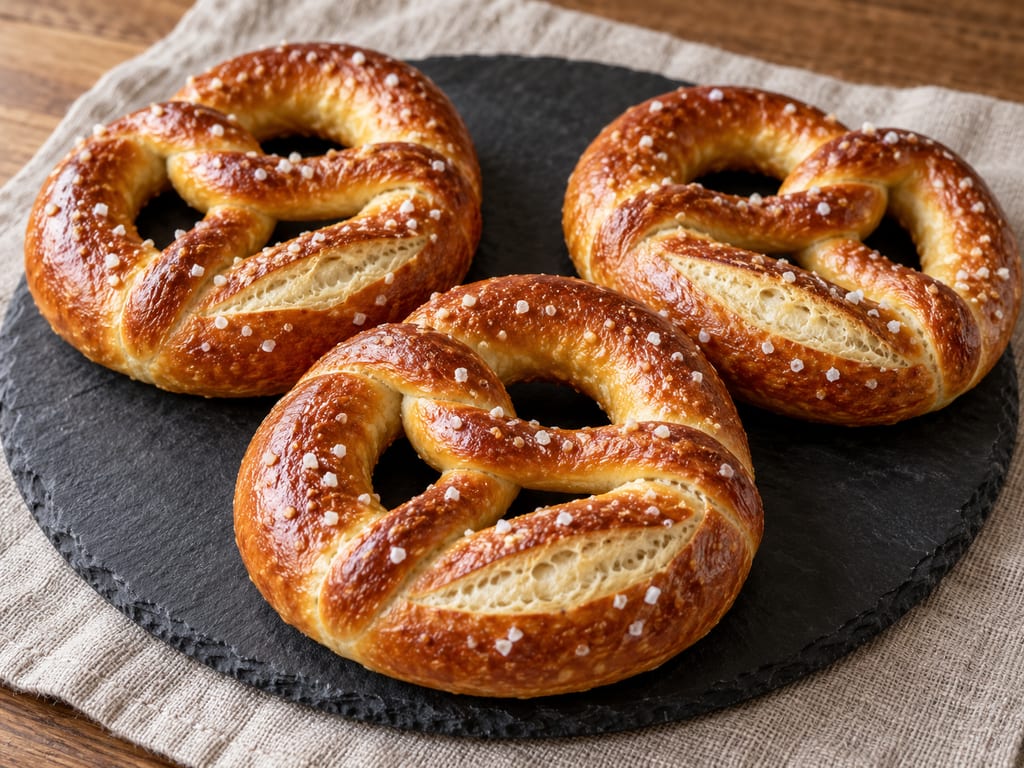
This German-style knot pretzel uses a firm yeast dough, a chilled shape, a one-minute baking-soda bath and a deep bake. The method follows Jeffrey Hamelman's home adaptation for King Arthur Baking.

A German-style Brezel is a yeast-raised wheat dough shaped into a loop and dipped in an alkaline bath before baking. This home version uses baking soda; the original formula uses food-grade lye.
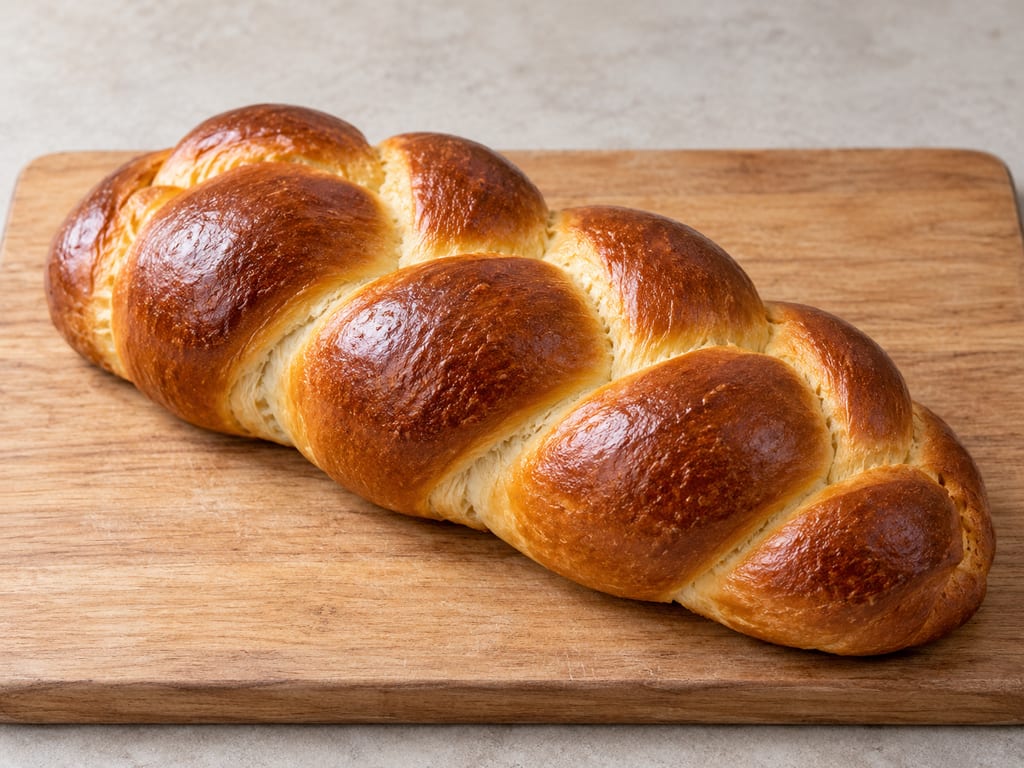
A three-strand yeast-raised challah with flour, salt, yeast, water, neutral oil, honey and egg, based on a Jewish Museum Vienna home recipe.
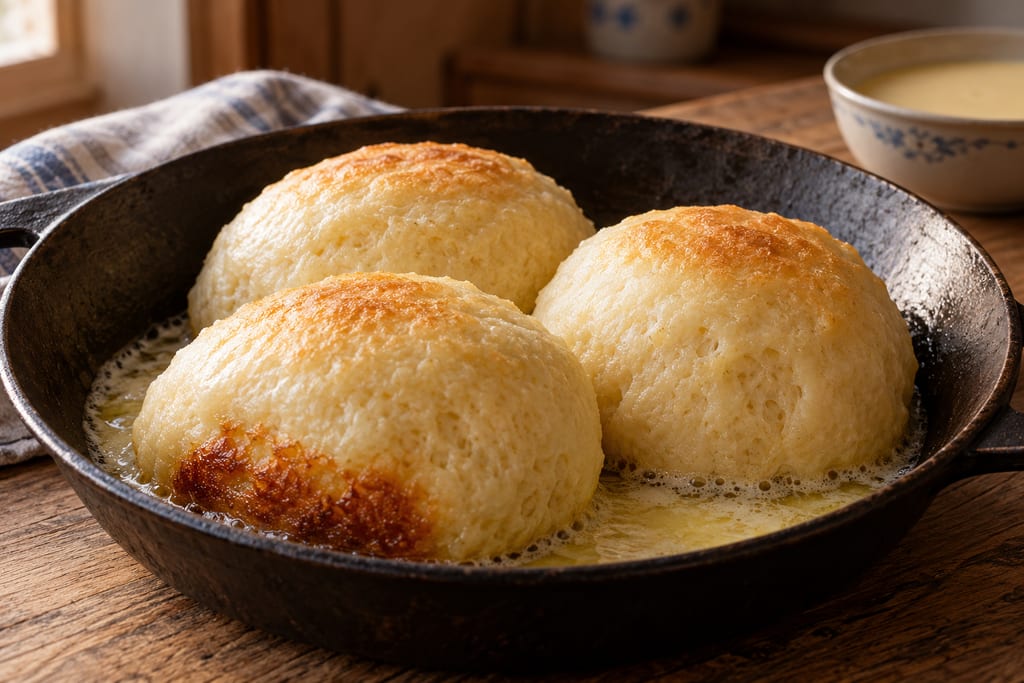
Allgäu Dampfnudeln are enriched wheat buns proofed in a covered casserole and cooked in milk and butter until the liquid nearly cooks away.

Chipotle is a ripe jalapeño pepper smoke-dried in a wood-fired cocedor. Camargo, Chihuahua, documents a large-scale version of the process; its source accounts do not establish a complete home batch or validated safety endpoint.
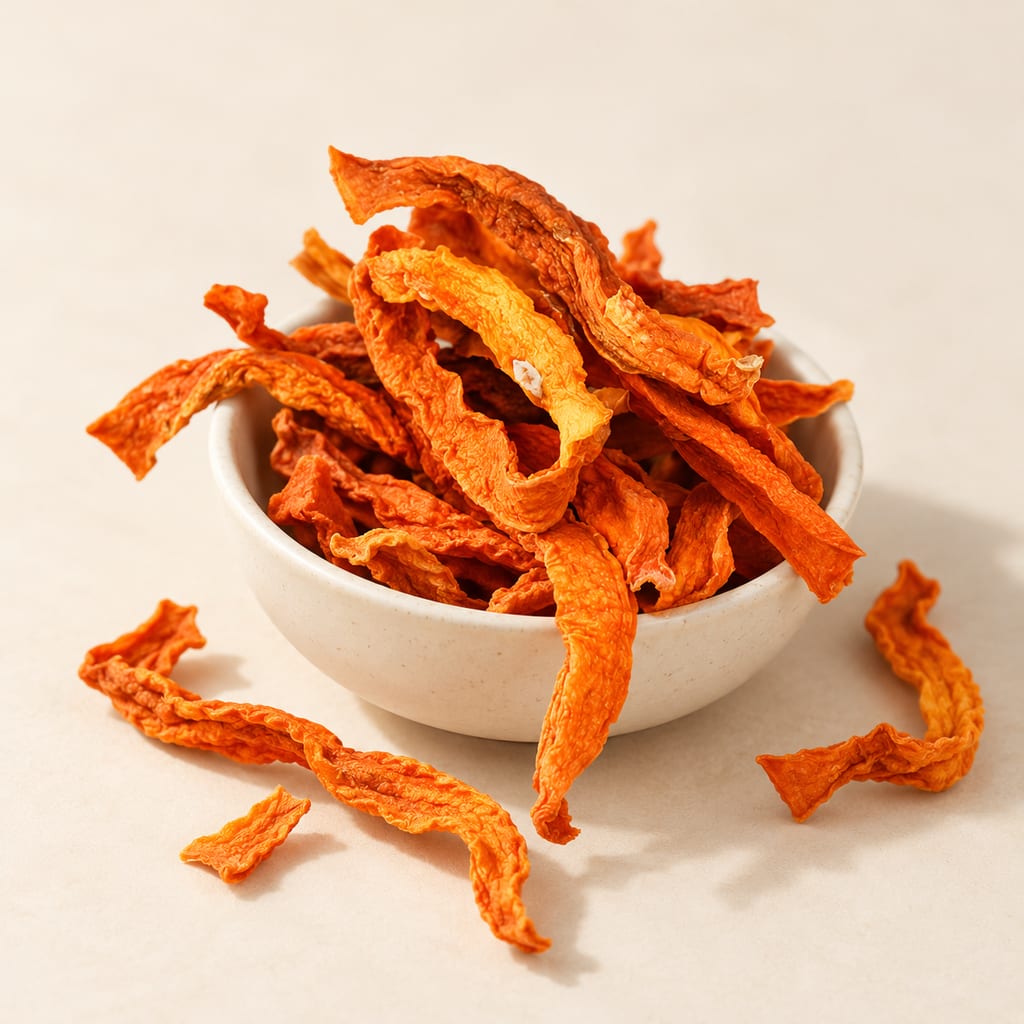
Steam-blanched pumpkin dried until brittle, kept as pieces or ground into powder, with pumpkin-specific packaging and quality guidance.

Merkén is the Mapuche seasoning of dried, smoked and ground ají cacho de cabra chile, sometimes with toasted coriander seed and salt, made in the Maule and La Araucanía regions of Chile.
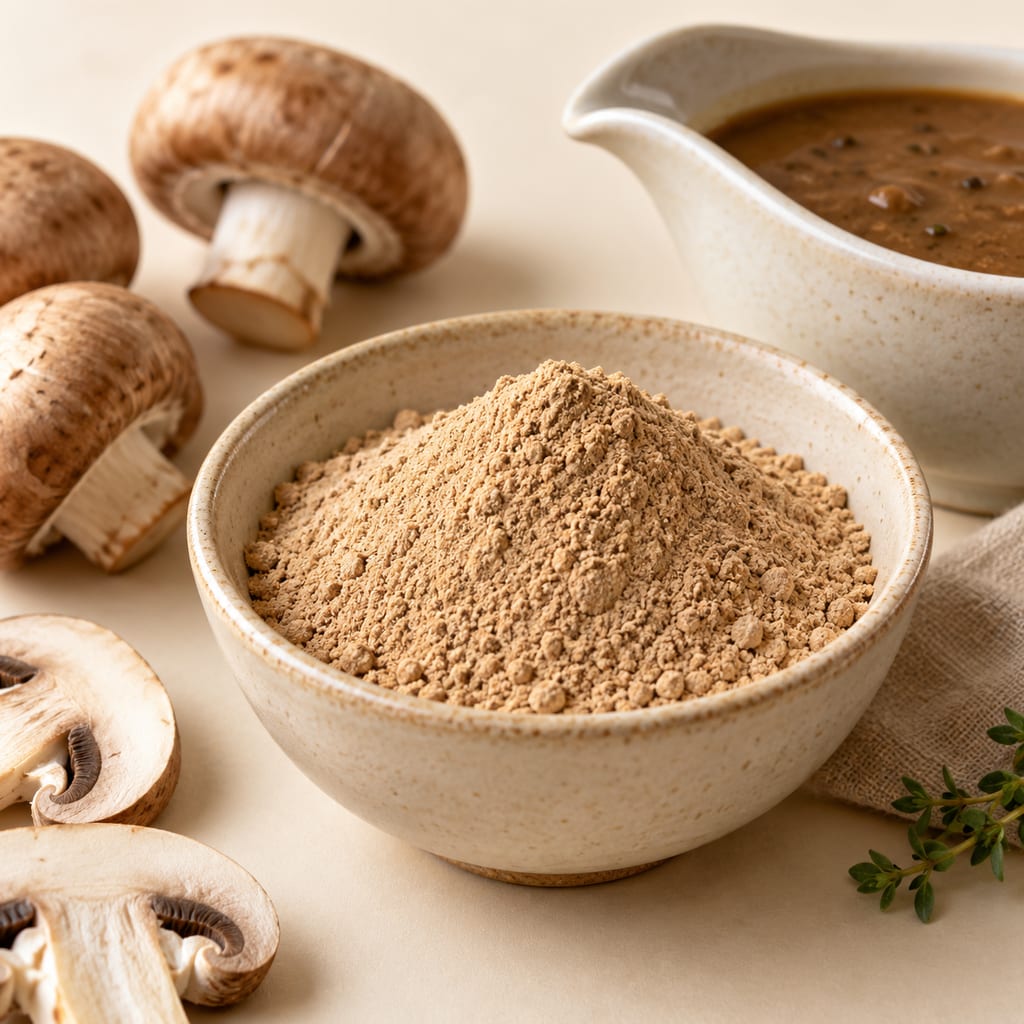
Mushroom powder is dried mushroom tissue ground to a fine powder and added to gravies and sauces. Victorian cooks made it from fresh cultivated mushrooms when fresh ones were not to hand.
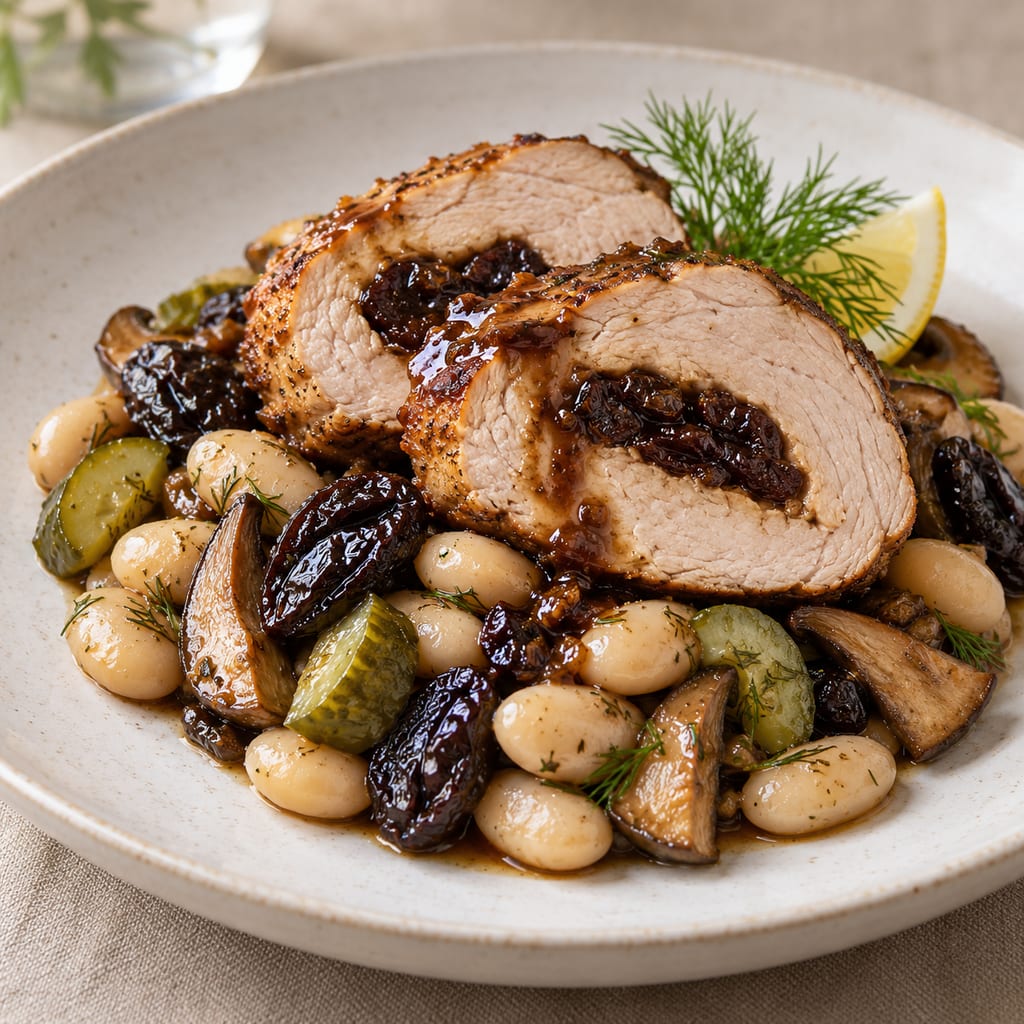
This Polish competition recipe stuffs pork loin with suska and serves it with a bean salad containing more smoked-and-dried plums.
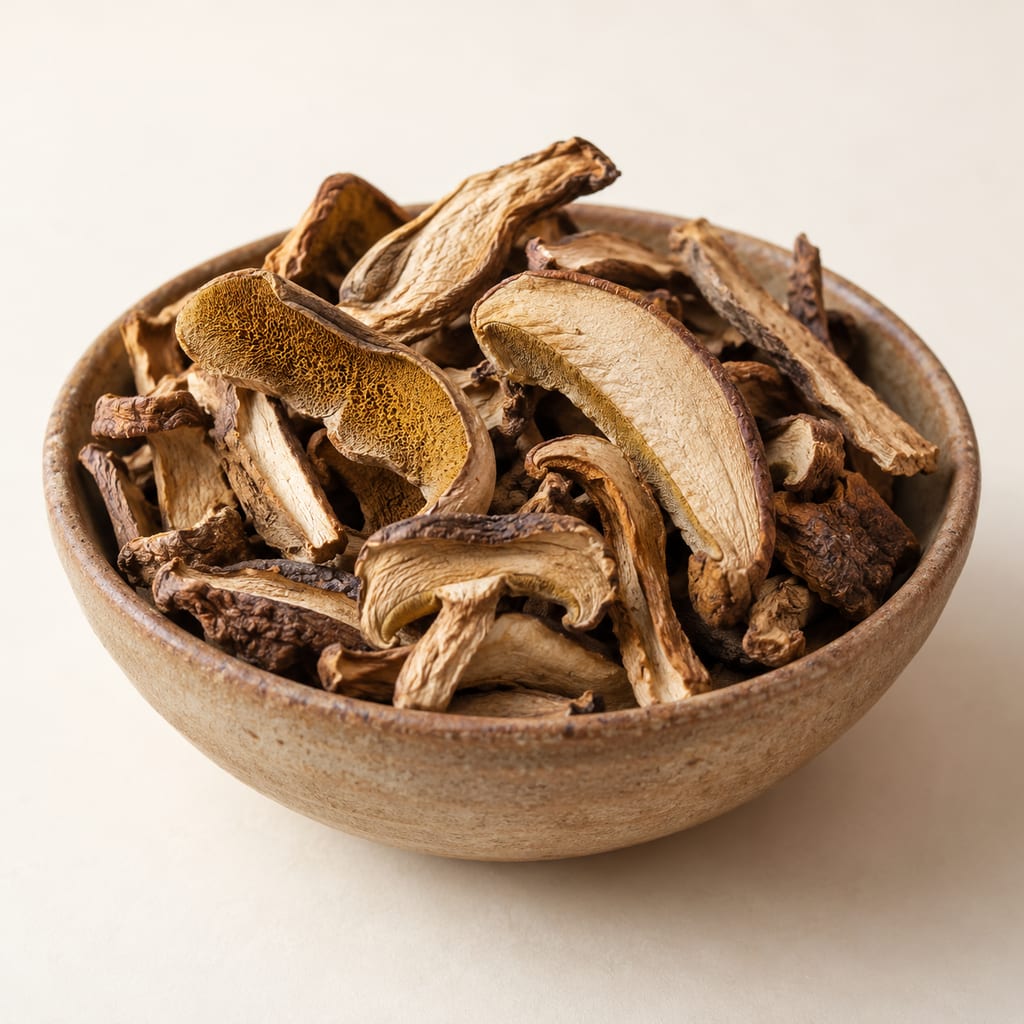
Protected solar-dried mushrooms are slices of wild Suillus luteus dried under a shade cover, a fitotoldo, rather than in open sun, as tested in an experimental study from Apurímac, Peru.
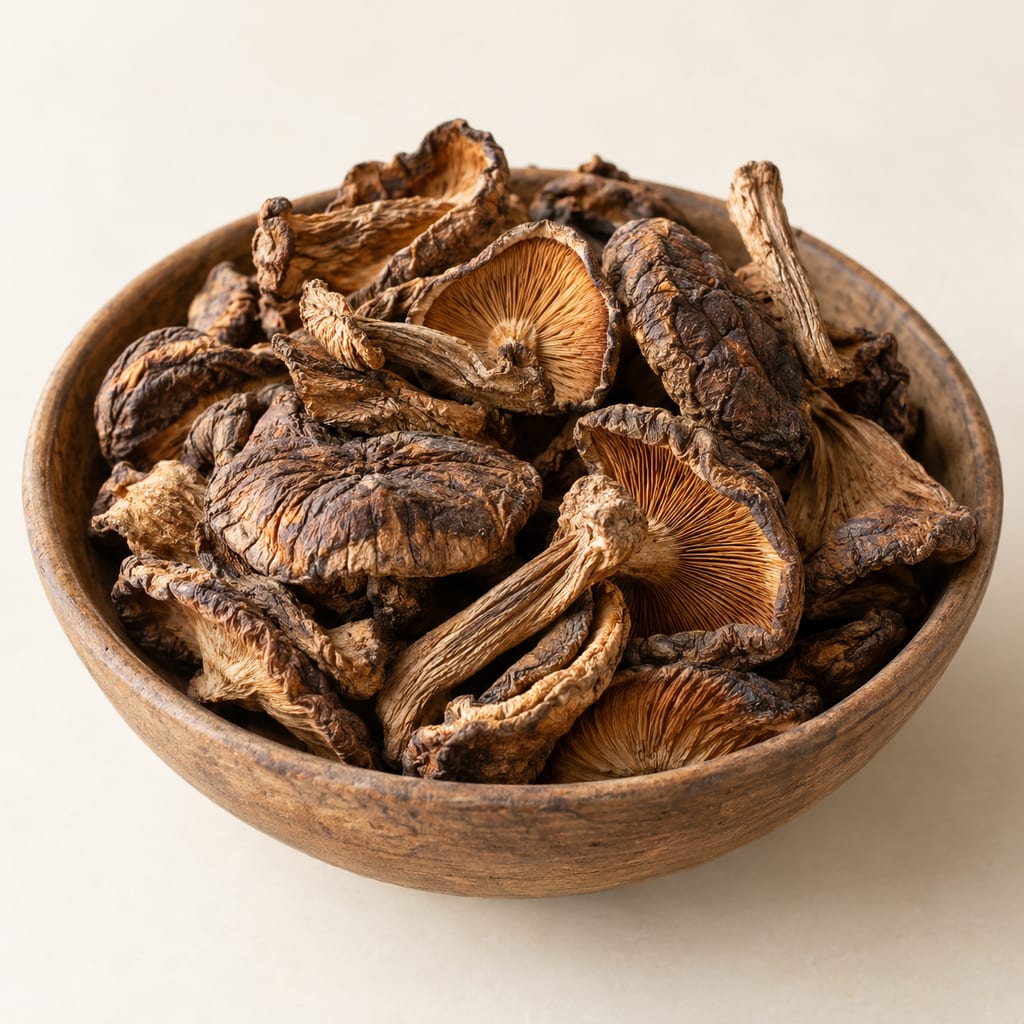
Hearth-dried mushrooms are dried on shelves above a cooking fire, so heat and smoke reach them. Tanzanian records describe the method; a Vietnamese study tested smoke-dried shiitake for fuel-dependent contaminants.
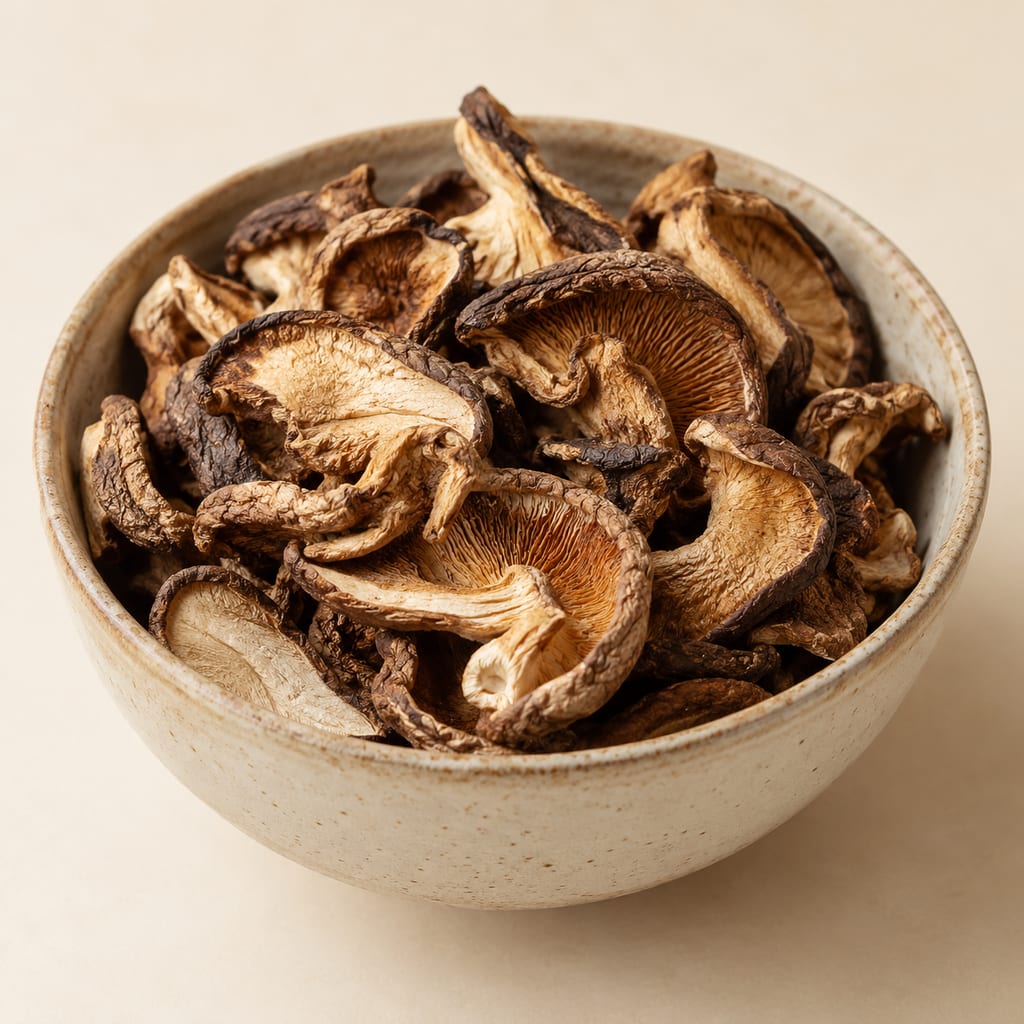
Sun-dried mushrooms are mushrooms spread in open sunlight and left to lose their water to solar heat and moving air, a method recorded in Nigeria, Tanzania, Mexico and among Algerian desert truffle gatherers.
No community contributions have been published for this entry yet.
Sign in to contribute. Published comments and photos are free to read.
Argyropoulos, Heindl and Müller, International Journal of Food Science and TechnologyMethod · Experiment
Comparison of hot-air, combined microwave-vacuum and freeze-drying of button mushrooms (2011)Slices 5 mm; 0.25% potassium metabisulfite and 0.1% citric acid pretreatment, 5 minutes
Hot air at 60 °C, specific humidity 10 g/kg, air velocity 0.9 m/s, layer 30 mm; equilibrium 250 minutes
Final moisture 0.065 g/g dry matter; endpoint water activity not stated
Freeze-drying gave best colour and softest rehydrated texture; combined drying puffed and crisp
Cited in: What controlled hot-air drying is; What the 2011 study did; What the air temperature did to the mushroom; Setting the endpoint; Species and limits
US Food and Drug AdministrationSafety
Water Activity (aw) in FoodsWater activity and relative humidity are different measurements; the dryer's air humidity is not the product's water activity
Cited in: Setting the endpoint
U.S. Food and Drug AdministrationSafety
Food AllergiesFDA identifies sulfites as additives that can cause adverse reactions such as asthma in sensitive individuals.
Cited in: What the 2011 study did