What it is
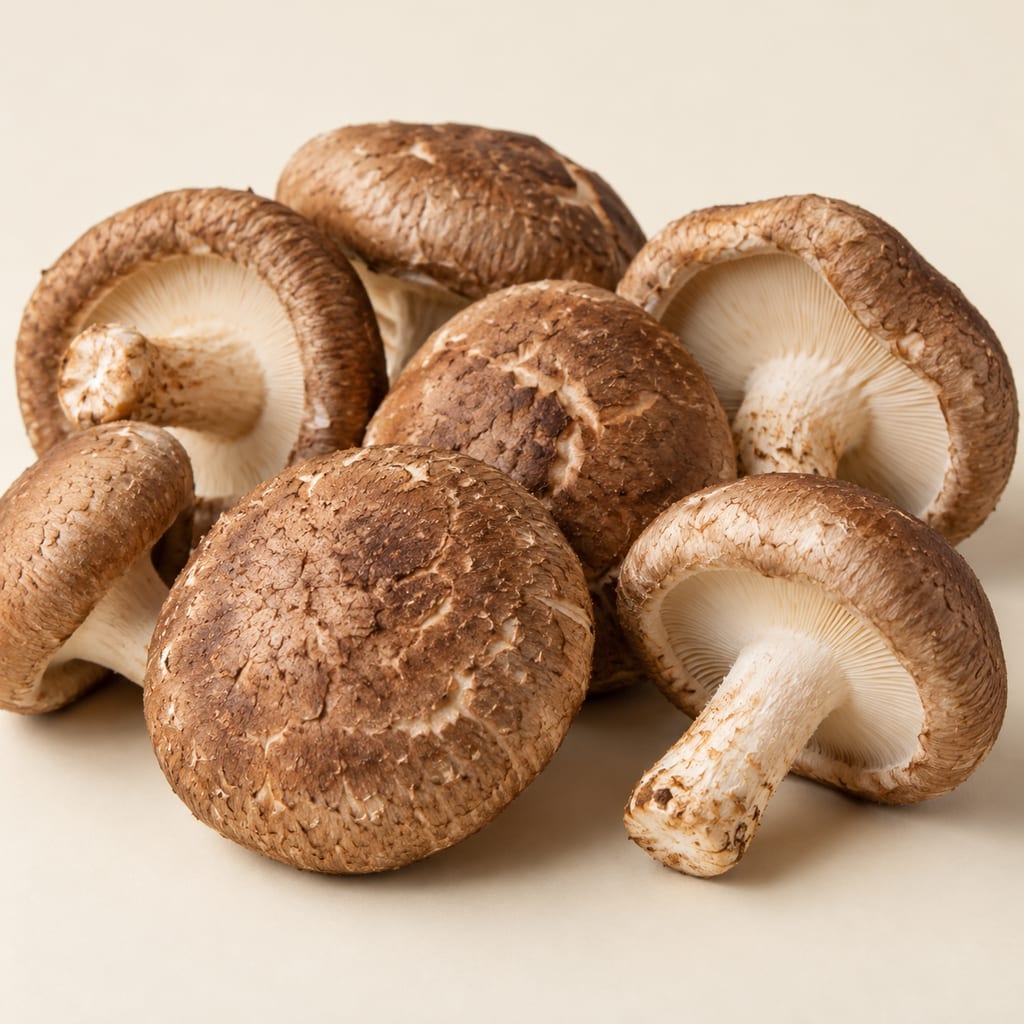
Shiitake is the fruiting body of Lentinula edodes, a gilled fungus that grows in clusters on the dead wood of deciduous trees. Its Japanese name combines shii, the chinquapin tree (Castanopsis) whose logs were used, with take, the word for mushroom. In Chinese it is xianggu (香菇), and in English it is also called the Chinese mushroom, the black forest mushroom or the golden oak mushroom. The species was first described as Agaricus edodes in 1877 and placed in its present genus in 1976.
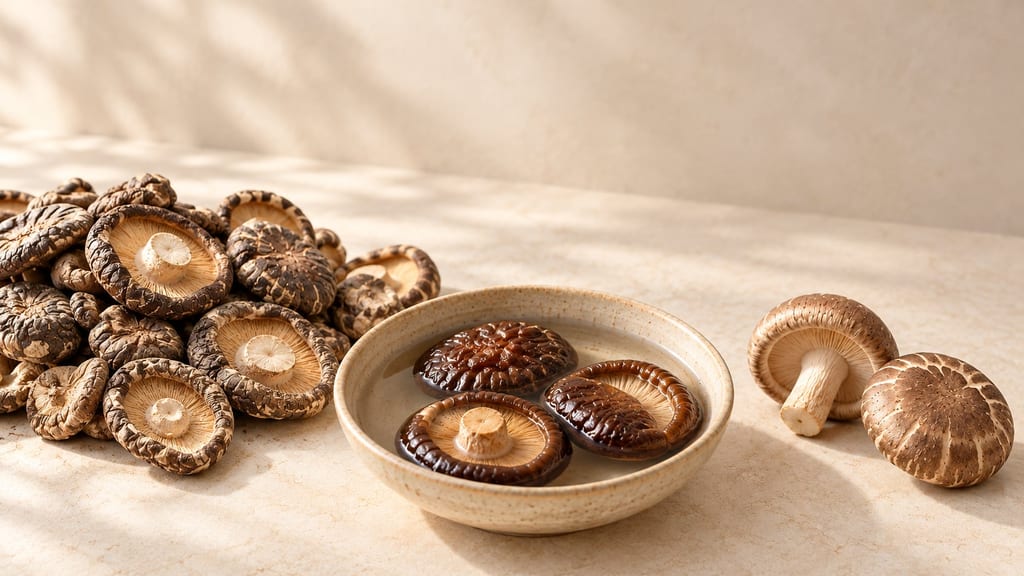
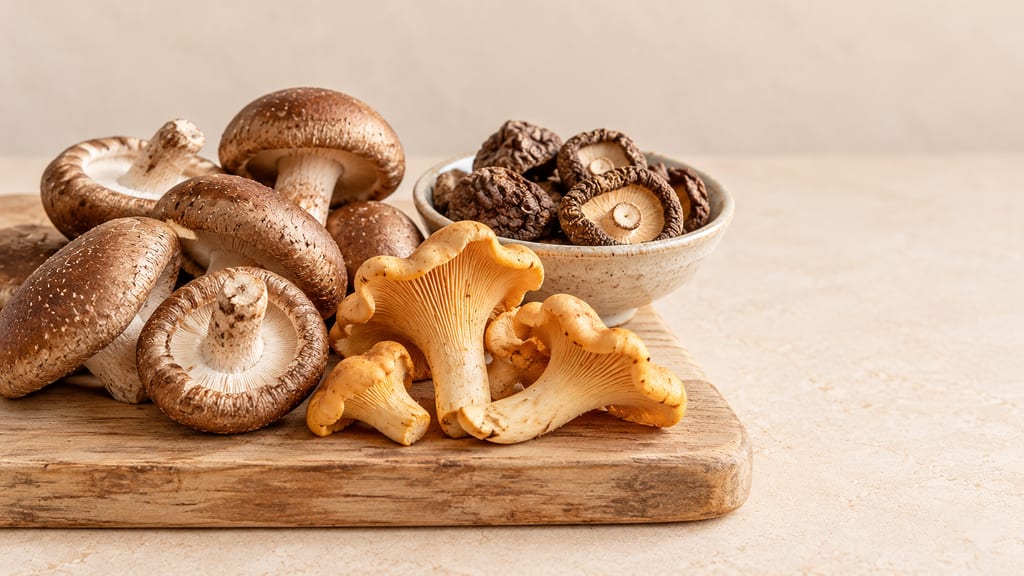
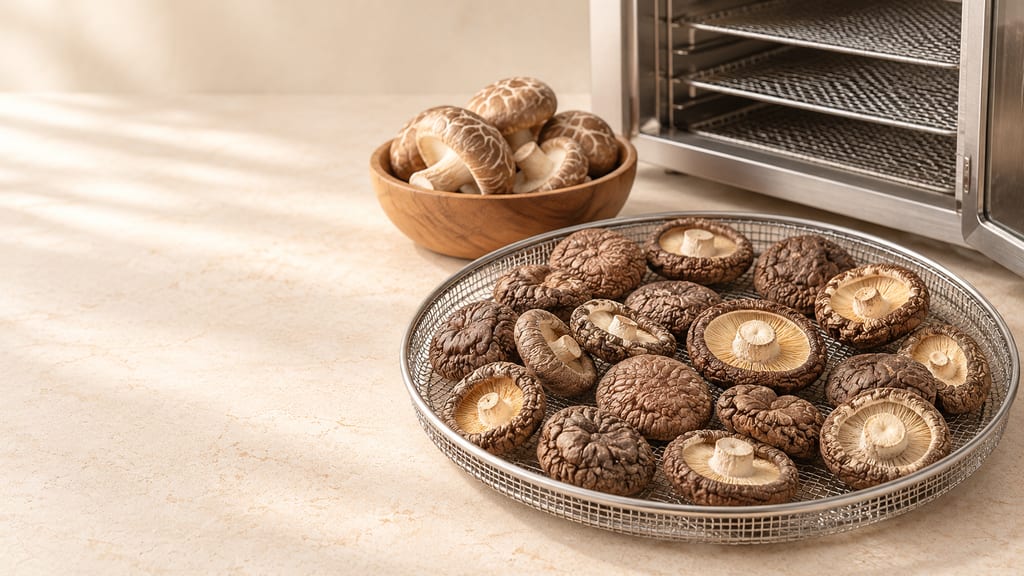
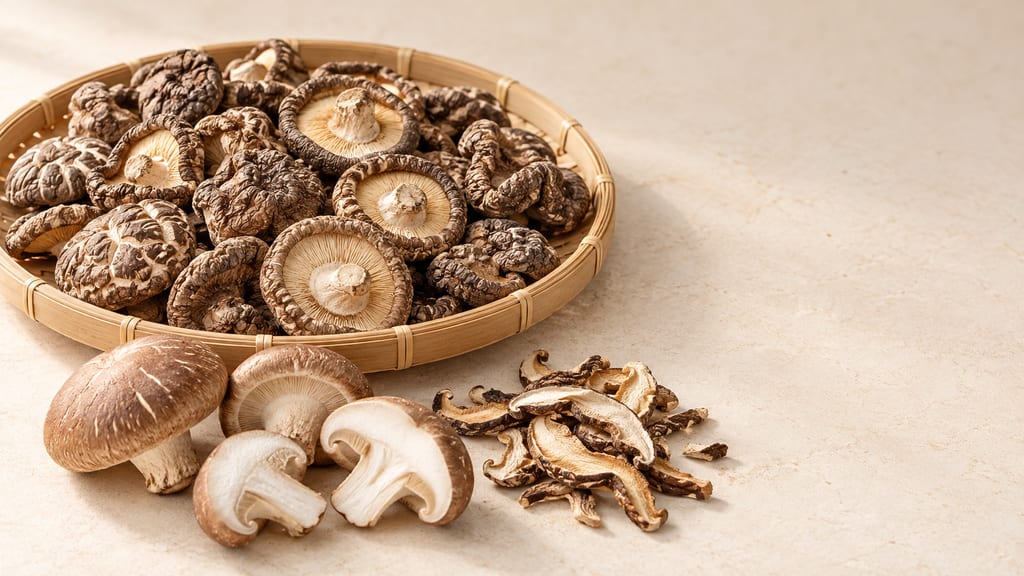
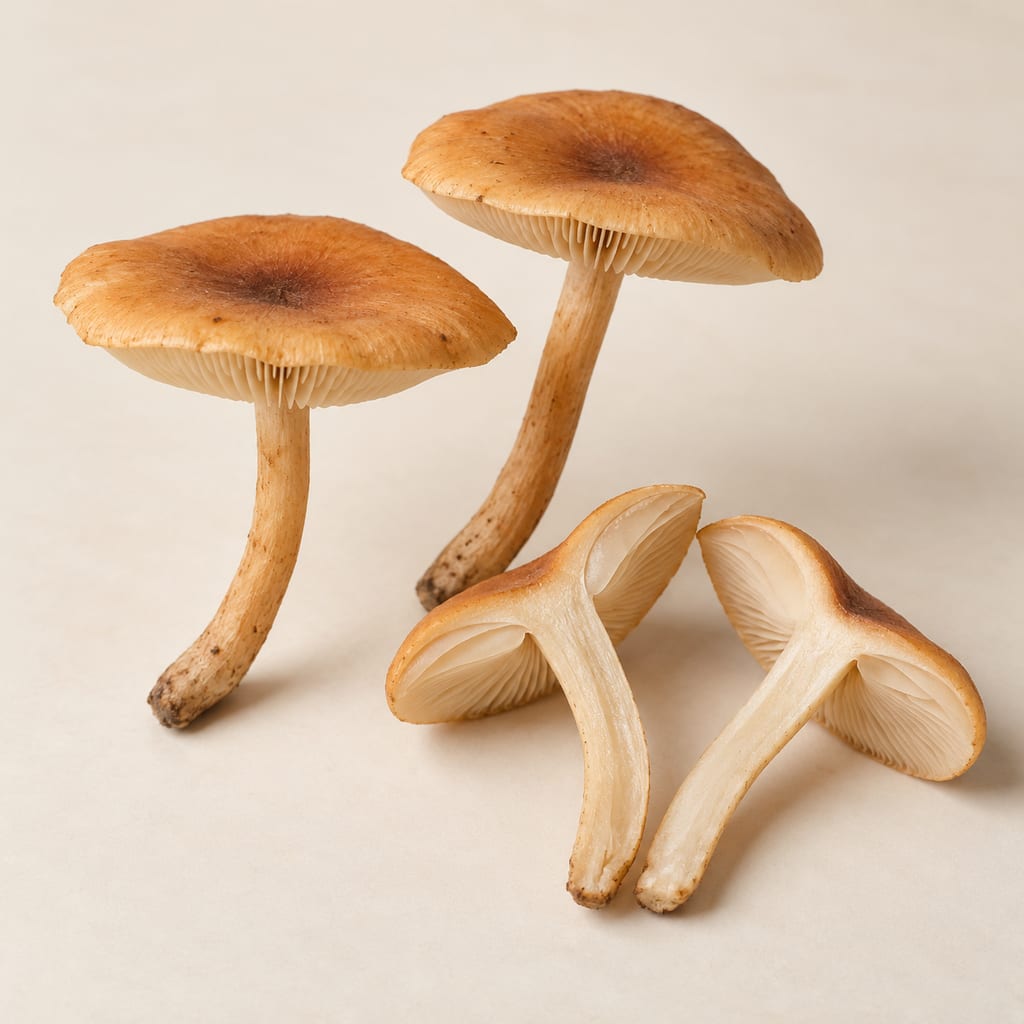
The fresh cap is brown and firm, and the flesh is dense enough to hold its shape in a braise. Dried shiitake is the form most cooks know: the caps shrink, darken and concentrate their flavour. Two cool-grown forms are prized in Japan, dongu, the winter mushroom, and hanagu, the flower mushroom, whose cap splits into the pale cracks that give it the name.
Sources for this section
How the cultivation developed
The earliest written record of shiitake cultivation is usually given as the Records of Longquan County, compiled in 1209 under the Song dynasty. A recent review in the panfungi journal places the earliest written description of a log-based method in Wang Zhen's Agricultural Book of 1313, whose fungi chapter describes notching logs to encourage fruiting. The review describes Chinese cultivation as more than 800 years old, passing through three stages: log notching, log inoculation and sawdust inoculation. The sources give these as stages, not exact dates, and the two early written records are not reconciled.
Japan took up the practice later. The horticulturist Sato Churyo adapted the Chinese account in 1796, and his book is described as the first Japanese text on shiitake cultivation. Sawdust bottle cultivation began in Japan in 1928 and reached Taiwan in 1970, according to the same review.
Genetic work supports a long history of human selection. A 2016 resequencing study of 39 wild and 21 cultivated Chinese strains found that cultivated strains mostly descend from wild strains in China and Northeast Asia. A 2021 comparison of genomes found substantial change over the species' evolution, which the authors connected to cultivation and domestication over roughly the last thousand years. The Wikipedia article's claim of prehistoric cultivation is not supported by these records.
Sources for this section
How it is grown
Shiitake grows naturally on decaying hardwood, and its traditional cultivation uses logs of oak or related trees, or sawdust blocks in controlled rooms. The three developmental stages in the Chinese review track this move from logs to sawdust. Logs are inoculated with the mycelium and left to fruit over successive seasons, and the sawdust method allowed indoor, year-round production. The sources do not give standard durations, temperatures or yields for either method, so this page gives none.
Sources for this section
How it is cooked and eaten
In Chinese cooking shiitake appears in soups, braises and stir-fries, and in vegetarian dishes such as Buddha's delight. In Japan the mushroom is served in miso soup, used as the base of a vegetarian dashi, and added to steamed and simmered dishes. Dried shiitake is rehydrated before use, and the soaking liquid is often kept for cooking. The Wikipedia article gives 296 kcal per 100 g for dried shiitake, with high percentages of daily values for several B vitamins. Those figures are from a nutrition table and should be checked against a food-composition database before use.
Cooks value shiitake for its meaty texture and its savoury depth, which reflects the mushroom's natural glutamate and nucleotide content. The sources used here do not name the specific compounds, so this page does not name them either.
Sources for this section
Safety caution
Shiitake dermatitis is a rare reaction to raw or lightly cooked shiitake. It appears about 24 hours after eating, can spread across the body, including the face and scalp, and is attributed to lentinan, a polysaccharide in the mushroom. The Wikipedia article reports that thorough cooking may remove the allergenicity. This is a documented caution, not a general prohibition, and people who develop a rash after eating shiitake should seek medical advice. Shiitake is a cultivated food fungus, so the caution concerns preparation, not identification in the wild.
Sources for this section
Notes and open questions
The sources do not agree on the exact date of the earliest cultivation, and the review's 1313 reference is a secondary account of a primary text. The natural range is given as warm, moist Southeast Asia, but the sources do not define the wild population precisely. The page does not name the flavour compounds, the drying process or a shelf life, because the sources reviewed here do not give them.
Sources for this section
Allergens
Shiitake dermatitis after raw or lightly cooked mushroom (lentinan)
Places
China
Traditional preparation · Country evidenceCultivation is documented from the Song dynasty, with Chinese records of log notching; the sources do not give a single place of origin within China.
Japan
Traditional use · Country evidenceJapanese cultivation is documented from Sato Churyo's 1796 book and later sawdust methods; Japan is also a major culinary user.