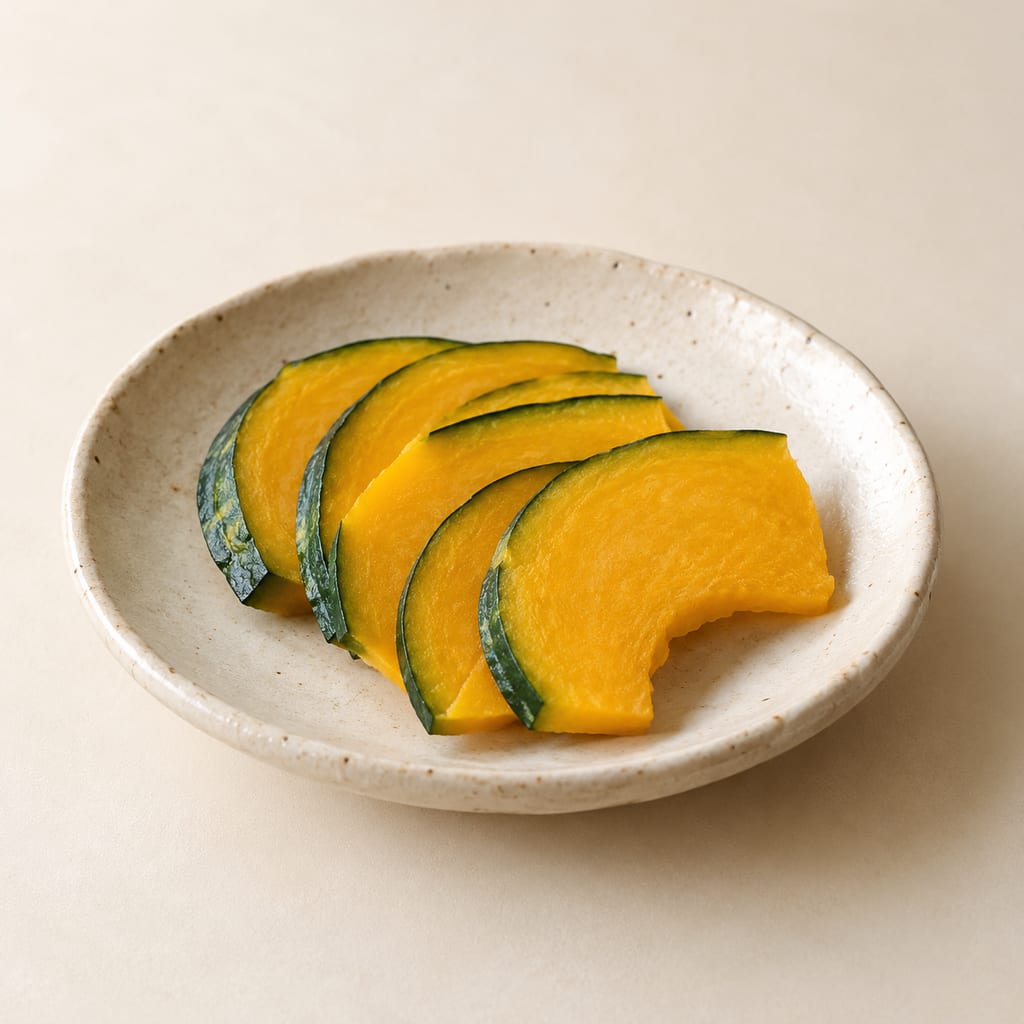
Kabocha no nukazuke: pumpkin in a fermented rice-bran bed
Kabocha no nukazuke: Refrigerated commercial fermented bed; use removed portions the same day.
 FermenteaWhere food goes to change
Traditional method
ぼか漬け · nukadoko pickles · nukadoko · rice-bran pickles
Japanese pickles made by burying vegetables in nukadoko, a reusable bed of rice bran, salt and water that is turned daily and ripened by lactic and yeast fermentation.
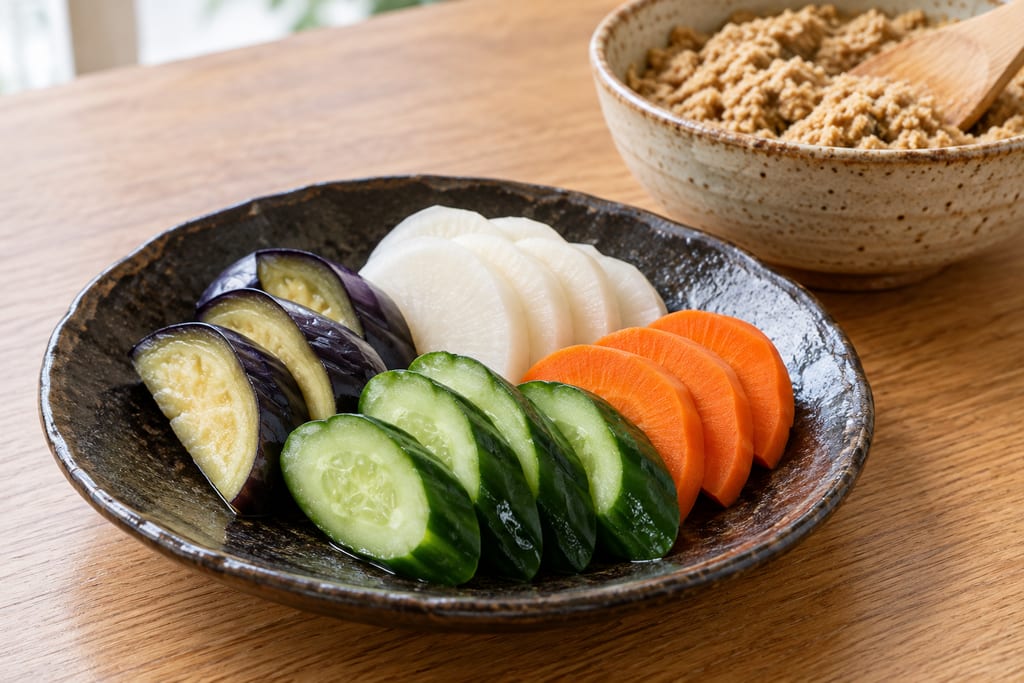
Nukadoko is a reusable bed of rice bran mixed with salt and water into a moist paste. Nukazuke are the vegetables, and sometimes eggs, fish or other foods, that are buried in it and taken out as pickles. Caring for the bed is a separate task from preparing each vegetable. Many households keep their own bed, and some beds are tended for generations for a distinctive flavour.
The bed is a fermenting community, not a single starter. Beds are turned each day to bring in air, and they are described as containing lactic acid bacteria, butyric acid bacteria and yeast. A laboratory study found that its experimental bran and vegetable pairings changed the microbial communities that developed, which says nothing about how to keep a household bed.
The method above is one practitioner's, for a 1 kg bed. A new bed is not eaten from at first: scraps of cabbage, carrot or cucumber are buried and thrown away every day and a half to two days for a week, until the bran is soft and spongy, smells noticeably and tastes sour. Raw or roasted bran can be used. A rounded container is easier to turn by hand, and the bed needs a daily turn and a regular taste for salt and sourness.
If the bed turns soggy, more bran and salt are added. If it is not salty enough, 1 teaspoon of salt per 100 g of bran is added and the bed is left at room temperature for 1 to 3 days. Lemon is avoided because its acid stops fermentation, and so are juicy items such as ripe tomatoes that burst. Flavourings vary: kombu, dried shiitake and chili in this formula, and elsewhere sansho, yuzu or apple peel, dried sardines or bonito flakes. Another home formula, 1 kg bran with 130 g salt and 1 L water, is stirred up to twice a day for about 15 days and then kept in the refrigerator.
Vegetables are cut to about the thickness of a cucumber, kept from touching and buried completely. They need about 12 hours at room temperature or 24 hours in the refrigerator, then the bran is scraped off, they are rinsed for a second or two and wiped dry. Cucumber is the classic choice; daikon, eggplant and carrot are traditional, and myoga and okra need no preparation. Cherry tomatoes are pricked 6 to 8 times with a toothpick, corn is cut into 5 cm lengths and steamed or boiled for 5 to 8 minutes, and eggs are boiled for 10 minutes and peeled before burying. Newer additions include cheese and bell peppers.
Nukazuke is eaten with rice, as part of the everyday meal, and in chazuke, green tea poured over rice. A culinary-school class presents the pickles as a meal accompaniment.
In summer the bed is kept in the refrigerator, preferably the crisper, where fermentation slows. If the cook is away for 3 days to a week, the pickles are removed, the bed is refrigerated and its surface is covered tightly with plastic wrap. For a longer absence the bed goes into a freezer bag and is frozen; after thawing, moisture is adjusted with extra bran and salt. Hands are washed before mixing, or gloves worn.
A white film on the surface is film yeast, common in hot weather: it is mixed in in small amounts, and if it forms a membrane the surface layer is removed. Red, blue or black spots are mould, and the whole bed is replaced. An off flavour or a bed that is too soft is corrected with bran and salt, or the bed is remade. None of this amounts to a validated cleaning method, maturity test or storage life.
Nukazuke became widely available in the Edo period (1603-1868), when better rice milling and rising white-rice consumption in cities produced large amounts of bran. Regional styles differ: Kanto beds are salty and tangy, Kansai beds richer and milder, often with kombu or dried shiitake, and some parts of Kyushu use a lot of chili. In Hokkaido and Tohoku, where cooler weather slows fermentation, a little more salt is added. Two local specialities are heshiko, salted mackerel kept in the bed for a long time in Fukui, and fugu no ko nukazuke in Ishikawa, pufferfish ovaries pickled for several years to make them edible.
A regional report on nukadaki, the bran-simmered fish of Kitakyushu, recounts early seventeenth-century records that mention nuka-miso. The report is local and does not show that those records describe today's vegetable bed, so it is not read as the origin of nukazuke.
The sources are practitioner and cultural accounts. They give no universal cleaning method, maturity test or storage life for a bed, and none has been validated as a food-safety procedure. Pufferfish-ovary and long-aged fish nukazuke are specialist foods and are not part of this method.
The habit spread across Japan as a way to use the large amount of bran that rice polishing produced. At one point the basic diet of ordinary people is reported to have been rice, miso soup and nukazuke.
Yield 1 kg of bed · Scaling: source batch only
A practitioner account says red, blue or black spots in the bed are mould and the bed should then be replaced entirely; a white film is film yeast, not mould.
Hazard sourceWash hands or wear gloves when mixing; keep the bed cold in hot weather; make an entirely new bed if red, blue or black spots appear.
Control sourceThe sources give practitioner routines, not a validated food-safety process, and no general maturity endpoint, cleaning method or storage life for a bed.
Do not rely on smell or taste to decide a bed with coloured spots is fine.
Nukazuke is made across Japan with regional differences in salt, seasoning and what is pickled; the sources name no single origin.
Kabocha no nukazuke: Refrigerated commercial fermented bed; use removed portions the same day.
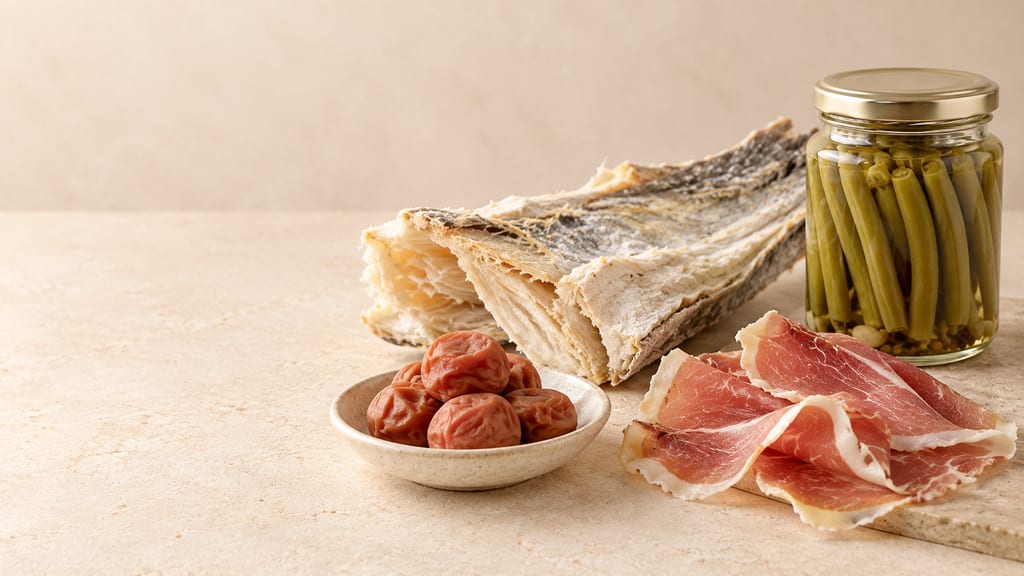
Every preserved food is a stack of barriers against microbes, enzymes, air and time. This is how they work, what a recipe's numbers measure, and how cooks worldwide build them.
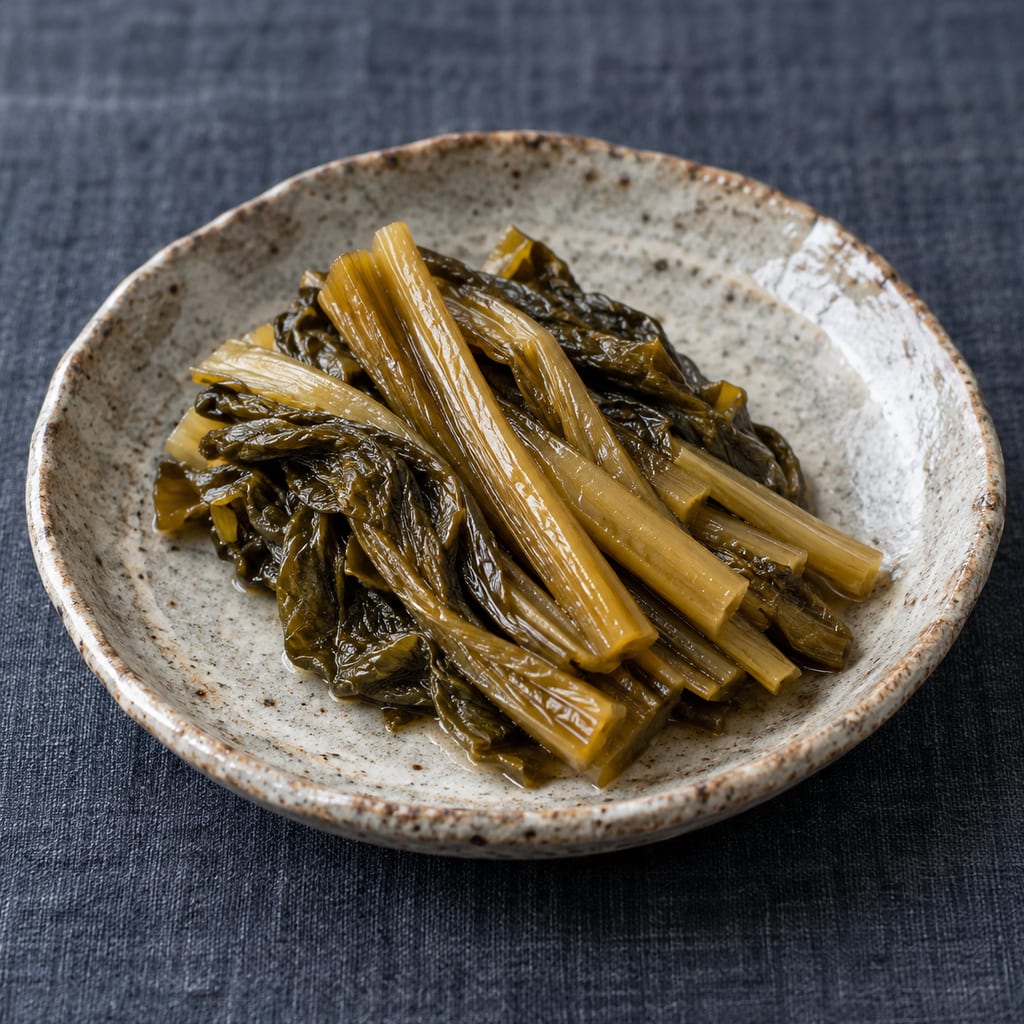
Takana mustard greens from Aso in Kumamoto are salted and pressed into a fresh spring pickle, or aged into a sour furuzuke that is fried and mixed into takana rice.
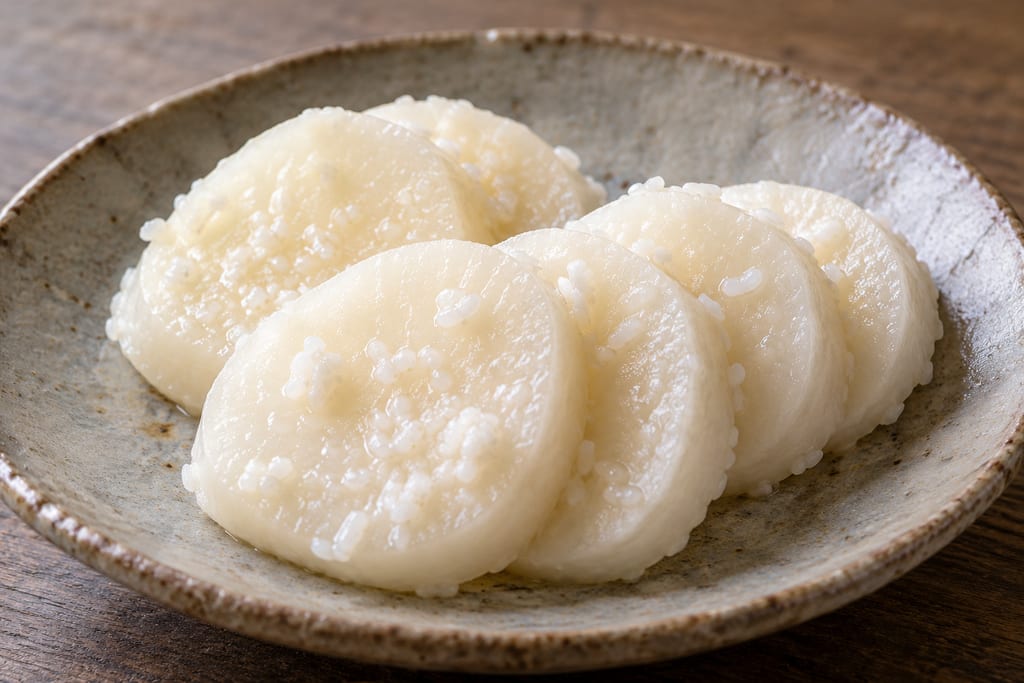
A sweet, crisp Japanese daikon pickle from Tokyo's Nihonbashi district, made by salting fresh radish and dressing it in rice koji, sugar or koji amazake without the heavy drying used for takuan.
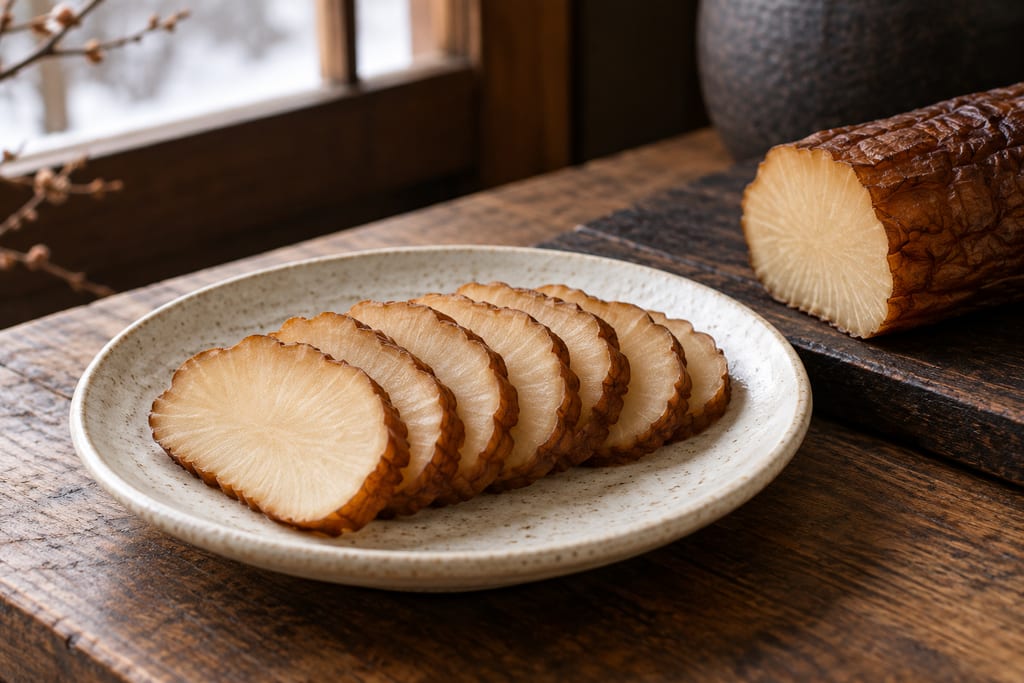
Iburigakko is Akita pickled daikon dried with smoke before it is fermented in rice bran.
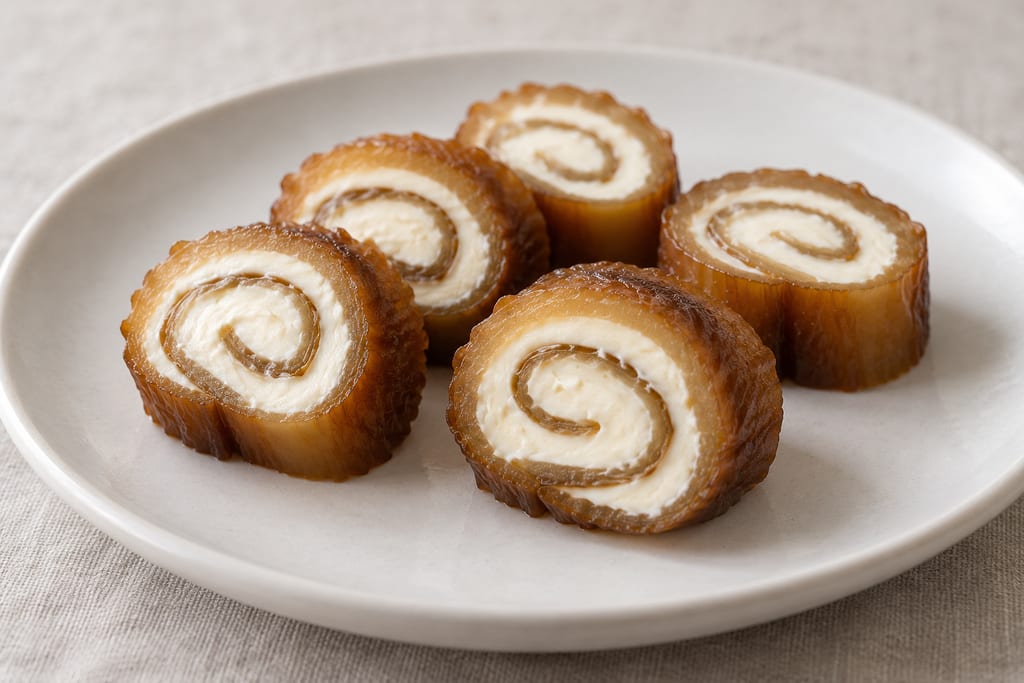
A Morinaga snack pairs thin ribbons of iburigakko with cream cheese, then chills the roll before cutting it into portions.
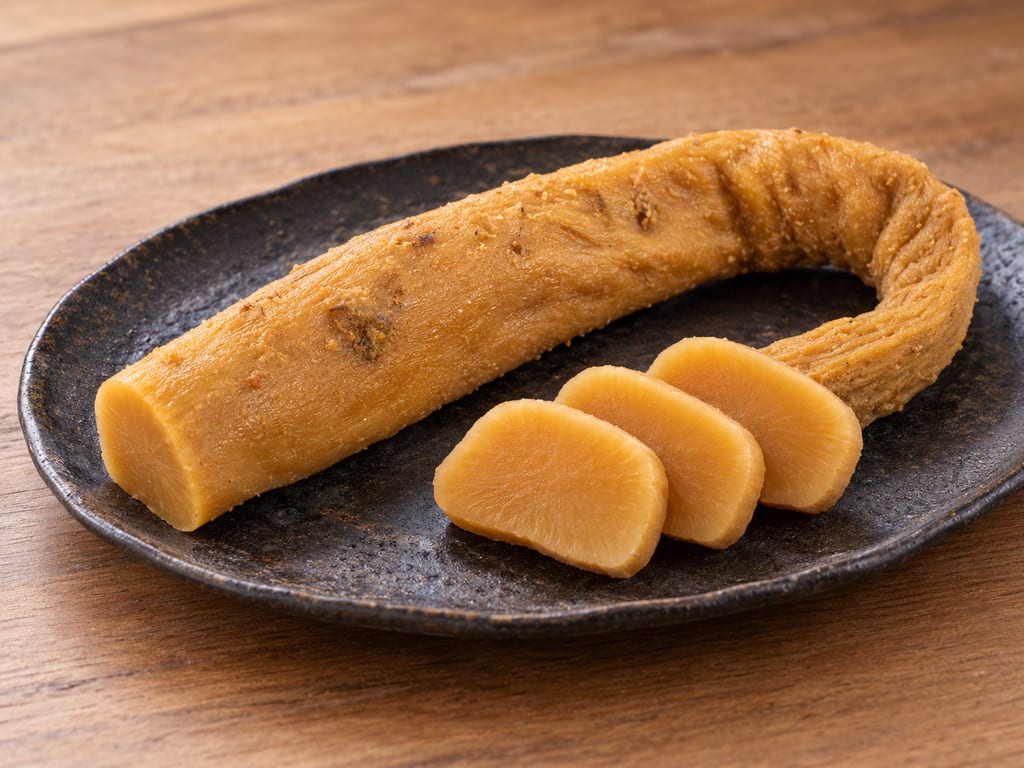
Regional takuan from Ise City, Mie, made with Misono daikon dried on a rack, then matured in a weighted barrel of rice bran and salt for months to years.

Foods embedded in salty fermented miso paste, which transfers salt and fermentation products into them; misozuke uses an already transformed medium rather than a fresh vegetable brine.
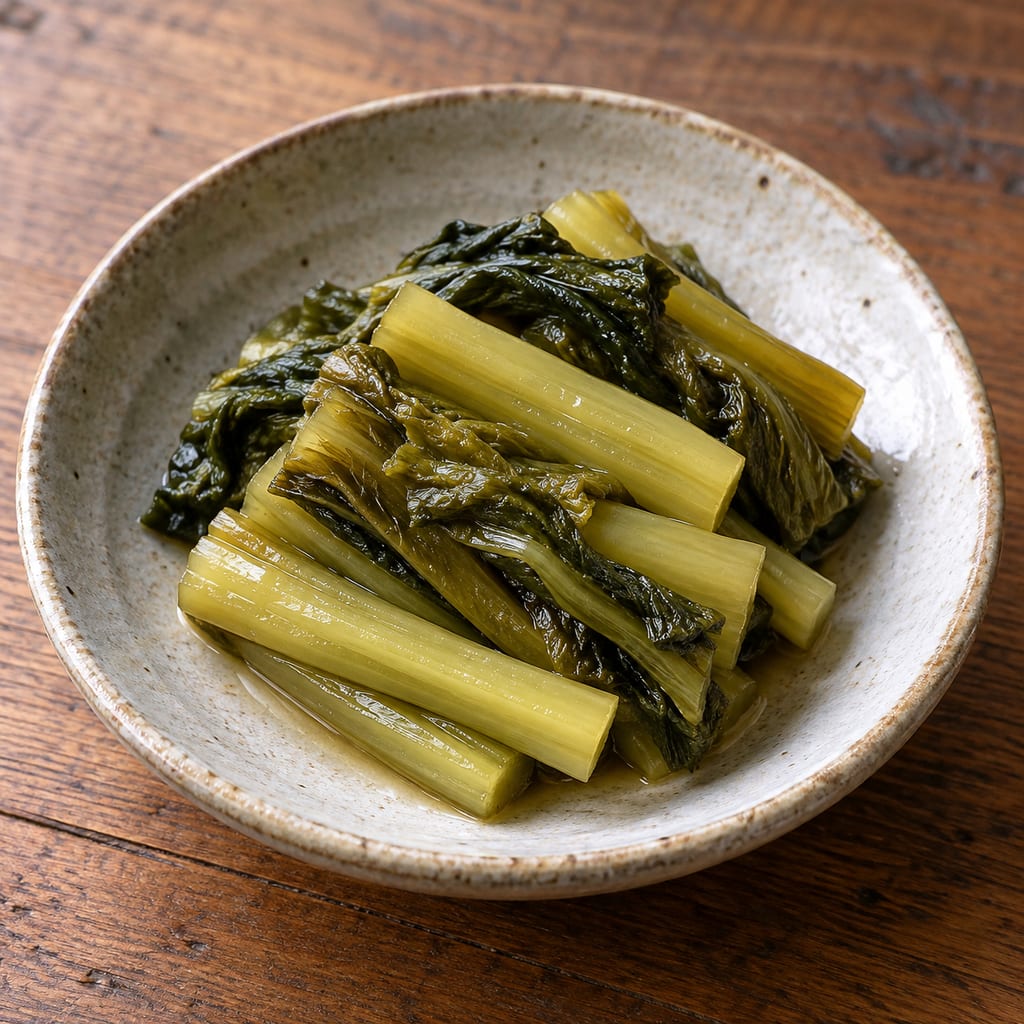
Nozawana greens salted in a barrel and weighted overnight, a Nagano household pickle sampled after about two weeks and soured by a month.
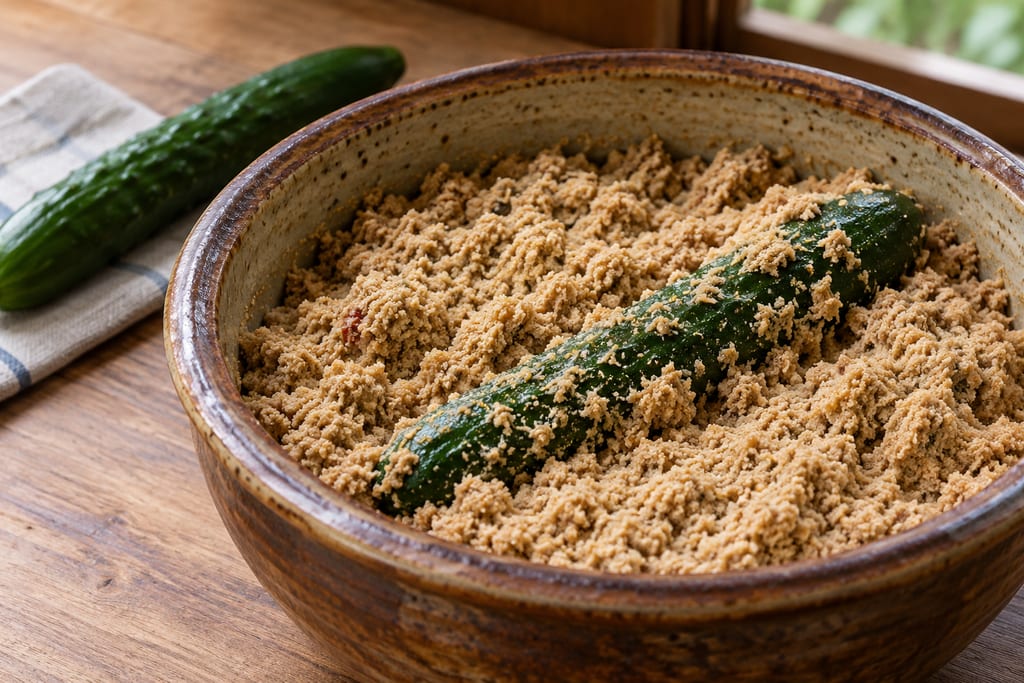
Cucumber ferments in a maintained rice-bran bed seeded through repeated vegetable scrap picklings; the record includes the starter-bed method.
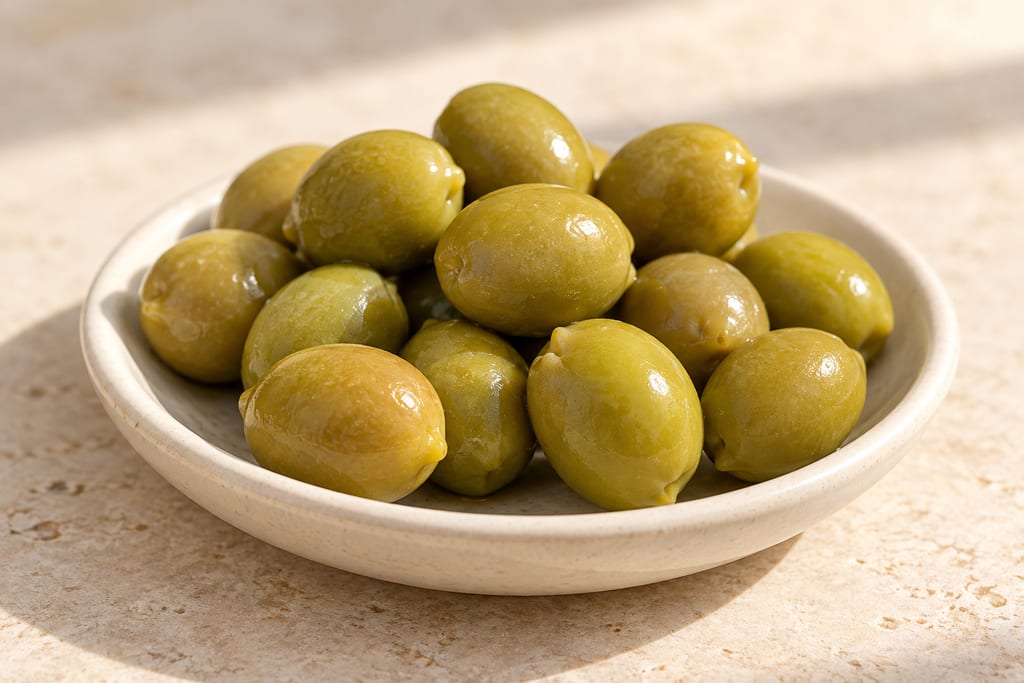
A Portuguese table-olive product from the Negrinha cultivar in northeastern Portugal, sold in three commercial styles, two of them brined fermentations and one oxidised to black.
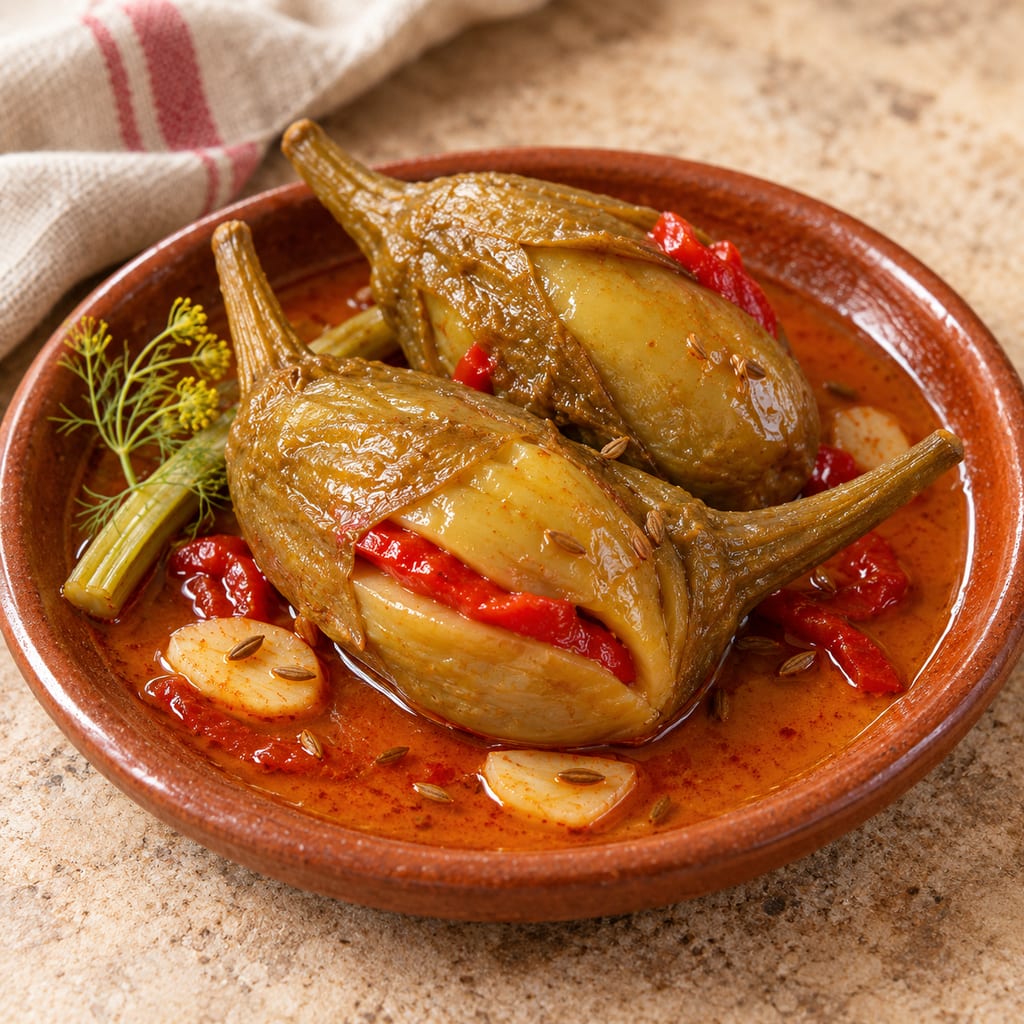
A protected aubergine preserve from Ciudad Real in Spain: tender fruit of the local Dealmagro variety, cooked briefly and then fermented in a vinegared, paprika-seasoned dressing.
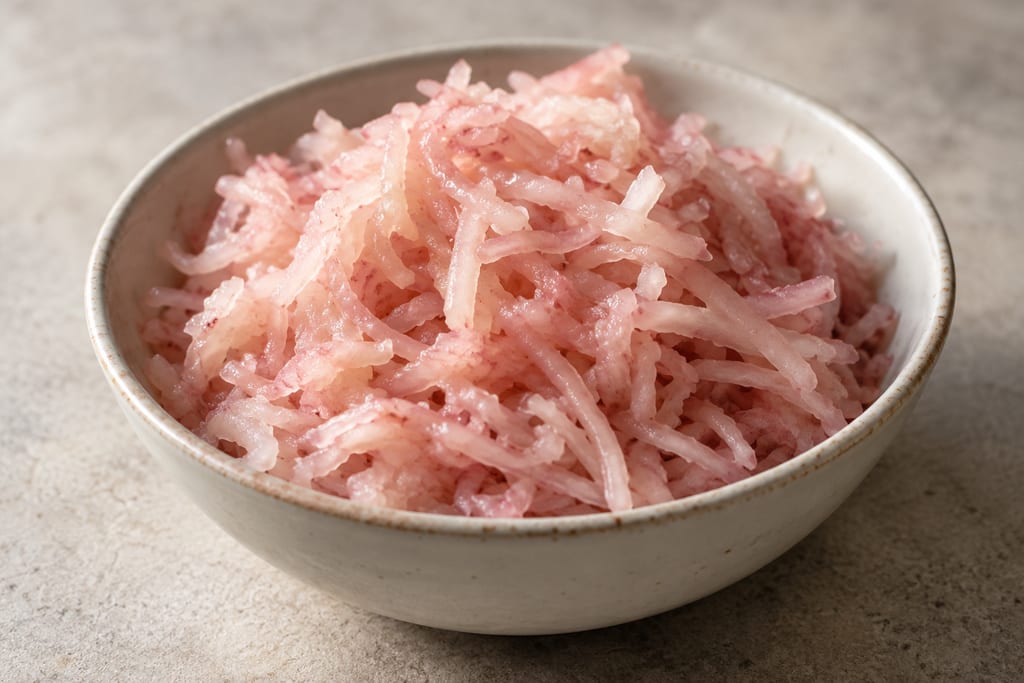
Source-specific Brovada DOP producer method for Friuli Venezia Giulia turnips and red-grape marc. This records a regulated producer process; it is not a validated home-scale recipe.
An industrial fermentation patio places factory-made fiberglass-reinforced polyester olive tanks below floor level, with drainage and transfer infrastructure arranged around the buried vessels.
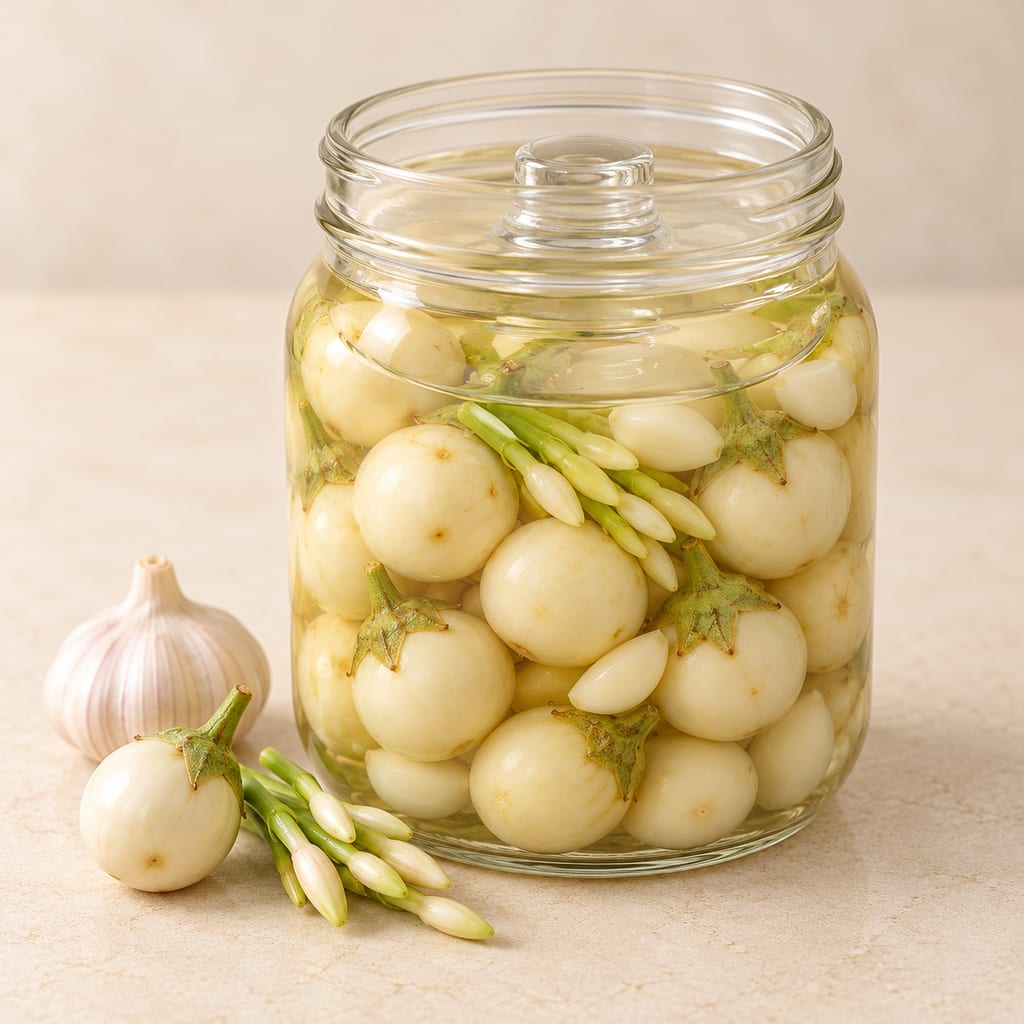
Vietnamese salted and fermented small eggplant, dried on the day of purchase, then held submerged in warm salty water with garlic and galingale flower for a week or longer.
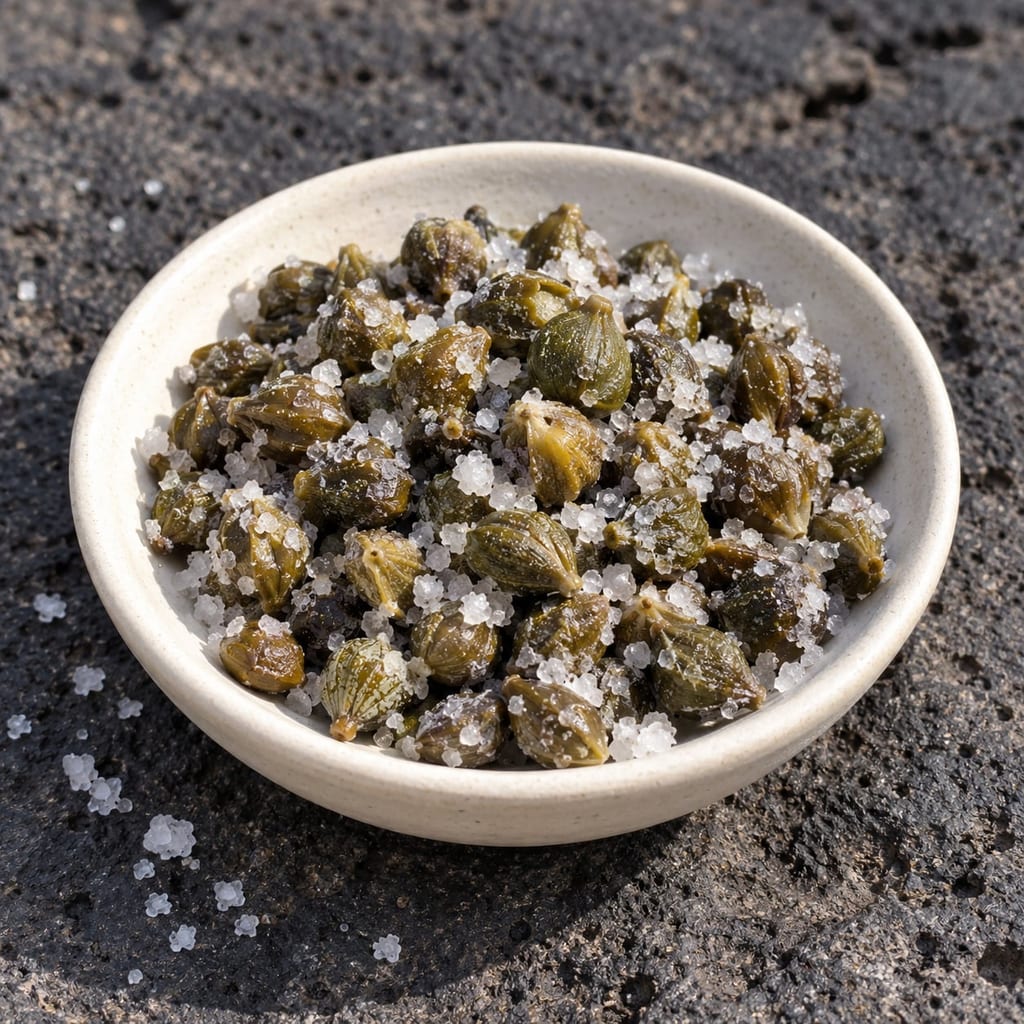
A protected Sicilian product: unopened caper buds from the island of Pantelleria, dry-salted with sea salt in a two-stage process that encourages lactic fermentation.
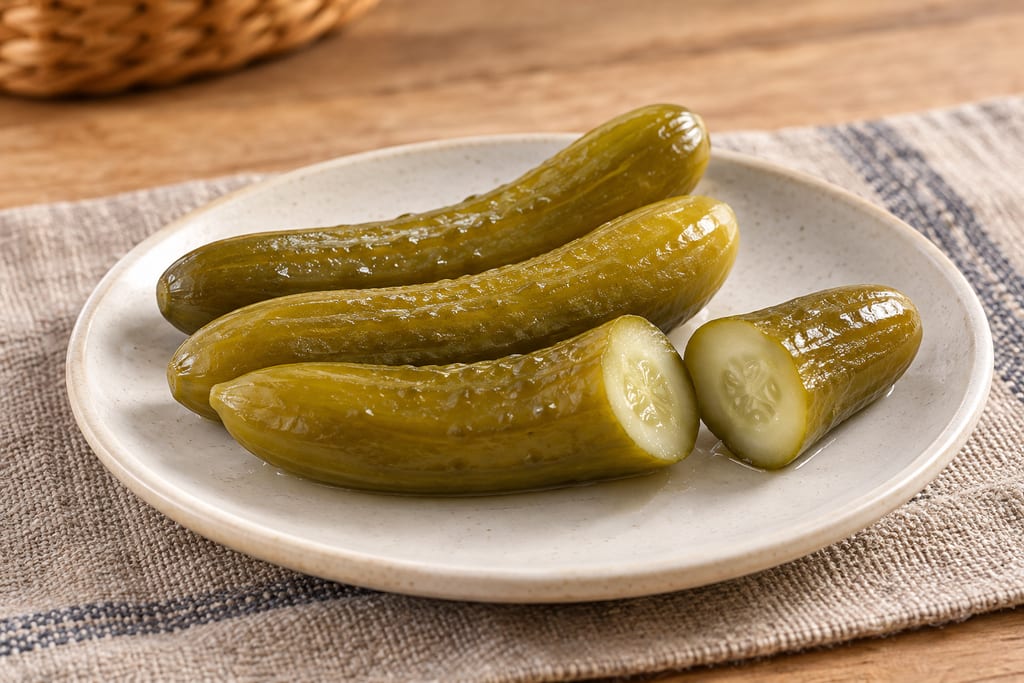
Çubuk turşusu is a registered pickle from Çubuk district in Ankara. Its cucumber variant is sold as Salatalık Turşusu, and a commercial specification sets its brine and room-temperature period.
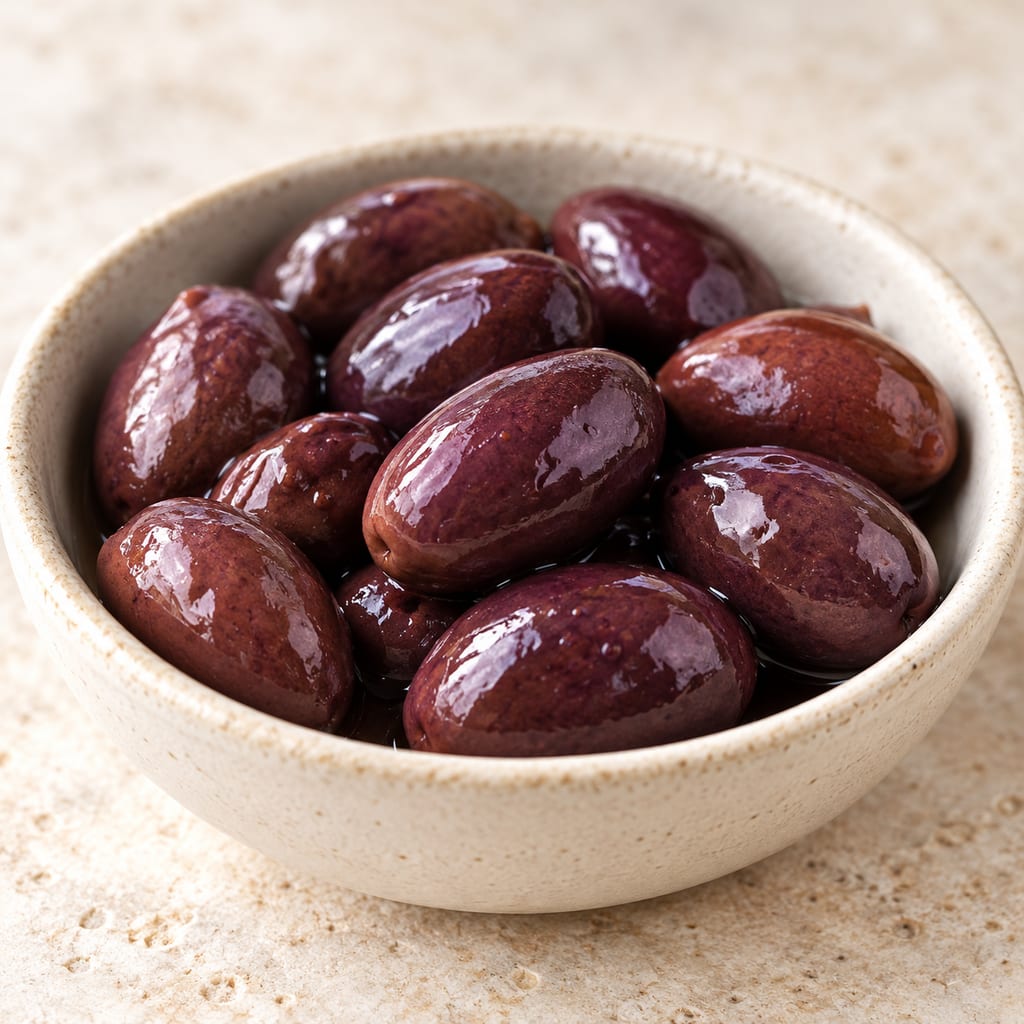
Elia Kalamatas is a Messinia table olive of the Kalamon variety, picked before full ripeness and fermented in brine for six to nine months; it is a PDO product, not a generic black olive.

A gelling polysaccharide extracted from red seaweeds, sold as kanten strips or powder; it sets firm at a low concentration and stays solid until about 85 °C.

A Dominican table and seasoning condiment of sour orange juice, mixed with lime and salt and bottled raw; garlic, oregano or a hot pepper may be added for meat or a spicier bottle.

Cicerbita alpina is an alpine perennial whose tender shoots and leaves have been eaten raw or cooked. Sámi milk preparations and modern Carnian dishes are distinct uses, with serious identification and preservation limits.

Japanese skipjack tuna cooked, then repeatedly smoked and dried over a wood fire by the hand-fired tebiyama method into a hard block for shaving into dashi: the first stage of katsuobushi.

A Swedish-style spirit vinegar made by fermenting neutral alcohol with live vinegar bacteria, with a separate guide to commercial ättika strengths.

A yeast-raised wheat ring shaped from a firm dough, briefly boiled and baked. This source-batch formula gives a gently malted crust and a chewy crumb.

A warm dip of garlic, anchovy and olive oil, often enriched with butter, that Piedmont serves over a flame with raw and cooked vegetables and bread.

Bechamel is a white sauce of milk thickened with a butter and flour roux, one of the French mother sauces, and the base from which Mornay and other cheese and cream sauces are made.
No community contributions have been published for this entry yet.
Sign in to contribute. Published comments and photos are free to read.
Marukome Fermentation Culture MagazineMethod · Ingredients · Safety
Nukazuke: Enjoy Fermented Summer Vegetables1 kg bed: 500 g raw rice bran, brine of 50 g salt in 500 ml hot water, 5 cm kombu, 1 chili, 1 dried shiitake.
Sutezuke start over a week, readiness signs, daily turning, pickling about 12 hours at room temperature or 24 hours chilled, summer refrigeration, mould and film-yeast guidance.
Cited in: Starting and keeping a bed; Pickling in the bed; Heat, travel and trouble; What is not established
Nippon.comIdentity · History · Geography · Use
Nukazuke: Delicious Tangy Pickles, Good and Good For YouBed of rice bran, salt and water; daily stirring; beds kept for generations.
Edo-period spread; regional styles; flavourings and vegetables; heshiko and fugu no ko nukazuke; how eaten.
Cited in: The bed and the pickles; Starting and keeping a bed; Pickling in the bed; Regional styles and history; What is not established
Futari GohanMethod
Nukadoko (nukazuke) recipe and methodA separate home formula: 1 kg bran, 130 g salt, 1 L water, 2 pieces of 5 cm kombu, 2 dried chilies, 6 dried sardines, 4 g katsuobushi; stirred up to twice a day for about 15 days, then kept in the refrigerator.
Cited in: Starting and keeping a bed
Tsuji Culinary InstituteUse
Making delicious homemade nukazuke (culinary-school class)A culinary-school class presents vegetables from a reusable bed as a meal accompaniment.
Cited in: Pickling in the bed
Kitakyushu City; hosted by the Agency for Cultural Affairs, JapanHistory
Chapter 2, research on nukadaki (Kitakyushu City)Regional report on nukadaki recounting historical records that mention nuka-miso in the early seventeenth century.
Cited in: Regional styles and history
Bioscience of Microbiota, Food and Health / J-STAGEScience
Impact of vegetables on the microbiota of the rice bran pickling bed NukadokoIn a laboratory study, experimental bran and vegetable pairings affected the microbial communities observed in the bed.
Cited in: The bed and the pickles