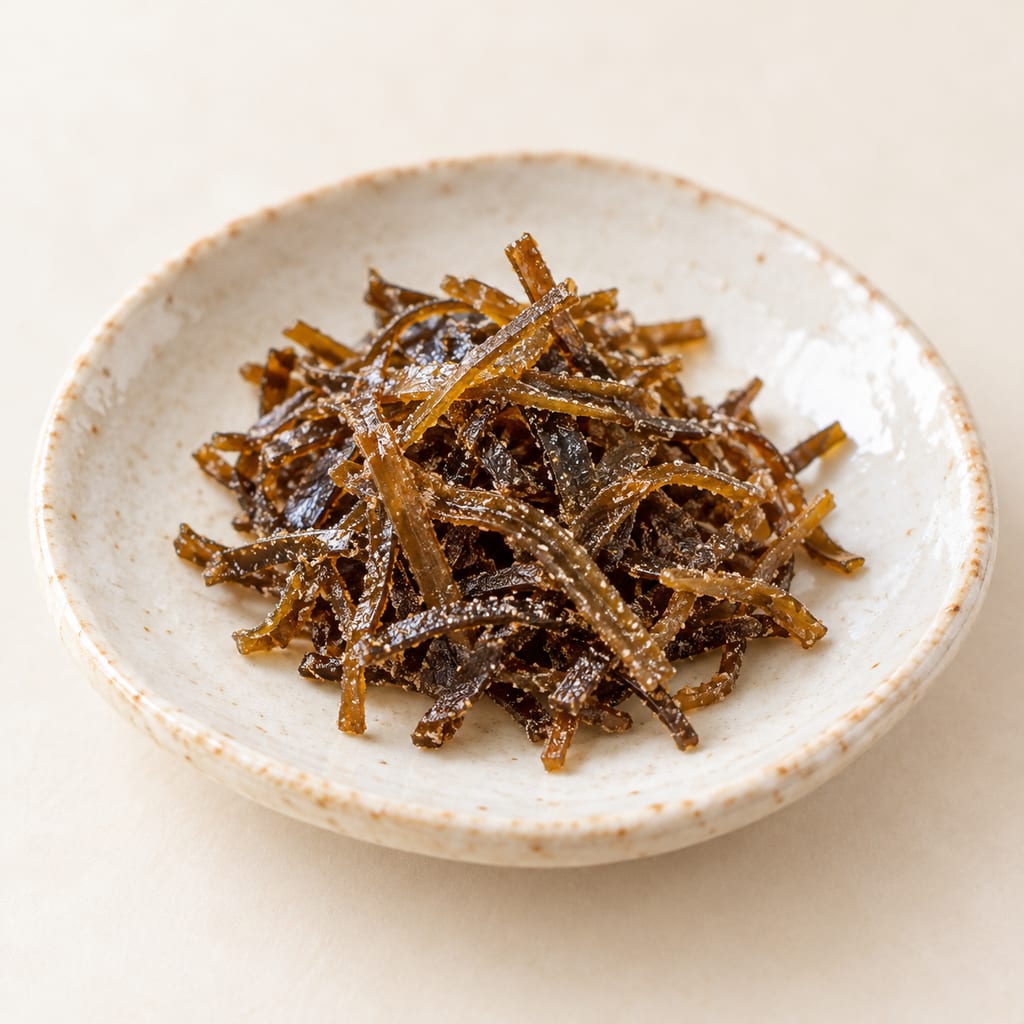
Shio Kombu (Seasoned Salted Kelp)
Japanese kelp simmered in soy sauce and seasonings, sometimes dried and salted, eaten with rice or used as an umami seasoning.
 FermenteaWhere food goes to change
Substrates
Kombu is a group of edible brown kelps, chiefly harvested around northern Japan or cultivated in East Asia, used for umami-rich stocks, simmered dishes, seasonings and preserved foods.
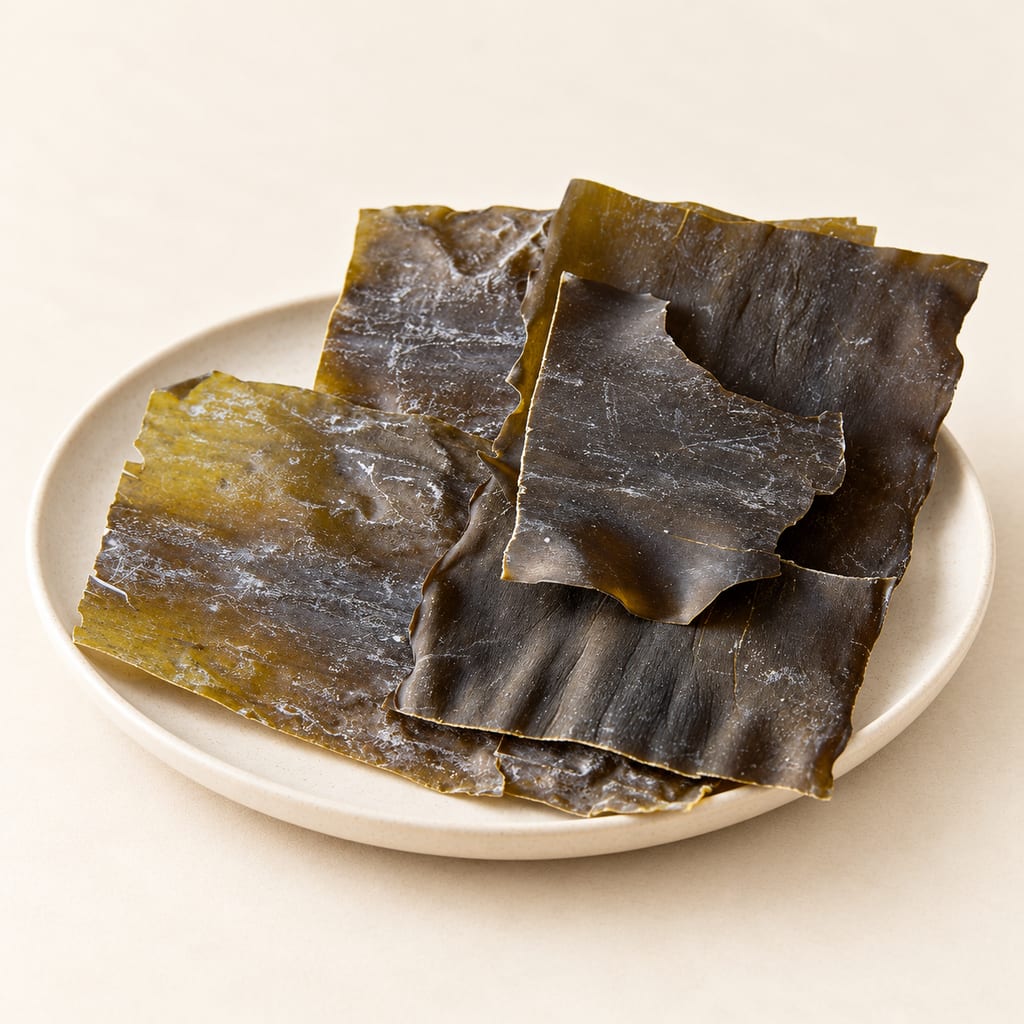
Kombu is the Japanese culinary name for several large edible brown kelps, especially species of Saccharina in the family Laminariaceae. It is usually sold as broad, stiff, dried strips or sheets and is best known for making dashi, the savoury stock used throughout Japanese cooking. The most familiar biological species is Saccharina japonica, formerly Laminaria japonica, but commercial kombu covers several species. Japan's National Museum of Nature and Science lists several other edible kelps, including Saccharina angustata, Saccharina longissima and Saccharina sculpera, together with named varieties of Saccharina japonica. These kelps differ in blade shape, thickness, geographical distribution and culinary suitability.
The familiar kelp blade is the large diploid sporophyte stage of a brown alga. Its body consists of a holdfast that anchors it to rock, a supporting stalk or stipe and a broad blade or lamina. The holdfast only anchors the kelp; it does not take up nutrients like a land plant's roots. Nutrients are absorbed across the seaweed's surface, while photosynthesis supplies organic carbon. Unlike nori, which is a red alga, kombu contains chlorophylls a and c and the accessory pigment fucoxanthin, which contributes to its olive-brown appearance. Large individuals can form underwater kelp beds that provide habitat for fish and invertebrates.
Kombu is used in different forms depending on the species and processing. Thick ma-kombu and rishiri-kombu are the stock kelps; softer hidaka-kombu is usually simmered and eaten. Rausu-kombu is prized for a fuller-flavoured stock. Long naga-kombu is suited to simmered foods and rolled preparations. Some products are shaved into thin flakes, cut into strips, seasoned or simmered in soy sauce. These are processed foods made from kombu, not separate botanical species. The word also appears on some European products made from Saccharina latissima or Laminaria digitata, but those are different kelps, not Saccharina japonica.
Plain kombu is non-fermented. Its defining transformations are harvesting, drying, conditioning, rehydration and sometimes cooking. Drying concentrates the remaining solids and creates a product that can be transported and stored. When placed in water, the kelp releases glutamate, minerals, mannitol and other soluble substances that contribute to taste. Kombu can subsequently be used in fermented or seasoned preparations, but this does not make untreated dried kombu a fermented ingredient.
The principal Japanese food kelps grow naturally around Hokkaido and neighbouring cold-water coasts. People gathered them long before modern aquaculture, though an old reference to seaweed rarely says which species was meant. Japan's agriculture ministry points to the Shoku Nihongi, completed in 797 CE, as an early written source that mentions kombu; the Japanese Kombu Association dates the entry to 715 CE, when kombu was presented to the imperial court by Suga no Komahiru from the northern Emishi region. That gives kombu an eighth-century written record, though it was certainly eaten earlier. The same ministry describes trade between the Matsumae area and Honshu during the Kamakura period, followed by distribution through Tsuruga in Echizen towards Kyoto and Osaka in the Muromachi period.
Kombu also belongs to Ainu food and economic history, which is older than the Japanese commercial trade. Researchers examining eighteenth- and nineteenth-century illustrations and ethnographic records found depictions of Ainu people harvesting kelp from small boats with long wooden poles. They also documented the drying and consumption of kelp, including powdered dried kelp in Hidaka and Kushiro during the late Meiji and Taisho periods. An ethnobiological survey identifies sas as an Ainu term for kelp and describes its use in soups and as a dried winter food. These records show Ainu harvesting in the last two centuries; the practice is likely much older.
During the Edo period, maritime transport transformed the distribution of northern kelp. The Kitamaebune trading vessels carried Hokkaido marine products south through ports on the Sea of Japan coast. Toyama became closely associated with kombu consumption and preparations such as kombu-jime, in which fish is held between sheets of kelp. Trade also brought kombu into Okinawan cooking, although the northern species does not grow there. Its incorporation into simmered pork dishes illustrates how a traded ingredient can become central to a regional cuisine far from its harvesting grounds.
The modern history of cultivated kombu took a different course in China. FAO research records that Saccharina japonica, then called Laminaria japonica, became established near Dalian in 1927, probably through shipping from Japan. Chinese scientists developed floating-raft cultivation, controlled seedling production and methods for extending cultivation beyond the original cold-water growing area during the 1950s. The FAO records artificial production beginning in 1952 and major expansion later in that decade. In 1908 the Japanese chemist Kikunae Ikeda isolated glutamate as the compound behind kombu's savoury taste and called that taste umami. Cooks had used the kelp for centuries before anyone identified that compound.
Kombu has a life cycle alternating between two generations. The large edible kelp is a diploid sporophyte. Mature areas of its blade produce spores through meiosis, and these microscopic swimming zoospores settle on suitable surfaces. They develop into tiny male and female gametophytes. Following fertilisation, a new sporophyte grows into the recognisable kelp blade. In natural kelp beds, reproduction and growth depend on light, seawater temperature, nutrients, water movement and available hard substrate. In commercial cultivation, farmers reproduce parts of this cycle in hatcheries so that juvenile kelps can be attached to growing ropes instead of relying entirely on naturally established populations.
Traditional Hokkaido kombu production depends heavily on wild harvesting. Fishers gather mature kelp from boats using long poles and specialised hooks, sometimes twisting the plant from its rocky attachment. Detached kelp washed ashore may also be collected under particular local practices. Harvesting is closely associated with suitable sea and weather conditions because the kelp must be dried effectively. An ethnographic study of Hidaka harvesting describes the role of the hatamochi, a designated person who signals when collecting is permitted. The Hokkaido Kombu Cooperative describes laying harvested kelp individually on pebble-covered drying grounds, allowing sunlight and wind to remove moisture, then sorting the dried blades by appearance, weight, width and other quality criteria.
Rausu-kombu has a detailed documented method. The Rausu Fisheries Cooperative describes 23 operations, beginning with the summer harvest of two-year-old kelp. The blades are washed in seawater and dried on the shore, then finished in a drying shed. Workers repeatedly manage the moisture content by exposing parts of the blade, allowing controlled re-moistening from evening dew, rolling the sheets, pressing them under weights and drying them again. The cooperative calls several of these conditioning stages anjō. The sequence flattens the stiff blades so they can be graded and handled, and producers associate it with flavour development. No microbial fermentation is described.
Chinese cultivation of Saccharina japonica developed around controlled hatchery production and floating marine rafts. FAO documentation describes collecting spores from mature kelp, allowing them to settle on fibres, raising microscopic and juvenile stages in cooled seawater, and transplanting the young plants to longer cultivation ropes. A Chinese summer-seedling method maintains hatchery water at 8–12°C before transferring seedlings to offshore structures. The reported temperatures describe that particular cultivation system. Kelp is harvested, cleaned and then dried, salted or processed for food and industrial extraction. Across the industry, harvest timing, drying method and grading influence texture and flavour as much as the original biological species.
Kombu's main contribution to cooking is free glutamate. Glutamate is an amino acid naturally present in kelp tissue, and its dissolved ionic form activates receptors involved in umami taste. Ikeda's 1908 work identified glutamate as the compound behind the savoury taste of kombu stock. When dried kelp is immersed in water, soluble glutamate and other small molecules diffuse into the liquid. Dashi therefore works primarily through extraction, not fermentation. Studies of rishiri-kombu also find aspartic acid and alanine among important extracted amino acids, alongside nucleotides including adenosine and guanosine monophosphates. The proportions depend on the kelp and extraction conditions.
Glutamate is especially effective when combined with certain 5-prime ribonucleotides. Inosinate from dried bonito and guanylate from dried shiitake mushrooms enhance umami perception when present with glutamate. The interaction occurs in the taste-receptor system and helps explain why kombu is so often combined with katsuobushi or mushrooms. Temperature and extraction time affect the amount and balance of compounds released. A culinary method published by the Umami Information Center uses 20 grams of rishiri-kombu in 1 litre of soft water at 60°C for one hour. That is one published method, not a rule for every kombu.
Kombu also contains alginate, laminarin, fucoidan and mannitol. Alginate is a structural polysaccharide formed from mannuronic and guluronic acid units. It contributes to the strength and water-binding behaviour of kelp tissues, and extracted alginate can form gels through interactions with calcium ions. Laminarin is a glucose-based storage polysaccharide, while mannitol is a soluble sugar alcohol involved in carbon storage and osmotic balance. Fucoidans are structurally variable sulphated polysaccharides containing fucose. The fine pale powder sometimes visible on dried kombu is mostly mannitol, not crystallised glutamate. Washing it away unnecessarily can remove soluble flavour compounds.
The biochemical composition changes with growing conditions and maturity. A study of Saccharina japonica found that alginate content was relatively stable during the sampled growth period, while mannitol rose as the sporophytes matured. Both compounds varied between parts of the blade. These differences matter to drying, rehydration, texture and extraction. Much of the carbon in kombu is bound in polysaccharides that ordinary brewing yeast cannot ferment, so experimental work turns it into fermentable sugar with enzymes, chemical treatment or specialised microbes. That is laboratory work. Kombu has no traditional fermentation, and nothing here is a home recipe.
Choose kombu by whether it will be used to make stock or eaten as part of a dish. For a clear, delicate dashi, use rishiri-kombu or ma-kombu. Rausu-kombu gives a stronger, fuller stock, and hidaka-kombu and naga-kombu suit dishes where the kelp itself is simmered and eaten. The Japanese Kombu Association recommends selecting well-dried kelp with good thickness, aroma and a glossy greenish-brown surface. Quality also depends on harvest location, maturity, drying and grading. A thick blade is not right for every dish: the tough kelp preferred for stock is a poor fit for a quick vegetable simmer.
A pale powder or crystalline coating on dried kombu is commonly associated with mannitol, a mildly sweet sugar alcohol naturally present in kelp. Leave it on. The Japanese Kombu Association advises wiping the surface gently with a firmly wrung damp cloth when cleaning is needed, rather than washing it vigorously. Do tell mannitol from spoilage: fuzzy growth, damp patches, discolouration or an unpleasant smell are not harmless crystals. Dried kombu must remain dry during storage. Keep opened packets in clean, well-sealed, moisture-resistant containers, away from direct sunlight and excessive heat. Fresh or soaked kelp is perishable and must not be stored like dried kombu.
Iodine is the main safety concern. Kombu can contain far more iodine than many other edible seaweeds. A Norwegian study of commercial seaweed products found a mean iodine concentration of 2,276 micrograms per gram for the tested kombu samples, with large differences among products. The German Federal Institute for Risk Assessment reports that even small quantities of some dried kelps can exceed tolerable iodine intake levels. Excess iodine can disturb thyroid function, particularly in susceptible people. The risk applies to stock as well as to kelp eaten whole. Japanese researchers found that approximately 80% of the iodine in their tested kombu entered the stock during preparation. Removing the spent kelp therefore does not necessarily remove the iodine from the meal.
Other safety considerations include inorganic arsenic, cadmium, lead, mercury, microbiological contamination and the condition of the harvesting water. UK Food Standards Agency surveillance in 2022–2023 found two kelp samples with notable inorganic arsenic and high iodine across the seaweeds tested. That does not mean every kombu product is contaminated. Buy food-grade material with reliable species and origin information, and follow product-specific preparation instructions. Soaking and boiling can reduce iodine in the solid kelp, but the reduction is unpredictable and the liquid may retain substantial amounts. Do not use kombu as an iodine supplement, especially with a thyroid condition, in pregnancy or when taking medication that affects the thyroid.
Japan's principal kombu varieties are associated with particular coasts and kelp taxa. Ma-kombu, usually Saccharina japonica, is gathered and cultivated around southern Hokkaido, particularly Hakodate, and produces a mild, refined stock. Rishiri-kombu, classified in the National Museum of Nature and Science's treatment as Saccharina japonica var. ochotensis, comes from northern Hokkaido around Rishiri, Rebun and Wakkanai. It gives a clear stock and is closely associated with Kyoto cooking. Rausu-kombu, associated with Saccharina japonica var. diabolica, grows around the Shiretoko Peninsula and produces a deeper-coloured, more assertive stock. It is often called oni-kombu in Japanese botanical and commercial terminology.
Hidaka-kombu, also known as mitsuishi-kombu, is associated with Saccharina angustata. It is softer and easier to cook than many premium stock kelps, making it useful for kombu-maki, tsukudani and simmered foods. Naga-kombu, Saccharina longissima, is harvested around Kushiro and Nemuro and suits dishes where the seaweed itself is eaten. Atsuba-kombu and hosome-kombu are further commercial categories, associated respectively with Saccharina coriacea and Saccharina japonica var. religiosa in the Japanese museum's treatment. Gagome-kombu, Saccharina sculpera, is recognised for the textured appearance of its blade and the viscous consistency of its hydrated products. The names mark real differences in cooking, not grades of one interchangeable kelp.
Regional processing traditions add another layer of diversity. Rausu producers use repeated drying, moistening, rolling and pressing operations to prepare their kelp for market. Toyama is famous for tororo-kombu, made by softening kombu with vinegar, stacking it and shaving the block into fine strands. Fukui, particularly Tsuruga, is associated with oboro-kombu, traditionally shaved in delicate sheets from individual softened blades using a specialised knife. Both preparations are produced through physical processing and acid treatment rather than deliberate microbial fermentation. In Okinawa, shredded kombu is simmered with pork and seasonings in kūbu irichī, a regional dish made possible by historical trading routes from northern Japan.
Korean dasima is commonly sold in dried sheets for broth, including stocks made with dried anchovies. Chinese haidai includes Saccharina japonica cultivated on a large scale and processed into strips, knots, dried vegetables and prepared side dishes. FAO documents how cultivation of this kelp spread in China after its establishment near Dalian in 1927. European producers sometimes sell Saccharina latissima as sugar kelp or Atlantic kombu, and Laminaria digitata can also appear under Atlantic kombu labels. These are separate species with different chemistry and regional histories. The Japanese trade names ma-kombu, rishiri-kombu and rausu-kombu belong to Japanese kelps, not European ones.
Kombu is most widely used to make dashi, a stock that provides a savoury foundation for soups, simmered foods, sauces and other Japanese preparations. Dried kelp is soaked or heated in water to extract its free glutamate and other soluble compounds. The Japanese Kombu Association documents a general method using 10–20 grams of kombu per litre of water, beginning with approximately 30 minutes of soaking and removing the kelp just before boiling. Other methods use longer, lower-temperature extraction. The Umami Information Center documents a particular method for rishiri-kombu at 60°C for one hour. These are different culinary techniques, not compulsory safety procedures. Kombu dashi can be used alone or combined with dried bonito, shiitake mushrooms or other stock ingredients.
When the kelp itself is eaten, cooking methods depend on its thickness and texture. Hidaka-kombu and naga-kombu suit simmered dishes. In kombu-maki, softened kelp is wrapped around ingredients such as dried herring or salmon, tied with strips of kanpyo and simmered with seasonings. It is a Hokkaido and Hokuriku dish, often served at New Year. Kombu tsukudani is made by simmering cut kelp with soy sauce and other seasonings until it becomes a strongly flavoured accompaniment to rice. Commercial shio-kombu is cut, seasoned kombu; the kelp is not fermented, although the seasoning may include soy sauce.
Kombu can also be used in preparations that transfer its flavour to another ingredient. Toyama's kombu-jime is made by placing fish or other foods between sheets of kelp so that the contact changes moisture distribution and allows soluble taste compounds to move into the food. The technique is traditionally credited with improving flavour and keeping quality, but it does not replace proper food-safety controls. Raw fish still needs refrigeration and normal seafood safety care. Thinly shaved tororo-kombu and oboro-kombu are eaten on rice, incorporated into soup and used to cover rice balls. In Okinawan kūbu irichī, shredded kombu is stir-fried and simmered with pork, broth and sweet-savoury seasonings.
Korean cooking uses dasima in stocks for soups, noodles and stews, often together with dried anchovies. Chinese cooking uses haidai in soups, salads, braised dishes and seasoned strips. Outside traditional East Asian cooking, kelps may be used to give plant-based stocks a savoury character or incorporated into experimental food products. Their alginate, mannitol, laminarin and other carbohydrates are also studied for industrial extraction and fermentation feedstocks. These applications must be distinguished from ordinary culinary use. When a kelp is being used in a fermentation, its contribution may be flavour, minerals, polysaccharides or fermentable material released through enzymatic treatment. The presence of kombu alone does not determine the microorganisms, fermentation type or safety of the resulting food.
Japanese kelp simmered in soy sauce and seasonings, sometimes dried and salted, eaten with rice or used as an umami seasoning.
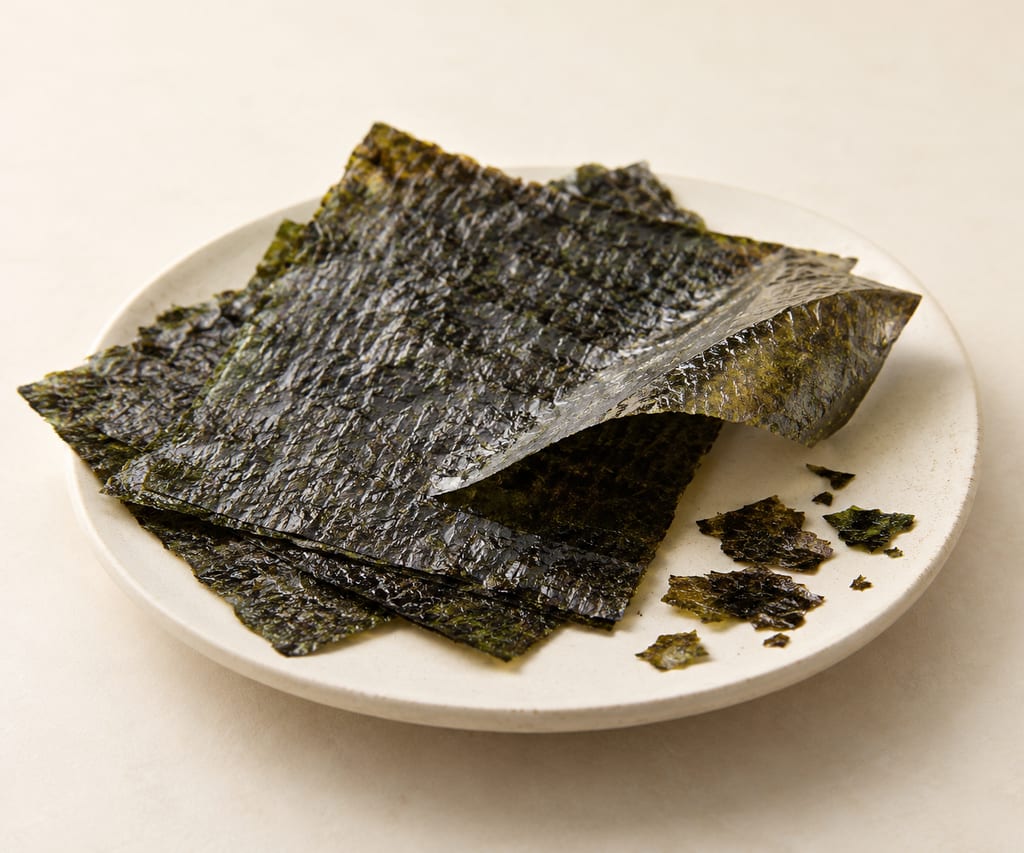
Nori is a red seaweed farmed in East Asia and dried into thin sheets, prized for its savoury flavour and crisp texture when roasted and used with rice, in soups and as a seasoning.
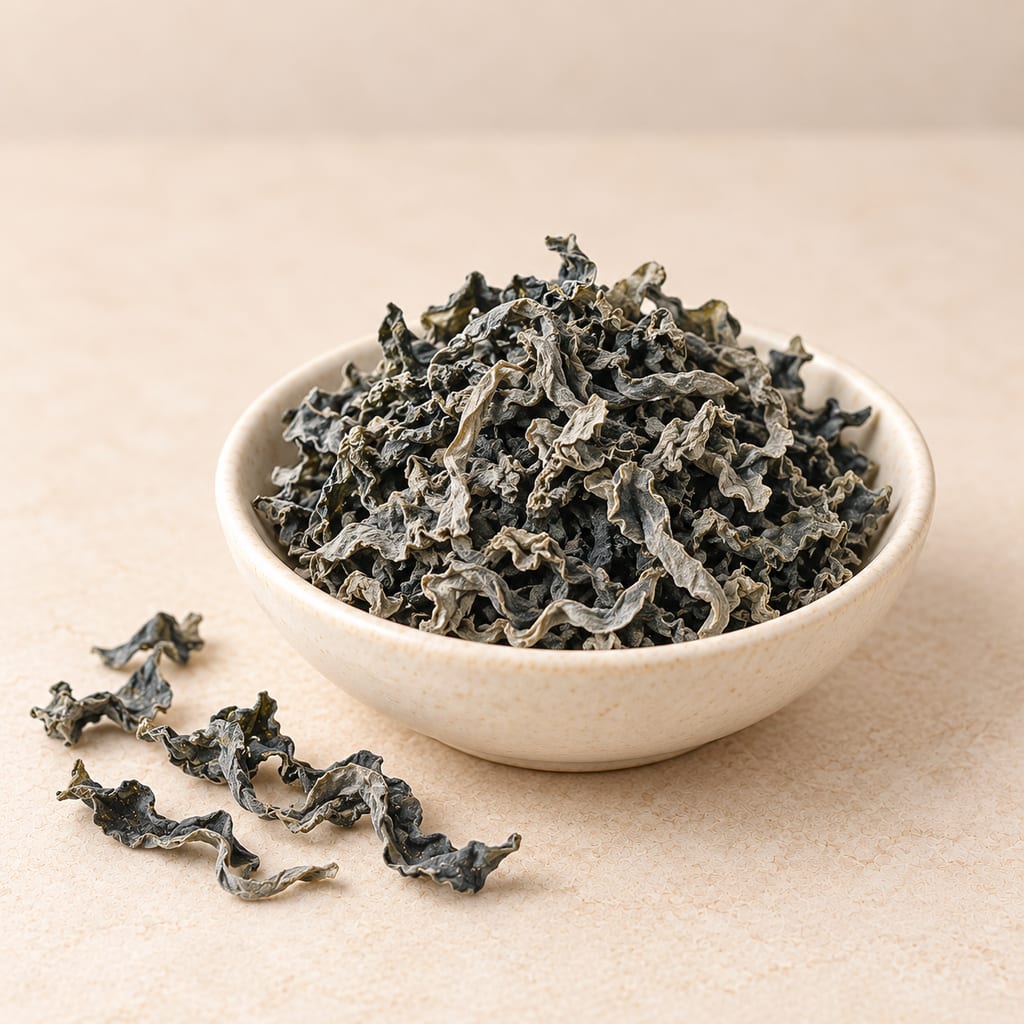
Wakame is an edible brown kelp native to the northwest Pacific, harvested or cultivated for its tender blades, firm stems and frilled reproductive parts, and used in soups, salads, rice dishes and preserved seaweed products.
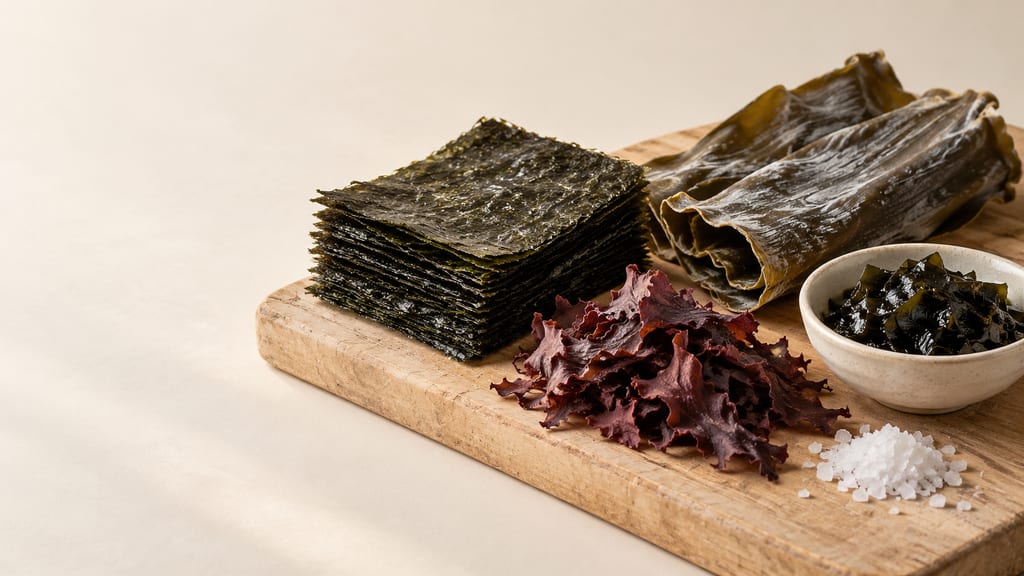
Nori, laverbread, Korean seaweed soup and carrageen pudding all begin as algae used for different jobs. This account covers seaweed names, coasts and farms, their histories, cooking, fermentation and composition.

A gelling polysaccharide extracted from red seaweeds, sold as kanten strips or powder; it sets firm at a low concentration and stays solid until about 85 °C.
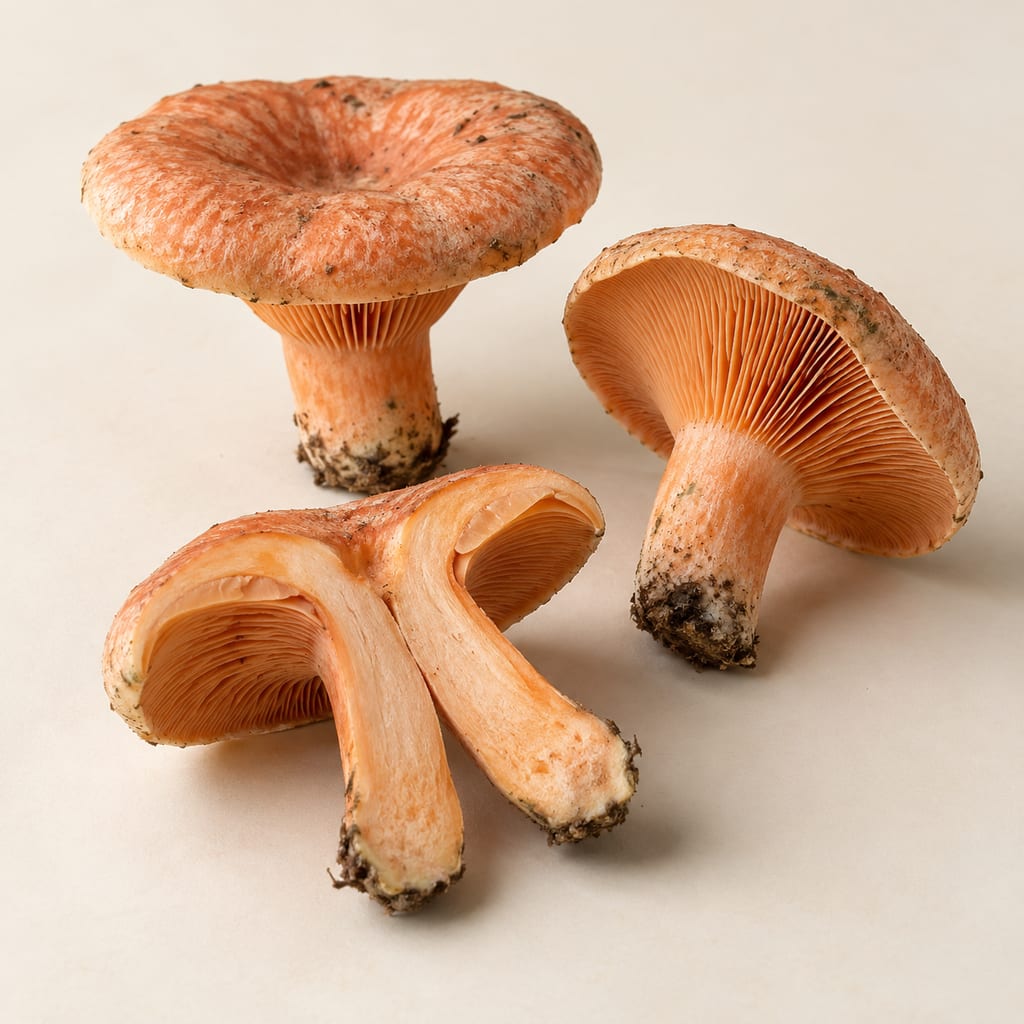
Akahatsu, Lactarius akahatsu, is a wild milkcap of East Asian pine and mixed forests that is sold in Yunnan markets, with its edibility and identity still needing species-level review.

The almond mushroom, Agaricus subrufescens, was cultivated in eastern North America in the 1800s, lost its market, and returned as a cultivated mushroom from Brazil, where it is grown under several names.
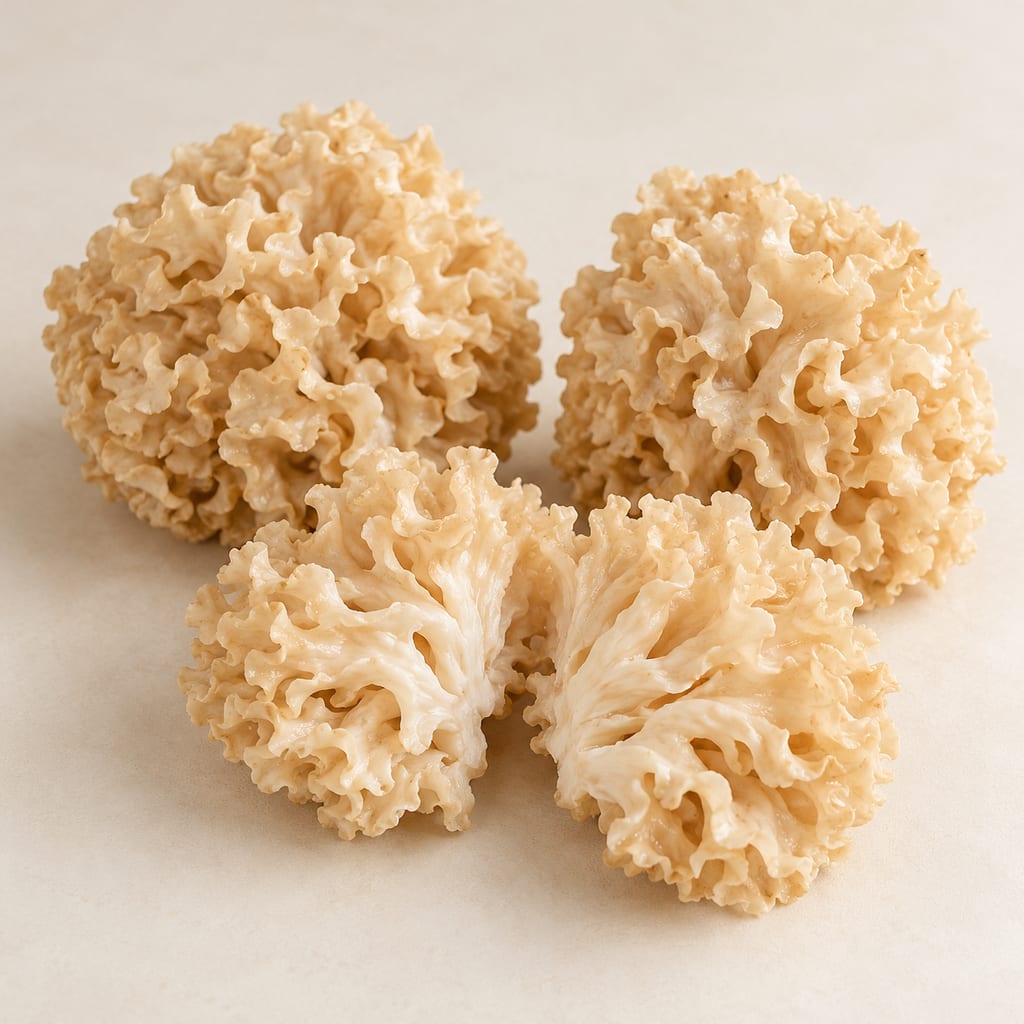
The Asian cauliflower mushroom, Sparassis latifolia, is a cultivated fungus with a frilled, fronded form that is eaten in China, Japan and Korea. Many Asian records under the name Sparassis crispa refer to this species.
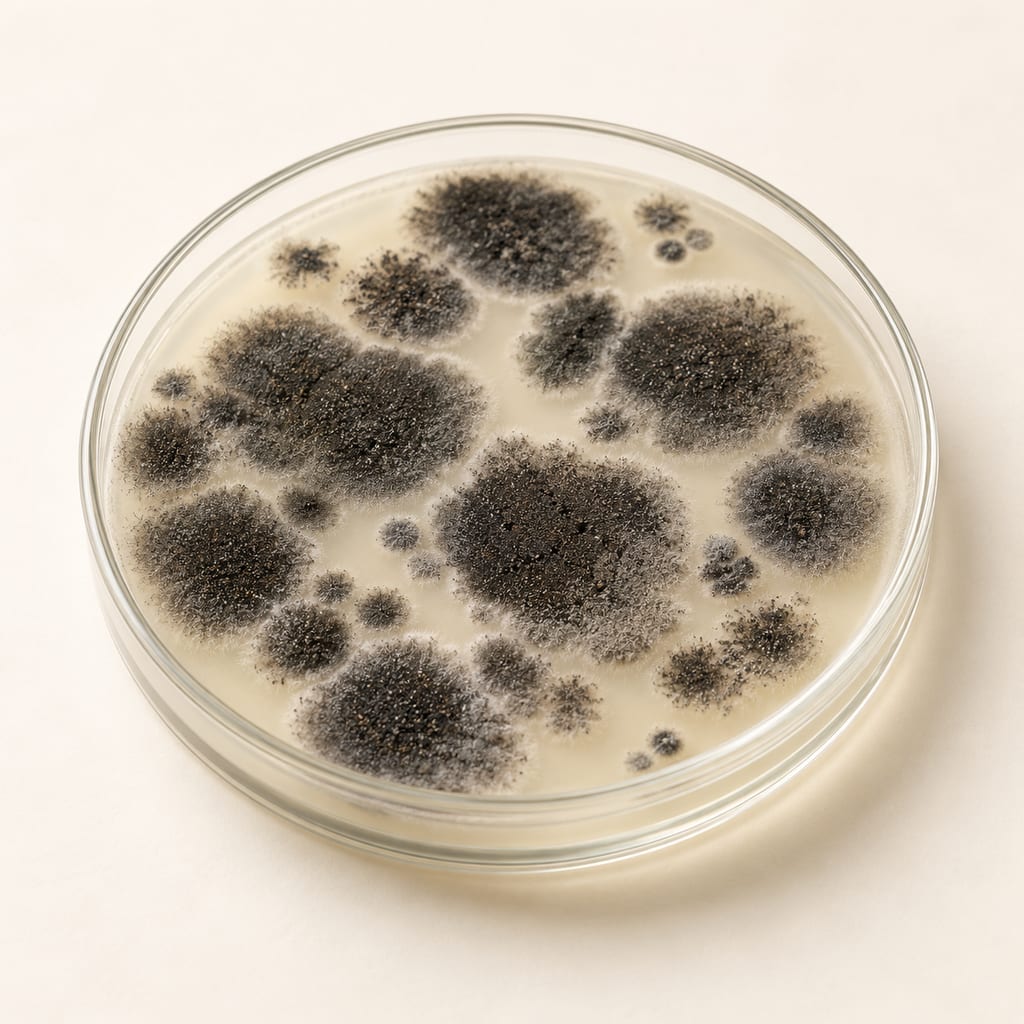
Aspergillus luchuensis is the black koji mould used in Japanese shochu and awamori, valued for the citric acid it makes alongside the starch-converting enzymes of koji.
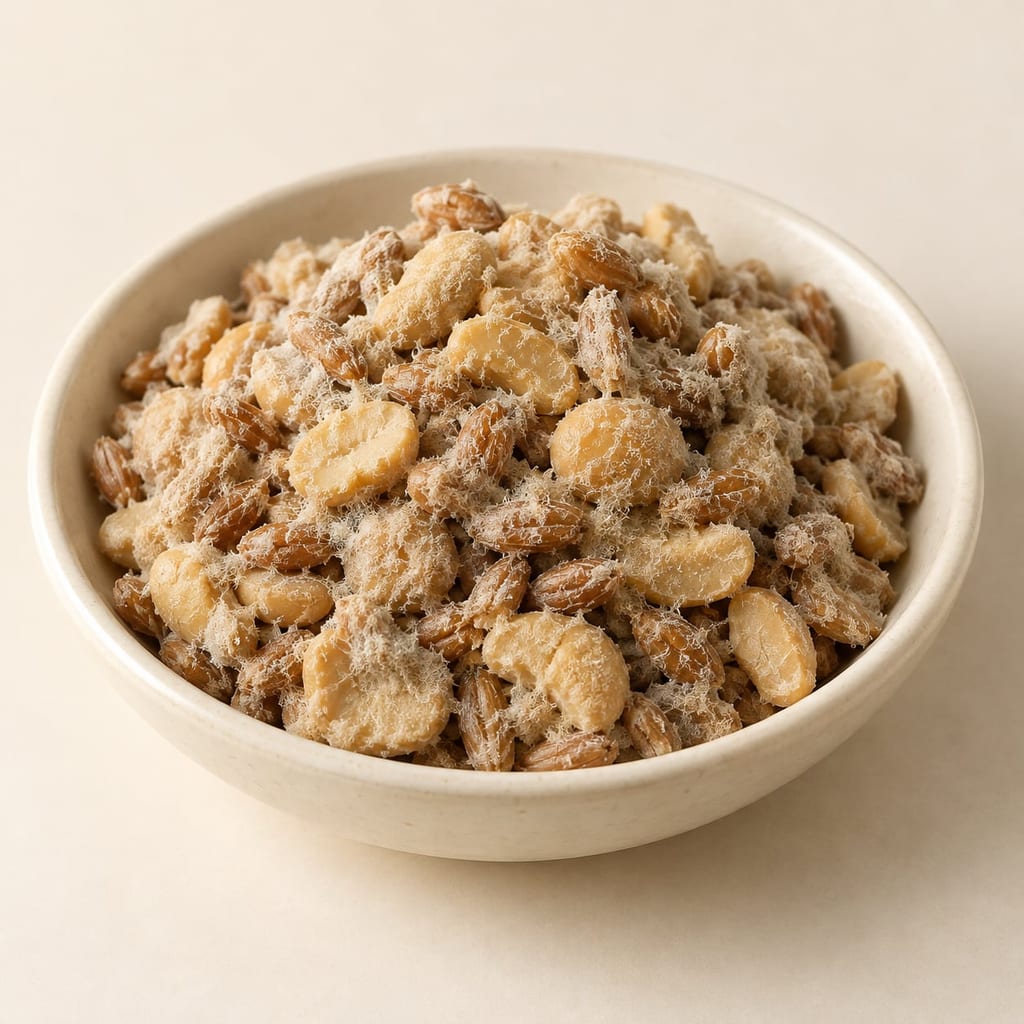
Aspergillus sojae is a koji mould of the Aspergillus flavus group, closely related to A. oryzae, used as a starter in soybean fermentations such as Korean meju, doenjang and ganjang.
Awamori yeast ferments sugar released from rice koji in the Okinawan spirit’s mash. Sakimoto names the ingredient but gives no strain, form, supplier or dose.
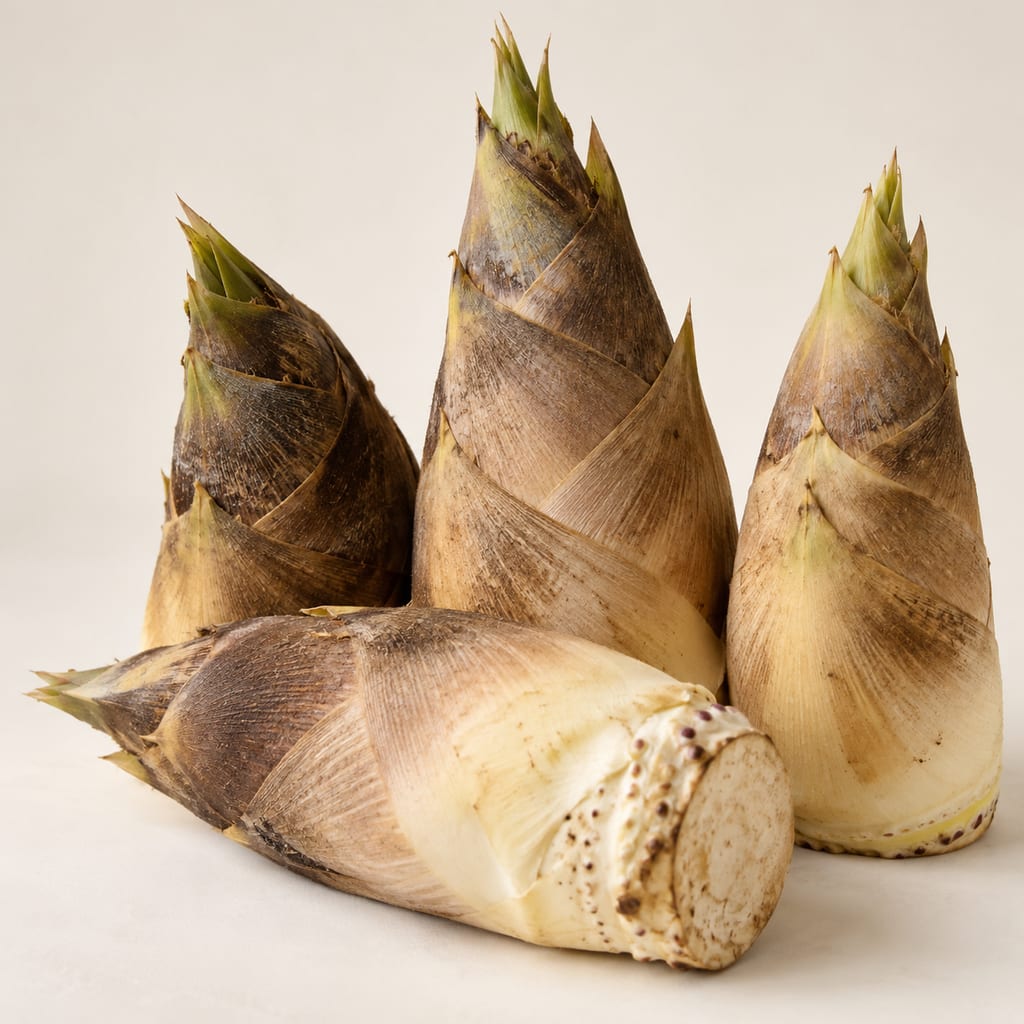
Bamboo shoots are the young culms of many bamboo species, eaten after boiling or leaching in Asia, and fermented into sour and preserved foods in the Himalayas, northeast India and Burma.

Protected Italian vinegar made only from cooked grape must, fermented and aged in a battery of wooden barrels for at least 12 years: sweet, sharp and syrupy.

Airag is Mongolia’s fermented mare’s-milk drink, traditionally churned with saved starter in a reusable cowhide khokhuur.

Appam, or hoppers, are South Indian and Sri Lankan rice pancakes made from a fermented coconut-and-rice batter and cooked in a curved pan to a crisp lacy rim and a soft, spongy centre.
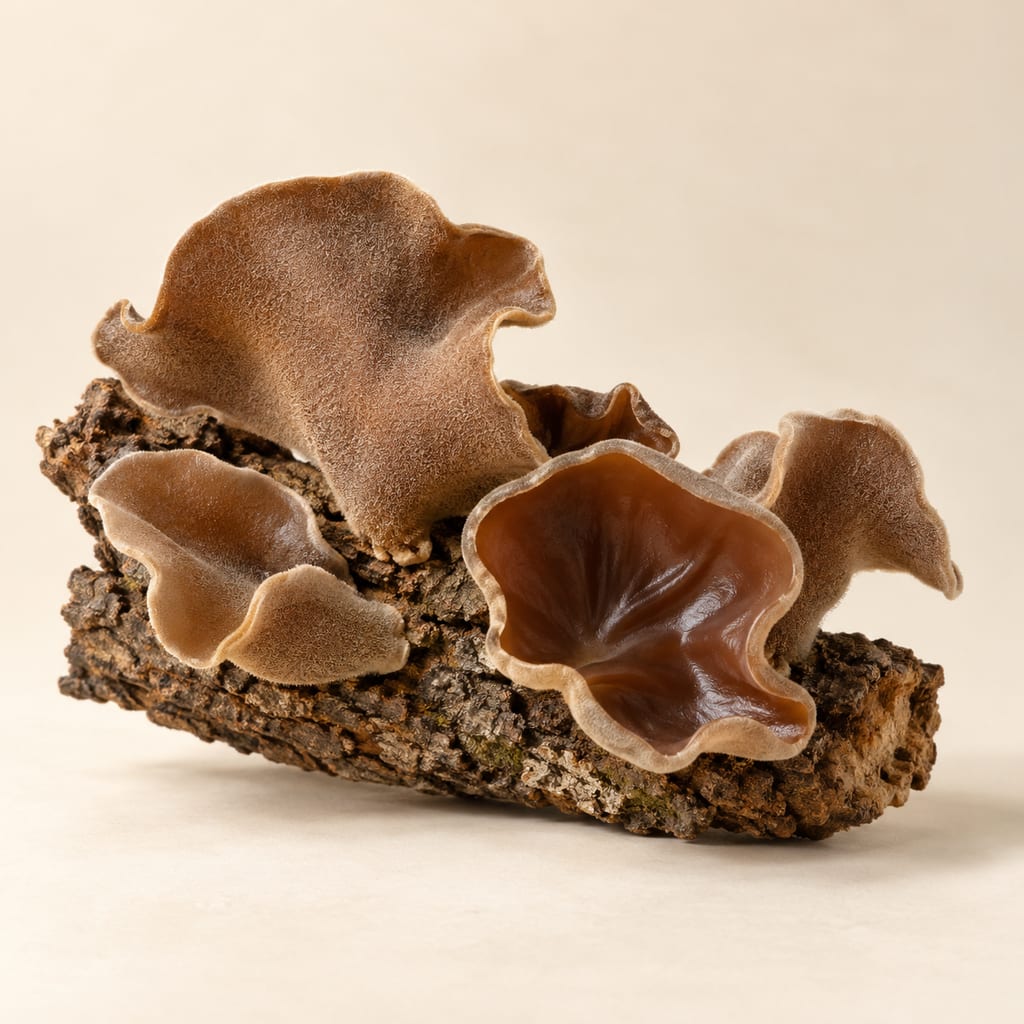
Auricularia tremellosa is a wood ear fungus of the genus that supplies most dried wood ear sold in China; its own food record is thin, and the culinary practice described here comes from the closely related wood ear species.

Ayran is Turkey’s cold, savoury yogurt drink: plain yogurt is loosened with water and lightly salted, then whisked smooth or aerated into a soft cap of foam.
A thin stone griddle used over an open hearth. Norwegian archaeology documents the established tradition from the early Middle Ages; a Viking-period origin is only a cautious suggestion linked to Shetland.

Crushed or milled barley cooked in water until the starch softens and the mixture thickens, the plainest way a northern household turned stored grain into a meal, here with apple and hazelnut.
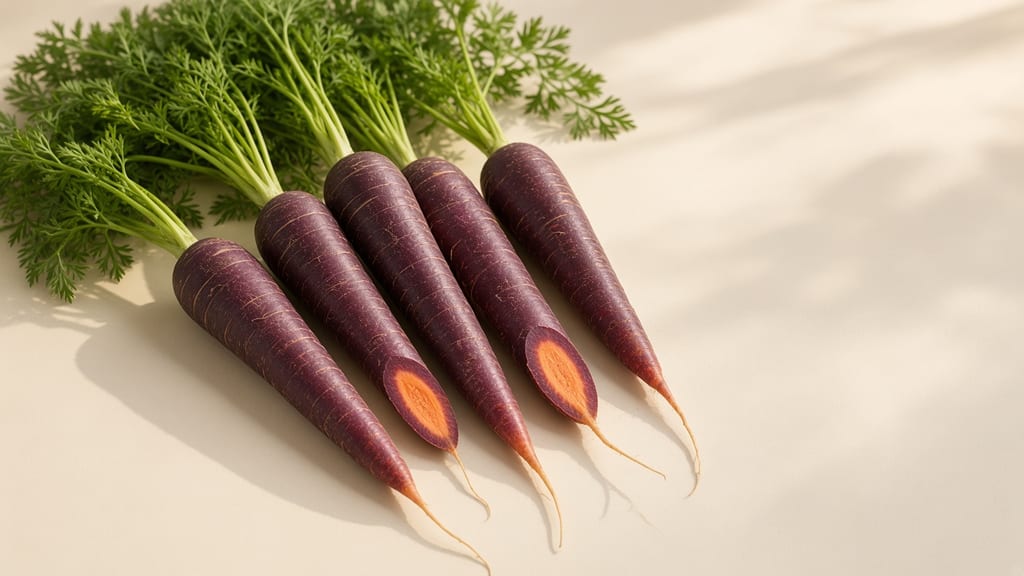
Black carrot is the anthocyanin-pigmented Eastern carrot (Daucus carota var. atrorubens), the purple root that preceded orange types and still colours kanji and şalgam.
No community contributions have been published for this entry yet.
Sign in to contribute. Published comments and photos are free to read.
National Museum of Nature and Science, JapanReference
コンブ目 (Order Laminariales — Japanese Kelp Taxonomy)Scientific classification of Japanese edible kelps
Taxonomic identity of ma-kombu, rishiri-kombu, rausu-kombu and hidaka-kombu
Historical and alternative scientific names in Laminaria and Saccharina
Identification of Saccharina angustata, Saccharina longissima, Saccharina coriacea and Saccharina sculpera
Taxonomic treatment of Saccharina japonica varieties ochotensis, diabolica and religiosa
Distinction between commercial Japanese kelp names and biological taxa
Cited in: What it is; Regional variations and kinds
Food and Agriculture Organization of the United Nations (FAO)Reference
Cultured Aquatic Species Fact Sheets: Laminaria japonicaScientific identity of Japanese kelp under the historical name Laminaria japonica
Morphology of the holdfast, stipe and blade
Natural distribution in the northwest Pacific
Biological characteristics and life cycle
Development of commercial kelp cultivation
Modern aquaculture production methods
Differences between wild harvesting and cultivated production
Historical use of Laminaria japonica for the commercially important kelp now generally called Saccharina japonica
Cited in: What it is; How it is grown, harvested or made
Food and Agriculture Organization of the United Nations (FAO)Reference
Culture of Kelp (Laminaria japonica) in China — Chapter I: Biology and Ecology of LaminariaHistorical introduction of Japanese kelp to Chinese waters
Establishment of kelp populations around Dalian in 1927
Development of commercial harvesting in Liaoning
Documented dry-weight harvest of 40.3 metric tonnes in 1949
Environmental requirements for kelp growth
Development of artificial seedling production
Extension of cultivation into regions outside the original natural distribution
Scientific basis of the Chinese kelp industry
Cited in: Where it comes from and its history; How it is grown, harvested or made; Regional variations and kinds
Food and Agriculture Organization of the United Nations (FAO)Reference
Culture of Kelp (Laminaria japonica) in China — Chapter III: Sporeling Culture of LaminariaReproductive cycle involving zoospores, male and female gametophytes and diploid sporophytes
Artificial collection of zoospores on ropes and supporting materials
Development of hatchery seedling-culture methods
Historical shift from outdoor to indoor-controlled seedling production
Reported seedling growth periods and transplanting stages
Transfer of young kelp from hatcheries to offshore growing structures
Temperature control during artificial cultivation
Cited in: How it is grown, harvested or made
Japan Kombu AssociationReference
昆布検定 (Kombu Knowledge Test)The association's account of an entry dated 715 CE in the Shoku Nihongi
Reported presentation of kombu from the northern Emishi region to the Japanese imperial court
Historical association between kombu and Hokkaido
Edo-period maritime distribution through Kitamaebune trade
Historical transport routes connecting Hokkaido, the Sea of Japan coast and Osaka
Kombu as a traditional ingredient in Japanese dashi
Industry terminology for different commercial kelps
Scientific identification of glutamate as the principal umami component
Ministry of Agriculture, Forestry and Fisheries, JapanReference
昆布巻き (Kombu-maki)Historical reference to kombu in the Shoku Nihongi
Trade between the Matsumae region and Honshu during the Kamakura period
Distribution through Tsuruga during the Muromachi period
Expansion of the Kitamaebune maritime trade in the Edo period
Development of kombu-maki as a regional preserved food
Use of dried herring, salmon and other ingredients in traditional kombu rolls
Preparation with rehydrated kelp and kanpyo ties
Symbolic role of kombu in Japanese New Year food traditions
Cited in: Where it comes from and its history; How it is eaten and used
Ministry of Agriculture, Forestry and Fisheries, JapanReference
北陸地方 富山県 (Regional Food Culture of Toyama Prefecture)Toyama's distinctive kombu consumption traditions
Historical importance of the Kitamaebune trading routes
Association between Hokkaido kelp and Toyama food culture
Development of kombu-jime
Use of kombu in regional rice and seafood dishes
Relationship between marine trade and regional food identity
Cited in: Where it comes from and its history
Ministry of Agriculture, Forestry and Fisheries, JapanReference
クーブイリチー (Kūbu Irichī)Traditional Okinawan use of kombu
Preparation of shredded kelp with pork and seasonings
Historical importance of kombu despite its northern growing range
Regional terminology kūbu
Place of kūbu irichī in Okinawan family and ceremonial cooking
Relationship between imported kelp and local culinary traditions
Cited in: Regional variations and kinds; How it is eaten and used
Japan Kombu AssociationReference
昆布の種類(昆布いろいろ) (Types of Kombu)Commercial categories of Japanese kombu
Principal producing areas for ma-kombu, rishiri-kombu, rausu-kombu and hidaka-kombu
Differences in blade thickness, texture and stock clarity
Suitability of particular kombu types for dashi or simmered dishes
Commercial categories including naga-kombu and gagome-kombu
Regional differences in harvesting and processing
Distinction between raw dried kombu and manufactured kombu products
Rausu Fisheries Cooperative, HokkaidoReference
羅臼昆布23工程 (The 23 Stages of Rausu Kombu Production)Traditional harvesting of mature two-year-old Rausu kombu
Harvesting from late July through August
Initial washing in seawater
Drying on pebble-covered coastal grounds for two to three days
Additional mechanical drying
Repeated moistening with night dew
Rolling, pressing, flattening and conditioning of kelp blades
Traditional anjō conditioning stages
Trimming and sorting into more than 30 commercial grades
Producer description of maturation without evidence establishing microbial fermentation
Cited in: How it is grown, harvested or made; Regional variations and kinds
Japan Kombu AssociationReference
昆布の選び方、保存方法 (Choosing and Storing Kombu)Traditional commercial quality criteria for dried kombu
Influence of harvesting location and time on product quality
Preference for well-dried blades with appropriate thickness and aroma
Identification of mannitol as a major component of the pale surface deposits
Guidance to wipe kombu gently rather than wash it aggressively
Storage away from moisture
Use of sealed containers for cut and dried kombu
Cited in: How it is chosen and stored
Japan Kombu AssociationReference
昆布だしの取り方 (How to Make Kombu Dashi)Documented basic dashi ratio of approximately 10–20 grams kombu per litre of water
Recommended soaking time of approximately 30 minutes for the basic method
Removing kombu shortly before boiling
Alternative lower-temperature extraction method
Distinction between kombu-only dashi and combined kombu-bonito stock
Different culinary qualities of principal Japanese kombu varieties
Potential extraction of viscous compounds during prolonged cooking
Cited in: How it is eaten and used
Umami Information Center, JapanReference
How to Experience UmamiExperimental tasting methods for kombu stock
Documented extraction of 20 grams rishiri-kombu in one litre of soft water
One-hour extraction at 60°C
Comparison with extraction procedures for other kombu varieties
Cold-water extraction under refrigeration
Role of glutamate in kombu dashi
Interaction of glutamate with inosinate and guanylate
Use of dried shiitake to prepare vegetarian umami-rich stock
Cited in: What it does in fermentation and cooking; How it is eaten and used
Ministry of Agriculture, Forestry and Fisheries, JapanReference
食品産業の発展 (Development of the Food Industry)Research by Kikunae Ikeda into the savoury taste of kombu stock
Identification of glutamic acid as the principal umami substance in 1908
Development of the commercial glutamate seasoning Ajinomoto in 1909
Historical distinction between the culinary use of kombu and scientific identification of glutamate
Relationship between food chemistry and Japanese industrial food production
Kikkoman CorporationReference
Kombu / Kelp — Ingredient GlossaryCommercial forms of dried kombu
Use of kombu in Japanese soup stock
Regional varieties and their culinary applications
Selection of kombu according to intended use
Use in simmered and seasoned dishes
Distinction between dried kombu and prepared kelp products
Cited in: What it is; How it is chosen and stored; How it is eaten and used
Ministry of Agriculture, Forestry and Fisheries, JapanReference
とろろ昆布 (Tororo Kombu)Traditional Japanese production of thinly shaved kombu
Historical and regional importance of tororo-kombu
Use of vinegar during processing
Softening and stacking before shaving
Preparation of fine strands from processed kelp
Consumption with rice and in soups
Distinction between acid-treated kombu products and fermented foods
Cited in: Regional variations and kinds; How it is eaten and used
Ministry of Agriculture, Forestry and Fisheries, JapanReference
おぼろ昆布 (Oboro Kombu)Traditional manufacture of oboro-kombu
Association with Tsuruga in Fukui Prefecture
Manual shaving of softened kombu blades
Use of specialised knives
Difference between oboro-kombu and tororo-kombu
Regional manufacture and culinary use of finely shaved kelp
Cited in: Regional variations and kinds; How it is eaten and used
BMC Genomics, Springer NatureReference
Transcriptome Sequencing of Saccharina japonica Sporophytes During Whole Developmental Periods Reveals Regulatory Networks Underlying Alginate and Mannitol BiosynthesisAlginate as an important structural cell-wall component of Saccharina japonica
Mannitol as a soluble carbon-storage compound
Changes in alginate and mannitol content during kelp development
Differences in polysaccharide metabolism between kelp tissues
Genes and regulatory networks involved in alginate and mannitol biosynthesis
Relationship between kelp maturity and biochemical composition
Food & Nutrition ResearchReference
Commercially Available Kelp and Seaweed Products — Valuable Iodine Source or Risk of Excess Intake?Laboratory analysis of iodine in commercial seaweed products
Average iodine concentration of 2,276 micrograms per gram in the tested kombu samples
Large differences in iodine concentration between kelp species
Identification of oarweed, sugar kelp and kombu among particularly iodine-rich seaweeds
Portion-level iodine exposure estimates
Numerous products exceeding tolerable upper intake levels
Problems with incomplete or inaccurate species and iodine labelling
Need for caution when using kelp as a dietary iodine source
Cited in: How it is chosen and stored
Trace Nutrients ResearchReference
昆布から出汁へのヨウ素の遊離と昆布出汁から食材へのヨウ素の移行 (Release of Iodine from Kombu to Soup Stock and Infiltration of Iodine from Kombu Soup Stock to Ingredients)Experimental measurement of iodine extraction from dried Saccharina japonica
Use of approximately 10 grams of dried kombu in the experimental stock
Measured iodine concentration of 5.98 milligrams per gram in the starting kelp
Approximately 80% of the starting iodine entering the stock under the tested conditions
Transfer of iodine from stock into subsequently cooked vegetables and mushrooms
Evidence that removing spent kombu does not remove iodine already dissolved in the stock
Distinction between a measured laboratory result and a universal extraction percentage
Cited in: How it is chosen and stored
German Federal Institute for Risk Assessment (BfR)Reference
Binding Maximum Iodine Levels in Edible Seaweeds May Help Reduce Health-Relevant Intake LevelsHealth risks from excessive iodine intake through edible seaweeds
Substantial differences between iodine concentrations in commercial products
Potential thyroid effects of excessive iodine exposure
Special concern for susceptible consumers
Importance of product labelling and iodine concentration information
Risk assessment for dried seaweeds and prepared seaweed foods
Need for appropriate iodine limits and consumer information
Cited in: What it is; How it is chosen and stored; Regional variations and kinds
Food Standards Agency, United KingdomReference
Surveillance Sampling Programme (2022–23)UK surveillance of 45 marine algae and seaweed food or feed products
Detection of notable inorganic arsenic concentrations in two sea-kelp samples
Reported inorganic arsenic concentrations of 30.7 and 44.6 milligrams per kilogram in those two samples
Iodine measurements in commercial marine algae products
Large variation in iodine between tested products
Importance of contaminant surveillance for edible seaweeds
Limitations of generalising individual analytical results to every kombu product
Cited in: How it is chosen and stored
EFSA Journal, European Food Safety AuthorityReference
Dietary Exposure to Heavy Metals and Iodine Intake via Consumption of Seaweeds and Halophytes in the European PopulationEuropean assessment of iodine intake through seaweed consumption
Occurrence of arsenic, cadmium, lead and mercury in edible seaweeds
Differences in exposure according to seaweed type and consumption pattern
Importance of distinguishing total arsenic from inorganic arsenic
Variability in iodine concentrations and possible excessive dietary exposure
Need for species-specific and product-specific food-safety assessment
Limitations of assigning one contaminant concentration to all products sold as kombu
Cited in: How it is chosen and stored