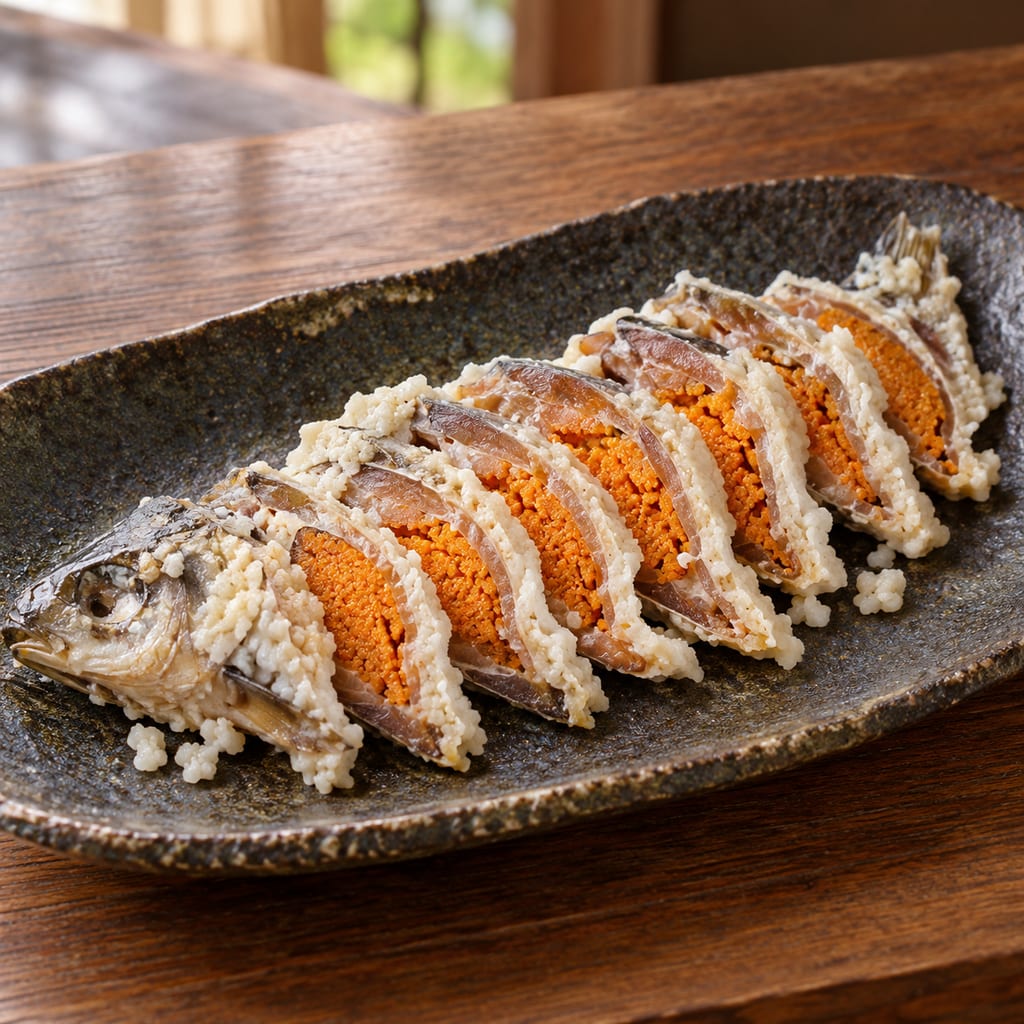
Narezushi (funazushi)
A documentary account of funazushi, Shiga’s long-ripened narezushi associated with Lake Biwa and roe-bearing nigorobuna. It preserves regional, historical and cultural context; it is not a household preparation guide.
 FermenteaWhere food goes to change
Traditional method
なれずし · nare-zushi · narezushi
A documentary account of Japanese narezushi, a family of salted-fish and rice ferments. This entry preserves the East Kishu (Mie) source’s identity and regional context without providing a household preparation method.
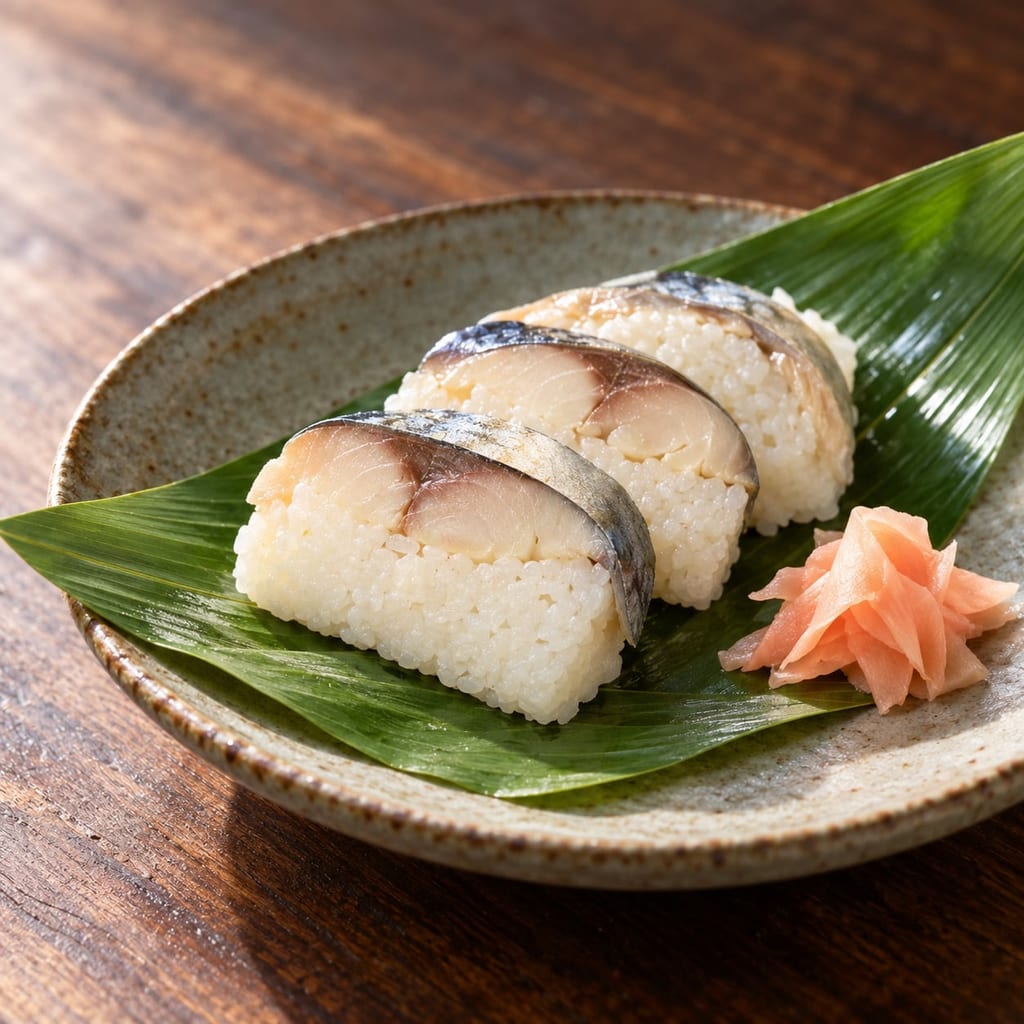
Narezushi (なれずし) names a family of Japanese foods made through the preservation and fermentation of fish with rice. In some older forms, rice served as a fermentation medium and was discarded. The name does not identify one recipe, fish species or starter.
Vinegar-seasoned sushi belongs to a different historical development. The Japanese Ministry of Agriculture, Forestry and Fisheries traces haya-zushi to the Genroku era and describes it as removing the need for long fermentation.
The Japanese Ministry of Agriculture, Forestry and Fisheries distinguishes honnare, the older long-fermented style, from namanare, a shorter-fermented style associated with the Muromachi period (1336–1573). The categories differ in whether the rice is eaten with the fish, and are not interchangeable procedures.
Funazushi from Shiga is identified as a well-known honnare example. This entry keeps it distinct from the East Kishu account and from other regional narezushi.
The Japanese ministry lists narezushi along the Japan Sea coast and in Hokuriku, including herring narezushi from Fukui and kabura-zushi from Ishikawa. In Mie, sources identify ayu and other fish, with ingredients and customs varying by area.
Wakayama narezushi is a distinct regional record, associated with salted mackerel and leaf wrapping; the ministry account reports a history of more than 800 years. Its description is not a substitute method for East Kishu.
The Mie regional entry documents one East Kishu household account and names fish, rice cooked with kombu, urajiro, shukusha leaves and sake among its components. This record preserves those source-identified elements and the named place; it does not reproduce the household procedure or present it as a universal narezushi formula.
The source also describes differences among Mie localities, including fish selection and additions such as yuzu, koji or ginger. These distinctions belong to their cited regional contexts.
Research on Noto horse-mackerel narezushi follows changes in lactic acid bacteria during fermentation. A survey of six narezushi products found different dominant bacteria among samples. A separate study of commercial Lake Biwa funazushi reports spontaneous fermentation and variation among factories.
These studies describe particular products. They do not establish one starter or process that can be transferred across narezushi.
FDA guidance identifies botulism as a hazard in fish preserved by salting, pickling or fermentation when the process does not control toxin formation. The cited narezushi sources do not provide validated salt levels, acidity, temperature, water activity or storage controls, so this entry does not offer a home method or claim that any visual or sensory cue establishes safety.
The sources do not establish one origin story, first date of attestation or recipe for the whole narezushi family. The historical accounts describe several regional foods and broad categories; no single locality or process is claimed here.
Narezushi began as a way to keep fish for a long time, and the rice that drove the fermentation was originally thrown away. The technique is described as coming to Japan with rice agriculture from mountain areas of China or Southeast Asia; that is a broad account, not a dated or traced route.
Scaling: source batch only
FDA guidance identifies botulism as a hazard in fish preserved by salting, pickling or fermentation when toxin formation is uncontrolled. The cited regional accounts do not establish a validated process or safety endpoint.
Hazard sourceThis is a documentary entry, not a home-preservation recipe. The sources provide no validated salt percentage, pH, temperature, water activity or storage limit for narezushi.
Appearance, mould, sourness, smell or elapsed time cannot establish safety.
All Mie narezushi is the shorter namanare style; the method below is the East Kishu household version.
A leaf-wrapped mackerel form with its own record, Wakayama narezushi.
Funazushi of Lake Biwa is the long-fermented honnare example; it has its own record.
The source places narezushi mainly along this coast; it names no single origin.
A documentary account of funazushi, Shiga’s long-ripened narezushi associated with Lake Biwa and roe-bearing nigorobuna. It preserves regional, historical and cultural context; it is not a household preparation guide.
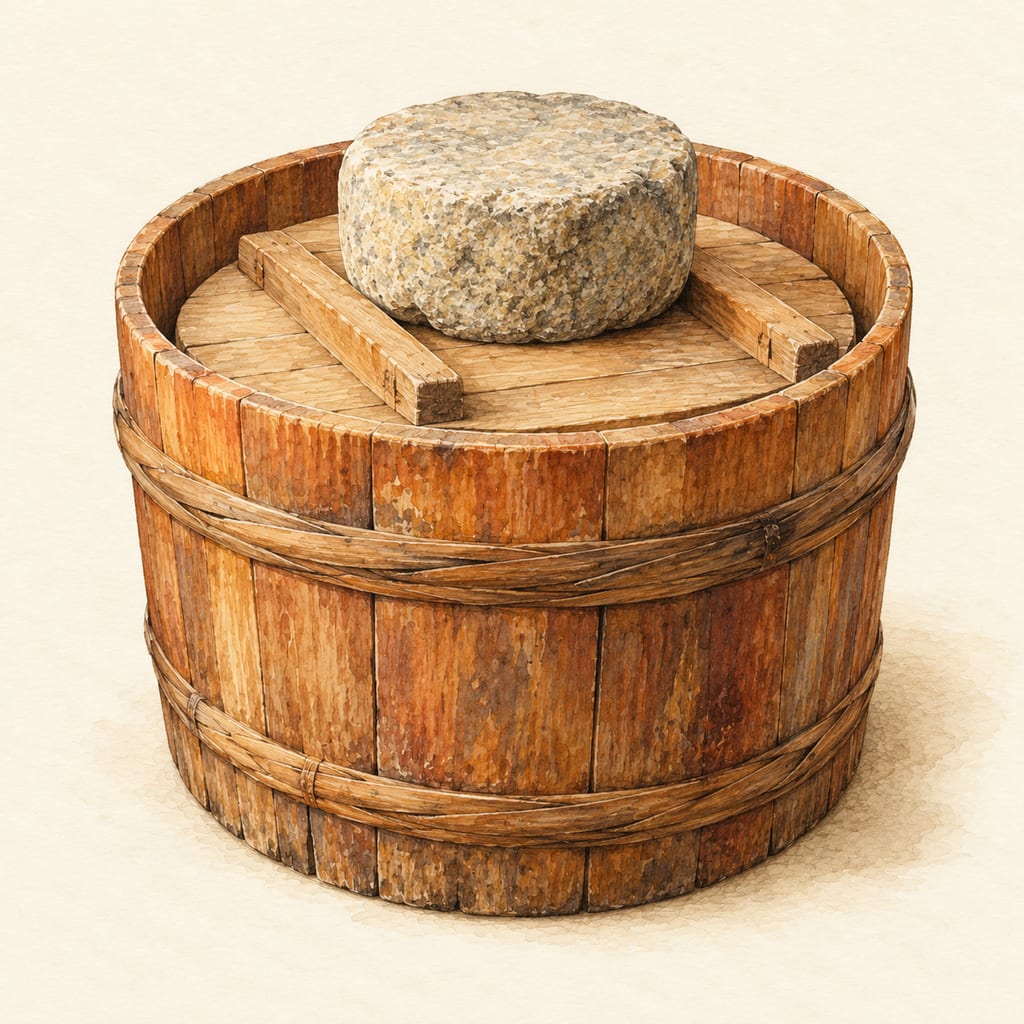
A narezushi pressing tub is a wooden bucket or barrel for packing salted fish and rice under a cover and weight. Regional methods vary; some also water-seal the tub.
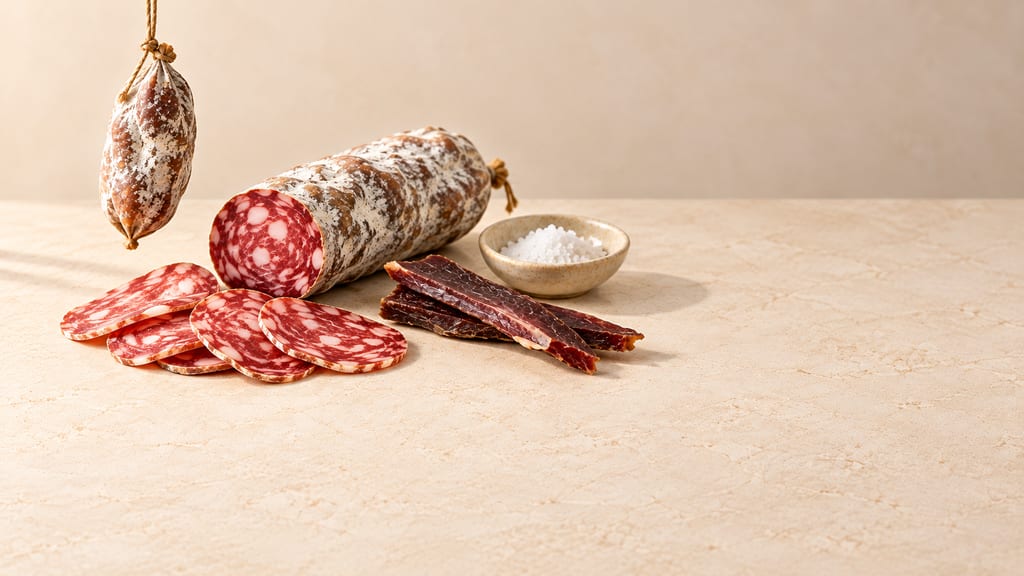
Dry salami, sour pork with rice, matured sheep and aged blubber follow different paths from animal to food. Their stories connect microbes with climate, slaughter, migration and the meals people share.
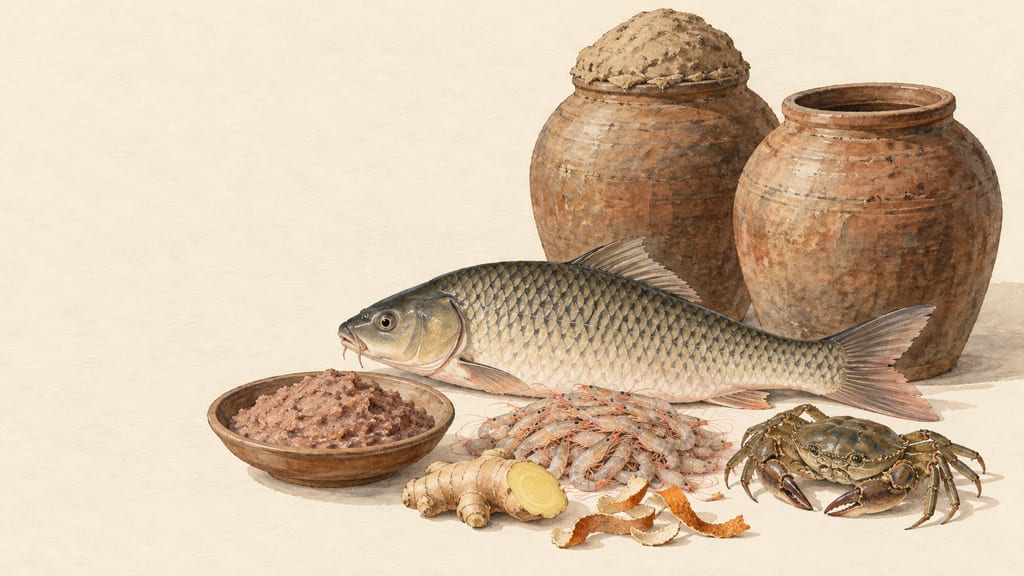
Long before soy sauce, Chinese cooks made jiang from venison, carp and shrimp. A farm manual of about 544 CE records how, from a fish-gut sauce with an imperial legend to fish pickled in rice.
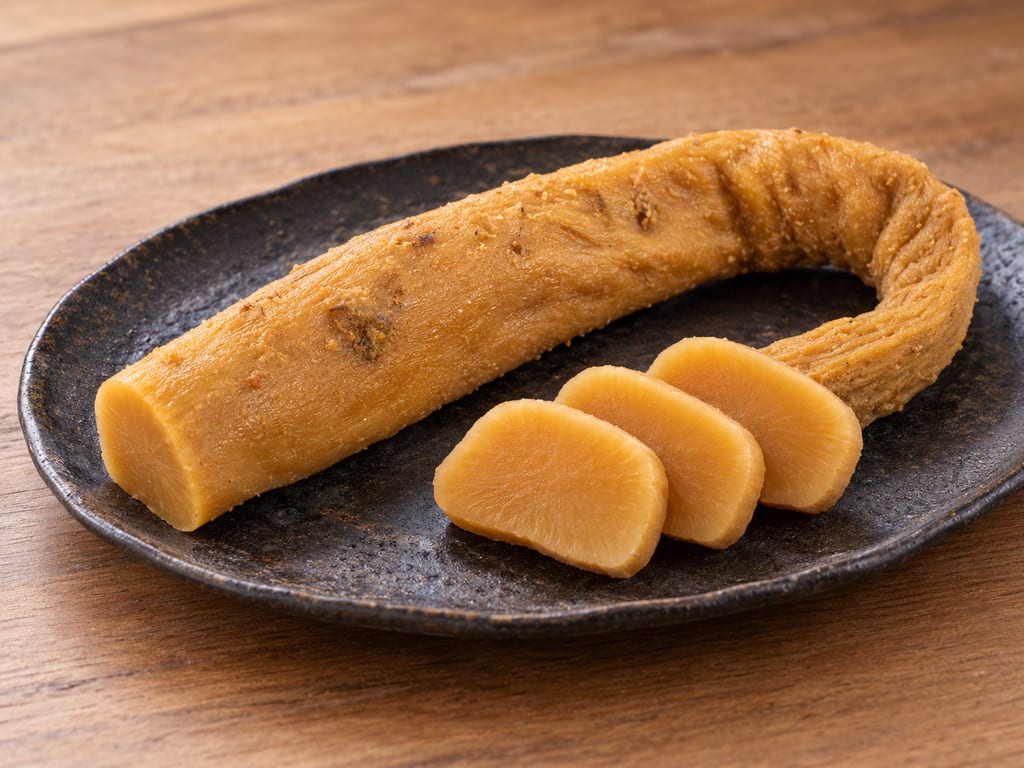
Regional takuan from Ise City, Mie, made with Misono daikon dried on a rack, then matured in a weighted barrel of rice bran and salt for months to years.
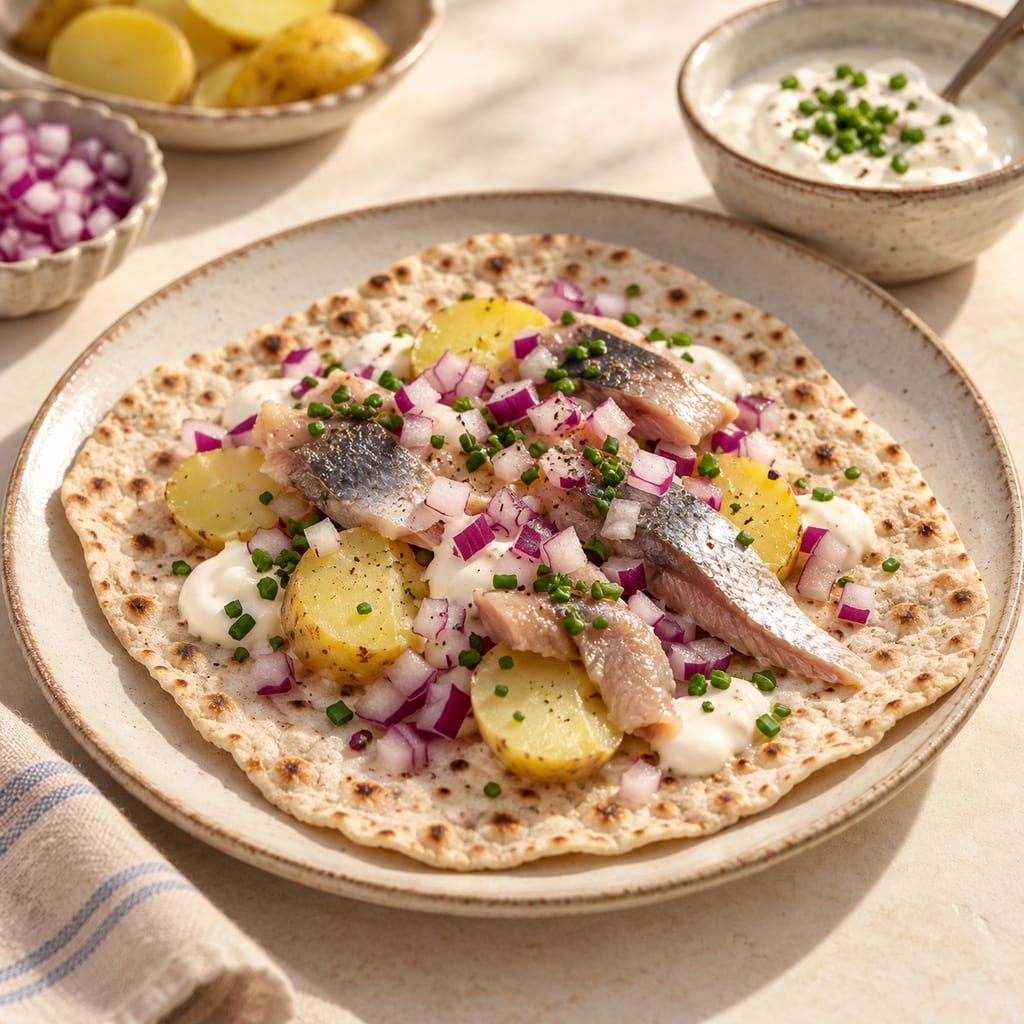
A Swedish late-summer meal of commercially prepared surströmming, tunnbröd, potatoes, onion and cultured cream. This is a serving preparation; the specialist fish fermentation is not made at home here.
A concrete fermentation tank installed below ground at a Senegalese fish-processing site was documented as an adaptation that emulated the older practice of burying fish during fermentation.

A documentary account of Icelandic hákarl, fermented and dried Greenland shark. It describes cultural context and one production study, not a home preparation method.
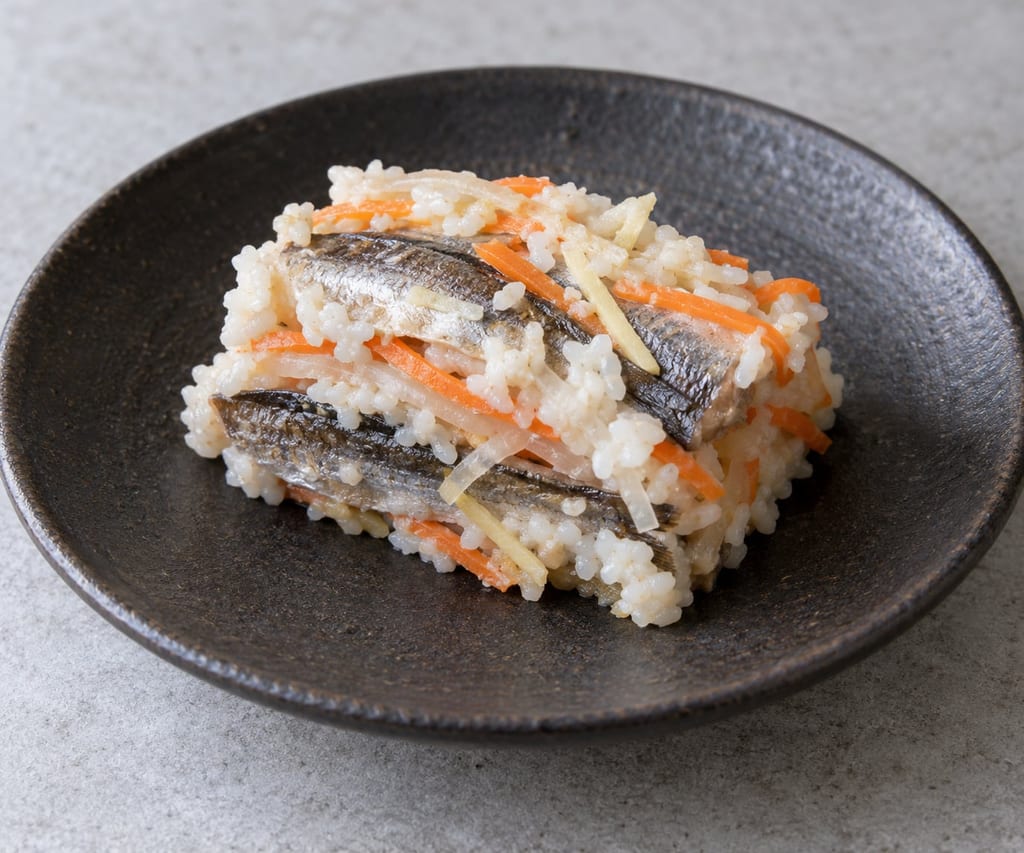
Hokkaido izushi layers fish, vegetables, rice and kōji for cold-season lactic fermentation. This MAFF recipe uses small hatahata with a vinegar pretreatment; it is one regional household formula, not a universal izushi method.
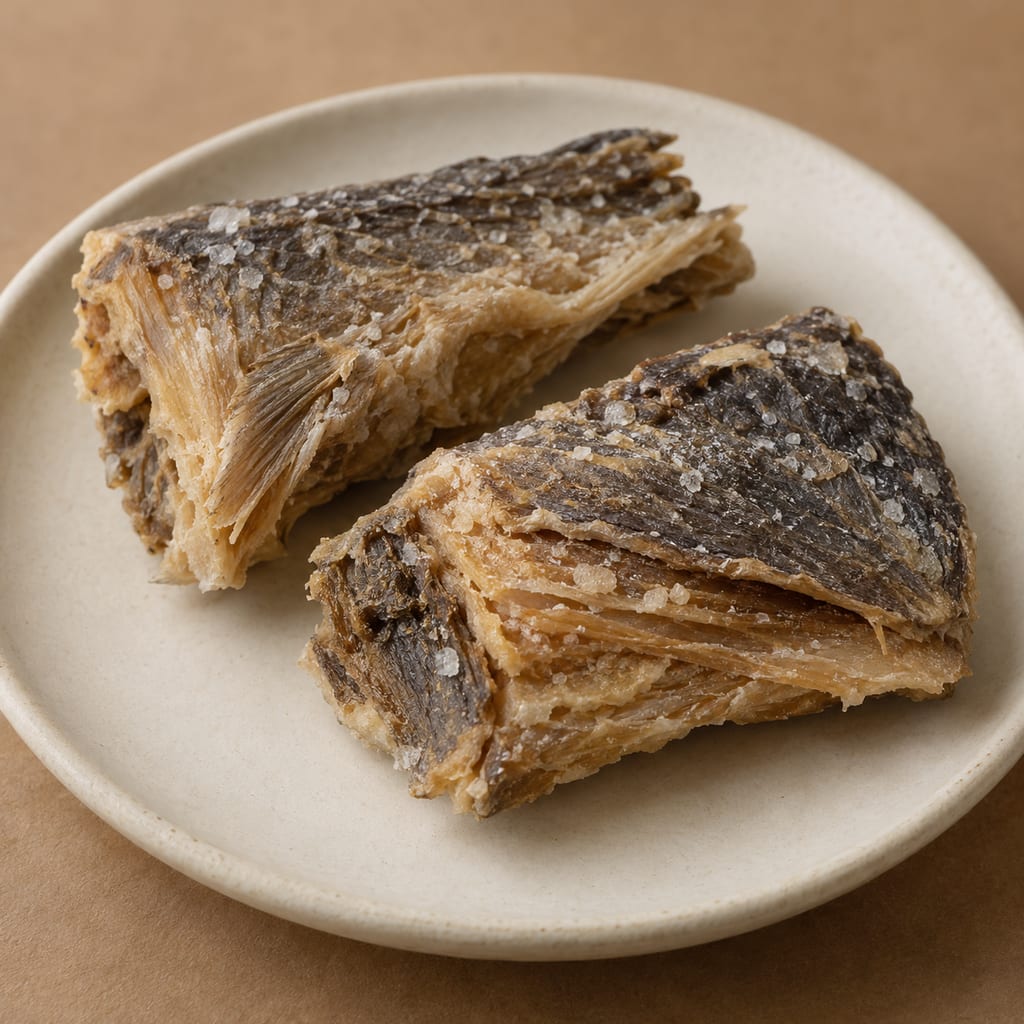
Lanhouin is a strongly flavoured fermented fish condiment documented in coastal West Africa, including southern Benin. This page records one published research reproduction as evidence, not as a validated home-preservation recipe.
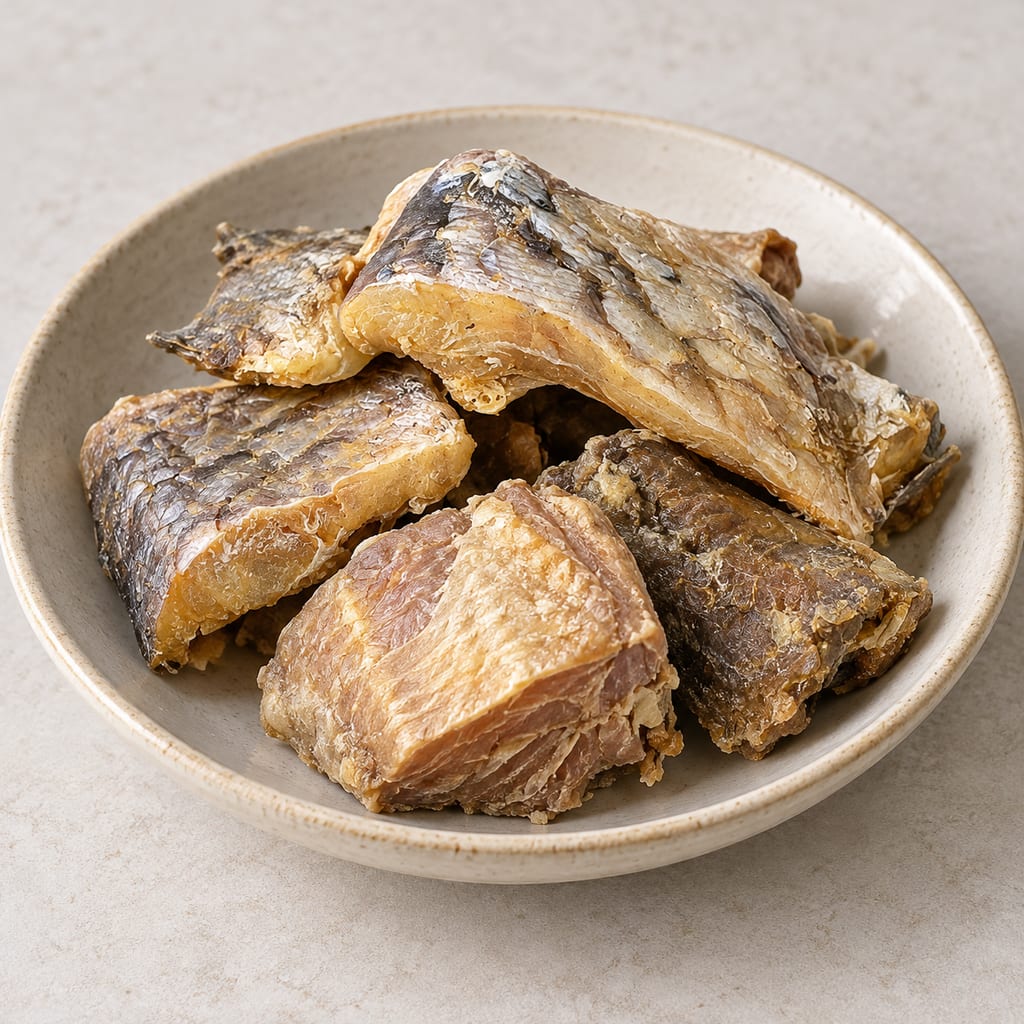
Momone is a Ghanaian salted and fermented fish condiment made from varied marine fish. Historical surveys describe both semi-dried and drier products, with salting and drying methods differing across coastal communities.
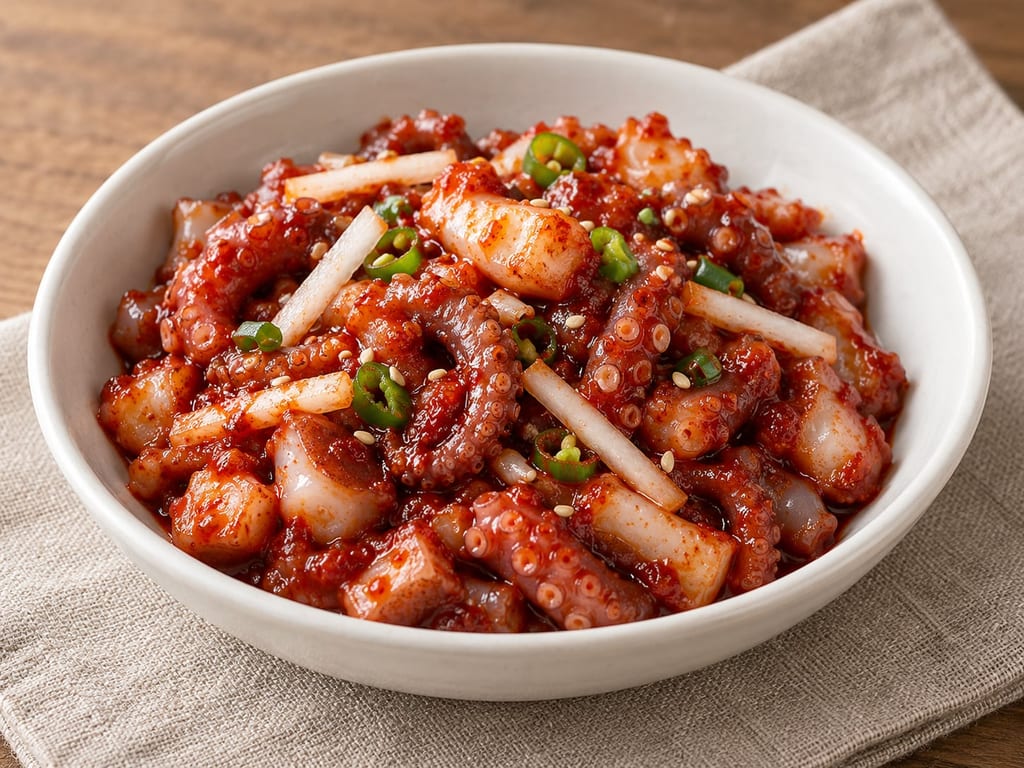
Nakji jeotgal is Korean salted octopus, served among jeotgal varieties with rice. This entry documents the dish and one creator’s quick-home version; it does not provide a household preparation method.
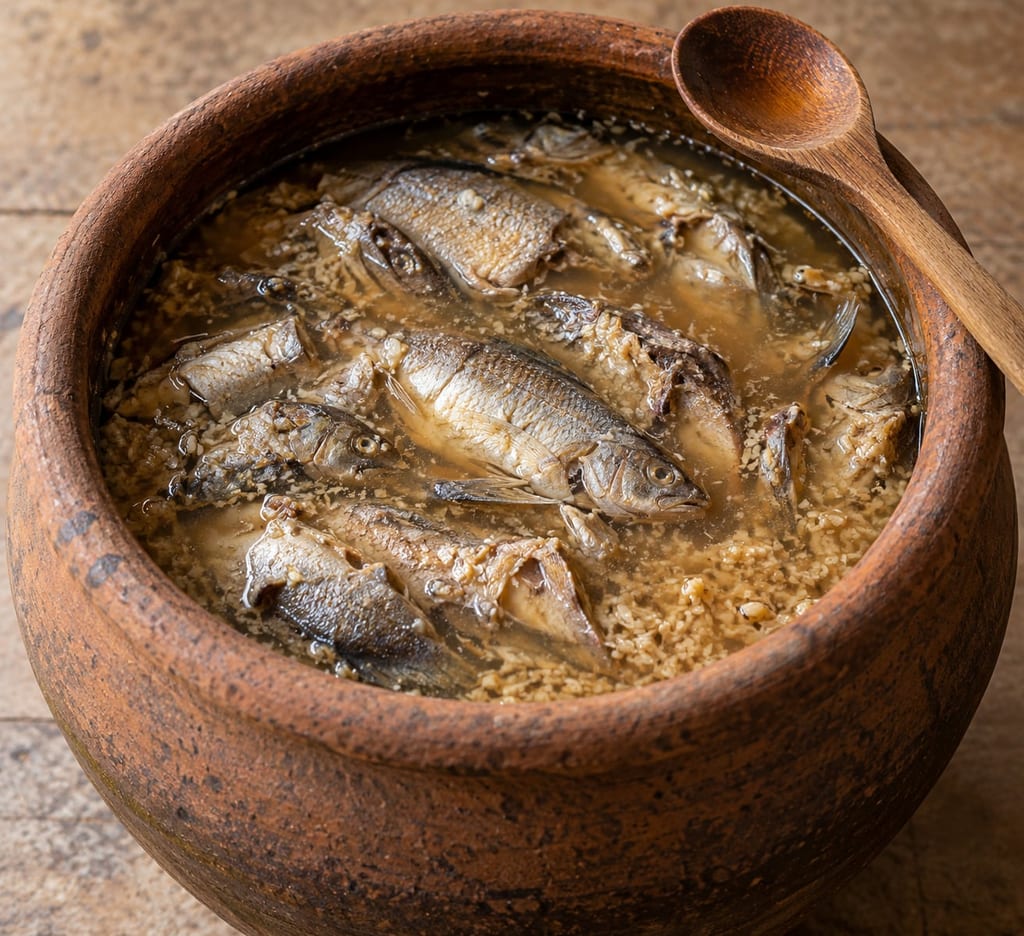
Mixed freshwater fish are soaked, repeatedly washed, salted and packed with toasted ground paddy rice; the creator gives a 1.5 kg fish batch and an unmeasured ladle dose.

Protected Italian vinegar made only from cooked grape must, fermented and aged in a battery of wooden barrels for at least 12 years: sweet, sharp and syrupy.
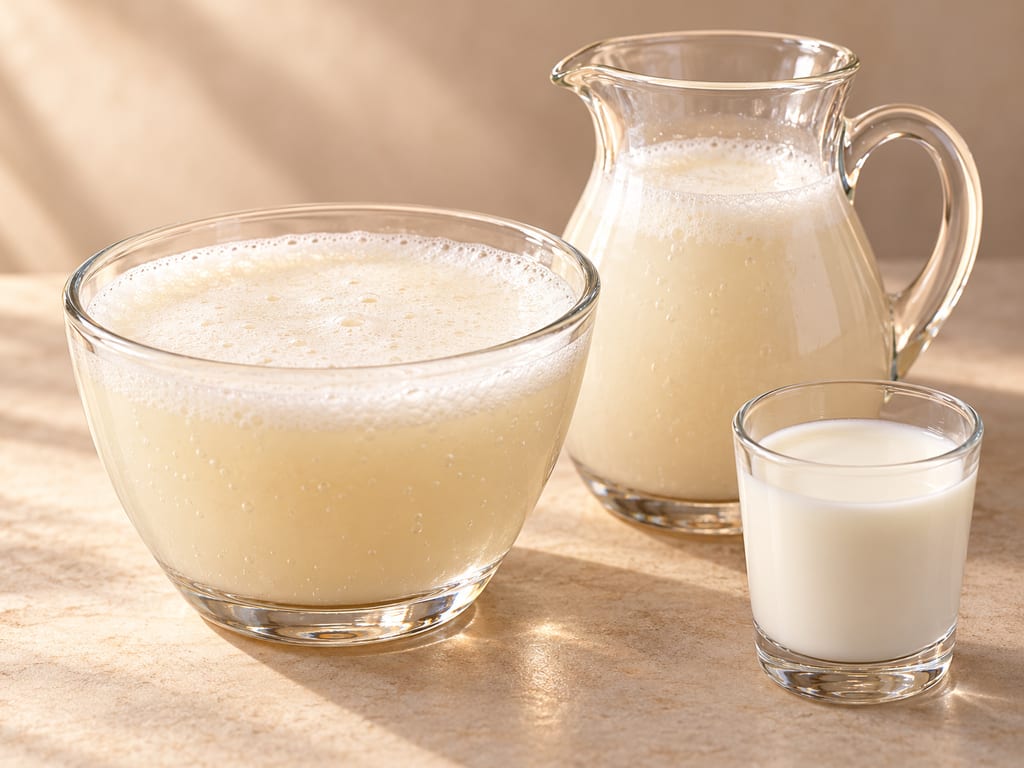
Airag is Mongolia’s fermented mare’s-milk drink, traditionally churned with saved starter in a reusable cowhide khokhuur.

Appam, or hoppers, are South Indian and Sri Lankan rice pancakes made from a fermented coconut-and-rice batter and cooked in a curved pan to a crisp lacy rim and a soft, spongy centre.
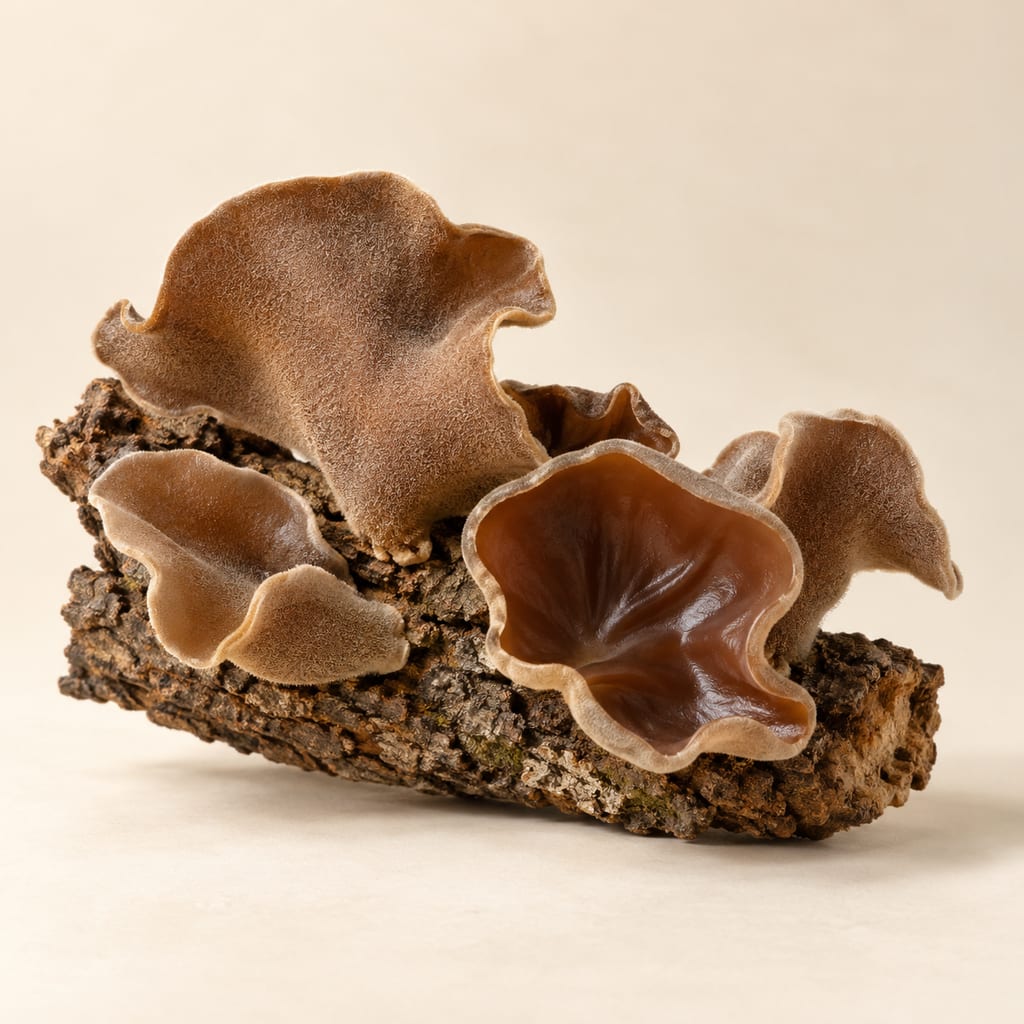
Auricularia tremellosa is a wood ear fungus of the genus that supplies most dried wood ear sold in China; its own food record is thin, and the culinary practice described here comes from the closely related wood ear species.
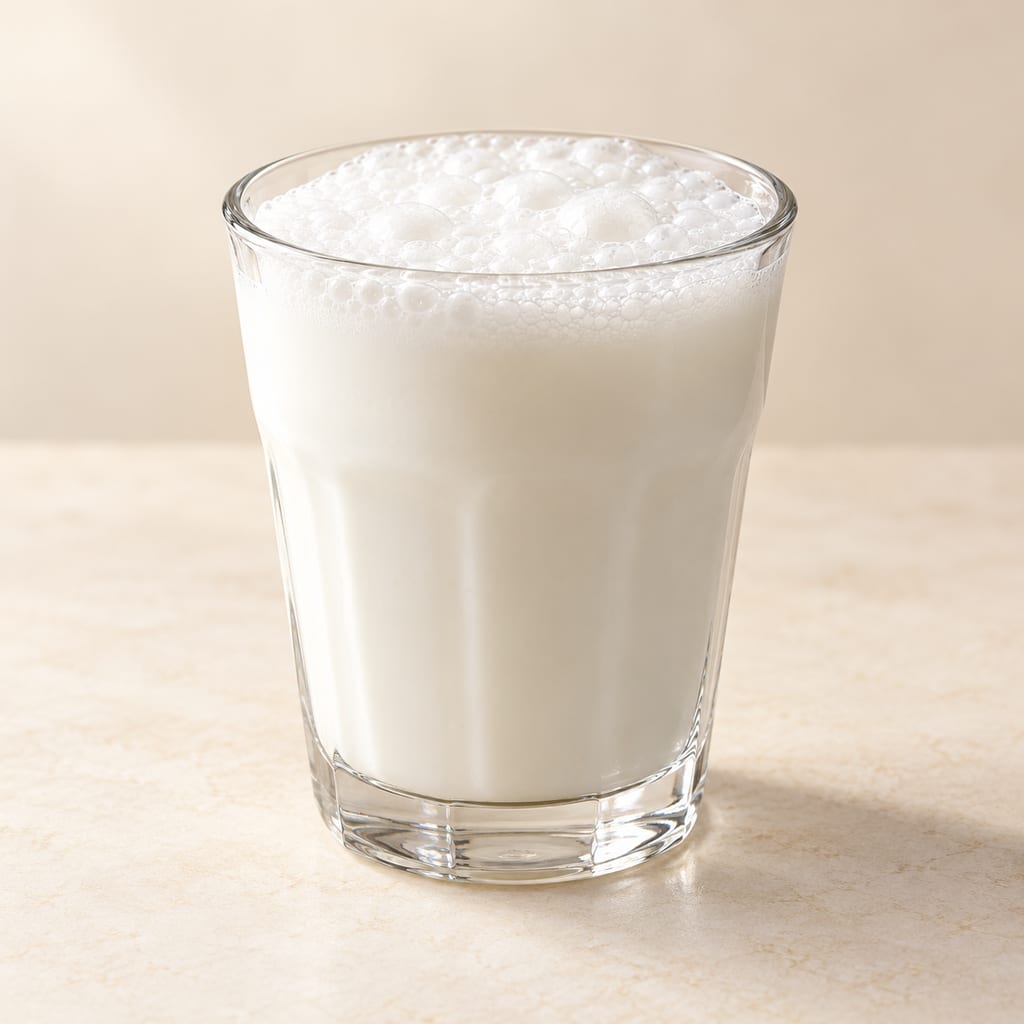
Ayran is Turkey’s cold, savoury yogurt drink: plain yogurt is loosened with water and lightly salted, then whisked smooth or aerated into a soft cap of foam.
A thin stone griddle used over an open hearth. Norwegian archaeology documents the established tradition from the early Middle Ages; a Viking-period origin is only a cautious suggestion linked to Shetland.

Crushed or milled barley cooked in water until the starch softens and the mixture thickens, the plainest way a northern household turned stored grain into a meal, here with apple and hazelnut.

Black carrot is the anthocyanin-pigmented Eastern carrot (Daucus carota var. atrorubens), the purple root that preceded orange types and still colours kanji and şalgam.
No community contributions have been published for this entry yet.
Sign in to contribute. Published comments and photos are free to read.
Ministry of Agriculture, Forestry and Fisheries of JapanIdentity · Ingredients · Method · History · Geography · Use
Narezushi, Mie regional food entryEast Kishu household method: ingredients, salting, desalting, layering, sealing, mould stages, pressing at about 20 days and serving.
Honnare and namanare; Muromachi period for namanare; Mie fish and regional additions.
Cited in: Narezushi as a family of Japanese preserved fish; Honnare and namanare; Regional forms are not interchangeable; The East Kishu record; Limits of the available evidence
Ministry of Agriculture, Forestry and Fisheries of JapanHistory · Geography · Use
Narezushi, Wakayama regional food entrySalted mackerel wrapped in leaves, packed in a wooden bucket under a weight for about five days; hayanarezushi; more than 800 years of history.
Cited in: Regional forms are not interchangeable; Limits of the available evidence
Ministry of Agriculture, Forestry and Fisheries of JapanIdentity · History · Geography
Traditional Japanese seafood fermentationDefinition, funazushi as honnare, Japan Sea coast and Hokuriku distribution, the arrival of the technique with rice agriculture, koji, haya-zushi and the origin of nigiri-zushi.
Cited in: Narezushi as a family of Japanese preserved fish; Honnare and namanare; Regional forms are not interchangeable; Limits of the available evidence
Bioscience, Biotechnology, and Biochemistry / J-STAGEScience
Changes in Microbiota Population during Fermentation of Narezushi as Revealed by Pyrosequencing AnalysisLactic acid bacterial community changes during fermentation of Noto horse-mackerel narezushi.
Cited in: What microbial studies show
Letters in Applied Microbiology / PubMedScience
Pyrosequencing survey of the microbial diversity of 'narezushi', an archetype of modern Japanese sushiA survey of six narezushi products found different dominant bacteria among samples.
Cited in: What microbial studies show
Food Science & Nutrition / PubMedScience
Lentilactobacillus buchneri domination during the fermentation of Japanese traditional fermented fish (funazushi)Commercial Lake Biwa funazushi: spontaneous fermentation, prominent Lentilactobacillus buchneri, variation among factories.
Cited in: What microbial studies show
U.S. Food and Drug AdministrationSafety
Fish and Fishery Products Hazards and Controls Guidance, June 2022General guidance says fish viscera can contain C. botulinum spores and advises thorough evisceration before fish is preserved by salting, drying, pickling or fermentation; it does not validate any narezushi method.
Cited in: Safety and scope