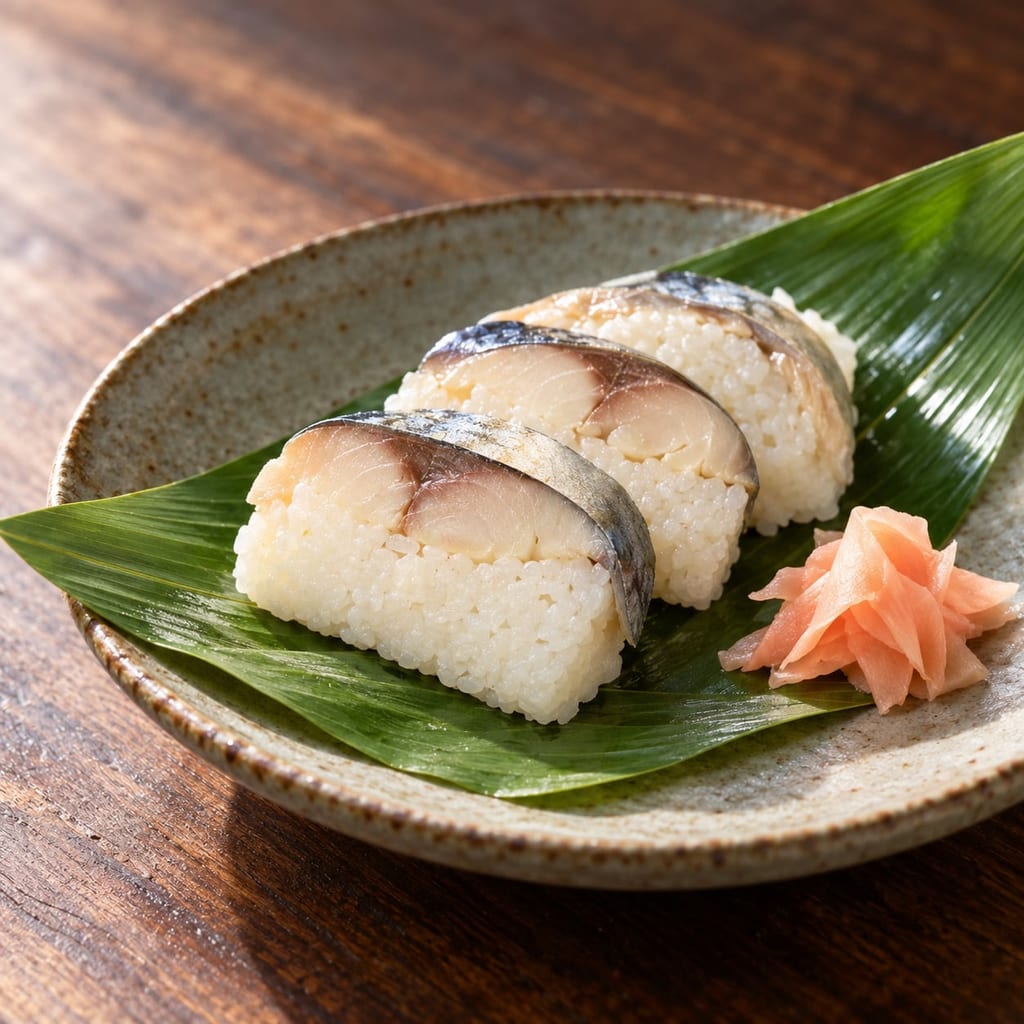
Narezushi
A documentary account of Japanese narezushi, a family of salted-fish and rice ferments. This entry preserves the East Kishu (Mie) source’s identity and regional context without providing a household preparation method.
 FermenteaWhere food goes to change
ふなずし · funazushi
A documentary account of funazushi, Shiga’s long-ripened narezushi associated with Lake Biwa and roe-bearing nigorobuna. It preserves regional, historical and cultural context; it is not a household preparation guide.
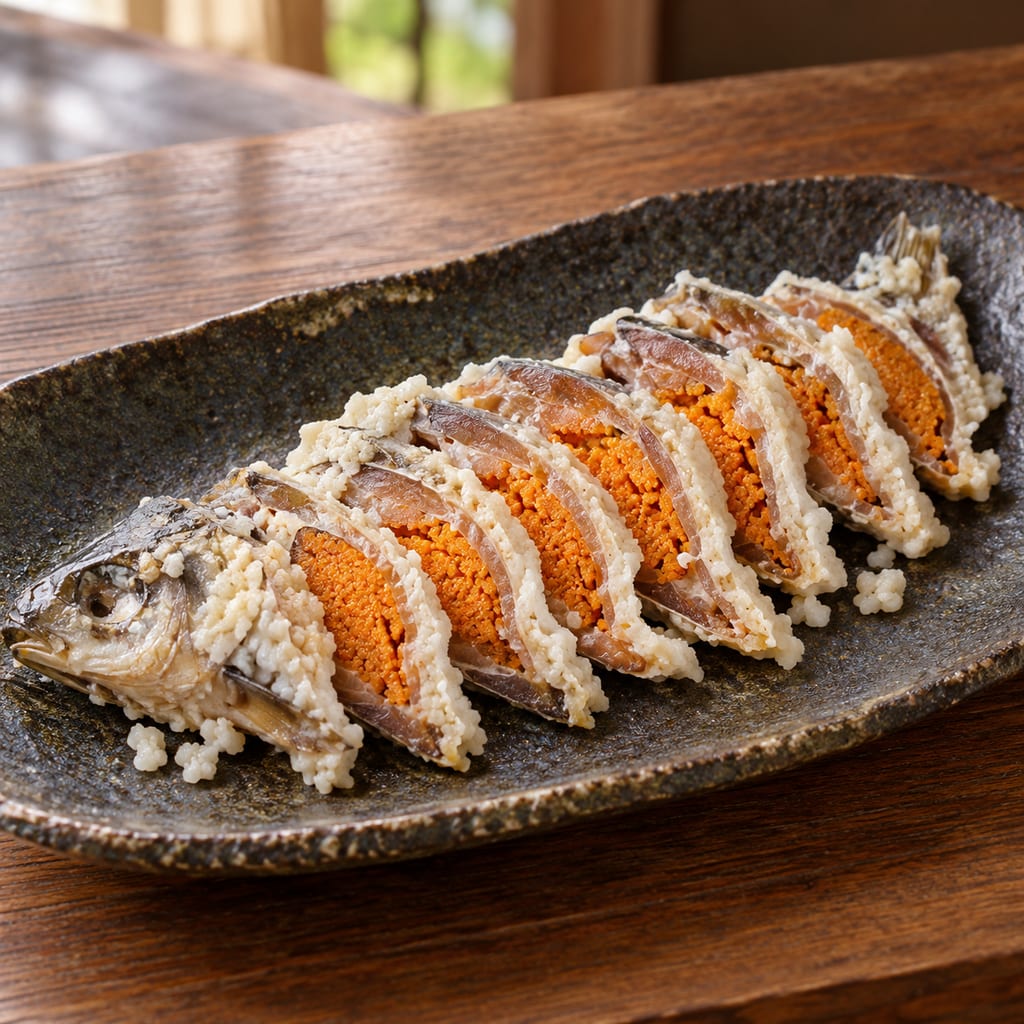
Funazushi (ふなずし) is a regional form of narezushi associated with Shiga Prefecture and Lake Biwa. The Japanese Ministry of Agriculture, Forestry and Fisheries (MAFF) describes roe-bearing Lake Biwa nigorobuna as commonly used, while its listed preparation uses the broader name funa (crucian carp). Those descriptions point to a strong local association without making one fish the exclusive definition of every funazushi.
Funazushi is part of a family of Japanese preserved-fish traditions. It is distinct from modern sushi made by seasoning cooked rice with vinegar. MAFF places it in the older honnare line, in which rice serves as part of the fermentation tradition and is not eaten as sushi rice. Other regions and shorter narezushi styles have their own histories and should not be treated as identical to Shiga funazushi.
MAFF describes funazushi as a representative Shiga food tradition and records it in connection with shrine festivals, harvest prayers, New Year, celebrations and gatherings. Shiga selected funazushi as part of its food-culture intangible folk cultural property in 1998. That is a recognition date, not a date of origin; the source gives no first attestation for the named preparation.
The tradition is tied to the ecology and foodways of Lake Biwa. MAFF notes that local nigorobuna have declined and that fewer households now make funazushi. Some households obtain fish already prepared for a later stage, and the source documents variations in contemporary household practice. Such changes are part of a living tradition rather than proof of one universal formula.
MAFF’s overview of traditional Japanese seafood fermentation identifies funazushi as an older honnare example and contrasts it with later namanare forms, where fish and rice are eaten together. The same source traces a later shift toward haya-zushi made with vinegared rice. These categories describe broad historical developments; they do not mean that every local practice followed one timeline or that related dishes share identical methods.
The separate Mie regional entry documents narezushi forms associated with that prefecture and distinguishes them from the older rice-discarding style. Keeping Shiga funazushi and East Kishu narezushi in separate entries preserves their different regional evidence.
A 2022 study of commercial Lake Biwa funazushi reported spontaneous fermentation, with Lentilactobacillus buchneri prominent in the samples and differences among factories. The finding describes those products and samples. It does not establish one organism as a universal starter or define a validated household process.
The cited MAFF page is a cultural household account rather than a process-validation study. FDA seafood guidance supplies general hazard context for preserved fish, not validation or a safe funazushi recipe. For that reason, this entry presents no quantities, sequence, endpoint, or storage direction. It is intended to document the food’s identity and context, not to guide preparation.
MAFF identifies funazushi as a representative Shiga narezushi associated with Lake Biwa and roe-bearing nigorobuna, and records shrine, harvest-prayer and festive uses. Shiga selected it as part of its food-culture intangible folk cultural property in 1998; that recognition date is not an origin date.
FDA guidance identifies a botulism hazard in preserved fish when toxin formation is not controlled. It is general hazard context and does not validate a funazushi process.
Hazard sourceThis is a cultural and historical account, not a recipe or home-preservation guide.
The cited sources do not establish validated household safety controls for funazushi. No process, safety endpoint, or storage claim is offered.
MAFF records funazushi across Shiga Prefecture and says roe-bearing Lake Biwa nigorobuna are commonly used; the recipe is one documented household method.
A documentary account of Japanese narezushi, a family of salted-fish and rice ferments. This entry preserves the East Kishu (Mie) source’s identity and regional context without providing a household preparation method.
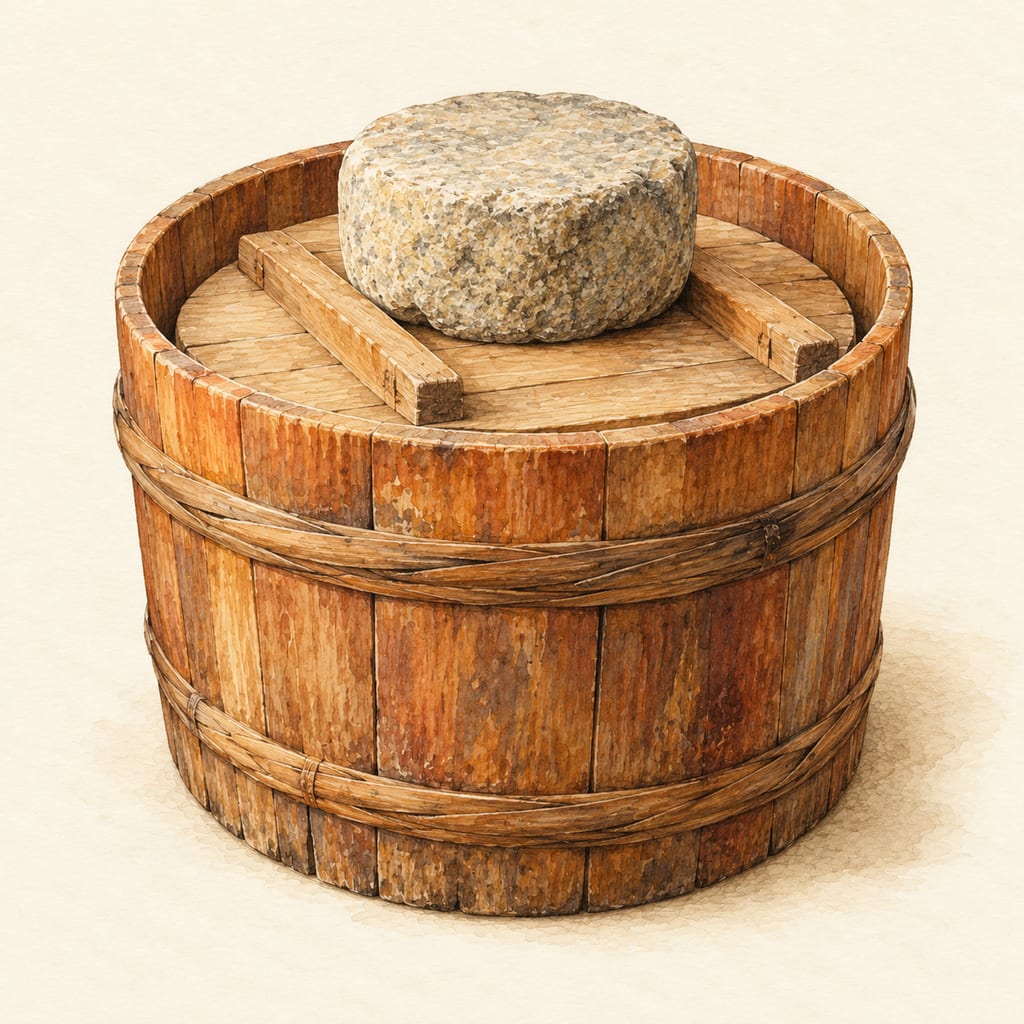
A narezushi pressing tub is a wooden bucket or barrel for packing salted fish and rice under a cover and weight. Regional methods vary; some also water-seal the tub.

Dry salami, sour pork with rice, matured sheep and aged blubber follow different paths from animal to food. Their stories connect microbes with climate, slaughter, migration and the meals people share.
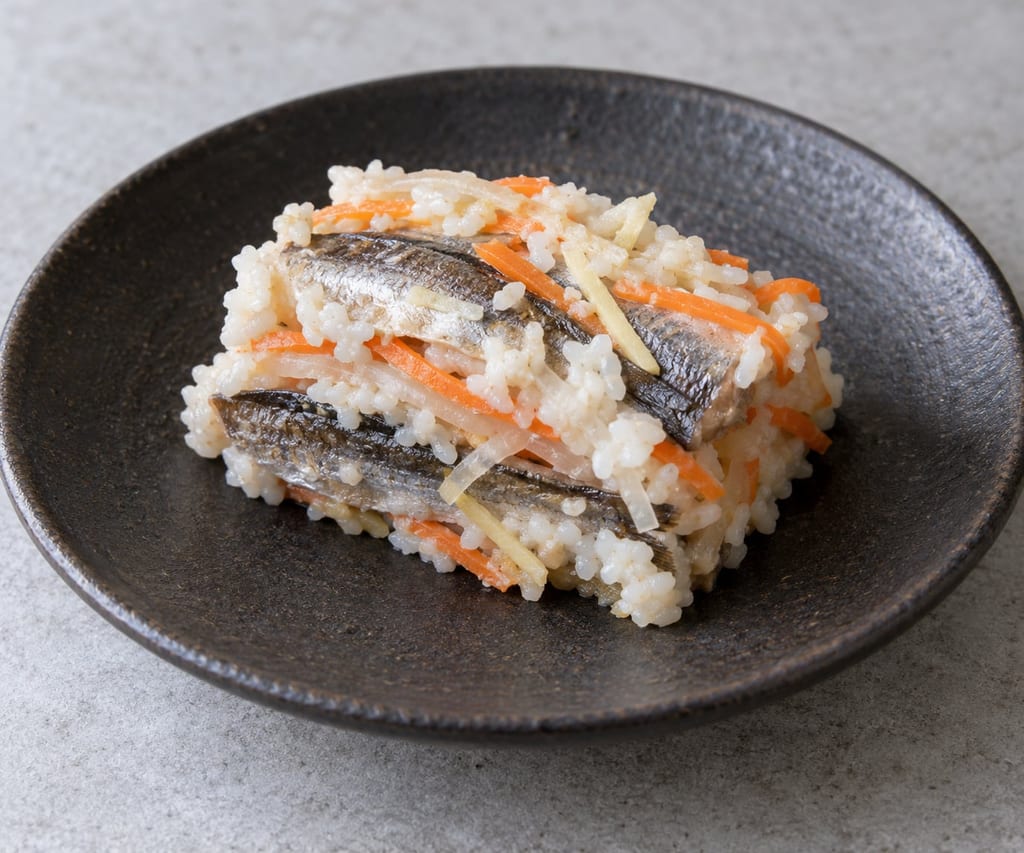
Hokkaido izushi layers fish, vegetables, rice and kōji for cold-season lactic fermentation. This MAFF recipe uses small hatahata with a vinegar pretreatment; it is one regional household formula, not a universal izushi method.

Japanese reddish-brown vinegar from sake lees matured about three years, turned to vinegar by acetic bacteria; the vinegar of Handa and Edomae sushi rice.

A thick, naturally sweet rice-and-koji preparation used to add body and sweetness to marinades, dressings and sauces. This method follows a published Marukome home recipe and is an enzyme-conversion hold, not a way to grow koji mould.
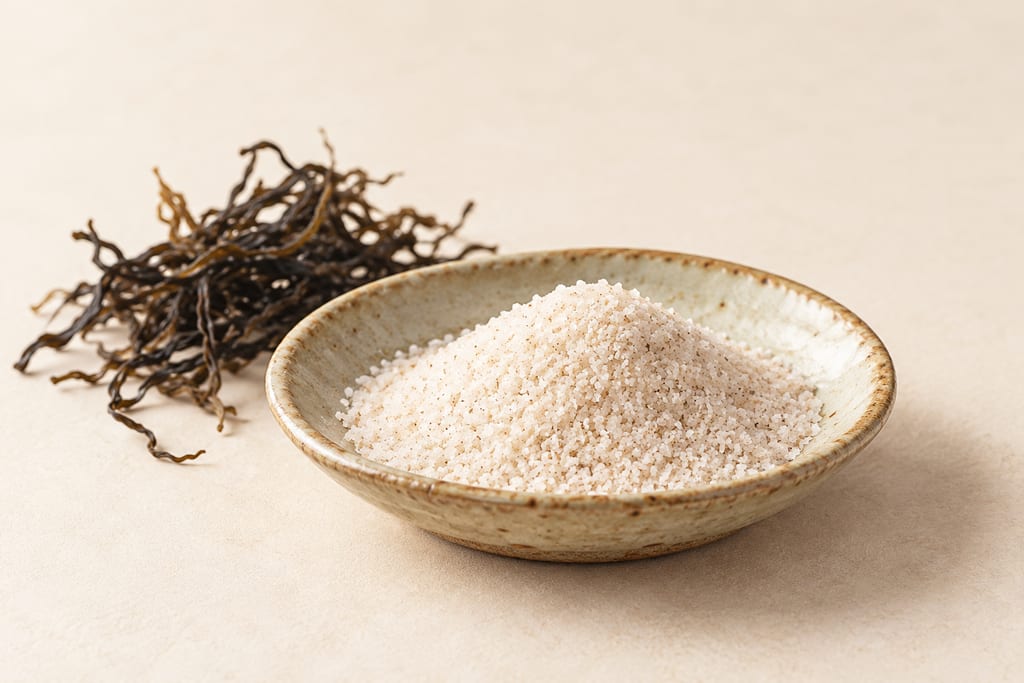
Amabito no Moshio is a modern, pale beige Japanese seaweed salt made from Seto Inland Sea water and hondawara seaweed. Its documented factory method concentrates filtered brine in kettles, then separates and dries the salt.
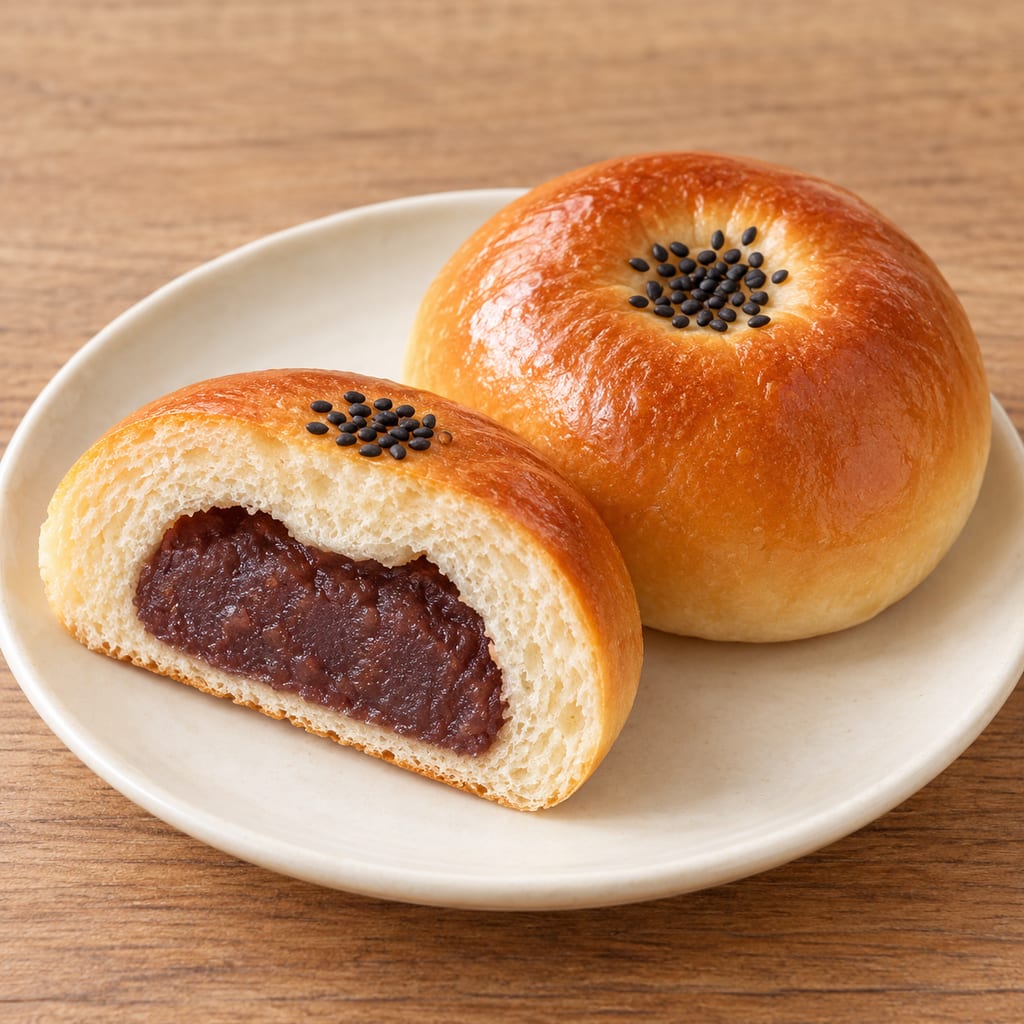
Anpan is a soft wheat bun filled with sweet red-bean paste and finished with egg wash and black sesame. This dough rises with commercial instant yeast.

Japanese skipjack tuna cooked, then repeatedly smoked and dried over a wood fire by the hand-fired tebiyama method into a hard block for shaving into dashi: the first stage of katsuobushi.
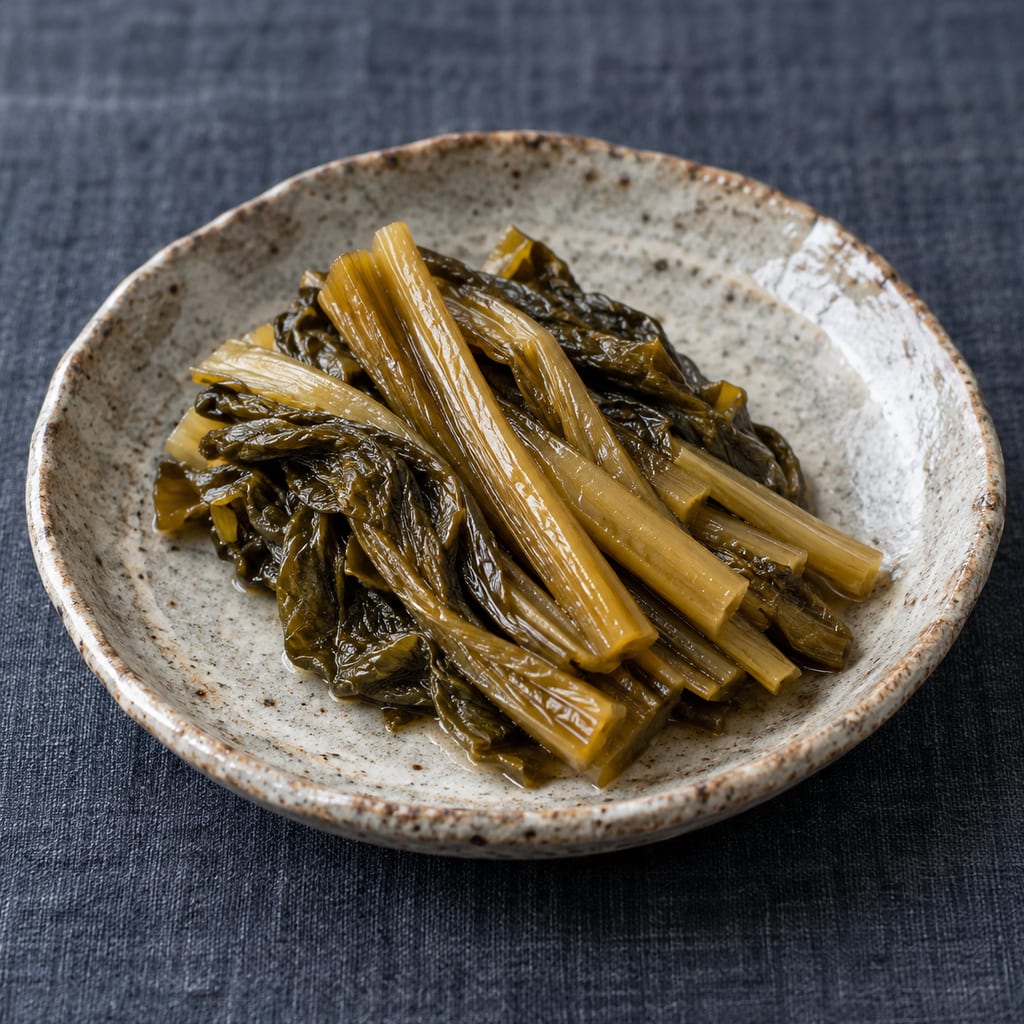
Takana mustard greens from Aso in Kumamoto are salted and pressed into a fresh spring pickle, or aged into a sour furuzuke that is fried and mixed into takana rice.
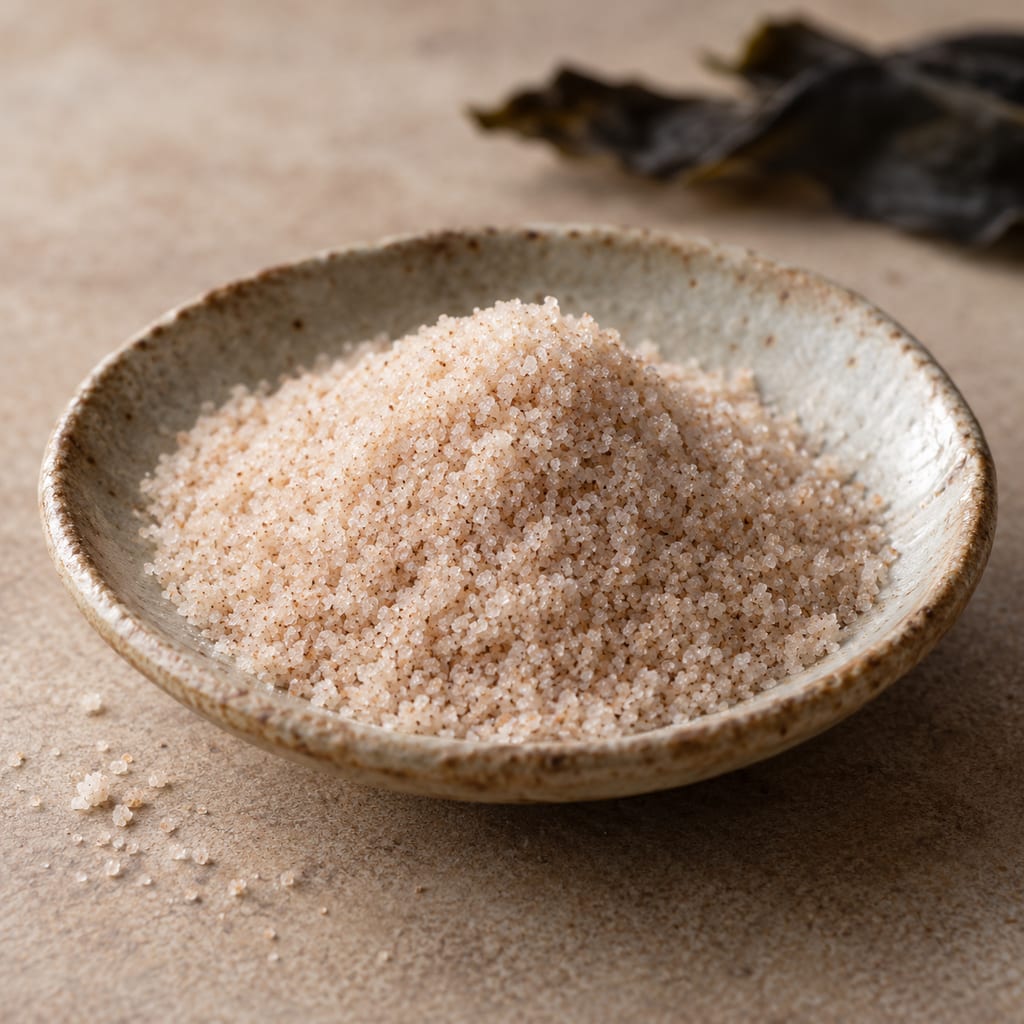
Awaji moshio is a modern Japanese seaweed salt made by TaDa PHILOSOPHY from Awaji Island seawater and seaweed. Its premium process concentrates brine, extracts seaweed flavor, then crystallizes, separates, dries and grades the salt.
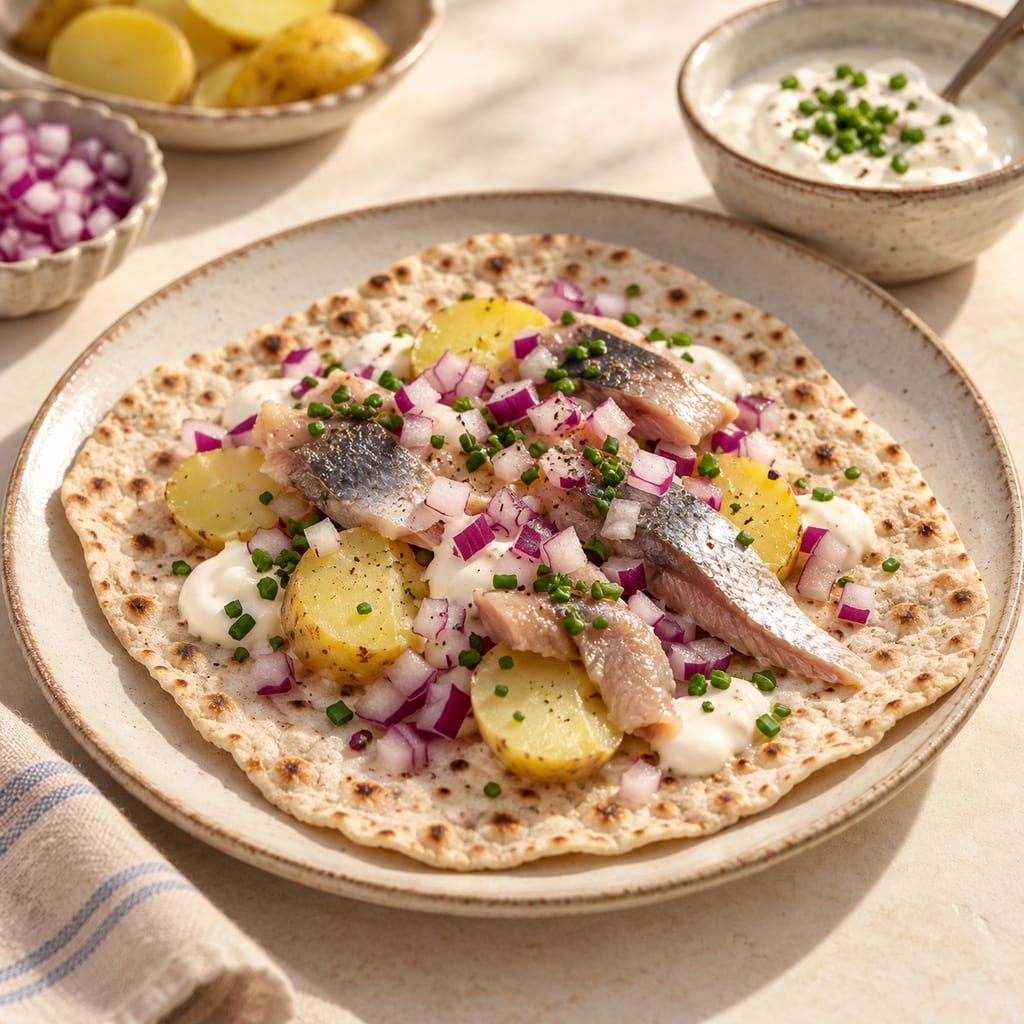
A Swedish late-summer meal of commercially prepared surströmming, tunnbröd, potatoes, onion and cultured cream. This is a serving preparation; the specialist fish fermentation is not made at home here.
A concrete fermentation tank installed below ground at a Senegalese fish-processing site was documented as an adaptation that emulated the older practice of burying fish during fermentation.

A documentary account of Icelandic hákarl, fermented and dried Greenland shark. It describes cultural context and one production study, not a home preparation method.
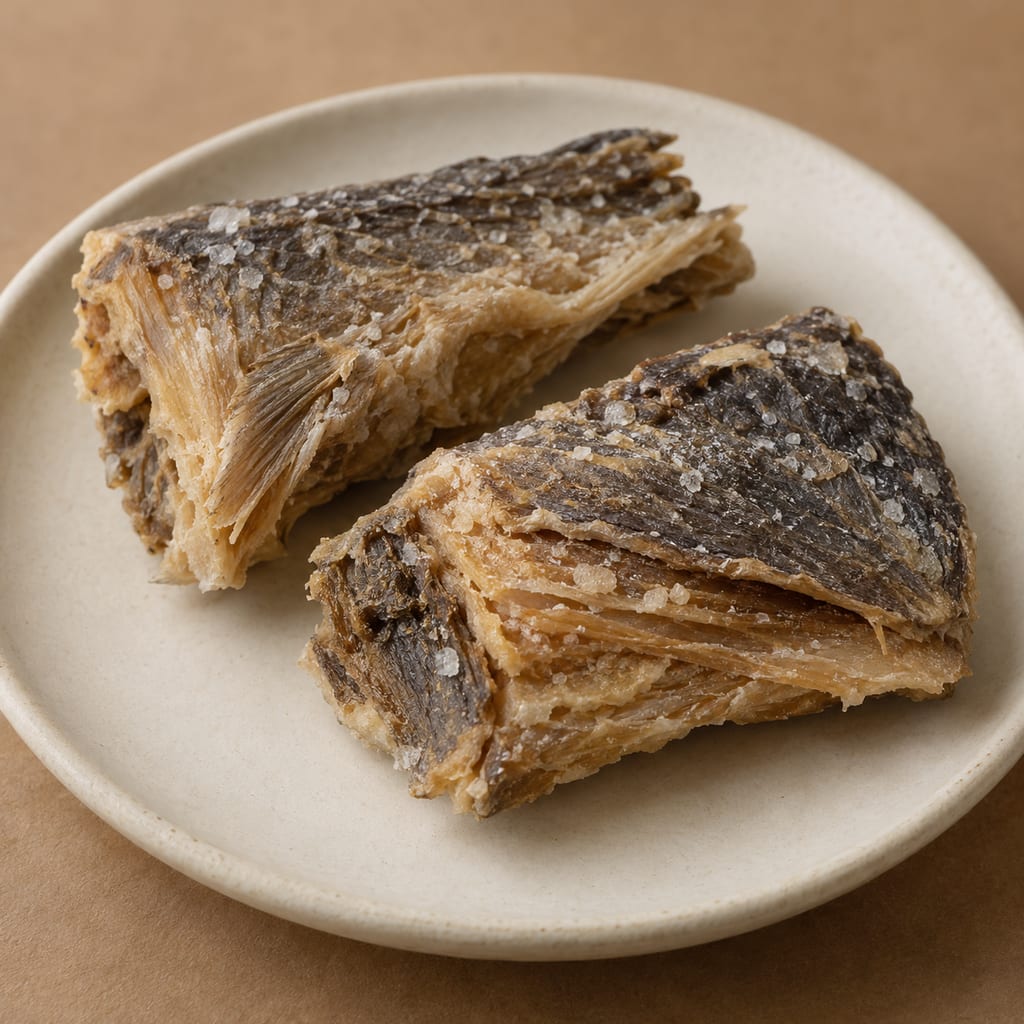
Lanhouin is a strongly flavoured fermented fish condiment documented in coastal West Africa, including southern Benin. This page records one published research reproduction as evidence, not as a validated home-preservation recipe.
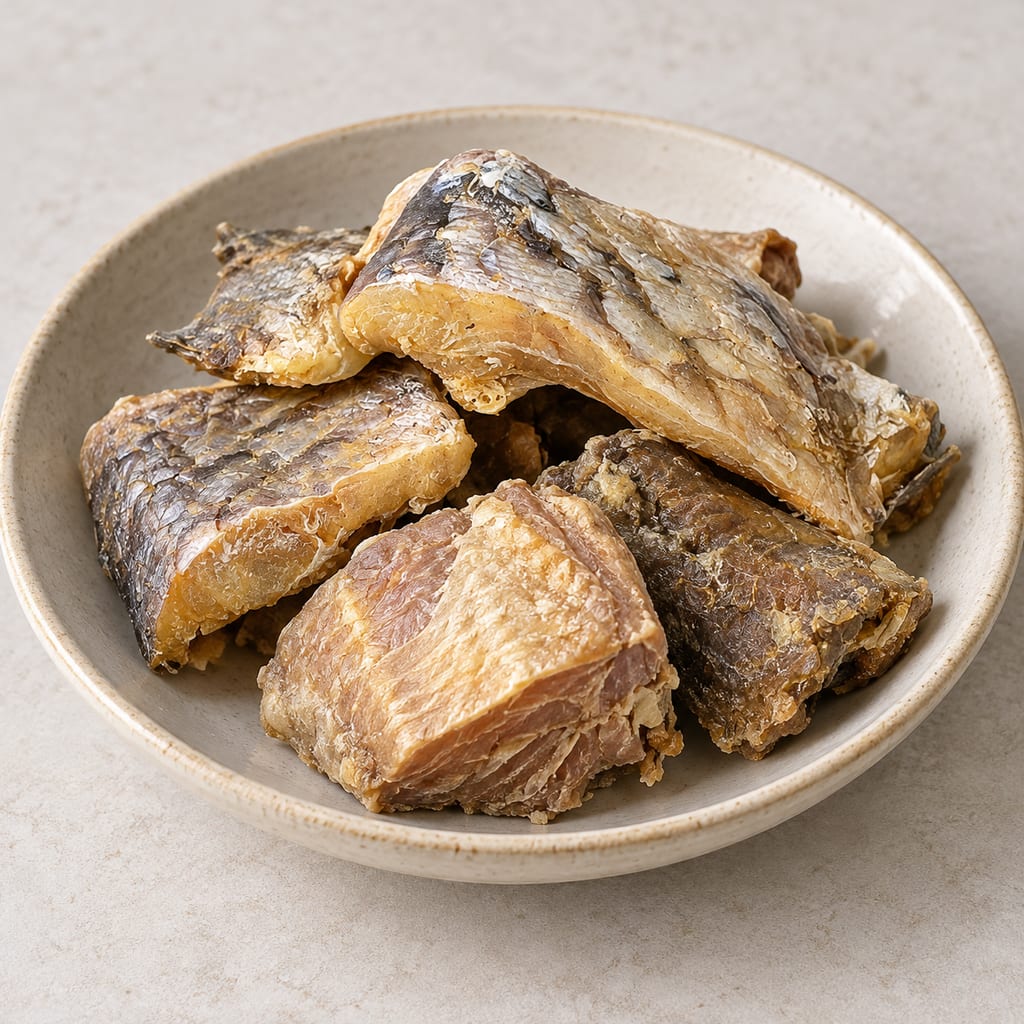
Momone is a Ghanaian salted and fermented fish condiment made from varied marine fish. Historical surveys describe both semi-dried and drier products, with salting and drying methods differing across coastal communities.
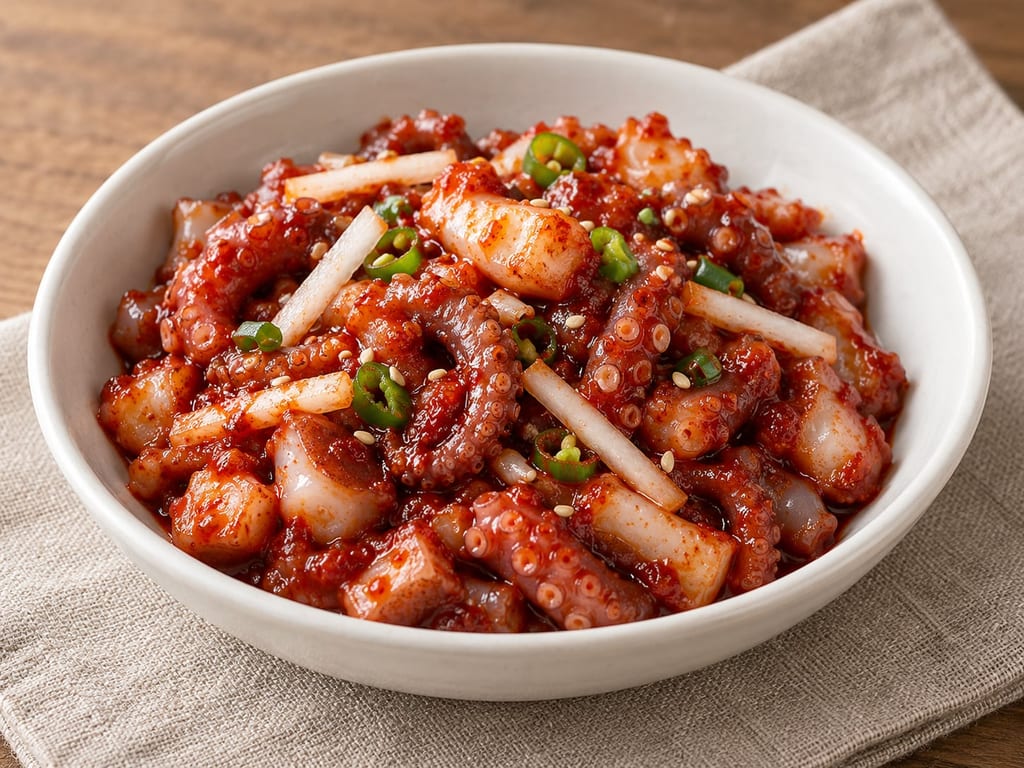
Nakji jeotgal is Korean salted octopus, served among jeotgal varieties with rice. This entry documents the dish and one creator’s quick-home version; it does not provide a household preparation method.
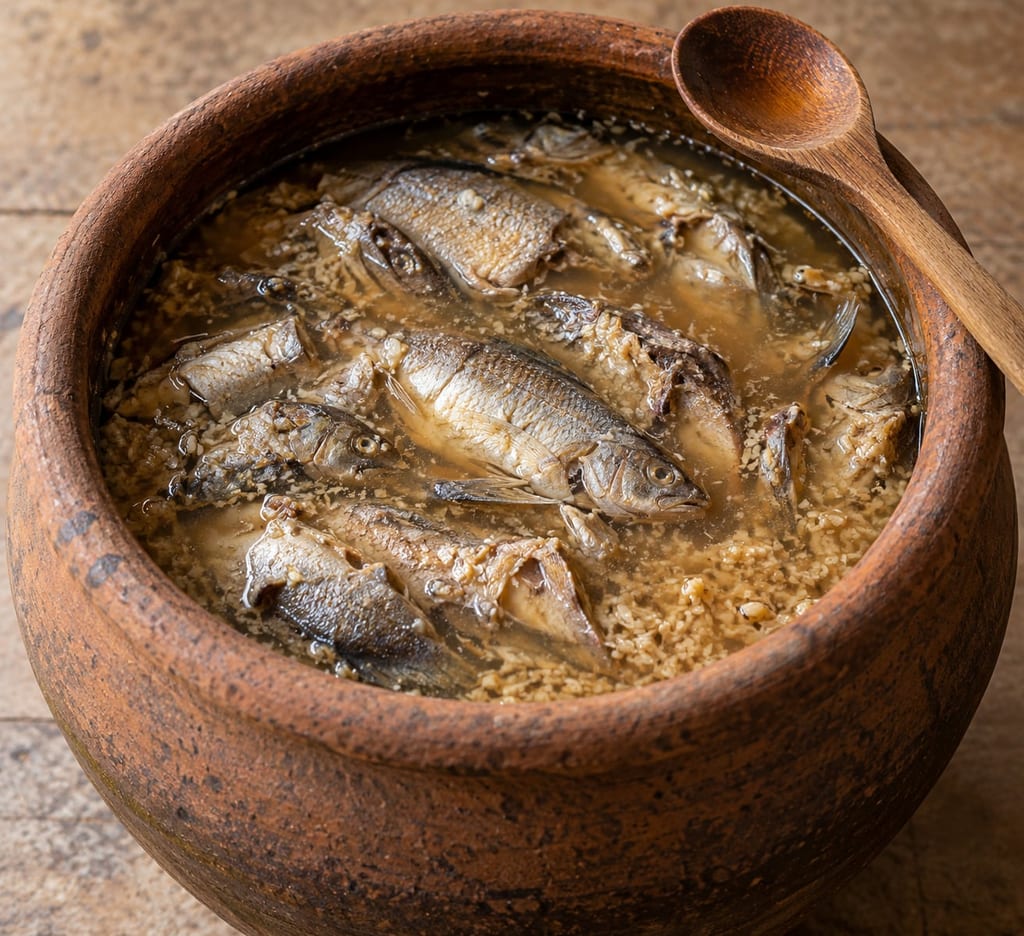
Mixed freshwater fish are soaked, repeatedly washed, salted and packed with toasted ground paddy rice; the creator gives a 1.5 kg fish batch and an unmeasured ladle dose.
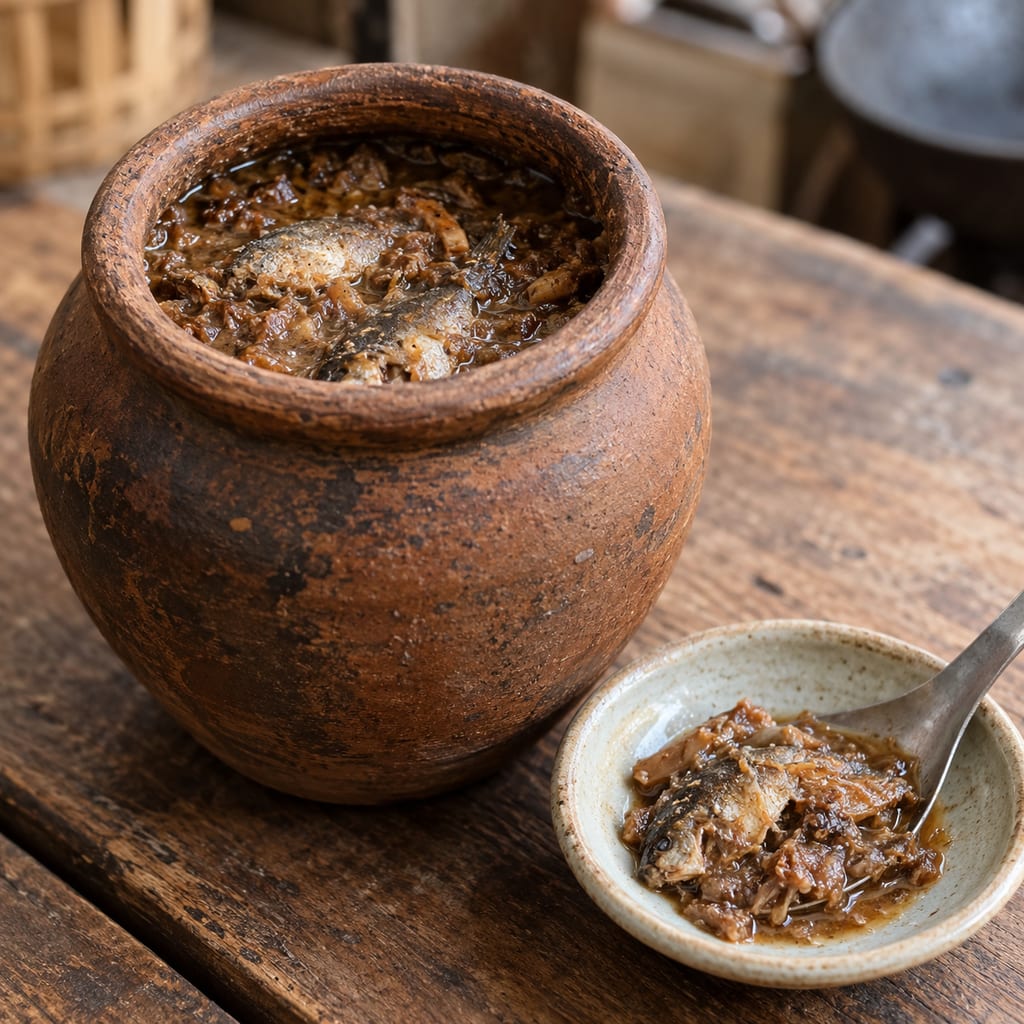
Pla soi and pla koom are salted with coarse sea salt, held in bags and packed with later grain additions; the source leaves salt basis, bran dose and part of the sequence unclear.
No community contributions have been published for this entry yet.
Sign in to contribute. Published comments and photos are free to read.
Ministry of Agriculture, Forestry and Fisheries of JapanIdentity · History · Geography · Use
ふなずし 滋賀県 (Funazushi, Shiga Prefecture)Shiga-wide funazushi tradition associated with Lake Biwa and roe-bearing nigorobuna.
Shrine, harvest-prayer, festive and New Year cultural context; recognition in 1998, not an origin date.
The source documents contemporary household variation and decline in local nigorobuna; no validated household safety process is supplied.
Cited in: A Shiga food associated with Lake Biwa; Regional memory and occasions; What current research can and cannot say
U.S. Food and Drug AdministrationSafety
Fish and Fishery Products Hazards and Controls Guidance, June 2022FDA guidance gives general preserved-fish botulism hazard context; it does not validate a funazushi process.
Cited in: What current research can and cannot say
Ministry of Agriculture, Forestry and Fisheries of JapanIdentity · History
Traditional Japanese seafood fermentationMAFF’s overview distinguishes older honnare funazushi from later namanare and haya-zushi traditions.
Cited in: A Shiga food associated with Lake Biwa; Historical distinctions within narezushi
Ministry of Agriculture, Forestry and Fisheries of JapanIdentity · History
Narezushi, Mie regional food entryMAFF documents regional narezushi forms in Mie, preserving distinction from the Shiga funazushi account.
Cited in: Historical distinctions within narezushi
Food Science & Nutrition / PubMedScience
Lentilactobacillus buchneri domination during the fermentation of Japanese traditional fermented fish (funazushi)A 2022 study reports microbial findings in commercial Lake Biwa funazushi samples and variation among producers; it does not define a household starter or validated process.
Cited in: What current research can and cannot say