
Rice koji
Rice koji is steamed white rice through which koji mold has grown. It carries the enzymes that turn rice starch into sugar, and it is the starting point of sake, sweet miso, amazake and shio koji.
 FermenteaWhere food goes to change
Traditional method
飯寿司 · いずし · Hokkaido izushi
Hokkaido izushi layers fish, vegetables, rice and kōji for cold-season lactic fermentation. This MAFF recipe uses small hatahata with a vinegar pretreatment; it is one regional household formula, not a universal izushi method.
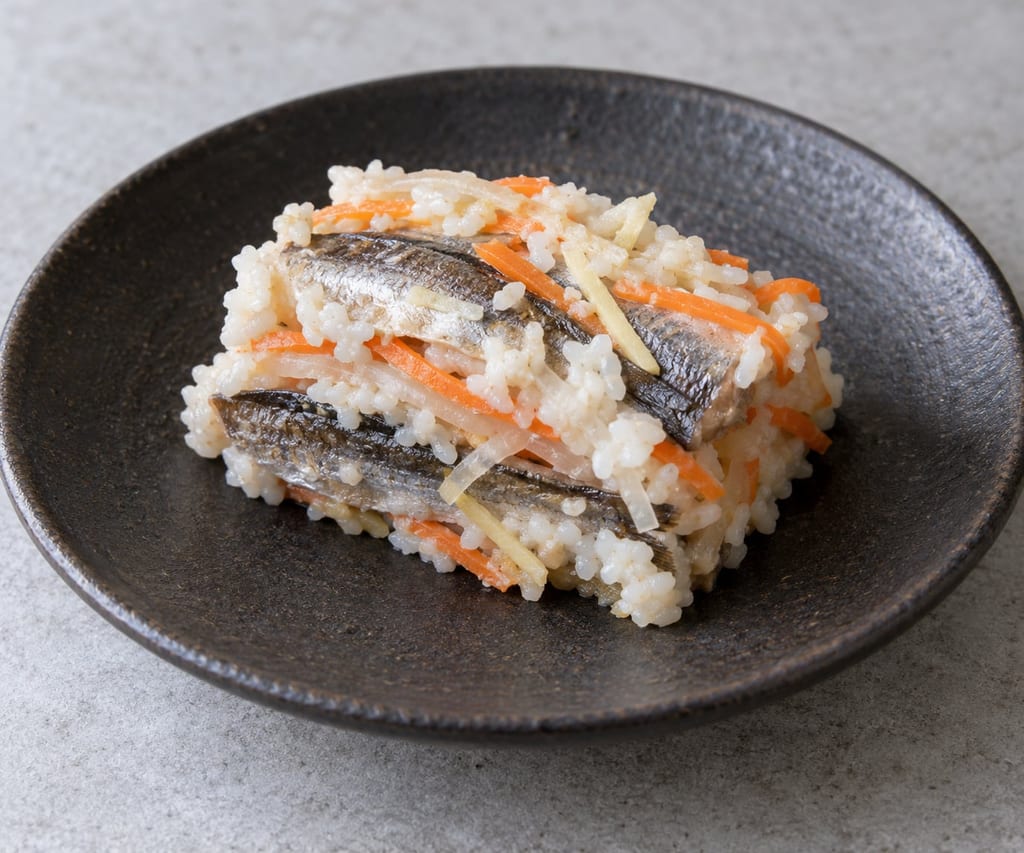
Izushi is a northern Japanese preparation in which fish and vegetables are layered with rice and kōji and left to ferment. The Ministry of Agriculture, Forestry and Fisheries describes it as a lactic ferment associated with Hokkaido and other cold coastal communities from Hokkaido south into Tōhoku. Hokkaido preparations are made in late autumn or early winter and eaten around New Year and at family gatherings. The food differs from sushi seasoned with vinegar after cooking rice: fermentation is part of how izushi is made.
Fish and vegetables vary by place. The Hokkaido heritage entry lists herring, hokke, salmon, cabbage, carrot, daikon and ginger among common materials. The measured recipe printed on that page is narrower: it names small hatahata, or Japanese sandfish, with daikon, carrot, ginger, rice kōji and rice. The page says recipes differ by region and household; this fish-specific batch should not be treated as the one formula for all izushi.
The page attributes its one-barrel recipe to Mutsuko Yamagiwa of Hokkaido Bunkyo University. It lists 0.6 kg of small hatahata, 0.25 kg daikon, 25 g carrot, 10 g ginger, 5 g kōji, 20 g rice, 10 g salt, a small amount of sugar, 20 cc sake, 120 cc vinegar and bamboo leaves as needed. The printed directions call for removing fish heads, rinsing repeatedly and soaking the fish for one day in vinegar diluted five to six times. They then describe layering vegetables, salt and sugar, fish, ginger, kōji and rice in a sake-rinsed, bamboo-leaf-lined barrel, repeating the layers without gaps, adding a weight and leaving the barrel in a cool, dark place.
The MAFF page also gives a general preparation description in which fish is salted and then desalted; its printed recipe instead gives the vinegar pretreatment described above. The source does not reconcile these accounts, so this record preserves the exact printed recipe without adding an extra salt-curing or desalting step. It says an approximate 40-day period applies when making twice the listed amount. It does not specify how long the listed one-barrel quantity takes, or the barrel’s capacity.
The heritage description identifies cold fermentation, but the recipe supplies no numerical fermentation temperature, pH endpoint, salt concentration target, safety validation or tested shelf life. It also does not explain the role of vinegar in this particular version. Those gaps matter when reading a measured recipe for raw fish: listed ingredients and traditional timing do not establish a safe process. No missing controls or values are inferred here.
The MAFF record describes izushi as fish and vegetables fermented with rice kōji, associated with Hokkaido and cold coastal communities of northern Japan. It records late-autumn or early-winter preparation, New Year eating and household gatherings, and notes regional differences. This recipe is the Hokkaido small-hatahata version attributed to Mutsuko Yamagiwa of Hokkaido Bunkyo University.
Scaling: source batch only
The source provides a measured heritage recipe but no validated food-safety controls, numeric fermentation temperature, pH endpoint or tested safety limit. The vinegar pretreatment and description of cold fermentation do not establish safety.
The MAFF heritage record identifies Hokkaido as the recipe region and describes izushi across Hokkaido and northern coastal communities; it notes regional variation.
Rice koji is steamed white rice through which koji mold has grown. It carries the enzymes that turn rice starch into sugar, and it is the starting point of sake, sweet miso, amazake and shio koji.
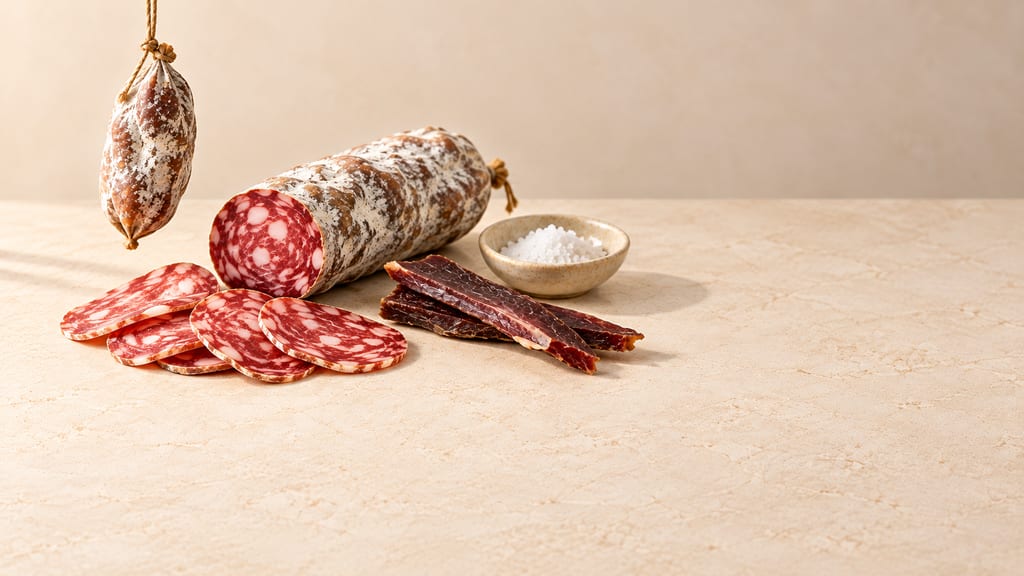
Dry salami, sour pork with rice, matured sheep and aged blubber follow different paths from animal to food. Their stories connect microbes with climate, slaughter, migration and the meals people share.

Traditional Japanese sake yeast starters made from steamed rice, rice koji and water, acidified by naturally growing lactic acid bacteria. Kimoto grinds the rice mash with paddles; yamahai omits that step.
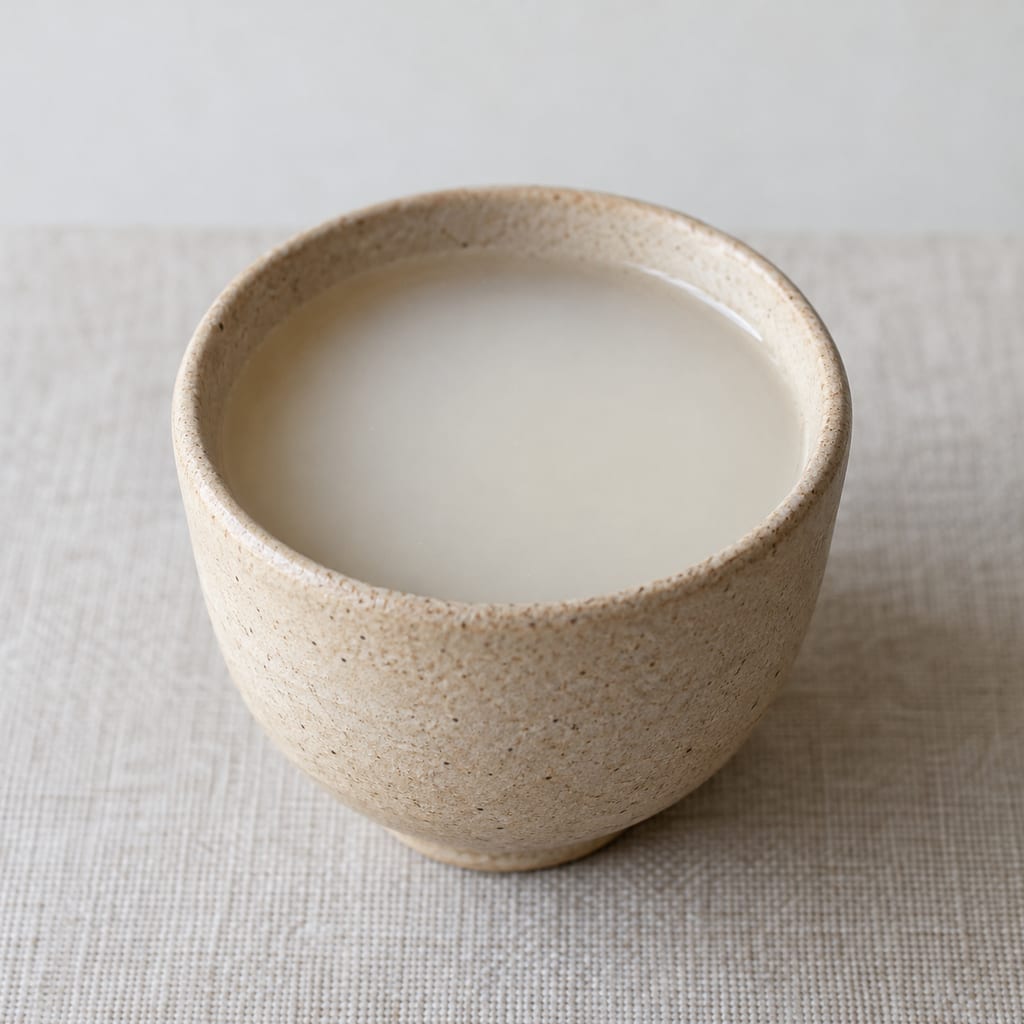
Tonoto is an Ainu ceremonial grain drink. This Saru River version ferments equal amounts of rice and egg millet with malted rice for about two to three days in summer or a week in winter.
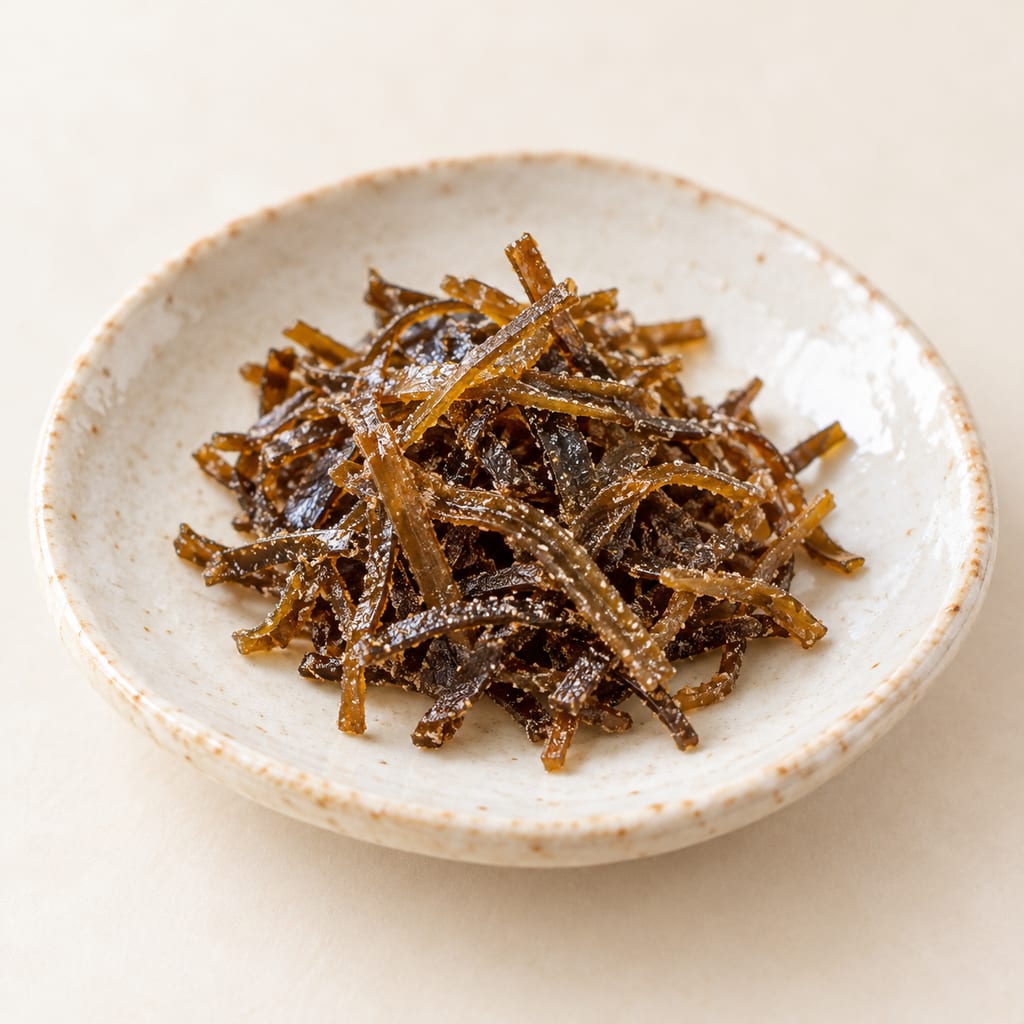
Japanese kelp simmered in soy sauce and seasonings, sometimes dried and salted, eaten with rice or used as an umami seasoning.
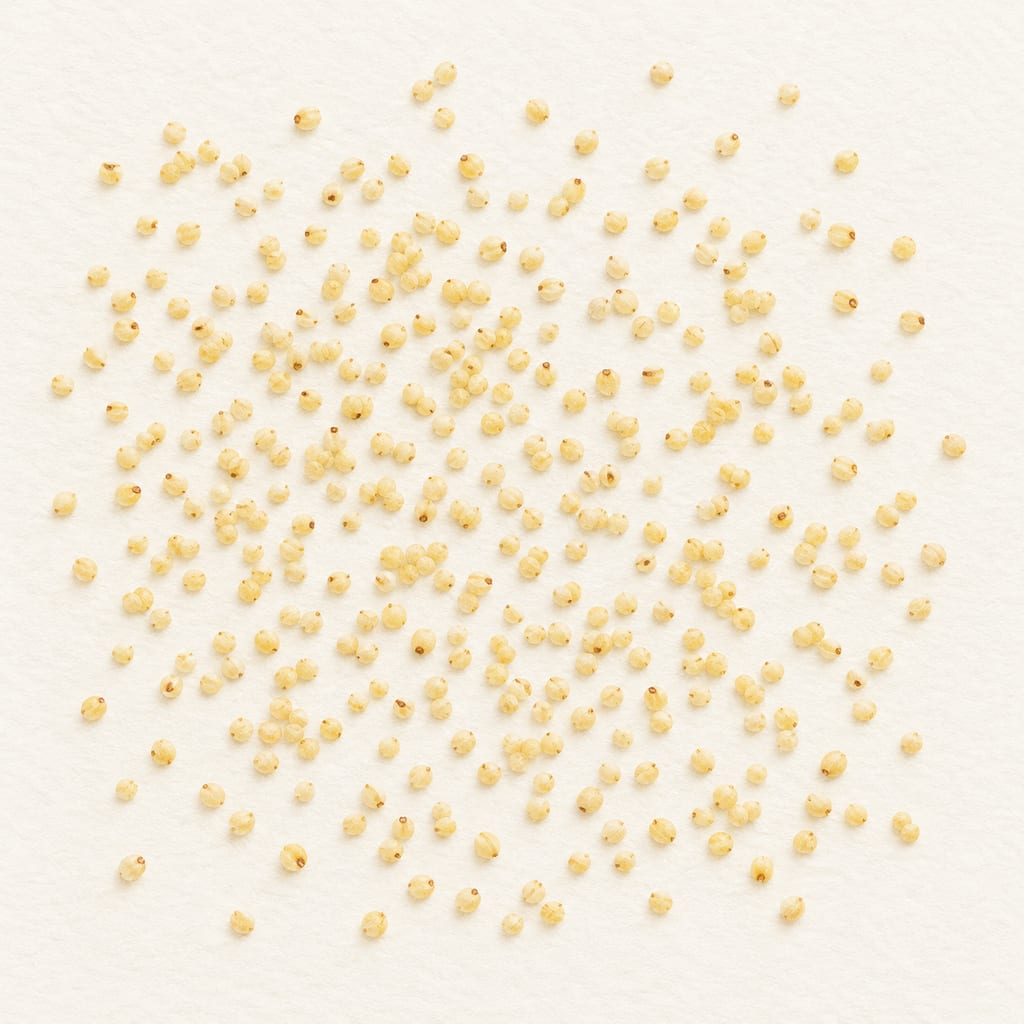
Tonoto from Shizunai in Hidaka is made of barnyard millet alone: a firm porridge kneaded with an equal amount of malted grain in a sake vessel, warmed by two embers, and left a week to ten days.
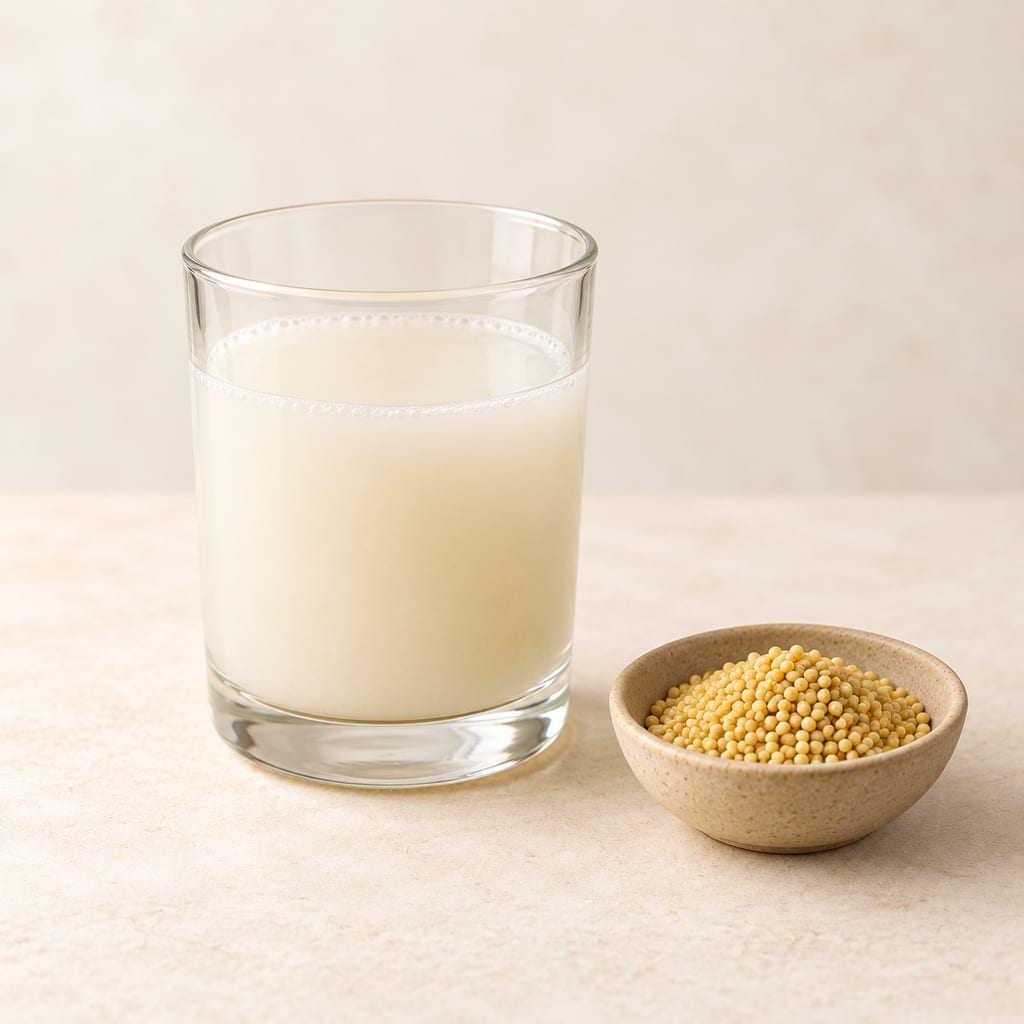
An Ainu grain drink for festivals and housewarmings, made by cooling cooked grain gruel, adding millet malt and holding it in a sake-making vessel.
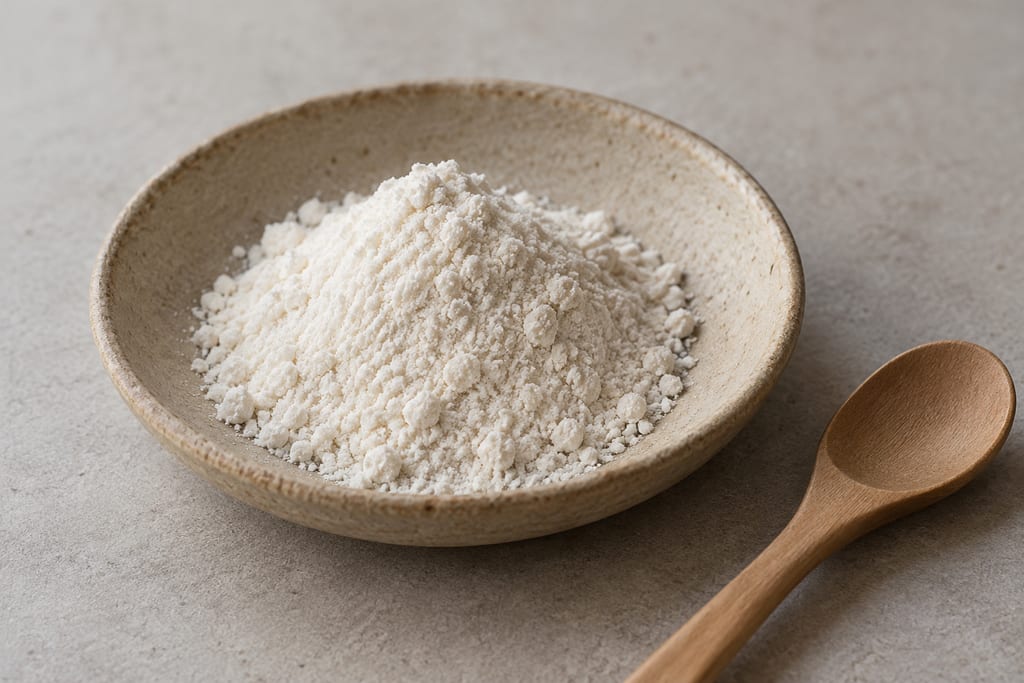
Starch released from giant woodland lily bulbs by pounding, washed out in water, settled and dried: the refined fraction of an Ainu process that also yields fermented cakes from the residue.
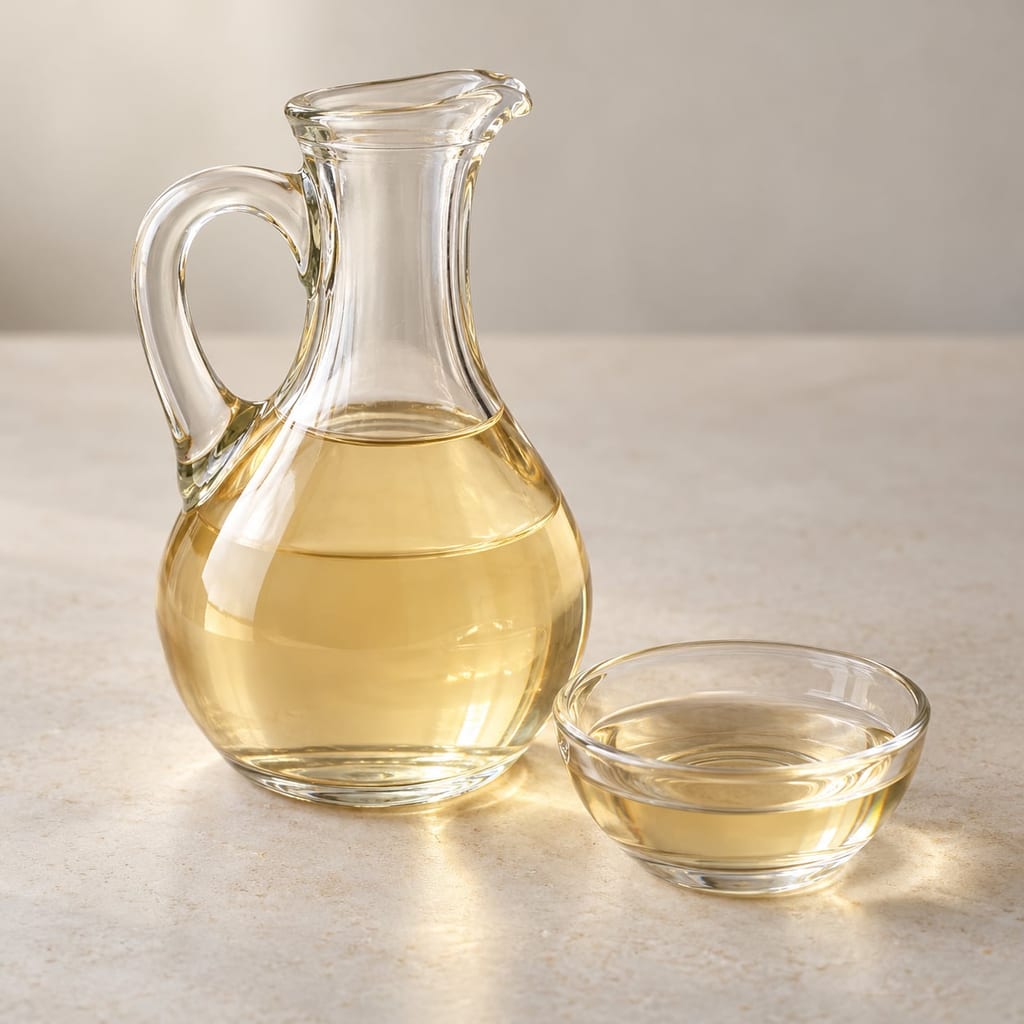
Vinegar made by fermenting the lactose of cheese whey to alcohol with a Kluyveromyces yeast and then to acetic acid; sold in Switzerland as Lactavinaigre from the 1950s.
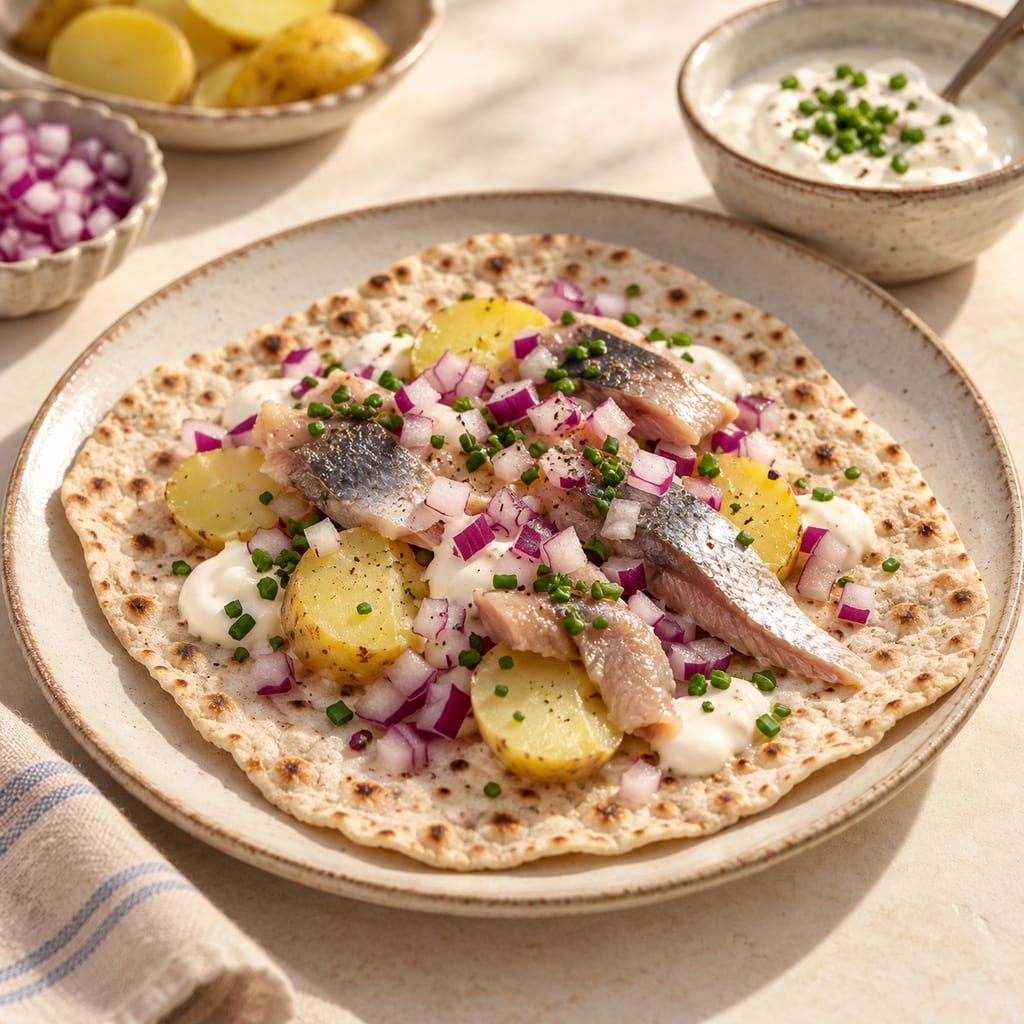
A Swedish late-summer meal of commercially prepared surströmming, tunnbröd, potatoes, onion and cultured cream. This is a serving preparation; the specialist fish fermentation is not made at home here.
A concrete fermentation tank installed below ground at a Senegalese fish-processing site was documented as an adaptation that emulated the older practice of burying fish during fermentation.

A documentary account of Icelandic hákarl, fermented and dried Greenland shark. It describes cultural context and one production study, not a home preparation method.
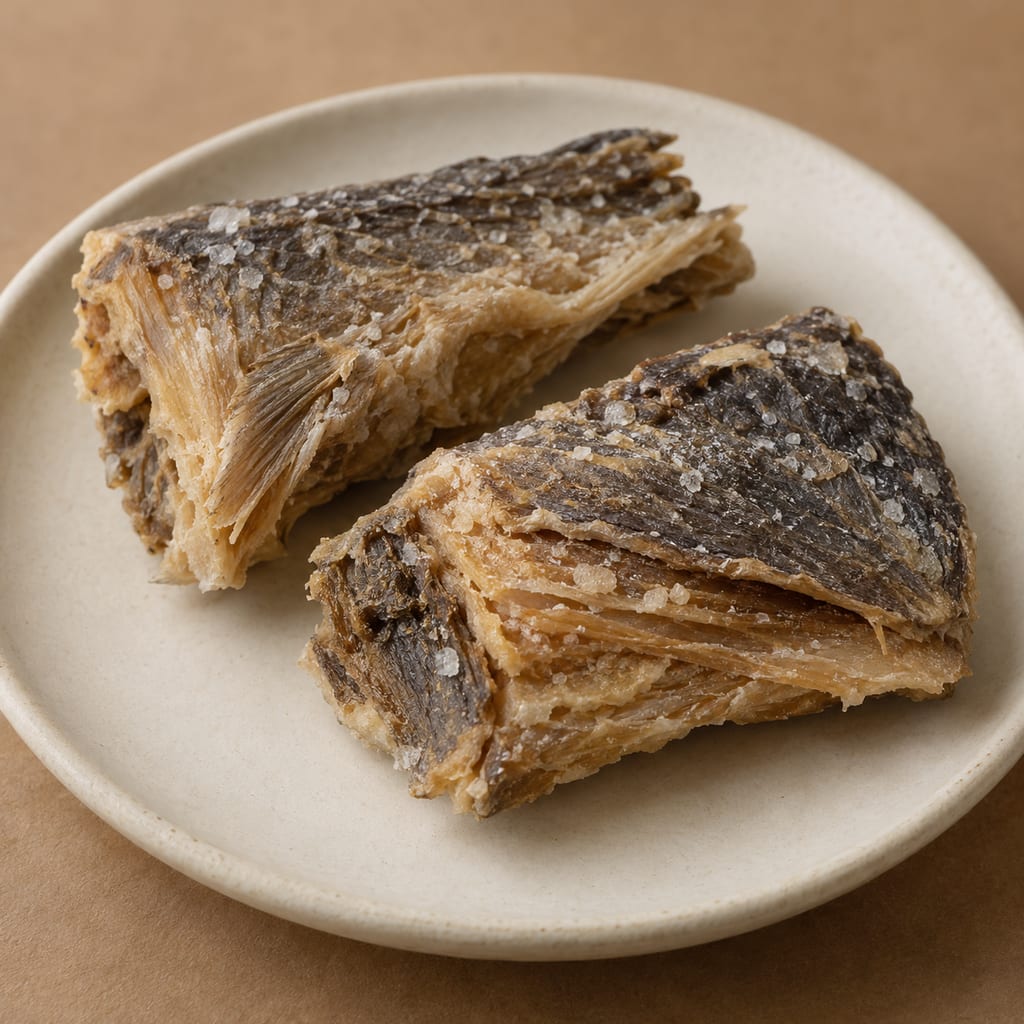
Lanhouin is a strongly flavoured fermented fish condiment documented in coastal West Africa, including southern Benin. This page records one published research reproduction as evidence, not as a validated home-preservation recipe.
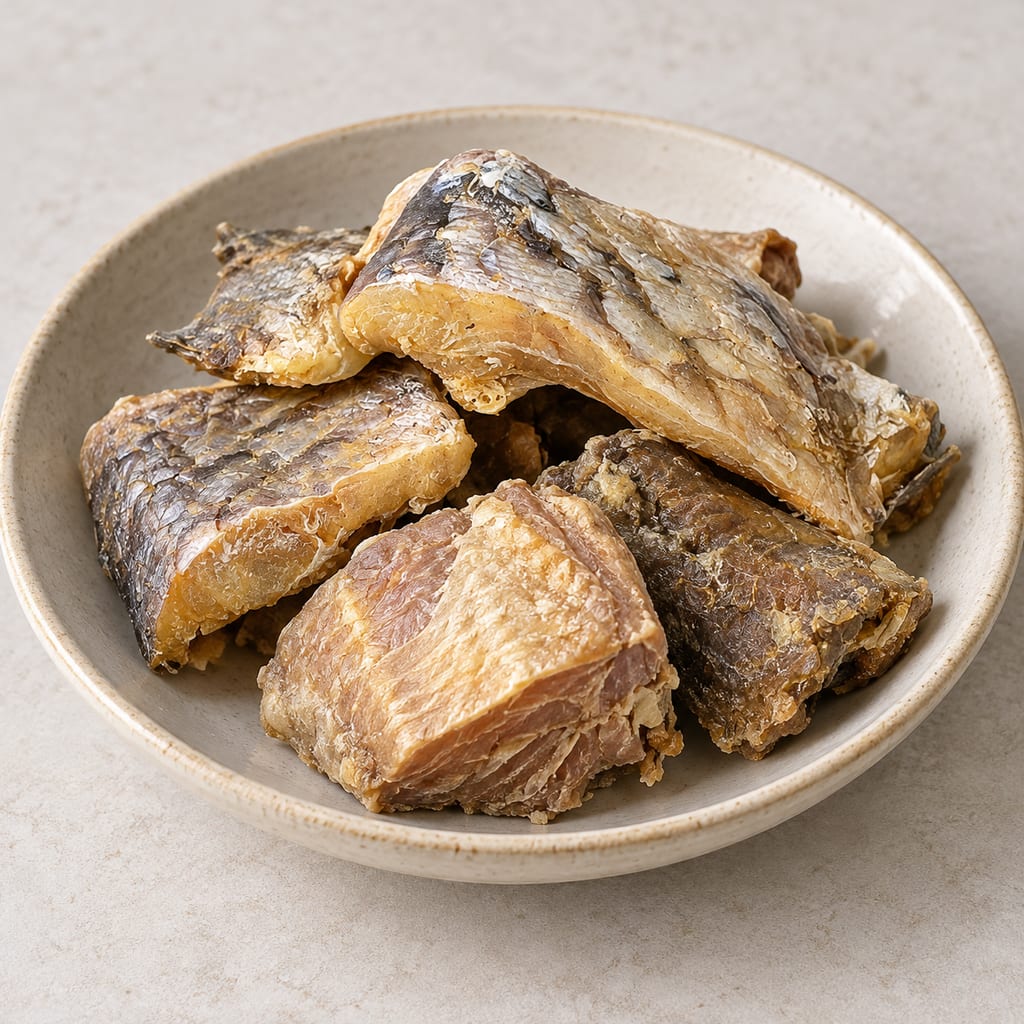
Momone is a Ghanaian salted and fermented fish condiment made from varied marine fish. Historical surveys describe both semi-dried and drier products, with salting and drying methods differing across coastal communities.
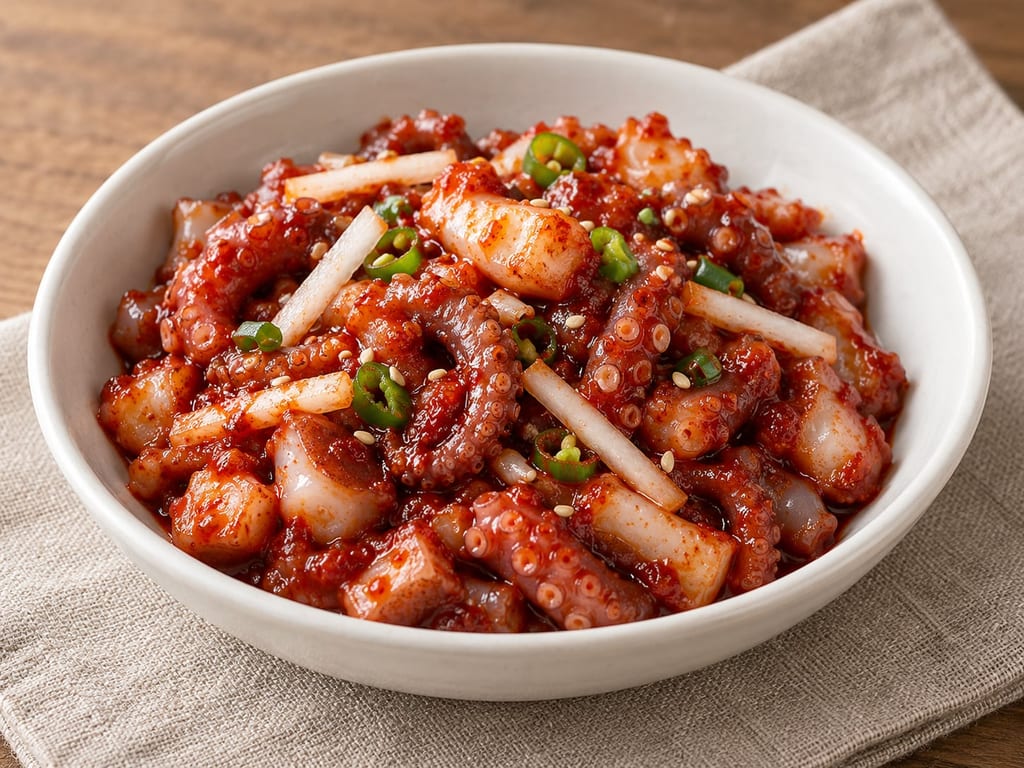
Nakji jeotgal is Korean salted octopus, served among jeotgal varieties with rice. This entry documents the dish and one creator’s quick-home version; it does not provide a household preparation method.
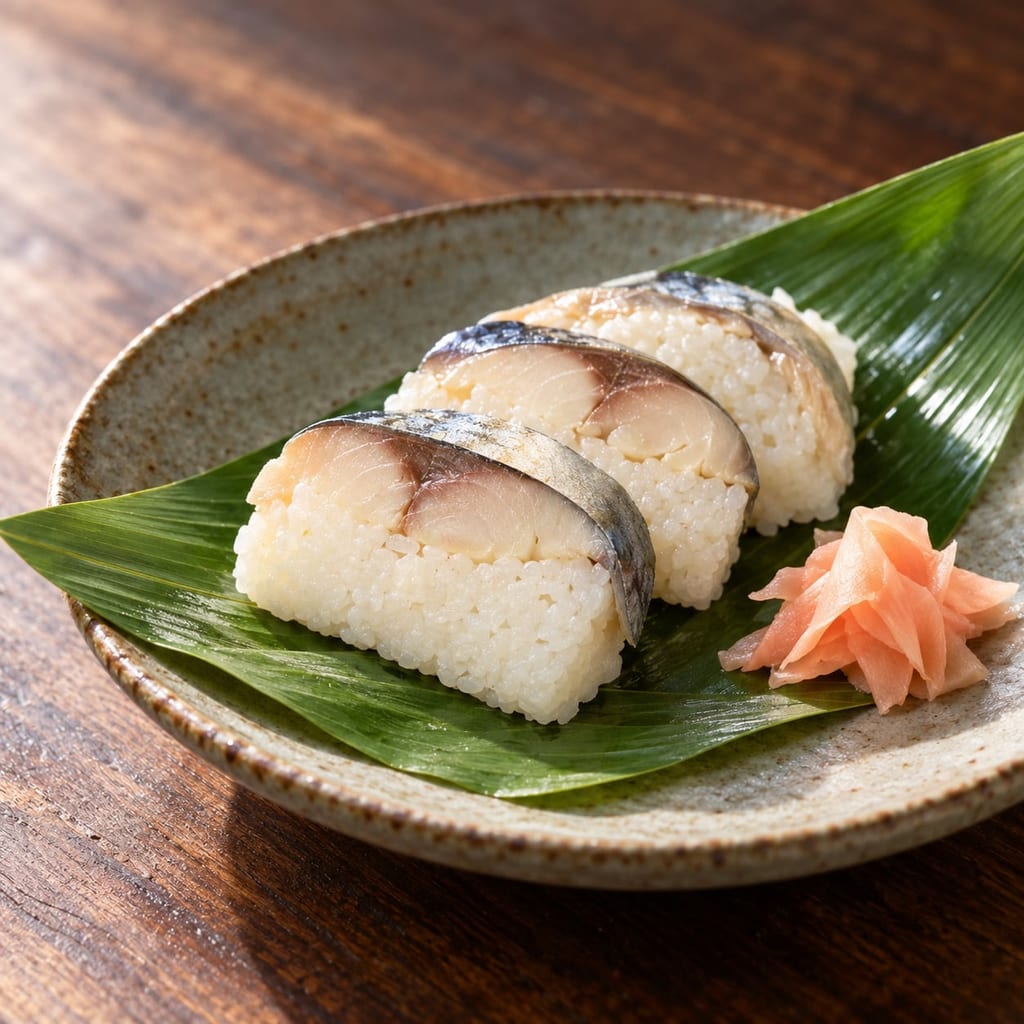
A documentary account of Japanese narezushi, a family of salted-fish and rice ferments. This entry preserves the East Kishu (Mie) source’s identity and regional context without providing a household preparation method.
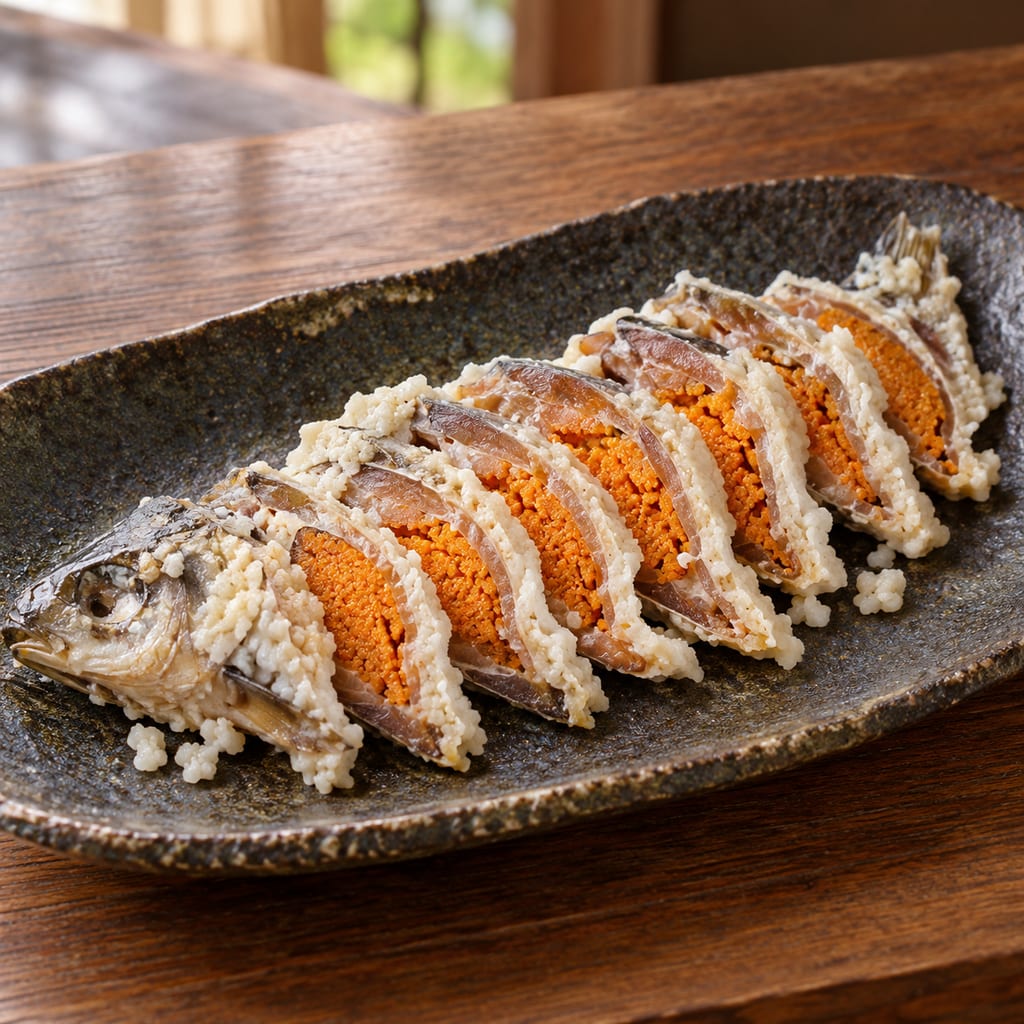
A documentary account of funazushi, Shiga’s long-ripened narezushi associated with Lake Biwa and roe-bearing nigorobuna. It preserves regional, historical and cultural context; it is not a household preparation guide.
No community contributions have been published for this entry yet.
Sign in to contribute. Published comments and photos are free to read.
Ministry of Agriculture, Forestry and Fisheries, JapanMethod · History · Identity · Ingredients · Geography · Uses · Variation
飯寿司 北海道 (Izushi, Hokkaido)Describes izushi as fish and vegetables fermented with rice kōji by lactic fermentation, in cold-season conditions; regional methods vary.
Records Hokkaido and northern Japanese coastal associations, late-autumn and early-winter preparation, New Year meals and family gatherings.
Provides one small-hatahata recipe for one barrel: 0.6 kg fish, listed vegetables, rice kōji, cooked rice, salt, sugar, sake, vinegar and bamboo leaves, with quantities as printed.
Its recipe says to soak the fish for one day in five-to-sixfold diluted vinegar, layer the ingredients in a leaf-lined barrel, weight them and leave them in a cool, dark place; an approximate 40-day period is stated only for twice the listed amount.
Does not give a numeric fermentation temperature, a duration for the listed quantity, barrel capacity, pH endpoint or validated food-safety controls; it notes recipes vary by region and household.
Cited in: A cold-season fish and rice ferment; The printed Hokkaido batch; What the source leaves open