
Rice koji
Rice koji is steamed white rice through which koji mold has grown. It carries the enzymes that turn rice starch into sugar, and it is the starting point of sake, sweet miso, amazake and shio koji.
 FermenteaWhere food goes to change
Traditional method
生酛・山廃酛 · Kimoto · Ki-moto · Kimoto moto · Kimoto shubo · Kimoto-zukuri · 生酛 · 生酛造り · Yamahai · Yamahai moto · Yamahai-moto · Yamahai shubo · Yamahai-zukuri · Yamahai-shikomi · 山廃 · 山廃酛 · 山廃仕込み · 山卸廃止酛 · Yamaoroshi-haishi-moto · Traditional sake starter · Naturally acidified sake starter · Kimoto-type sake starter · 生酛系酒母 · Shubo · 酒母 · Moto · 酛 · Sake yeast starter · Sake seed mash
Traditional Japanese sake yeast starters made from steamed rice, rice koji and water, acidified by naturally growing lactic acid bacteria. Kimoto grinds the rice mash with paddles; yamahai omits that step.

Kimoto (生酛) and yamahai (山廃酛) are two traditional Japanese ways of making the yeast starter for sake. The starter is called shubo (酒母), the "mother of sake", or moto (酛). It is a small, acidic mash of steamed rice, rice koji and water that grows a large, healthy population of sake yeast before the main fermentation begins. It is a stage in brewing, not a rice wine and not something people drink on its own.
The two methods differ in one operation. Kimoto includes yamaoroshi (山卸し), also called motosuri (酛摺り): brewers grind and work the mixture of rice, koji and water with wooden paddles. Yamahai is short for yamaoroshi-haishi (山卸廃止), meaning "abolishing yamaoroshi", and leaves the grinding out. The koji enzymes soften and dissolve the rice without it. In both, lactic acid bacteria that develop on their own supply the acidity.
Both differ from sokujo-moto (速醸酛), the modern rapid starter, which adds prepared brewing lactic acid at the start. Kimoto and yamahai make their acid by lactic fermentation, which is why they take longer: about a month, against about two weeks for sokujo. Japan's brewing research institute groups kimoto and yamahai together as kimoto-type shubo (生酛系酒母). They are not different alcoholic drinks and not different sake rice. A bottle of sake may name kimoto or yamahai on the label to show which starter method was used.
The microbiology is a succession of organisms, not a single starter culture. Aspergillus oryzae, grown on rice as koji, supplies enzymes that split starch. Lactic acid bacteria make organic acids. Other bacteria may produce nitrite early on, and Saccharomyces cerevisiae finally becomes the main alcoholic fermenter. Today the sake yeast is usually added on purpose once the mash has acidified. Older and some modern systems depend more on yeast already living in the brewery. The extra microbial complexity can shape the finished sake, but neither method guarantees a particular sweetness, acidity, aroma or strength.
Kimoto belongs to the wider story of Japanese sake brewing. Medieval brewers worked out rice polishing, koji growing, staged additions and acidic yeast starters. The National Research Institute of Brewing points to the twelfth to fifteenth centuries as the period when lactic-acid-based starters emerged. That does not show that the complete kimoto method, with its particular yamaoroshi grinding, already existed under that name. The older history of sake and the documented history of kimoto are separate things.
The institute attributes the established kimoto method to the Edo period, 1603 to 1867, when commercial brewing grew. Working rice and koji in shallow wooden tubs became a standard operation. The grinding spread the rice and helped it break down before acidification and yeast growth. No single earliest dated manual describing the whole method has been identified.
In the late nineteenth century brewers and researchers began to study sake spoilage and the microbes behind fermentation. Large-scale production rewarded reliable starters, and Japan founded its national brewing research institution in 1904. Researchers asked which traditional operations were necessary and how acidity and microbial activity could be controlled.
In 1909 Kagi and colleagues developed yamahai, dropping yamaoroshi while keeping natural acidification by lactic acid bacteria. Around the same time the institute developed sokujo, which uses prepared lactic acid to shorten starter making. Yamahai is therefore an early twentieth-century refinement of an older system, not an independent ancient style, even though it is often grouped with kimoto as traditional brewing.
Laboratories have since revised the picture. A 2014 study showed that bacteria and fungi native to the brewery drive kimoto fermentation. Studies from 2015, 2021, 2023 and 2024 found different bacterial successions, including starters that did not follow the long-accepted sequence of lactic acid bacteria. Breweries such as Amabuki in Saga still make kimoto by hand-grinding, while using modern controls. The method has kept developing, and not every Edo-period detail has survived unchanged.
A kimoto or yamahai starter is a managed succession of microbes. The mash starts with organisms from the koji, rice, water, equipment and the brewery air and surfaces. The brewer sets conditions so that different groups become active in turn. The aim is an acidic, nutrient-rich mash full of sake yeast and short of the organisms that could spoil the main fermentation.
Starch conversion comes first. Aspergillus oryzae has already grown on the koji and made alpha-amylase, glucoamylase and proteases. Alpha-amylase cuts starch into shorter carbohydrates, glucoamylase releases glucose, and the proteases free peptides and amino acids from rice protein. These reactions continue once the koji meets the steamed rice and water, supplying sugar and nutrients before alcoholic fermentation gets going.
The classical account adds nitrate-reducing bacteria that turn nitrate from the water or raw materials into nitrite. As the mash acidifies, nitrite chemistry helps hold back wild yeasts and other microbes, and together with the cold and rising lactic acid it makes the mash selective. This stage does not follow one pattern. A 2015 yamahai study did not find the expected nitrate reducers at one brewery, and a 2024 kimoto study identified koji-derived Staphylococcus gallinarum as a possible nitrite producer.
Cold-tolerant lactic acid bacteria then take over. Leuconostoc mesenteroides and its relatives are usually linked to early acidification, and Latilactobacillus sakei, formerly Lactobacillus sakei, may dominate later and make much of the lactic acid. A 2021 study of five breweries found different successions and strong acid production by L. sakei. The strains it tested could not grow below pH 3.9 under the study conditions, which is a growth observation, not a food-safety threshold.
The Leuconostoc-then-Lactobacillus sequence is not required. A 2023 study described a successful kimoto in which Leuconostoc stayed dominant and no later Lactobacillus appeared. A 2024 study found Leuconostoc suionicum, L. citreum and L. mesenteroides in four batches, with the bacterial mix changing between brewing years. The species present depend partly on the brewery's own ecology and on its koji, so two working starters can get there by different routes.
Once the acidity is high enough, the yeast grows. Saccharomyces cerevisiae converts glucose by glycolysis to pyruvate, then to acetaldehyde, carbon dioxide and ethanol, regenerating NAD+ so glycolysis can continue. Rising ethanol and acid further restrict competitors. The starter then seeds the main mash, where koji enzymes keep converting starch while the yeast makes alcohol. Organic acids, amino acids, peptides and yeast aroma compounds can reach the finished sake, though the result depends on the whole brew.
Both methods start with polished rice, steamed rice koji and water. The rice supplies starch and nutrients. The koji supplies enzymes from cultivated Aspergillus oryzae. Water sets the consistency of the mash and carries the enzymes and microbes. Sake yeast joins when the acidified starter is ready for it, though older breweries sometimes relied on yeast already in the building. Unlike sokujo, neither method starts by adding prepared lactic acid.
In the institute's kimoto example, about 14 to 15 kg of steamed rice, koji and water together go into shallow wooden tubs called hangiri at about 8 °C. That is the combined charge, not a rice weight, and the separate amounts are not given. The mixture rests while the rice absorbs liquid, and the brewers stir it every few hours. The next day comes yamaoroshi. Two or three workers use long wooden paddles called kai to grind and redistribute the mash, working a tub three times over the day. The Nada glossary puts the first grinding about ten to twelve hours after mashing and the later sessions about four hours apart, with teams of three singing grinding songs.
After grinding, the mash goes into a tank and rests at about 6 to 7 °C for three days. This cold rest is called utase (打瀬). The low temperature shapes the early succession while koji enzymes keep breaking down starch. About five or six days after the start, warming begins. A vessel of hot water is lowered into the mash for two to three hours and removed, and the mash temperature goes up by about 1 °C a day. The hot water stays in the sealed vessel. Warming favours the lactic acid bacteria, and as acid builds, the mash becomes less welcoming to wild yeasts and unwanted bacteria.
When there is enough acid and fermentable material, cultured sake yeast is added, after about two weeks. The yeast grows fast, makes ethanol and helps make the mash more selective. The mash warms towards about 22 °C, and the finished starter is ready after about a month. It is then used to seed the main sake mash, which is built in three further additions of steamed rice, koji and water. Those additions are not part of the starter recipe.
Yamahai follows the same biochemical sequence without the grinding. The Nada glossary describes making mizu-koji in a single vessel and using mixing or recirculation of the liquid in place of grinding in shallow tubs. This saves labour and equipment, but still needs low-temperature management and natural lactic acid development. Leaving out yamaoroshi does not mean leaving out mixing, temperature control or monitoring, and breweries differ in starter size, yeast addition, temperature changes and timing.
There is no universal mass-balanced recipe, ratio of starter to main mash, rice cultivar, yeast dose or set of finishing measurements. One Hokkaido brewery studied in 2024 reported a kimoto-type starter of 40 kg steamed rice, 20 kg rice koji and 55 L water, with rice polished to 80%, run for about 30 to 32 days. That is a different documented method, and its numbers cannot fill the gaps in the hangiri procedure. A reproducible home version would need a brewery's own formula or a controlled study.
Kimoto and yamahai are brewing methods, not protected regional drinks. Any sake brewery in Japan can use them, and the same method gives different results with different water, rice, koji, yeast and temperature handling. Sake brewing developed strongly in the Kansai regions, Nada above all, but that does not make every kimoto or yamahai sake a product of Hyogo.
Even the grinding has variants. The Nada Brewers Association describes rough grinding, ara-zuri, with a round-headed wooden paddle, and rough treading, ara-bumi, as older approaches. It also names later grinding sessions, niban-zuri and sanban-zuri. These are techniques within the physical rice-working stage, not separate forms of lactic fermentation.
Yamahai matters historically because it removes the mechanical step and keeps the microbial acidification. Today brewers may change both methods by adding selected yeast, managing the koji closely, and tracking acidity and temperature. A starter can still be kimoto or yamahai in its defining method without copying every feature of an Edo-period brewery.
The studies show how much brewery ecology matters. At Tsuchida Sake Brewing in Gunma, a 2023 investigation traced microbes to the brewing water, koji, equipment and surfaces. A 2014 study of kimoto at a North American brewery found that equipment and the building itself acted as microbial reservoirs. A 2024 study followed four starter batches at a newly founded brewery in Hokkaido and found the microbial community changing between production years.
Two published cases depart from the textbook sequence. A 2015 yamahai study found Latilactobacillus sakei dominating without the expected early nitrate-reducing bacteria, and a 2023 kimoto study found a successful fermentation dominated by Leuconostoc rather than Lactobacillus. These are valid variants, not failed fermentations.
Finally, kimoto and yamahai are independent of grades such as junmai, ginjo and daiginjo, which describe other parts of sake making. The starter method can be combined with any rice polishing level, yeast strain and main-fermentation technique, so a label can carry both a starter-method term and a separate grade.
Kimoto and yamahai moto are not eaten or drunk. They are active starters, made to seed the main sake fermentation with plenty of healthy yeast in an acidic mash. Once ready, the starter goes into a larger vessel and is combined with more steamed rice, rice koji and water.
The main mash, called moromi (醪), is built in three additions known as sandan-jikomi (三段仕込み): soe, naka and tome. They let the yeast from the starter settle into a progressively larger volume of fermentable material. The yeast makes alcohol while koji enzymes keep converting starch to sugar. When the fermentation is done, the mash is pressed to separate the liquid sake from the lees.
The finished sake may be labelled kimoto-zukuri or yamahai-shikomi to name the starter method. These words describe a brewing technique, not an alcohol level, sweetness or serving style. The sake may be served chilled, at room temperature or warm, depending on its own character and the producer's advice.
Kimoto and yamahai sake are often described as fuller in the mouth, more acidic and more savoury. The National Research Institute of Brewing says these methods can give more complex flavour and a higher peptide content than rapid starters. That is a general tendency, not a prediction for any bottle. Rice polishing, yeast strain, fermentation temperature, maturation and blending all change the taste, and any notes on serving or food pairing refer to the finished sake, not to the starter.
The starter is also a research subject. Scientists study its microbes, organic acids, amino acids and enzymes to understand how a stable yeast culture forms without adding lactic acid at the start, which makes kimoto and yamahai reference cases in microbial ecology.
You cannot judge a kimoto or yamahai starter from bubbles, an alcohol smell or a count of days. It passes through several distinct phases. Early signs concern the breakdown of the steamed rice and the growth of a suitable microbial community. Later signs concern rising acidity, suppression of competitors and strong yeast growth.
Temperature is central. The institute describes starting kimoto near 8 °C, a cold utase at 6 to 7 °C, then gradual warming. These temperatures help set up the expected sequence. A starter that is too warm or poorly controlled may grow an unwanted population before enough acid has formed, and the institute names warm winters and contamination as historical causes of spoiled sake fermentations. The figures are process examples, not pathogen-control limits.
Acidity is the second measure. Lactic acid bacteria lower the pH and hold back competitors, but how quickly depends on the organisms, the nutrients and the temperature. The 2021 study found that L. sakei strains grew differently depending on pH and temperature, and its growth model predicted two breweries more accurately than the other three. Measured behaviour does not carry over from one brewery to the next.
Nitrite should be read with care. The classical model has nitrate reducers making nitrite before heavy acidification. Researchers have also seen starters without the expected reducers and have found other species that can do the job. A 2024 study detected nitrite in all four of its starter batches, up to 0.752 ppm in one. The presence or absence of one organism is therefore not a safety assessment. Nitrite is a reactive chemical, and it should never be added to correct a failing fermentation.
Wild yeasts can give solvent-like, vinegary or otherwise unwelcome aromas. Acidification and a suitable sake yeast are there to stop them dominating. A starter with too little acid, weak saccharification or poor yeast growth can spoil the whole main fermentation. A change in smell is worth investigating, but a normal smell does not show the starter is clean.
A varied microbial community is not automatically a fault. The 2023 Leuconostoc-dominant kimoto worked, and the 2024 batches contained several Leuconostoc species and Staphylococcus gallinarum. That shows how much a working fermentation can vary. It does not mean unidentified environmental bacteria are suitable for deliberate home inoculation.
Koji quality counts independently of the bacterial succession. If the koji has too little amylase, rice breakdown and glucose production fall short, and badly cooked rice reduces how much starch the enzymes can reach. The starter works only when grain preparation, enzyme activity, acidification and yeast growth fit together, not because one chosen species is present.
Brewers describe a starter as taking about a month, but the time is not a safety endpoint. A brewery needs measurements of acidity, sugar, alcohol, yeast activity and microbiological quality to accept a starter. No universal finished-starter pH, nitrite level, viable yeast count or contaminant limit has been established.
The main safety point is that kimoto and yamahai deliberately allow microbes to grow before acidification is complete. That is a controlled brewery practice, not a licence to leave ordinary cooked rice exposed to the environment. Authenticated sake koji, suitable yeast cultures, clean equipment and verified process controls are essential, and the historical descriptions alone do not make a validated home procedure.
The National Research Institute of Brewing places the established kimoto method, with its yamaoroshi grinding, in the Edo period, but no earliest dated manual describing the whole method has been identified. Yamahai was developed by Kagi and colleagues in 1909, the same period as the rapid sokujo starter.
Kimoto and yamahai start without the lactic acid that sokujo adds directly. If suitable lactic acid bacteria do not establish themselves, unwanted microbes can grow before the sake yeast takes over. Poor process control and unusually warm weather have historically spoiled starters and fermentations.
Hazard sourceEarly starter communities differ a lot between breweries. Studies have found nitrate-reducing bacteria, lactic acid bacteria and other groups, including Staphylococcus gallinarum in one kimoto starter. Finding an organism's DNA or genus says nothing about the strain's safety, whether it is alive, or what it produces.
Hazard sourceThe classical kimoto model has nitrate reduced to nitrite, but some successful starters follow other routes. Nitrite levels cannot be assumed from elapsed time or from the presence of a bacterial genus. Adding nitrite is no part of the method.
Hazard sourceKoji has to supply enzymes without bringing in other organisms or contaminants. Food-grade Aspergillus oryzae is distinct from related Aspergillus species, some of which can produce mycotoxins. Unidentified environmental mould is not a substitute.
Hazard sourcePoorly prepared rice, weak koji enzymes, badly timed temperature changes or unsuitable acidity can block sugar production and yeast growth. The starter then fails to build the strong yeast population the main fermentation needs.
Hazard sourceCooked rice holds moisture and nutrients and can support unwanted bacteria if handling and fermentation control are poor. The process deliberately allows microbial growth, so it cannot be treated as ordinary cooked-rice storage.
Hazard sourceThe mature starter holds active yeast and fermentable sugar, so it keeps making ethanol and carbon dioxide. Closed vessels need gas management and suitable equipment.
Hazard sourceThe traditional warming vessels hold hot water and are handled repeatedly beside the mash. Poor control or handling can scald workers, introduce contamination and cause unwanted temperature swings.
Hazard sourceUse authenticated food-grade rice koji and a suitable cultured sake yeast. No universal inoculation dose or strain is specified.
Control sourceHold the documented temperatures through combining, utase, gradual warming and yeast growth. The 6 to 22 °C figures are examples from the brewing method, not microbiological safety limits.
Control sourceMeasure acidification and fermentation rather than assuming particular microbes appear on a fixed day. The starter must meet the brewery's own acceptance criteria before it is used in the main mash.
Control sourceUse clean food-contact tubs, tanks, paddles and warming vessels, and avoid carrying contamination in on equipment that is handled repeatedly.
Control sourceDo not add nitrate, nitrite or an unidentified environmental bacterial culture to imitate the classical succession. These organisms and their activity are not universal and need proper process assessment.
Control sourceFor yamahai, leave out yamaoroshi but keep an alternative way of mixing or recirculating the liquid, and keep monitoring. Leaving out the grinding does not remove the need for controlled acidification.
Control sourceProvide gas management, and move the starter on only after professional confirmation of yeast activity and fermentation suitability.
Control sourceThis describes traditional sake yeast-starter making by professional brewers. It is not a finished drink and not a validated home recipe.
The 14 to 15 kg figure is the combined charge of rice, koji and water in a tub. It is not a formula. The separate amounts are unknown.
Kimoto includes the yamaoroshi grinding. Yamahai leaves it out and uses other mixing. Neither starts by adding brewing lactic acid; that is sokujo-moto.
Finding lactic acid bacteria does not prove the starter is acidic enough or free of unwanted microbes.
Not every successful starter follows the same nitrate-reducer and lactic acid bacteria succession.
Never add nitrate, nitrite or unknown bacteria to copy a succession described in research papers.
Unidentified mould growing on cooked rice is not food-grade rice koji.
The temperatures and the one-month schedule are production figures, not pathogen-control limits. No final pH, titratable acidity, yeast count or alcohol level is established.
No safe storage procedure for a mature starter that is not used at once is given.
The starter contains alcohol and may keep producing carbon dioxide. Do not seal it in an unsuitable vessel.
The main sake fermentation, pressing, stabilising and drinking are separate stages and are not covered here.
Both methods are used by sake breweries throughout the country. Neither is a protected regional product.
The Nada sake glossary records the historical grinding techniques and the use of yamahai in the Nada brewing tradition.
A working brewery that does the yamaoroshi grinding by hand.
Site of the Tsuchida Sake Brewing Company, where the origin of the starter's microbes was studied.
Home of the Hekiungura brewery, whose starters were sampled.
Rice koji is steamed white rice through which koji mold has grown. It carries the enzymes that turn rice starch into sugar, and it is the starting point of sake, sweet miso, amazake and shio koji.
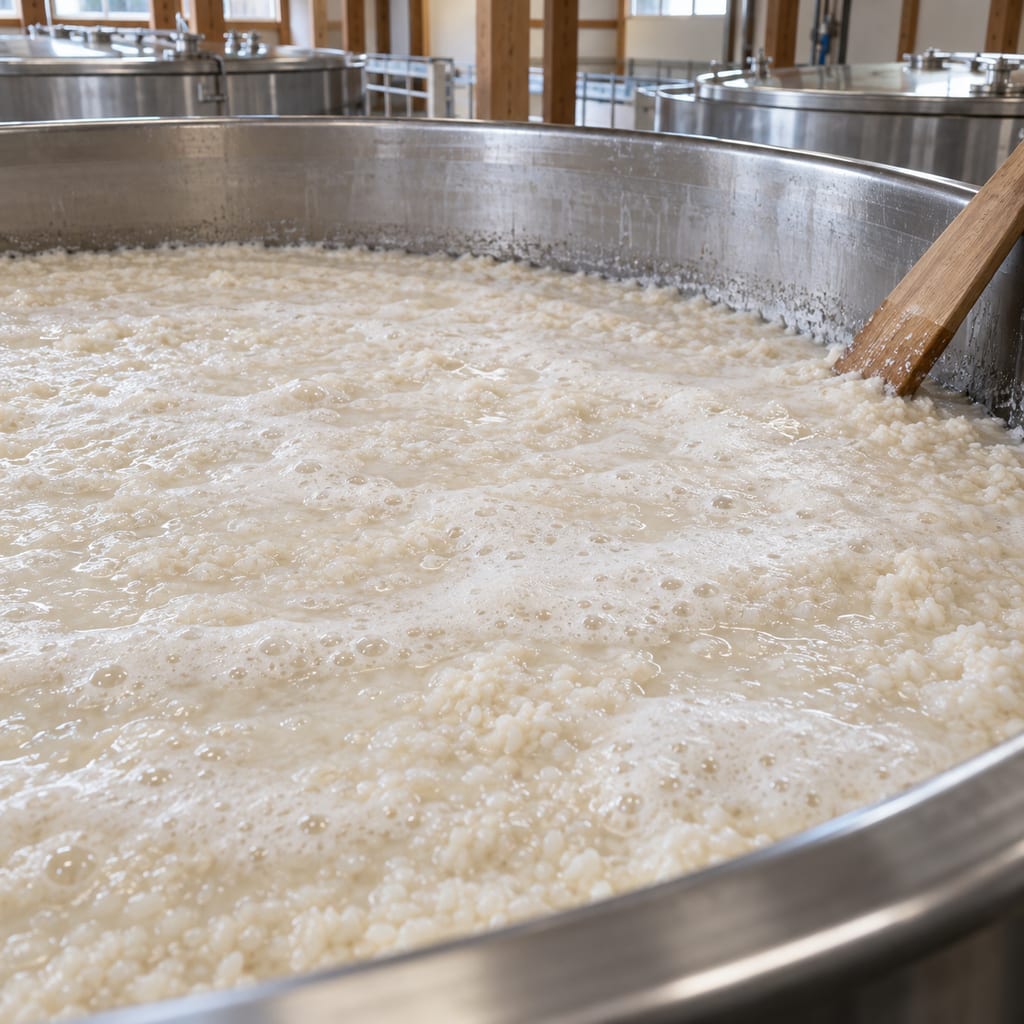
Nihonshu (日本酒), or seishu, is Japanese rice sake: steamed rice, rice koji, water and a yeast starter ferment together in one mash, which is then pressed and finished.
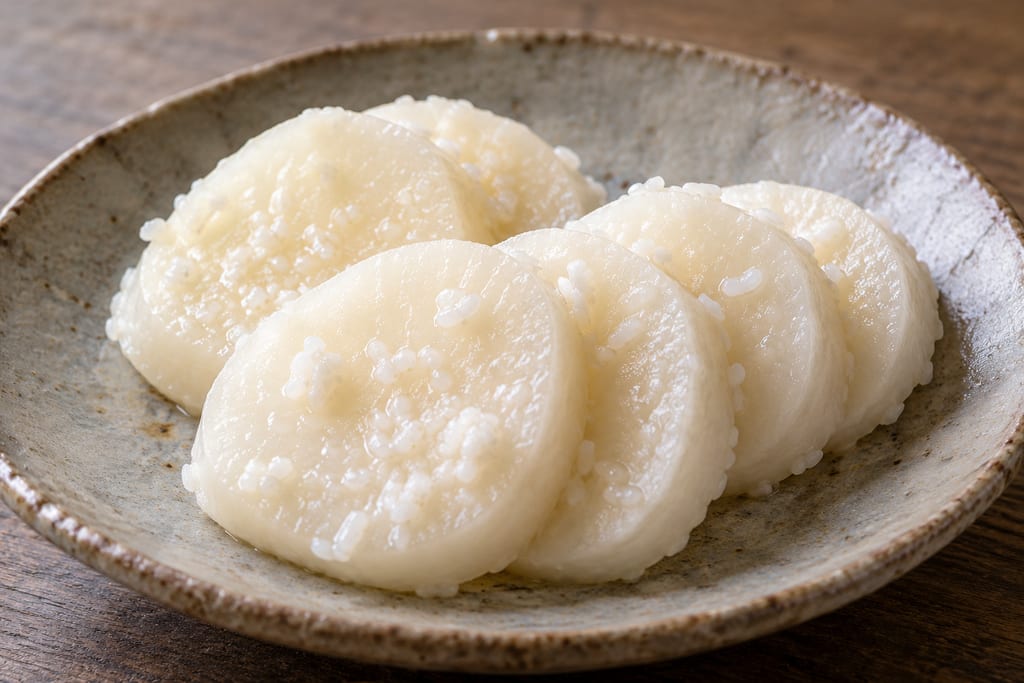
A sweet, crisp Japanese daikon pickle from Tokyo's Nihonbashi district, made by salting fresh radish and dressing it in rice koji, sugar or koji amazake without the heavy drying used for takuan.
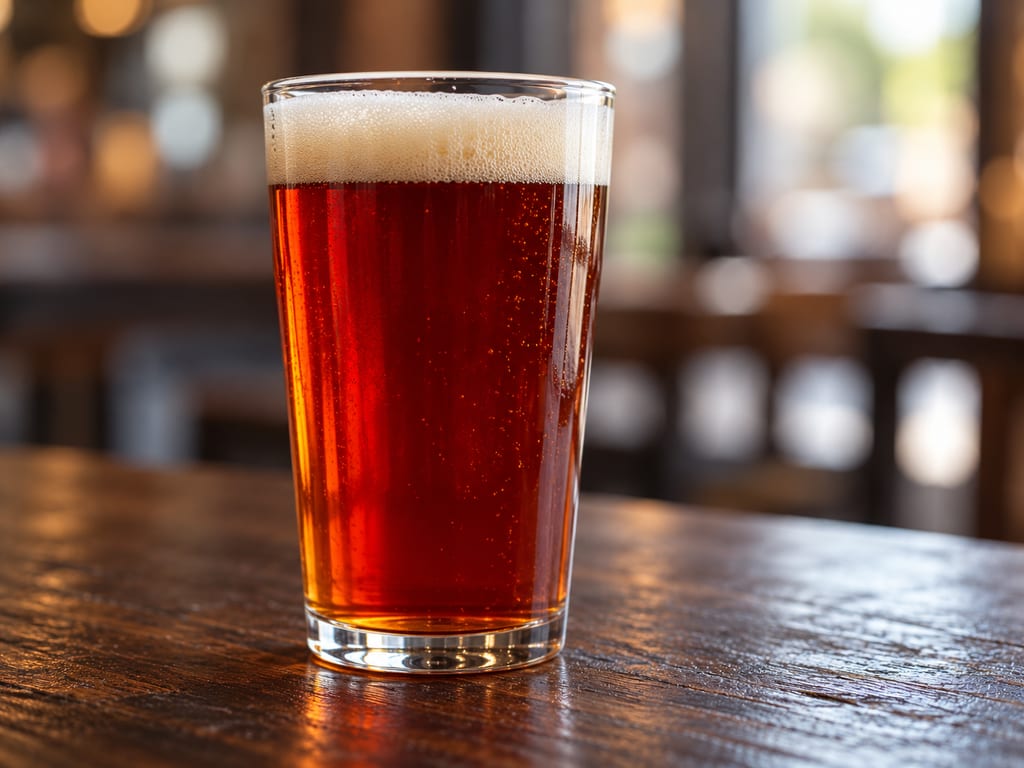
A deep amber-red American ale brewed from pale, Munich, CaraVienne and chocolate malts, bittered with Columbus hops and finished with Amarillo.
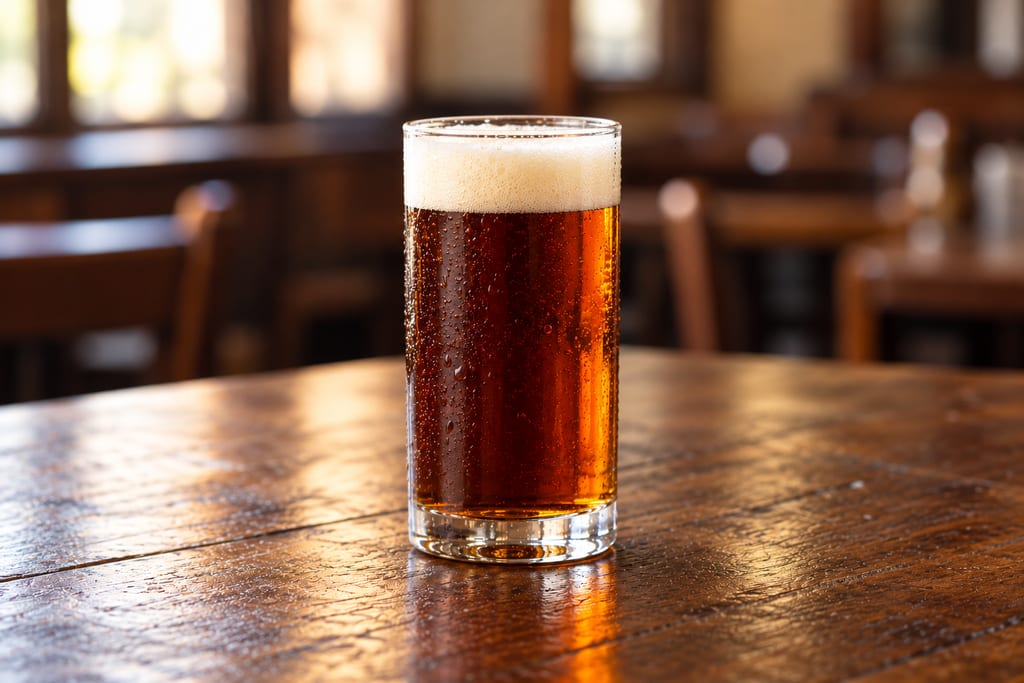
A source-specific modern extract adaptation of Düsseldorf Altbier, with specialty malts, two hop additions and an ale yeast. It is distinct from a brewery's commercial Altbier process and from Kölsch.
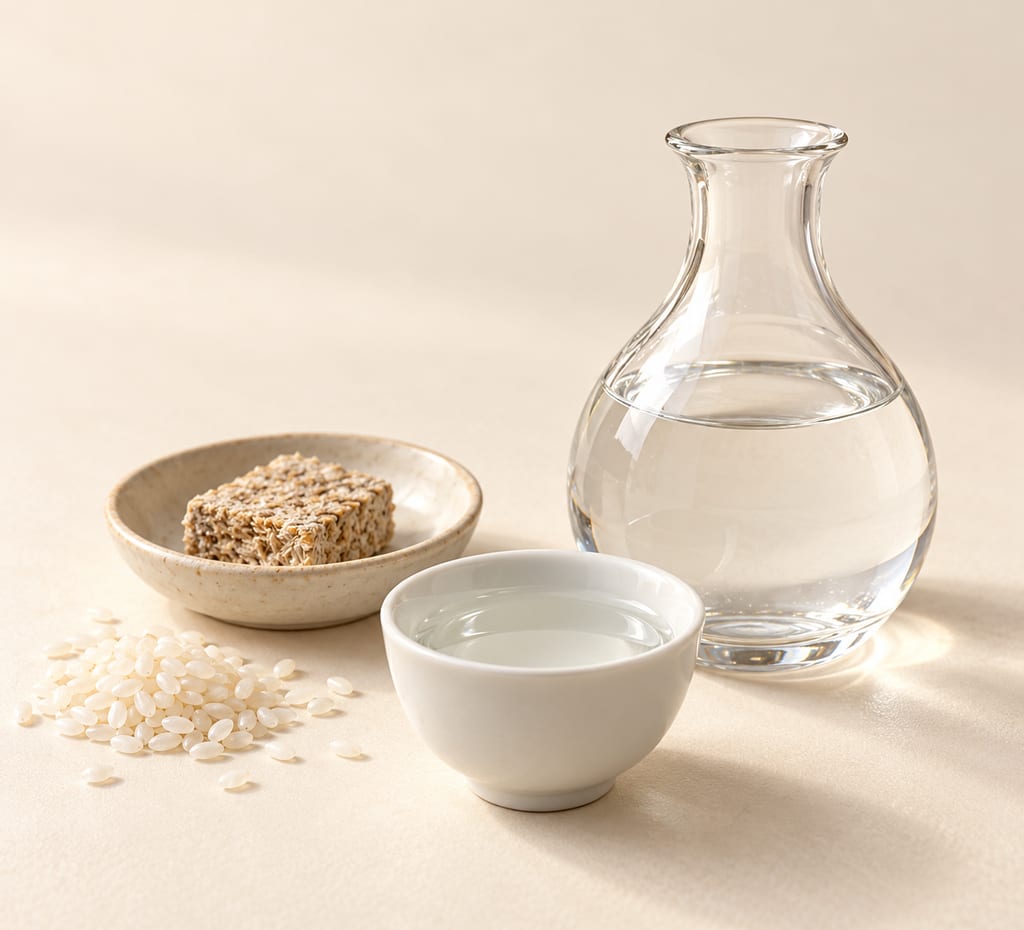
Andong soju is a rice spirit from North Gyeongsang, distilled from steamed rice and wheat nuruk. This method makes the starter before fermenting the rice mash in a jar.
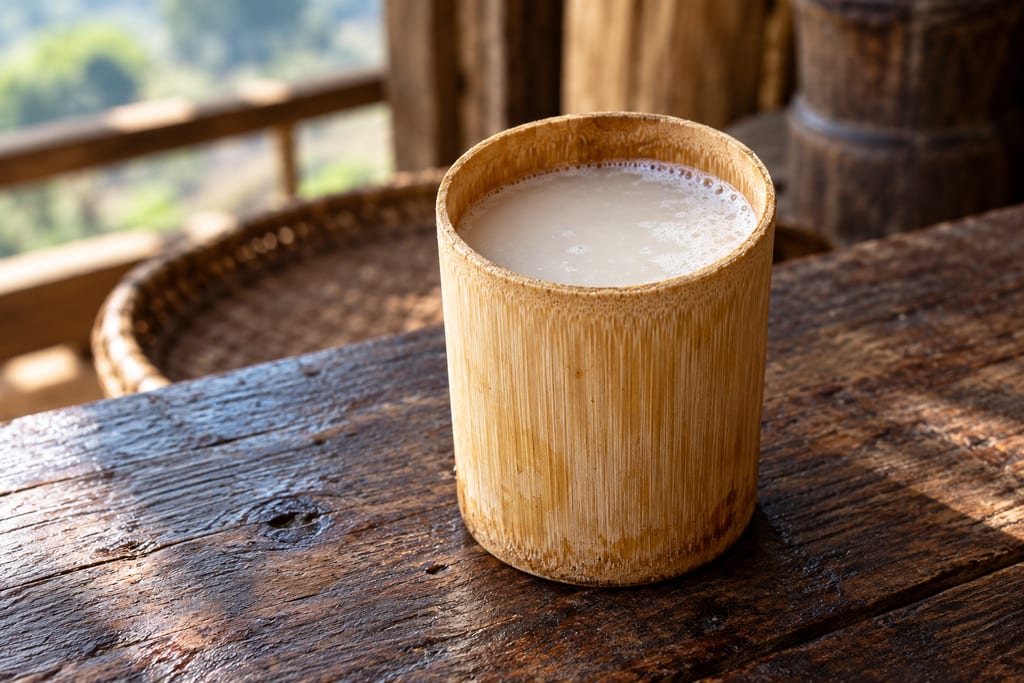
Angami rice beer from Nagaland. A surveyed method mixed cooked rice with piazu, fermented it for about four days in summer or a week in winter, then added water and filtered it. The starter ratio leaves the rice-weight basis unclear.
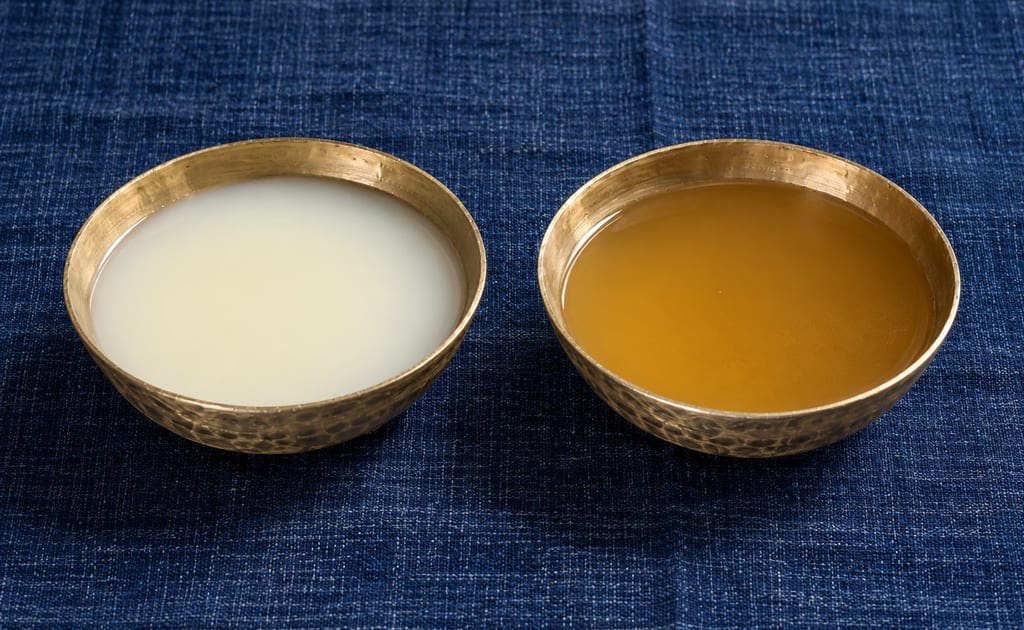
Apong names Mising rice beverages in Assam, including pale Nogin and ash-associated Po:ro. Sources describe distinct preparations and do not establish one unified household recipe or validated safety endpoint.
An Okinawan rice spirit made by turning all the rice into black koji, fermenting it with water and yeast, then pot-distilling and maturing the spirit.
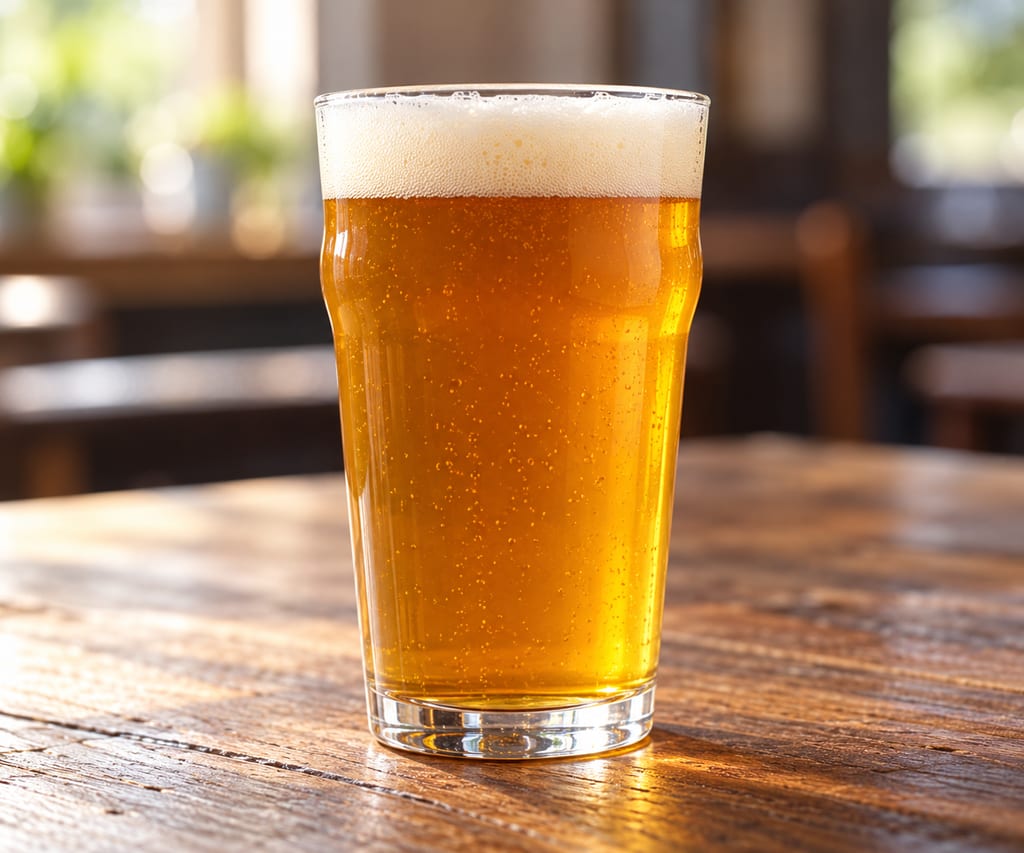
This is a process overview, not a complete batch recipe: key quantities, yield and packaging directions are absent. The AHA tutorial uses Hop Hammer Imperial IPA as an example; this page is not that full formulation.
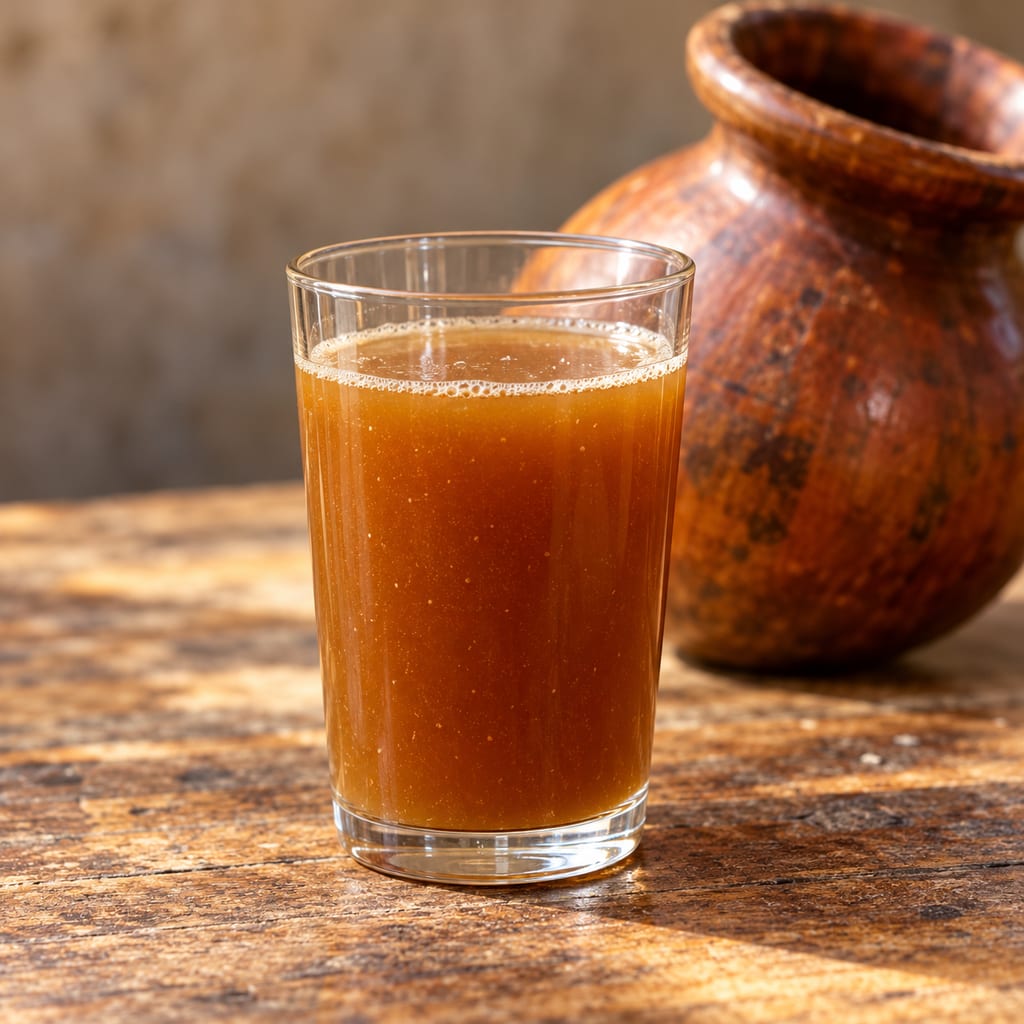
A darker Ethiopian maize tella, brewed from maize baked into a hot, dry kita pancake and then fermented in three stages with barley malt, gesho and water.

A gelling polysaccharide extracted from red seaweeds, sold as kanten strips or powder; it sets firm at a low concentration and stays solid until about 85 °C.

A Dominican table and seasoning condiment of sour orange juice, mixed with lime and salt and bottled raw; garlic, oregano or a hot pepper may be added for meat or a spicier bottle.

Cicerbita alpina is an alpine perennial whose tender shoots and leaves have been eaten raw or cooked. Sámi milk preparations and modern Carnian dishes are distinct uses, with serious identification and preservation limits.

Japanese skipjack tuna cooked, then repeatedly smoked and dried over a wood fire by the hand-fired tebiyama method into a hard block for shaving into dashi: the first stage of katsuobushi.

A Swedish-style spirit vinegar made by fermenting neutral alcohol with live vinegar bacteria, with a separate guide to commercial ättika strengths.

A yeast-raised wheat ring shaped from a firm dough, briefly boiled and baked. This source-batch formula gives a gently malted crust and a chewy crumb.

A warm dip of garlic, anchovy and olive oil, often enriched with butter, that Piedmont serves over a flame with raw and cooked vegetables and bread.

Bechamel is a white sauce of milk thickened with a butter and flour roux, one of the French mother sauces, and the base from which Mornay and other cheese and cream sauces are made.
No community contributions have been published for this entry yet.
Sign in to contribute. Published comments and photos are free to read.
National Research Institute of Brewing, Japan (March 2017)Method · History · Science · Safety
The Story of Sake No. 2: The Integration of Science and TechnologyThe kimoto procedure followed in the recipe.
Established kimoto techniques developed in the Edo period.
Starters needed to suppress unwanted bacteria and wild yeasts.
About 14 to 15 kg of steamed rice, koji and water placed together in a hangiri tub, at about 8 °C.
Rice taking up water and being stirred over several hours; yamaoroshi the next day with wooden kai paddles, by two or three workers about three times in the day.
Transfer to a tank and a three-day utase at 6 to 7 °C.
Warming from about five or six days after the start, with hot-water vessels for two to three hours and about 1 °C more each day.
Classical nitrate reduction to nitrite, lactic acid growth and falling competition.
Previously cultured sake yeast added after acidification; resident yeast or retained starter used earlier.
Yamahai developed in 1909 by omitting yamaoroshi, alongside sokujo.
Historical spoilage from failed acidification.
Cited in: What it is; History; How it works; How it's made and why each ingredient and step matters; How it's eaten and used; Reading results and problems
Japan Sake and Shochu Makers Association and National Research Institute of Brewing (first edition, March 2011)Method · Definition · Science · Safety
A Comprehensive Guide to Japanese SakeShubo or moto as the sake yeast starter, made from rice, rice koji and water.
Aspergillus oryzae enzymes saccharify the starch.
Kimoto and yamahai are naturally acidified; sokujo is acidified directly.
Starting at about 8 °C, with lactic acid bacteria increasing naturally.
Cultured sake yeast added after about two weeks; later warming towards about 22 °C.
Traditional starter takes about one month; sokujo about two weeks.
Starter then goes into the main mash, built in three additions of rice, koji and water.
Water quality and food-grade koji matter.
Cited in: What it is; History; How it's made and why each ingredient and step matters; Regional and historical variations; How it's eaten and used; Reading results and problems
Sake Glossary, Society for Nada Sake Research, JapanMethod · Variation · History · Definition
Yamahai / Yama-oroshi-haishi-motoYamahai as a variation of kimoto, from 山卸廃止酛.
Developed by Kagi and colleagues in 1909.
Grinding about ten to twelve hours after mashing in traditional kimoto, with a round-headed paddle (rough grinding, ara-zuri) or by treading (ara-bumi).
Second and third grinding sessions about four hours apart, by three-person teams singing grinding songs.
Yamahai makes mizu-koji in a single vessel and replaces grinding with kai-ire mixing or kumi-kake liquid recirculation.
Labour and equipment differences between the methods.
Use of yamahai in the Nada brewing tradition.
Cited in: What it is; History; How it's made and why each ingredient and step matters; Regional and historical variations
Applied and Environmental Microbiology 87(6), e02546-20, American Society for Microbiology (2021)Science · Safety
Changes in Bacterial and Chemical Components and Growth Prediction for Lactobacillus sakei during Kimoto-Style Fermentation Starter Preparation in Sake Brewing: A Comprehensive AnalysisKimoto-style starters from five Japanese breweries compared for acids, microbes and chemistry.
Bacterial succession differs between breweries.
Latilactobacillus sakei (named Lactobacillus sakei in the paper) produced strong lactic acid.
The studied strains could not grow below pH 3.9 under the study conditions.
The growth model predicted two breweries better than the other three.
Fermentation chemistry should be monitored rather than relying on set durations.
Cited in: History; How it works; How it's eaten and used; Reading results and problems
Bioscience of Microbiota, Food and Health 43 (2024)Science · Variation · Safety
Lot-to-Lot Variation in the Microbiota during the Brewing Process of Kimoto-Type Japanese Rice WineFour kimoto-type starter batches from the Hekiungura brewery in Hokkaido, across its first and second brewing years.
Starter made with 40 kg steamed rice, 20 kg rice koji and 55 L water, rice polished to 80%, over about 30 to 32 days.
Yeast added once measured acidity reached the brewery's conditions.
Leuconostoc suionicum, L. citreum and L. mesenteroides found; bacterial diversity changed between years.
A lactobacillus other than L. sakei detected.
Koji-derived Staphylococcus gallinarum with nitrate-reducing activity.
Nitrite detected in all four batches, up to 0.752 ppm in one.
The classical nitrate-reducer and lactic acid succession is not universal.
Cited in: What it is; History; How it works; How it's made and why each ingredient and step matters; Regional and historical variations; Reading results and problems
Bioscience, Biotechnology, and Biochemistry (2015)Science · Variation · Safety
Tracing Microbiota Changes in Yamahai-Moto, the Traditional Japanese Sake StarterBacterial succession in yamahai traced by 16S rRNA sequencing.
Lactobacillus dominated, with L. acidipiscis early and L. sakei increasing later.
The expected nitrate-reducing bacteria were scarce.
Yamahai can develop without the classical nitrate-reducing population.
Natural lactic acid suppresses competing microbes; early pH can allow spoilage before enough acid forms.
One brewery's succession cannot serve as a universal model.
Cited in: History; How it works; Regional and historical variations; Reading results and problems
Applied and Environmental Microbiology 80(17), 5522-5529, American Society for Microbiology (September 2014)Science · History · Variation
Indigenous Bacteria and Fungi Drive Traditional Kimoto Sake FermentationsKimoto production at a North American brewery, sampling koji, moto, moromi and surfaces.
Sequencing and quantitative PCR showed Bacillus, Staphylococcus and other bacteria early, then Lactobacillaceae and Saccharomyces cerevisiae.
Equipment and the brewery environment act as microbial reservoirs.
Succession varied between batches; DNA detection does not show desirable activity.
Even a successful traditional fermentation is more complex than the classical model.
Cited in: History; How it works; Regional and historical variations; Reading results and problems
Frontiers in Microbiology 14, article 1112638 (February 2023)Science · Variation
A Dark Matter in Sake Brewing: Origin of Microbes Producing a Kimoto-Style Fermentation StarterMicrobial sources of a kimoto-style starter at Tsuchida Sake Brewing Company, Gunma Prefecture.
Brewing water, rice koji, equipment and surfaces all contributed organisms.
Different organisms enter from different places in the brewery.
Natural succession is not the same as uncontrolled inoculation.
Cited in: History; How it works; Regional and historical variations; Reading results and problems
Journal of Bioscience and Bioengineering (2023)Science · Variation
A Unique Case in Which Kimoto-Style Fermentation Was Completed with Leuconostoc as the Dominant Genus without Transitioning to LactobacillusA successful kimoto fermentation dominated by Leuconostoc.
No later Lactobacillus dominance.
The classical succession is a model, not a required sequence.
A missing genus is not automatic fermentation failure.
Cited in: How it works; Regional and historical variations; Reading results and problems
National Research Institute of Brewing, JapanDefinition
List of Standard English Expressions for Sake TerminologyStandard English and Japanese terms for kimoto and yamahai.
Kimoto-type shubo (生酛系酒母) as the category covering kimoto and yamahai.
Motosuri as the grinding of rice and koji.
Definitions of kake rice, sake koji, shubo and moto.
Cited in: What it is
Nagano Prefecture Sake Brewers Association (26 March 2020)Method · Definition
自然の力を活用した、昔ながらの日本酒「生酛造り」の酒を飲もうKimoto as made today: yamaoroshi works steamed rice, koji and water into a soft mash.
A cold rest at about 6 to 7 °C and warming with hot-water vessels.
Starter making takes about one month.
Comparison with yamahai and sokujo.
Photographs of yamaoroshi and warming, supplied by Takeshige Honke Shuzo.
Cited in: How it's made and why each ingredient and step matters
Amabuki Shuzo Co., Ltd., Saga Prefecture (2 February 2024)Method · Variation
生酛造り作業が始まりましたContemporary kimoto brewing with yamaoroshi at low temperature.
Natural lactic acid development and cultured sake yeast in the brewery's process.
Yamahai omits rice grinding but keeps natural acidification.
Photograph of brewers carrying out yamaoroshi.
Cited in: History; How it's eaten and used
SAKE Street (15 November 2022)Method · Safety
「暖気樽」「暖気入れ」ってなに? — 効果や道具の種類、使われ方を解説!The daki warming technique: sealed hot-water containers sunk into the starter.
The water in the vessel is kept apart from the mash.
Wooden and metal warming vessels.
Warming affects koji enzyme activity, microbial growth and saccharification.
Poor temperature management risks spoilage.
Cited in: How it's made and why each ingredient and step matters