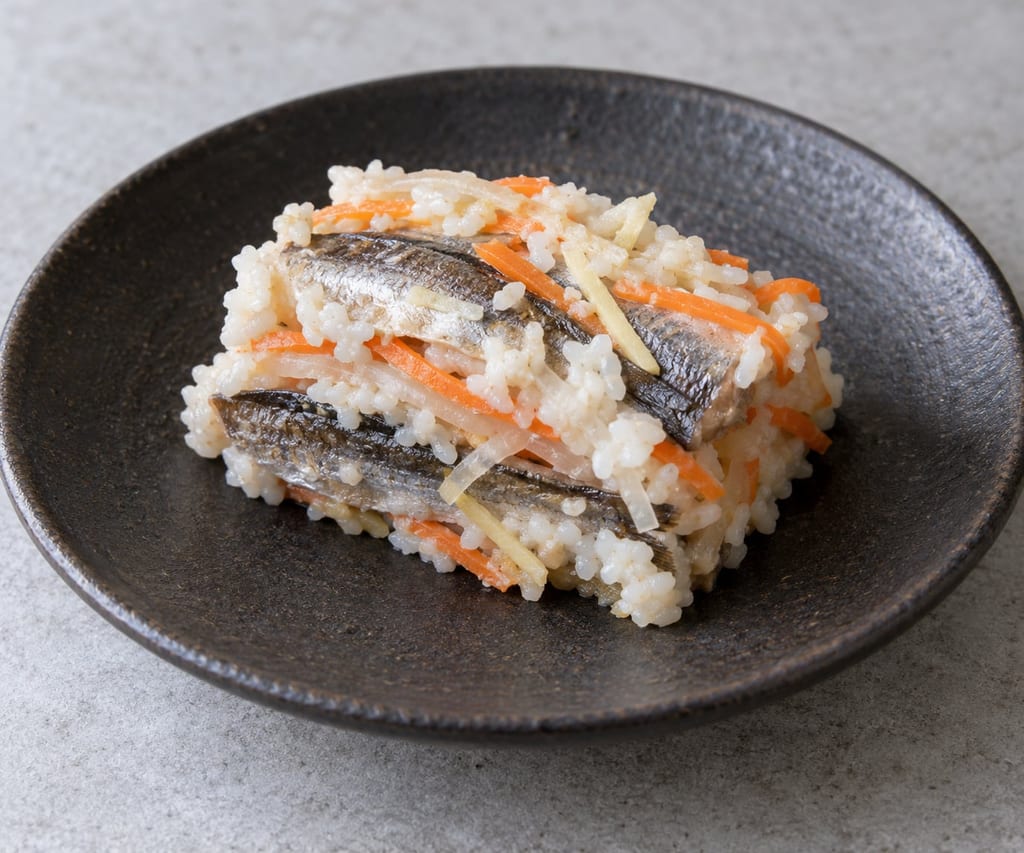
Izushi
Hokkaido izushi layers fish, vegetables, rice and kōji for cold-season lactic fermentation. This MAFF recipe uses small hatahata with a vinegar pretreatment; it is one regional household formula, not a universal izushi method.
 FermenteaWhere food goes to change
Traditional method
Turep · Turep · Giant woodland lily starch · Cardiocrinum cordatum starch
Starch released from giant woodland lily bulbs by pounding, washed out in water, settled and dried: the refined fraction of an Ainu process that also yields fermented cakes from the residue.
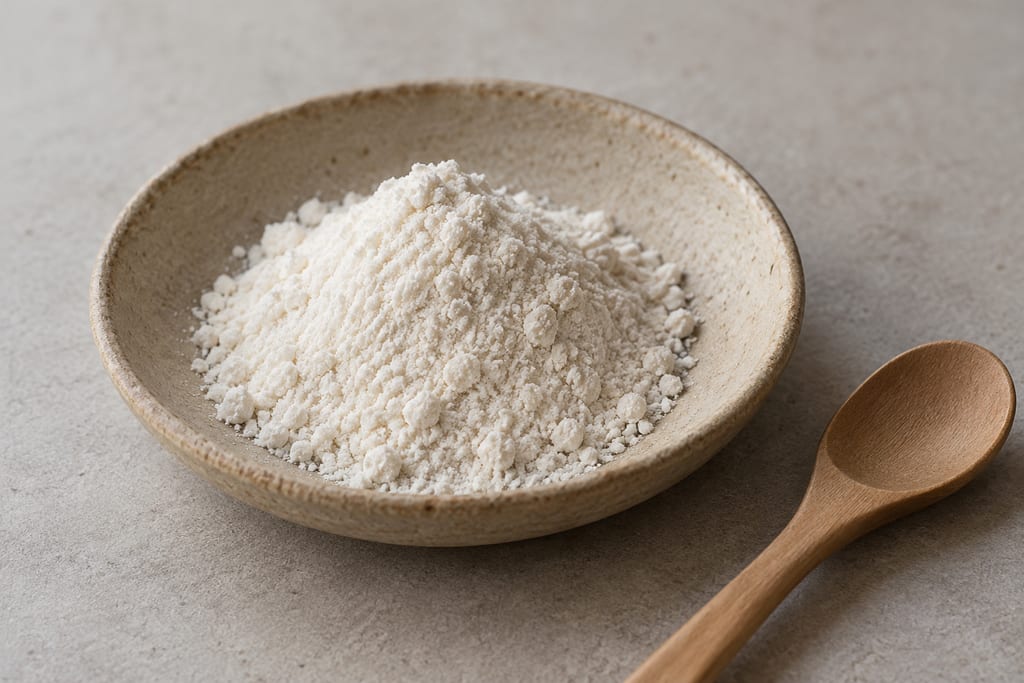
Turep is the Ainu name for an important edible lily bulb traditionally gathered and processed in Hokkaido and other areas of historic Ainu habitation.
The plant is generally identified as Cardiocrinum cordatum, the giant woodland lily, known in Japanese by a name whose script did not survive the handover. Botanical classifications sometimes recognize regional subspecies or varieties, making careful plant identification important.
The Ainu developed a sophisticated system for extracting starch from the bulbs and preserving the remaining fibrous material.
The resulting products included purified starch, dishes made from that starch and fermented, dried cakes made from the residue.
These should not be confused.
The starch extraction produces a relatively refined carbohydrate ingredient. The remaining pulp contains different proportions of fiber, residual starch and other plant components.
That residue can undergo further transformation before being shaped and dried.
The preserved cakes are generally called onturep, while onturepshito and torepshito are recorded names for particular preparations.
The term shito is associated with dumplings or cakes.
Unlike a technique that simply dries a whole root, turep processing separates the plant into fractions and gives those fractions distinct culinary purposes.
It is a striking example of preserving a gathered woodland resource through mechanical processing, washing, fermentation and dehydration.
The Ainu have long inhabited Hokkaido and other parts of northern Japan and nearby islands, although food practices differ by location and historical period.
Gathering plants was an essential component of household provisioning alongside fishing, hunting and cultivation.
Seasonal foods had to be processed for periods when fresh materials were scarce. Plant collection, particularly by women and other household members engaged in gathering, played an important role in this system.
Turep appears in ethnographic descriptions of Ainu food preparation, including interviews conducted between 1963 and 1967 and published by Yoshishige Hayashi in 1970.
Those records are particularly valuable because they describe equipment, storage, cooking methods and the distinctions between different lily products.
A later ethnobiological synthesis provides details about the fermenting residue, drying, preparation of gruels and regional variants.
Contemporary Japanese museum and cultural interpretation continues to document turep as part of Ainu plant knowledge.
The precise origin date of the starch-and-cake system is unknown. Its presence in historical and ethnographic records does not prove an invention date in prehistory.
The broader historical context includes changing access to gathering areas, Japanese settlement, the suppression of Ainu cultural practices and the changing availability of other foods.
As a result, modern demonstrations of turep processing may be both practical reconstructions and acts of cultural knowledge transmission.
Cardiocrinum cordatum is a tall woodland lily with large leaves and conspicuous flowers.
Its bulbs store carbohydrates that support later plant growth. Those reserves make the bulb attractive as food.
The Ainu processing tradition is species-specific. The name turep should not be applied indiscriminately to other lilies, and the historical method is not a general guide to eating wild bulbs.
Different lilies and superficially similar plants can have different chemical compositions and potentially dangerous properties.
The timing of harvesting matters because plants move nutrients between their leaves, stems and bulbs throughout their growth cycles.
Gathering in the appropriate season increases the value of the underground storage organ while also requiring knowledge of the plant's life cycle.
Historical descriptions place gathering in summer, although the precise period varies with location and environmental conditions.
Mature plants must be identified before their bulbs are removed.
Removing bulbs can kill the plant, making collection knowledge and access to sustainable gathering sites particularly important.
Modern wild harvesting should consider both conservation and the legal status of collection areas.
The first stage is cleaning the harvested bulbs.
Soil and damaged external material are removed, and the bulbs are broken down into smaller pieces.
Pounding is central.
The bulb material is worked in a mortar until the tissues rupture and the stored starch becomes accessible to water.
In intact plant cells, starch granules remain enclosed within tissue structures. Mechanical disruption breaks those structures and allows the granules to disperse.
Water is then added and the material worked further.
A basket or comparable straining structure can separate coarser fragments from the starch-bearing liquid.
The starch passes into the water suspension, while more substantial fibers remain behind.
The liquid is allowed to settle.
Starch granules are relatively dense and gradually accumulate in a layer at the bottom of the vessel. Water and lighter suspended material can then be separated from the settled starch.
Repeated washing can remove additional soluble or suspended material, depending on the particular method.
The resulting starch is collected and dried.
This process is fundamentally a physical separation. The extracted starch does not need microbial fermentation to become starch.
The purified material can be used in gruels, dumplings and other cooked foods.
The importance of this distinction is easily overlooked: fermentation belongs especially to the processing of the leftover material, not necessarily to the primary starch extraction.
The fibrous material left after starch separation is not discarded.
It retains plant matter and some carbohydrate. In recorded Ainu methods, this residue is gathered, allowed to ferment and then dried into cakes.
A 2017 ethnobiological account describes material called akam, covered or wrapped in selected leaves and left in a shaded, ventilated location for approximately one or two weeks.
The document identifies possible covering materials including butterbur, chrysanthemum, magnolia and mugwort.
Afterward, the material could be formed into ring-shaped cakes and dried in the sun.
Hayashi's earlier published account describes large disk-shaped onturep cakes, approximately 30 cm in diameter, and records a fermenting-and-drying stage extending for about one month.
These are two documented accounts of traditional practice, not conflicting instructions that must be forced into one duration.
Differences may reflect locality, environmental conditions, how processing stages were defined or the practices remembered by different participants.
Another recorded practice from Sakhalin involved washed and chopped bulbs wrapped in a mat made from dunegrass stems and held under the eaves for approximately two weeks.
The process demonstrates the importance of locally available plant materials and of surfaces that can support the pulp without enclosing it in a permanently wet environment.
Unlike rice wine or a lactic-acid vegetable preserve, the microbial ecology of onturep is not well characterized in the sources reviewed here.
The historical accounts establish that the material was deliberately held in conditions understood locally as fermentation.
They do not establish a reproducible list of dominant microorganisms, acidity profiles or exact biochemical products.
Residual starch and other plant carbohydrates may provide substrates for microbial activity. Naturally present microorganisms can alter carbohydrate and other plant compounds over time.
Changes in flavor, odor, texture and bitterness may reflect microbial metabolism, endogenous plant enzymes, leaching and other chemical processes.
It is important not to assign one organism, such as Lactobacillus plantarum, merely because that species is important in other fermented foods.
Likewise, there is insufficient evidence to describe onturep as specifically lactic-acid fermented or to claim that its safety depends on a validated acidic pH.
The production system combines multiple transformations: crushing, washing, separation, holding, possible microbial fermentation, drying and subsequent rehydration.
Each has a different purpose.
The washing stages remove soluble substances. Fermentation can alter the residual material. Drying reduces available water for storage. Rehydration makes the cake usable in cooked food.
The finished product therefore reflects a sequence rather than a single preserving action.
The processed fibrous residue is shaped into substantial cakes.
Some described examples are circular with a central opening, producing a doughnut-like form.
A hole allows a cord, strip of bark or similar binding material to pass through the cake.
Hayashi records two cakes tied together through their central holes.
This design allows food to be hung, handled and stored without relying on shelves for every piece.
As the cakes dry, they become firm and suitable for keeping.
A museum example from the Smithsonian collection consists of paired dried discs produced using traditional materials and methods for an exhibition in 1999.
Their dimensions are approximately 8 cm in length and diameter in the object record, demonstrating that preserved cakes could be smaller than the large disks described in some ethnographies.
The measurements should not be treated as a universal specification.
Shaping, size and drying environment would all influence the rate at which moisture leaves the material.
Large dense cakes may dry less evenly than smaller or thinner ones.
Again, the sources do not provide modern water-activity measurements establishing when a cake is shelf-stable.
Onturep is not necessarily eaten straight from storage.
The dried material can be broken or cut into pieces and soaked before cooking.
Historical descriptions explicitly mention soaking to remove bitterness.
This is a crucial stage because drying alone does not make every remaining plant compound pleasant to eat.
Soaking changes both texture and the concentration of water-soluble compounds.
The prepared material can then be incorporated into stews, grain porridges or other cooked dishes.
One recorded preparation is onturepsayo, a gruel or porridge containing the fermented lily material.
Beans, rice or millet may form the body of the dish. The preserved lily contributes substance and a distinctive flavor.
Bear fat is recorded as an enrichment in some preparations, reflecting the wider Ainu food system in which animal fat was an important source of dietary energy.
The resulting meal is very different from a modern sweet starch pudding.
It belongs to a cuisine in which cooked grains, stored plants, fish, meat and fats could be combined into substantial seasonal food.
The refined starch was also used for dumplings called torepshito.
Hayashi describes pounding lily bulbs, making a starch-based preparation with hot water, shaping small balls and boiling them.
The recorded diameter is approximately 2–3 cm.
These dumplings could be eaten with oil, salmon roe or a grain-based stew.
They should not be confused with the larger preserved onturep disks.
The refined starch is processed for immediate or later cooking, while the fermented fibrous material follows its own preservation route.
Both are products of the same initial harvest.
This demonstrates a high degree of ingredient utilization: the most refined fraction and the more fibrous fraction have distinct uses.
Ainu communities across Hokkaido and historic territories did not always use identical preparation methods.
Differences include the location used for holding the plant material, the covering leaves, the size of cakes and the dishes in which the preserved product was consumed.
Some accounts emphasize dried starch; others describe the fermented remainder in greater detail.
These differences are not evidence that one account must be wrong.
They may represent genuine local variation or different priorities in ethnographic documentation.
Turep also sits within a broader tradition of preparing wild plants, including drying greens, preserving roots, processing acorns and making use of starchy underground organs.
It should nevertheless retain its specific identity. Other gathered starch sources are not substitutes for Cardiocrinum cordatum simply because they also contain carbohydrates.
The historical record describes deliberate washing, separation, fermentation, shaping and drying.
A recognizable dried cake is firm enough to be handled or suspended. The extracted starch is separated from the coarse pulp, and the stored material can later be soaked and cooked.
These observations describe expected physical stages, not scientifically validated acceptance tests.
The sources do not establish the desirable final pH, water activity, microbial count or moisture percentage of onturep.
Unexpected putrefactive odor, heavy visible mold contamination, a persistently wet interior or infestation would be reasons to reject a modern experimental preparation.
However, visual and sensory observations alone cannot establish safety.
The uncertainty is greater because there is limited modern microbiological characterization of traditional onturep fermentation.
This should not be presented as a tested home-fermentation recipe.
There is also a botanical safety problem. Other lilies and look-alike plants may be unsuitable or toxic, and misidentification can have serious consequences.
Turep processing reveals several layers of knowledge.
The first is botanical: recognizing a particular woodland plant and understanding when its bulb contains useful reserves.
The second is mechanical: releasing starch from plant tissue by pounding and washing.
The third is culinary: separating refined starch from the fibrous remainder instead of treating the entire bulb as one ingredient.
The fourth is preservational: fermenting or otherwise transforming the residue and drying it into durable cakes.
The fifth is seasonal: storing the food so that summer gathering can support winter meals.
This is why onturep deserves recognition as a sophisticated traditional preserved food rather than an obscure curiosity.
It shows that Indigenous food preservation could involve deliberate extraction and processing of several fractions from one harvested ingredient, each with a different role in the household diet.
Gathering plants was an essential component of Ainu household provisioning alongside fishing, hunting and cultivation, and seasonal foods had to be processed for the periods when fresh materials were scarce; plant collection, particularly by women and other household members engaged in gathering, played an important role in that system. What distinguishes turep from a technique that simply dries a whole root is that the processing separates the plant into fractions and gives each a distinct culinary purpose: a relatively refined starch for gruels and for the boiled dumplings called torepshito, and a fibrous residue with different proportions of fibre, residual starch and other plant components that is fermented, shaped and dried into the cakes called onturep, with onturepshito and torepshito recorded as names for particular preparations and shito associated with dumplings or cakes. The broader historical context includes changing access to gathering areas, Japanese settlement, the suppression of Ainu cultural practices and the changing availability of other foods, which is why modern demonstrations of turep processing may be at once practical reconstructions and acts of cultural knowledge transmission.
Scaling: source batch only
Other lilies and superficially similar look-alike plants may be unsuitable or toxic, can have different chemical compositions and potentially dangerous properties, and misidentification can have serious consequences. The historical method is not a general guide to eating wild bulbs, and other gathered starch sources are not substitutes simply because they also contain carbohydrates.
Hazard sourceThe sources do not establish a desirable final pH, water activity, microbial count or moisture percentage for the dried material, so a cake or a quantity of starch that is firm enough to handle is an expected physical stage and not a validated acceptance test.
Hazard sourceDrying alone does not make every remaining plant compound pleasant to eat, which is why historical descriptions explicitly mention soaking the stored material to remove bitterness; soaking changes both texture and the concentration of water-soluble compounds.
Hazard sourceUse only correctly identified Cardiocrinum cordatum, identifying mature plants before any bulb is removed
Control sourceSeparate the starch fully from the coarse pulp by straining and settling, and wash the settled starch to remove soluble and suspended material
Control sourceSoak dried stored material before cooking, as the historical descriptions direct, to reduce bitterness
Control sourceReject material with a putrefactive odour, heavy visible mould, a persistently wet interior or infestation rather than drying it further
Control sourceThis is a species-specific gathering tradition, not a method for wild bulbs in general: other lilies and look-alike plants may be unsuitable or toxic, and the name turep does not transfer to them.
No final pH, water activity, microbial count or moisture percentage is established for either the dried starch or the fermented cakes in these sources, so there is nothing to measure a batch against.
The fermentation in this tradition belongs to the fibrous residue, not to the starch; describing the starch as a fermented product misstates the process.
Modern wild harvesting has to consider conservation and the legal status of the collection area, because removing bulbs can kill the plant.
This should not be presented as a tested home-fermentation recipe: there is limited modern microbiological characterisation of the traditional residue fermentation.
Turep is the Ainu name for an edible lily bulb traditionally gathered and processed in Hokkaido and other areas of historic Ainu habitation. The row is region-level for the island. The account is explicit that Ainu food practices differ by location and historical period and that communities across Hokkaido did not always use identical methods, differing in where the material was held, the covering leaves, the size of the cakes and the dishes the product went into, so no locality and no single community method is claimed.
One recorded practice from Sakhalin wrapped washed and chopped bulbs in a mat made from dunegrass stems and held them under the eaves for approximately two weeks. This island-region row records that one documented variant, which differs from the Hokkaido descriptions in both the covering material and the holding place. It is not a claim that this was the only Sakhalin method, nor that the Hokkaido and Sakhalin practices are interchangeable.
The Ainu have long inhabited Hokkaido and other parts of northern Japan and nearby islands. This row carries that broader historical extent at region level and nothing finer. It claims only that gathering and processing plants was an essential component of household provisioning across those territories; it does not assert that turep processing is documented at every place within them, and the wider history includes changing access to gathering areas, Japanese settlement and the suppression of Ainu cultural practices.
Hokkaido izushi layers fish, vegetables, rice and kōji for cold-season lactic fermentation. This MAFF recipe uses small hatahata with a vinegar pretreatment; it is one regional household formula, not a universal izushi method.

Traditional Japanese sake yeast starters made from steamed rice, rice koji and water, acidified by naturally growing lactic acid bacteria. Kimoto grinds the rice mash with paddles; yamahai omits that step.
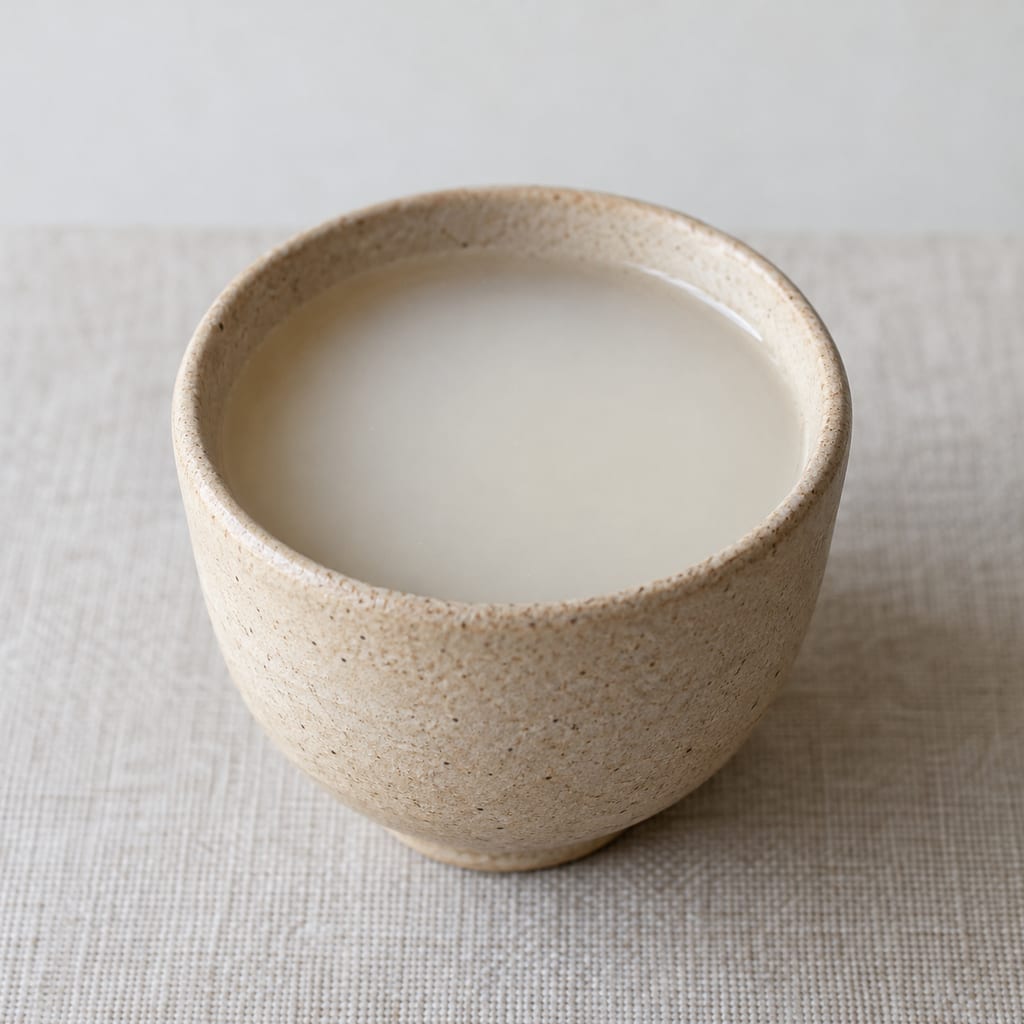
Tonoto is an Ainu ceremonial grain drink. This Saru River version ferments equal amounts of rice and egg millet with malted rice for about two to three days in summer or a week in winter.
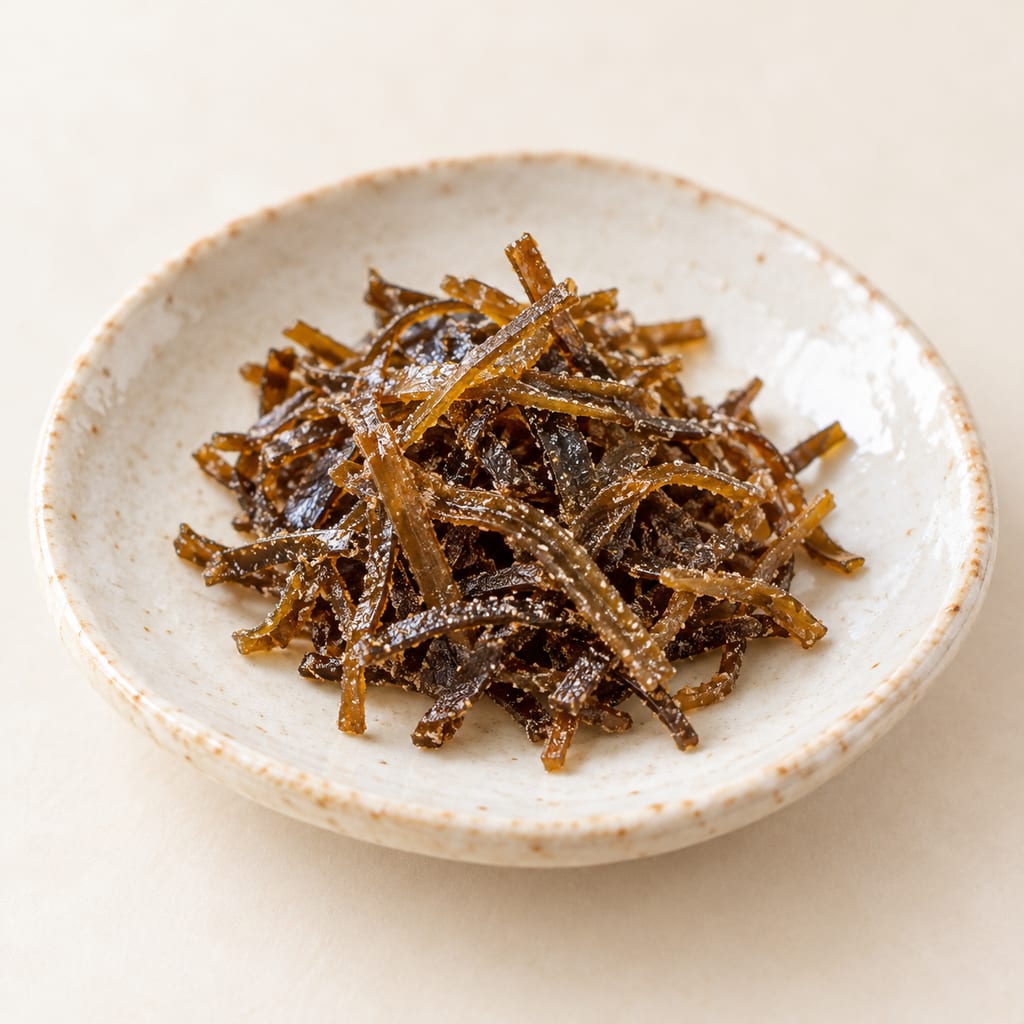
Japanese kelp simmered in soy sauce and seasonings, sometimes dried and salted, eaten with rice or used as an umami seasoning.
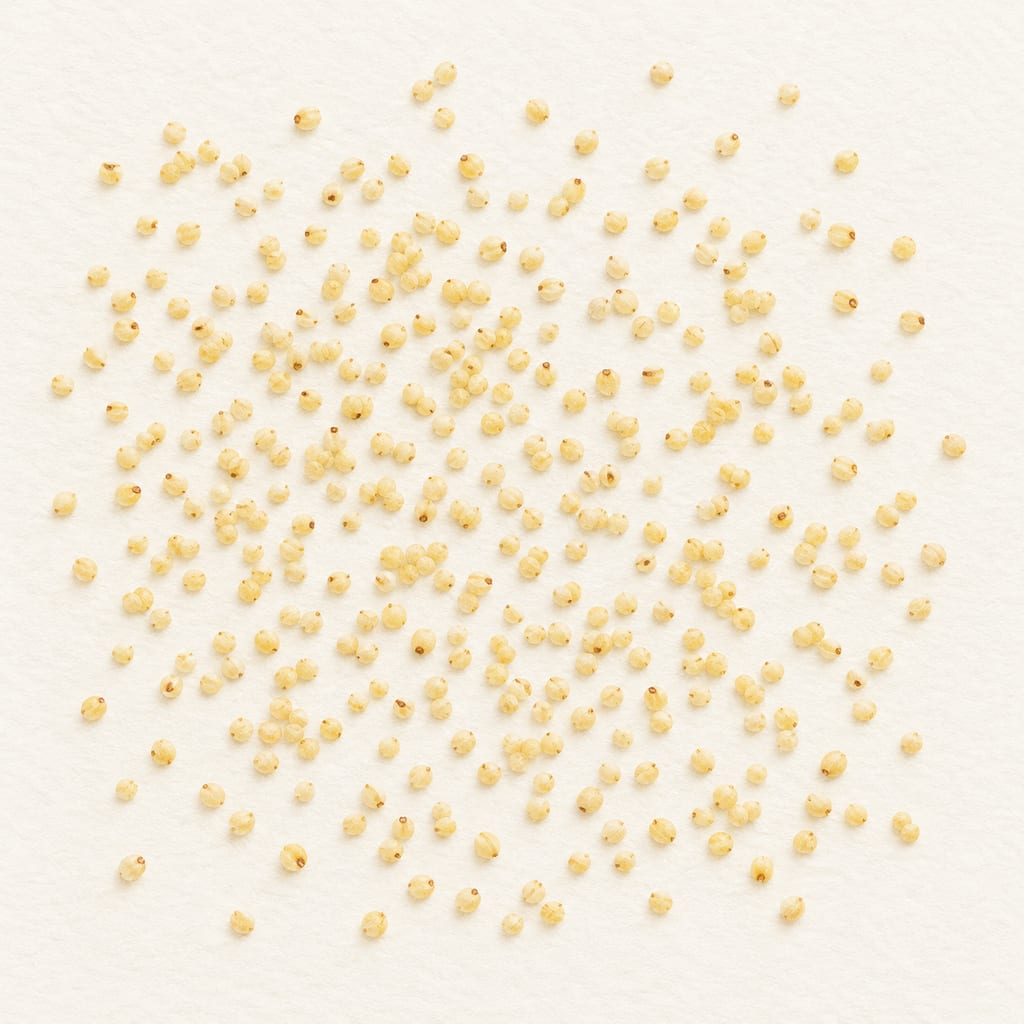
Tonoto from Shizunai in Hidaka is made of barnyard millet alone: a firm porridge kneaded with an equal amount of malted grain in a sake vessel, warmed by two embers, and left a week to ten days.
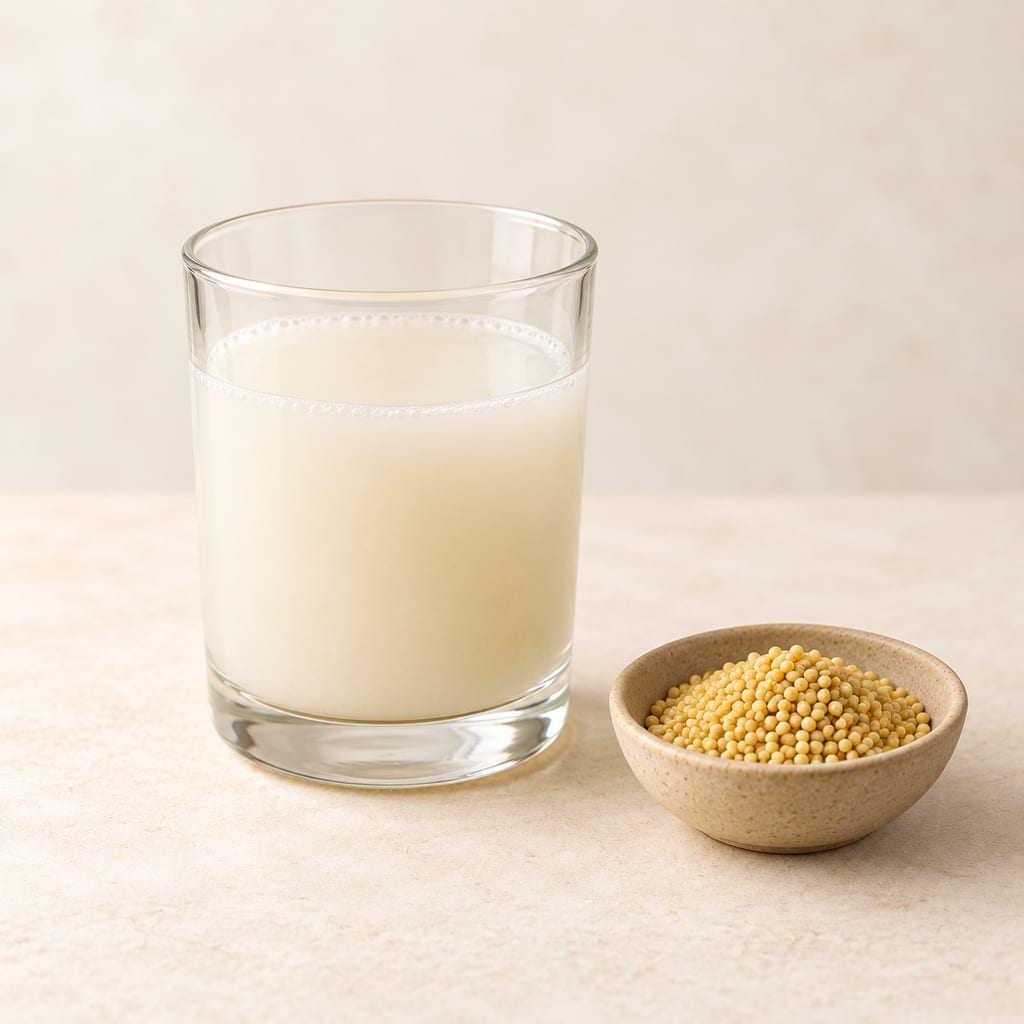
An Ainu grain drink for festivals and housewarmings, made by cooling cooked grain gruel, adding millet malt and holding it in a sake-making vessel.

Vinegar made by fermenting the lactose of cheese whey to alcohol with a Kluyveromyces yeast and then to acetic acid; sold in Switzerland as Lactavinaigre from the 1950s.
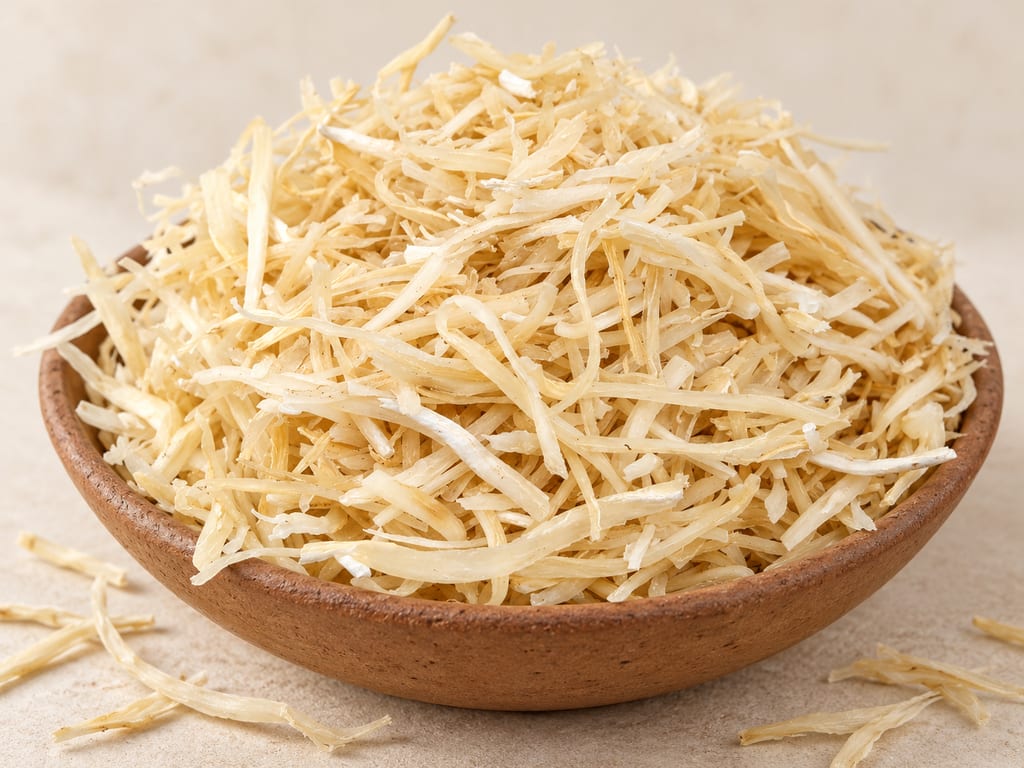
Abacha is a fermented cassava-strip preparation from southeastern Nigeria, sold wet or dried and later rehydrated for meals such as African salad.
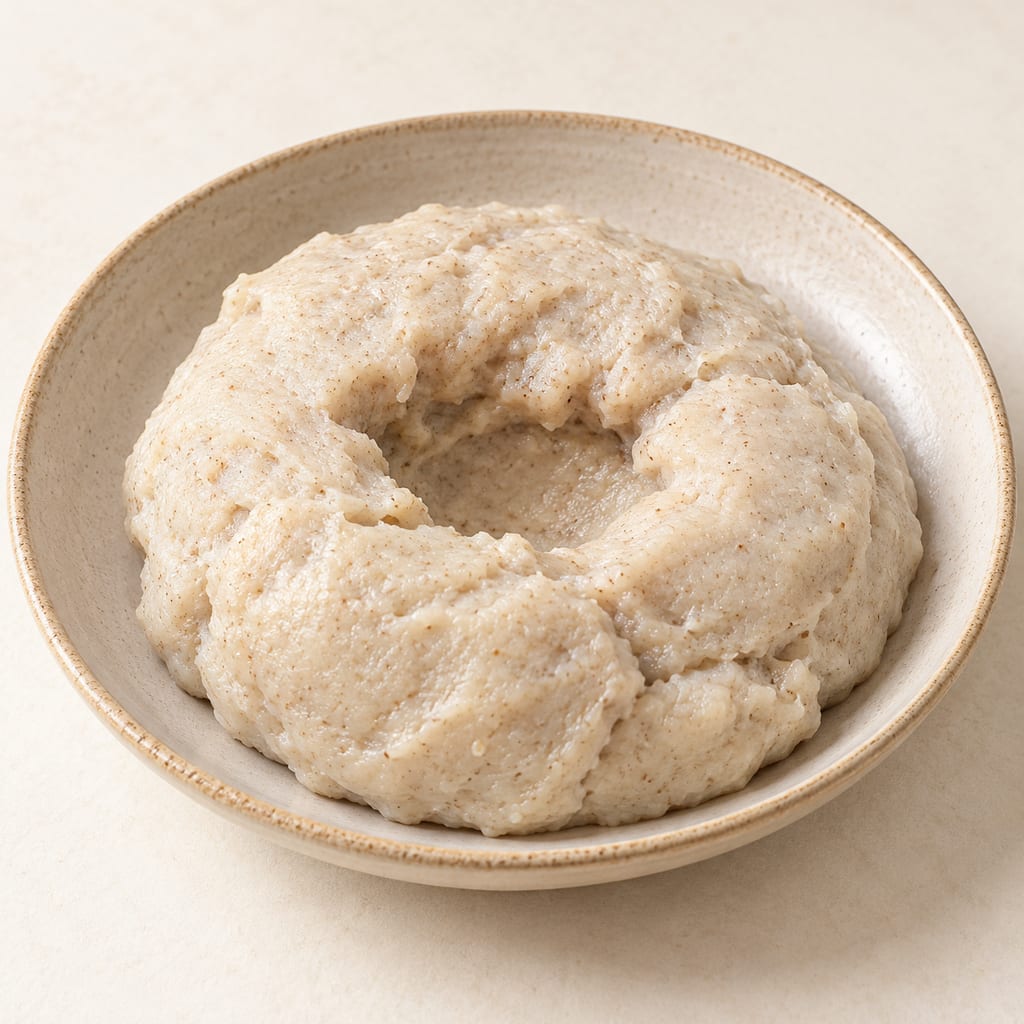
Aceda is Sudan’s firm cereal porridge, commonly made from sorghum and shaped into a smooth mound. Some versions use fermented dough; fermentation is not universal.

Ghanaian sour cassava dough fermented with traditional inoculum and drained during fermentation. It is used as a base for cooked foods such as banku and akple; process variants and safety outcomes differ.

Appam, or hoppers, are South Indian and Sri Lankan rice pancakes made from a fermented coconut-and-rice batter and cooked in a curved pan to a crisp lacy rim and a soft, spongy centre.
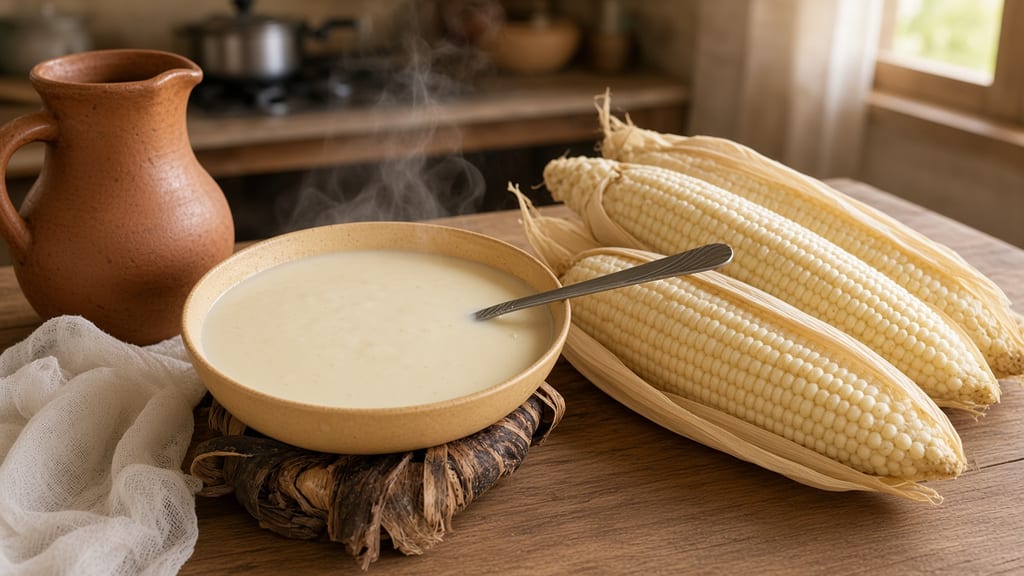
A hot, sour maize drink from Tabasco made from maize that is not lime-cooked. The ground grain sours for half a day, then makers strain it and boil it until thick.
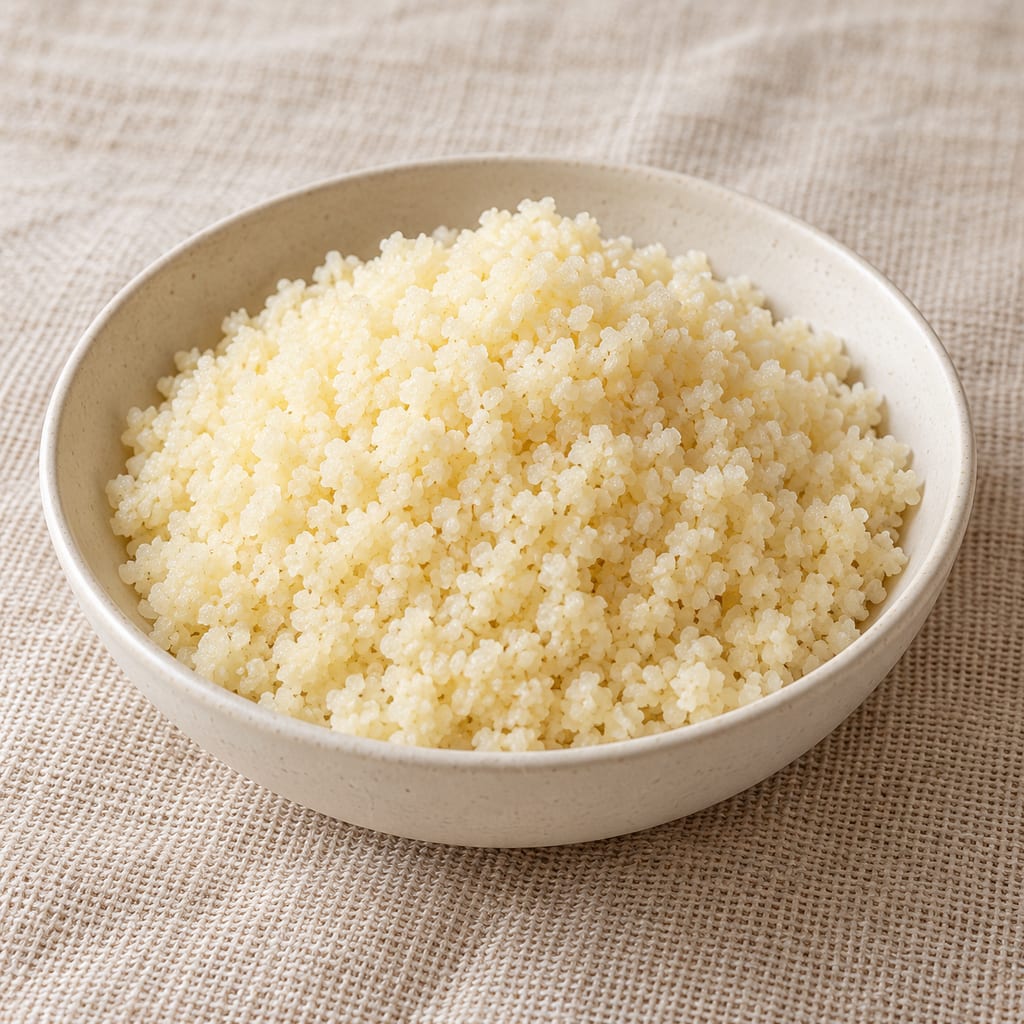
Ivorian cassava semolina: grated cassava is fermented overnight with a traditional inoculum, pressed, sieved into granules, dried and steamed. Documented in a 2006 field study; no sole original process is established.
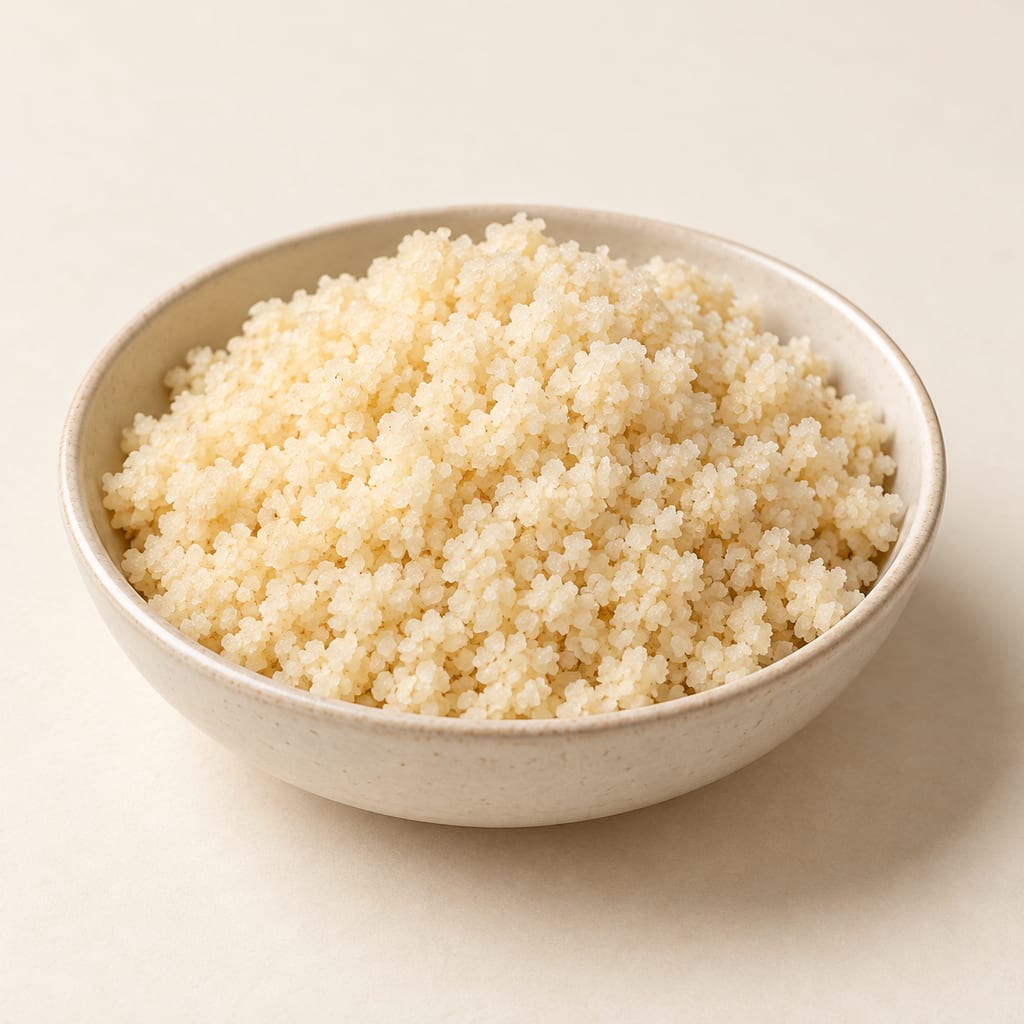
Attiéké is an Ivorian staple of grated cassava fermented with a traditional inoculum, then pressed, sieved, granulated, dried and steamed into fine couscous-like grains.

Crushed or milled barley cooked in water until the starch softens and the mixture thickens, the plainest way a northern household turned stored grain into a meal, here with apple and hazelnut.

Soft, spreadable Calabrian pork sausage made with a great deal of red chilli and fatty pork, stuffed into natural casings, sometimes smoked and matured while staying soft.

A way to add independent temperature logging to an existing food dehydrator without changing its built-in controls or protections. It is a monitoring method, not a rewiring plan.

Pleurotus cystidiosus is the abalone mushroom, a cultivated oyster-type fungus with dark brown caps that grows more slowly and is more demanding than other Pleurotus species.

A dark, balanced vinegar from Emilia-Romagna made by combining cooked or concentrated grape must with wine vinegar, then acetifying and refining it in wood under a protected specification.

A living dairy inoculum that starts controlled cream fermentation, developing acidity and aroma before sour cream or cultured butter is finished.

A small electric incubator holds jars at a selected temperature for yogurt and other documented warm food preparations. Controls, capacity and vessel arrangement vary by model.

Adygean salt is a seasoned table salt associated with Adygea and the wider North Caucasian culinary tradition. Salt is blended with garlic and a variable selection of herbs and spices; the exact mix depends on the named style and maker.

The African Caesar-group mushroom, Amanita masasiensis, is a wild ectomycorrhizal species of central and southern African woodlands, eaten locally. The genus contains deadly poisonous species, so identification needs care.
No community contributions have been published for this entry yet.
Sign in to contribute. Published comments and photos are free to read.
Hokkaido UniversityHistory · Method
Ainu FoodThe original ethnographic account of Ainu food, published in 1970 from interviews conducted between 1963 and 1967, describing equipment, storage, cooking methods and the distinctions between the different lily products.
Large disk-shaped onturep cakes approximately 30 cm in diameter, with a fermenting-and-drying stage extending for about one month, and two cakes tied together through their central holes.
Torepshito: pounding lily bulbs, making a starch-based preparation with hot water, shaping small balls approximately 2 to 3 cm in diameter and boiling them, eaten with oil, salmon roe or a grain-based stew.
Onturepsayo, a gruel or porridge containing the fermented lily material, with beans, rice or millet forming the body of the dish and bear fat recorded as an enrichment in some preparations; dried material is soaked before cooking explicitly to remove bitterness.
Cited in: The lily that became winter food; Historical evidence and the Ainu food economy; The starch-extraction process; What happens to the residue; Shaping and drying onturep; Cooking the stored cakes; Torepshito: A different product from the same bulb
Society of EthnobiologyMethod · Science
Ainu EthnobiologyA 2017 ethnobiological synthesis of Ainu botanical knowledge and preserved lily processing, identifying the plant as Cardiocrinum cordatum, the giant woodland lily, and noting that botanical classifications sometimes recognise regional subspecies or varieties.
The residue, called akam, is covered or wrapped in selected leaves and left in a shaded, ventilated location for approximately one or two weeks, with butterbur, chrysanthemum, magnolia and mugwort identified among possible covering materials, then formed into ring-shaped cakes and dried in the sun.
A recorded practice from Sakhalin in which washed and chopped bulbs were wrapped in a mat made from dunegrass stems and held under the eaves for approximately two weeks.
The starch-extraction sequence: cleaning the bulbs, breaking them down, pounding in a mortar until the tissues rupture, adding water and working the material, straining through a basket, settling the starch, separating the water and lighter material, repeated washing and drying.
The microbial ecology of onturep is not well characterised: the sources establish neither a reproducible list of dominant microorganisms nor acidity profiles or exact biochemical products, and there is insufficient evidence to describe it as specifically lactic-acid fermented.
Cited in: The lily that became winter food; Identifying and harvesting the plant; The starch-extraction process; What happens to the residue; Why the fermentation is scientifically interesting; Regional differences and related foods; How to recognize successful processing and problems; A preserved food with a distinctive ecological logic
Smithsonian InstitutionHistory
Smithsonian Institution: Dried cake of lily root, turepA museum object record for a dried cake of lily root: paired dried discs produced using traditional materials and methods for an exhibition in 1999, approximately 8 cm in length and diameter in the object record, which shows that preserved cakes could be smaller than the large disks described in some ethnographies. The measurements are not a universal specification.
Cited in: Shaping and drying onturep; How to recognize successful processing and problems
Japan Tourism AgencyHistory
Japan Tourism Agency: Plants in Ainu LifeContemporary Japanese cultural interpretation of plants in Ainu life, documenting turep as part of Ainu plant knowledge and showing that modern demonstrations of turep processing may be both practical reconstructions and acts of cultural knowledge transmission.
Cited in: Historical evidence and the Ainu food economy; A preserved food with a distinctive ecological logic
COREHistory
The Ainu Speak of FamineA historical analysis of changing Ainu food practices and access to seasonal provisions, used here for the context in which gathering operated: seasonal foods had to be processed for periods when fresh materials were scarce, plant collection was an essential component of household provisioning alongside fishing, hunting and cultivation, and the wider history includes changing access to gathering areas, Japanese settlement and the suppression of Ainu cultural practices.
Cited in: Historical evidence and the Ainu food economy; Regional differences and related foods