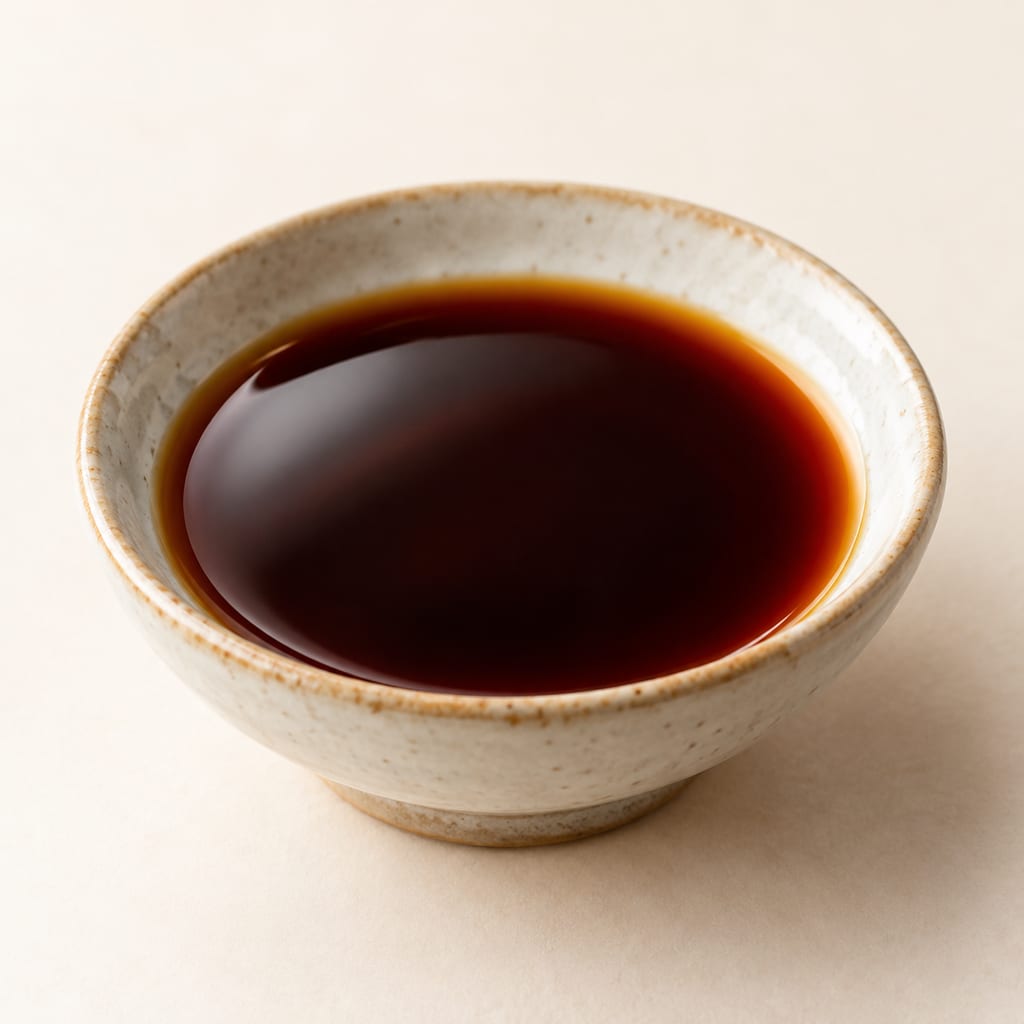
Koikuchi soy sauce
Japan's standard all-purpose soy sauce: soybeans and wheat grown over with koji mould, brined, fermented for months, pressed and usually heated into a reddish-brown, savoury liquid.
 FermenteaWhere food goes to change
Traditional method
塩昆布 · 塩こんぶ · しおこんぶ · shio kombu · shiokombu · shio konbu · 塩ふき昆布 · 塩吹き昆布 · shiofuki kombu · salt-bloomed kombu · 乾燥塩こんぶ · kansō shio kombu · dry seasoned kombu · Japanese seasoned kelp · soy-simmered salted kelp
Japanese kelp simmered in soy sauce and seasonings, sometimes dried and salted, eaten with rice or used as an umami seasoning.
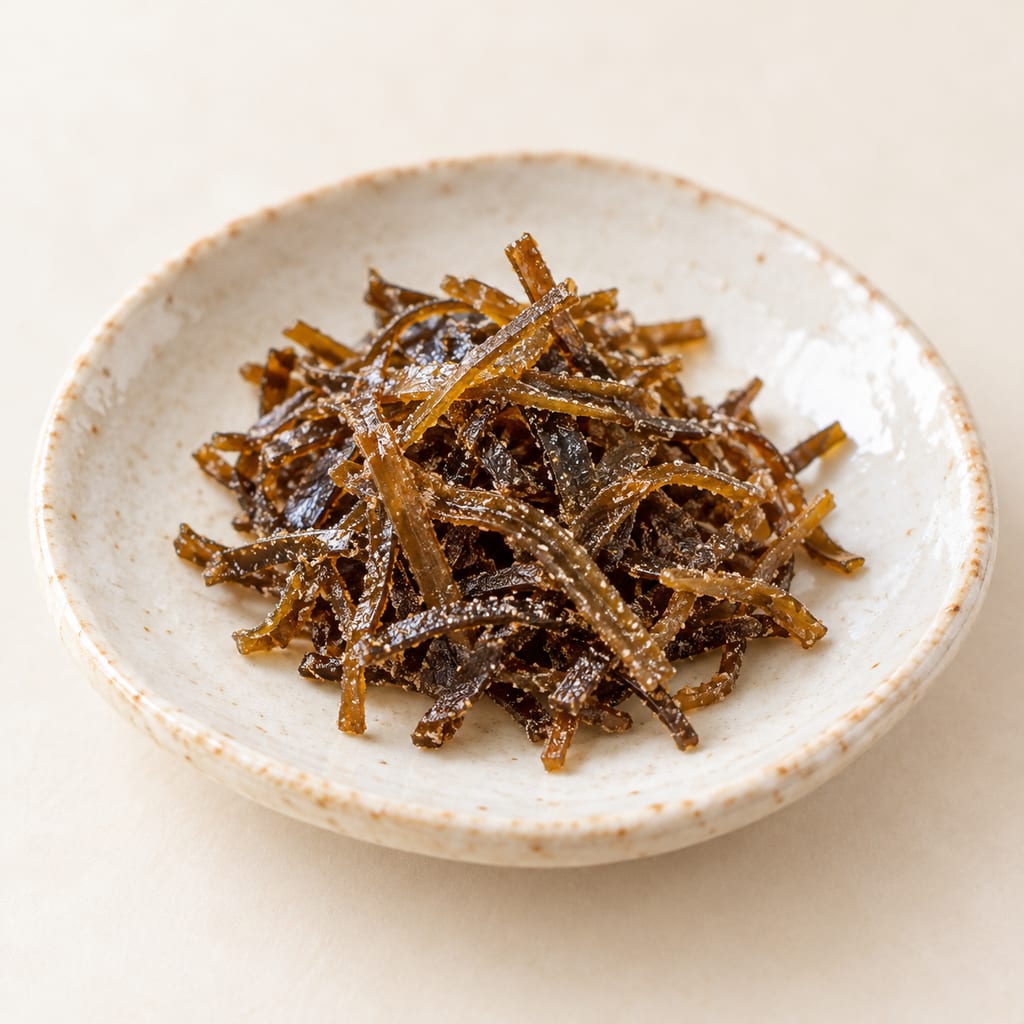
Shio kombu, 塩昆布, is Japanese kelp cooked with salty seasonings, usually soy sauce, and often dried afterwards. It is sold as small squares or narrow dark strips, sometimes with a pale coating of salt and seasoning. The pieces taste concentrated and savoury with a little sweetness, and they are chewy until moist food softens them. The name means salted kombu, but the familiar product is not raw dried kelp sprinkled with salt. Cooking, seasoning, moisture control and sometimes a finishing powder make it.
Two kinds share the name. The moist kind is kombu simmered in soy sauce and other seasonings until rich and still soft; Kansou, an old Osaka maker, calls its shio kombu a moist tsukudani and not a salt-coated dry product. The dry kind is seasoned kelp dried further, perhaps mixed with a powder or coated with salt, and the encyclopedia of Japanese aquatic products separates simmered shio kombu from kansō shio kombu, the dried seasoned type. Shops and households blur the terms, so appearance and storage need to be noted for the actual product.
The raw material is kombu, the Japanese name for several edible brown kelps. High-grade makombu, mainly Saccharina japonica, is the kelp most linked with traditional Osaka work, and Rishiri kombu, Saccharina ochotensis, is another documented source. Older trade and scientific writing often calls S. japonica Laminaria japonica. The scientific name belongs to the kelp and not to the prepared food, and shio kombu has no species name of its own.
Common ingredients are kombu, soy sauce, sugar and sometimes mirin, salt, kombu extract or other savoury seasonings. Modern factory products may add hydrolysed protein and amino-acid flavour enhancers: Fujicco's retail product lists kombu, soy sauce, hydrolysed protein, sugar, kombu extract, salt and seasoning additives, and declares wheat and soy. Other makers use shorter lists, and a home cook may start with kombu already used to make dashi.
Shio kombu is not fermented. Soy sauce and some mirin come from separate fermentations, but using them as seasoning does not make the kelp a live ferment. Preservation rests on heat, seasoning and drying, and how long a given product keeps depends on its drying, salt, packaging and storage. The finished food is both an accompaniment and a seasoning, eaten with rice, packed into rice balls or added to vegetables, which sets it apart from plain dried dashi kombu.
The story of shio kombu belongs to the longer story of dried kelp moving from northern Japan to the markets of Honshu. Kombu was known long before the product now called shio kombu existed; food histories record seaweed as food, ceremonial offering and tax, and later trade routes carried dried kombu south from the waters round Hokkaido. That shows the age of kombu as a commodity and not when soy-seasoned dried kelp began.
The encyclopedia of Japanese aquatic products says kombu was simmered in hishio, an older fermented seasoning, in the Heian period, 794 to 1185. That is a retrospective statement, not a surviving Heian recipe, and it hints at an early link between kelp and savoury fermented condiments without showing that today's dried or salt-coated shio kombu existed. Hishio, modern soy sauce and factory-seasoned kombu are different historical processes.
Osaka gained importance through coastal trade. In the Edo period the Kitamaebune shipping network carried marine products from Hokkaido along the Sea of Japan to centres including Osaka and Sakai. Dried kombu travelled well and could be processed on arrival, and Osaka built a large trade in dashi kombu, shredded and thinly shaved kombu, and seasoned preserved kelp. Local access to kelp, soy sauce and sugar helped create the city's kelp-processing industry.
One documented commercial line is Kansou, which traces its marine-products wholesale business to 1781 in Utsubo, Osaka, and places the precursors of its present prepared products in the Kaei period, 1848 to 1854, after a move to Kyomachibori. That shows a business working with kombu in the nineteenth century, though 1781 is not the date of its present shio kombu recipe.
The processing encyclopedia puts the beginning of commercial shio kombu sales in Osaka in the Meiji period, 1868 to 1912, and a television history from Asahi Broadcasting likewise distinguishes older homemade soy-simmered kelp from the tsukudani-style products sold after the Meiji Restoration. Nobody has identified the first maker, first advertisement or earliest surviving package.
Manufacture changed with equipment. Older workshops cooked makombu in iron kettles over charcoal or wood fires, and later factories used stainless-steel kettles, controlled burners and mechanical drying. Tastes changed too: older shio kombu was comparatively hard and salty, with salt appearing on the surface as it dried, while modern makers produce softer, more evenly seasoned pieces with controlled moisture and an applied finishing powder. Fujicco launched its packaged Fujikko shio kombu in 1966 and makes it at Wadayama in Hyogo, a firm date for a modern packaged product and not for the invention of the food.
Shio kombu comes from cooking, uptake of dissolved seasoning and loss of moisture. No lactic bacteria, yeast or mould ferments the kelp. Brown seaweed contains structural alginates and small soluble substances such as glutamate, mannitol and mineral salts. While it simmers, water enters the tissue, some soluble compounds pass into the liquid and dissolved seasoning moves into the kelp. Evaporation then concentrates the liquid and leaves salt, sugars and other seasoning on the pieces.
Kombu is a major natural source of umami. Glutamate, an amino acid in its tissue, activates umami taste receptors, and the Japanese chemist Kikunae Ikeda began studying the savoury component of kombu broth in 1907 and identified glutamic acid as the principal umami substance in 1908. Shio kombu adds the amino acids and flavour compounds of soy sauce to the glutamate of the kelp, and some factory formulas add monosodium glutamate or hydrolysed protein to adjust intensity.
Soy sauce has its own fermentation, normally involving koji enzymes followed by yeast and bacterial activity, which happens in the soy sauce factory and is not an intended fermentation of the kelp. In the pot the soy sauce seasons and extracts flavour. Mirin adds sweetness and other flavour compounds, and sugar softens the saltiness and shapes the concentrated cooking liquid.
Texture comes partly from cell-wall chemistry. Alginates, polysaccharides built from mannuronic and guluronic acid, contribute to the structure and water-binding of brown algae. As the kelp takes up hot liquid its tissue softens, at a rate that depends on species, blade thickness and the liquid. The result is not an agar gel like tokoroten: it stays identifiable pieces of cooked seaweed.
Preservation combines seasoning concentration, heat and drying. Dissolved salt and sugar lower water activity by binding some of the water available to microbes, heating reduces vegetative microbes, and drying removes more water. Water activity is not total moisture, since two products with the same water content can behave differently depending on their salt and sugar. A moist tsukudani-style product and a dry powder-coated one therefore need separate storage and shelf-life judgements, and the US Food and Drug Administration explains water activity as the measure that governs microbial growth.
The white bloom on some traditional products is dissolved salts concentrating at the surface as moisture moves and evaporates. Industrial dry shio kombu may instead be given a finishing powder of salt, amino-acid seasonings and other ingredients, and plain dried kombu can carry a pale deposit of mannitol, a sugar alcohol that Fujicco identifies on its dashi kombu. Mannitol differs chemically from salt and glutamate, so a white coating alone does not show which substance it is.
Drying is more than finishing. A Japanese industrial description specifies hot-air drying, shifting the pieces, an overnight moisture-equalisation stage and more drying the next day, because moisture inside thicker pieces must redistribute before the product reaches an even finish. A short home oven treatment can resemble shio kombu without the measured water activity or storage stability of a factory product.
Commercial production starts with dried kombu, often high-grade makombu from southern Hokkaido, selected for thickness, colour, condition and suitability for cooking. The encyclopedia describes trimming thin edges and tips and cutting the blades into regular pieces, with a little vinegar sometimes used while cutting to soften brittle kelp. One factory cuts to about 2.8 by 2.2 cm so that the pieces swell unevenly in cooking to about 3 cm square, a measurement belonging to that method.
The cut kombu is simmered in soy sauce or tamari, sugar, mirin, broth and sometimes added glutamate seasoning. Soy sauce brings salt, colour, savoury compounds and moisture, sugar balances the salt, and mirin adds sweetness and aroma. Broth supplies flavour from kelp, bonito or other ingredients: Kansou describes making stock from kombu, bonito flakes and dried small fish before cooking its seasoned kelp, which is one maker's method and no requirement of the food.
Two industrial simmering methods are described. In iridaki the kelp cooks while the liquid reduces, one example using 30 minutes over high heat, two hours over medium and two over low, then about an hour of rest in the covered kettle, with the pieces turned now and then without breaking. In ukashidaki more liquid stays around the kelp, giving a plump, soft texture. These are specialist techniques, not fixed times.
The cooked pieces can be drained and dried. The same reference has the kelp moved to another vessel and drained overnight, then dried in hot air near 70 C for three to four hours, mixed and trays rearranged about every 30 minutes, left overnight to equalise moisture and dried again near 60 C the next day. These are factory operating conditions, not instructions for a domestic oven.
After drying, broken or unsuitable pieces are removed and some products are coated with salt and powdered seasonings. The reference names possible ingredients such as monosodium glutamate, alanine, glycine, lactose, calcium compounds and salt, specific to that industrial approach; lactose is not in every product, and each maker's ingredient and allergen declaration has to be read.
The household version recorded here comes from the Japan Kombu Association, in a shiofuki kombu recipe credited to Shiori Furuya, and Hatamiya Foods publishes a matching one. It uses 150 g of kombu left from making dashi, one and a half tablespoons of dark soy sauce, a teaspoon each of rice vinegar, raw cane sugar and mirin, and then a tablespoon of salt and a teaspoon of sugar as finishing seasoning. The strips are rinsed, simmered until the liquid has evaporated and dried in the oven at 100 C for about 30 minutes, aiming for a partly dried, semi-moist texture and not complete dehydration. After cooling they are mixed with the salt and sugar and left overnight at room temperature.
That is a culinary procedure and gives no final water activity, pH, microbiological result or tested shelf life. A home product that is only partly dried cannot be stored like a sealed, commercially stabilised dry product. The industrial process, the moist Osaka-style simmered kombu and this household oven-dried method are three different formulations.
The Japan Kombu Association source asks for an overnight room-temperature rest after cooling. That instruction is retained here as source context, not safety advice: the recipe gives no measured water activity, pH or microbiological validation for the semi-moist product. For household handling, the UK Food Standards Agency gives general advice to cool cooked food and refrigerate within two hours, keeping the refrigerator at 5 C or below. This precaution does not validate shio kombu or establish its shelf life.
Shio kombu is especially associated with Osaka and the wider Kansai region, whose importance grew from its role as a distribution and processing centre for marine products. Kombu from Hokkaido travelled south and was turned into products for local cooking and sale, and Japanese processing writing names Osaka and Hyogo as the main areas for traditional shio kombu, with the Keihanshin commercial region still important.
Osaka-style shio kombu includes moist soy-simmered products that overlap with the tsukudani tradition. Kansou describes its shio kombu as a moist, dark, cooked preserve with no white salt coating, made from carefully selected natural kombu and a stock made with other Japanese ingredients. That differs from the thin dry, salt-coated strips of supermarkets, and both are called shio kombu without either being a wrongly named version of the other.
The dried type is called kansō shio kombu, or shiofuki kombu when it is visibly coated, and comes as squares or narrow strips. The encyclopedia describes a shift from harder, strongly salted old products to softer modern ones, with some makers adding powdered seasoning after controlled drying and others relying on the salt deposits of a concentrated soy-simmered product.
The kelp varies. Makombu from southern Hokkaido is valued for broad, thick blades and a refined flavour, and the Hokkaido Kombu Cooperative names it as suitable for shio kombu, dashi, shaved kombu and tsukudani. Rishiri kombu from the north is another choice, and Kansou reports a blend of natural makombu and Rishiri kombu in one household product. Hatamiya names Rishiri kombu in its own recipe.
Related Japanese preparations are different foods. Kombu tsukudani is simmered and sold moist. Oboro kombu and tororo kombu are thin shavings of dried kelp, sometimes softened with vinegar. Kombu-maki is rolled kelp, and kizami kombu is cut or shredded kelp that may be unseasoned. Shio kombu is set apart by being cooked and seasoned, often dried or finished with salt.
Modern industry widened textures, shapes and uses, with fine strips for mixing into food, plum-flavoured kombu, softer simmered forms and premium products from selected kelp. Using kombu already spent on dashi is another variant; the Association's household method gives that kelp a second use, but because some soluble flavour has already gone into the stock, the result is not the same as a product from unused dried kombu.
Shio kombu is most often eaten with cooked white rice. A small portion gives salt, sweetness and concentrated kelp flavour, and the rice moisture softens dry strips. It goes over a bowl of rice, inside onigiri or mixed into rice before shaping, and the processing reference names ochazuke, rice with tea or broth, as a common use. Moist shio kombu can be eaten as a small savoury side.
It also seasons raw or lightly prepared vegetables. The dry type releases flavour into the water in cucumber, cabbage and other vegetables, and Fujicco publishes a quick preparation using 6 g of shio kombu with 100 g of vegetables such as cabbage, cucumber and carrot, rubbed together until they soften. That is a short salting and not a microbiologically fermented pickle, even when called asazuke.
Because it supplies salt and glutamate together, shio kombu works as a ready-made seasoning in rice dishes, egg dishes, salads, pasta, cooked vegetables and snacks, and modern examples pair it with tuna, cabbage, sesame oil, peppers or cream cheese. These are contemporary combinations and should not be assigned to Edo-period eating.
The dry type is easy to measure and scatter. Moist tsukudani-style products have a different texture and suit eating as individual pieces beside rice or tea, and the style chosen affects how much liquid and seasoning enters a dish: a dry salt-coated strip draws moisture from vegetables, while a soft simmered piece brings its own sauce.
Shio kombu is concentrated, so portions matter. Fujicco's label gives 22.5 g salt equivalent per 100 g, about 1.3 g in a 6 g serving, and the Japanese food composition tables list 7,100 mg of sodium per 100 g for the generic seasoned and dried entry. They describe different reference products. The composition also differs from plain dried kelp, since soy sauce, sugar and other seasoning alter it and cooking and draining remove some soluble components, so it should not inherit the iodine figure of the raw seaweed.
Allergens vary. Fujicco declares soy and wheat, the wheat coming from soy sauce, other recipes may contain fish-based broth, and a seasoning powder can add more. A product cannot be called vegan, wheat-free or suitable for a given diet from its kombu alone.
What to expect depends on the type. Traditional moist shio kombu holds recognisable pieces of seasoned kelp that are soft or chewy by design, while the dry kind may be darker, firmer and coated with salt or powder. Some products stay slightly pliable and are not meant to be brittle. These are normal categories and neither success nor spoilage, so a recipe should state its intended texture before the result is judged.
Excess hardness can come from the kelp chosen or from cooking and drying, and the processing encyclopedia treats kelp selection, controlled simmering and moisture adjustment as the central skills. Pieces that turn fragile, break in handling or dry unevenly may miss a commercial standard, and powder-coated products with damp surfaces or unsuitable powder can clump or fail to hold the coating.
Moisture moving through a finished piece redistributes dissolved salts and seasoning. Fujicco says its decorative salt coating can turn brown when temperature changes or pressure push seasoning components to the surface, which it treats as a quality matter and not a health hazard, though flavour may suffer. That explanation applies to its product, not to unexplained discoloration in homemade batches.
Plain dried kombu often carries a natural white deposit of mannitol, while dried shio kombu may have added seasoning or crystallised salt, and the product's method and label say which. Fuzzy growth, an odd smell or damp deterioration is not crystallisation and should not be dismissed as such.
Storage differs. Fujicco advises keeping its dry packaged shio kombu sealed in a cool, dry place after opening and not refrigerating it, because condensation brings moisture, and gives an unopened shelf life of 11 months from manufacture on its retail label. Kansou recommends refrigerating its moist shio kombu once opened and eating it promptly, with about a month from purchase to expiry. They are different preservation systems and not conflicting rules.
A homemade batch from dashi kombu with a short oven stage cannot be stored like a factory product. The Association's recipe aims for a partly dried result and reports no water activity, microbiological stability or tested shelf life. Its overnight room-temperature rest documents the author's practice; it is not recommended for this home batch. Cool promptly and refrigerate in a covered container, following general cooked-food handling guidance; this is a cautious choice, not product validation.
Iodine matters. Brown kelps can hold very high iodine, varying with species, harvest and processing; Germany's Federal Institute for Risk Assessment found particularly high levels in Saccharina japonica and other kelps and warned that excessive intake can affect the thyroid. That concerns seaweed products generally and gives no figure for a given brand of cooked shio kombu. Salt is better documented: a 6 g serving of Fujicco shio kombu supplies about 1.3 g salt equivalent, which counts against the whole dish, and wheat, soy and sometimes other allergens call for the maker's label.
Dry commercially stabilised shio kombu, moist cooked products and homemade preparations are not interchangeable in moisture, salt, packaging, handling or validated shelf life. Taste, colour, a white coating or a sealed packet cannot establish that an untested product is safe.
Commercial sales of shio kombu began in Osaka in the Meiji period (1868 to 1912), according to a Japanese processing encyclopedia. The Osaka firm Kansou traces its marine-products business to 1781 and the precursors of its products to the Kaei period (1848 to 1854), and Fujicco launched its packaged brand in 1966. Simmering kombu in hishio in the Heian period is reported only in retrospect, with no surviving recipe.
Yield 4 servings · Scaling: source batch only
Kombu can hold very high iodine and excess intake can affect the thyroid; levels vary by species and processing.
Hazard sourceSoy sauce plus a finishing salt makes a very salty food; Fujicco's product has about 1.3 g salt equivalent in a 6 g serving.
Hazard sourceThe home recipe leaves the kombu semi-moist and reports no water activity, so the safe holding time is unknown.
Hazard sourceA partly dried cooked food may keep enough available water for growth, and the overnight rest has no validation.
Hazard sourceDry shio kombu takes up moisture from the air; Fujicco warns that refrigerating the opened dry product can add condensation.
Hazard sourceKoikuchi soy sauce contains soy and usually wheat; Fujicco declares both for its shio kombu.
Hazard sourceTreat the product as one of three formulations: factory dry, moist Osaka-style, or home oven-dried
Control sourceKeep commercial dry product sealed in a cool, dry place
Control sourceRefrigerate moist product after opening
Control sourceCool the home batch promptly and refrigerate
Control sourceRead the label for allergens
Control sourceThe cited recipe's overnight room-temperature rest is unvalidated and is not recommended for this semi-moist home batch; cool promptly and refrigerate. No product-specific shelf life is established.
Do not give it the 11-month shelf life of Fujicco's sealed factory product.
Taste, colour, a white coating or a sealed packet do not show that an untested product is safe.
Iodine and sodium are high; watch portions.
Contains soy and usually wheat; broth or powder additions may add other allergens.
Commercial shio kombu sales began here.
Kansou, an Osaka maker.
Present factory of a large packaged brand.
Source of makombu.
Source of Rishiri kombu.
Japan's standard all-purpose soy sauce: soybeans and wheat grown over with koji mould, brined, fermented for months, pressed and usually heated into a reddish-brown, savoury liquid.
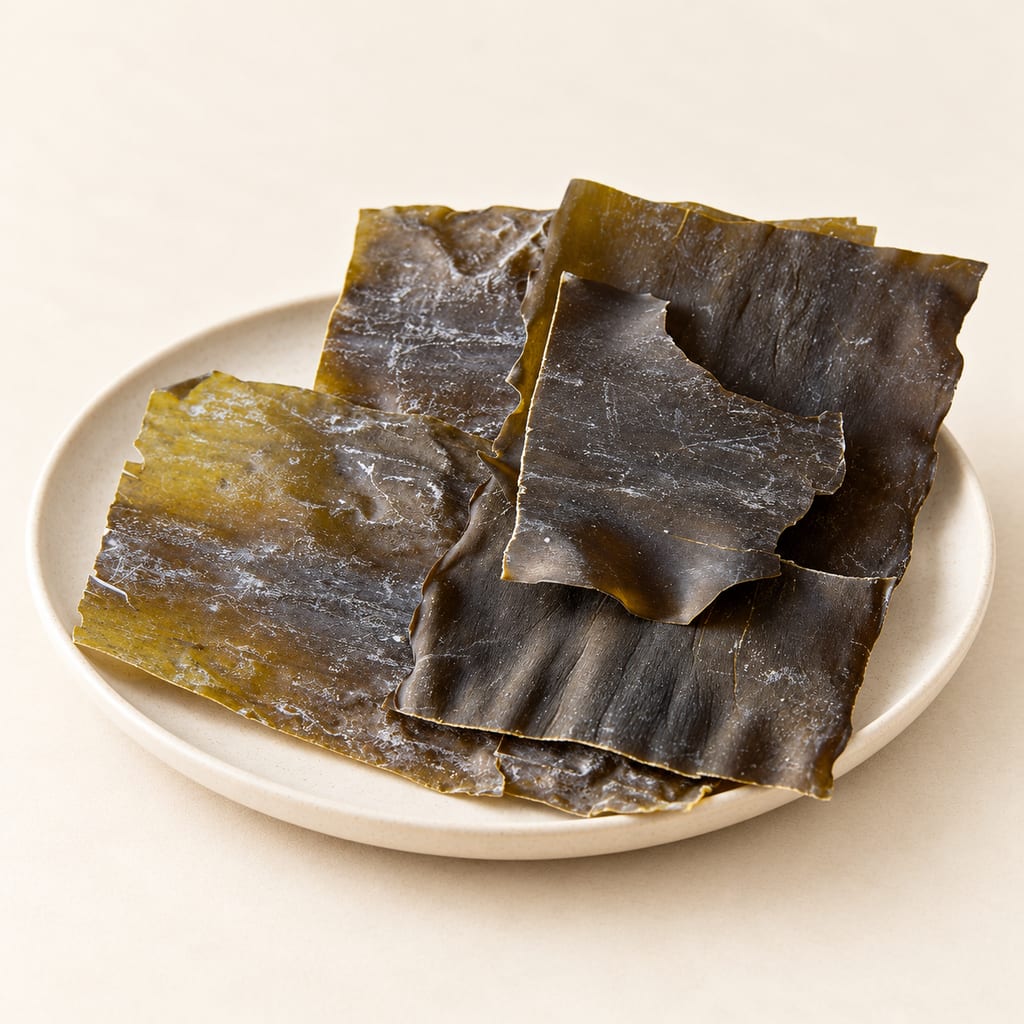
Kombu is a group of edible brown kelps, chiefly harvested around northern Japan or cultivated in East Asia, used for umami-rich stocks, simmered dishes, seasonings and preserved foods.
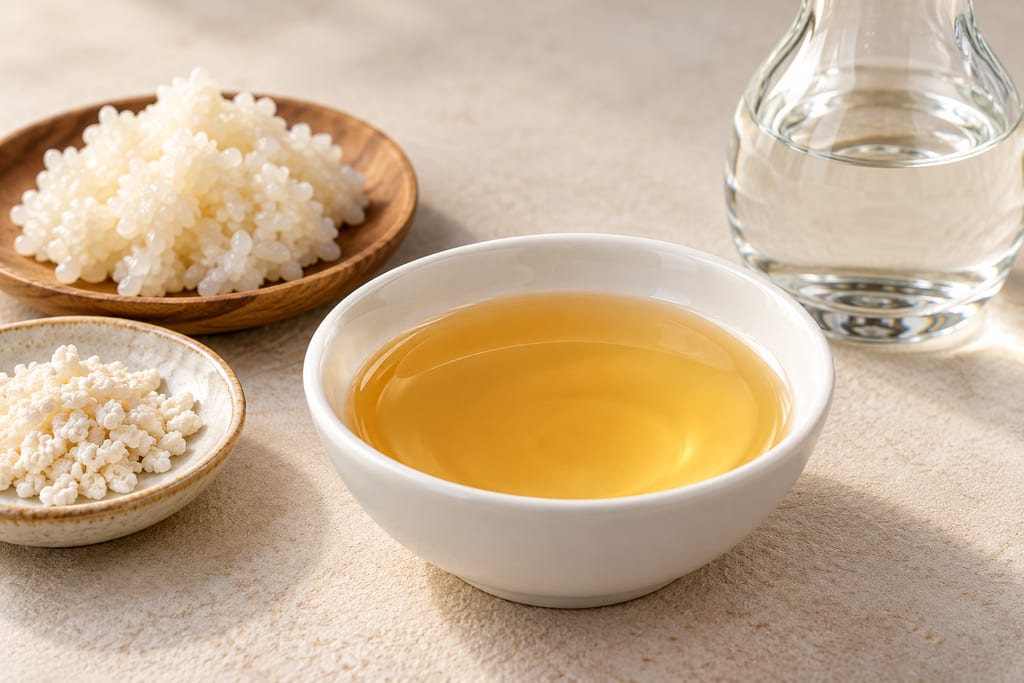
Hon-mirin is a Japanese rice seasoning made by saccharifying glutinous rice with rice koji in shochu, then pressing and usually heating the mash.
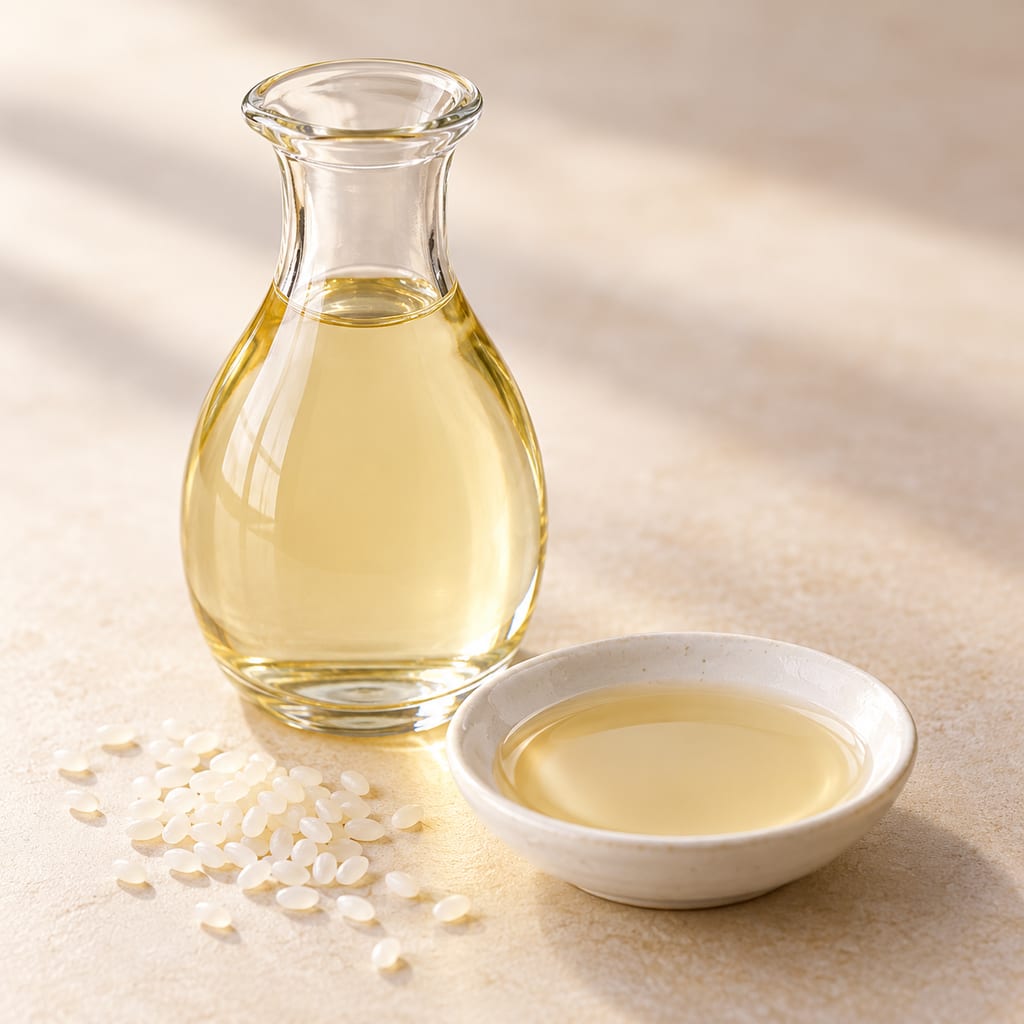
Japanese komezu is a pale, unseasoned rice vinegar made through alcoholic and acetic fermentation; rice, water, koji and yeast shape its character.
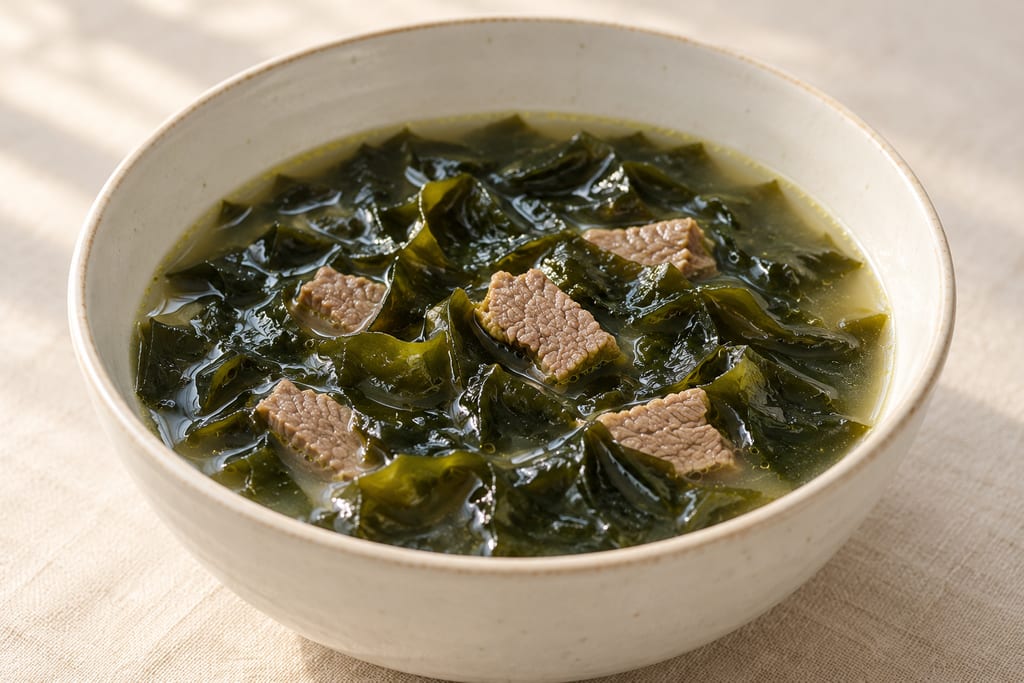
A Korean soup of rehydrated brown seaweed simmered with beef, seafood or a plain seasoned broth, traditionally served after childbirth, on birthdays and as an everyday meal.
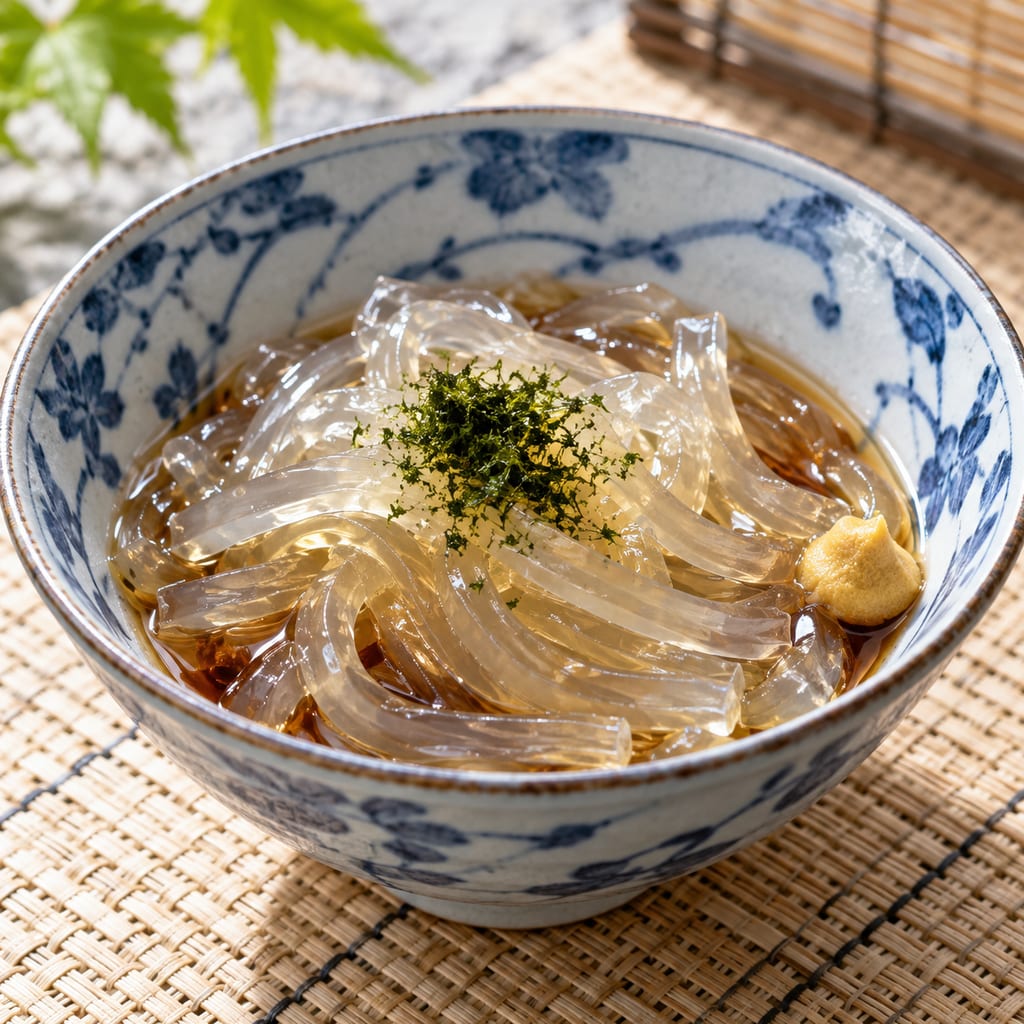
A Japanese jelly made by boiling agar-rich red seaweed, straining the extract and letting it set, then pressing it into strands served with vinegar-soy sauce or sweet syrup.
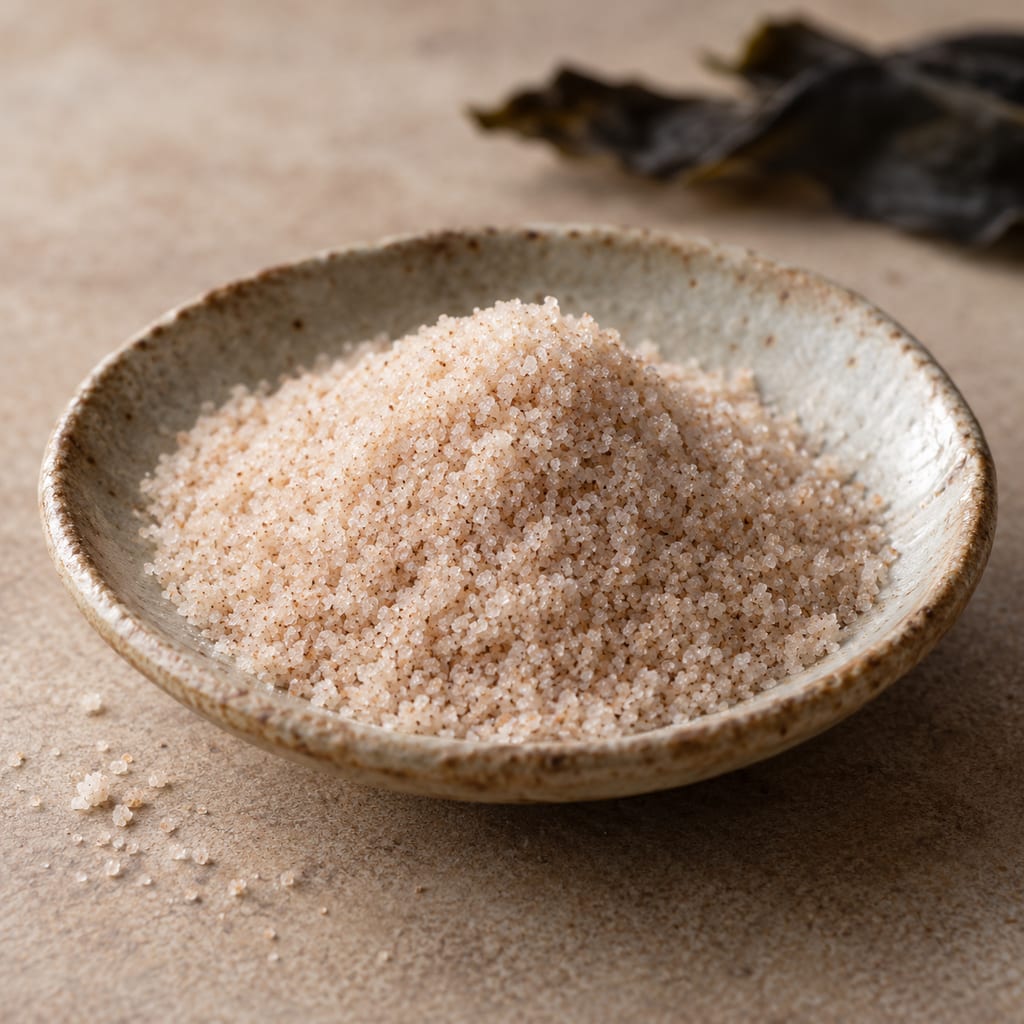
Awaji moshio is a modern Japanese seaweed salt made by TaDa PHILOSOPHY from Awaji Island seawater and seaweed. Its premium process concentrates brine, extracts seaweed flavor, then crystallizes, separates, dries and grades the salt.
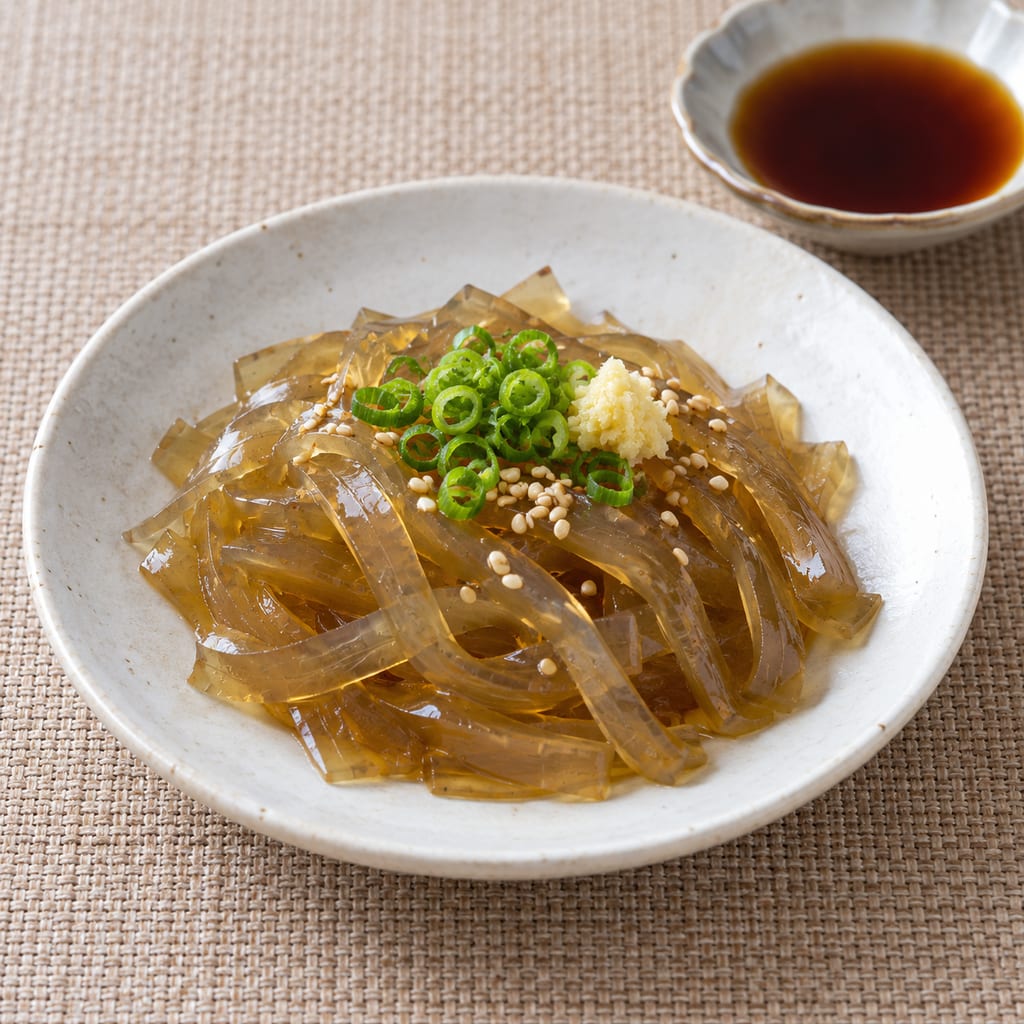
A traditional Fukuoka seaweed jelly made by boiling dried egonori, sometimes with igisu, until it forms a thick extract that sets into soft sheets, eaten cold with soy sauce, vinegar and aromatic condiments.
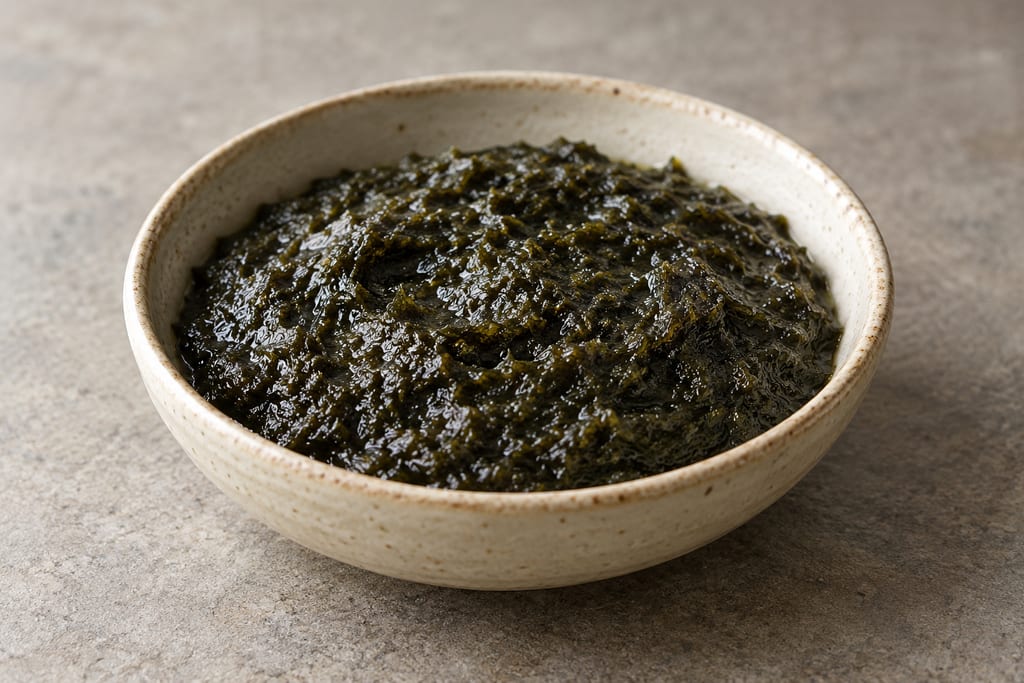
Welsh laverbread is hand-gathered purple laver slowly cooked to a dark green-black paste, eaten with oatmeal, bacon and cockles or on toast.

A Cap-Pelé boucanière is an Acadian herring-smoking building. The documented Willie Niles example is a one-storey wood-frame structure with a ridge smoke vent and interior bays for hanging fish-bearing cannes.

Achcharu is a family of Sri Lankan vinegar pickles made with mixed vegetables or seasonal fruit and a piquant spice dressing. This version is a quick, refrigerated, non-fermented mixed-vegetable pickle.

The acocote is a long, hollowed and dried gourd used to draw aguamiel from a mature maguey. It is a harvesting tool: the sap is transferred to a separate vessel before it ferments into pulque.

Adrak murabba preserves young ginger in sugar syrup, a sweet South Asian preparation recorded in Indian cookery and food-processing sources.

Parkia biglobosa seeds are fermented into regional West African seasonings, including nététou, iru, dawadawa and soumbala. The yellow fruit pulp is a separate food, and names and methods vary by place.

Japanese reddish-brown vinegar from sake lees matured about three years, turned to vinegar by acetic bacteria; the vinegar of Handa and Edomae sushi rice.

A refined common-wheat flour blended for a broad range of baking; its protein and behavior vary with wheat, milling and market.

The almond mushroom, Agaricus subrufescens, was cultivated in eastern North America in the 1800s, lost its market, and returned as a cultivated mushroom from Brazil, where it is grown under several names.
No community contributions have been published for this entry yet.
Sign in to contribute. Published comments and photos are free to read.
Japan Kombu Association (Kombu Net)Method
塩ふき昆布 (shiofuki kombu)150 g used kombu, 1.5 tablespoons dark soy sauce, 1 teaspoon each rice vinegar, raw cane sugar and mirin
Simmer until the liquid evaporates, oven 100 C for about 30 minutes to a semi-moist texture
Finish with 1 tablespoon salt and 1 teaspoon sugar; rest overnight; four servings
Cited in: What it is; How it is made and why each step is there; Regional and historical variations; How it is eaten; Reading results and problems
Hatamiya Foods, JapanMethod
レシピ2 塩昆布 (salt kombu from dashi kombu)A matching recipe with the same quantities, labelled two servings; Rishiri kombu
Cited in: How it is made and why each step is there; Regional and historical variations
Hokkaido Kombu Business CooperativeIdentity · Variation
北海道の昆布についてMakombu of southern Hokkaido suits shio kombu, dashi, shaved kombu and tsukudani
Rishiri kombu from northern Hokkaido
Cited in: What it is; Regional and historical variations
Aquatic Food Products and Processing Encyclopedia, JapanHistory · Method · Science
塩昆布・乾燥塩こんぶCommercial sales of shio kombu began in Osaka in the Meiji period
Kombu simmered in hishio in the Heian period (retrospective)
Cutting about 2.8 by 2.2 cm; iridaki and ukashidaki simmering; hot-air drying near 70 C then 60 C with an overnight equalisation
Dry and moist types; finishing powder
Cited in: What it is; Story and history; How it works; How it is made and why each step is there; Regional and historical variations; How it is eaten
Kansou, OsakaIdentity · History · Variation
塩昆布は「塩ふき」タイプの昆布ですか?Kansou shio kombu is a moist tsukudani without a salt coating
Business traced to 1781 and the Kaei-period precursors of its products
Cited in: What it is; Story and history; How it works; How it is made and why each step is there; Regional and historical variations
Kansou, OsakaSafety
賞味期限はどのくらいですか?Refrigerate the moist product after opening; about one month to expiry
Cited in: Reading results and problems
Fujicco Co., Ltd., JapanIdentity · Use · Safety
ふじっ子 塩こんぶIngredients: kombu, soy sauce, hydrolysed protein, sugar, kombu extract, salt, additives; wheat and soy declared
22.5 g salt equivalent per 100 g, about 1.3 g in a 6 g serving
Brand launched 1966; Wadayama factory in Hyogo
Cited in: What it is; Story and history; Regional and historical variations; How it is eaten; Reading results and problems
Fujicco Co., Ltd., JapanSafety
Fujicco FAQ: refrigeration after openingKeep dry shio kombu sealed in a cool, dry place; refrigeration risks condensation
Cited in: Reading results and problems
Fujicco Co., Ltd., JapanSafety
Fujicco FAQ: brown salt coatingThe decorative salt can turn brown as seasoning migrates; a quality issue, not a health hazard
Cited in: Reading results and problems
Fujicco Co., Ltd., JapanScience
Fujicco FAQ: white grains on dashi kombuThe white deposit on plain dashi kombu is mannitol
Cited in: How it works; Reading results and problems
US Food and Drug AdministrationSafety · Science
Water Activity (aw) in FoodsWater activity differs from moisture content and governs microbial growth
Cited in: How it works; How it is made and why each step is there; Reading results and problems
Food Standards Agency, United KingdomSafety
Cooking Your FoodGeneral cooked-food handling and cooling advice
Cited in: How it is made and why each step is there; Reading results and problems
German Federal Institute for Risk Assessment (BfR)Safety
Binding Maximum Iodine Levels in Edible Seaweeds May Help Reduce Health-Relevant Intake LevelsVery high iodine in Saccharina japonica and other kelps; excess can affect the thyroid
Cited in: Reading results and problems
Ministry of Education, Culture, Sports, Science and Technology, JapanNutrition
藻類/(こんぶ類)/塩昆布 (Standard Tables of Food Composition in Japan)Generic seasoned and dried shio kombu: 7,100 mg sodium per 100 g; no iodine value
Cited in: How it is eaten