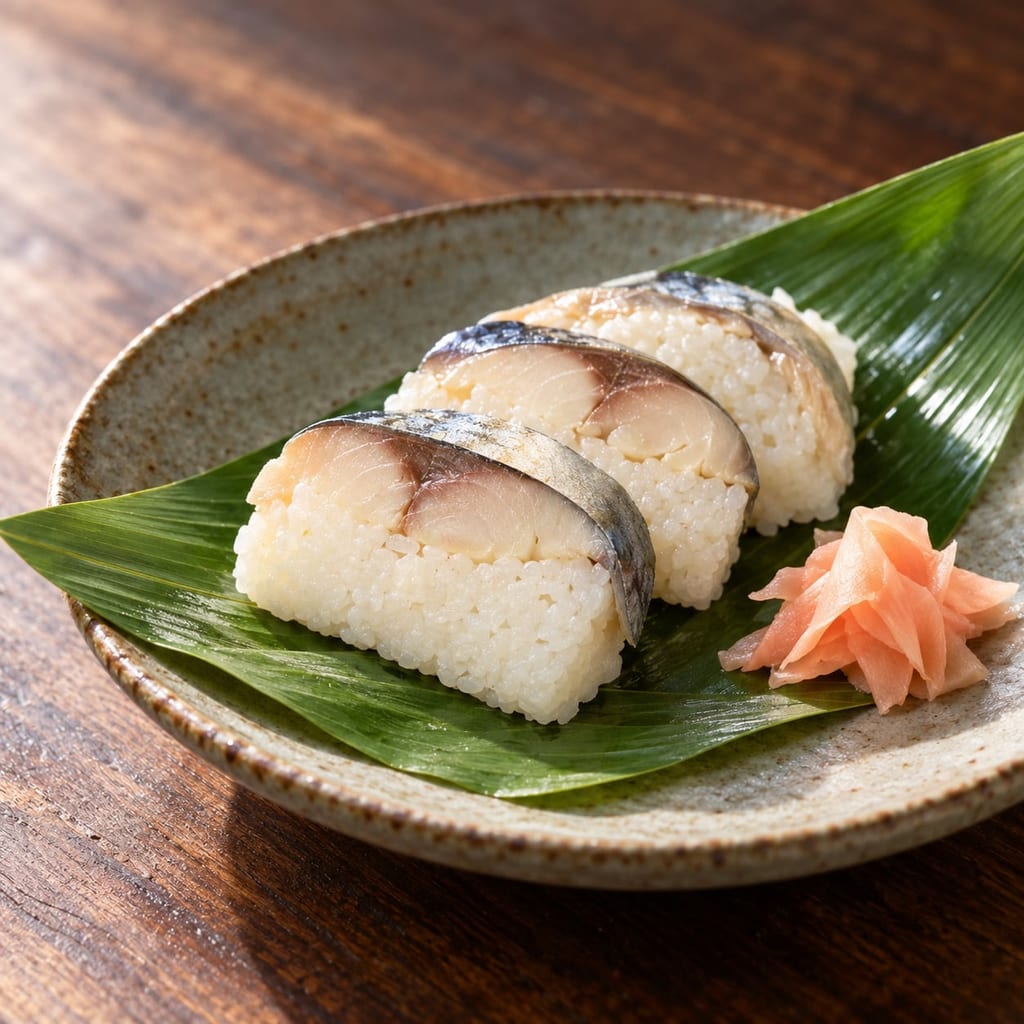
Narezushi
A documentary account of Japanese narezushi, a family of salted-fish and rice ferments. This entry preserves the East Kishu (Mie) source’s identity and regional context without providing a household preparation method.
 FermenteaWhere food goes to change
伊勢たくあん · Ise-kōko · 伊勢こうこ
Regional takuan from Ise City, Mie, made with Misono daikon dried on a rack, then matured in a weighted barrel of rice bran and salt for months to years.
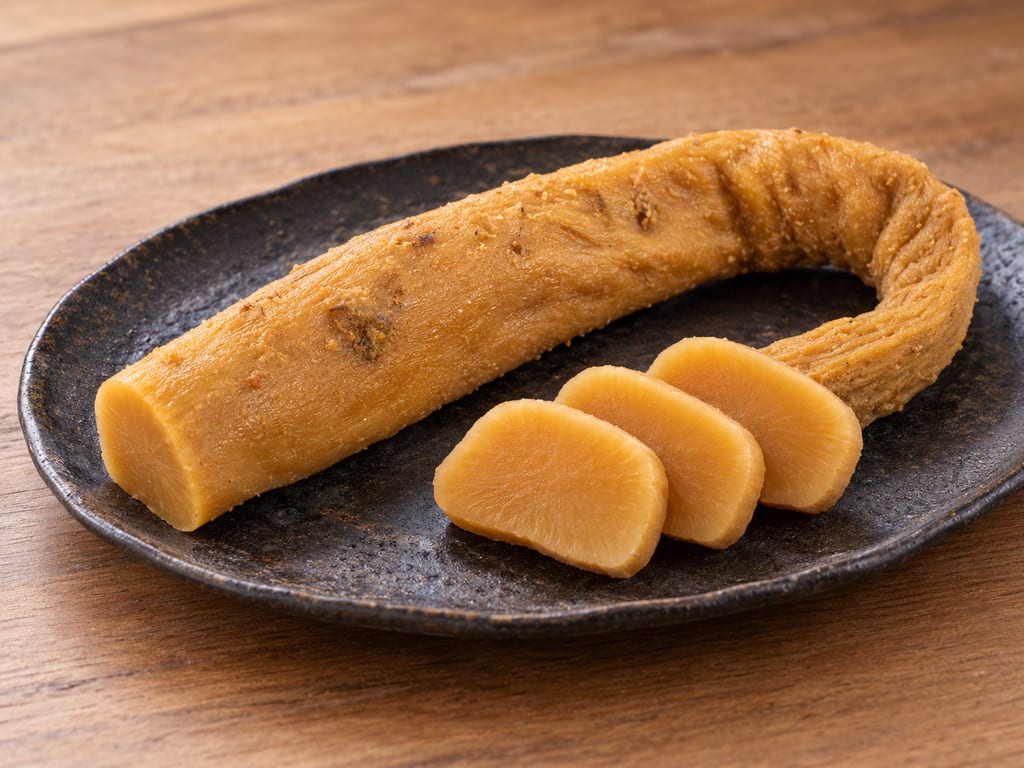
Ise takuan, also called Ise-kōko (伊勢こうこ), is a regional takuan associated with Ise City in Mie Prefecture and with the local Misono daikon (御薗だいこん). MAFF describes Misono daikon as a white-necked, long-rooted pickle cultivar that the Mie agricultural experiment station improved in the early Shōwa period. The Mie Brand account describes the same cultivar work and local growing.
The regional name identifies one product, not every takuan. Ise takuan should not be treated as interchangeable with takuan made from other daikon or in other places.
MAFF dates the growing of this daikon as an Ise farm sideline to the late Edo period. It dates wider sales in the Kansai region to the Meiji period, recognition through Ise pilgrims into the early Shōwa period, and a trade peak around 1965. It then reports a sharp fall in growers and producers, followed by recovery efforts.
These are institutional retrospectives. Stronger historical claims need corroboration from primary records or from local practitioners.
In the seasonal description, Misono daikon is harvested in November and December. The roots are hung to dry on racks called hāsagake. The rows of drying roots are described as an autumn and winter landscape. This is a documented local schedule, not a universal daikon calendar.
After drying, the roots are matured with rice bran and salt in a weighted barrel for a long period. The account describes a long-matured product with a characteristic aroma, acidity and firm texture.
The MAFF entry says to wash off the bran and slice the pickle. It may be eaten plain or with soy sauce and shichimi togarashi.
The descriptions do not give complete quantities, an objective drying endpoint, a validated salt basis, a temperature range, a household monitoring plan or a finished storage limit. They describe a traditional process outline, not an executable home recipe. The account names a rack, a barrel and a weight, but not their capacity, materials, sanitation or cleaning. No controlled chamber is evidenced, and no build is inferred from the rack.
No distinct Misono daikon ingredient page or hāsagake apparatus record was verified. Whether the modern takuan recipe veg-0055 is compatible with Ise takuan is unconfirmed.
MAFF dates Ise takuan as a farm sideline in Ise from the late Edo period. It says wider sales in Kansai reached the Meiji period, that Ise pilgrims spread recognition in early Shōwa, and that trade peaked around 1965. It then records a sharp fall in growers and producers and later recovery efforts. These are institutional retrospectives and need corroboration from primary records before stronger claims are made. Misono daikon was improved at the Mie agricultural experiment station in early Shōwa.
Scaling: source batch only
The sources give no validated endpoint, household monitoring plan or finished storage limit.
Hazard sourceKeep the roots under the bran and salt layer with a weight, as the MAFF method describes.
Control sourceThe traditional process is not a validated home recipe.
Smell, taste or appearance do not establish safety.
MAFF and the Mie Brand page both name Ise City as the regional association.
National recognition through Ise pilgrims is MAFF's retrospective account.
A documentary account of Japanese narezushi, a family of salted-fish and rice ferments. This entry preserves the East Kishu (Mie) source’s identity and regional context without providing a household preparation method.
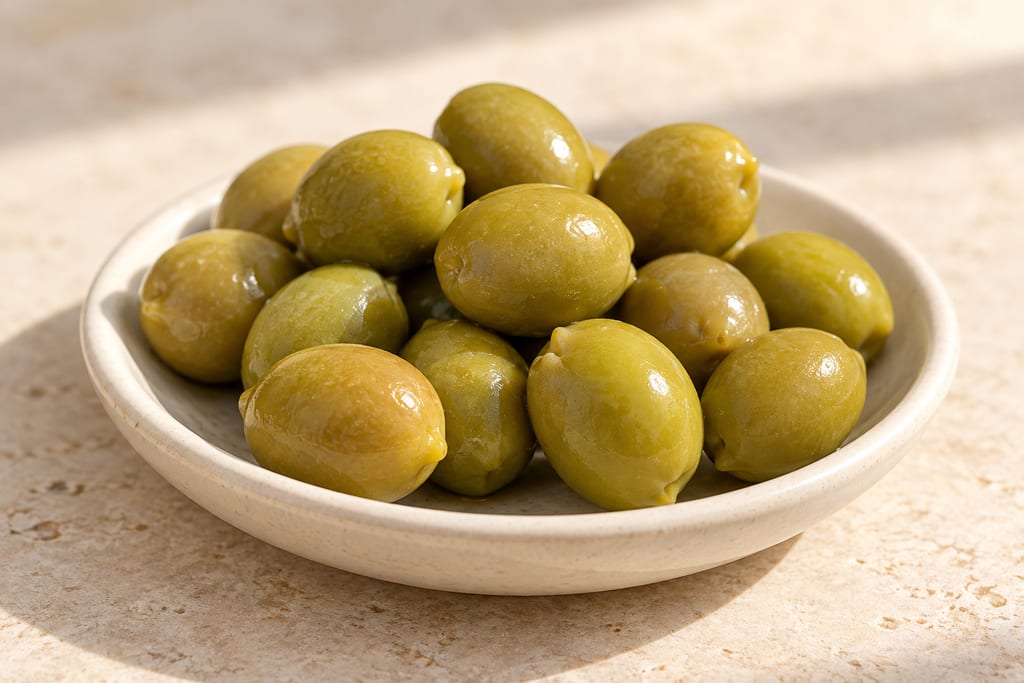
A Portuguese table-olive product from the Negrinha cultivar in northeastern Portugal, sold in three commercial styles, two of them brined fermentations and one oxidised to black.
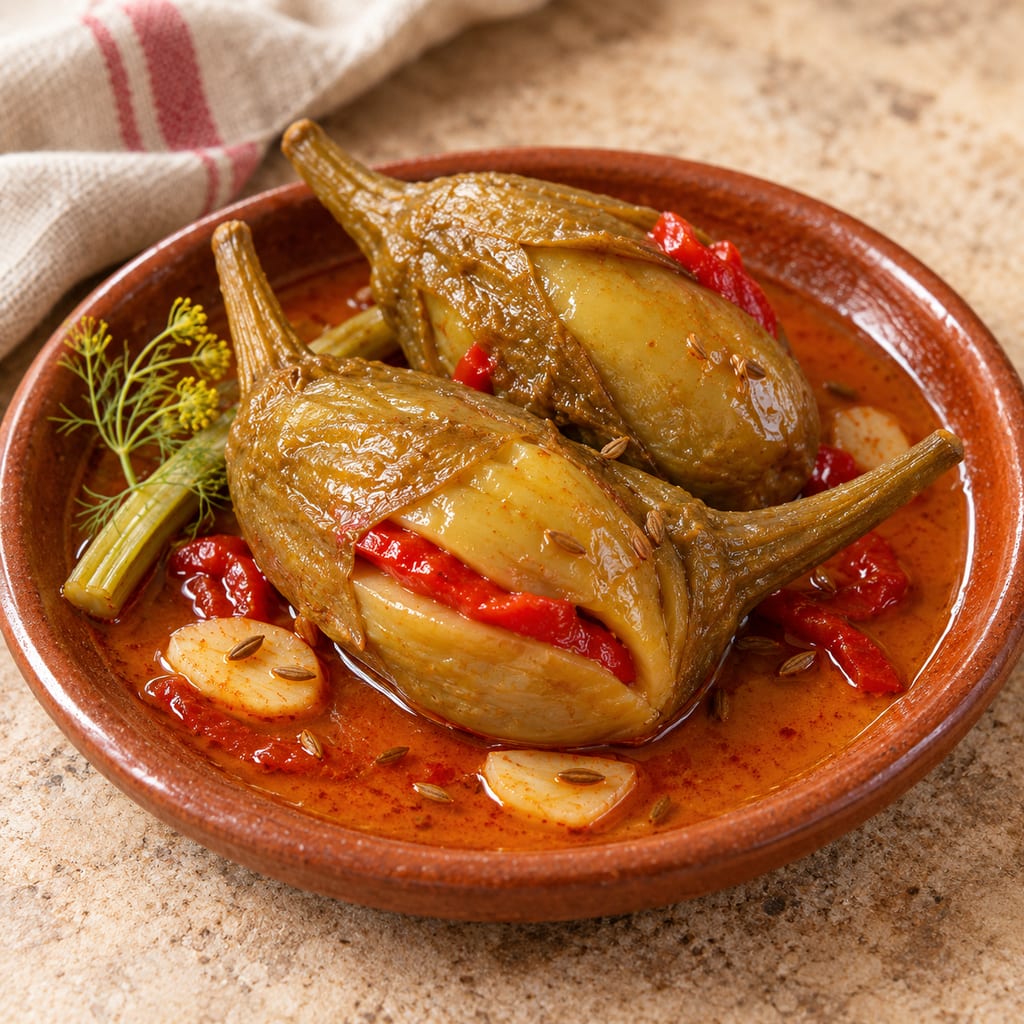
A protected aubergine preserve from Ciudad Real in Spain: tender fruit of the local Dealmagro variety, cooked briefly and then fermented in a vinegared, paprika-seasoned dressing.
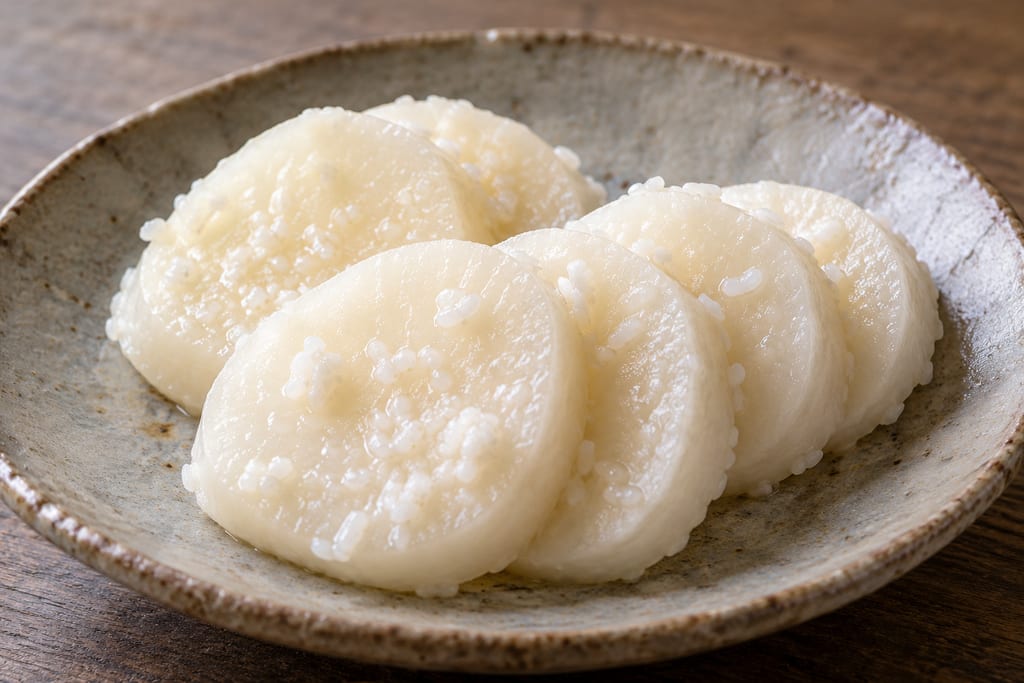
A sweet, crisp Japanese daikon pickle from Tokyo's Nihonbashi district, made by salting fresh radish and dressing it in rice koji, sugar or koji amazake without the heavy drying used for takuan.
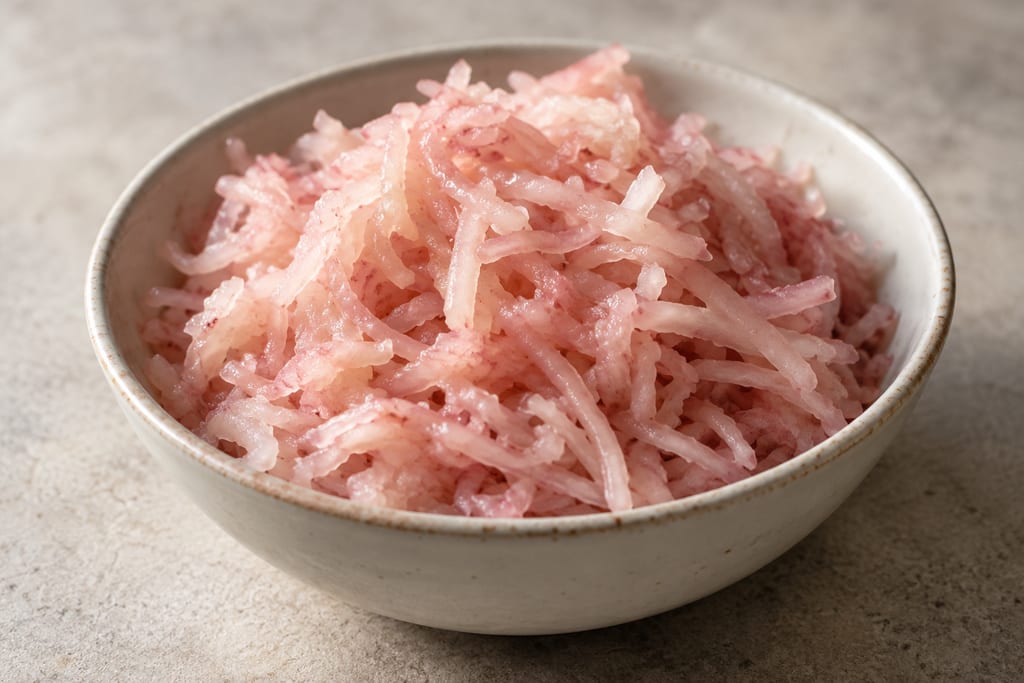
Source-specific Brovada DOP producer method for Friuli Venezia Giulia turnips and red-grape marc. This records a regulated producer process; it is not a validated home-scale recipe.
An industrial fermentation patio places factory-made fiberglass-reinforced polyester olive tanks below floor level, with drainage and transfer infrastructure arranged around the buried vessels.
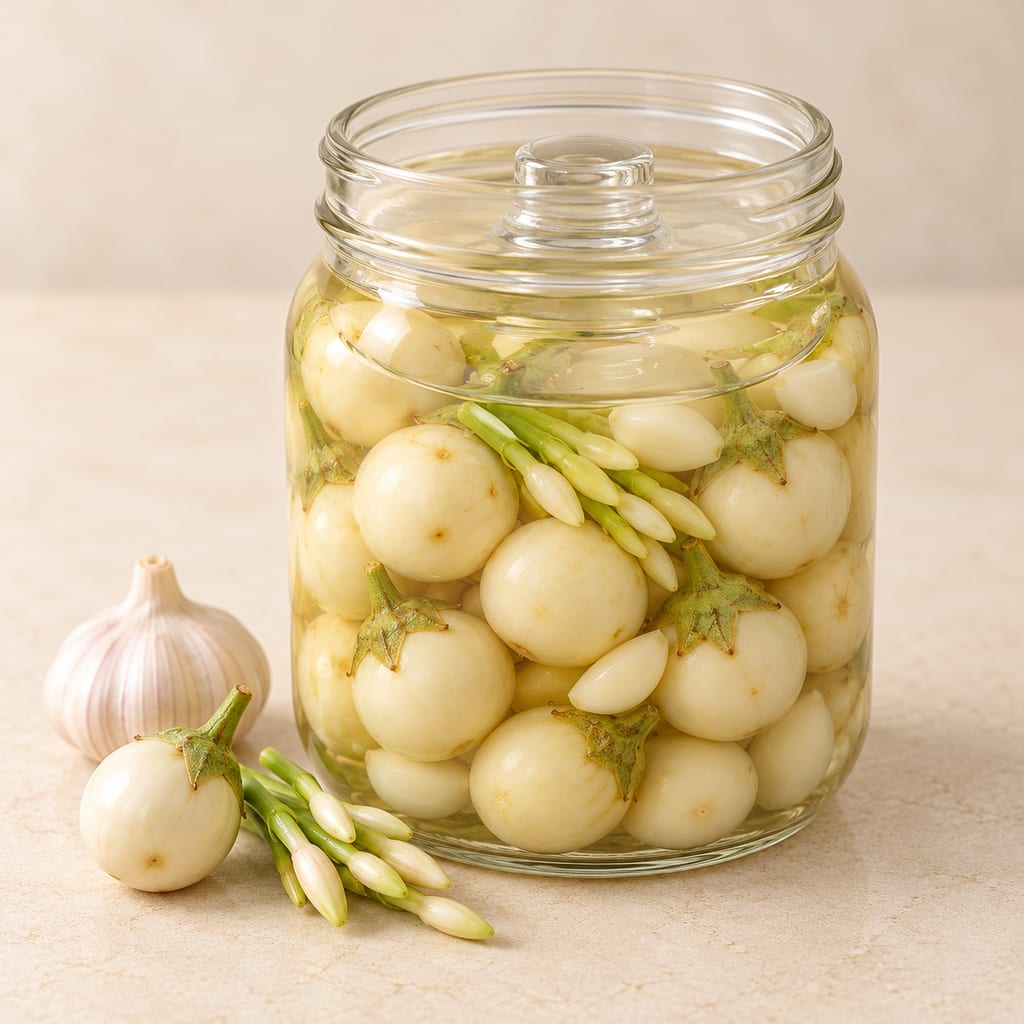
Vietnamese salted and fermented small eggplant, dried on the day of purchase, then held submerged in warm salty water with garlic and galingale flower for a week or longer.
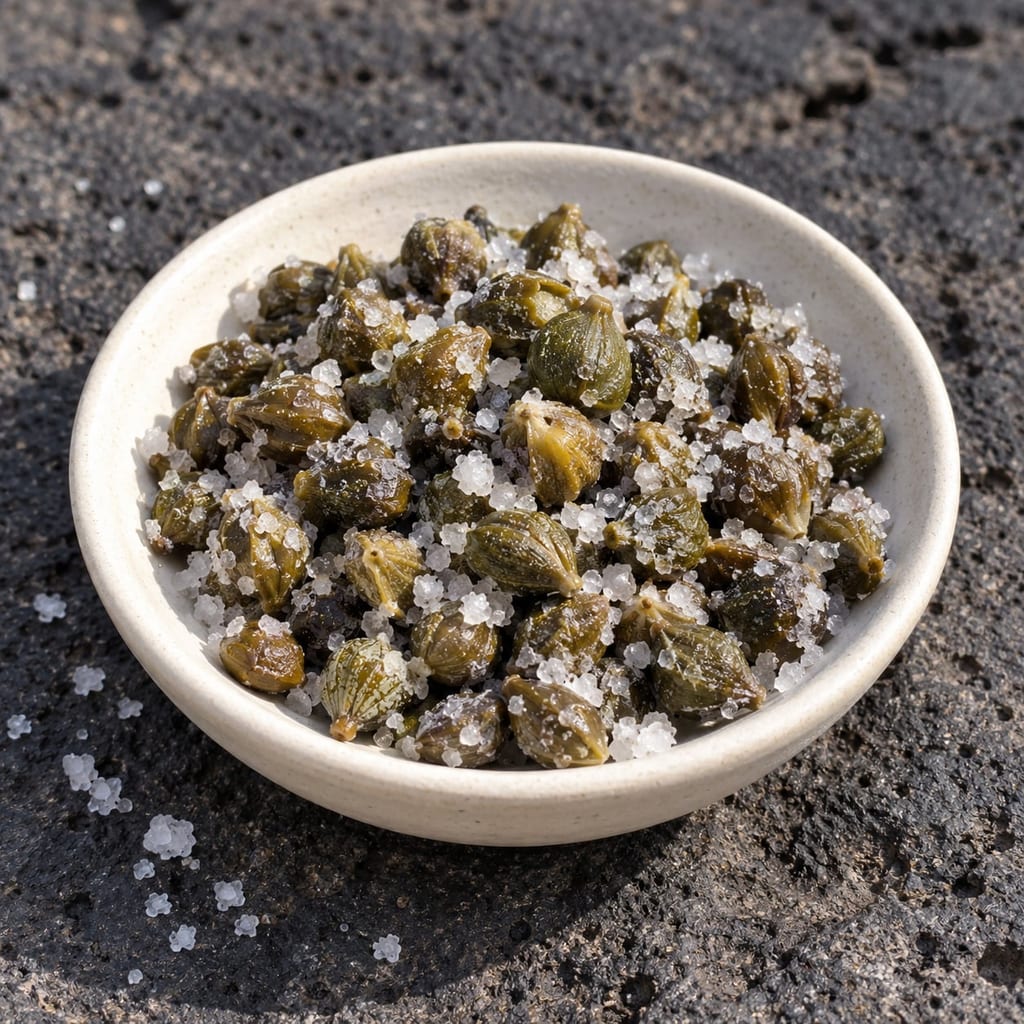
A protected Sicilian product: unopened caper buds from the island of Pantelleria, dry-salted with sea salt in a two-stage process that encourages lactic fermentation.
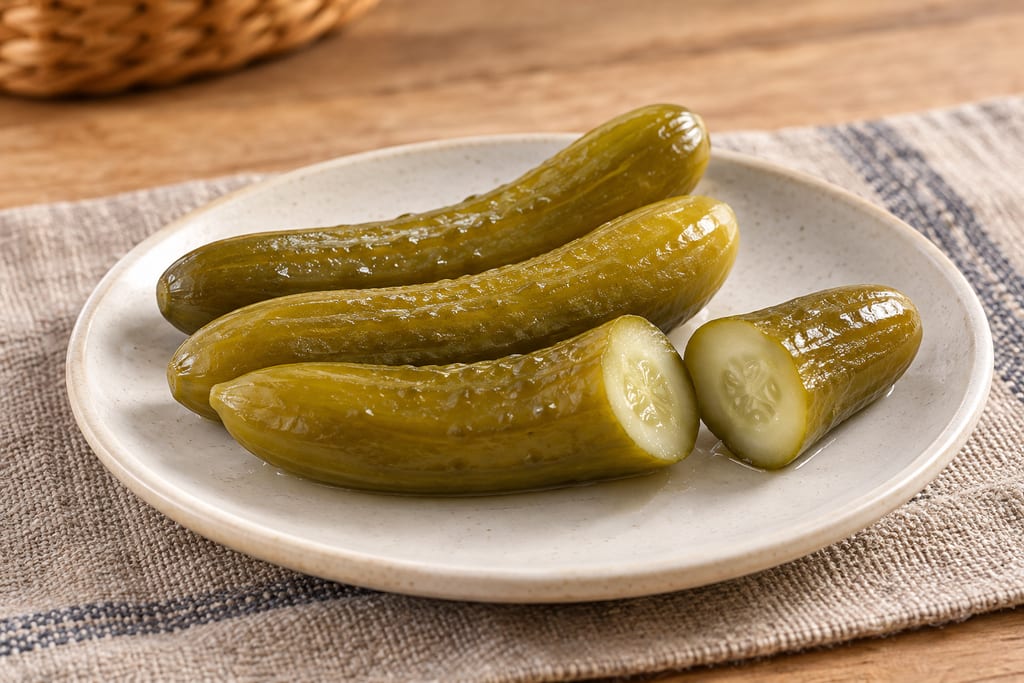
Çubuk turşusu is a registered pickle from Çubuk district in Ankara. Its cucumber variant is sold as Salatalık Turşusu, and a commercial specification sets its brine and room-temperature period.

A Cap-Pelé boucanière is an Acadian herring-smoking building. The documented Willie Niles example is a one-storey wood-frame structure with a ridge smoke vent and interior bays for hanging fish-bearing cannes.

Achcharu is a family of Sri Lankan vinegar pickles made with mixed vegetables or seasonal fruit and a piquant spice dressing. This version is a quick, refrigerated, non-fermented mixed-vegetable pickle.

The acocote is a long, hollowed and dried gourd used to draw aguamiel from a mature maguey. It is a harvesting tool: the sap is transferred to a separate vessel before it ferments into pulque.

Adrak murabba preserves young ginger in sugar syrup, a sweet South Asian preparation recorded in Indian cookery and food-processing sources.

Parkia biglobosa seeds are fermented into regional West African seasonings, including nététou, iru, dawadawa and soumbala. The yellow fruit pulp is a separate food, and names and methods vary by place.

Japanese reddish-brown vinegar from sake lees matured about three years, turned to vinegar by acetic bacteria; the vinegar of Handa and Edomae sushi rice.

A refined common-wheat flour blended for a broad range of baking; its protein and behavior vary with wheat, milling and market.

The almond mushroom, Agaricus subrufescens, was cultivated in eastern North America in the 1800s, lost its market, and returned as a cultivated mushroom from Brazil, where it is grown under several names.
No community contributions have been published for this entry yet.
Sign in to contribute. Published comments and photos are free to read.
Ministry of Agriculture, Forestry and Fisheries (MAFF), JapanHistory · Method · Uses
伊勢たくあん (Ise takuan), traditional food menuMisono daikon, hāsagake drying, barrel with rice bran and salt, optional seasonings, months to 2 to 3 years maturation.
Retrospective trade history from late Edo to about 1965, then decline and recovery.
Cited in: Ise City and Misono daikon; Local trade history; Harvest, drying and maturation; Eating it and open questions
Mie BrandMethod · History
Mie Brand certified product entry for Ise takuanAbout two weeks of sun drying, then ambient lactic maturation.
Misono daikon cultivar improvement and local growing.
Cited in: Ise City and Misono daikon; Local trade history; Harvest, drying and maturation; Eating it and open questions