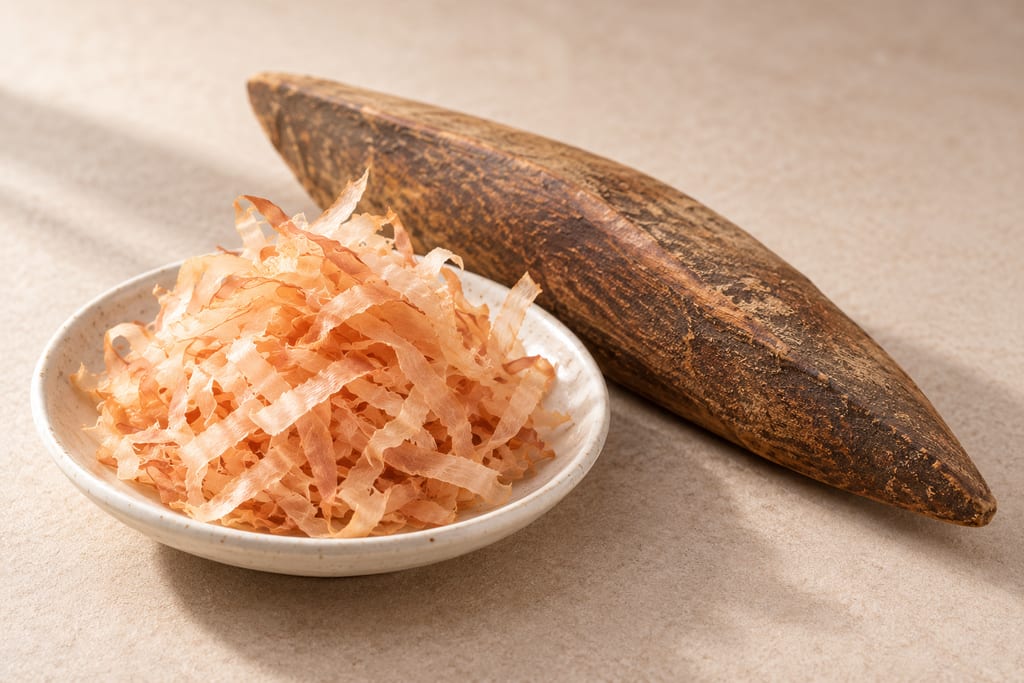
Bonito flakes (katsuobushi)
Katsuobushi is skipjack tuna cooked, smoked and dried into a hard block that is shaved into flakes for dashi and toppings. Some styles stop at the smoke-dried stage; others receive carefully managed mold maturation.
 FermenteaWhere food goes to change
白だし · Shiro dashi · Shirodashi · White dashi · 白だし
Shiro dashi is a pale Japanese seasoning stock of kombu and bonito dashi, light soy sauce, mirin and salt, used to flavour dishes without darkening them.
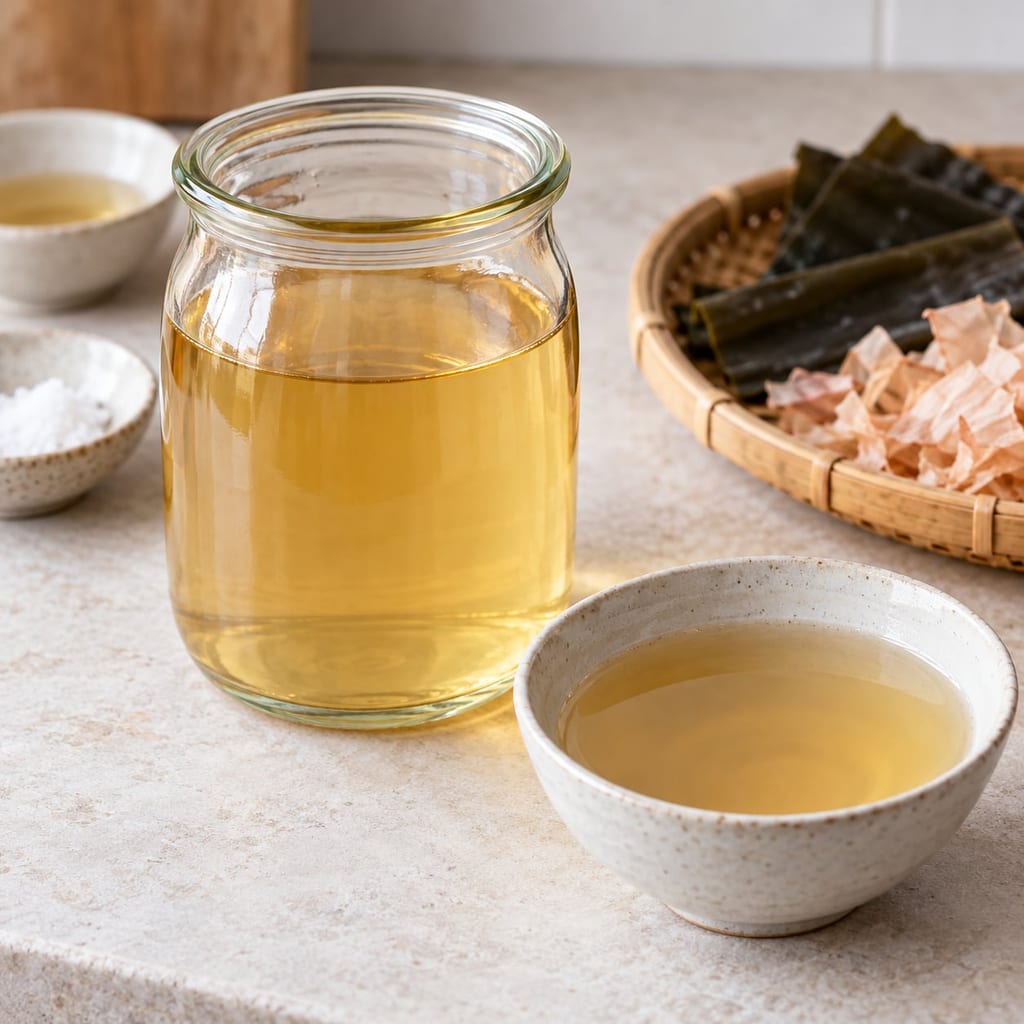
Shiro dashi (白だし, "white dashi") is a seasoned stock: dashi made from kombu and bonito, flavoured with light-coloured soy sauce, mirin and salt. The soy sauce is the point. Usukuchi, the light soy sauce, seasons without darkening, so a clear soup, a custard or an omelette keeps its pale colour. Just One Cookbook uses it for chawanmushi in particular.
Bottled shiro dashi is very concentrated. The home version here is not, and the recipe author says so: for soups and noodle soups you use more of it, or multiply the batch. It sits next to mentsuyu, the darker noodle sauce, as one of the two Japanese seasoned stocks sold as concentrates.
The stock is built in stages. Kombu steeps in water, either gently heated or cold-brewed overnight, and comes out just before a simmer: left in, it turns the dashi slimy and bitter. The seasonings go in next, then the bonito.
The bonito cut sets the timing. Thick shavings (atsukezuri) need 10 minutes on low heat to give up their flavour. Thin flakes (hanakatsuo) are quicker: 30 seconds on low heat, then 10 minutes steeping off the heat. Straining and cooling finish it. These are heated extractions of kelp and dried fish combined with seasonings, not a new fermentation, though soy sauce and mirin are themselves fermented foods.
Just One Cookbook lists udon soup, chawanmushi, tamagoyaki, takikomi gohan (seasoned mixed rice), oden, eggplant agebitashi, zosui, Kanto-style ozoni and simmered dishes. A reader question on that page confirms it still needs diluting for most uses, but the page gives no ratio, so none is stated here. A Japanese manufacturer also publishes a no-heating way to infuse its mirin-style seasoning into a home tsuyu or shiro dashi.
The recipe page says to refrigerate it in a closed container for 3 to 4 days. That is one author's statement for this batch, not a tested shelf life, and it should not be borrowed for a commercial bottle or for the one-month figure the same site gives for its mentsuyu. The sources do not establish a conversion between a homemade stock and a bottled concentrate, and they do not date shiro dashi. The 1997 Brewing Society of Japan article on tsuyu tentatively places soba-tsuyu in the late sixteenth century; it does not describe shiro dashi.
The consulted pages describe current home and commercial shiro dashi; none dates its origin.
Yield 480 mL · Scaling: source batch only
Contains bonito, soy sauce and mirin; check the soy sauce label for wheat.
Hazard sourceCool completely, refrigerate in a closed container and use within the 3 to 4 days the recipe page gives.
Control sourceThe 3 to 4 day interval is the recipe author's own statement for this batch, not a validated shelf life.
A homemade stock is not the same as a bottled concentrate; do not apply a commercial product's storage claims to it.
Documented as a current Japanese home and commercial seasoning; the sources give no origin place or date.
Katsuobushi is skipjack tuna cooked, smoked and dried into a hard block that is shaved into flakes for dashi and toppings. Some styles stop at the smoke-dried stage; others receive carefully managed mold maturation.
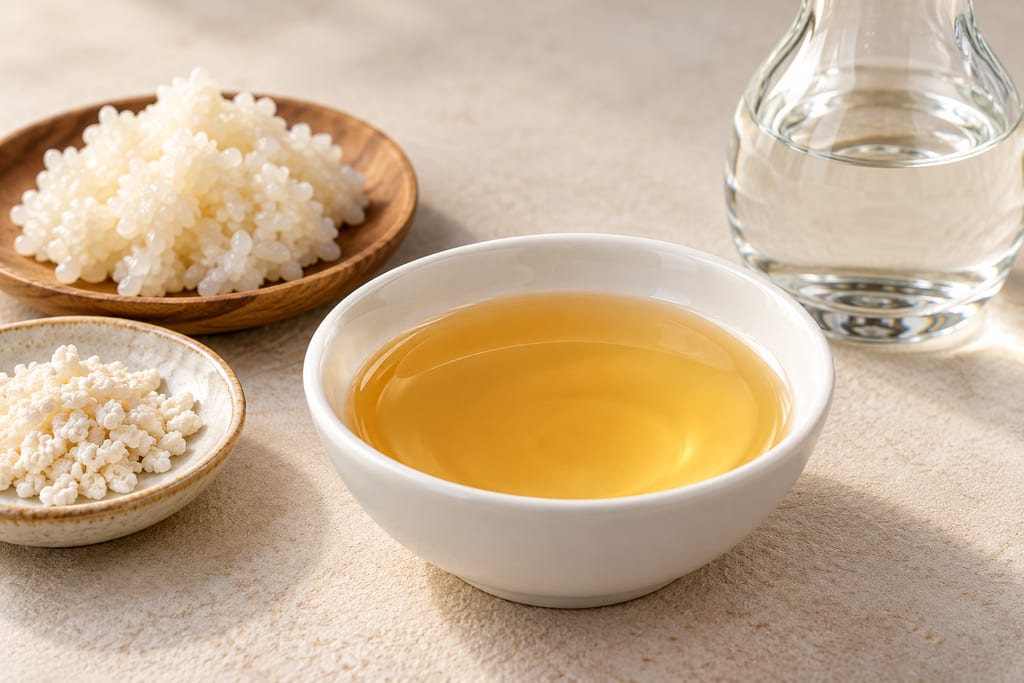
Hon-mirin is a Japanese rice seasoning made by saccharifying glutinous rice with rice koji in shochu, then pressing and usually heating the mash.
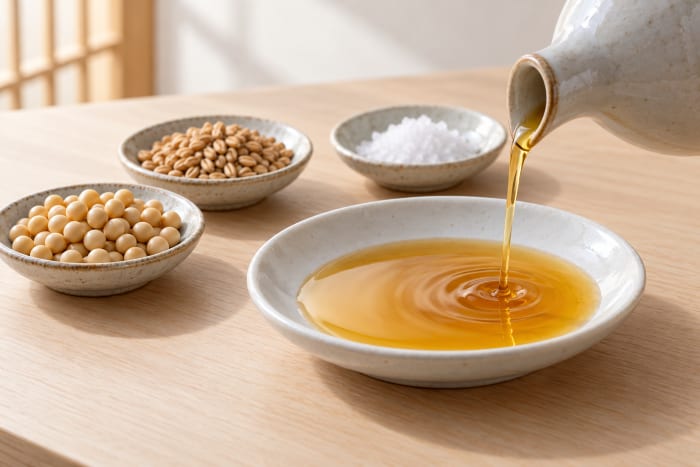
Usukuchi is Japan's light-coloured soy sauce, a Kansai style identified by its pale colour rather than by lower salt, with the colour set by production choices made during brewing.
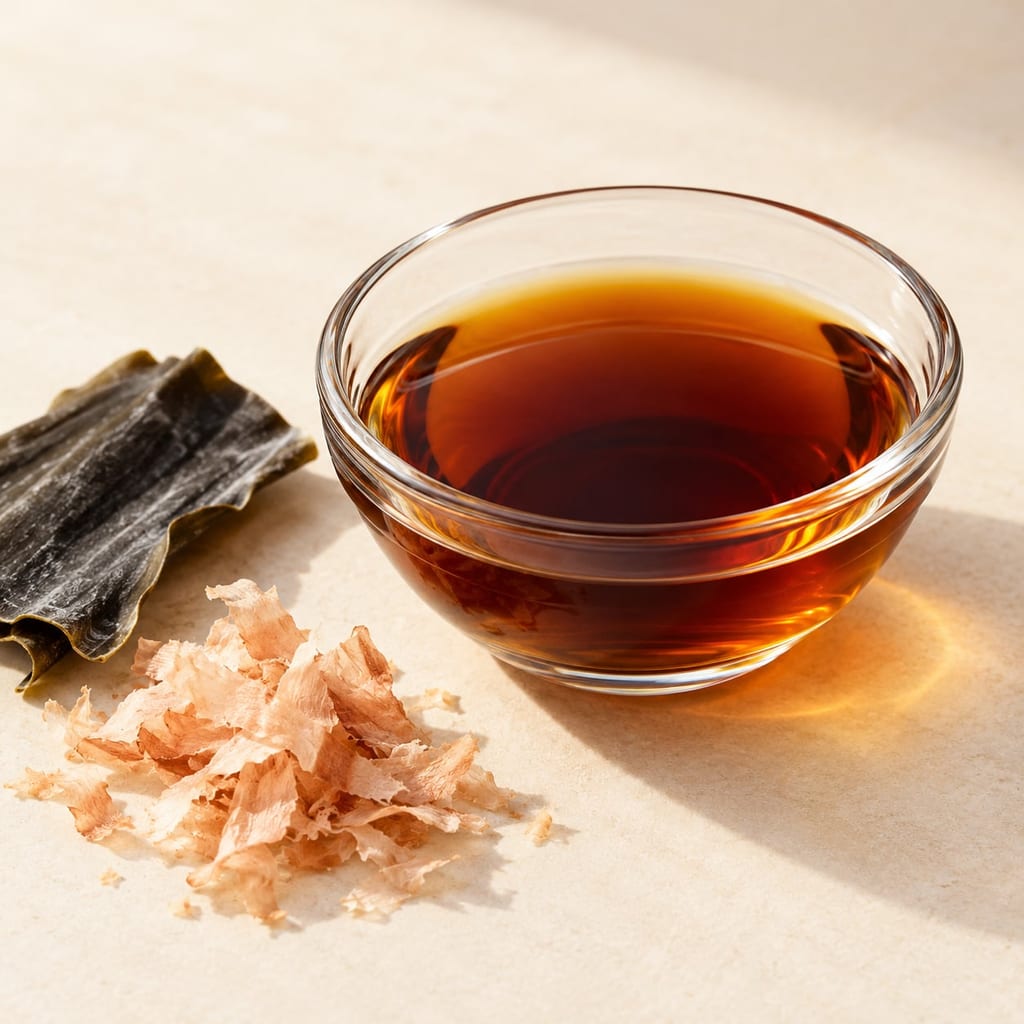
Mentsuyu seasons Japanese noodles with dashi, soy sauce and mirin. Two home formulas are recorded here: a 2012 light-soy and bonito sauce, and a concentrate diluted 1:2 for dipping or 1:4 for hot soup.

Japanese reddish-brown vinegar from sake lees matured about three years, turned to vinegar by acetic bacteria; the vinegar of Handa and Edomae sushi rice.
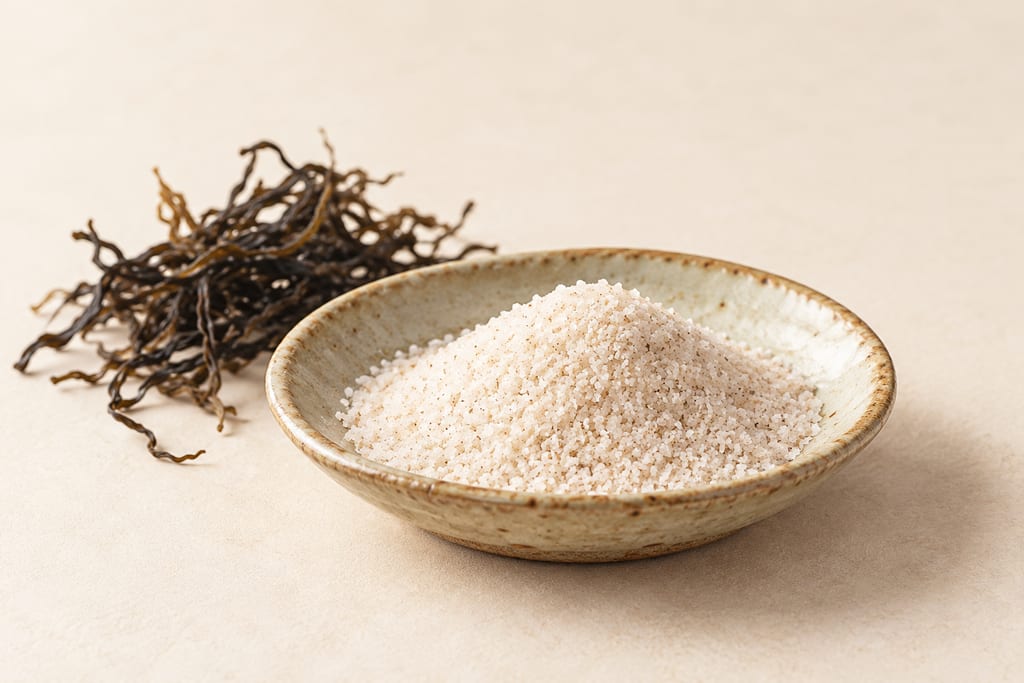
Amabito no Moshio is a modern, pale beige Japanese seaweed salt made from Seto Inland Sea water and hondawara seaweed. Its documented factory method concentrates filtered brine in kettles, then separates and dries the salt.
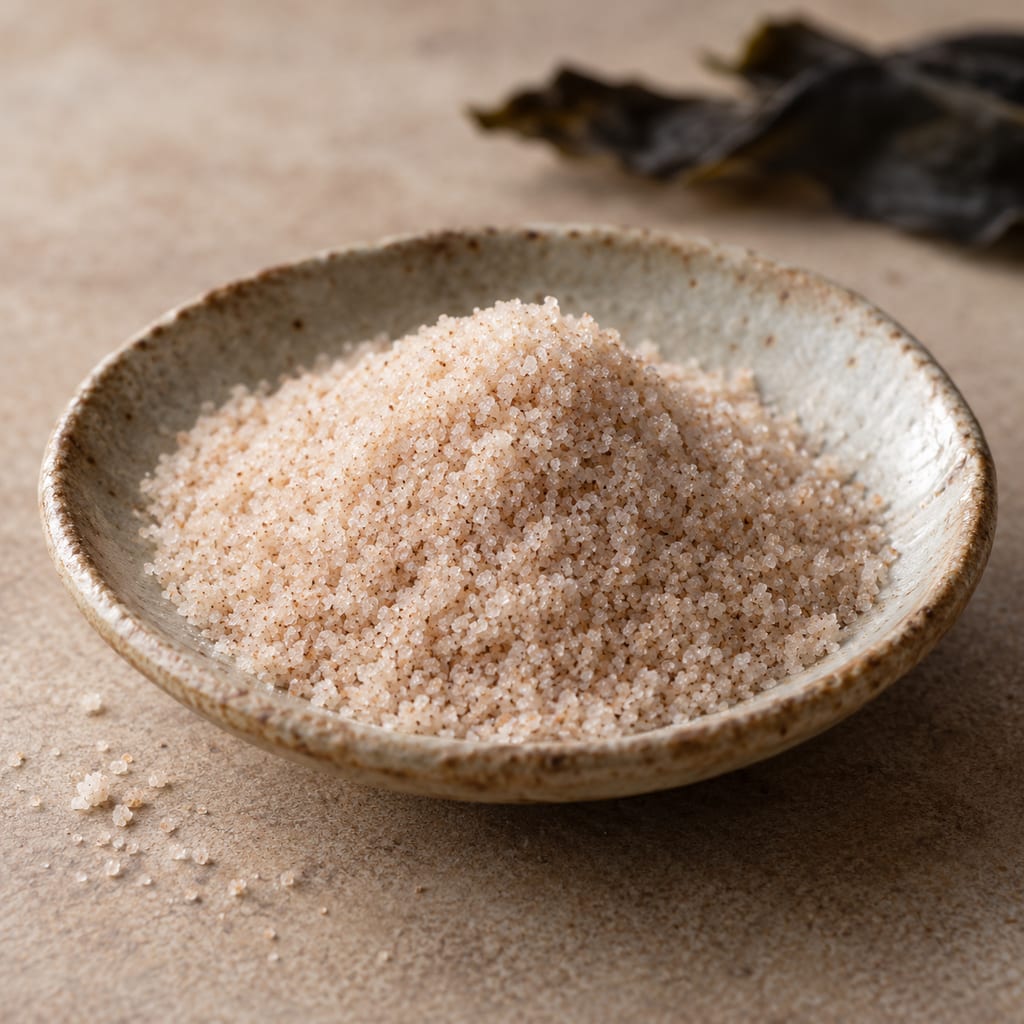
Awaji moshio is a modern Japanese seaweed salt made by TaDa PHILOSOPHY from Awaji Island seawater and seaweed. Its premium process concentrates brine, extracts seaweed flavor, then crystallizes, separates, dries and grades the salt.
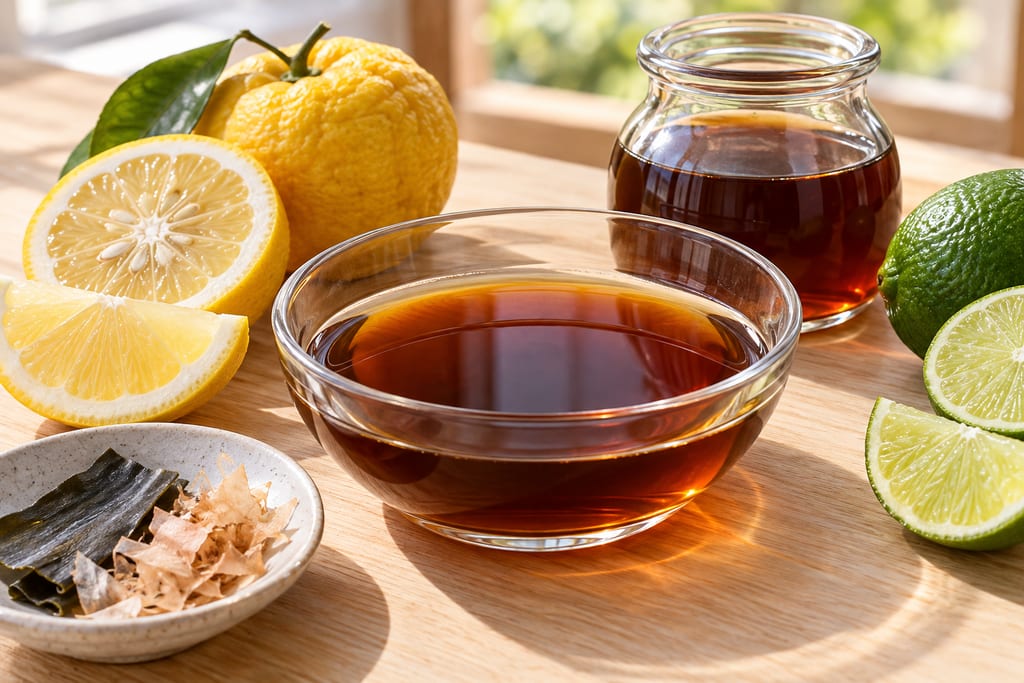
This fresh ponzu-shoyu mixes Japanese koikuchi soy sauce with yuzu or a lemon-lime blend, rice vinegar, water and sugar; optional kombu and bonito give a short chilled infusion.
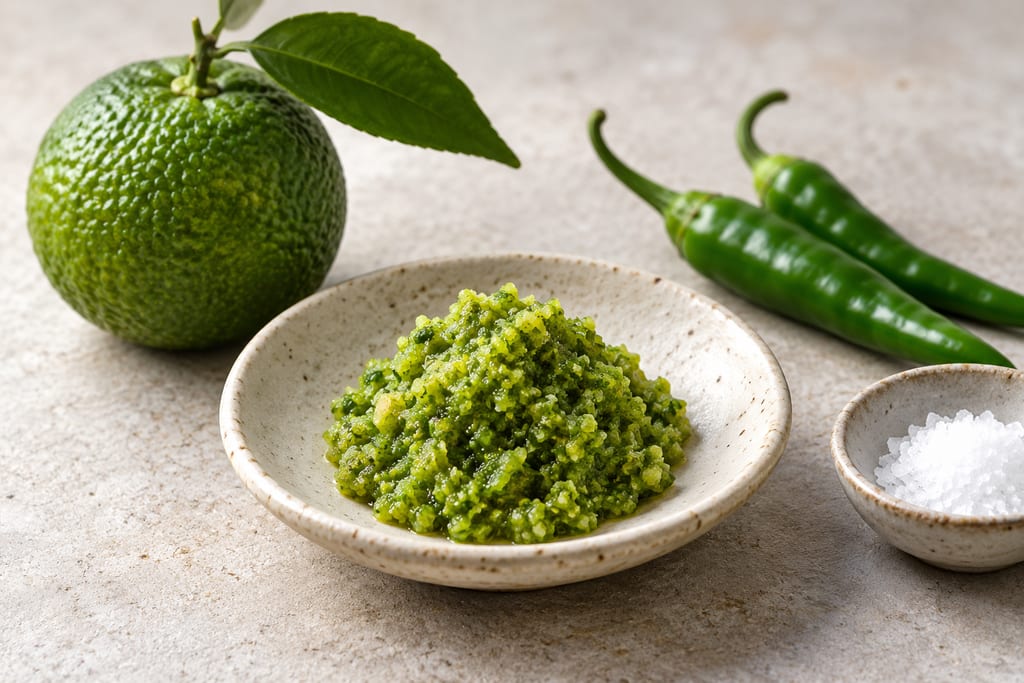
A fresh, uncooked yuzu and green chilli paste inspired by Kyushu’s yuzu kosho, made here as an untested small-batch seasoning rather than a preservation formula.
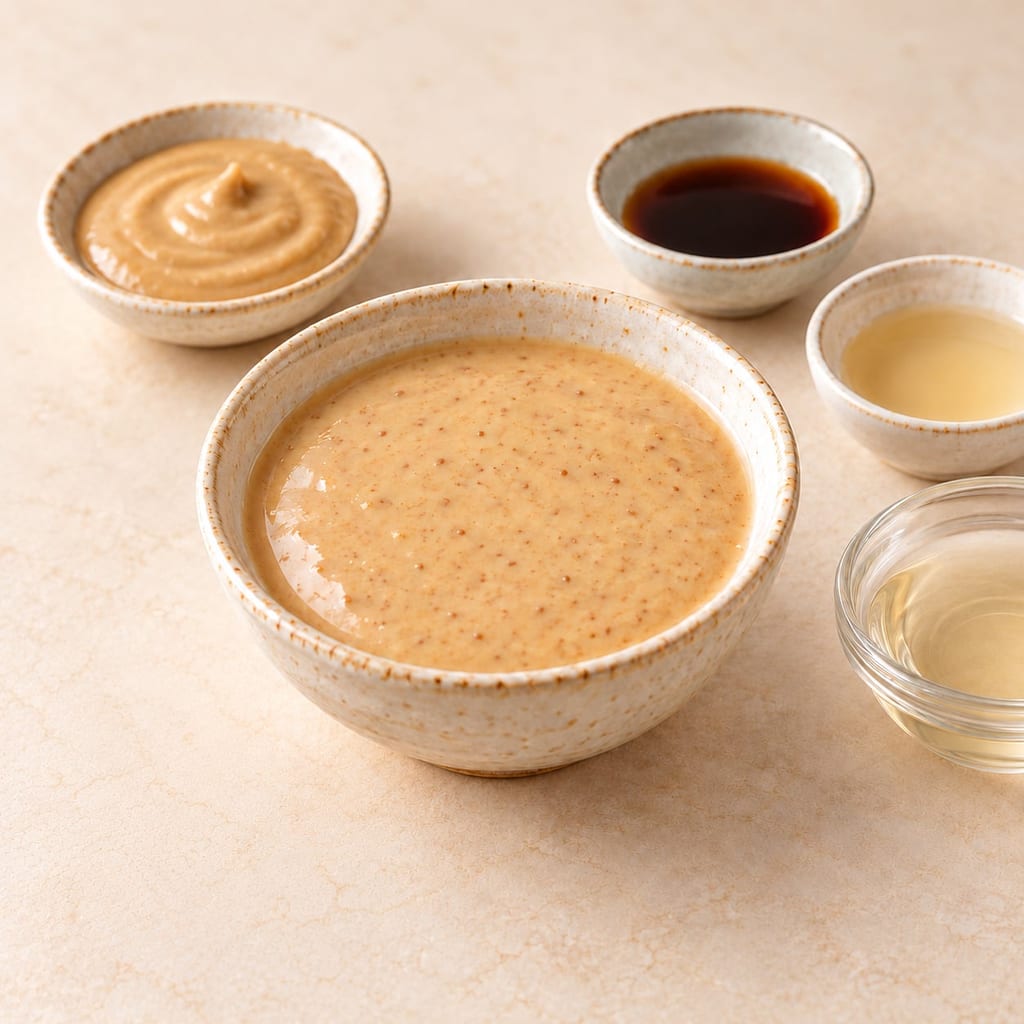
A creamy Japanese sesame dipping sauce with soy, rice vinegar and dashi. Gradual mixing turns the thick sesame paste into a smooth sauce.
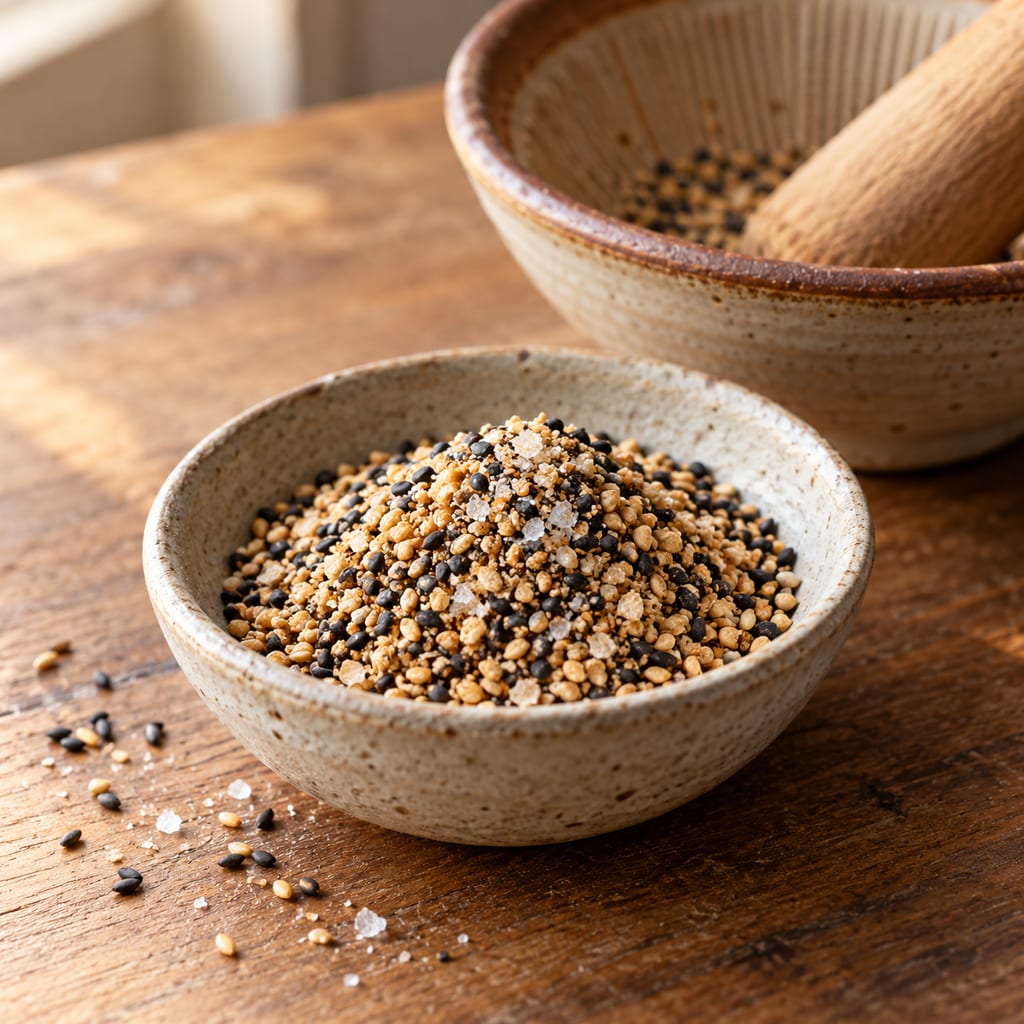
Toasted sesame seeds and sea salt are ground together into a coarse seasoning for rice. This small pan-roasted batch keeps most of the seed texture.
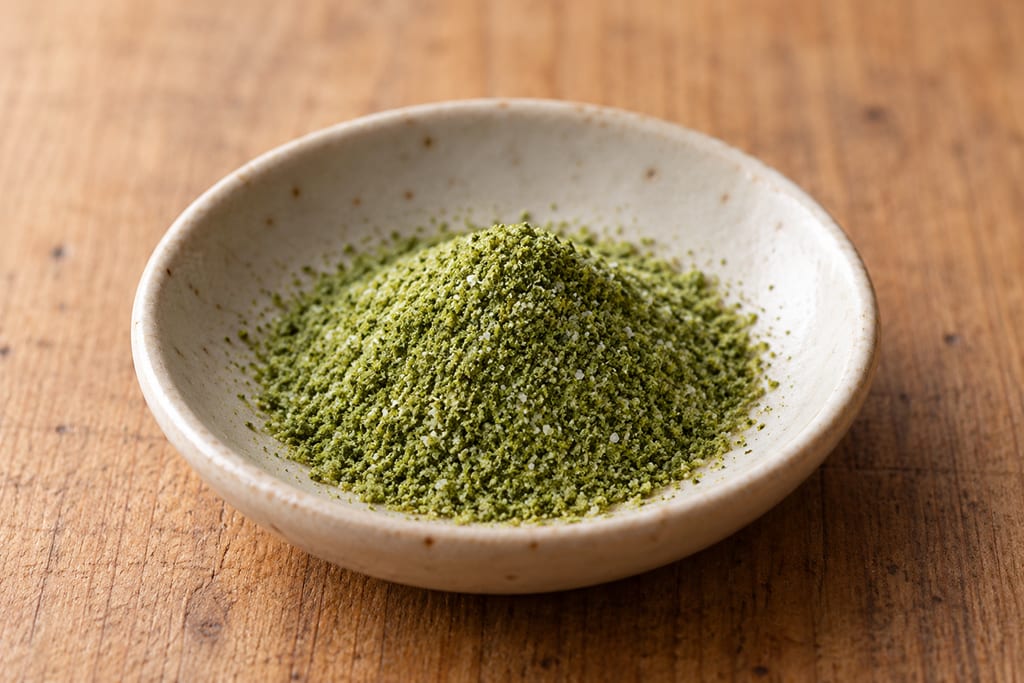
Green tea leaf salt is a dry seasoning made by grinding tea leaves, sieving them and mixing the powder with fine salt. This Japanese-style version follows a documented equal-parts method.
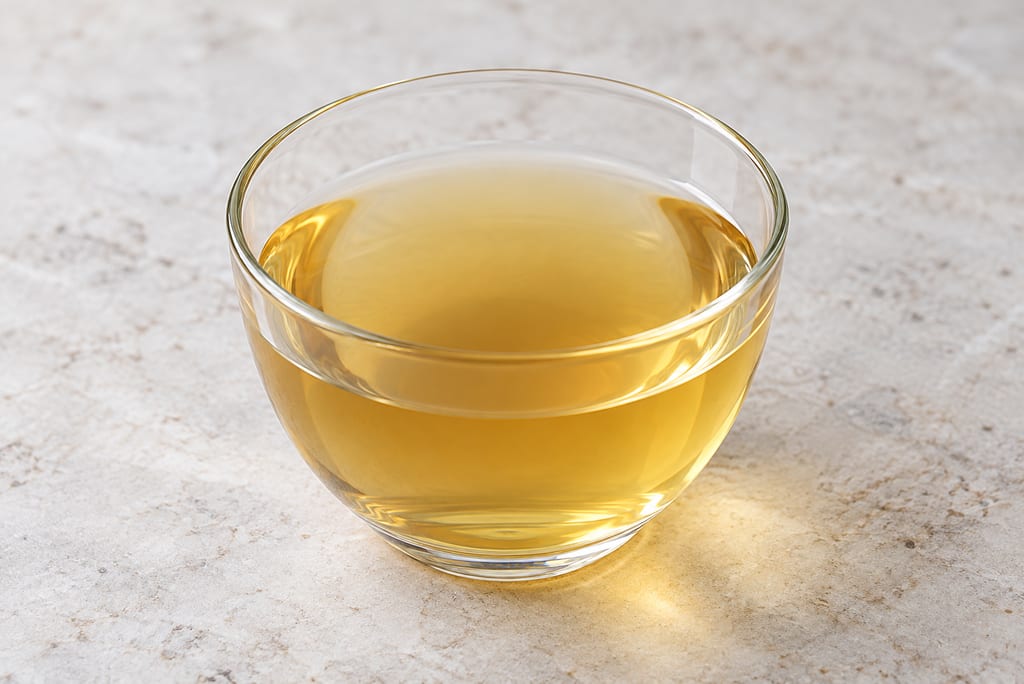
A liquid set with a little gelatin, frozen solid, then thawed through cloth in the refrigerator so that clear liquid drips out and the cloudy gel stays behind.
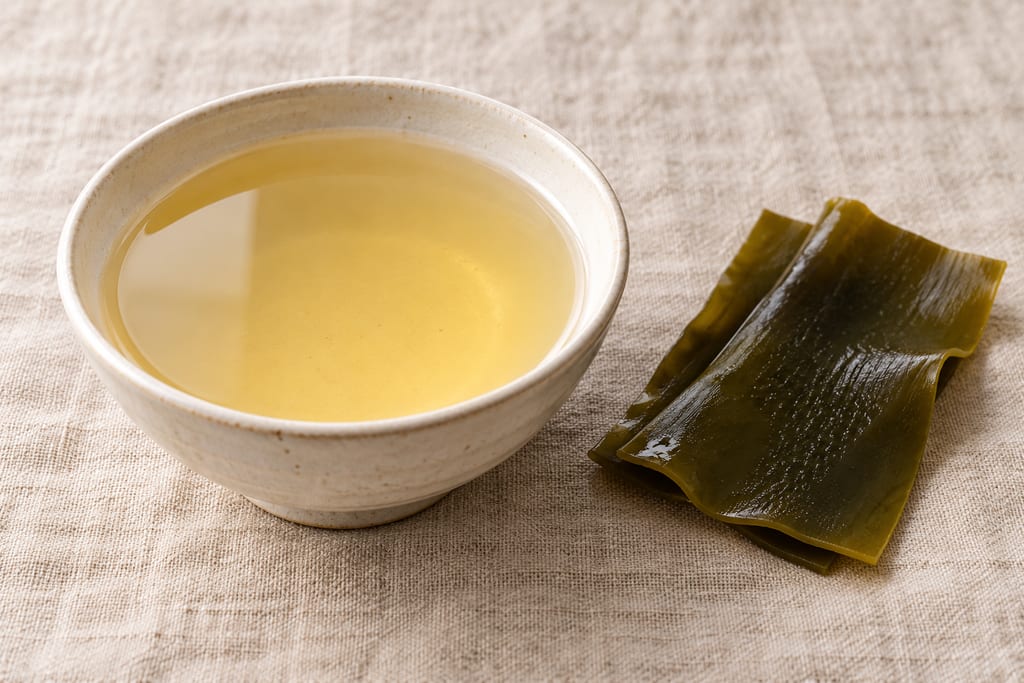
A clear Japanese broth made by gently extracting kombu’s savoury taste into water. Use it on its own for delicate dishes or as the kelp base for a separate bonito or dried-fish dashi.

Meat stock simmered, strained and reduced until a gelatin-rich mass sets, then dried into solid cakes that dissolve in water; a concentrated provision of the early modern naval period.
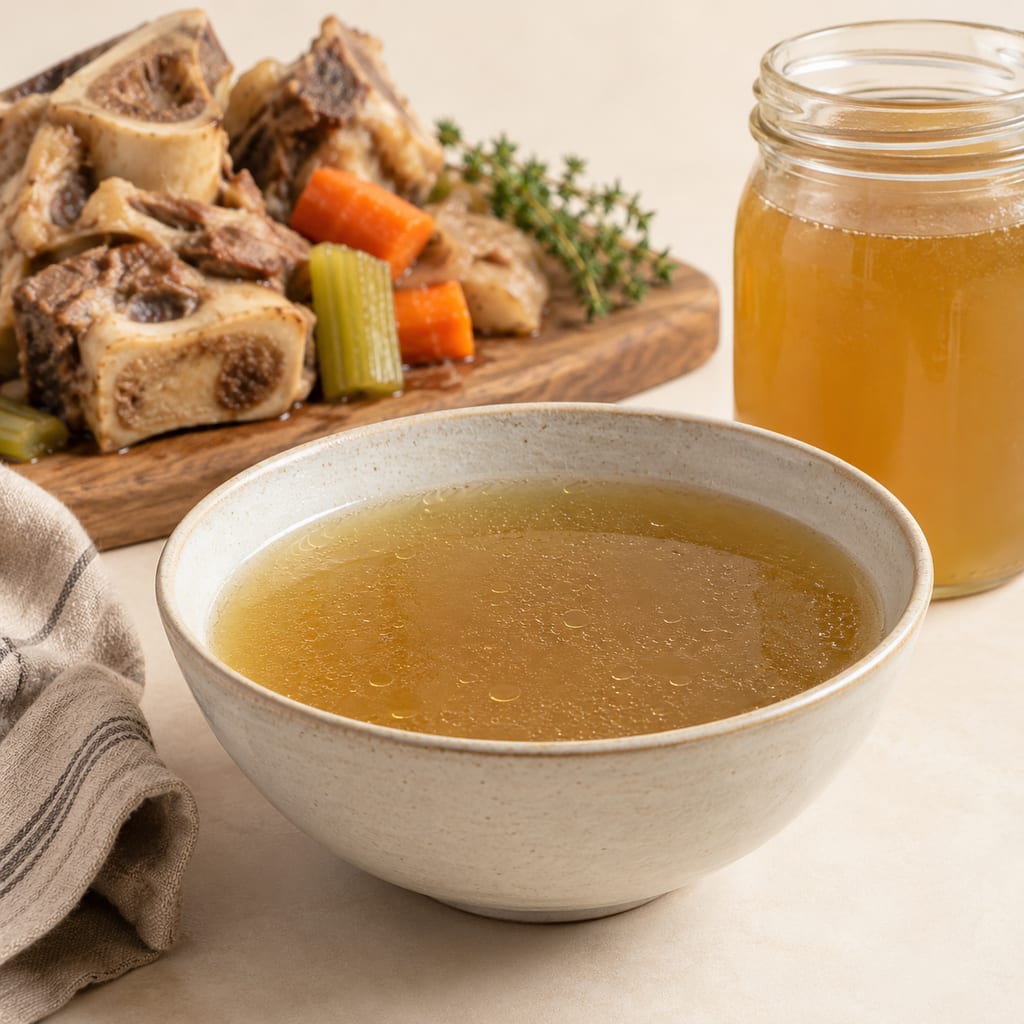
Bones and vegetables pressure cooked for four hours in an electric multicooker and strained into a broth. The gel strength the broth reaches is not established.
No community contributions have been published for this entry yet.
Sign in to contribute. Published comments and photos are free to read.
Just One CookbookMethod · Identity · Use · Storage
Homemade Shiro Dashi (Versatile Dashi Base)Ingredients, quantities and method, including the thick-versus-thin bonito timings; yield about 480 mL.
Shiro dashi is made with light soy sauce so it adds flavour without darkening food; suits chawanmushi.
Home version is less concentrated than bottled; refrigerate 3 to 4 days.
Uses: udon soup, chawanmushi, tamagoyaki, takikomi gohan, oden, eggplant agebitashi, zosui, kanto-style ozoni, nimono.
Cited in: What it is; How it is made; Using it; Storage and limits
King酔造株式会社Method
手作りめんつゆ・白だしA Japanese manufacturer's no-heating infusion using its mirin-style seasoning, as another home route to mentsuyu and shiro dashi.
Cited in: Using it
Brewing Society of JapanHistory · Definition
めん類等用つゆの生産動向と賞味期間 / Movement in Market and Date of Durability of TsuyuDefines tsuyu in relation to soy sauce, sweetener and extracted dashi; contemporary retail products may be concentrated or ready to use.
Cited in: Storage and limits