
Freeze-thaw clarified stock or juice
A liquid set with a little gelatin, frozen solid, then thawed through cloth in the refrigerator so that clear liquid drips out and the cloudy gel stays behind.
 FermenteaWhere food goes to change
Traditional method
Dried portable soup · Soup cakes · Concentrated portable soup
Meat stock simmered, strained and reduced until a gelatin-rich mass sets, then dried into solid cakes that dissolve in water; a concentrated provision of the early modern naval period.

Portable soup is a concentrated meat stock that has been dried into a solid cake. Meat and connective tissue, sometimes with vegetables or spices, were simmered for a long time, strained and reduced until the liquid set as a gelatin-rich mass. That mass was dried into cakes small enough to carry.
The product is not a fermented food. Its keeping depends on the removal of water from a concentrated stock, which is why a moist stock is not the same stored product.
The record places portable soup in early modern Europe, especially in eighteenth-century naval provisioning. A compact cake of stock could be carried on a voyage and dissolved in water when a meal was needed.
The source describes eighteenth-century recipes that promised very long shelf lives. Those are historical claims about the product, not a guarantee for a modern one.
Reducing the stock removes much of the water and leaves a concentrated, gelatin-rich mass that sets firm. Drying the set mass reduces the remaining moisture further, so the cake is stable in a way the liquid stock was not.
The concentration and the drying are the steps the record names as preserving; the sources do not describe any other preserving treatment.
The sources give no temperatures, times or moisture targets, and they do not establish a shelf life. A modern demonstration of the method should stop at a refrigerated or frozen stock concentrate, which is the form the evidence supports.
Modern stock cubes and meat extracts are related commercial products; the sources compare them but do not treat them as the same process.
Portable soup was meat stock concentrated and dried into solid cakes that could later be dissolved in water. The source records its use in eighteenth-century naval provisioning. The preserving steps were concentration and dehydration; a moist gelatinous stock by itself was not the equivalent stored product.
Scaling: source batch only
A concentrated stock can support spoilage if handled or stored without control. The sources record the historical product but not conditions that make storage safe.
Hazard sourceStop a modern demonstration at a refrigerated or frozen stock concentrate; do not treat the dried cake as validated for ambient storage.
Control sourceThe sources record historical practice only. They are not a tested home method.
The source documents eighteenth-century naval provisioning; it does not establish one place of invention.
A liquid set with a little gelatin, frozen solid, then thawed through cloth in the refrigerator so that clear liquid drips out and the cloudy gel stays behind.
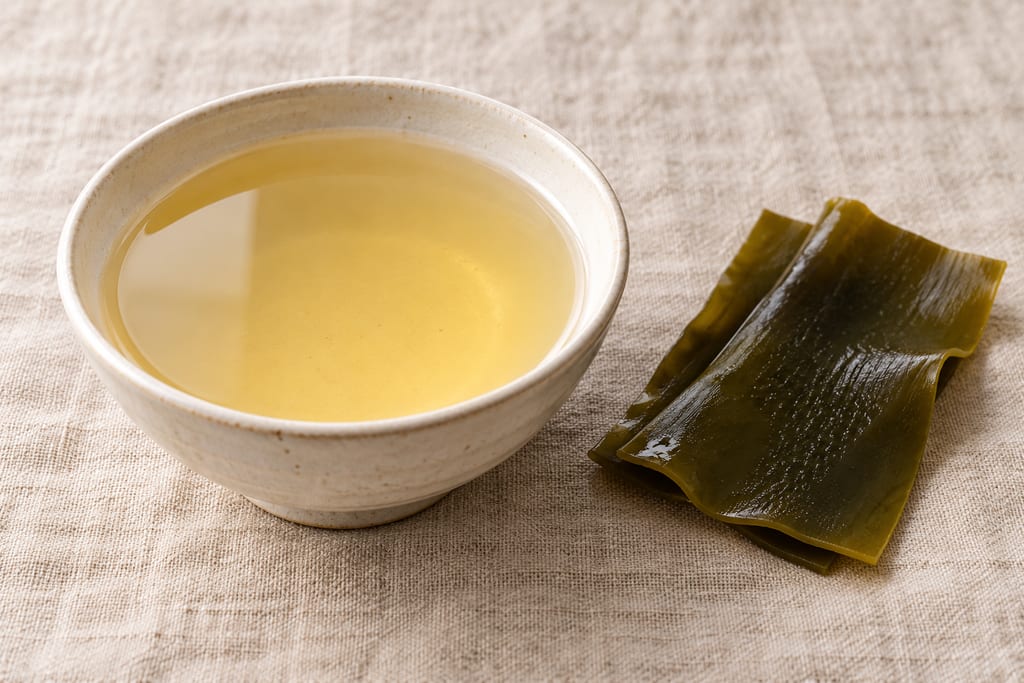
A clear Japanese broth made by gently extracting kombu’s savoury taste into water. Use it on its own for delicate dishes or as the kelp base for a separate bonito or dried-fish dashi.
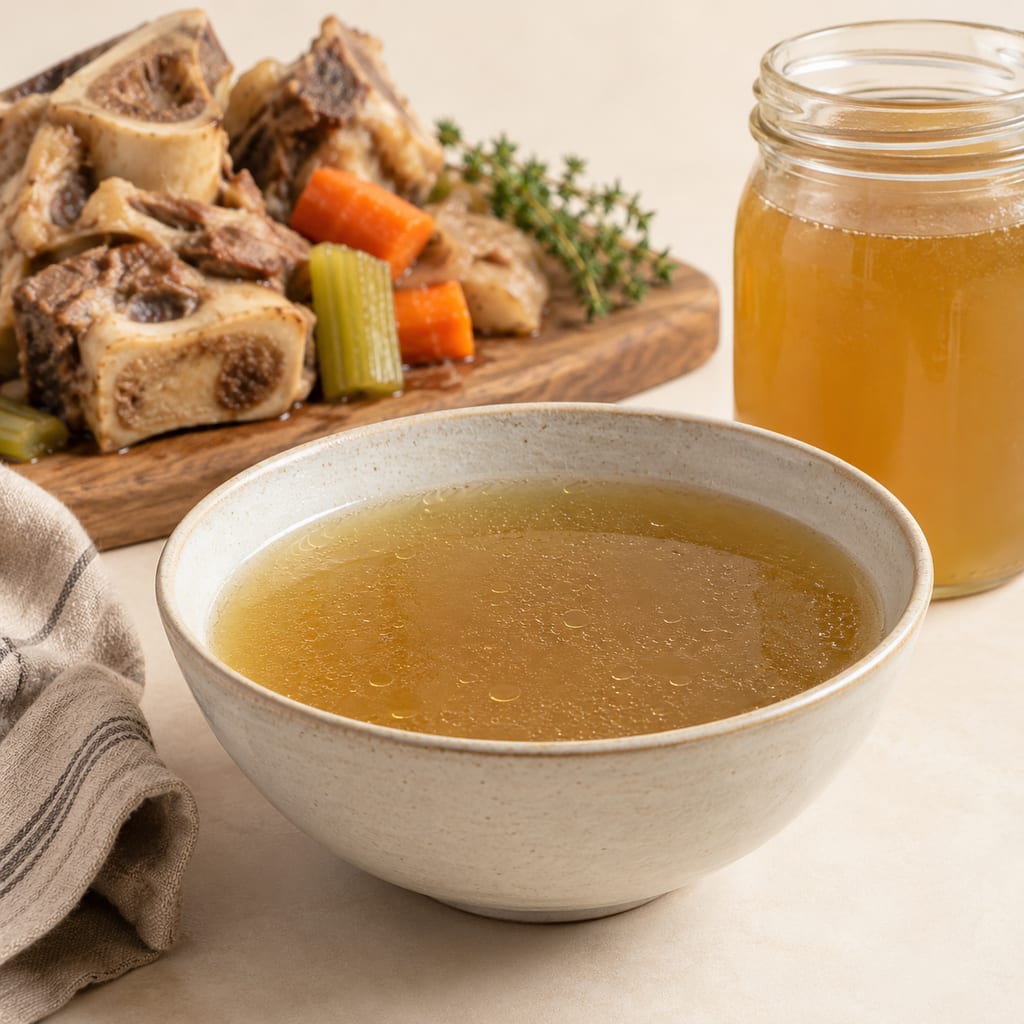
Bones and vegetables pressure cooked for four hours in an electric multicooker and strained into a broth. The gel strength the broth reaches is not established.
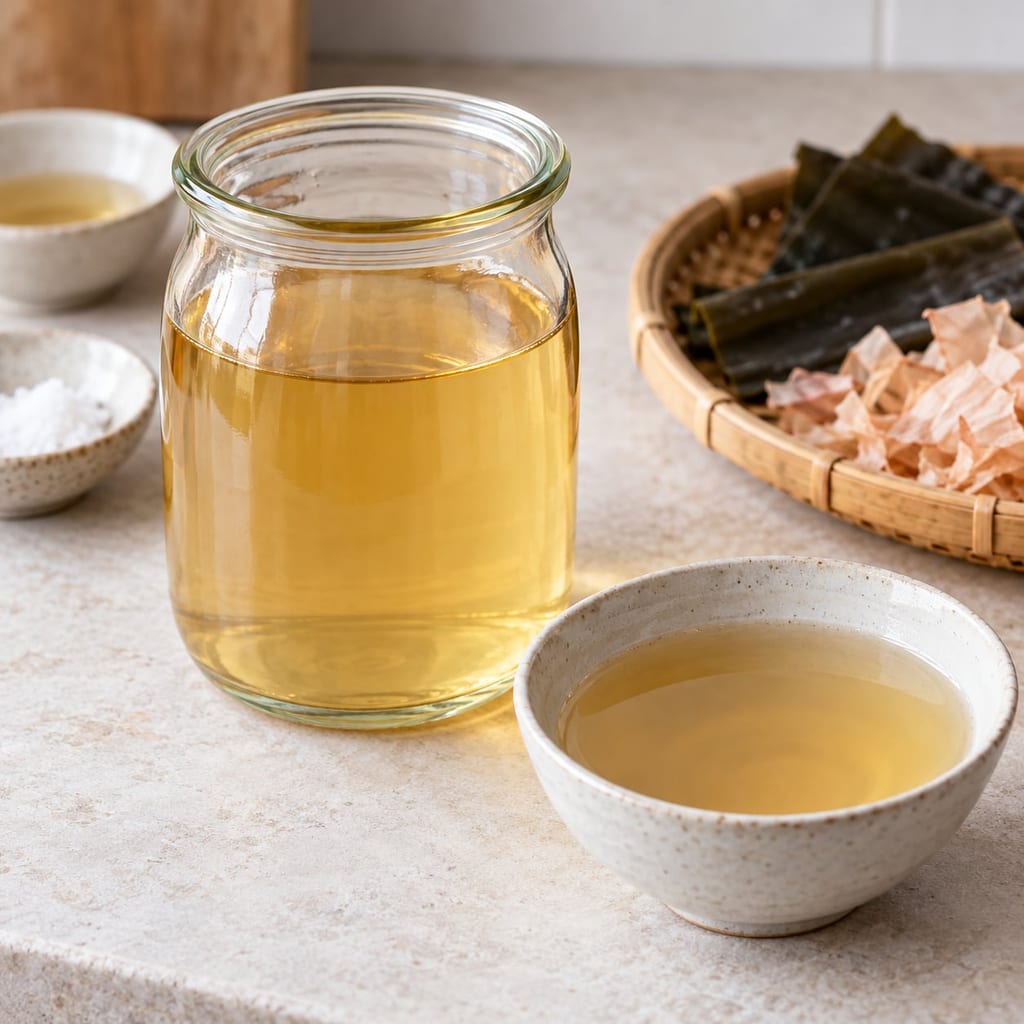
Shiro dashi is a pale Japanese seasoning stock of kombu and bonito dashi, light soy sauce, mirin and salt, used to flavour dishes without darkening them.

A gelling polysaccharide extracted from red seaweeds, sold as kanten strips or powder; it sets firm at a low concentration and stays solid until about 85 °C.

A Dominican table and seasoning condiment of sour orange juice, mixed with lime and salt and bottled raw; garlic, oregano or a hot pepper may be added for meat or a spicier bottle.

Cicerbita alpina is an alpine perennial whose tender shoots and leaves have been eaten raw or cooked. Sámi milk preparations and modern Carnian dishes are distinct uses, with serious identification and preservation limits.

Japanese skipjack tuna cooked, then repeatedly smoked and dried over a wood fire by the hand-fired tebiyama method into a hard block for shaving into dashi: the first stage of katsuobushi.

A Swedish-style spirit vinegar made by fermenting neutral alcohol with live vinegar bacteria, with a separate guide to commercial ättika strengths.

A yeast-raised wheat ring shaped from a firm dough, briefly boiled and baked. This source-batch formula gives a gently malted crust and a chewy crumb.

A warm dip of garlic, anchovy and olive oil, often enriched with butter, that Piedmont serves over a flame with raw and cooked vegetables and bread.

Bechamel is a white sauce of milk thickened with a butter and flour roux, one of the French mother sauces, and the base from which Mornay and other cheese and cream sauces are made.
No community contributions have been published for this entry yet.
Sign in to contribute. Published comments and photos are free to read.
History · Method
https://paulturnbull.org/project/southseas/companion/P000055b.htmlMeat stock concentrated and dried into solid cakes that were dissolved later in water
Eighteenth-century naval provisioning
Concentration and dehydration were the preserving steps; a moist gelatinous stock was not the stored product
Cited in: What it is; Naval provisioning; How concentration and drying preserve; Limits of the record and modern use