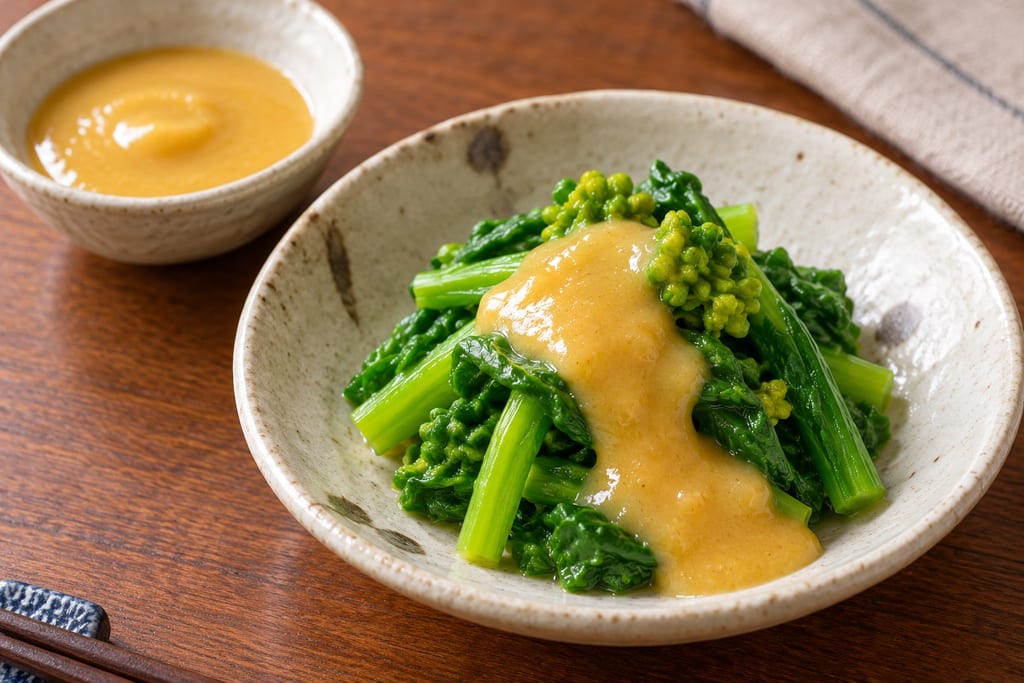
Miso mustard
Karashi-su-miso is a smooth Japanese sauce of sweet miso, rice vinegar and hot mustard, stirred together for vegetables, seafood or poached fish.
 FermenteaWhere food goes to change
昆布だし · kombu stock · kelp dashi
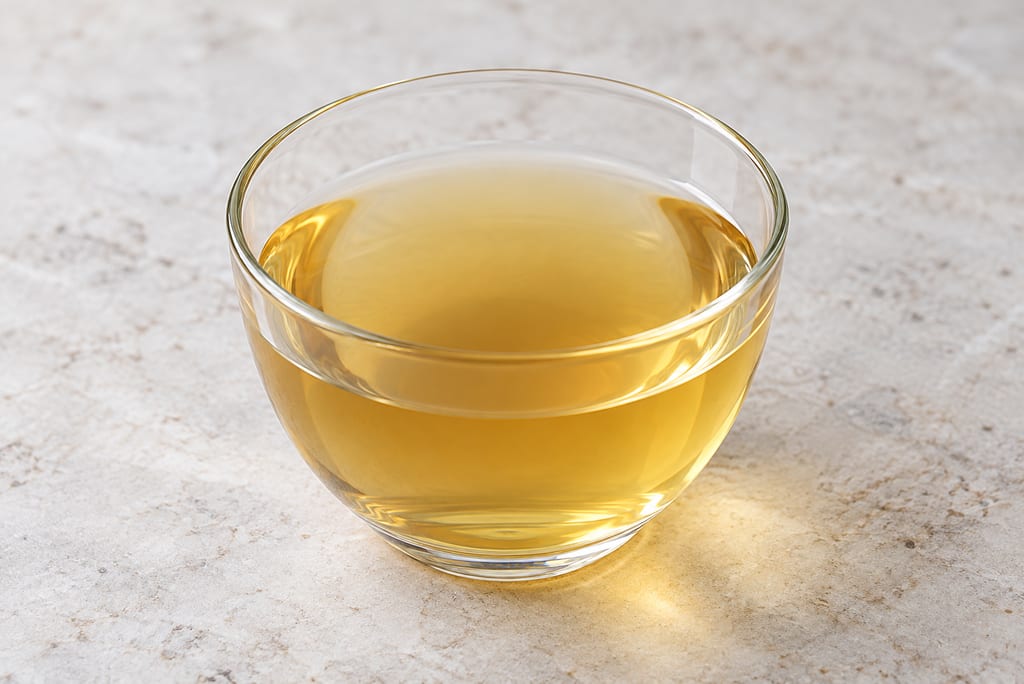
A clear Japanese broth made by gently extracting kombu’s savoury taste into water. Use it on its own for delicate dishes or as the kelp base for a separate bonito or dried-fish dashi.
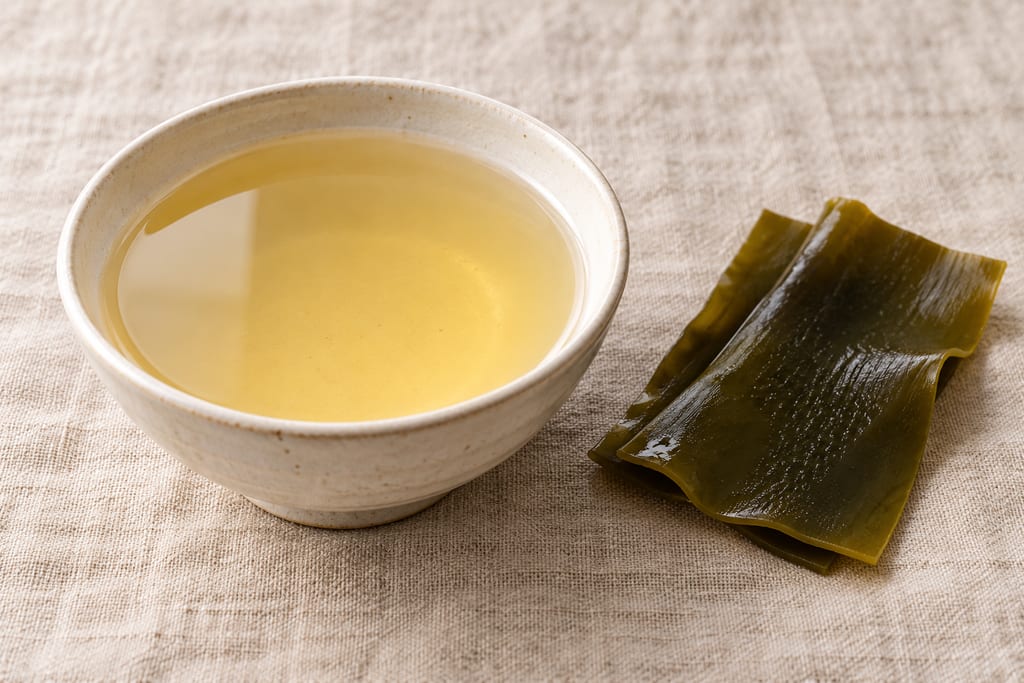
Kombu dashi is a light stock made by extracting dried kelp in water. It supplies a gentle savoury base to soups, tofu, hot pots and simmered dishes; the liquid can also stand alone when the other ingredients should remain prominent. The Japanese word dashi is used for stocks made from several ingredients, so kombu dashi names the kelp-only form, while kombu and katsuobushi together make an awase or mixed dashi.
Kombu belongs to a long Japanese food history. The Ministry of Agriculture records it in the eighth-century Shoku Nihongi and describes Hokkaido as the country's leading kombu-producing region. Kelp moved from the Matsumae area toward Honshu by sea; later routes carried it on to Kyoto and Osaka. The Tokyo Foundation says making stock from kombu is thought to have begun around the tenth century. That date is an estimate about a practice, not a surviving dated recipe, and the evidence does not identify one community as the sole origin.
The Japan Kombu Association recommends ma-kombu, Rausu, Rishiri and Hidaka for dashi. Their taste and aroma differ, and the choice changes the broth more than a small adjustment in heating time. Dashi kombu is sold dried; avoid a product labelled for boiling as a vegetable or one with added seasonings if the goal is a clear, single-ingredient stock.
The pale surface bloom on dried kombu is natural and contributes to its savoury taste. Wipe away grit with a damp, well-wrung cloth, but do not wash or scrub the sheet. Soaking first gives the water a head start at extracting flavour, and removing the kelp just before the boil limits the sticky, strongly extracted character that prolonged boiling can bring.
Use 10 g kombu for 1 litre water for a light, versatile stock; the association gives a broader 10–20 g range. Put the wiped kombu in the water and leave it for about 30 minutes. Set the pan over medium-low heat and warm it gradually. Small bubbles will gather on the bottom before the surface boils. Lift the kombu out at that point. Strain only if pieces have broken away.
The aim is to extract a clear, mild broth without forcing a rolling boil. Heat and pan size affect the time to reach the first bubbles, so use the visual cue rather than an invented fixed cooking time. The basic method is complete once the kombu is removed. If the broth is too delicate for a particular soup, use the upper end of the published kombu range next time.
A cold infusion is a useful alternative when a very gentle flavour is wanted: keep kombu in cold water in the refrigerator, then remove it before using the liquid. The sources vary on the steep time, from several hours to overnight, so this page does not assign one universal duration. Keep the vessel chilled rather than leaving a long soak at room temperature.
A controlled extraction is also documented. The Umami Information Center describes holding Rishiri kombu at 60°C for one hour and cautions against exceeding that temperature for this method; it separately gives a near-boil approach for ma-kombu, Rausu and Hidaka. ChefSteps also describes a 60°C, one-hour extraction, then treats a short katsuobushi infusion as a separate step. These are distinct routes, not additional stages required by the basic saucepan recipe.
Kombu-only dashi is a plant-based stock. Add dried bonito flakes after the kombu is removed and the result becomes a mixed dashi often called ichiban dashi; Japan's agriculture ministry gives one example using 10 g kombu, 20 g bonito and 1 litre water. That variant has a fish ingredient and a separate steep, so it is not part of this recipe's two-ingredient method.
Other stocks use dried small fish such as niboshi or dried shiitake mushrooms, either alone or alongside kombu. Their character and extraction differ, so keep them as separate variations rather than quietly adding them to a kombu-only batch. Dashi works in clear soups, miso soup, noodle broths, hot pots, simmered vegetables and custards; its purpose is to support the main ingredients rather than dominate them.
Dashi is perishable. If it will not be used straight away, cool it and place it in the refrigerator within two hours; the UK Food Standards Agency advises eating refrigerated leftovers within 48 hours or freezing them. A cold infusion should be made in the refrigerator from the start. Do not infer a longer storage life from kombu's dried state, since the finished broth is mostly water.
Use kombu dashi for a delicate soup, simmered vegetables, tofu or a noodle broth. For a stronger stock, increase the kombu within the documented 10–20 g per litre range on a future batch. For the deeper, more assertive taste of mixed dashi, add a separately documented ingredient and follow its own steep rather than boiling the kelp for longer.
Hokkaido is Japan's leading kombu-producing region, and the Ministry of Agriculture records the kelp in an eighth-century Japanese text. That chronology places kombu in Japanese foodways long before the sources date stock-making from it. The Tokyo Foundation says the custom of making kombu stock is thought to have begun around the tenth century. This is an approximate historical interpretation, not a surviving dated recipe or proof that one town invented the practice.
From the Matsumae area, dried kelp travelled by sea toward Honshu; later shipping routes carried it to Kyoto and Osaka. Dried sheets could be stored and transported, connecting northern coastal harvests with kitchens far to the south. The movement of kombu through trade helps explain how an ingredient associated with Hokkaido became central to stocks used across Japan. Geography explains distribution, but does not establish that the same recipe was used in every region.
Ma-kombu, Rausu, Rishiri and Hidaka are commonly used for dashi. Rishiri is associated with a refined, clear stock, Rausu with a fuller aroma, and Hidaka with softer kelp that is also eaten as food. These are broad culinary descriptions, not guarantees; harvest conditions, drying, thickness and storage affect the taste. The association therefore gives a range rather than one universal ratio.
Kombu contains glutamate compounds that contribute savouriness. Time and temperature influence which flavours enter the water. The Japan Kombu Association and Japan's agriculture ministry both describe warming kombu in water and taking it out just before boiling. The association warns that boiling too long can draw out a sticky quality and impair the delicate aroma. The point of this method is a clear, light broth, not the strongest possible extraction.
A visual endpoint is more useful than an invented fixed cooking time. Pan width, burner strength, the starting temperature of the water and the thickness of the kelp all affect when bubbles appear. Watch for small bubbles gathering underneath the surface and remove the kombu before the liquid boils. This is the practical signal given in the source instructions. A rolling boil is not needed, and the recipe does not prescribe simmering after the kelp has been removed.
Temperature-controlled extraction is a separate documented technique. The Umami Information Center describes holding Rishiri kombu at 60°C for an hour and cautions not to exceed that temperature in this route; it gives the conventional near-boil approach for other kelp types. ChefSteps also uses a 60°C one-hour hold for a clean extraction. This method needs a reliable bath or other temperature control. It is an option for cooks who can hold the setpoint, not equipment required for the saucepan recipe.
Dashi is generally used as a cooking liquid rather than served as a complete dish. Kombu stock can support miso soup, clear soups, tofu preparations, noodle broth, hot pots and simmered vegetables. The unsalted base is easy to season later with miso, soy sauce, sake, mirin or salt depending on the meal. Because its flavour is subtle, it can lend savouriness while leaving the other ingredients recognizable.
Kombu-only stock is suitable for plant-based cooking when no fish ingredient has been added. Packaged dashi powders and concentrates vary; check their ingredient labels because many include bonito or other fish. A home cook can use this clear stock in a recipe that calls for dashi and wants a gentle kelp flavour. For a stronger broth, increase the kelp within the published 10–20 g per litre range on the next batch rather than boiling longer.
The spent kelp is still an ingredient after extraction. Once hydrated, a sheet can be sliced and cooked with vegetables or seasonings in a separate dish, depending on its thickness and how much flavour remains. This is a reuse idea rather than a preservation method. Treat softened kombu like a moist cooked food: keep it chilled if it is not used promptly. The soup-stock recipe itself stops when the kombu is removed.
A cold infusion is made by leaving kombu submerged in cold water in the refrigerator. It is useful when the cook wants to avoid heating the stock, but the consulted guides give different steeping durations. Rather than naming one time as universal, follow the selected source and keep the water refrigerated throughout. Cold-brewed kombu water can be lighter than stock made by a warm extraction.
Cold infusion, near-boil heating and a controlled 60°C hold are three distinct routes. The first uses time and refrigeration; the second uses the pan's visible bubbles as the endpoint; the third needs equipment able to maintain a stable temperature. They are alternatives, not successive stages of one preparation. The chosen kelp variety and its thickness can change the result, so record the method when comparing batches.
Soft-tasting water is often used to keep the kelp's delicate flavour in focus. The Umami Information Center specifically uses soft water for its method. This is a flavour recommendation, not a safety requirement. If only tap water is available, use it and taste the stock in the intended dish. Water hardness is one of several variables alongside kelp variety, dose and extraction route.
Kombu-only dashi differs from awase dashi, which combines kelp with katsuobushi, or dried bonito. Japan's agriculture ministry gives an example with 10 g kombu and 20 g bonito per litre: warm the kombu, remove it as the water begins to boil, then steep the flakes separately. Those quantities and the fish infusion are an example of mixed dashi, not an extra step in this two-ingredient recipe.
Other stocks use niboshi, dried small sardines, or dried shiitake mushrooms, sometimes together with kombu. Their flavours and extraction instructions differ, so they should be treated as named variations with their own method. Niboshi and bonito are animal ingredients and make the resulting broth unsuitable for a vegetarian diet. Keep them out of a kombu-only batch unless deliberately changing the recipe.
ChefSteps describes why kelp and bonito are commonly combined: glutamate in kombu and inosinate in dried bonito can heighten savouriness when they are tasted together. That pairing helps explain the popularity of mixed dashi, while the kelp-only stock remains useful for a cleaner, gentler base. If making the mixed version, follow a source that gives the exact flake quantity and steep instead of extending the kelp's heating time.
Finished dashi is mostly water and is perishable. Cool unused broth and refrigerate it within two hours. The UK Food Standards Agency advises eating refrigerated leftovers within 48 hours or freezing them. Dried kombu's stability before cooking does not make the hydrated kelp or the finished stock shelf-stable.
Make cold-infused dashi in the refrigerator from the start. After removing the kelp, keep the liquid chilled while waiting to use it. Freeze portions if the stock will not be used within the recommended period, and thaw them in the refrigerator. These are general leftover-handling directions, not a claim that the broth remains safe indefinitely.
Use the stock in soup, tofu, vegetables, hot pot or noodle broth. For a stronger result, raise the kombu toward 20 g per litre on a future batch within the association's range. For extra savouriness, prepare a separate documented mixed dashi with bonito or other ingredients rather than boiling the kelp for longer than the near-boil method recommends.
Kombu appears in Japanese foodways by the eighth century and later moved from Hokkaido toward Honshu through maritime trade. Kombu stock-making is thought to have emerged around the tenth century, but the exact first recipe is not dated.
Yield 1 litre · Scaling: source batch only
Chill promptly and keep refrigerated; do not treat the broth as shelf-stable.
Control sourceThis is a fresh broth, not a preserved food.
Cool and refrigerate leftovers within two hours; use within 48 hours or freeze.
Kombu contains iodine; people who need to limit iodine should follow their clinician’s or local health authority’s advice.
Kombu dashi is documented in Japanese food guidance. These sources establish a national culinary context, not a single birthplace.
Karashi-su-miso is a smooth Japanese sauce of sweet miso, rice vinegar and hot mustard, stirred together for vegetables, seafood or poached fish.
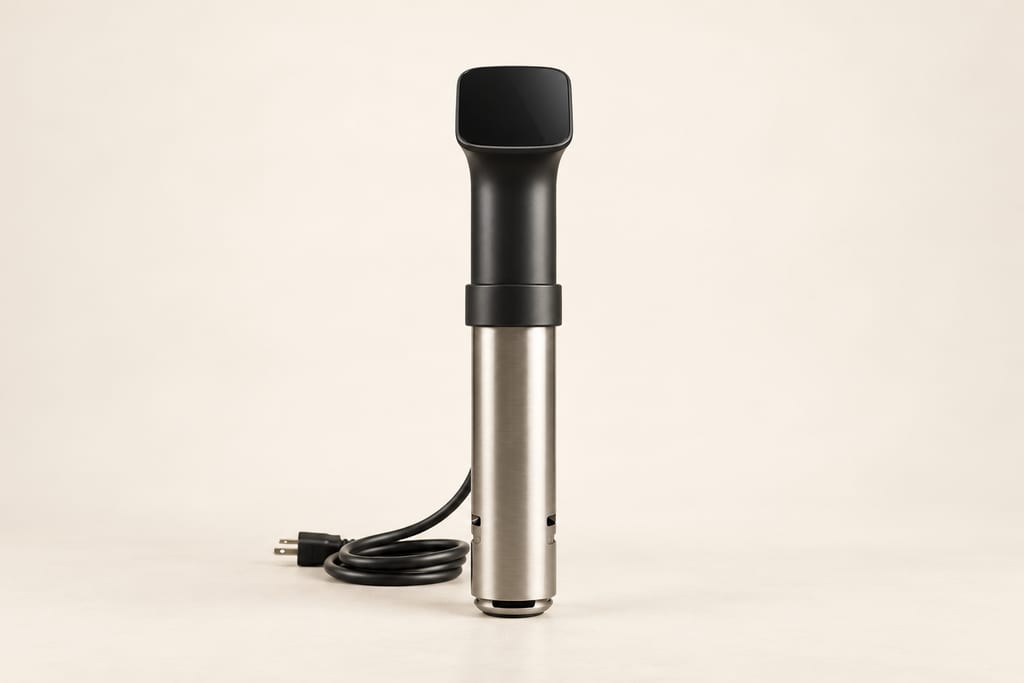
An immersion circulator heats and moves water around food held separately in bags or containers. For fermentation, it can provide a controlled warm bath for jar-based cultures when the recipe and appliance support that use.

Japanese skipjack tuna cooked, then repeatedly smoked and dried over a wood fire by the hand-fired tebiyama method into a hard block for shaving into dashi: the first stage of katsuobushi.
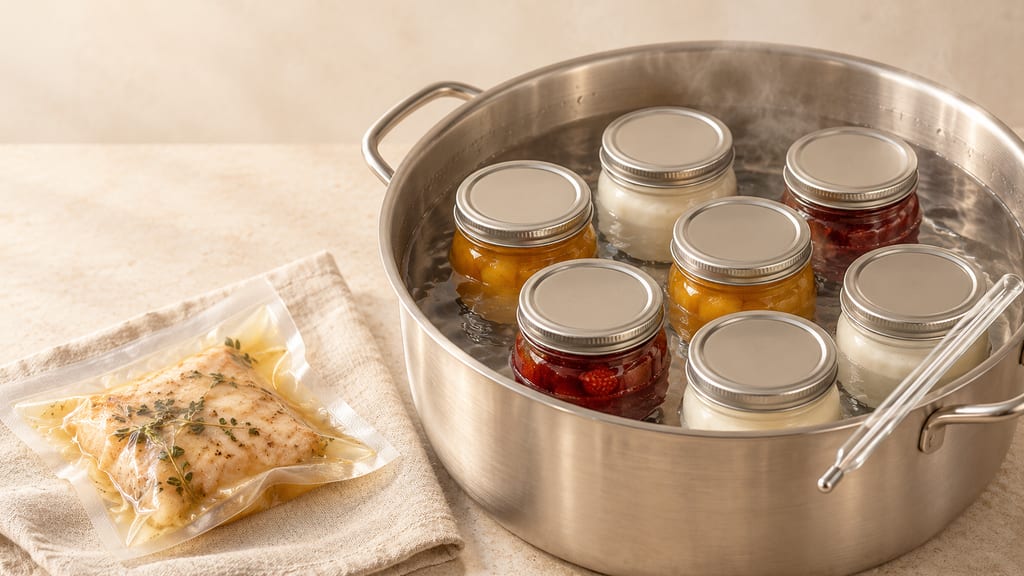
A sous-vide circulator holds a tank of moving water at a set temperature. With jars instead of bags it can incubate yogurt, set eggs, extract kombu and steep syrups, once you know what it does and does not control.

Japanese reddish-brown vinegar from sake lees matured about three years, turned to vinegar by acetic bacteria; the vinegar of Handa and Edomae sushi rice.
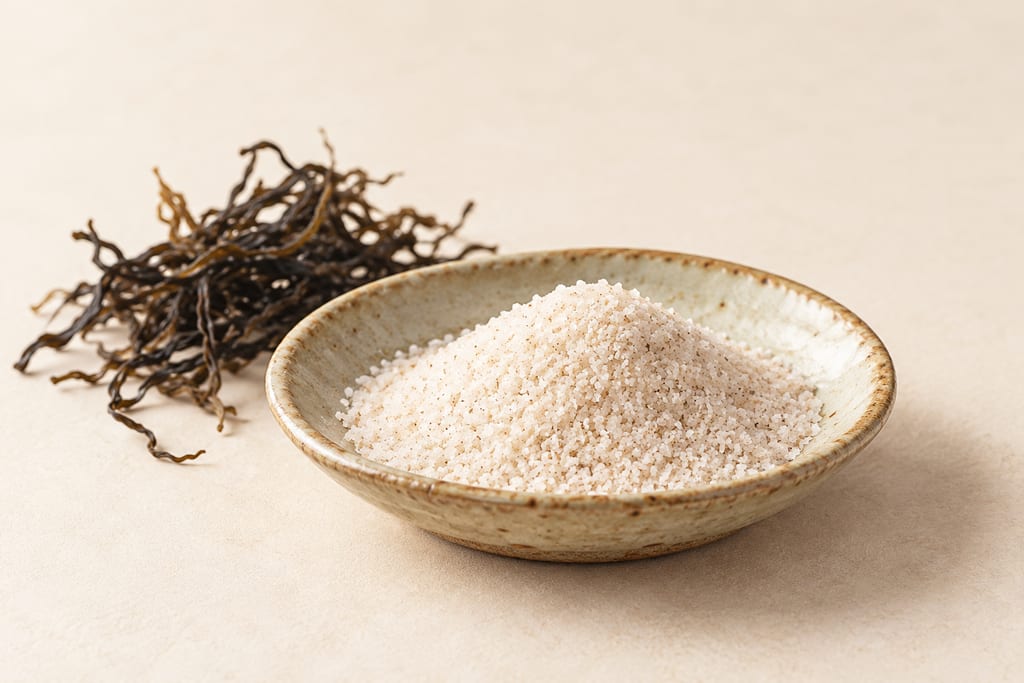
Amabito no Moshio is a modern, pale beige Japanese seaweed salt made from Seto Inland Sea water and hondawara seaweed. Its documented factory method concentrates filtered brine in kettles, then separates and dries the salt.
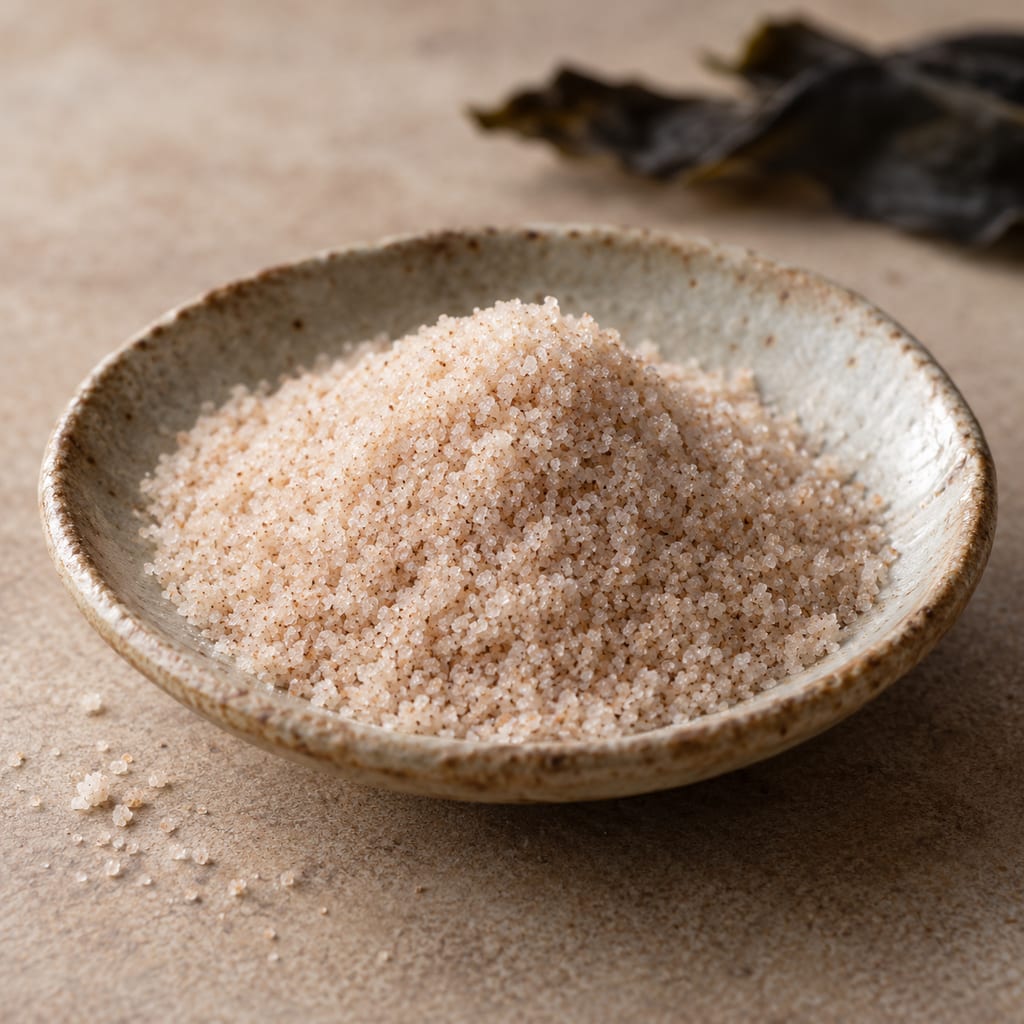
Awaji moshio is a modern Japanese seaweed salt made by TaDa PHILOSOPHY from Awaji Island seawater and seaweed. Its premium process concentrates brine, extracts seaweed flavor, then crystallizes, separates, dries and grades the salt.
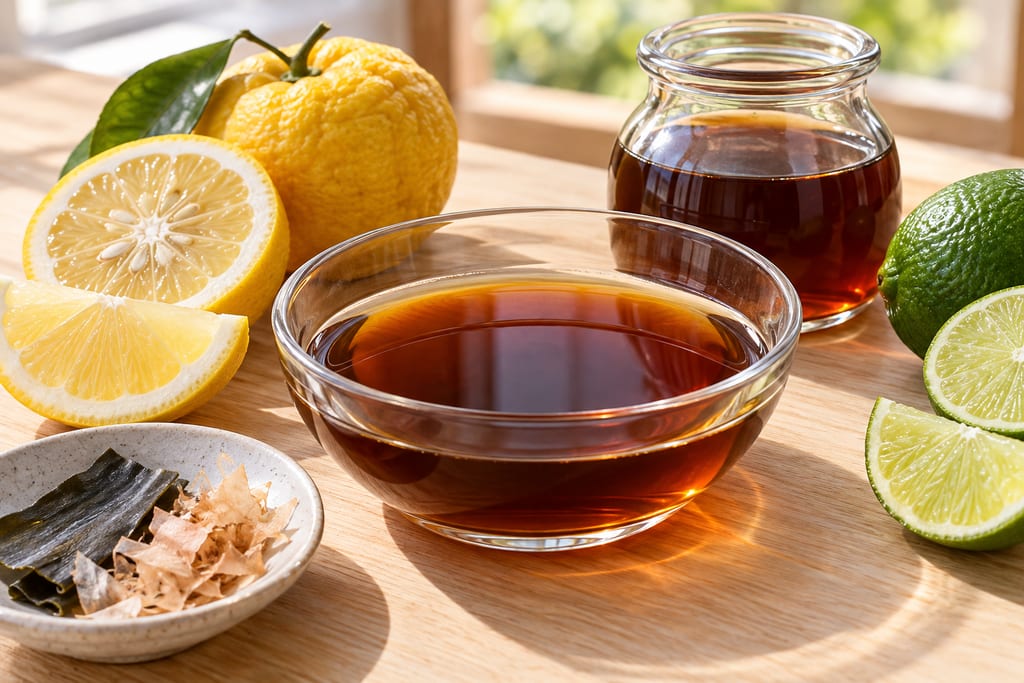
This fresh ponzu-shoyu mixes Japanese koikuchi soy sauce with yuzu or a lemon-lime blend, rice vinegar, water and sugar; optional kombu and bonito give a short chilled infusion.
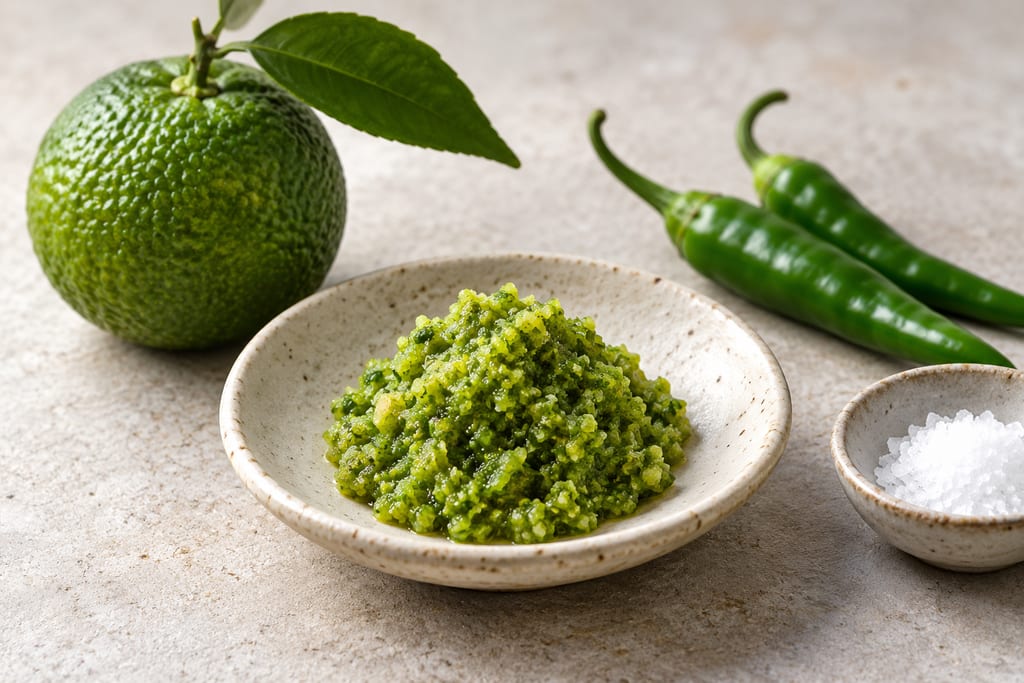
A fresh, uncooked yuzu and green chilli paste inspired by Kyushu’s yuzu kosho, made here as an untested small-batch seasoning rather than a preservation formula.
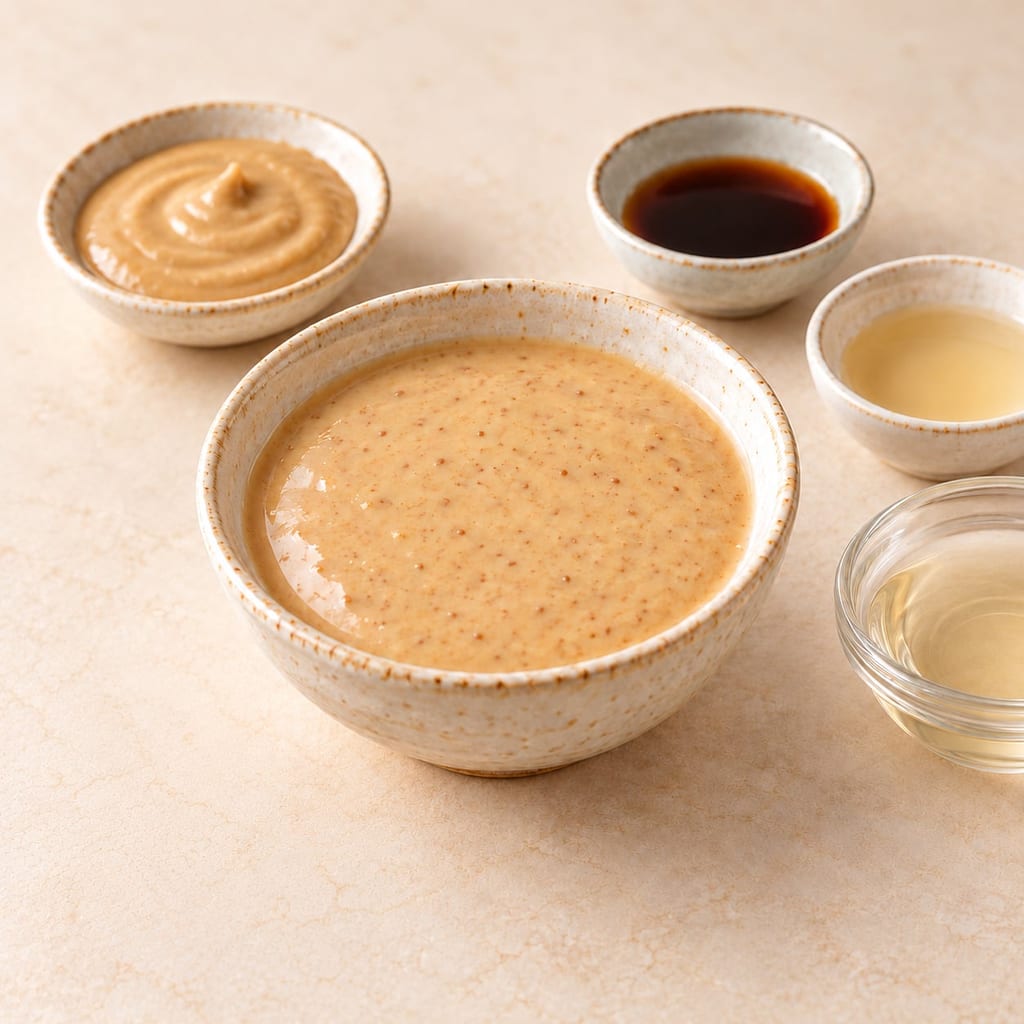
A creamy Japanese sesame dipping sauce with soy, rice vinegar and dashi. Gradual mixing turns the thick sesame paste into a smooth sauce.
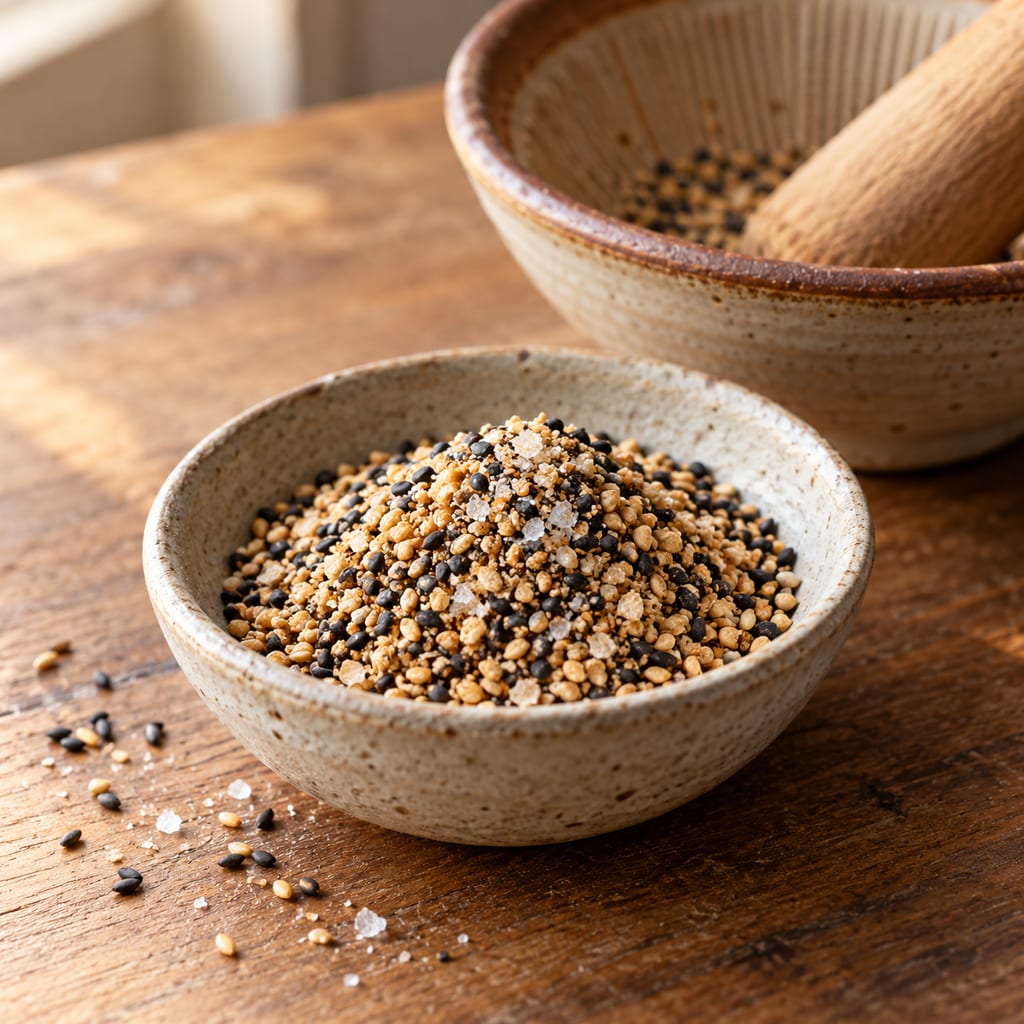
Toasted sesame seeds and sea salt are ground together into a coarse seasoning for rice. This small pan-roasted batch keeps most of the seed texture.
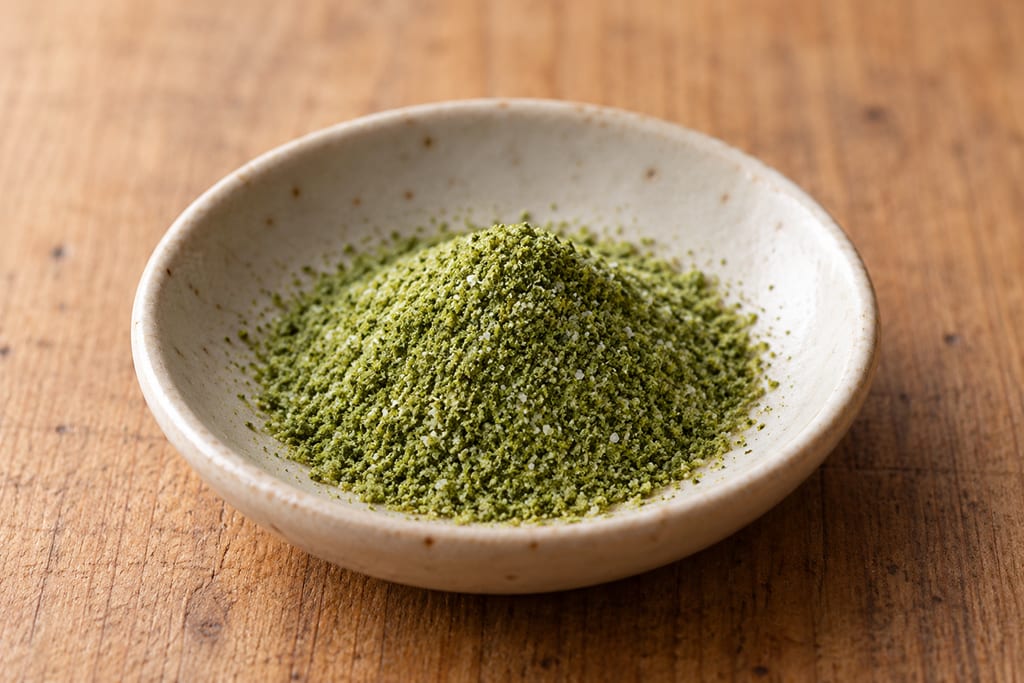
Green tea leaf salt is a dry seasoning made by grinding tea leaves, sieving them and mixing the powder with fine salt. This Japanese-style version follows a documented equal-parts method.
A liquid set with a little gelatin, frozen solid, then thawed through cloth in the refrigerator so that clear liquid drips out and the cloudy gel stays behind.

Meat stock simmered, strained and reduced until a gelatin-rich mass sets, then dried into solid cakes that dissolve in water; a concentrated provision of the early modern naval period.
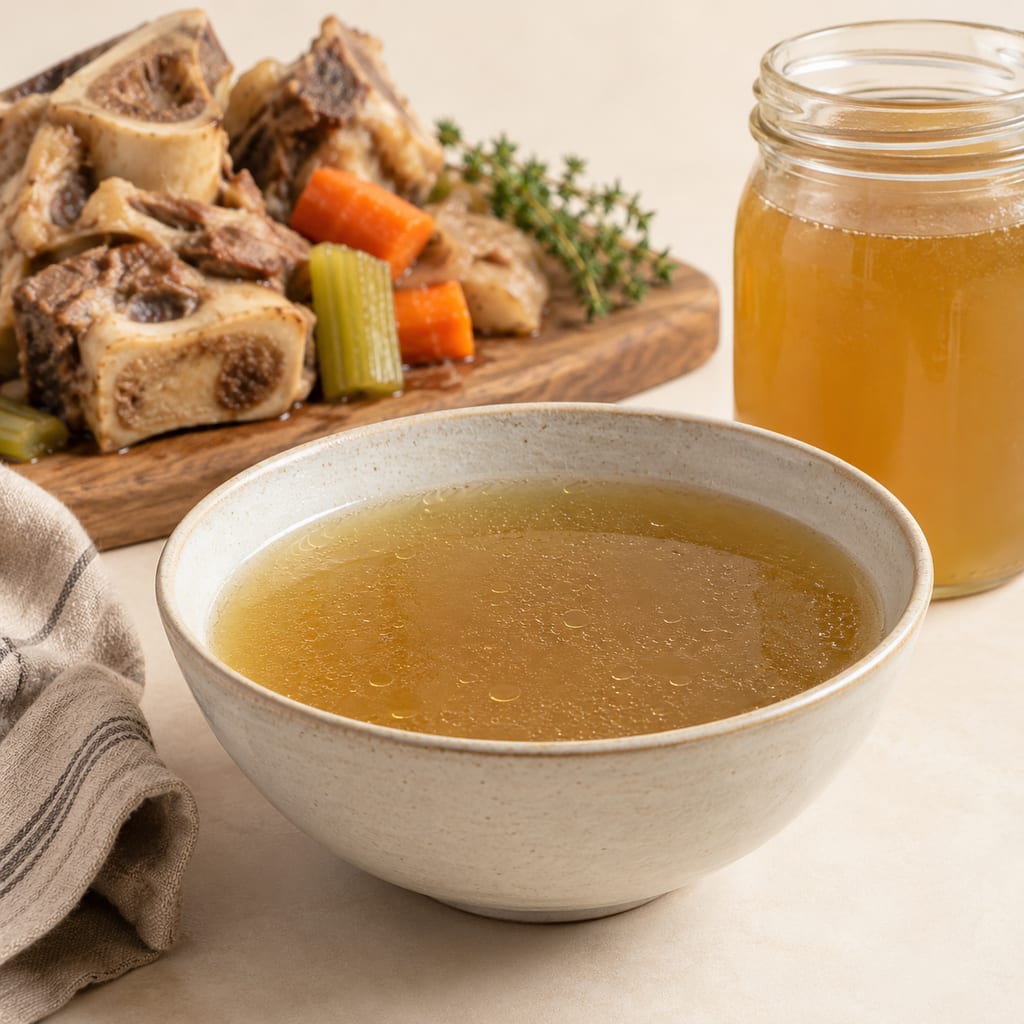
Bones and vegetables pressure cooked for four hours in an electric multicooker and strained into a broth. The gel strength the broth reaches is not established.
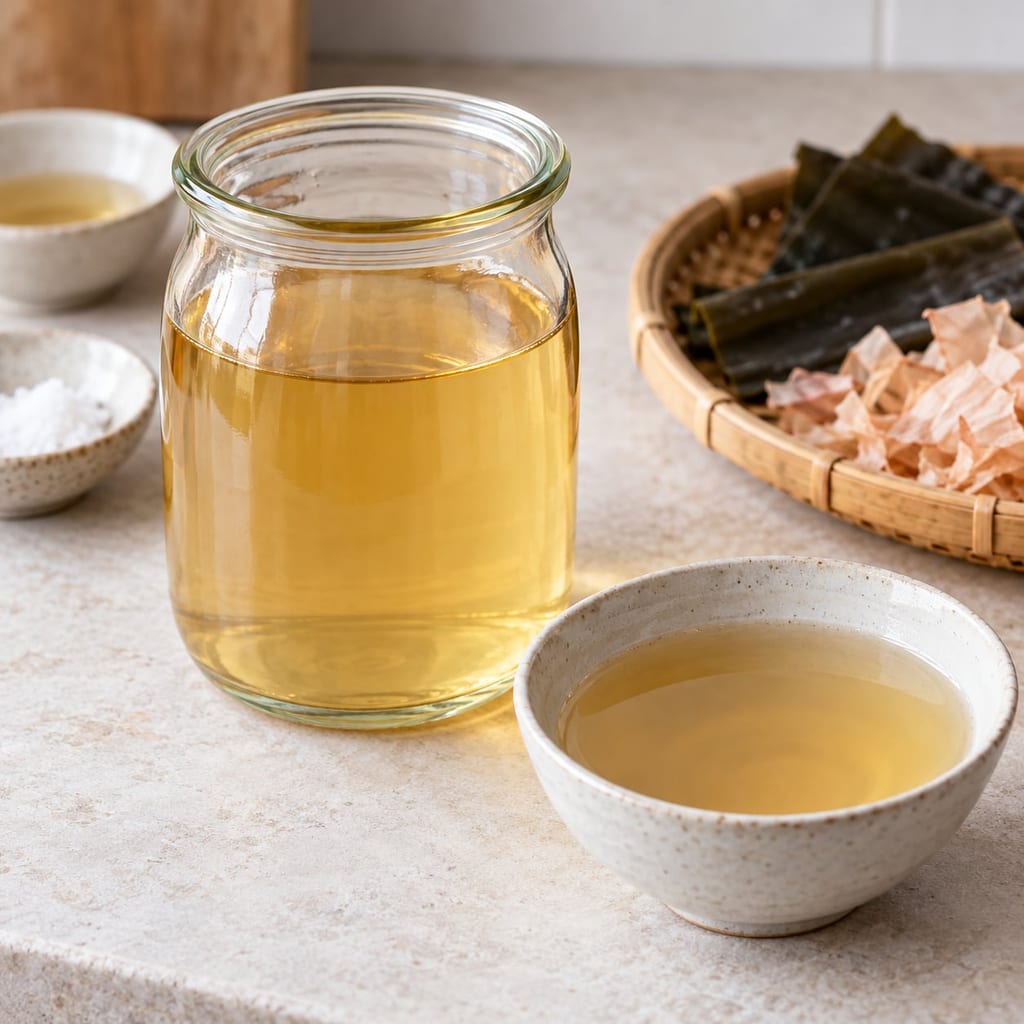
Shiro dashi is a pale Japanese seasoning stock of kombu and bonito dashi, light soy sauce, mirin and salt, used to flavour dishes without darkening them.
No community contributions have been published for this entry yet.
Sign in to contribute. Published comments and photos are free to read.
Japan Kombu AssociationMethod · Ingredients · Technique
How to make kombu dashiThe association gives 10–20 g kombu per litre of water, a roughly 30-minute soak, wiping rather than washing, and removal just before boiling.
It names ma-kombu, Rausu, Rishiri and Hidaka as dashi-suitable types and notes flavor differences.
Cited in: Choosing kombu and understanding the extraction; Method: gentle hot kombu dashi; Cooling and keeping the broth; Kombu, Hokkaido and the movement of food; Why the near-boil endpoint matters; Kombu dashi across the Japanese kitchen; Cold infusion and controlled alternatives; Cooling and using leftovers
Ministry of Agriculture, Forestry and Fisheries of JapanMethod · Uses
How to make brothThe official example combines 10 g kombu and 20 g dried bonito with 1 litre water; it removes kombu as the water begins to boil and adds bonito separately.
Cited in: How dashi changes with other ingredients; Kombu dashi across the Japanese kitchen; When bonito or dried fish are added
Ministry of Agriculture, Forestry and Fisheries of JapanHistory · Geography
Kobumaki: Hokkaido regional cuisineHokkaido is Japan's leading kombu-producing region; the page describes historical trade routes carrying kelp from Matsumae toward Honshu, Kyoto and Osaka.
Cited in: A broth shaped by kelp and trade; Kombu, Hokkaido and the movement of food
Tokyo FoundationHistory · Geography · Uses
Konbu (Kelp)Kombu is a foundational Japanese dashi ingredient; the article says stock-making from kombu is thought to have originated around the tenth century, while presenting this as an estimate.
Cited in: A broth shaped by kelp and trade; Kombu, Hokkaido and the movement of food
Umami Information CenterTechnique · Variations
How to experience umamiIt documents a 60°C one-hour extraction for Rishiri kombu and a conventional near-boil method for ma-kombu, Rausu and Hidaka; advises not exceeding 60°C in the Rishiri method.
Cited in: Regional kelp, cold extraction and controlled alternatives; Why the near-boil endpoint matters; Cold infusion and controlled alternatives
ChefStepsTechnique · Variations · Uses
Sous Vide DashiChefSteps documents holding kombu at 60°C for an hour and a separate short katsuobushi steep; it describes dashi uses in soups, sauces, custards and braises.
Cited in: Regional kelp, cold extraction and controlled alternatives; How dashi changes with other ingredients; Why the near-boil endpoint matters; When bonito or dried fish are added
Food Standards AgencySafety
Cooking your food: using your leftoversThe agency advises cooling leftovers and refrigerating them within two hours, then eating within 48 hours or freezing.
Cited in: Cooling and keeping the broth; Cooling and using leftovers