
Home equipment crafts
One bath, many small jars
A sous-vide circulator holds a tank of moving water at a set temperature. With jars instead of bags it can incubate yogurt, set eggs, extract kombu and steep syrups, once you know what it does and does not control.
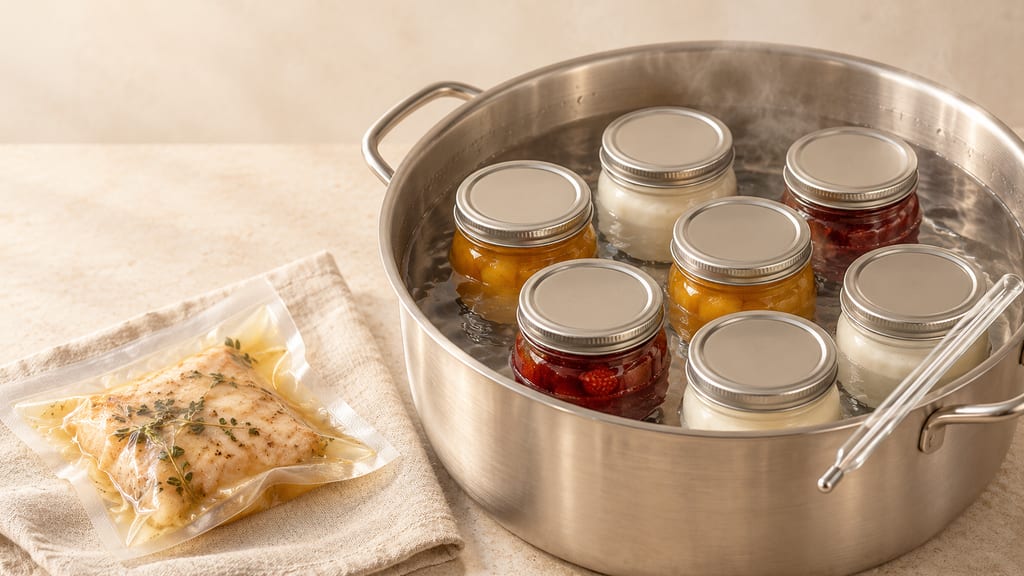
Jars of yoghurt, preserves and a sealed pouch in one warm water bath: a single held temperature serving many foods.
Water as the gentlest heat source in the kitchen
Water moderates heat. A jar standing in warm water is touched on every side by the same temperature, and nothing in the jar can become hotter than the water around it. Home yogurt guidance relies on this without any special machine. Julie Cascio and Roxie Rodgers Dinstel of the University of Alaska Fairbanks Cooperative Extension, writing for people without a yogurt maker, tell readers to stand filled jars in deep pans of 43 °C water reaching at least halfway up the jars, set the oven as low as it will go, and keep checking the water through the incubation. The same guide pasteurises raw milk in the top of a double boiler.
One Japanese food carries the idea in its name. Onsen tamago means hot-spring egg. The tourism organisation of the spa town of Yamanaka Onsen lists them among its local specialities and praises the creamy texture of both yolk and white, the reverse of an ordinary boiled egg, whose white sets first.
A sous-vide circulator turns the warm pan into an instrument. The British Columbia Centre for Disease Control, in its guideline for restaurants that cook this way, describes the machine as a heating coil, a pump that circulates the water, and a controller. Breville's manual for its HydroPro circulators says the machine is for water only, must not touch food, and that every food should be packed in a bag or container so it stays separated from the water.
That rule is why this article is about jars. A jar, a covered dish or a small pot can hold milk on its way to yogurt, rice and koji, trial syrups or a basket of eggs, and several can share one bath. Used this way the circulator has real strengths and firm limits, and most of both come from physics.
What the circulator measures and what the pump does
The controller knows one thing: the temperature of the water flowing past its own sensor. It switches the heater to keep that reading at the setpoint, and everything else in the tank, including the food, follows at its own pace. The setpoint is a target, not a measurement of the food, and not even an exact measurement of the water. In a restaurant bath logged for the BC guideline, a circulator set to 55 °C held its water about half a degree below that before any food went in.
The pump matters as much as the heater. The guideline notes that a warming tray without a circulator would struggle to hold one temperature without warm and cold spots, and that the PolyScience machines it describes move 9 to 15 litres of water a minute. Breville's manual offers fast, medium and slow flow, recommends the fastest for most uses, and suggests slowing it only for delicate foods such as eggs that may be pushed around.
Moving water does two jobs. It mixes the tank, so the far side matches the sensor. It also keeps replacing the thin layer of water touching each jar, which in still water cools against a cold jar and slows the flow of heat. This is general heat-transfer physics, and it is why the same bath heats a jar faster with the pump running.
Breville also warns about the container: a reservoir with a large surface area loses heat faster, which may stop the circulator reaching its target, and the largest vessel the HydroPro was validated with is a 45-litre uninsulated container with a secure lid. The lid is part of the apparatus.
Why the food lags behind the water
Heat travels from the moving water, through the jar wall, into the outer layer of the food and then inward. Unstirred milk, a whole egg or a thick custard carries it inward mainly by conduction, which is slow. The rate depends on the temperature difference, so the food warms quickly at first and more and more slowly as it nears the water temperature. The BC guideline describes an S-shaped curve that flattens near the setting, and warns that in short processes the food may never reach the water temperature.
Its own example is blunt. Thirty chicken breasts of about 190 g each spent 23 minutes in water at 66 °C; their centres averaged 60 °C. Thinner portions come up faster than thicker ones of the same weight, the guideline adds, and fat and moisture change heat transfer too. Breville's HydroPro asks for a food's thickness and shape before estimating how long its core will take.
Eggs give a cleaner number. Naoko Tatsuguchi and Masayo Dai held whole eggs in thermostatted water and measured how long the centre took to match it: 27 minutes at 65 °C, 28 at 68 °C and 30 at 70 °C. A jar of milk will behave differently, but the lesson carries over: the clock for whatever should happen at a temperature does not start when the jar goes in.
Cold food also cools the bath. During a restaurant service logged for the guideline, chilled pouches dropped the water by 3.7 °C, and it took 25 minutes to recover, delaying the food already in the tank. The guideline's rule is not to add chilled pouches to a bath already working. The container adds lag of its own: glass and ceramic conduct heat less readily than thin stainless steel, so a thick jar responds more slowly than a thin metal pot. That is general physics, not a measured figure for any jar.
The bath is a ceiling, and an open pot never reaches it
The BC guideline puts the advantage of a water bath in one sentence: food in it cannot get hotter than the bath. That makes it gentle. It also makes the bath a ceiling, one the food approaches ever more slowly and, if it is losing heat somewhere else, never reaches.
Breville's HydroPro accepts a bath temperature up to 90 °C. Suppose a cook sets it to the maximum and stands an open pot of milk in it, hoping to bring the milk to 90 °C. Heat flows in through the pot wall in proportion to the gap between bath and milk, and leaves through the open surface by evaporation and contact with cooler air. As the milk warms the inflow shrinks while the surface loss continues, so the milk settles where the two balance, below the bath temperature. Once temperatures stop changing, waiting does not close the gap; a lid, insulation or a hotter source would. The guideline's warning that food may never reach the water temperature, and Breville's warning about exposed surface, point the same way; nobody has measured the gap for a home pot.
The documented yogurt methods already work around the ceiling. Justin Borecky's recipe on Anova's blog heats the milk in a saucepan to 82 °C and uses the circulator only for the long hold at 43 °C. Miele's steam-oven recipe heats milk in a saucepan to about 90 °C and uses the oven only to hold 40 °C. The hot step happens on a stove; the bath does the long, gentle hold it is good at.
Water outside, food inside
Keeping food out of the circulator's water is a manufacturer requirement, and more than one maker states it. Anova's safety instructions for its Precision Cooker specify water-only operation, with no other liquids in the bath, and set physical limits on how far the unit may be immersed. Breville's HydroPro manual says the same about water and adds that food must be separated from it in a bag or container. Containers change the bath in practical ways. The water level rises as they go in, and the HydroPro manual reminds users to allow for that displacement and keep the water between the minimum and maximum marks on the machine.
Partly filled jars float. The BC guideline insists that pouches be fully immersed, because trapped air slows heat transfer, and suggests a plate or a layer of floating balls to hold them down. A jar needs a rack, a weight or a supported basket for the same reason. A jar that must stay open, or a small pot that needs a spoon, needs the opposite: its rim held above the waterline. The guideline also asks that pouches not touch, so water circulates between them, and limits a batch of eggs to what the circulator can heat, as shown by the cook's own trials. These are design consequences, not tested recipes.
Closures are part of the method. Borecky's yogurt goes into 4 oz mason jars with lids tightened until they meet resistance and no further. Miele's sets in a covered steam container under a lid or cling film. The Instant Pot Duo manual's method for jiu niang, Chinese sweet fermented glutinous rice, closes its containers so the rice does not dry out and stands them in about 1 cm of water for even heat conduction. Jiu niang gives off small gas bubbles, so its jar needs headspace and a lid that is not forced. "Put it in a jar" is a container choice; the culture, closure and temperature still come from the recipe.
One bath, several trials
Every jar in a shared bath sits at the same water temperature. That is the strength of the arrangement and its limit. It can compare things that do not depend on temperature: two starter yogurts, whole and low-fat milk, two doses of culture, three flavourings of one syrup base. It cannot compare two incubation temperatures.
A fair comparison needs the jars to start equal: the same size, filled to the same level, with food at the same starting temperature, all put in together. A larger jar lags, as the guideline's point about thickness predicts, and a jar added late cools the bath and delays the others.
Measure the food as well as the bath. A simple way is a sentinel: one extra jar of the same size and fill, with a probe thermometer through the lid to the centre. It shows when the batch has reached temperature and how far it trails the setpoint. The BC guideline does the equivalent in restaurants with a needle probe pushed through foam tape into a sealed pouch; the sentinel jar applies that practice to jars and has not itself been tried.
A water-only run before the first batch shows the lag, any overshoot and whether the tank holds its temperature. It does not show whether a culture acidifies, whether salt spreads through a ferment, or how long the result keeps. Only the recipe's own endpoint answers those.
Yogurt: one culture, many appliances
Yogurt is the obvious first use, with the most documented appliance routes. The Alaska extension guide names the two bacteria usually used, Streptococcus thermophilus and Lactobacillus bulgaricus, as heat-loving species that can be killed above 54 °C and do not grow well below 37 °C. Its method has distinct stages. Heat the milk to 85 °C, or up to 93 °C for a firmer result, and hold it 10 to 20 minutes, so the milk proteins bind together instead of forming curds and whey; the guide says this does not replace pasteurisation. Cool quickly to 44–46 °C, blend in the starter, pour into warm jars and incubate 4 to 7 hours at 43 °C, plus or minus 3 °C. The yogurt should set firm at pH 4.6. Then refrigerate it, because cooling stops the acid from developing.
The appliance routes keep those stages and move the warm hold. Borecky heats 1,600 g of whole milk in a pan to 82 °C, stirring and scraping, chills it in an ice bath below 43 °C, whisks in 100 g of shop yogurt, fills 4 oz jars and holds them 12 hours in a bath preheated to 43 °C, then refrigerates them overnight.
Instant Pot's UK recipe does everything in the cooker. A litre of whole milk goes through the Yoghurt programme's boil setting and should reach about 83 °C. The pot cools in a sink with 2–3 cm of cold water until the milk is about 43 °C, two tablespoons of live yogurt go in, and the Yoghurt programme runs 8 hours, or 9 to 10 for a firmer, tangier result, before at least 8 hours of chilling. The 2016 manual for the Instant Pot Duo gives that model's numbers: Normal yogurt mode runs at 36–43 °C, and More mode heats milk at 71–83 °C. Jars may stand in the inner pot with no added water.
Miele's Australian recipe heats a litre of full-cream milk in a saucepan to about 90 °C, cools it to about 40 °C, whisks in two to three tablespoons of live yogurt and sets it in a covered, unperforated steam container in the steam oven at 40 °C for 5 to 8 hours, or until thick. It warns that yogurt cannot be made above 45 °C because some of the bacteria then outgrow the others, and that a longer hold gives a thicker, sourer result.
Dehydrators can do the job with their trays removed. Excalibur's recipe heats half a gallon of milk to 85 °C, cools it to 46 °C, whisks in 4 tablespoons of yogurt, caps the jars and holds them at 43 °C for 9 hours, undisturbed. Brød & Taylor's classic yogurt starts jars at 49 °C for an hour, then lowers the setting: in its Sahara dehydrator to 38 °C for 3 hours; in its proofer to 30 °C, which, the recipe explains, lets the milk cool to about 38 °C after roughly three hours. That is a plain statement that a cabinet setting and the food temperature are different numbers. The article on fermentation cabinets covers dehydrators and proofers as incubators.
Side by side, these methods use settings from 30 °C to 49 °C and times from about 3 to 12 hours. The spread reflects different cultures, vessels and strategies, and the fact that some figures describe the appliance and others the milk. None is a universal schedule. Moving a recipe to another machine means carrying the whole method, measuring the milk and judging by set and acidity, not the clock.
Reading the set, and what keeping times mean
The endpoint is the set. The Alaska guide says yogurt should firm up at pH 4.6, that holding it warm for hours afterwards makes it more acidic and eventually separates the whey, and that whey on the surface, syneresis, becomes excessive when yogurt is incubated too long or disturbed while it sets. That is why these recipes all say not to move the jars.
The guide is direct about failure: discard a batch that does not set, since that can mean a poor culture or unwanted microorganisms, and discard yogurt with visible growth or any smell other than fresh acid. It names heat and acidity as the two things a safe product needs. That matters because the BC restaurant guideline does not allow sous-vide cooking below 55 °C to run longer than four hours. Yogurt sits far below that for longer and depends on the culture acidifying the milk on schedule. A bath that runs cold, or a tired starter, removes that protection.
Keeping times belong to each method. The Alaska guide gives about 10 to 21 days at 4 °C or below, and warns that additions may shorten it. Instant Pot's UK recipe says use within two weeks; Miele's says about three weeks; Borecky's gives none. None was established for jars from a different appliance.
Not every cultured milk belongs at yogurt temperature. Quark and cultured cream use different cultures at lower temperatures set by their own recipes; the slow-cooker dairy article and the article on cream, butter and buttermilk cover them.
Onsen tamago: eggs held below the setting point of the white
An onsen tamago keeps a soft, loose white around a thickened yolk. Eggs in a basket in a circulator bath are a direct physical analogue of eggs held in hot-spring water: a steady warm-water environment, recreated with a controller. Yamanaka Onsen's eggs are sold to keep well and are shipped throughout Japan, but that commercial keeping says nothing about how long a homemade egg will keep.
The texture comes from white and yolk setting at different temperatures, and Japanese cookery scientists have measured how sharp the differences are. In the 2019 study by Tatsuguchi and Dai, whole eggs were held at 65, 68 and 70 °C for different times. At 65 °C the white was still fluid after 210 minutes, though less so with time. At 68 °C a longer hold reduced its fluidity. At 70 °C the white was no longer fluid after 30 minutes. The yolk, measured by how high it stood, stood taller with longer holding at 65 and 68 °C. Temperature mainly decided the white, the authors conclude, and holding time the yolk.
A 2023 study by Tatsuguchi, Dai and Yukie Yanagisawa added the egg's age. Eggs stored at 25 °C for one or two weeks gave softer whites when cooked at 68 and 70 °C, though not at 65 °C, and softer yolks at all three. Small differences in cooking temperature, they conclude, change the result. A gap of a few degrees between a circulator's display and its water would show in the egg.
These studies explain texture; they are not a safety method. The BC guideline gives restaurants an example process for pasteurised shell eggs, bringing the inside to 62–63 °C with at least 30 minutes to come up and at least 15 minutes' hold, and says chefs must confirm their own times and temperatures by testing. Its handling rules fit any bath of eggs: fully immersed, in a perforated container that does not block circulation, no more than the circulator can heat, and cooled quickly in half ice, half water when not served straight away or held hot. An egg chosen for a soft white has not necessarily reached a pasteurising temperature; the two aims must be checked separately.
Kombu dashi at a held temperature
Dashi is the foundational stock of Japanese cooking. ChefSteps' Sous Vide Dashi, by its culinary creative director Nicholas Gavin, explains its savouriness. Kombu, dried kelp, is rich in salts of glutamic acid; katsuobushi, shavings of boiled, smoked and dried skipjack tuna loin, is rich in salts of inosinic acid; together they taste far more savoury than either alone. Dashi of both is called ichiban dashi, first dashi. Dried shiitake or dried fish such as niboshi, small dried sardines, can also be used, and the ChefSteps recipe recommends niboshi.
The case for a circulator is temperature. Classical practice gives two figures. Kombu held at 60 °C for an hour gives the cleanest flavour: the most extraction without off flavours, odours or a cloudy broth. Katsuobushi should steep no more than 15 to 30 seconds in water brought to 85 °C. ChefSteps' version takes about 90 minutes, five of them active, and makes about a quart.
The two figures show the limit of a single bath. Kombu wants a long hold at one temperature, which a circulator does well. Katsuobushi wants a short, much hotter steep, better done in a pan once the kombu stock is drained, since heating a whole tank to 85 °C for half a minute makes little sense and stock in a container would lag the water anyway. Ingredients in one broth can need different extraction conditions, and the bath should take only the step that suits it.
Syrups in bags, side by side
Two syrups on Anova's recipe platform show the bath as a small flavour workshop. Kathy Hester, of Durham, North Carolina, puts 1 cup (237 mL) of water, 1 cup of sugar and 1 tablespoon of culinary-grade dried lavender in a zip-seal bag, holds it at 57 °C for an hour, cools it, strains it through a fine sieve and bottles it for the refrigerator. Emily Farris and Jeff Akin, co-founders of Feed Me Creative, a former culinary creative agency in Kansas City, Missouri, seal 1 cup of water, 2 cups of freshly squeezed lemon juice, 2 cups of ultrafine sugar and 4 sprigs of rosemary in a large zipper bag, pushing the air out under water, hold it at the same 57 °C for an hour, agitate it halfway to dissolve the sugar, then remove the rosemary, cool the syrup and refrigerate it for up to two weeks.
Same setting, same time: both bags could share one bath, the kind of comparison a shared bath does well. Each new botanical would be a new recipe, though. The two published syrups have been made; other herbs, flowers, fruits, teas or spices at that setting are untested until someone tries and records them.
Gentle heat extracts flavour; it does not preserve the syrup. One recipe gives two weeks refrigerated and the other no keeping time, so neither belongs at room temperature. Sealing does not change that. A bag with the air pressed out is a package, not a preservation step; Food Standards Scotland's guidance on vacuum-packed and modified-atmosphere chilled foods sets shelf-life limits for such packs, tied to the control of non-proteolytic Clostridium botulinum. That UK guidance works from a ten-day framework for chilled vacuum-packed food, with longer lives only where further controls apply; it is commercial guidance, and its ten days are not a blanket allowance for a household fridge. Nor is warm extraction distillation: a circulator does not become a still because it draws aroma from a flower.
Setting up a jar bath at home
A workable home arrangement follows from the sections above: a deep, lidded container, a rack so jars sit off the floor with water moving under and around them, water kept between the circulator's marks after displacement, jars of one size and fill, a sentinel jar with a probe, and a log of setpoint, display, sentinel, room temperature and the recipe's endpoint. Much of that is engineering reasoning: nobody has published the temperature curve of a rack of jars in a home circulator. What makers and practitioners show is the water-only rule, the restaurant lessons on lag, spacing and recovery, Borecky's jar yogurt, the Anova syrups and ChefSteps' dashi. Treat a first batch as a small trial, judged by the food's own endpoint.
The same bath serves other projects in this series. Amazake and other rice, malt and koji preparations need a hold well above yogurt temperature; the article on rice, koji and malt in warm holds compares jars, rice cookers and yogurt makers for that job. Silken tofu can set in small jars in a bath; the article on soy milk, tofu and yuba covers the soy milk and coagulant that decide whether it works. A full-size supported inner pot, the cheesemaking version of this idea, belongs to Cheese in the brewhouse. Kaya and related coconut and egg spreads of Southeast Asia are an obvious candidate for a stirred bowl over controlled water, or for small jars, because the bath heats a custard gently without the local overheating of a pan. Nobody has published a bath method for it, so it is untested: the food's core temperature and texture would have to be measured, and the spread kept chilled. Nothing made in a jar bath is canned food; the article on what appliances cannot reproduce covers canning, vacuum packing and storage limits.
Related
Discussed in this article
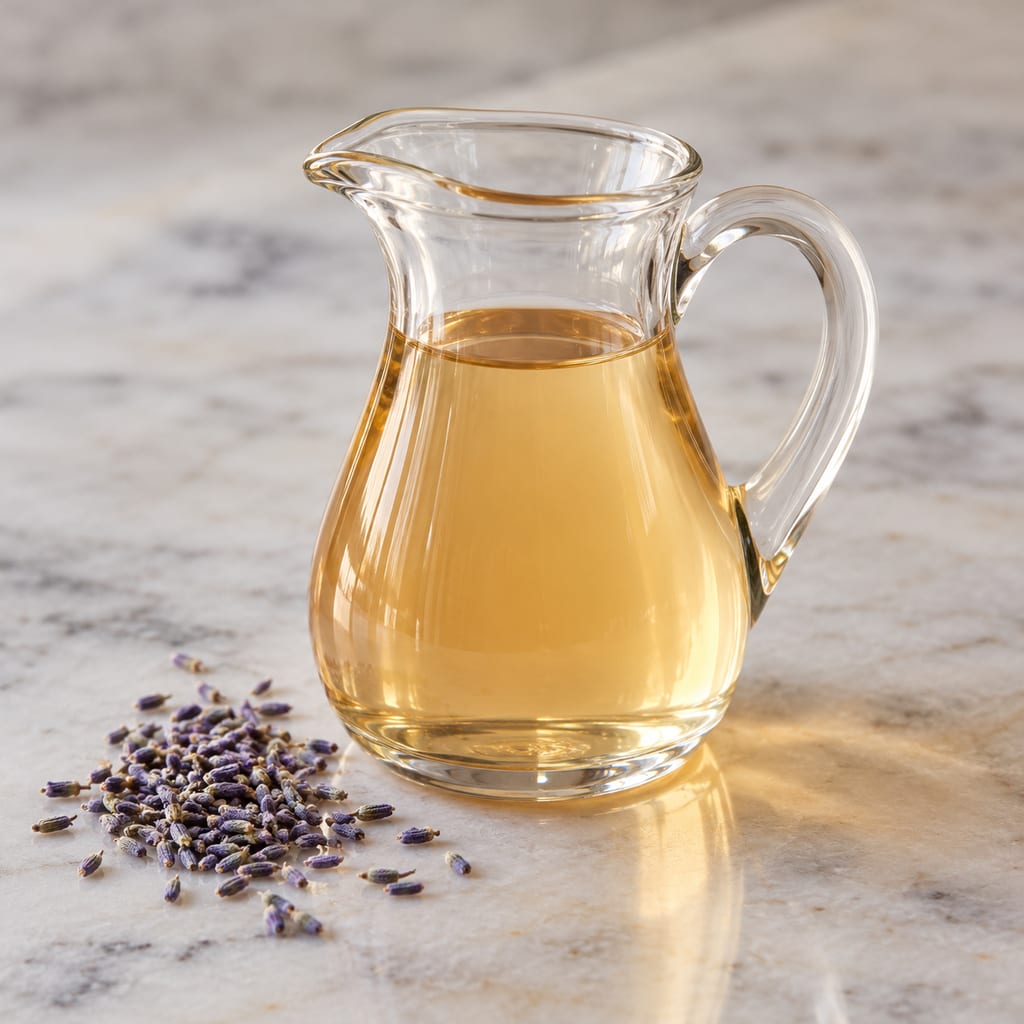
Herb, flower and fruit cordial syrups
Sugar syrups flavoured by holding botanicals, sugar and water in sealed bags in a 135°F (57°C) water bath for an hour, then cooling and refrigerating; several can share one bath.
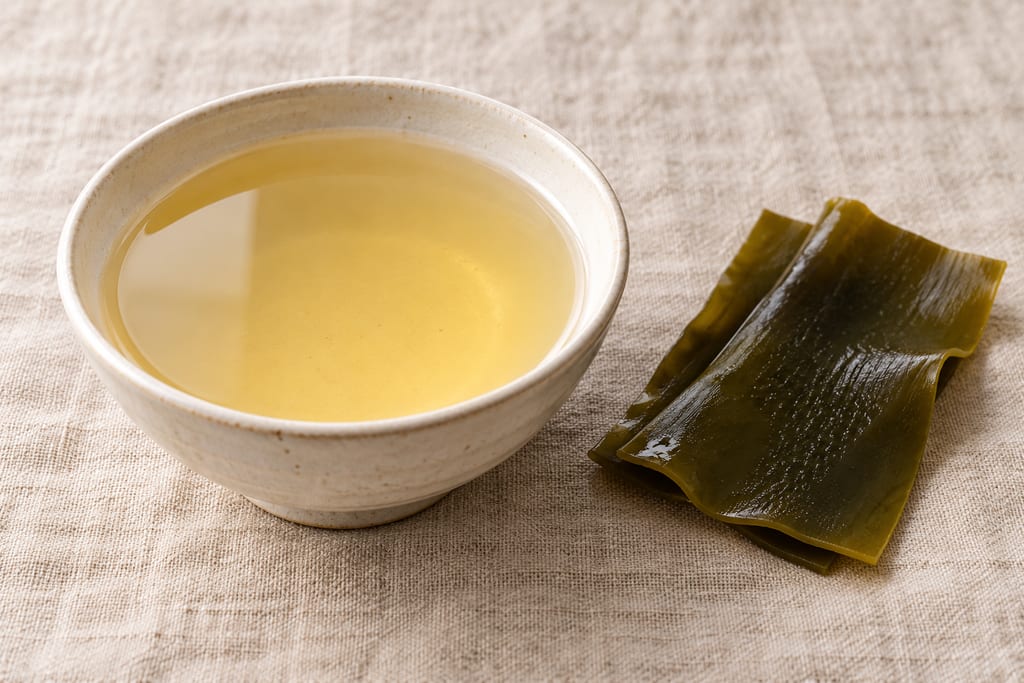
Kombu dashi
A clear Japanese broth made by gently extracting kombu’s savoury taste into water. Use it on its own for delicate dishes or as the kelp base for a separate bonito or dried-fish dashi.
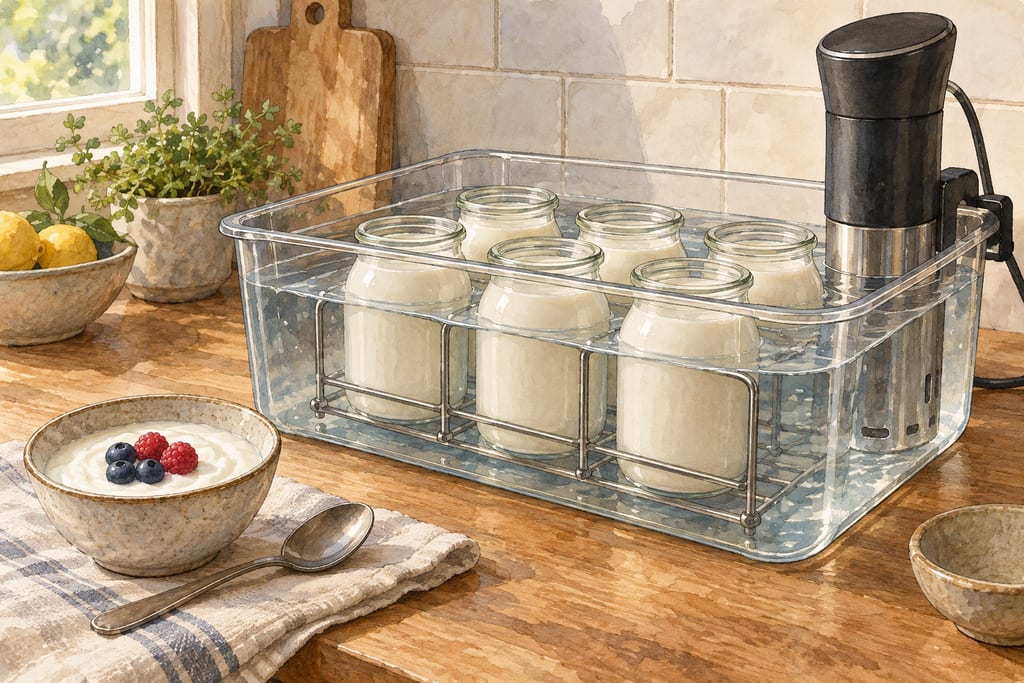
Several jars in one bath
A circulator tank holding a rack of identical jars, so several small batches share one temperature for side-by-side trials of cultures, milks, ratios or flavourings.
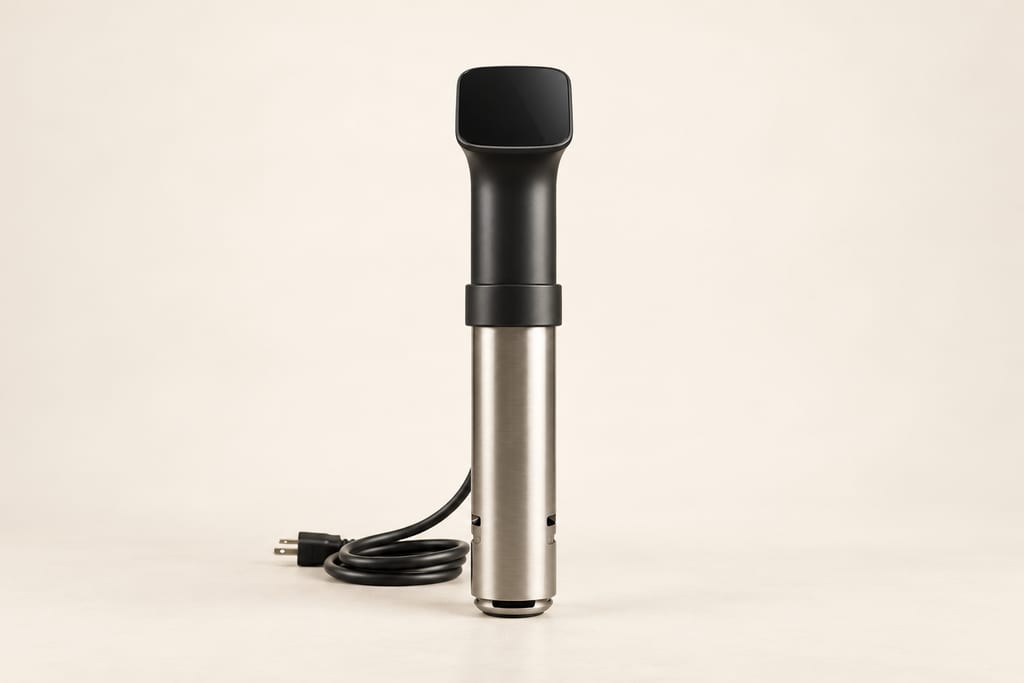
Sous-vide circulator
An immersion circulator heats and moves water around food held separately in bags or containers. For fermentation, it can provide a controlled warm bath for jar-based cultures when the recipe and appliance support that use.
Community
No community contributions have been published for this entry yet.
Share what you made
Sign in to contribute. Published comments and photos are free to read.
Sources
Breville USA (Breville|PolyScience)
the HydroPro™ Plus & the HydroPro™ Instruction Book - CSV750/CSV700Cited in: Water as the gentlest heat source in the kitchen; What the circulator measures and what the pump does; Why the food lags behind the water; The bath is a ceiling, and an open pot never reaches it; Water outside, food inside; Setting up a jar bath at home
Anova Culinary (support centre)
Safety Procedures While Using the Anova Precision® CookerCited in: Water outside, food inside
Master Food Preservers of Humboldt & Del Norte Counties, University of California Cooperative Extension (republication of the University of Alaska Fairbanks Cooperative Extension publication; reviewed November 2015)
Making Yogurt at HomeCited in: Water as the gentlest heat source in the kitchen; Yogurt: one culture, many appliances; Reading the set, and what keeping times mean
Instant Pot UK (official UK site)
Homemade Yoghurt in an Instant Pot (recipe heading: Creamy, Home-Made Yoghurt)Cited in: One bath, several trials; Yogurt: one culture, many appliances; Reading the set, and what keeping times mean
Miele Australia (recipe page)
YoghurtCited in: The bath is a ceiling, and an open pot never reaches it; Water outside, food inside; Yogurt: one culture, many appliances; Reading the set, and what keeping times mean
Anova Culinary (blog)
Ultra-Simple Sous Vide Yogurt from #anovafoodnerd Justin BoreckyCited in: The bath is a ceiling, and an open pot never reaches it; Water outside, food inside; One bath, several trials; Yogurt: one culture, many appliances; Reading the set, and what keeping times mean; Setting up a jar bath at home
Instant Pot (manual hosted by Williams-Sonoma)
Programmable Electric Pressure Cooker User Manual, Models IP-DUO60/80 (September 2016)Cited in: Water outside, food inside; Yogurt: one culture, many appliances
Yamanaka Onsen tourism organisation (yamanaka-spa.or.jp)
YAMANAKA ONSEN | Local Yamanaka SpecialtiesCited in: Water as the gentlest heat source in the kitchen; Onsen tamago: eggs held below the setting point of the white
Journal of Cookery Science of Japan 56(3):115–122 (J-STAGE), 5 June 2023; DOI 10.11402/cookeryscience.56.115
Effect of Storage Period on the Coagulation State of Soft-boiled Eggs (Onsen eggs)Cited in: Onsen tamago: eggs held below the setting point of the white
Journal of Cookery Science of Japan 52(5):345–351 (J-STAGE), 5 October 2019; DOI 10.11402/cookeryscience.52.345
Preparing Preferable Soft-boiled Eggs: Effects of Temperature and Holding Time on the Coagulation of Soft-boiled Egg (Technical report)Cited in: Why the food lags behind the water; Onsen tamago: eggs held below the setting point of the white
ChefSteps
Sous Vide Dashi | ChefStepsCited in: Kombu dashi at a held temperature; Setting up a jar bath at home
Anova Culinary (recipe platform)
Sous Vide Lavender SyrupCited in: Syrups in bags, side by side; Setting up a jar bath at home
Anova Culinary (recipe platform)
Sous Vide Lemon-Rosemary SyrupCited in: Syrups in bags, side by side
BC Centre for Disease Control, Environmental Health Services, and the BC Sous Vide Working Group (July 2017 edition)
Guidelines for restaurant sous vide cooking safety in British ColumbiaCited in: Water as the gentlest heat source in the kitchen; What the circulator measures and what the pump does; Why the food lags behind the water; The bath is a ceiling, and an open pot never reaches it; Water outside, food inside; One bath, several trials; Reading the set, and what keeping times mean; Onsen tamago: eggs held below the setting point of the white; Setting up a jar bath at home
Food Standards Scotland (published 14 December 2020)
Vacuum and modified atmosphere packed chilled foods guidanceCited in: Syrups in bags, side by side
Brød & Taylor
Classic-Style Yogurt Recipe | Brod & TaylorCited in: Yogurt: one culture, many appliances
Gaps
- No temperature log has been published for a rack of glass jars in a home circulator; the lag for a given jar size and fill, and the spread between jars at the edge and in the middle of the tank, are still to be measured.
- How far below a 90 °C bath an open pot of milk settles, for a given pot, lid and room, has not been measured.
- The kombu-to-water ratio for a 140 °F (60 °C), one-hour kombu hold, and how the kombu is packed in the bath, are not published.
- No home onsen tamago method gives a holding time for the soft-white texture together with a separate safety check.
- Kaya has no published bath method; its core temperature and texture in a stirred bowl over controlled water are untested.
Updated 2026-10-27