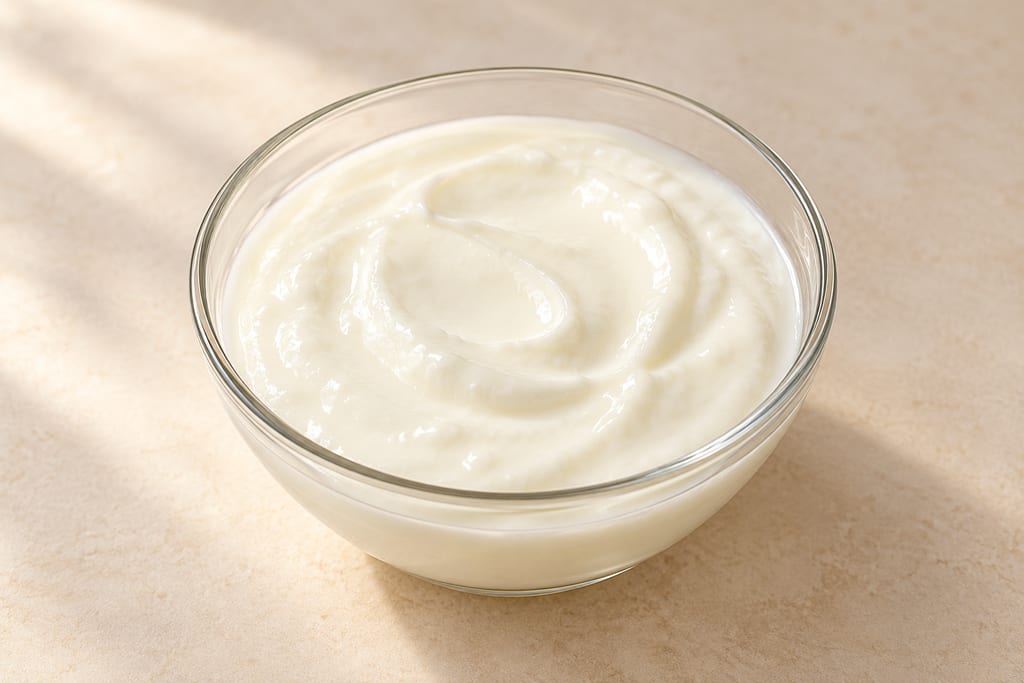
Plain yogurt
A mild, set yogurt made by inoculating warm pasteurized milk with live-culture yogurt and holding it until it gels. This US extension method uses a short ingredient list and controlled incubation.
 FermenteaWhere food goes to change
Built structures · Incubators and warm holds
jar bath · multi-jar incubator
A circulator tank holding a rack of identical jars, so several small batches share one temperature for side-by-side trials of cultures, milks, ratios or flavourings.
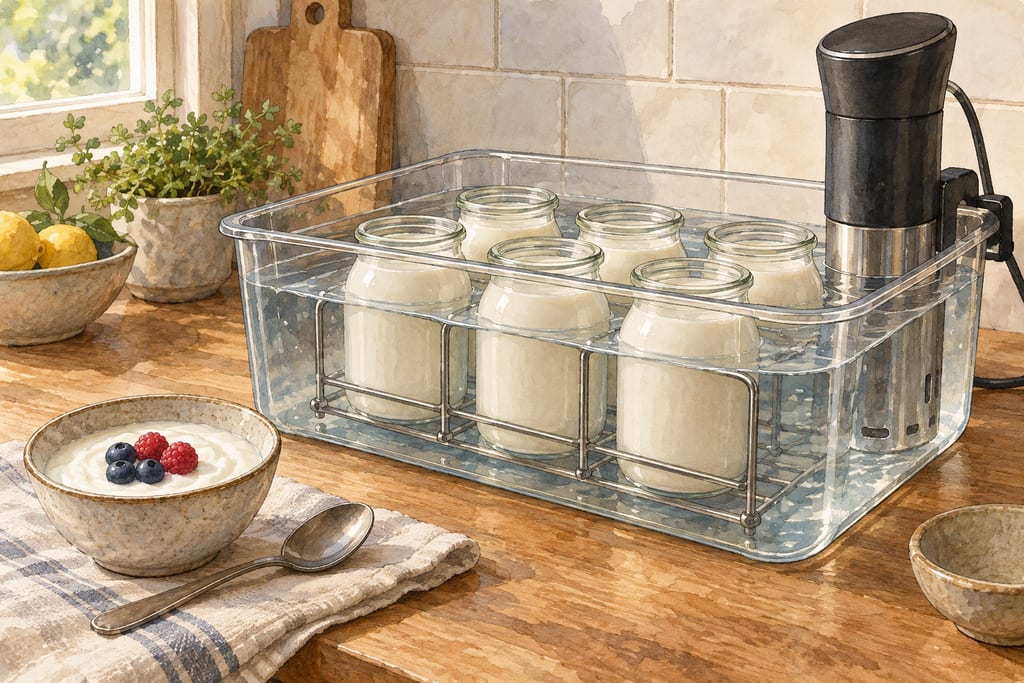
One controlled bath can run several trial batches at once: two starters, two milks, two doses, or three syrup flavourings. All the jars sit in water at one temperature, but each jar lags the water according to its size and fill.
Lavender and lemon-rosemary syrups use the same 135 °F (57 °C) for one hour, and could share a bath.
A jar added later cools the bath and delays the others. Chilled pouches dropped a restaurant bath by 3.7 °C, with 25 minutes to recover. The BC Centre for Disease Control asks that pouches not touch, so water circulates between them, and that a batch of eggs not exceed what the circulator can heat.
Yogurt in preheated circulator jars is documented by Justin Borecky of Anova. Starter and milk comparisons in identical jars follow from it.
Amazake: koji-to-water ratio trials at a 50 to 60 °C hold (Marukome). The koji and water ratio is the variable compared.
Log the sentinel jar's centre temperature over time against the display. Run a water-only test before the first food batch.
This bath cannot compare two temperatures. No published temperature log for a rack of jars in a home circulator was found, so the edge-to-centre differences are unknown.
Foods with different temperature needs cannot share a bath: amazake at 50 to 60 °C and jiu niang at 30 to 34 °C.
Yogurt in jars in a preheated circulator bath is documented in a manufacturer's recipe. The rack, spacing, lid and sentinel arrangement is proposed from manufacturer and food-safety guidance.
A build is made where it stands: moving it means building it again.
Food must be packaged in a bag or container separated from the water.
Hazard sourcePackage the food in a bag or container separated from the water.
Control sourceDo not let pouches touch: water must circulate between them.
A batch of eggs must not exceed what the circulator can heat.
Documented for international use, with no single place of origin assigned.
A mild, set yogurt made by inoculating warm pasteurized milk with live-culture yogurt and holding it until it gels. This US extension method uses a short ingredient list and controlled incubation.
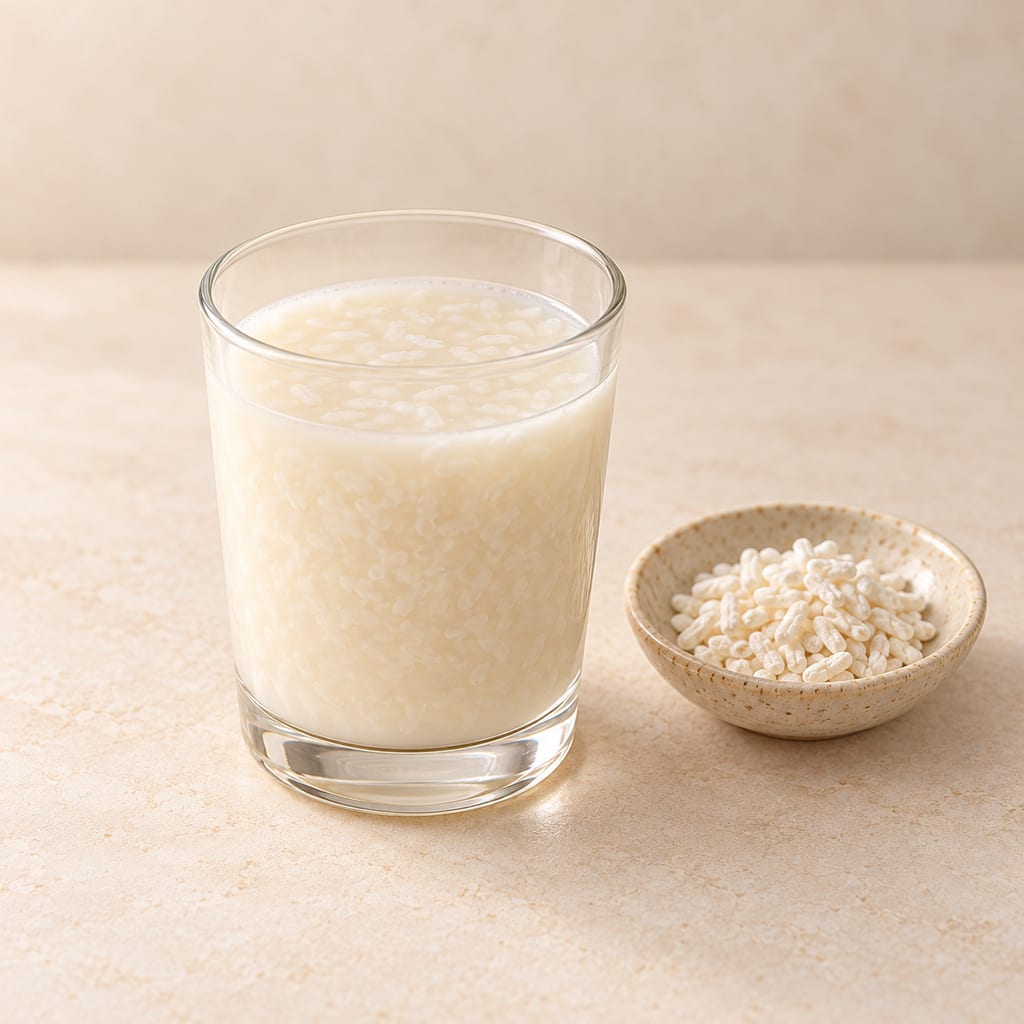
Cooked rice, rice koji and water are held warm for hours so koji enzymes turn the rice starch to sugars, giving a naturally sweet Japanese drink with no added sugar and no second fermentation.
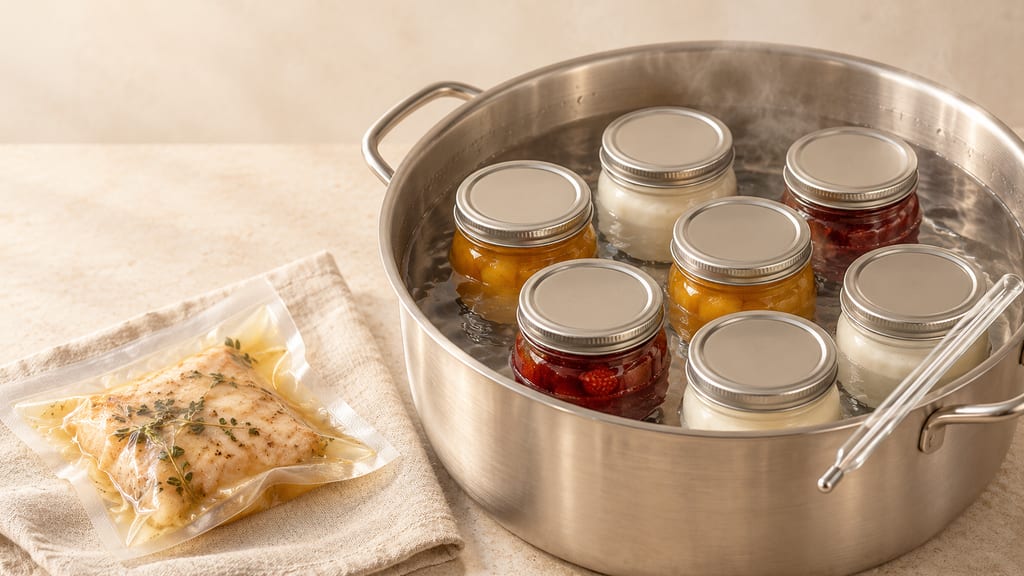
A sous-vide circulator holds a tank of moving water at a set temperature. With jars instead of bags it can incubate yogurt, set eggs, extract kombu and steep syrups, once you know what it does and does not control.
A slow cooker, a brewing kettle or a dehydrator can take over the hard part of many old food crafts, once you see each appliance as a set of physical functions and give it the right container.

Soft, spreadable Calabrian pork sausage made with a great deal of red chilli and fatty pork, stuffed into natural casings, sometimes smoked and matured while staying soft.

A way to add independent temperature logging to an existing food dehydrator without changing its built-in controls or protections. It is a monitoring method, not a rewiring plan.

Pleurotus cystidiosus is the abalone mushroom, a cultivated oyster-type fungus with dark brown caps that grows more slowly and is more demanding than other Pleurotus species.

A dark, balanced vinegar from Emilia-Romagna made by combining cooked or concentrated grape must with wine vinegar, then acetifying and refining it in wood under a protected specification.

A living dairy inoculum that starts controlled cream fermentation, developing acidity and aroma before sour cream or cultured butter is finished.

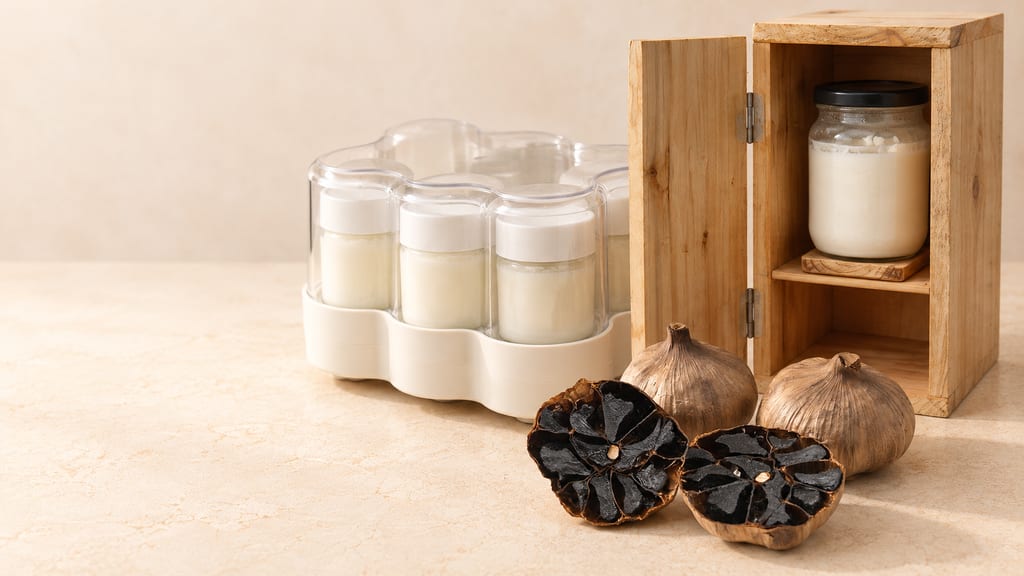
A small electric incubator holds jars at a selected temperature for yogurt and other documented warm food preparations. Controls, capacity and vessel arrangement vary by model.

Adygean salt is a seasoned table salt associated with Adygea and the wider North Caucasian culinary tradition. Salt is blended with garlic and a variable selection of herbs and spices; the exact mix depends on the named style and maker.

The African Caesar-group mushroom, Amanita masasiensis, is a wild ectomycorrhizal species of central and southern African woodlands, eaten locally. The genus contains deadly poisonous species, so identification needs care.
No community contributions have been published for this entry yet.
Sign in to contribute. Published comments and photos are free to read.
Anova CulinaryMethod
Ultra-Simple Sous Vide Yogurt from #anovafoodnerd Justin BoreckyCited in: Overview; Documented and proposed uses; Measuring; Limits
Breville USA (Breville|PolyScience)Method
the HydroPro™ Plus & the HydroPro™ Instruction Book - CSV750/CSV700BC Centre for Disease ControlMethod
Guidelines for restaurant sous vide cooking safety in British ColumbiaCited in: How it works; Limits