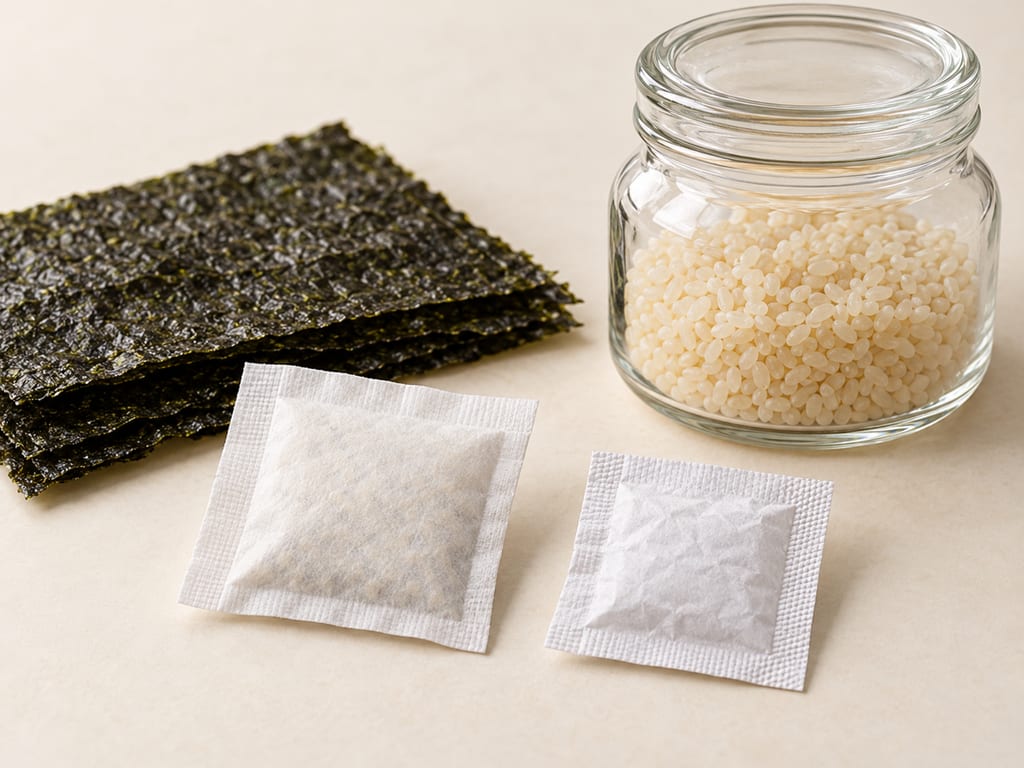
Oxygen absorbers and desiccants
Sachets can remove oxygen or absorb water vapour in a sealed package. They help manage suitable dry foods, but cannot replace adequate drying, a sound seal or a validated preservation method.
 FermenteaWhere food goes to change
Substrates
Nori is a red seaweed farmed in East Asia and dried into thin sheets, prized for its savoury flavour and crisp texture when roasted and used with rice, in soups and as a seasoning.
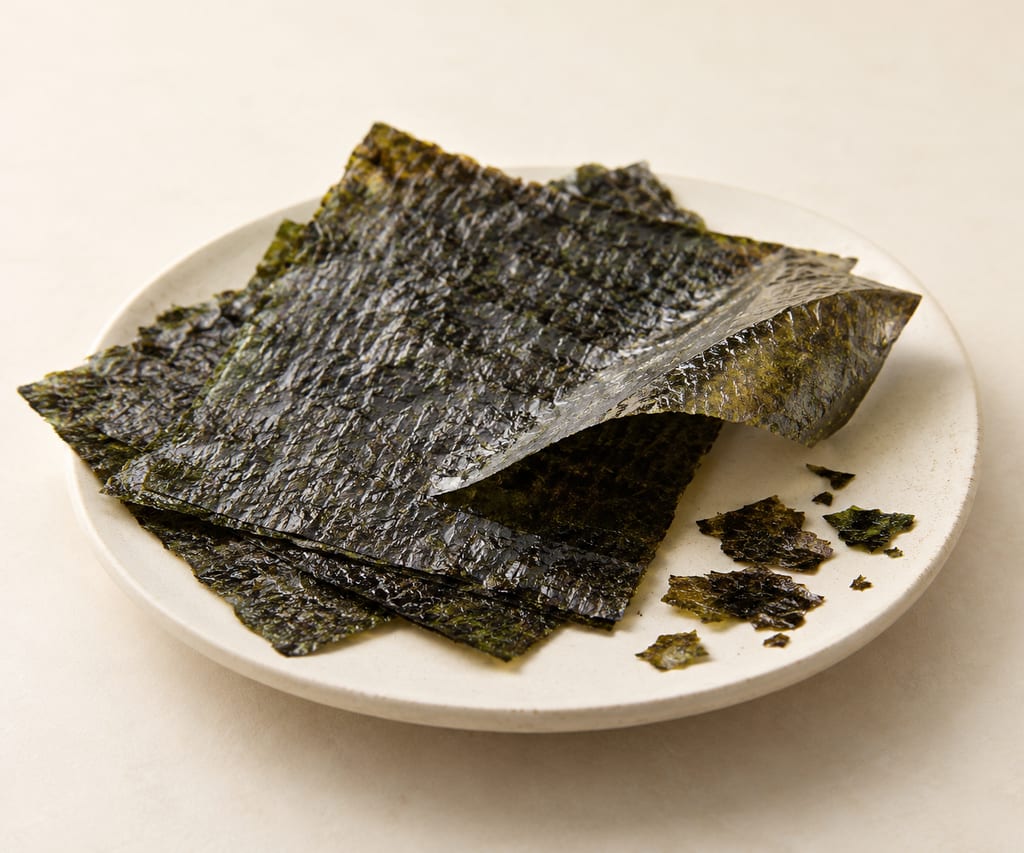
Nori is a red seaweed eaten across East Asia, best known as the thin dark sheets wrapped around sushi and rice balls. The sheet is a manufactured product. The living plant is a soft, translucent, leaf-like blade that is harvested, washed, chopped, spread in water over a screen and dried, rather like handmade paper, so that many small pieces of seaweed bond into one layer. In Japanese the word nori can mean the alga or the food made from it, and a careful description keeps the two apart.
The farmed species belong to the red algal order Bangiales and are traditionally called Porphyra yezoensis and Porphyra tenera. Molecular work has moved them around. They were transferred to Pyropia, and a 2020 revision proposed Neopyropia yezoensis and Neopyropia tenera. Later researchers have questioned the finer split, and databases do not all agree, so Pyropia yezoensis and Neopyropia yezoensis may be two names for one species. They should not be listed as separate ingredients. In Japanese trade the two main commercial types are known as susabi-nori (yezoensis) and asakusa-nori (tenera).
The wider East Asian laver trade includes other species. Pyropia haitanensis, placed in Neoporphyra by the 2020 revision, is important in south-eastern China, and Pyropia dentata, now treated by Japanese authorities as Neoporphyra dentata, contributes to Korean production. Japanese nori, Korean gim and Chinese zicai are overlapping traditions, not a single uniform commodity.
Nori is a photosynthetic eukaryote, neither a fungus nor a land vegetable. Its colour in life ranges from reddish purple to brown, green or nearly black because of its pigments. The blade holds protein, minerals, pigments and sulphated marine polysaccharides. Drying makes it storable and roasting makes it brittle and fragrant. None of that is fermentation, and ordinary nori is a non-fermented ingredient, although it can serve as a substrate for one.
Edible red seaweeds grow on rocky shores worldwide, but the food culture around nori grew up in East Asia. Japanese records give the earliest firm evidence. Accounts of the Taiho Code of 701 describe nori as a tax good, but that code has not survived. Its successor, the Yoro Code of 757, lists murasaki-nori among taxable goods, and the Engishiki of 927 records nori in official food provisions, including soups. These texts show seaweed collected, valued and distributed by the state. They do not say when anyone first ate it.
The rectangular sheet came later. In the Edo period, growers around Tokyo Bay, especially Shinagawa and Omori, relied on spores that settled naturally. They set up bamboo and brushwood in suitable shallows so that young seaweed could attach and grow, without understanding the life cycle behind it. Kikkoman's food-culture research and Japan's Agency for Cultural Affairs place the development of sheets in the Kyoho era, 1716 to 1736, adapting the papermaking skills of the Asakusa area. Sheets were easier to handle, trade and use as a wrapper. The old Omori and Shinagawa producing area ceased commercial production in 1962.
Farming stayed unpredictable because nobody knew where the spores came from. In 1949 the British phycologist Kathleen Mary Drew showed in Nature (29 October) that a filamentous organism called Conchocelis was a stage in the life of Porphyra. She worked on Porphyra umbilicalis, a different species from the Japanese commercial ones, but the relationship she showed was then applied to commercial nori. Japanese and other Asian researchers used it to produce spores and seed stock deliberately, and the Toyoumi Osakana Museum stresses its importance.
Modern farming grew from that work: hatchery production, seeded nets, managed grounds, mechanical harvest and industrial drying. Commercial cultivation is established in Japan, South Korea and China, with the Ariake Sea and the Seto Inland Sea the main Japanese areas. The Japanese chronology cannot simply be extended to Korea or China, each of which needs its own evidence.
Cultivated nori has an odd life cycle. After sexual reproduction the alga releases spores that grow into microscopic branching filaments called conchocelis, which live inside calcium carbonate such as mollusc shells. Under the right conditions they form structures that release conchospores. These settle on a surface and grow into new blades. Farmers keep the filament stage in hatcheries and use its spores to seed nets, so supply no longer depends on chance settlement.
The FAO describes the sequence as conchocelis culture, conchospore collection, growth at sea, harvest and processing. Seeded nets go into coastal water where light, nutrients, salinity, temperature and water movement suit the blades. Some farms use fixed poles in tidal flats and others use floating nets. Exposure to air at low tide, in some systems, helps control competing organisms. Others stay submerged.
In Saga Prefecture, Japan's agriculture ministry describes harvest from November to about March, taking blades once they reach roughly 15 to 20 centimetres. The seaweed is washed and chopped, spread in water and formed into thin sheets on screens, then drained and dried into hoshi-nori, the plain dried product. Roasting makes yaki-nori and seasoning makes ajitsuke-nori. The FAO gives a conventional sheet as about 21 by 19 centimetres and about 3 grams, though other formats are sold.
Practice varies. South Korea's Ministry of Oceans and Fisheries describes separate land-based hatchery and offshore growing stages with harvest across the cooler part of the year. In China, Pyropia yezoensis is grown in the north, in Jiangsu and Shandong, and Pyropia haitanensis in the south-east, in Fujian and Zhejiang. Hatchery timing, harvest intervals and drying conditions should not be copied from one farm as universal rules. Quality depends on keeping disease, damage, contamination and deterioration away between harvest and drying.
Nori brings flavour from free amino acids, marine aroma compounds and cell-wall polysaccharides. The FAO names glutamic acid, alanine and glycine as the amino acids that matter most to its taste: glutamate for umami, the other two for sweetness and balance. It also carries a lot of protein by dry weight, with minerals, pigments and complex carbohydrates. The cell wall contains porphyran, a sulphated galactan that holds water and shapes the texture of hydrated seaweed. Extracted porphyran emulsifies in the laboratory, which does not make a sheet of nori an emulsifier.
Roasting changes the aroma. A 1975 study by Hiroyuki Noda and Yoshishige Horiguchi identified dimethyl sulphide, formed from a precursor now called DMSP, as a key volatile behind the marine smell, and found its level differed between nori from different sources. Heat also drives reactions between amino compounds and sugars that make new volatiles. In a Japanese study of nori heated at 140, 200 and 250 C, certain carbonyl compounds rose with temperature and pyrazines appeared above 200 C. Those are laboratory treatments, not roasting instructions.
Nori is not a traditional ferment, but its nitrogen and polysaccharides make it a possible substrate. A 2019 study by Motoharu Uchida and colleagues grew Aspergillus oryzae directly on dried Pyropia yezoensis to make nori koji and detected glycosidase, protease and phosphatase activity. Those enzymes can break the seaweed down and release soluble, nitrogen-bearing flavour compounds. In a sauce trial, the culture made with nori koji gave more liquid after 167 days and more than twice the total nitrogen compounds of the control.
That is evidence that a mould can be grown on seaweed, not a traditional preparation or a household method. The authors suggested seaweed sauces made without cereal koji. Strains, contamination control, process conditions and safety would all need their own validation, and the result does not transfer to other seaweeds, moulds or salt levels. Plain nori added to an established fermentation may contribute umami, colour and soluble compounds, but that should not be described as an enzymatic or microbial change unless that process has actually been studied.
Pick nori for what it will do. Plain dried, roasted and seasoned sheets differ in texture and ingredients. For sushi rolls and rice balls, look for intact, evenly formed sheets that bend without breaking. Roasted sheets should smell clean of the sea and be crisp until they meet moist food. A sheet for soup does not need the same strength. Colour is a poor guide to quality because species, growing conditions, processing and roasting all shift it. Badly faded, blotchy or visibly mouldy material is not normal stock.
Moisture is the main enemy. The thin, porous sheet takes up humidity quickly, goes soft, and with enough water can support microbial growth. A 1983 study of dried nori stored under different moisture, temperature and gas conditions found pigment loss rose with moisture and warmth, and that about 5% moisture under nitrogen below 5 C preserved colour best. A separate study found water activity governed lipid oxidation, with oxygen absorbers protecting the lipids in gas-barrier packs. These are experiments, not household storage rules, and no shelf life can be read from them.
At home, keep nori in the maker's moisture-proof pack or a clean, dry, airtight container, away from humidity, light, heat and strong smells. A food-safe desiccant in a commercial pack keeps it dry, but it stays apart from the food and is not eaten. Dry hands and utensils help, and opening a big packet repeatedly in a steamy kitchen shortens the time the sheets stay crisp. Seasoned products contain oil and can go rancid, so follow the label.
Safety starts before drying. Seaweed can be exposed to polluted water, foreign matter and poor handling. A 2017 Japanese investigation linked norovirus in dried shredded nori to seven outbreaks and 2,094 illnesses, showing that drying does not remove viruses. That does not mean commercial nori is routinely contaminated. Seaweed also carries iodine and can accumulate trace elements; the European Food Safety Authority assessed iodine, arsenic, cadmium, lead and mercury across seaweeds and found composition varied by species and product. Nori-specific figures should come from product-specific data, not from kelp. Buy from traceable suppliers and do not assume wild-gathered seaweed is safe because it looks clean.
Japanese nori comes in forms defined by processing. Hoshi-nori is dried and not deliberately roasted, yaki-nori is roasted, ajitsuke-nori is seasoned and usually sold as small sheets for eating with rice, and kizami-nori is shredded for toppings. These are product categories, not species. Asakusa-nori refers to the old Tokyo Bay trade and to the species now called Neopyropia tenera, though trade names and botanical identification need checking separately. Iwa-nori is wild laver gathered from rocks and covers different species by locality.
The Ariake Sea, shared by several Kyushu prefectures, is a major growing area where strong tides and wide shallow water shape the methods. Saga producers describe nori prized for dark colour, flavour and fine texture. The same word on a label does not mean the same seaweed: species, harvest time, processing and growing conditions all alter the product.
Korean gim has its own preparations. Plain, roasted and seasoned forms are common, and seasoned sheets may be brushed with oil, salted and roasted for eating straight with rice or as a snack. Gim for gimbap is chosen for how well it encloses a rice filling, while small seasoned sheets are eaten separately. Different Pyropia species are used in Korean farming.
Chinese zicai covers purple laver prepared in forms unlike the Japanese sushi sheet. Pyropia haitanensis, from Fujian and Zhejiang, is used dried in soups and cooked dishes, and Pyropia yezoensis is grown in the north. Products may be loose, pressed or sheet-like. Green seaweeds sold with the same suffix, such as aosa-nori and aonori, are not part of the same group; they belong to green algae, not the red algae of ordinary sushi nori.
Nori's best-known role is as a wrapper. In makizushi a sheet encloses seasoned rice and fillings, and in onigiri it goes around a shaped ball of rice, adding savoury sea flavour and a dry surface to hold. Texture depends on timing: fresh from the pack it stays crisp for a short while, and in contact with moist rice it softens. Some dishes want that softness and others keep the sheet apart until serving. Regional dishes use it too, such as teppo-maki from Futtsu in Chiba, a rice roll made with roasted nori.
Shredded nori finishes noodles, rice and savoury dishes, adding aroma and colour without a sauce. Toasted pieces go into dry seasoning blends or on top of soups just before eating. In liquid it softens and gives up soluble compounds.
Korean gim is eaten with rice, in gimbap, crumbled over food or as small roasted, seasoned sheets. The oil and salt in seasoned gim make it a different product from plain Japanese yaki-nori. In Chinese cooking dried zicai goes into soups, often with egg or seafood, softening in the broth and giving it savour.
Dried nori can also be ground to powder or used in seasonings and sauces for seaweed flavour. Experimental koji work has used it as a substrate for Aspergillus oryzae in a fermented seaweed sauce, which is a research application and not a traditional nori fermentation. Dried, roasted, shredded and seasoned nori stay non-fermented ingredients, and any fermented nori sauce needs its own process record and safety assessment.
Country-level attestation in tax and court records; not an origin claim.
Where sheet nori developed commercially.
A major present-day growing area.
Gim farming areas.
Mainly Pyropia haitanensis.
Mainly Pyropia yezoensis.
Sachets can remove oxygen or absorb water vapour in a sealed package. They help manage suitable dry foods, but cannot replace adequate drying, a sound seal or a validated preservation method.
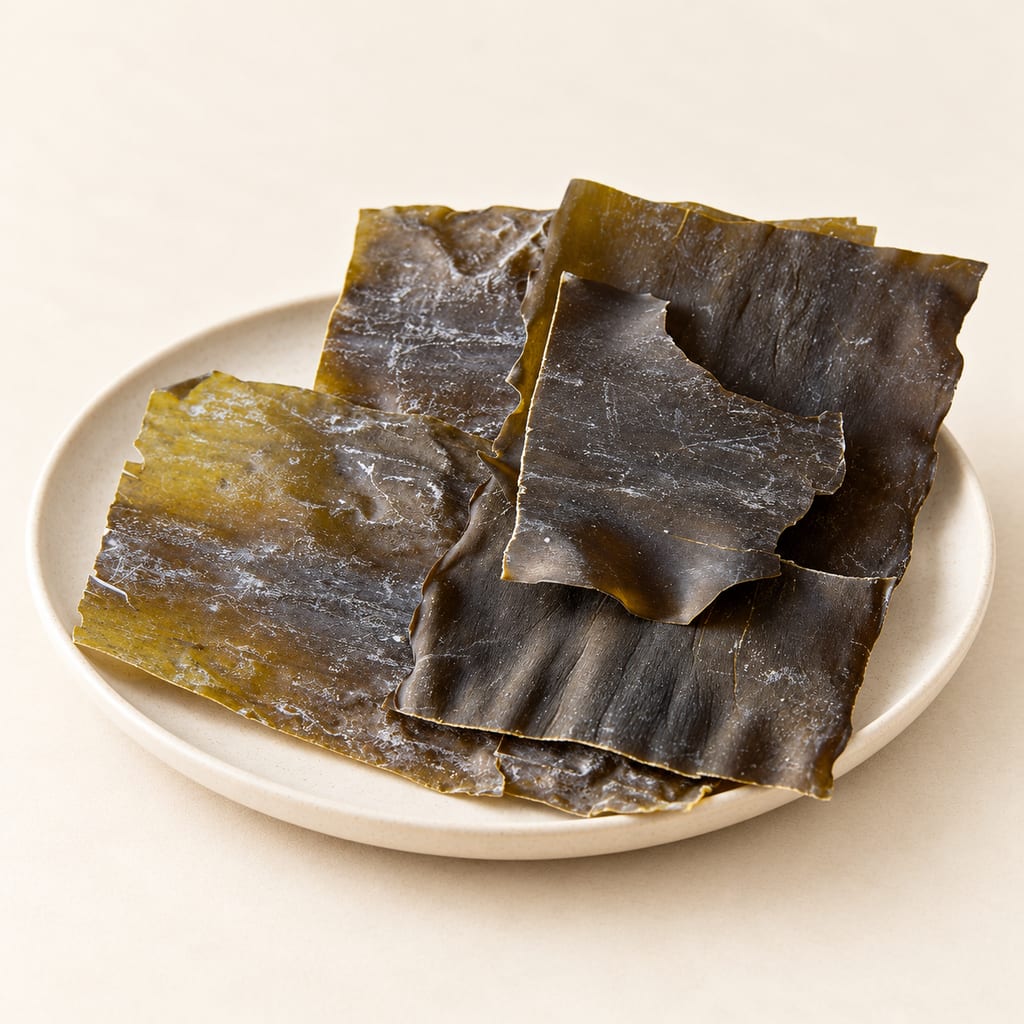
Kombu is a group of edible brown kelps, chiefly harvested around northern Japan or cultivated in East Asia, used for umami-rich stocks, simmered dishes, seasonings and preserved foods.
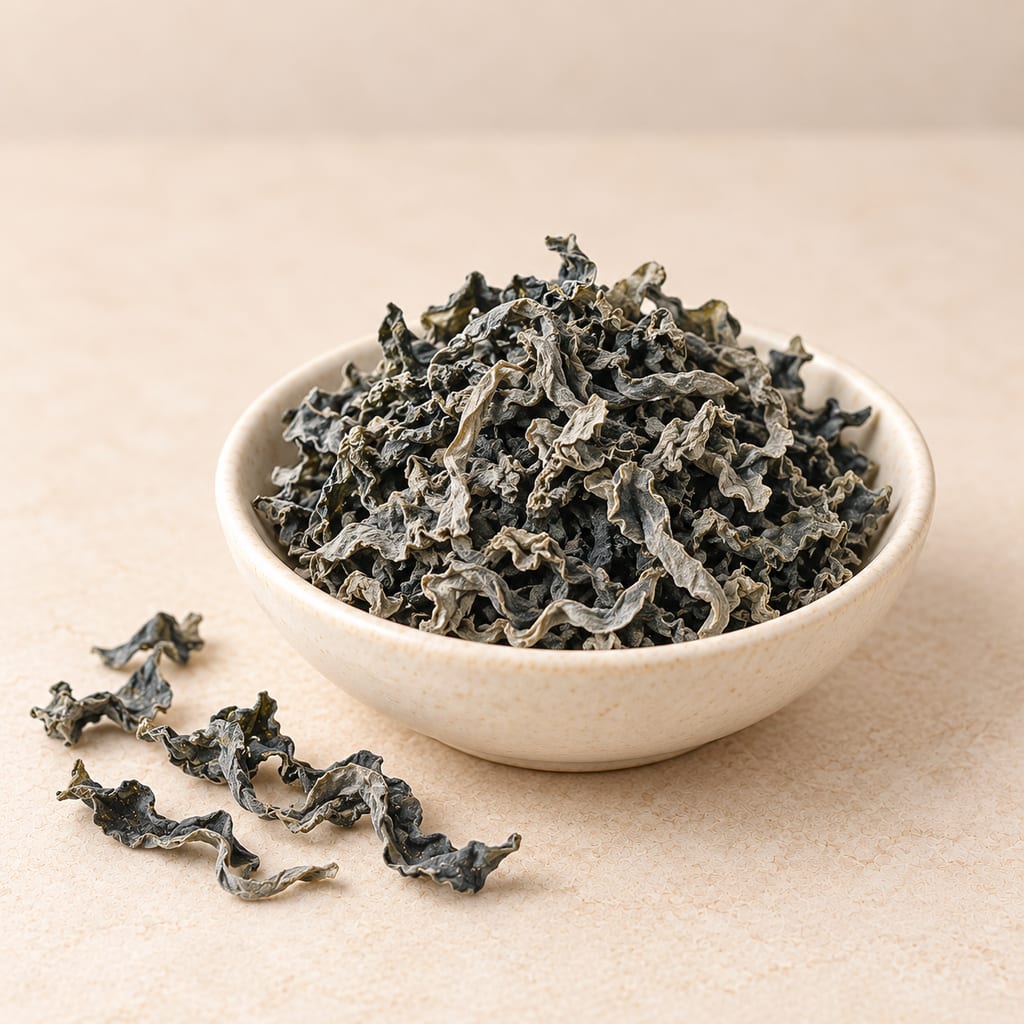
Wakame is an edible brown kelp native to the northwest Pacific, harvested or cultivated for its tender blades, firm stems and frilled reproductive parts, and used in soups, salads, rice dishes and preserved seaweed products.
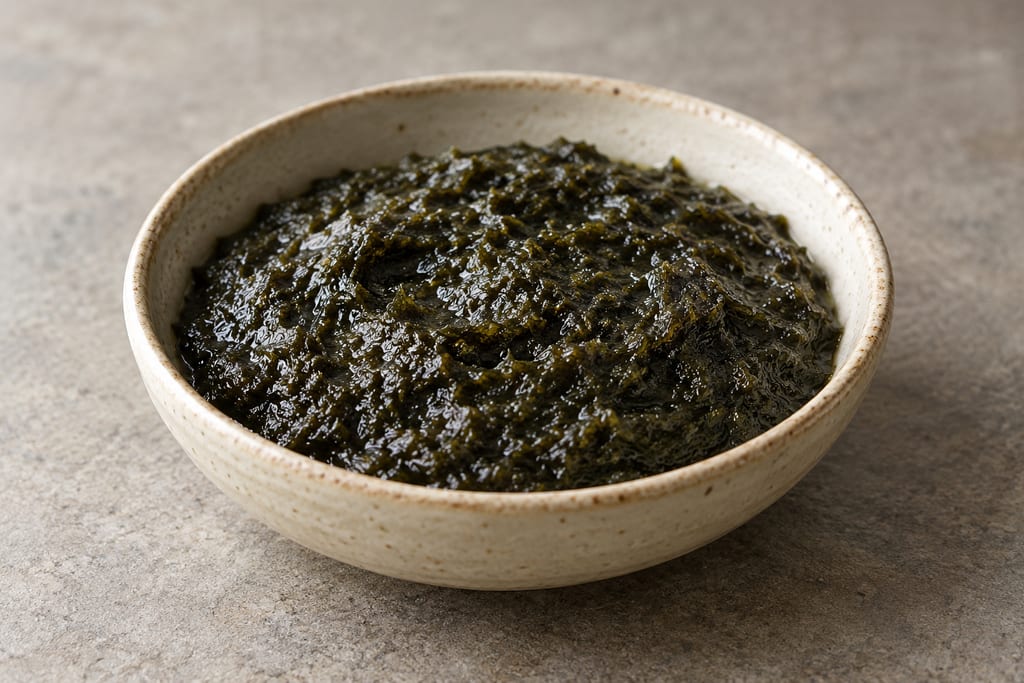
Welsh laverbread is hand-gathered purple laver slowly cooked to a dark green-black paste, eaten with oatmeal, bacon and cockles or on toast.
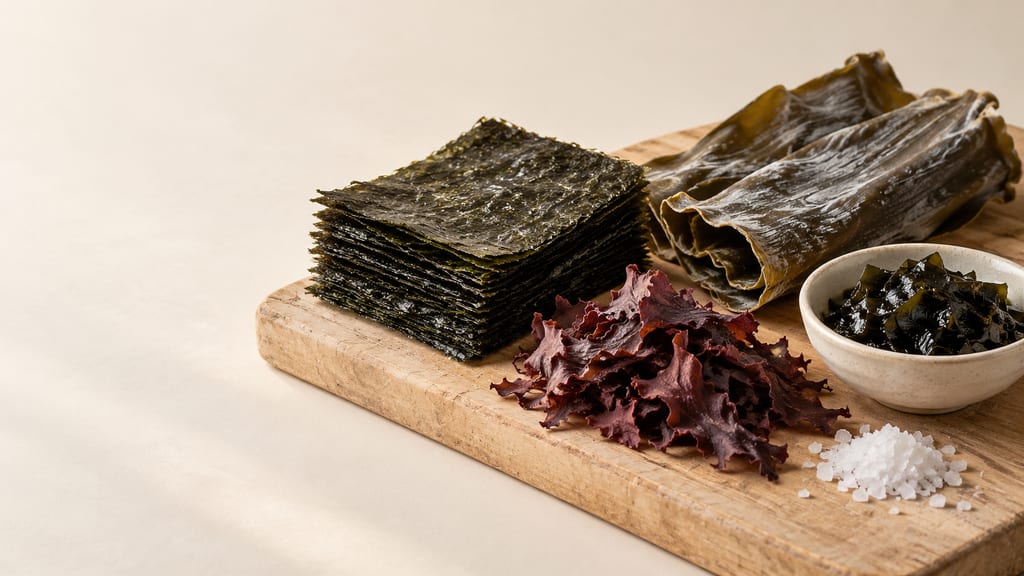
Nori, laverbread, Korean seaweed soup and carrageen pudding all begin as algae used for different jobs. This account covers seaweed names, coasts and farms, their histories, cooking, fermentation and composition.
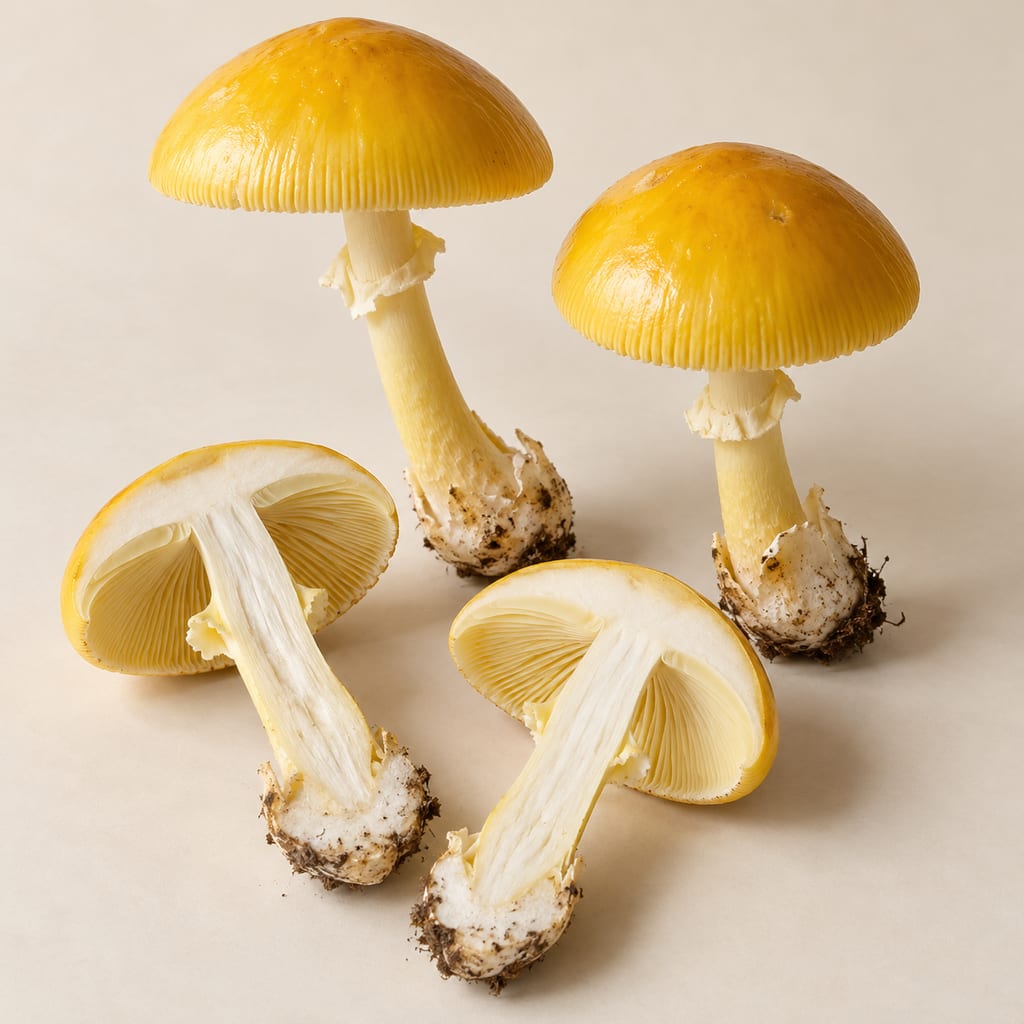
A yellow Caesar’s amanita now recognized as Amanita kitamagotake, a distinct species documented in Japan and China. Scientific catalogues list it as edible, while field identification is complicated by close relatives and lethal lookalikes.

Protected Italian vinegar made only from cooked grape must, fermented and aged in a battery of wooden barrels for at least 12 years: sweet, sharp and syrupy.

Airag is Mongolia’s fermented mare’s-milk drink, traditionally churned with saved starter in a reusable cowhide khokhuur.

Appam, or hoppers, are South Indian and Sri Lankan rice pancakes made from a fermented coconut-and-rice batter and cooked in a curved pan to a crisp lacy rim and a soft, spongy centre.
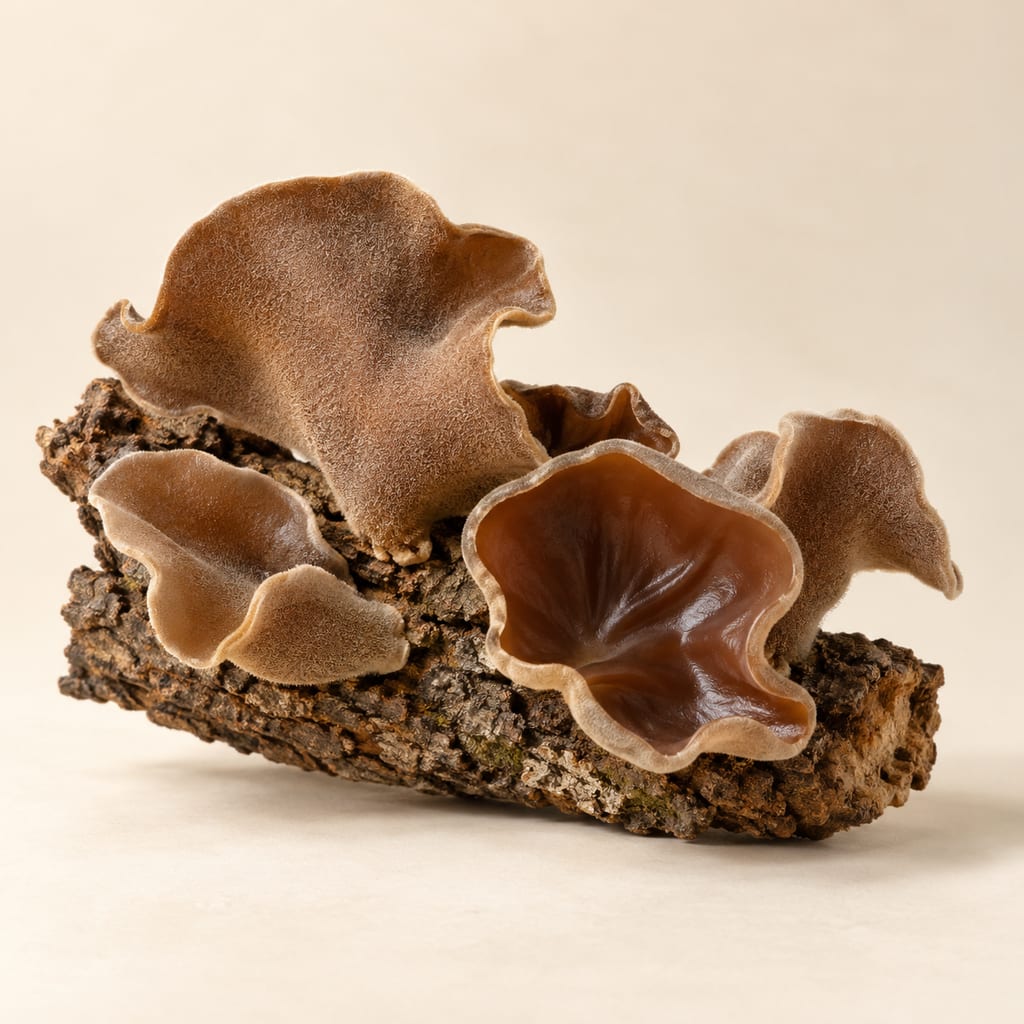
Auricularia tremellosa is a wood ear fungus of the genus that supplies most dried wood ear sold in China; its own food record is thin, and the culinary practice described here comes from the closely related wood ear species.

Ayran is Turkey’s cold, savoury yogurt drink: plain yogurt is loosened with water and lightly salted, then whisked smooth or aerated into a soft cap of foam.
A thin stone griddle used over an open hearth. Norwegian archaeology documents the established tradition from the early Middle Ages; a Viking-period origin is only a cautious suggestion linked to Shetland.

Crushed or milled barley cooked in water until the starch softens and the mixture thickens, the plainest way a northern household turned stored grain into a meal, here with apple and hazelnut.
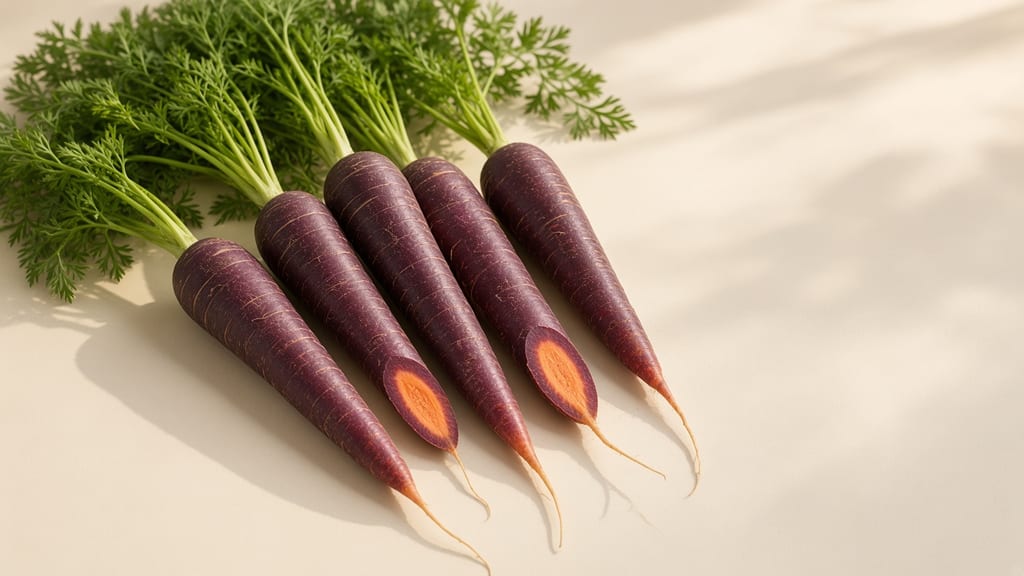
Black carrot is the anthocyanin-pigmented Eastern carrot (Daucus carota var. atrorubens), the purple root that preceded orange types and still colours kanji and şalgam.
No community contributions have been published for this entry yet.
Sign in to contribute. Published comments and photos are free to read.
Food and Agriculture Organization of the United NationsIdentity · Cultivation · History
Cultured Aquatic Species Information Programme: Porphyra spp.Distribution and ecology of edible Porphyra
Life cycle of blade, conchocelis and conchospore
Shells carrying the filamentous phase; seeded nets; harvest and sheet making
Production in China, Japan and Korea and species by region
Standard sheet about 21 by 19 cm and about 3 g
Cited in: What it is; Where it comes from and its history; How it is grown and made; What it does in fermentation and cooking; Choosing and handling it; Kinds and regional variations; How it is eaten and used
Nori Cultivation Promotion Association, JapanTaxonomy
アマノリ類の学名 (Scientific names of amanori seaweeds)Porphyra to Pyropia in 2011; further revision in 2020
Neopyropia yezoensis and Neopyropia tenera
Neoporphyra haitanensis and N. dentata
Susabi-nori and asakusa-nori as common names
Cited in: What it is; Kinds and regional variations
Journal of Phycology (Wiley)Taxonomy
Redefining Pyropia (Bangiales, Rhodophyta): Four New Genera, Resurrection of Porphyrella and Description of Calidia pseudolobata sp. nov. From ChinaMolecular evidence for splitting Pyropia
Neopyropia and Neoporphyra proposed
Cited in: What it is
Ministry of Agriculture, Forestry and Fisheries, JapanHistory
Seaweed Products: Traditional Foods in JapanSeaweed in Japanese food culture
Edo-period nori cultivation and the use of papermaking methods
Red nori versus green aonori and aosa
Cited in: What it is; Where it comes from and its history; Kinds and regional variations
Agency for Cultural Affairs, JapanHistory
大森及び周辺地域の海苔生産用具 (Nori production equipment of Omori and surrounding areas)Cultivation at Omori and Shinagawa
Development in the Kyoho period
Wooden and bamboo supports and drying tools
Commercial production in the old Omori and Shinagawa area ended in 1962
Cited in: Where it comes from and its history
Ota City, TokyoHistory
Ota City, the Hometown of Nori: A History of Nori, Passed Down to the PresentNori production around Omori and Shinagawa
Tides and nutrient-rich water
Spread of techniques from Omori
Cited in: Where it comes from and its history
Kikkoman Institute for International Food CultureHistory
乾海苔に漉き込まれた養殖の歴史 (The history of cultivation embedded in dried nori)Square sheets in the Kyoho era, 1716 to 1736
Papermaking methods and Asakusa
Nori as a wrapper for rolled sushi
Cited in: Where it comes from and its history; Kinds and regional variations
Toyoumi Osakana Museum, JapanHistory · Cultivation
海藻の迷宮 (Labyrinth of Seaweed)Brushwood supports and nets
Importance of Drew-Baker's life-cycle discovery
Fixed-pole and floating cultivation
Production concentrated in the Ariake Sea and Seto Inland Sea
Cited in: Where it comes from and its history; How it is grown and made
NatureHistory · Science
Conchocelis-Phase in the Life-History of Porphyra umbilicalis (L.) KützPublished 29 October 1949
Showed the conchocelis phase belongs to Porphyra
Studied P. umbilicalis, not a commercial Japanese species
Cited in: Where it comes from and its history
Ministry of Agriculture, Forestry and Fisheries, JapanCultivation · Variation
佐賀海苔 (Saga nori)Harvest from November to about March
Blades harvested at about 15 to 20 cm
Washing, cutting, sheet forming and drying
Cited in: How it is grown and made; Kinds and regional variations
Ministry of Oceans and Fisheries, Republic of KoreaCultivation
김은 어떤 과정으로 생산되나요? (How is gim produced?)Separate hatchery and sea stages
Harvest through the cooler months
Cited in: How it is grown and made; Kinds and regional variations
Nippon Suisan GakkaishiScience
Studies on the Flavor Substances of Nori, the Dried Laver Porphyra tenera: I. Dimethyl Sulfide and Dimethyl-β-propiothetinDimethyl sulphide and its precursor in nori aroma
Aroma differs between sources
Cited in: What it does in fermentation and cooking
Nippon Suisan GakkaishiScience
焼海苔香気に及ぼす加熱温度の影響 (Effect of heating temperature on the aroma of roasted laver)Samples heated at 140, 200 and 250 C
Pyrazines at higher temperatures
Laboratory treatments, not cooking advice
Cited in: What it does in fermentation and cooking
Nippon Suisan GakkaishiHandling
Storage of Dried Laver NoriMoisture and temperature speed pigment loss
Low moisture, nitrogen and cold kept colour best
Cited in: Choosing and handling it
Nippon Suisan GakkaishiHandling
Changes in the Lipids of Dried Laver Nori at Different Water ActivitiesWater activity affects lipid oxidation
Oxygen absorbers help in gas-barrier packs
Cited in: Choosing and handling it
Food Chemistry (Elsevier)Science
Porphyran and Oligo-porphyran Originating from Red Algae Porphyra: Preparation, Biological Activities, and Potential ApplicationsPorphyran is a sulphated galactan
Properties of extracted porphyran
Cited in: What it does in fermentation and cooking
Journal of Bioscience and Bioengineering (Elsevier)Fermentation
Development of Koji by Culturing Aspergillus oryzae on Nori (Pyropia yezoensis)A. oryzae grown on dried nori
Glycosidase, protease and phosphatase activity
Nori sauce trial: after 167 days more liquid and more than twice the total nitrogen of the control
Cited in: What it does in fermentation and cooking; How it is eaten and used
EFSA JournalSafety
Dietary Exposure to Heavy Metals and Iodine Intake via Consumption of Seaweeds and Halophytes in the European PopulationIodine, arsenic, cadmium, lead and mercury in seaweeds
Composition varies by species and product
Cited in: Choosing and handling it
Emerging Infectious Diseases (CDC)Safety
Foodborne Outbreaks Caused by Human Norovirus GII.P17-GII.17-Contaminated Nori, Japan, 2017Seven outbreaks with 2,094 illnesses
Dried shredded nori implicated
Norovirus stays infectious in dried food
Cited in: Choosing and handling it
Ministry of Agriculture, Forestry and Fisheries, JapanUse
Onigiri (Rice Balls)Nori wrapped round rice balls
Cited in: How it is eaten and used
Ministry of Agriculture, Forestry and Fisheries, JapanUse
Teppo-maki: Our Regional CuisinesRice roll from Futtsu, Chiba, with roasted nori
Cited in: How it is eaten and used