Japan's Ministry of Agriculture, Forestry and Fisheries publishes a regional preparation with the following quantities:
Ingredient — Published quantity
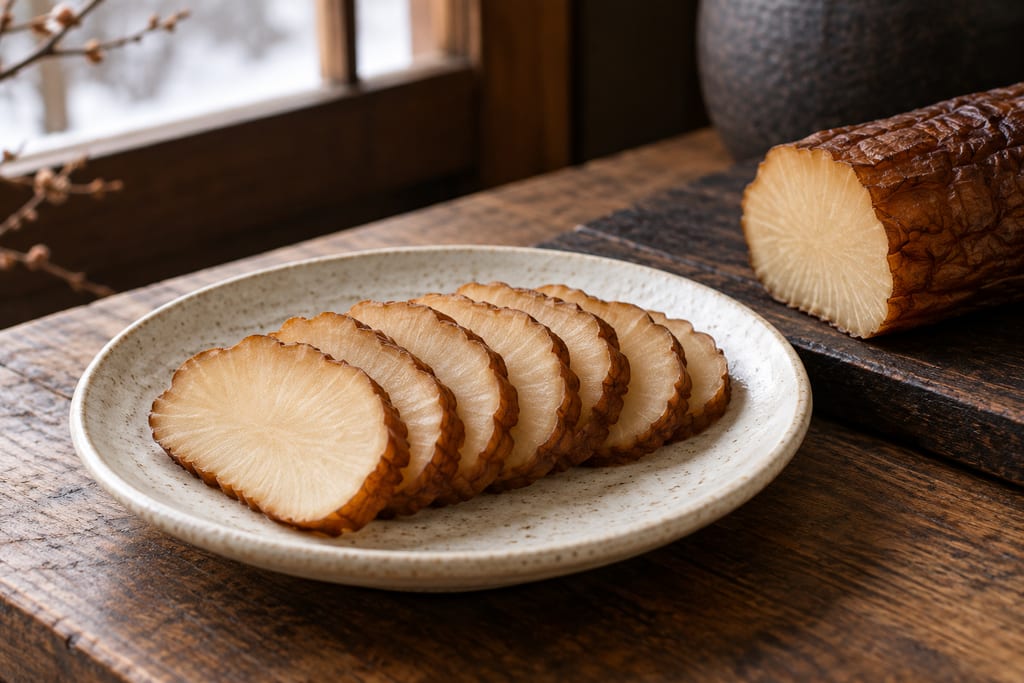
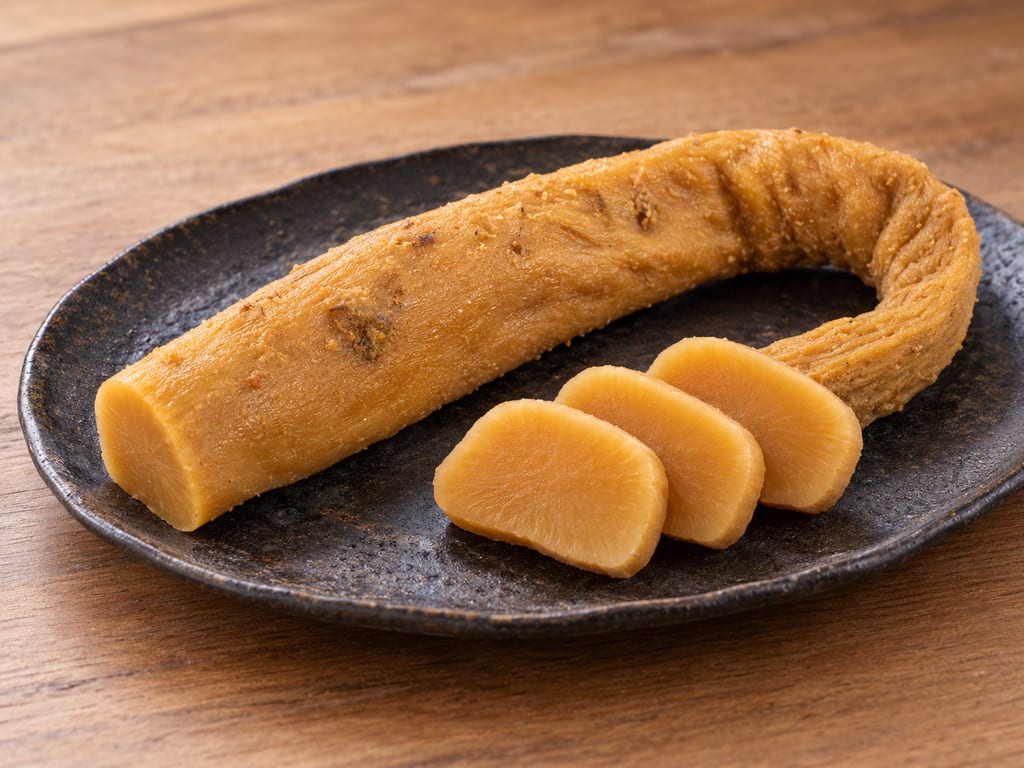
Smoked daikon radish — 12 kg
Steamed broken rice or related cooked-rice preparation — 1.5 kg
Rice bran — 1.5 kg
Salt — 1.5 kg
Coarse sugar — 1 kg
Turmeric or safflower colouring — Small quantity
Smoked Yamauchi carrots, optional — To taste
The published English translation is awkward in its treatment of the cooked-rice ingredient and the coarse sugar. These should be checked against the original Japanese terminology before entering them into a machine-linked ingredient catalogue.
The 12 kg quantity refers to already smoked radish in the published recipe.
It is not necessarily the fresh purchasing weight.
This distinction matters because drying removes water.
- Daikon produced domestically in Japan. - Smoke drying using hardwoods such as oak or cherry for at least two days and nights. - Rice-bran maturation for at least 40 days at low temperature. - Compliance with specified restrictions on particular artificial sweeteners, colours and preservatives.
The registration defines minimum characteristics of the protected product.
It does not give a complete household fermentation-validation protocol.
The current GI specification describes a traditional Akita product and says the commercial name entered the market in 1967. The earliest household attestation is not established in this recipe record.
Ingredients
Scaling: source batch only
Smoked daikon radishalready smoked
12 kg
the published figure is for smoked, not fresh, weight
Steamed broken rice or related cooked-rice preparation
1.5 kg
the published English translation of this ingredient is unclear and needs checking against the original Japanese
The registered specification is not a complete home recipe: it does not give a full ingredient formula, measured cure, numeric temperature range, household monitoring plan or storage life. Do not use this source note as a making guide.
Stage 1 — Harvest the daikon. Daikon is harvested in autumn or early winter.
Stage 2 — Clean. Remove unwanted leaves and soil.
Stage 3 — Tie into bundles. Radishes are bound using rope or string.
Stage 4 — Smoke-dry. Hang the daikon in a dedicated smoking structure.
Stage 5 — Monitor the smoke. Maintain slow smouldering and suitable airflow.
Stage 6 — Inspect the dried radishes. The radishes should develop a brown or amber surface.
Stage 7 — Wash off surface soot. After smoke drying, clean the outside of the radishes.
Stage 8 — Prepare the bran mixture. Combine rice bran, cooked-rice ingredient, salt, sugar and the optional colouring specified by the regional recipe.
Stage 9 — Pack. Arrange the smoked radishes tightly in a suitable large pickling barrel.
Stage 10 — Weight and mature. Apply appropriate pressure using the traditional weighted-pickle approach.
Stage 11 — Remove and clean. Once mature, remove the radishes from the bran mixture.
Stage 12 — Slice and serve. Cut into relatively thin slices.
Maturation
The registered specification describes rice-bran fermentation and maturation for at least 40 days at low temperature; it provides no numeric temperature or household monitoring/storage plan.
Places
Akita Prefecture
Traditional preparation · Region evidence
The GI specification identifies Akita Prefecture as the production area.
Every preserved food is a stack of barriers against microbes, enzymes, air and time. This is how they work, what a recipe's numbers measure, and how cooks worldwide build them.
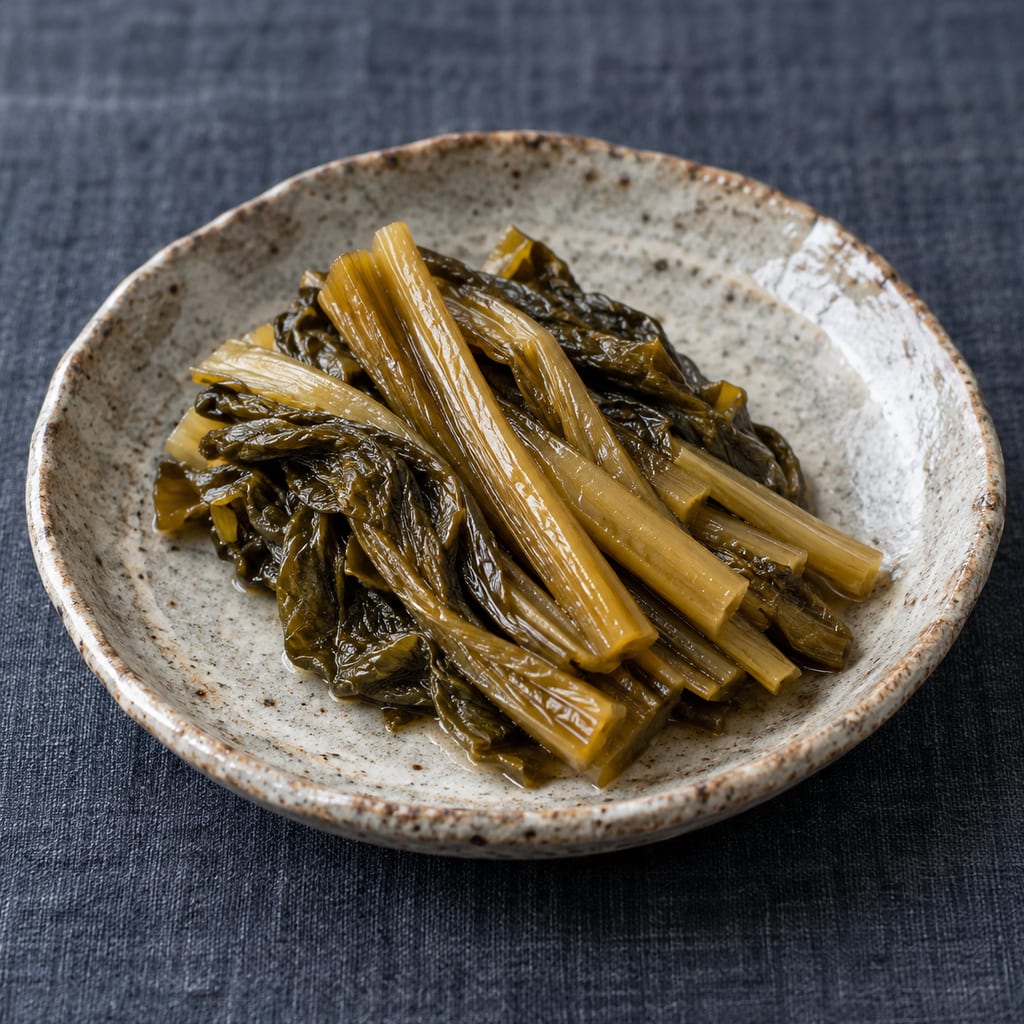
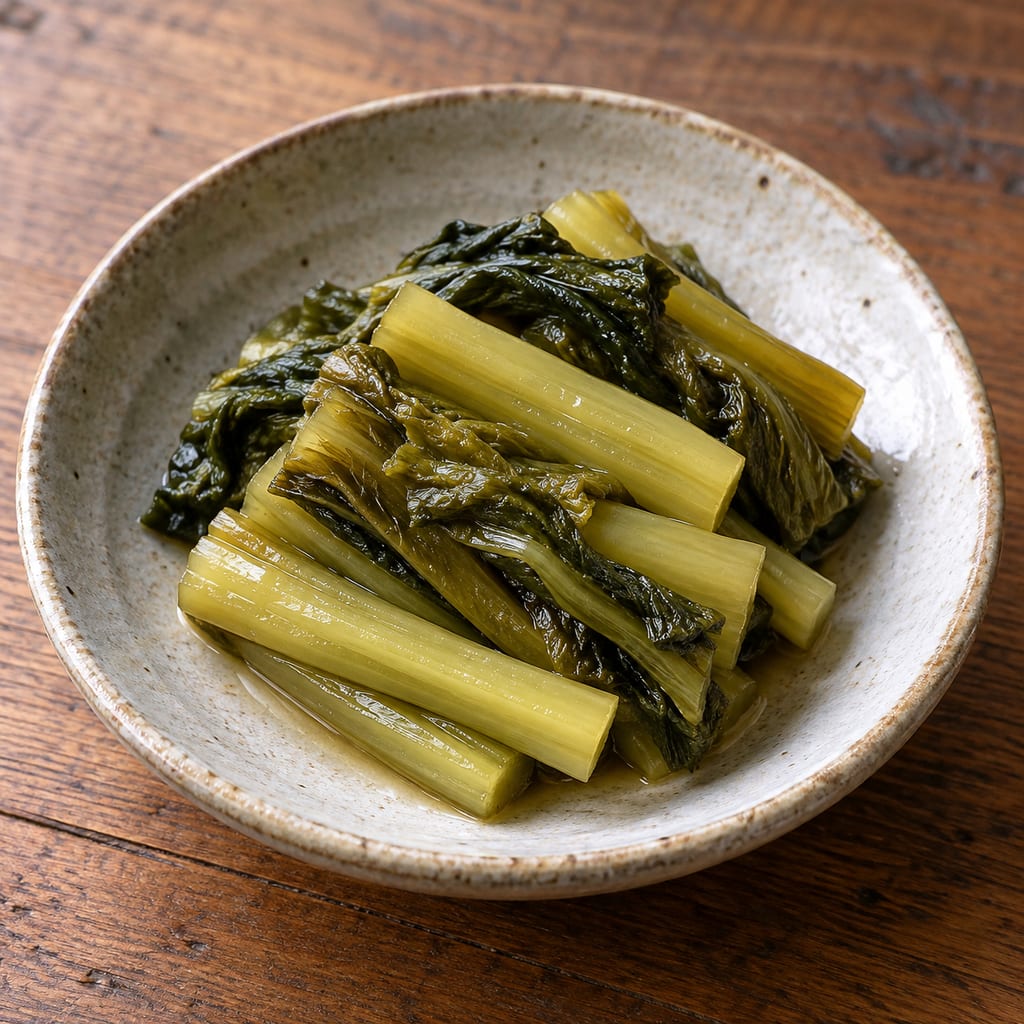
Takana mustard greens from Aso in Kumamoto are salted and pressed into a fresh spring pickle, or aged into a sour furuzuke that is fried and mixed into takana rice.
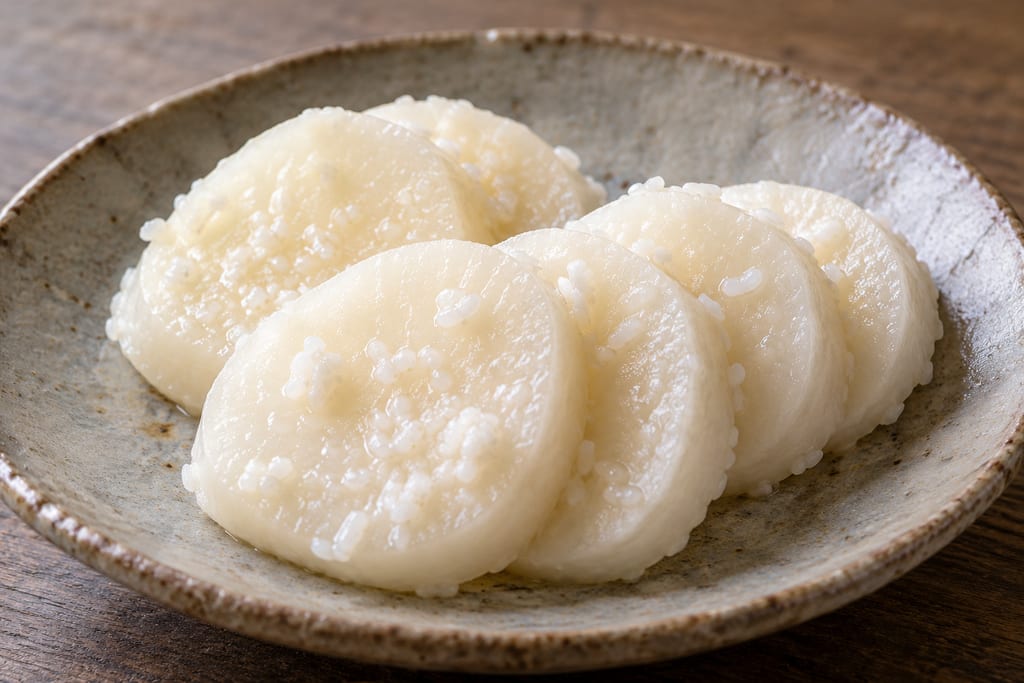
A sweet, crisp Japanese daikon pickle from Tokyo's Nihonbashi district, made by salting fresh radish and dressing it in rice koji, sugar or koji amazake without the heavy drying used for takuan.
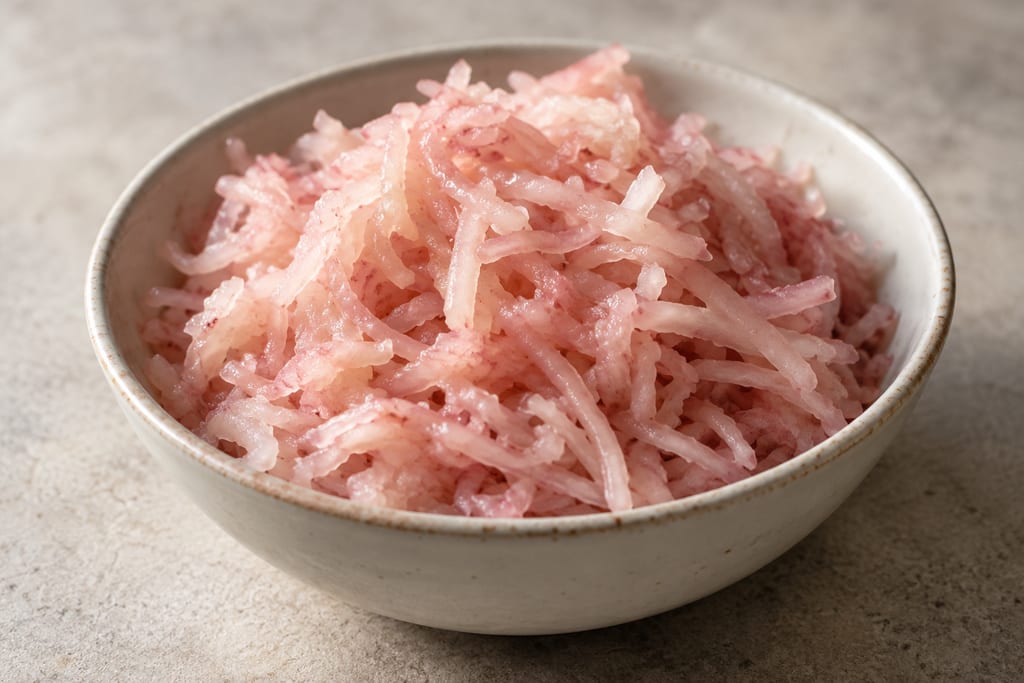
Regional takuan from Ise City, Mie, made with Misono daikon dried on a rack, then matured in a weighted barrel of rice bran and salt for months to years.
Foods embedded in salty fermented miso paste, which transfers salt and fermentation products into them; misozuke uses an already transformed medium rather than a fresh vegetable brine.
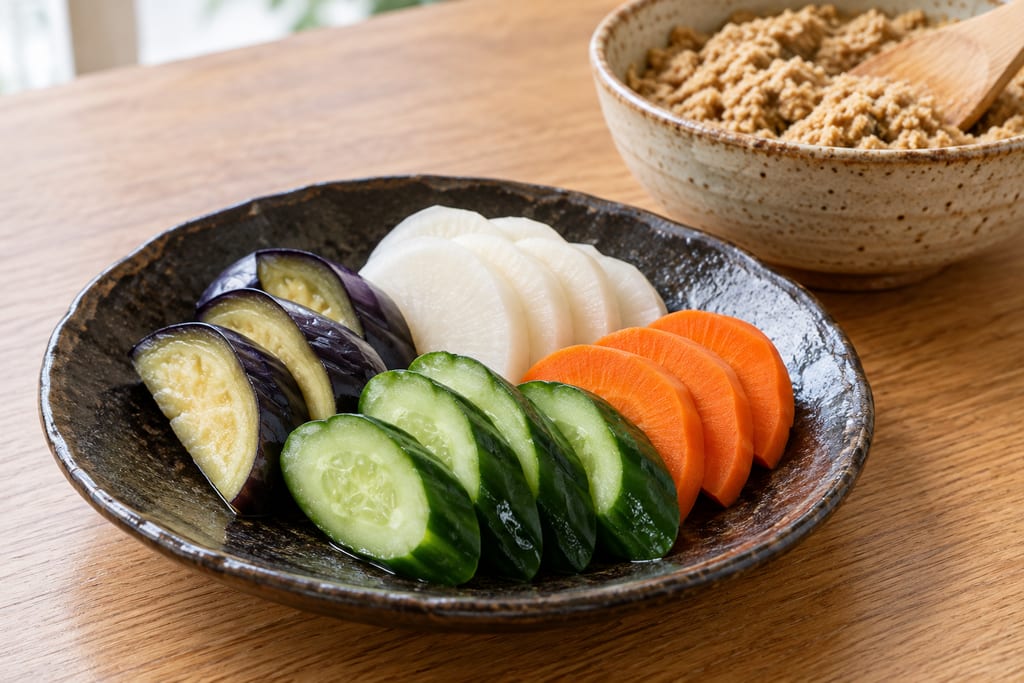
Japanese pickles made by burying vegetables in nukadoko, a reusable bed of rice bran, salt and water that is turned daily and ripened by lactic and yeast fermentation.
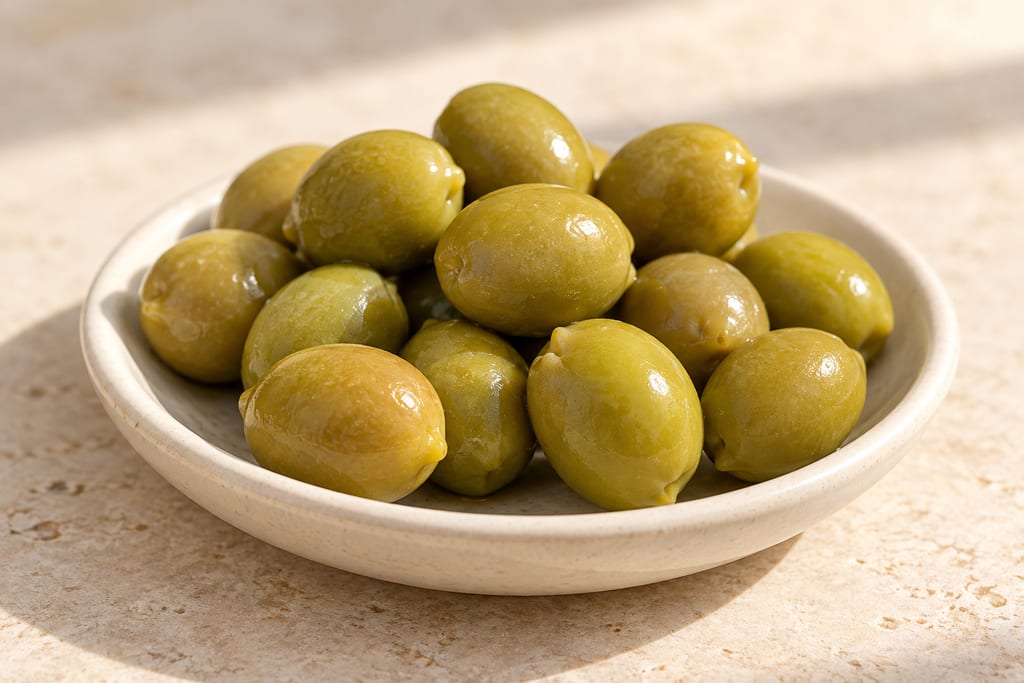
A Portuguese table-olive product from the Negrinha cultivar in northeastern Portugal, sold in three commercial styles, two of them brined fermentations and one oxidised to black.
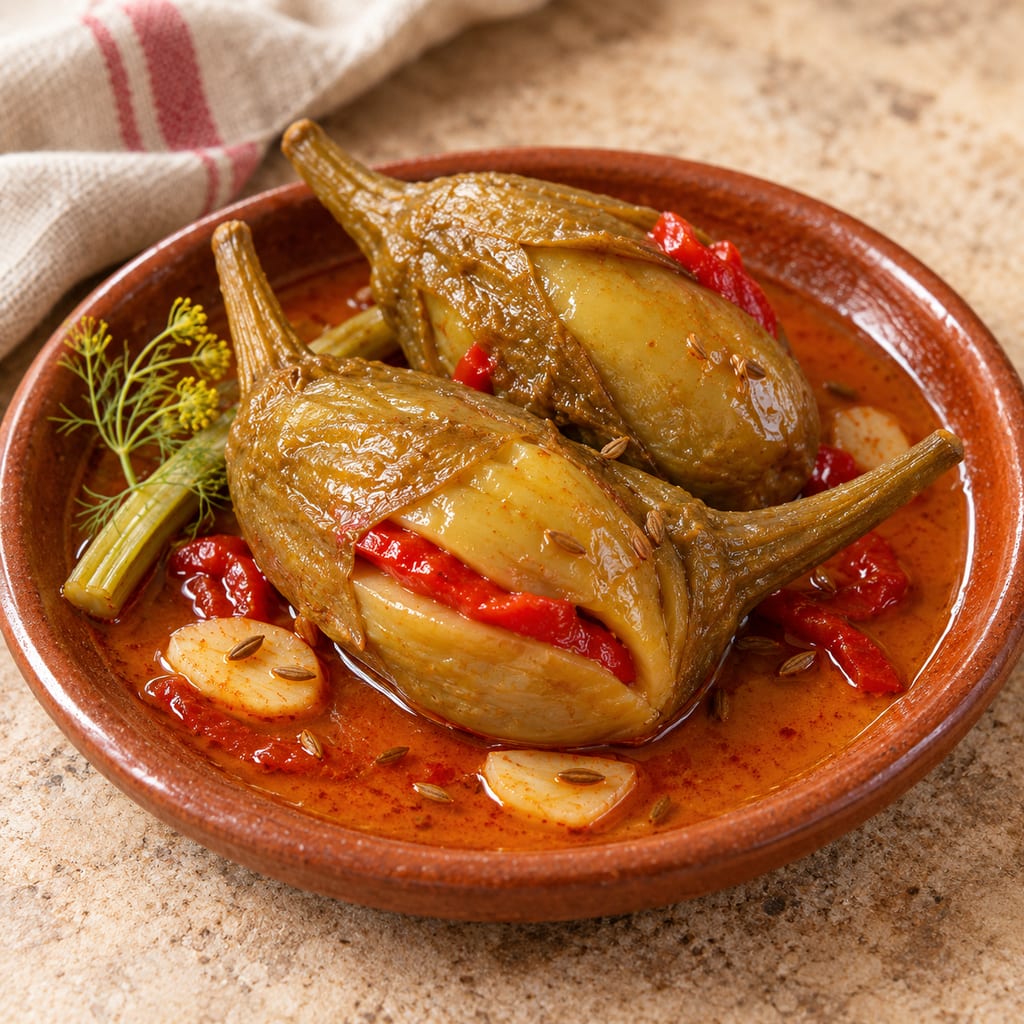
A protected aubergine preserve from Ciudad Real in Spain: tender fruit of the local Dealmagro variety, cooked briefly and then fermented in a vinegared, paprika-seasoned dressing.
Source-specific Brovada DOP producer method for Friuli Venezia Giulia turnips and red-grape marc. This records a regulated producer process; it is not a validated home-scale recipe.
An industrial fermentation patio places factory-made fiberglass-reinforced polyester olive tanks below floor level, with drainage and transfer infrastructure arranged around the buried vessels.
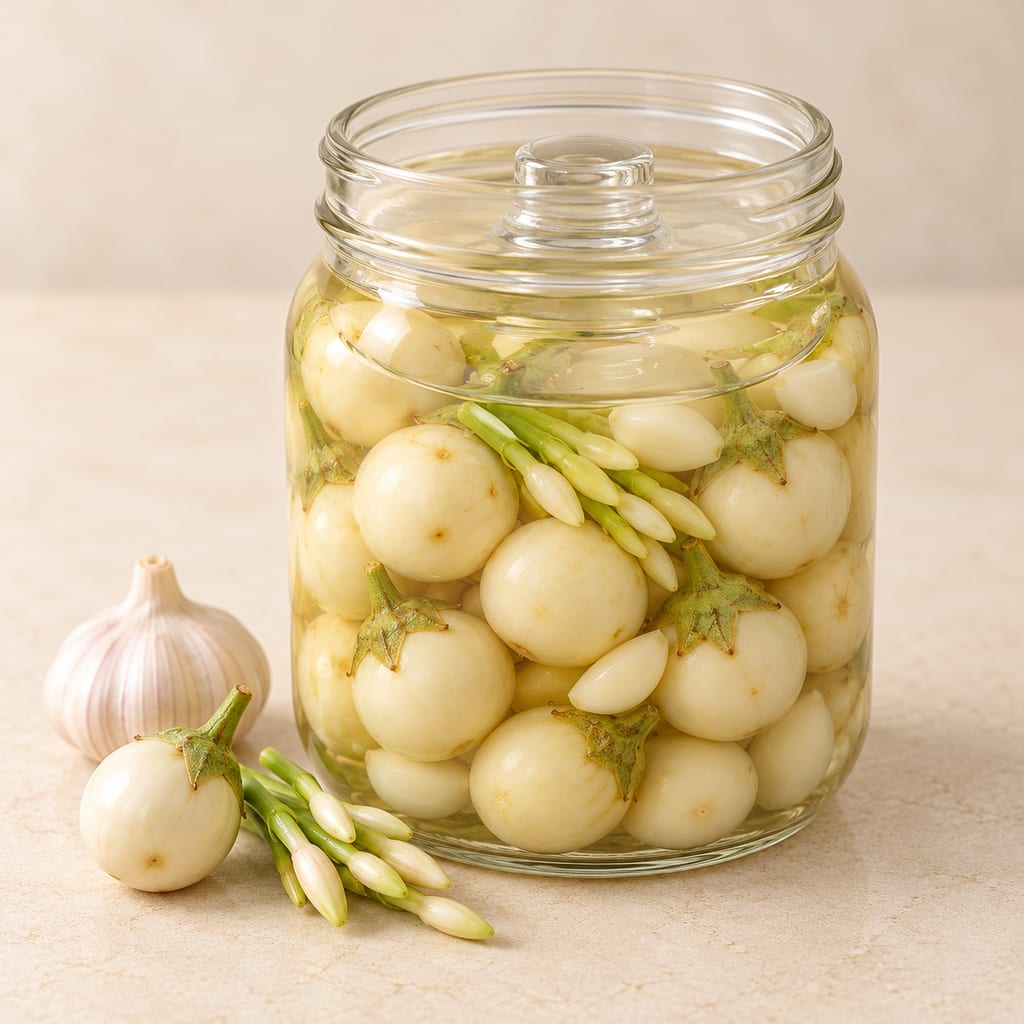
Vietnamese salted and fermented small eggplant, dried on the day of purchase, then held submerged in warm salty water with garlic and galingale flower for a week or longer.
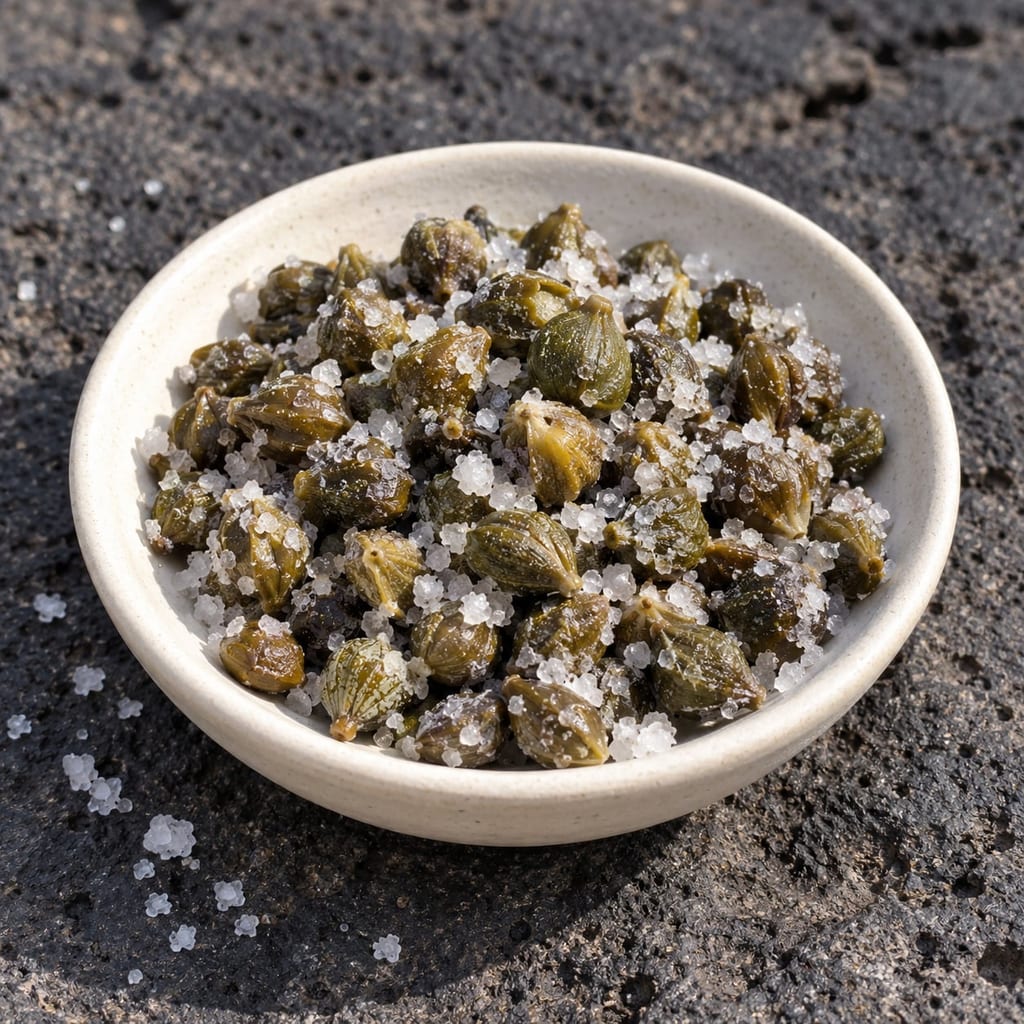
A protected Sicilian product: unopened caper buds from the island of Pantelleria, dry-salted with sea salt in a two-stage process that encourages lactic fermentation.
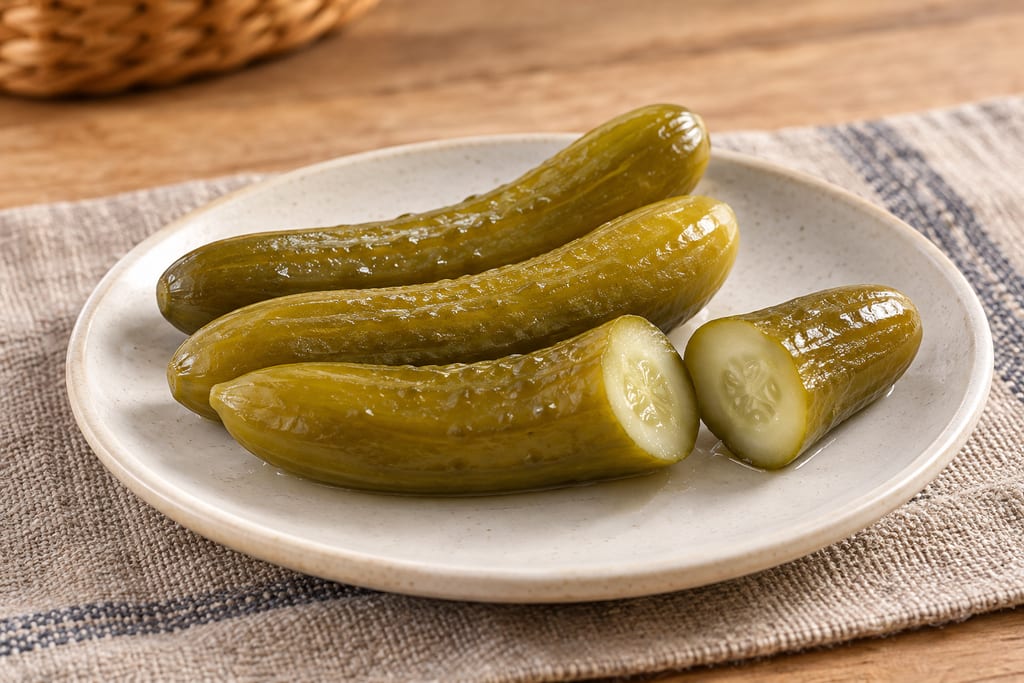
Çubuk turşusu is a registered pickle from Çubuk district in Ankara. Its cucumber variant is sold as Salatalık Turşusu, and a commercial specification sets its brine and room-temperature period.
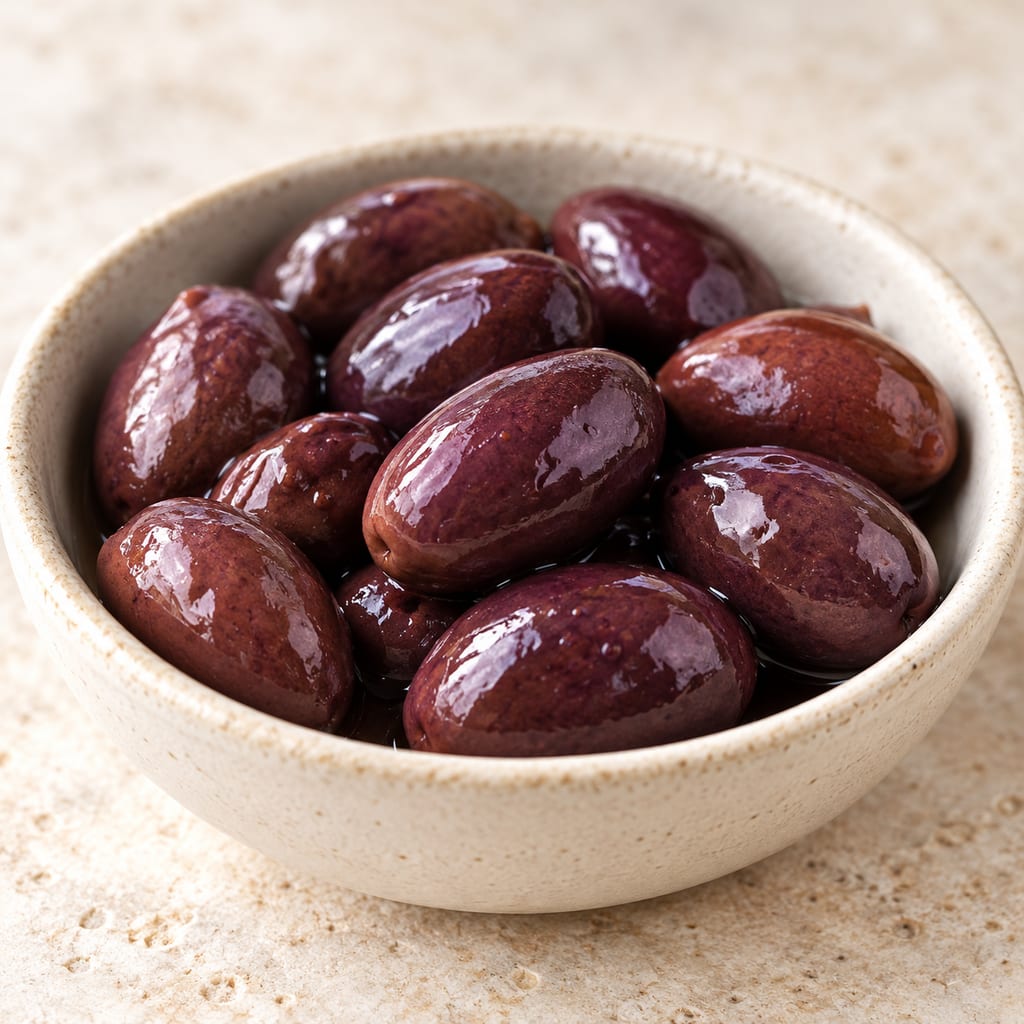
Elia Kalamatas is a Messinia table olive of the Kalamon variety, picked before full ripeness and fermented in brine for six to nine months; it is a PDO product, not a generic black olive.
Community
No community contributions have been published for this entry yet.
Share what you made
Sign in to contribute. Published comments and photos are free to read.
Updated 10 July 2026. The specification names domestic daikon, broad-leaf wood smoking for at least two days and nights, a rice-bran stage of at least 40 days under low temperature, and a product history; it is not a household recipe.
The registered specification says domestic daikon is smoked over broad-leaf wood for at least two days and nights before its rice-bran stage.
The specification describes smoke as the drying stage for daikon, followed by rice-bran fermentation and maturation.
The GI specification requires at least 40 days in rice bran under low temperature, but gives no complete household ingredient amounts or control schedule.
On physical PDF page 1, the product description explicitly calls the rice-bran stage slow lactic fermentation in winter; it does not identify the organisms.
Cited in: A pickle born from snowy winters; Names and identity; History: preservation under the hearth; Why the process is unusual; The geographical indication requirements; Stage 1 — Harvest the daikon; Stage 2 — Clean; Stage 3 — Tie into bundles; Stage 4 — Smoke-dry; Stage 5 — Monitor the smoke; Stage 6 — Inspect the dried radishes; Stage 7 — Wash off surface soot; Stage 8 — Prepare the bran mixture; Stage 9 — Pack; Stage 10 — Weight and mature; Stage 11 — Remove and clean; Stage 12 — Slice and serve; How smoke drying works; What the rice bran does; Lactic-acid fermentation; Why cold weather matters; Recognizing a good result; Problems and safety
Accessed 2026-10-26
Ministry of Agriculture, Forestry and Fisheries, JapanHistory · Uses
Cited in: A pickle born from snowy winters; Names and identity; History: preservation under the hearth; Regional and modern variations; How it is eaten; Recognizing a good result; Problems and safety