
Dextrose
Crystalline D-glucose supplies fermentable carbohydrate to starter bacteria. Hydration state, starch source and product formulation remain relevant when selecting the powder.
 FermenteaWhere food goes to change
Modern adaptation
Fuet
A documentary account of a modern starter-cultured Fuet formula and its place in Catalan sausage culture. The cited raw-pork process lacks matched safety validation, so this page does not present it as a household recipe.
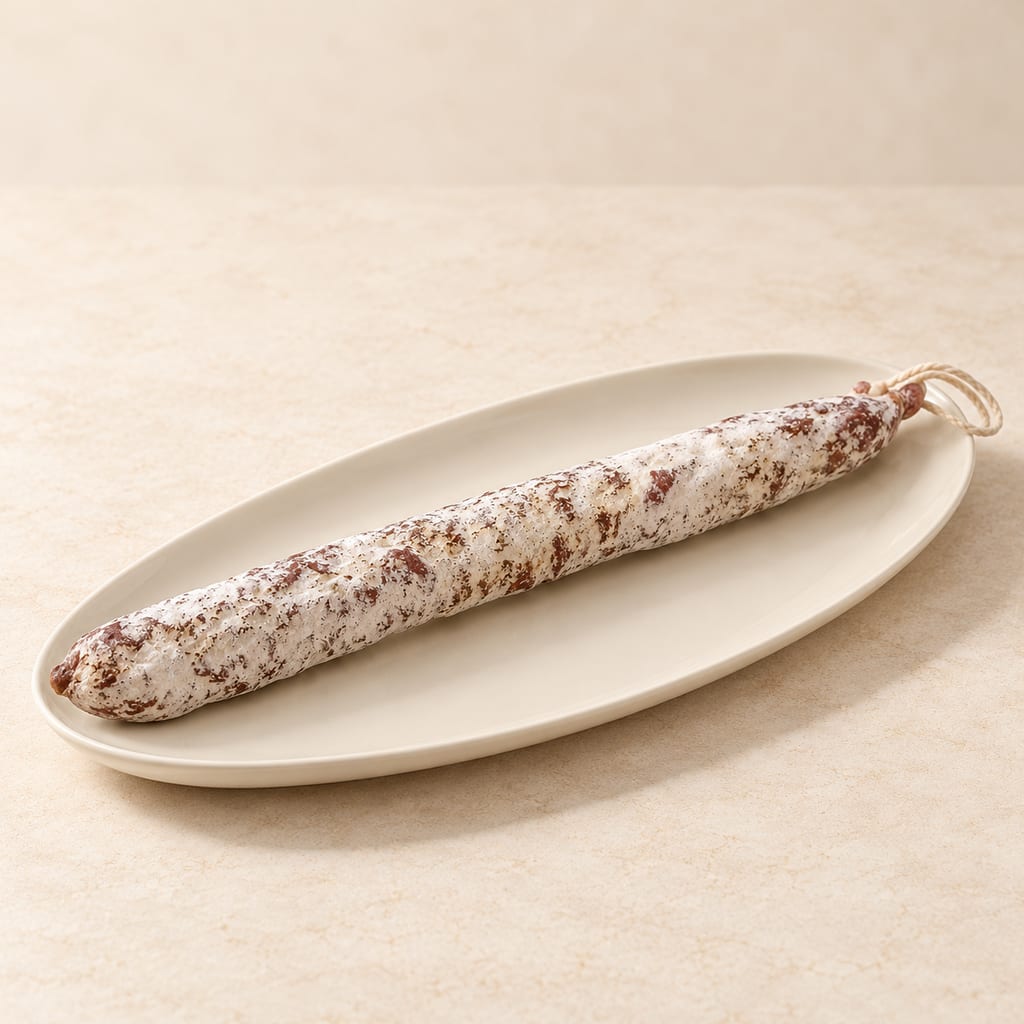
Fuet is a slender, dry-cured pork sausage associated with Catalonia. The Catalan dictionary defines the food as a thin, long, straight llonganissa and records the word for this sausage in Ripoll, Olot, the Plana de Vic and Tortosa. Interporc’s Spanish meat guide describes a thin product generally 20–40 millimetres across, traditionally produced in Catalonia and now made elsewhere in Spain. The name therefore points to a recognizable sausage form and regional food tradition, while leaving room for makers’ formulas and local distinctions.
A contemporary starter-cultured Fuet is one modern adaptation, not a protected or historic Catalan formula. It combines pork and fat with seasonings, a bacterial starter and an optional surface culture. This page presents its food history and broad process stages for context; it does not reproduce the quantities or provide instructions for making raw fermented pork.
Outside Catalonia the name is widely used for commercial sausages, and Spanish production now extends beyond the region. That spread does not erase the local meaning. Fuet sits among Catalan embotits, the family of prepared meats that includes fresh, cooked and cured sausages. It is not simply a generic name for every dry salami, nor should every sausage called longaniza, secallona or espetec be treated as the same recipe.
The historical claim made here is deliberately narrow. The Diccionari Català-Valencià-Balear records fuet as a thin, long sausage used in several Catalan localities and quotes a February 1925 Scriptorium passage that lists fuets among sausage types. This supplies a dated textual attestation for the word and food, not proof that the sausage began in 1925. The consulted evidence does not establish an origin date, a single inventor or one immutable ancestral recipe.
Catalan pork charcuterie developed within a rural economy in which preserved meats carried the harvest and slaughter through the year. The Catalan Tourist Board places fuet alongside other cured and cooked pork sausages and describes charcuterie as a defining regional food tradition. Interporc likewise connects fuet to Catalonia while noting its later national production. These broad accounts explain why a narrow, dried sausage belongs in the region’s pantry; they do not date the particular starter-cultured formulation below.
Local names and shapes are part of the history. The dictionary connects the name with Ripoll, Olot, the Plana de Vic and Tortosa. A Catalan radio discussion with charcuterie specialists emphasizes that terminology changes across districts: speakers distinguish fuet and llonganissa, and also separate secallona, somalla and espetec by their processes and finished character. Such testimony is useful for understanding a living vocabulary, but it should not be made into a universal taxonomy for all Catalan makers.
Lean pork supplies the muscle protein that forms a sausage’s structure; back fat contributes pale flecks and changes the texture of a slice. Fuet formulas vary, and broader product guides describe minced lean pork and fat with salt and seasonings. The precise proportions of this modern adaptation are omitted because its process has no matched household validation.
Salt seasons meat and affects microbial growth, while curing ingredients have product-specific roles and must be calculated for a matched process. The modern formula names a curing salt but does not establish its ingoing nitrite basis for this formulation. Dextrose is a fermentable sugar for the starter; garlic, white pepper and white wine contribute the particular aroma and taste of this adaptation. These observations explain the ingredients but do not recommend amounts or substitutes.
This adaptation names Flavor of Italy as its starter culture and MOLD 600 as an optional surface culture. They have different roles: a bacterial starter is mixed through meat, while a surface culture is applied to casing. The available documentation does not validate either culture in this particular household formula. Its MOLD 600 hydration notes conflict, and the cited manufacturer information describes a different dilution protocol; this page does not prescribe its preparation. A white surface cannot by itself identify a culture.
A commercial starter is intended to ferment available sugars and produce acid. In fermented sausage production, acidity is one of several process measures, not a stand-alone safety guarantee. A pH target reported for one formula is not reproduced here as a household endpoint because no validated process links it to this formulation, casing and drying stage.
Fermentation also changes flavour beyond sourness. Meat enzymes and microbial enzymes break proteins and fats into smaller compounds that shape aroma and taste as the sausage matures. The details depend on the cultures, meat, temperature, humidity, diameter and time. In a primary study of spontaneously fermented fuet and larger llonganissa, researchers found that technological conditions affected the amount and profile of biogenic amines. Their results concern the tested spontaneous processes and show why conditions matter; they do not validate this commercial-starter formula or establish a home safety threshold.
MOLD 600 grows on the casing in the presence of oxygen. Its product sheet describes lipolytic and proteolytic activity, meaning it can act on fat and protein at the surface, contributing to the maturation environment and flavour. It may also influence drying by changing surface conditions. This white surface culture is intentionally different from uncontrolled growth. A photograph, white bloom, pleasant smell or pH reading cannot identify a culture or prove a sausage safe.
A documented modern sequence begins with chilled pork and fat, followed by mincing and mixing with salt, curing ingredients, seasonings, wine and starter. It proceeds to filling casings and optional application of a surface culture. These broad stages help explain the form of a starter-cultured sausage; they are recorded here as context, not directions.
The documented sequence separates warm fermentation from later cooler drying. This entry omits ingredient quantities, curing-salt amount and operating targets because it has no matched process validation. Publishing those figures without a validated formulation could make an incomplete home process appear usable.
Official BCCDC and USDA FSIS guidance treats fermented-meat safety as a process-specific, multi-hurdle problem. Those processor-oriented sources do not validate this formula or supply missing household controls. This entry is a documentary account of one modern adaptation, not a procedure to reproduce.
Fermented sausage is a high-risk food because raw minced meat can carry pathogens and the warm fermentation stage can allow hazards to grow if controls are inadequate. Drying reduces moisture, but a weight-loss percentage is not interchangeable with a measured water activity or a process validation. The maker’s pH range is not a guarantee of pathogen reduction, and the recipe’s salt mass does not reveal the final salt concentration or water activity. No safe endpoint can be supplied by inference.
The cited BCCDC sausage guidance and USDA FSIS guideline discuss pathogen control, curing, fermentation, drying and sanitation as linked, process-specific measures. They are written for food-safety professionals and meat processors; they do not certify the cited source formula or turn it into a household recipe. The source does not establish a matched curing-salt calculation, degree-hour schedule, lethality process or finished water-activity endpoint. This page does not supply or imply those missing controls.
Appearance, smell, taste, a white surface bloom or a single home measurement cannot establish that raw fermented sausage is safe. The cited method gives no validated discard rule, finished-product shelf life or storage conditions. A commercial product’s label and current competent food-safety advice apply to that finished product; they do not validate the source formula documented here.
Fuet’s narrow calibre is one of its most useful distinctions. Interporc describes fuet as a thin sausage, while other Spanish dry sausages occupy wider formats. The larger Catalan llonganissa is related but not simply a long fuet: thickness affects drying time and moisture gradients, and local traditions attach separate names and expectations to each. The 2010 study directly compared fuet and llonganissa at different diameters and found different biogenic-amine profiles under the tested spontaneous-fermentation conditions, a scientific reminder that size is process-relevant.
Within Catalonia, makers and speakers describe local variation in texture and degree of drying. In a recorded discussion, a producer distinguishes softer fuets from the plains around Vic from drier mountain products, where greater exposure to air is part of the local account. The same conversation distinguishes secallona, somalla and espetec by their drying and finished state. These are regional descriptions, not formal definitions for every producer; they show why one universal recipe would flatten meaningful local practice.
Modern commercial fuet can differ from household or artisanal sausage in meat selection, casing, seasoning, culture and process control. The starter-cultured version here uses a named commercial culture and an optional specified mold culture. Traditional products may rely on different microbial communities and local environments. A study of spontaneous fermentation cannot be used to predict a selected-starter recipe, and a maker’s controlled formula cannot be presented as proof of the historic practice. Keeping those methods separate makes the reader’s comparison more accurate.
Fuet is commonly served as a cured sausage rather than cooked as fresh meat. The maker’s recipe ends by slicing it thinly, and Interporc lists whole, half and sliced formats. A narrow link can be cut into rounds that show the meat and fat together; the casing’s white surface may be part of the finished appearance when it is the intended culture. The exact texture, aroma and seasoning depend on the maker’s ingredients and maturation rather than on the name alone.
As part of Catalan charcuterie, fuet belongs on a table of preserved meats and can be eaten in small slices with bread or alongside other local sausages. The regional sources place it within a broader food culture that includes cured and cooked pork products, not as a single ceremonial dish with one fixed accompaniment. Its mild-to-spiced profile can vary with the chosen pepper and fermentation, so tasting a slice beside a more heavily seasoned or thicker sausage makes those differences easier to notice.
The cultural subject is the finished sausage, not an endorsed home process. A thin fuet, a thicker llonganissa and a softer secallona may share pork and seasonings while differing in casing, cultures, drying and local expectations. This page records one modern starter-cultured source within Catalonia’s varied cured-meat tradition; it does not offer the source’s unvalidated formula as a preparation to follow.
The Catalan dictionary records fuet as a thin, long sausage in several localities and quotes a February 1925 Scriptorium example. The reviewed evidence does not establish an origin date or a single historic formula.
Scaling: source batch only
Salmonella and Listeria monocytogenes can survive inadequate fermentation and drying. Warm fermentation can permit Staphylococcus aureus growth and toxin formation.
Hazard sourceRaw-pork sausage requires controls for botulism and Trichinella spiralis as well as bacterial lethality.
Hazard sourceUSDA FSIS guidance describes multi-hurdle validation for processors producing ready-to-eat fermented, salt-cured and dried meats. It does not validate the source formula documented here or provide a household process.
Control sourceBCCDC guidance identifies process-specific controls for fermented sausage hazards, including time-temperature control, curing calculations and separate pathogen controls. Its processor guidance does not establish controls for this source formula.
Control sourceThis source formula has no matched validation for pathogen lethality, pork-parasite control or shelf stability. Its reported acidity or drying observations alone do not establish safety.
This entry is documentary and educational; it is not a household method for preparing raw fermented pork.
Flavor of Italy — Named commercial bacterial starter; its species composition is not established by the recipe.
Penicillium nalgiovense — Mold 600, optional surface-ripening culture.
No actionable drying settings or weight-loss endpoint are provided. The broad maturation stage is described for documentary context, without a validated household process.
Regional identity of fuet; the starter-cultured formula is a modern adaptation.
Crystalline D-glucose supplies fermentable carbohydrate to starter bacteria. Hydration state, starch source and product formulation remain relevant when selecting the powder.

Water recovered by evaporation and condensation, with much of its original mineral content left behind; selected recipes use it for culture preparation or brine.

Flavor of Italy is a freeze-dried meat culture combining lactic acid bacteria with Staphylococcus carnosus to support sausage acidification, colour and aroma.
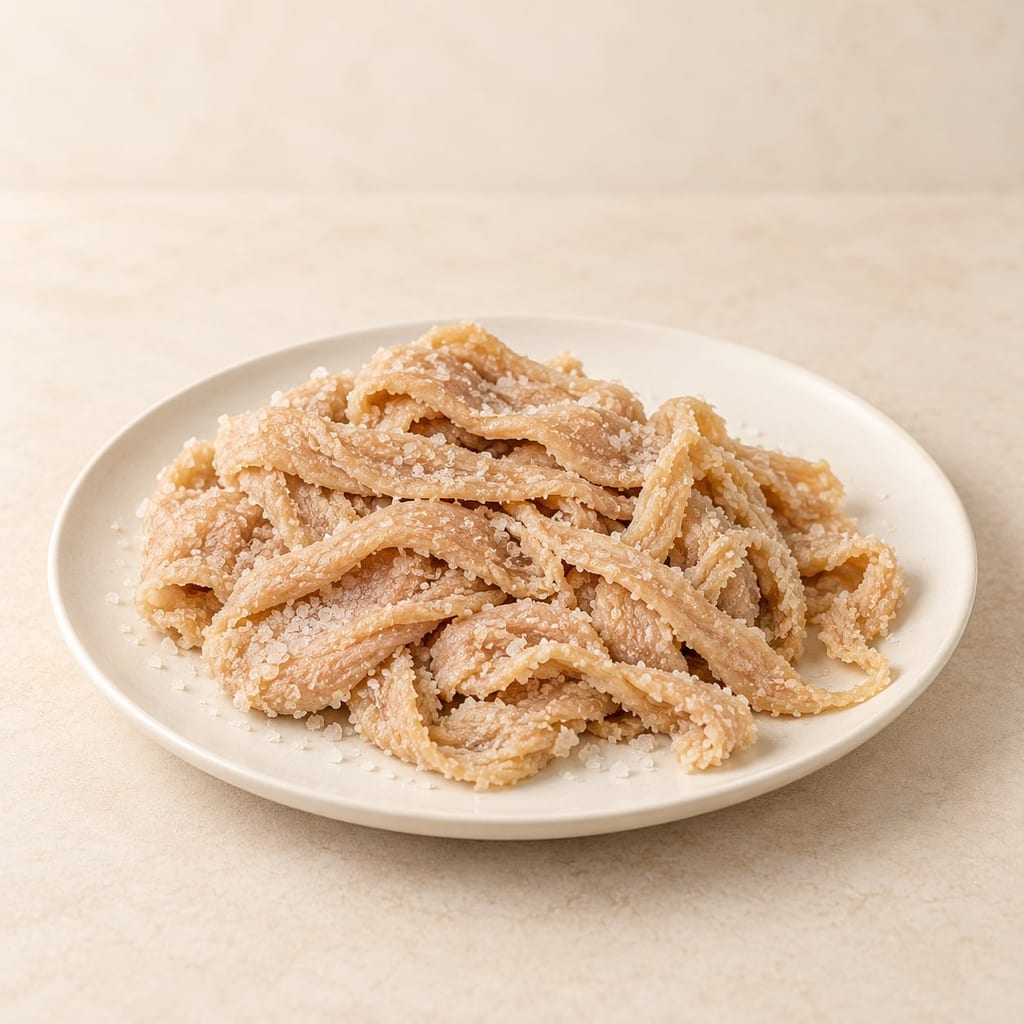
Cleaned, preserved pig intestinal tissue forms a flexible envelope for sausages. Section, calibre and packing affect handling, drying and the finished bite.

Insta Cure #1 is a measured salt and sodium nitrite blend used in specified meat-curing methods, including bacon and some sausages. It differs from nitrate-containing Cure #2 and must be matched to the recipe and product.

Coarse cooking salt named for its use in koshering meat. Its flakes vary by maker, so crystal shape, additives and the recipe’s unit all matter.
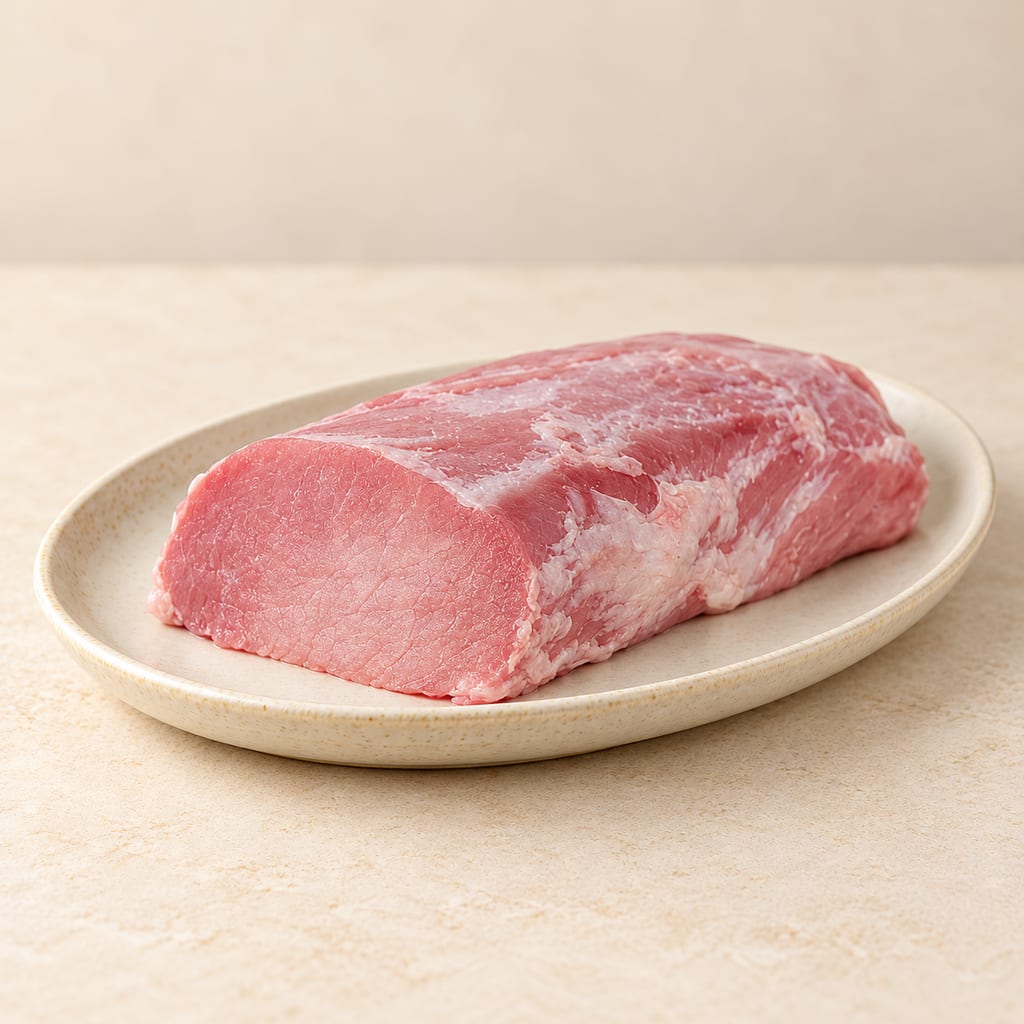
Trimmed domestic-pig muscle supplies the protein framework, water and meat flavor in fermented sausages; cut, condition and handling affect how it binds and ripens.
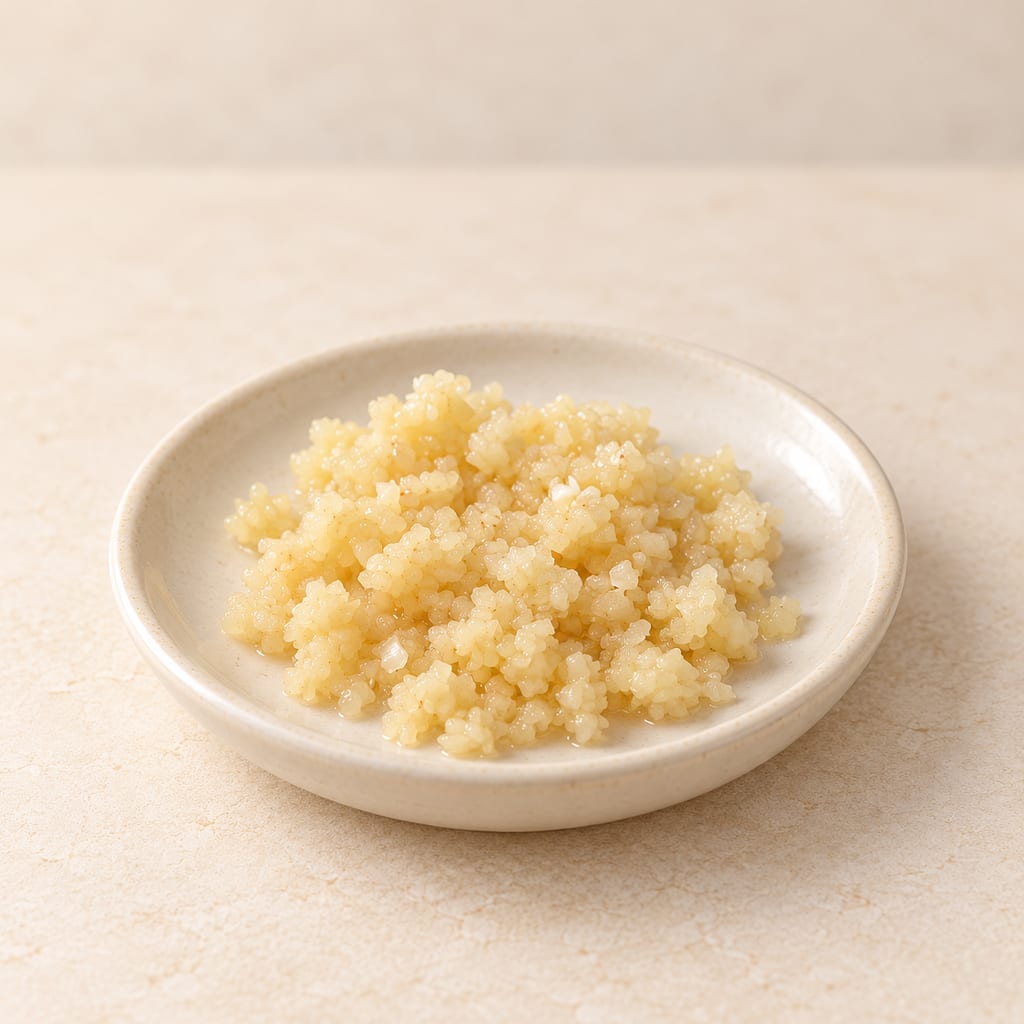
Minced garlic is peeled Allium sativum cut into small, moist pieces, releasing the pungent sulfur aromas that season sauces, vegetables and meat preparations.

Dry salami, sour pork with rice, matured sheep and aged blubber follow different paths from animal to food. Their stories connect microbes with climate, slaughter, migration and the meals people share.

Salt seasons a meal, shapes fermentation and preserves food. Its history follows the people who mine, harvest, trade and transform it, and the choices hidden inside an ordinary packet.
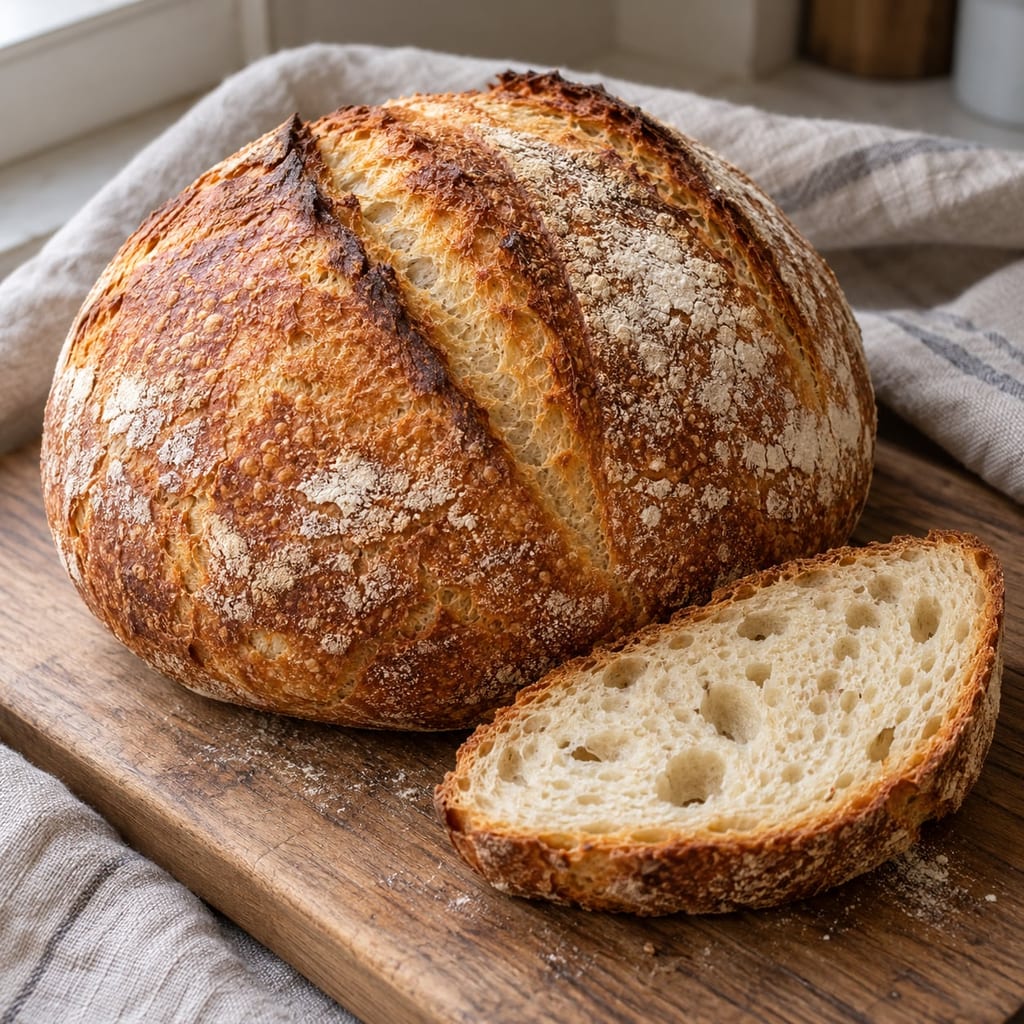
A Catalan country loaf from a tested home recipe, made with a fresh-yeast dough, long rise, hand-shaped round and steamed domestic-oven bake.
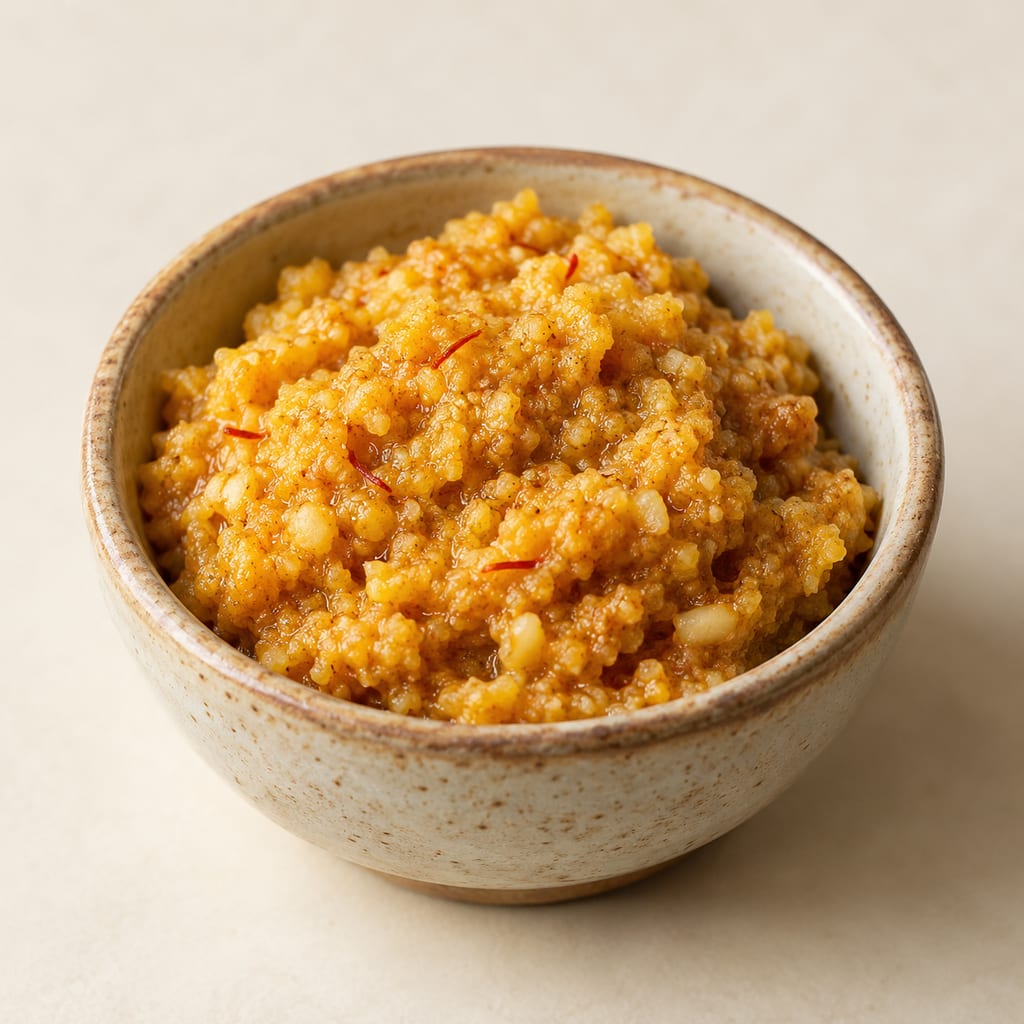
Picada is a Catalan pounded paste of toasted almonds, dry bread, garlic and saffron, stirred into a dish near the end of cooking to thicken and flavour it.
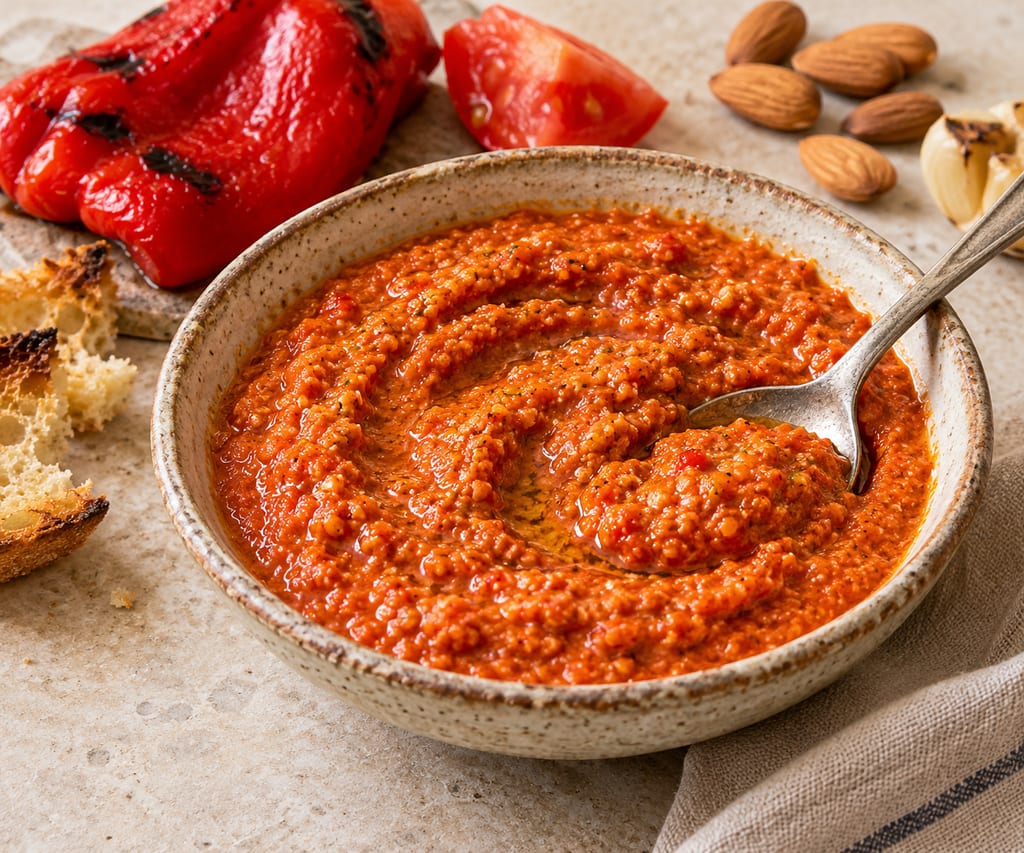
A coarse Catalan-inspired sauce of roasted tomato and red pepper, almonds, bread, garlic, olive oil and sherry vinegar. This modern pepper version is distinct from ñora-based romesco formulations and is not a preserve.

Wine-infused salt is coarse food salt carrying wine colour and aroma after a wine-and-salt mixture is reduced and dried. This version follows a Missouri Wines method at a one-to-three salt-to-wine ratio.

Soft, spreadable Calabrian pork sausage made with a great deal of red chilli and fatty pork, stuffed into natural casings, sometimes smoked and matured while staying soft.
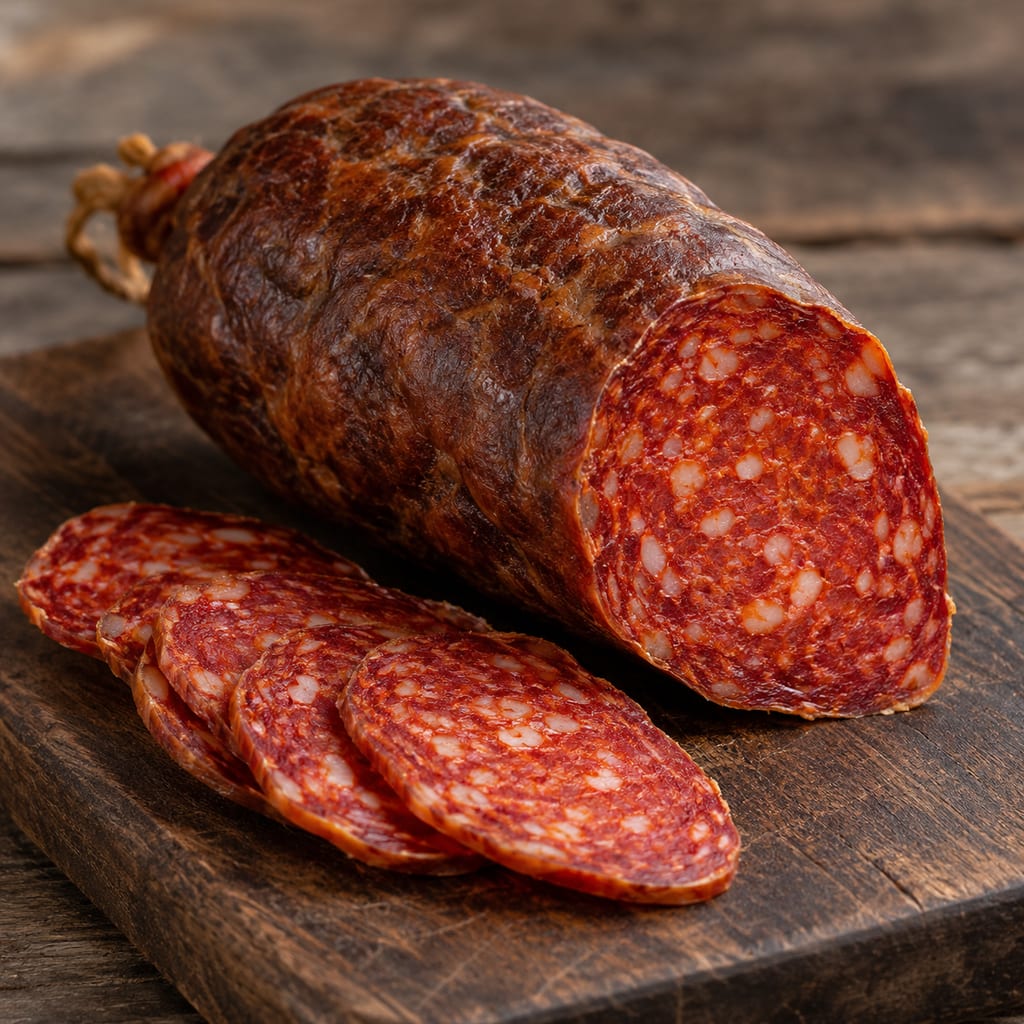
Baranjski kulen is a Croatian protected fermented pork sausage seasoned with sweet and hot paprika, garlic and white pepper, stuffed into a pig’s caecum called katica, cold-smoked and matured.
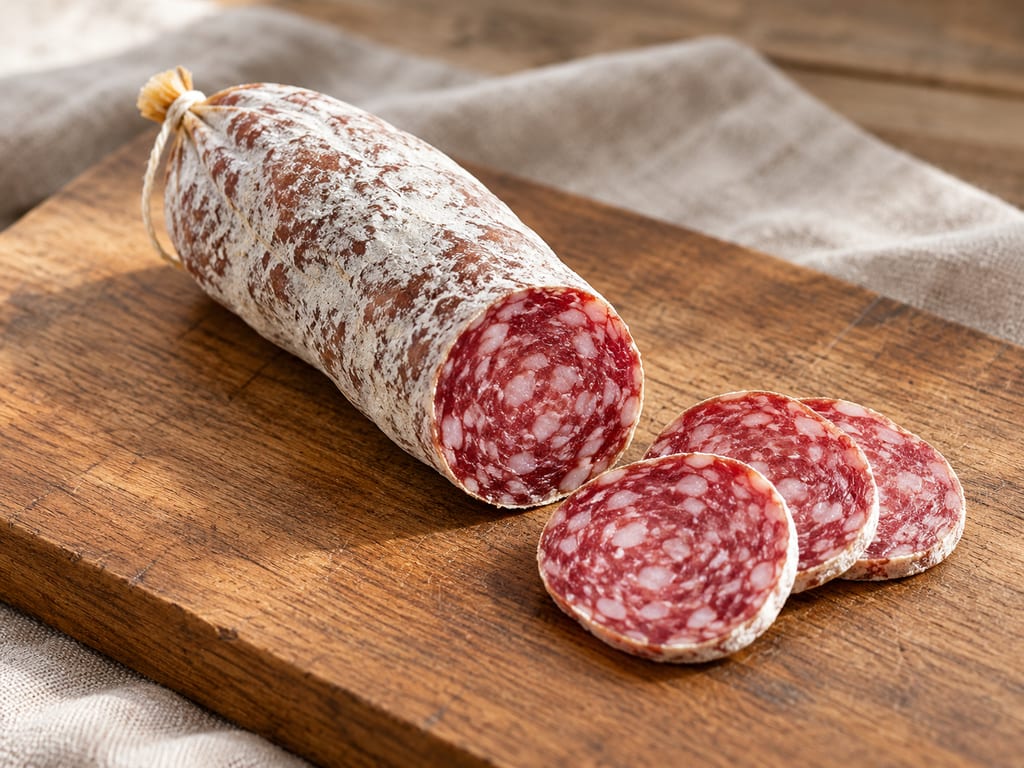
Small Italian hunter-style salami of lean pork, firm fat, salt, pepper and garlic, mildly acidified and dry-matured; protected as Salamini Italiani alla Cacciatora DOP.
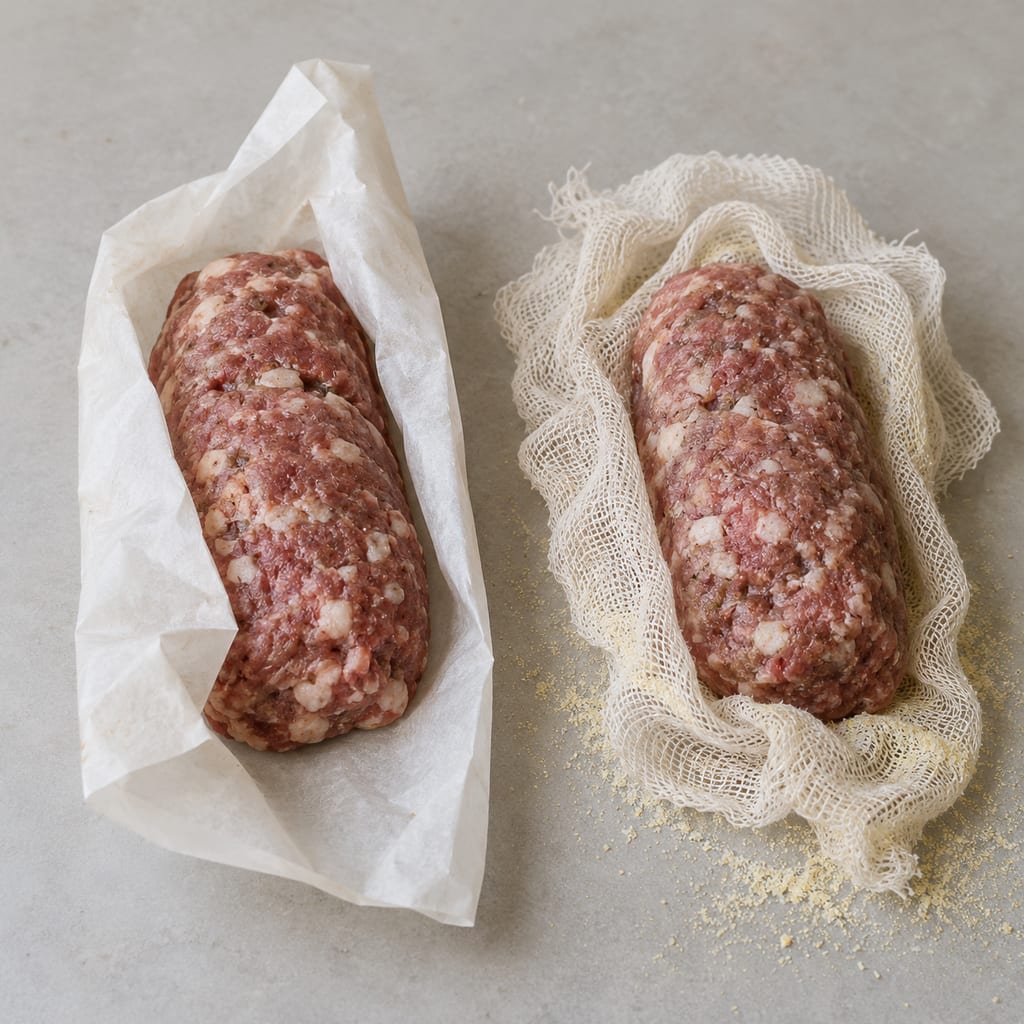
A documentary account of two modern Italian-language home-video experiments in salame without casings. Neither video establishes a safe preparation method or a ready-to-eat product.
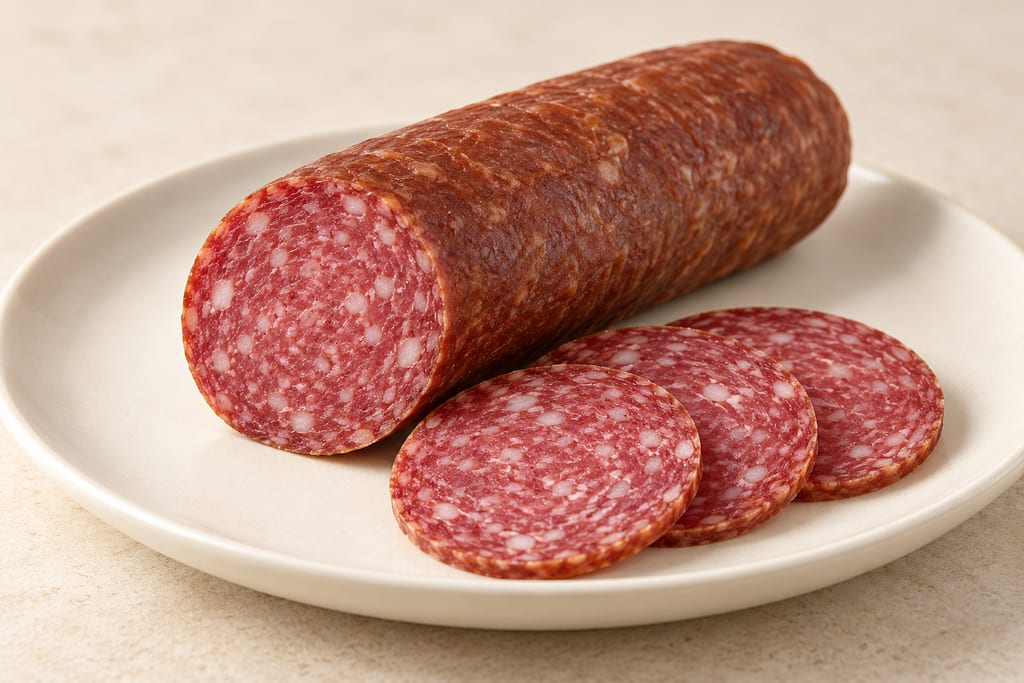
A family of salted minced-meat sausages fermented in casings, then dried and sometimes smoked. This description is not a validated household method; critical safety limits are not established.
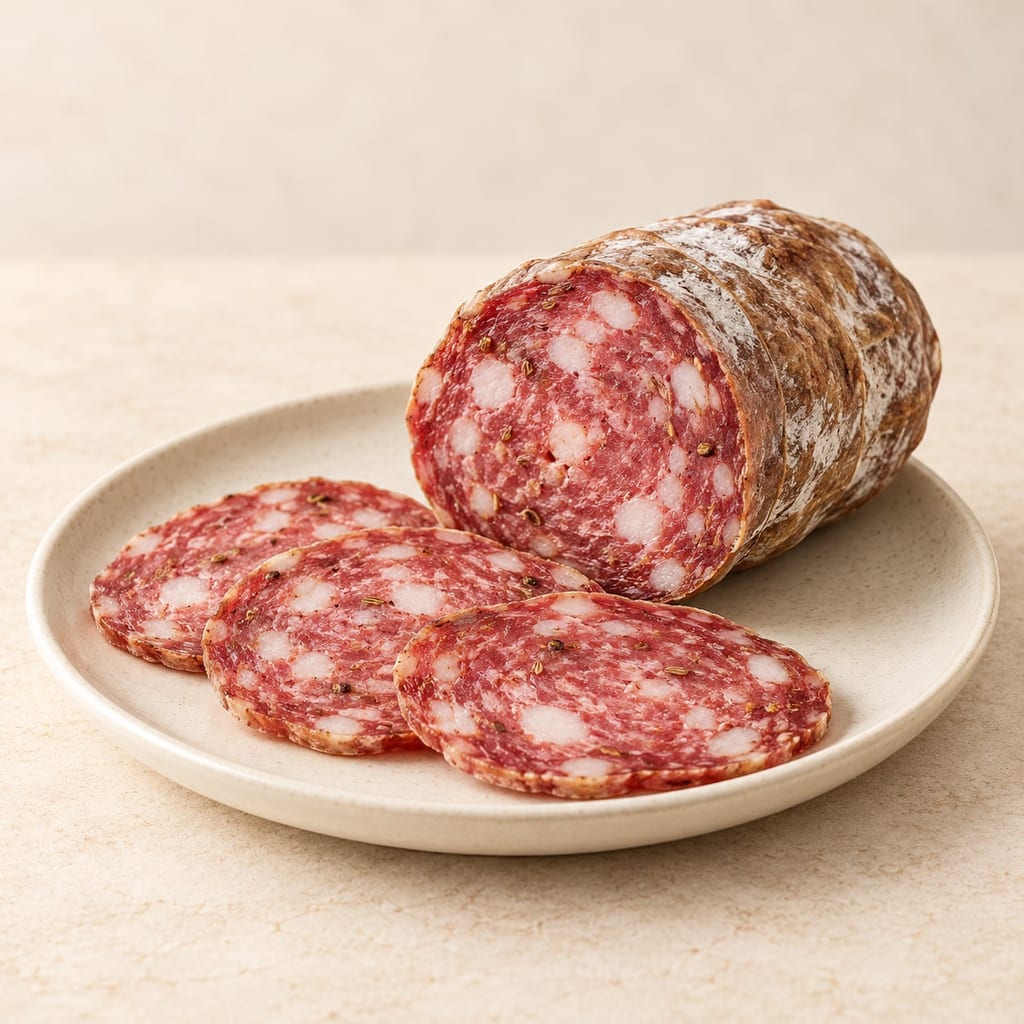
A Tuscan-style fennel salami made with pork and back fat. Toasted fennel, fennel pollen and Sambuca flavor this starter-cultured preparation.
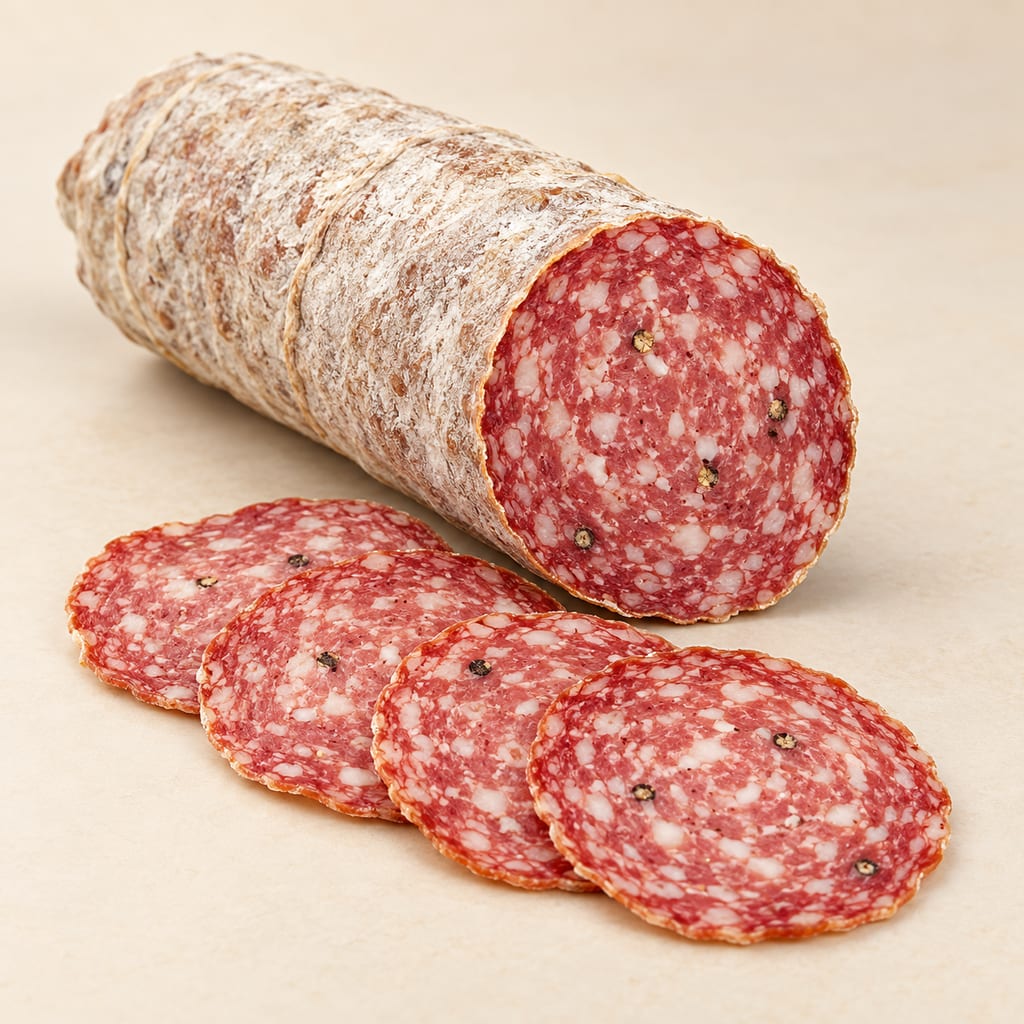
Pork, beef and back fat ferment with a named starter, cure and red wine before the sausages dry in casings. This contemporary formula uses no wood-smoke stage.
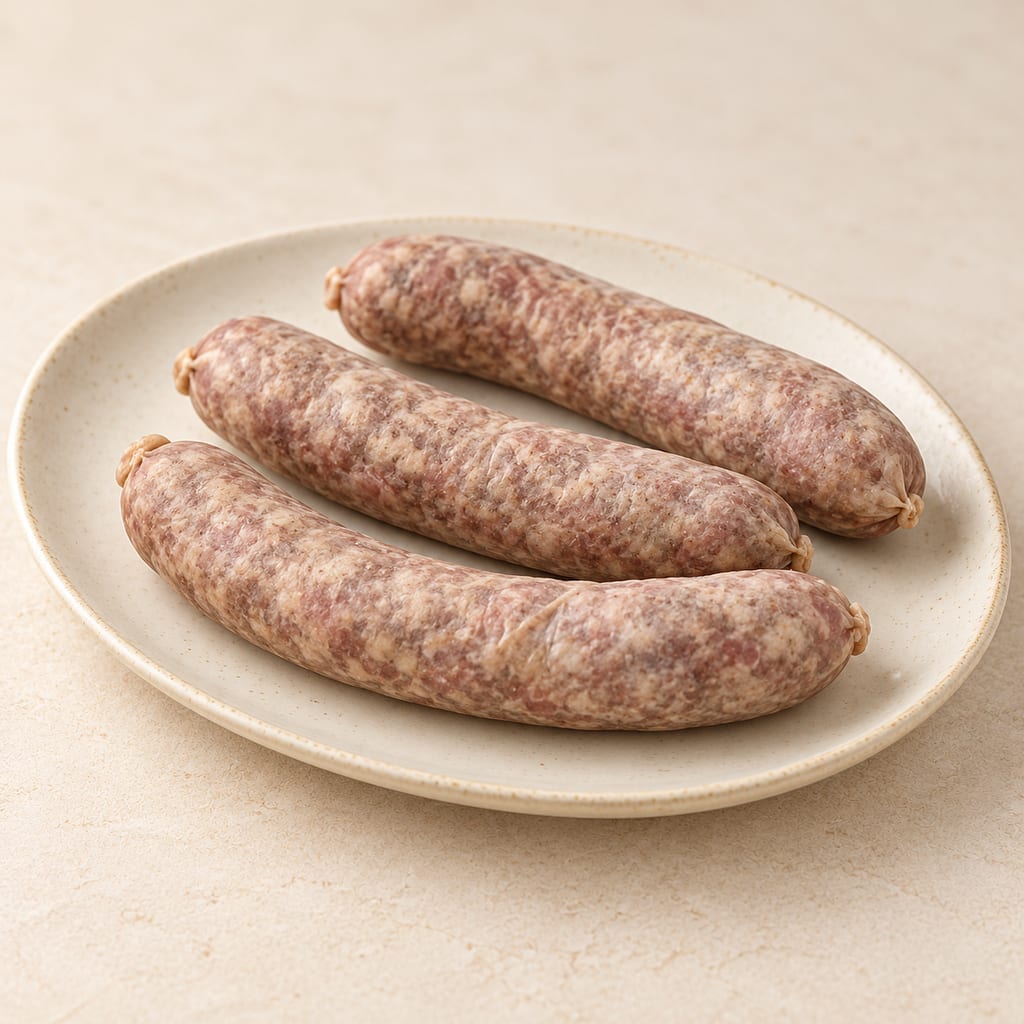
A documentary account of Maltese zalzett and a contemporary starter-cultured adaptation. The cited raw-pork method lacks documented validation for pathogen reduction and is not offered as a preparation recipe.

A Cap-Pelé boucanière is an Acadian herring-smoking building. The documented Willie Niles example is a one-storey wood-frame structure with a ridge smoke vent and interior bays for hanging fish-bearing cannes.

Achcharu is a family of Sri Lankan vinegar pickles made with mixed vegetables or seasonal fruit and a piquant spice dressing. This version is a quick, refrigerated, non-fermented mixed-vegetable pickle.

The acocote is a long, hollowed and dried gourd used to draw aguamiel from a mature maguey. It is a harvesting tool: the sap is transferred to a separate vessel before it ferments into pulque.

Adrak murabba preserves young ginger in sugar syrup, a sweet South Asian preparation recorded in Indian cookery and food-processing sources.

Parkia biglobosa seeds are fermented into regional West African seasonings, including nététou, iru, dawadawa and soumbala. The yellow fruit pulp is a separate food, and names and methods vary by place.

Japanese reddish-brown vinegar from sake lees matured about three years, turned to vinegar by acetic bacteria; the vinegar of Handa and Edomae sushi rice.

A refined common-wheat flour blended for a broad range of baking; its protein and behavior vary with wheat, milling and market.

The almond mushroom, Agaricus subrufescens, was cultivated in eastern North America in the 1800s, lost its market, and returned as a cultivated mushroom from Brazil, where it is grown under several names.
No community contributions have been published for this entry yet.
Sign in to contribute. Published comments and photos are free to read.
2 Guys & A CoolerMethod
Fuet SalamiThis contemporary page is cited for the ingredient names and broad stages of one modern starter-cultured Fuet adaptation. Its quantities and operating parameters are not reproduced here because the raw-pork process lacks matched validation for household use.
Cited in: Fuet: a narrow sausage with a Catalan name; Meat, fat, salt and the two cultures; What fermentation changes; How the source formula is organized; Risk, monitoring and what cannot be inferred; Serving and appreciating a finished fuet
USDA FSISSafety
Ready-to-Eat Fermented, Salt-Cured, and Dried Products GuidelineProcessor-oriented hazard and validation context.
BCCDCSafety
Fermented Foods Safety GuidanceGeneral fermented-food hazard context; no recipe validation.
BC Centre for Disease ControlSafety
Fermented Food Guidance, Section 3.13: SausageSausage hazards; degree-hours, curing controls, Trichinella control and post-process Listeria hygiene; processor guidance, not validation of this recipe.
Cited in: What fermentation changes; How the source formula is organized; Risk, monitoring and what cannot be inferred
USDA FSISSafety
FSIS Ready-to-Eat Fermented, Salt-Cured, and Dried Products GuidelineRead official training-hosted full PDF; process-matched multi-hurdle validation and specific pathogen controls.
Cited in: How the source formula is organized; Risk, monitoring and what cannot be inferred
Chr. HansenIngredient identity
MOLD-600 Product Information, version 3MOLD-600 is Penicillium nalgiovense; manufacturer document hosted by Hjemmeriet.
Cited in: Meat, fat, salt and the two cultures; What fermentation changes
Institut d'Estudis CatalansHistory · Name · Geography
Diccionari Català-Valencià-Balear: fuetCatalan food meaning, regional usage and February 1925 Scriptorium example.
Cited in: Fuet: a narrow sausage with a Catalan name; A documented regional word, not an invented ancient origin; Fuet beside llonganissa and other Catalan sausages; Serving and appreciating a finished fuet
Interporc SpainIdentity · Geography · Uses · Variation
Guide to meats in SpainDescribes fuet as a thin dry-cured sausage traditionally produced in Catalonia and now produced throughout Spain; gives a 20–40 mm calibre range.
Describes lean pork and fat, salt, spices and approved preservatives; notes a possible white casing surface from mould and that flavour varies with fermentation process and spices.
Lists whole, half and sliced formats.
Cited in: Fuet: a narrow sausage with a Catalan name; Meat, fat, salt and the two cultures; Fuet beside llonganissa and other Catalan sausages; Serving and appreciating a finished fuet
PubMed / U.S. National Library of MedicineScience
Technological conditions influence aminogenesis during spontaneous sausage fermentationA primary study compared spontaneous fermentation conditions in fuet and llonganissa of different diameters and measured differences in biogenic-amine accumulation.
The study reports that the process conditions affected both amounts and profiles; findings apply to the tested spontaneous processes and are not a recipe validation.
Cited in: What fermentation changes
Radioteca.cat, Catalunya RàdioRegional variation · Uses
Els embotits curatsThe recorded discussion distinguishes Catalan sausage names by region and process, including fuet, llonganissa, secallona, somalla and espetec.
A Vic producer describes pork cuts, fat, salt and cracked or whole pepper in llonganissa; speakers distinguish softer plain-area fuets from drier mountain-area products in their local account. This does not define a single fuet formula.
Cited in: A documented regional word, not an invented ancient origin; Fuet beside llonganissa and other Catalan sausages; Serving and appreciating a finished fuet
Catalan Tourist Board, Government of CataloniaCultural context · Geography
Catalonia: Routes for SavouringDescribes pork sausages including fuet as notable Catalan products and names Osona, Cerdanya, Pallars, Vallès, Ripollès and Garrotxa as regional charcuterie destinations.
Cited in: A documented regional word, not an invented ancient origin