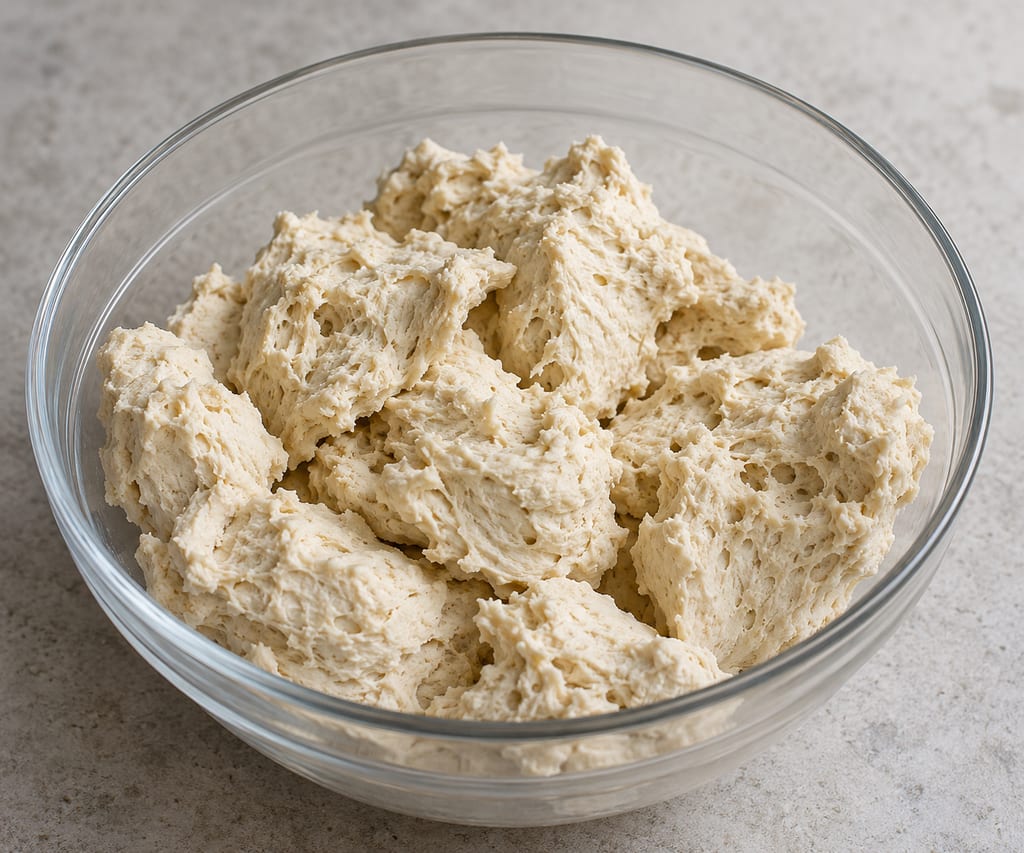
Biga
Biga is an Italian bread preferment of flour, water and a little yeast, usually a stiff unsalted mass of about 45 per cent water, fermented ahead and then mixed into the final dough.
 FermenteaWhere food goes to change
Modern method
Wine salt · Wine-flavored finishing salt
Wine-infused salt is coarse food salt carrying wine colour and aroma after a wine-and-salt mixture is reduced and dried. This version follows a Missouri Wines method at a one-to-three salt-to-wine ratio.
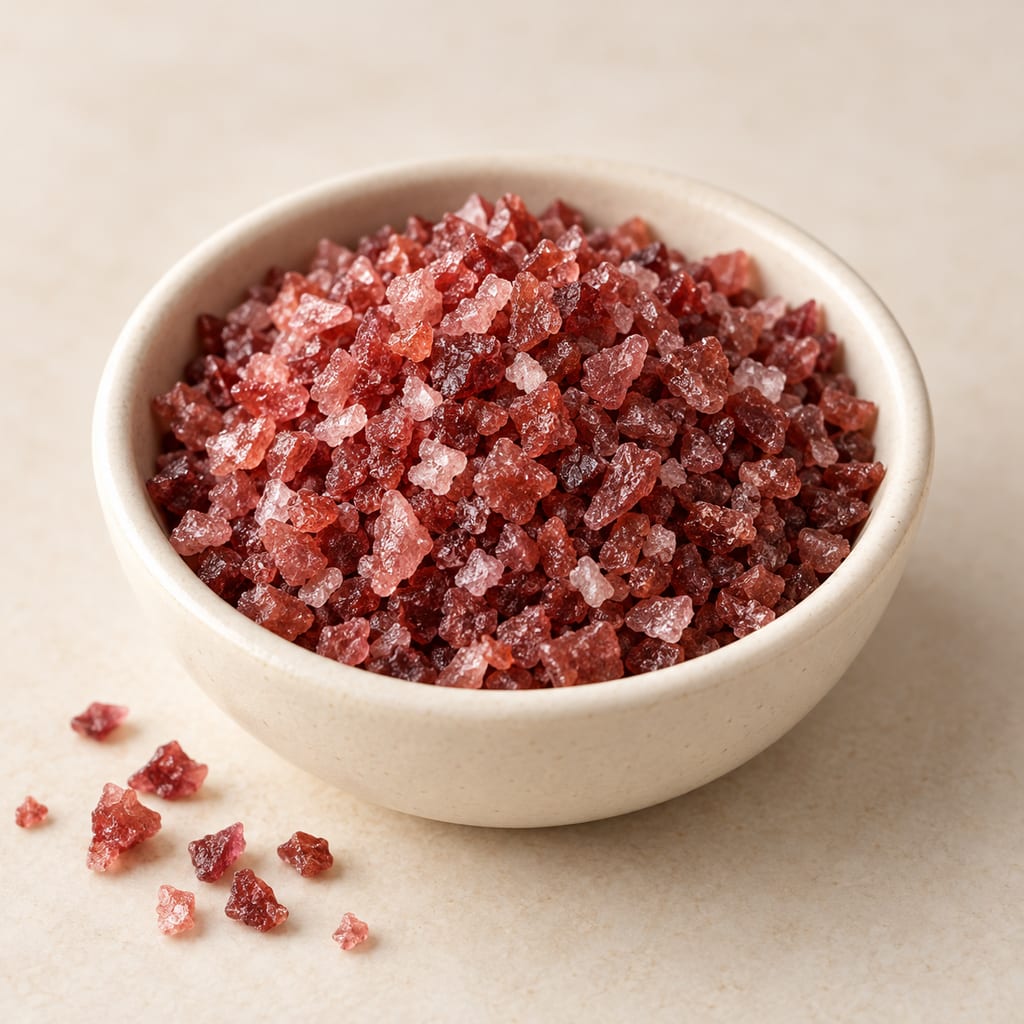
Wine-infused salt is a made seasoning rather than a salt variety mined from rock or harvested from seawater. It begins with edible salt crystals and wine, turning their meeting into a dry condiment: the crystals take on wine colour and some aroma, while their grain size still shapes the crunch or melt on the tongue. Producers sell it as coarse grains, flakes or a finer grind. Colour ranges from pink to plum and deep red, but appearance alone cannot identify the wine, the salt source or the process.
The most repeated origin story belongs to Bordeaux and Gironde, but it is best read as a family account rather than a proven single beginning. In a bilingual interview published in Demptos's wine-industry magazine, winemaker Pascal Delbeck says the dramatic tale of a shipwreck and a whole lost salt cargo is exaggerated. His family's memory is more modest: in the 1930s, vessels carried wine from Médoc toward Libourne and returned with salt from Île de Ré; occasional leaking barrels stained some sacks. Sailors brought the red salt to his grandmother, trading it for a meal or bottle while his grandparents ran a wine bar through the economic troubles after 1929.
The interview matters because it states the limits of the story. Delbeck says he later found his grandmother's jute sack, asked his mother how she used the salt and began experimenting with wine and salt roughly fifteen years before the interview. He was not simply restoring a fixed formula: he compared salts from Ré, Oléron, Guérande and southern France, then preferred sorted coarse Guérande salt for its consistent grain size and wine uptake. He sometimes used fleur de sel for special orders. This is one Bordeaux maker's revival, not evidence for a universal first date or a single origin.
This is not a new fermentation. The wine is already a fermented drink; the seasoning itself is made by mixing, heating and removing liquid. In the Missouri method, stirring dissolves the salt into wine before simmering concentrates the mixture. Water and alcohol leave as vapour while dissolved material remains in a syrupy liquid that coats the tray. As it dries, salt returns to solid crystals with wine colour and aroma. This is physical concentration and drying, not microbial conversion or meat curing.
The sources do not provide a chemical analysis of colour or a standardized tasting profile. They do show variation. Missouri Wines notes that red wines make especially colourful salts and that the finished seasoning echoes a chosen wine's bouquet. Franzoni Botticino says a fuller-bodied wine with more alcohol gives a stronger colour in its own recipe. Delbeck links grape aromas to dry spices; he reports that fruit additions made his product too sticky. These are producer observations and choices, not universal laws for every wine or salt.
Grain matters because it shapes texture and how the method handles liquid. Delbeck describes sorting 2 mm coarse grains for a consistent infusion. Coarse crystals also stay distinct when wine is added gradually. In the Missouri formula, by contrast, the salt dissolves first, so its original crystal shape does not survive. The final texture depends on how the dried mass is broken apart or ground. This is why nominally similar wine salts can become flakes, crunchy grains or finer seasoning.
This version follows Missouri Wines' formula of one part coarse salt to three parts Missouri wine by volume. Its example is one cup of wine and one-third cup salt, which the publisher says fills a giftable four-ounce jelly jar. It accepts coarse sea salt, kosher salt or flakes. Use the stated quantities as a batch: no source gives a tested scaling rule, so a deeper layer or larger pan cannot be assumed to dry in the same time.
Set out wine, salt, a measuring cup, saucepan, oven tray and airtight jar. A grinder or blender is optional for breaking clumps or making a finer final texture. Heat the oven to 170°F, about 77°C. Combine the wine and salt in the saucepan. Bring them to a simmer while stirring so the salt dissolves, then simmer for at least thirty minutes. The visual endpoint is a reduction that coats the back of a spoon and looks nearly syrup-like; the source gives no reduction volume or measured liquid temperature.
Pour the reduction onto a tray and put it in the preheated oven. Stir every fifteen minutes, breaking clumps, until completely dry. Missouri Wines estimates two to three hours for this stage and three and a half hours total. The dry endpoint governs the method; the estimate alone is not a test. The instructions do not supply a water-activity measurement or shelf life. Grind only if you want fewer clumps or a finer salt; keep larger crystals where their texture is useful.
This order creates a concentrated wine coating before the longer drying stage. It asks the cook to watch the simmer and stir the tray regularly. The recipe does not specify a grape variety, sweetness level or vintage. It suggests trying different Missouri wines and notes red wines make a colourful result. Choose for the aroma desired at the table, while remembering that the source has tested only its own quantities and process.
The sauce-like endpoint matters because the mixture has to carry its salt across the tray without remaining a deep pool of wine. The spoon-coating consistency is the visual endpoint; no reduction volume is specified, so follow that sign instead of importing the tablespoon endpoint from another method. Once on the tray, frequent stirring redistributes moisture and breaks clusters as the shallow layer dries. The recipe's 15-minute interval is a working rhythm from Missouri Wines; its purpose is to keep the salt from setting in large clumps, not a separate fermentation stage. Drying changes texture and removes liquid, while the wine's earlier fermentation is already complete.
Wine salt has no single household formula. University of California Cooperative Extension's Master Food Preservers of Amador and Calaveras County publish a reduction-and-absorption method. Boil and simmer a bottle of robust red wine, such as Syrah, Red Zinfandel or Cabernet Sauvignon, until thick but not syrupy and about one tablespoon remains. Cool it to room temperature. Stir in one cup coarse sea salt, adding only enough more to absorb the reduction, up to one and a half cups total. Spread it on parchment to dry; the guide says this may take a couple of days. Store in an airtight jar. Here, crystals absorb a small volume of concentrated wine.
Franzoni Botticino's rosemary method is different. Rest 300 grams of coarse salt in a glass of Botticino DOC red wine for about two hours, drain it, add one chopped fresh rosemary sprig and spread the grains apart. Dry in a static oven preheated to 50°C for about two hours, continuing until fully dry. The winery says the salt should dry rather than brown. This method keeps distinct grains and adds fresh herb; its amount and oven setting belong to that particular recipe.
A further variation is commercial rather than an open home method. Delbeck's interview describes proprietary Bordeaux salt made with sorted Guérande grains and dry spices paired with wine varieties. It does not provide a complete formula, so those notes are not a household method. Contemporary products also draw on other wines and salts: Mill & Mortar describes Priorat wine salt flakes, while Amagansett Sea Salt Co. identifies Long Island Merlot in its product. These examples show a family of products, not substitutions for the published methods.
Names include wine salt, sel de vin, sel au vin or red-wine salt when red wine is specified. The name does not reveal whether the wine was simmered first, absorbed into whole grains or used in a proprietary process. The sources connect several distinct settings: a Missouri home method; a Bordeaux family story and Delbeck product; a winery recipe around Botticino in Lombardy; Priorat wine in a Danish company's flakes; Long Island Merlot in an American sea-salt maker's blend; and Georgian Qvevri wine in Marila's seasoning. These are documented modern associations, not one geographic origin.
At table it is commonly used as a finishing condiment, added near serving so its colour and wine character remain visible. Missouri Wines suggests proteins, marinades, breads, starches and vegetables. The UC extension guide names rich meats, seafood and robust vegetables such as Brussels sprouts. Franzoni lists grilled meat, risotto, meat sauces and focaccia. Mill & Mortar recommends steak and roast meats and pastry decoration such as toffee. Amagansett suggests grilled ribeye, mushrooms and crudo. These are maker recommendations across separate products.
Some commercial versions go beyond wine and salt. Marila lists Rkatsiteli wine and salt with cane sugar, red pepper, smoked paprika, garlic and onion, alongside versions with truffle, tarragon, lavender or other spices. Its product page recommends steaks, Mtsvadi, barbecue, salads and desserts and says to shake the bottle before use. That is not the ingredient list for the Missouri recipe. Keep these additions as product variations instead of folding them into one universal formula.
Wine can guide pairing without dictating it. Delbeck proposes Cabernet with fish, Syrah with pork or chicken, and Merlot with foie gras or red meat; these are his own product pairings, not fixed rules. A pinch may finish a steak, roast vegetables, fish, cheese or chocolate. Taste it before adding more: it remains a salt seasoning, not a replacement for wine in a sauce or a cure for meat.
The salt is useful as a finishing ingredient because a small amount can provide both seasoning and a wine-linked aroma without pouring liquid onto the plate. That does not mean it replaces fresh wine wherever a dish needs acidity, body or a reduced sauce. It is still made mostly from salt, and should be added with the same restraint as other salt seasonings. The producers' many pairings show how cooks use it, but they do not establish a single traditional dish or a fixed culinary role in every region.
Differences in colour, texture and aroma follow from different wine, salt grains and methods. A syrup reduction coats salt before oven drying; the UC extension method lets coarse crystals absorb a small cooled reduction; Franzoni soaks and drains whole grains before adding rosemary. These are alternative approaches, not stages of one process. Their ratios and drying conditions should remain separate.
For the Missouri version, stir at the stated intervals to break up clumps and wait for the completely dry endpoint described by the source. Franzoni likewise says to continue drying if the salt remains damp after about two hours. The sources do not give a measured test to certify dryness. Dampness means the stated endpoint has not been reached; appearance, smell or taste are not safety tests.
Missouri Wines and the UC extension guide recommend airtight storage. Marila specifies cool, dry, dark, hermetically sealed storage for its proprietary commercial blend but gives no duration. None of these household-method sources establishes shelf life, storage temperature range or water activity for the batch. Keep storage advice distinct from preservation claims: wine-infused salt is a seasoning, and this method is not a validated meat cure.
The dramatic Gironde shipwreck story is not established as a universal origin. In interview, Bordeaux winemaker Pascal Delbeck calls the whole-cargo shipwreck story an exaggeration and recounts his family's memory of leaking wine barrels wetting some salt sacks on 1930s coastal voyages. He later revived the flavour as a modern gourmet product.
Yield 1 4 oz jelly jar · Scaling: source batch only
The method sources recommend airtight storage but give no validated shelf life or measured dryness test; do not treat airtight storage as proof of shelf stability.
Missouri Wines gives this method for Missouri wine; this is a recipe association, not an origin claim.
Pascal Delbeck recounts his family's story of wine-soaked salt sacks from coastal voyages between the Médoc and Libourne; this is family memory, not an independently established origin.
A winery publishes a distinct wine-soaked, rosemary-finished method using Botticino DOC wine.
Mill & Mortar identifies Priorat red wine in its commercial salt flakes; this is a product variation.
Marila lists Georgian-made wine seasoning variants; its page does not establish the origin of this general recipe.
Biga is an Italian bread preferment of flour, water and a little yeast, usually a stiff unsalted mass of about 45 per cent water, fermented ahead and then mixed into the final dough.
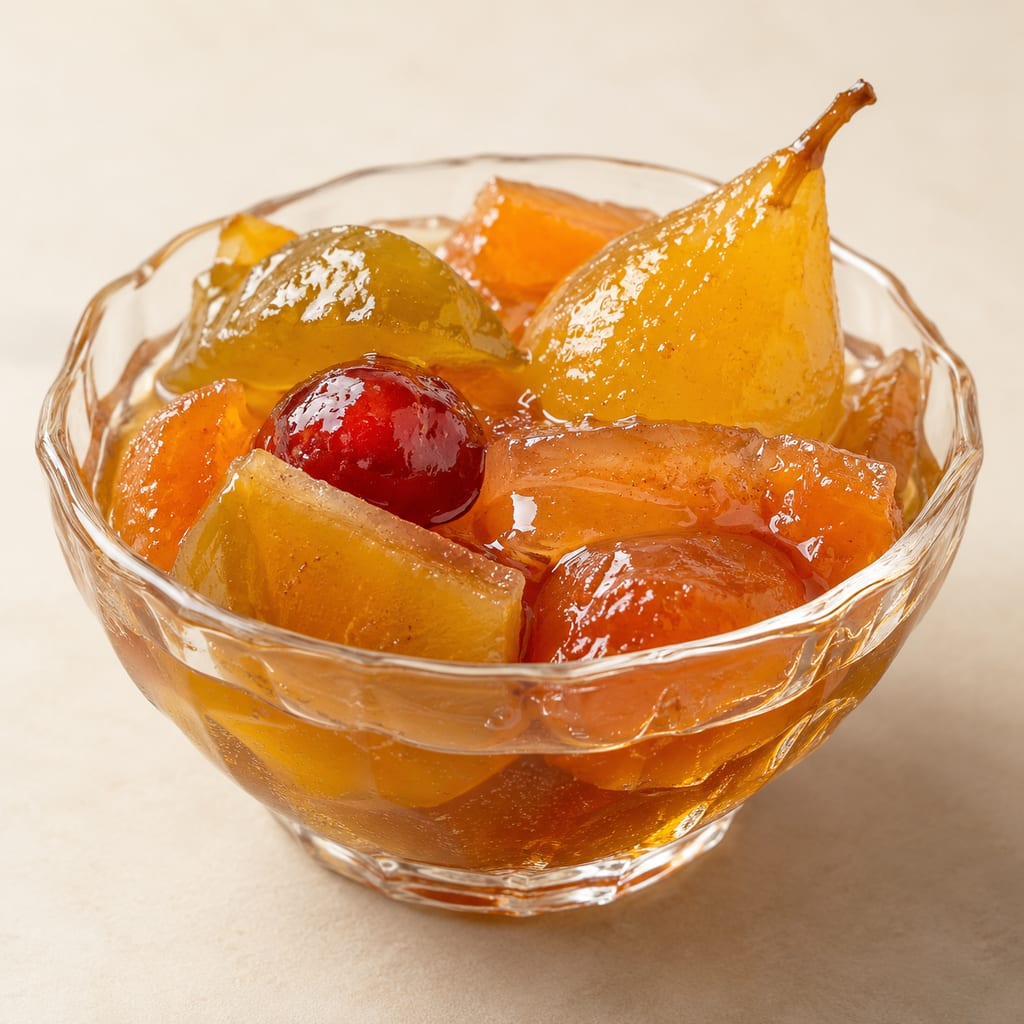
Mostarda is a northern Italian condiment of candied fruit in a mustard-flavoured syrup, served with boiled meats and cheeses.
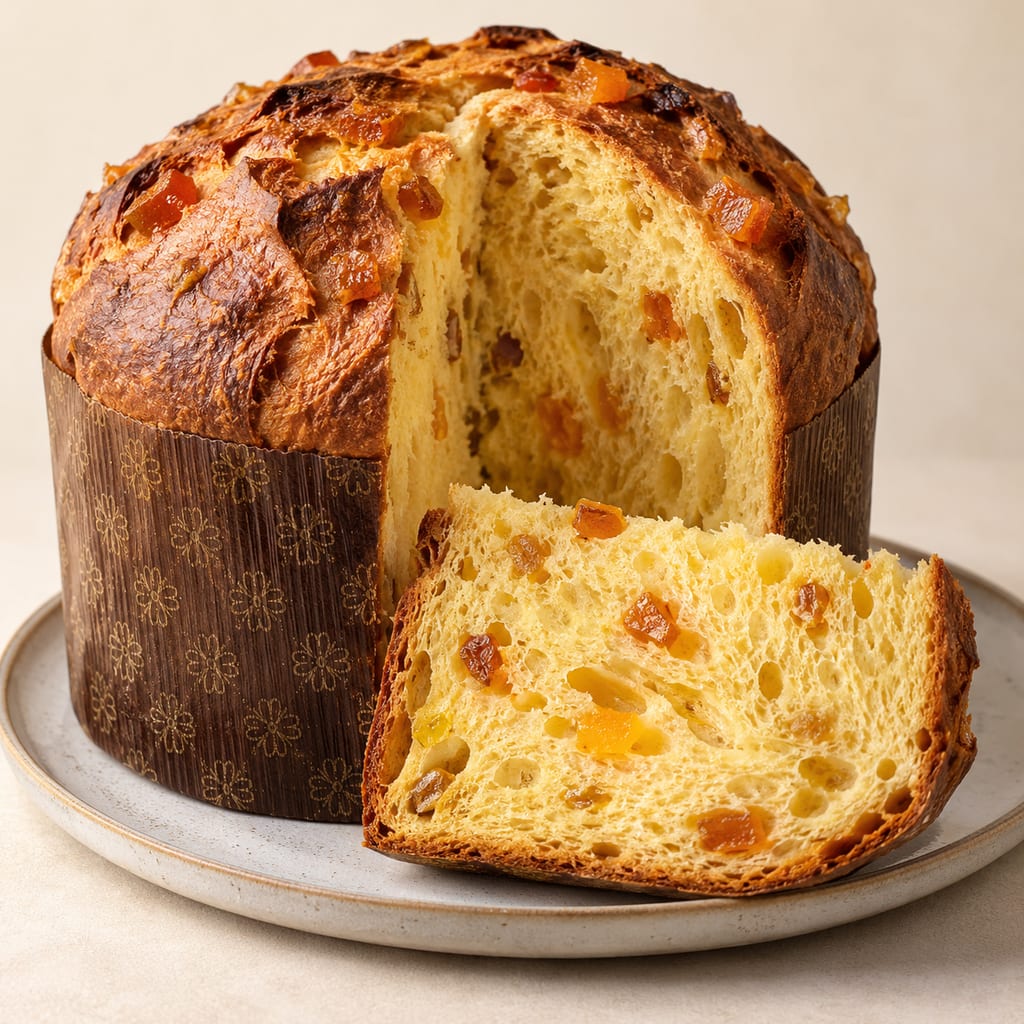
A tall Lombard Christmas bread enriched with butter, yolks and candied citrus, raised first with refreshed sourdough and then proofed in a paper mould.

Adygean salt is a seasoned table salt associated with Adygea and the wider North Caucasian culinary tradition. Salt is blended with garlic and a variable selection of herbs and spices; the exact mix depends on the named style and maker.
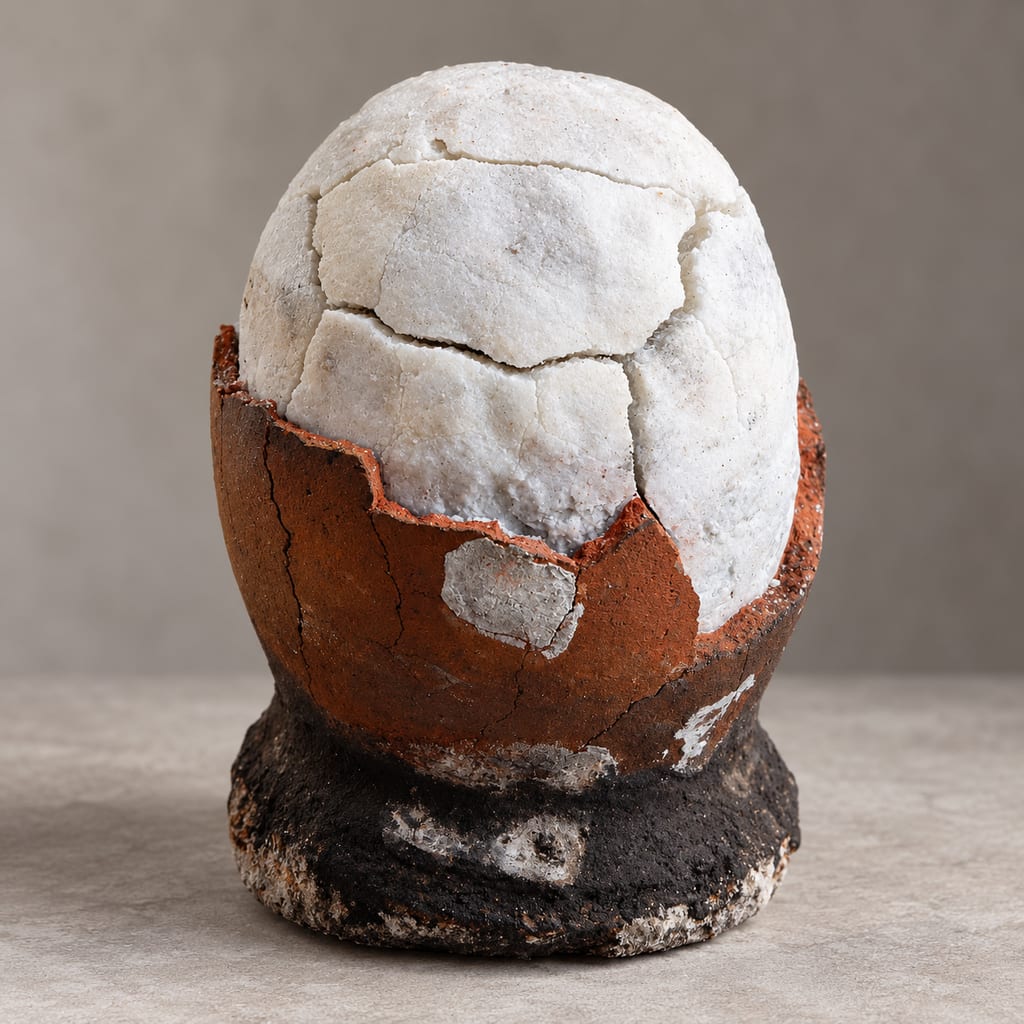
Asin tibuok is a Boholano salt-making craft that turns seawater-soaked coconut husks into a salt-rich ash, brine and formed sea salt in specialized clay pots. This record follows one published account of the community process; it is not a validated household formula.
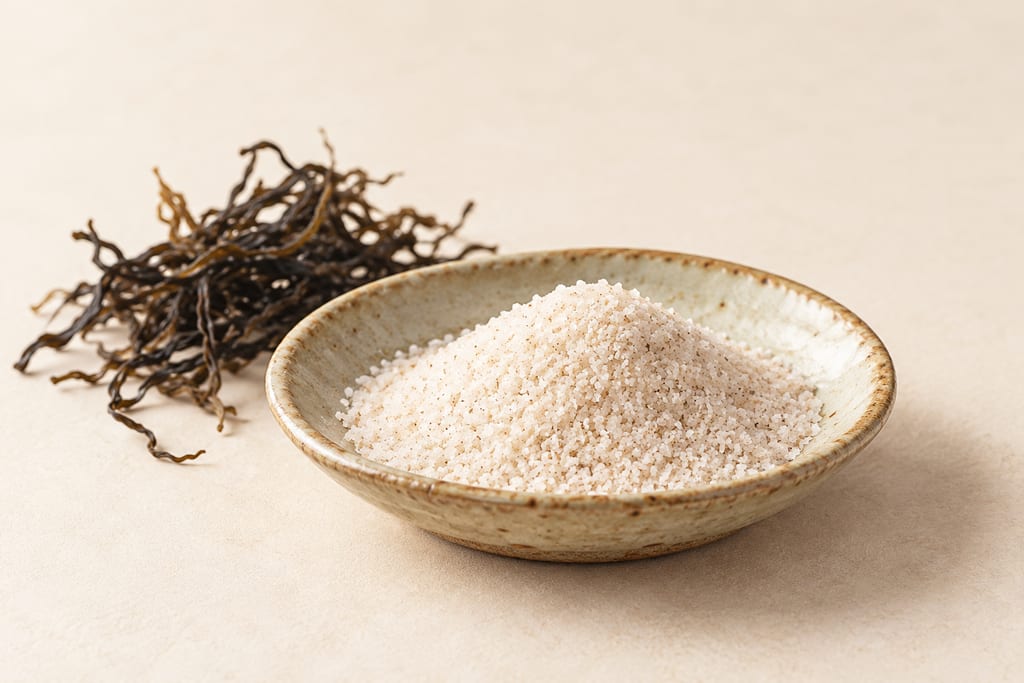
Amabito no Moshio is a modern, pale beige Japanese seaweed salt made from Seto Inland Sea water and hondawara seaweed. Its documented factory method concentrates filtered brine in kettles, then separates and dries the salt.
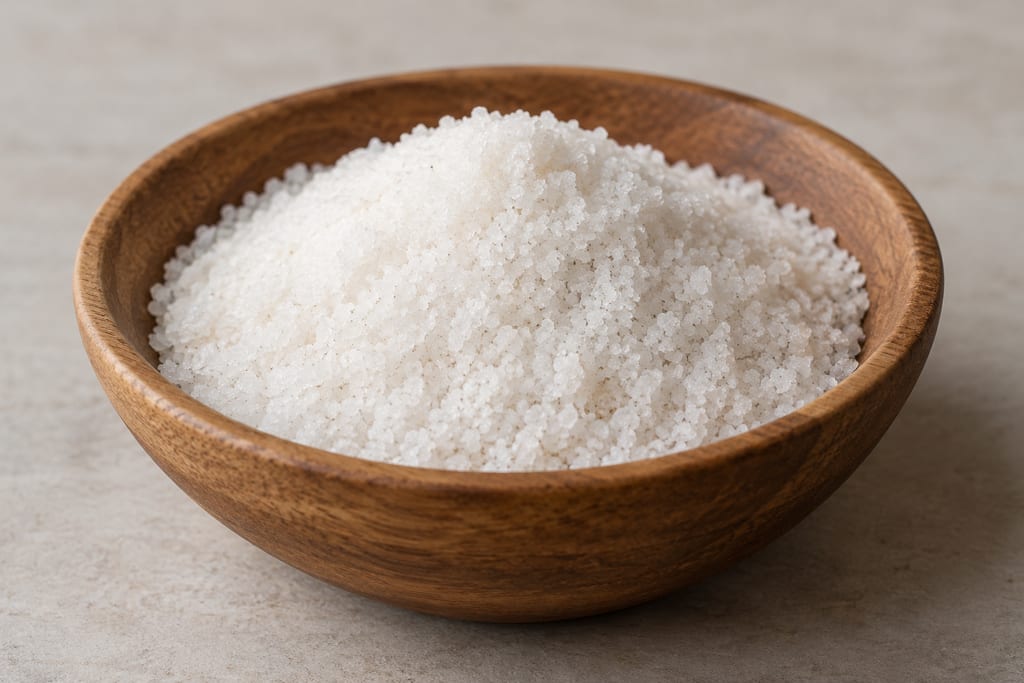
Asin sa buy-o is a fine sea salt made in Panayunan, Botolan, and packed in a woven nipa pouch called a buy-o. Salt-bearing coastal earth is leached with seawater, and the brine is boiled to crystals.
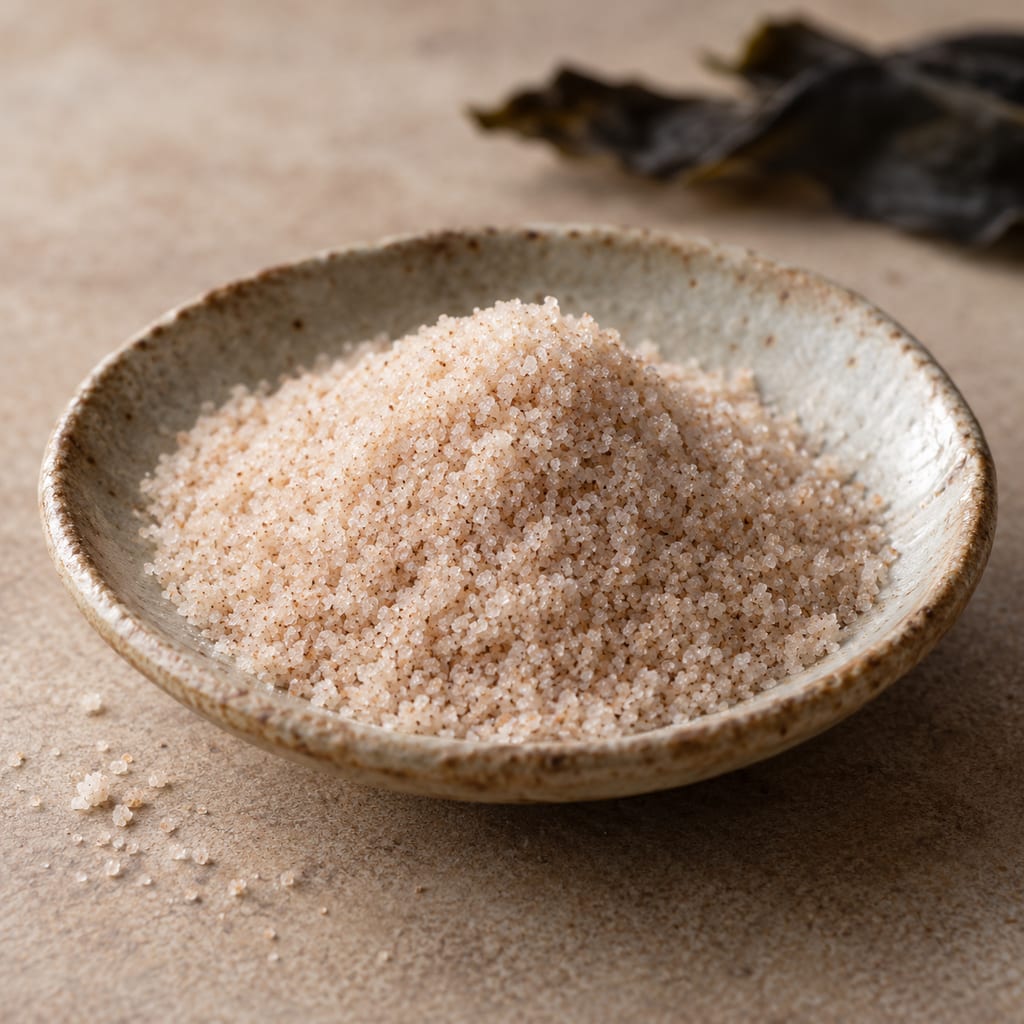
Awaji moshio is a modern Japanese seaweed salt made by TaDa PHILOSOPHY from Awaji Island seawater and seaweed. Its premium process concentrates brine, extracts seaweed flavor, then crystallizes, separates, dries and grades the salt.
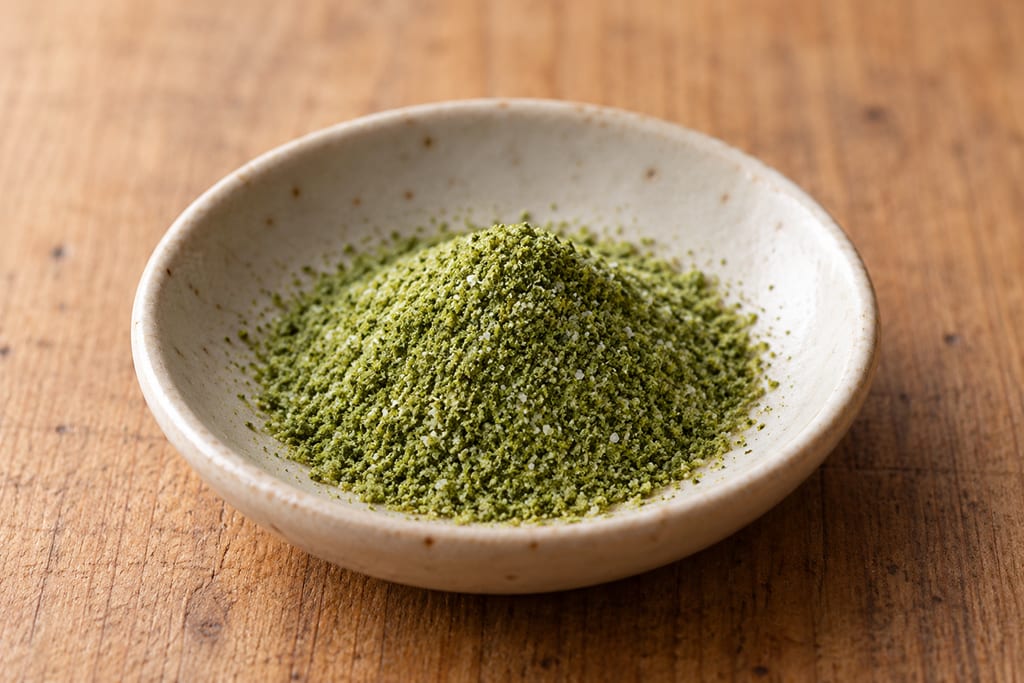
Green tea leaf salt is a dry seasoning made by grinding tea leaves, sieving them and mixing the powder with fine salt. This Japanese-style version follows a documented equal-parts method.
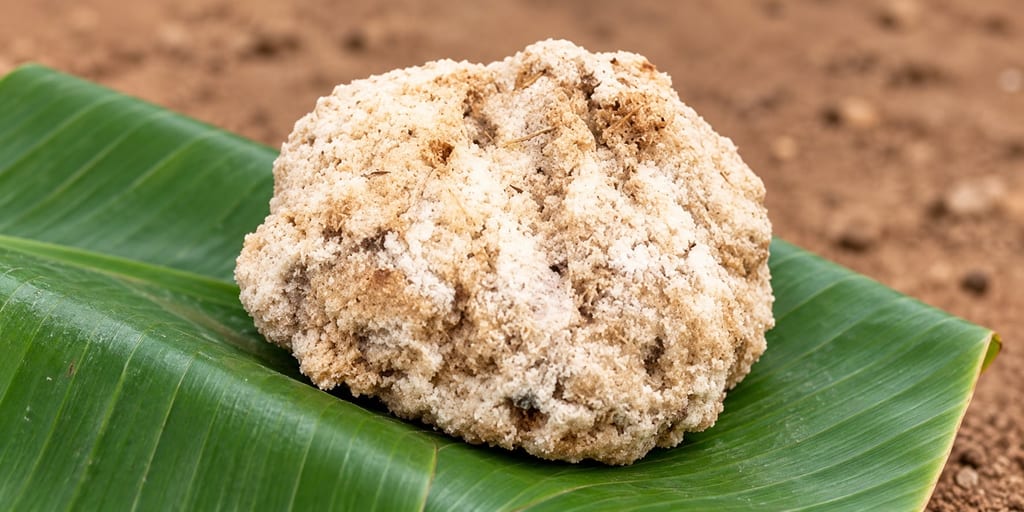
Nzoia River reed salt is a Bukusu seasoning made by leaching and evaporating the ash of mature muchua reeds. Its sources document a local method, but provide neither a measured formula nor verified mineral composition.
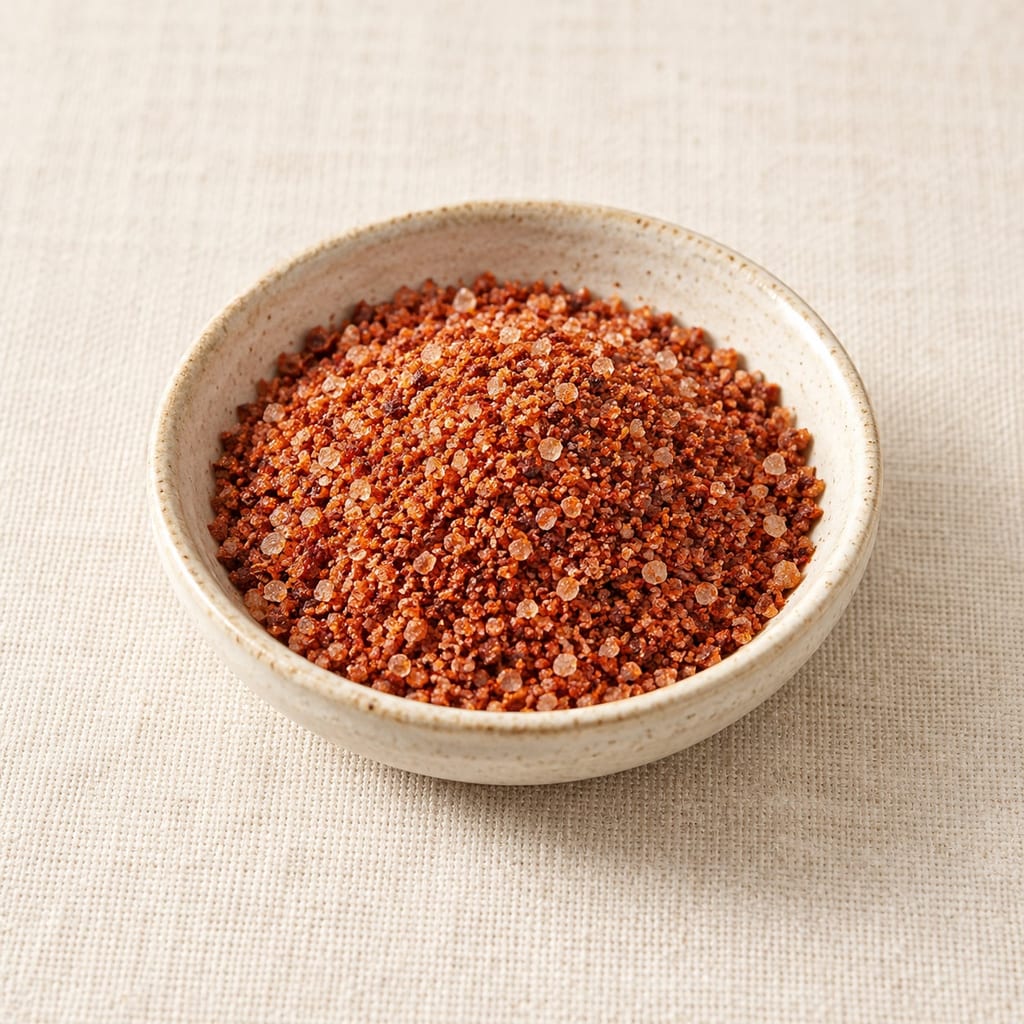
A dry Mexican seasoning of maguey worm, salt and chile, most closely associated in published accounts with Oaxaca and commonly served with mezcal, citrus and fruit.

Soft, spreadable Calabrian pork sausage made with a great deal of red chilli and fatty pork, stuffed into natural casings, sometimes smoked and matured while staying soft.

A way to add independent temperature logging to an existing food dehydrator without changing its built-in controls or protections. It is a monitoring method, not a rewiring plan.

Pleurotus cystidiosus is the abalone mushroom, a cultivated oyster-type fungus with dark brown caps that grows more slowly and is more demanding than other Pleurotus species.

A dark, balanced vinegar from Emilia-Romagna made by combining cooked or concentrated grape must with wine vinegar, then acetifying and refining it in wood under a protected specification.

A living dairy inoculum that starts controlled cream fermentation, developing acidity and aroma before sour cream or cultured butter is finished.

A small electric incubator holds jars at a selected temperature for yogurt and other documented warm food preparations. Controls, capacity and vessel arrangement vary by model.

The African Caesar-group mushroom, Amanita masasiensis, is a wild ectomycorrhizal species of central and southern African woodlands, eaten locally. The genus contains deadly poisonous species, so identification needs care.

Ghanaian sour cassava dough fermented with traditional inoculum and drained during fermentation. It is used as a base for cooked foods such as banku and akple; process variants and safety outcomes differ.
No community contributions have been published for this entry yet.
Sign in to contribute. Published comments and photos are free to read.
Missouri WinesMethod · Ingredients · Uses · Geography
Wine Finishing SaltA 12 October 2021 recipe uses one part coarse salt to three parts Missouri wine; its example is 1/3 cup salt and 1 cup wine.
It simmers the mixture for at least 30 minutes until nearly syrup-like, then dries it in a 170°F oven for 2–3 hours, stirring every 15 minutes until completely dry.
It recommends airtight storage and use on proteins, marinades, breads, starches and vegetables, but gives no storage duration.
Cited in: A colour and aroma carried on a crystal; The Missouri reduction method; Places, names and uses at the table; Reading the result and storage limits
University of California Cooperative Extension, Master Food Preservers of Amador/Calaveras CountyMethod · Variations · Uses
Holiday Gifts from the KitchenThe November 2018 guide reduces a bottle of robust red wine to about one tablespoon, cools it, then adds one cup coarse sea salt and up to 1.5 cups total until it absorbs the reduction.
It spreads the salt on parchment to dry, possibly for a couple of days, and stores it in an airtight jar.
It suggests serving the salt with rich meats, seafood and robust vegetables such as Brussels sprouts.
Cited in: Other documented wine-salt methods; Reading the result and storage limits
Demptos, Oaks & MoreHistory · Geography · Technique · Variations · Uses
Oaks & More 2020/2021: Salts and winesInterview with Bordeaux winemaker Pascal Delbeck recounts a family story of wine leaking onto salt sacks on 1930s coastal voyages between the Médoc and Libourne; it calls the shipwreck version a legend and rejects the claim that an entire cargo was lost.
Delbeck says he later rediscovered a family sack, experimented with Merlot and salt, compared salt sources and favored sorted coarse 2 mm Guérande salt; he sometimes used fleur de sel for special orders.
The interview describes dry spice pairings and recommends Cabernet with fish, Syrah with pork or chicken, and Merlot with foie gras or red meat; it says fruit additions made his product too sticky.
Cited in: Salt stained by wine, then remade as a seasoning; A colour and aroma carried on a crystal; Other documented wine-salt methods; Places, names and uses at the table
Franzoni BotticinoMethod · Variation · Geography · Uses
Sale grosso aromatizzato al vino rosso Botticino DOCJanuary 2024 winery recipe: 300 g coarse salt, a glass of Botticino DOC red wine and one fresh rosemary sprig.
Rest the salt in wine about 2 hours, drain, add chopped rosemary and dry in a preheated static oven at 50°C about 2 hours, continuing until fully dry.
The winery says fuller-bodied, higher-alcohol wine gives a more intense colour; it uses the seasoning with grilled meat, risotto, meat sauces and focaccia.
Cited in: A colour and aroma carried on a crystal; Other documented wine-salt methods; Places, names and uses at the table; Reading the result and storage limits
Mill & MortarVariation · Geography · Uses
Finishing SaltsThe company describes red-wine salt flakes using wine from Priorat, Spain, with magenta colour and a distinct wine aroma.
It recommends them with steak and roast meats and for baking or pastry decoration such as toffee.
The page is a description of commercial finishing salts, not a home recipe.
Cited in: Salt stained by wine, then remade as a seasoning; Places, names and uses at the table
MarilaVariation · Geography · Uses · Handling
Wine Salt-SeasoningMarila's Georgian product lists salt, Rkatsiteli wine, cane sugar, red pepper, smoked paprika, dried garlic and onion; its process is proprietary, not a public recipe.
It recommends cool, dry, dark, hermetically sealed storage but gives no duration.
It suggests steaks, Mtsvadi, barbecue, salads and desserts and says to shake before use.
Cited in: Places, names and uses at the table; Reading the result and storage limits
Amagansett Sea Salt Co.Variation · Geography · Uses
Merlot Wine Finishing SaltThe producer describes its salt as made with its sea salt and Long Island Merlot.
It recommends the plum-coloured blend with grilled ribeye, mushrooms and crudo or other white-fleshed fish.
The page describes one producer's products and uses, not universal behaviour.
Cited in: Places, names and uses at the table