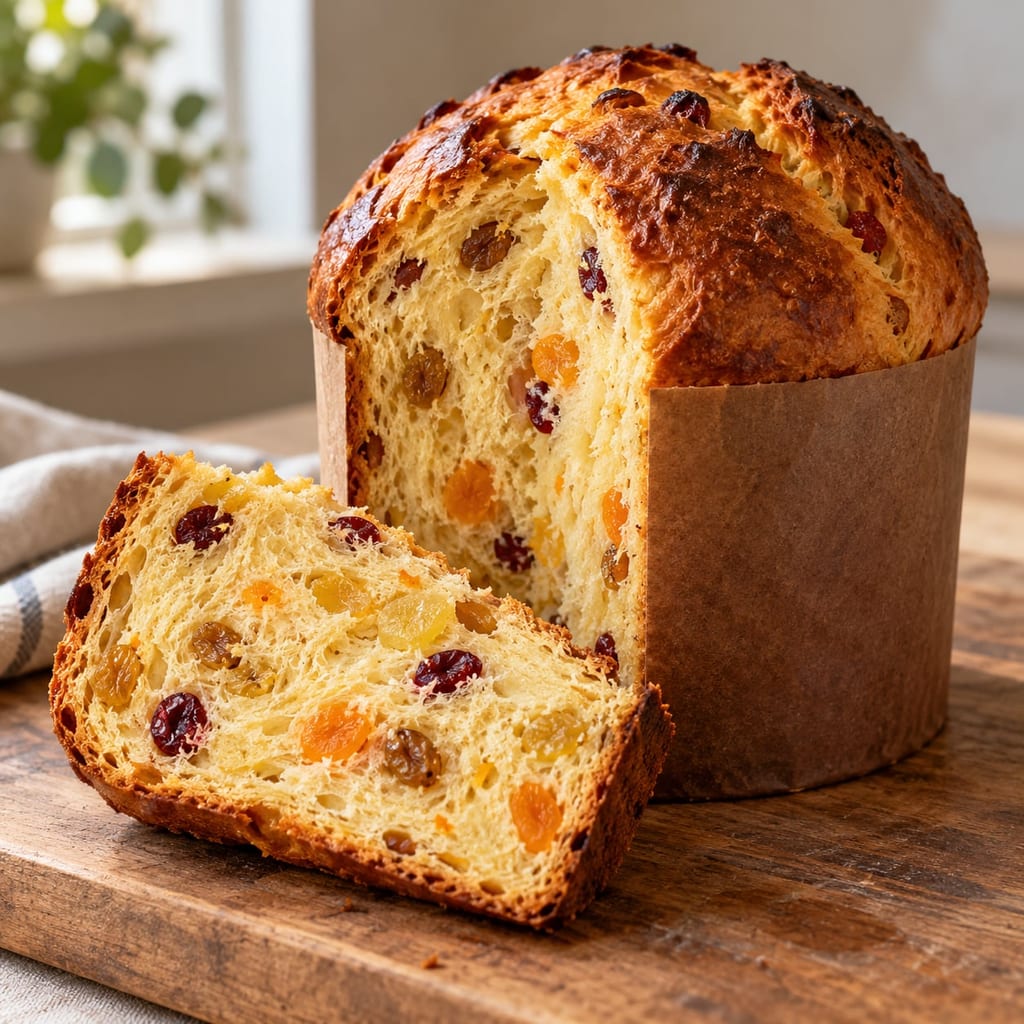
Overnight panettone: King Arthur version
A modern instant-yeast panettone with an overnight flour-and-water preferment and mixed dried fruit. It is separate from specialist sourdough panettone methods.
 FermenteaWhere food goes to change
A tall Lombard Christmas bread enriched with butter, yolks and candied citrus, raised first with refreshed sourdough and then proofed in a paper mould.
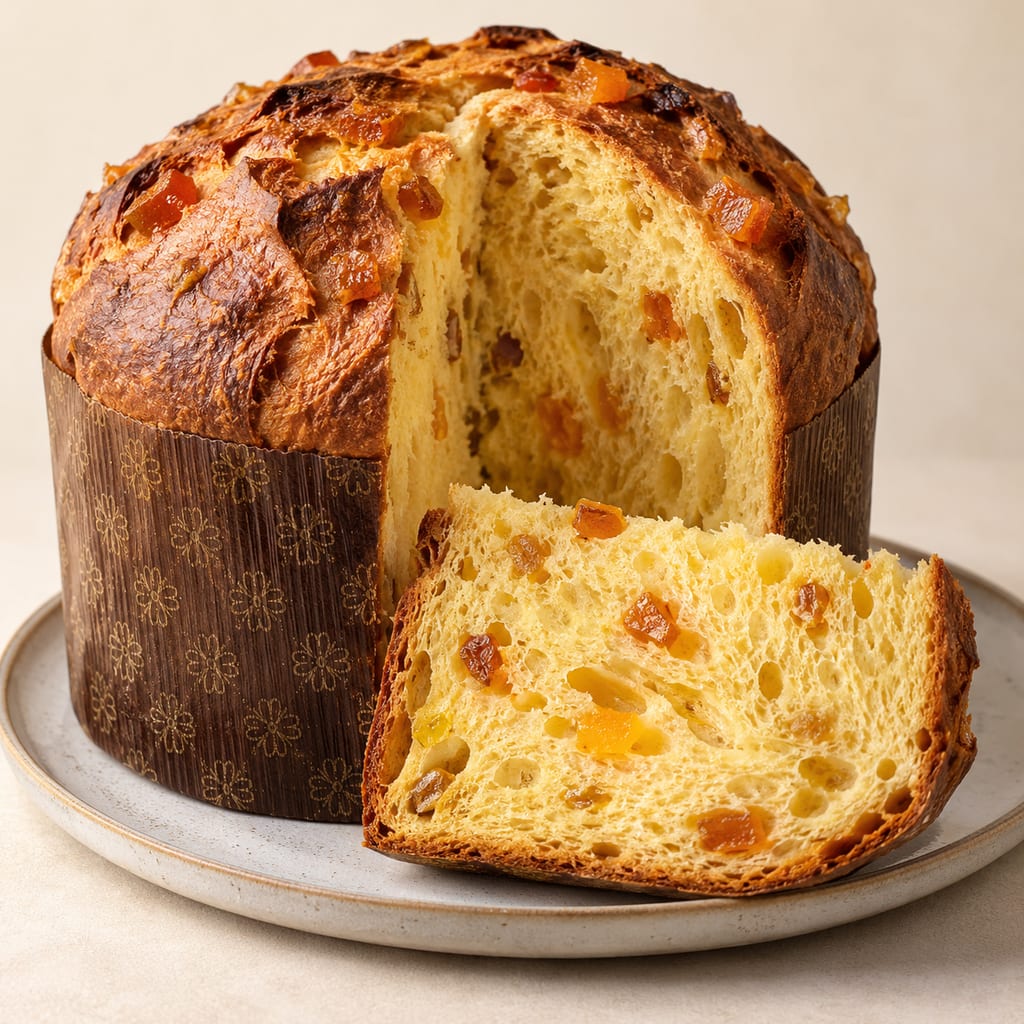
Panettone is a tall, enriched Christmas bread associated with Lombardy. The sourdough home batch described here builds its flavour and volume in two dough stages: a long first rise with refreshed sourdough, then an enriched second dough with butter, yolks, honey, raisins and candied citrus.
The GialloZafferano recipe gives a sourdough route that differs from the overnight, commercial-yeast version already on this site. Its method is a long, cool first rise followed by a long, gentle final proof in a paper mould.
The first dough is mixed for about five minutes, then the starter and a butter and yolk emulsion are added in two parts. It rises about twelve hours at about 26 °C until tripled. The second dough is built in several stages, with the citrus pastes and honey worked in before the fruit goes in.
The shaped loaf proofs in a switched-off oven held near 35 °C, under a glass dome, for six to eight hours. The source's own header gives 22 hours of leavening, which does not match its steps, so the steps are followed here.
The loaf is cut in a cross, given a knob of butter, and baked at 175 °C for about fifty minutes. The small panettones come out earlier. The bread is pierced with steel skewers and cooled upside down overnight so its crumb does not collapse.
The publisher gives bagging and storage advice. That is publisher guidance and has not been checked against independent safety evidence. The flour in the second dough is listed as 62 g and in the method as 65 g, and this record keeps both figures.
Treccani documents Angelo Motta's bakery business from 1919 and its later commercial development. It does not establish the origin of panettone, and the reviewed sources do not give a dated origin for the bread itself.
Yield 1 1 kg panettone plus two small ones · Scaling: source batch only
The publisher's storage and bagging advice is publisher guidance, not independently verified safety evidence.
Associated with Christmas in Lombardy by the reviewed sources; the home batch itself is not located precisely.
A modern instant-yeast panettone with an overnight flour-and-water preferment and mixed dried fruit. It is separate from specialist sourdough panettone methods.
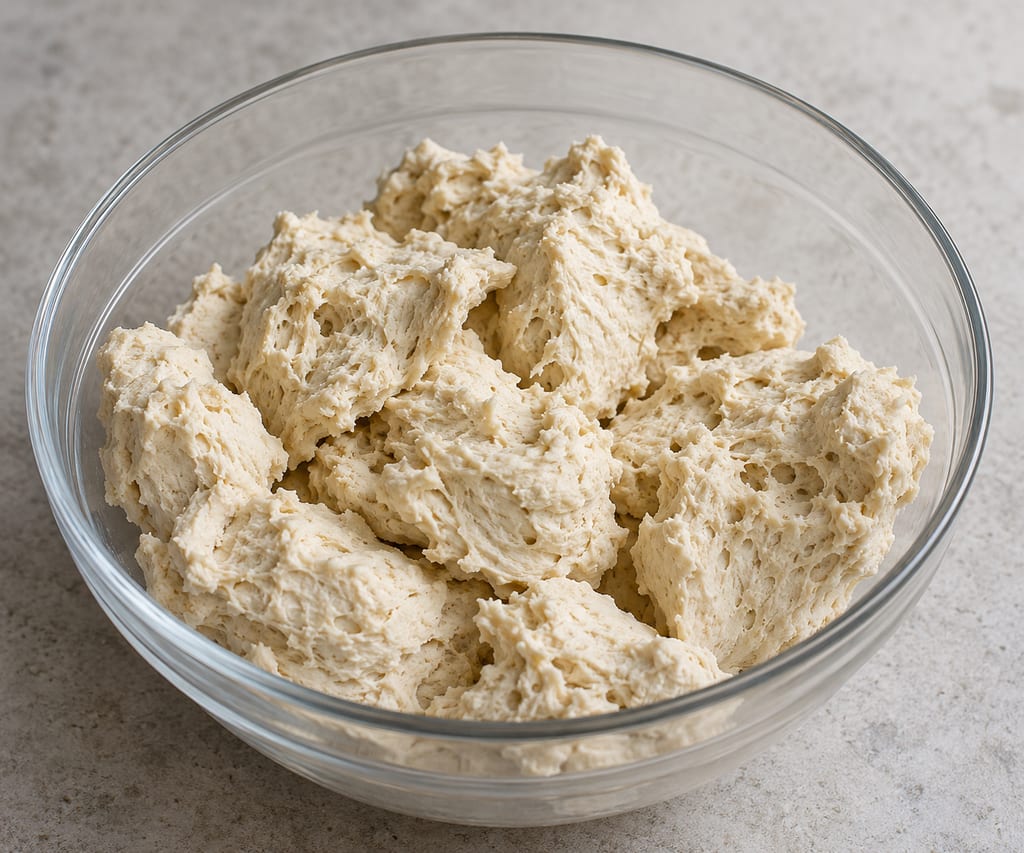
Biga is an Italian bread preferment of flour, water and a little yeast, usually a stiff unsalted mass of about 45 per cent water, fermented ahead and then mixed into the final dough.
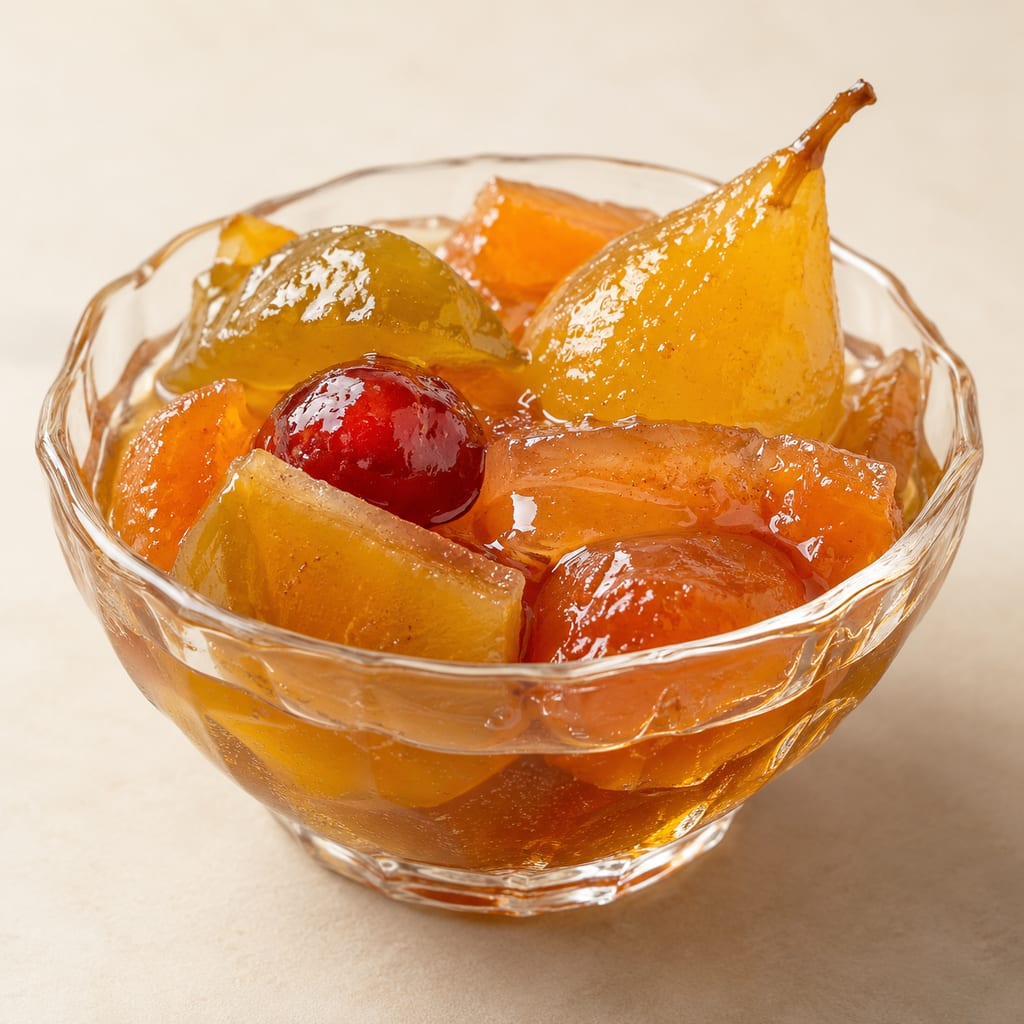
Mostarda is a northern Italian condiment of candied fruit in a mustard-flavoured syrup, served with boiled meats and cheeses.
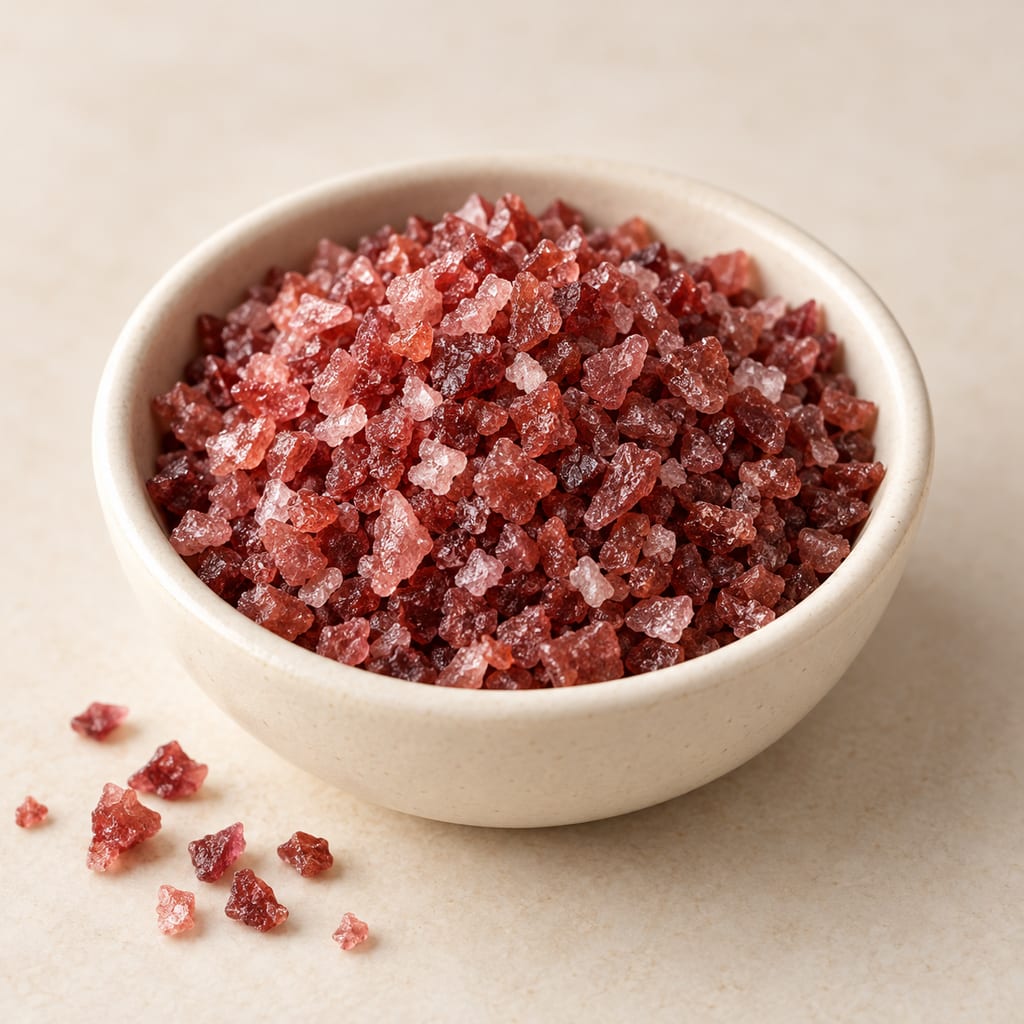
Wine-infused salt is coarse food salt carrying wine colour and aroma after a wine-and-salt mixture is reduced and dried. This version follows a Missouri Wines method at a one-to-three salt-to-wine ratio.
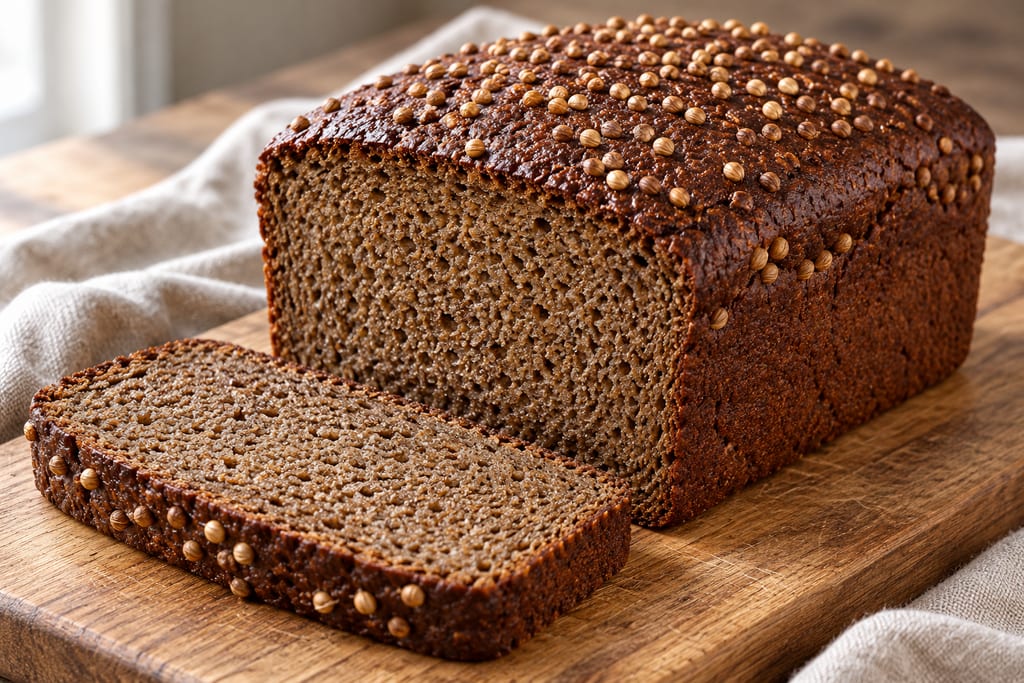
A dark rye sourdough with coriander and roasted barley-malt scald, based on Lily McCann's measured Borodinsk-ish home formula.
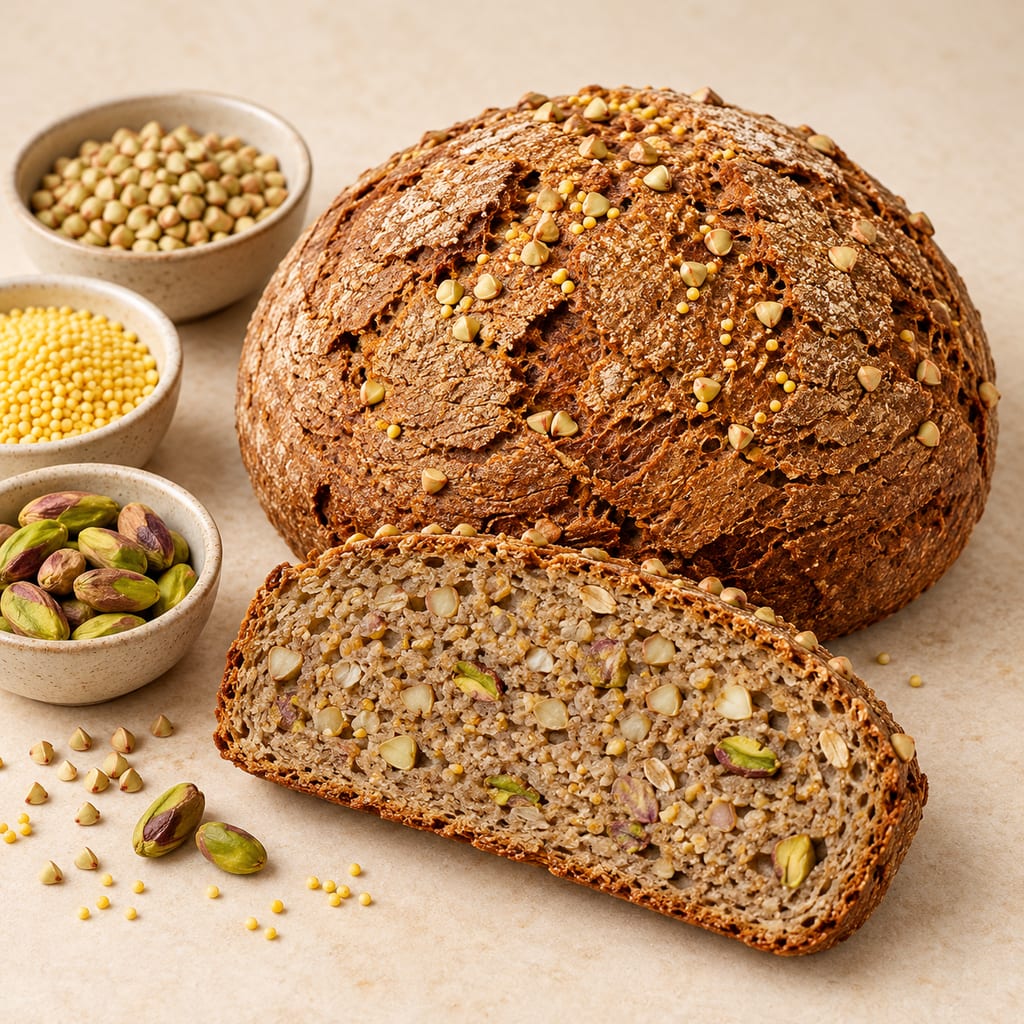
A gluten-free sourdough loaf of about 1 kg. A buckwheat and quinoa starter leavens a dough with cooked whole buckwheat groats, millet and a dark gluten-free bread mix, baked in a lidded pot.
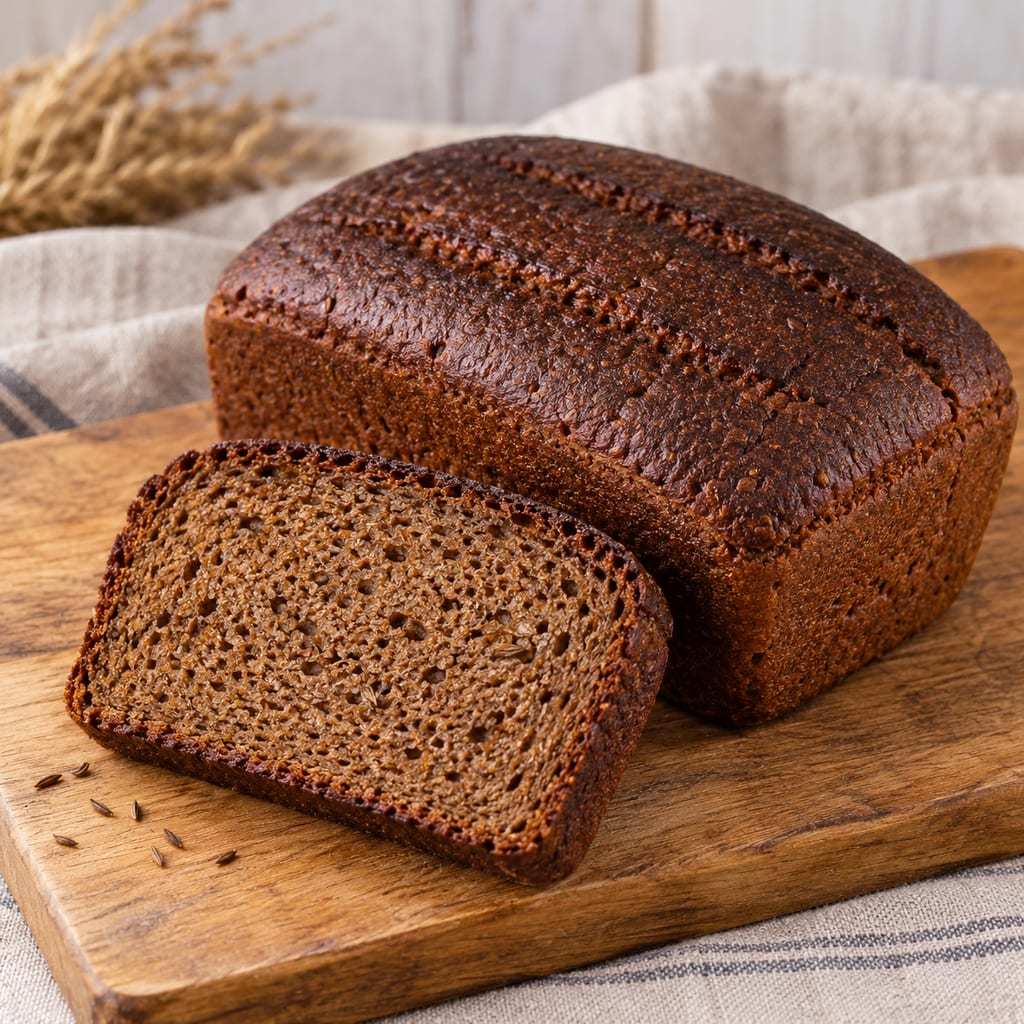
A Lithuanian dark rye loaf made with an overnight rye preferment, caraway, honey and sugar, then proofed in a loaf pan and baked in two stages.
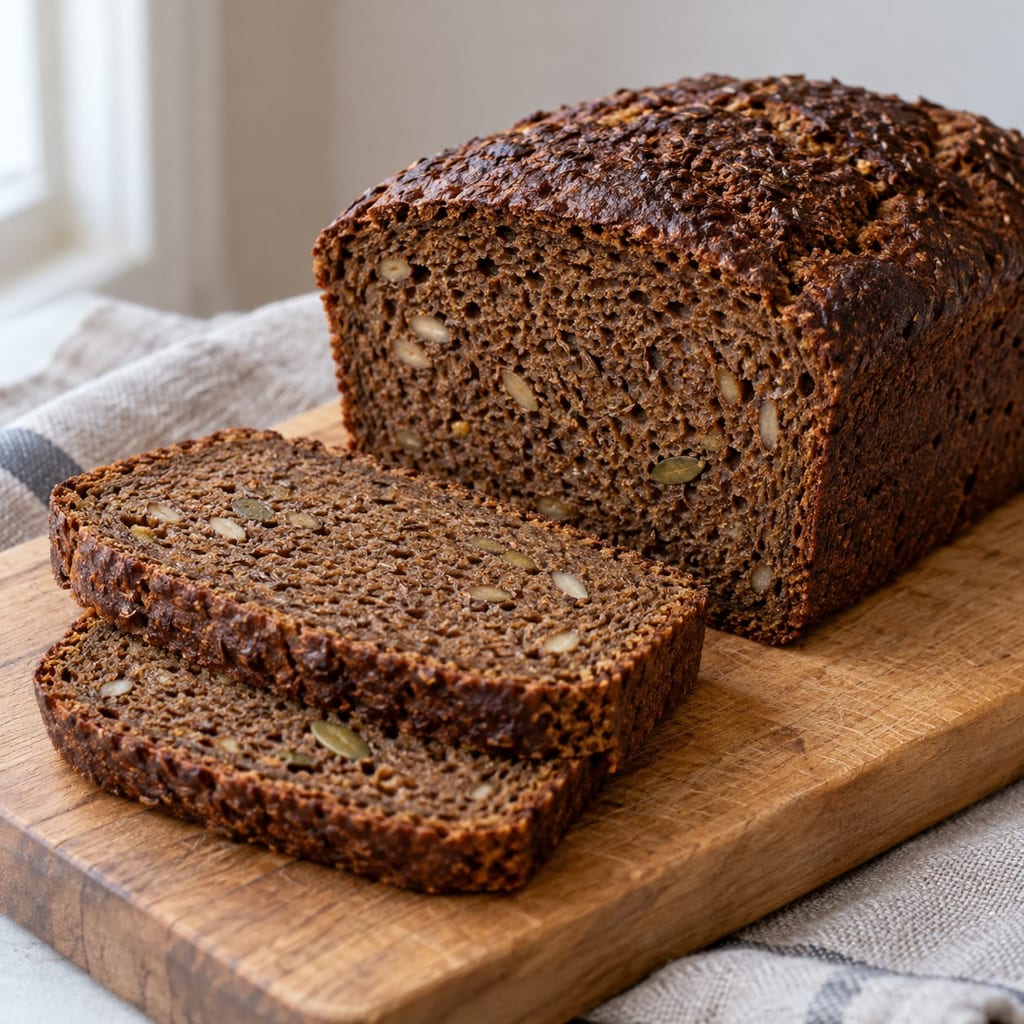
This Estonian rye loaf uses a sourdough preferment, a rye scald and soaked seeds, with a small amount of baker’s yeast. Two tins bake through a staged hot-to-moderate oven schedule.
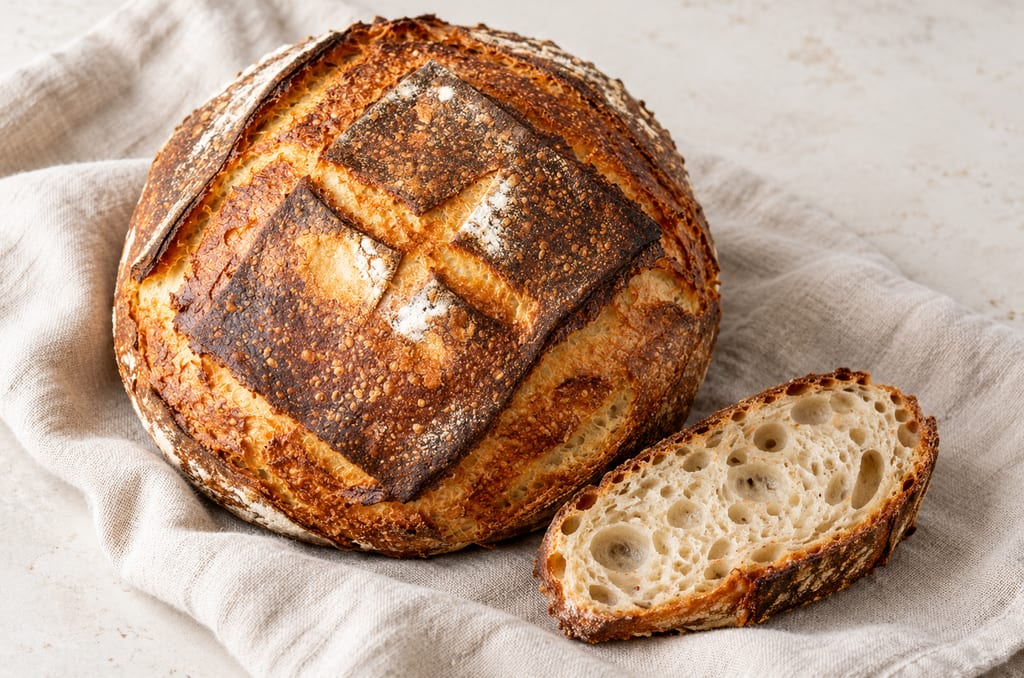
A ripe sourdough starter leavens this modern low-handling loaf. Three hourly folds organize the sticky dough before a long refrigerator rest, final proof and covered bake.
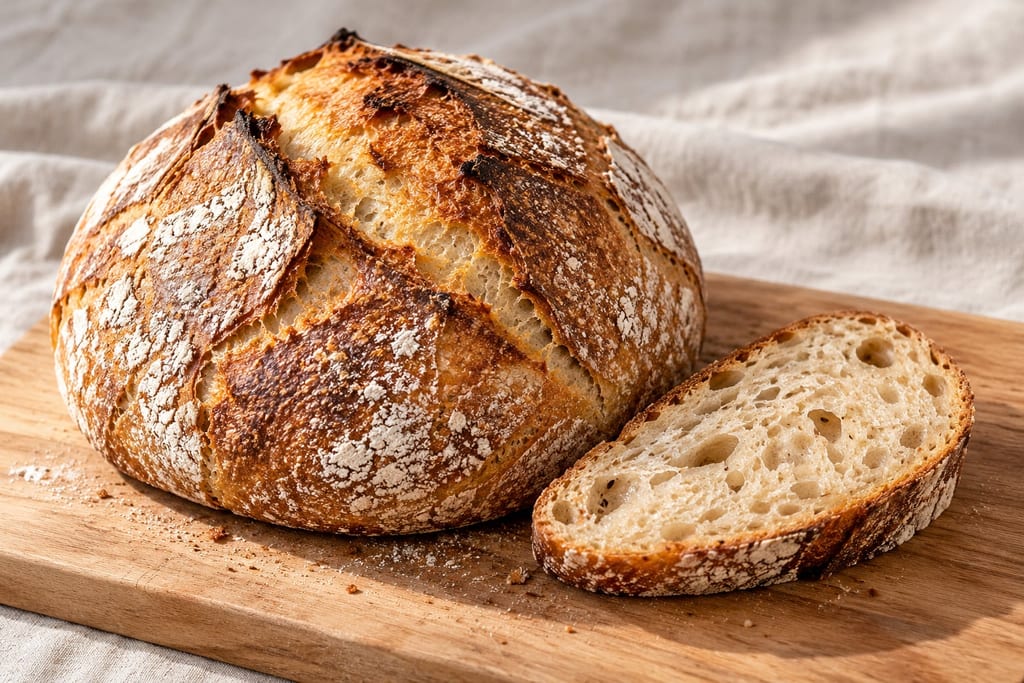
Two large French-style wheat loaves use unfed sourdough starter, whole-wheat flour, long room-temperature fermentation and a covered-pot bake.
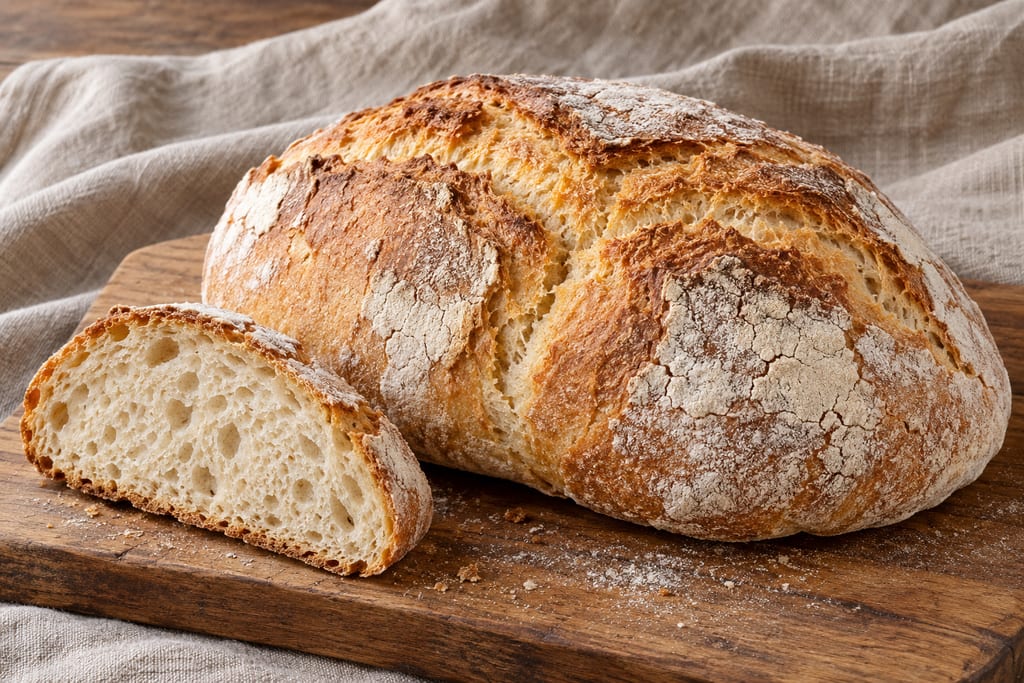
This home sourdough adaptation borrows Pan de Cea’s wheat-forward loaf and central fenda while using a domestic oven and a separately documented modern formula.
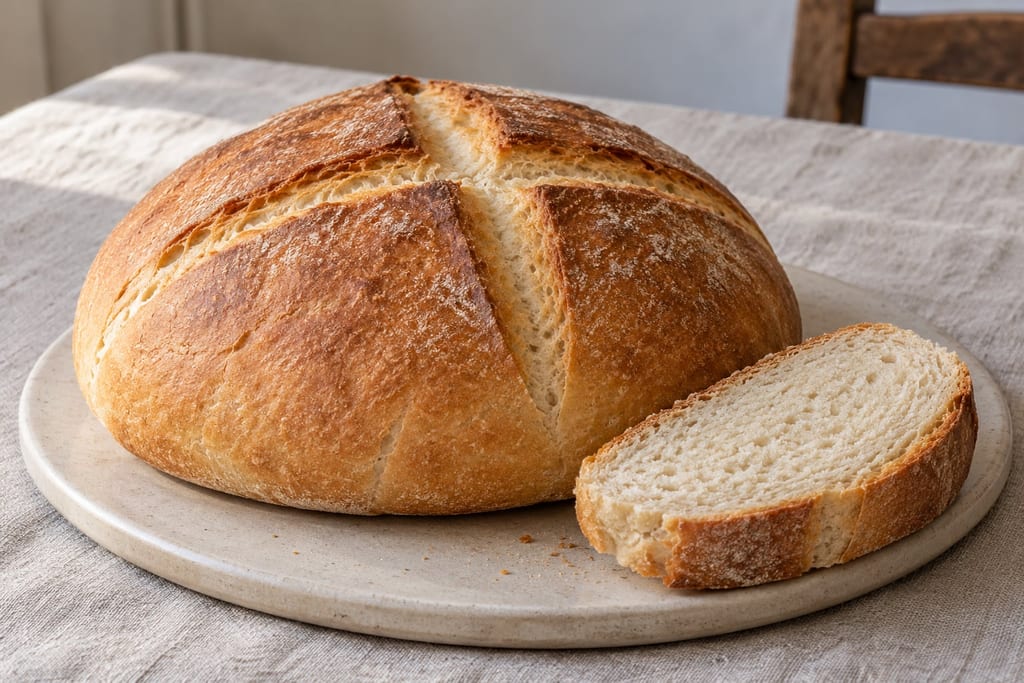
This household Pan de Cruz adaptation uses sourdough and a folded, tight-crumb wheat dough, marked with a cross and baked in a home oven.
No community contributions have been published for this entry yet.
Sign in to contribute. Published comments and photos are free to read.
GialloZafferanoMethod · Ingredients
PanettoneIngredient list and sourdough method
First rise about 12 hours at about 26 °C
Final proof six to eight hours, bake 175 °C for about 50 minutes
Flour conflict: 62 g in the list, 65 g in the method
Cited in: A Lombard Christmas bread, raised twice; Two doughs and their proof; Baking, cooling and what the sources do not settle
Treccani, Dizionario Biografico degli Italiani, vol. 77History
MOTTA, AngeloAngelo Motta's 1919 bakery business and later commercial development; not the bread's origin