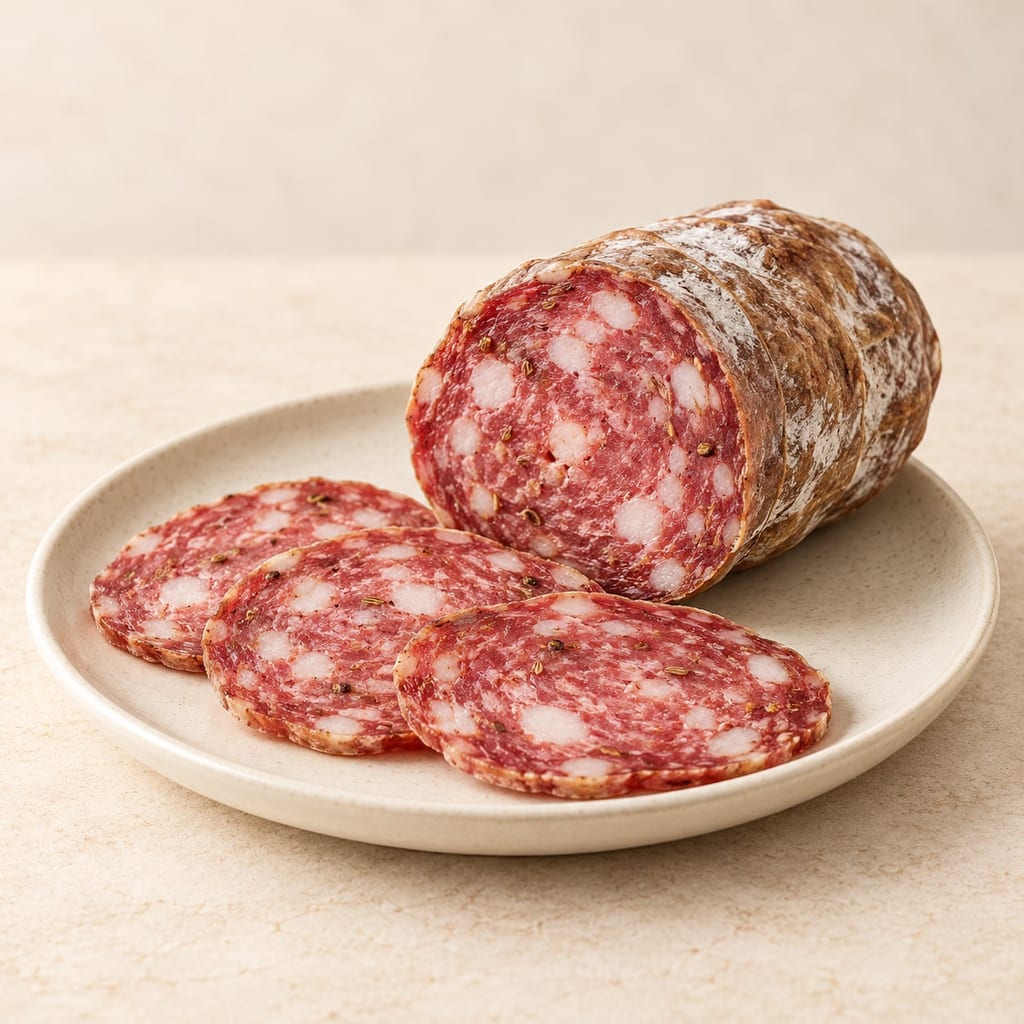
Finocchiona, starter-cultured
A Tuscan-style fennel salami made with pork and back fat. Toasted fennel, fennel pollen and Sambuca flavor this starter-cultured preparation.
 FermenteaWhere food goes to change
Substrates
Trimmed domestic-pig muscle supplies the protein framework, water and meat flavor in fermented sausages; cut, condition and handling affect how it binds and ripens.
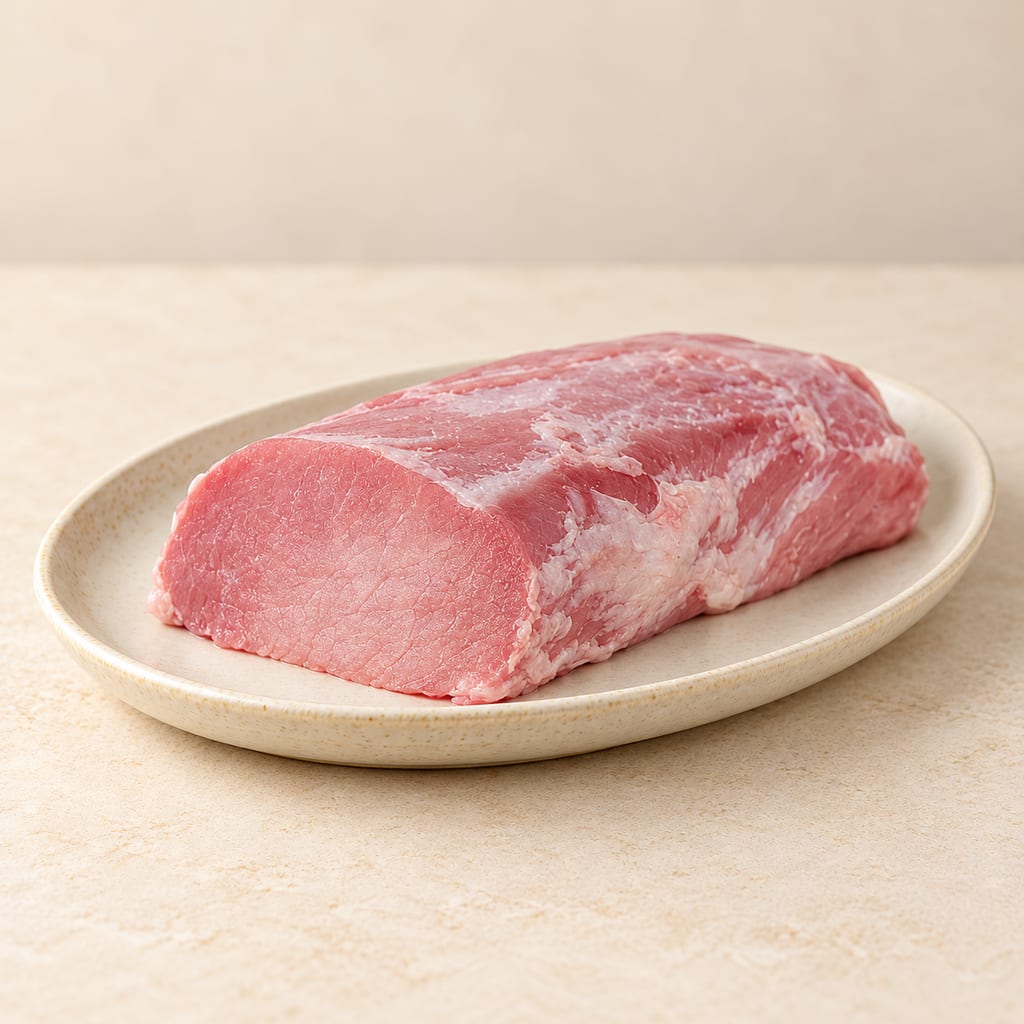
Lean pork is the muscle portion of pork selected and trimmed for a preparation. In a salami slice it forms the darker, firmer material around the pale pieces of fat. The distinction is practical: the lean meat supplies much of the protein framework, water and meat flavor, while the separately chosen fat contributes another texture and a different set of flavor precursors. Calling both simply pork would conceal decisions the maker needs to understand before grinding begins.
Lean pork is not a single cut. A butcher can obtain relatively lean muscle from different parts of the carcass, and a recipe may name a cut or leave that choice open. Nor does lean mean that every trace of fat has disappeared. Small fat deposits and connective tissues are part of muscle's anatomy; trimming changes their amount without turning the meat into a pure protein. In a weighed sausage formula, the lean and fat lines describe ingredients the maker is expected to select separately.
The animal is the domestic pig, commonly recorded as Sus scrofa domesticus and also classified as Sus domesticus. Those names refer to different taxonomic treatments of the same familiar domesticated animal. The ingredient is its meat, rather than a breed name or a particular finished food. Pork muscle, pork back fat, belly, rendered lard and a pig-derived casing consequently have related origins but distinct identities in the kitchen.
The history behind pork reaches far beyond any named sausage. Archaeological bones, teeth and ancient DNA reveal a long relationship between people and wild boar populations, followed by the movement and mixing of domestic pigs. In western Eurasia, pigs moved with early farming communities from Southwest Asia toward Europe. Their ancestry continued to change as domestic herds encountered local wild populations.
Ancient mitochondrial DNA and tooth-shape research has made that history more complicated than a straight line from one original herd. The evidence points to domestication involving multiple Southwest Asian wild-boar populations and to later changes in maternal lineages as pigs were transported and bred. A pig moved by people could acquire ancestry from animals already present in its new surroundings. Husbandry was an ongoing relationship, not a single event preserved unchanged in every later breed.
This is the animal's history, while the histories of particular pork foods have their own evidence. A household's fresh sausage, a dried salami and a cured whole muscle ask different things of the same carcass. The geographical associations of those foods belong to their making and eating traditions. A modern bag of lean pork for a starter-cultured recipe does not acquire a precise ancient birthplace merely because domestic pigs have a deep archaeological record.
Muscle is organized into fibers and bundles, supported by connective tissue and interspersed with fat. Myofibrils within the fibers contain the contractile proteins actin and myosin. Those proteins matter after slaughter as well as during the animal's life: their behavior helps determine how meat retains water and how a minced mixture binds.
The visible tissues give the butcher several distinct materials to manage. Fat lies within muscles, between them and beneath the skin. Connective tissue surrounds and supports structures throughout the carcass. A large tough strip of sinew behaves differently in a grinder from a piece of muscle, while a band of attached fat changes the balance of an ingredient weighed as lean meat. Trimming is therefore part of preparing the material, not merely making it look tidy.
Pork can be divided into primal cuts such as shoulder, loin and ham, then into smaller cuts and trimmings. The suitability of an individual piece depends on the food being made and the condition of the meat. A recipe that names only lean pork should not be read as secretly requiring an expensive, completely fat-free loin. Equally, an unspecified collection of fatty trimmings is not the same ingredient as carefully selected lean muscle accompanied by a separate fat addition.
Changes begin in muscle before a starter culture is added. After slaughter, the animal's remaining glycogen can be converted into lactic acid, changing the meat's pH. The course of that change influences protein behavior and water retention. Conditions before slaughter can affect it, which helps explain why meat of the same species and anatomical cut can behave differently in processing.
Pale, soft, exudative pork is one recognized condition in which rapid acid development and protein changes are associated with poor water-holding capacity and greater fluid loss. Dark, firm, dry meat represents a different pattern, associated with reduced acid development after glycogen depletion. These technical descriptions concern the condition of the raw material. They are not stages a sausage maker tries to create, nor a way to identify a finished ferment by color alone.
For the maker, the underlying point is that lean meat arrives with a structure and history of its own. The amount of fluid it releases, the connective tissue remaining after trimming and the way it responds to mixing affect the developing product. Selecting the meat and controlling later fermentation are connected responsibilities; adding a starter does not make differences in the raw material disappear.
A whole muscle and a bowl of ground pork are physically different foods. Grinding divides fibers and bundles, exposes new surfaces and distributes small pieces through the mixture. In a coarse sausage, recognizable particles remain. A finer comminuted product has a different texture and more extensive disruption of its structure. The grinder plate is therefore a choice about the eventual body of the food, not merely a way to make the work faster.
The fat alongside the meat has to be managed at the same time. Chilled, firm fat cuts into distinct particles more readily than warm, softened fat. When fat smears through the mixture, it changes the clean contrast between lean and fat. During filling, softened fat can also grease the inside of the casing and interfere with moisture movement. Cold handling in the individual recipe serves that physical purpose alongside the hygiene requirements for raw meat.
Trimming sinew and silver skin before grinding reduces tough pieces and supports more consistent cutting. Sharp, clean cutting and a suitably prepared mixture establish the particle structure that later fermentation will transform. The characteristic mosaic of a dry-sausage slice begins here, while the material is still raw and before the casing gives it a final shape.
Mixing with salt changes how the meat particles relate to one another. Salt helps extract salt-soluble muscle proteins, which contribute to the binding of the mixture. The mince becomes cohesive and tacky, able to hold distributed fat and seasoning rather than behaving as a loose collection of chopped pieces. That is an important contribution of the lean meat to sliceability.
The developing bind gives the stuffed sausage continuity. Individual particles remain visible, but the protein-rich material between them helps the product hold together as its moisture and acidity change. In a coarse salami, enough cohesion is needed to support a slice without erasing the separate pieces of meat and fat that give the food its texture.
This is a physical and chemical change during preparation. It precedes the microbial conversion of sugars during the warm fermentation stage. Tackiness is a handling observation about the mixed meat, while acidification is followed through the controls of the particular method. Keeping those stages distinct makes the instructions more intelligible: mixing establishes a body for fermentation, and fermentation then changes the environment within that body.
Lactic acid bacteria act on available fermentable carbohydrates, producing acids, chiefly lactic acid. The meat provides a moist, nutrient-rich setting, while a recipe may add a measured sugar to feed the selected culture. The sugar, culture and conditions together influence the course of acidification. Lean pork is the main material being transformed, but the bacteria are not simply turning muscle protein into lactic acid.
As pH changes, the mixture's taste and protein behavior change with it. The tang of fermented sausage is connected with acid production, while the developing texture also reflects the salt, fat, water distribution and later drying. Commercial starters make the intended microbial community an explicit ingredient rather than leaving every make to the organisms arriving with meat, tools and surroundings.
The related preparations on this page use different combinations of ingredients and starter products. Those differences belong to each formula. A culture selected for one method has its own working characteristics, and the presence of pork in another sausage does not make their schedules interchangeable. Understanding lean meat's role helps explain the mixture without reducing all pork fermentation to one set of conditions.
The aroma of a mature sausage is more than concentrated raw-meat flavor. Enzymes already present in muscle and enzymes contributed by microorganisms can break proteins into smaller peptides and amino acids. Other reactions act on fats, releasing fatty acids and producing further compounds that contribute to aroma. These transformations occur within a body that is also losing and redistributing water.
Lean meat supplies a substantial part of the protein material involved in those changes. Its partner, the fat fraction, supplies a different range of precursors and affects the texture in which flavor is experienced. Culture choice, raw materials and conditions influence the balance of reactions. A finished slice consequently carries the effects of several stages, from the original tissue selection to the later maturation environment.
Drying adds a physical transformation. Water moves from within the sausage toward the casing and then into the surrounding air. If the exterior dries too rapidly, a resistant outer layer can form around a wetter center. The meat becomes firmer as moisture is lost, but a dry surface alone does not describe the whole body. Chamber management, fermentation and ingredient selection each address a different part of the process.
Identify the material before buying it: the species, cut when specified, fresh or frozen state, and whether it is whole or already ground. Ask about the attached fat and trimming rather than assuming that every package labeled pork supplies the same lean fraction. Keep the original product information so the meat remains traceable to its supplier and handling directions.
Whole pork cuts and ground pork have different household refrigeration guidance. FoodSafety.gov lists fresh pork steaks, chops and roasts for three to five days in a refrigerator at 40°F (4°C) or below, while ground pork is listed for one to two days under those conditions. These are raw-food storage categories. They do not provide a fermentation allowance or a shelf life for finished salami.
Prepare raw meat with clean hands, utensils and work surfaces, and keep it separate from ready-to-eat foods. Grinding and mixing involve repeated contact with equipment and spread the material throughout a batch. The recipe's chilled handling and its later process controls therefore remain distinct parts of making a raw fermented meat product. Selecting a lean cut is an ingredient decision, not a replacement for those controls.
Pork is mammalian meat. It can contain alpha-gal, a carbohydrate relevant to people with alpha-gal syndrome, whose reactions to mammalian products can be severe and can differ between exposures. People managing that condition need advice appropriate to their own situation from their healthcare provider; a generic description of lean meat does not settle an individual's reaction.
A pork ingredient also does not describe the allergen content of the whole sausage. Cultures, seasonings, milk powder and other additions can introduce separate ingredients, so the complete recipe and the actual supplier labels matter. The ingredient's identity should remain visible even when grinding makes its original cut unrecognizable.
Outside fermentation, the same muscles can be cooked as cuts or used in fresh minced preparations. Within a fermented sausage, the lean meat takes on a more particular role: it supplies the framework in which salt, fat, cultures and seasoning are brought together. The finished slice makes that partnership visible, with the lean matrix holding the lighter fat pieces and carrying the changes produced during fermentation, drying and ripening.
Mammalian meat may contain alpha-gal. Check the actual purchased meat for added ingredients and cross-contact information.
Unknown actual sourcing location for the generic lean pork named in the linked preparations.
A Tuscan-style fennel salami made with pork and back fat. Toasted fennel, fennel pollen and Sambuca flavor this starter-cultured preparation.
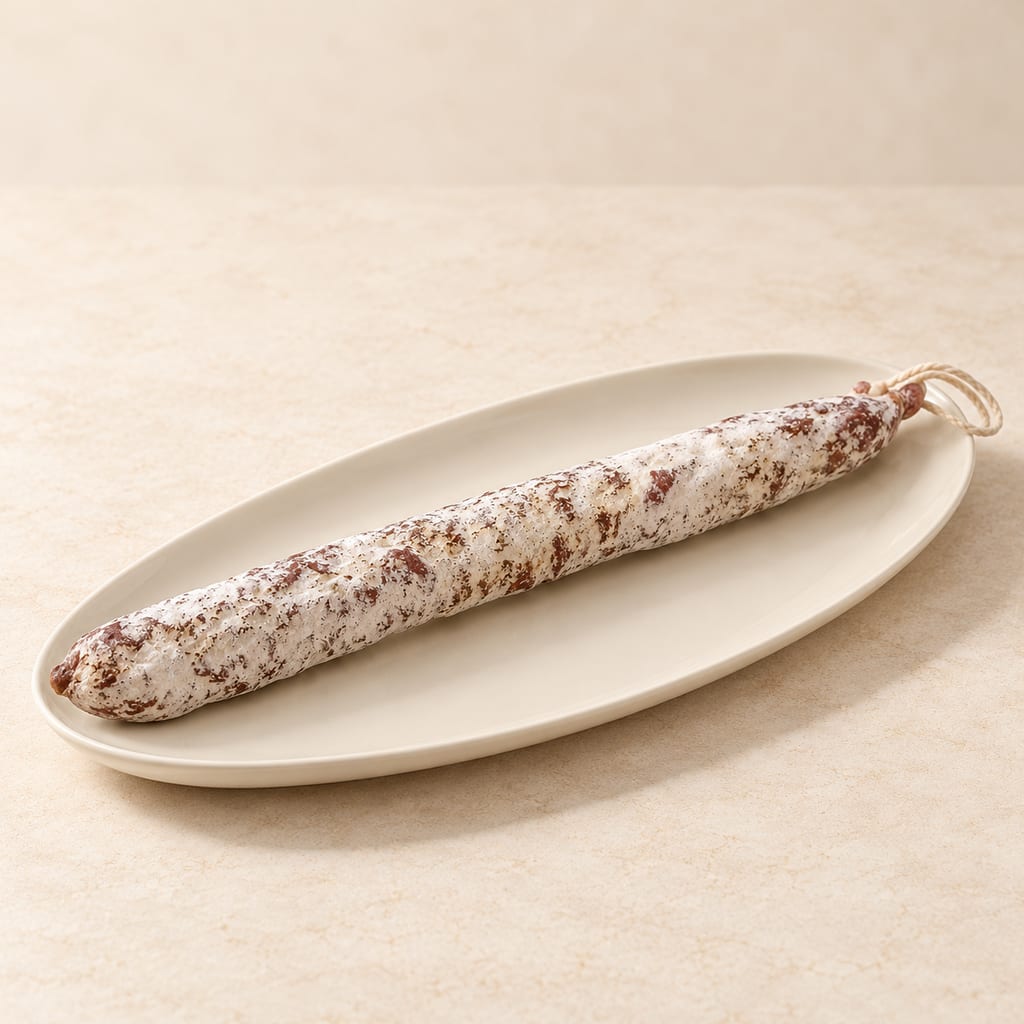
A documentary account of a modern starter-cultured Fuet formula and its place in Catalan sausage culture. The cited raw-pork process lacks matched safety validation, so this page does not present it as a household recipe.
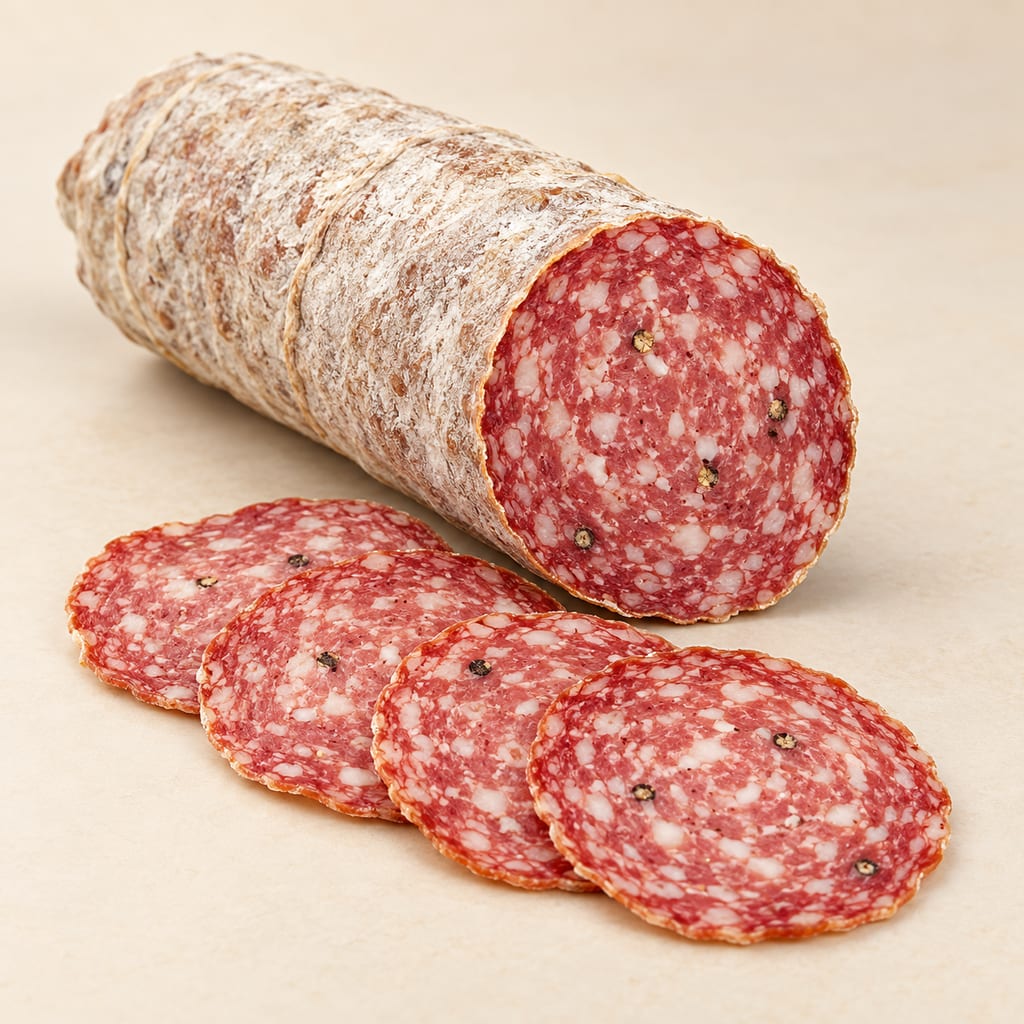
Pork, beef and back fat ferment with a named starter, cure and red wine before the sausages dry in casings. This contemporary formula uses no wood-smoke stage.
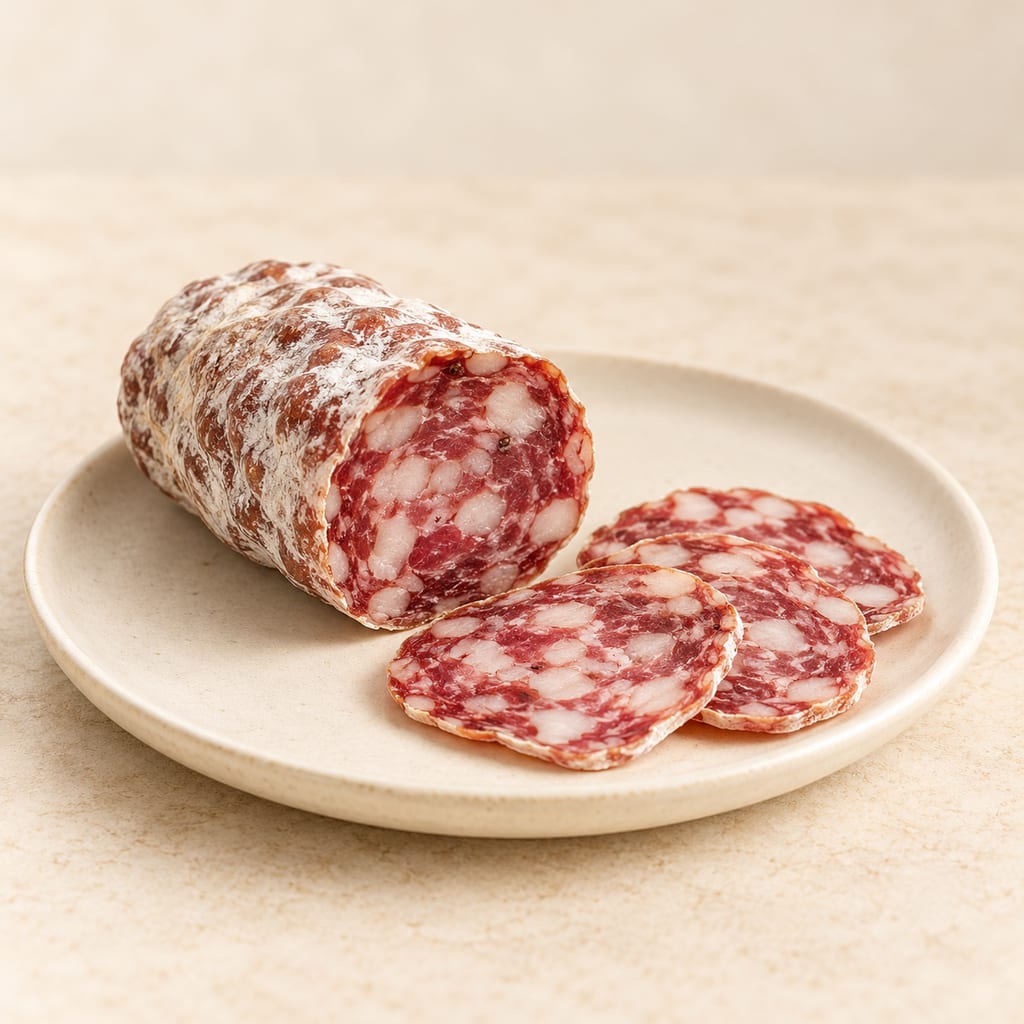
Saucisson sec is a French dry sausage of seasoned pork and fat. This version uses Flavor of Italy starter, white wine and an optional Mold 600 surface culture.
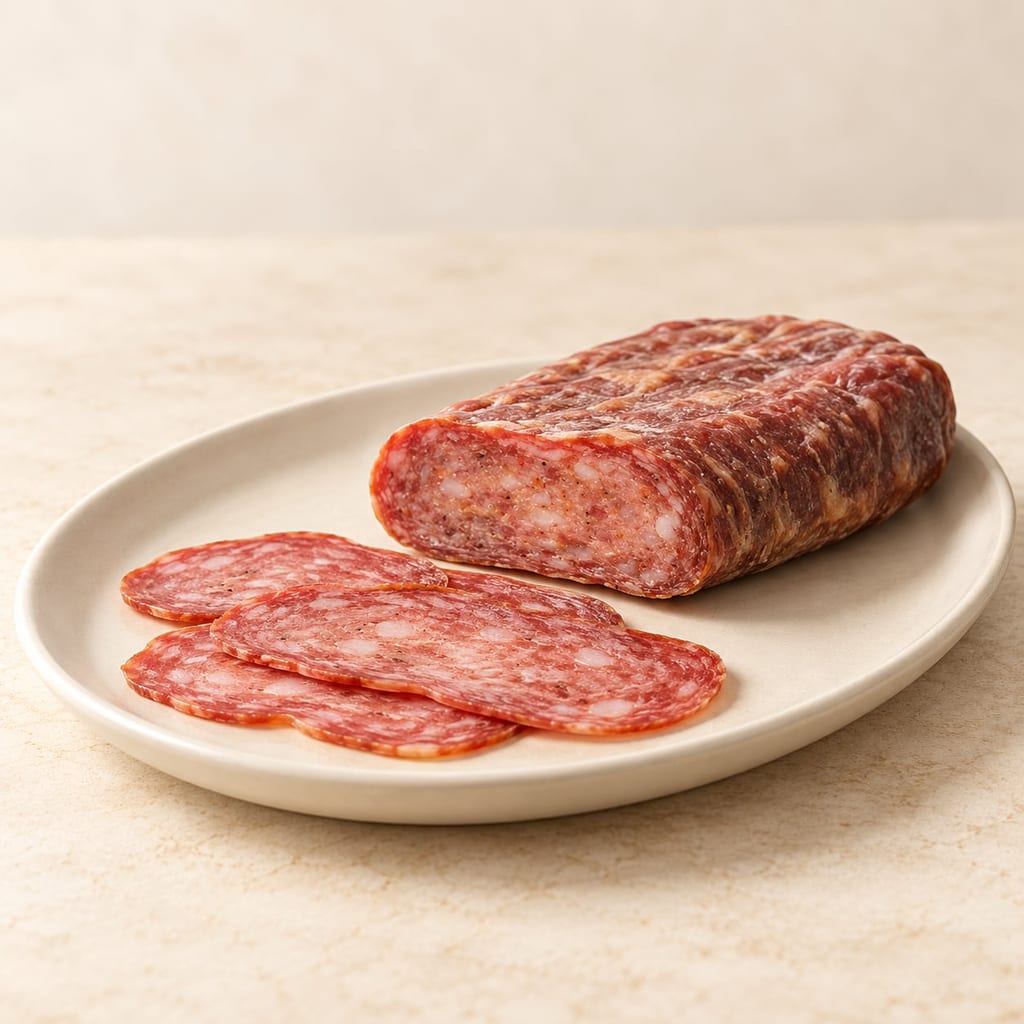
Calabrian soppressata is a flattened pork salami seasoned with pepper and wine. This entry documents a modern starter-cultured adaptation, not household instructions; the process lacks matched pathogen-reduction validation.

A documentary account of a modern ventricina-style salami source and its Abruzzese context. This page provides no preparation directions or validated home process.
No community contributions have been published for this entry yet.
Sign in to contribute. Published comments and photos are free to read.
Food and Agriculture OrganizationIdentity · Science
Meat as raw material, non-meat ingredients and basic techniques in meat processingMuscle proteins, connective tissue, fat depots, postmortem changes, salt extraction and binding, particle formation, smearing and drying. General mechanisms only; numerical operating limits not transferred.
Dry sausages, Filling paragraph and Frequent faults / Greasy casing paragraph: warm/soft fat greases casing interior, reduces porosity and obstructs moisture migration. Exact source passages independently rechecked after reviewer query; no process temperatures transferred.
Cited in: The meat within the slice; A carcass divided into useful materials; Meat condition before fermentation; Cutting creates a new structure; Salt and mixing make a coherent mince; What the microorganisms use; Ripening changes the meat's flavor; Buying and keeping the raw ingredient; Dietary identity and the foods around it
NCBIIdentity · Science
Sus scrofa domesticus taxonomy recordDomestic pig identification; taxonomy can also be treated as Sus domesticus.
Cited in: The meat within the slice; Dietary identity and the foods around it
Centers for Disease Control and PreventionIdentity · Science
Products That May Contain Alpha-galMammalian meat and fat can contain alpha-gal; individual reactions and dietary decisions require healthcare guidance.
Cited in: Dietary identity and the foods around it
Integrated Taxonomic Information SystemIdentity · Science
Sus domesticus, TSN 898265Alternative species-level treatment of domestic pig.
Cited in: The meat within the slice
Molecular Biology and Evolution / Ottoni and colleaguesIdentity · Science
Pig Domestication and Human-Mediated Dispersal in Western Eurasia Revealed through Ancient DNA and Geometric MorphometricsWestern Eurasian domestication and movement, multiple Southwest Asian wild populations and changing maternal lineages; no dates or sample counts transferred.
Cited in: Pigs moving with people
Food Science of Animal Resources / Hwang and colleaguesIdentity · Science
Effect of Starter Cultures on Quality of Fermented SausagesGeneral acidification, proteolysis, lipolysis, culture and condition dependence.
Cited in: What the microorganisms use; Ripening changes the meat's flavor
FoodSafety.govIdentity · Science
Cold Food Storage ChartRaw whole pork steaks/chops/roasts 3–5 refrigerated days, ground pork 1–2 days, at 40°F (4°C) or below. These are raw-meat categories, not finished-sausage shelf life.
Cited in: Buying and keeping the raw ingredient