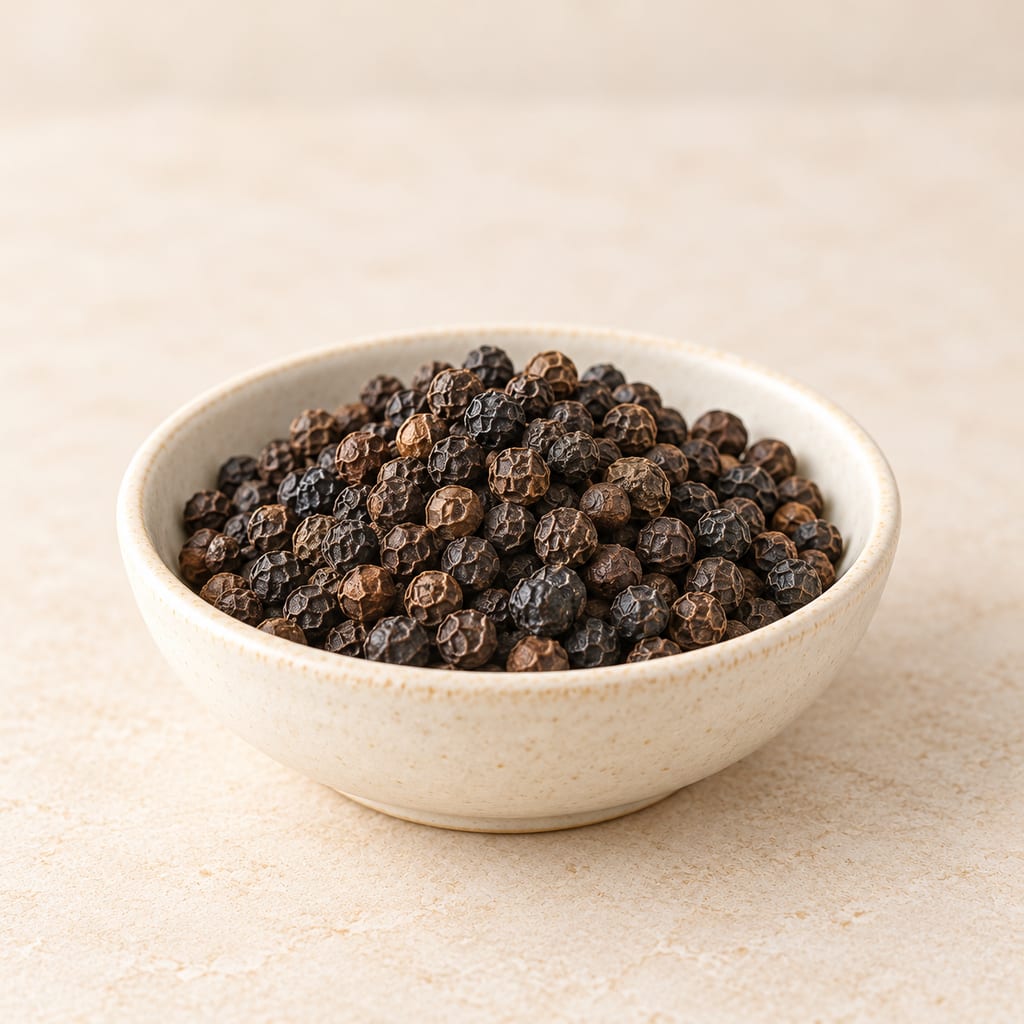
Black pepper
Black pepper is the dried fruit of Piper nigrum, a tropical climbing vine, used whole, cracked or ground for its pungency and aromatic oils.
 FermenteaWhere food goes to change
Modern adaptation
Finocchiona
A Tuscan-style fennel salami made with pork and back fat. Toasted fennel, fennel pollen and Sambuca flavor this starter-cultured preparation.
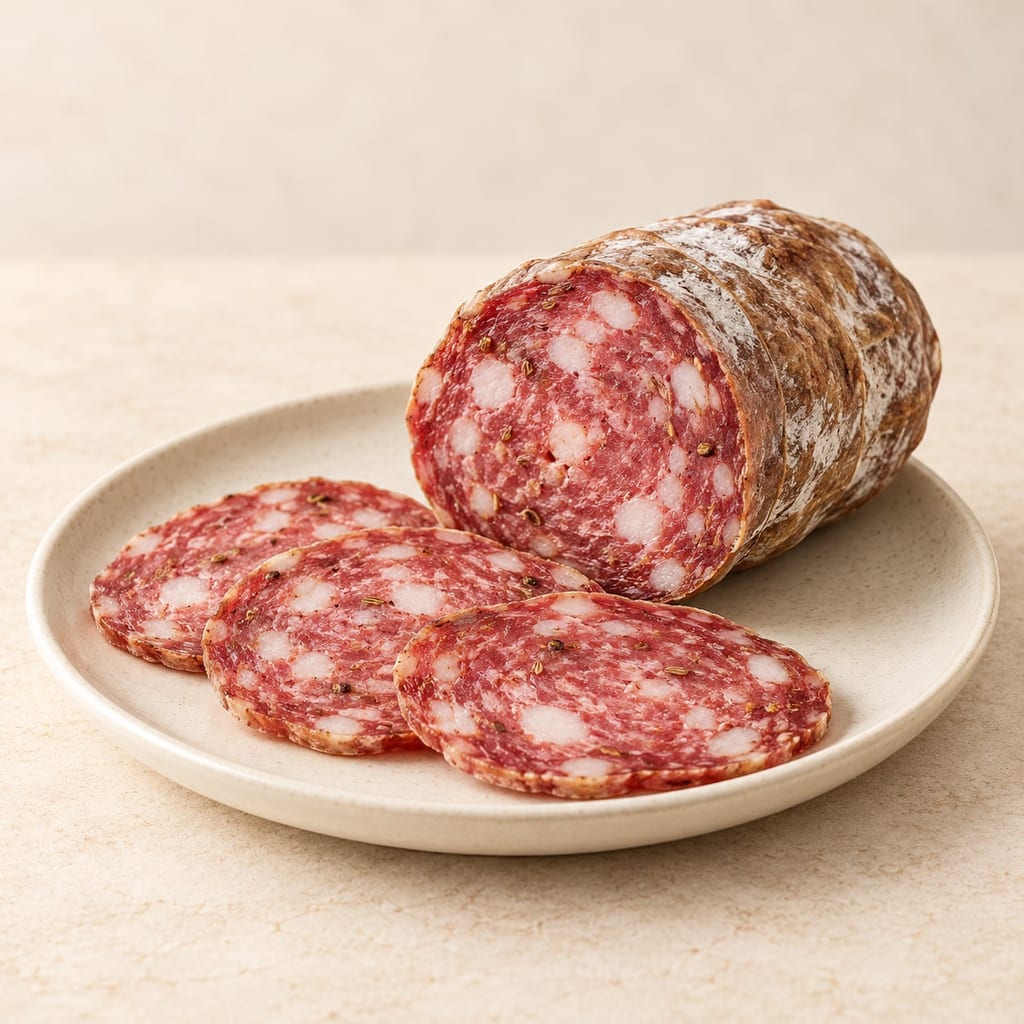
Finocchiona is a Tuscan salami whose defining aroma is fennel. The protected product specification allows fennel seed and/or flowers alongside pork, salt, pepper and garlic; fennel is not a decorative garnish but the seasoning that distinguishes it from many other Italian salumi. A good slice is fragrant before it reaches the palate, with a rounded pork flavour, garlic and pepper behind the sweet, resinous scent of fennel. Texture varies with the cut, casing and maturation, from relatively soft to firmer and more compact.
This record describes a particular contemporary, starter-cultured preparation inspired by Finocchiona. It combines lean pork and back fat with toasted fennel seed, fennel pollen, garlic, pepper and a small quantity of Sambuca, then uses commercial cultures and controlled drying. That recipe is not the protected specification and does not by itself confer the name Finocchiona IGP. The distinction matters: a regional food identity and an individual technical formula answer different questions. The first concerns an established product and its rules; the second records one maker's choices for a modern batch.
Finocchiona belongs to the broad family of Italian cured pork sausages, but its fennel character sets it apart from chilli-led southern salami, wine-seasoned preparations, and many garlic-and-pepper styles. The title's phrase “starter-cultured” signals an explicit modern process choice. It is not evidence that all Tuscan producers use an added starter; the protected rules permit microbial starters but also describe a wider product tradition.
The Finocchiona IGP consortium traces the word to Rigutini and Fanfani's Italian dictionary of 1875, where finocchiona is recorded as a Tuscan salami seasoned with fennel. That is a useful written attestation, not proof that the sausage was invented in that year. The consortium also recounts an origin story in which a salami maker's fennel seasoning helped disguise or enhance a sausage. Such stories belong to the cultural memory of the food, but the surviving dictionary evidence is firmer than a precise invention date.
Tuscany's fennel-growing landscape helps explain why the herb became a regional signature, although a contemporary product's ingredients cannot be projected unchanged onto every historical household. Seeds and flowers are both recognised in the protected definition. The modern recipe here uses toasted seed and separately measured pollen, producing a more layered fennel aroma than seed alone; that formulation should be understood as one interpretation, not a historical constant.
Finocchiona IGP is a protected geographical indication: its name is tied to a defined production area and specification. The consortium describes the product's Tuscan identity and the importance of fennel. Its rules and controls establish the protected product's permitted ingredients, production geography and maturation requirements. They do not validate every home formulation that borrows the name, and the recipe on this page is presented as an adaptation rather than a claim to certification.
The name connects a practical preservation food to a landscape, regional trade and the work of butchers and producers. The surviving sources do not justify a neat story in which one village or one person can be named as originator. A careful account can still say what is well supported: the term was in print in the nineteenth century, the food is identified with Tuscany, and fennel is its unmistakable signature.
Fennel seed and fennel pollen do not contribute in identical ways. The seed is a concentrated, durable spice; toasting it briefly, as the recipe source directs, makes its aroma more immediately expressive when the sausage is cut. Pollen is floral and delicate, so a small measured amount can broaden the scent without replacing the seed. The recipe's use of both is a modern formulation detail. The protected description recognises seeds and/or flowers, and does not require this exact combination.
Fennel's characteristic aroma includes anethole, a volatile compound also associated with anise. Its sweet, liquorice-like impression is vivid against pork fat, which carries aroma across the palate and softens the sharpness of salt and pepper. Black pepper adds a different warmth; garlic contributes pungency; Sambuca brings anise-like aromatic overlap and a little liquid to this recipe. These seasonings form a coordinated profile rather than a single dominant flavour.
Lean pork supplies most of the muscle tissue, while back fat keeps the slice from eating dry and provides the visible white flecks expected in a coarse salami. The recipe's 10 mm grind leaves a recognisable texture instead of producing a paste. The proportion of lean meat to fat affects both appearance and mouthfeel, so this formula should not be scaled or altered casually. The sources do not establish that replacing back fat, changing the grind, or omitting aromatics would preserve the same result.
Salt, dextrose and curing salt have process roles as well as flavour roles. Salt seasons the meat and changes water availability; the small sugar addition is fermentable substrate for the starter culture. The curing blend in this formula is a defined commercial product, not generic pink salt: its composition must be checked against its label and measured accurately. A product with a different formulation cannot be assumed equivalent by weight.
The recipe uses a named bacterial starter sold as Flavor of Italy. The source does not identify the exact species composition, so it would be wrong to assign a particular organism or claim a precise flavour pathway to that brand here. In general, lactic-acid bacteria consume available carbohydrate and produce organic acids, lowering pH. That shift changes the meat's environment and contributes tang, colour development and the texture of a fermented sausage. The starter is one controlled input among several; it does not make the process self-validating.
The formula separately applies Mold 600, whose declared organism is Penicillium nalgiovense. This surface culture is used to establish a white mold covering during ripening. The exterior growth and the acid-forming bacterial culture are distinct: one is applied to the casing surface, while the starter is mixed through the meat. Their functions and locations should not be conflated. The mold also does not prove that the interior has acidified or dried adequately.
After fermentation, drying removes water from the sausage. As moisture leaves, the meat becomes firmer and the remaining water is less available to microbes. Fat, salt, acidity and moisture therefore interact in determining texture and keeping quality. The recipe card's 35–40% weight-loss endpoint is a culinary target from that source, not a universal safe endpoint. The safety guidance treats pathogen reduction and shelf stability as separate process outcomes that require a formulation-matched, validated process.
These changes help explain why time alone is a poor description of the transformation. Fermentation and drying respond to temperature, humidity, meat composition, casing diameter, culture activity and airflow. A 60 mm sausage and a thinner one do not necessarily dry at the same rate. The same number of days can therefore produce different moisture gradients and acidity. The product's familiar flavour reflects biological and physical changes, not one magic ingredient or an arbitrary aging period.
The first stage prepares two different cultures separately. The recipe source hydrates the bacterial starter for 30 minutes and the mold culture for at least four hours, then applies them in different ways. Keeping these preparations distinct preserves the source's sequence and avoids treating surface mold as a substitute for the internal starter. The source gives these timings for its named products; they should not automatically be carried over to another manufacturer's culture.
Cold meat and fat are ground, then mixed with salt, curing blend, sugar, seasonings, milk powder, cold Sambuca and the hydrated starter until tacky. Keeping the meat chilled during handling limits warming as the mince is worked and helps the fat remain distinct rather than smearing into the lean. The tacky bind helps the mix hold together when stuffed. The recipe specifies a 10 mm plate, which produces a coarse cut with visible fat rather than the fine texture of an emulsified sausage.
Stuffing into 60 mm casings gives the mixture its cylindrical form. The source directs the maker to prick trapped air pockets, apply the prepared surface mold and record each salami's starting weight. Those records matter because later weight loss is calculated against an individual starting point. A casing's material is not specified in the recipe record, another reason not to assume that any casing or diameter behaves identically.
The source then calls for a 24-hour warm fermentation, followed by drying under cooler conditions. Its recipe gives a pH target for this stage, but a pH reading alone does not establish safety. The FSIS and BCCDC guidance describe pathogen hazards and process controls that are not supplied by a simple pH or weight-loss number. The final slicing instruction is a serving step, not a kill step. This is a source-specific formula whose own safety note correctly says it is not validated as a shelf-stable household process.
The contemporary recipe keeps the fennel-centred flavour while making several choices that belong to modern controlled sausage-making: commercial starter cultures, a separately hydrated surface culture, a specified grind and casing, logged weight and a measured fermentation target. These choices make the recipe reproducible as a particular formula, but they do not define every traditional Finocchiona. Protected production permits starters; it does not require every household or producer to use this exact commercial culture pair.
The consortium describes the Tuscan connection and characteristic seasoning. A home formula gives one combination of meat, fat, salt, curing blend and cultures. The FSIS guideline covers processor hazard controls rather than home practice.
Historical methods and contemporary safety expectations also need separate treatment. A regional tradition can be culturally important without proving that a particular modern process is safe at home. Conversely, modern monitoring does not erase the history of a food. Here the available documentation supports a regional identity and a nineteenth-century written attestation; the contemporary formula is clearly presented as a starter-cultured adaptation.
Finocchiona's variations are chiefly visible in the balance and form of fennel, the coarseness of the grind, the meat-to-fat ratio, casing and maturation. The sources support fennel seeds and/or flowers in the protected product and a seed-plus-pollen profile in this recipe. They do not support turning every fennel-scented sausage into Finocchiona, nor do they provide a complete family tree of all local variants. Keeping the distinctions modest makes the record more useful than an invented universal formula.
Finocchiona is eaten in thin slices, where the contrast between lean meat, fat and fennel is easy to appreciate. Tuscan bread, lightly seasoned accompaniments, young cheeses, olives and a glass of wine are natural table partners, though the exact pairing depends on how salty, firm or mature the salami is. The fennel aroma also makes it a useful contrast to sharper pickles and bitter greens. These are serving ideas, not part of the protected definition.
Let a chilled salami temper briefly before serving so its aroma is easier to perceive; slice it thinly with a clean knife and keep the cut face protected between uses. The recipe's own safety instructions do not provide a validated shelf life or storage specification for the finished product, so no universal storage duration can be inferred from the method or from its weight loss. Follow the source's complete handling guidance and applicable food-safety advice for the actual product.
Finocchiona can anchor a simple antipasto board, but it also rewards comparison. A fennel seed bite gives a direct, toasted spice note; pollen adds a softer floral edge. Compared with a chilli-heavy salami, it reads aromatic and gently sweet rather than hot. Compared with a lean, long-dried sausage, a fattier or less mature slice feels softer and rounder. The name describes a recognizable Tuscan tradition, while every individual salami still carries the choices of its maker.
Raw fermented sausage is a controlled process, not simply raw meat left to dry. The source formula identifies hazards including Salmonella, Listeria monocytogenes, Staphylococcus aureus, Clostridium botulinum and pork parasites. The federal and provincial guidance discusses controls that depend on the process, including starter performance, salt and cure composition, fermentation time and temperature, drying, contamination prevention and parasite management. The formula on this page does not provide a complete validated schedule for all of those outcomes.
A pH target addresses acidification; a recorded weight change describes moisture loss. Neither measurement alone proves pathogen lethality or shelf stability. A clean-looking casing, pleasant smell, white mold or firm texture cannot establish that a batch is safe. The recipe notes that its process is a source-specific formula and requires process validation, an important qualification to keep alongside the detailed ingredient list.
Because the preparation uses curing salt and a named starter, exact product identity and accurate measurement are essential. Curing mixtures differ; ordinary salt cannot replace a measured curing blend, and one curing product cannot be assumed equivalent to another. Commercial cultures have manufacturer-specific hydration and use instructions. The source formula identifies its brands but does not make every substitute safe or equivalent.
These cautions do not diminish the food's culinary value. They clarify the difference between explaining a documented formula and certifying a process. The record preserves the source's numbers and stages as its own recipe while making clear that consumer-level validation has not been established. Anyone making fermented meat should use a complete process validated for the formulation, equipment and conditions in use, and should not rely on this page's pH, time or weight-loss figures as independent safety guarantees.
Finocchiona is Tuscany's fennel-scented salami. Its name appears in the 1875 dictionary of Rigutini and Fanfani, and later dictionaries associate it with the region. Fennel seeds and flowers give the sausage its characteristic aroma.
This preparation adds toasted fennel, fennel pollen and ice-cold Sambuca to pork and back fat. Commercial bacterial and surface cultures guide fermentation and rind development before controlled drying.
Scaling: source batch only
Salmonella and Listeria monocytogenes can survive inadequate fermentation and drying. Warm fermentation can permit Staphylococcus aureus growth and toxin formation.
Hazard sourceRaw-pork sausage requires controls for botulism and Trichinella spiralis as well as bacterial lethality.
Hazard sourceUse an appropriate commercial starter and measure salt and curing salt accurately. Control fermentation time and temperature with a degree-hour schedule to limit Staphylococcus aureus growth; pathogen lethality and shelf stability require a validated process matching the formulation, casing and drying conditions.
Control sourceUse a process with separate Trichinella controls for pork. Limit contamination during slicing and packaging through hygiene and sanitation; Listeria can grow under refrigeration.
Control sourceWarm fermentation can allow Staphylococcus aureus toxin formation; control the time-temperature exposure with a matched degree-hour process.
Salmonella reduction, parasite control and shelf stability need their own established controls; reaching the recipe's pH or weight-loss target alone does not supply them.
Flavor of Italy — Named commercial bacterial starter; the recipe does not identify its species composition.
Penicillium nalgiovense — Mold 600 surface-ripening culture.
Fermentation uses 80–90% RH and drying 80% RH; 35–40% weight loss is the culinary drying endpoint.
Finocchiona's regional identity; the recipe is a modern starter-cultured adaptation.
Black pepper is the dried fruit of Piper nigrum, a tropical climbing vine, used whole, cracked or ground for its pungency and aromatic oils.
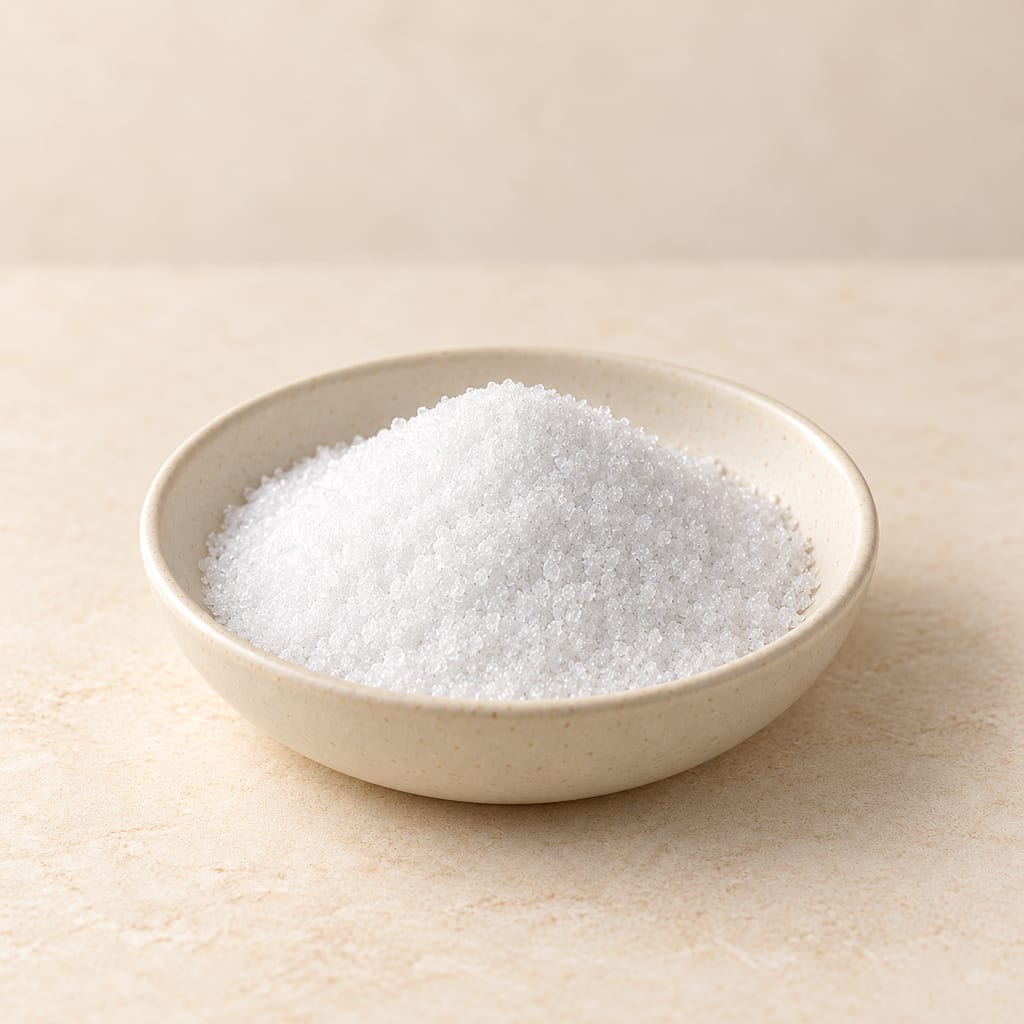
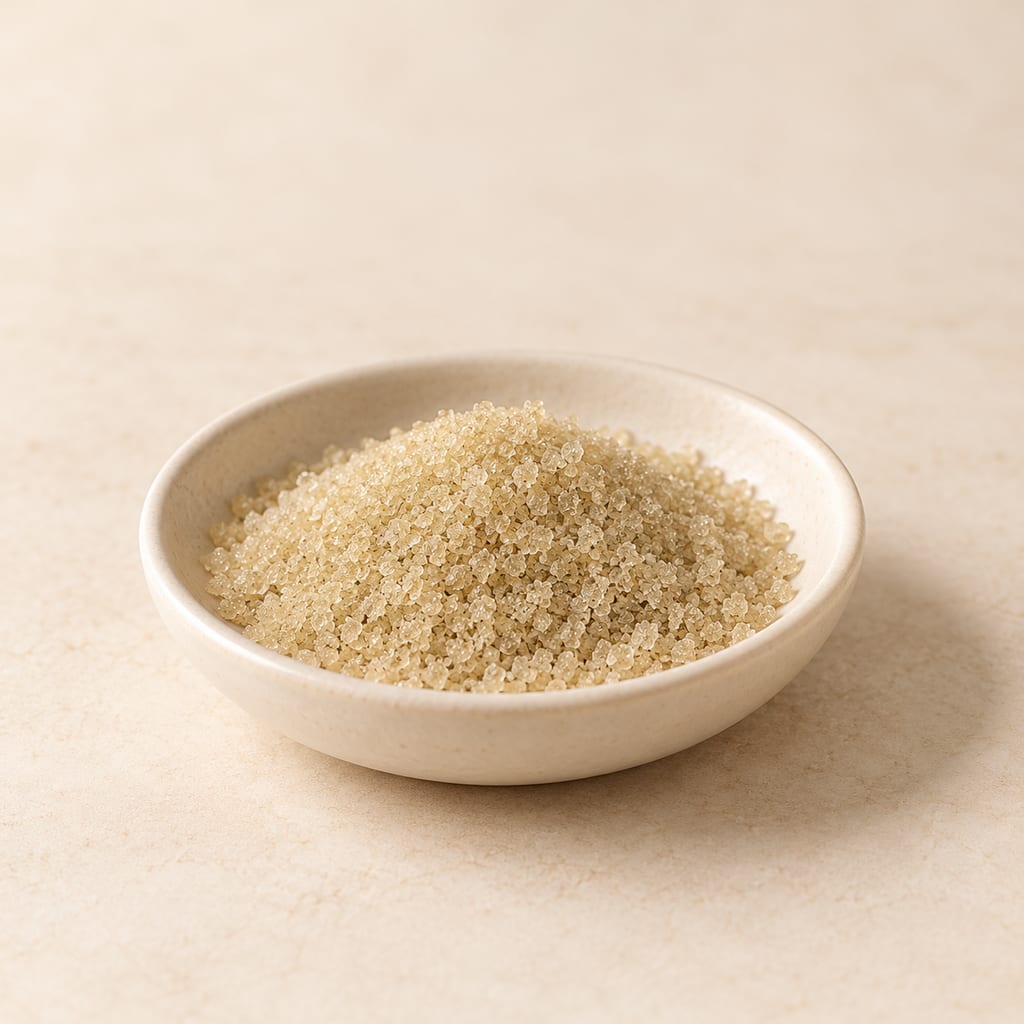
Crystalline D-glucose supplies fermentable carbohydrate to starter bacteria. Hydration state, starch source and product formulation remain relevant when selecting the powder.

Water recovered by evaporation and condensation, with much of its original mineral content left behind; selected recipes use it for culture preparation or brine.
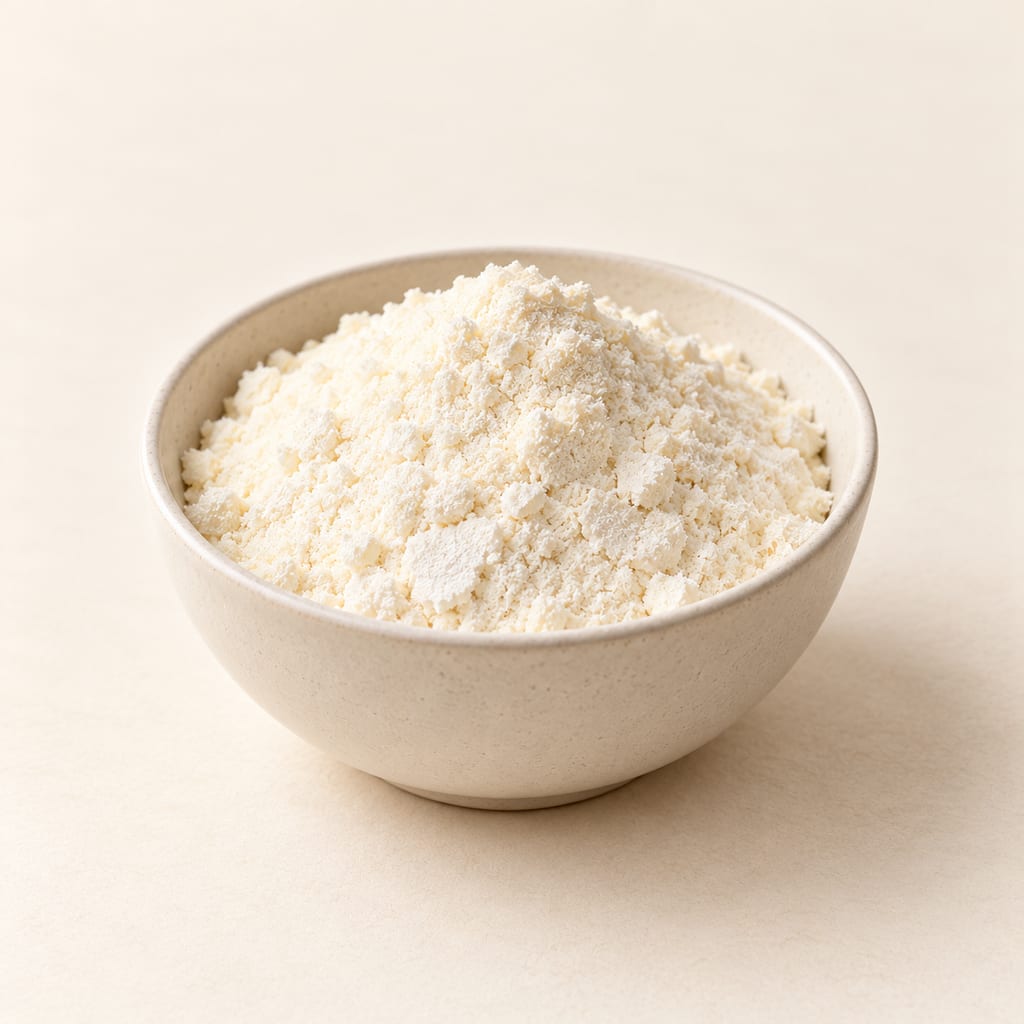
Dry milk is a family of dairy ingredients made by removing most water from milk or cream. The name includes distinct whole, partly skimmed and nonfat powders; fat level, heat treatment and particle form determine handling and use.
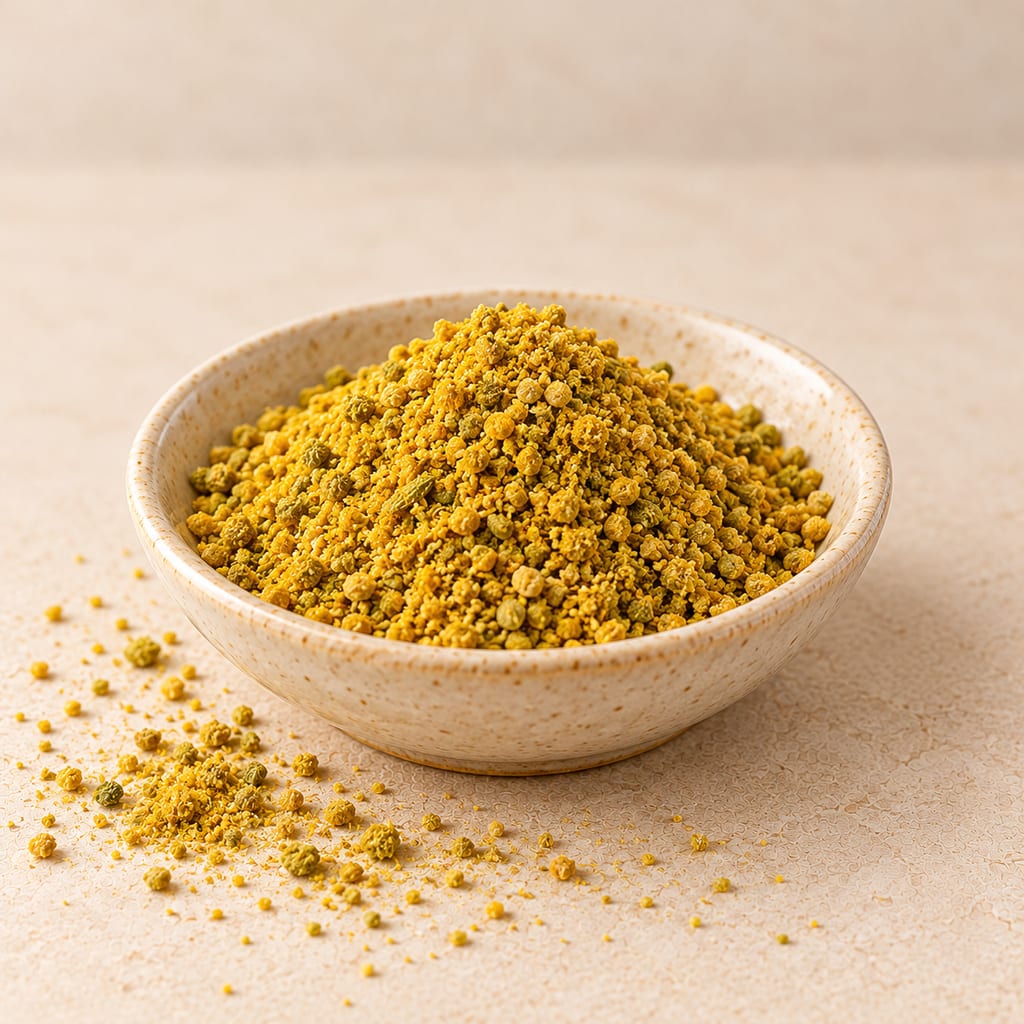
Fennel pollen is the fine, aromatic seasoning gathered from flowering fennel heads. The linked salumi recipes pair measured pollen with fennel seed; protected Finocchiona names seeds and/or flowers, not isolated pollen.
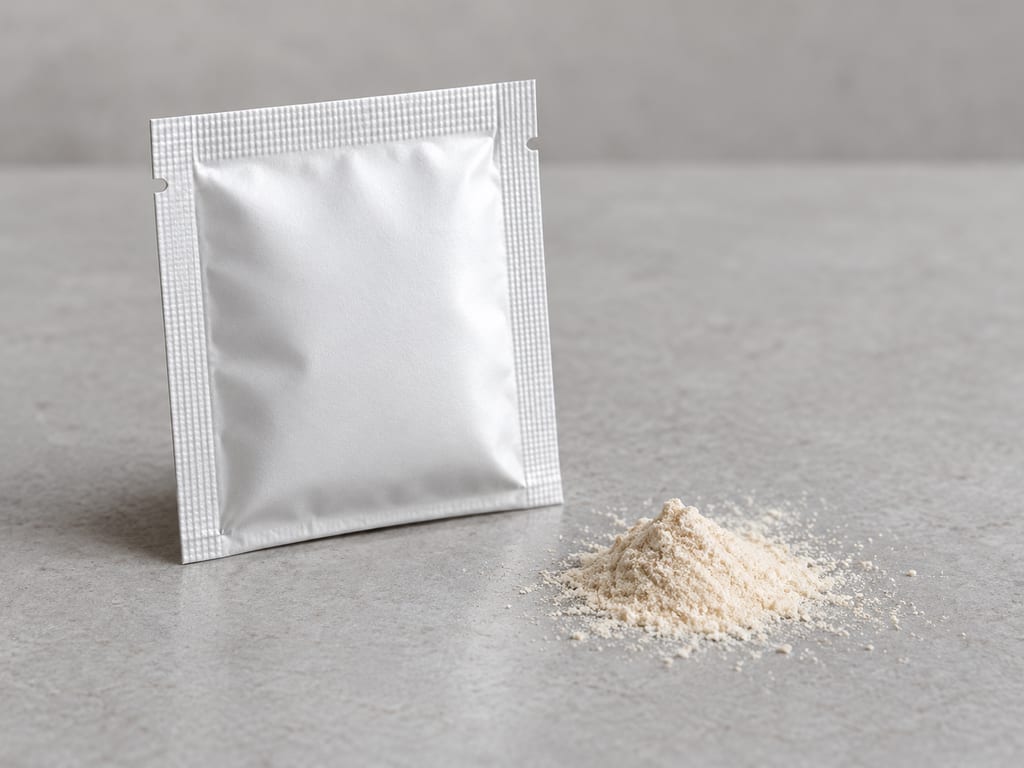
Flavor of Italy is a freeze-dried meat culture combining lactic acid bacteria with Staphylococcus carnosus to support sausage acidification, colour and aroma.
The Sausage Maker’s currently declared dry-curing blend contains salt, 6.25% sodium nitrite, 1% sodium nitrate and annatto. Its identity and role differ from plain salt and other Cure #2 formulations.
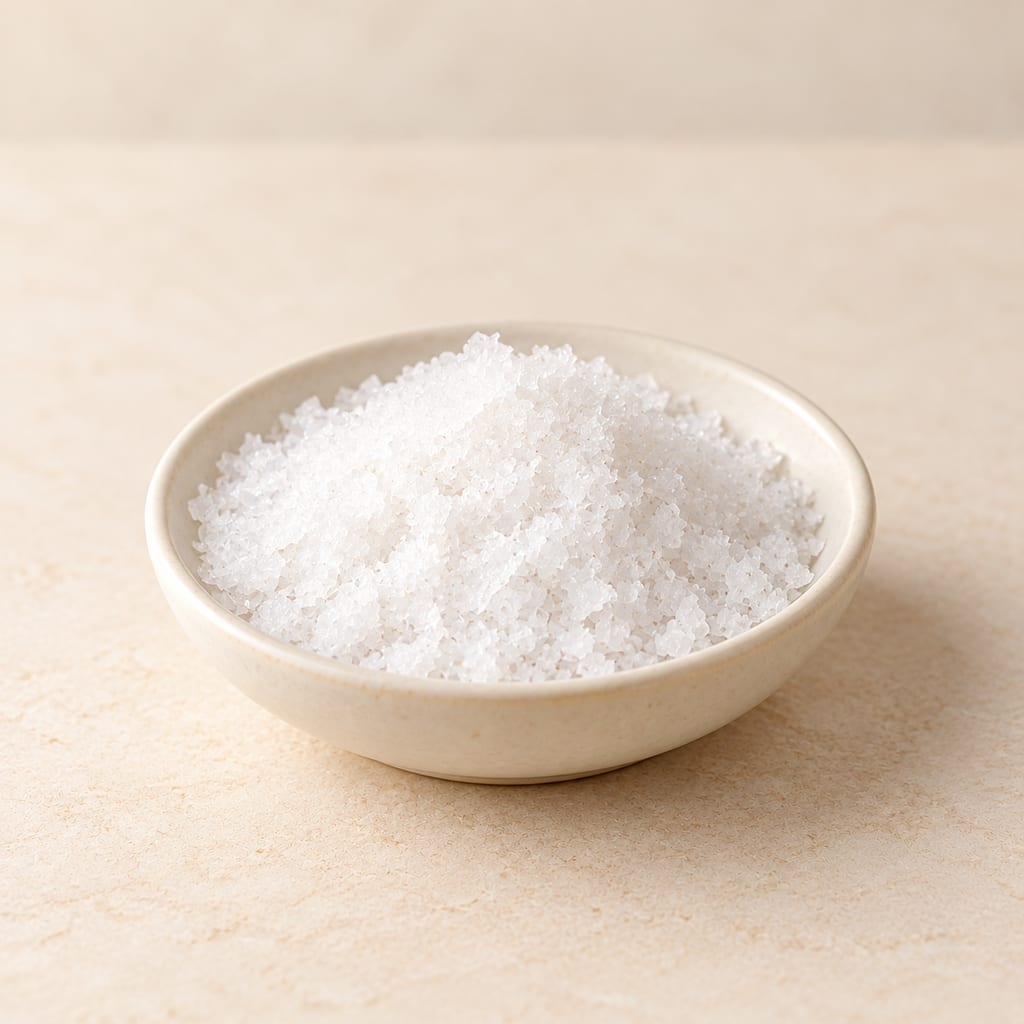
Coarse cooking salt named for its use in koshering meat. Its flakes vary by maker, so crystal shape, additives and the recipe’s unit all matter.
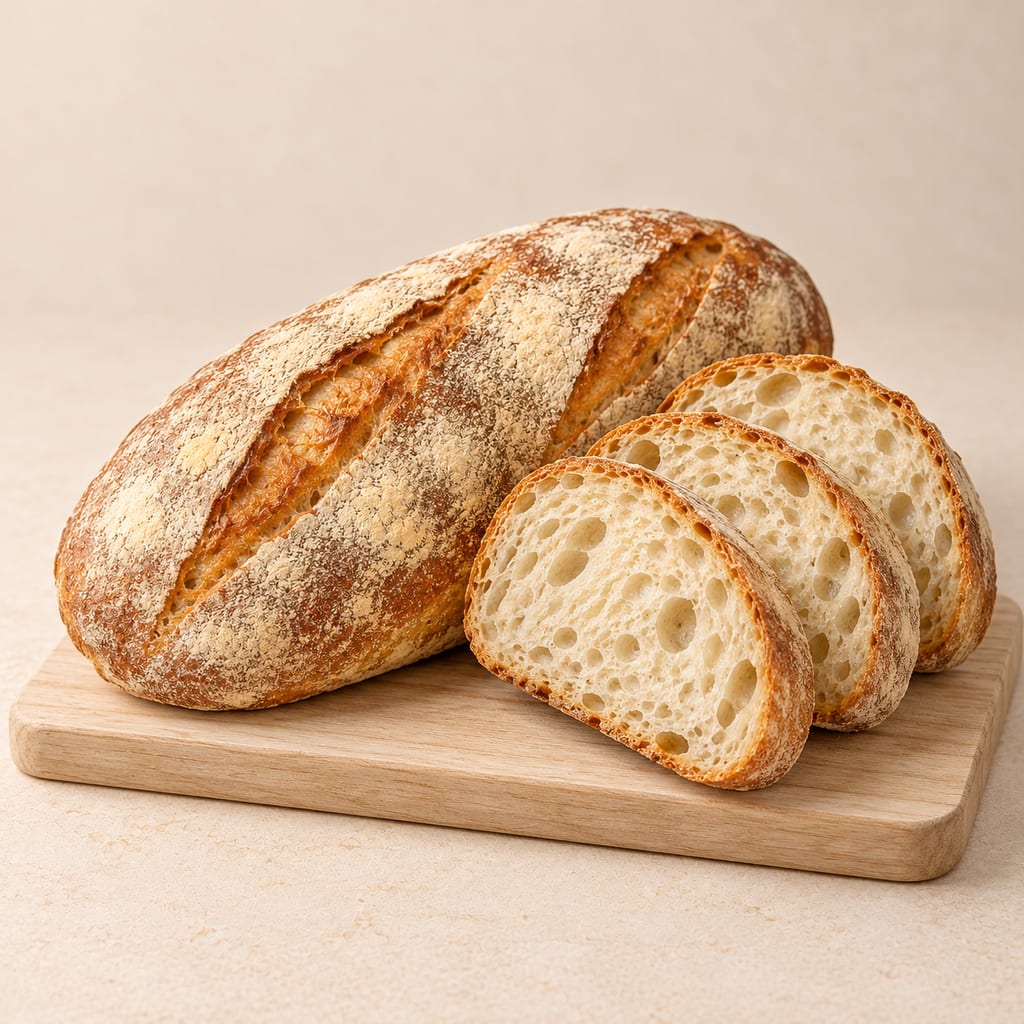
Tuscany's saltless wheat bread, leavened with a sourdough biga: a mild loaf with a crisp dark crust that was made to sit beside salty meats, cheeses and stews.

Dry salami, sour pork with rice, matured sheep and aged blubber follow different paths from animal to food. Their stories connect microbes with climate, slaughter, migration and the meals people share.

Soft, spreadable Calabrian pork sausage made with a great deal of red chilli and fatty pork, stuffed into natural casings, sometimes smoked and matured while staying soft.
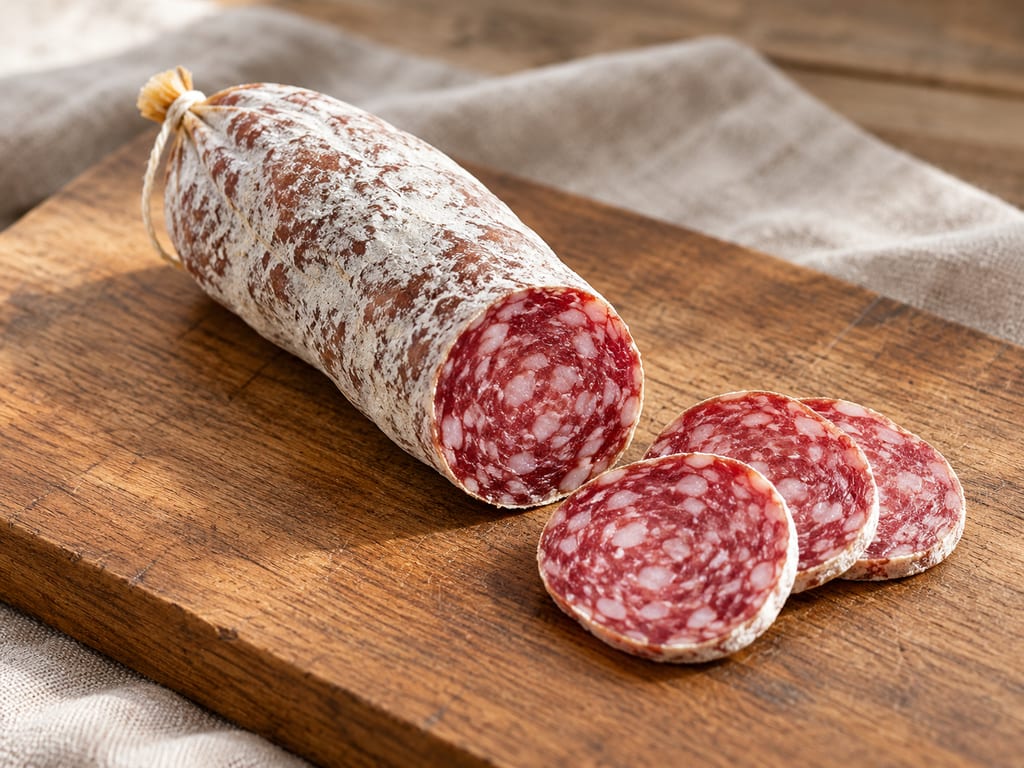
Small Italian hunter-style salami of lean pork, firm fat, salt, pepper and garlic, mildly acidified and dry-matured; protected as Salamini Italiani alla Cacciatora DOP.
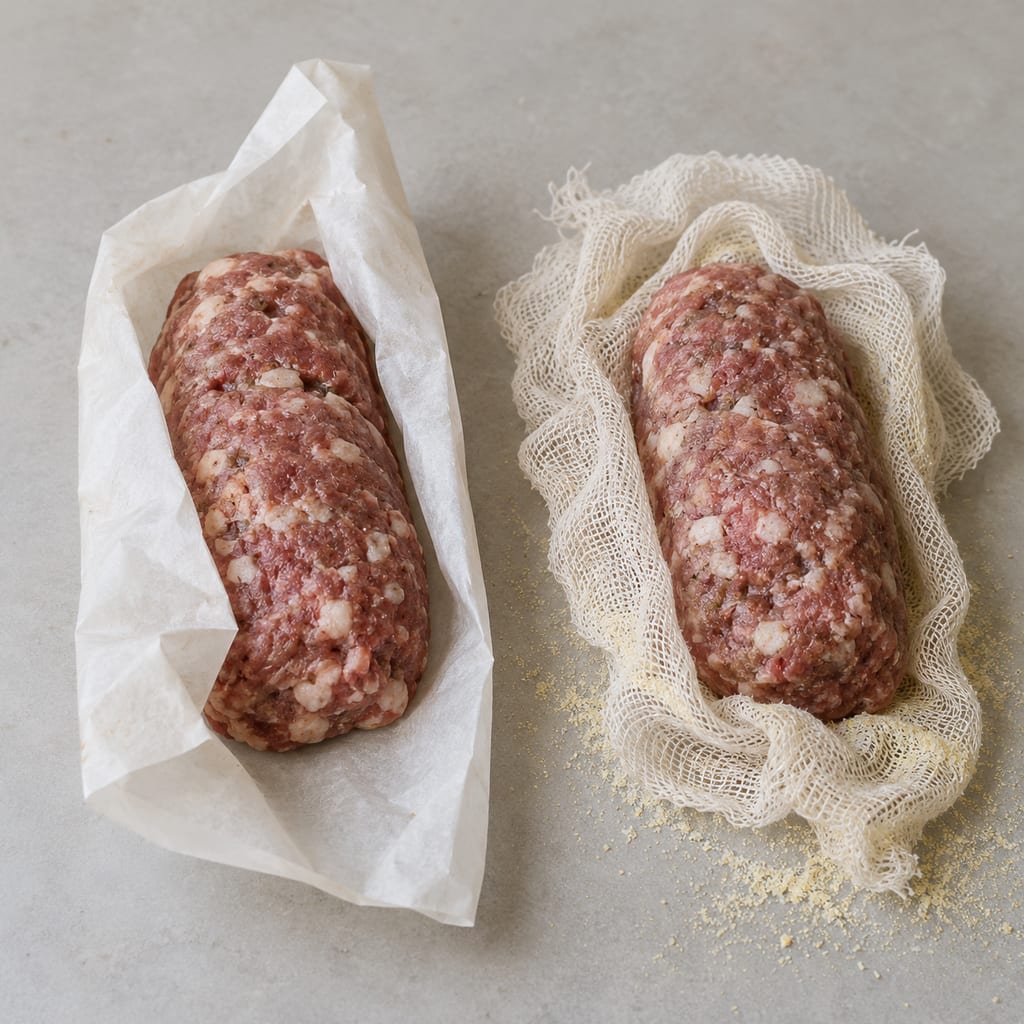
A documentary account of two modern Italian-language home-video experiments in salame without casings. Neither video establishes a safe preparation method or a ready-to-eat product.
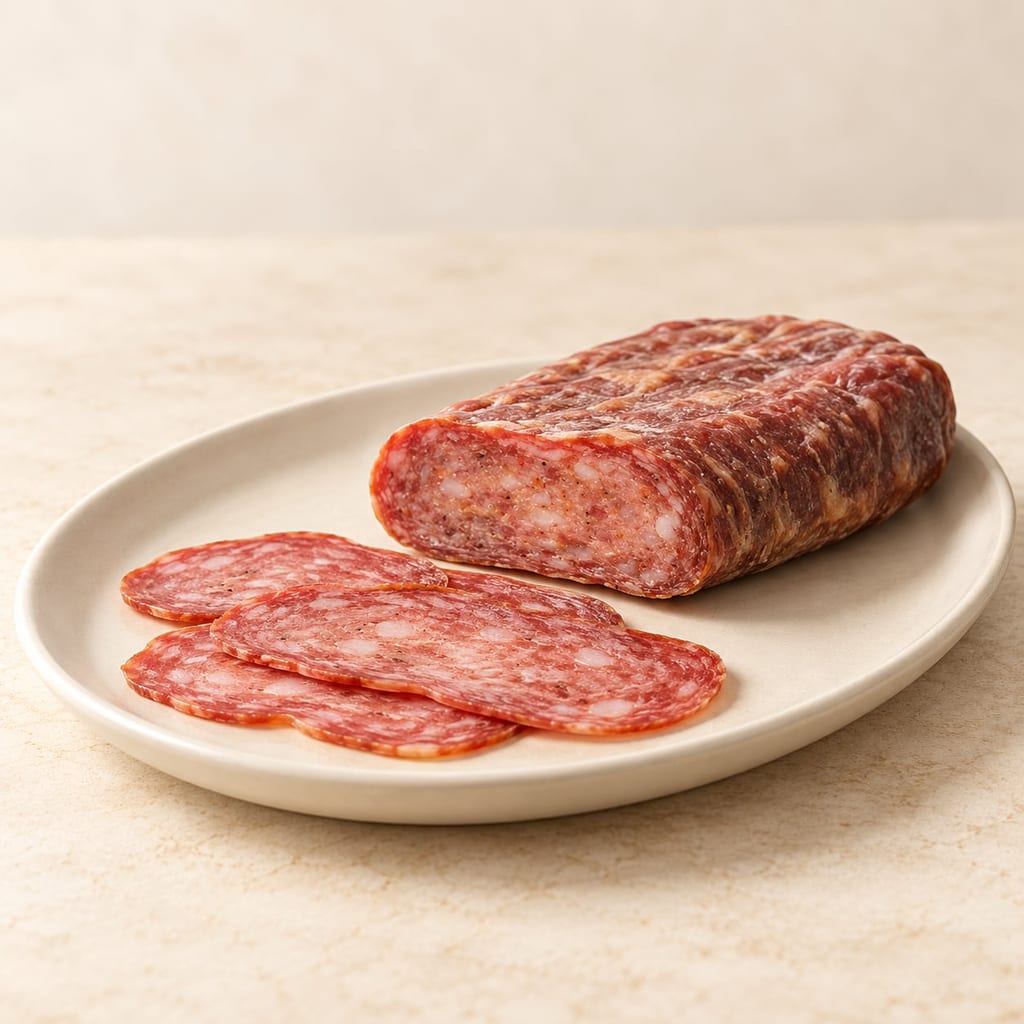
Calabrian soppressata is a flattened pork salami seasoned with pepper and wine. This entry documents a modern starter-cultured adaptation, not household instructions; the process lacks matched pathogen-reduction validation.
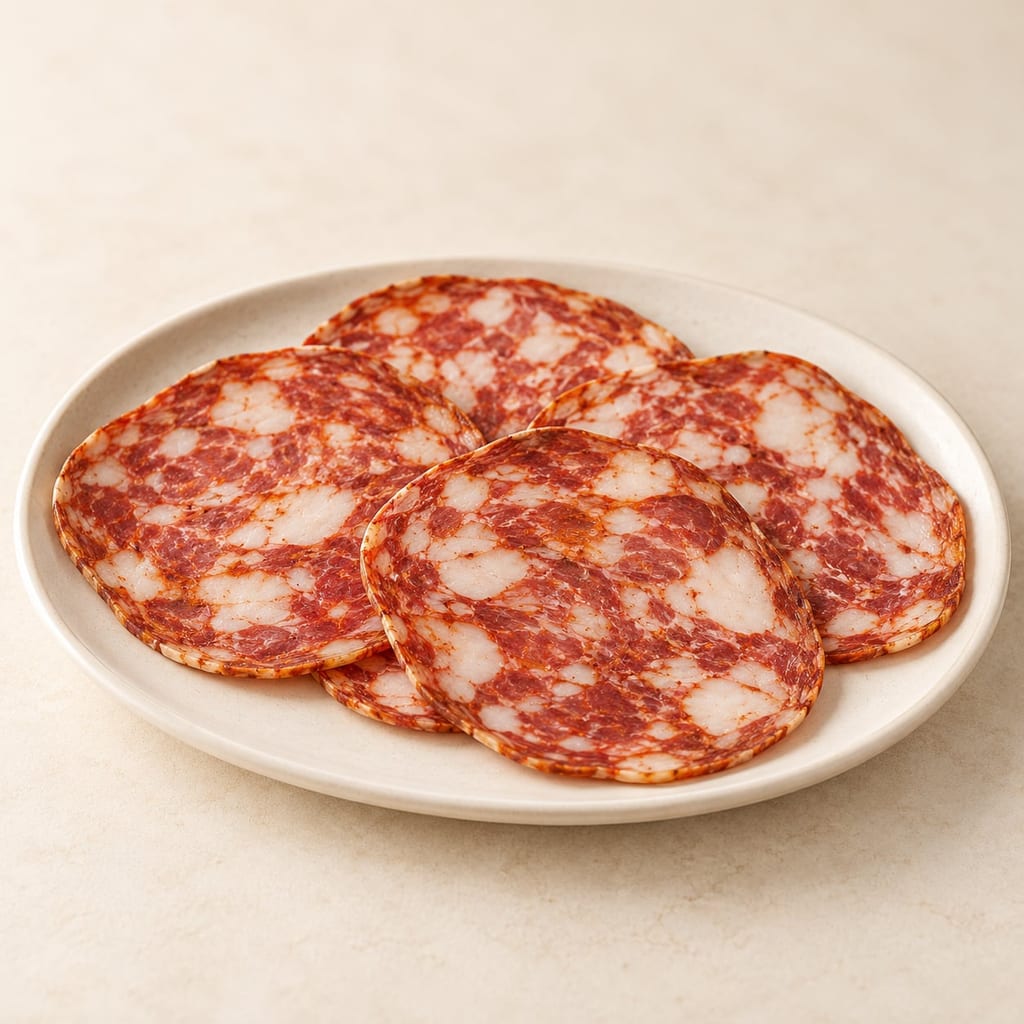
A documentary account of a modern ventricina-style salami source and its Abruzzese context. This page provides no preparation directions or validated home process.

A dark, balanced vinegar from Emilia-Romagna made by combining cooked or concentrated grape must with wine vinegar, then acetifying and refining it in wood under a protected specification.

Protected Italian vinegar made only from cooked grape must, fermented and aged in a battery of wooden barrels for at least 12 years: sweet, sharp and syrupy.
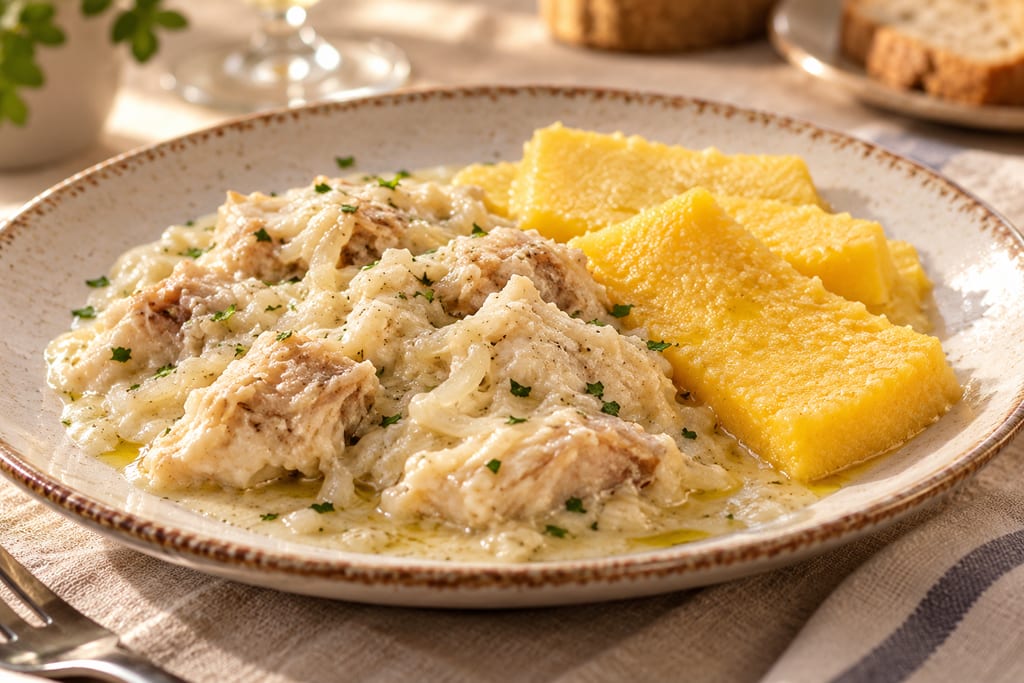
Stockfish from Vicenza, left barely bubbling for hours with onion, preserved anchovy, olive oil, milk and a little cheese until it is tender under a dense pale sauce, and eaten with polenta.
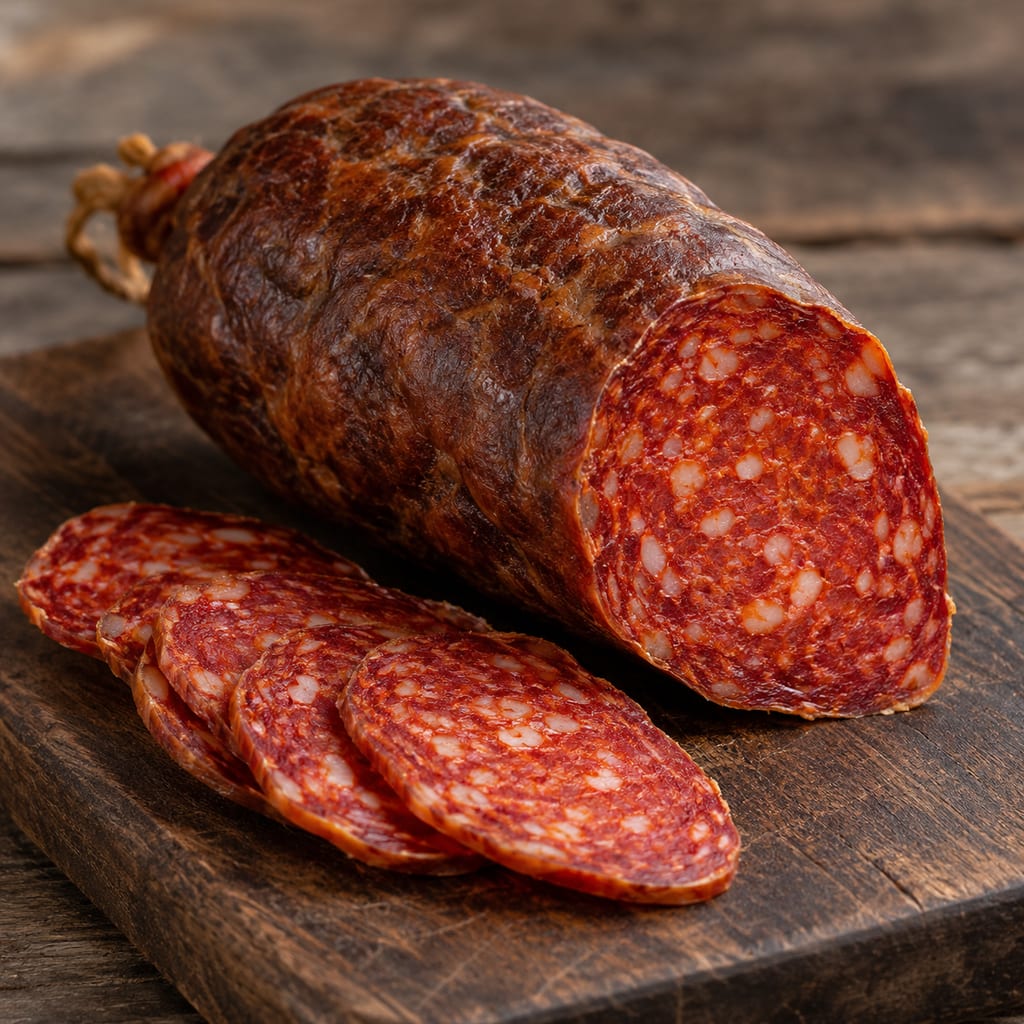
Baranjski kulen is a Croatian protected fermented pork sausage seasoned with sweet and hot paprika, garlic and white pepper, stuffed into a pig’s caecum called katica, cold-smoked and matured.
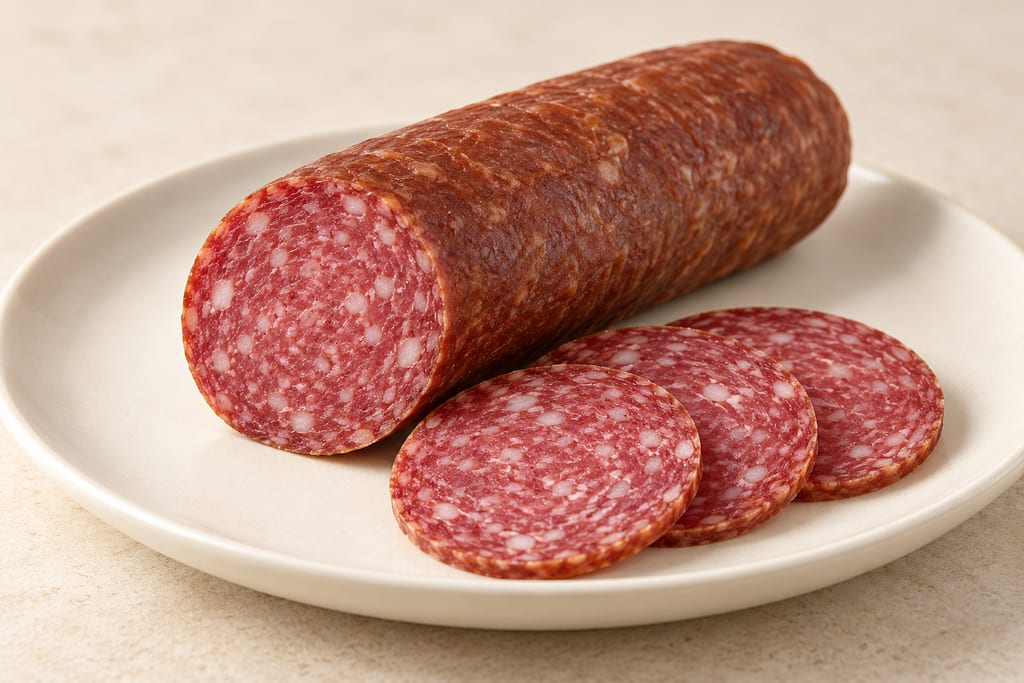
A family of salted minced-meat sausages fermented in casings, then dried and sometimes smoked. This description is not a validated household method; critical safety limits are not established.
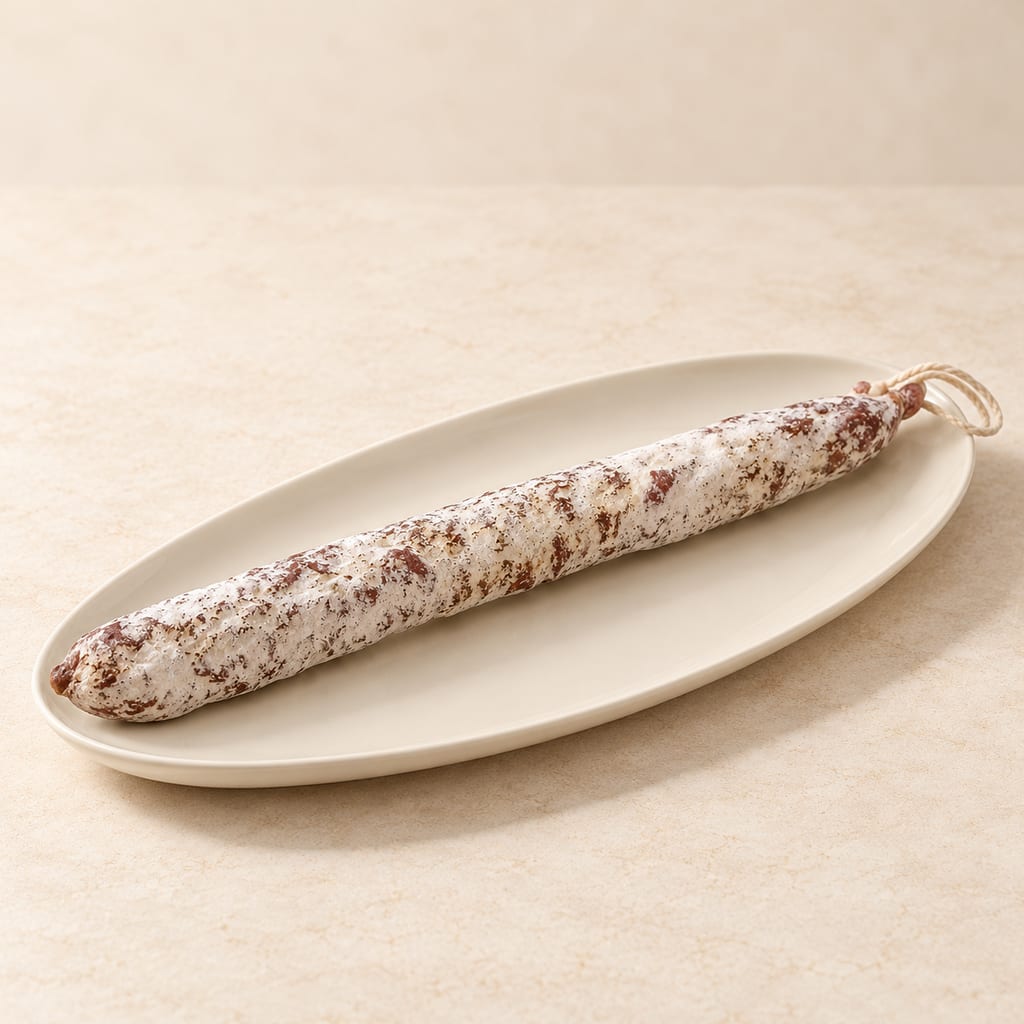
A documentary account of a modern starter-cultured Fuet formula and its place in Catalan sausage culture. The cited raw-pork process lacks matched safety validation, so this page does not present it as a household recipe.
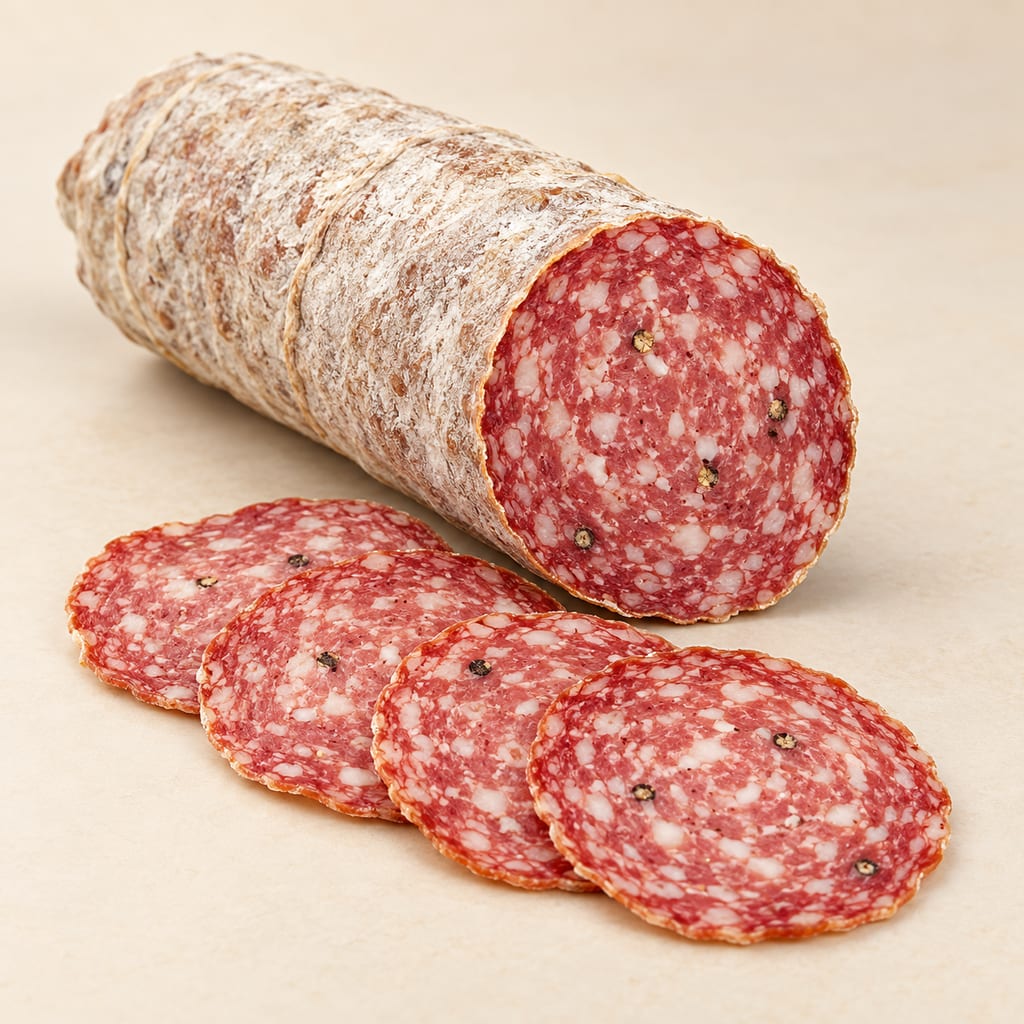
Pork, beef and back fat ferment with a named starter, cure and red wine before the sausages dry in casings. This contemporary formula uses no wood-smoke stage.
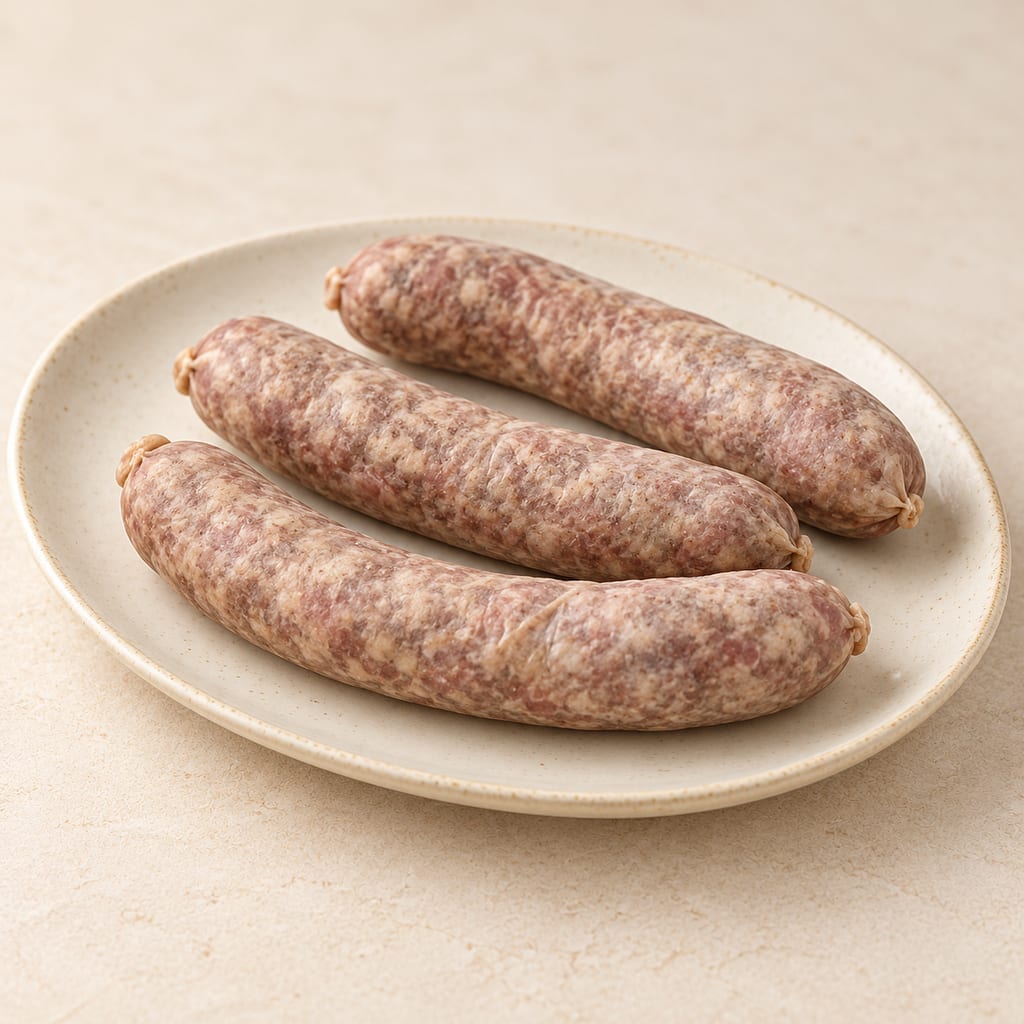
A documentary account of Maltese zalzett and a contemporary starter-cultured adaptation. The cited raw-pork method lacks documented validation for pathogen reduction and is not offered as a preparation recipe.
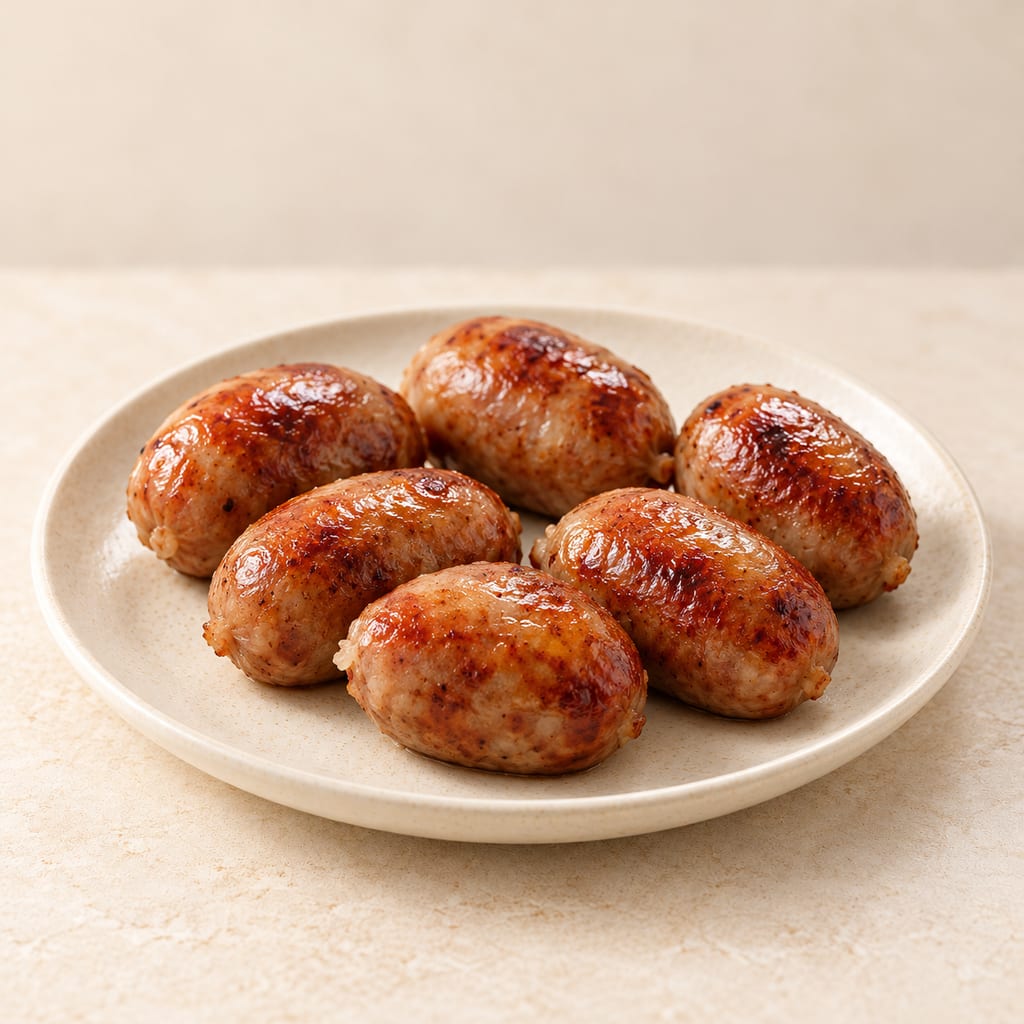
Sai krok Isan is a sour pork-and-rice sausage from northeastern Thailand. This garlic-rich version uses LHP-Dry starter and is cooked after fermentation.
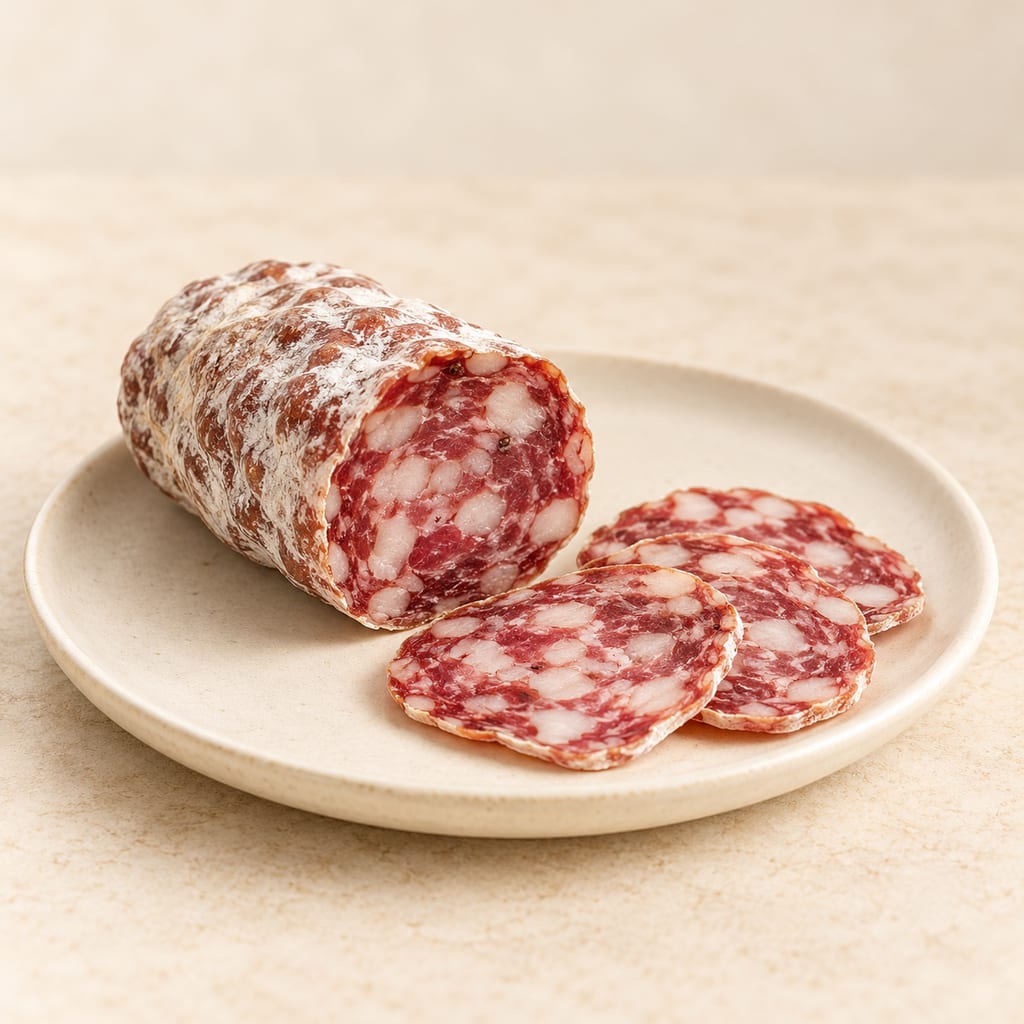
Saucisson sec is a French dry sausage of seasoned pork and fat. This version uses Flavor of Italy starter, white wine and an optional Mold 600 surface culture.

A Cap-Pelé boucanière is an Acadian herring-smoking building. The documented Willie Niles example is a one-storey wood-frame structure with a ridge smoke vent and interior bays for hanging fish-bearing cannes.

Achcharu is a family of Sri Lankan vinegar pickles made with mixed vegetables or seasonal fruit and a piquant spice dressing. This version is a quick, refrigerated, non-fermented mixed-vegetable pickle.

The acocote is a long, hollowed and dried gourd used to draw aguamiel from a mature maguey. It is a harvesting tool: the sap is transferred to a separate vessel before it ferments into pulque.

Adrak murabba preserves young ginger in sugar syrup, a sweet South Asian preparation recorded in Indian cookery and food-processing sources.

Parkia biglobosa seeds are fermented into regional West African seasonings, including nététou, iru, dawadawa and soumbala. The yellow fruit pulp is a separate food, and names and methods vary by place.

Japanese reddish-brown vinegar from sake lees matured about three years, turned to vinegar by acetic bacteria; the vinegar of Handa and Edomae sushi rice.

A refined common-wheat flour blended for a broad range of baking; its protein and behavior vary with wheat, milling and market.

The almond mushroom, Agaricus subrufescens, was cultivated in eastern North America in the 1800s, lost its market, and returned as a cultivated mushroom from Brazil, where it is grown under several names.
No community contributions have been published for this entry yet.
Sign in to contribute. Published comments and photos are free to read.
2 Guys & A CoolerProcess
How to Make Tuscan Finocchiona Salami2 kg formula, named cultures, grind, casing, fermentation and drying conditions.
Cited in: Why fennel defines the flavour; Reading the recipe's stages; Tradition and a contemporary adaptation; At the table
USDA FSISSafety
Ready-to-Eat Fermented, Salt-Cured, and Dried Products GuidelineProcessor-oriented hazard and validation context.
Cited in: The cultures and the transformation; Reading the recipe's stages; Tradition and a contemporary adaptation; Safety and what the measurements can tell you
BCCDCSafety
Fermented Foods Safety GuidanceGeneral fermented-food hazard context; not validation of this recipe.
Cited in: Safety and what the measurements can tell you
Consorzio di tutela della Finocchiona IGPHistory · Geography
La storia della FinocchionaTuscan identity, fennel aroma and reported 1875 Rigutini/Fanfani dictionary attestation; origin legends not treated as fact.
Cited in: A fennel salami rooted in Tuscany; A regional name with a documented history; Why fennel defines the flavour; Tradition and a contemporary adaptation; At the table
BC Centre for Disease ControlSafety
Fermented Food Guidance, Section 3.13: SausageSpecific fermented-sausage hazards and controls; not validation of this formulation.
Cited in: The cultures and the transformation; Safety and what the measurements can tell you
USDA FSISSafety
FSIS Ready-to-Eat Fermented, Salt-Cured, and Dried Products GuidelineOfficial training-hosted full guideline; process-matched validation, pathogen controls and degree-hours.
Chr. HansenIngredient identity
MOLD-600 Product Information, version 3Mold 600 is Penicillium nalgiovense; manufacturer sheet hosted by Hjemmeriet.