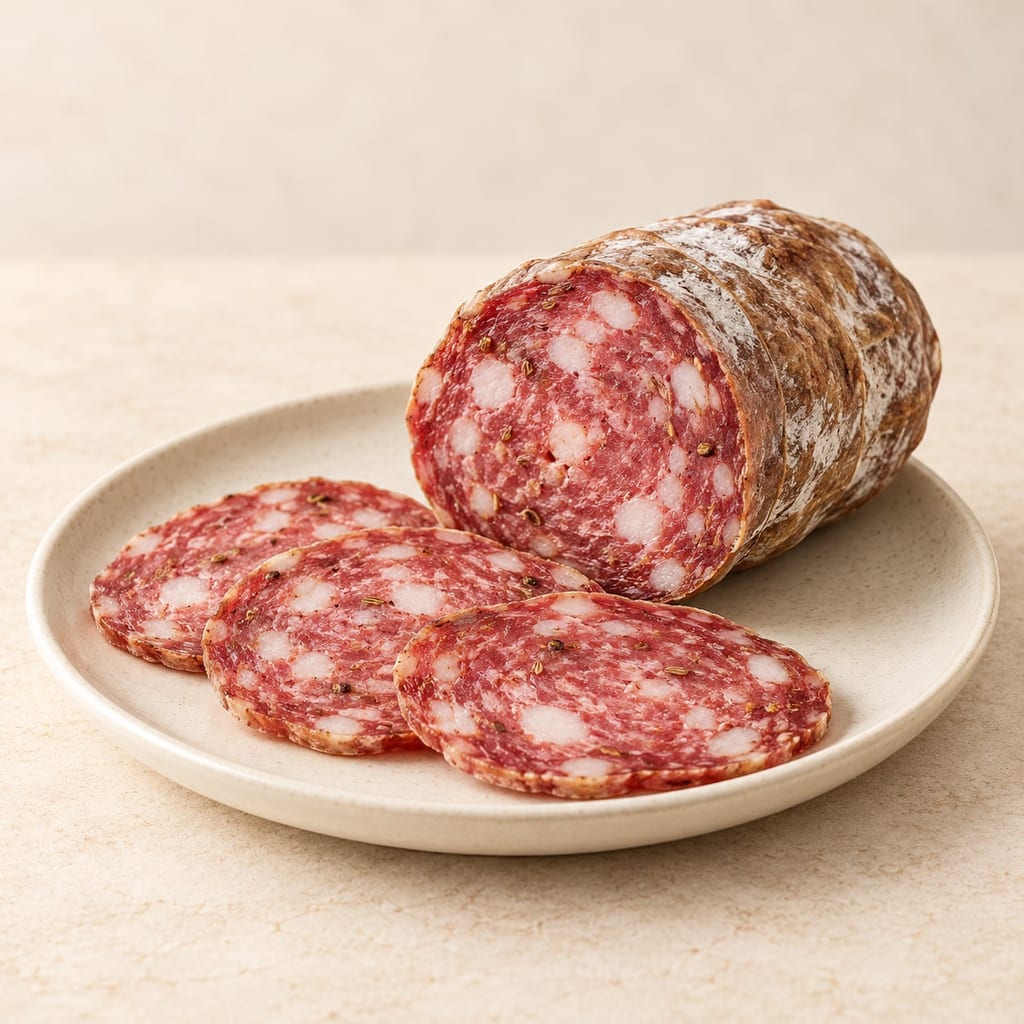
Finocchiona, starter-cultured
A Tuscan-style fennel salami made with pork and back fat. Toasted fennel, fennel pollen and Sambuca flavor this starter-cultured preparation.
 FermenteaWhere food goes to change
Salt
The Sausage Maker’s currently declared dry-curing blend contains salt, 6.25% sodium nitrite, 1% sodium nitrate and annatto. Its identity and role differ from plain salt and other Cure #2 formulations.
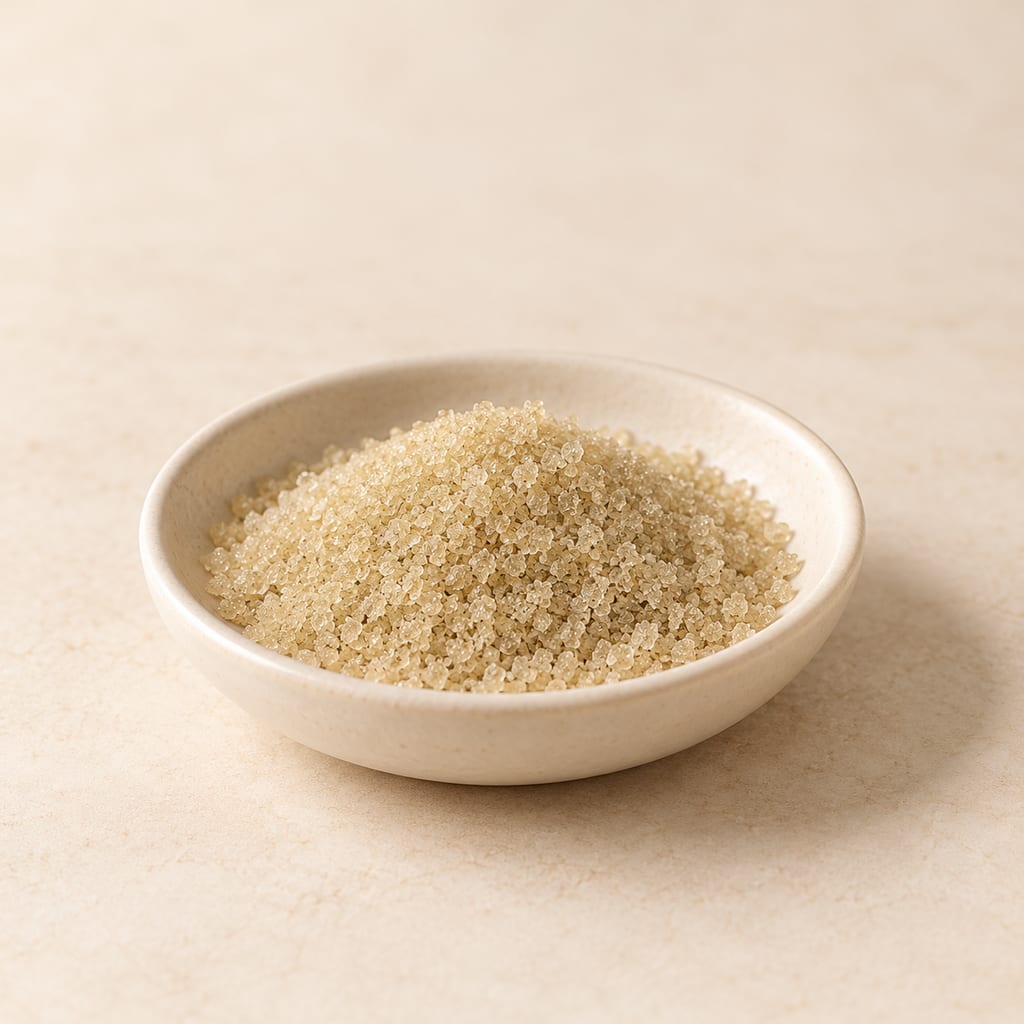
Insta Cure #2 is a formulated meat-curing blend sold by The Sausage Maker for dry-cured products. It brings salt together with sodium nitrite, sodium nitrate and a colorant. Its purpose is different from that of the plain salt, sugar or bacterial starter that may appear beside it in a sausage recipe. The quantity can be small, but its identity is a consequential part of the formulation.
The current naturally colored product lists sodium nitrite at 6.25% and sodium nitrate at 1%, alongside salt and annatto. Those percentages describe this manufacturer's product. They are not amounts to add directly to meat, and they should not be read as the composition of every material called Cure #2. The packet is a prepared ingredient whose contents must match the process in which it is used.
The name also connects a modern commercial blend with an older practice. Salted meat preservation developed long before makers could explain all the chemical changes within it. Nitrate-containing curing materials and later directly added nitrite became part of that history. A numbered blend makes those components explicit, giving a maker a named ingredient rather than leaving the curing agent hidden within an uncertain salt supply.
Salting changes a meat's water environment, while the compounds involved in curing can also change its color and aroma. These effects were encountered in food before their mechanisms were understood. The eventual distinction between nitrate and nitrite helped explain why a curing material could do more than make meat taste salty.
By the 1920s, nitrite and nitrate were being used in commercially cured meats. Their use belonged increasingly to a system of specified ingredients and controlled quantities. The modern curing blend continues that emphasis on identification: the maker needs to know which compounds are present, their proportions and the food process for which the product is intended.
This history does not give the present Insta Cure #2 a remote invention date. A current brand, formulation and colorant are particular commercial choices. Nor does a long history of curing make every cured food one process. A whole muscle, a fermented sausage and bacon prepared for cooking differ in ingredients, physical form and later handling. The chemistry helps explain their relationship while their individual methods remain distinct.
Within The Sausage Maker's current line, Insta Cure #1 supplies sodium nitrite with salt and annatto, while #2 also contains sodium nitrate. The additional nitrate is the defining distinction relevant to extended dry-curing applications. It provides material that microorganisms can convert into nitrite during the process, rather than simply making #2 a stronger version of ordinary cooking salt.
Other sellers use overlapping names. Modernist Pantry's Prague Powder #2 lists sodium nitrite at 5.67% and sodium nitrate at 3.63%, with salt and FD&C Red #3. That is a separate formulation. Similar product names therefore do not establish identical proportions, colorants or directions. The number identifies a category of use, while the manufacturer and ingredient statement identify the actual product.
This matters when reading a recipe written at another time or bought for another market. A line naming Insta Cure #2 establishes a required ingredient name; the package in hand still needs to be identified. A label, supplier specification and the associated instructions provide information that the general phrase pink salt cannot. Preserving that precision prevents a branded blend from being reduced to an anonymous spoonful of salt.
Nitrate and nitrite are chemically distinct. Nitrate reduction is an enzymatic activity performed by suitable microorganisms in a meat system. It converts nitrate into nitrite, making the nitrate a potential continuing source of a compound directly involved in curing reactions. The conversion depends on organisms and conditions, rather than on a fixed calendar built into the powder.
Meat-associated staphylococci are among the organisms studied for this activity. Experiments in cured-meat model systems have shown differences between strains in nitrate-reductase activity and pigment formation. Those findings explain why microbial identity matters to the conversion. They do not mean every strain present in any sausage performs the reaction at the same rate.
The familiar time-release description is a convenient image for the intended extended role, but the underlying process is biological and chemical. Nitrate first has to be reduced, and the resulting nitrite then participates in further reactions. The starter culture, raw meat and developing environment are consequently relevant alongside the ingredient label. A powder alone does not set a predictable schedule of conversion throughout every kind of dry-cured meat.
Myoglobin is an iron-containing pigment in muscle. Nitrite-derived nitric oxide can interact with its heme group to form the characteristic cured-meat pigment, commonly described as nitrosylmyoglobin. Acidity, temperature and the chemical environment affect the reactions. This is a change within the meat, rather than a stain applied to its surface by the pink color of the curing blend.
The distinction is easy to miss when a packet and a sausage both have a pinkish appearance. The blend's colorant helps distinguish the ingredient from ordinary salt. The meat's cured color arises through reactions involving its pigment. Annatto in the current Insta Cure product and nitrite-derived nitric oxide therefore have different jobs in the story of color.
Raw cured meat and heated cured meat also pass through different pigment chemistry. That is one reason the processing stage matters when comparing salami, ham and bacon. A visually pleasing cured color describes a sensory characteristic; it is not a measurement of how much nitrite remains or a record of all the conditions the meat has experienced.
Nitrite contributes to the characteristic flavor of cured meat and can help limit rancidity. Those functions sit alongside its part in color formation. The finished aroma still depends on meat, fat, seasoning, microorganisms and maturation, so curing is not a single flavor compound replacing everything else in the recipe.
Its antimicrobial role is another distinct function. Nitrite helps inhibit Clostridium botulinum growth and toxin production in appropriately designed curing systems. The wider environment matters: salt, acidity, water activity and other ingredients interact with nitrite's effects. Fermented and dried meat production uses several such controls together because raw materials and organisms vary.
The separate stages in a sausage method reflect that division of work. A bacterial starter converts suitable carbohydrate into acids; salt affects the meat proteins and water phase; drying removes water; the curing blend participates in additional chemistry and microbial inhibition. Understanding these roles explains why the ingredients are measured separately and why adding cure is not the same operation as fermenting or drying the meat.
A commercial curing blend dilutes its active curing components within a salt-based ingredient. Purchasing that premix avoids treating a concentrated curing compound as if it were an ordinary kitchen seasoning. The product's declared composition is the starting point for selecting a method that names it, while the recipe provides the quantity and handling for the food being made.
Distribution then matters within the food. A batch of minced meat contains lean particles, fat and other additions; mixing is intended to distribute the measured ingredients throughout it. A curing component left unevenly dispersed would not be represented by the appearance of the outside of a stuffed sausage. The relationship between an ingredient's overall mass and its location within the mixture is part of why careful preparation precedes fermentation.
This is separate from the manufacturer's own blending process. A product name and ingredient list identify what is sold but do not provide a factory mixing procedure, batch assay or certificate for every packet. The useful consumer information is the exact product, its declared formulation and its instructions, retained together instead of separating an unlabelled powder from the information that identifies it.
A dry-sausage formula can list Insta Cure #2 and plain salt on separate lines. The common salt contributes its own amount to seasoning, protein binding and the water environment. The curing blend supplies nitrite and nitrate as part of its measured addition. The presence of salt in the blend does not erase the separately specified plain-salt ingredient.
Mineral pink salt belongs to another category: it is a different product from a curing blend. Similarly, a white cooking salt is not made into Cure #2 by grinding it more finely. A shared color or crystal appearance cannot replace the ingredient statement.
The current naturally colored Insta Cure #2 also illustrates the limits of the phrase no red dye. The manufacturer identifies annatto as its colorant and specifies the absence of synthetic red dye. The product is colored; the statement concerns the kind of coloring used. Other products can use a different colorant without sharing this formulation, so the appearance of the powder should be treated as an aid to identification rather than its complete definition.
The Sausage Maker specifies its current #2 for dry-cured products and excludes it from brine or wet curing. That is a product-use distinction, not a general instruction to substitute it wherever a recipe mentions salt. The numbered cure, its composition and the associated food method need to be considered together.
A dry salami intended for an extended maturation differs from bacon that will be fried. Oregon State's home-bacon guidance does not recommend nitrate-containing Cure #2 blends for its bacon methods because high-temperature cooking can promote the formation of nitrosamines. A method designed around a nitrite-only curing ingredient is therefore not a place to insert a nitrate-containing blend merely because both packets are called curing salt.
Curing blends carry nitrite and nitrate and belong only in the amounts a product-matched method gives. Follow a researched, product-matched formulation and the actual package instructions; do not estimate an addition by color, flavor or an unmarked household spoon. Manufacturer usage charts and jurisdiction-specific limits belong to their stated applications. They are not a universal dose to copy into every sausage or whole-muscle preparation.
The physical form of the food also affects how those instructions are carried out. In minced sausage, cutting and mixing expose and combine many small pieces of muscle and fat before the casing is filled. A whole-muscle preparation has a different geometry and must receive a method designed for that form. A curing blend can appear in both kinds of food without making their ingredient application, distribution or maturation steps interchangeable.
Store and handle the product with its original identification and instructions available. Curing blends need to remain distinguishable from table salt and other white or pink powders. Check the number, manufacturer and formulation when selecting the ingredient, rather than relying on the appearance of a container used on a previous occasion.
Allergen and dietary information should also come from the actual product. An ingredient statement naming salt, sodium nitrite, sodium nitrate and annatto does not substitute for a manufacturer's allergen declaration or cross-contact information. A declaration supplied for another seller's Prague powder applies to that product, not automatically to Insta Cure #2.
The recipes that use the blend retain their own ingredient quantities and methods. They show the blend in a system of meat, fat, salt, sugar and cultures whose distinct roles combine during curing and maturation. The measured preparation, with its quantities and method, belongs to each recipe.
A storage interval and a complete allergen declaration come from the manufacturer of the packet in hand. A packet bought earlier may not match the current annatto formulation, so read its own label.
Obtain the allergen and cross-contact declaration for the exact packet from its manufacturer. Nitrite and nitrate handling requirements are separate from food-allergen identity.
Unknown manufacturing site and supplier lot for the product in linked recipes; the vendor address does not establish a production origin.
A Tuscan-style fennel salami made with pork and back fat. Toasted fennel, fennel pollen and Sambuca flavor this starter-cultured preparation.
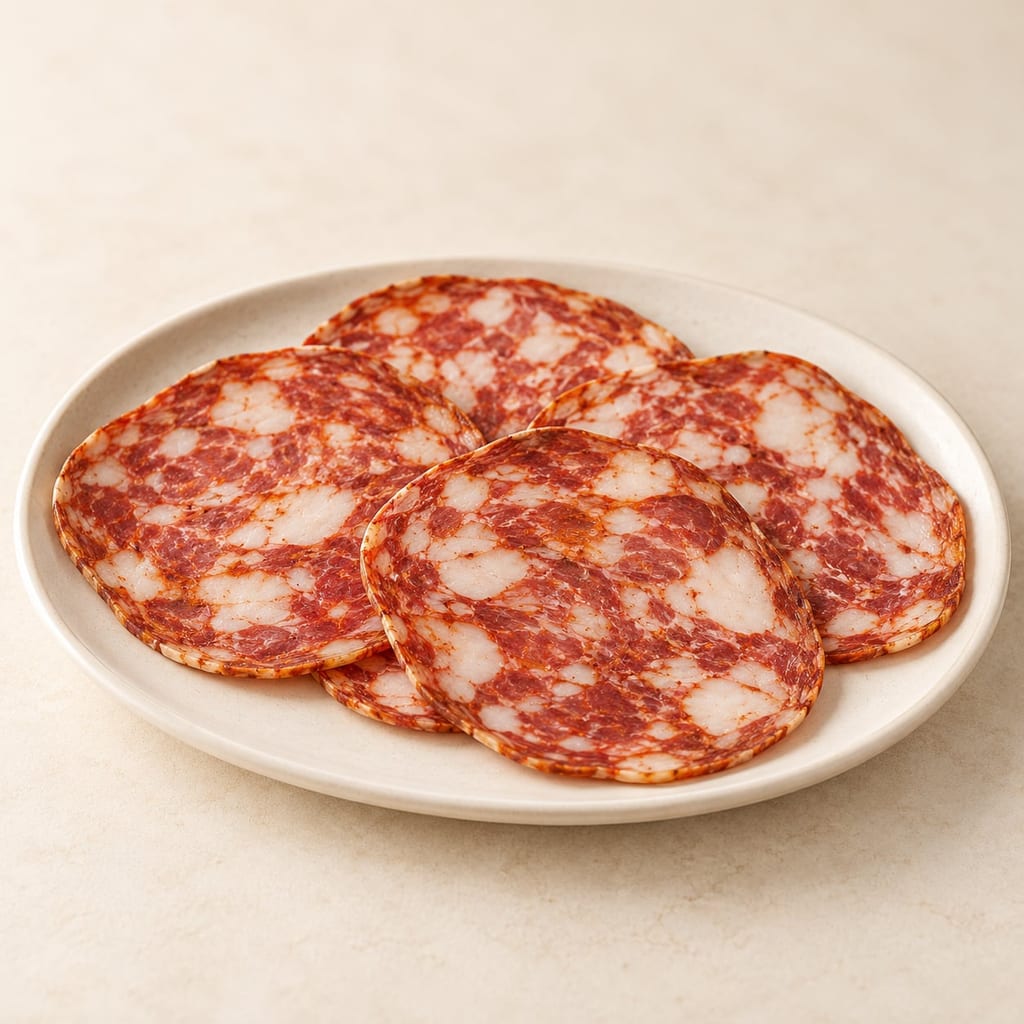
A documentary account of a modern ventricina-style salami source and its Abruzzese context. This page provides no preparation directions or validated home process.
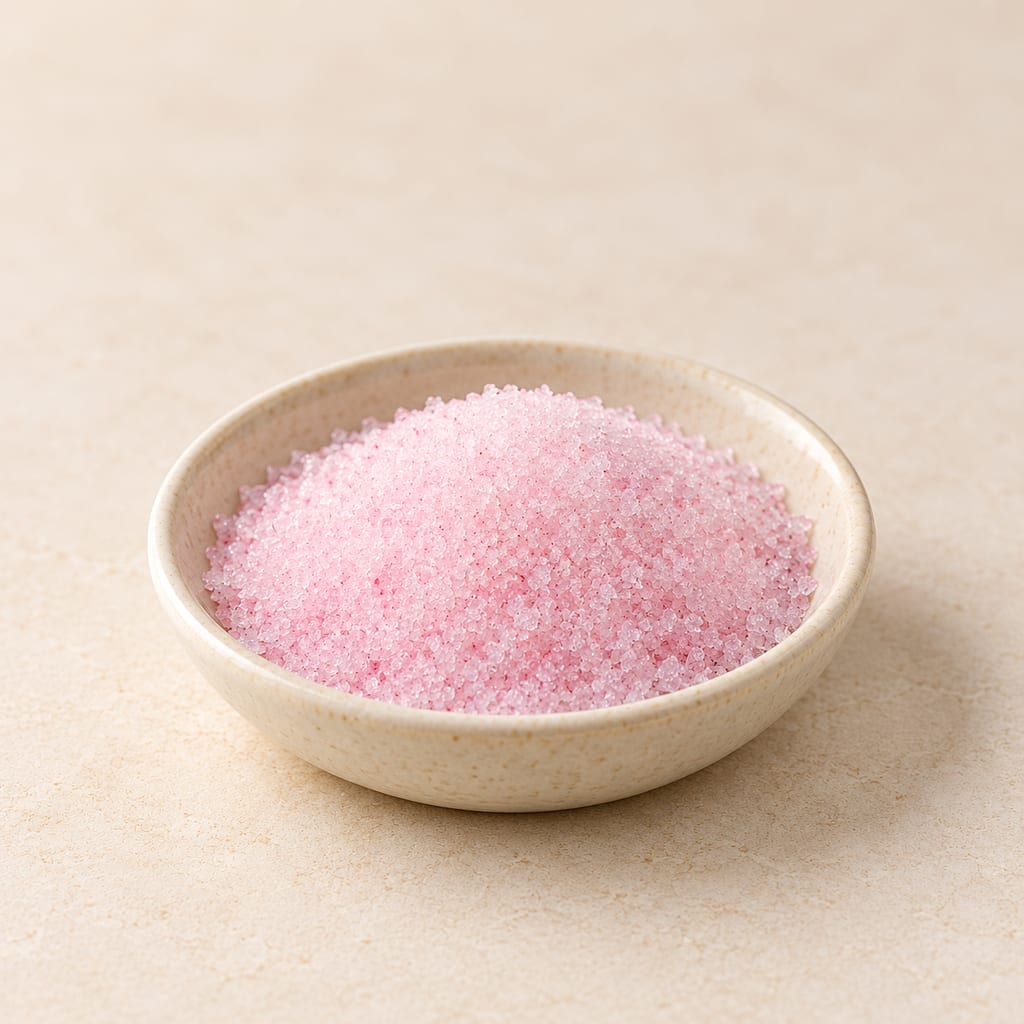
Curing salts are measured blends of sodium chloride with sodium nitrite, or nitrite and nitrate, used to cure meat. Cure #1, Cure #2 and proprietary mixes differ in composition and in the processes they suit.
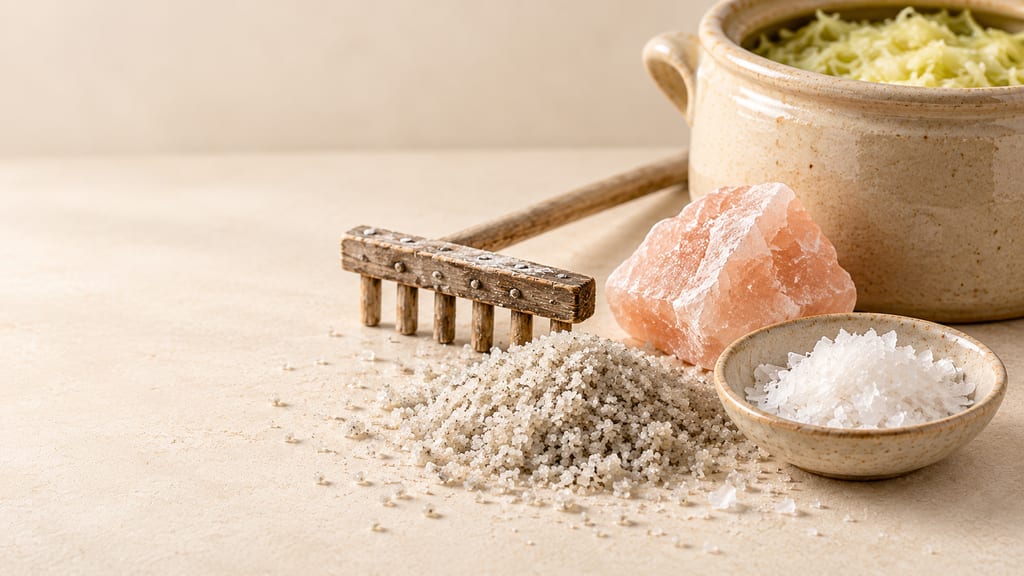
Salt seasons a meal, shapes fermentation and preserves food. Its history follows the people who mine, harvest, trade and transform it, and the choices hidden inside an ordinary packet.
No community contributions have been published for this entry yet.
Sign in to contribute. Published comments and photos are free to read.
The Sausage MakerIdentity · Science
Insta Cure #2, Naturally Colored (No Red Dye)Current formula sodium nitrite 6.25%, sodium nitrate 1%, salt and annatto; dry-curing intended use, excludes brine/wet curing. No dose chart transferred.
Cited in: A small ingredient in a long process; What the number distinguishes; Plain salt, mineral pink salt and numbered cure; Choose a method that names the product; Keep the ingredient's identity with it; Check the packet in hand
The Sausage Maker / Miroslaw StanuszekIdentity · Science
Curing Salts Explained: Insta Cure #1, #2, Natural EcocureCurrent #1 versus #2 distinction. Blog date not product launch.
Cited in: What the number distinguishes
Modernist PantryIdentity · Science
Prague Powder #2Separate product: 5.67% sodium nitrite, 3.63% sodium nitrate, salt and FD&C Red #3. Original-package identification; not target product allergen evidence.
Cited in: What the number distinguishes; A premix and its distribution; Keep the ingredient's identity with it
Oregon State University Extension / Joy Waite-Cusic and Jared Hibbard-SwansonIdentity · Science
Making cured bacon at home, PNW 784Page 2: commercial nitrite/nitrate curing by 1920s, pigment/flavor/rancidity and C. botulinum inhibition; distinguishes pink mineral salt and cure; nitrate cure not recommended for these bacon methods due high-temperature nitrosamine concern. No bacon process, dose or limits transferred.
Cited in: A small ingredient in a long process; From salting to identified curing agents; How cured meat acquires its color; Flavor, oxidation and microbial control; Plain salt, mineral pink salt and numbered cure; Choose a method that names the product
Food and Agriculture OrganizationIdentity · Science
Meat as raw material, non-meat ingredients and basic techniques in meat processingMyoglobin/nitric oxide curing pigment; salt and mixing, minced versus whole-muscle physical form.
Cited in: How cured meat acquires its color; A premix and its distribution; Plain salt, mineral pink salt and numbered cure; Choose a method that names the product
NSW Food AuthorityIdentity · Science
Uncooked comminuted fermented meat manufacturersNitrate microbial reduction to nitrite, premix and separate interacting process controls. No legal numerical limits transferred.
Cited in: Nitrate must become nitrite; Flavor, oxidation and microbial control; A premix and its distribution
International Journal of Food Microbiology / Gøtterup and colleaguesIdentity · Science
Relationship between nitrate/nitrite reductase activities in meat associated staphylococci and nitrosylmyoglobin formation in a cured meat model systemPrimary abstract: nitrate reductase activity and pigment formation are strain-dependent in a model system. No strain count or batch rate is given.
Cited in: Nitrate must become nitrite; How cured meat acquires its color
Meat Science / Majou and ChristieansIdentity · Science
Mechanisms of the bactericidal effects of nitrate and nitrite in cured meatsAbstract: the effects of nitrite depend on pH, salt, oxygen, water activity and other compounds, and the mechanisms remain uncertain.
Cited in: Flavor, oxidation and microbial control