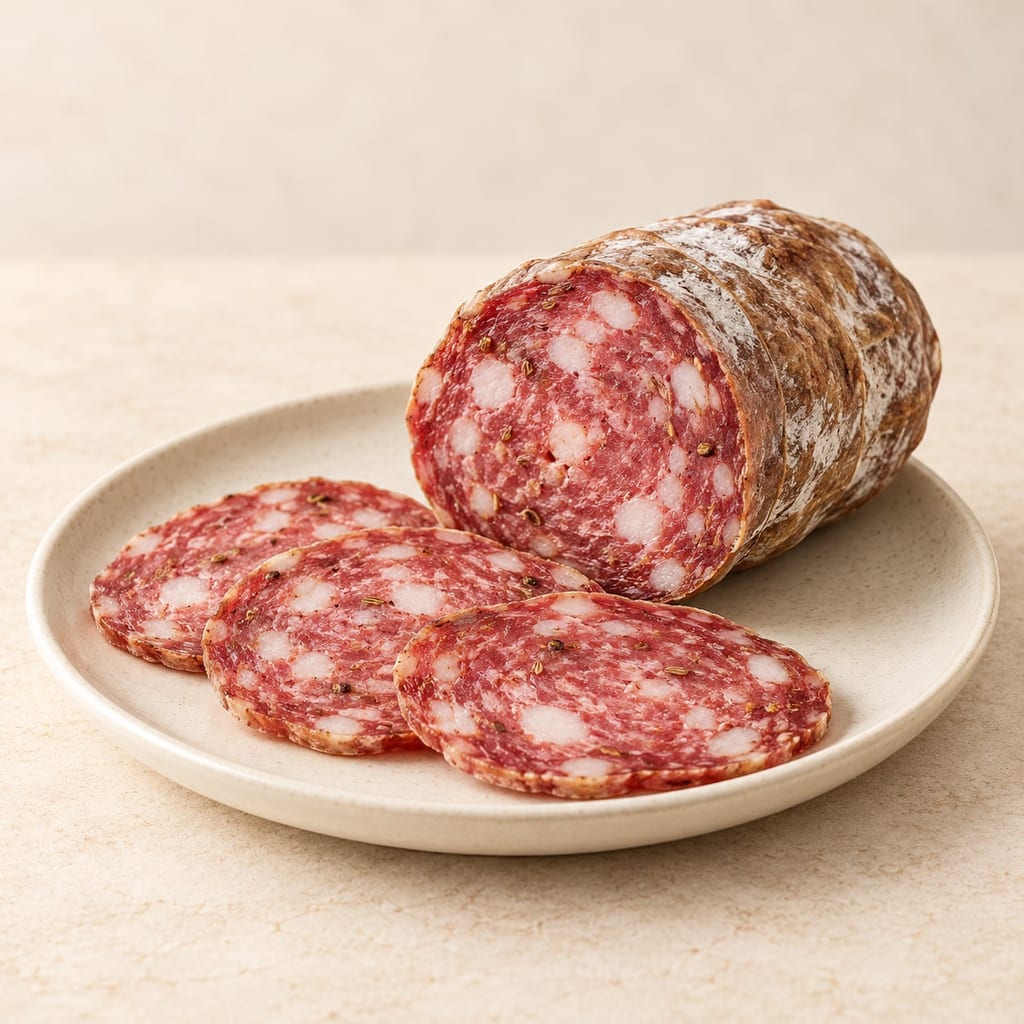
Finocchiona, starter-cultured
A Tuscan-style fennel salami made with pork and back fat. Toasted fennel, fennel pollen and Sambuca flavor this starter-cultured preparation.
 FermenteaWhere food goes to change
Sugar sources
Turbinado is a pale golden cane sugar made by washing and spinning raw crystals, leaving large, dry grains that keep a faint trace of molasses and a mild toffee note.
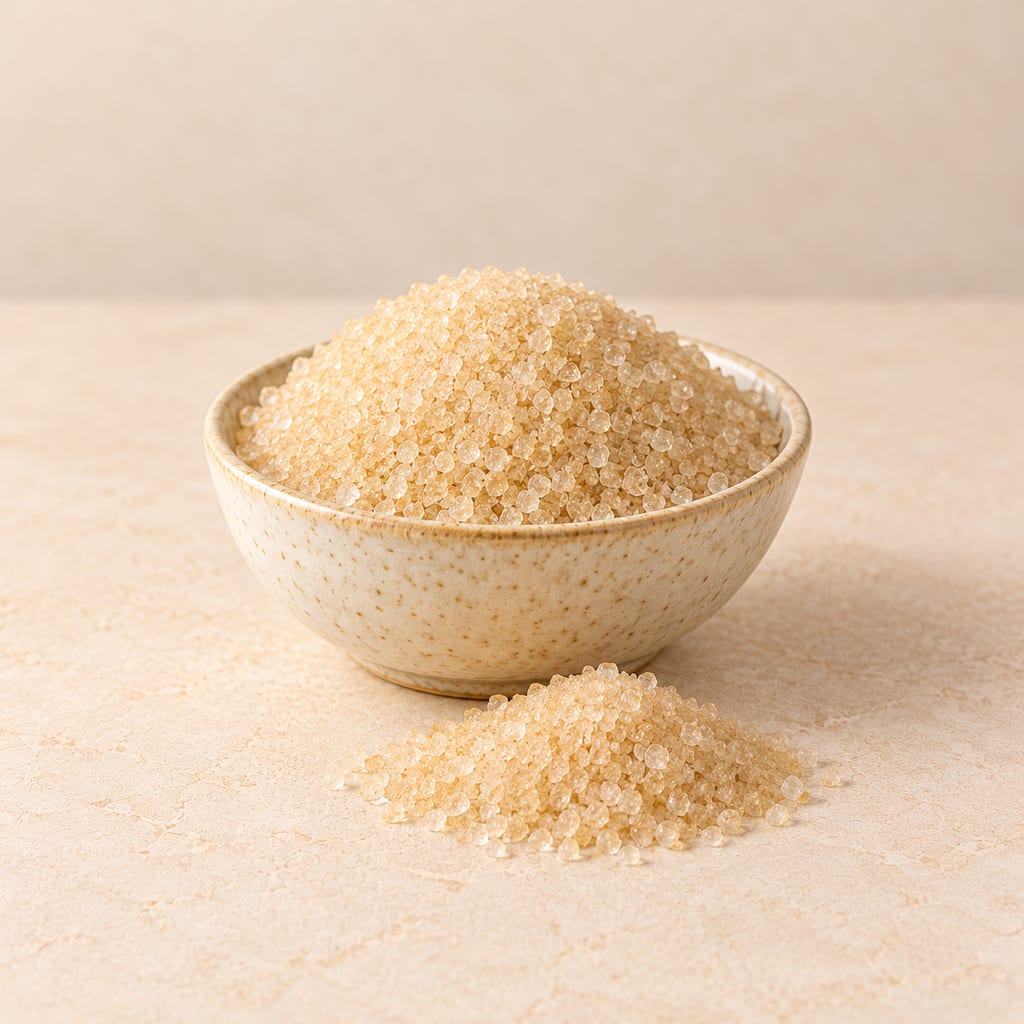
Turbinado sugar is a free-flowing, golden cane sugar whose larger crystals glint pale amber rather than white. The grains are dry enough to pour, though their surfaces keep traces of cane syrup and molasses that lend a faint toffee or cane aroma. Its defining quality is not a single shade or crystal size. Turbinado names market forms made by separating cane crystals from syrup and washing away some, but not all, of the syrup coating. The amount of remaining color, flavor, moisture and crystal size varies by producer and product.
The word is more settled on American grocery shelves than in technical sugar classifications. A USDA commercial specification places turbinado and demerara together under Type III, Other, to be specified by the purchaser. Unlike its detailed requirements for refined white and brown sugars, that document sets no universal turbinado limits for moisture, sucrose, ash or granulation. A bag’s specification belongs to that product, not to the name as a whole. USDA usage also distinguishes marketable direct-consumption sugar from raw sugar, which its current glossary defines as unsuitable for human consumption without further refining. Raw sugar on a retail label is therefore a trade description, not a promise that the crystals are unprocessed.
In English, turbinado sugar is the common North American name; washed raw cane sugar describes the process more plainly. The Government of Canada’s terminology bank records Spanish-derived turbinado sugar alongside centrifugal sugar, and French sucre turbiné, sucre centrifugé and sucre turbinado. These words point to manufacturing, not a place of origin. Retail labels sometimes blur the distinction: Domino says its product once sold as Demerara Cane Sugar now carries the turbinado name. That brand history shows how names shift with a market; it does not make all Demerara and turbinado sugars identical.
Turbinado is made from sugarcane, a tall tropical grass that stores sucrose in its stem. Unlike the cereals, which were selected for their grain, sugarcane was selected for the sugar in its stalk. Its domestication began in the region of New Guinea, from the wild species Saccharum robustum, which gave the juicy, sweet, soft-stemmed Saccharum officinarum. The review that tells this story gives a date of about 8000 BC in one place and about 10,000 years ago in another, so the age is approximate. From New Guinea the cane spread to Southeast Asia and India. Modern cultivars are complex hybrids, mostly of S. officinarum with the hardy Indian species Saccharum spontaneum, which adds disease and stress tolerance but little sugar.
Turning juice into storable crystals was the next step. The same review dates a method for crystallising sugar, which made it far easier to store and transport, to the fifth century AD in India, and says that cultivation and refining then spread to China, Persia and the Mediterranean. Cane reached Spain around 715 AD, and in the sixteenth and seventeenth centuries Spain, Portugal, Italy, Cyprus and the Azores tried to build their economies on it. The New World offered better growing conditions, and Columbus is recorded as carrying cane seedlings to Hispaniola on his second voyage in 1493; the first harvest there came in 1501 and there were mills in Cuba and Jamaica by the 1520s, with Brazil later the centre of production. Sugar needed more labour and capital than tobacco or cotton, and after disease reduced the Native American population and indentured European labour proved too scarce, enslaved Africans became the main workforce on the plantations of the Atlantic sugar economy. As plantations spread, sugar went from a luxury to a bulk commodity, and Britain consumed five times as much in 1770 as in 1710. Today cane supplies about 70 percent of the world’s sugar, with Brazil and India the largest producers.
Within that long history turbinado is a modern retail category. It sits at the lightly processed end of the cane range: the raw crystals are washed and spun, not melted and recrystallised as in white sugar.
Turbinado is a process and trade word whose documented twentieth-century life crossed mills, shipping routes and retail counters. In 1938, the Federal Register grouped refined and turbinado sugar in records of Puerto Rican entries to the continental United States for 1935–1937. The figures in that record combine both types, so they do not reveal how much turbinado traveled. They do show the term in the regulated cane-sugar trade before its familiar grocery branding; neither record establishes where the sugar or its name began.
By the late twentieth century, turbinado was also a consumer-facing grocery idea. A 1987 Hawaii Legislative Reference Bureau report describes local sugar businesses considering it as a retail product that might answer interest in foods presented as less processed. In 2001, Hawaiian Commercial & Sugar announced a three-year contract to supply the Sugar in the Raw brand from Maui. The company contrasted that product with its own Premium Turbinado, which it said was more amber and had larger crystals. This documents one place, producer and marketing arrangement at a particular moment, not a Hawaiian invention. It also shows that two sugars sold under the same name may differ in appearance and grain.
The name’s family resemblance to Spanish turbina, a sugar centrifuge or turbine, and the French technical adjective turbiné reflect how crystals are spun in processing. That is a process-based etymology supported by dictionaries and terminology records, not an origin story for the food. Cane sugar’s wider history spans plantation agriculture, shipping, mill labor, refining and tariff regulation; the records here are narrower: a cane product entering regulated markets, then a specialty grocery and café sweetener. That scale avoids mistaking a twentieth-century package name for the history of cane sugar itself.
Sugarcane stores sucrose in its stalk. At a mill, cut cane is crushed or shredded so juice can be extracted; clarification removes much of the suspended plant material. The juice is concentrated by evaporation, then boiled under vacuum until supersaturated and crystals form. The mixture of crystals and thick remaining liquid is called massecuite. A centrifuge spins the mother liquor, or molasses, away from the crystals. Washing removes additional syrup from their surfaces; drying and cooling produce granular sugar. The EPA’s technical description follows these steps for raw cane sugar and separately describes a more extensive refining route. It is useful process context, but does not define every retail turbinado method.
The difference between a golden crystal and refined white sugar lies largely in how much syrup-associated color and material remains, and how far the factory carries purification and recrystallization. Market turbinado is washed and spun but keeps some molasses and cane flavor. In refined white sugar, crystals are dissolved, filtered or clarified, decolorized and crystallized again. Brown sugar may be made by adding molasses to refined crystals or by processing lower-purity syrup into soft crystals; it often holds more moisture and packs together more readily. These are process distinctions, not guarantees based on color alone.
Demerara can describe a large, pale-brown cane sugar associated historically with the Demerara region of Guyana, while brands also use the word for product lines that resemble turbinado. In grocery practice the terms overlap, but industrial standards do not give one strict universal border between them. Identify the product by its ingredient statement and manufacturer specification. USDA’s procurement document makes the point indirectly: it treats turbinado and demerara as buyer-specified other sugars rather than defining them by one laboratory profile.
The mill and refinery can be separate points in the chain. The EPA account describes cane sugar dried and shipped in bulk after crystallization, while raw cane sugar may then be washed in warm saturated syrup, centrifuged again, melted, clarified and recrystallized at a refinery. That intermediate raw sugar is not the same thing as a bag of turbinado sold for immediate use. USDA makes the distinction explicit in its reporting vocabulary: raw sugar is not suitable for consumption without further refinement, while direct-consumption sugar is not meant to be further refined. In ordinary shopping, raw on a packet usually signals the golden, washed-crystal style; it does not mean the food skips industrial processing or is eaten straight from the cane mill.
Turbinado crystals are often larger than everyday granulated sugar and may feel crunchy between the teeth. Their amber color comes from traces left by cane processing, rather than the molasses coating used to make many soft brown sugars. The residual surface material may contribute flavor and color, but its amount varies. Manufacturer specifications can report granulation, moisture, polarization, ash and color; these measurements help compare one product with another. They are not a universal recipe for turbinado. One producer’s Premium Turbinado can be darker and coarser than the same company’s sugar packed for a branded coffee sachet.
Chemically, the principal sweetener is sucrose, a molecule built from glucose and fructose joined together. In solution, enzymes can split sucrose into those simpler sugars; microorganisms differ in whether they use sucrose directly or need it first hydrolyzed. Small amounts of minerals and other nonsugar solids can remain, but crystal color does not make this a meaningful mineral supplement. Turbinado is still a concentrated sugar ingredient. This account makes no health distinction between it and other sucrose sugars.
Crystal size affects how quickly sugar disperses and dissolves. In a beverage, large crystals may settle until stirred; as a topping, they remain visible and give a crisp surface. In batter or dough, coarse crystals may not disappear fully, so texture and sweetness can differ from a finer sugar. A brand FAQ cautions that its turbinado may not dissolve completely in some batters and doughs. In the sausage mix, the recipe instructs the cook to mix sugar with the other ingredients after grinding, but does not instruct milling it or describe a texture difference.
The linked Finocchiona formula uses 4 g turbinado sugar with 1,400 g lean pork and 600 g pork back fat, a 2 kg meat-and-fat batch. Its listed 4 g dextrose is the same proportion, 0.2 percent of meat and fat. The author explains in a recipe comment that he uses turbinado because it is easy to find where he lives and that ordinary granulated sugar works as well. Availability is the documented reason for this choice.
Sugar in fermented sausage can serve different roles: some carbohydrate may be fermented by the starter into lactic acid, while the ingredient also contributes sweetness and residual flavor. Lactic acid lowers the meat mixture’s pH and influences tang and protein behavior. Sugar choice is not a stand-alone safety control. The recipe calls dextrose the bacteria’s food and does not identify the species in its named commercial Flavor of Italy starter.
A sugar crystal meets a different kitchen in a meat mixture than it does on a bun. On a baked surface, a coarse grain can remain visible and crisp; in moist minced meat, sugar is dispersed among water, salt, protein and fat. The recipe names dextrose separately as food for its starter, while treating turbinado as a second measured sugar. Sucrose can be split into glucose and fructose, but microorganisms differ in how they use it. Its small measure is part of the flavor and formulation, while the culture and the full process determine the finished sausage.
Choose the crystal for the job. A pale, coarse sugar adds visible crunch to muffins, scones or cookies and dissolves more slowly in coffee or tea. Its mild molasses note can suit fruit, porridge and simple syrups, although colored sugar makes a darker syrup than refined white crystals. For an evenly sweet, smooth batter, finer sugar may incorporate more readily. A recipe that specifies turbinado for surface texture asks for more than sweetness; a recipe that stirs a small amount into meat may be using an available carbohydrate source. These uses do not imply a universal one-for-one replacement rule.
Look for cane sugar in the ingredient statement and follow the maker’s description of crystal size and color when those matter. Labels such as natural, raw and less refined do not supply standardized chemistry. If a food requires a specific particle form or composition, use the product specification rather than the name alone. Keep the bag sealed and dry. Moisture can cause crystals to cake, which is a handling issue rather than evidence of a different sugar type. Use the package’s date and storage directions; no shelf-life period applies to every brand from the evidence gathered here.
The best reason to keep the name turbinado on a recipe is its sensory character. It gives a pale amber color and slight cane note when dissolved, a distinct grain when left on the surface, and a different visual finish from powdered or dark, moist brown sugars. Those qualities may matter in a fruit preserve, a drink or a crisp topping. In the linked salami, the maker explicitly allows ordinary sugar instead; the sugar's job is measured within that particular formulation. The brown tint should never be read as a separate fermentation control.
A company release documents an exclusive Maui supplier arrangement for one retail product in 2001; no origin claim.
A 1938 federal record groups refined and turbinado direct-consumption sugar in Puerto Rican entries; it does not disaggregate their amounts or establish origin.
A Tuscan-style fennel salami made with pork and back fat. Toasted fennel, fennel pollen and Sambuca flavor this starter-cultured preparation.
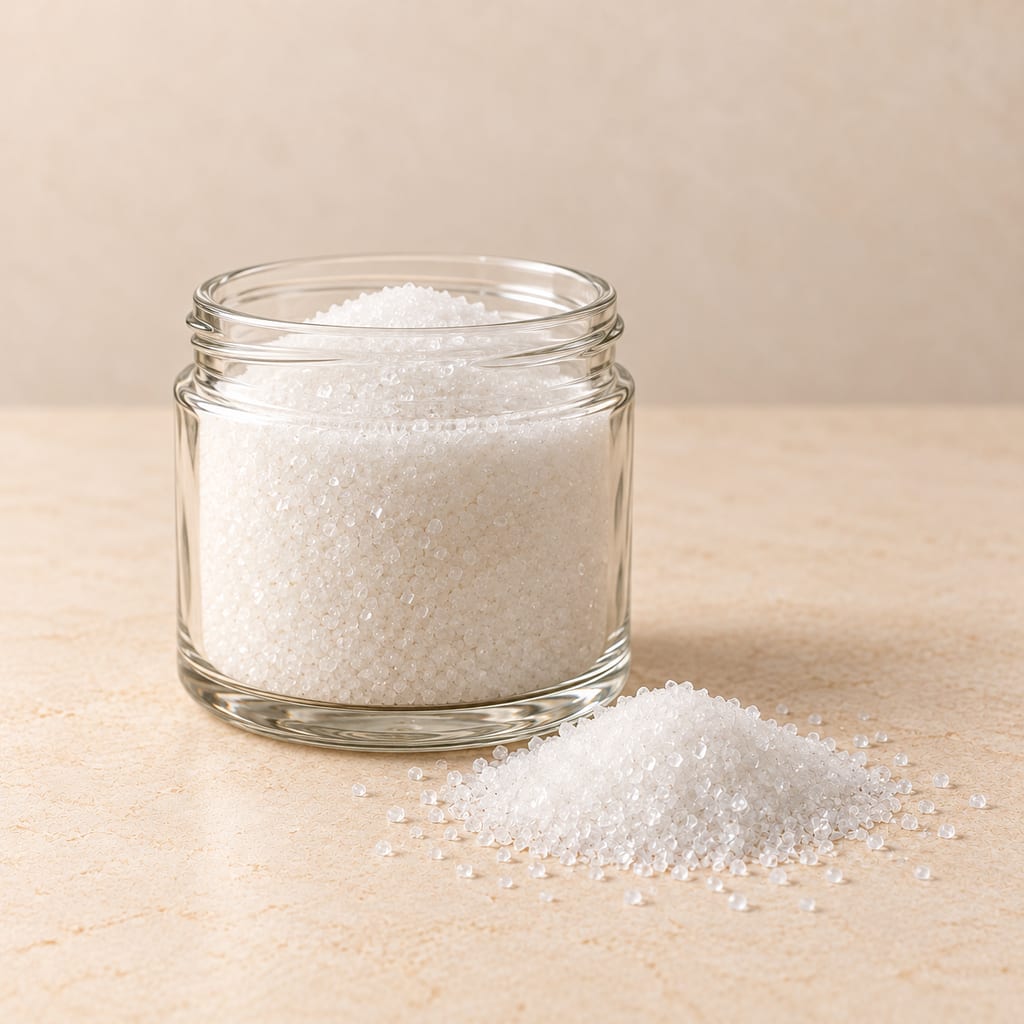
Sugar is a family of sweeteners with different forms and food roles; refined white sucrose may come from cane or beet, while less refined forms add other flavours and moisture.
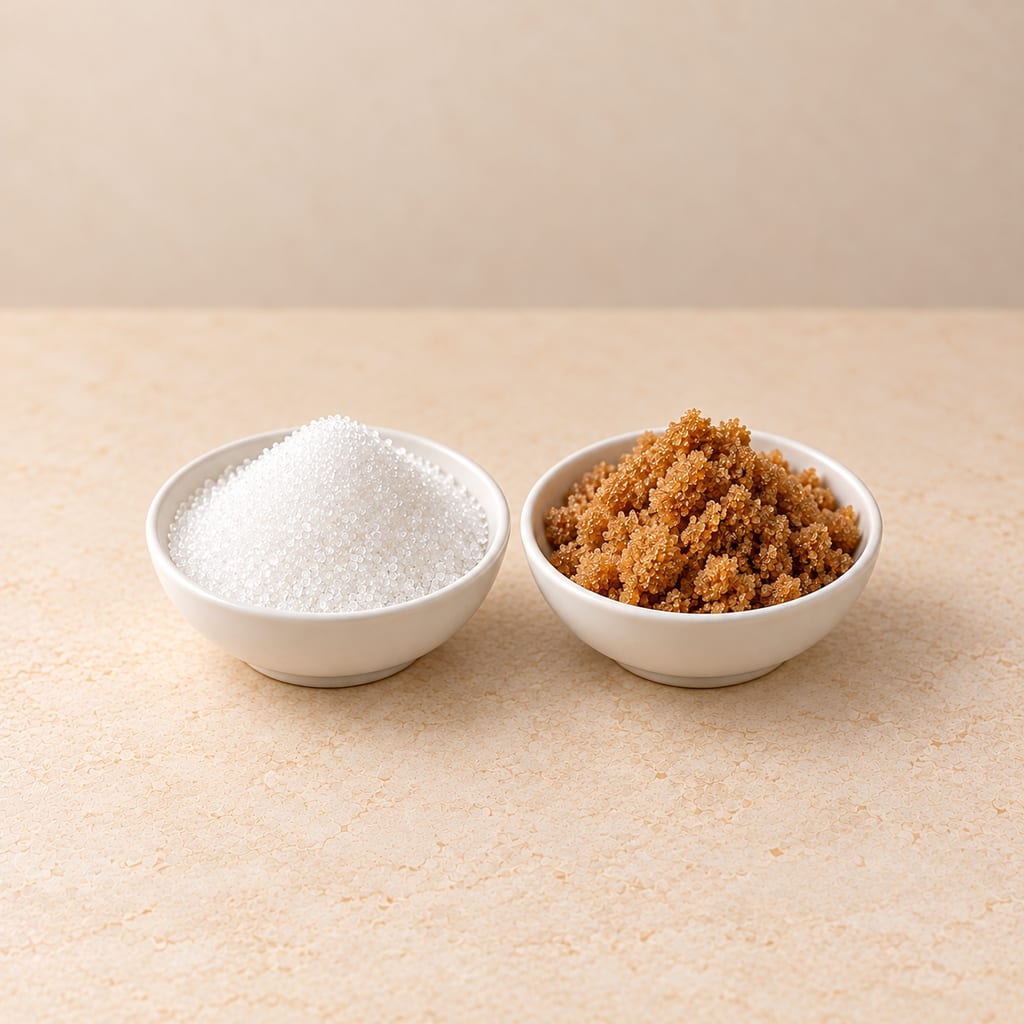
White sugar is refined sucrose, almost pure; brown sugar is sucrose with molasses, left in or added back. Molasses makes brown sugar moister, darker and more strongly flavoured.
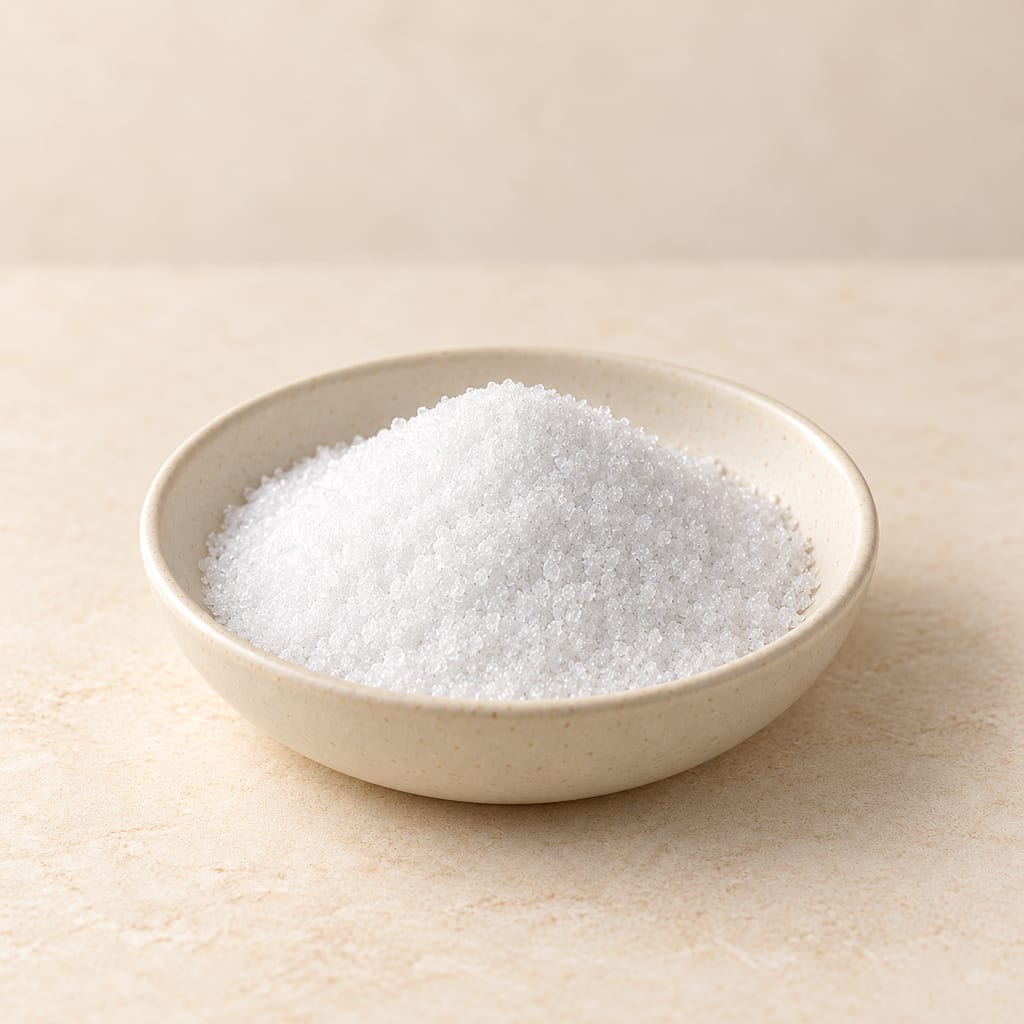
Crystalline D-glucose supplies fermentable carbohydrate to starter bacteria. Hydration state, starch source and product formulation remain relevant when selecting the powder.
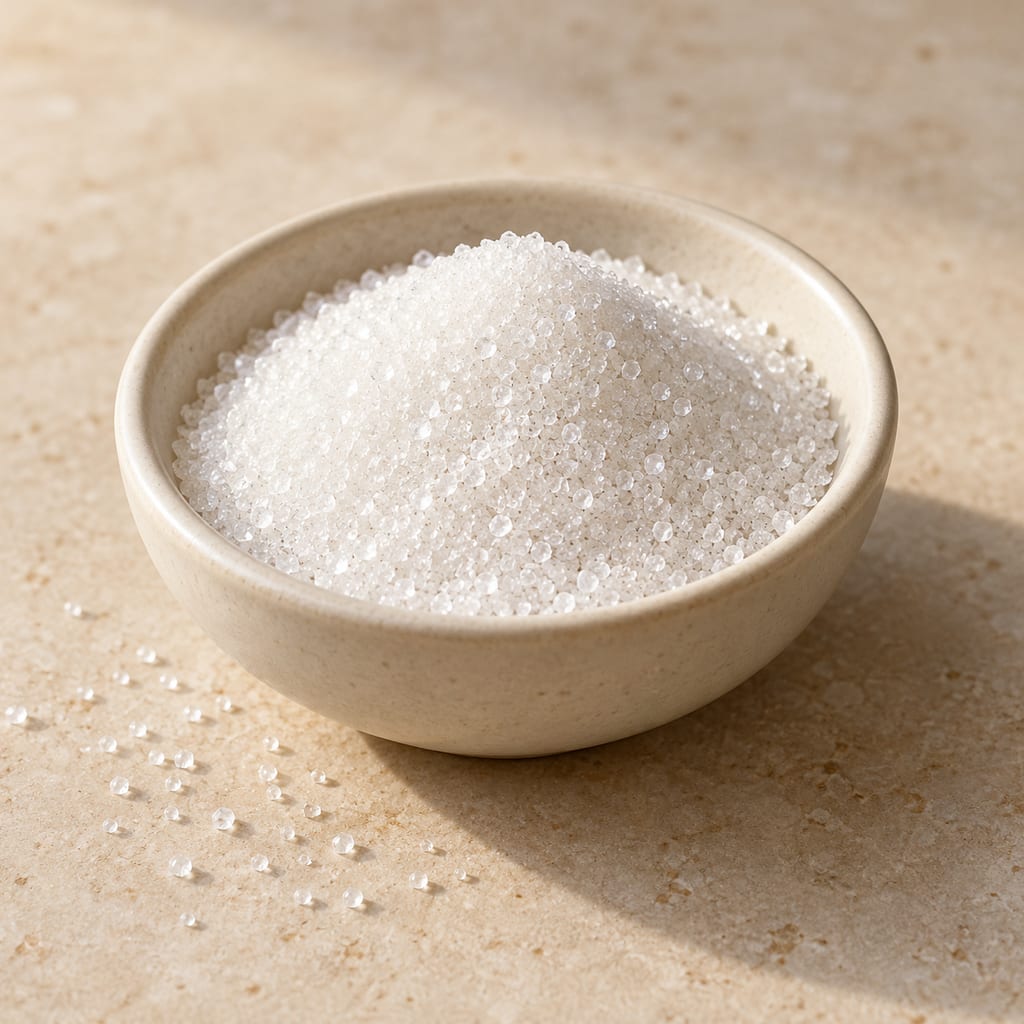
Granulated sugar is dry crystalline sucrose refined from cane or beet. It sweetens dough, feeds baking yeast, and helps set particular fruit spreads.
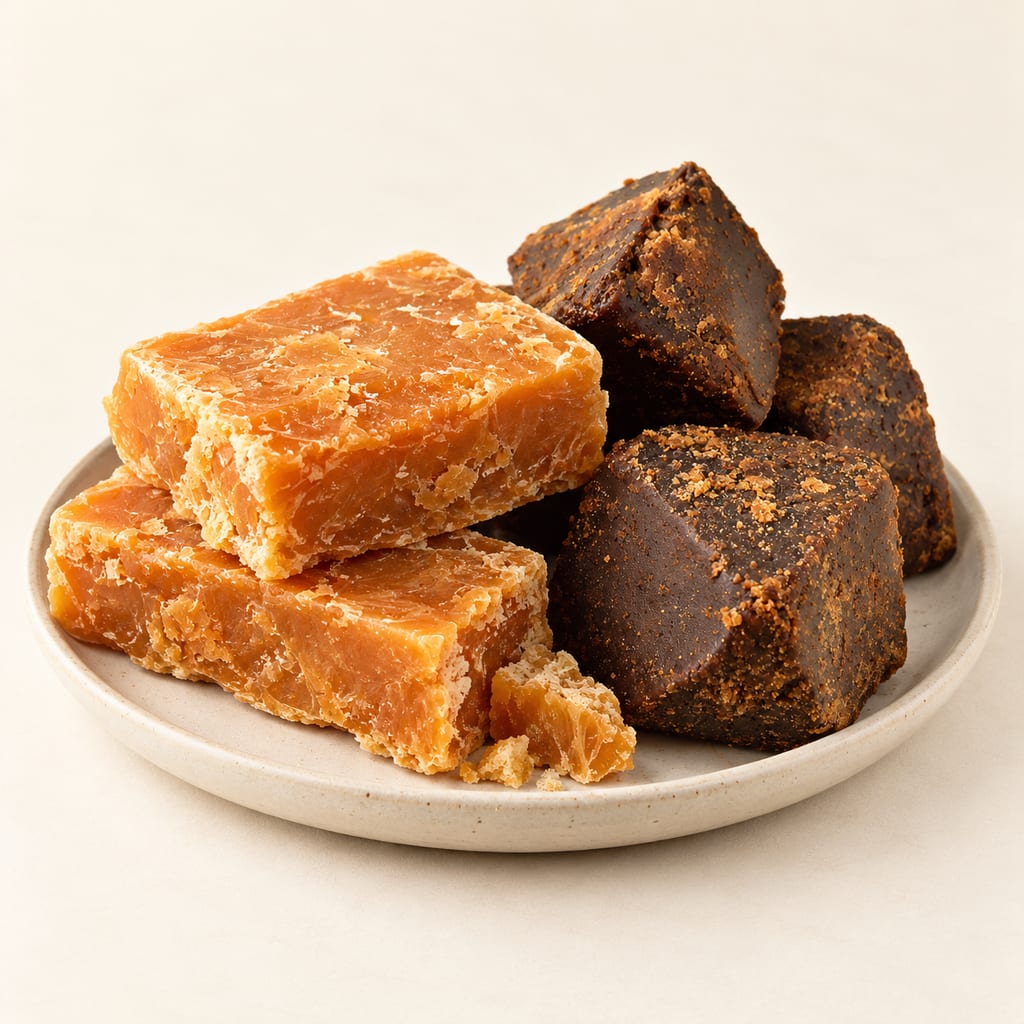
Jaggery is a family of concentrated, non-centrifugal sweeteners made from cane juice or palm sap. Plant source and form shape its flavour and use.
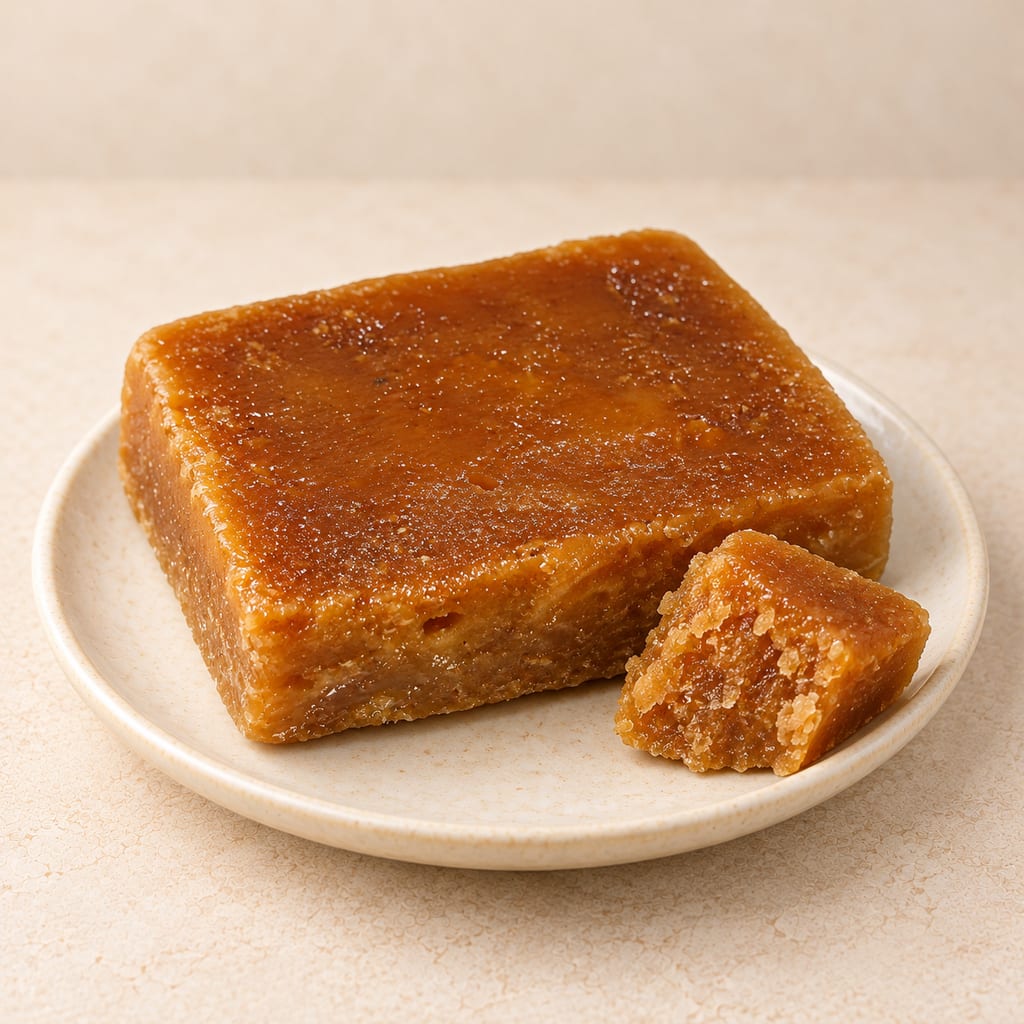
Panela is a solid, non-centrifugal sugarcane sweetener made by concentrating juice and letting it set. A documented Ecuadorian chicha recipe adds it after the cooked jora mixture cools.
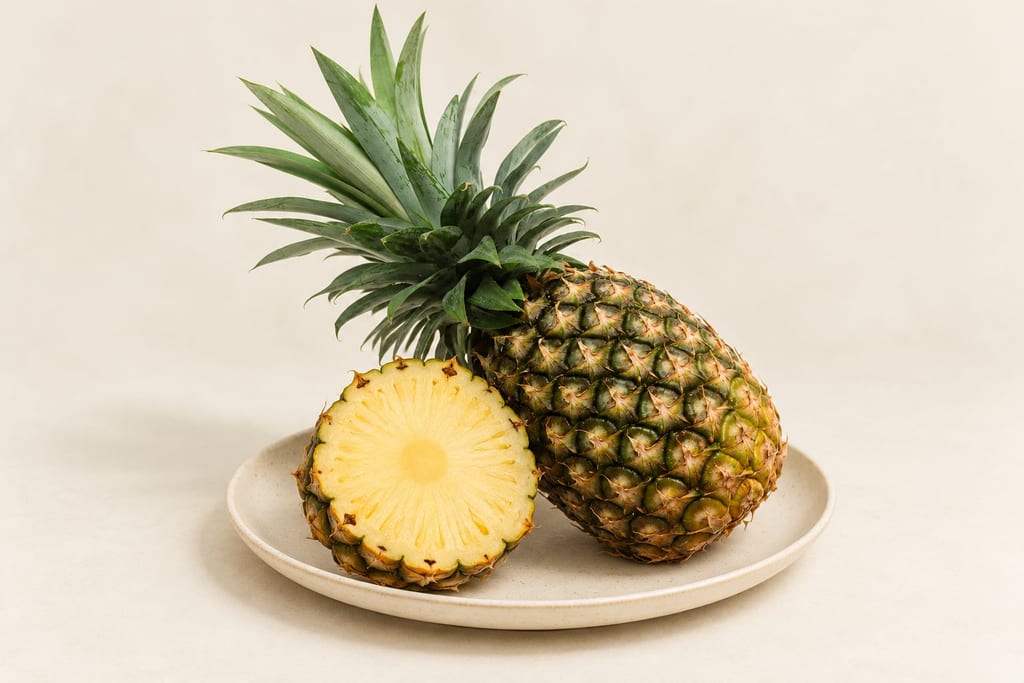
Pineapple is a sweet-tart tropical multiple fruit whose fresh flesh and peel supply sugars and acids to fruit ferments, while cultivar and maturity shape the balance.

A Cap-Pelé boucanière is an Acadian herring-smoking building. The documented Willie Niles example is a one-storey wood-frame structure with a ridge smoke vent and interior bays for hanging fish-bearing cannes.

Achcharu is a family of Sri Lankan vinegar pickles made with mixed vegetables or seasonal fruit and a piquant spice dressing. This version is a quick, refrigerated, non-fermented mixed-vegetable pickle.

The acocote is a long, hollowed and dried gourd used to draw aguamiel from a mature maguey. It is a harvesting tool: the sap is transferred to a separate vessel before it ferments into pulque.

Adrak murabba preserves young ginger in sugar syrup, a sweet South Asian preparation recorded in Indian cookery and food-processing sources.

Parkia biglobosa seeds are fermented into regional West African seasonings, including nététou, iru, dawadawa and soumbala. The yellow fruit pulp is a separate food, and names and methods vary by place.

Japanese reddish-brown vinegar from sake lees matured about three years, turned to vinegar by acetic bacteria; the vinegar of Handa and Edomae sushi rice.

A refined common-wheat flour blended for a broad range of baking; its protein and behavior vary with wheat, milling and market.

The almond mushroom, Agaricus subrufescens, was cultivated in eastern North America in the 1800s, lost its market, and returned as a cultivated mushroom from Brazil, where it is grown under several names.
No community contributions have been published for this entry yet.
Sign in to contribute. Published comments and photos are free to read.
2 Guys & A CoolerRecipe use
How to Make Tuscan Finocchiona Salami4 g turbinado and 4 g dextrose per 2 kg meat/fat batch; recipe comment says regular sugar works and availability prompted use.
Cited in: A small amount in Finocchiona; Choosing, storing and using it
USDA Agricultural Marketing ServiceIdentity · Standards
Commercial Item Description A-A-20135E: Sugar, White, Refined, and Sugar, BrownType III groups turbinado and demerara as purchaser-specified other sugars; no universal Turbinado analytical limits.
Cited in: A sugar between names; From cane juice to amber crystals; Crystal size, moisture and sugar chemistry; Choosing, storing and using it
USDA Farm Service AgencyIdentity
Sugar GlossaryUSDA raw sugar reporting definition; raw versus direct-consumption distinction.
Cited in: A sugar between names; Choosing, storing and using it
Translation Bureau, Government of CanadaNames
TERMIUM Plus: sucre turbiné / turbinado sugarEnglish, Spanish-derived and French terminology records dated 2008 and 2012.
Cited in: A sugar between names; Choosing, storing and using it
U.S. Government Publishing OfficeHistory · Trade
Federal Register, May 17, 1938: Puerto Rican sugar marketing historyPuerto Rican refined and turbinado direct-consumption sugar entries to the continental United States in 1935 to 1937, as a combined figure.
Cited in: A word in the sugar trade
Hawaii Legislative Reference BureauHistory · Geography
The Sugar Industry in Hawaii: An Action Plan, Report No. 9.1987A 1987 report describes turbinado, raw sugar not refined to whiteness, as a grocery product idea that might draw on consumer interest in less processed foods.
Cited in: A word in the sugar trade
Alexander & Baldwin, Inc.History · Geography · Product forms
Sugar in the Raw Now Grown in Maui, Hawaii2001 three-year supply contract and brand-specific differences in crystal size and color.
Cited in: A sugar between names; A word in the sugar trade; From cane juice to amber crystals; Crystal size, moisture and sugar chemistry
U.S. Environmental Protection Agency; Midwest Research InstituteProcessing
Emission Factor Documentation for AP-42, Section 9.10.1.1: Sugarcane ProcessingCane extraction, clarification, evaporation, crystallization, centrifuge, washing, drying and refining process.
Cited in: From cane juice to amber crystals; Crystal size, moisture and sugar chemistry
Domino SugarCulinary use · Product variation
Domino Turbinado Sugar FAQsBrand-specific note that crystals are larger and may not dissolve fully in some batters/doughs; product previously called Demerara Cane Sugar.
Cited in: Crystal size, moisture and sugar chemistry; Choosing, storing and using it
Food Safety Authority of IrelandFermentation science · Process context
Guidance Note No. 33: Good Manufacturing Practices for the Production of Ready-to-eat Raw Fermented Meat ProductsFresh pork and beef contain less than about 0.1 percent sugar, too little to ferment, so sugar is added; starter cultures convert sugar to lactic acid, which lowers pH; dextrose (glucose) is commonly used at 0.5 to 1.0 percent; about 1 g dextrose per kg of meat lowers pH by about 0.1.
Cited in: A small amount in Finocchiona
Wikipedia (tertiary overview)History
History of sugarColumbus carried cane to Hispaniola in 1493, first harvest 1501, mills in Cuba and Jamaica by the 1520s, Brazil later the centre; enslaved Africans became the main plantation workforce; sugar went from luxury to bulk commodity; British consumption five times higher in 1770 than in 1710. Cited as a tertiary summary of the secondary literature it references.
Cited in: Sugarcane, where the sugar comes from
Genetic Resources and Crop Evolution 69 (2022)History · Origin
A short review on sugarcane: its domestication, molecular manipulations and future perspectivesSugarcane domesticated from Saccharum robustum in the New Guinea region (about 8000 BC or 10,000 years ago); spread to Southeast Asia and India; crystallisation method in India in the fifth century AD, spreading to China, Persia and the Mediterranean; cane in Spain about 715 AD; New World introduction; modern cultivars are S. officinarum x S. spontaneum hybrids; cane gives about 70 percent of world sugar, Brazil and India top producers.
Cited in: Sugarcane, where the sugar comes from