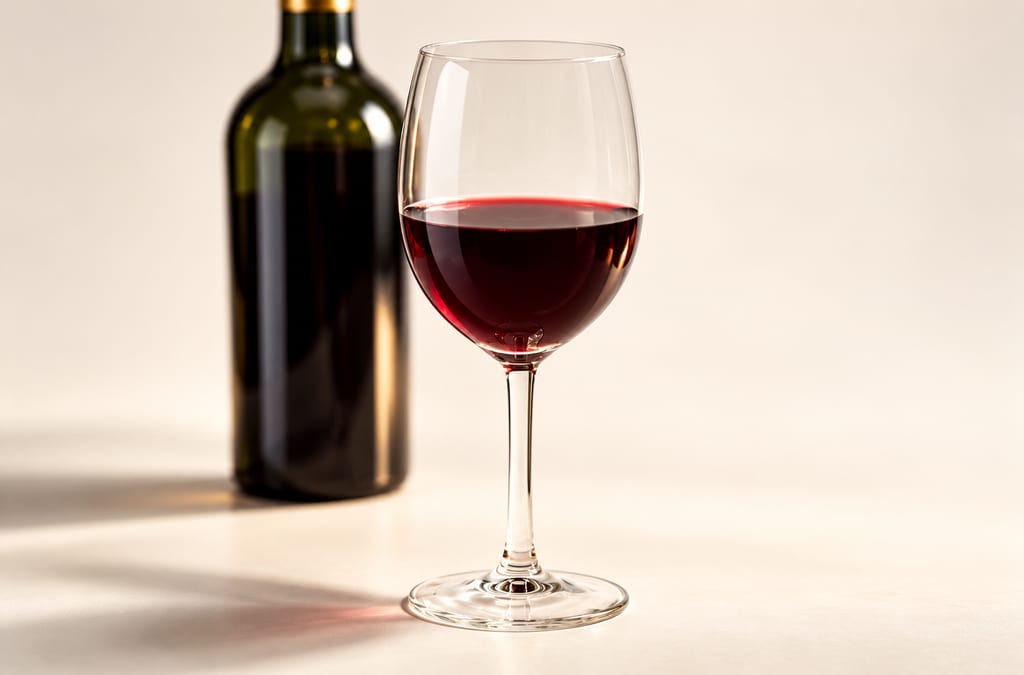
Red wine
Red wine is grape must fermented with the skins and other solids, then separated from the pomace. Grape, cellar and regional choices shape its colour, structure and style.
 FermenteaWhere food goes to change
Modern adaptation
Suovas med smörstekt savojkål och mandelpotatis
Suovas with almond-potato purée pairs pan-fried reindeer meat with buttered savoy cabbage and a reduced red-wine and reindeer-broth sauce.
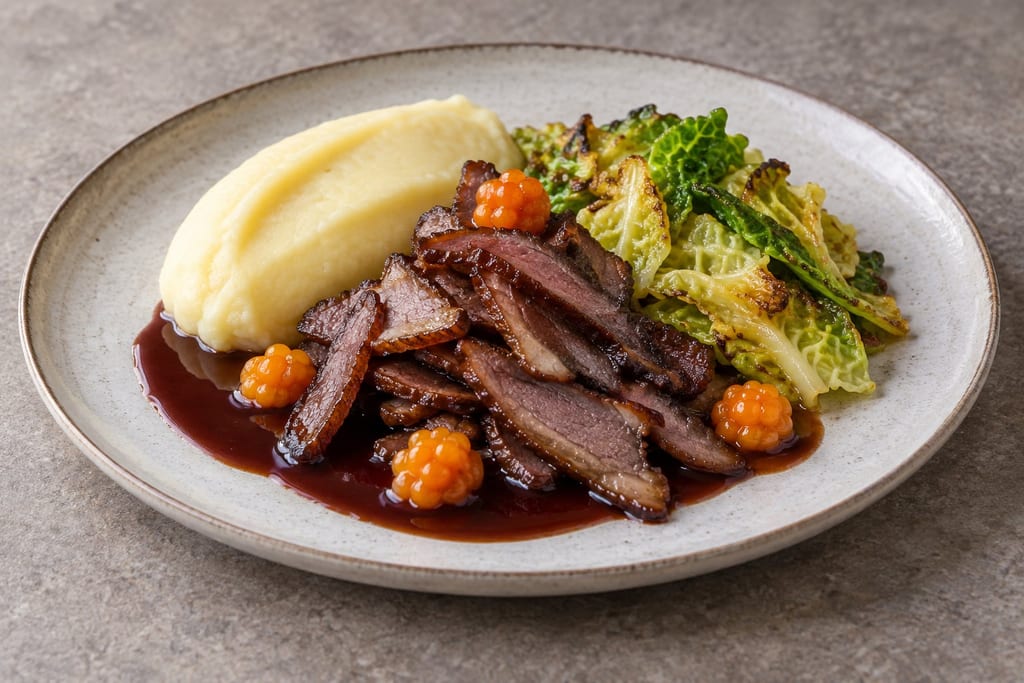
This dish brings together lightly smoked reindeer meat, butter-fried savoy cabbage, a smooth purée of almond potatoes and a concentrated reindeer-stock sauce flavoured with juniper, bay leaves, wine and balsamic vinegar.
The finished plate is a combination of traditional northern ingredients and contemporary restaurant-style cooking.
Suovas is the defining ingredient. The word is associated with the Sámi tradition of salting and smoking reindeer meat.
The meat has a distinctive flavour influenced by the animal, the cut, the curing method and the smoke treatment.
The almond potatoes are a traditional northern Scandinavian potato type with a characteristic texture and flavour.
Savoy cabbage provides a soft green vegetable component.
The sauce is a rich reduction made from reindeer stock, red wine and seasonings, finished with butter.
Cloudberries provide the final garnish.
The original recipe is published by Slow Food Sápmi and attributed to Andreas Lidström and Nils-Tonny Bransfjell. It serves four and is described as medium difficulty.
It is a modern composed dish founded on Sámi food ingredients, not a claim that historic reindeer-herding families routinely made red-wine and balsamic reductions.
Northern Sámi — Suovas — associated with smoking
Northern Sámi — Suovasbiergu — smoked meat
Swedish — Suovas, rökt renkött
Norwegian — Suovas, røkt reinkjøtt
Swedish potato name — Mandelpotatis
Swedish cabbage name — Savojkål
Swedish cloudberry — Hjortron
English — Lightly smoked reindeer with savoy cabbage and almond potatoes
Reindeer belongs to Rangifer tarandus.
Potatoes belong to Solanum tuberosum.
Savoy cabbage is a cultivated form of Brassica oleracea within the Savoy Cabbage Group.
Cloudberry is Rubus chamaemorus.
Juniper berries used in cookery generally come from Juniperus communis.
Sápmi is the cultural region associated with the Indigenous Sámi peoples.
It extends across parts of northern Norway, Sweden, Finland and the Kola Peninsula in Russia.
Reindeer have played a major role in many Sámi economies, although not all Sámi communities historically practised reindeer herding in the same way.
The animal supplies meat, hides and other useful materials.
Herding systems, fishing, hunting, gathering and exchange interacted to support different local food cultures.
Food preservation was especially important because seasonal environmental conditions affected the availability of fresh resources.
Meat could be dried, smoked or otherwise prepared for later consumption.
The term suovas belongs to this wider set of traditional skills.
However, the regional history should not be simplified into one universal Sámi recipe.
Smoking practices, meat cuts and local techniques varied.
Traditional knowledge also belongs to particular communities and families.
The contemporary food movement represented by Slow Food Sápmi seeks to support the identity and continued production of Sámi foods.
Its presentation of suovas connects a historic ingredient to modern culinary uses.
Suovas is generally associated with lightly salted and smoked reindeer meat.
Compared with heavily dried meat, suovas may retain a relatively tender structure.
The smoke contributes aroma without necessarily transforming the meat into a fully cooked product.
Traditional production can involve hanging meat in a smoking hut or another suitable structure and exposing it to controlled smoke.
The Slow Food Foundation's Reindeer Suovas Presidium describes a traditional smoking period of approximately eight hours.
This is a description of a particular recognised production method.
It is not a safe universal home-smoking instruction.
The smoking temperature, meat cut, salt treatment and other variables must be controlled appropriately in commercial production.
The finished product's safety and cooking requirements depend on how it was made.
For this recipe, use suovas from a reputable producer and follow its handling instructions.
Reindeer meat is generally leaner than many familiar domesticated livestock meats, although fat content varies with cut and animal condition.
Its flavour reflects its muscle chemistry, diet and processing.
The animal may consume lichens, grasses, sedges and other northern vegetation, depending on season and habitat.
These ecological conditions distinguish reindeer husbandry from conventional intensive cattle production.
The flavour of the meat is not produced by one plant or one aroma compound.
It is the result of a complex combination of species, feeding, muscle composition, handling and preservation.
Smoking adds further aromatic compounds.
A lightly smoked reindeer cut can therefore be quite different from an unsmoked steak, even when both originate from the same animal.
The published recipe slices the suovas to approximately 2 cm thickness and pan-fries it for about one minute on each side, followed by two minutes of resting.
This very short cooking sequence assumes a particular cut, condition and intended culinary result.
It should not be treated as a universal method for all raw or cold-smoked reindeer products.
The purpose of brief pan-frying is to warm and brown the surface while preserving a tender centre.
Surface heating can promote Maillard reactions where suitable temperatures and moisture conditions are reached.
Resting allows some redistribution of heat and juices.
For food safety, the meat must be cooked in accordance with its supplier's directions and the requirements appropriate to the cut and preparation status.
The source does not state an internal temperature for the meat.
Mandelpotatis, literally almond potato, is a potato type traditionally associated with northern Sweden and nearby regions.
It is named for its elongated or almond-like shape rather than because it contains almonds.
Its texture can be relatively floury after cooking.
That makes it useful for purées and mashed potato dishes.
The potato has a geographical and culinary identity distinct from modern generic supermarket potatoes.
However, it remains a cultivated potato, Solanum tuberosum.
Potatoes originated in South America and reached northern Europe after the Columbian exchange.
Their presence in Sámi food today does not imply that they were eaten in prehistoric northern Scandinavia.
The same distinction applies to the red wine and balsamic vinegar used in this modern recipe.
The ingredient combination expresses a contemporary culinary interpretation of regional food.
Savoy cabbage has textured green leaves that soften during cooking.
Blanching changes the structure of the plant tissues.
Cell membranes lose integrity, and the leaves become more flexible.
Subsequent frying in butter creates a richer mouthfeel and develops additional flavour.
Butter carries aromatic compounds and coats the leaves.
The source first blanches the cabbage in lightly salted water and then fries it.
This two-stage method separates the initial softening from the final butter-based cooking.
The recipe does not give a numerical blanching time.
Cabbage size and leaf thickness influence the required duration.
The sauce combines sugar, red wine, balsamic vinegar, tomato paste, reindeer broth, bay leaves and juniper berries.
It is a reduction.
Reducing a sauce evaporates water, concentrating nonvolatile dissolved compounds and altering texture.
The wine and balsamic vinegar contribute acidity.
Sugar contributes sweetness.
Reindeer stock supplies savoury compounds, gelatin where present and other extractives from bones and meat.
Bay leaves and juniper provide aroma.
Butter is added at the end to create a richer, smoother finish.
The sauce begins with 1 litre reindeer broth, 300 ml wine and 100 ml balsamic vinegar, together with the other ingredients.
It is reduced to 300 ml.
The source specifies the final volume but does not give a universal total reduction time.
The time will depend on the pan, heat, evaporation and initial liquid composition.
Exact published ingredients for four portions.
Cloudberries, quantity not stated.
The recipe's 50 g sauce-finishing butter is separate from the 150 g butter listed for the potatoes and cabbage.
The source does not divide the 150 g precisely between those two components.
No such allocation should be invented.
The suovas supplies smoke and savoury meat flavour.
Almond potatoes provide starch and a creamy base.
Whipping cream enriches the purée.
Butter adds richness to potatoes, cabbage and sauce.
Savoy cabbage contributes vegetable texture and colour.
Reindeer broth connects the sauce directly to the meat ingredient.
Red wine and balsamic vinegar give acidity and complexity.
Raw sugar balances the acidic elements.
Tomato paste adds body and savoury depth.
Juniper and bay leaves introduce aromatic notes.
Cloudberries contribute a northern regional ingredient and a final accent of colour and tart fruit flavour.
The dish therefore combines preserved meat, cultivated vegetables and gathered northern fruit.
Use suitable pots for potatoes and cabbage, a frying pan for the meat, another pan for the sauce, a blender or suitable purée tool, cooking utensils and an accurate food thermometer.
A saucepan with sufficient surface area helps reduce the sauce.
The original recipe uses a blender for both the potato purée and finishing the sauce with butter.
Take care when blending hot liquids.
The source does not specify an exact appliance or blending speed.
Peel 1 kg almond potatoes.
Place them in water and boil until almost tender.
The source does not give an initial boiling time.
Clean and cut the savoy cabbage as appropriate.
Blanch it in lightly salted water.
Drain thoroughly.
The source does not specify the exact cut size or blanching duration.
Cut the 600 g suovas into slices approximately 2 cm thick.
The original description associates this thickness with pieces of approximately 150–175 g each.
It does not give a fixed piece count.
Transfer the nearly cooked potatoes to the cream.
Use the specified 200 ml whipping cream.
Cook until the potatoes are tender.
The source does not give a duration for this stage.
Add a portion of the butter.
Blend the potatoes into a smooth purée.
The original does not specify how much of the 150 g is reserved for the cabbage.
Keep the purée warm until serving.
Heat butter in a frying pan.
Add the blanched and drained savoy cabbage.
Fry until the desired texture develops.
Season with salt and pepper.
The source gives no precise frying duration.
Heat a pan.
Fry the suovas for approximately one minute per side.
Follow the supplier's food-safety instructions for the specific smoked meat.
Allow the meat to rest for approximately two minutes before serving.
Place 2 tablespoons raw sugar in a saucepan.
Heat until it melts.
Take care because hot melted sugar can cause severe burns.
Introduce 300 ml full-bodied red wine, 100 ml balsamic vinegar and 1 tablespoon tomato paste.
The addition of liquids to hot sugar can produce vigorous bubbling.
Bring the mixture to a vigorous boil for three minutes.
The source specifies this initial boiling duration.
Add 1 litre reindeer broth, 2 bay leaves and 5 juniper berries.
The broth is made from reindeer bones, water and salt.
It does not provide a measured separate stock-making recipe.
Reduce the sauce over relatively gentle heat until 300 ml remains.
The reduction time is not specified.
Blend 50 g butter into the sauce shortly before serving.
This enriches its texture and flavour.
Adjust with salt and pepper.
The source does not provide exact quantities.
Use a spoon to form a neat oval portion of almond-potato purée.
Arrange the butter-fried cabbage and suovas beside it.
Spoon over the concentrated sauce.
Add a few cloudberries.
The published recipe does not specify their weight or a fixed number per plate.
Serve promptly.
Juniper berries have a resinous, aromatic character associated with northern European cooking.
They contain volatile compounds including monoterpenes.
A small quantity can contribute a recognisable flavour to meat sauces.
The source uses five juniper berries.
That measured amount is particularly useful because juniper can become dominant if used excessively.
The berries are part of the sauce's aromatic mixture, not a preservation ingredient in this dish.
The bay leaves also contribute aroma during the reduction.
The potato is first cooked in water and then finished in cream.
This changes the final concentration of dairy fat and moisture.
Blending creates a relatively uniform purée.
However, potatoes contain starch that can become gluey if worked excessively.
The original recipe calls for a smooth blended result.
The cook should avoid processing the potato mass more than needed to achieve the intended consistency.
A floury potato such as mandelpotatis behaves differently from a waxy potato.
Substituting another variety can change the texture considerably.
Lightly smoked reindeer may be served in simpler preparations, including fried meat with potatoes or bread.
The modern recipe's rich sauce is not obligatory for appreciating the ingredient.
Sámi-style flatbreads and other northern breads can accompany smoked reindeer.
Such combinations place greater emphasis on the meat's smoke flavour.
Potato varieties differ in starch content and texture.
Replacing mandelpotatis changes the specific regional identity of this recipe.
Lingonberries are used in many northern meat dishes, but the source specifies cloudberries.
Substituting lingonberry would create a different garnish with a different flavour profile.
A simpler meat jus could omit wine or vinegar.
However, that would no longer reproduce the measured Slow Food Sápmi recipe.
The meat, potato purée and cabbage are designed to be eaten together.
The purée provides a mild, smooth component.
Cabbage contributes soft leaves and buttery flavour.
The suovas delivers smoke, meat flavour and a contrasting texture.
The sauce connects them through savoury stock and acidity.
Cloudberry adds a final tart-sweet accent.
The original recipe suggests a full-bodied red wine, particularly Shiraz, as an accompaniment.
That is a contemporary serving recommendation rather than part of traditional suovas manufacture.
The potato purée should be smooth and warm.
The cabbage should be softened without becoming excessively watery.
The meat should retain the intended texture for its particular cut and processing status.
The sauce should have reduced to the specified final volume.
Butter should be incorporated rather than separating into an obvious oily layer.
The cloudberries provide contrast and a recognisable finishing detail.
A sauce that has not reduced sufficiently may taste thin.
One reduced excessively may become strongly acidic, salty or sweet.
The potatoes become gluey. Excessive working or the use of a different potato type may affect texture.
The cabbage is watery. It may not have been adequately drained after blanching.
The sauce remains thin. The reduction may not yet have reached the specified 300 ml.
The sauce becomes too intense. Excessive reduction concentrates acidity and salt.
The butter separates from the sauce. The finishing stage may have been handled too aggressively or at an unsuitable temperature.
The meat becomes tough. The cut, cooking time and original processing may influence tenderness.
The suovas is insufficiently cooked. The source's brief pan-frying instruction is not a substitute for the supplier's safety guidance.
The meat smells abnormal or shows spoilage. Reject it.
Reindeer is a meat product and must be handled hygienically.
The treatment applied during production of suovas varies.
Light smoking may not fully cook the meat.
Use commercially prepared suovas with clear handling and cooking instructions.
Do not assume that one minute per side is sufficient for all raw or lightly smoked reindeer cuts.
Check the appropriate safe cooking requirements for the product.
Store the meat under refrigeration as directed.
The recipe also contains butter and cream, making milk an allergen.
The sauce includes red wine. Boiling and reduction do not guarantee the complete removal of alcohol.
The finished dish is a perishable cooked meal.
Cool and refrigerate leftovers promptly.
Suovas has a recognised Sámi cultural identity.
Mandelpotatis and cloudberries also connect the dish to northern food environments.
However, the exact combination of suovas, savoy cabbage, creamy potato purée and red-wine reduction is a contemporary composed recipe.
The published measurements are complete for the principal ingredients.
It does not give the separate reindeer-stock quantities, precise potato cooking times or a numeric meat core temperature.
Those details should not be attributed to the original authors without further evidence.
The recipe illustrates a successful meeting of traditional preserved meat and modern regional cuisine.
Slow Food Sápmi attributes this undated recipe to Andreas Lidström and Nils-Tonny Bransfjell. The page dates neither the dish nor a broader tradition of serving it.
Yield 4 portions · Scaling: source batch only
The Finnish Authority lists cold-smoked meat and uncooked dried reindeer meat among categories pregnant consumers should avoid if not heated. The named meal gives about one minute of frying per side and a two-minute rest, but no measured endpoint; neither the meal source nor product source establishes whether this suovas is raw, heat-treated, or ready-to-eat.
Hazard sourceCheck the specific suovas package or ask its producer how it is classified and prepared.
Control sourceThe source’s brief suovas fry and rest are culinary directions, not a measured endpoint; no storage guidance is given. Product readiness and heat-treatment status are not established, so the pregnancy guidance is conditional. The meal uses prepared suovas and does not describe making or smoking the meat.
The recipe is attributed to Andreas Lidström and Nils-Tonny Bransfjell and appears on Slow Food Sápmi; it is one named recipe, not a universal Sámi meal.
Red wine is grape must fermented with the skins and other solids, then separated from the pomace. Grape, cellar and regional choices shape its colour, structure and style.
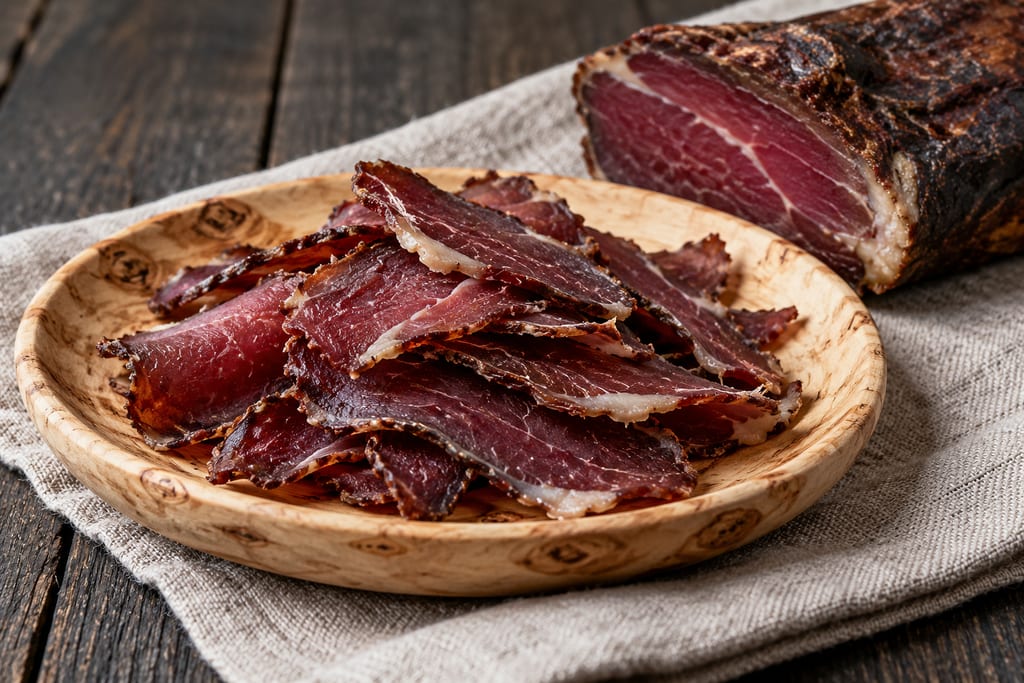
Salted reindeer meat hung in the smoke of a lávvu fire over willow, birch or juniper, then cooled and in some Sámi communities dried outdoors into travelling provisions.
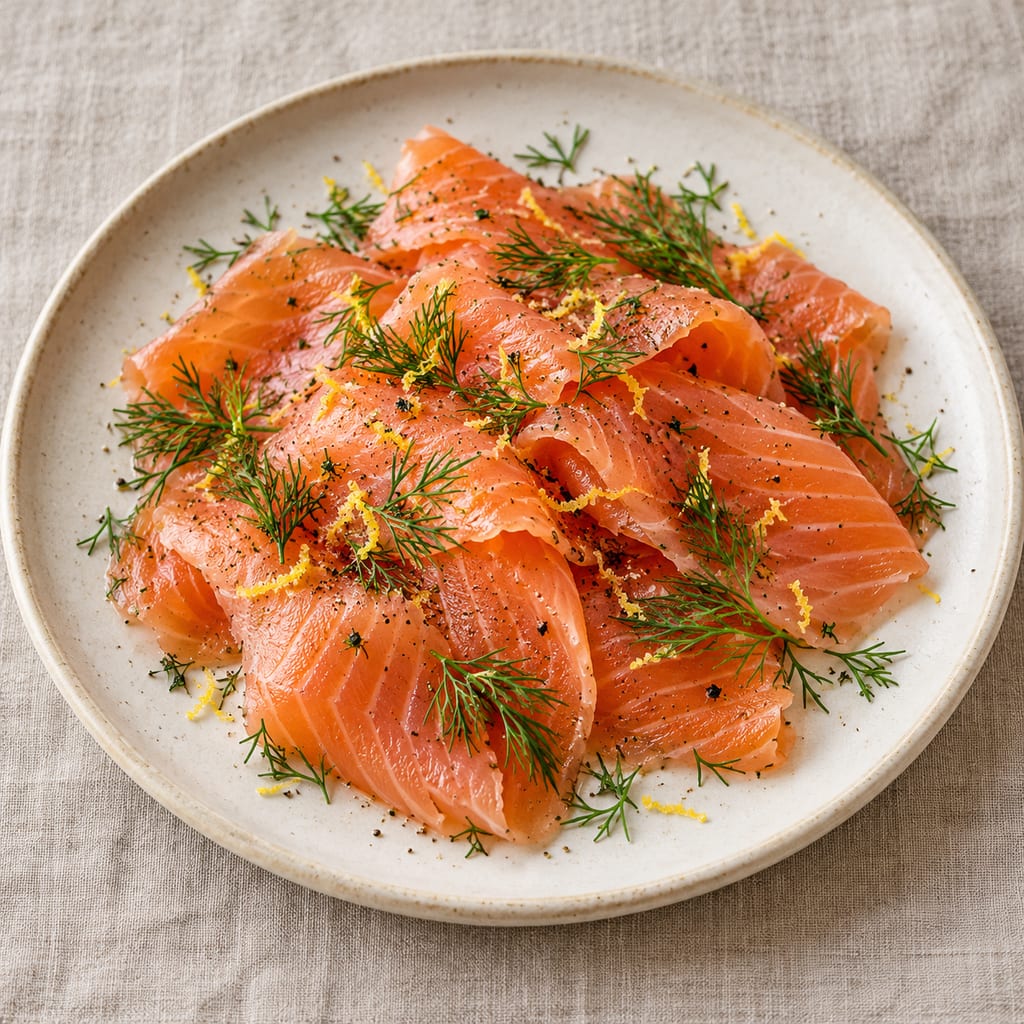
Salmon is cured with salt, sugar, pepper, dill and lemon zest under refrigeration.
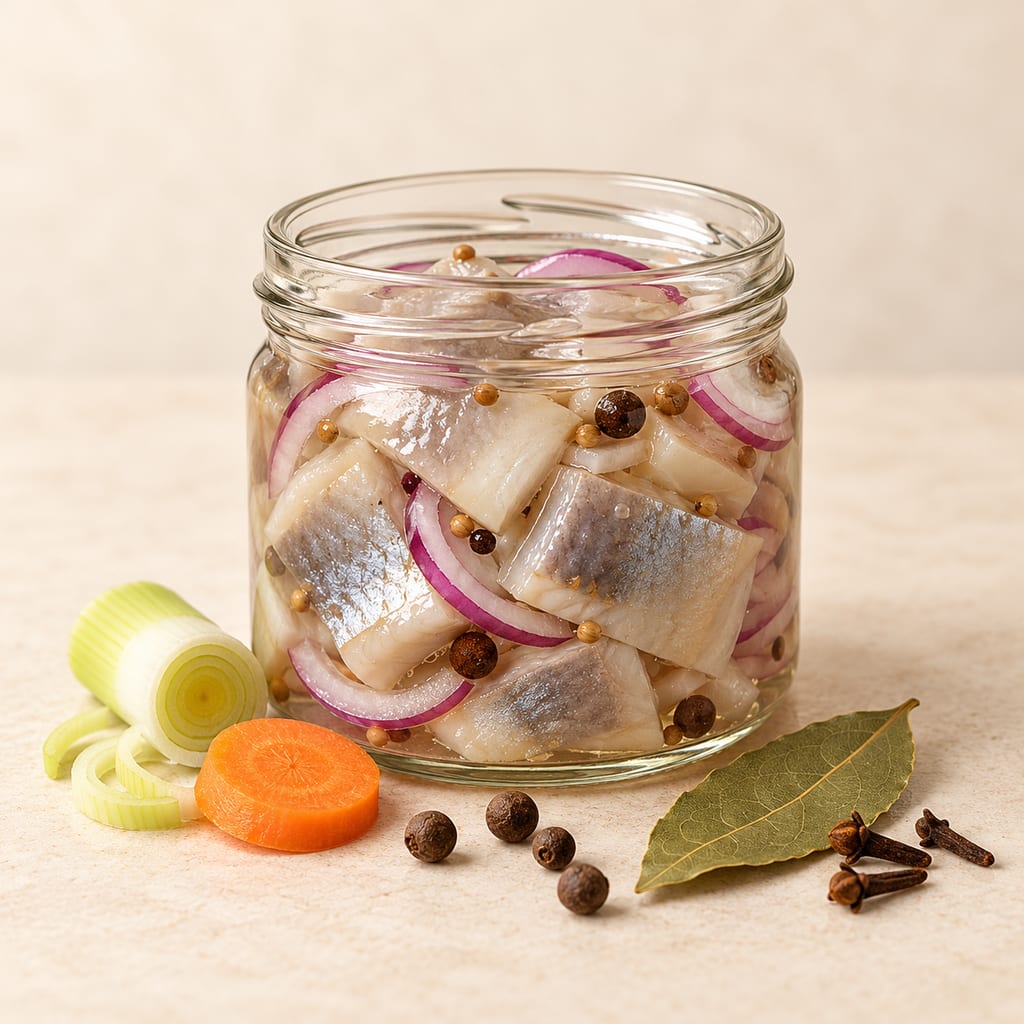
A Swedish ready-to-dress herring preparation: add the classic sliced aromatics and spices to already prepared herring, then serve or chill for fuller flavour.
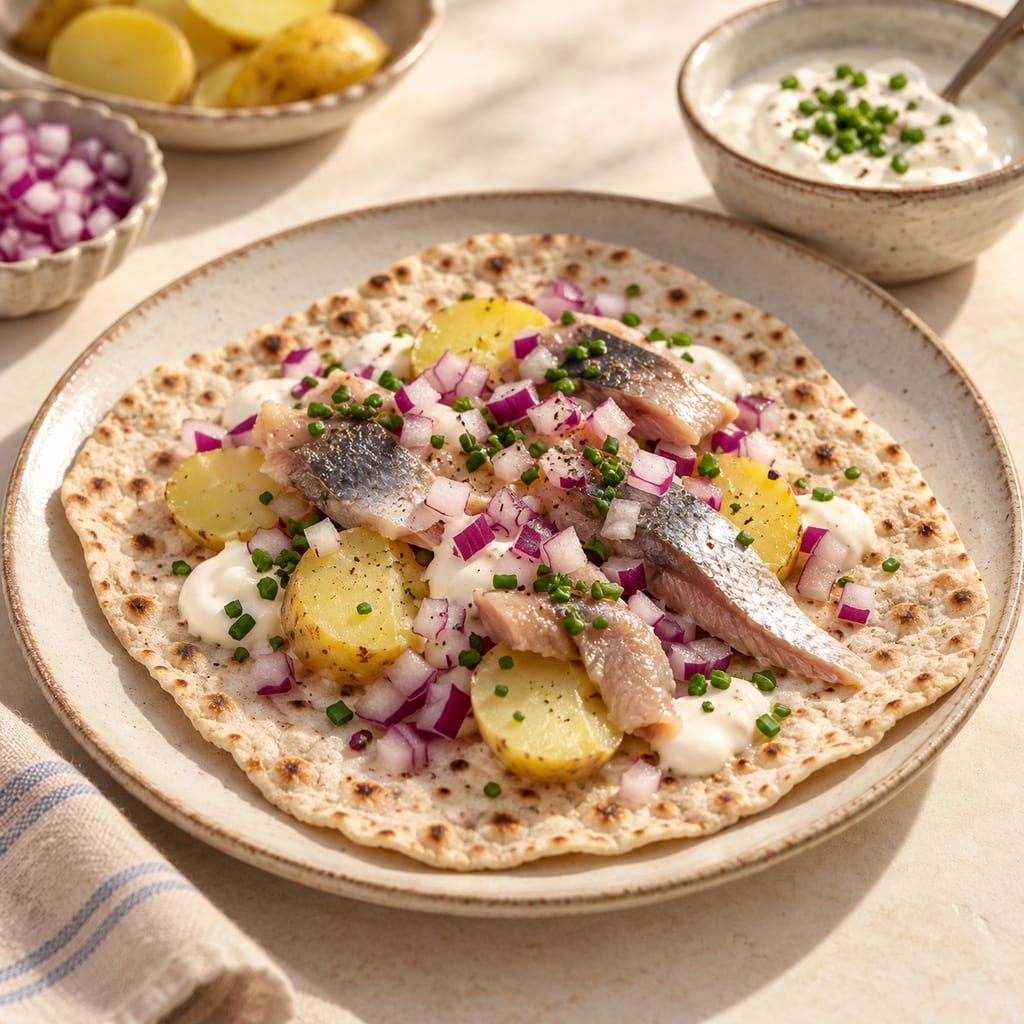
A Swedish late-summer meal of commercially prepared surströmming, tunnbröd, potatoes, onion and cultured cream. This is a serving preparation; the specialist fish fermentation is not made at home here.

A Swedish-style spirit vinegar made by fermenting neutral alcohol with live vinegar bacteria, with a separate guide to commercial ättika strengths.

Crushed or milled barley cooked in water until the starch softens and the mixture thickens, the plainest way a northern household turned stored grain into a meal, here with apple and hazelnut.
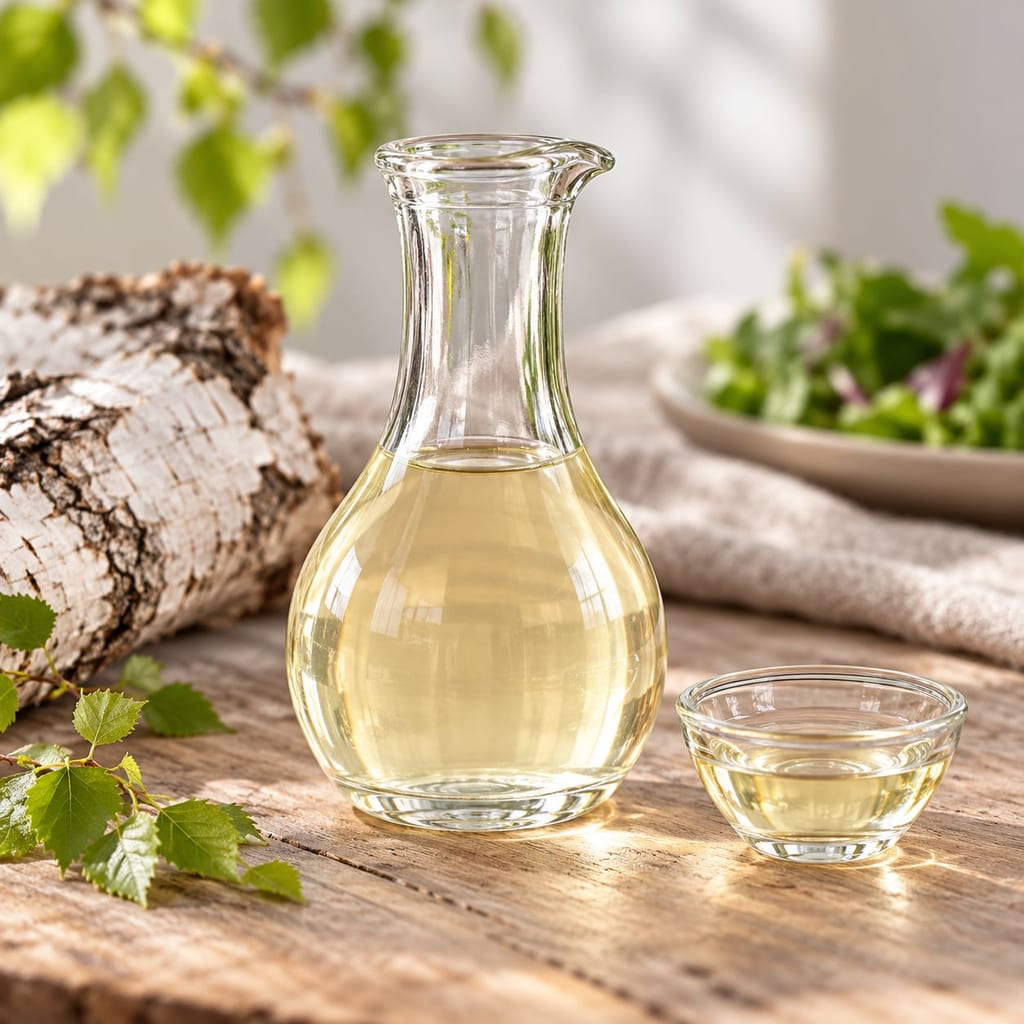
Vinegar from spring birch sap fermented to alcohol and then acetic acid, usually with added sugar or honey because the sap is so dilute; made in Sweden and described in older eastern European accounts.
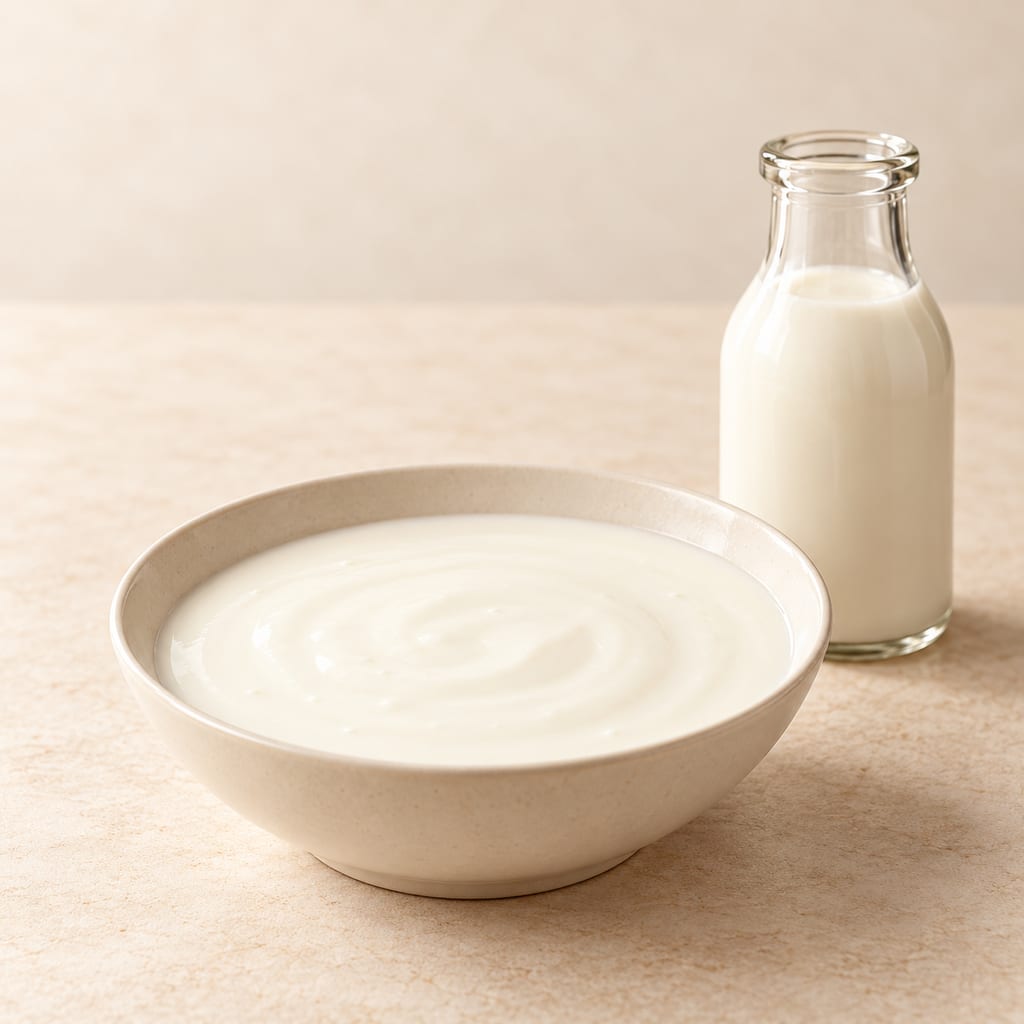
Filmjölk is a Swedish cultured milk with mild acidity and a spoonable body. This recurring batch uses filmjölk from the previous batch to culture fresh milk.
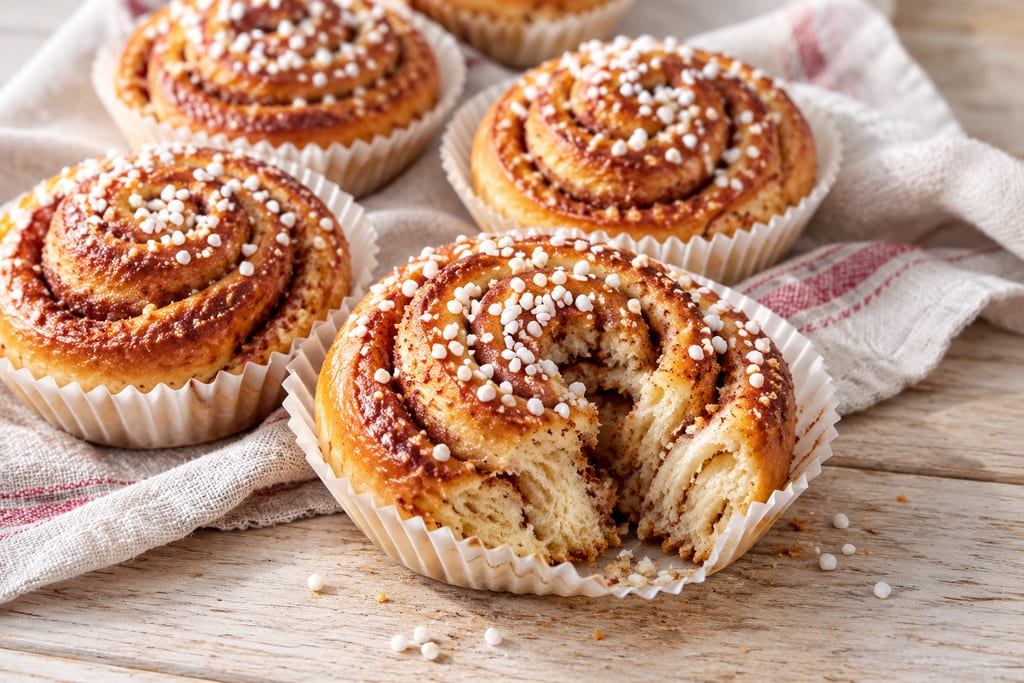
Soft Swedish wheat buns filled with butter, sugar and cinnamon. This 20-bun home batch uses fresh yeast, two short proofs and pearl sugar.
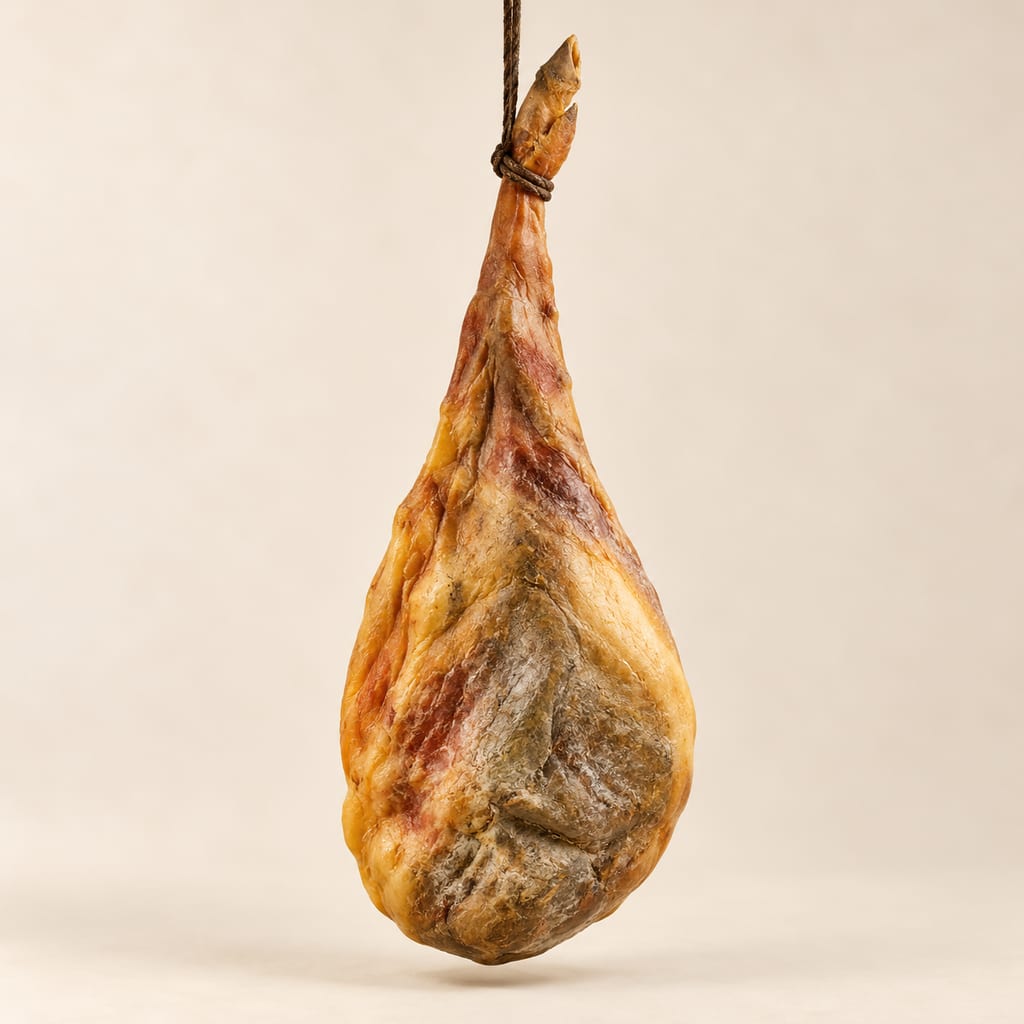
Cato the Elder records a second-century BCE sequence for salting, air-drying, and smoking ham. This historical account is not a validated modern curing protocol.
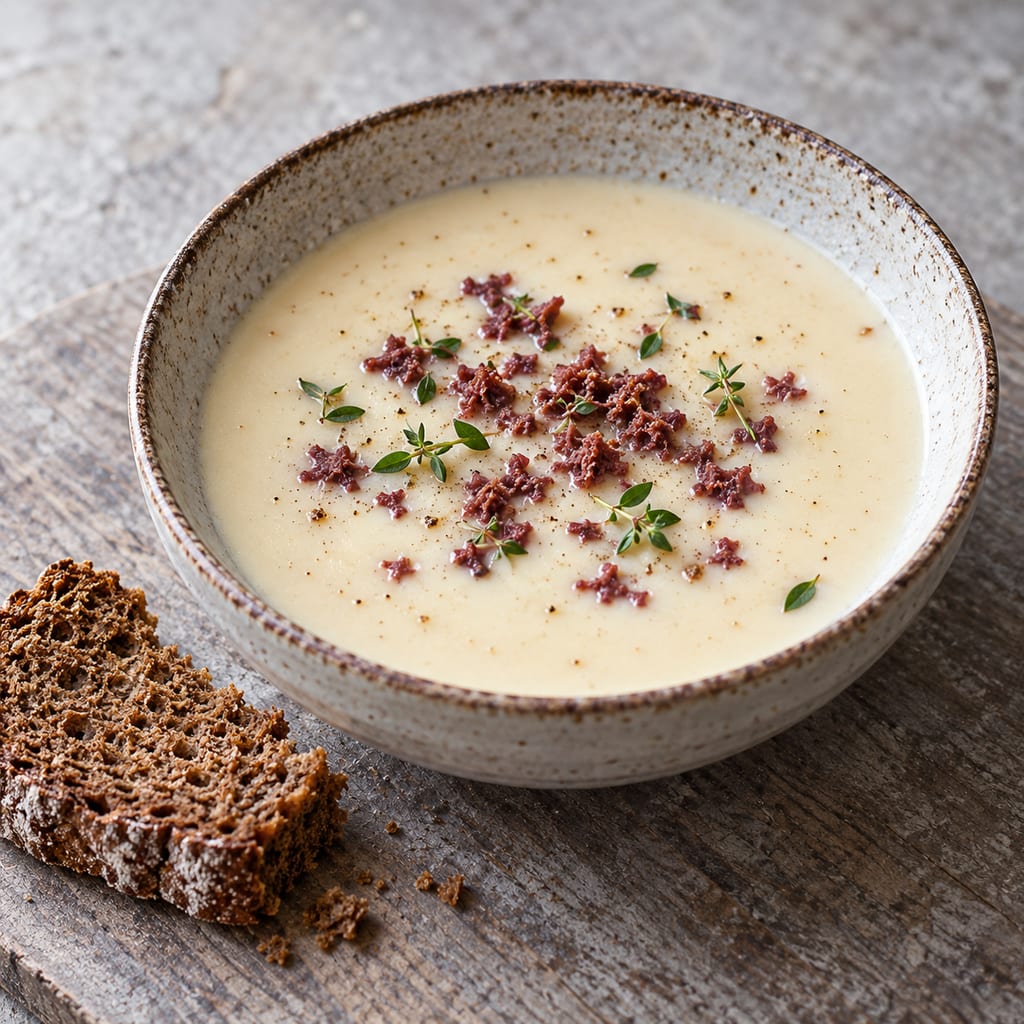
Kylmäsavuporokeitto is a creamy cold-smoked reindeer soup with onion, stock and cheese, served with bread.
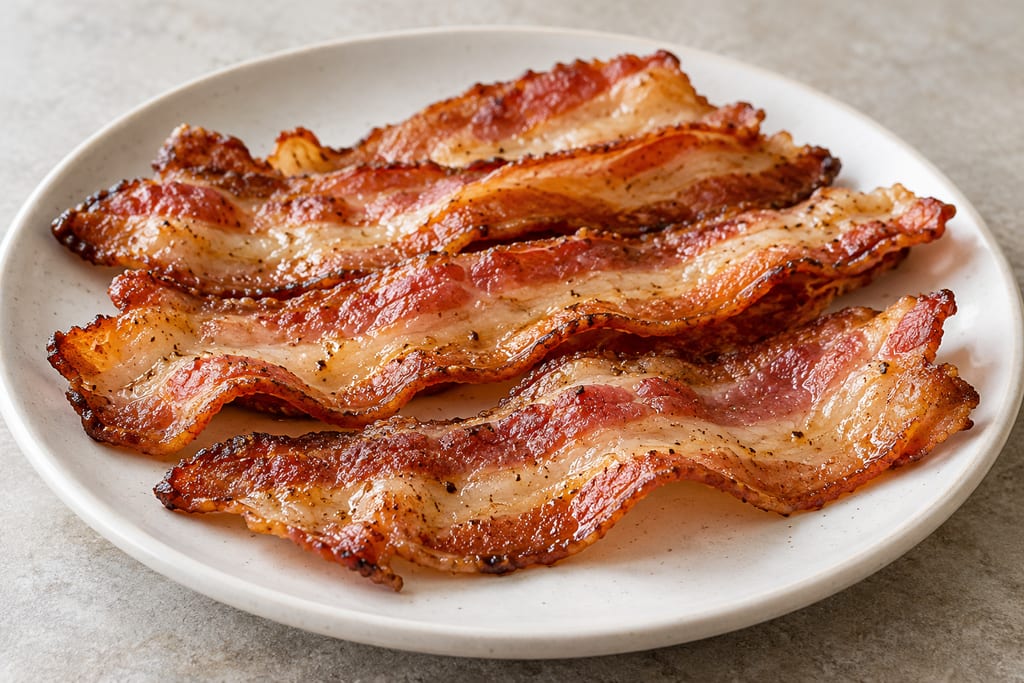
Pork belly receives a measured salt-and-sugar cure with coffee and spices, then is refrigerated before cooking or hot smoking.

Finnish pea soup simmers dried peas with palvikinkku or a vegetable alternative, then is served with mustard and chopped onion.
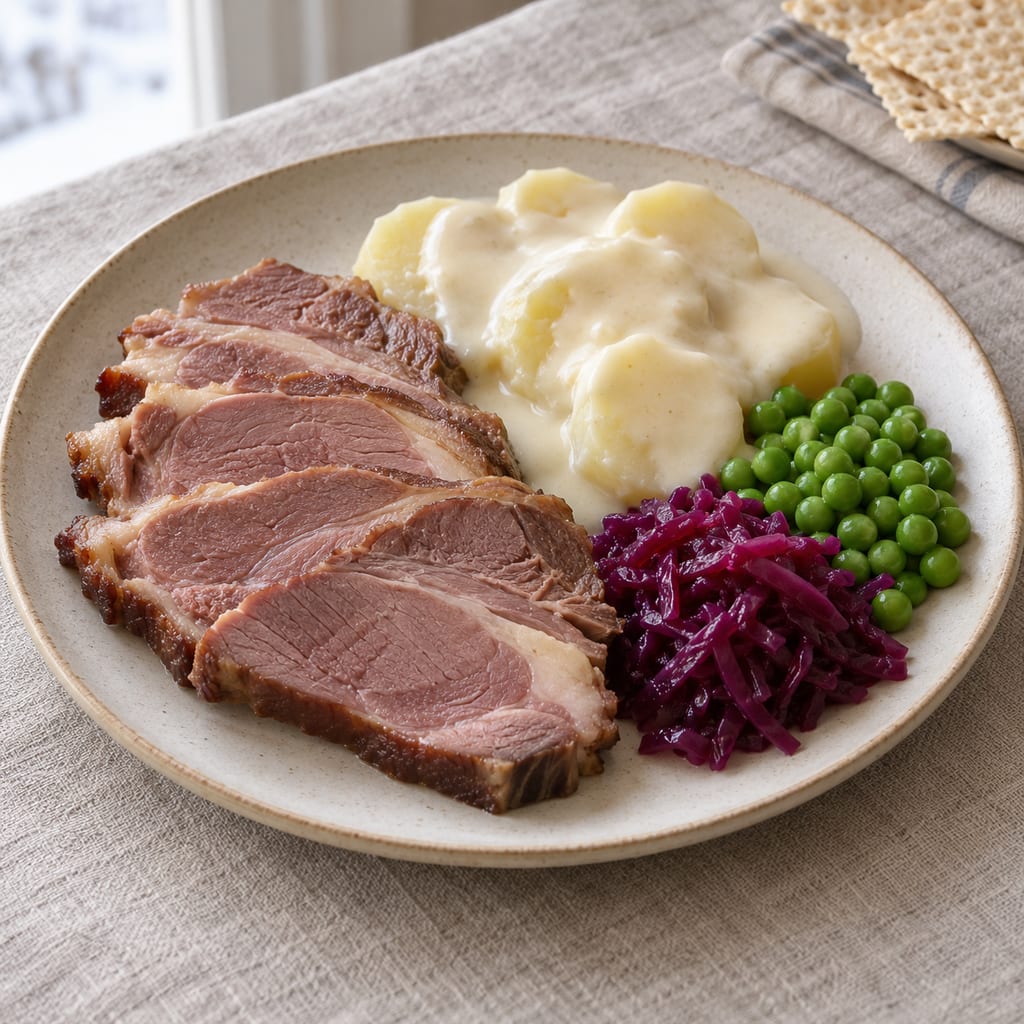
A six-person Icelandic Lamb serving recipe for deboned hangikjöt with potato bechamel, pickled cabbage, peas and laufabrauð. It cooks the product; it does not smoke or cure it.
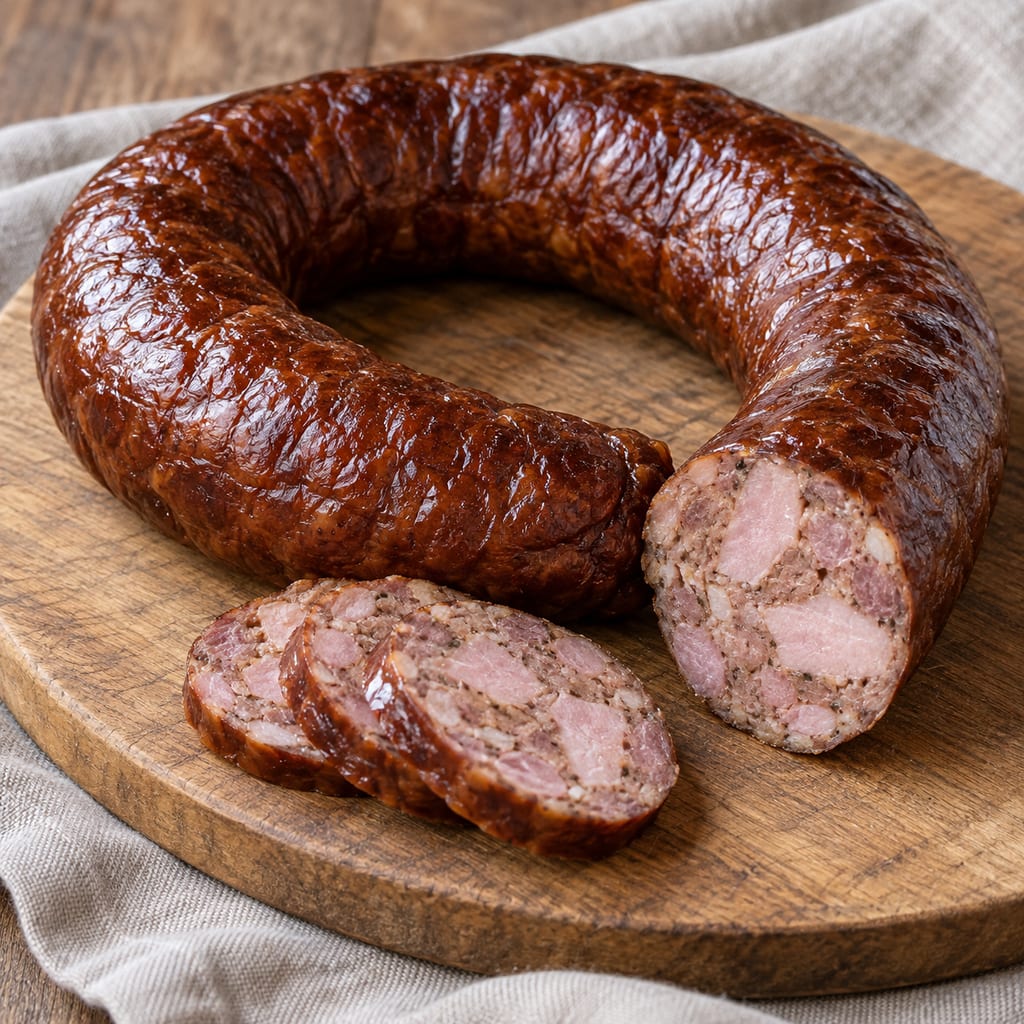
A protected pork sausage associated with Liszki and Czernichów; its application describes commercial curing and smoking, not a home batch.
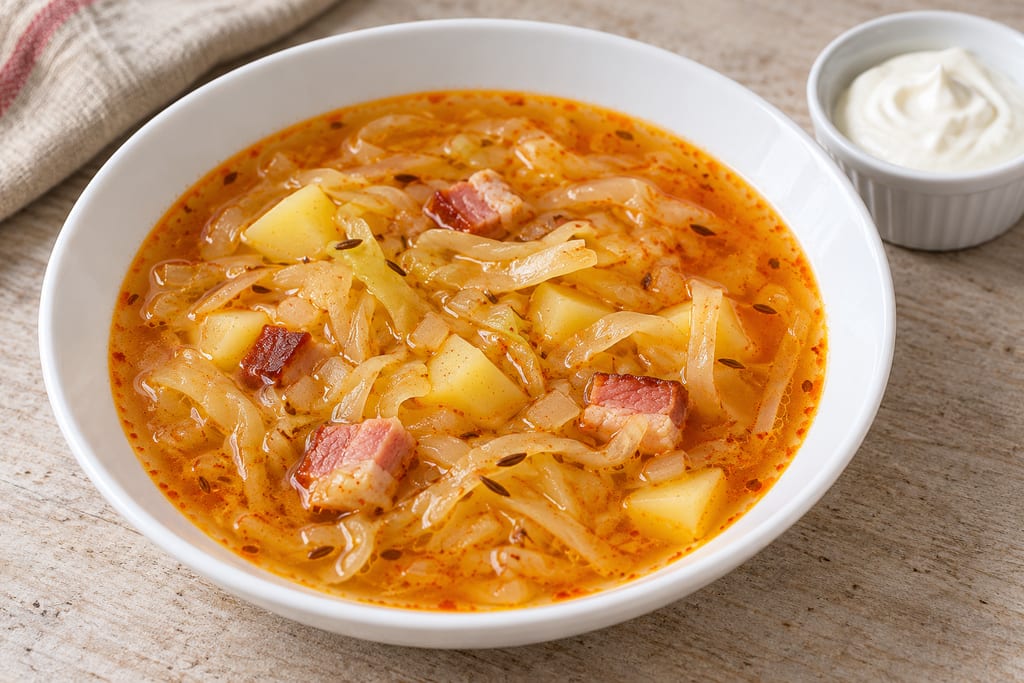
A two-portion cabbage soup with onion, potato and finished Geselchtes, served with garlic sour cream.
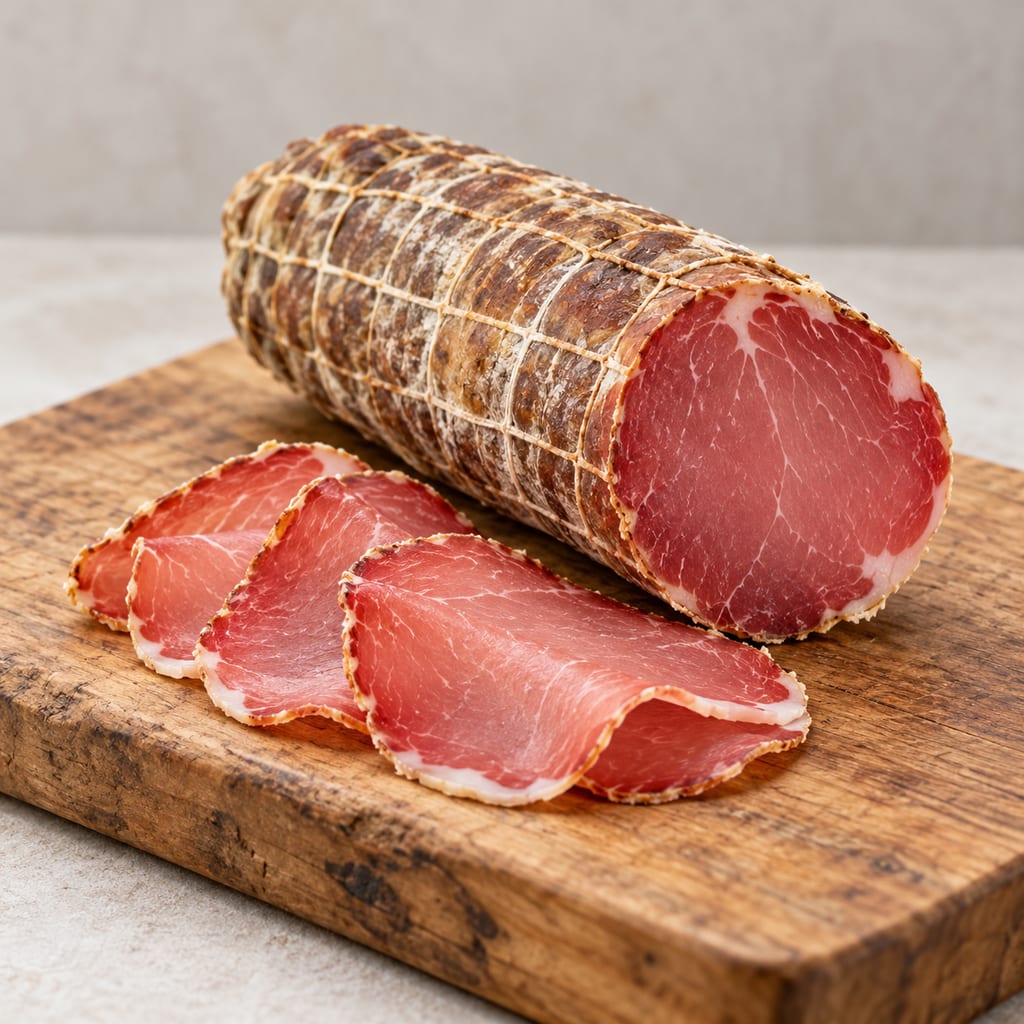
Documentary account of Italian regional cured-loin traditions, including Tuscan and Marche variations; no home-cure instructions are provided because the published professional methods lack validated safety controls.
No community contributions have been published for this entry yet.
Sign in to contribute. Published comments and photos are free to read.
Andreas Lidström and Nils-Tonny Bransfjell; Slow Food SápmiRecipe · Use
Suovas med smörstekt savojkål och mandelpotatisThe page lists ingredients for four portions and twelve ordered stages, including 600 g suovas, a source-specific sauce and a meat slice-size/count ambiguity; no total time or storage guidance is given.
Cited in: What is suovas with almond potatoes?; Names and identification; Sápmi and the reindeer-food tradition; What makes suovas distinctive?; Reindeer meat and flavour; Why the meat is briefly fried; What is mandelpotatis?; Savoy cabbage and butter; The sauce: concentration and balance; Ingredients; Garnish; Ingredients and their functions; Equipment; Stage 1 — Prepare the potatoes; Stage 2 — Prepare the cabbage; Stage 3 — Slice the suovas; Stage 4 — Finish the potatoes in cream; Stage 5 — Add butter and purée; Stage 6 — Fry the cabbage; Stage 7 — Cook the suovas; Stage 8 — Rest; Stage 9 — Melt the sugar; Stage 10 — Add wine, vinegar and tomato paste; Stage 11 — Boil briefly; Stage 12 — Add broth and aromatics; Stage 13 — Reduce; Stage 14 — Finish with butter; Stage 15 — Season; Stage 16 — Plate; Stage 17 — Garnish; Why the sauce uses juniper; How the potato purée differs from ordinary mashed potato; Traditional suovas service; Suovas with flatbread; Other northern potatoes; Other berries; Different sauce styles; How the dish is eaten; Quality indicators; Troubleshooting; Safety; Historical limits
Slow Food Foundation for BiodiversityIdentity · Context
Reindeer SuovasThe separate Swedish Sápmi Presidium page describes one suovas product scope and does not establish that the recipe represents all Sámi regions or communities.
Cited in: Names and identification; Sápmi and the reindeer-food tradition; Reindeer meat and flavour; Why the meat is briefly fried; Ingredients; Ingredients and their functions; Equipment; Stage 1 — Prepare the potatoes; Stage 2 — Prepare the cabbage; Stage 3 — Slice the suovas; Stage 4 — Finish the potatoes in cream; Stage 5 — Add butter and purée; Stage 6 — Fry the cabbage; Stage 7 — Cook the suovas; Stage 8 — Rest; Stage 9 — Melt the sugar; Stage 10 — Add wine, vinegar and tomato paste; Stage 11 — Boil briefly; Stage 12 — Add broth and aromatics; Stage 13 — Reduce; Stage 14 — Finish with butter; Stage 15 — Season; Stage 16 — Plate; Stage 17 — Garnish; Traditional suovas service; How the dish is eaten; Quality indicators; Troubleshooting; Historical limits
Norwegian Food Safety Authority (Mattilsynet)Safety
Kjøtt og vilt når du er gravidThe authority guidance concerns pregnant consumers and product categories stated on the page; it does not classify the particular W04 product unless the listed state/category is established. (Locator: Page dated 2025-03-17, lines 61–72, 77–84: raw meat may carry Listeria/Toxoplasma; its pregnancy guidance says Listeria survives smoking, freezing, salting and curing and grows at refrigerator temperature; the page separately advises following package directions for products that require home heat treatment.)
Finnish Food Authority (Ruokavirasto)Safety
Elintarvikkeiden turvalliseen käyttöön liittyviä yleisiä ohjeita (Table 1)The Finnish table is a pregnancy-specific category guide; it does not establish that the named W04 item was sold raw, ready-to-eat, or unheated. (Locator: Physical PDF p.4 / printed p.4, Table 1: pregnancy guidance lists raw whole meat, cold-smoked meat and uncooked dried reindeer meat, advising that products not heated at any stage be avoided or otherwise handled as stated by the authority; the table gives toxoplasma as its basis.)
Norwegian Food Safety Authority (Mattilsynet)Safety
Råd og advarsler om mat og drikke til gravideThe authority says to contact the producer or importer if uncertain about a product, because they know it best and are responsible for its safety (Locator: lines 117–121).
Slow Food SápmiHistory · Context
Slow Food Sápmi — Sámi food cultureregional food framework
Cited in: Names and identification; Sápmi and the reindeer-food tradition; Traditional suovas service; Historical limits
Swedish Sámi ParliamentHistory
Swedish Sámi Parliament — Sámi livelihoods and culturewider cultural context
Cited in: Names and identification; Sápmi and the reindeer-food tradition; Traditional suovas service; Historical limits
Food Standards ScotlandSafety
Food Standards Scotland — Cookingmodern safety principles
Cited in: Safety