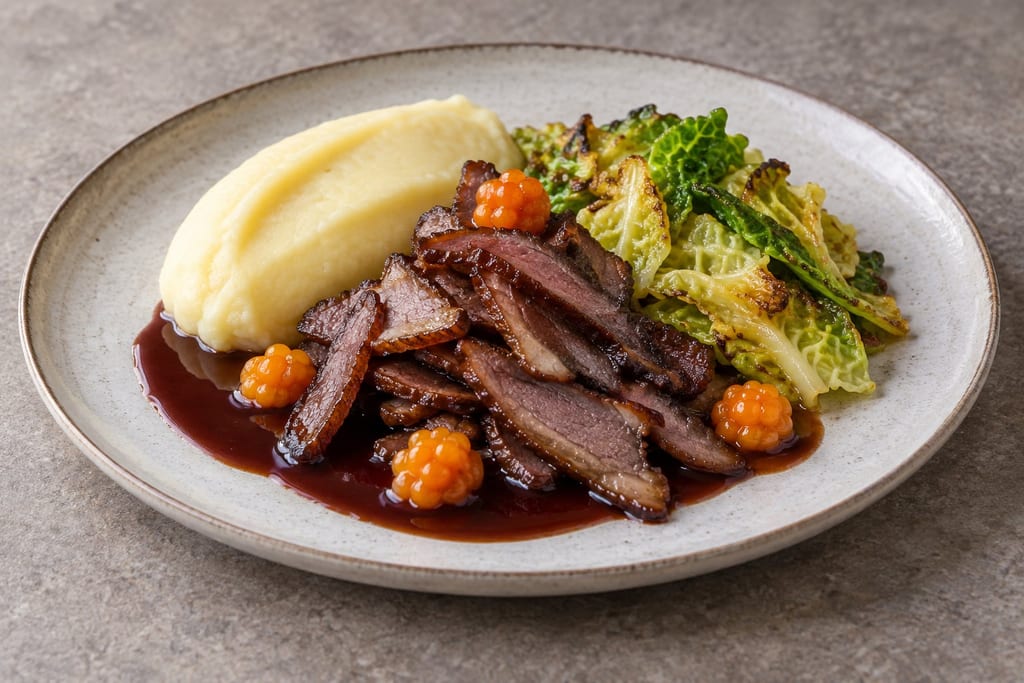
Suovas with savoy cabbage and almond potatoes
Suovas with almond-potato purée pairs pan-fried reindeer meat with buttered savoy cabbage and a reduced red-wine and reindeer-broth sauce.
 FermenteaWhere food goes to change
Traditional method
Suovasbiergu · Goike-suovas · Souvas · Suovastuhttit
Salted reindeer meat hung in the smoke of a lávvu fire over willow, birch or juniper, then cooled and in some Sámi communities dried outdoors into travelling provisions.
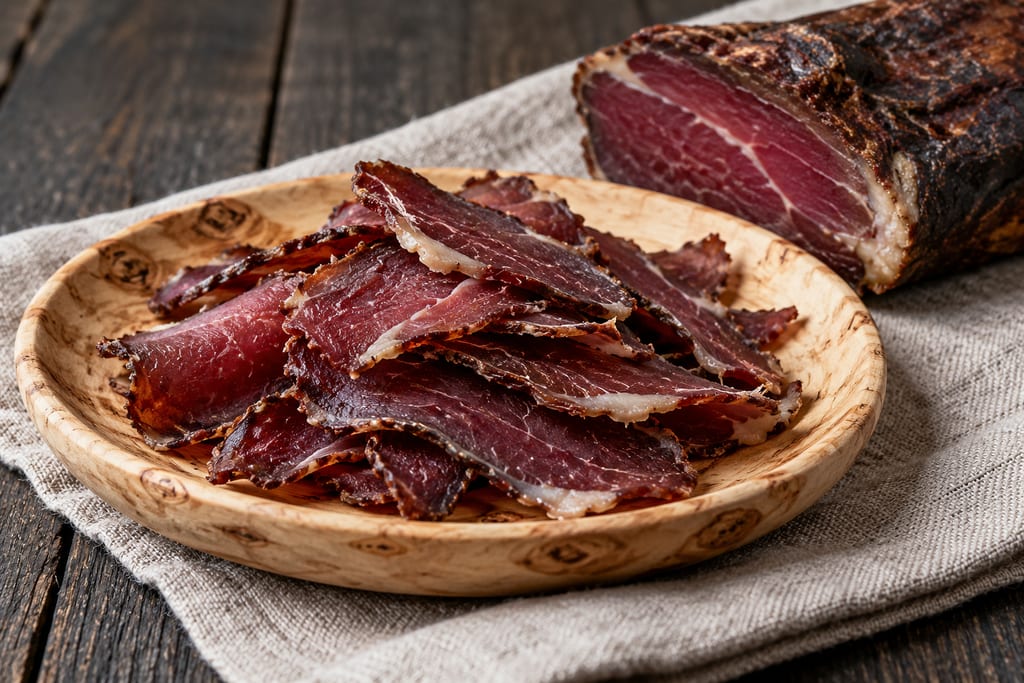
Suovas is one of the characteristic preserved meat preparations of Sámi reindeer-herding communities. The name is widely associated with salted, smoked reindeer meat, but its meaning becomes clearer when understood as part of a wider vocabulary of fire, food and preservation.
In Northern Sámi, suovas refers to smoke or a smoking fire, suovasbiergu means smoked meat, and suovastuhttit describes the practice of smoking meat or fish. Reindeer meat itself is bohccobiergu. The traditional tent used for smoking in many communities is a lávvu, while the horizontal smoking bar may be called a suovasmuorra.
The animal is the reindeer, Rangifer tarandus. What matters for this food, however, is not simply the species but the relationship between reindeer husbandry, slaughter season, meat selection, salt, wood, weather and intended storage.
Sápmi extends across northern Norway, Sweden, Finland and Russia's Kola Peninsula. Its peoples do not share one uniform method of preparing meat. Mountain reindeer herders, forest communities and families living in different ecological regions have developed distinct techniques. Some smoke meat before drying it; others dry meat without smoking; still others produce smoked meat intended for cooking relatively soon.
The distinction matters because smoking, drying and salting accomplish different things. A piece of meat that tastes strongly smoked is not necessarily shelf-stable. A genuinely dried provision may contain considerably less water than a modern refrigerated product sold as suovas.
The history of Sámi smoked reindeer meat is well documented in early modern sources, although the precise date when any particular technique originated remains unknown.
Written descriptions indicate smoked and dried reindeer meat in Sápmi by approximately 1600. During his northern travels in 1732, Carl Linnaeus recorded reindeer slaughtered before the rut, salted and stored, then dried by the weather, sun, fire and chimney smoke.
Descriptions from 1767 record mountain Sámi smoking reindeer ribs. The meat could be pierced and salted before hanging in the smoke near the opening of a tent. These accounts reveal a practical system combining several preserving influences, rather than the invention of a single standardized product.
Later ethnographic descriptions distinguish procedures in northern and southern Swedish Sápmi, as well as Norwegian communities.
On the Norwegian side, autumn and summer smoking was especially associated with migration and slaughter periods. On the Swedish side, spring smoking could be followed by prolonged outdoor drying.
Historical accounts also distinguish mountain Sámi who smoked meat before drying it from forest Sámi who dried meat without the same preliminary smoking process. These distinctions cannot be reduced to national borders alone.
The portable character of the resulting provisions is central. Herders travelled long distances with animals, often away from permanent kitchens. Dried or smoked meat could accompany bread and other supplies, be eaten during stops, or be cooked over a temporary fire.
A 2022 study developed directly with Sámi herders documented the technical knowledge involved in selecting wood, positioning meat, managing smoke and evaluating results. It also demonstrated how much of this expertise is transmitted by watching experienced family and community members rather than by following numerical recipes.
Three interacting processes explain the keeping qualities of preserved reindeer meat.
Salting changes the distribution of water between the meat and its surroundings. Salt dissolves in surface moisture, diffuses inward and reduces the availability of some water to microorganisms. It also influences muscle-protein behavior and the taste of the finished product.
Drying removes water by evaporation. The critical scientific concept is water activity, not simply how dry something feels. Microorganisms require available water to multiply. A product can lose considerable weight and still retain sufficient water activity for dangerous organisms to grow.
Smoking deposits compounds from wood combustion onto the meat. These include phenolic substances, carbonyl compounds and organic acids that affect aroma, color and surface microbial activity. Smoking can also contribute some drying when the surrounding conditions encourage evaporation.
These mechanisms are complementary but not interchangeable. Smoking does not sterilize meat, and a smoked surface does not demonstrate that the center has reached a safe water activity.
In traditional cold-smoking arrangements, low-temperature smoke contacts meat suspended well above the fire. Excessive heat changes the operation from smoking toward cooking, while unstable airflow can produce uneven deposition and soot.
Another chemical issue is the formation of polycyclic aromatic hydrocarbons, or PAHs. These compounds can form through incomplete combustion and be deposited on smoked food. Some are carcinogenic.
Research involving traditionally smoked Sámi reindeer meat found that the type and condition of the wood, the form of the fire and whether fatty tissue was present could substantially affect contamination.
Willow smoke and birch smoke are not chemically identical. Burning small birch twigs can create different conditions from burning larger logs. Fat exposed to smoke can collect undesirable compounds, and flames or heavy soot deposits are warning signs.
This explains why selecting firewood is not merely a matter of flavor preference. It is a technical decision affecting the finished food.
The sequence begins with animal and cut selection.
Legs, shoulders, ribs, loins, neck meat, heart and tongue have all been documented as suitable preparations in different households. The age and condition of the animal influence fatness, muscle structure and the amount of usable meat.
Large bone-in pieces require particular attention. Experienced herders may loosen bones and open thick muscle sections so that the meat can hang more evenly.
Some cuts are stretched with small wooden sticks, called caggi, to expose more surface and avoid folds that might remain wet.
Next comes salting.
In the Norwegian lávvu-smoking cases documented in 2022, meat was salted overnight. Each cut received what the practitioners described as a handful of salt, with larger pieces arranged at the bottom of the salting container.
This is a description of a particular practice, not a reproducible salt concentration. The study does not establish the percentage of salt absorbed into every cut.
Historical Swedish accounts give much longer and more varied salting practices. One southern example describes meat salted for three months before spring smoking; northern descriptions include one to three days or three to four days.
These are genuinely different local methods, not minor discrepancies to average into a universal recipe.
The smoking site is then prepared. In the lávvu arrangement, the hearth, árran, sits centrally, with meat suspended above it near the smoke outlet.
The tent must provide controlled airflow. The opening at the top, reahpen, and the lower edges of the covering influence draft.
The smoking bar supports pieces separated from one another. If neighboring cuts touch, the contact areas may receive less smoke and dry unevenly.
Thicker, meatier pieces may be positioned differently from ribs and smaller cuts. Meat can also be moved during smoking so that different surfaces receive sufficient exposure.
The wood is selected and managed deliberately.
The 2022 fieldwork recorded willow, birch and juniper in different combinations. Fresh or moist wood may be used to manage smoke and moderate flaming, while drier material is introduced at particular stages.
Large pieces of wood and smaller branches burn differently. The shape, moisture and species of the wood affect both combustion and flavor.
An important early task is establishing the outer surface of the meat without overheating it. Once a firmer surface has formed, the fire may be adjusted.
Too much heat can cause fat to drip and meat to cook instead of smoke. Adding water or snow to a fire can suppress flames, but some practitioners caution that it can also produce soot.
Smoke exposure must therefore be regulated throughout the process. The person responsible observes the fire, weather, meat surface and movement of smoke, making adjustments rather than relying on a clock alone.
After smoking, the meat is cooled.
Herders have described leaving the pieces hanging, sometimes overnight, before packing or freezing them. This permits further cooling and drying and avoids putting warm, recently smoked meat directly into storage.
In one established commercial tradition supported by Slow Food, reindeer loin is dry-salted and smoked in a peaked hut for approximately eight hours. This is a product-specific specification and must not be generalized to all Sámi smoking or drying.
Fully air-dried reindeer meat deserves recognition alongside suovas.
Spring drying exploits a combination of cold weather, moving air and reduced insect activity. In suitable conditions, moisture can leave exposed meat before warmer weather brings a greater risk of insects and spoilage.
Drying may follow freezing, salting or smoking. The order depends on the community and intended product.
In Sweden, a smoked-then-dried form may be called goike-suovas, literally associated with dry smoked meat. Plain air-dried preparations need not undergo smoking at all.
Outdoor drying requires an understanding of changing weather, moisture, the thickness of the cuts and protection from animals and insects. A cold day is not automatically a dry day, and exposed surfaces can become moist again if conditions change.
The resulting meat was valuable because it concentrated nourishment while reducing the burden of carrying water. Its texture could become sufficiently firm to permit slicing or shaving into food.
For herders on the move, weight reduction and portability were as important as flavor.
Willow-smoked meat has been described as relatively mild and reddish in color.
Birch smoke may produce darker brown meat with a more pronounced smoky or bitter character. Birch combined with juniper can produce a dark reddish-brown appearance.
These observations reflect specific families' comparisons. Color is not a scientifically validated indicator of safe preservation.
Some people prefer the delicacy of willow-smoked meat; others favor the stronger flavor of birch.
In certain households, strongly smoked meat is boiled before frying. This can soften the texture while moderating a powerful smoke character.
The existence of different preferences is significant. A modern commercial description of suovas as a delicate cold-smoked loin does not encompass every historical form.
Finland also has a recognized tradition of cold-smoked reindeer meat, although Finnish product names, geographical specifications and commercial standards must be considered separately from the broader Sámi system.
Suovas can be eaten in thin slices, cooked over a fire, fried, grilled or incorporated into larger dishes, depending on its preparation and the safety controls applied by its producer.
One traditional combination is smoked reindeer with unleavened bread. The bread provides a convenient, portable accompaniment to concentrated meat.
Lingonberries offer tartness against the savory meat. Pickled mushrooms provide acidity and an earthy contrast. Modern presentations may incorporate potatoes, vegetables or other ingredients.
Thinly sliced smoked reindeer can be quickly heated in a pan, particularly when the meat has already been appropriately processed and stored.
Stronger-smoked pieces may benefit from simmering before further cooking. Dried meat can also be rehydrated as part of soup or stew preparation.
These preparations serve different purposes. Quickly frying thin slices celebrates smoke flavor and tenderness, while simmering dry provisions restores some moisture and allows them to become part of a substantial meal.
Modern refrigerated suovas should be handled in accordance with its producer's instructions. Historical accounts of meat eaten without additional cooking do not demonstrate that every contemporary or homemade smoked product is ready to eat.
Experienced herders assess smoked meat by touch, stiffness, smell and visual appearance.
Documented indicators include a surface that feels dry rather than sticky, meat that has become firmer than when it was hung, and coloration characteristic of the selected wood.
A willow-smoked product may appear lighter and redder. Birch-smoked meat may look darker.
Failure to smoke all surfaces evenly is a process problem. Cuts touching each other, folded sections of muscle and dense arrangements on the smoking bar can create protected areas.
Excessive flaming, dripping fat and thick soot indicate undesirable fire conditions.
A tacky or slimy surface, abnormal decay odor, unexpected mold growth or visible contamination warrants rejection rather than additional smoke exposure.
However, the absence of obvious spoilage does not establish safety. Pathogens can be present without producing detectable odor or color changes.
The research does not provide a single validated temperature, salt percentage, water-activity target or finished moisture concentration applicable to every kind of traditional suovas.
That absence must be preserved rather than filled with a guessed formula.
For modern production, controls need to address raw-meat hygiene, parasite and bacterial hazards, salting consistency, smoke exposure, drying conditions, storage temperature and the intended cooking or ready-to-eat status.
The health research on PAHs offers specific practical findings: avoid smoking fatty tissue where contamination is elevated, avoid excessive smoke-temperature peaks and soot, and prefer suitable larger birch logs over small birch twigs. Willow produced comparatively favorable results in the studied arrangements.
These findings concern smoke contamination. They do not independently prove microbiological safety.
A household smoker following an approximate historical description should not assume that the resulting reindeer meat will be safe at room temperature.
The strongest lesson is that traditional smoking involves a complete system of ecological and technical knowledge. Wood, airflow, salt, cut thickness, climate, timing and storage must all work together.
Suovas becomes intelligible as part of a vocabulary of fire, food and preservation rather than as a single product. In Northern Sámi suovas is smoke or a smoking fire, suovasbiergu is smoked meat, suovastuhttit is the practice of smoking meat or fish, and the tent used for smoking in many communities is a lávvu with a horizontal smoking bar that may be called a suovasmuorra. What governs the food is the relationship between reindeer husbandry, slaughter season, meat selection, salt, wood, weather and intended storage, and herders travelling long distances away from permanent kitchens needed provisions that could accompany bread and other supplies, be eaten during stops or cooked over a temporary fire. The written record distinguishes mountain Sámi who smoked meat before drying it from forest Sámi who dried without that preliminary smoking, and separates Norwegian autumn and summer smoking tied to migration and slaughter from Swedish spring smoking followed by prolonged outdoor drying. A 2022 study developed directly with herders documented how the selection of wood, positioning of meat, management of smoke and evaluation of results are transmitted by watching experienced family and community members rather than through numerical recipes, which is why the historical record carries practices and not specifications.
Scaling: source batch only
The research provides no single validated temperature, salt percentage, water-activity target or finished moisture concentration applicable to any kind of traditional suovas, and a smoked surface does not demonstrate that the centre of the piece has reached a safe water activity.
Hazard sourcePAHs can form through incomplete combustion of wood and be deposited on smoked food, and some are carcinogenic. Wood type and condition, the form of the fire and the presence of fatty tissue substantially affected contamination in traditionally smoked Sámi reindeer meat.
Hazard sourceCuts touching one another, folded sections of muscle and dense arrangements on the smoking bar create areas shielded from the smoke, so parts of a batch can remain moist while the rest appears finished.
Hazard sourceA tacky or slimy surface, abnormal decay odour, unexpected mould or visible contamination warrants rejection rather than more smoke, but pathogens can be present without producing any detectable odour or colour change.
Hazard sourceAvoid smoking fatty tissue and prefer suitable larger birch logs to small birch twigs
Control sourceKeep the fire low and steady, avoiding smoke-temperature peaks, flaming, dripping fat and thick soot
Control sourceHang pieces separated on the bar and move them during smoking so that every surface is exposed
Control sourceCool the smoked meat, hanging, before packing or freezing rather than storing it warm
Control sourceFor modern production, control raw-meat hygiene, parasite and bacterial hazards, salting consistency, smoke exposure, drying conditions, storage temperature and the intended cooking or ready-to-eat status
Control sourceNo validated salt percentage, smoking temperature, drying duration or finished water activity exists for traditional suovas in this research, and that absence must be preserved rather than filled with a guessed formula.
Smoking does not sterilise meat: a strongly smoked surface is no evidence that the interior of the piece has reached a safe water activity.
A household smoker following an approximate historical description should not assume that the resulting reindeer meat will be safe at room temperature.
The documented salting practices — overnight, one to three days, three to four days, and three months before spring smoking — are different local methods, not points on a range to interpolate.
The findings on wood species, log size and soot concern smoke contamination only and do not independently establish microbiological safety.
Meat colour tells you which wood was burned; it is not a validated indicator of safe preservation.
Modern refrigerated suovas should be handled according to its producer's instructions: historical accounts of meat eaten without further cooking do not show that a contemporary or homemade smoked product is ready to eat.
Sápmi extends across northern Norway, Sweden, Finland and Russia's Kola Peninsula. This row records the association at the level of the cultural region only. The account is explicit that its peoples do not share one uniform method of preparing meat, that mountain reindeer herders, forest communities and families in different ecological regions have developed distinct techniques, and that those distinctions cannot be reduced to national borders. It claims no locality and no single community practice, and it does not assert that every Sámi community smokes meat.
The 2022 participatory study documented lávvu smoking with Sámi herders on the Norwegian side, where autumn and summer smoking was especially associated with migration and slaughter periods. A country-level row for where that fieldwork was carried out. It does not claim that this is how reindeer meat is smoked throughout Norway, nor that the practices recorded are shared by Norwegian households generally.
Historical and ethnographic accounts distinguish procedures in northern and southern Swedish Sápmi, including spring smoking followed by prolonged outdoor drying and the smoked-then-dried form called goike-suovas. A country-level row covering those written descriptions. The account keeps the northern and southern procedures and their very different salting times apart, and this row does not merge them or claim a Swedish national method.
Finland has a recognised tradition of cold-smoked reindeer meat. The account is explicit that Finnish product names, geographical specifications and commercial standards must be considered separately from the broader Sámi system, so this row records only that the tradition is present in the country and claims nothing about those names or standards, and nothing about any locality.
Suovas with almond-potato purée pairs pan-fried reindeer meat with buttered savoy cabbage and a reduced red-wine and reindeer-broth sauce.
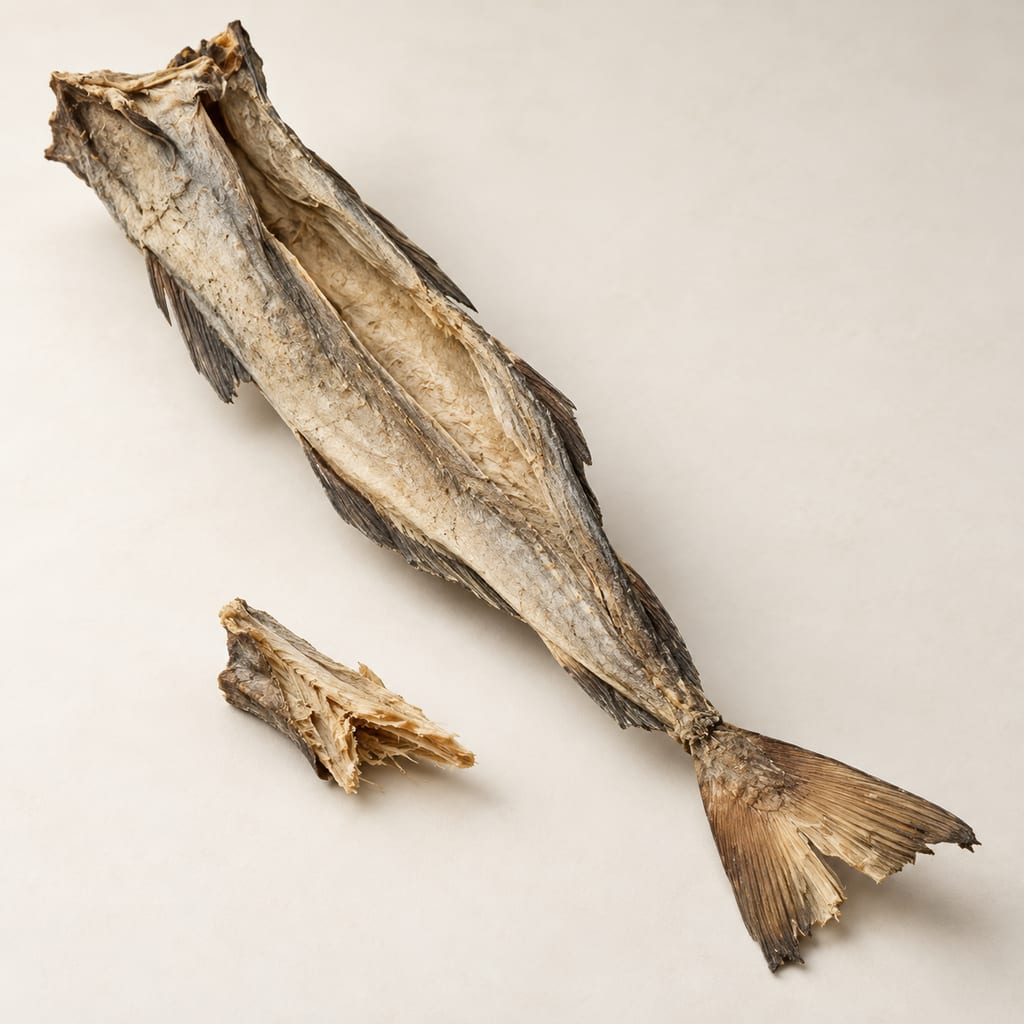
Cod hung on open racks in cold northern air until most of its water has gone, leaving a hard, light, unsalted fish that keeps and travels and must be soaked for days before cooking.
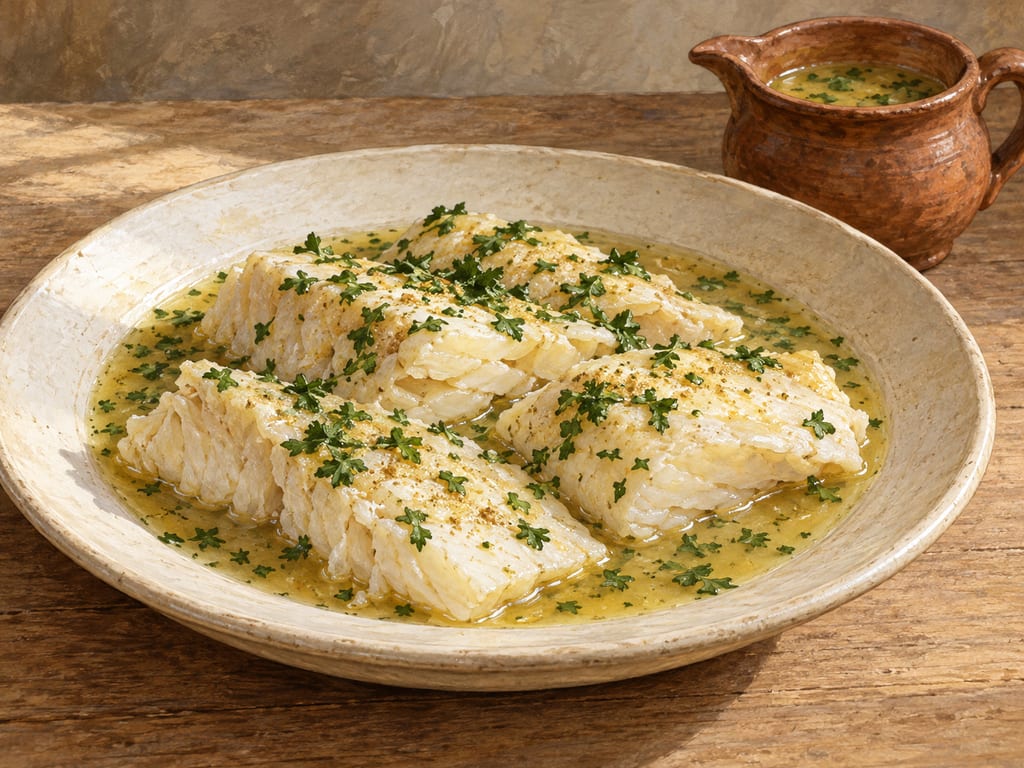
A fifteenth-century English way to serve cooked stockfish: strained fish broth boiled with chopped parsley, powdered ginger and a little verjuice, then poured hot over the fish.
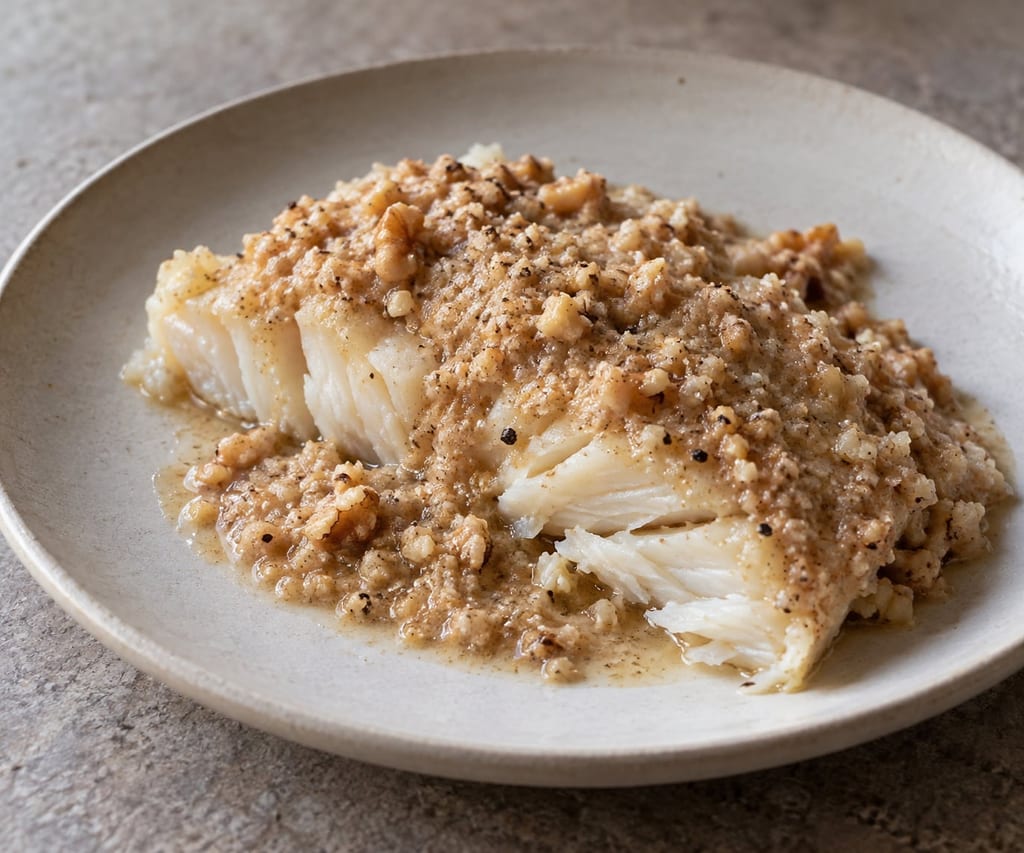
The second stockfish sauce from a fifteenth-century English manuscript: walnuts, garlic, bread, pepper and salt ground in a mortar and loosened with the fish's own broth.
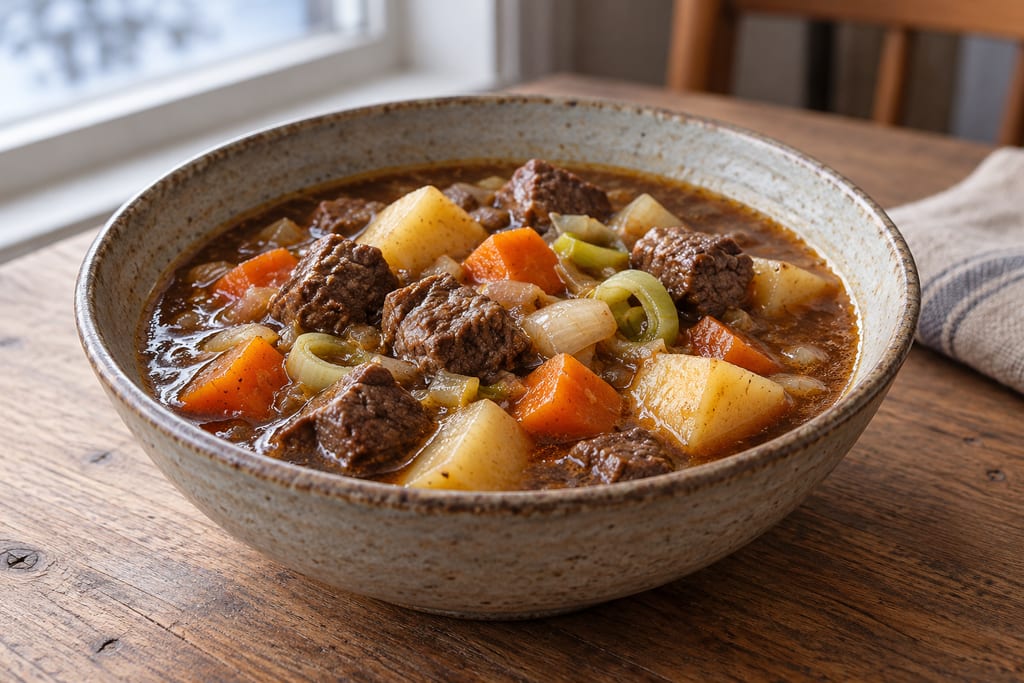
Ann-Kristine Bongo's four-serving bidus from Sami Siida in Alta is a contemporary, festive reindeer stew simmered with onion, carrots and potatoes.
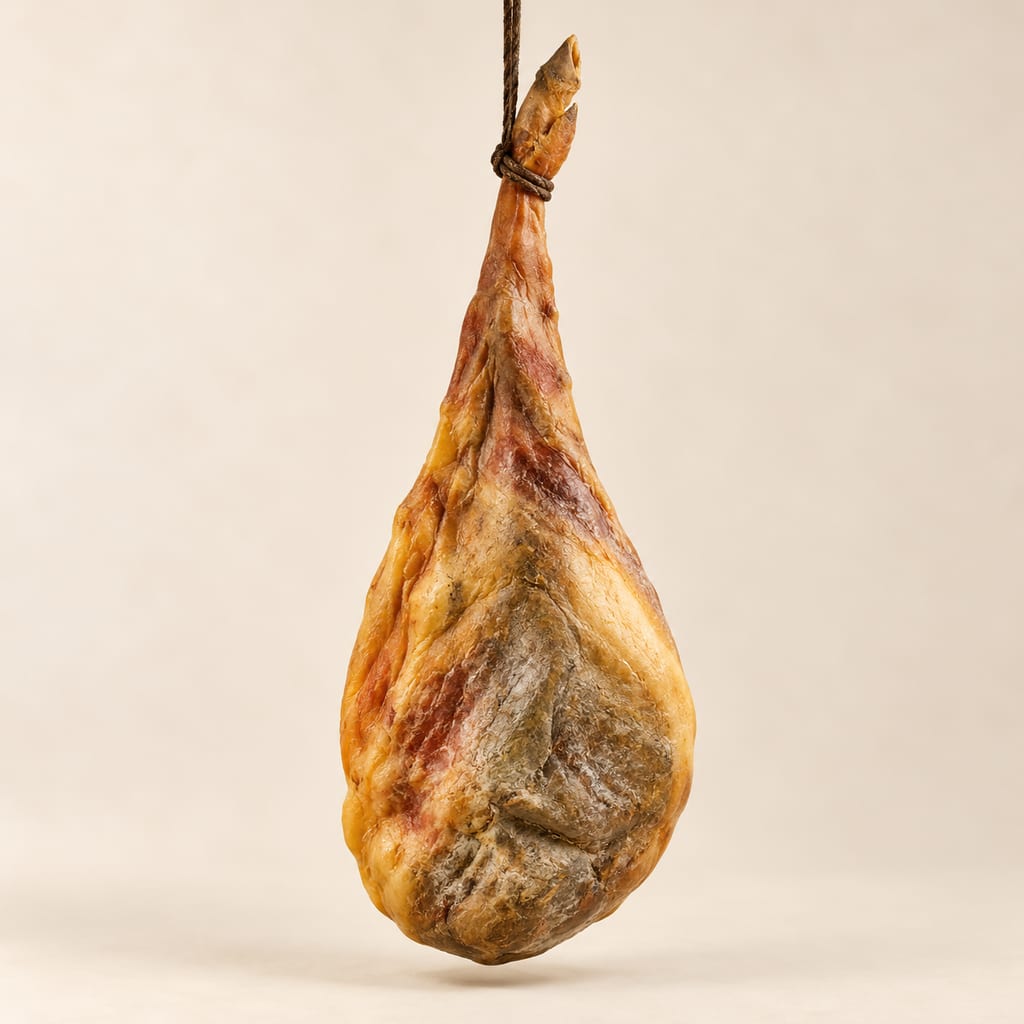
Cato the Elder records a second-century BCE sequence for salting, air-drying, and smoking ham. This historical account is not a validated modern curing protocol.

Kylmäsavuporokeitto is a creamy cold-smoked reindeer soup with onion, stock and cheese, served with bread.
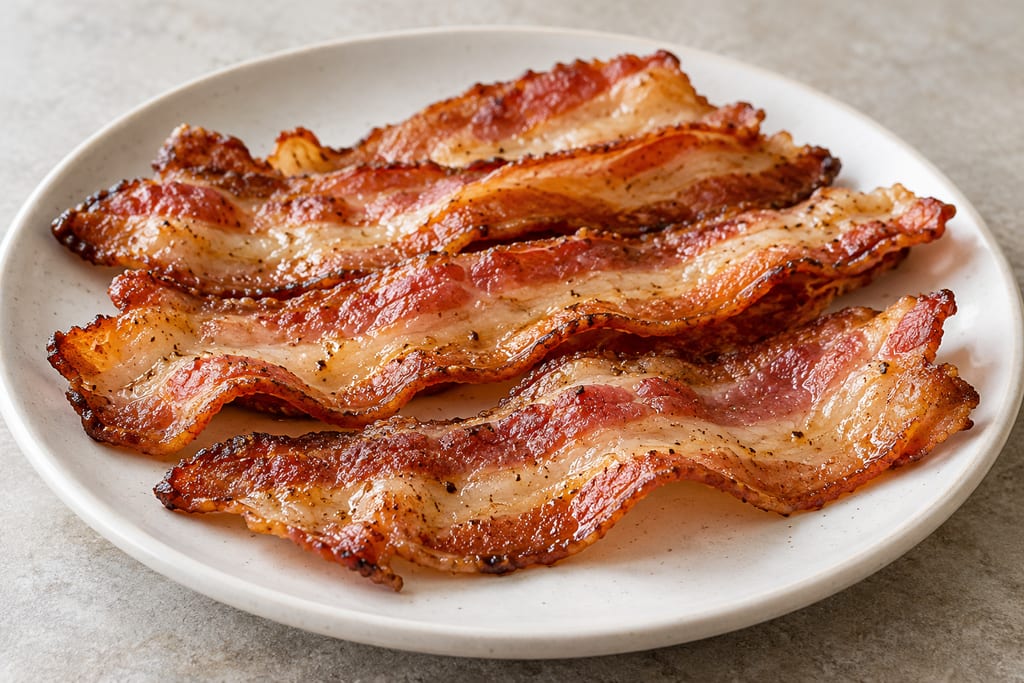
Pork belly receives a measured salt-and-sugar cure with coffee and spices, then is refrigerated before cooking or hot smoking.

Finnish pea soup simmers dried peas with palvikinkku or a vegetable alternative, then is served with mustard and chopped onion.
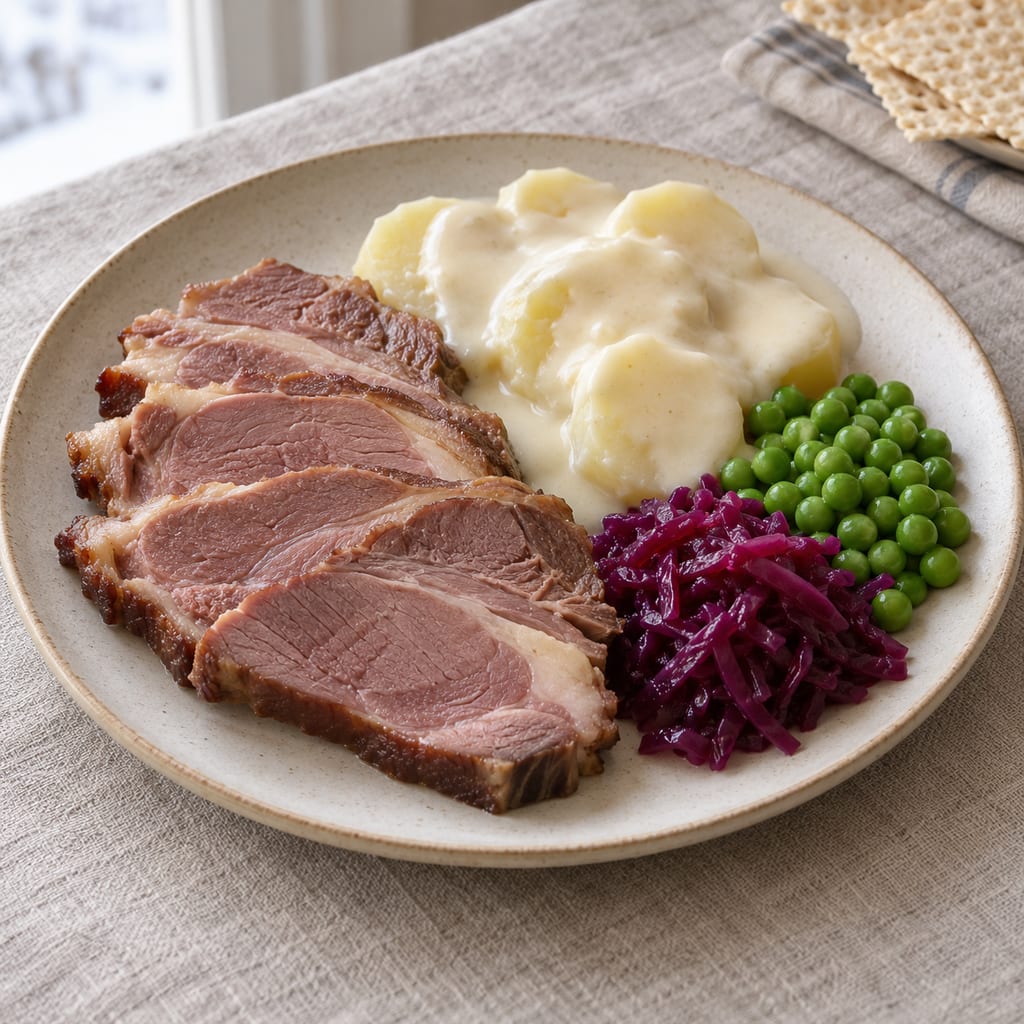
A six-person Icelandic Lamb serving recipe for deboned hangikjöt with potato bechamel, pickled cabbage, peas and laufabrauð. It cooks the product; it does not smoke or cure it.
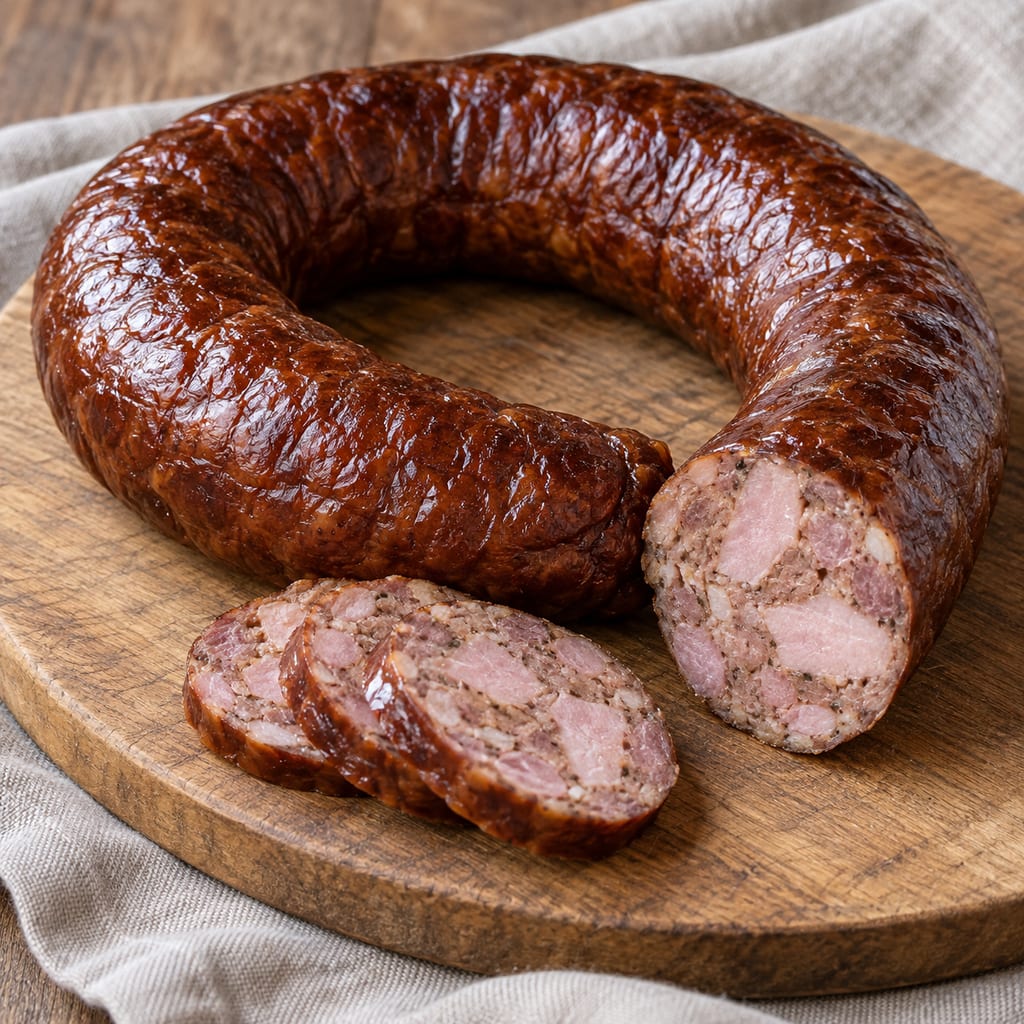
A protected pork sausage associated with Liszki and Czernichów; its application describes commercial curing and smoking, not a home batch.

A two-portion cabbage soup with onion, potato and finished Geselchtes, served with garlic sour cream.
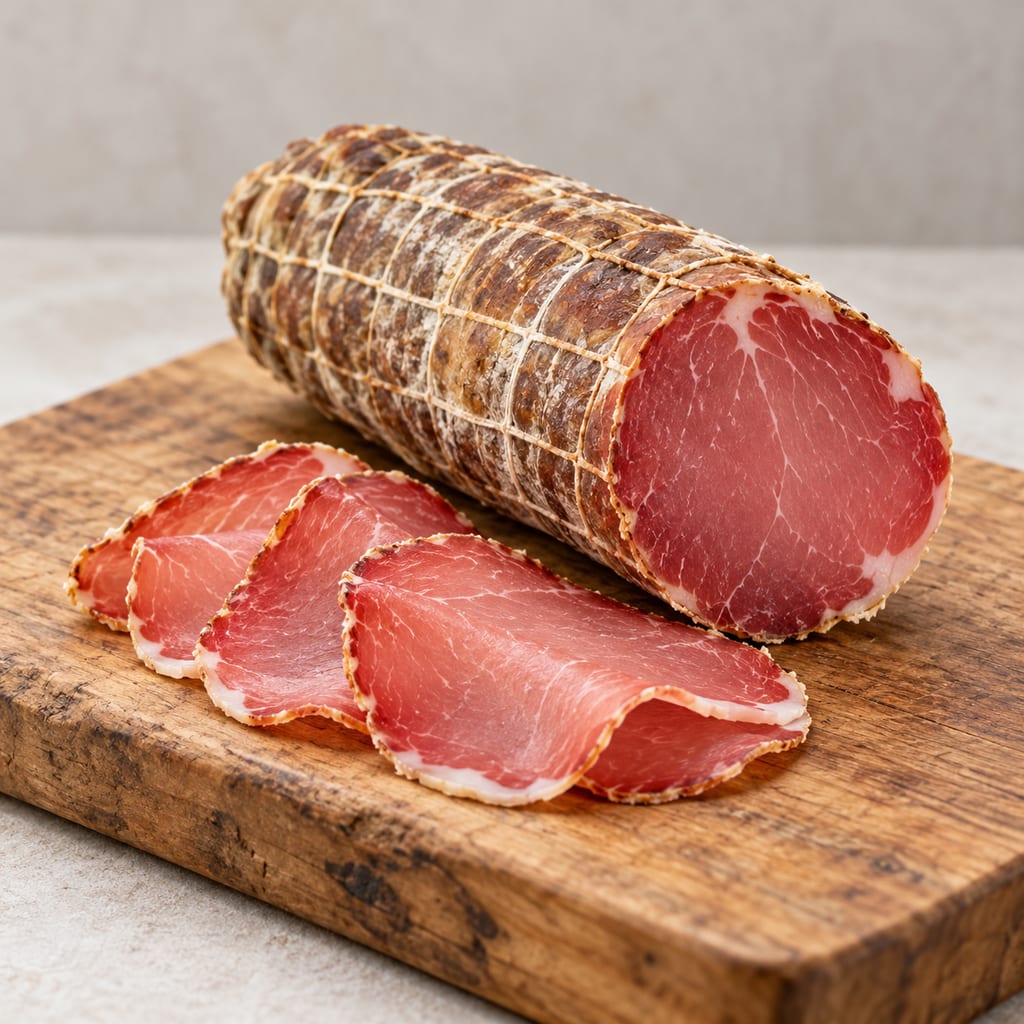
Documentary account of Italian regional cured-loin traditions, including Tuscan and Marche variations; no home-cure instructions are provided because the published professional methods lack validated safety controls.

A gelling polysaccharide extracted from red seaweeds, sold as kanten strips or powder; it sets firm at a low concentration and stays solid until about 85 °C.

A Dominican table and seasoning condiment of sour orange juice, mixed with lime and salt and bottled raw; garlic, oregano or a hot pepper may be added for meat or a spicier bottle.

Cicerbita alpina is an alpine perennial whose tender shoots and leaves have been eaten raw or cooked. Sámi milk preparations and modern Carnian dishes are distinct uses, with serious identification and preservation limits.

Japanese skipjack tuna cooked, then repeatedly smoked and dried over a wood fire by the hand-fired tebiyama method into a hard block for shaving into dashi: the first stage of katsuobushi.

A Swedish-style spirit vinegar made by fermenting neutral alcohol with live vinegar bacteria, with a separate guide to commercial ättika strengths.

A yeast-raised wheat ring shaped from a firm dough, briefly boiled and baked. This source-batch formula gives a gently malted crust and a chewy crumb.

A warm dip of garlic, anchovy and olive oil, often enriched with butter, that Piedmont serves over a flame with raw and cooked vegetables and bread.

Bechamel is a white sauce of milk thickened with a butter and flour roux, one of the French mother sauces, and the base from which Mornay and other cheese and cream sauces are made.
No community contributions have been published for this entry yet.
Sign in to contribute. Published comments and photos are free to read.
Food EthicsMethod · History · Science
Sámi Traditional Knowledge of Reindeer Meat SmokingA 2022 participatory study developed directly with Sámi herders documents the technical knowledge of selecting wood, positioning meat, managing smoke and evaluating results, and shows how much of that expertise is transmitted by watching experienced family and community members rather than by following numerical recipes.
In the Norwegian lávvu-smoking cases it documents, meat was salted overnight and each cut received what the practitioners described as a handful of salt, with larger pieces arranged at the bottom of the salting container; the study does not establish the percentage of salt absorbed into any cut.
The lávvu arrangement: the hearth, árran, sits centrally with meat suspended above it near the smoke outlet, while the reahpen at the top and the lower edges of the covering control the draft, and pieces on the smoking bar are kept separated so contact areas are not shielded from smoke.
Willow, birch and juniper were recorded in different combinations; fresh or moist wood is used to manage smoke and moderate flaming, and drier material is introduced at particular stages.
Documented indicators of a finished product are a surface that feels dry rather than sticky, meat firmer than when it was hung, and colouration characteristic of the selected wood; the herders also leave pieces hanging, sometimes overnight, to cool before packing or freezing.
Cited in: Reindeer, smoke and the seasonal food economy; Historical foundations; The actual preservation mechanisms; The traditional production sequence; Regional differences in flavor; How suovas is eaten; What successful processing looks like
Polar RecordHistory
The knowledge that went up in smokeA 2020 review of the historical literature on smoked reindeer meat: written descriptions indicate smoked and dried reindeer meat in Sápmi by approximately 1600, Carl Linnaeus recorded in 1732 reindeer slaughtered before the rut, salted and stored, then dried by the weather, sun, fire and chimney smoke, and descriptions from 1767 record mountain Sámi smoking reindeer ribs pierced and salted before hanging in the smoke near the opening of a tent.
Later ethnographic descriptions distinguish procedures in northern and southern Swedish Sápmi from Norwegian communities, and distinguish mountain Sámi who smoked meat before drying it from forest Sámi who dried meat without that preliminary smoking.
Historical Swedish salting practices differ widely: one southern example describes meat salted for three months before spring smoking, while northern descriptions include one to three days or three to four days.
In Sweden a smoked-then-dried form may be called goike-suovas; plain air-dried preparations need not be smoked at all.
Cited in: Reindeer, smoke and the seasonal food economy; Historical foundations; Air-dried meat and goike-suovas
Taylor & FrancisScience · Safety
Bridging traditional and scientific knowledge on reindeer meat smokingA pilot study of smoke chemistry and polycyclic aromatic hydrocarbon exposure in traditionally smoked Sámi reindeer meat: PAHs can form through incomplete combustion and be deposited on smoked food, and some are carcinogenic.
The type and condition of the wood, the form of the fire and whether fatty tissue was present could substantially affect contamination. Willow smoke and birch smoke are not chemically identical, and burning small birch twigs can create different conditions from burning larger logs.
Practical findings: avoid smoking fatty tissue where contamination is elevated, avoid excessive smoke-temperature peaks and soot, and prefer suitable larger birch logs over small birch twigs. Willow produced comparatively favourable results in the studied arrangements. These findings concern smoke contamination and do not independently prove microbiological safety.
Cited in: The actual preservation mechanisms; Regional differences in flavor; Safety and limits of historical instructions
Slow Food Foundation for BiodiversityMethod
Slow Food Foundation: Reindeer SuovasA community-linked product record for reindeer suovas: in one established commercial tradition, reindeer loin is dry-salted and smoked in a peaked hut for approximately eight hours. That is a product-specific specification and is not generalised to all Sámi smoking or drying.
Serving practice: thin slices, cooking over a fire, frying, grilling or incorporation into larger dishes, with unleavened bread, lingonberries and pickled mushrooms among the traditional accompaniments.
Cited in: The traditional production sequence; How suovas is eaten
International Centre for Reindeer HusbandrySafety
International Centre for Reindeer Husbandry: Smoking safety researchReporting of February 2026 on the smoking-safety research, used here for the finding that excessive flaming, dripping fat and thick soot indicate undesirable fire conditions, and that adding water or snow to a fire can suppress flames but may also produce soot.
For modern production, controls need to address raw-meat hygiene, parasite and bacterial hazards, salting consistency, smoke exposure, drying conditions, storage temperature and the intended cooking or ready-to-eat status.
Cited in: What successful processing looks like; Safety and limits of historical instructions