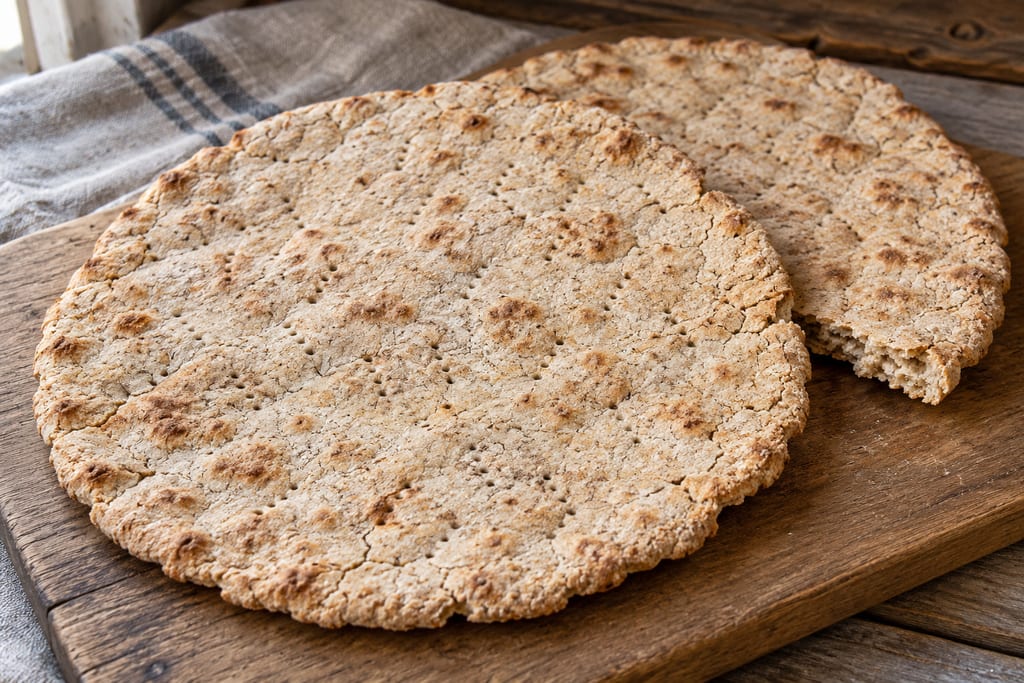
Lapland barley rieska
Two barley flatbreads made with cold dough and baked rapidly on a hot sheet, following Timo Lepistö's northern Finnish formula.
 FermenteaWhere food goes to change
Modern method
Perinteinen hernekeitto
Finnish pea soup simmers dried peas with palvikinkku or a vegetable alternative, then is served with mustard and chopped onion.

Hernekeitto is Finnish pea soup, a thick, nourishing preparation made from dried peas simmered in water, often with pork or smoked ham.
The traditional name is perinteinen hernekeitto when describing a conventional or customary version. The shorter colloquial term hernesoppa is also encountered.
It is among Finland's best-known everyday dishes, particularly famous for its association with Thursday lunches.
The measured recipe here is published by MTK, Finland's Central Union of Agricultural Producers and Forest Owners. It uses 500 g dried peas and approximately 2 L water, with smoked ham or a vegetable alternative.
The peas simmer slowly until they soften and thicken the broth.
The traditional flavour is simple: legumes, meat or vegetables, marjoram and salt. Mustard and chopped onion are offered at serving.
This is not itself a smoked-meat manufacturing recipe. It uses already prepared palvikinkku, Finnish smoked ham.
Pea soup has a long history across northern Europe.
Dried peas were a useful stored food because they could be kept for extended periods in suitable dry conditions and prepared into substantial meals.
Peas provide starch, protein and fibre, making them particularly valuable when fresh produce is limited.
Similar pea soups appear in Swedish, Finnish and other European traditions.
The exact origin date of Finnish hernekeitto is uncertain, but it was already established in historical food culture long before the modern MTK recipe.
Its strongest cultural association is the Thursday tradition.
Finnish restaurants, schools, canteens and military food services have long served pea soup on Thursdays.
One explanation connects this custom with medieval Catholic fasting practices. A substantial meal on Thursday helped prepare for the Friday fast.
The custom survived later religious changes and became embedded in national dining routines.
Modern Finnish Thursday lunch often consists of pea soup followed by pannukakku, an oven-baked pancake, served with jam and sometimes whipped cream.
The soup-and-pancake combination is recognised as a standard traditional pairing rather than an invention of this individual recipe.
Pea soup also has an association with laskiainen, the Finnish Shrovetide celebration, alongside seasonal foods and outdoor winter activities.
The exact smoked-ham formulation presented here is a modern version of a traditional dish. The historical evidence does not establish that its 500 g pea quantity or two-hour simmer were used in medieval Finland.
MTK SOURCE FORMULATION
Ingredient — Quantity
Dried peas — 500 g
Water for soaking and cooking — Approximately 2 L
Smoked ham (palvikinkku) — Approximately 300 g
Or carrot, parsnip and onion — Quantities unspecified
Dried marjoram — To taste
Salt — To taste
Mustard, for serving — Unspecified
Chopped onion, for serving — Unspecified
The source places the vegetable option in contrast with smoked ham.
The approximately 300 g quantity applies to palvikinkku, not to the alternative vegetables.
The vegetable ingredients may also be used to flavour a meat-containing soup, but that possibility is not expressed as a second measured formula.
The original gives no completed soup volume or serving count.
Dried peas, Pisum sativum, provide protein, starch and soluble and insoluble dietary fibre.
Dried peas absorb water during soaking. Their cell walls and seed structure soften during prolonged heating, while starch helps thicken the liquid.
Smoked ham contributes meat flavour, salt, proteins, fat and smoke-derived aromatic compounds.
The word palvikinkku refers generally to smoked ham. It does not identify one particular commercial brand or protected geographical product.
Carrot, Daucus carota, contributes mild sweetness.
Parsnip, Pastinaca sativa, contributes a sweeter, earthier root-vegetable flavour.
Onion, Allium cepa, contributes savoury and sulphur-containing aroma compounds.
Marjoram, Origanum majorana, is a characteristic herb that gives warmth and aromatic complexity without overwhelming the peas.
Mustard adds sharpness and acidity when served with the soup.
Chopped raw onion offers a contrasting fresh pungency against the long-cooked, soft pea mixture.
The preparation requires a large cooking pot and a refrigerator for overnight soaking.
A spoon suitable for stirring along the bottom of the pot is especially useful because thick pea soup can adhere and scorch.
A knife and board are required for the smoked ham or vegetables.
The original method does not require a blender. As the peas soften through cooking, they naturally thicken the soup.
Stage 1 — Prepare the dried peas
Place 500 g dried peas in a suitable container.
Check for foreign material.
The source does not specify whether they must be whole or split.
Stage 2 — Soak overnight
Cover the peas with approximately 2 L water.
Leave them soaking overnight in the refrigerator.
The precise number of hours is not specified.
This stage hydrates the dried peas and prepares them for cooking.
Stage 3 — Begin cooking
Transfer the peas and their soaking water into a large saucepan.
Bring the mixture to cooking temperature and maintain gentle simmering over low heat.
The source specifically uses the soaking water rather than instructing the maker to discard it.
Stage 4 — Cook the peas
Simmer for approximately 90 minutes.
Stir occasionally, reaching the bottom of the pot to prevent the peas from sticking.
No additional water quantity is specified.
Stage 5 — Prepare the additions
Dice approximately 300 g smoked ham if using the meat version.
Alternatively, peel and dice carrot, parsnip and onion.
The recipe provides no exact vegetable amounts.
Stage 6 — Add the ham or vegetables
After approximately one and a half hours of pea cooking, add the selected ingredients.
Stir them into the soup.
Stage 7 — Season
Add dried marjoram and salt according to taste.
Smoked ham already contributes salt.
The vegetable version may require different seasoning because it lacks that ingredient.
Stage 8 — Complete cooking
Continue simmering until approximately two hours of total cooking time have elapsed.
The peas should be soft and the added ingredients properly cooked.
The source gives no numerical temperature or measured endpoint.
Stage 9 — Serve
Offer mustard and chopped onion as accompaniments.
No exact garnish quantities are supplied.
Dried peas contain relatively little moisture compared with fresh peas.
During soaking, water enters the seed and begins hydrating starch, proteins and cell-wall material.
This reduces the work needed during cooking.
The seed structure changes further under heat.
Starch gelatinises, while proteins denature and plant cell walls soften.
As peas break down, starch and other components disperse into the liquid and thicken the soup.
This process can make the soup appear almost puréed even without mechanical blending.
Different pea varieties and storage conditions affect cooking behaviour.
Older dried peas can sometimes require more prolonged cooking, but the original recipe gives no separate schedule for them.
Salt and other dissolved compounds influence flavour and the cooking medium. The source recommends adjusting salt after considering the contribution from smoked ham.
If the soup is allowed to stand, starch and other components can continue affecting texture, and the mixture may become noticeably thicker.
This is a physical consequence of starch behaviour and moisture distribution, not evidence of fermentation.
The ham is already processed before entering the soup.
Smoking introduces flavour compounds from heated or smouldering wood.
Depending on the commercial product, smoking may also occur alongside curing, drying or cooking.
Salt influences the taste and preservation characteristics of the ham.
The exact processing category matters because some smoked meat products are ready to eat while others require further cooking.
The word palvikinkku alone does not establish the product's packaging status or safe cooking instructions.
As the ham simmers in pea soup, some salt and flavour compounds pass into the liquid.
The meat also releases soluble compounds that contribute to the savoury character of the finished dish.
The amount depends on the meat's cut, composition, smoking and previous cooking.
Finnish pea soup can include different forms of pork, smoked ham or sausage.
Some households use fresh pork or other meat cuts.
Vegetarian versions rely on root vegetables and seasoning.
The MTK formulation explicitly permits carrot, parsnip and onion as an alternative to smoked ham.
It also recognises spicy sausage and additional vegetable cubes in the introductory discussion, but provides no measured amounts for those choices.
Some pea soups are cooked until very smooth, while others retain more recognisable pea pieces.
The grain texture also varies according to whether whole or split peas are used.
Swedish ärtsoppa belongs to a related Nordic tradition and shares the Thursday association, but regional seasoning and serving practices may differ.
These variations belong together within the wider pea-soup family rather than being presented as identical recipes.
Hernekeitto is normally eaten as a main soup.
Mustard may be stirred into the bowl to provide sharpness.
Chopped raw onion can be added at the table.
The soup's dense, satisfying character makes it particularly suitable for lunch in colder weather.
The classic Thursday pairing is an oven pancake with jam for dessert.
This combination remains visible in Finnish schools, cafeterias and traditional lunch restaurants.
There is no requirement that pancakes be served with the MTK recipe itself; they belong to the broader custom.
The peas should be soft enough to produce a thick soup.
The liquid should contain enough moisture to remain spoonable, although no target viscosity is given.
A smoky, savoury flavour is expected when using palvikinkku.
Marjoram should contribute a noticeable but balanced herbal note.
A burnt smell or dark material adhering to the bottom indicates scorching.
Excessive salt may result from adding salt before considering the smoked meat.
If the soup is too thick because of evaporation, the source does not provide a measured corrective water addition.
A finished soup that retains hard, dry pea centres has not achieved the intended softened texture.
Soak the peas in the refrigerator as instructed.
This avoids treating the soaking stage as an uncontrolled warm fermentation.
Use the purchased smoked ham according to its package instructions. Its ready-to-eat or cook-required status is not identified by the recipe.
Maintain good hygiene when preparing meat and vegetables.
The original cooking time is a culinary instruction rather than a validated temperature endpoint for every possible ham product.
The source does not give a safe storage duration for leftover soup.
After cooking, large volumes of thick soup can cool slowly. Appropriate rapid cooling and refrigerated storage are important because slow cooling can permit bacterial growth.
The specific storage limits must follow applicable current local food-safety advice, not an invented traditional rule.
MTK labels its current page a traditional pea soup recipe, but the recipe itself does not date this specific source batch or establish an earliest attestation.
Scaling: source batch only
The Finnish recipe names generic smoked ham but does not state whether its purchased product is ready-to-eat or requires cooking. FSIS explains that ham categories differ and directs consumers to product-specific labels; its guidance is U.S.-specific and does not classify the Finnish ham here.
Hazard sourceUse the package instructions for the actual smoked ham. MTK’s recipe does not identify the protected Finnish PGI product, the ham package state or leftover storage.
No maturation stage is described in the cited preparation.
The Finnish association comes from the publisher and language of this recipe; it is not a claim of origin.
Two barley flatbreads made with cold dough and baked rapidly on a hot sheet, following Timo Lepistö's northern Finnish formula.
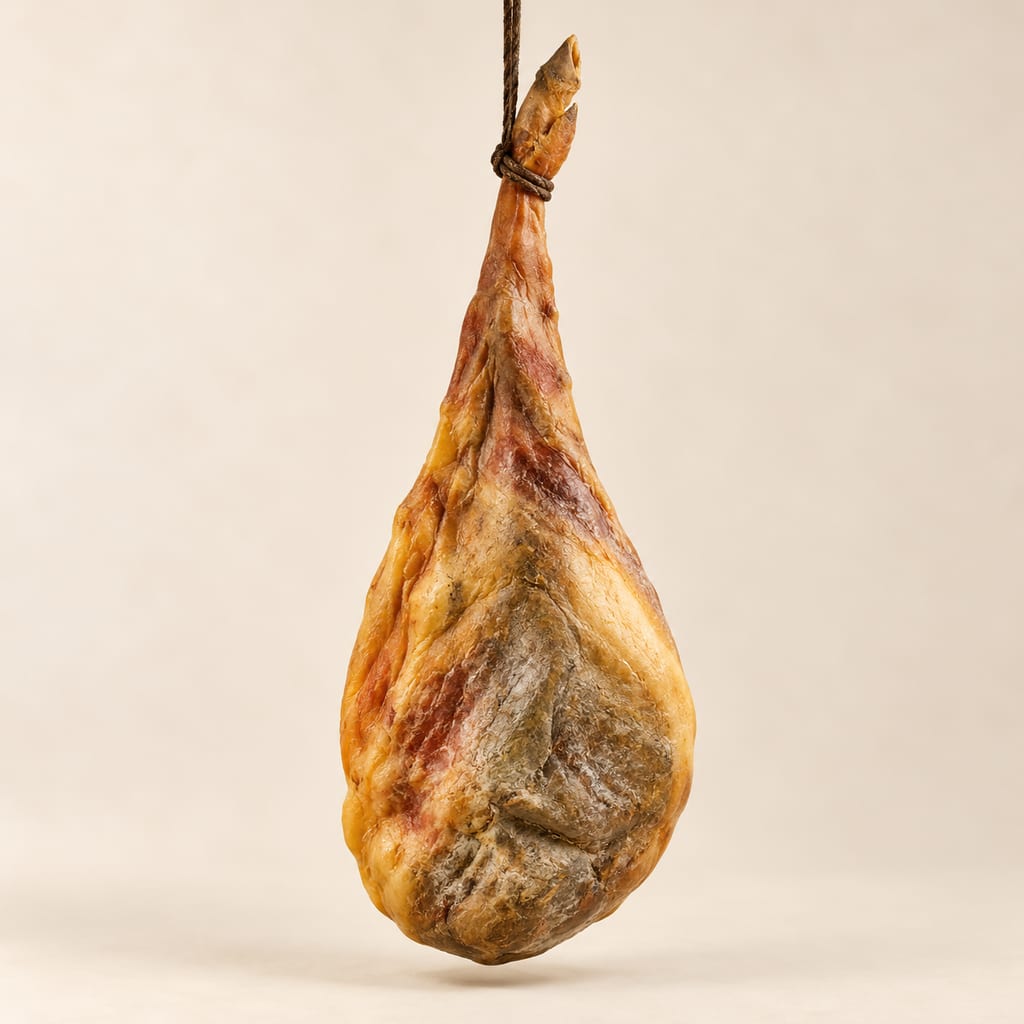
Cato the Elder records a second-century BCE sequence for salting, air-drying, and smoking ham. This historical account is not a validated modern curing protocol.
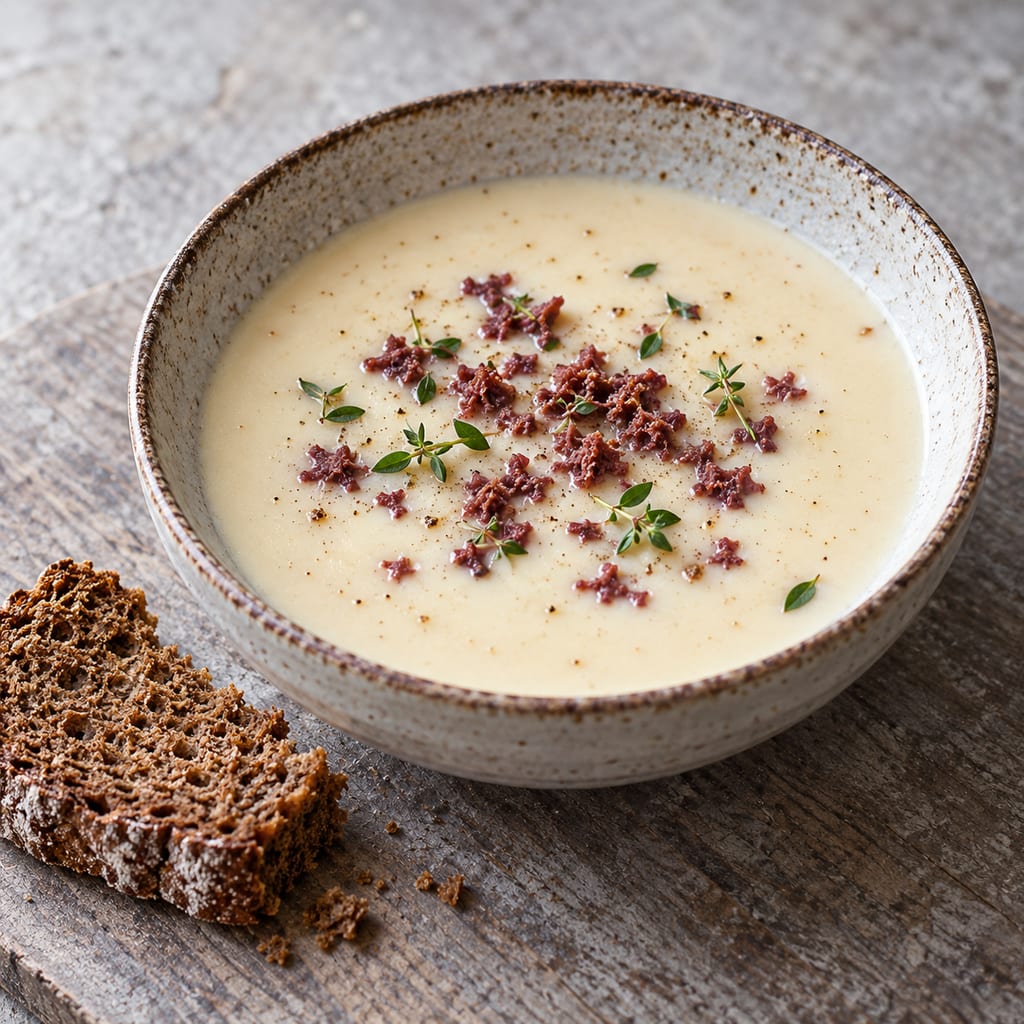
Kylmäsavuporokeitto is a creamy cold-smoked reindeer soup with onion, stock and cheese, served with bread.
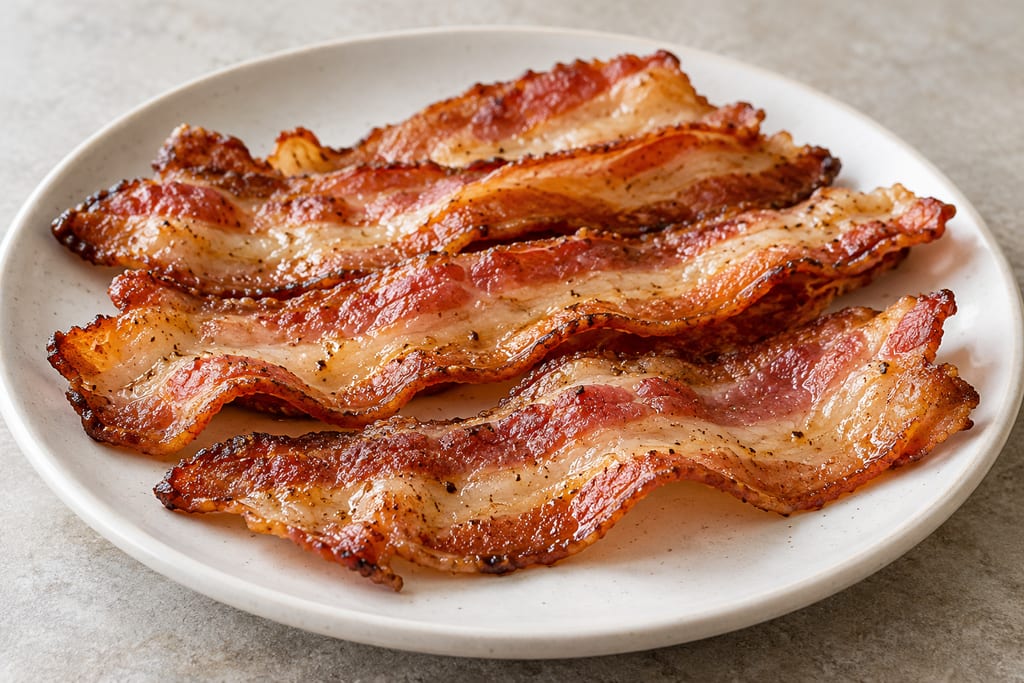
Pork belly receives a measured salt-and-sugar cure with coffee and spices, then is refrigerated before cooking or hot smoking.
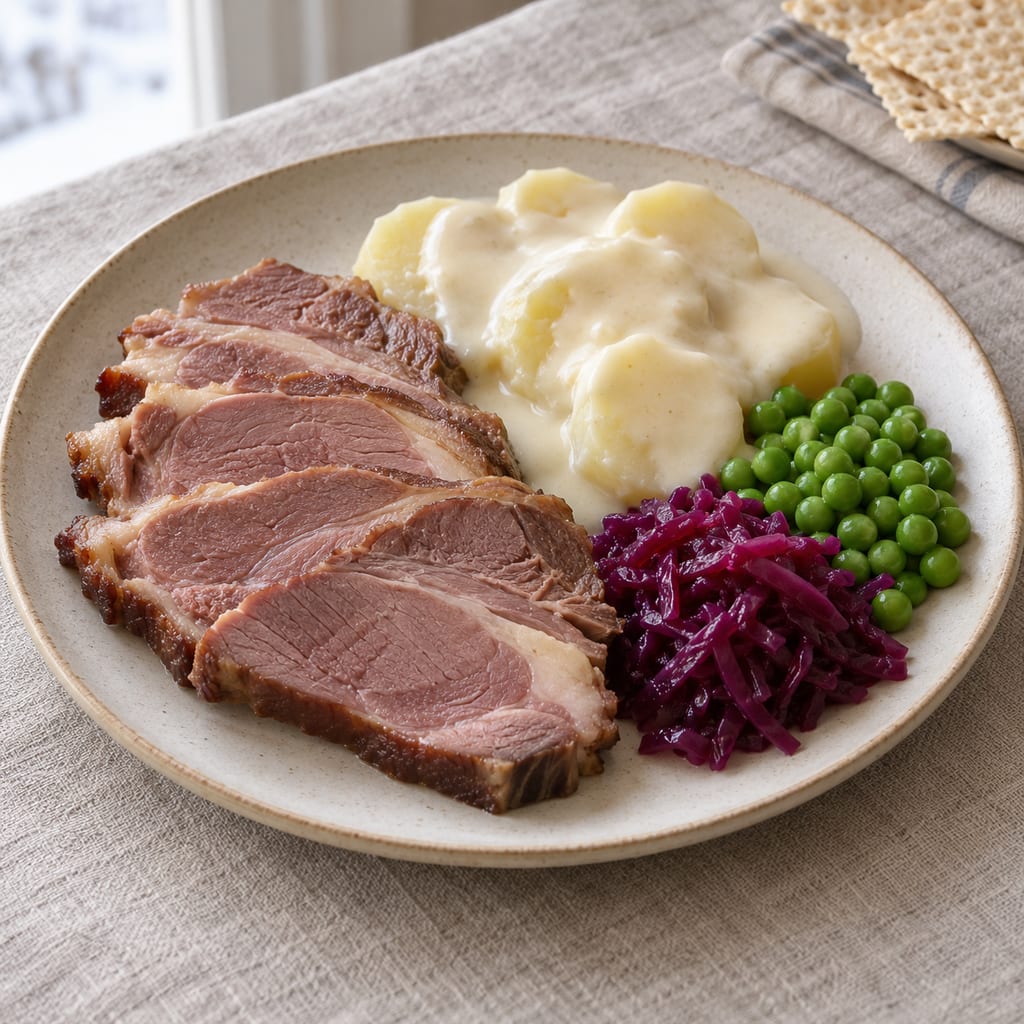
A six-person Icelandic Lamb serving recipe for deboned hangikjöt with potato bechamel, pickled cabbage, peas and laufabrauð. It cooks the product; it does not smoke or cure it.
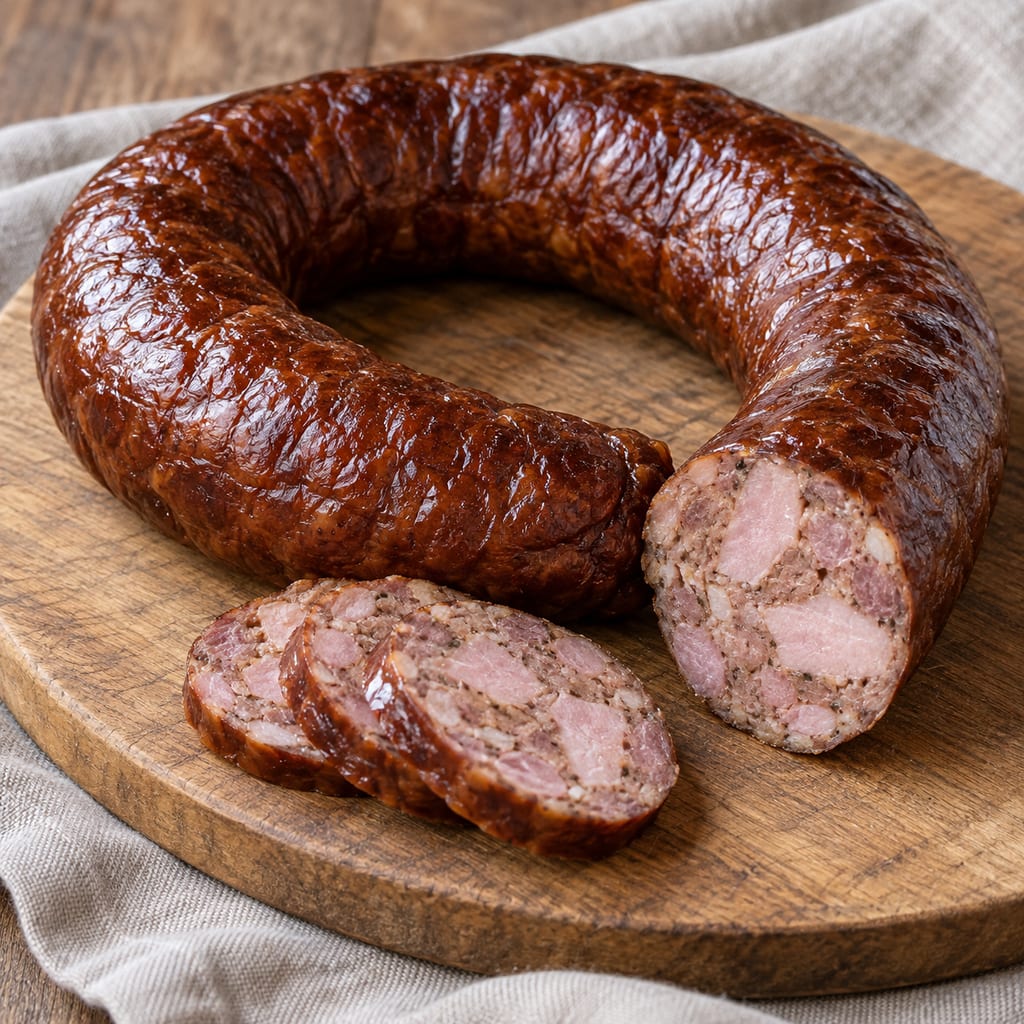
A protected pork sausage associated with Liszki and Czernichów; its application describes commercial curing and smoking, not a home batch.
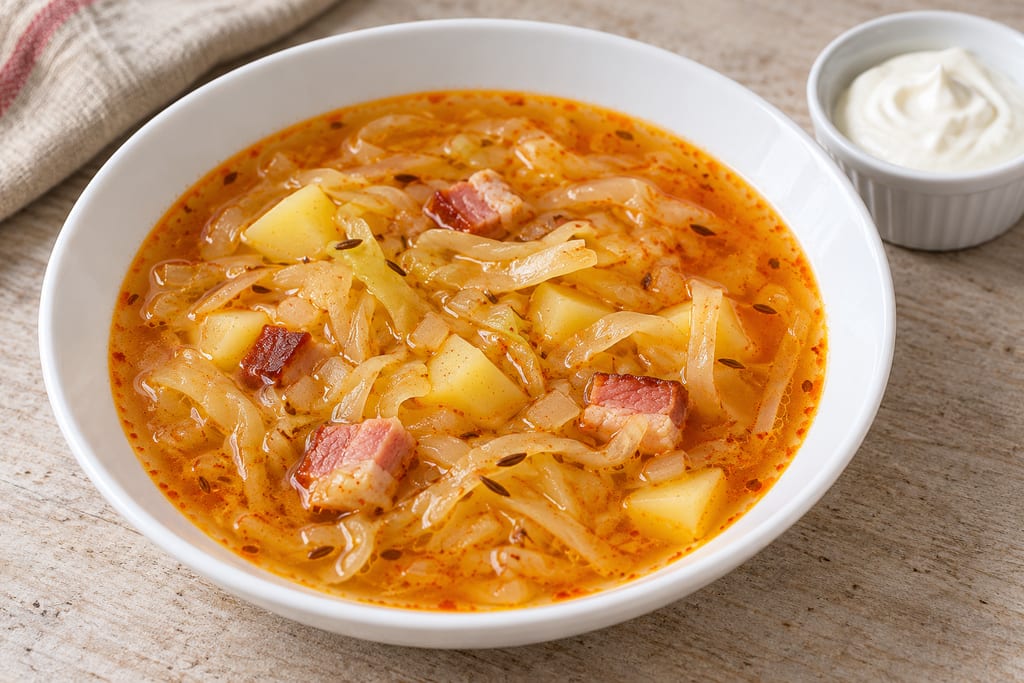
A two-portion cabbage soup with onion, potato and finished Geselchtes, served with garlic sour cream.
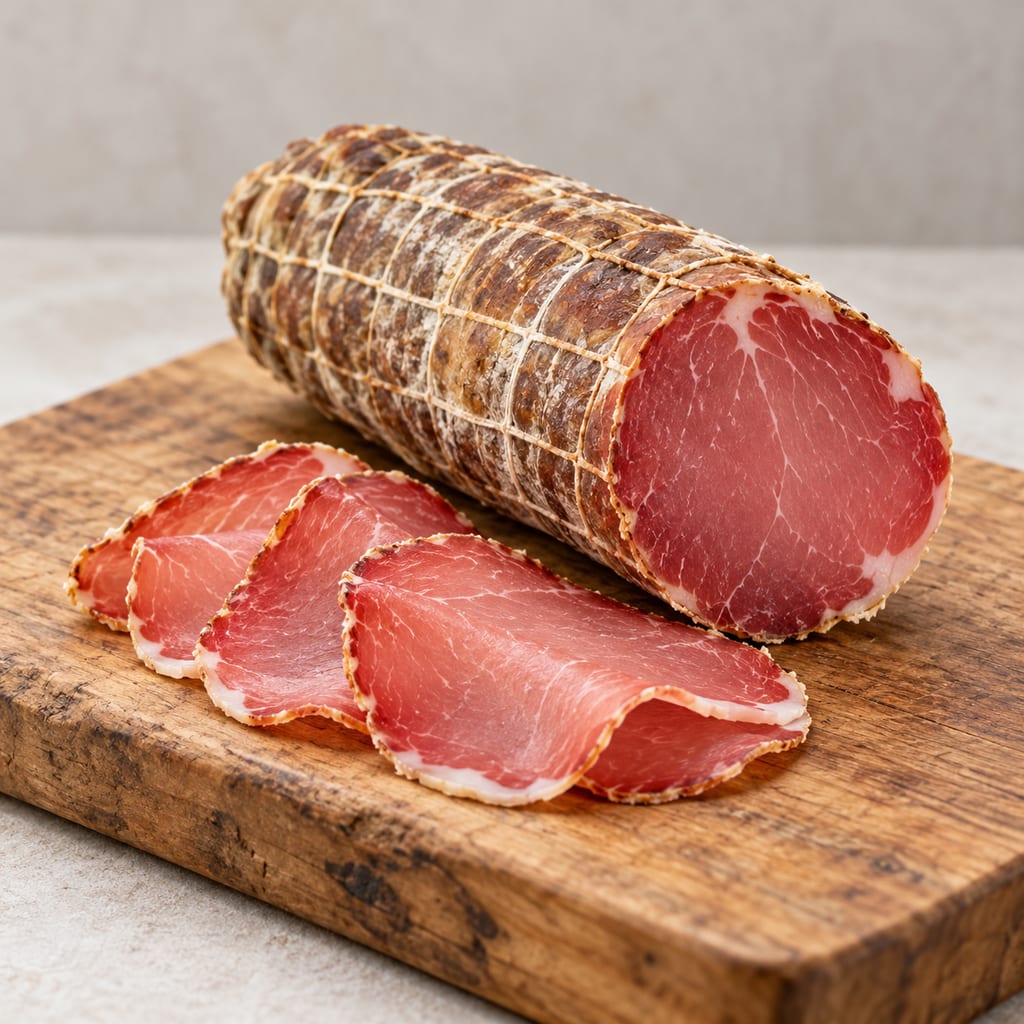
Documentary account of Italian regional cured-loin traditions, including Tuscan and Marche variations; no home-cure instructions are provided because the published professional methods lack validated safety controls.
A refrigerated pork-belly brine combines beer and maple syrup with salt, garlic powder and measured Cure #1.
No community contributions have been published for this entry yet.
Sign in to contribute. Published comments and photos are free to read.
Heidi Siivonen, MTK (Central Union of Agricultural Producers and Forest Owners)Source recipe
Perinteinen hernekeittoThe page lists dried peas, approximate smoked-ham quantity or a vegetable alternative, soak and simmer stages, seasoning and service. It says “palvikinkku,” not the full protected PGI name.
Cited in: What it is; Ingredients; Why these ingredients work; Equipment; Method; The chemistry of dried-pea cooking; Regional and household variations; Recognising a good result; Safety and storage
Finnish Food Authority (Ruokavirasto), hosted specification; applicant Saunapalviyhdistys ryProduct identity context
Tuote-eritelmä koskien Aito saunapalvikinkku / Äkta basturökt skinkaThe official name is Aito saunapalvikinkku / Äkta basturökt skinka; the MTK recipe does not use that full protected name.
Cited in: Why these ingredients work; How smoking changes the ham
U.S. Department of Agriculture, Food Safety and Inspection ServiceSafety context
Hams and Food SafetyFSIS distinguishes ready-to-eat from cook-before-eating ham and directs consumers to product labels; this is U.S. guidance and does not classify the Finnish ham in the MTK recipe.
Cited in: How smoking changes the ham; Safety and storage
This is FinlandHistory
Pea soup tradition is weekly Thursday passion in FinlandHistorical and cultural background.
Cited in: What it is; The history of Finnish pea soup; Traditional serving
YleHistory
Suomalaista perinneruokaa — Traditional foodThursday serving and pancakes.
Cited in: The history of Finnish pea soup; Regional and household variations; Traditional serving