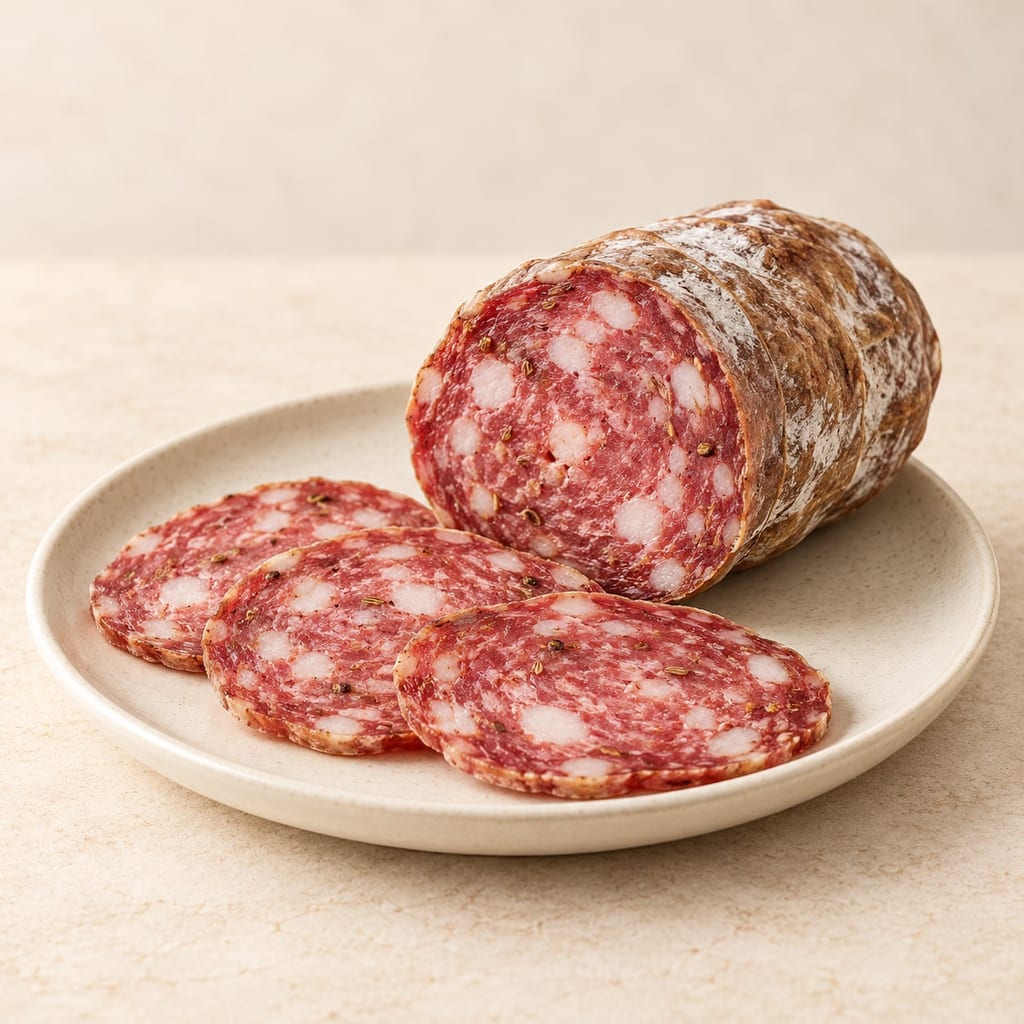
Finocchiona, starter-cultured
A Tuscan-style fennel salami made with pork and back fat. Toasted fennel, fennel pollen and Sambuca flavor this starter-cultured preparation.
 FermenteaWhere food goes to change
Sugar sources
Crystalline D-glucose supplies fermentable carbohydrate to starter bacteria. Hydration state, starch source and product formulation remain relevant when selecting the powder.
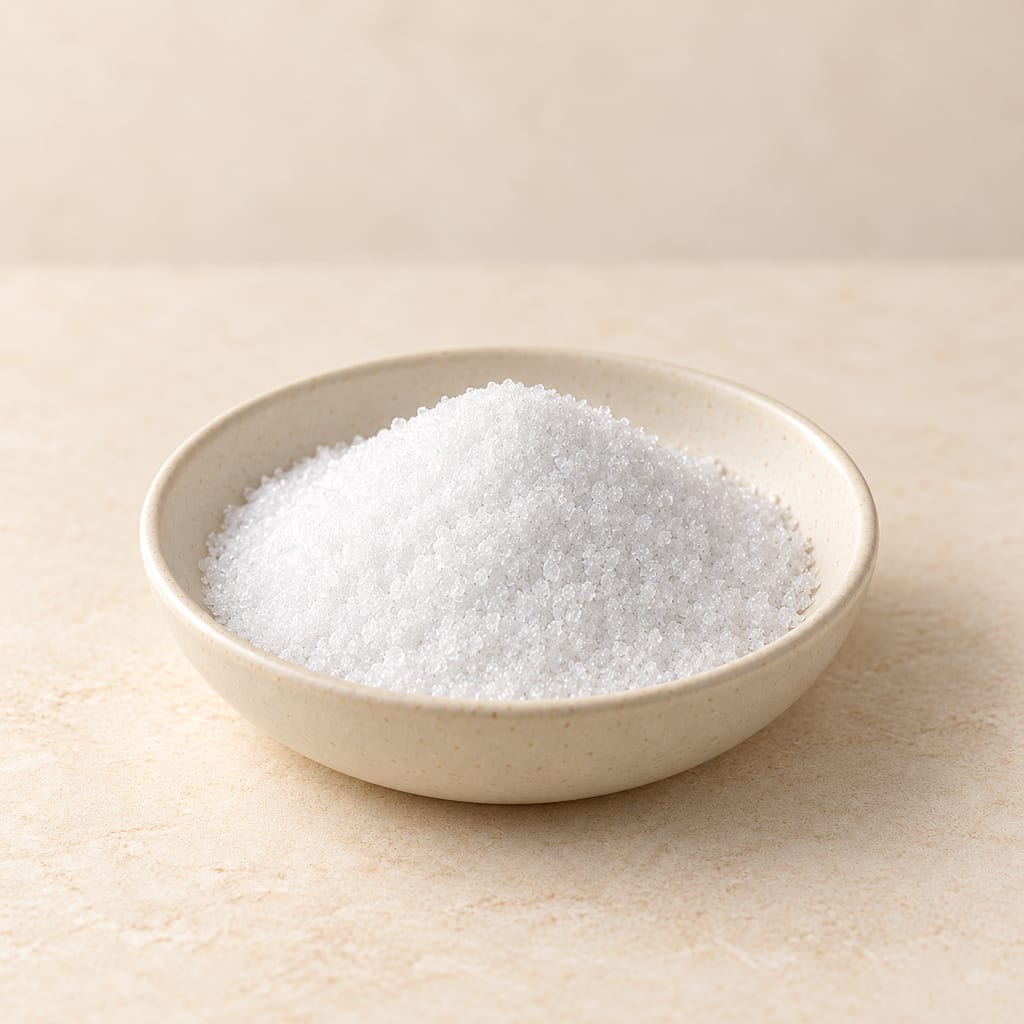
Dextrose is D-glucose, a simple sugar sold in purified crystalline form. It is white, sweet and soluble in water, yet sweetness is not always the reason a cook adds it. In a fermented sausage, a small measured addition supplies readily available carbohydrate to the starter bacteria. The more noticeable result can be developing acidity and a changed texture, rather than a sugary taste in the finished slice.
That role makes dextrose an ingredient worth identifying precisely. It is not table sugar under another name, and a bottle of glucose syrup is not the same material as a bag of crystalline dextrose. The distinction concerns the sugars present, water and any other ingredients in the commercial product. A recipe asking for dextrose is naming a particular substrate for fermentation, even when the amount looks minor beside the meat and fat.
Glucose occurs naturally in plants and is part of the structure of starch. Manufacturing dextrose makes that sugar available in a refined and measurable form. The industrial product connects a crop grown for starch with a food maker who wants a soluble sugar that can be distributed consistently through a mixture. Its story belongs to the development of starch processing as well as to the dishes in which the powder eventually disappears.
Industrial starch sugars developed in Europe during the disruptions of the Napoleonic period, when obstacles to imported sugar encouraged experiments with domestic raw materials. Acid treatment of starch could produce a sweet liquid, opening a route from crops such as potatoes to a material that could partly serve the market for sugar. Early products did not match purified sugar in every property, but price and fermentability gave them uses of their own.
The subsequent history involved more than discovering that starch could become sweet. Producers had to control the breakdown, remove unwanted material and separate a useful product from the resulting liquor. Crystalline glucose required a dependable way to obtain and refine that particular sugar. An industry could then sell a consistent solid ingredient rather than only a variable sweet hydrolysate.
Later enzyme technology changed the ways starch chains could be cut and the mixtures of sugars obtained. This development also produced related ingredients, including glucose syrups and maltodextrins. Their common connection to starch explains why the names appear together in ingredient catalogues. It does not make them interchangeable: different degrees of breakdown and later refining produce materials with different composition and behavior in food.
Crystalline dextrose is available as anhydrous dextrose and dextrose monohydrate. Anhydrous means that the crystal lacks water of crystallization. In the monohydrate, a water molecule forms part of the crystal structure alongside each glucose molecule. The glucose identity is shared, while the material being weighed includes that difference in crystal water.
This is a useful distinction when reading a supplier specification. The word dextrose alone may not identify which form a recipe author used. A food manufacturer can specify the required form and solids composition, whereas a household recipe may simply name the sugar. Preserving the actual ingredient wording keeps that uncertainty visible instead of silently choosing a hydration state on the author's behalf.
Powdered dextrose is another labeling question. It can be finely pulverized anhydrous dextrose, monohydrate or a mixture, with permitted additions under the applicable product standard. Codex distinguishes this product from powdered sucrose and requires declarations for added starch in powdered dextrose. Fine white powders can look alike in a bowl while supplying different materials to a ferment. The name and ingredient statement establish more than appearance can.
Starch consists of chains of glucose units. Its main components, amylose and amylopectin, differ in how those units are linked and branched. Hydrolysis breaks the links, progressively turning the large starch molecules into smaller carbohydrates. The outcome depends on how far that conversion proceeds and how the resulting mixture is treated.
Maize is a common commercial starch source, but wheat, rice, potato and other starch crops can also supply the starting material. The crop affects the agricultural supply chain and can matter to product documentation. It is not possible to identify the feedstock of an unnamed packet merely because the dextrose appears in a Catalan or Italian-style sausage formula. The place associated with the food and the source of its manufactured sugar are different pieces of information.
Commercial processes can use acid and enzymes to bring about hydrolysis. In an enzyme route, heating and enzyme action help gelatinize and thin the starch slurry during liquefaction. The long molecules are cut into smaller pieces. Further enzyme treatment during saccharification produces a liquor richer in smaller sugars, including glucose. These are chemical changes in the starch, distinct from a later bacterium using the sugar in fermentation.
Hydrolysis does not by itself produce a clean bag of dextrose. The liquid contains the products of starch breakdown together with material that must be separated or reduced. Refining can include filtration, removal of color and protein residues, and demineralization. Concentration then removes water before the glucose is crystallized into a solid form.
A manufacturer making dextrose monohydrate describes separating the crystals from their mother liquor, washing them and drying them. Each stage has a different purpose. Conversion makes glucose available from the starch; refining changes the composition of the liquid; crystallization separates an ordered solid; drying produces a material that can be packed and handled as powder or crystals.
The term dextrose equivalent, often abbreviated DE, appears in starch-industry descriptions of the extent of hydrolysis. It is a measure related to reducing power, expressed relative to glucose on a dry basis. A glucose syrup can contain a mixture of saccharides even though its specification uses that term. Reading DE as if it meant that every glucose syrup was pure crystalline dextrose would erase the distinction between the mixture and the refined ingredient.
Fresh post-rigor meat can have too little fermentable sugar to support the intended fermentation, so a sausage formula may add a measured carbohydrate. Lactic acid bacteria can use glucose directly, producing lactic acid and other fermentation products. That acid production lowers pH, changes the environment in the mince and contributes to the characteristic tang of a fermented meat product.
The amount and type of carbohydrate influence the course of the change. Organisms differ in the sugars they can use and in how they respond to their conditions. A commercial starter, its available substrate and the temperature of fermentation work together. Dextrose gives the selected bacteria an accessible sugar, while the method determines how the developing batch is monitored and handled.
This explains why the sugar addition belongs with the culture instructions rather than with seasoning to taste. A maker choosing more pepper changes an aromatic ingredient; changing fermentable sugar can also change the acidification on which the method depends. The quantity should therefore remain attached to the particular formula and culture, rather than being adjusted because the raw mixture seems insufficiently sweet.
The falling pH affects protein behavior as well as taste. In fermented sausage, texture develops from an interacting system of meat proteins, fat, salt, water and microorganisms. Acidification is one part of that development. Dextrose participates by supplying substrate to the bacteria; it is not the material forming the principal protein framework of the slice.
The added sugar also has a different job from the salt and curing ingredients listed beside it. Salt affects flavor, protein binding and the food's water environment. Nitrite or nitrate in an identified curing blend participates in cured-meat chemistry. Drying removes water through the casing. Treating all these additions as generic preservatives would make it difficult to understand why the method contains distinct ingredients and stages.
Sugar can affect water activity, but the contribution described for fermented-meat formulations is small and insufficient on its own to control microbial growth. Water activity concerns the availability of the water remaining in a food, while moisture loss describes water leaving it. Adding dextrose is therefore not a drying treatment. The later chamber stage still has to manage movement of water from the center toward the outside.
Dextrose can appear alongside other carbohydrate sources. A formula may also include a separate sugar, or ingredients such as cooked rice. Those mixtures present a different carbohydrate setting from one containing only meat, fat and a small glucose addition. The recipe's individual ingredients should remain visible rather than being collapsed into an invented total sugar instruction.
The starter-cultured meat preparations linked on this page illustrate that variety. Their sugar additions occur among different combinations of meat, fat, seasoning and culture products. Each preparation keeps its own quantities and method. The ingredient relationship shows where dextrose is used; it does not turn one author's collection of modern formulas into a single historical practice followed by every maker of those regional foods.
This distinction is particularly useful when reading a familiar sausage name. A regional tradition can include many ways of preparing meat, while the version on a recipe page may deliberately use a commercial starter and measured glucose. The manufactured sugar explains something about that version's process. Its presence should not be projected backward into an unexamined account of how the food was always made.
Choose a product identified for food use and read its full ingredient statement. Check whether it is crystalline dextrose, a named hydrated form, a powdered mixture or glucose syrup. Added starch, anticaking agents or other ingredients belong to the commercial product's identity. A sack intended for another application is not made suitable for food merely by sharing a chemical name.
Feedstock and allergen information also need product-level attention. Purified glucose is not the same material as the flour or starch from which it started, and refining can remove proteins and other constituents. Nevertheless, the word dextrose alone does not establish the source crop, the manufacturing controls or the supplier's cross-contact statement. A declaration for one maize-derived product does not describe every dextrose sold elsewhere.
Food-allergen assessments and labeling rules can be highly specific to the product and jurisdiction. A conclusion about appropriately refined wheat glucose syrup should not be broadened into a claim that every glucose powder is suitable for every person with an allergy. For an individual dietary requirement, use the actual package and the manufacturer's information about that ingredient.
Dextrose dissolves readily in water, and exposure to moisture can make a dry product form lumps. Keep its packaging closed and follow the storage directions for the actual product. A supplier of one dextrose monohydrate specifies cool storage and warns about moisture-related caking; its instructions apply to that supplied material and packaging rather than defining one shelf life for all glucose products.
Dry measuring and a clearly identified container help preserve the ingredient's handling properties and identity. A portion set aside for a recipe should retain the information needed to distinguish it from plain sugar, salt or a curing blend. Once mixed into the food, the powder may no longer be visible, but the choice and amount introduced remain part of the formulation.
Outside fermented meat, glucose has many food uses, including confectionery, preserves, dry beverage mixtures and brewing. It is also an industrial substrate for microorganisms producing materials such as lactic and citric acids. Across those settings, the same simple sugar is useful for different reasons. In a fermented sausage its central role is particularly clear: a crop-derived carbohydrate, refined into crystals, becomes food for the culture that helps transform the mixture around it.
Starch feedstock and supplier allergen declaration are product-specific. Do not infer absence of wheat or other cross-contact from the generic name.
Unknown feedstock and factory location for the dextrose used in the linked recipes; a supplier example does not identify their packets.
A Tuscan-style fennel salami made with pork and back fat. Toasted fennel, fennel pollen and Sambuca flavor this starter-cultured preparation.
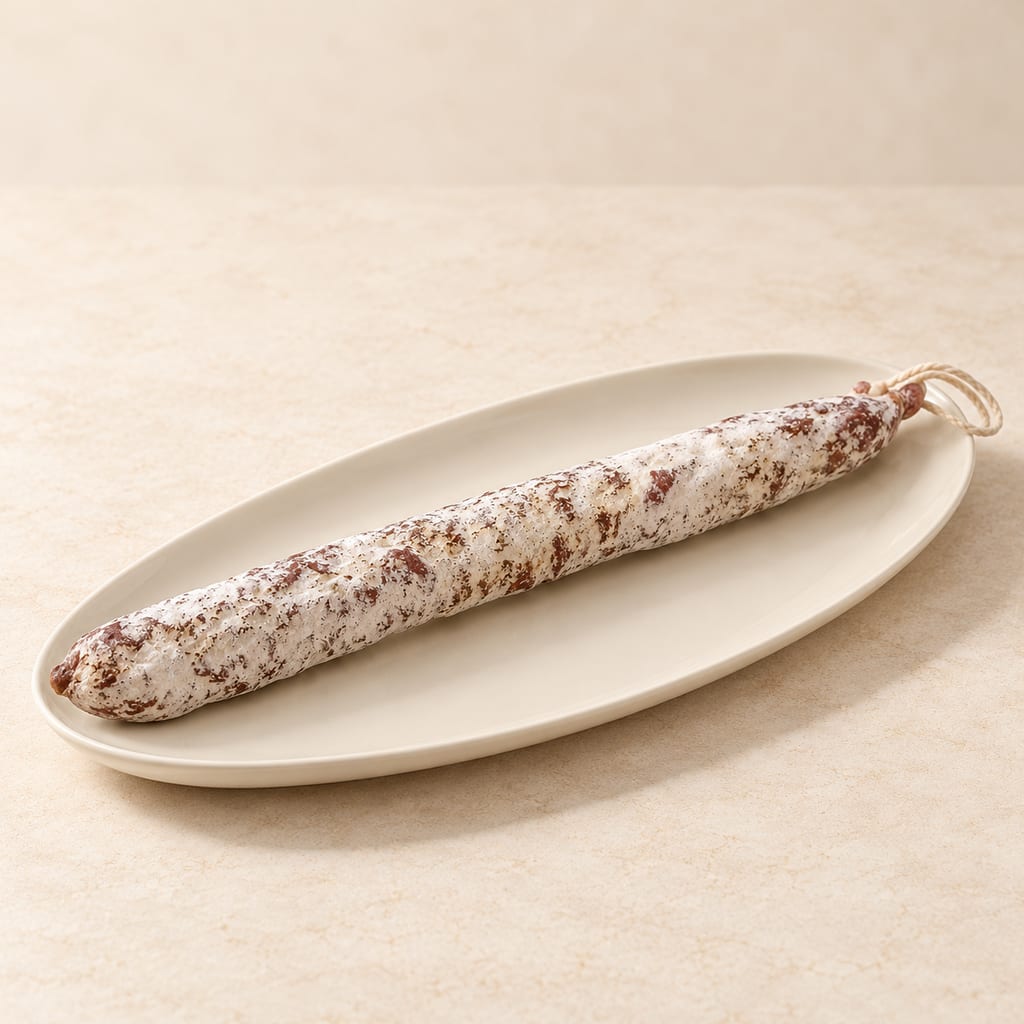
A documentary account of a modern starter-cultured Fuet formula and its place in Catalan sausage culture. The cited raw-pork process lacks matched safety validation, so this page does not present it as a household recipe.

A documentary account of a modern ventricina-style salami source and its Abruzzese context. This page provides no preparation directions or validated home process.
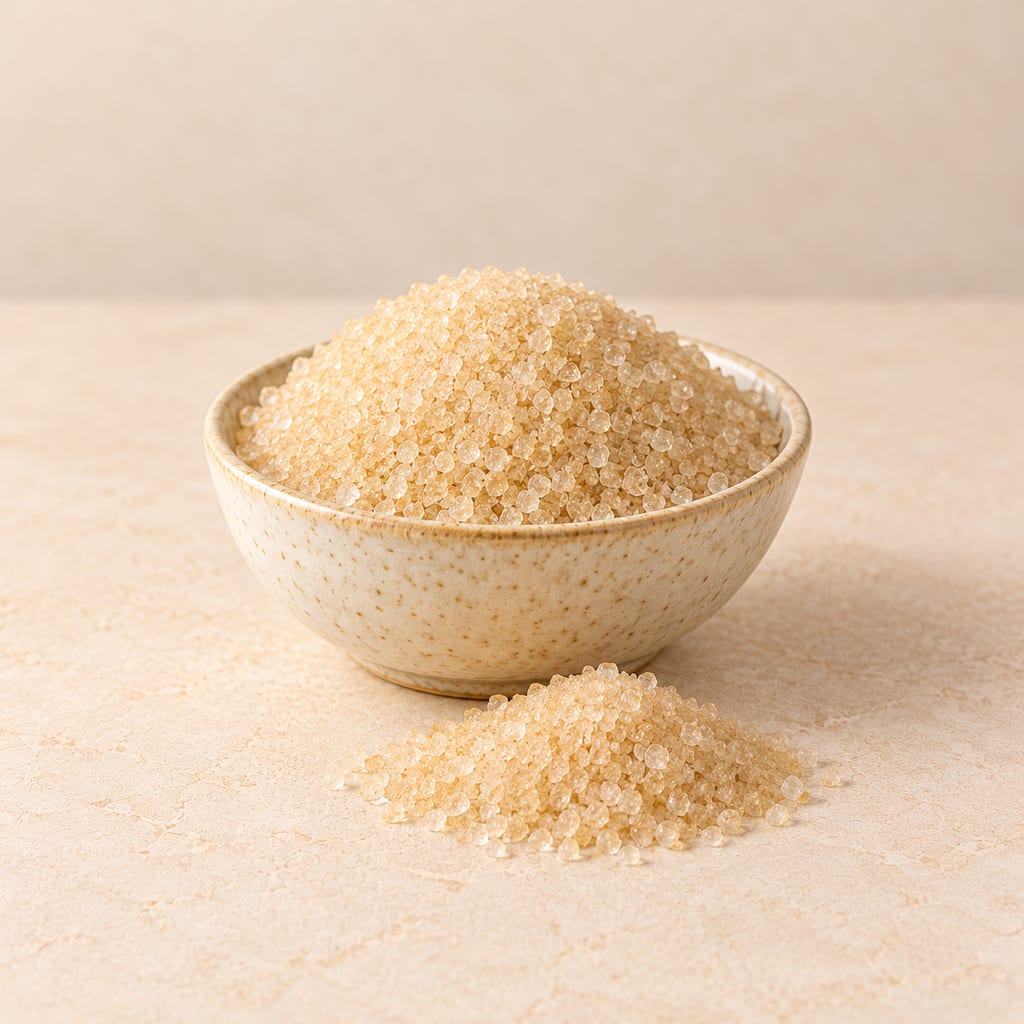
Turbinado is a pale golden cane sugar made by washing and spinning raw crystals, leaving large, dry grains that keep a faint trace of molasses and a mild toffee note.
No community contributions have been published for this entry yet.
Sign in to contribute. Published comments and photos are free to read.
Codex AlimentariusIdentity · Science
Codex Standard for Sugars, CXS 212-1999 (amended 2001)Dextrose is available in anhydrous and monohydrate forms. The monohydrate crystal includes water; powdered dextrose can contain starch that must be declared.
Cited in: A sweet powder with a savory job; Two crystalline forms, one glucose identity; The same ingredient in different mixtures; Choosing a food ingredient rather than a look-alike
USDA Agricultural Marketing ServiceIdentity · Science
Glucose Technical Evaluation Report, 2022Starch-derived glucose production uses acid or enzyme hydrolysis followed by refining and crystallization. Glucose has food and fermentation applications.
Cited in: A sweet powder with a savory job; Starch became another source of sweetness; Getting glucose out of a starch crop; Refining a liquor into crystals; Keeping the powder useful
Économie rurale / M. ZittIdentity · Science
Un cas d’innovation: l’isoglucoseEuropean starch-sugar manufacture developed during the Napoleonic period, with acid hydrolysis followed by improvements in separation and crystallization.
Cited in: Starch became another source of sweetness
Food Safety Authority of IrelandIdentity · Science
Guidance Note 33: Manufacturing of Fermented MeatsPost-rigor meat contains little fermentable sugar. Lactic-acid bacteria use glucose to produce lactic acid; sugar, culture and conditions influence acidification.
Cited in: A starter culture needs usable carbohydrate; Acidification changes more than sourness; The same ingredient in different mixtures
NSW Food AuthorityIdentity · Science
Uncooked comminuted fermented meat manufacturersSugar type and amount need to suit the starter culture. Fermentation, curing and drying provide interacting controls in uncooked fermented meat.
Cited in: A starter culture needs usable carbohydrate; Acidification changes more than sourness; The same ingredient in different mixtures
Food Standards Australia New ZealandIdentity · Science
P1031 Allergen Labelling Exemptions: Supporting Document 1Wheat-derived glucose syrup processing includes hydrolysis and refining steps that remove protein.
Cited in: Choosing a food ingredient rather than a look-alike
Caliber Food Technology / Gujarat Ambuja ExportsIdentity · Science
Dextrose Monohydrate Product SpecificationThe specified maize-derived dextrose monohydrate is refined, crystallized, separated, washed and dried. The manufacturer recommends cool, dry storage to maintain the powder’s condition.
Cited in: Refining a liquor into crystals; Choosing a food ingredient rather than a look-alike; Keeping the powder useful
