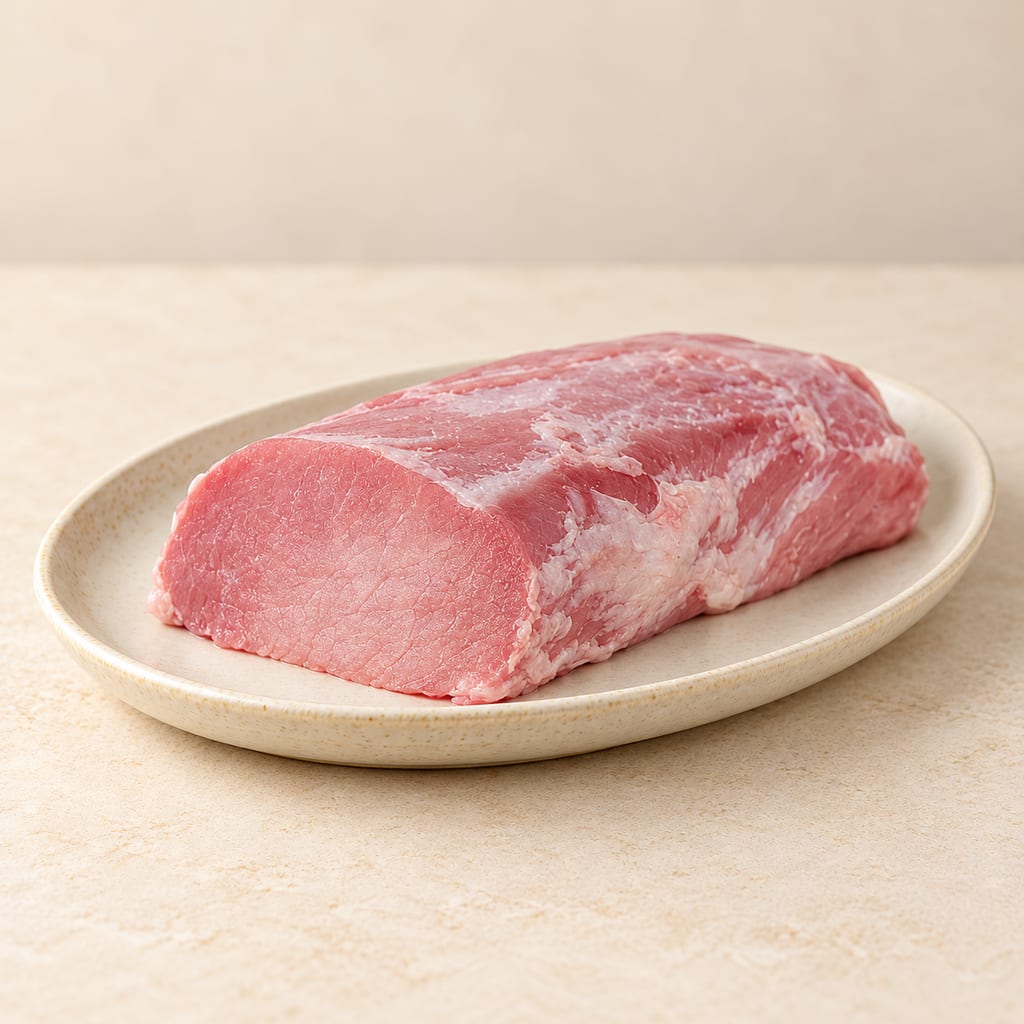
Lean pork
Trimmed domestic-pig muscle supplies the protein framework, water and meat flavor in fermented sausages; cut, condition and handling affect how it binds and ripens.
 FermenteaWhere food goes to change
Modern adaptation
Saucisson Sec
Saucisson sec is a French dry sausage of seasoned pork and fat. This version uses Flavor of Italy starter, white wine and an optional Mold 600 surface culture.
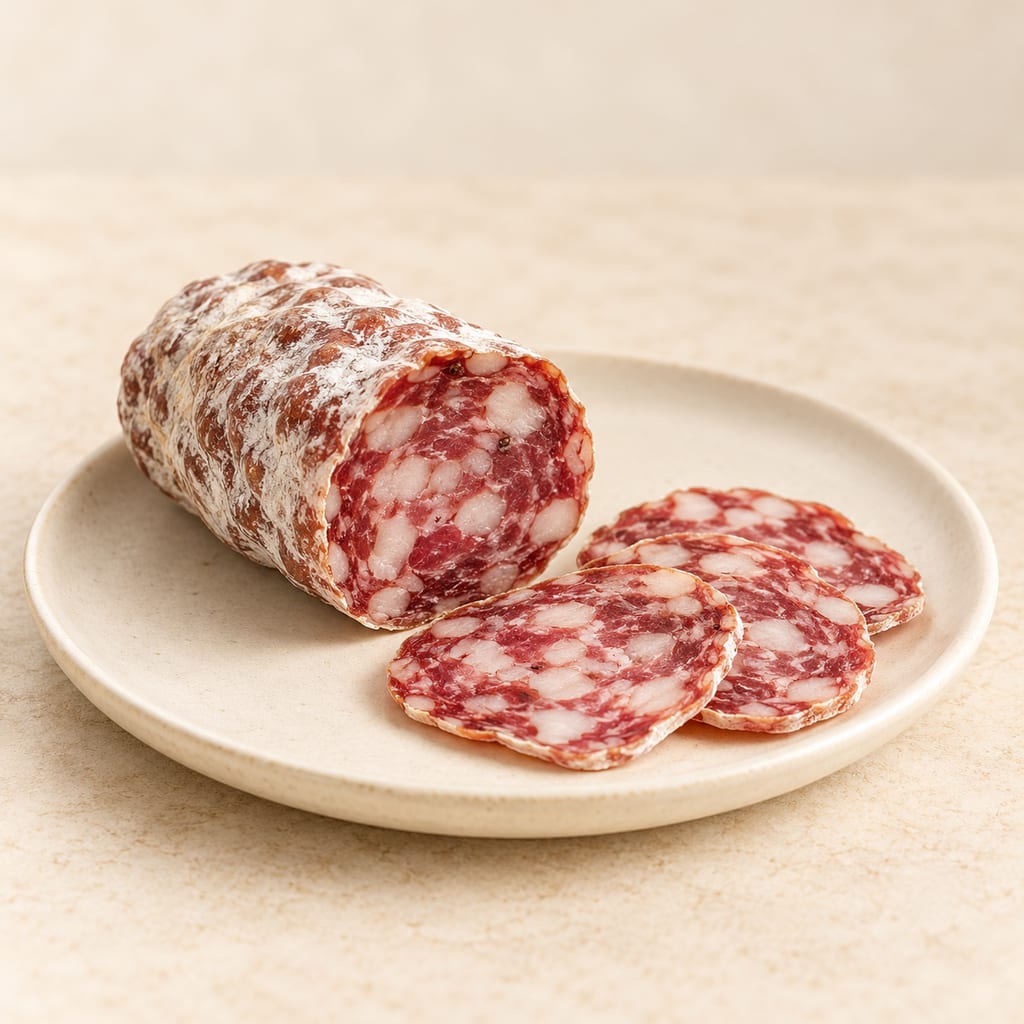
Saucisson sec belongs to France’s dry-sausage tradition, which includes coarse and fine textures and many regional forms. Salted meat and fat are packed into permeable casings, then dried and matured; the white surface bloom may develop naturally or be deliberately inoculated. This modern formula uses a measured commercial starter and an optional named surface mold.
Scaling: source batch only
Slow acidification during warm meat fermentation can permit growth and heat-stable toxin production.
Hazard sourceFermented sausage needs a demonstrated pathogen-reduction process in addition to acidification.
Hazard sourceA prepared suspension can be contaminated by yeasts during storage.
Hazard sourceTrack fermentation temperature and the time needed to acidify, using the degree-hour control appropriate to a validated process.
Control sourceUse a process with demonstrated control of Salmonella and pathogenic E. coli; assess pathogen reduction separately from the pH endpoint.
Control sourceUse the prepared Mold 600 suspension only on the day it is made and keep it stirred while applying.
Control sourceWarm fermentation can allow Staphylococcus aureus to form heat-stable toxin if acidification is too slow; monitor time, temperature and pH together against a validated fermentation schedule.
Acidification and brief drying do not establish Salmonella or E. coli reduction; use a process demonstrated to control those pathogens.
Use prepared Mold 600 suspension on the day of preparation; storage of the suspension risks yeast contamination.
Flavor of Italy — Commercial lactic starter sold as Flora Italia LC US; its product sheet lists Lactobacillus sakei, Pediococcus acidilactici and Staphylococcus carnosus.
Mold 600 — Optional surface culture: Penicillium nalgiovense.
80% relative humidity during drying; fermentation calls for high humidity without a numerical value.
French dry-sausage family; the selected commercial-starter recipe does not claim a specific protected regional method.
Trimmed domestic-pig muscle supplies the protein framework, water and meat flavor in fermented sausages; cut, condition and handling affect how it binds and ripens.
Mold 600 is a freeze-dried Penicillium nalgiovense culture applied to dry sausage casings, where it develops a pale surface bloom and mushroom-like aroma.
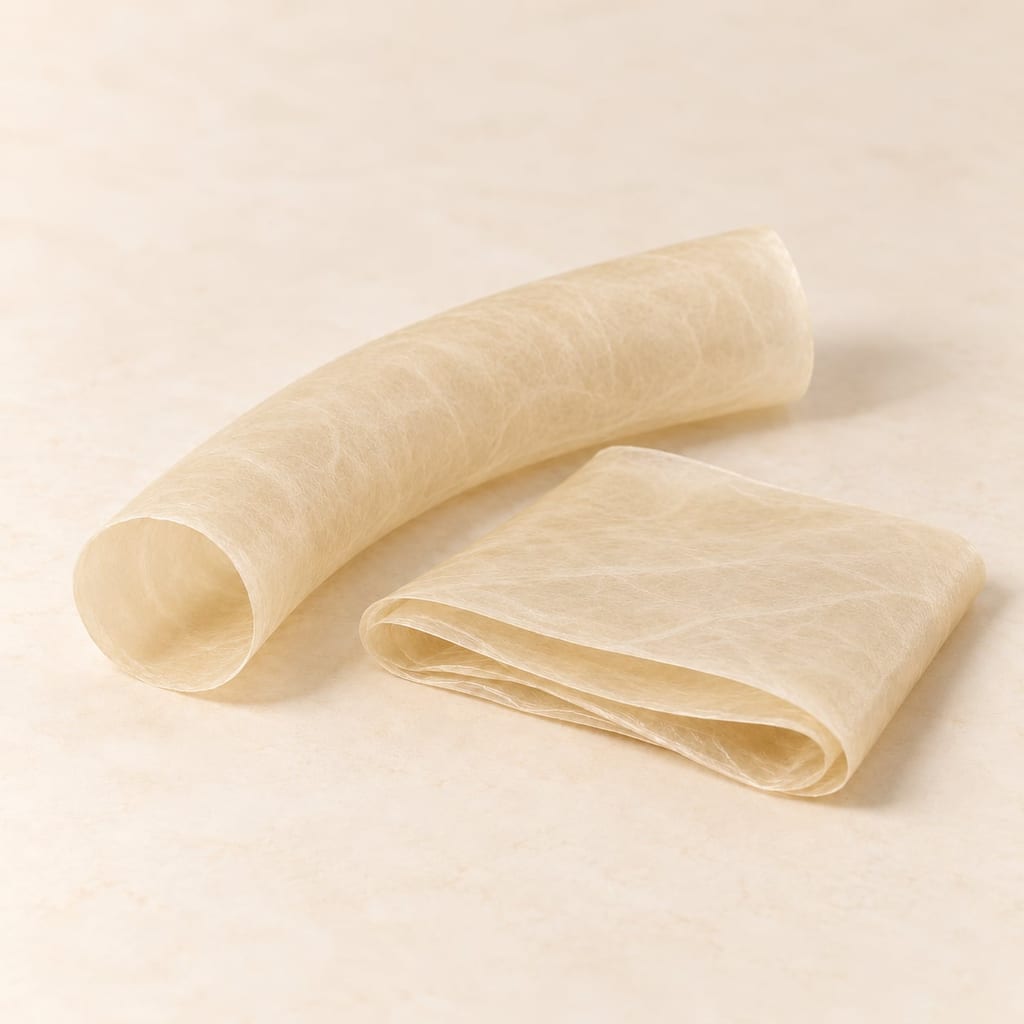
Non-edible fibrous sausage casings with an inner protein treatment that helps them stay against the meat as it dries and shrinks.
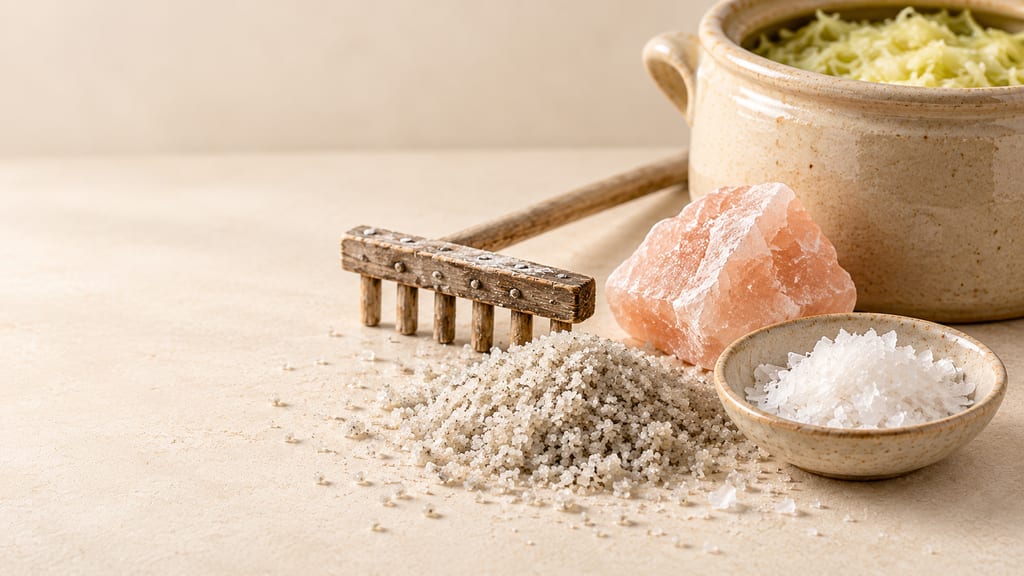
Salt seasons a meal, shapes fermentation and preserves food. Its history follows the people who mine, harvest, trade and transform it, and the choices hidden inside an ordinary packet.
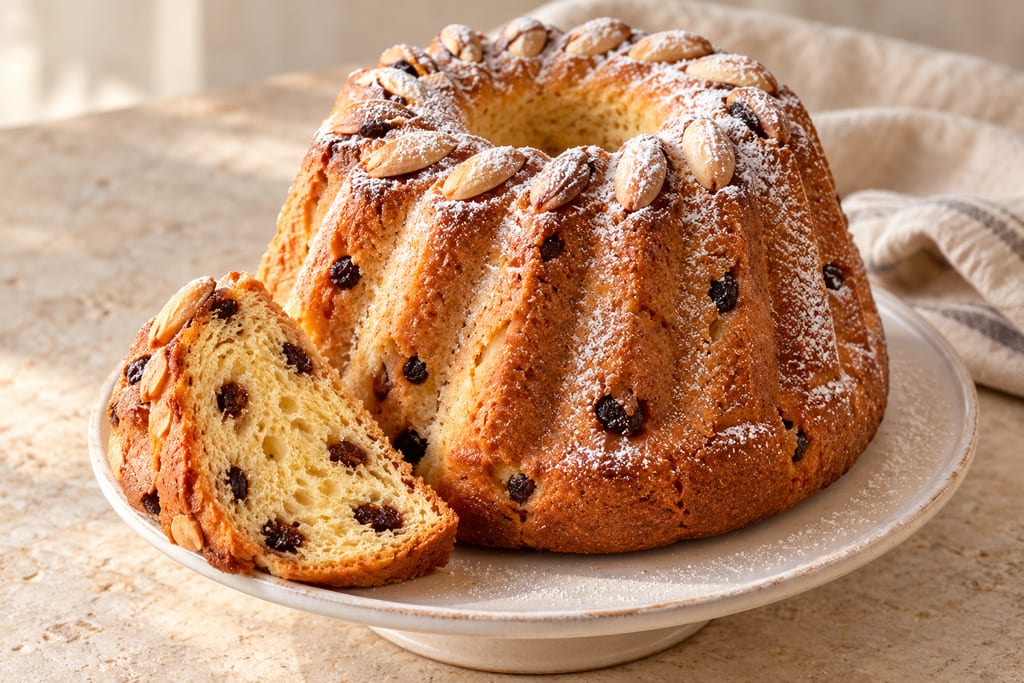
An enriched Alsatian yeast ring with raisins and almonds, kneaded with butter, proofed in a fluted mould and baked until browned.
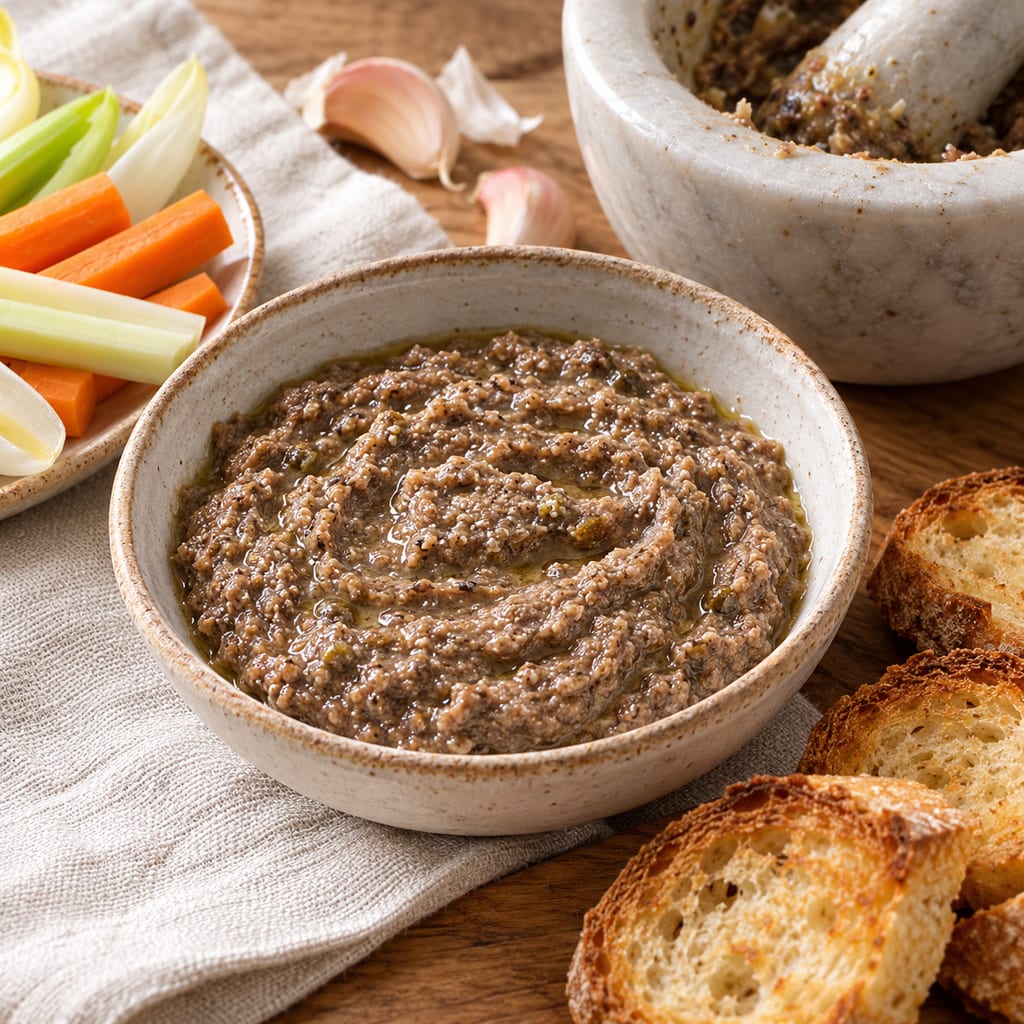
A Provencal dip of anchovies, garlic, capers and olive oil, pounded or blended to a creamy paste and served with raw vegetables, bread and eggs.

A warm dip of garlic, anchovy and olive oil, often enriched with butter, that Piedmont serves over a flame with raw and cooked vegetables and bread.

Three long, crusty wheat loaves made with an overnight yeast poolish, shaped by hand and baked with steam for a crisp crust.

Bechamel is a white sauce of milk thickened with a butter and flour roux, one of the French mother sauces, and the base from which Mornay and other cheese and cream sauces are made.
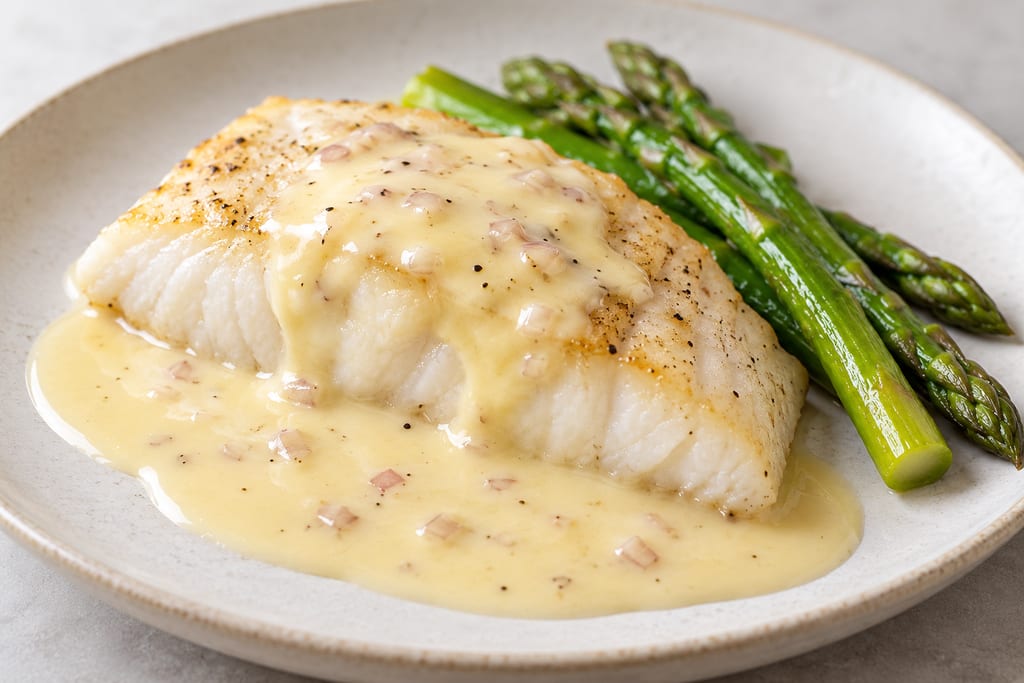
Beurre blanc is a warm emulsion of cold butter whisked into a reduction of white wine, vinegar or lemon juice and shallot, a sauce from the Loire Valley and its red-wine version, beurre rouge.
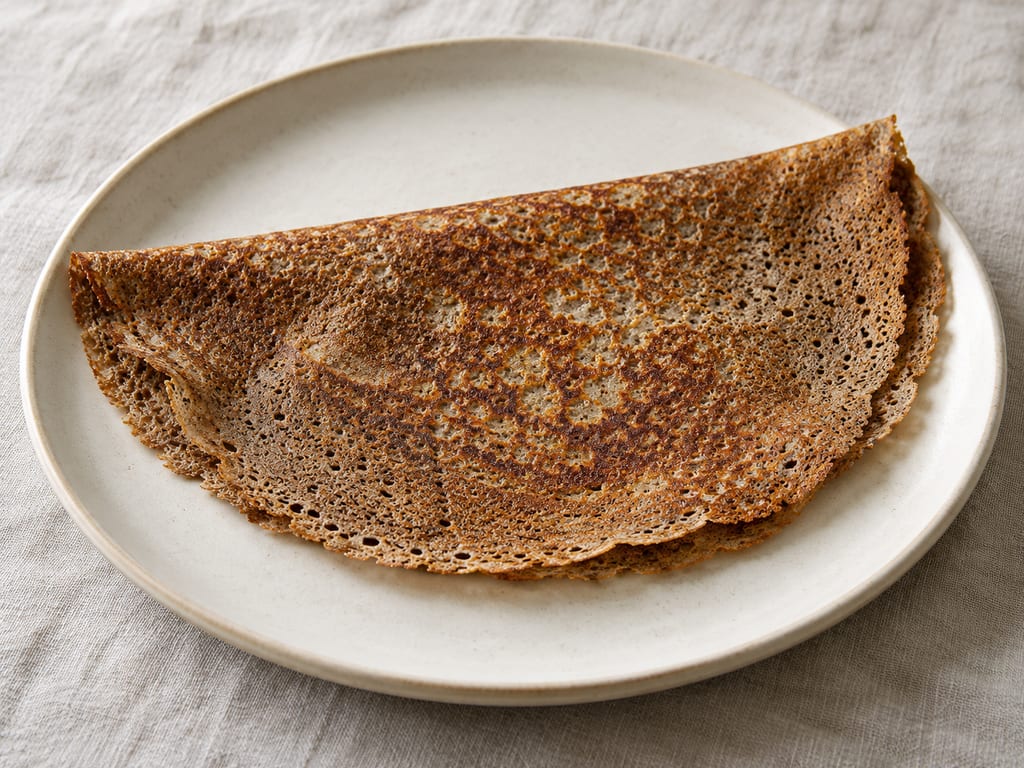
A thin Brittany galette made from buckwheat flour, water and Guérande salt. This Atelier de la Crêpe method rests the batter in a refrigerator before cooking it on a hot crêpière.
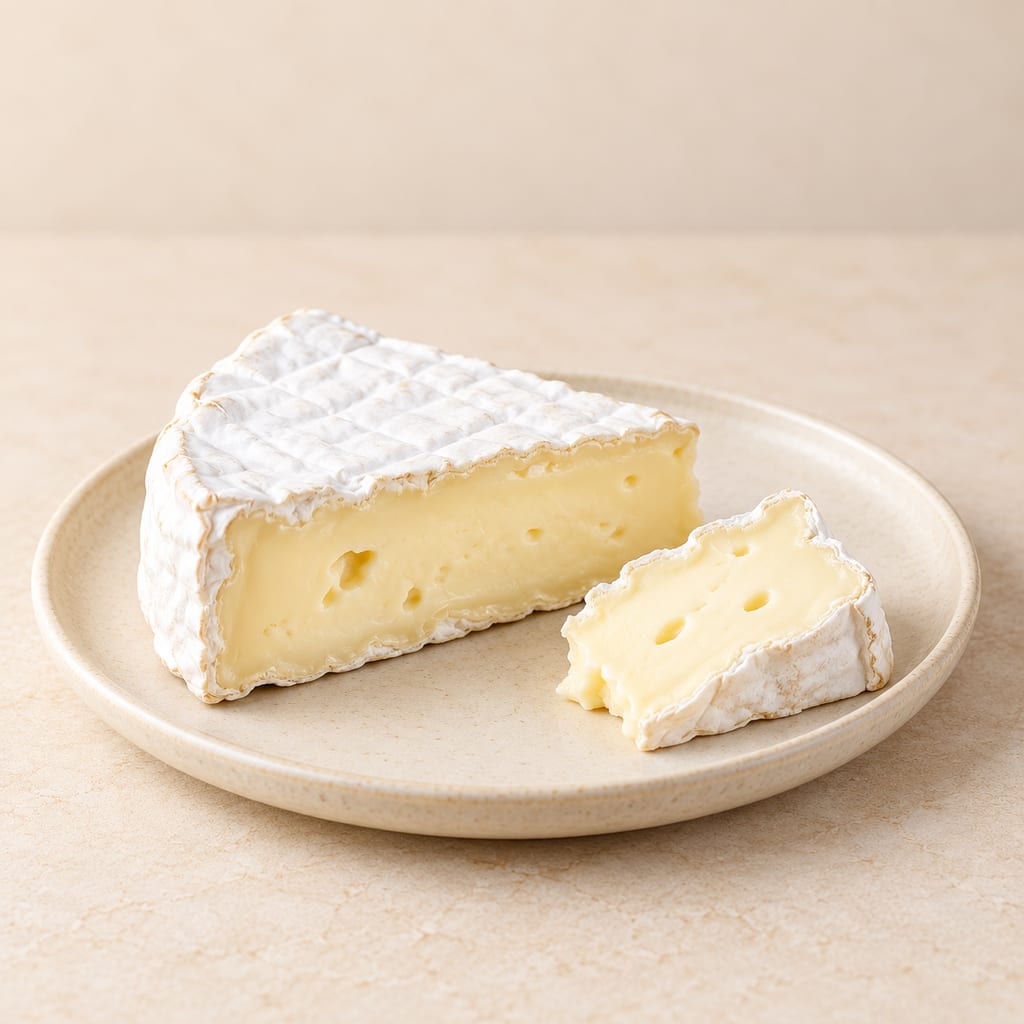
A cream-enriched Brie with a white bloomy rind and a softening center, made from pasteurized milk with lactic and surface cultures.

Soft, spreadable Calabrian pork sausage made with a great deal of red chilli and fatty pork, stuffed into natural casings, sometimes smoked and matured while staying soft.
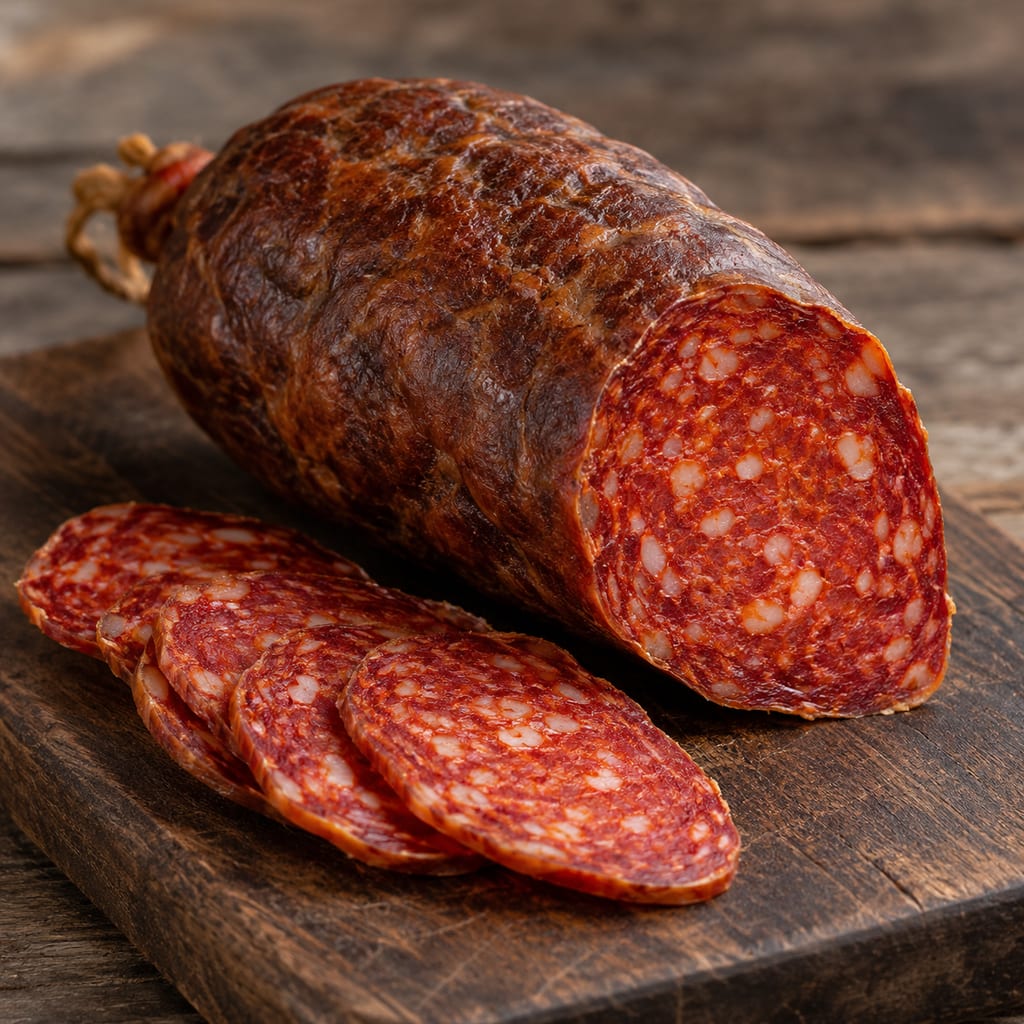
Baranjski kulen is a Croatian protected fermented pork sausage seasoned with sweet and hot paprika, garlic and white pepper, stuffed into a pig’s caecum called katica, cold-smoked and matured.
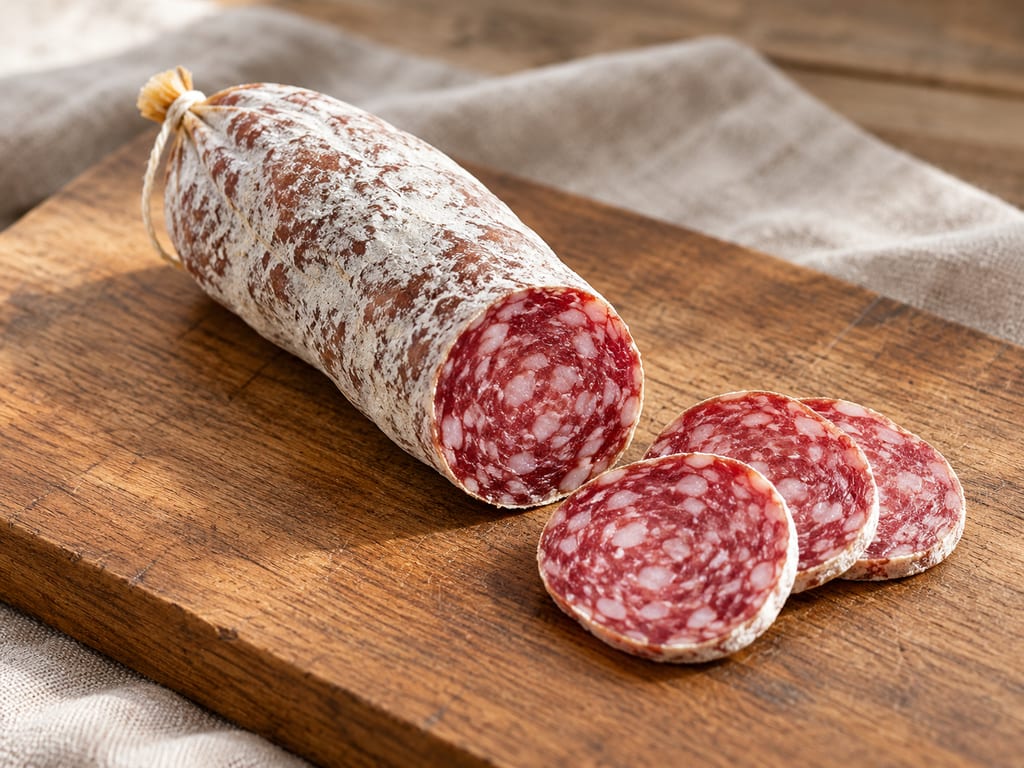
Small Italian hunter-style salami of lean pork, firm fat, salt, pepper and garlic, mildly acidified and dry-matured; protected as Salamini Italiani alla Cacciatora DOP.
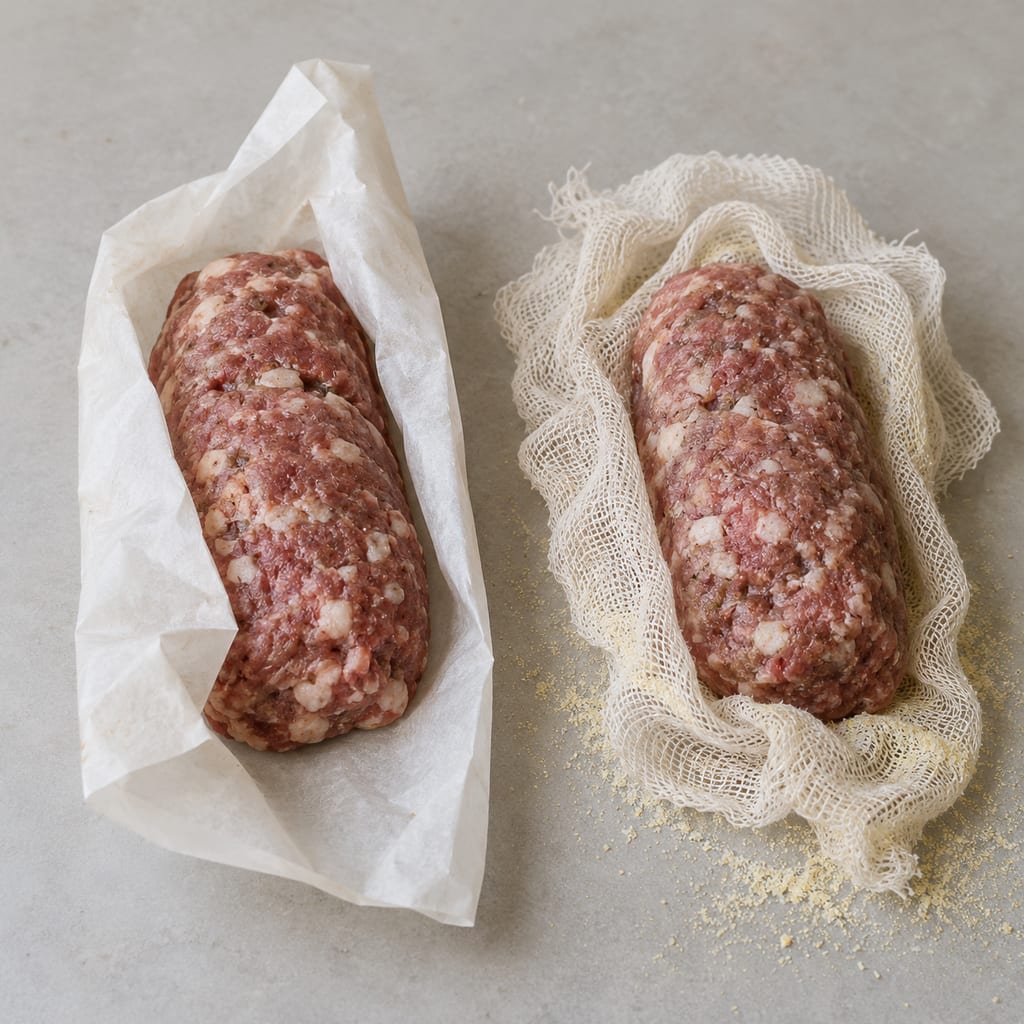
A documentary account of two modern Italian-language home-video experiments in salame without casings. Neither video establishes a safe preparation method or a ready-to-eat product.
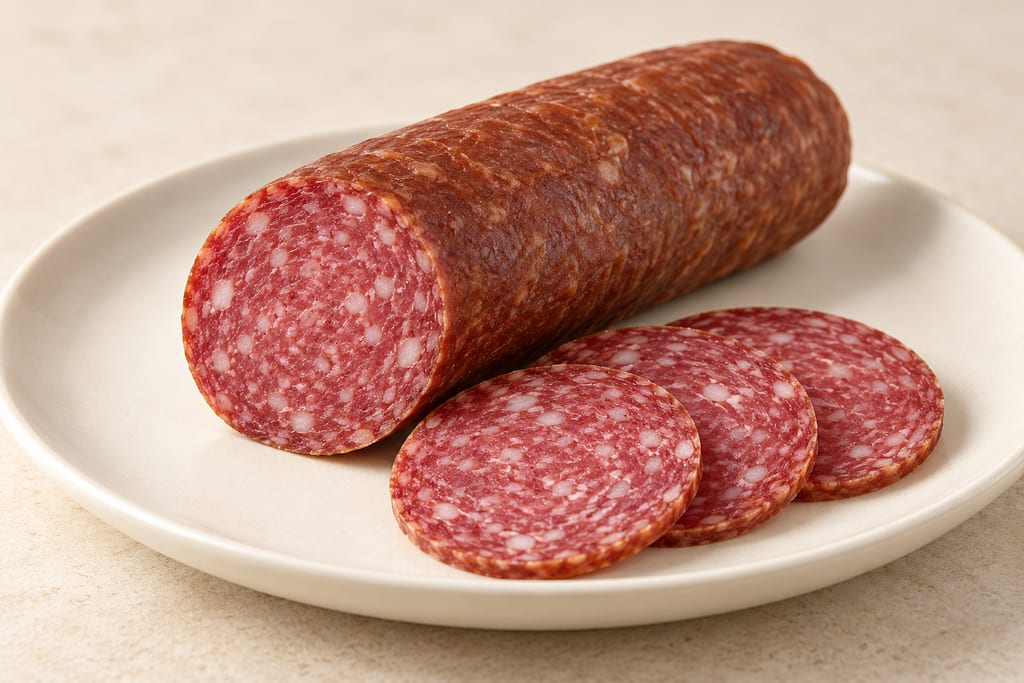
A family of salted minced-meat sausages fermented in casings, then dried and sometimes smoked. This description is not a validated household method; critical safety limits are not established.
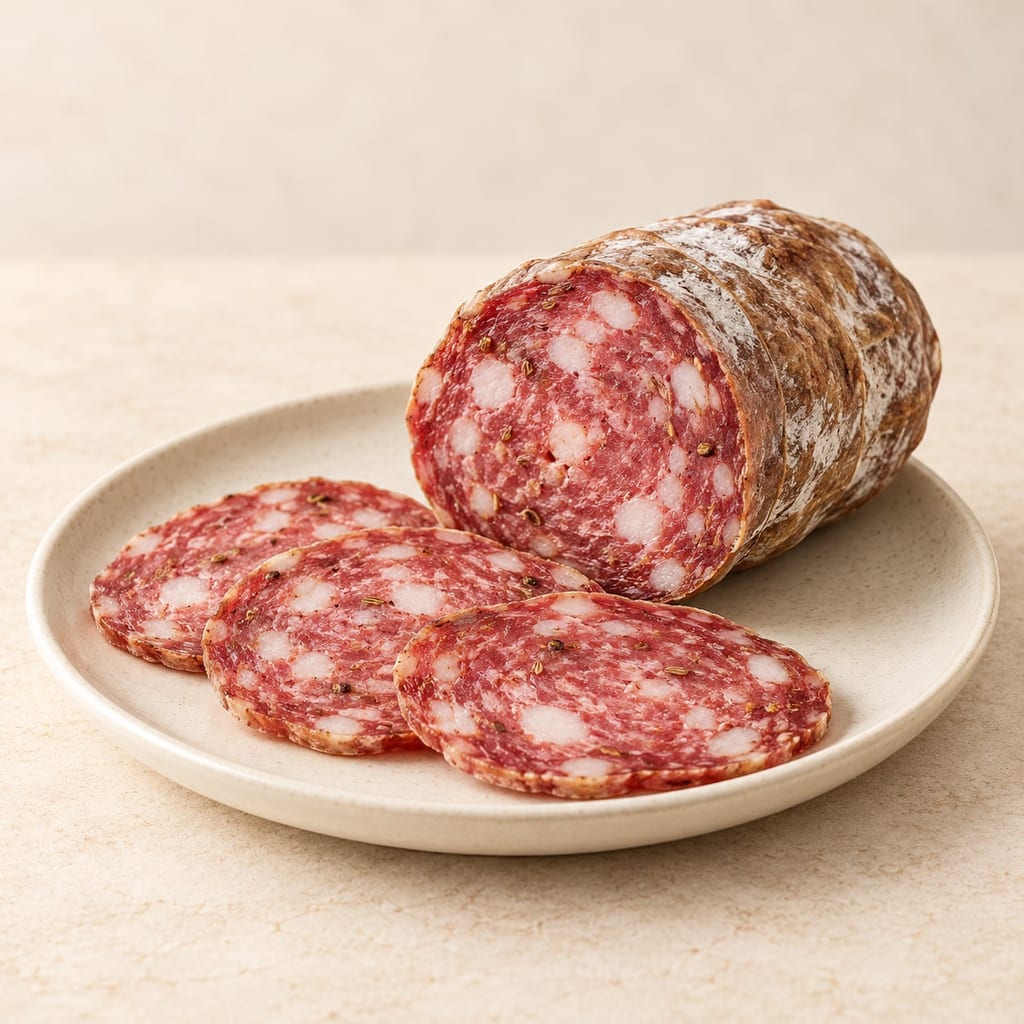
A Tuscan-style fennel salami made with pork and back fat. Toasted fennel, fennel pollen and Sambuca flavor this starter-cultured preparation.
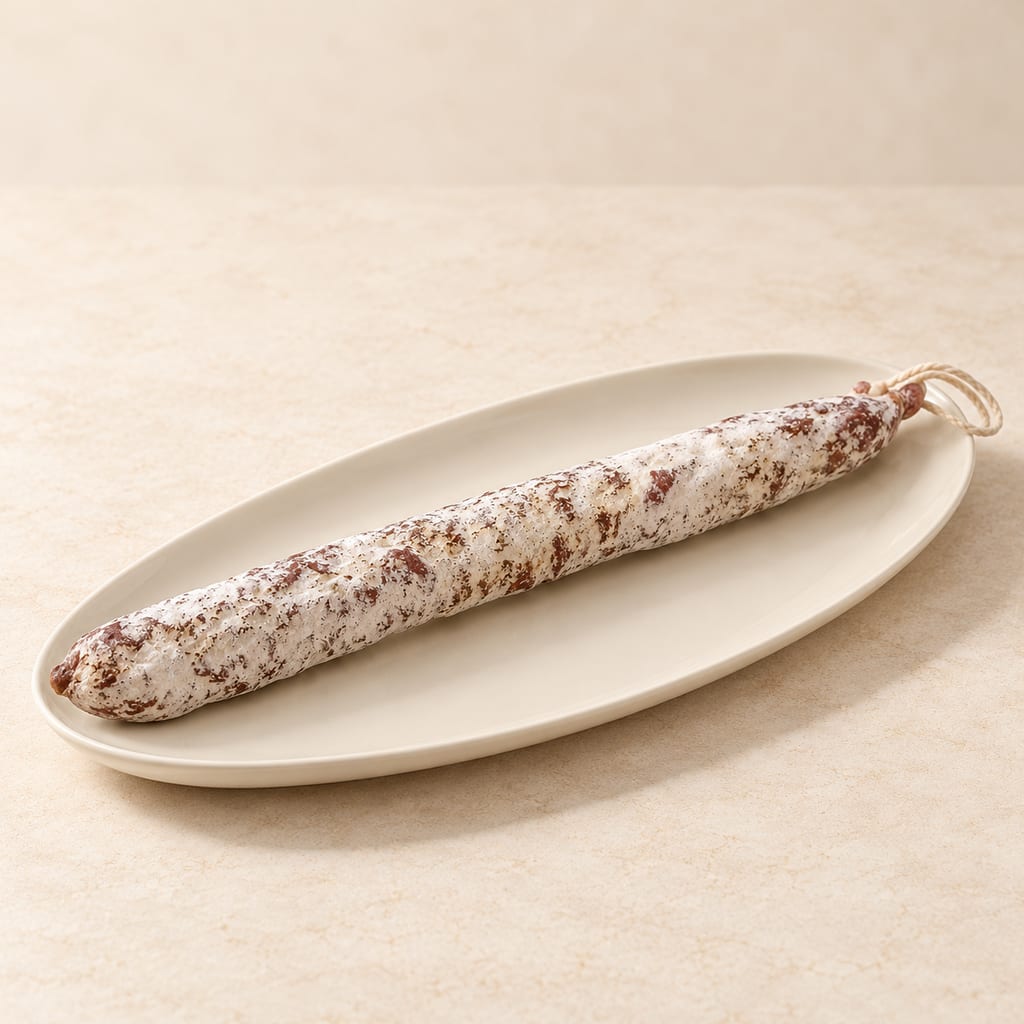
A documentary account of a modern starter-cultured Fuet formula and its place in Catalan sausage culture. The cited raw-pork process lacks matched safety validation, so this page does not present it as a household recipe.
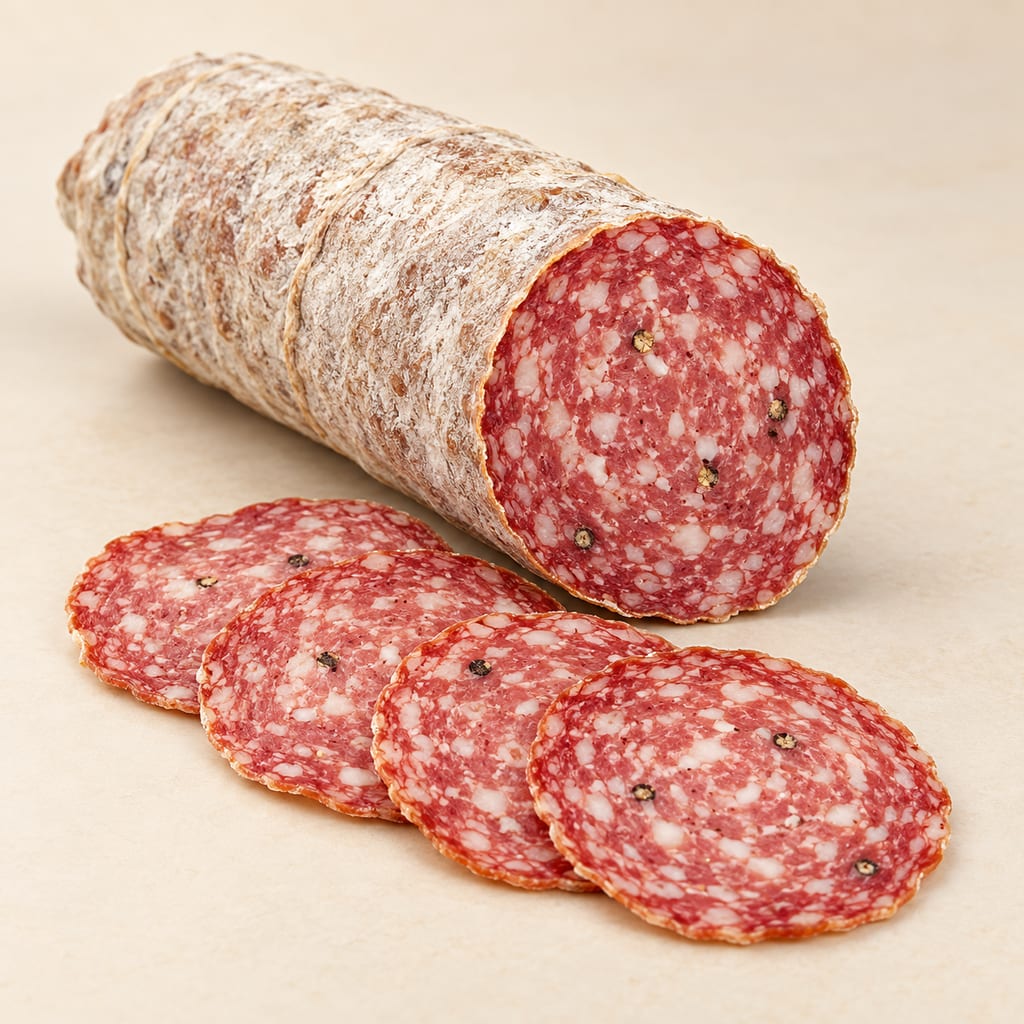
Pork, beef and back fat ferment with a named starter, cure and red wine before the sausages dry in casings. This contemporary formula uses no wood-smoke stage.
No community contributions have been published for this entry yet.
Sign in to contribute. Published comments and photos are free to read.
2 Guys & A CoolerProcess
Saucisson Sec1 kg ingredient formula, Flavor of Italy and Mold 600 instructions, grind size, fermentation conditions, source pH target, drying conditions and weight-loss endpoints.
USDA FSISSafety
Ready-to-Eat Fermented, Salt-Cured, and Dried Products GuidelineHazard context for fermented meat; this guideline is not applied as validation of the recipe.
BCCDCSafety
Fermented Foods Safety GuidanceFermented-food hazard context; it does not validate this sausage.
Canadian Food Inspection AgencySafety
Preventive control recommendations for manufacturing fermented and dried meat productsStaphylococcus aureus heat-stable toxin, fermentation time-temperature-pH control, and separate Salmonella and E. coli reduction controls.
The Sausage MakerCulture identity
Bactoferm - Flavor of ItalyProduct alias Flora Italia LC and link to its manufacturer product sheet.
Chr. HansenCulture identity
SafePro Flora Italia LC US Product InformationManufacturer sheet lists Lactobacillus sakei, Pediococcus acidilactici and Staphylococcus carnosus; does not validate this recipe.
Chr. HansenCulture identity · Method · Safety
MOLD-600 Product InformationPenicillium nalgiovense; surface inoculation after stuffing by dipping/spraying; prepared suspension used on preparation day because of yeast contamination risk. Recipe and manufacturer hydration quantities differ and are kept separate.
Les Charcuteries / FICTHistory · Context
Dry-cured sausagesFrench dry sausage textures, permeable casings, drying and natural or inoculated bloom. Broad ancient-origin claims not used to assign a period.
