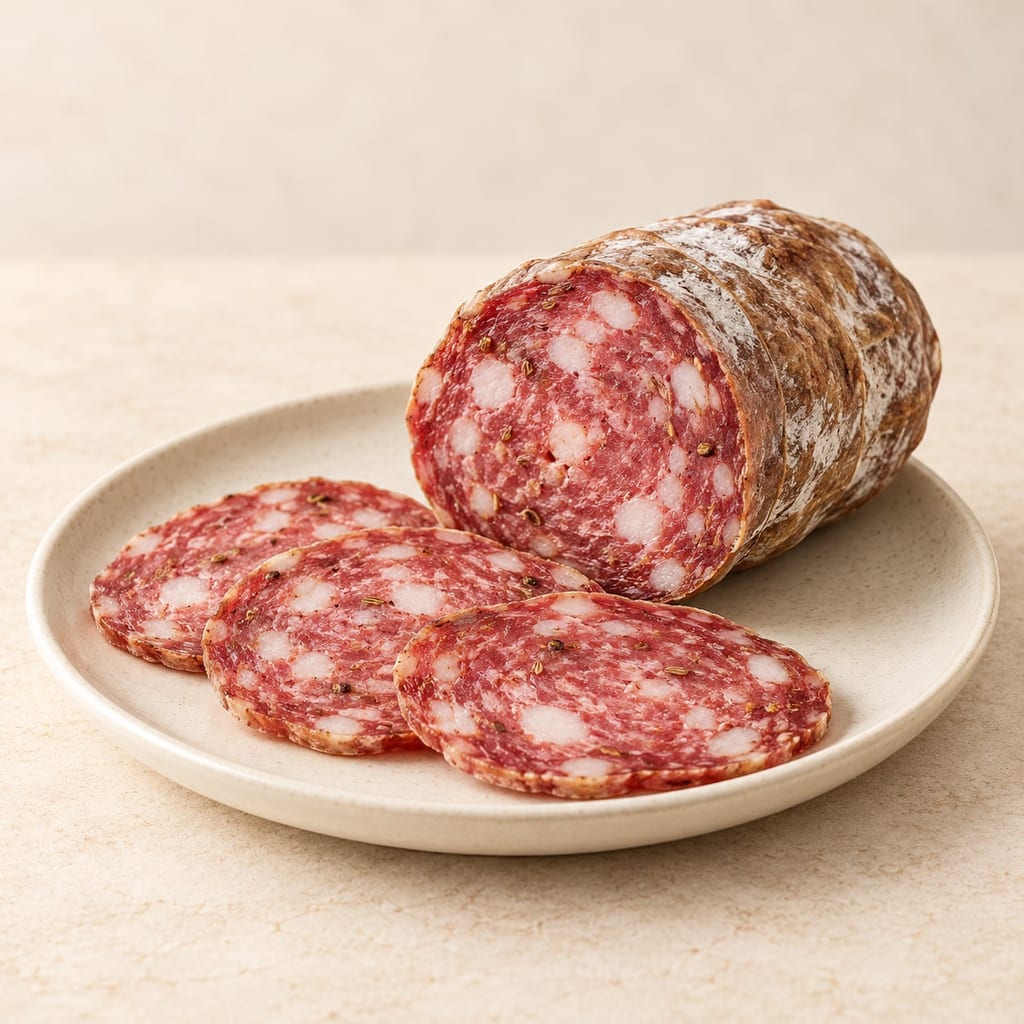
Finocchiona, starter-cultured
A Tuscan-style fennel salami made with pork and back fat. Toasted fennel, fennel pollen and Sambuca flavor this starter-cultured preparation.
 FermenteaWhere food goes to change
Spices and aromatics
Fennel pollen is the fine, aromatic seasoning gathered from flowering fennel heads. The linked salumi recipes pair measured pollen with fennel seed; protected Finocchiona names seeds and/or flowers, not isolated pollen.
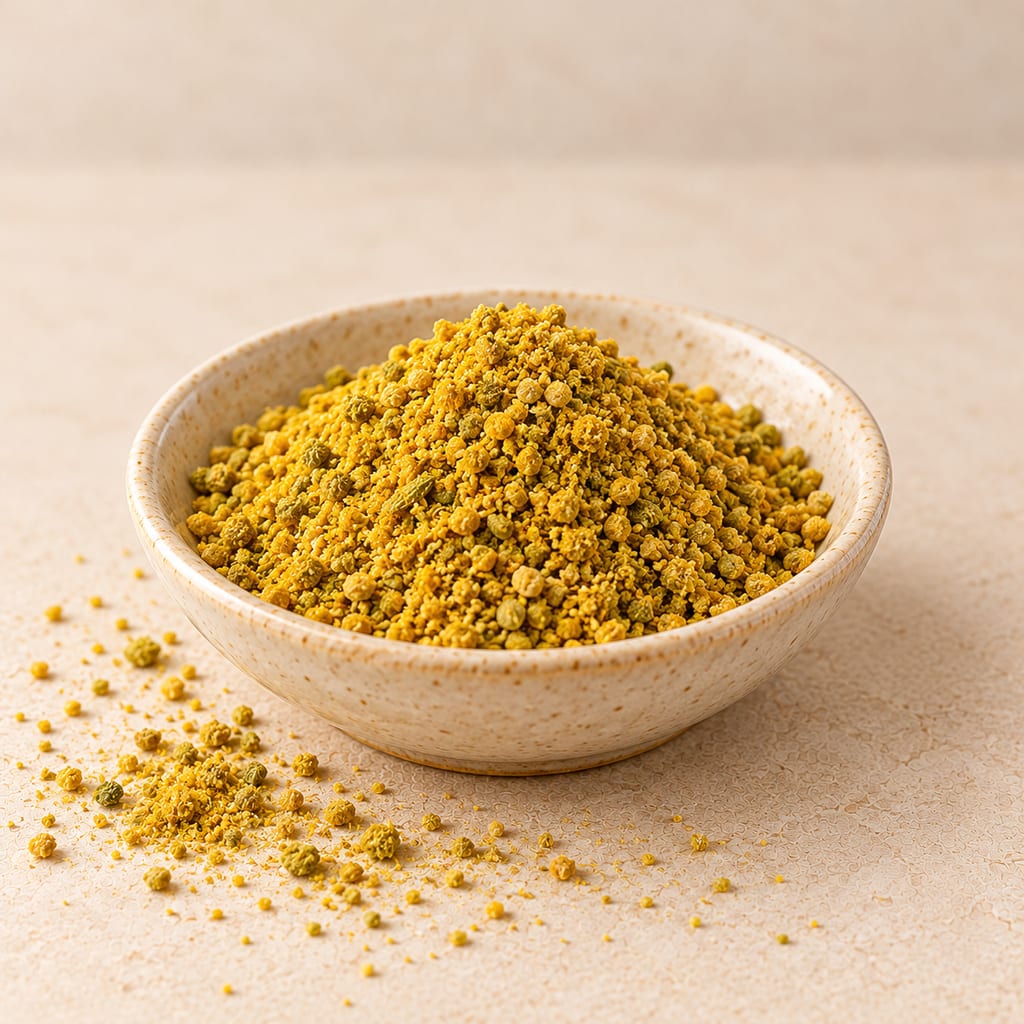
Fennel pollen is the fine yellow seasoning shaken from flowering fennel heads. It carries the sweet, anise-like character associated with fennel, but in a loose, powdery form rather than the firm pieces of seed that show in a sausage slice. It is used in contemporary salumi formulas and is a distinct harvest from fennel leaves, swollen stems, flowers and mature fruits.
A flowerhead gives up its pollen only briefly and only in small amounts, which is why the seasoning is gathered by hand, sold in small jars and used by the pinch. Cooks reach for it when they want fennel's sweet, anise-like and floral side without the texture of seed. In the salami recipes linked to this page it sits beside toasted fennel seed rather than replacing it: the seed gives visible flecks and the pollen carries the aroma evenly through the meat. Elsewhere it is used as a light finishing dust on meat, fish, vegetables and baked goods. Throughout, the practical rule is the same: taste a small pinch first, because the strength of a harvest or a jar is not fixed.
Fennel belongs to the carrot and parsley family, Apiaceae, and Kew accepts its botanical name as Foeniculum vulgare Mill. Its native range is not limited to Italy: Kew records a range extending well beyond it. Cooks use several parts of the plant, each with a different shape and point in its growth: the feathery fronds are leaves; Florence fennel is grown for its swollen, crisp base; flowering stems carry small yellow blossoms; pollen is released by those blossoms; and the structures commonly called fennel seeds are the mature dry fruits. Their aromas invite comparison, but these parts are not the same spice.
Pollen can be confused with a flower because it gathers on the flowerhead and may be sold with tiny green or floral flecks. In the garden, the difference is visible in the harvest: shake a flowerhead, collect the dust that falls, and leave some heads on the plant if you want them to develop seed later. A jar called fennel pollen names the material released from flowers; it should not be described as whole dried fennel flowers or as fennel seed.
The contents of a retail jar can include more than the fine grains alone. UC Cooperative Extension describes shaking released pollen into a bowl. A Sicilian seller describes its own dried seasoning as golden with green flecks. A tiny blossom fragment in a jar would not be surprising. The fine grains and occasional flower flecks still make a seasoning gathered from fennel flowerheads, though a particular packet may be cleaner or leafier than another.
Fennel is not anise. The resemblance is sensory, not a declaration that the plants or their spices are interchangeable. Even within fennel, growers distinguish sweet cultivars used for leaves, pollen and seed from Florence types selected for the swollen base; different pollen products need not taste identical. Wild, cultivated and named cultivars may differ, while most retail descriptions do not state a botanical variety.
Fennel pollen belongs in a story about fennel seasoning, but it should not be mistaken for the whole history of Tuscan fennel sausage. The Tuscan fennel-sausage tradition has a longer documented trail than the use of isolated pollen as a seasoning. Regione Toscana’s product record recounts earlier Tuscan sausage sources and cites the 1889 Vocabolario degli Accademici della Crusca, which defines finocchiona as a sausage seasoned with fennel seed. This is a historical narrative about fennel seasoning generally; it does not name isolated pollen.
Today the protected name Finocchiona IGP is tied to a specific Tuscan product and production area. The European Union’s 2024 product specification describes its fennel as seeds and/or flowers in the mixture. The Consortium’s own ingredient page likewise lists fennel seeds and/or flowers. Neither source says pollen alone defines the sausage. Fennel is the defining seasoning of the protected sausage, and it is named in the specification as seeds and/or flowers. The familiar tale about fennel making poor wine seem better belongs to the tradition’s folklore; it does not date the first use of pollen.
Pollen appears clearly in some modern formulations. A 2020 specification from Tempesta Artisan Salumi, a U.S. producer, describes its Tuscan fennel salami with both fennel seeds and pollen. This shows that contemporary makers can combine the two: seed offers visible flecks while pollen provides a fine seasoning. It does not make that American product evidence for medieval Tuscan practice, nor does it amend the PGI ingredient description.
Eric of 2 Guys & A Cooler uses the same pairing in a modern Finocchiona-style recipe: toasted fennel seed and pollen, with ground fennel allowed if pollen is unavailable. The recipe is a present-day starter-cultured preparation, not a transcription of an old household method. Regional identity, protected-product rules and an individual maker’s formula answer different questions, so it is useful to keep them separate.
Fennel pollen is collected from flowering heads while it is dry. The University of California’s Sonoma County Master Gardener guide recommends cutting sweet-fennel flowerheads when pollen is warm and dry. Fresh pollen can be shaken or tapped into a deep bowl. For a dried harvest, bunch the heads into a paper bag, leave them in a warm place for a few days and wait for the pollen to fall. Another method bends flowering stems into a bag and shakes gently. These are home-gardening directions, not a commercial processing specification.
The guide notes that a flowerhead yields only a small amount. That small return helps explain why the seasoning is sold in small quantities and used sparingly. Yield varies: plant size, weather, flowering and how much pollen has already fallen all affect what a grower gathers. The source advises leaving some heads intact so they can develop seeds. Pollen and seed arrive at different points in the plant’s reproductive sequence, and collecting one changes what remains for the other.
The harvest depends on dry conditions because loose pollen must be shaken from flowers rather than trapped by wet heads. Garden practice follows the same logic: heads are cut when the pollen is warm and dry, and the drying step is a matter of days in a warm place, not a timed procedure. Commercial cleaning, sieving and storage differ from one producer to the next.
One Sicilian producer describes its own dried pollen as harvested from wild Sicilian fennel. That is one producer's sourcing, not the definition of pollen. The retail name alone does not tell a buyer where a particular jar was gathered.
Aroma is easier to describe than to assign to a measured compound in this spice. The gardening guide calls pollen creamy yellow and says its taste is similar to anise. The James Beard Foundation describes sweet fennel flavor and a flowery aroma. These are tasting descriptions, not standardized sensory measurements; one jar may seem greener, sweeter or more floral than another.
Research on fennel essential oils gives context, but it is not a chemical analysis of culinary pollen. A study of flowers and seeds from fennel grown in Iran found trans-anethole as the main reported constituent of the distilled oils from both parts, in different proportions. An earlier study compared oils from leaves, stems, flowering umbels, flowers and fruits of Turkish bitter fennel, also finding differences among parts. Such results show why plant part and sample matter when discussing aroma. Distilled oils are not loose pollen, so they cannot say how strong a given jar will be.
Fennel pollen brings an anise-like, floral note in a fine dust that can be used without the crunch of seed. The flower-oil results help explain why fennel parts may smell related yet distinct; they do not give a concentration for a cook's loose pollen or predict the strength of a particular jar. Taste a small pinch before adding more.
Because pollen is fine rather than seed-sized, it can be distributed through a mixture without leaving the same large, visible seed pieces. In sausage, that offers a way to carry fennel aroma through the mince. The difference follows from the physical form: pollen disperses evenly through the mixture, while seed shows as flecks.
The linked Finocchiona recipe makes a 2,000-gram batch using 7.4 grams of toasted fennel seed and 6.6 grams of pollen. The pollen is 0.33 percent of the batch. It is mixed into chilled meat and fat with the recipe’s other seasonings and cultures. Because the formula also includes toasted seed, its finished fennel character cannot be attributed to pollen alone. The author permits ground fennel instead but provides no measured equivalence.
The Ventricina recipe uses a different proportion: 1 gram of pollen and 2.5 grams of fennel seed in a 1,000-gram batch. It permits fennel powder as an alternative and combines the seasonings with coarse pork and the recipe’s other ingredients and starter culture. These amounts belong to those formulas. They differ, and neither establishes a standard pollen dose for all salami. Because the two formulas use different pollen-to-seed ratios, neither serves as a conversion between pollen and ground seed.
Outside sausage, cooks use pollen with pork, poultry, fish, seafood, vegetables, pasta, stews and even shortbread. The Sicilian supplier recommends a light dusting on poached salmon or chicken and also suggests rubbing pollen onto pork chops or duck. UC’s guide advises starting with a small amount to learn the strength of a particular harvest. Yields are small and the flavour is direct, so a light hand is the sensible way to start.
Look for a clear ingredient name and, if provenance matters, a producer description that says whether the fennel was cultivated or wild and where it came from. One Sicilian producer identifies its estate and harvest. Colour and the amount of flower fleck differ among products, so choose by the seller's description and the jar in hand.
Storage life varies with the producer and packaging, so follow the guidance printed on the jar. The practical handling advice is to gather pollen only when dry and to begin by using a small amount. Foragers should note that the UC guide recommends garden-grown fennel and advises against collecting wild plants near roads because of pollutant concerns. This is a caution about roadside sourcing, not a claim that all wild fennel is unsafe.
Fennel is a member of the Apiaceae, the family that also holds anise, coriander, cumin and celery, and spices from that family can provoke allergic reactions. An immunoblot study of patients who reacted to spiced food found cross-reacting IgE-binding allergens in anise, fennel, coriander and cumin extracts, linked to birch and mugwort pollen allergy. A French data bank of 589 food-allergy cases attributed 3 of 10 spice-related allergies to fennel and found that allergy to spices accounted for 2% of all food allergies, and 6.4% among adults. Both studies tested fennel spice, not loose pollen; a person who reacts to fennel, celery or mugwort should treat fennel pollen with the same caution.
The ingredient has a clear role even though its commercial composition varies. Fennel pollen is a fine yellow seasoning collected as pollen from fennel flowers. It differs from both the blossoms around it and the mature fruits sold as fennel seed. A flowerhead can yield only a little, and a fine dust blends through a sausage differently from whole seed. The modern recipes give measured examples, while Tuscany’s protected Finocchiona tradition names seeds and flowers. Pollen brings a floral fennel note to food in a form that disperses through a mixture.
Fennel (Apiaceae spice); cross-reacts with birch and mugwort pollen allergy
The recipes do not give the origin, producer or botanical variety of their pollen.
A Tuscan-style fennel salami made with pork and back fat. Toasted fennel, fennel pollen and Sambuca flavor this starter-cultured preparation.
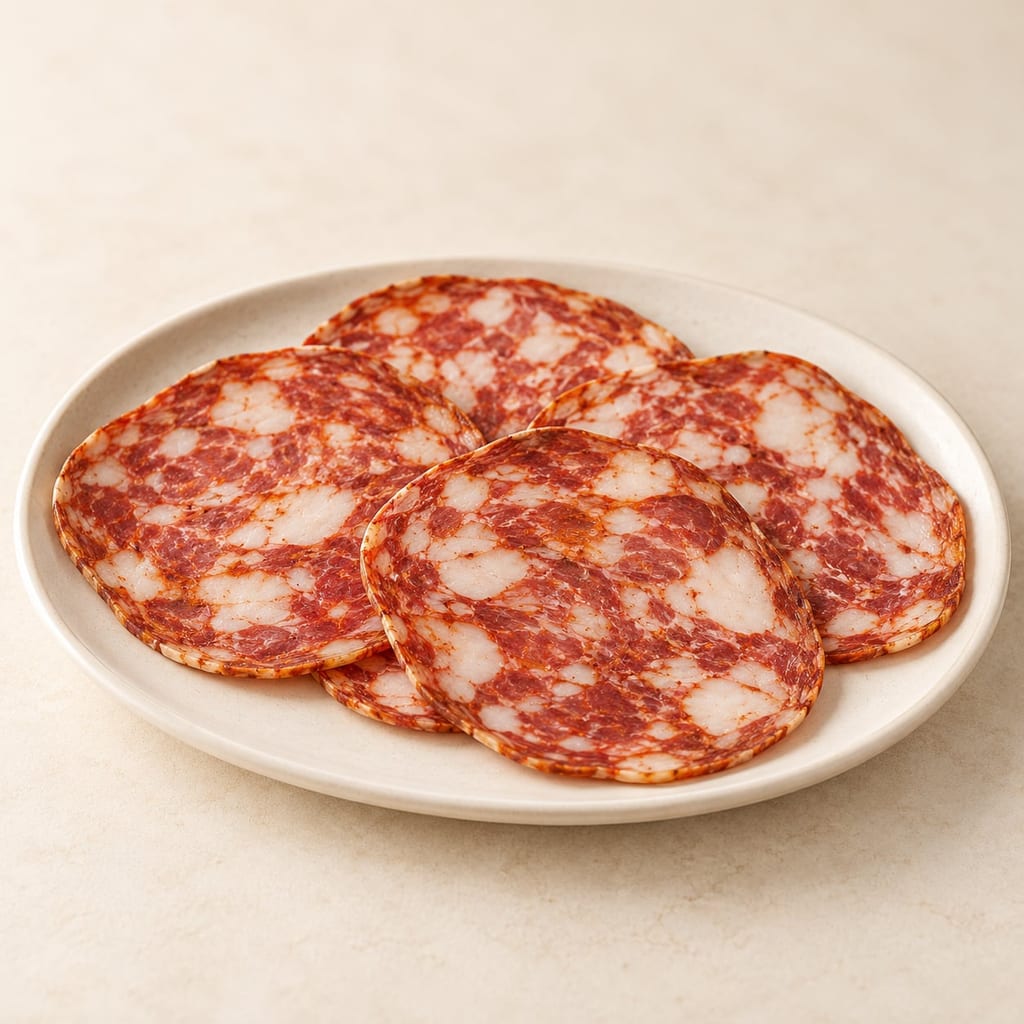
A documentary account of a modern ventricina-style salami source and its Abruzzese context. This page provides no preparation directions or validated home process.
No community contributions have been published for this entry yet.
Sign in to contribute. Published comments and photos are free to read.
UC Master Gardener Program of Sonoma CountyIngredient context · Process
FennelFlowerheads yield a small amount of pollen, gathered by shaking dry heads into a bowl or paper bag; the guide advises leaving some heads for seed.
Cited in: From flower to spice; One plant, several different ingredients; Gathering a small harvest; The aroma of a flowerhead; How it behaves in food; Buying and using it thoughtfully
European CommissionIngredient context · Process
Finocchiona PGI specification amendment (C/2024/7560)The protected Tuscan sausage permits fennel seeds and/or flowers; the text does not specify isolated pollen.
Cited in: Tuscan sausage and its fennel; Buying and using it thoughtfully
Regione ToscanaIngredient context · Process
Finocchiona IGP product recordThe regional record cites an 1889 dictionary definition of finocchiona seasoned with fennel seed and recounts earlier Tuscan sausage sources.
Cited in: Tuscan sausage and its fennel; Buying and using it thoughtfully
Consorzio di Tutela della Finocchiona IGPIngredient context · Process
History of FinocchionaThe consortium recounts the Tuscan tradition and the origin story about fennel and wine; it does not attest isolated pollen.
Cited in: Tuscan sausage and its fennel
2 Guys & A CoolerIngredient context · Process
How to Make Tuscan Finocchiona SalamiThe 2,000 g modern formula uses 7.4 g toasted fennel seed and 6.6 g pollen, with ground fennel offered as an alternative.
Cited in: Tuscan sausage and its fennel; How it behaves in food; Buying and using it thoughtfully
2 Guys & A CoolerIngredient context · Process
Ventricina SalamiThe 1,000 g formula uses 1 g pollen with 2.5 g fennel seed and allows fennel powder as an alternative.
Cited in: How it behaves in food; Buying and using it thoughtfully
Tempesta Artisan SalumiIngredient context · Process
Tempesta Artisan Salumi retail specificationThe producer lists fennel seeds and fennel pollen together in its Tuscan fennel salami.
Cited in: Tuscan sausage and its fennel; How it behaves in food
McCormick Science InstituteIngredient context · Process
FennelIdentifies fennel plant parts and their culinary forms; fennel pollen differs physically from the mature fruit sold as seed.
Cited in: From flower to spice; One plant, several different ingredients; The aroma of a flowerhead
Journal of Horticulture and ForestryIngredient context · Process
Comparative survey on the essential oil composition from the seeds and flowers of Foeniculum vulgare Mill. from Kerman provinceThe abstract reports trans-anethole in distilled flower and seed oils from the sampled Iranian fennel; it does not measure loose culinary pollen.
Cited in: The aroma of a flowerhead
Food ChemistryIngredient context · Process
Comparative volatile oil composition of various parts from Turkish bitter fennelThe abstract compares volatile oils from plant parts of Turkish bitter fennel; it does not characterize loose culinary pollen.
Cited in: The aroma of a flowerhead
James Beard FoundationIngredient context · Process
Eat This Word: Fennel PollenThe culinary account describes fennel pollen as sweet, floral and anise-like.
Cited in: The aroma of a flowerhead
Bona FurtunaIngredient context · Process
Wild Foraged Fennel PollenThe seller describes its own Sicilian wild fennel pollen as golden with green flecks and gives serving examples; its origin is specific to that product.
Cited in: One plant, several different ingredients; Gathering a small harvest; How it behaves in food; Buying and using it thoughtfully
PalDatIngredient context · Process
Foeniculum vulgareBotanical pollen morphology for Foeniculum vulgare, distinct from whole fennel flowers and fruit.
Cited in: One plant, several different ingredients
Royal Botanic Gardens, KewIngredient context · Process
Foeniculum vulgare Mill. | Plants of the World OnlineKew accepts Foeniculum vulgare in Apiaceae and gives a native range extending beyond Italy.
Cited in: One plant, several different ingredients
Consorzio di Tutela della Finocchiona IGPIngredient context · Process
Gli ingredienti della Finocchiona IGPThe protected product's ingredient description lists fennel seeds and/or flowers, not pollen alone.
Cited in: Tuscan sausage and its fennel
Clinical and Experimental AllergyEditorial
Characterization of allergens in Apiaceae spices: anise, fennel, coriander and cuminCross-reacting IgE-binding allergens in fennel and other Apiaceae spice extracts, linked to birch and mugwort pollen allergy
Cited in: Buying and using it thoughtfully
Allergie et ImmunologieEditorial
Food allergy and IgE sensitization caused by spices: CICBAA data (589 cases of food allergy)Spice allergy is 2% of food allergies and 6.4% in adults; fennel accounts for 3 of 10 reported cases
Cited in: Buying and using it thoughtfully