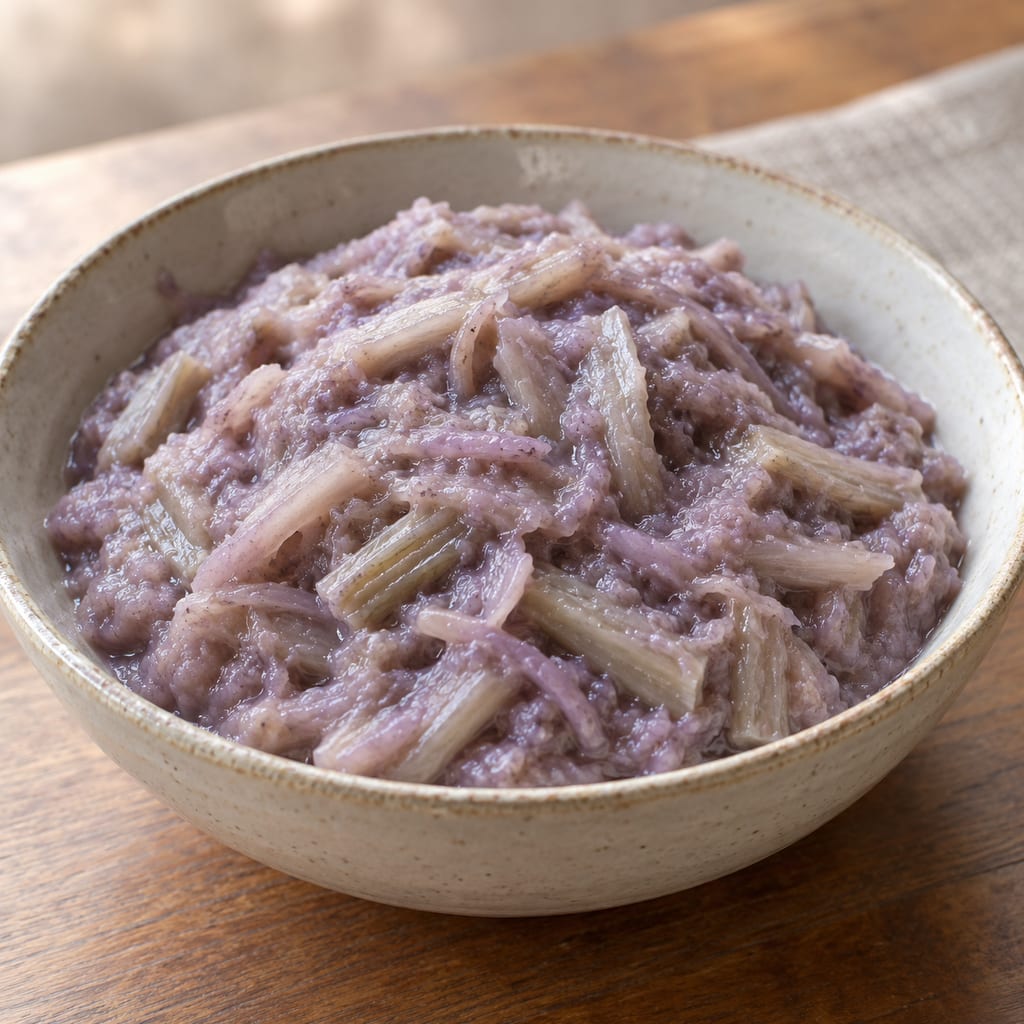
Lam phueak dong
Thai pickle of young taro leaf stalks, salted, kneaded and held in rice-washing water in an earthen jar at room temperature. JIRCAS records it as a home-level product with no validated endpoint.
 FermenteaWhere food goes to change
Traditional method
Leafy vegetable ferment
Young spider-flower greens packed with salt and cooked rice and left to sour for a few days; a Thai leafy-vegetable ferment eaten as a sharp side dish.
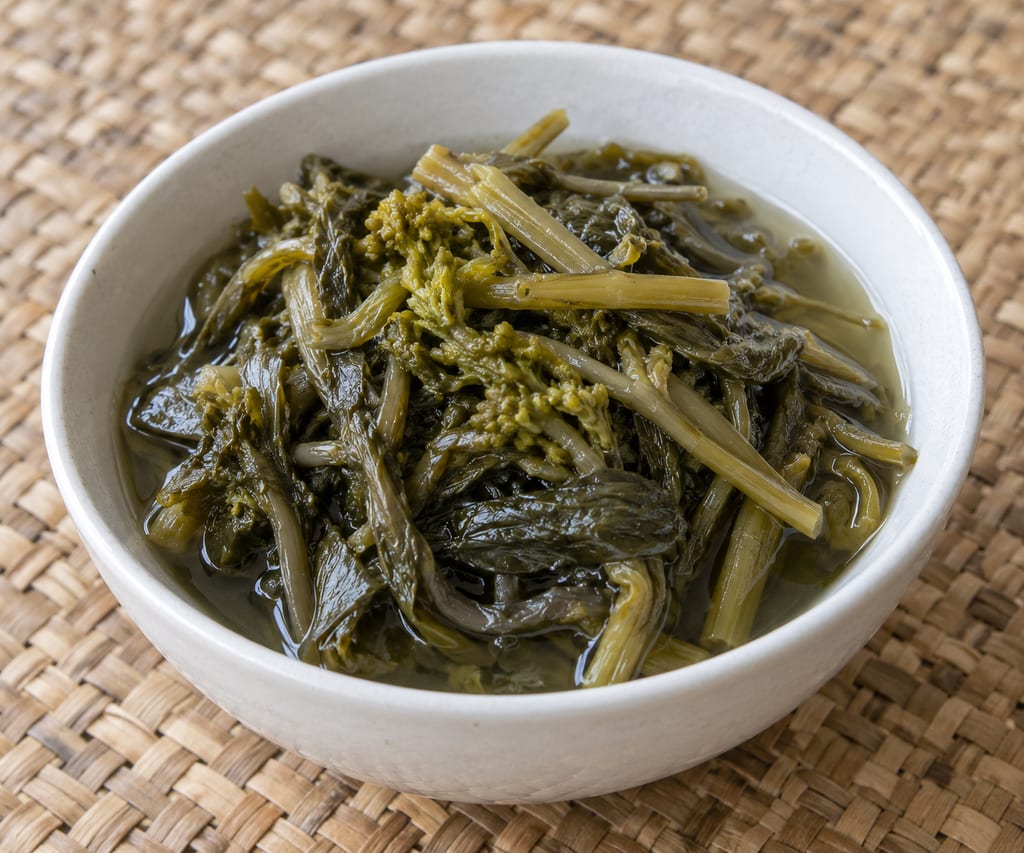
Pak-sian-dong (Thai: ผักเสี้ยนดอง) is a traditional Thai fermented vegetable made from young leaves, stems and flowering tips of the plant commonly known as wild spider flower.
The source identifies the plant as Cleome gynandra L., which is also classified as Gynandropsis gynandra in some botanical treatments.
The term pak sian identifies the vegetable, while dong indicates pickling or preservation.
Another common name is som phak sian (ส้มผักเสี้ยน), with som referring to sourness.
The finished product is a salty, acidic vegetable accompaniment, particularly associated with northeastern Thailand, or Isan.
Its method differs from an ordinary salted pickle because it uses cooked rice as an additional ingredient.
The rice contributes carbohydrates and changes the fermentation environment.
The precise origin date is unknown.
The method is documented in the Japanese International Research Center for Agricultural Sciences database of traditional Thai fermented foods.
That record draws on a publication titled The Traditional Fermented Foods of Thailand, dated 1995.
It identifies household and small-scale production in northeastern Thailand.
This is a useful specific geographical attribution, rather than a general statement that the dish exists somewhere in Southeast Asia.
Wild and cultivated leafy vegetables play an important role in Isan cooking.
Seasonal greens can be gathered and incorporated into soups, relishes or fermented preparations.
Fermentation permits a strongly flavoured accompaniment to be prepared from vegetables that might otherwise deteriorate quickly.
The method also demonstrates the importance of rice in regional food preservation, beyond its use as a staple grain.
The documented formulation gives percentages rather than one fixed batch weight.
Ingredient — Documented amount
Young Cleome gynandra stems, leaves and flowering tips — Base vegetable quantity
Salt — Approximately 2–4% of vegetable weight
Cooked rice — Approximately 2–4% of vegetable weight
For clarity, these percentages use the vegetable weight as the reference. A hypothetical one-kilogram vegetable batch would mathematically correspond to 20–40 g of each addition, but the original source does not establish that as a separately tested household batch.
The source supplies no exact amount of water, no numerical fermentation temperature and no validated final pH.
Cooked rice contains gelatinised starch.
Unlike raw crystalline starch, cooked starch has undergone heat-induced structural changes.
Microbial or plant enzymes may subsequently break some of this material into smaller carbohydrates.
Those carbohydrates can provide nutrients for fermentation organisms.
The rice can also help distribute moisture and affect the texture of the vegetable mass.
However, adding cooked rice introduces another perishable ingredient.
The safe outcome depends on the actual fermentation ecology and sufficiently rapid acidification.
The presence of rice does not guarantee that a safe lactic fermentation will take place.
Sort the greens. Remove damaged stems, leaves and flowers.
Wash thoroughly. Clean the vegetables before fermentation.
Wilt in sunlight. The documented preparation uses 1–2 hours of sun exposure to soften the material.
Add salt. Mix in approximately 2–4% by weight.
Add cooked rice. Incorporate approximately 2–4% by weight.
Pack the container. Compress the prepared material to encourage contact between the ingredients.
Weight down. The source specifically describes keeping the greens beneath the brine that develops.
Close the container. The exact vessel design and gas-management system are not specified.
Ferment in shade. The documented duration is 2–3 days.
The same historical database lists a storage life of 15 days, but it does not establish the packaging, temperature and microbiological validation required to transfer that claim to arbitrary home batches.
The database identifies several microorganisms associated with pak-sian-dong.
These include Lactobacillus plantarum — now generally Lactiplantibacillus plantarum — other lactobacilli, Pediococcus pentosaceus, Bacillus species and Pichia yeasts.
The organisms do not necessarily perform identical functions.
Lactic-acid bacteria can convert available sugars into lactic acid.
This lowers pH and produces the characteristic sour taste.
Yeasts may contribute additional metabolites.
The presence of Bacillus in microbiological records is not automatically evidence of a desirable fermentation organism; species and strain identity matter.
The source does not give the relative abundance of each organism at each fermentation stage.
It would therefore be misleading to write a precise microbial succession or claim that every species is essential to the food.
Cleome gynandra has a recognisable leafy character and can be bitter or pungent.
Wilting changes its texture.
Salt draws moisture from plant tissues.
Fermentation adds acidity.
The final taste is recorded as sour and salty.
The interaction between the plant's original flavour and microbial acidification gives the preparation a distinctive character, unlike fermented cabbage or mustard greens.
The cooked rice is an additional influence, although the source does not provide a complete chemical analysis of its contribution to finished aroma.
Related Thai preparations may use different amounts of rice, sugar or salt.
Some contemporary recipes include cooked rice water rather than whole cooked rice, while others incorporate additional seasoning ingredients.
These should be treated as variations of the same vegetable ferment where their principal substrate and method remain recognisable.
The documented JIRCAS method is particularly valuable because it specifies the plant and quantitative salt and rice ranges.
It does not establish that all foods called som phak sian must follow one identical household procedure.
Pak-sian-dong is eaten as an accompaniment to nam phrik, a family of Thai chilli-based relishes and pastes.
The sour, salty greens contrast with strongly flavoured dips and staple foods.
They can accompany rice and other dishes within a northeastern Thai meal.
The greens may be served in a small portion rather than as a substantial main vegetable dish.
The original source does not provide a complete composed-dish formula or a measured serving size.
An expected product is sour, salty and recognisably leafy.
The vegetables should remain appropriately submerged during fermentation.
Visible mould, abnormal slime, putrefaction or obvious deterioration are warning signs.
However, the source's two-to-three-day duration does not guarantee safe acidification.
The storage-life statement is a traditional product description, not a validated modern shelf-life specification.
Recipe status: documented traditional formula with quantitative salt and rice ranges; process validation and a measured endpoint remain absent.
Incomplete historic method.
Scaling: source batch only
Poor brine coverage or inadequate acidity monitoring can allow spoilage; recipe-specific validated limits are not established.
Hazard sourceUse clean food-grade equipment, keep produce submerged and monitor acidity; no universal endpoint is supplied for this recipe.
Control sourceThe source supports this broad area and no precise location.
Thai pickle of young taro leaf stalks, salted, kneaded and held in rice-washing water in an earthen jar at room temperature. JIRCAS records it as a home-level product with no validated endpoint.
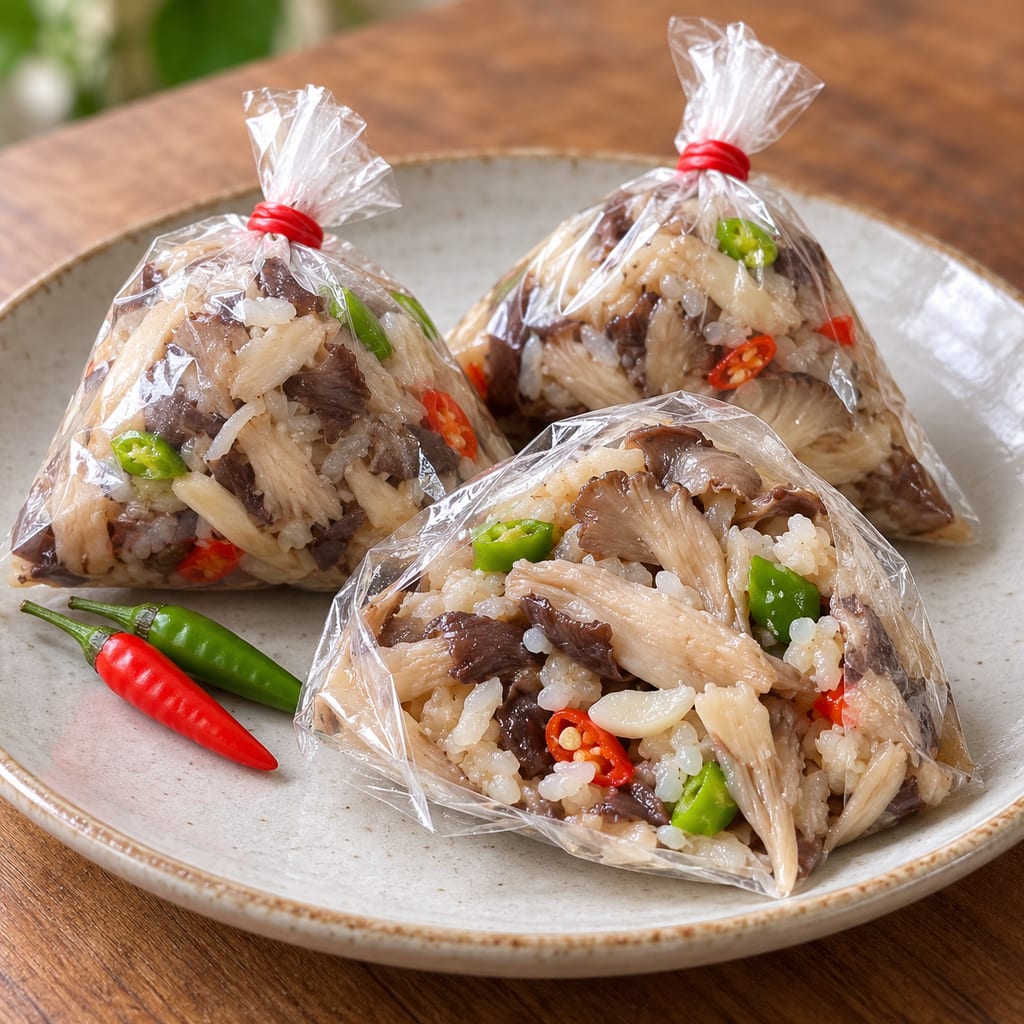
A Thai sour mushroom preparation: shredded steamed oyster mushrooms, cooked rice, garlic and salt packed into small parcels and soured by lactic acid bacteria over a few days.
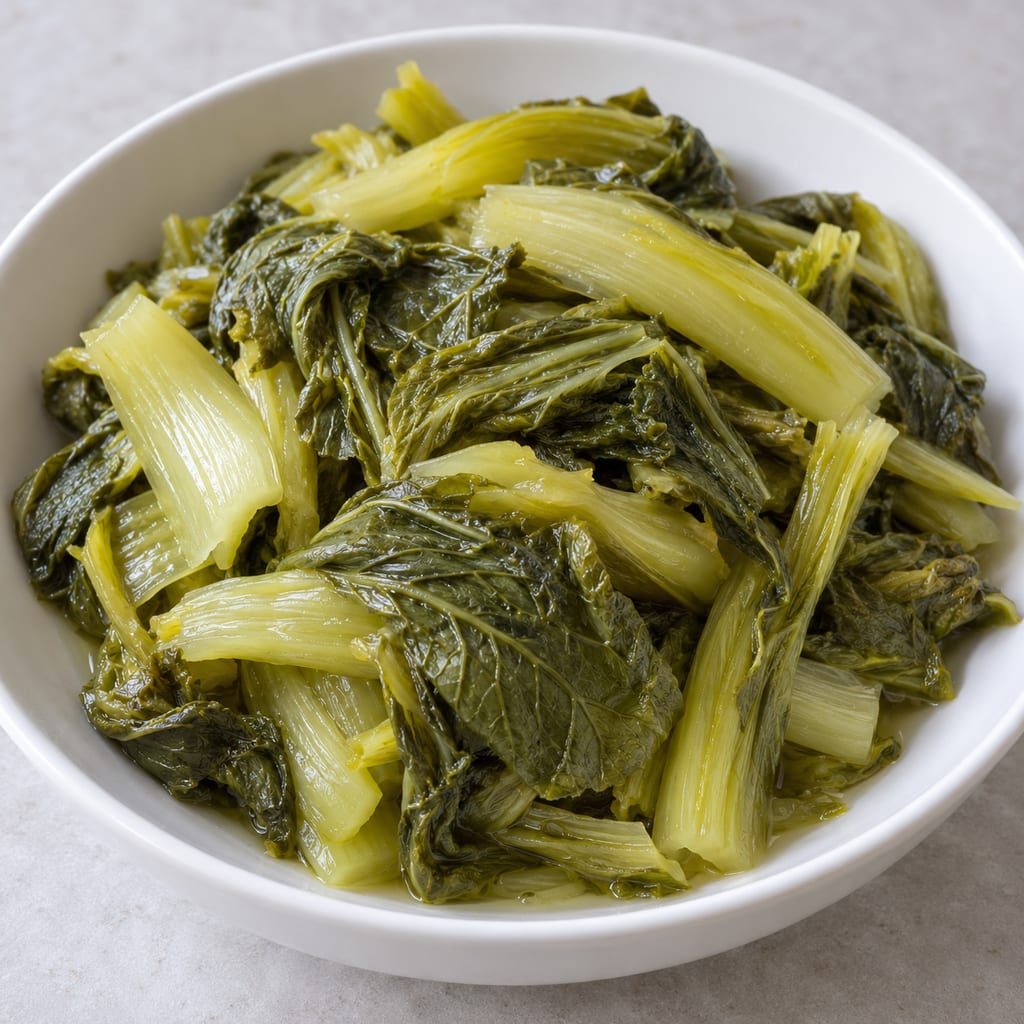
Pak-gard-dong is a Thai mustard-green pickle salted first and drained, then fermented with sugar added to the drained greens.
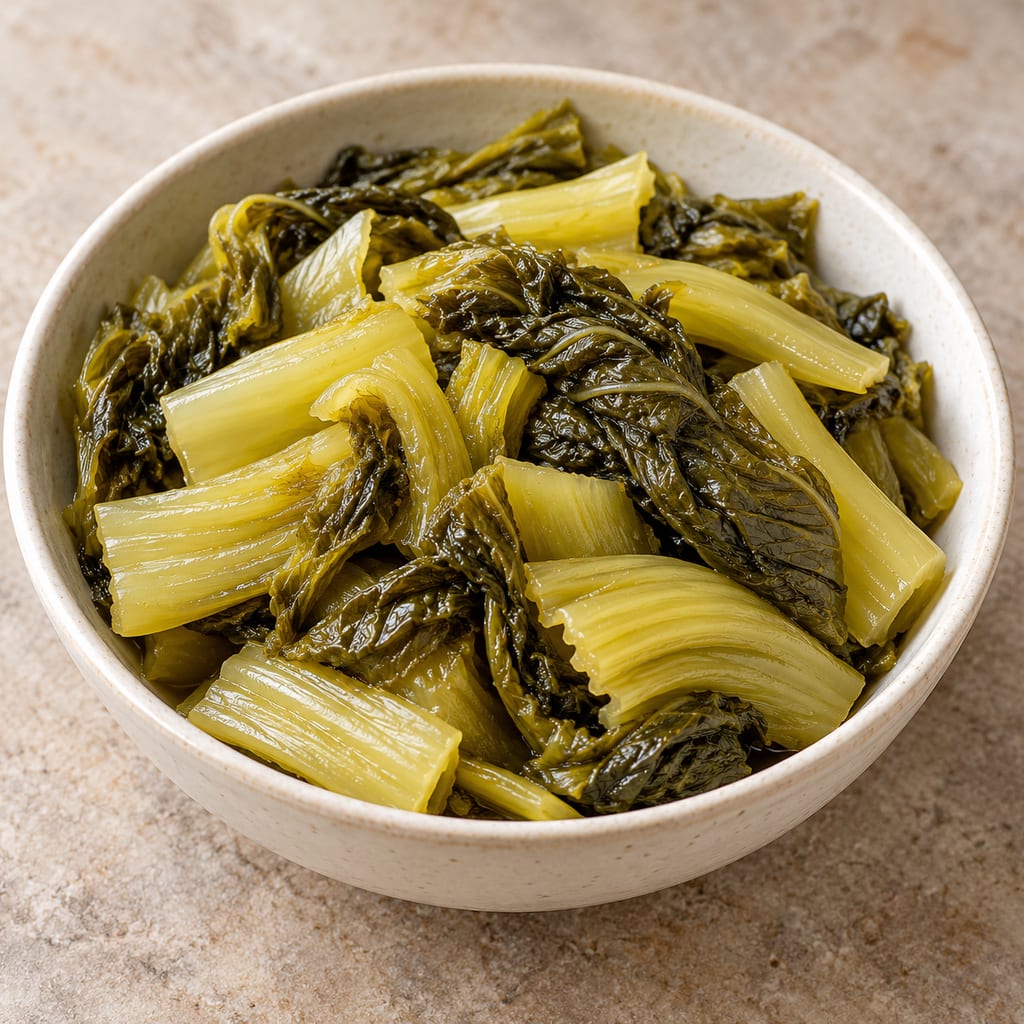
Pak-kaat-dorng is a Thai fermented mustard-green pickle, prepared here by dry-salting and kneading the wilted greens with cooked rice.
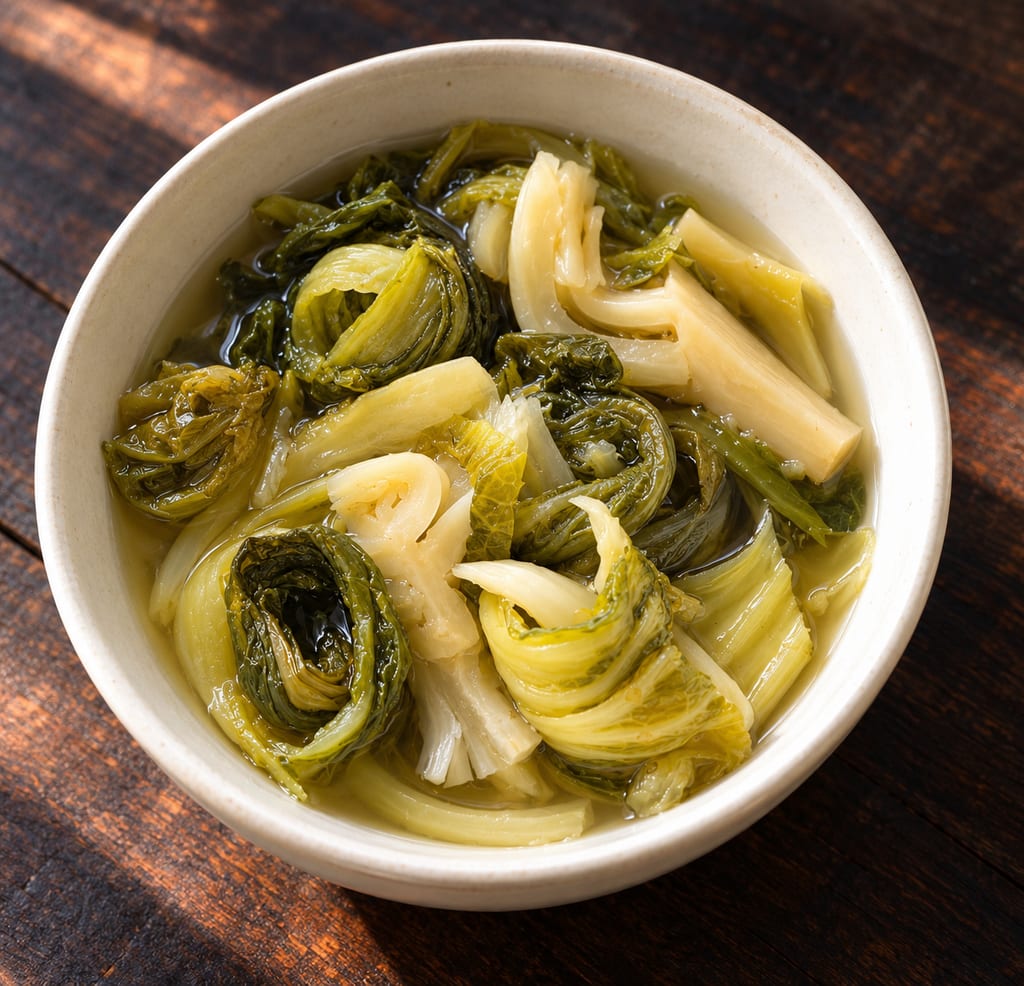
Thai sweet mustard greens wilted in sun, packed in earthenware under a salt and palm-sugar brine with rice-wash water, then sunned three to five days.
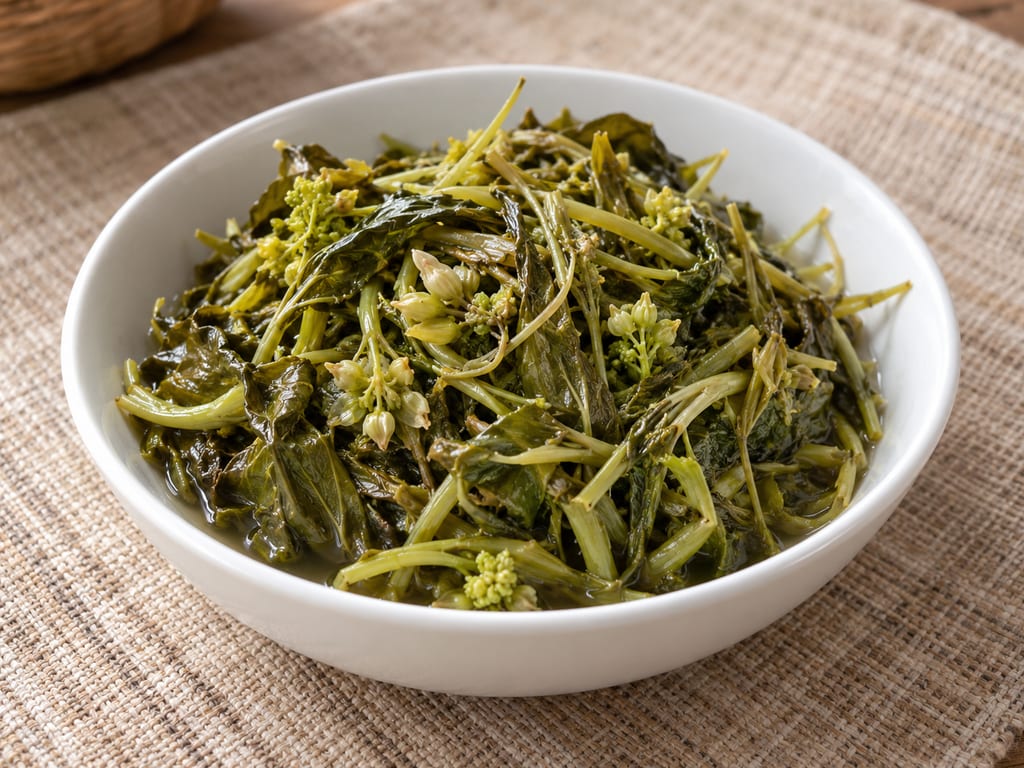
Phak sian dong is a Thai pickle of spider-plant tips and flowers (Cleome gynandra), salted and packed with cooked rice. Northeastern Thai and Lao Khrang accounts give different methods.
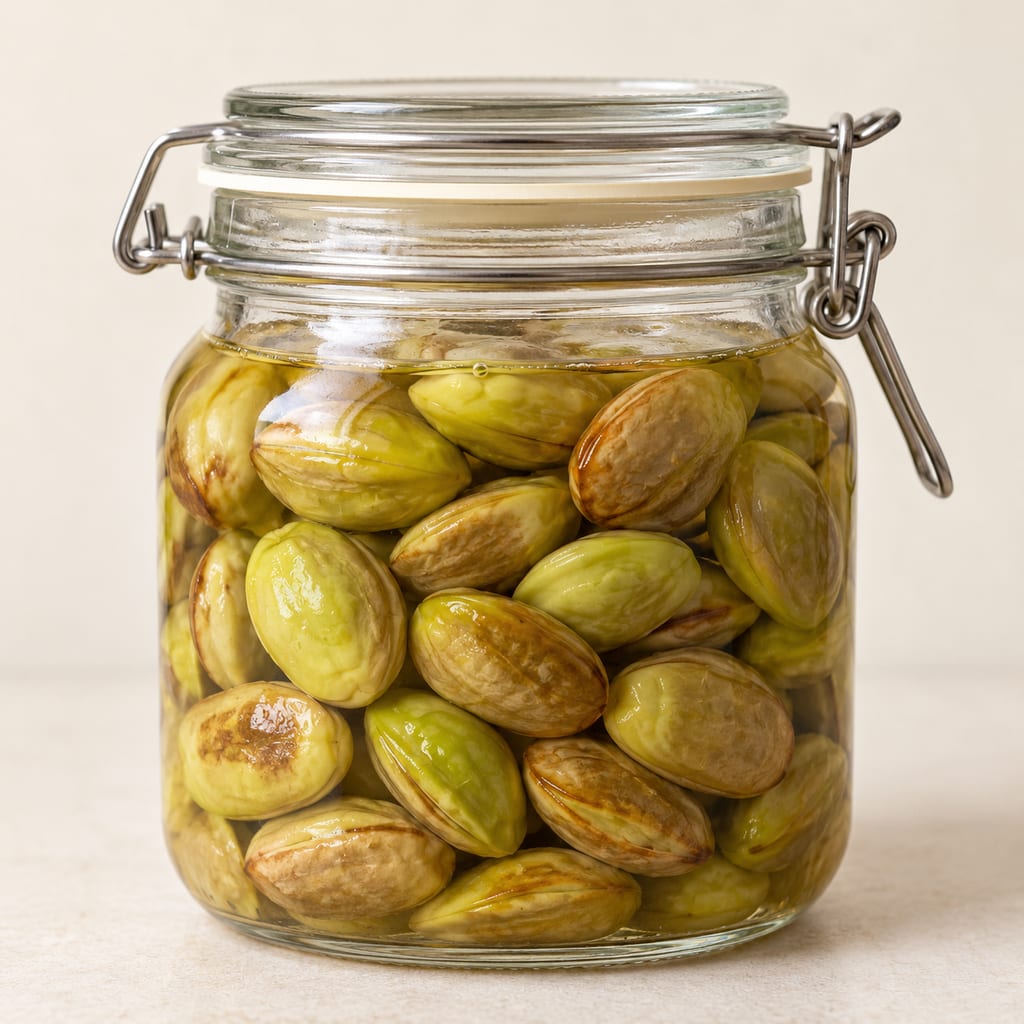
Thai pickle of stink bean seeds, Parkia speciosa, with the testa left on, held in a 10 percent salt brine in a glass jar in shade. JIRCAS records a three to four day ferment and a separate seven day flavour note.
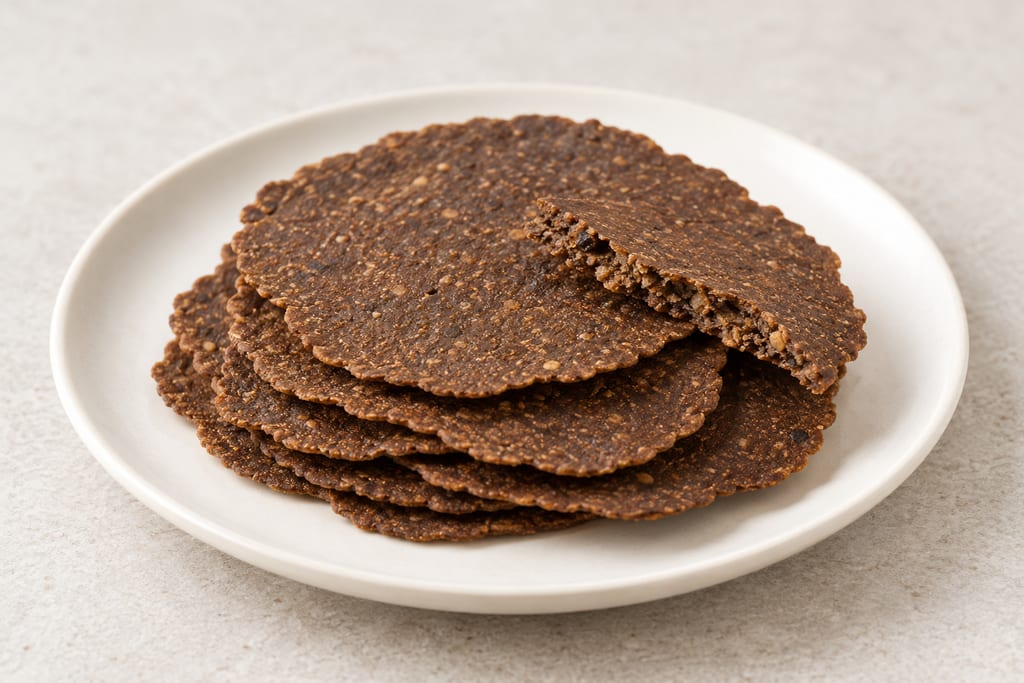
Black soybeans cooked, inoculated with a named Bacillus subtilis culture and fermented warm and humid into northern Thailand's thua nao, then optionally dried into thin discs.
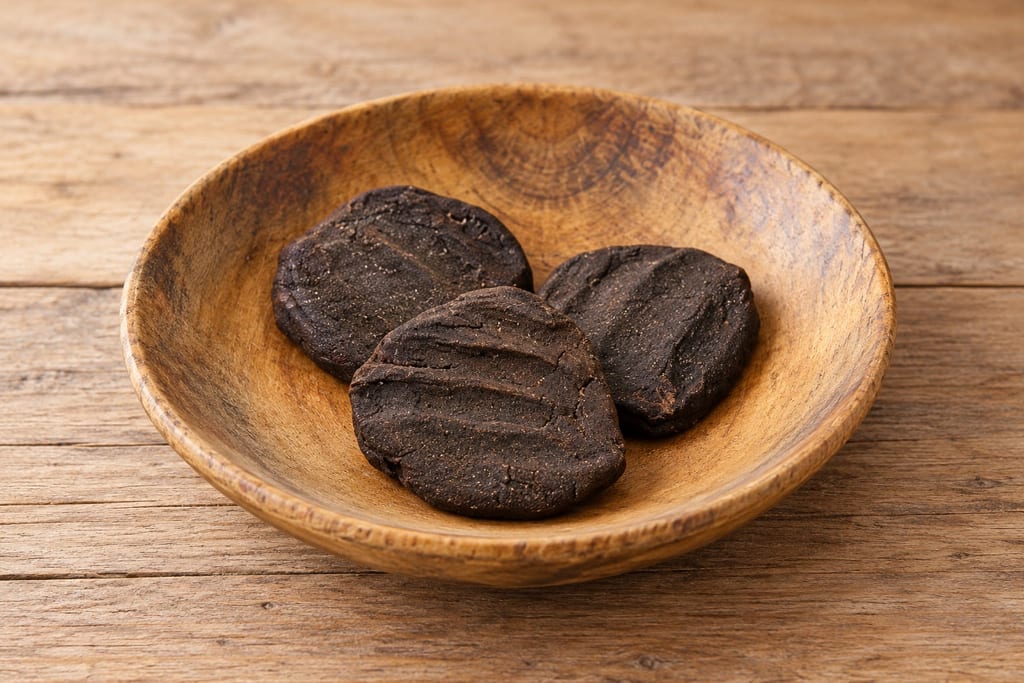
Dried cakes of pounded taro leaves from the Ao Naga in Nagaland, yellowed in a bag, then dried by hot ash or sun and used to flavour meat dishes.
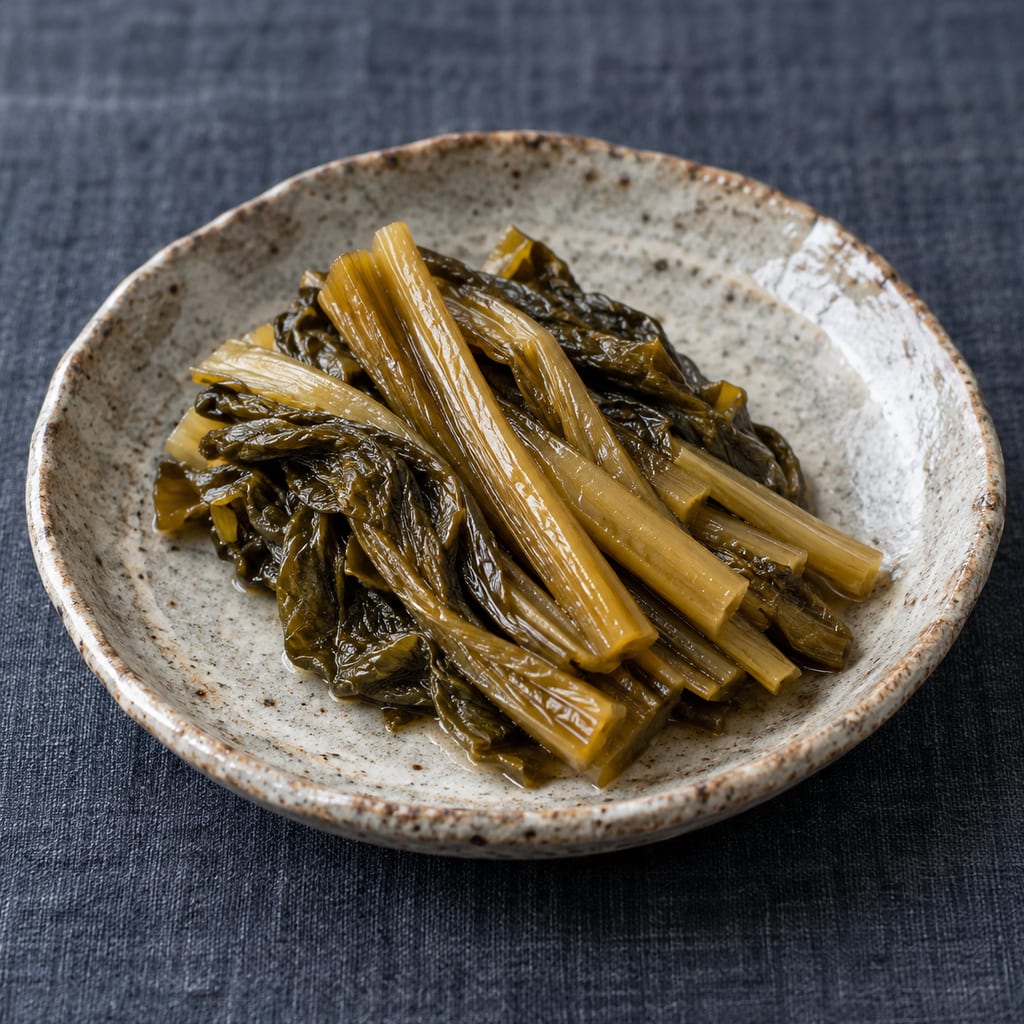
Takana mustard greens from Aso in Kumamoto are salted and pressed into a fresh spring pickle, or aged into a sour furuzuke that is fried and mixed into takana rice.
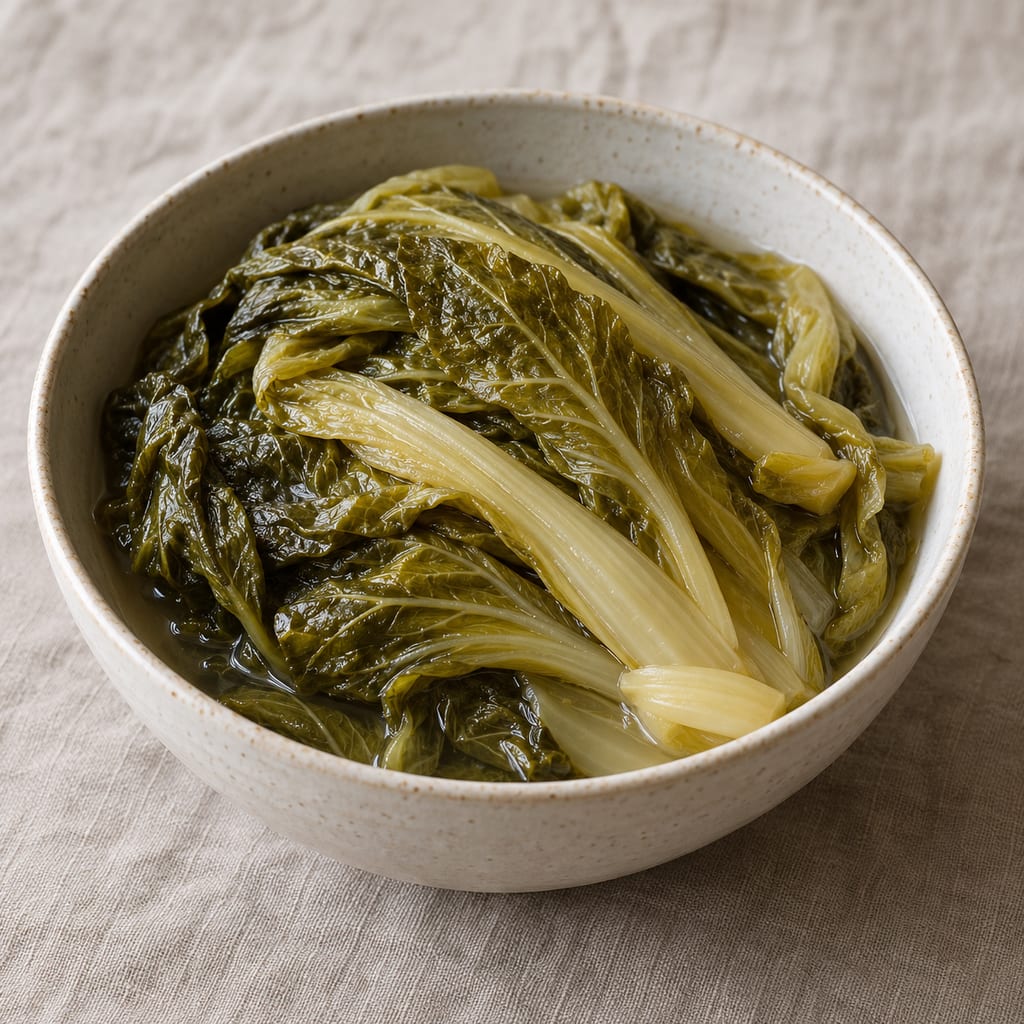
Wilted flat mustard leaves ferment with rice water and salt as a Filipino appetizer and cooking ingredient.
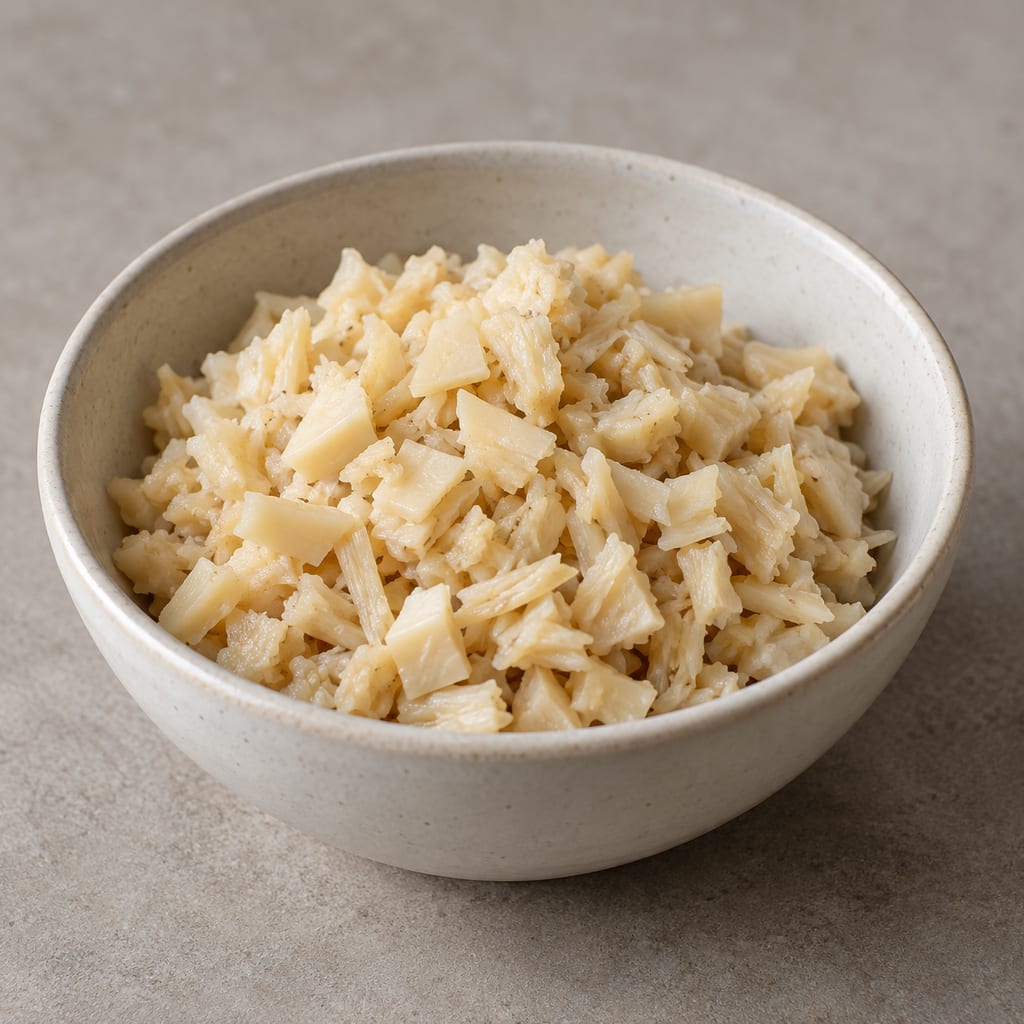
Finely chopped young bamboo shoots packed in leaf-lined baskets, sealed in a forest pit and weighted for one to three months, from Arunachal Pradesh.

Pit-fermented bamboo shoots from Arunachal Pradesh, cut smaller and sun-dried for five to ten days, used in curries.
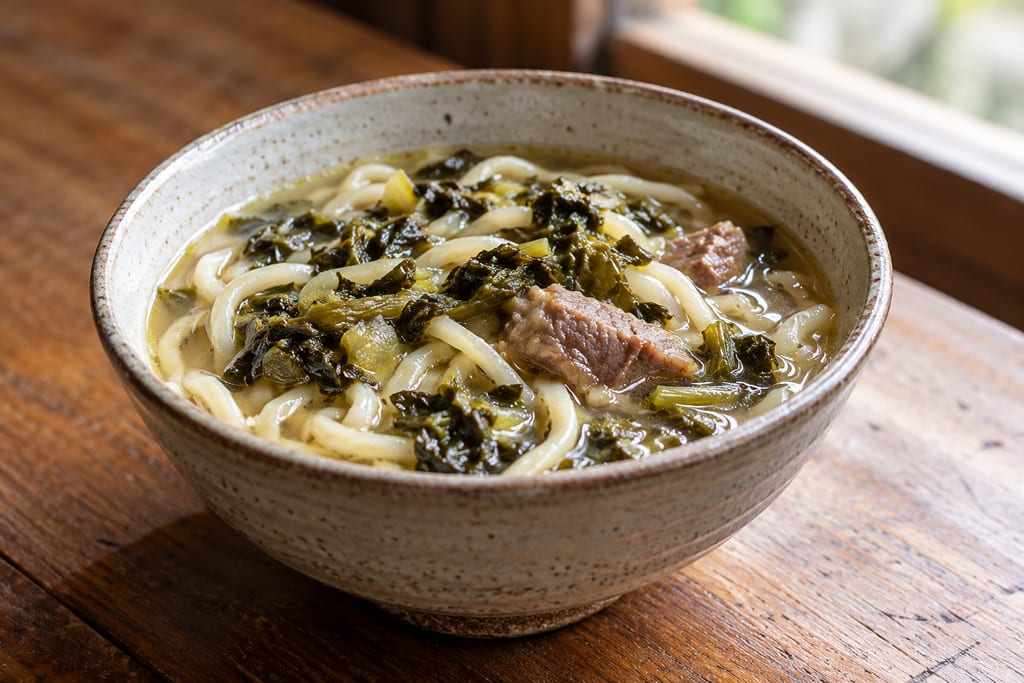
Goyang is a Sherpa fermented wild leafy food of the Darjeeling hills and Sikkim. Rainy-season magane-saag leaves are packed in a bamboo basket, held at room temperature for about a month, then eaten fresh or dried and used in soup.
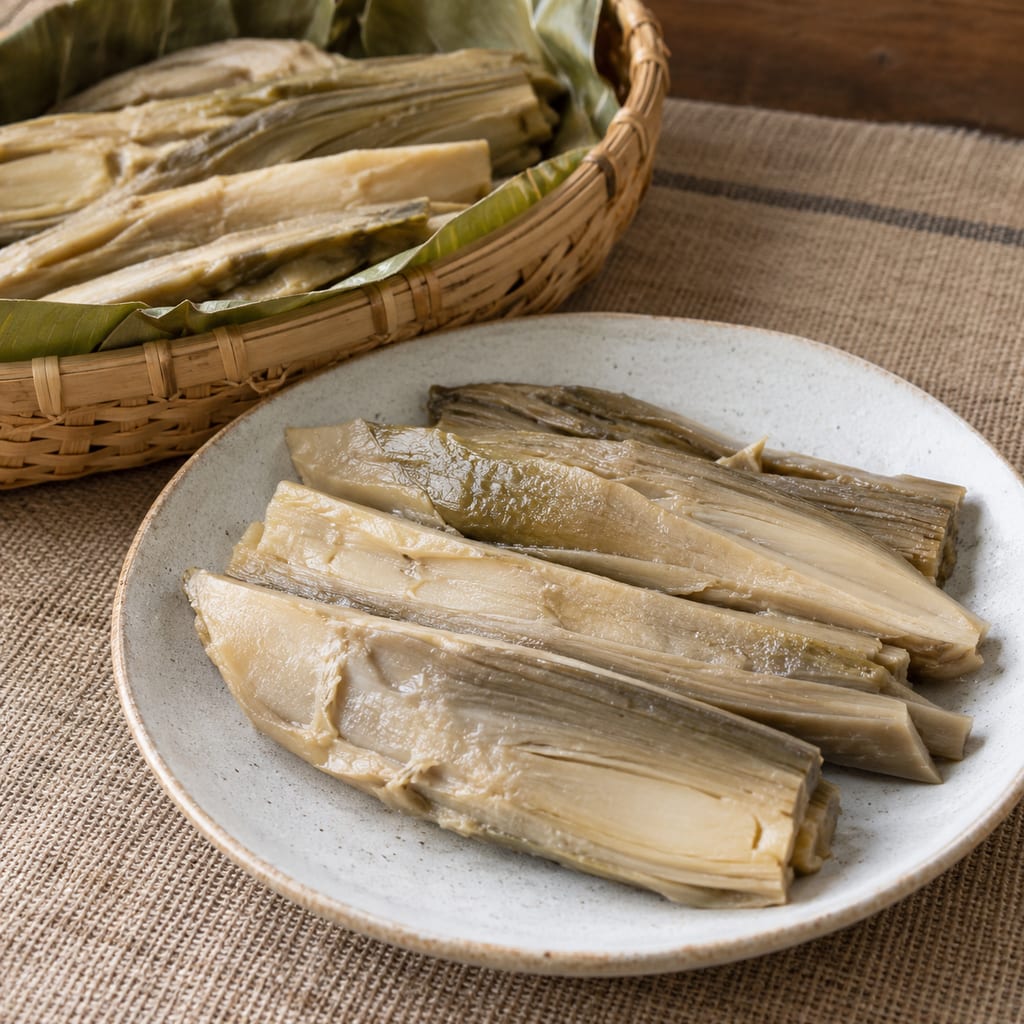
Upper tender bamboo-shoot tips, split or flattened, pit-fermented one to three months in Arunachal Pradesh and eaten in curries.
The original Polish barszcz: young hogweed leaves soured in warm water for a few days, then boiled into soup with egg, butter, cream or millet. Recorded from 1595, with warnings about the sap and lookalikes.
No community contributions have been published for this entry yet.
Sign in to contribute. Published comments and photos are free to read.
Academic volumeInspiration
Plant-Based Fermented Foods and Beverages of AsiaThai/Indonesian products and processes
University of Minnesota ExtensionSafety
Preserving food at home: FermentationProduce fermentation equipment, acidity monitoring and submersion controls.
Cited in: The microbiology; Quality and safety
JIRCASHistory · Ingredients · Method · Process science
Pak-Sian-DorngSupports this record's account of: What is pak-sian-dong?; Historical and geographical setting; Ingredients and proportions; Why cooked rice is added; The documented preparation; The microbiology; How the plant affects the flavour; Regional variations.
Cited in: What is pak-sian-dong?; Historical and geographical setting; Ingredients and proportions; Why cooked rice is added; The documented preparation; The microbiology; How the plant affects the flavour; Regional variations
OpenRice ThailandHistory · Use
Som Phak SianSupports this record's account of: Historical and geographical setting; Regional variations; How it is eaten.
Cited in: Historical and geographical setting; Regional variations; How it is eaten