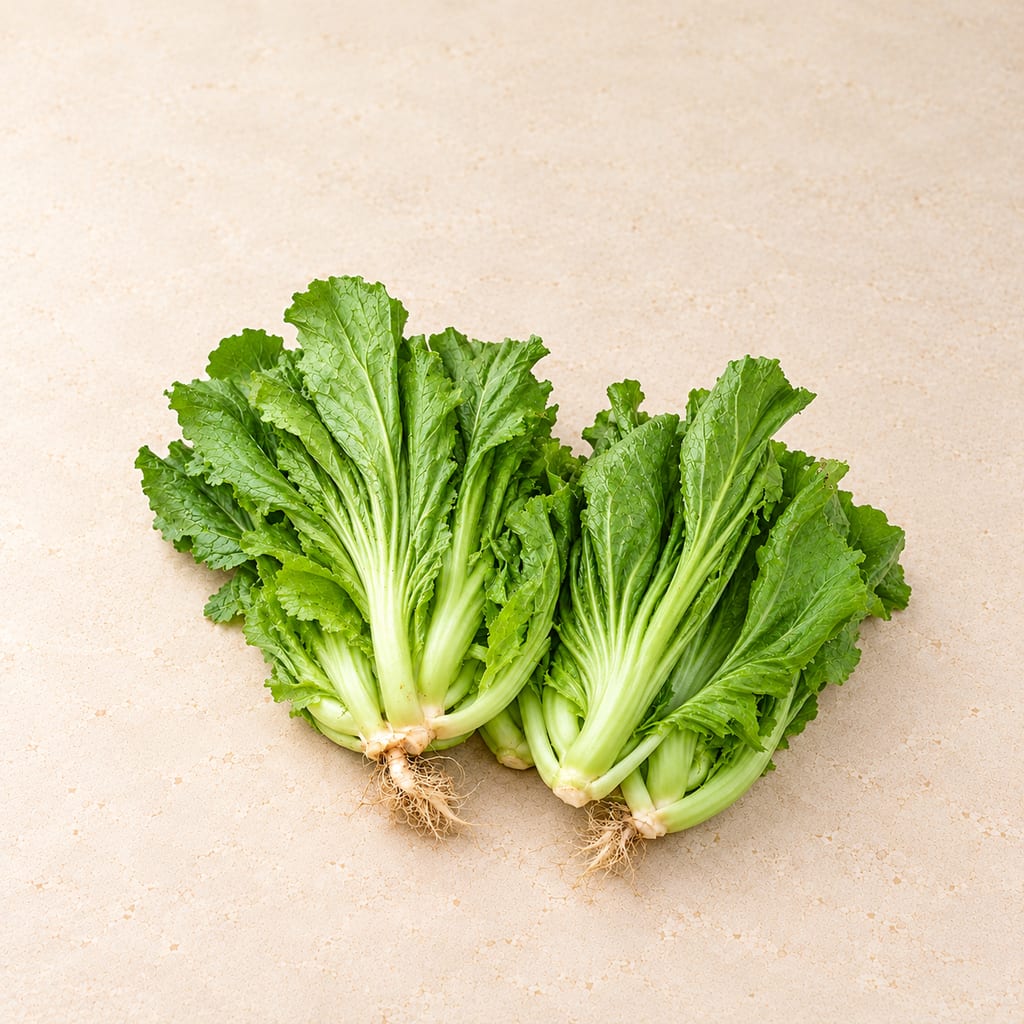
Mustard greens
The leaves of Brassica juncea, a hardy cool-season crop with a sharp, sulfurous bite, eaten fresh and cooked and fermented across Asia as pickled greens, kimchi and gundruk.
 FermenteaWhere food goes to change
Traditional method
ผักกาดดอง
Thai sweet mustard greens wilted in sun, packed in earthenware under a salt and palm-sugar brine with rice-wash water, then sunned three to five days.
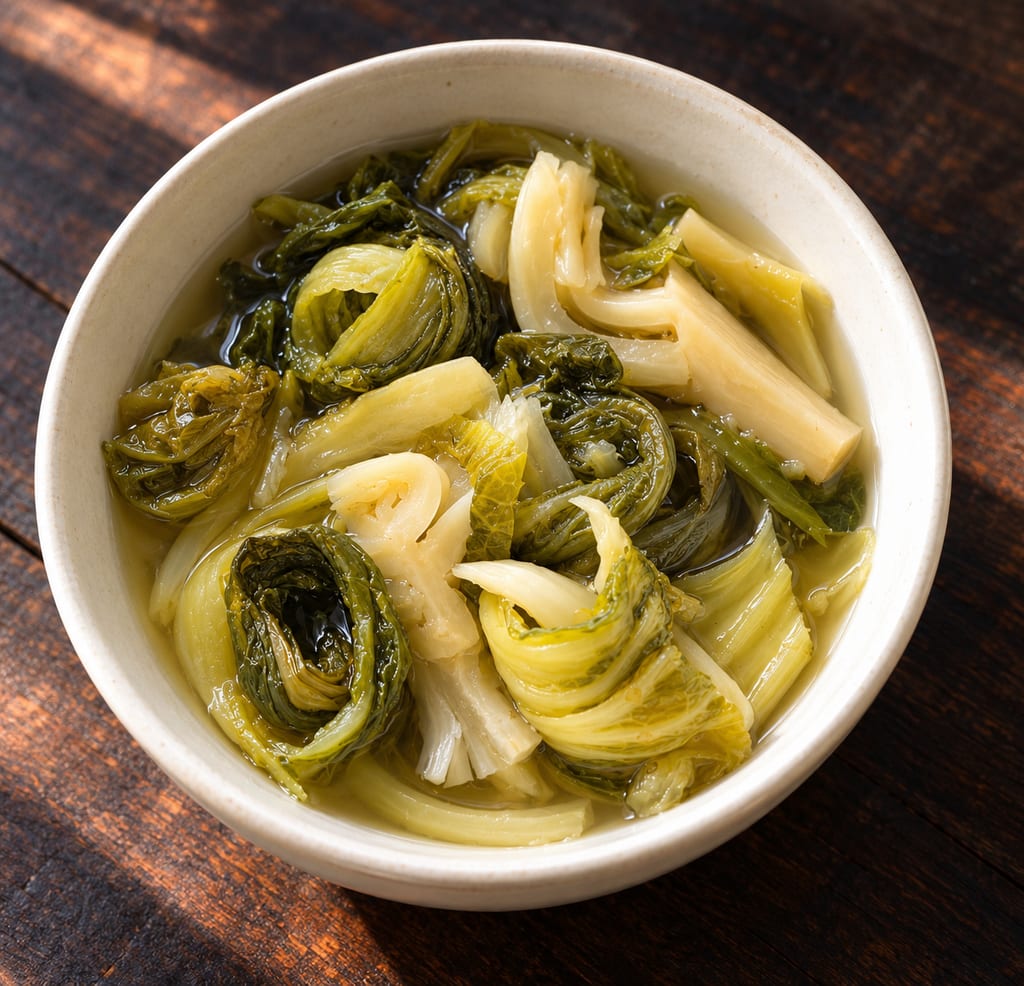
This version of pak-kaat-dorng uses mustard greens, salt, palm sugar and rice-wash water to produce a sour, salty and slightly sweet preserved vegetable.
Instead of kneading the wilted vegetables with a substantial dry-salt addition, this method packs the vegetables in an earthenware vessel and covers them with a liquid prepared from salt, palm sugar, water and rice-wash liquid.
The vessel is closed and exposed to sunlight during fermentation.
The documented period is 3–5 days, shorter than the 5–10 days given for the high-salt version.
The finished product is described as distinctly sour, with both sweetness and saltiness.
Its principal vegetable is mustard greens, Brassica juncea, or a related Chinese mustard vegetable.
The method is a good illustration of how a single Thai preserved-food name can include two fundamentally different microbial environments.
The dry-salted version begins with relatively little free liquid.
This version begins with enough liquid to cover the greens.
That affects salt distribution, substrate availability, oxygen exclusion and the way the final product is eaten.
Pak-kaat-dorng belongs to the extensive family of preserved mustard greens eaten in Thailand and neighboring countries.
Related foods occur under names such as som pak gaat in Laos, Dưa cải chua in Vietnam and sunn cài in Chinese cooking.
The development of these preparations reflects both agricultural availability and the importance of preserved vegetable flavor in rice-based meals.
The precise historical route by which mustard-preservation methods spread across mainland Southeast Asia is not established by the recipe source.
Nor does the presence of rice-wash water prove that this method was developed before the high-salt technique.
The documented recipe appears in the 1995 Thai fermented-food inventory now maintained by JIRCAS.
The recorded method identifies production in small-scale industry and describes culinary uses rather than a particular festival or ritual setting.
It is therefore most accurately presented as a living regional food technology.
Mustard greens — 2 kg
Salt — 1 cup
Palm sugar — 1 cup
Water — 2 cups
Rice-wash water — 3 cups
Wilting — One day or until wilted
Fermentation — 3–5 days
Environment — Closed earthenware jar exposed to sunlight
Historical keeping claim — 1–2 months
The recorded method does not give a numerical fermentation temperature, water activity or final pH.
Mustard greens or Chinese mustard — 2 kg
Salt — 1 cup
Palm sugar — 1 cup
Water — 2 cups
Rice-wash water — 3 cups
The recorded method permits a mixture of cooked rice and water in place of rice-wash water, but does not give an exact cooked-rice quantity for that substitution.
That missing amount should remain unspecified.
The recipe does not call for vinegar.
Its sourness is intended to develop through the processing and fermentation environment rather than through deliberate addition of a separately prepared acid.
The vegetable provides the main texture and part of the fermentable substrate.
Thick-stemmed mustard plants are particularly suitable because their leaves soften without immediately destroying all structural integrity.
The leaves and stalks contain water, fiber and carbohydrates, together with compounds characteristic of the mustard family.
Different mustard cultivars can produce noticeably different results.
The original source names Brassica juncea and Chinese mustard under the historical botanical designation Brassica chinensis.
The latter name is associated with a group now generally placed within Brassica rapa.
There is no reason to substitute unrelated leafy greens and assume the same behavior.
Leaf thickness, soluble carbohydrate concentration and tissue structure all affect fermentation.
Salt is added to the liquid rather than kneaded directly through the vegetable as the primary process.
This changes the way it distributes.
When dissolved, sodium and chloride ions become available throughout the brine, and salt gradually moves into the vegetable tissues.
Some water also moves out of the vegetables as the system approaches equilibrium.
The ingredient list specifies 1 cup salt, but does not specify its weight, crystal size or bulk density.
Consequently, an exact salt percentage by mass cannot be calculated reliably from the cup measure alone.
A cup of coarse salt may weigh substantially less than a cup of fine salt.
The amount is important to preserve exactly in the historical record, but modern process validation would require a defined salt mass and measurement of the finished brine.
Palm sugar is a traditional sweetener prepared from sap collected from certain palm species.
The precise species used in this Thai recipe is not specified.
Thai palm-sugar production may involve palmyra palm or coconut-palm sources, among others.
Palm sugar contributes sweetness and a more complex aroma than highly refined sucrose alone.
It also adds fermentable carbohydrate once suitable sugars are available in the liquid.
That additional carbohydrate can support acid production by lactic acid bacteria.
The sugar does not automatically make the food safer.
Its effect depends on salt, temperature, the microorganisms present and the rate at which acid accumulates.
In an uncontrolled fermentation, additional sugar may also support undesirable microorganisms.
Rice-wash water is the liquid obtained when rice is washed before cooking.
Its composition depends on rice variety, washing method, the amount of rice and the quantity of water.
It can contain suspended starch particles and soluble material released from the grain.
Some traditional methods use a cooked-rice-and-water mixture instead.
Rice-wash water should not be treated as an exact chemical ingredient with a fixed concentration.
One household's washing liquid may contain much more suspended starch than another's.
The important traditional principle is that rice-associated material contributes to the fermentation environment.
However, ordinary lactic acid bacteria cannot all degrade raw starch directly.
The extent to which this addition supplies immediately fermentable sugar depends on the actual carbohydrate composition and microorganisms present.
Use a clean earthenware jar or a suitable non-reactive food-grade fermentation vessel.
The recorded method specifies earthenware for this method.
A large washing bowl, clean tray and separate container for dissolving salt and sugar are also required.
If using a modern fermentation vessel, choose a system that allows gas to escape safely while minimizing contamination.
The historical instruction to expose a closed jar to sunlight must not be understood as a validated thermal-control method.
Sunlight can cause large and unpredictable temperature changes.
1. Select and trim the vegetables.
Prepare 2 kg mustard greens, removing defective leaves and damaged parts.
Preserve usable thick stalks and leaves.
The recorded method does not specify whether the weight is measured before or after trimming.
2. Wash thoroughly.
Remove soil from the leaf bases and between overlapping stalks.
Drain excess surface water.
Cleanliness is important because contaminated soil and damaged vegetable material can introduce unwanted microorganisms.
3. Wilt in sunlight.
Spread the cleaned greens in the sun for one day, or until wilted.
The recorded method does not give a numerical temperature, relative humidity or target weight loss.
Wilting makes the vegetables more flexible and helps them fit compactly into the jar.
4. Pack the vegetables.
Arrange the wilted greens in a clean earthenware jar.
Compact them sufficiently to make room for the liquid.
Avoid leaving large unfilled cavities.
5. Prepare the salt-and-sugar liquid.
Dissolve 1 cup salt and 1 cup palm sugar in 2 cups water.
Stir until the ingredients are distributed.
The recorded method does not specify a heating temperature or a required boiling stage.
6. Add the rice-associated liquid.
Prepare 3 cups rice-wash water.
The traditional record alternatively permits cooked rice mixed with water, but does not specify the rice quantity for this option.
Combine the rice liquid with the prepared brine.
7. Cover the vegetables.
Pour the liquid into the jar so that it covers the packed mustard greens.
Release large trapped air pockets and keep the vegetable material below the surface.
The goal is a consistent fermentation environment rather than floating leaves exposed to the air.
8. Close the jar.
Cover the vessel using an appropriate fermentation arrangement.
Do not use an unsafe rigid seal that can build pressure without relief.
The historical source specifies closure but does not provide modern pressure-management instructions.
9. Ferment.
The documented method exposes the jar to sunlight for 3–5 days.
Because neither the internal product temperature nor the final acidity is provided, this is a traditional method description rather than a validated safe procedure for uncontrolled sun exposure.
10. Assess and store.
The expected result is sour, mildly salty and slightly sweet.
Use appropriate acidity and microbial controls before treating a batch as successfully preserved.
The historical storage claim of 1–2 months is not a guarantee of safety under arbitrary modern storage conditions.
The principal desired process is lactic-acid fermentation.
Plant-associated lactic acid bacteria can use sugars available in the vegetable and liquid.
The organisms produce lactic acid, lowering the pH and developing the distinctive sourness.
The JIRCAS database identifies organisms including Lactobacillus brevis, Lactobacillus plantarum and Pediococcus cerevisiae, together with yeast groups.
These are historical scientific names.
Some modern classifications have changed, and the exact species composition of an individual batch cannot be inferred merely from the product name.
Acid production depends on the balance between microbial growth and the available carbohydrates.
The palm sugar adds a substantial quantity of soluble sugar.
Rice-derived material supplies additional substrates or suspended carbohydrates.
The vegetables contribute their own soluble nutrients.
Salt selects for organisms able to function in the brine.
The result is a microbial environment substantially different from pure unsalted vegetable spoilage.
Nevertheless, the process is not automatically safe at every possible temperature.
The historical process places the vessel in sunlight.
Sun exposure can warm the jar and influence fermentation rate.
In a traditional household setting, the maker may have understood the local climate, season and position of the vessel.
But a glass or earthenware container exposed to intense sun can become considerably warmer than the surrounding air.
The exact temperature depends on vessel material, color, volume, wind, cloud cover and sunlight intensity.
The recorded method does not provide an internal temperature profile.
For this reason, its instruction cannot be translated into a claim that the food should be held at any particular numerical temperature.
For a controlled modern process, temperature measurement and an established safe range would be necessary.
The general extension ranges for vegetable fermentation do not validate direct sunlight as a suitable temperature-control strategy.
The finished greens are described as yellowish-green.
Several processes contribute.
Wilting reduces turgor.
Salt changes cellular water distribution.
Acidification alters the chemistry of the vegetable tissues and their pigments.
Chlorophyll is sensitive to acidic conditions, and the color can shift away from fresh green.
The stalks may remain somewhat crisp while the leaves become softer.
The precise texture depends on mustard variety, size and fermentation conditions.
The desired result is not identical to raw mustard greens and not necessarily as soft as thoroughly boiled vegetables.
Color and softness are sensory descriptors, not safety measurements.
The two JIRCAS methods should be compared carefully.
Main salt addition — 8–10% by vegetable weight — 1 cup per 2 kg vegetables
Added carbohydrate — 2% cooked rice — 1 cup palm sugar plus rice-wash liquid
Free liquid — Primarily released by vegetables — Added brine covers the greens
Fermentation — 5–10 days — 3–5 days
Flavor — Predominantly salty — Sour, salty and slightly sweet
Historical storage claim — One year — 1–2 months
Those differences are sufficient to treat them as distinct recipe variants.
The storage figures describe traditional observations. They do not establish which method is safer under modern conditions.
Pak-kaat-dorng is eaten as a preserved vegetable side dish and as an ingredient.
One traditional Thai use is a light soup with pork ribs.
The preserved greens are boiled with the meat and served with rice.
The vegetable supplies sourness and saltiness, while the pork enriches the broth.
Other contemporary Thai dishes use chopped preserved mustard greens in noodle preparations or as a condiment beside rich braised pork.
The sourness is particularly useful with fatty foods.
Commercial pickled mustard greens may taste sweeter, saltier or more acidic than homemade versions.
It is therefore sensible to taste a safely produced product before adding additional salt or acid to a cooked dish.
The documented finished product is sour, yellowish-green, slightly sweet and salty.
The sourness should reflect proper acid development rather than putrefaction.
Unexpected mold, decayed odors, contaminated brine or abnormal deterioration indicates failure.
Floating leaves exposed to air may be vulnerable to surface spoilage.
Bubbles can accompany fermentation but cannot prove sufficient acidification.
The recorded method does not give a final pH, finished sugar concentration, salt concentration by mass or measured water activity.
The recipe involves spontaneous fermentation under an imprecisely specified temperature regime.
It should not be presented as a validated shelf-stable preservation method.
General produce-fermentation guidance identifies pH 4.60 or lower as an important safety threshold, but that does not establish that this historical Thai method reaches it consistently.
A cup measure of salt also creates uncertainty unless the salt type and mass are controlled.
For commercial or experimental production, finished acidity, salt concentration, microbial quality and storage conditions must be validated.
JIRCAS reports a traditional keeping period of 1–2 months, but the database does not establish a tested modern refrigeration or ambient-storage regime for that duration.
JIRCAS second brine method.
Scaling: source batch only
Poor brine coverage or inadequate acidity monitoring can allow spoilage; recipe-specific validated limits are not established.
Hazard sourceUse clean food-grade equipment, keep produce submerged and monitor acidity; no universal endpoint is supplied for this recipe.
Control sourceJIRCAS reports salt amounts and 3–5 days in sunlight for this batch, but supplies no validated acidity, temperature or storage endpoint.
The source supports this broad area and no precise location.
The leaves of Brassica juncea, a hardy cool-season crop with a sharp, sulfurous bite, eaten fresh and cooked and fermented across Asia as pickled greens, kimchi and gundruk.
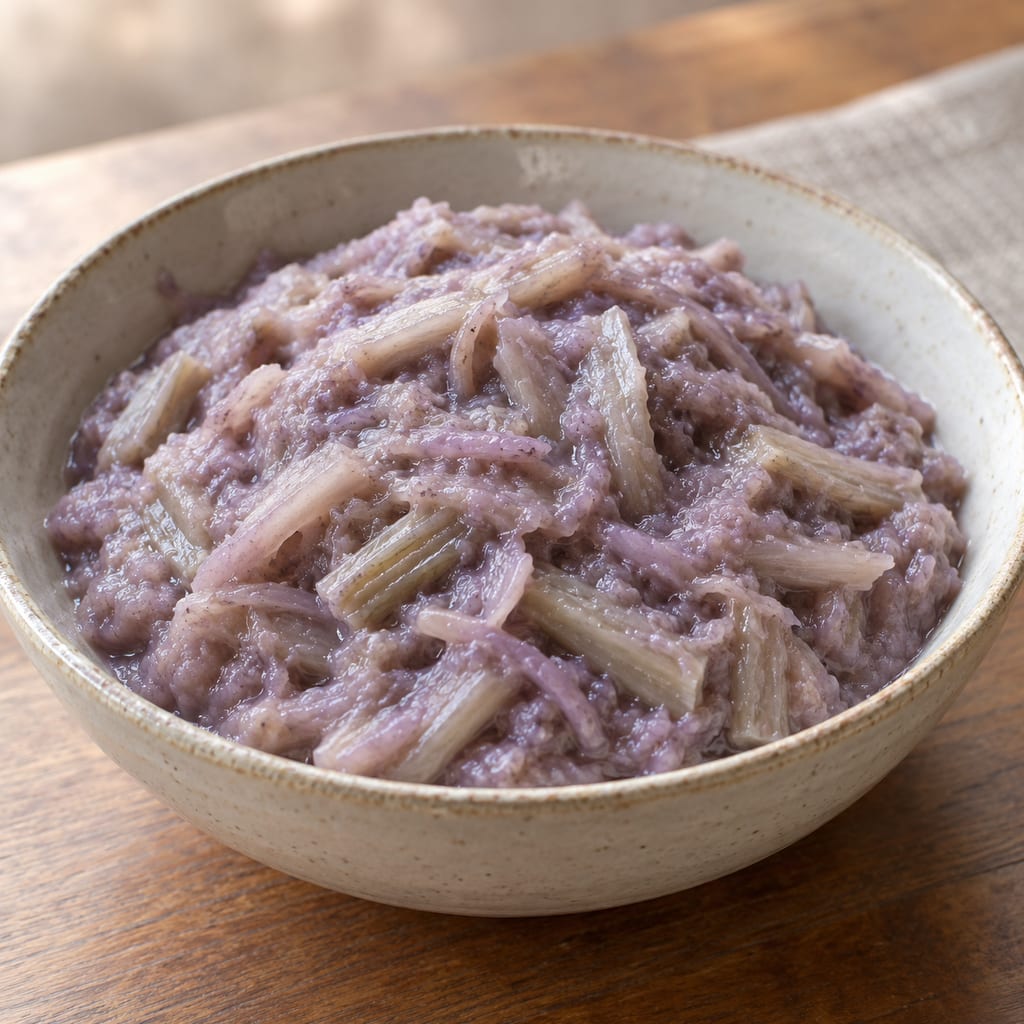
Thai pickle of young taro leaf stalks, salted, kneaded and held in rice-washing water in an earthen jar at room temperature. JIRCAS records it as a home-level product with no validated endpoint.
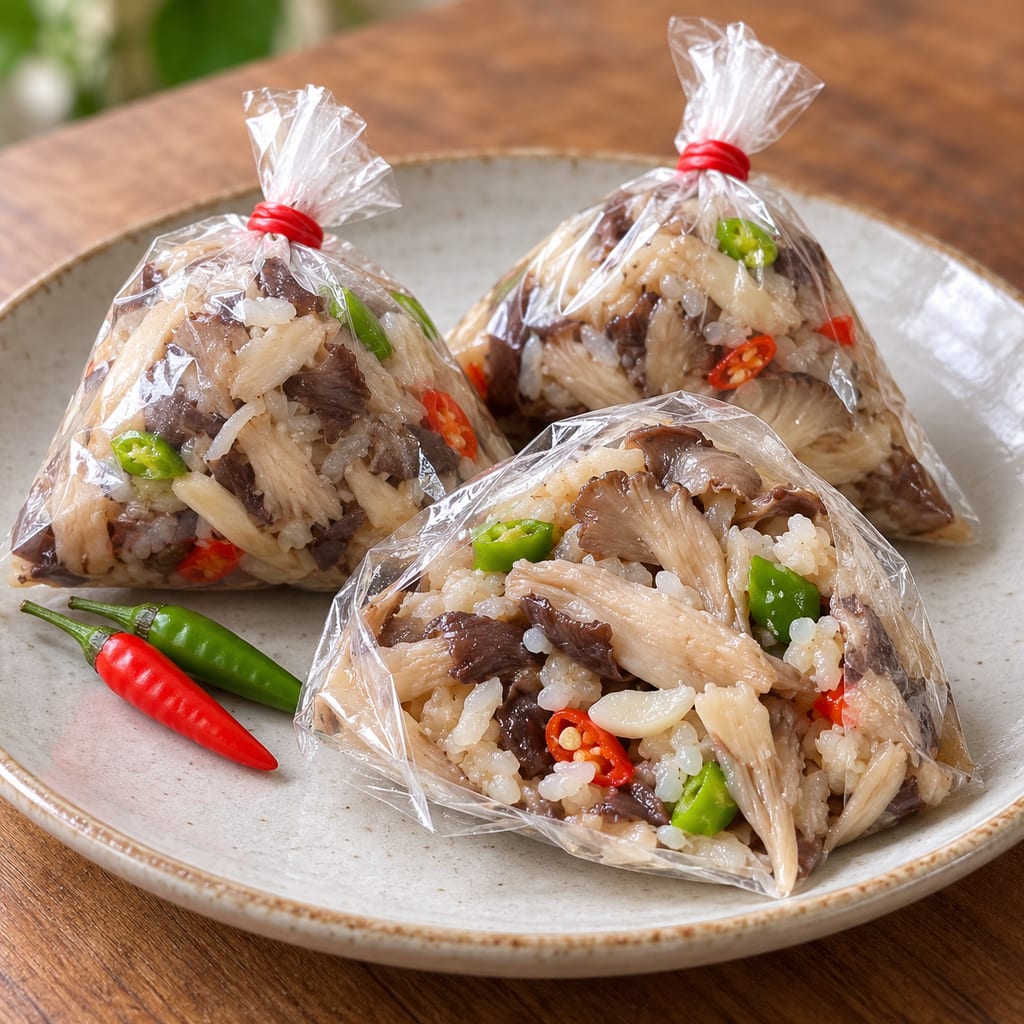
A Thai sour mushroom preparation: shredded steamed oyster mushrooms, cooked rice, garlic and salt packed into small parcels and soured by lactic acid bacteria over a few days.
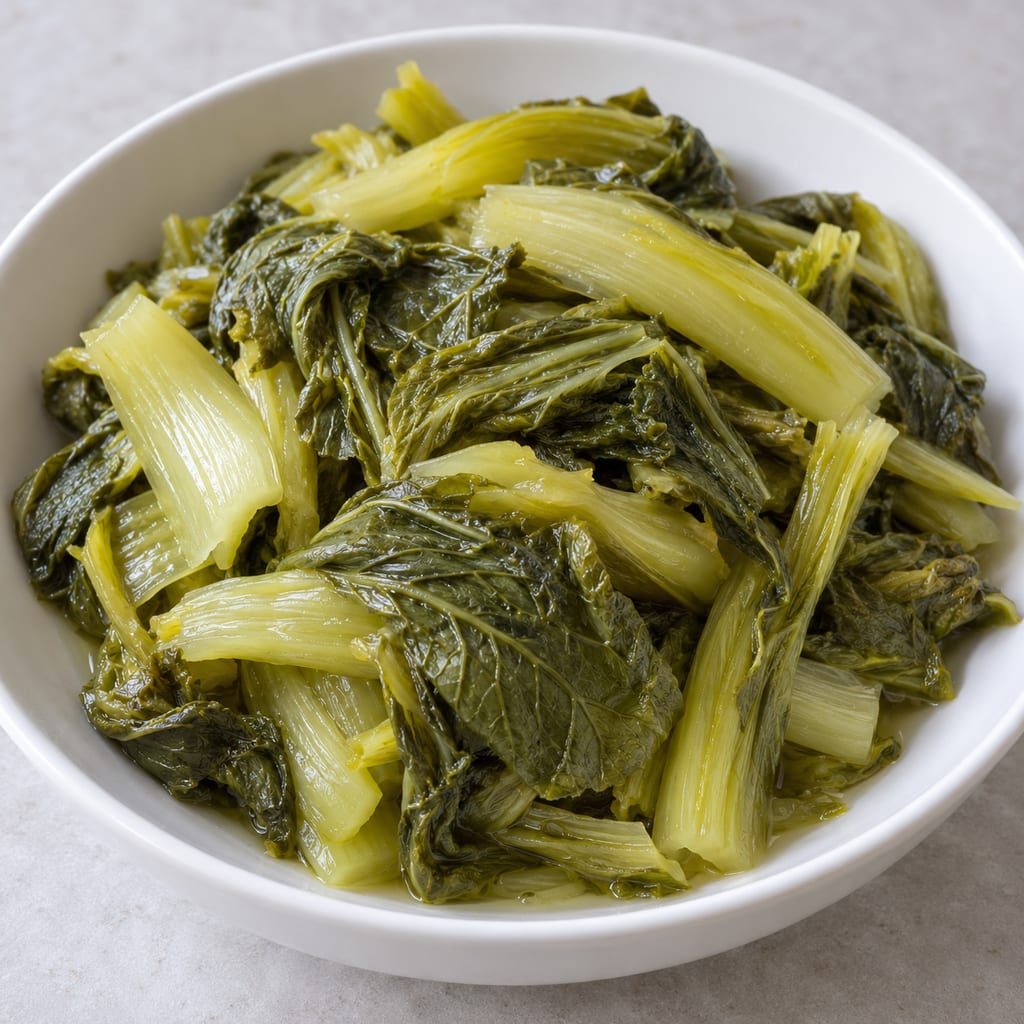
Pak-gard-dong is a Thai mustard-green pickle salted first and drained, then fermented with sugar added to the drained greens.
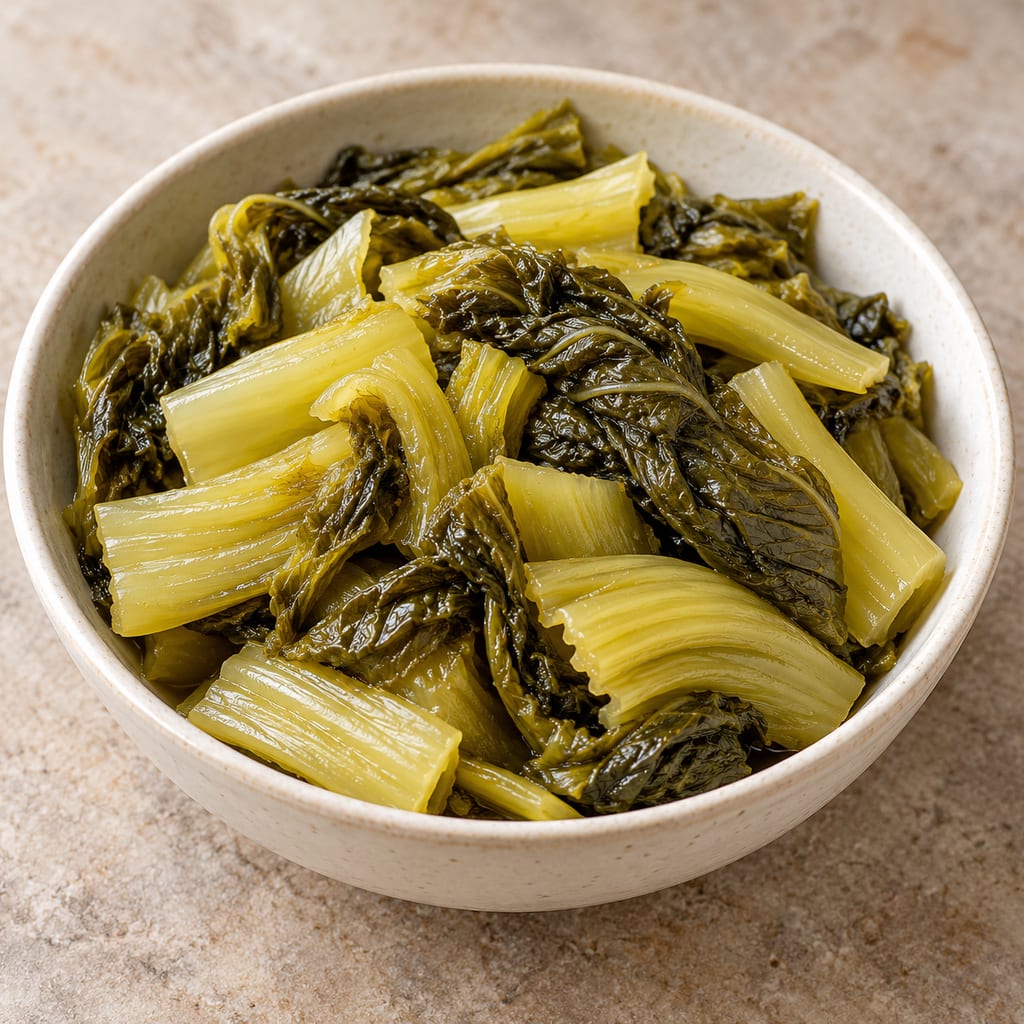
Pak-kaat-dorng is a Thai fermented mustard-green pickle, prepared here by dry-salting and kneading the wilted greens with cooked rice.
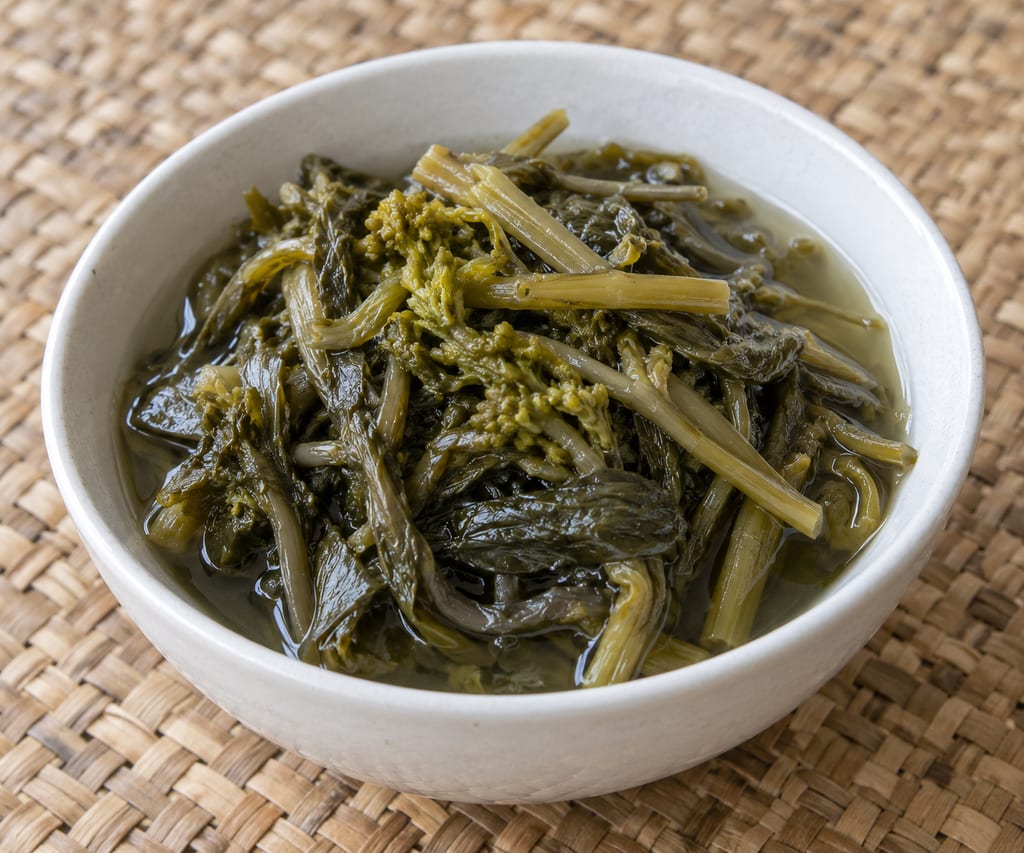
Young spider-flower greens packed with salt and cooked rice and left to sour for a few days; a Thai leafy-vegetable ferment eaten as a sharp side dish.
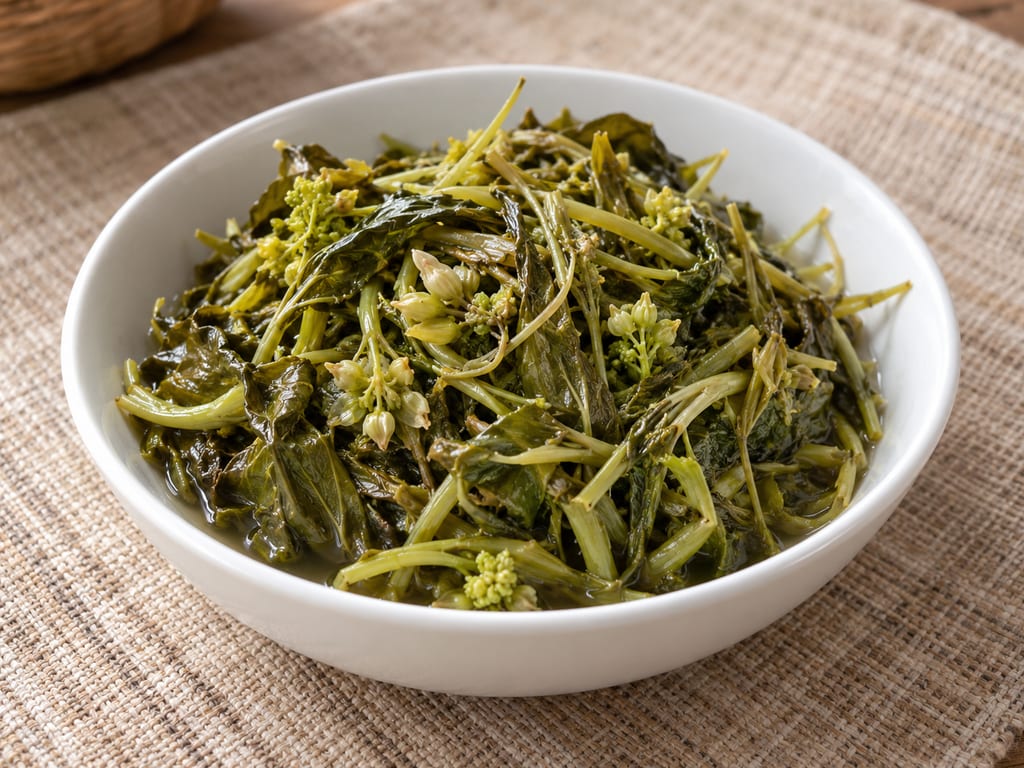
Phak sian dong is a Thai pickle of spider-plant tips and flowers (Cleome gynandra), salted and packed with cooked rice. Northeastern Thai and Lao Khrang accounts give different methods.
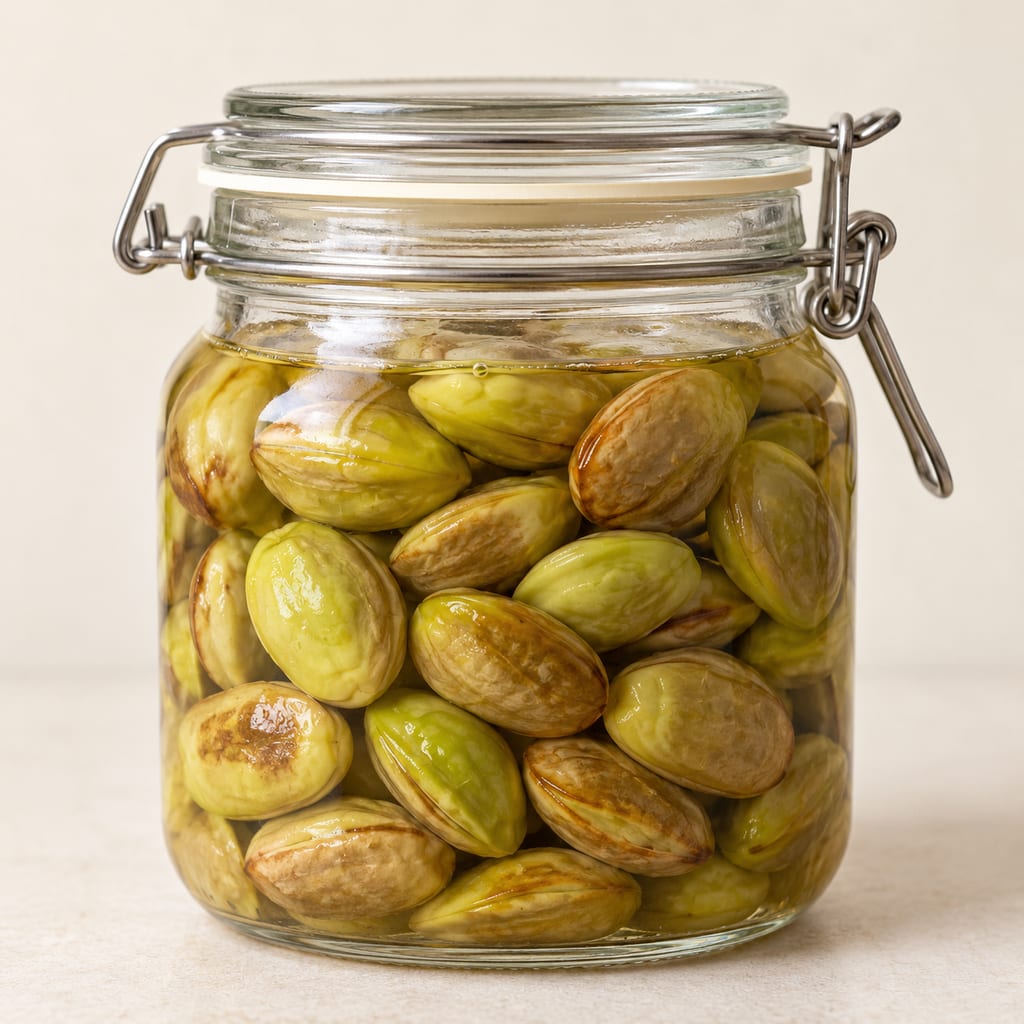
Thai pickle of stink bean seeds, Parkia speciosa, with the testa left on, held in a 10 percent salt brine in a glass jar in shade. JIRCAS records a three to four day ferment and a separate seven day flavour note.
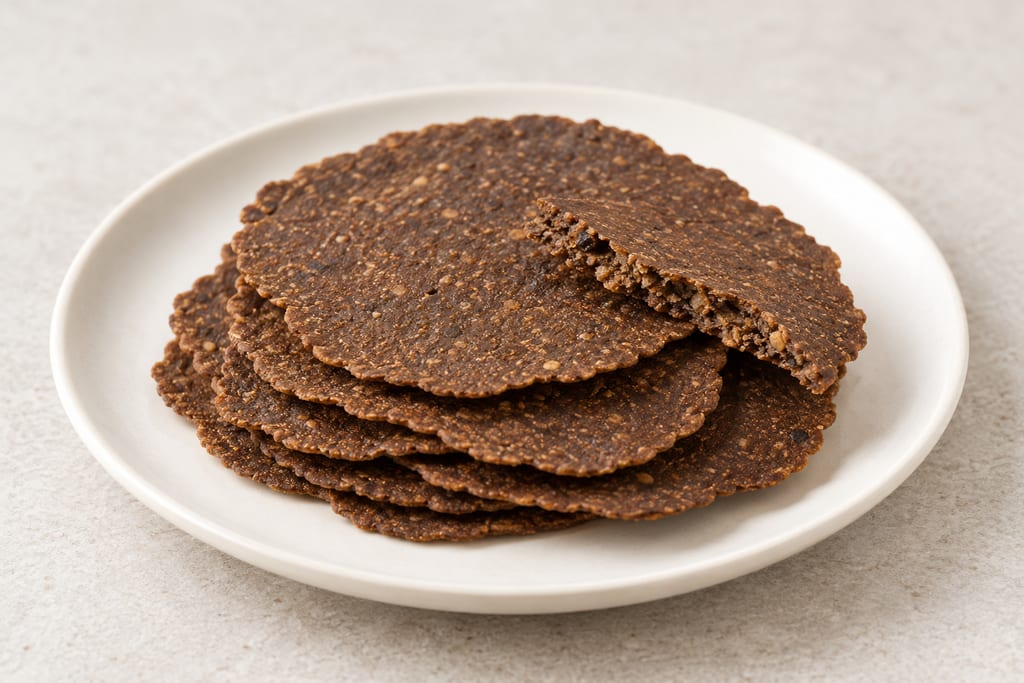
Black soybeans cooked, inoculated with a named Bacillus subtilis culture and fermented warm and humid into northern Thailand's thua nao, then optionally dried into thin discs.
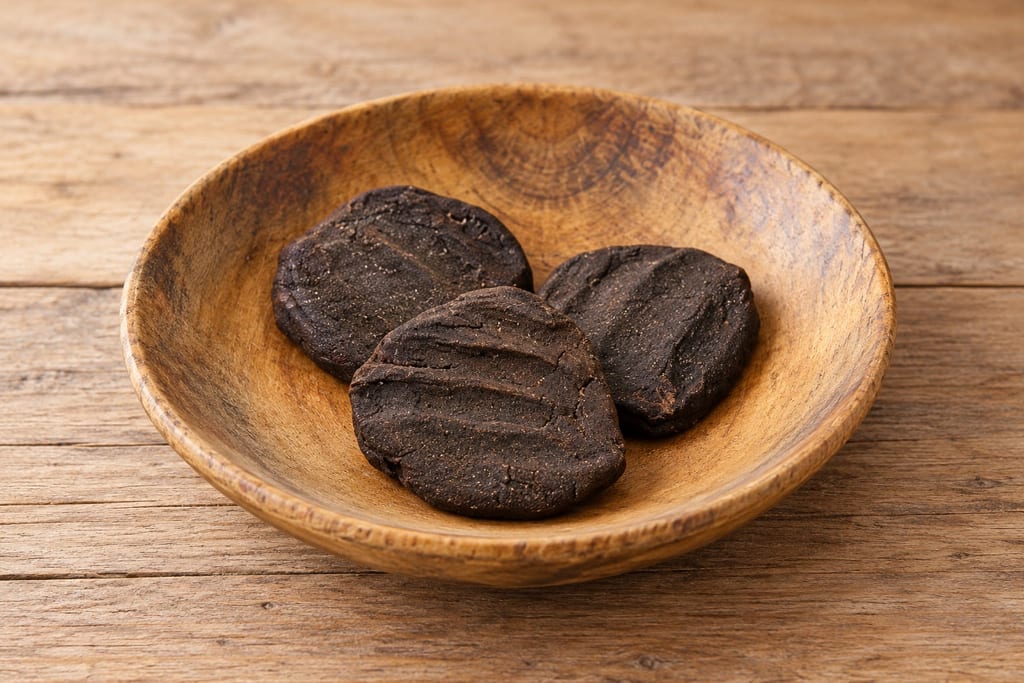
Dried cakes of pounded taro leaves from the Ao Naga in Nagaland, yellowed in a bag, then dried by hot ash or sun and used to flavour meat dishes.
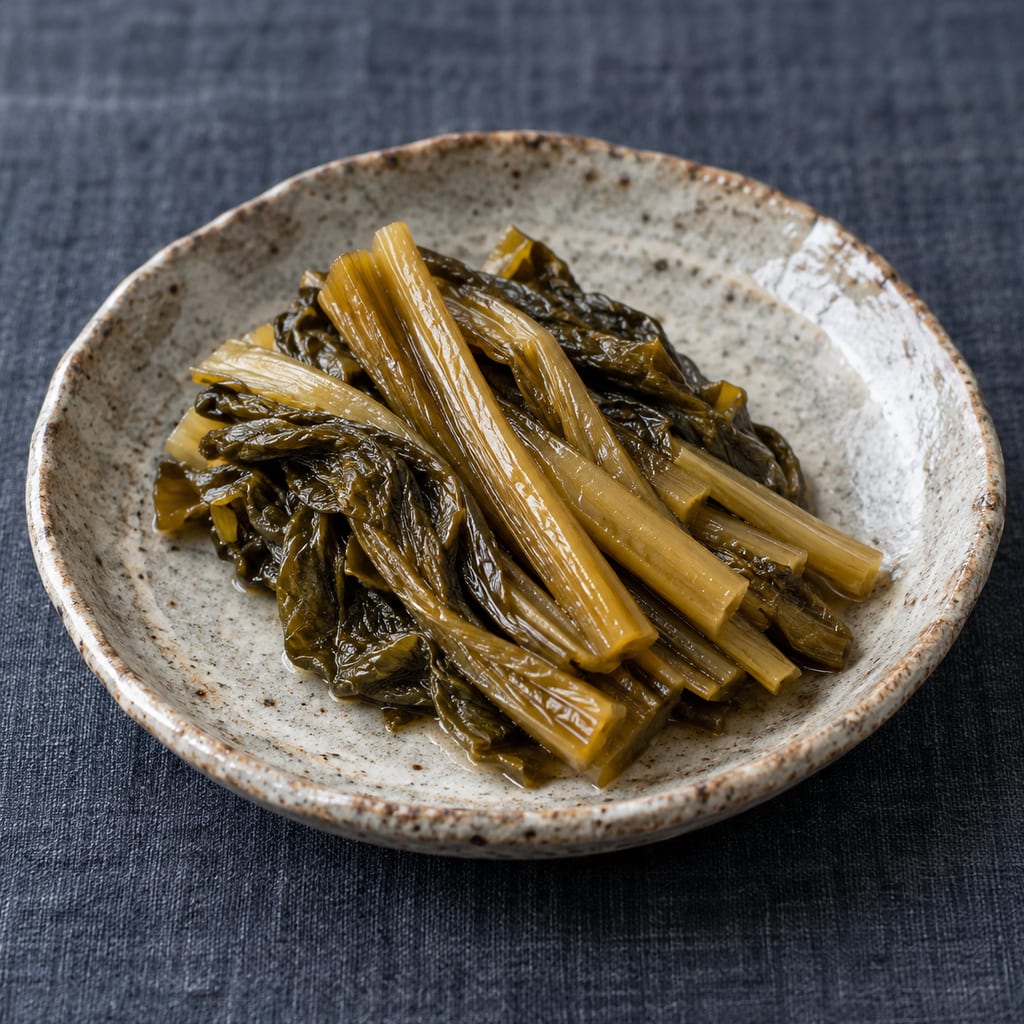
Takana mustard greens from Aso in Kumamoto are salted and pressed into a fresh spring pickle, or aged into a sour furuzuke that is fried and mixed into takana rice.
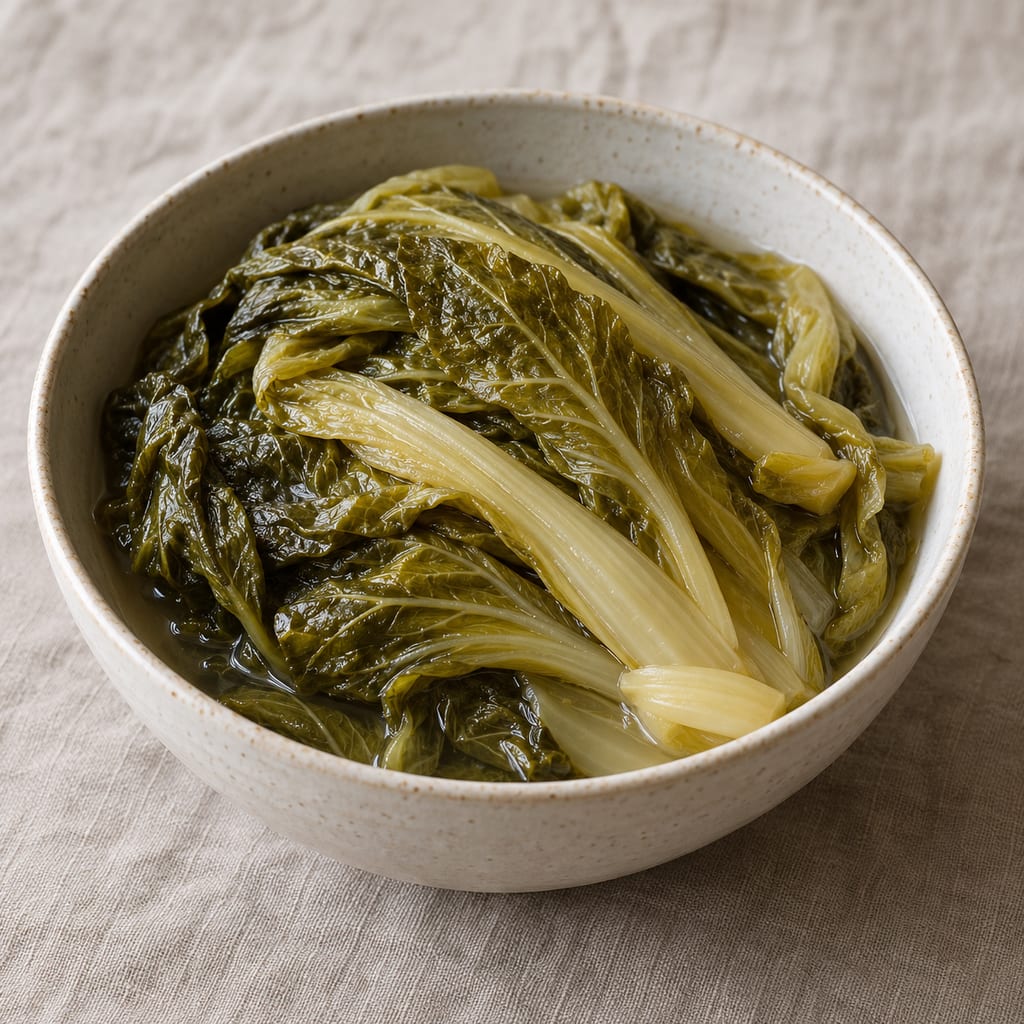
Wilted flat mustard leaves ferment with rice water and salt as a Filipino appetizer and cooking ingredient.
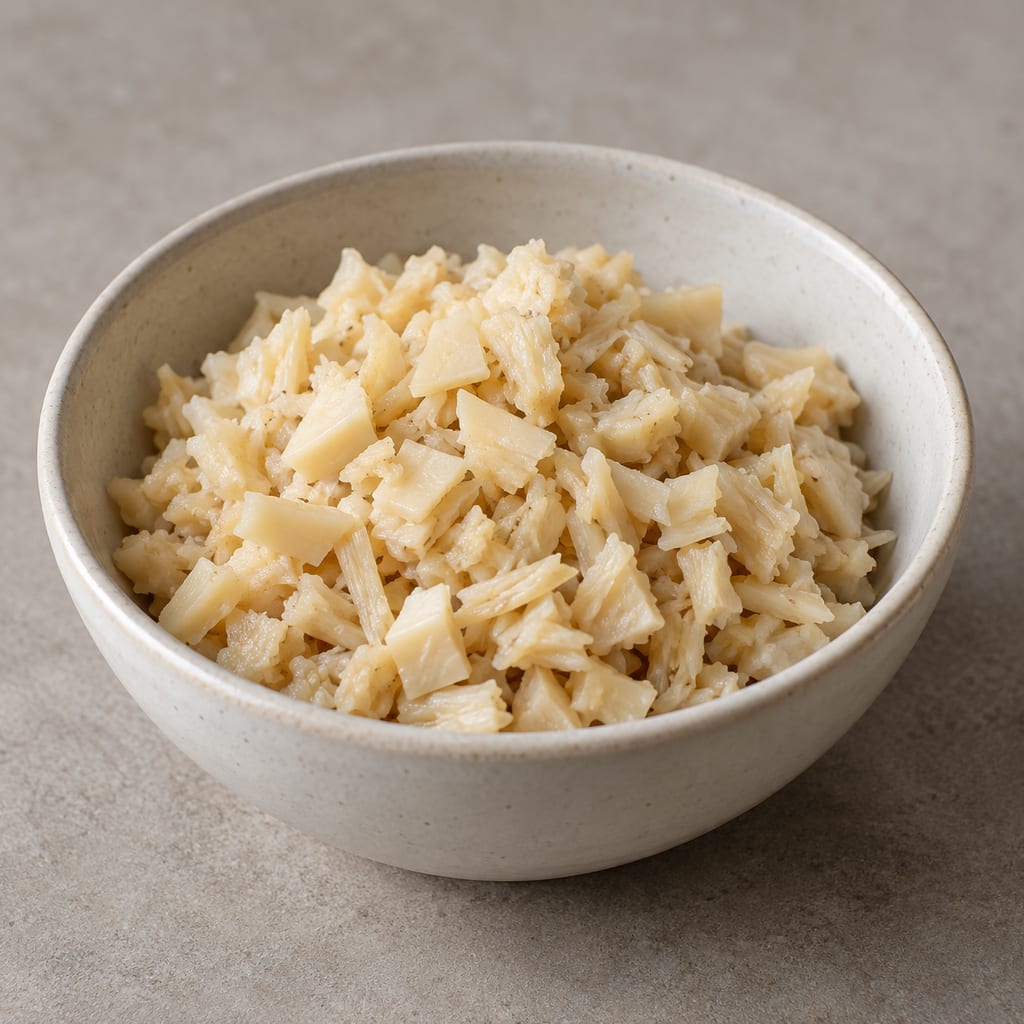
Finely chopped young bamboo shoots packed in leaf-lined baskets, sealed in a forest pit and weighted for one to three months, from Arunachal Pradesh.

Pit-fermented bamboo shoots from Arunachal Pradesh, cut smaller and sun-dried for five to ten days, used in curries.
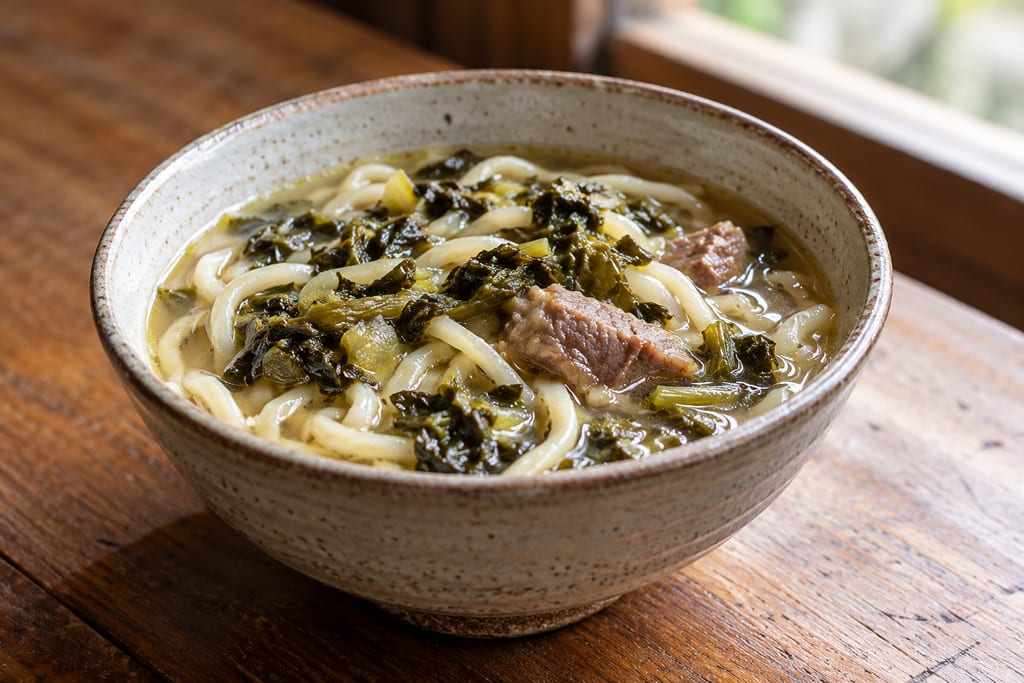
Goyang is a Sherpa fermented wild leafy food of the Darjeeling hills and Sikkim. Rainy-season magane-saag leaves are packed in a bamboo basket, held at room temperature for about a month, then eaten fresh or dried and used in soup.
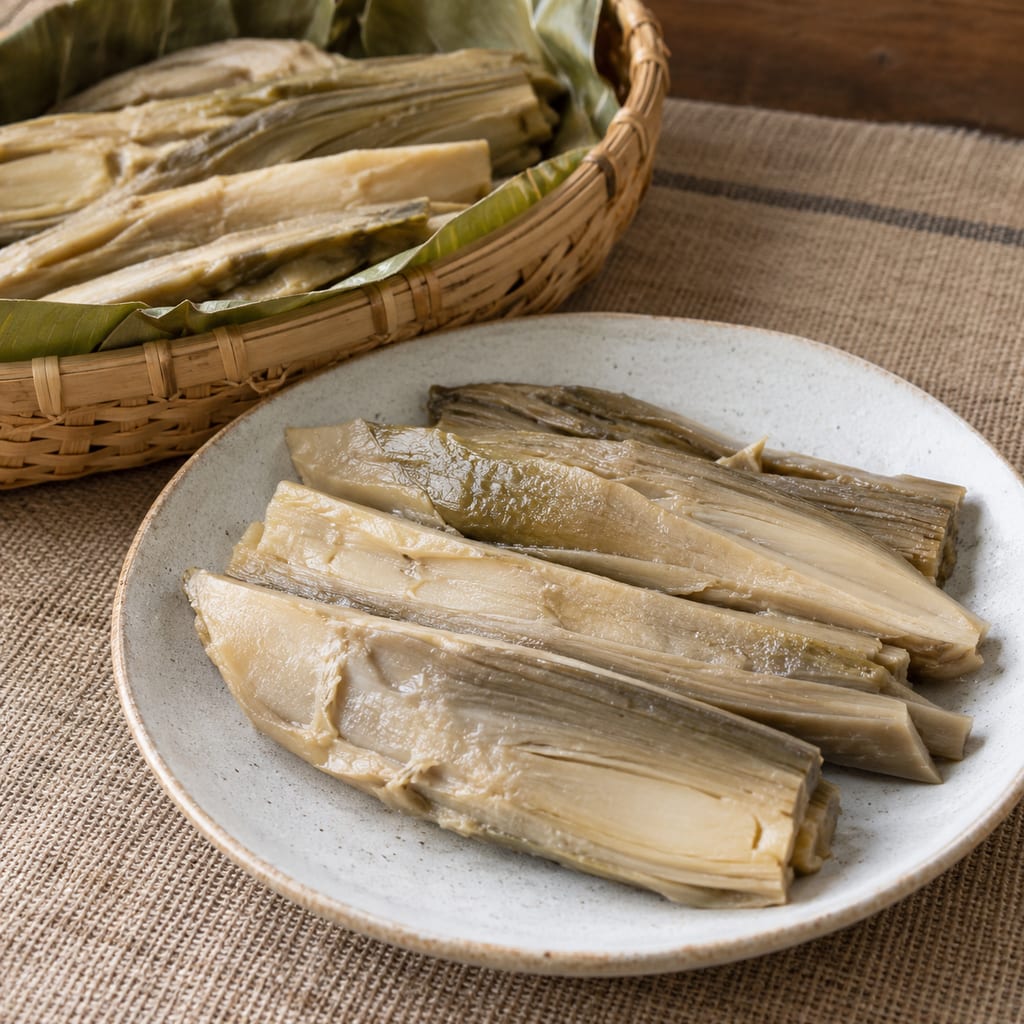
Upper tender bamboo-shoot tips, split or flattened, pit-fermented one to three months in Arunachal Pradesh and eaten in curries.
The original Polish barszcz: young hogweed leaves soured in warm water for a few days, then boiled into soup with egg, butter, cream or millet. Recorded from 1595, with warnings about the sap and lookalikes.
No community contributions have been published for this entry yet.
Sign in to contribute. Published comments and photos are free to read.
JIRCASInspiration
Pak-kaat-dorngJIRCAS documents a separate sweet method: brine for 2 kg greens with salt, palm sugar, water and rice-wash water; ferment in sunlight 3–5 days.
Cited in: A sweeter form of Thai sour mustard greens; Historical and regional setting; Recipe overview; Ingredients; Mustard greens; Salt; Palm sugar; Rice-wash water; Equipment; Method; Difference from the high-salt method; How the finished product is eaten; Safety and storage
University of Minnesota ExtensionSafety
Preserving food at home: FermentationProduce fermentation equipment, acidity monitoring and submersion controls.
Cited in: Recipe overview; Ingredients; Equipment; Method; Difference from the high-salt method; How the finished product is eaten; Recognizing a satisfactory result; Safety and storage
Journal of Ethnic FoodsReference
Journal of Ethnic Foods — Fermented Foods of Southeast AsiaRegional fermented-mustard context. Springer Nature Link
Cited in: How the fermentation works; Why sunlight matters — and why it is difficult to reproduce; Changes in texture and color
Thai PBSReference
Thai PBS — ???????????????????????Contemporary rice-wash-water preservation coverage. Thai PBS ????????????????
Cited in: Recipe overview; Ingredients; Equipment; Method; Difference from the high-salt method; How the finished product is eaten; Safety and storage