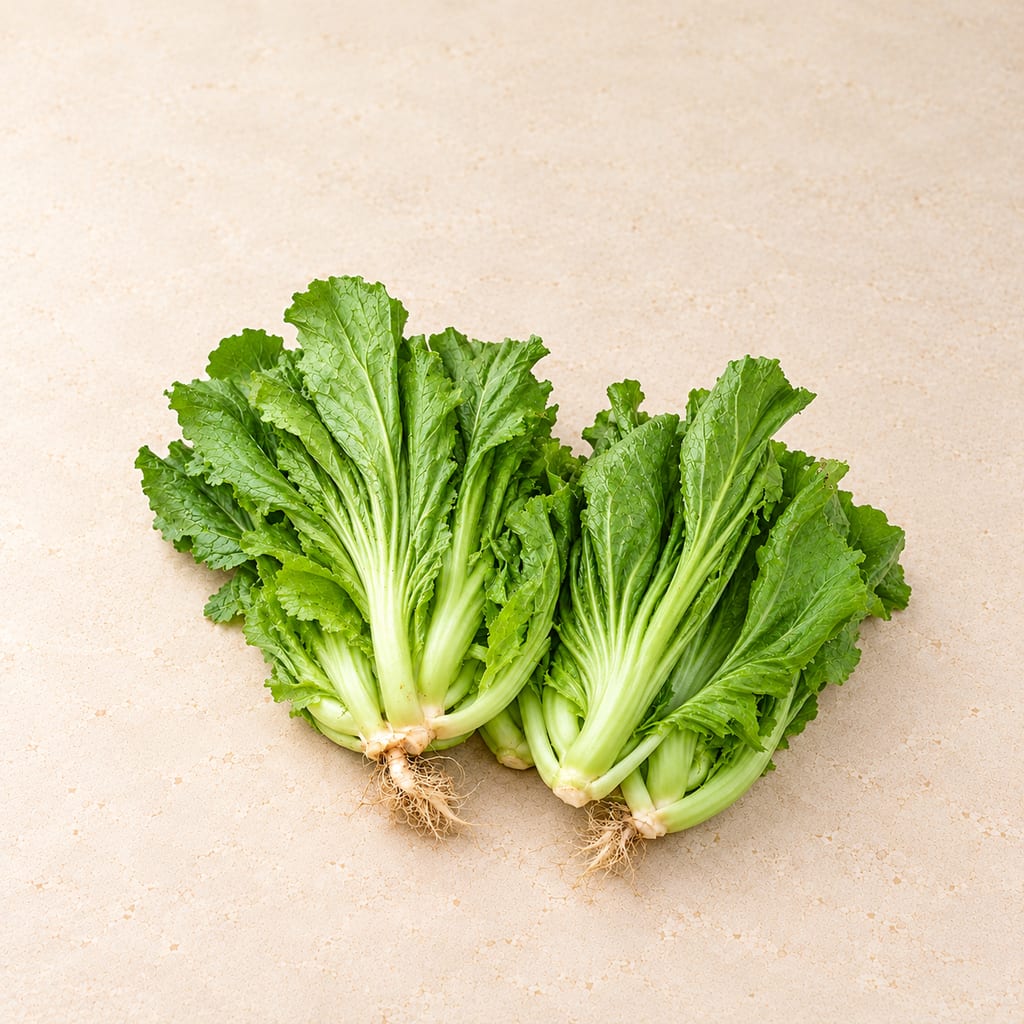
Mustard greens
The leaves of Brassica juncea, a hardy cool-season crop with a sharp, sulfurous bite, eaten fresh and cooked and fermented across Asia as pickled greens, kimchi and gundruk.
 FermenteaWhere food goes to change
Traditional method
Burong mustasa
Wilted flat mustard leaves ferment with rice water and salt as a Filipino appetizer and cooking ingredient.
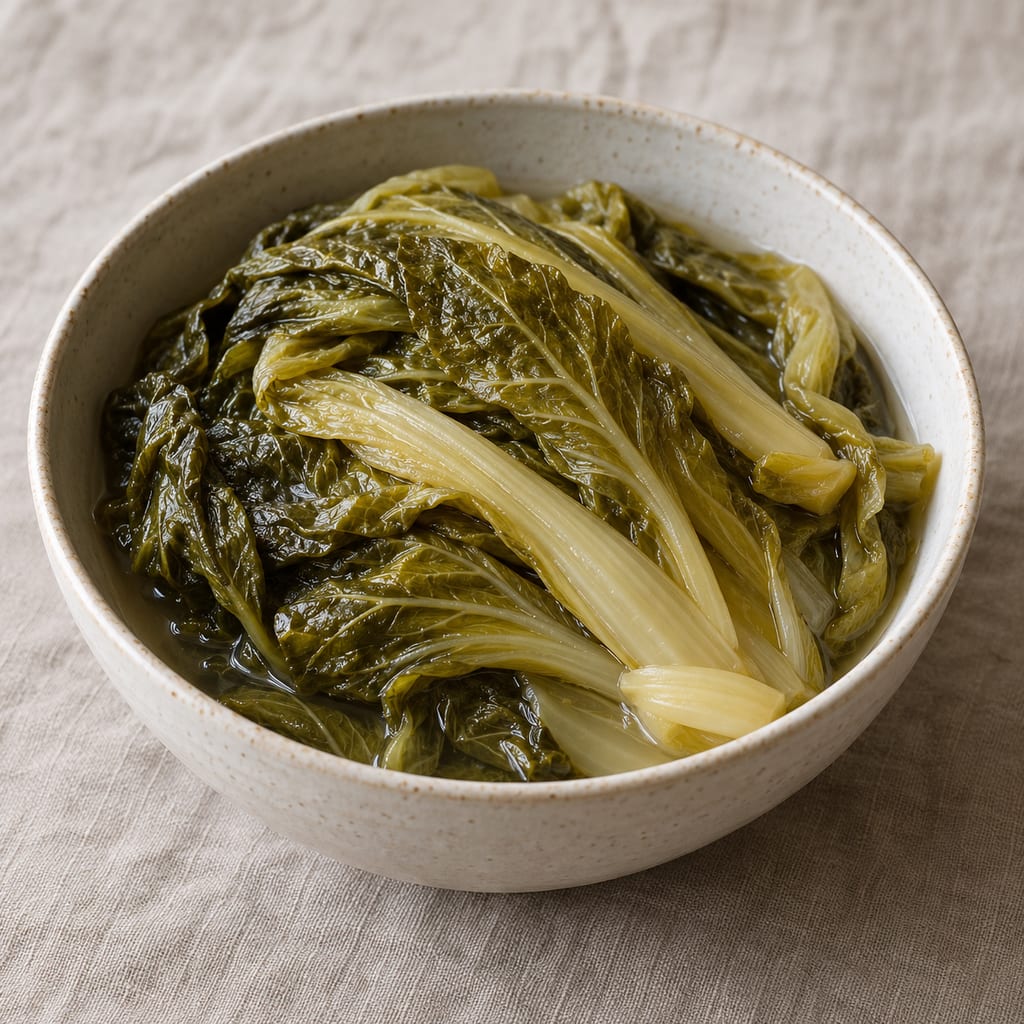
Burong mustasa is a Filipino preparation made from mustard leaves that are wilted, salted and fermented with rice-associated water.
The name combines buro, a Philippine term associated with fermenting or preserving food, and mustasa, mustard greens.
The term appears in Filipino and other Philippine regional cooking, although exact pronunciation and local names vary.
The plant is generally a leafy mustard belonging to Brassica juncea, with other mustard cultivars also used in Philippine households.
The finished product is sour, salty and pleasantly pungent.
Its leaf tissue becomes softer during preparation, while the stems can retain some structure.
Burong mustasa can be eaten as a relish or cooked into other foods.
It is especially suitable alongside fried or grilled fish and meat, where its acidity cuts through oil and fat.
The preserved leaves may also be used in soups and egg dishes.
Unlike vinegar-pickled mustard greens, traditional burong mustasa develops acidity through microbial fermentation.
Rice water forms part of that system, providing carbohydrates and creating a liquid environment for the leaves.
The Philippines has a substantial tradition of fermented foods, including fish, shrimp, rice and vegetables.
The term buro appears across several of these preparations.
Burong mustasa belongs to the vegetable branch of this tradition.
Its exact invention date is not established.
Traditional food-processing surveys document mustard leaves salted and fermented in rice-associated liquid.
A Philippine cultural reference published through the National Commission for Culture and the Arts describes mustard leaves as a food eaten raw, used as wrapping material and preserved through fermentation.
It also records chopped preserved mustard greens prepared with egg and used alongside fried fish or meat.
That gives the food a firmly documented place in Philippine culinary life.
Scientific research published in 2011 examined bacterial diversity in fermented Philippine foods, including burong mustasa.
Another study specifically investigated bacterial populations at different stages of burong mustasa fermentation.
These studies establish the product as a genuine microbiological ferment rather than simply a salty vegetable dish.
They do not establish a precise historical invention date or one recipe shared by every region.
Mustard greens — 8 oz
Coarse sea salt — 2 tbsp
Rice — 3 tbsp
Water — 1½ cups
Sun-wilting — 1 hour, or until wilted
Fermentation — 4–6 days
Numerical fermentation temperature — Not specified
Finished yield — Not specified
The primary household recipe describes further cool storage at 50–55°F, approximately 10–13°C, for flavor development. That historical or culinary instruction is not equivalent to modern refrigerator-temperature food-safety guidance and should not be used as a general storage recommendation.
Fresh flat mustard greens — 8 oz — Main vegetable
Coarse sea salt — 2 tbsp — Seasoning and microbial selection
Rice — 3 tbsp — Source for rice-cooking liquid
Water — 1½ cups — Used for rice liquid
The recipe does not include vinegar.
It also does not require fish, shrimp or meat, unlike many other Philippine foods described as buro.
Some other household variants include ginger, garlic or chili.
Those ingredients are not part of the measured primary batch.
The preferred vegetable has edible leaves and sufficiently substantial stems to retain texture after processing.
Fresh leaves should be free from rot and substantial insect damage.
Mustard leaves naturally have a peppery or slightly bitter flavor.
The intensity varies with variety, maturity and growing conditions.
Young leaves may be tender, while older leaves can be tougher and more pungent.
Different mustard cultivars may also differ in soluble carbohydrate composition.
That matters because the native carbohydrates contribute to fermentation.
However, the central recorded process does not rely only on vegetable sugars.
Rice-derived liquid provides additional substrate.
Rice is an unusually important part of this preparation.
The grains are cooked in water, and the liquid is separated from the softened rice.
The recipe uses the liquid rather than the cooked grains themselves.
As rice cooks, some starch enters the water.
The resulting liquid contains suspended starch and smaller amounts of soluble compounds.
Microorganisms capable of breaking down starch-derived material can increase the sugars available to other fermentation organisms.
Lactic acid bacteria then metabolize suitable carbohydrates and produce organic acids.
This helps explain why rice water is found in several Asian fermented mustard-green traditions.
Nevertheless, rice water is not a standardized chemical reagent.
Its composition depends on the rice variety, cooking duration, water volume and straining method.
The original household recipe does not provide a laboratory carbohydrate concentration.
Salt affects both the plant tissue and the fermentation environment.
When placed on leaves, it draws out moisture and reduces their firmness.
This makes the vegetable easier to compact into the fermentation vessel.
Salt also selects among the microorganisms present.
Some lactic acid bacteria tolerate salted vegetables better than many undesirable competitors.
However, salt cannot be considered independently of final acidity.
A product containing salt may remain microbiologically unsafe if acidification is inadequate.
Because the vegetable is wilted, salted and then covered in rice liquid, the final distribution of salt depends on the amount of liquid and moisture released.
The original recipe's two-tablespoon measure does not establish a tested finished concentration throughout the jar.
Use a clean washing bowl, a pot for cooking rice, a strainer, a suitable fermentation jar and a method of keeping the leaves beneath the liquid.
A clean non-reactive bowl is useful when massaging the vegetables with salt.
The recorded method does not require special fermentation cultures.
A food-grade container should be capable of managing fermentation gas without dangerous pressure buildup.
1. Clean the mustard greens.
Wash 8 oz fresh mustard leaves thoroughly.
Remove soil, damaged material and deteriorated pieces.
Drain and pat dry.
2. Wilt the leaves.
Place the cleaned mustard in sunlight for 1 hour, or until wilted.
The leaves should become more flexible.
The recorded method does not specify a target weight loss or an exact surface temperature.
3. Prepare the rice liquid.
Combine 3 tablespoons rice and 1½ cups water in a covered pot.
Cook over medium heat until the rice is soft.
The original recipe does not provide a precise cooking duration for this stage.
4. Separate the rice water.
Place a mesh strainer over a suitable container.
Strain the liquid from the softened rice.
The original method uses the cooking liquid and leaves the solid rice behind.
Cool the liquid before adding it to raw vegetables. Hot liquid can alter their texture and reduce desirable microbial populations.
5. Salt the mustard leaves.
Place the wilted greens in a clean bowl.
Add 2 tablespoons coarse sea salt.
Gently massage the leaves to distribute the salt and further soften them.
6. Pack into a jar.
Arrange the salted leaves compactly in a clean food-grade container.
Minimize trapped air pockets.
The recorded method does not specify a jar volume or packing density.
7. Add the rice liquid.
Pour the cooled strained liquid over the mustard leaves.
Keep the vegetable material beneath the surface.
If the leaves float, use a suitable clean food-grade fermentation weight.
8. Allow fermentation.
The documented household preparation gives 4–6 days at room temperature.
No numerical temperature is specified.
This is a traditional schedule, not a validated food-safety endpoint. The development of appropriate acidity must be verified rather than assumed.
9. Assess and store.
The expected result is a sour, salty mustard preparation.
Refrigerate safely after fermentation and use appropriate food-handling controls.
Do not treat the source's cool-room storage suggestion as a general substitute for refrigeration.
10. Prepare for serving.
The fermented leaves can be chopped or kept in larger pieces, depending on the dish.
If very salty, rinsing may reduce some of the salt but also removes flavor and acidity.
Adjust the seasoning of the finished meal accordingly.
Burong mustasa is a lactic-acid vegetable ferment.
A study of Philippine fermented foods detected lactic acid bacteria and acetic acid bacteria among the microbial communities investigated.
Organisms identified across those foods included Lactobacillus fermentum, Lactobacillus plantarum, Weissella cibaria and several other bacterial species.
A separate study examining burong mustasa specifically found microbial changes between the initial, middle and final stages.
Lactic acid bacteria were detected throughout the fermentation.
Acetic acid bacteria appeared in the middle stage.
Other bacteria were detected early in the process.
These observations demonstrate microbial succession.
The microbiology of a spontaneous ferment is not fixed from the first hour to the finished product.
Different organisms may be favored as salt, acidity, nutrients and oxygen availability change.
The presence of bacteria in the starting material does not mean every species survives or remains dominant.
Lactic acid bacteria metabolize available sugars.
Some species produce mainly lactic acid.
Others may produce lactic acid together with carbon dioxide, ethanol or additional metabolites.
Acid production lowers the pH.
A sufficiently acidic environment inhibits many organisms that prefer neutral conditions.
But the effectiveness depends on the actual pH, salt content, temperature and composition of the food.
The rice liquid can contribute material that supports fermentation, yet the precise rate of acidification is not specified by the primary recipe.
The product's sour flavor is the sensory expression of a real chemical change.
It is not merely the taste of added salt.
Because no vinegar is required in the primary formulation, microbial acid production is particularly important.
Mustard greens contain glucosinolates, a group of sulfur-containing plant compounds.
When leaf tissue is damaged, plant enzymes can convert glucosinolates into pungent products.
These contribute to the peppery flavor of fresh mustard leaves.
Wilting, salt treatment and fermentation change how these compounds are perceived.
Some soluble flavor material enters the rice liquid.
Organic acids generated during fermentation add sourness.
The result is less like a raw mustard leaf and more like a complex salted vegetable relish.
The texture also changes.
Water leaves the vegetable during salting, while acidification and storage can alter the structure of its cell walls.
The leaves become more pliable, but successful preparation should not be equivalent to total vegetable decomposition.
One established household variation ties mustard leaves into small bundles or knots before fermentation.
Another includes ginger and rice-washing water.
Some versions use plain salt brine rather than the liquid remaining after cooking rice.
Other recipes allow a slightly different fermentation duration.
A separate Philippine recipe describes wilting mustard leaves for 2 hours, salting them in layers and allowing 7 days of fermentation in rice water.
This is a different formulation from the primary eight-ounce recipe, not an equivalent conversion of its salt content.
The existence of several versions should be documented without creating a false single standard.
Burong mustasa is particularly associated with fried or grilled fish.
Its sourness balances the richness and oil of the main dish.
It can be chopped and served with fresh tomato and onion.
Other preparations sauté it with onion and tomato before adding beaten eggs, creating a mustard-green omelet.
The preserved leaves may also be added to sinigang, the Filipino sour soup family.
In this use, the fermented greens and their acidity contribute to the broth.
The original recipe record mentions use alongside fish, egg and other dishes.
These applications demonstrate why burong mustasa is useful even when eaten in small quantities.
It functions as both a vegetable and a sour seasoning.
The leaves become wilted and develop a sour, salted aroma.
Depending on processing, they may retain substantial green color or become more olive-green.
The brine may grow cloudy.
These are possible characteristics, not definitive indicators of safety.
The original recipe gives no validated pH or acidity curve.
Mold growth, putrefactive smells, abnormal decomposition or signs of contamination are reasons to reject a batch.
If gas is produced, the container must accommodate it safely.
A jar that does not bubble visibly may still be undergoing fermentation, while bubbling alone cannot prove proper acidification.
Burong mustasa is a spontaneous ferment.
The original recipe gives measured ingredients and a time range but not a numeric temperature, final pH or microbial challenge study.
General produce-fermentation guidance identifies pH 4.60 or lower as an important safety threshold.
A finished product intended for storage requires appropriate acidity and process verification.
Food-grade containers, sound vegetables and prevention of surface contamination are essential.
The original suggestion to keep the product at 50–55°F is warmer than standard refrigeration and should not be treated as a validated safe storage method.
Use refrigeration unless a separately validated process demonstrates another suitable arrangement.
Panlasang Pinoy identifies burong mustasa as a Filipino fermented appetizer and presents the author’s preparation; no narrower regional origin is claimed.
Scaling: source batch only
Contaminated equipment or uncontrolled fermentation can compromise the batch; the recipe is not professionally validated.
Hazard sourceUse clean food-grade equipment and follow the source method. Recipe-specific validated limits are not supplied; do not treat taste or appearance as proof of safety.
Control sourceSource identifies burong mustasa as a Filipino fermented appetizer; this recipe is the author’s household method.
The leaves of Brassica juncea, a hardy cool-season crop with a sharp, sulfurous bite, eaten fresh and cooked and fermented across Asia as pickled greens, kimchi and gundruk.
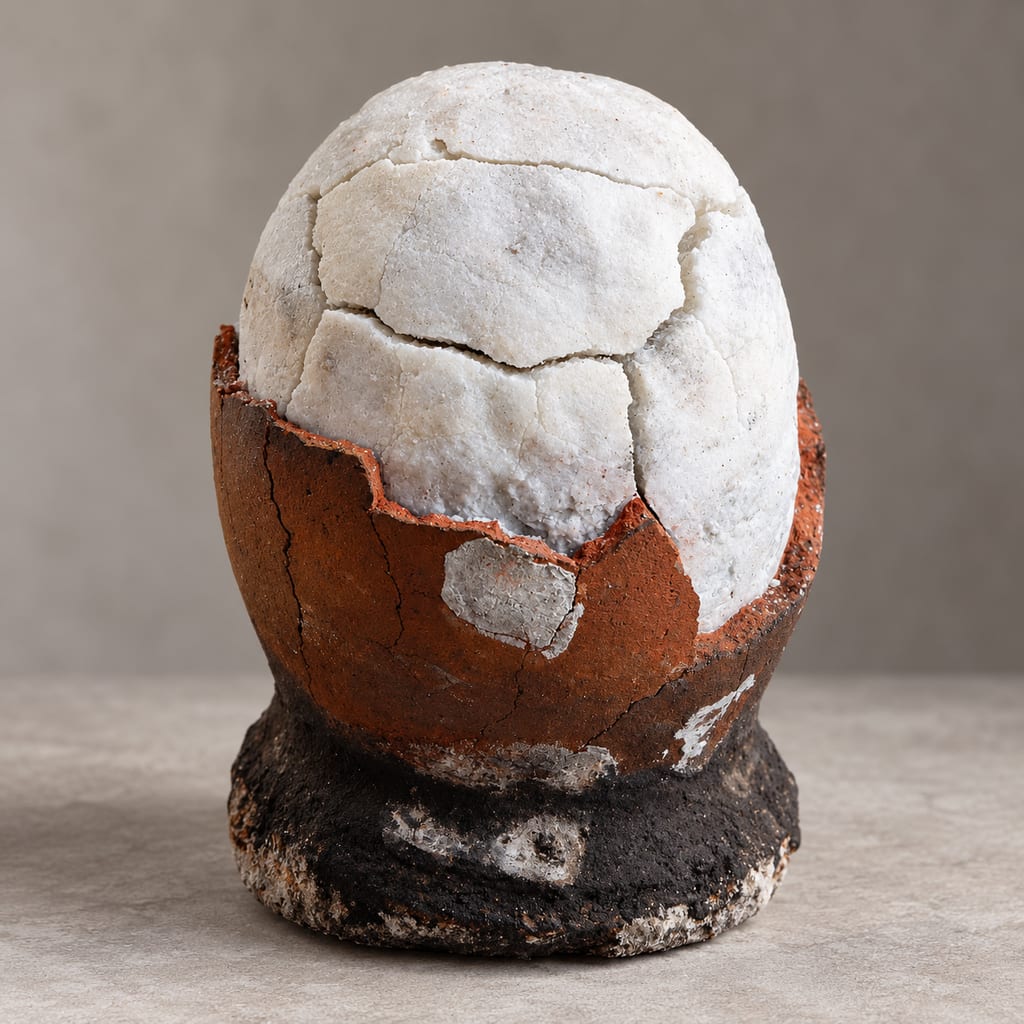
Asin tibuok is a Boholano salt-making craft that turns seawater-soaked coconut husks into a salt-rich ash, brine and formed sea salt in specialized clay pots. This record follows one published account of the community process; it is not a validated household formula.
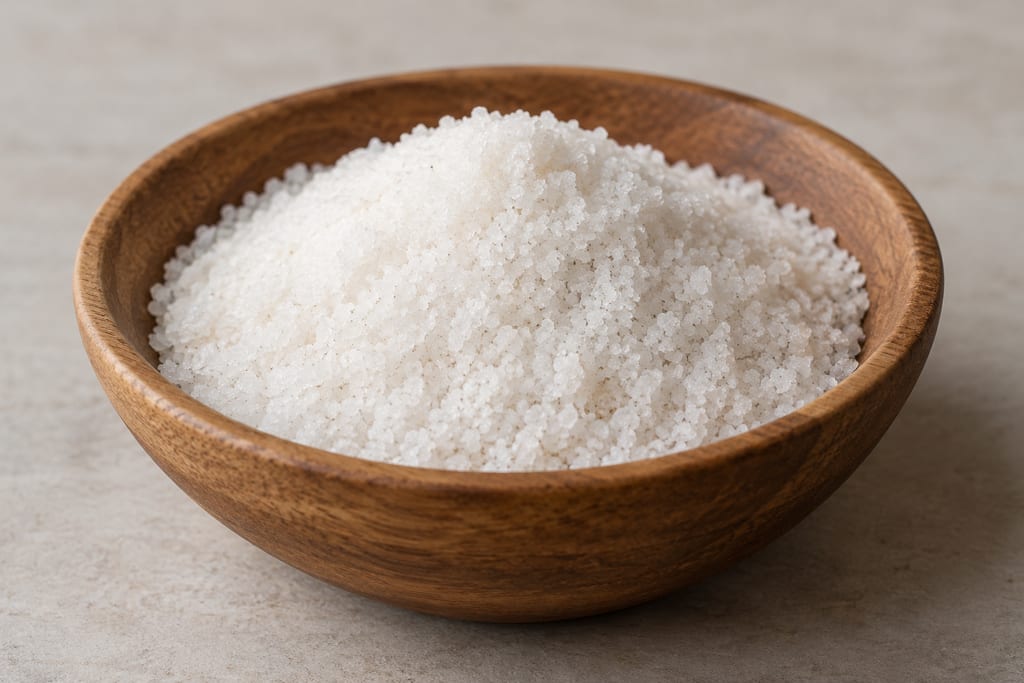
Asin sa buy-o is a fine sea salt made in Panayunan, Botolan, and packed in a woven nipa pouch called a buy-o. Salt-bearing coastal earth is leached with seawater, and the brine is boiled to crystals.
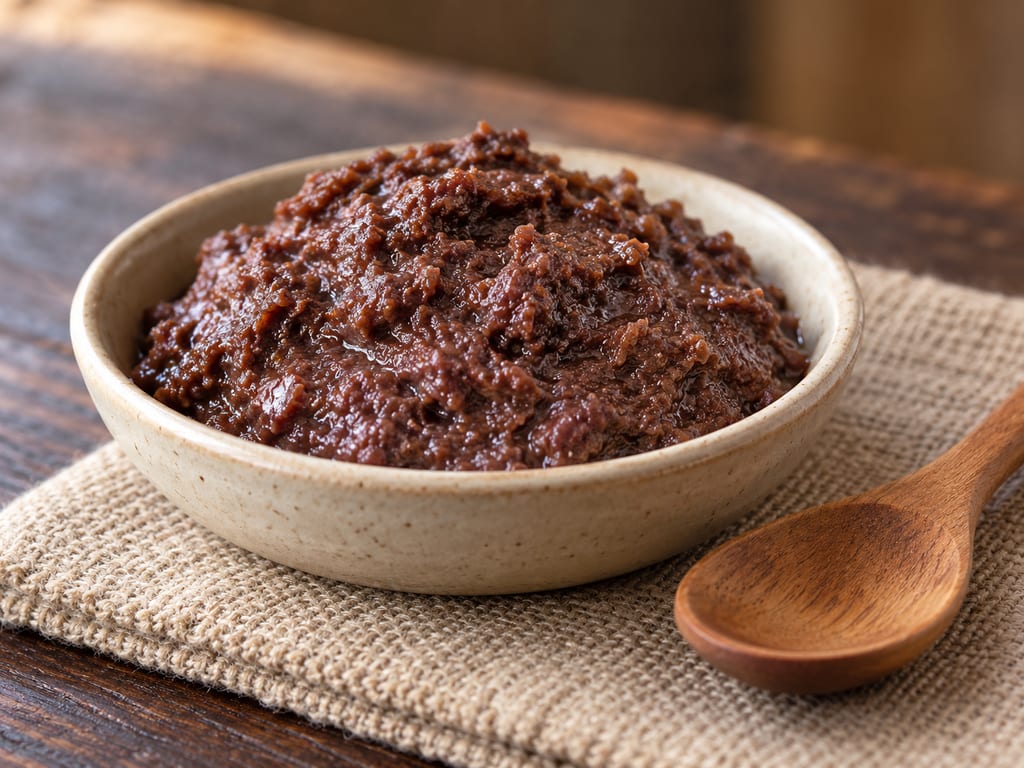
Bagoong isda is a Philippine fish paste: whole small fish salted and left to ferment for a month or more in earthen jars. It is the fish counterpart of bagoong alamang.

A sweet-hot table sauce of ripe banana simmered with vinegar, sugar, onion, garlic and fresh chilli, in the manner of Philippine banana ketchup. An untested development batch of about 500 g.

PagkainPinoy’s 24–30 piece version twice-bakes day-old soft bread with a thin butter-and-sugar coating.

Soft Filipino ensaymada coils use enriched yeast dough, then receive butter, sugar and grated cheese. This modern Filipino version differs from Mallorcan ensaïmada and other Philippine regional formulas.

This Manila baker’s Filipino Spanish bread pairs a soft, enriched roll with a buttery brown-sugar breadcrumb filling and a crumb coating.
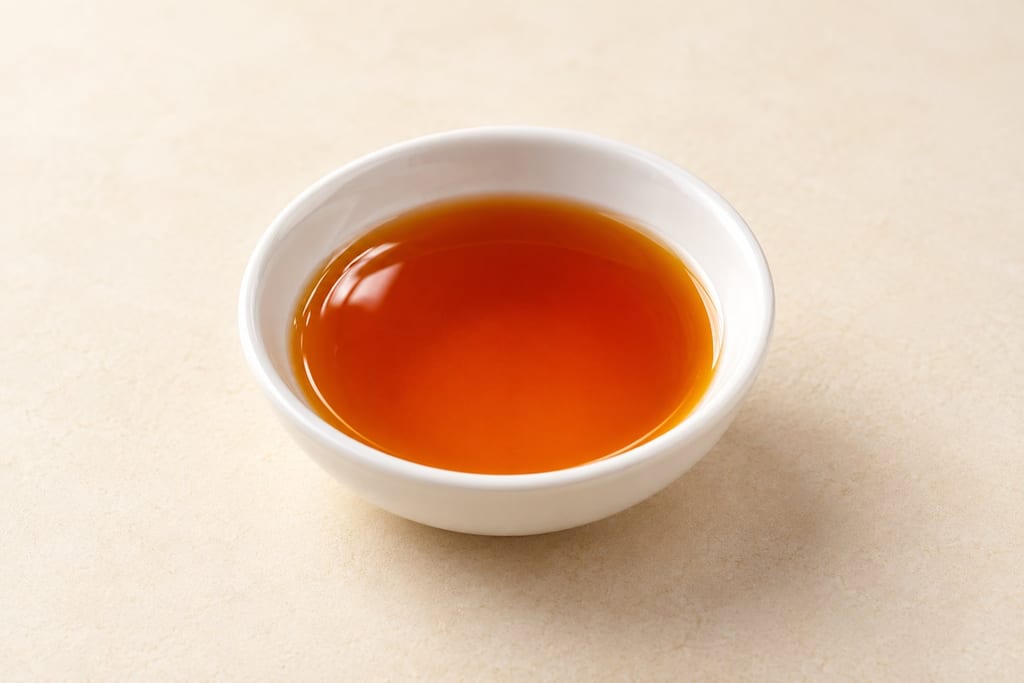
Fish sauce is a clear, salty seasoning made by maturing fish with salt and drawing off the liquid. The broad family includes distinct regional sauces rather than one interchangeable method.
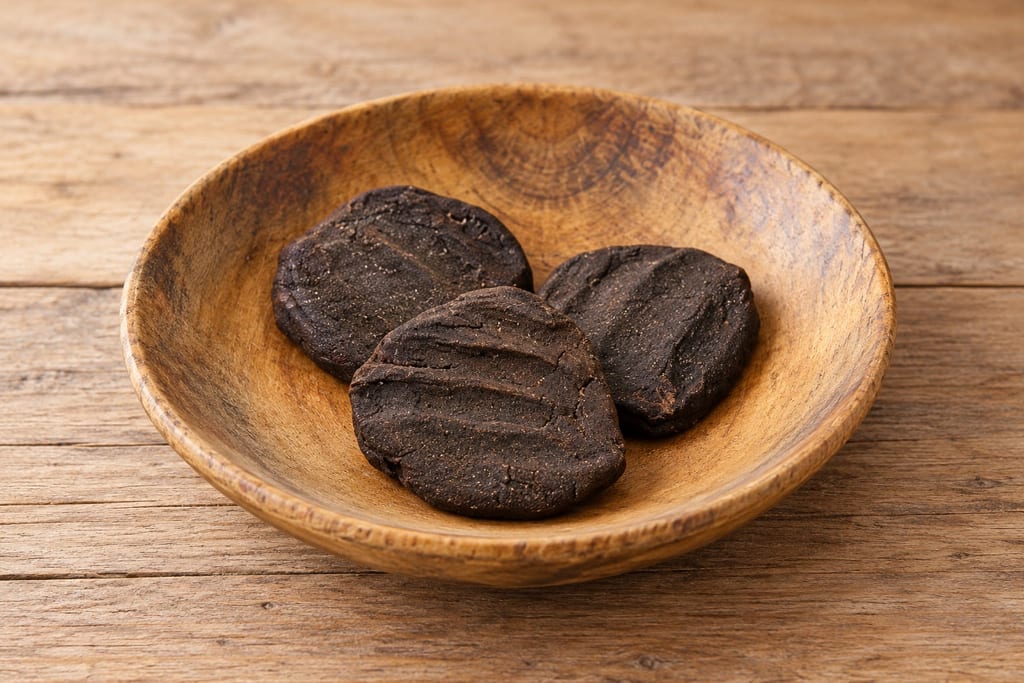
Dried cakes of pounded taro leaves from the Ao Naga in Nagaland, yellowed in a bag, then dried by hot ash or sun and used to flavour meat dishes.
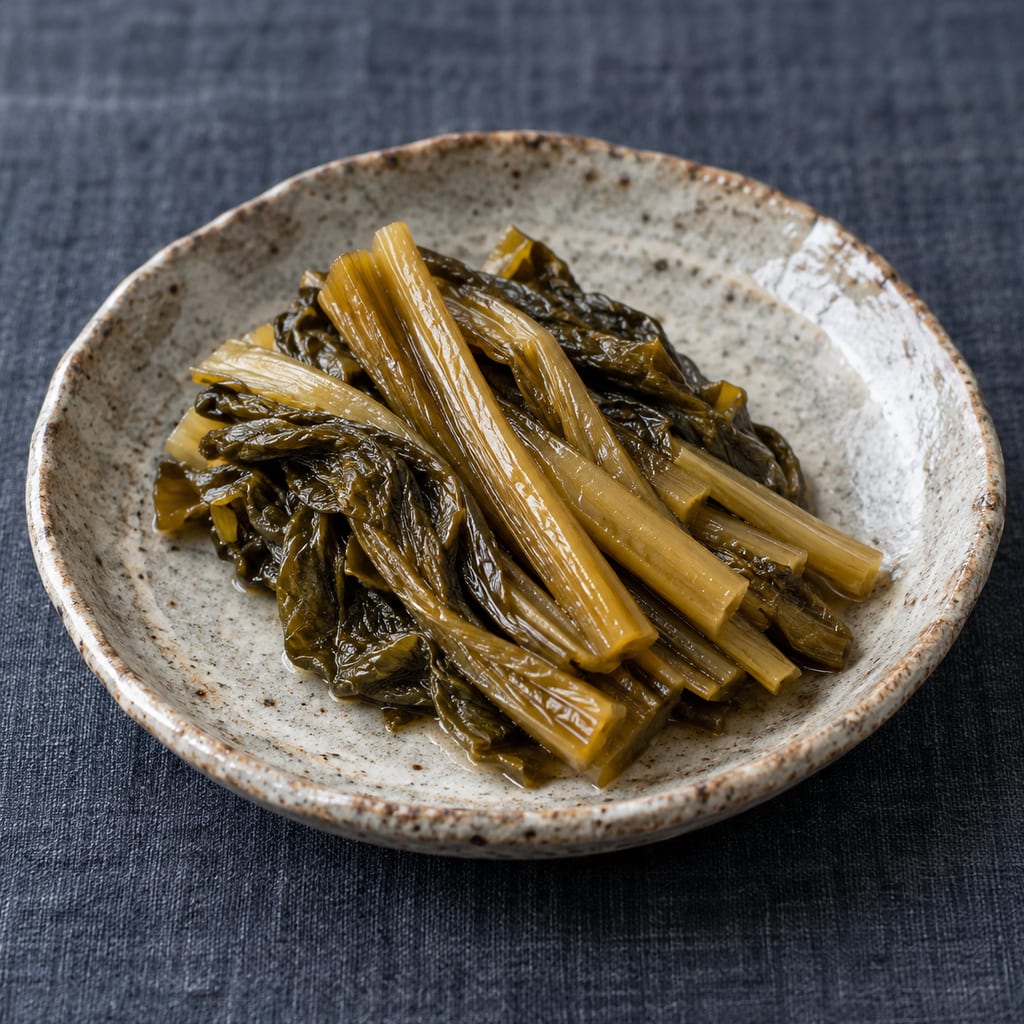
Takana mustard greens from Aso in Kumamoto are salted and pressed into a fresh spring pickle, or aged into a sour furuzuke that is fried and mixed into takana rice.
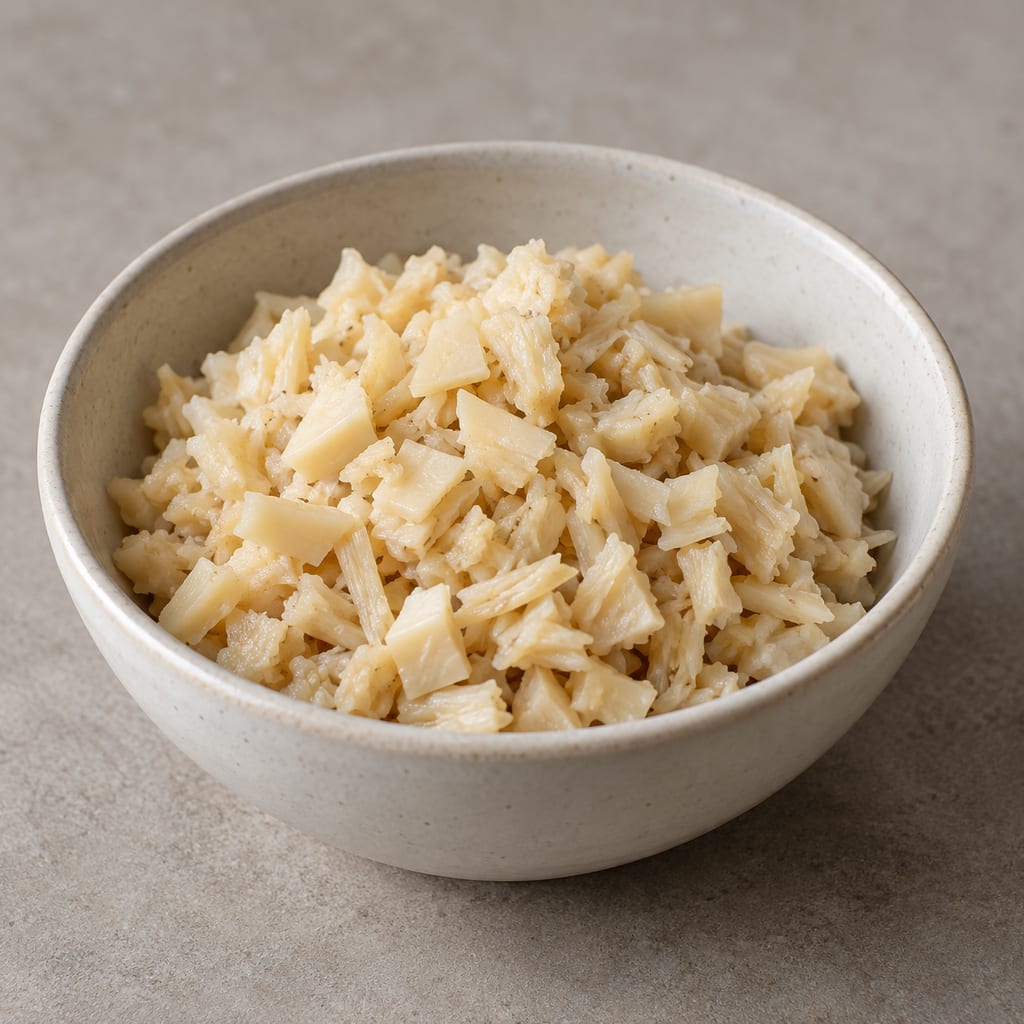
Finely chopped young bamboo shoots packed in leaf-lined baskets, sealed in a forest pit and weighted for one to three months, from Arunachal Pradesh.

Pit-fermented bamboo shoots from Arunachal Pradesh, cut smaller and sun-dried for five to ten days, used in curries.
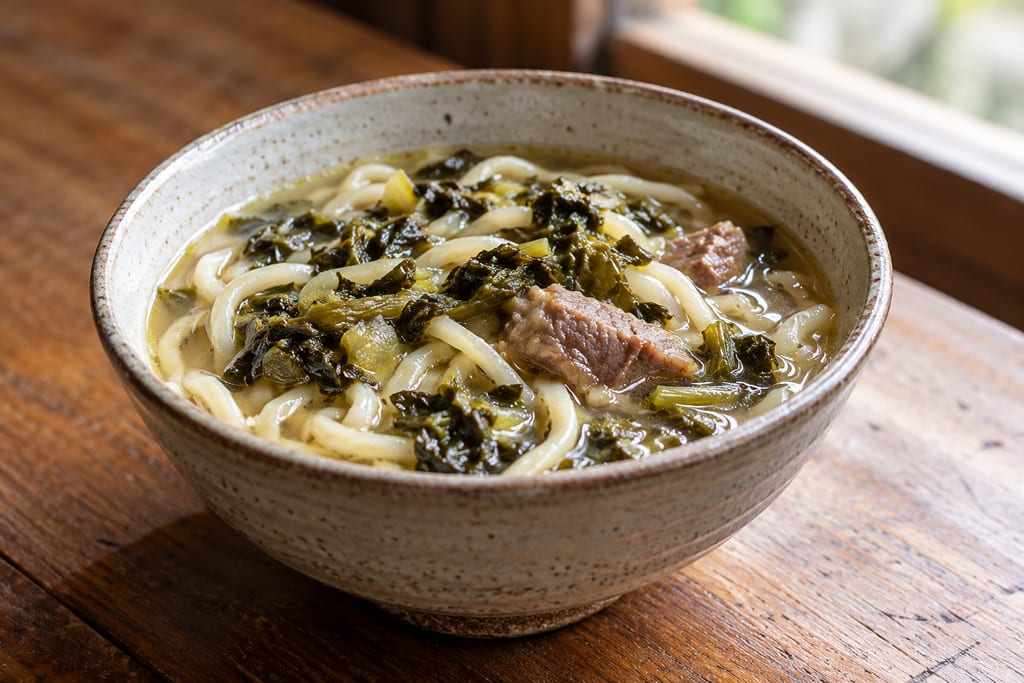
Goyang is a Sherpa fermented wild leafy food of the Darjeeling hills and Sikkim. Rainy-season magane-saag leaves are packed in a bamboo basket, held at room temperature for about a month, then eaten fresh or dried and used in soup.
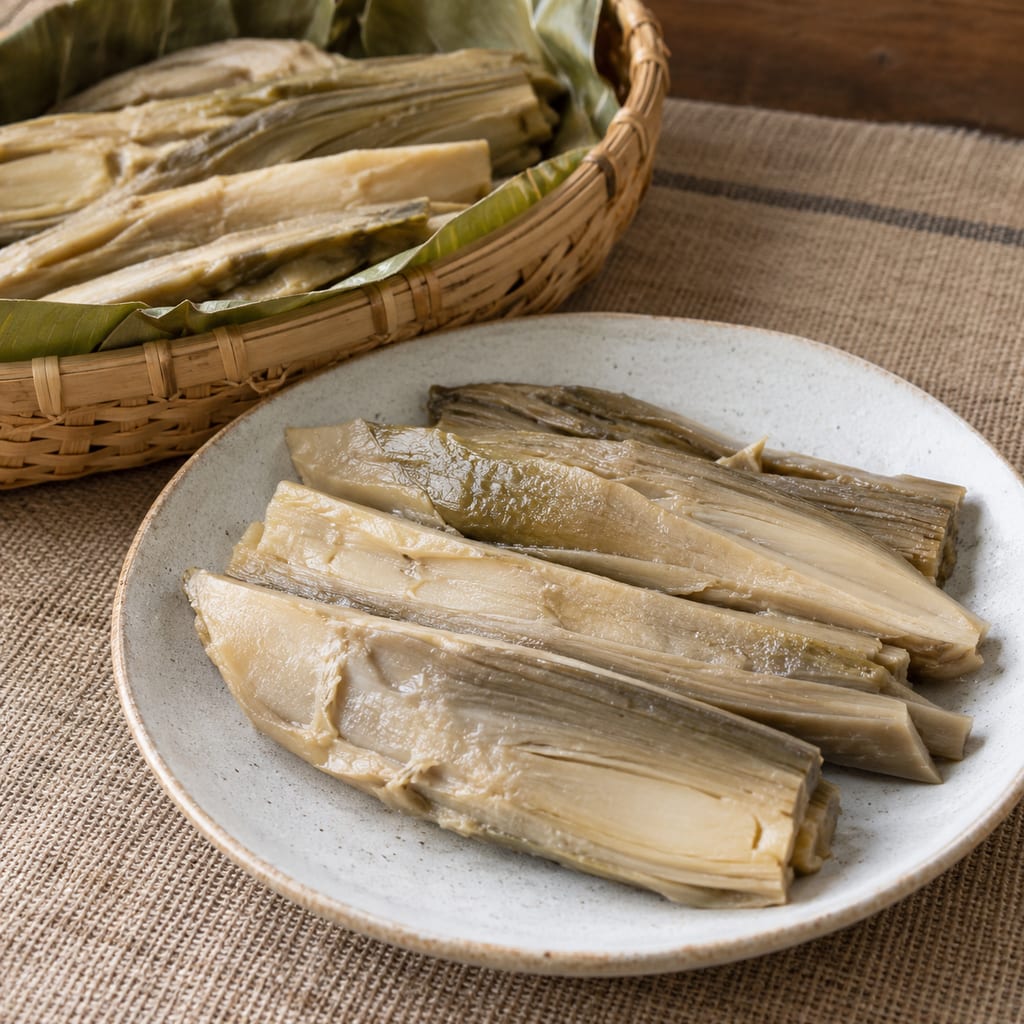
Upper tender bamboo-shoot tips, split or flattened, pit-fermented one to three months in Arunachal Pradesh and eaten in curries.
The original Polish barszcz: young hogweed leaves soured in warm water for a few days, then boiled into soup with egg, butter, cream or millet. Recorded from 1595, with warnings about the sap and lookalikes.
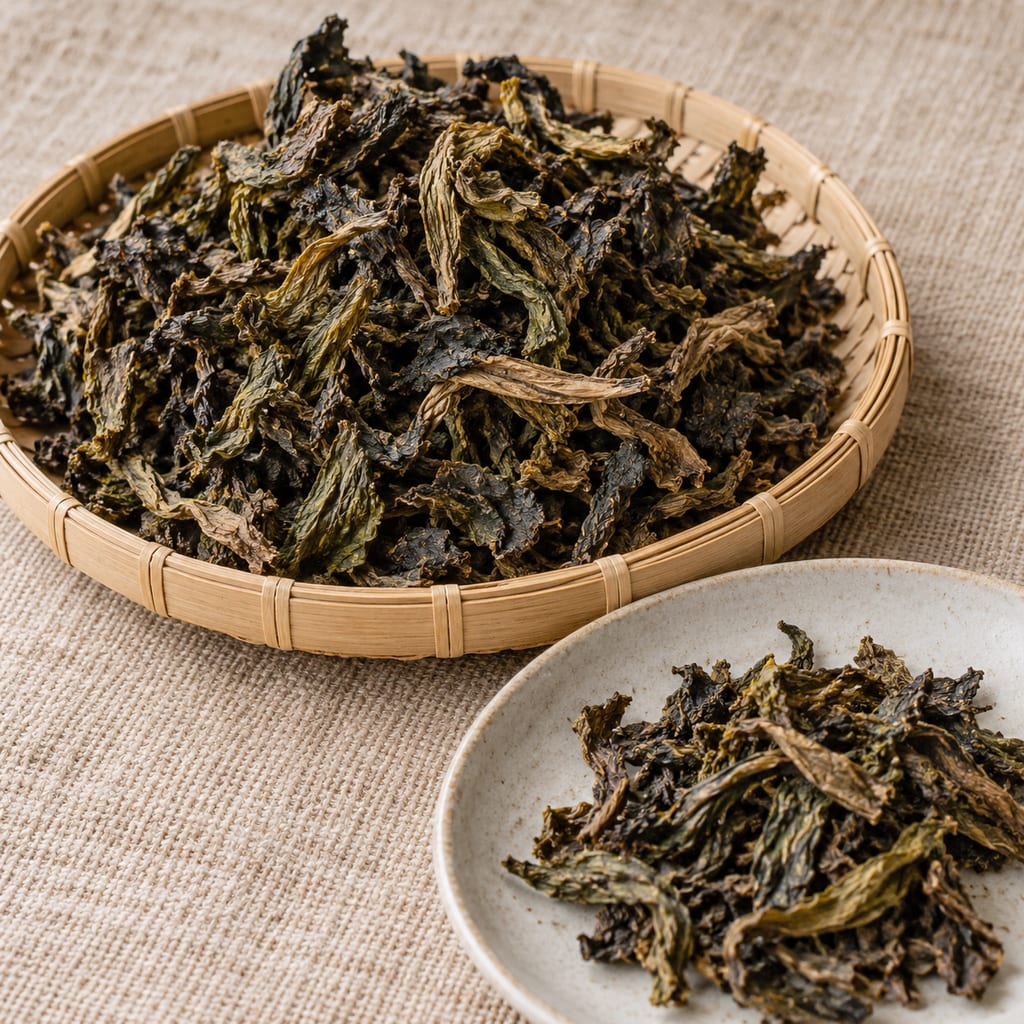
Inziangsang is a Naga fermented food of mustard leaves from Nagaland and Manipur. Crushed, soaked and squeezed leaves ferment for 7 to 10 days, then dry in the sun. A squeezed liquid can be boiled to a concentrate.
No community contributions have been published for this entry yet.
Sign in to contribute. Published comments and photos are free to read.
Panlasang Pinoy; Vanjo MeranoInspiration · Geography
Burong Mustasa (Pickled Flat Mustard Greens)Filipino fermented-food context, measured ingredients, wilting, rice-water preparation, 4–6 day process and culinary uses.
Cited in: A Filipino mustard ferment; Recipe overview; Ingredients; Selecting the mustard greens; Equipment; Method; How acidity develops; Regional and household variations; Serving burong mustasa; What a successful ferment looks like
University of Minnesota ExtensionSafety
Preserving food at home: FermentationGeneral fermentation guidance; not validation of this Filipino household recipe.
Cited in: Recipe overview; Ingredients; Equipment; Method; Regional and household variations; Serving burong mustasa; Food safety
Philippine Cultural EducationReference
Philippine Cultural Education — MustásaCultural and culinary documentation. CulturEd: Philippine Cultural Education Online
Cited in: History and culinary background
pubmed.ncbi.nlm.nih.govReference
Bacterial Diversity in Philippine Fermented MustardOriginal fermentation microbiology. PubMed
Cited in: History and culinary background; Why the rice matters; Why salt is necessary; The microbiology of burong mustasa; Mustard chemistry and flavor
pubmed.ncbi.nlm.nih.govReference
Assessment of Bacterial Diversity in Selected Philippine Fermented FoodsComparative microbial study. PubMed
Cited in: Why the rice matters; Why salt is necessary; The microbiology of burong mustasa; Mustard chemistry and flavor
Kawaling Pinoy Tasty RecipesReference
Kawaling Pinoy Tasty Recipes — Burong MustasaAlternative traditional procedure. Kawaling Pinoy Tasty Recipes
Cited in: History and culinary background; Recipe overview; Ingredients; Equipment; Method; Regional and household variations; Serving burong mustasa
Foxy FolksyReference
Foxy Folksy — Pickled Mustard GreensKnotted-leaf preparation
Cited in: Recipe overview; Ingredients; Equipment; Method; Regional and household variations; Serving burong mustasa