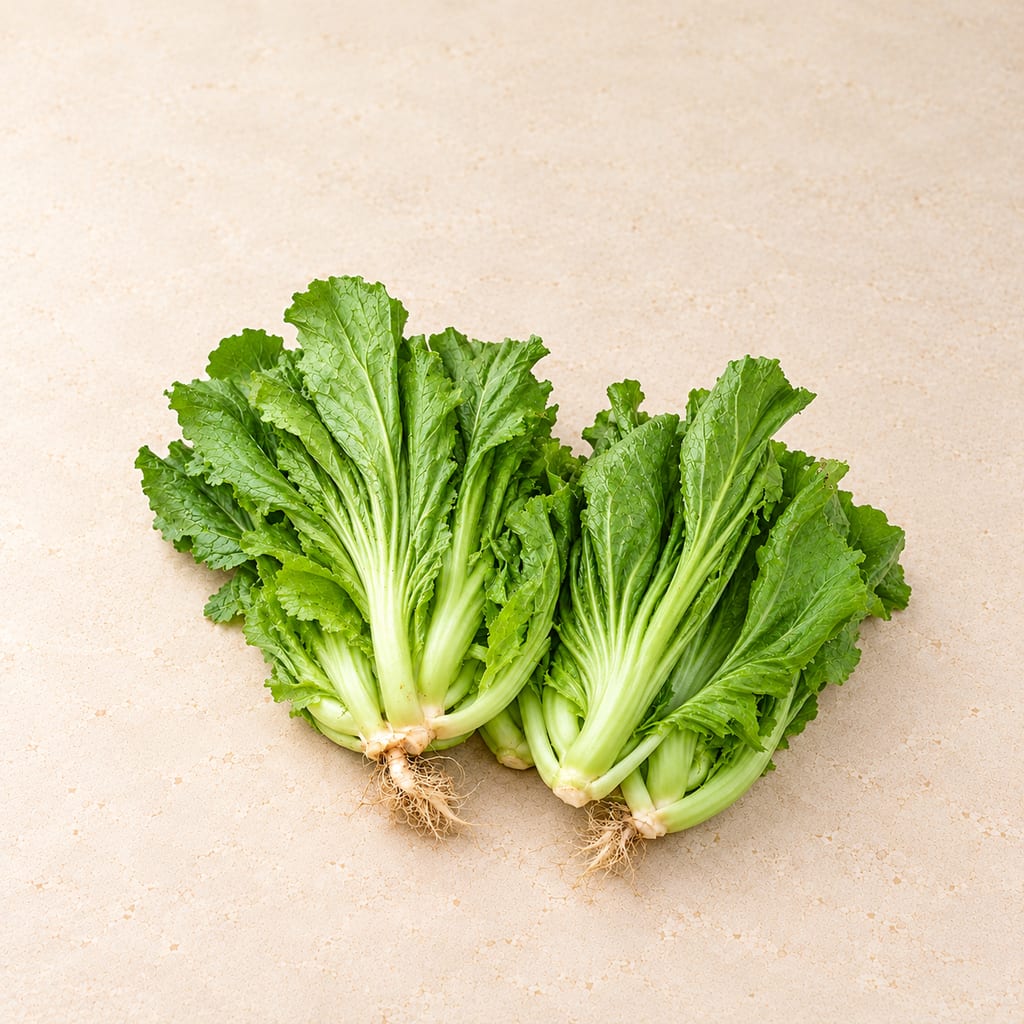
Mustard greens
The leaves of Brassica juncea, a hardy cool-season crop with a sharp, sulfurous bite, eaten fresh and cooked and fermented across Asia as pickled greens, kimchi and gundruk.
 FermenteaWhere food goes to change
Traditional method
Mustard greens
Pak-kaat-dorng is a Thai fermented mustard-green pickle, prepared here by dry-salting and kneading the wilted greens with cooked rice.
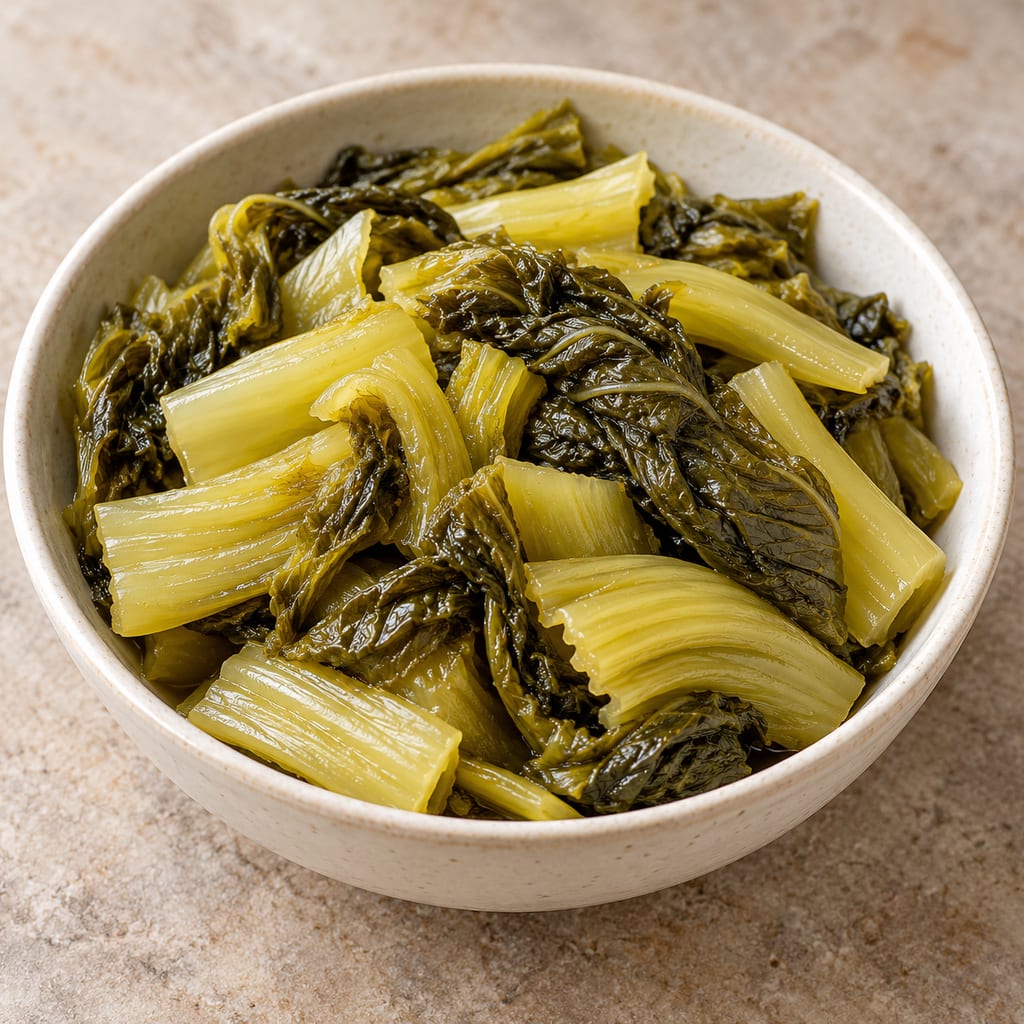
Pak-kaat-dorng, also romanized phak kat dong or pak gard dong, is a traditional Thai preserved mustard-green product.
Phak kat refers to mustard greens or related leafy brassicas, while dong indicates pickling or preservation.
The name covers several methods rather than one fixed formula.
The particular preparation documented here uses salt and a smaller reported percentage of cooked rice; the source does not identify the reference mass for either percentage.
The vegetable is washed, wilted in the sun, kneaded with salt and rice, packed tightly and held for several days.
The JIRCAS entry describes the result as salty and reports a one-year keeping period; that historical claim is not a validated modern shelf-life specification.
The main plant is mustard greens, Brassica juncea. Another documented ingredient is Chinese mustard identified in the traditional source as Brassica chinensis, a name associated with Brassica rapa subsp. chinensis in modern botanical treatments.
These plants are not chemically identical, and their leaf and stem structures vary.
The result is a yellowish-green preserved vegetable that can be eaten as a side dish or incorporated into soups and cooked meals.
Preserved mustard greens are widespread across southern China and Southeast Asia.
The Thai form belongs to a regional network of food technologies that use salt, vegetables and locally available carbohydrate sources to produce distinctive sour or salted ingredients.
The exact date of introduction or invention in Thailand is not established.
A formal record appears in the 1995 publication The Traditional Fermented Foods of Thailand, subsequently incorporated into a database maintained by the Japan International Research Center for Agricultural Sciences.
That record distinguishes two methods of pak-kaat-dorng: a high-salt preparation containing cooked rice and a wetter, sweeter preparation with palm sugar and rice-wash water.
These methods are both traditional, but their relative historical ages are not established.
The recorded method reports production in small-scale industries, demonstrating that the food exists beyond a purely domestic or ceremonial context.
Mustard preservation also makes agricultural sense.
Fresh leafy brassicas deteriorate relatively quickly after harvesting. Salt treatment and fermentation enable their use after the immediate fresh-market period.
The finished ingredient is particularly suitable for cooking because a small quantity can flavor a much larger dish.
Vegetable — Mustard greens or Chinese mustard
Salt — 8–10% by weight; the source does not state the reference mass
Cooked rice — 2%; the source does not state the reference mass
Fermentation — 5–10 days
Fermentation temperature — No numerical value supplied
Described taste — Predominantly salty
Historical keeping claim — Up to one year
The historical one-year keeping statement is not a validated modern shelf-life specification.
Mustard greens — As required; exact batch weight not given
Salt — the JIRCAS source reports 8–10% by weight but does not specify what mass that percentage is relative to.
Cooked rice — 2%; reference mass unspecified.
The recorded method does not provide a particular kilogram batch or a measured water addition for this method.
Unlike the second JIRCAS method, it does not specify palm sugar or rice-wash water.
The percentages should not be converted into a fabricated traditional batch weight.
For an actual controlled manufacturing batch, the basis of the rice percentage and the exact finished salt content would need to be confirmed.
Mustard greens provide the vegetable tissue, soluble carbohydrates, fiber and characteristic mustard flavor.
The thick stalks can retain useful texture after preservation.
The JIRCAS method reports salt at 8–10% by weight but leaves its reference mass unstated. Salt contributes to the strongly salty character reported for this product. The source does not provide a finished salt concentration.
The basis of the 8–10% figure is unspecified, so it cannot be compared quantitatively with salt percentages in other vegetable fermentations.
No exact salt mass can be calculated from the reported percentage alone.
High salt can suppress many microorganisms, including some lactic acid bacteria.
The source does not give enough measurement detail to compare this method's salt exposure or acidification rate with other formulations.
Cooked rice contributes starch and potentially smaller quantities of fermentable carbohydrate.
Heating rice gelatinizes starch, making it more accessible to enzymatic breakdown.
However, adding cooked rice does not automatically provide the microorganisms or enzymes necessary to convert every starch molecule into sugar.
The microbial and enzymatic environment determines what transformations occur.
The recorded method does not specify the rice variety, cooking-water ratio or degree of cooking.
Those details remain unresolved.
The traditional process requires washing facilities, a clean drying surface, a mixing container and a food-grade vessel that can be closed.
The recorded method does not specify a particular jar volume, fermentation weight or construction material.
A modern demonstration should use clean, non-reactive, food-grade equipment and accommodate any gas production safely.
Sun-wilting must also be protected from dirt, animals and insects.
1. Select the mustard greens.
Choose sound leaves and stalks.
Remove defective leaves and obviously damaged portions.
Use only suitable edible varieties of mustard greens or the recorded Chinese mustard.
2. Wash the vegetables.
Remove soil and grit, paying particular attention to the junctions between the thick stalks and leaves.
Allow surface water to drain before wilting.
The original record does not prescribe a number of washing cycles.
3. Wilt in sunlight.
Spread the vegetables in sunlight for one day, or until visibly wilted.
The purpose is to reduce turgor and make the vegetables sufficiently flexible for kneading and close packing.
The recorded method does not give a required percentage weight loss or a solar exposure temperature.
4. Prepare the rice.
Use cooked rice as the traditional carbohydrate addition.
The recorded method gives 2% cooked rice but does not state the reference mass, rice variety or a precise cooking procedure.
Allow cooked rice to cool appropriately before combining with vegetables.
5. Apply the salt.
The recorded method gives 8–10% salt by weight but does not specify its reference mass. That ambiguity must remain explicit rather than being converted into a salt amount relative to the greens.
Work the salt across leaves and thick stems rather than leaving it in isolated pockets.
Kneading damages some surface cells and assists release of vegetable moisture.
6. Add the cooked rice.
Incorporate the 2% cooked-rice addition; its reference mass is unspecified.
Mix thoroughly so that the rice is not present only in a single concentrated layer.
7. Pack firmly.
Transfer the mixture into a suitable container.
Compress the vegetables, minimizing large spaces where air may remain.
The recorded method does not give a target packing density or a separate added-brine volume.
8. Close the vessel.
Cover using an appropriate food-safe arrangement.
The historical method specifies closing the lid but does not describe pressure control.
A modern fermenting vessel must safely manage any gas production.
9. Hold for fermentation.
The documented period is 5–10 days.
No numerical fermentation temperature or acidity endpoint is supplied.
For actual production, this schedule requires validation rather than use as an unconditional safety guarantee.
10. Use in cooking or suitable storage.
The finished product is described as salty.
It may be washed, soaked or cooked according to the intended dish.
No validated refrigerated shelf life or packaging specification is given.
Salt reduces water availability by dissolving in the moisture released from the mustard greens.
Microorganisms need available water to maintain metabolism and grow.
High concentrations of dissolved salt can interfere with their osmotic balance and enzyme activity.
Different microorganisms tolerate salt differently.
Some lactic acid bacteria can continue to grow in salted vegetables, while many spoilage organisms are inhibited.
The 8–10% by-weight salt figure has no reference mass stated here. It does not establish the salt concentration throughout the vegetables or in the finished product.
The result depends on how thoroughly salt is distributed, the extent of wilting, the amount of moisture released and the time allowed for equilibration.
The source gives no vegetable batch mass for this method.
For these reasons, neither percentage independently establishes a finished salt concentration or final water activity.
The product's reported predominantly salty taste is consistent with this technological distinction.
The JIRCAS entry records several organisms associated with pak-kaat-dorng as a broader product family.
These include Lactobacillus brevis, Lactobacillus plantarum, organisms historically described as Pediococcus cerevisiae, and yeasts from Pichia and Debaryomyces.
Modern taxonomy often uses Levilactobacillus brevis and Lactiplantibacillus plantarum for the first two bacterial species.
These microorganisms have different physiological capabilities.
Lactic acid bacteria can metabolize sugars into organic acids.
Some are heterofermentative and can also produce carbon dioxide and other products.
Yeasts may contribute aroma compounds or metabolize available carbohydrates and organic acids.
The database does not demonstrate that all listed microorganisms occur in every batch or that they are all dominant in the dry-salted method.
The method-specific microbial succession for this reported salt and rice formulation remains insufficiently characterized in the available source.
Cooked rice introduces material rich in gelatinized starch.
Starch cannot necessarily be fermented directly by every lactic acid bacterium.
It must first be hydrolyzed into smaller carbohydrates.
Some microorganisms or naturally occurring enzymes may be capable of that breakdown.
Once sugars become available, acid-producing organisms may utilize them.
The 2% cooked-rice figure has no stated reference mass, so it cannot be compared quantitatively with the vegetables or salt.
It should not be assumed to overpower the effects of high salt or guarantee a particular acidification rate.
The recorded method does not give a measured pH trajectory for this exact method.
It is therefore inappropriate to invent a claim that the product always reaches a particular acidity by the fifth day.
Fresh mustard greens contain large amounts of water.
Their leaves can be bulky, and the stems may resist compact packing.
Wilting reduces internal turgor pressure and allows tissues to bend more easily.
The vegetables can be kneaded without the same degree of brittle snapping.
Wilting also reduces some free moisture before salt is introduced.
This changes the physical composition of the batch.
However, sunlight itself does not guarantee microbial safety.
Direct sun can expose vegetables to insects, dust, animals and fluctuating surface temperatures.
The historical one-day instruction needs to be understood alongside the environmental conditions in which the technique was practiced.
The closest variant is the sweet rice-wash method in record veg-0016.
That version uses a substantial liquid brine containing palm sugar and rice-wash water, and its sourness is much more prominent.
A further Thai method, recorded as pak-gard-dong, begins with a smaller salt addition, drains off the resulting salty liquid and adds sugar before the main fermentation.
That variation is covered in record veg-0017.
These three methods share mustard greens but differ in the timing and concentration of salt, the use of carbohydrate and the management of free liquid.
The differences are important enough to preserve as separate source-linked recipe records.
Pak-kaat-dorng can be used as a side dish with rice.
It also appears in soups, particularly preparations combining preserved mustard greens with pork ribs.
The vegetable supplies saltiness and a sour or preserved flavor to the cooking liquid.
Where the finished product is particularly salty, washing or soaking can moderate its flavor before use.
The amount of rinsing changes the resulting dish and should be considered before adding other salty seasonings.
Thai pickled mustard greens also appear in dishes such as khao soi and alongside rich braised meats.
These contemporary uses involve the wider category of pak-kaat-dorng; they cannot all be assigned specifically to the high-salt rice method.
The documented finished product is yellowish-green and predominantly salty.
Some acidity may develop depending on the fermentation.
The vegetables should remain recognizable and free from obvious contamination.
The recorded method does not provide a final pH, measured water activity, microbial count or moisture content.
Visible mold growth, putrefaction, unexpected slime or animal contamination are undesirable.
A strong salty flavor does not prove that pathogens are absent.
Likewise, a firmly packed jar does not demonstrate that the entire vegetable mass is microbiologically stable.
The JIRCAS entry describes both methods under Pak-kaat-dorng. The dry method kneads wilted greens with salt and cooked rice, then packs and ferments; the other method covers the greens with a liquid brine containing palm sugar and rice-wash water.
JIRCAS reports that the product made using this method could be kept for one year.
That is a historical keeping claim. It should not be converted into a guaranteed ambient expiry date.
Actual storage safety depends on final salt distribution, water activity, acidity, packaging and microbial contamination.
The methods share the named product but differ in liquid, ingredients, packing and fermentation time. They remain separate source-linked preparations.
The JIRCAS entry does not report pH measurements for this preparation.
For commercial production, the method requires its own process validation.
The source gives a salt percentage without stating its reference mass. Rinsing before cooking may reduce the amount consumed but cannot be assumed to remove a fixed percentage.
A Japan International Research Center for Agricultural Sciences survey records this traditional dry-salt and rice method for Thai fermented mustard greens.
Scaling: source batch only
Poor brine coverage or inadequate acidity monitoring can allow spoilage; recipe-specific validated limits are not established.
Hazard sourceUse clean food-grade equipment, keep produce submerged and monitor acidity; no universal endpoint is supplied for this recipe.
Control sourceThe source supports this broad area and no precise location.
The leaves of Brassica juncea, a hardy cool-season crop with a sharp, sulfurous bite, eaten fresh and cooked and fermented across Asia as pickled greens, kimchi and gundruk.
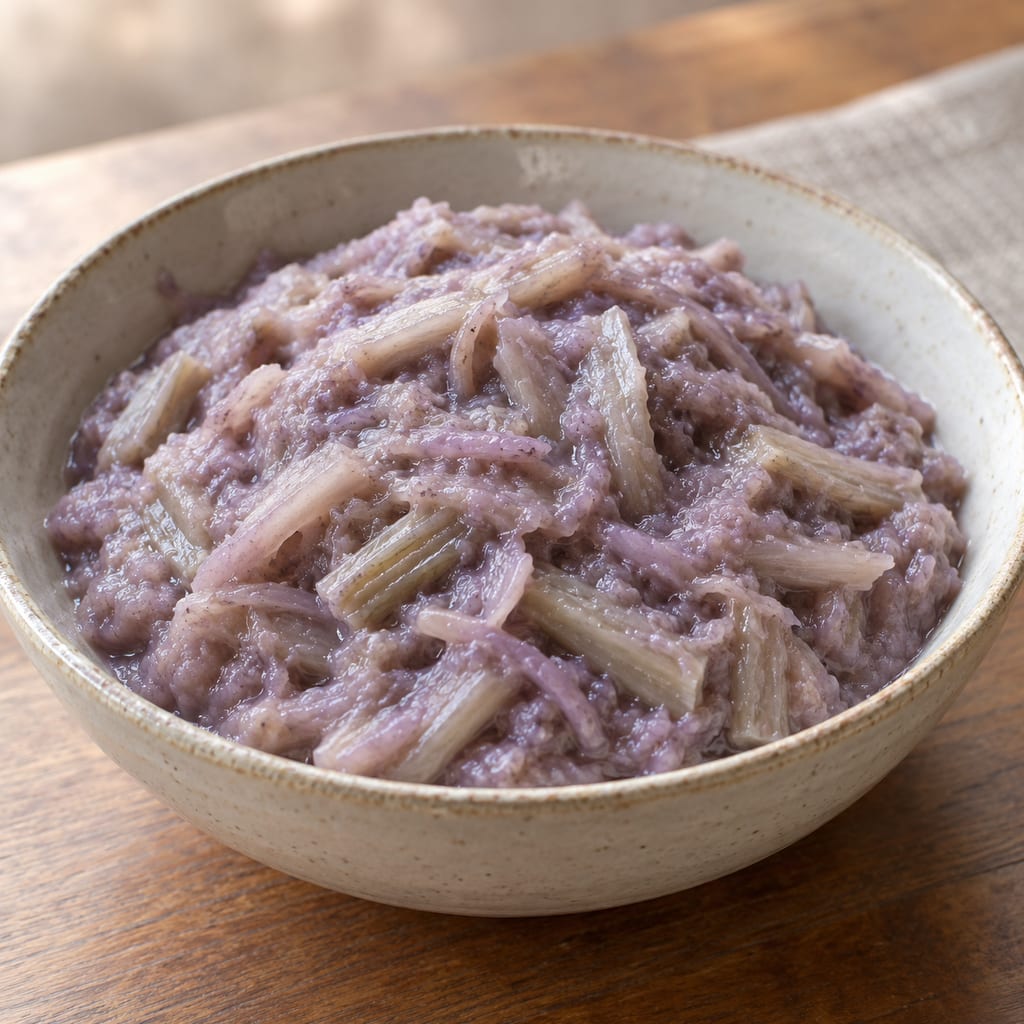
Thai pickle of young taro leaf stalks, salted, kneaded and held in rice-washing water in an earthen jar at room temperature. JIRCAS records it as a home-level product with no validated endpoint.
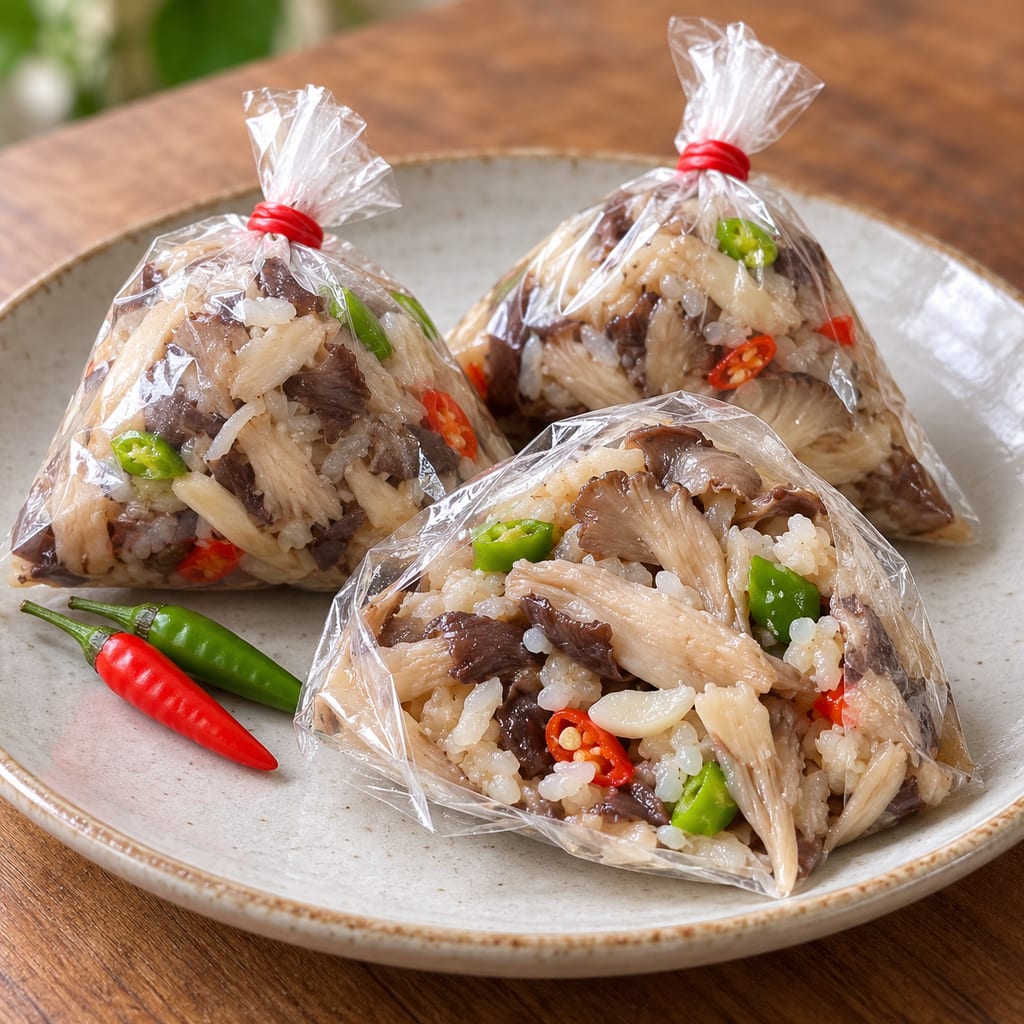
A Thai sour mushroom preparation: shredded steamed oyster mushrooms, cooked rice, garlic and salt packed into small parcels and soured by lactic acid bacteria over a few days.
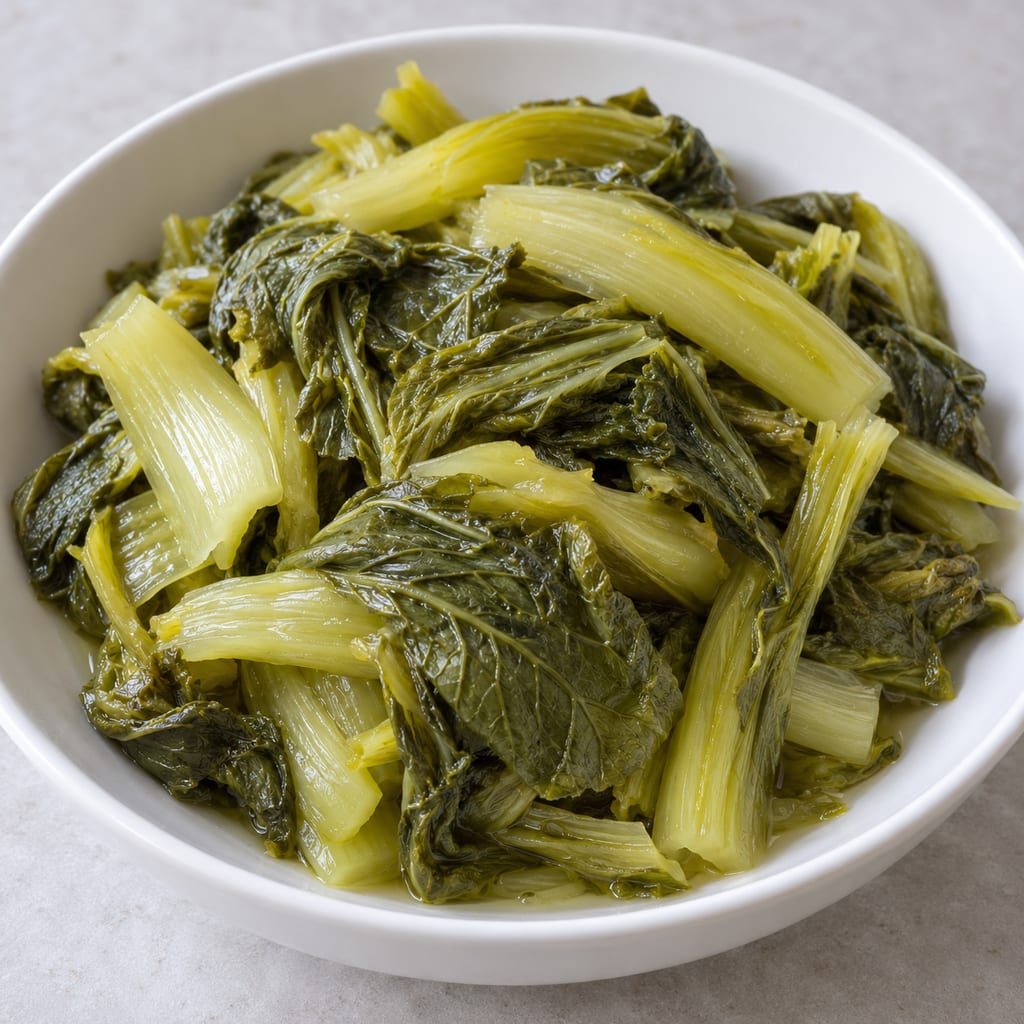
Pak-gard-dong is a Thai mustard-green pickle salted first and drained, then fermented with sugar added to the drained greens.
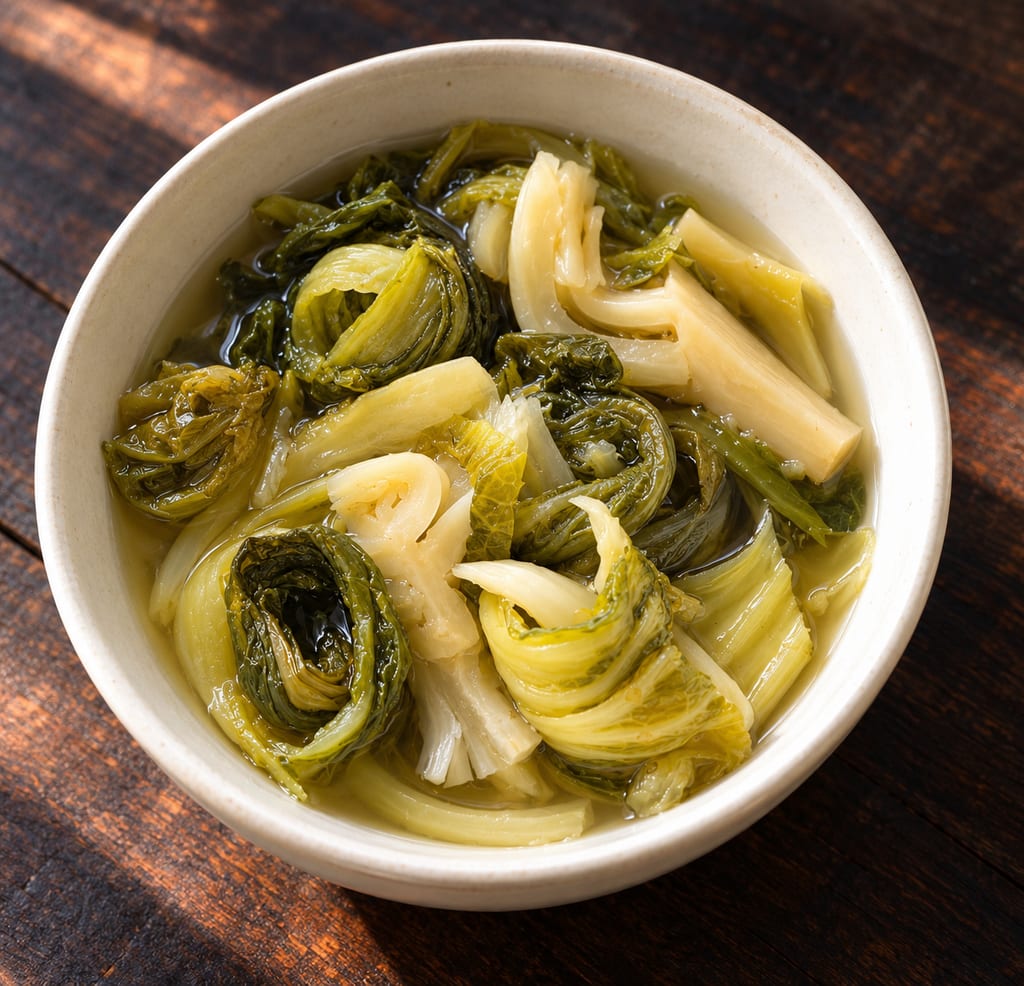
Thai sweet mustard greens wilted in sun, packed in earthenware under a salt and palm-sugar brine with rice-wash water, then sunned three to five days.
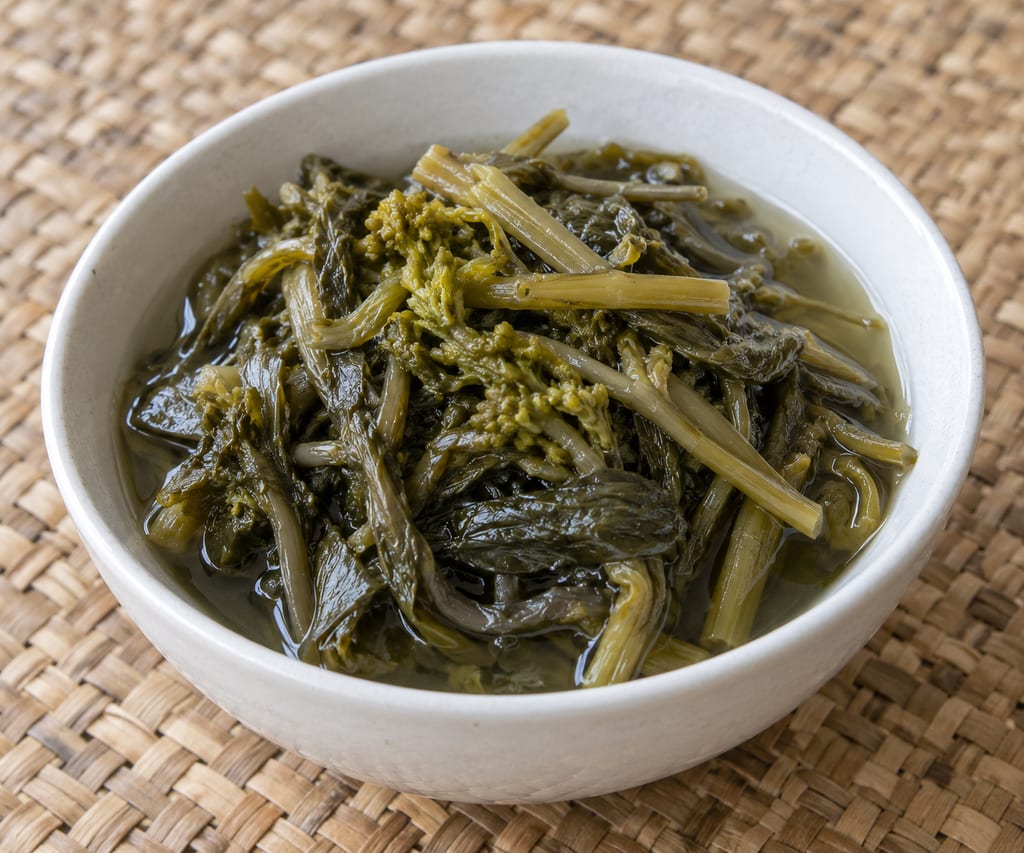
Young spider-flower greens packed with salt and cooked rice and left to sour for a few days; a Thai leafy-vegetable ferment eaten as a sharp side dish.
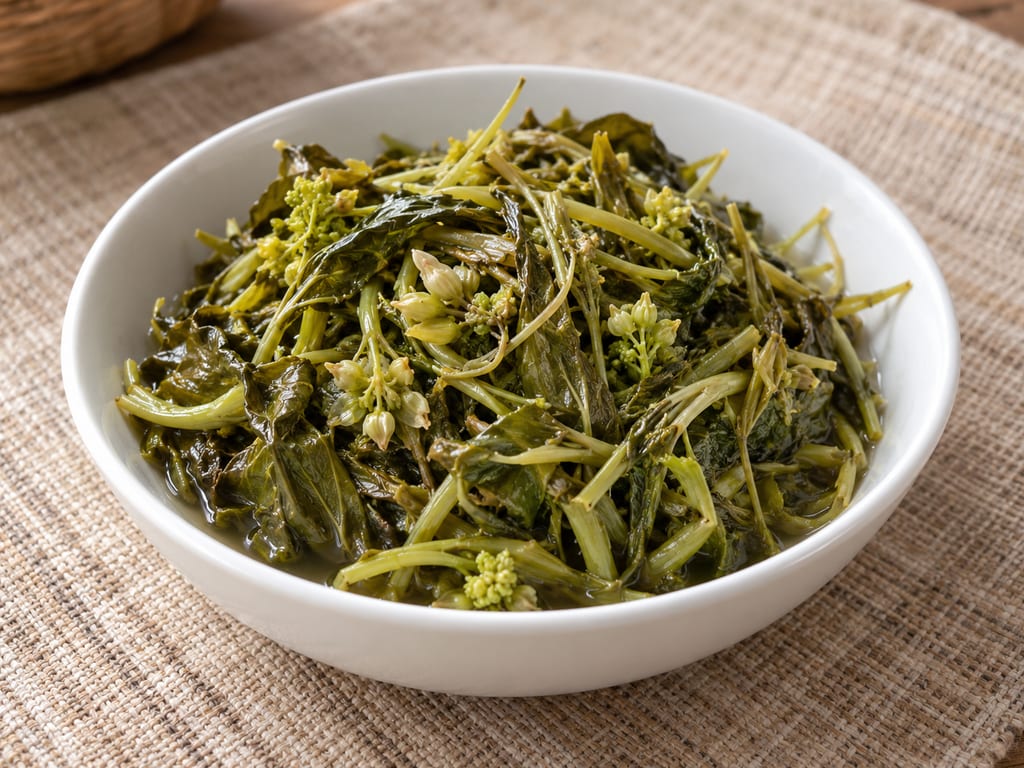
Phak sian dong is a Thai pickle of spider-plant tips and flowers (Cleome gynandra), salted and packed with cooked rice. Northeastern Thai and Lao Khrang accounts give different methods.
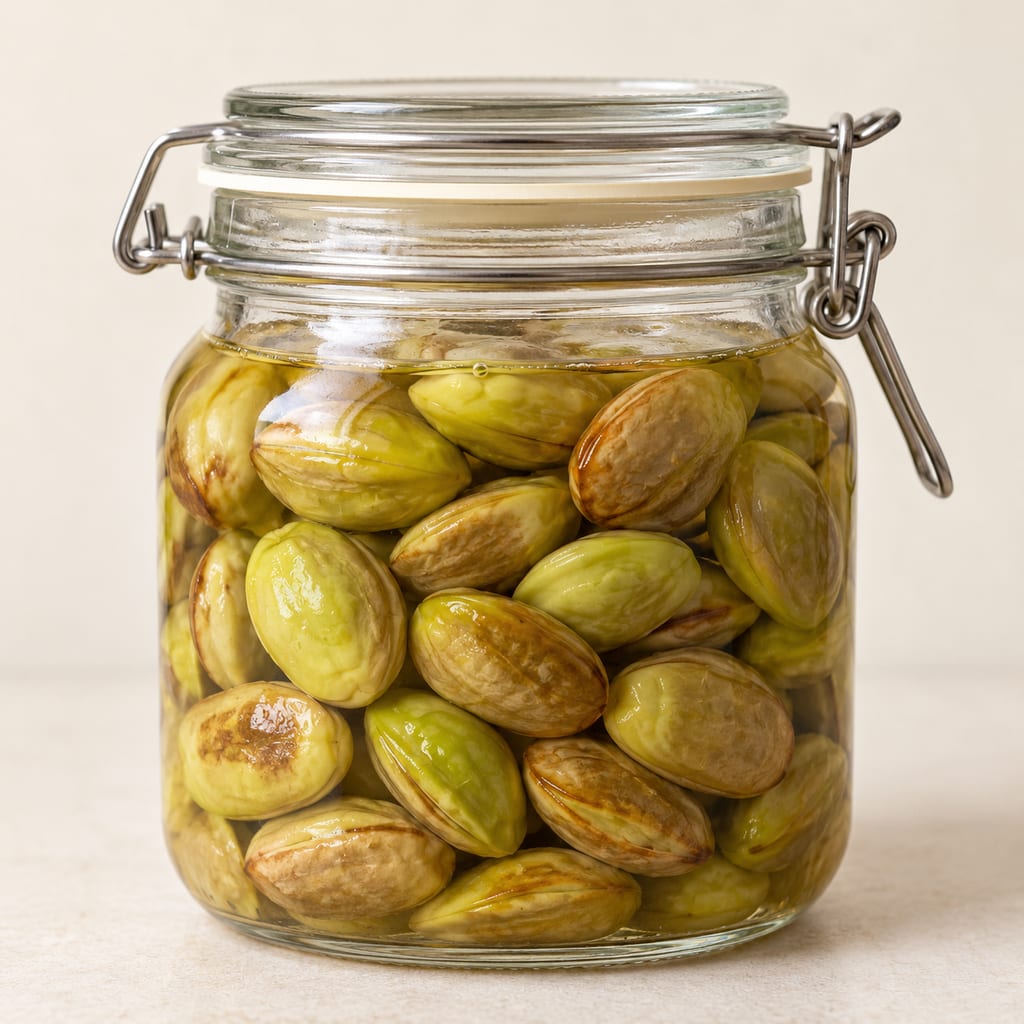
Thai pickle of stink bean seeds, Parkia speciosa, with the testa left on, held in a 10 percent salt brine in a glass jar in shade. JIRCAS records a three to four day ferment and a separate seven day flavour note.
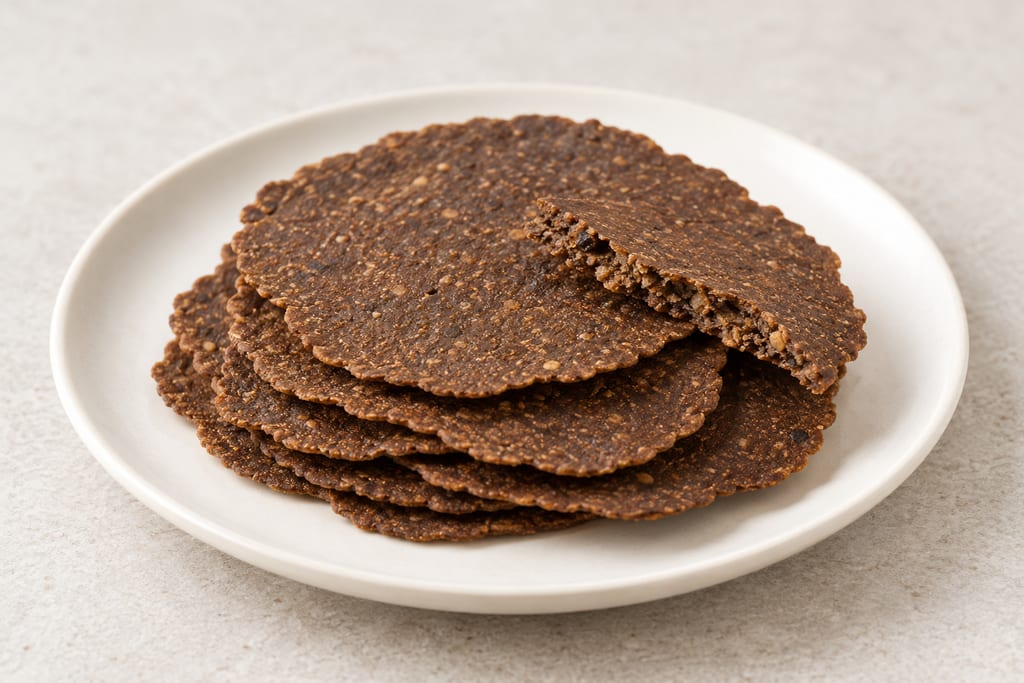
Black soybeans cooked, inoculated with a named Bacillus subtilis culture and fermented warm and humid into northern Thailand's thua nao, then optionally dried into thin discs.
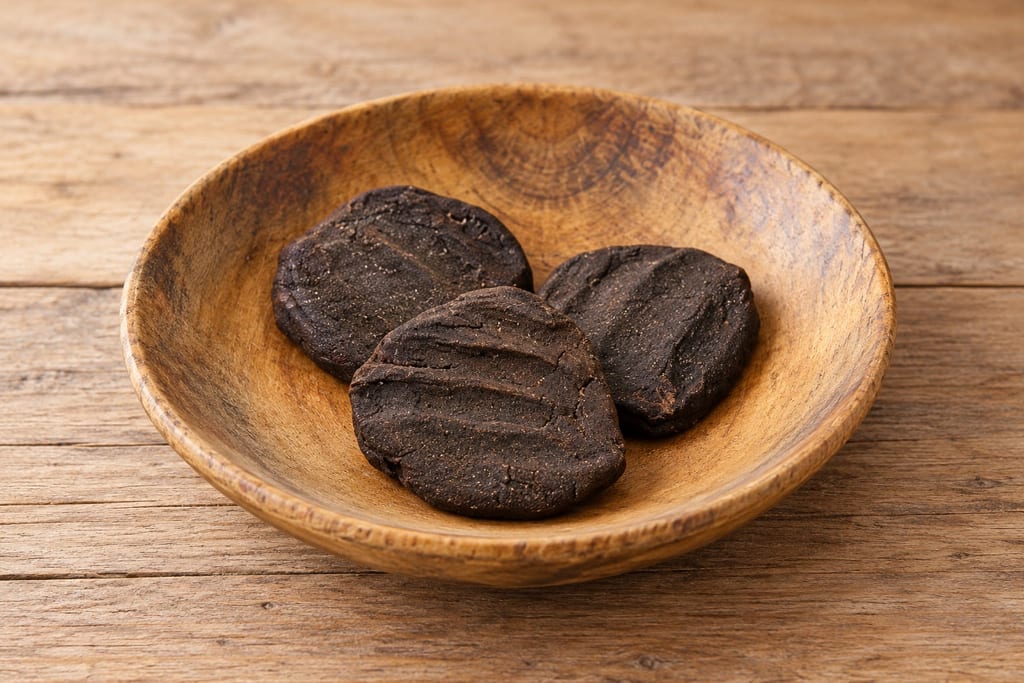
Dried cakes of pounded taro leaves from the Ao Naga in Nagaland, yellowed in a bag, then dried by hot ash or sun and used to flavour meat dishes.
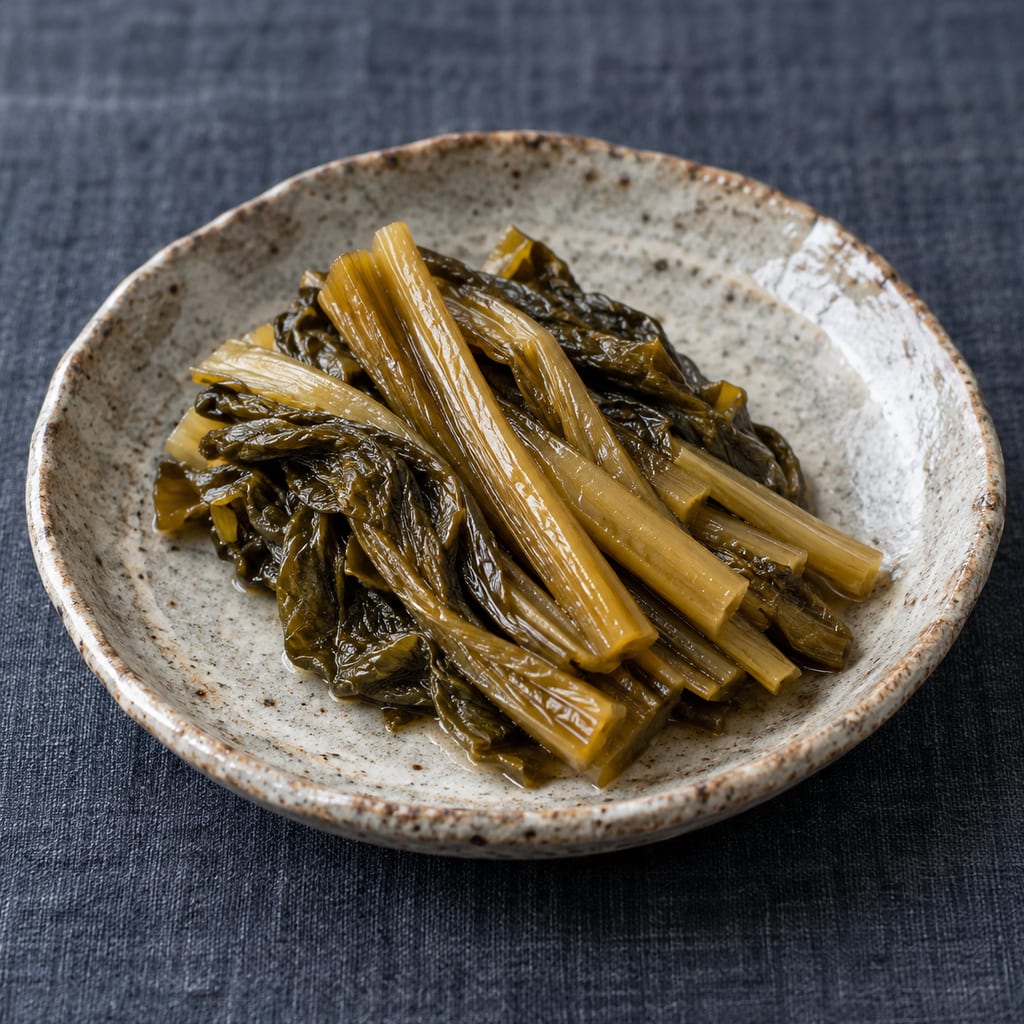
Takana mustard greens from Aso in Kumamoto are salted and pressed into a fresh spring pickle, or aged into a sour furuzuke that is fried and mixed into takana rice.
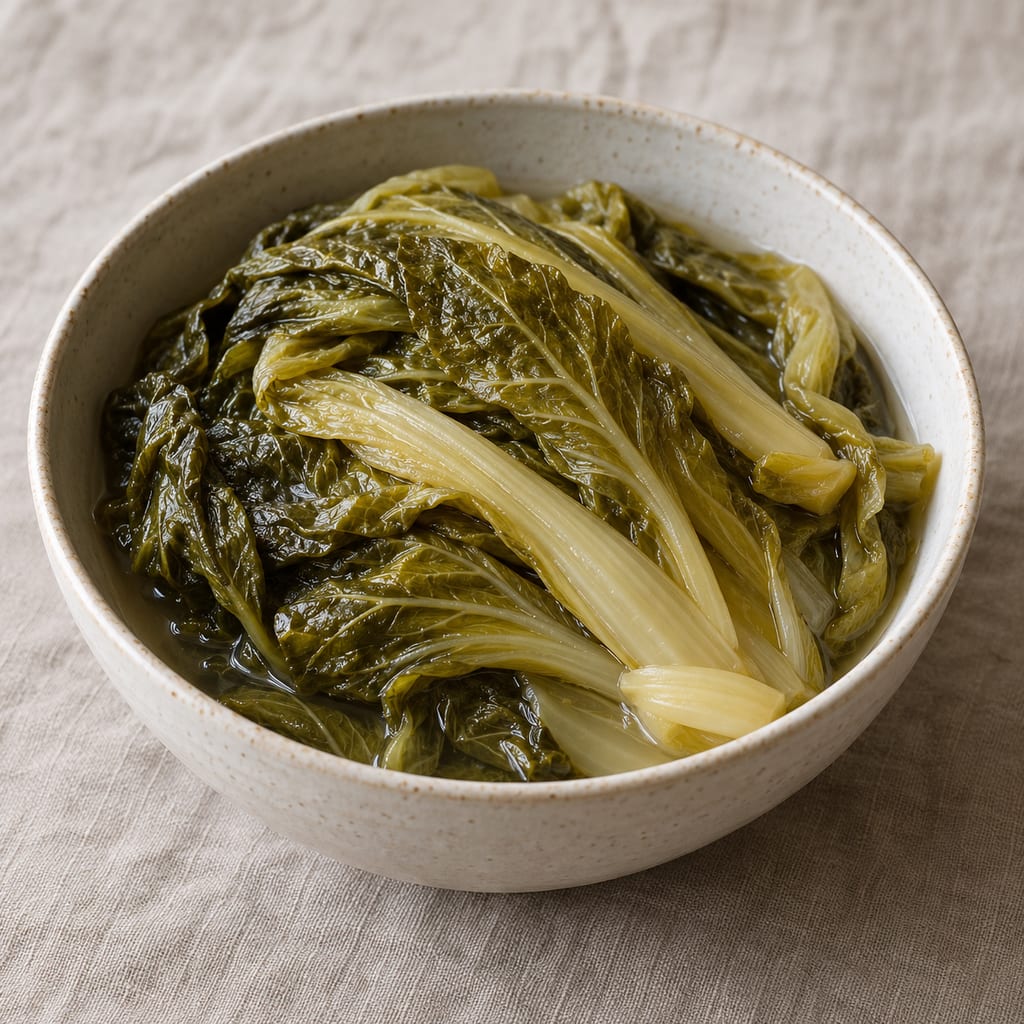
Wilted flat mustard leaves ferment with rice water and salt as a Filipino appetizer and cooking ingredient.
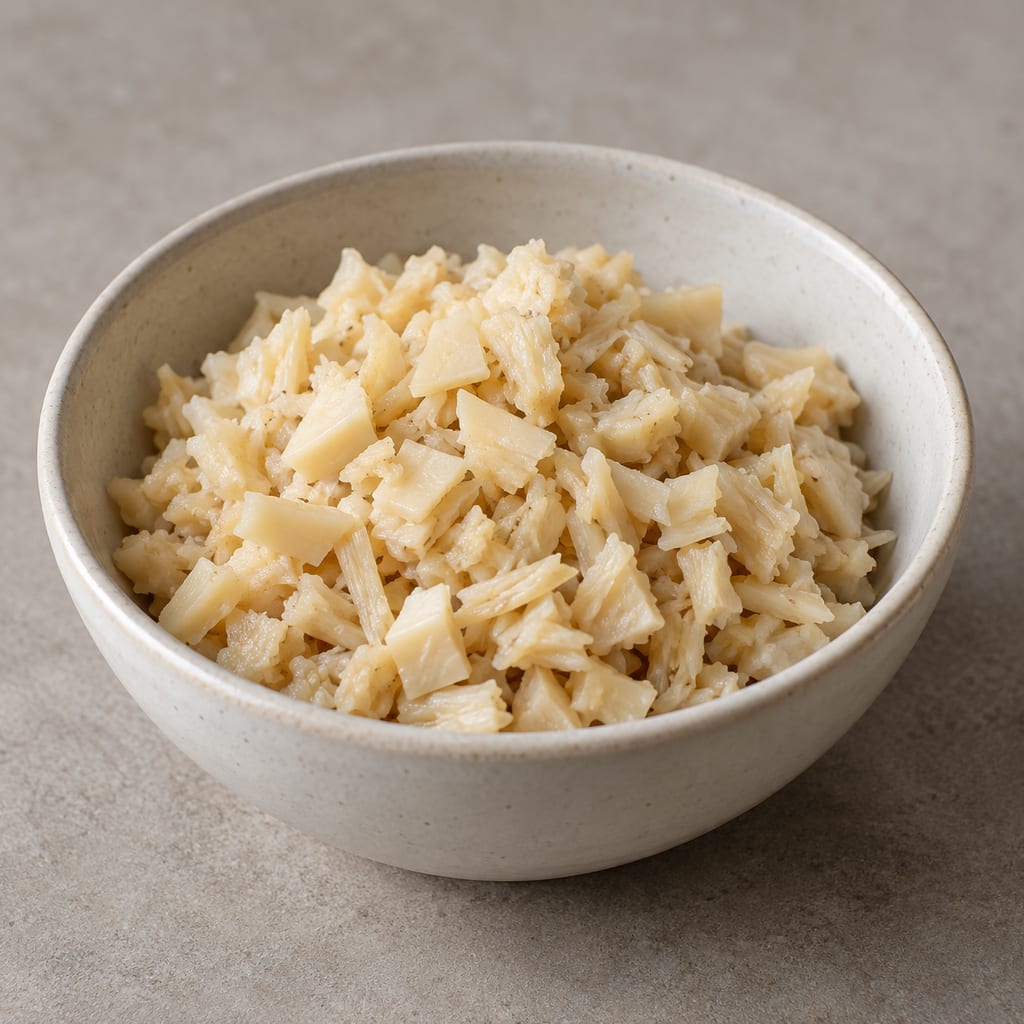
Finely chopped young bamboo shoots packed in leaf-lined baskets, sealed in a forest pit and weighted for one to three months, from Arunachal Pradesh.

Pit-fermented bamboo shoots from Arunachal Pradesh, cut smaller and sun-dried for five to ten days, used in curries.
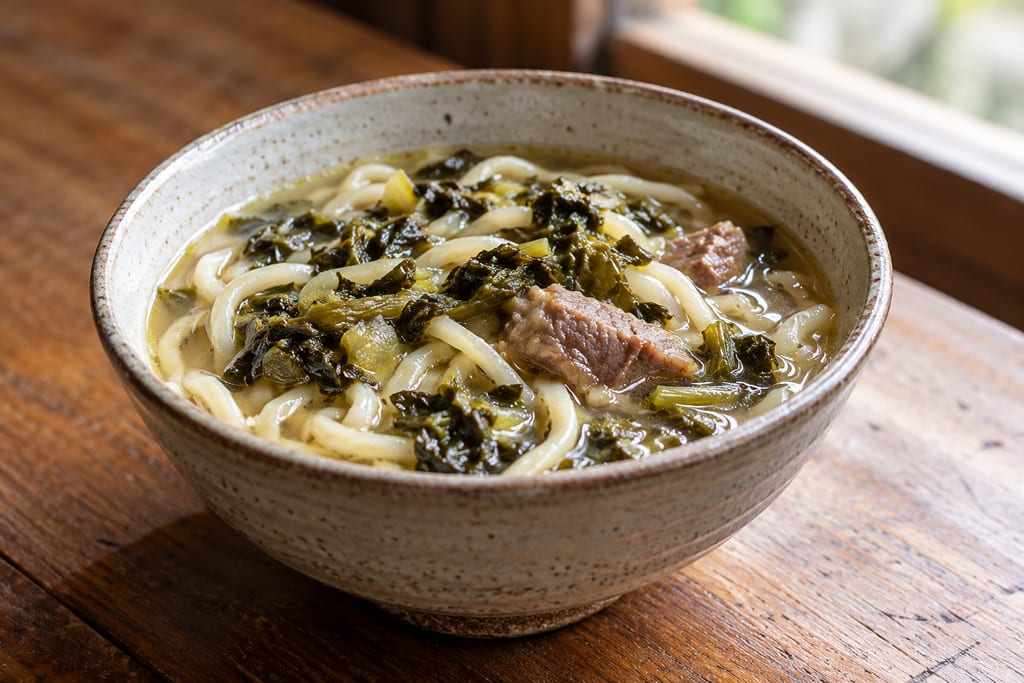
Goyang is a Sherpa fermented wild leafy food of the Darjeeling hills and Sikkim. Rainy-season magane-saag leaves are packed in a bamboo basket, held at room temperature for about a month, then eaten fresh or dried and used in soup.
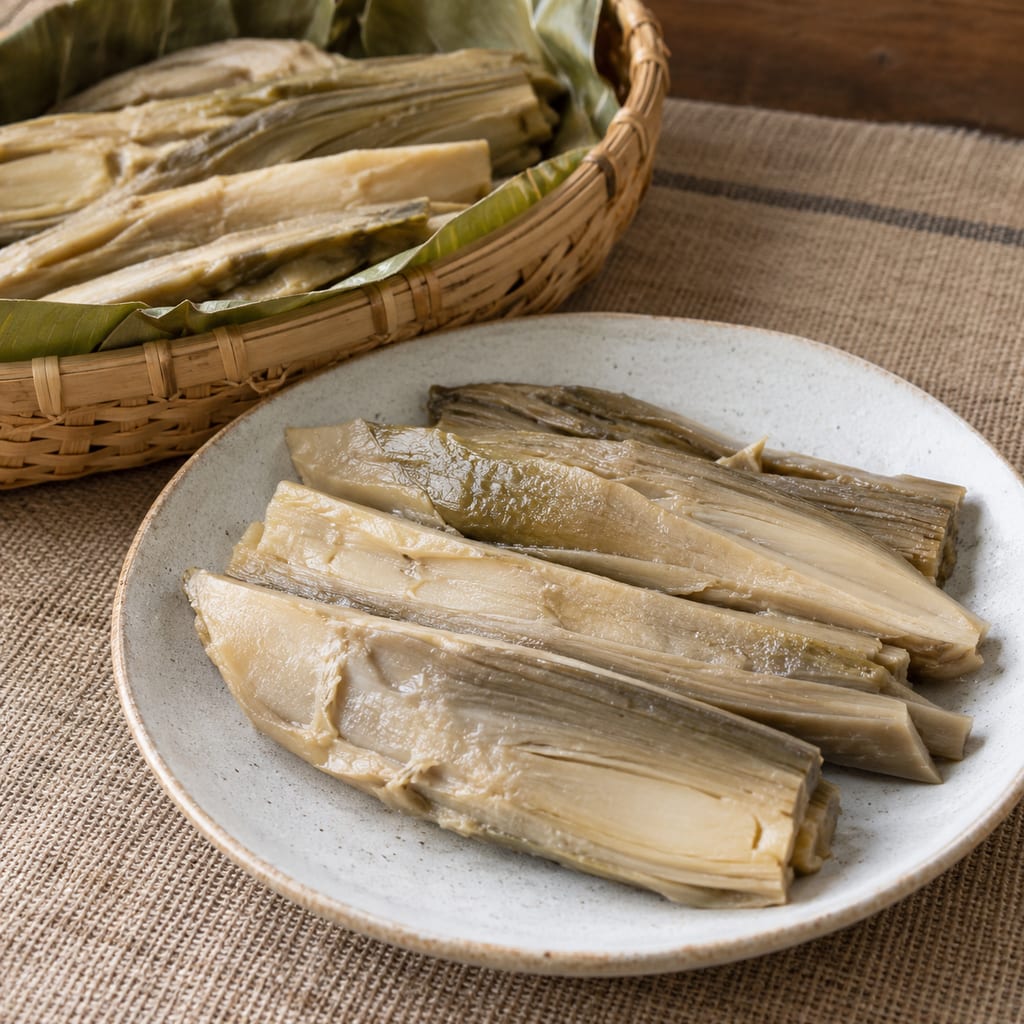
Upper tender bamboo-shoot tips, split or flattened, pit-fermented one to three months in Arunachal Pradesh and eaten in curries.
The original Polish barszcz: young hogweed leaves soured in warm water for a few days, then boiled into soup with egg, butter, cream or millet. Recorded from 1595, with warnings about the sap and lookalikes.
No community contributions have been published for this entry yet.
Sign in to contribute. Published comments and photos are free to read.
JIRCASInspiration
Pak-kaat-dorngJIRCAS documents a dry method: wilt greens, knead with salt reported as 8–10% by weight and 2% boiled rice (neither percentage's reference mass is stated), pack, close and ferment for 5–10 days.
Cited in: A salty form of Thai preserved mustard greens; History and traditional context; Recipe overview; Ingredients; Ingredient functions; Equipment; Method; Regional relationships and variations; How it is eaten; Safety and storage
University of Minnesota ExtensionSafety
Preserving food at home: FermentationProduce fermentation equipment, acidity monitoring and submersion controls.
Cited in: Recipe overview; Ingredients; Ingredient functions; Equipment; Method; Regional relationships and variations; How it is eaten; Recognizing a satisfactory result; Safety and storage
Surya (2024)Reference
Surya (2024) — Fermented Foods of Southeast Asia Other Than Soybean- or Seafood-Based OnesRegional context and processing science. Springer Nature Link
Cited in: Recipe overview; Ingredients; Ingredient functions; Equipment; Method; Salt in vegetable preservation; Which microorganisms are involved?; Why the rice addition matters; Why wilting is important; Regional relationships and variations; How it is eaten; Safety and storage
Aroy Mak MakReference
Aroy Mak Mak — Pickled Mustard Greens in Thai CookingContemporary culinary uses. Aroy Mak Mak
Cited in: Recipe overview; Ingredients; Ingredient functions; Equipment; Method; Regional relationships and variations; How it is eaten; Safety and storage