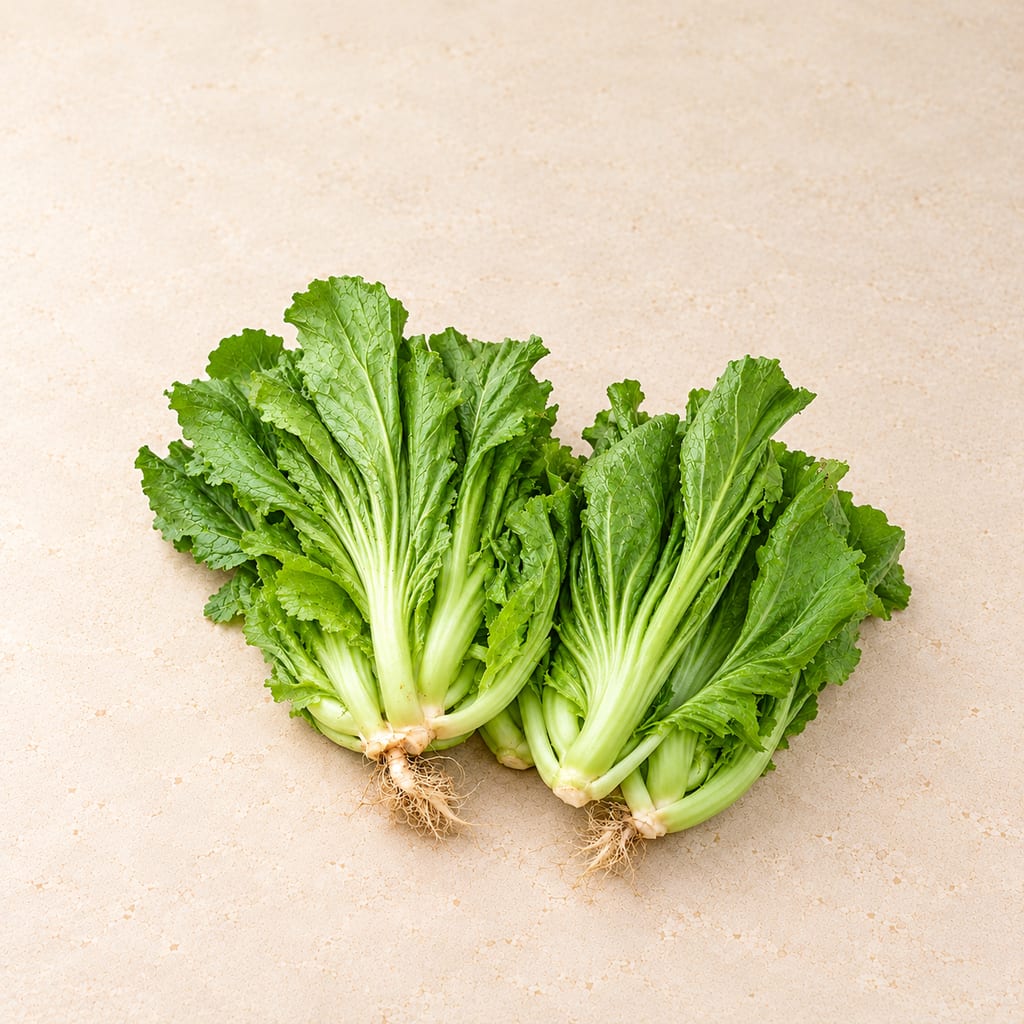
Mustard greens
The leaves of Brassica juncea, a hardy cool-season crop with a sharp, sulfurous bite, eaten fresh and cooked and fermented across Asia as pickled greens, kimchi and gundruk.
 FermenteaWhere food goes to change
Traditional method
Gundruk
Wilted and shredded Brassica rapa rayo-sag leaves, packed under warm water in earthenware, fermented five to seven days, then sun-dried as Nepali gundruk.
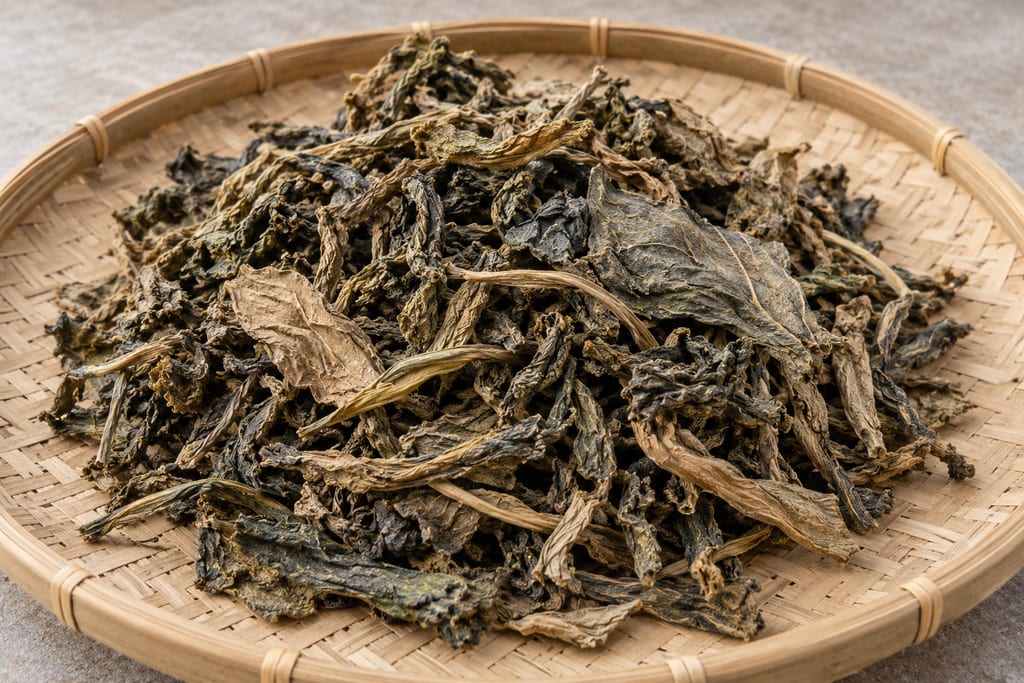
A Nepal food-science chapter lists rayo-sag as a gundruk substrate; FAO documents the general leafy-gundruk process. The selected instructions use FAO’s described earthenware-pot method; a different Nepal chapter describes pit and packaging variants that are not combined here.
Scaling: source batch only
Poor brine coverage or inadequate acidity monitoring can allow spoilage; recipe-specific validated limits are not established.
Hazard sourceUse clean food-grade equipment, keep produce submerged and monitor acidity; no universal endpoint is supplied for this recipe.
Control sourceThe cited FAO pot method does not give post-drying packaging, storage conditions or a storage life; this record does not imply shelf stability.
FAO identifies gundruk production in Nepal; the Nepal food-science chapter supports the substrate named for this variation. No precise location is recorded.
The leaves of Brassica juncea, a hardy cool-season crop with a sharp, sulfurous bite, eaten fresh and cooked and fermented across Asia as pickled greens, kimchi and gundruk.
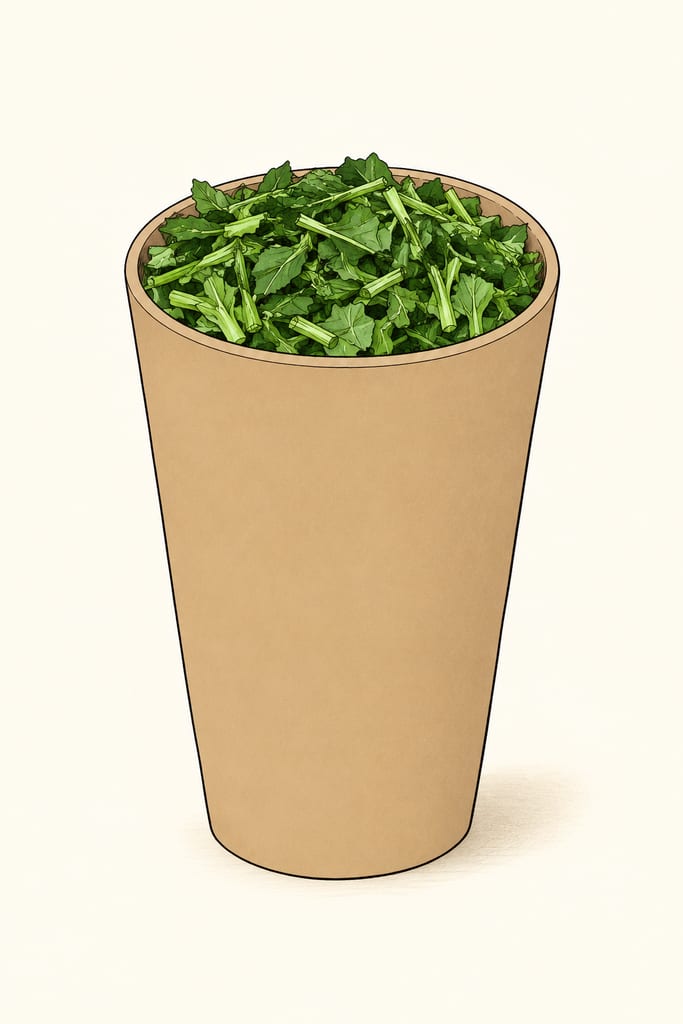
Gundruk pots and dhungro are fermentation containers documented in Nepal and one Darjeeling household. FAO describes earthenware; a 2024 figure identifies a bamboo-made airtight dhungro buried in a pit within a cow-dung heap.
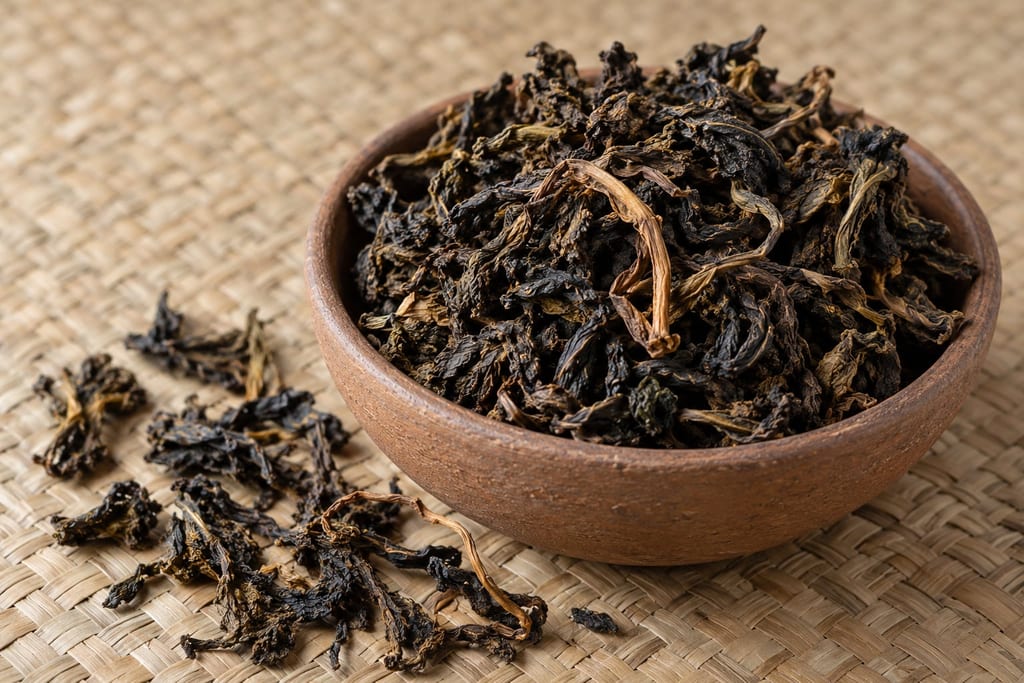
Mustard leaves wilted, bruised and packed tight into an earthenware vessel to sour without salt, then sun-dried into dark tangled pieces that carry Himalayan meals through the year.
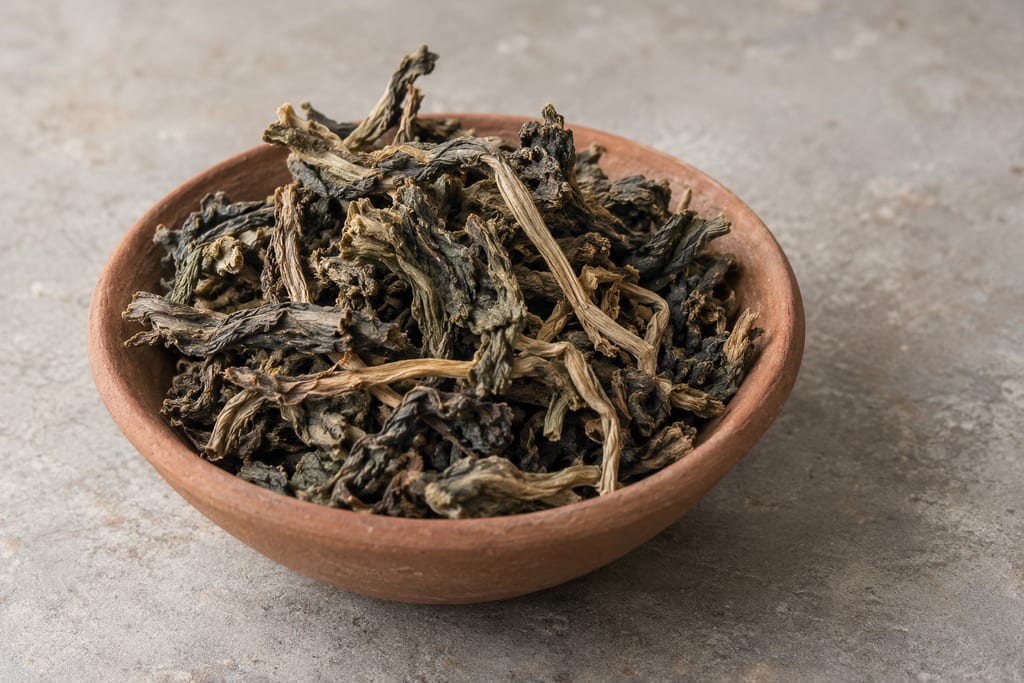
Radish greens wilted, packed into an earthen pot with warm water and fermented without salt, then sun-dried into Nepal's dark, sour gundruk.
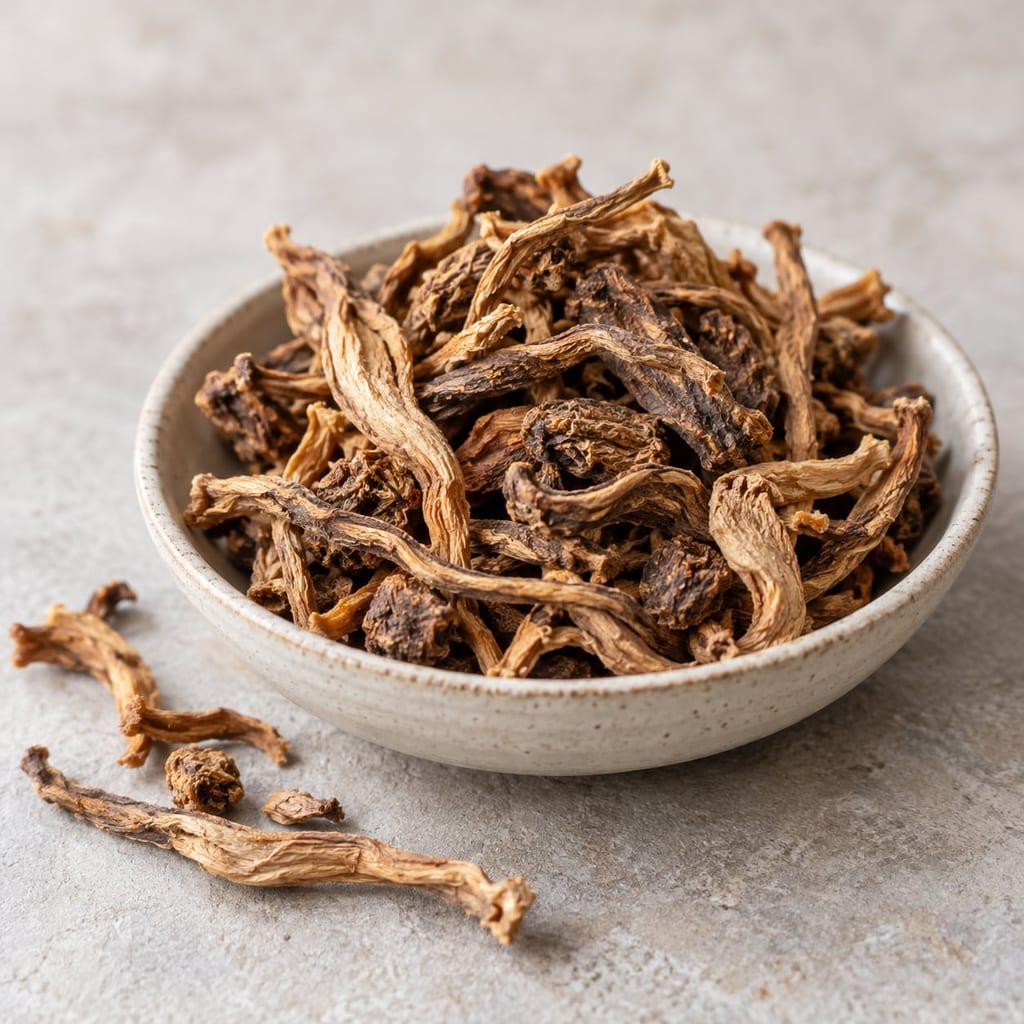
Sinki is a salt-free, fermented radish-taproot product dried after fermentation. Published jar and pit accounts use different conditions; neither supplies a validated home-preservation endpoint.
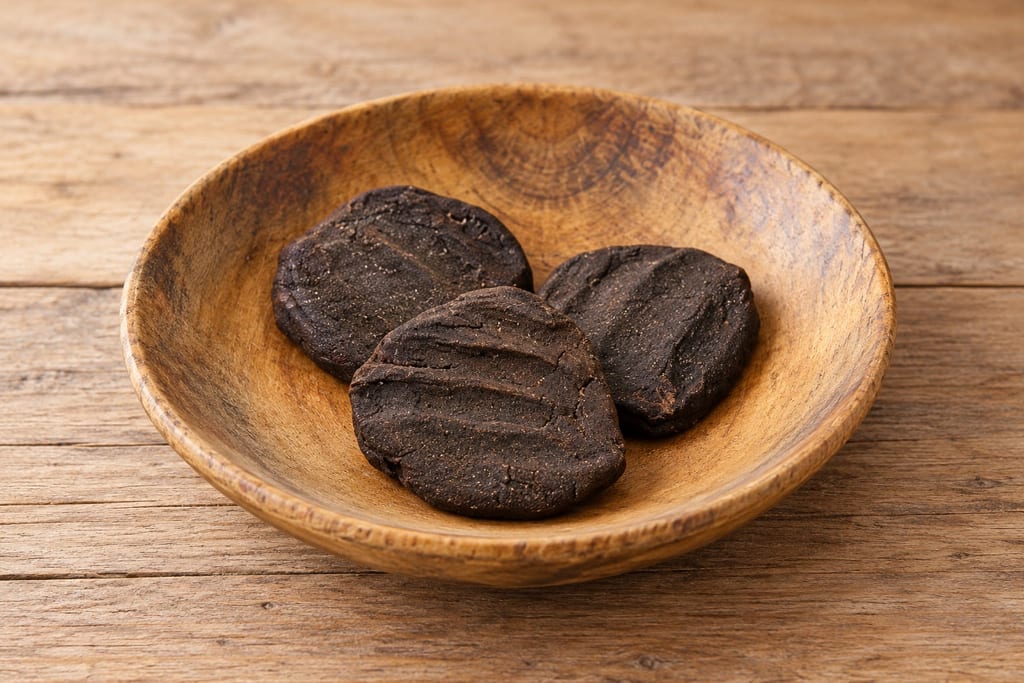
Dried cakes of pounded taro leaves from the Ao Naga in Nagaland, yellowed in a bag, then dried by hot ash or sun and used to flavour meat dishes.
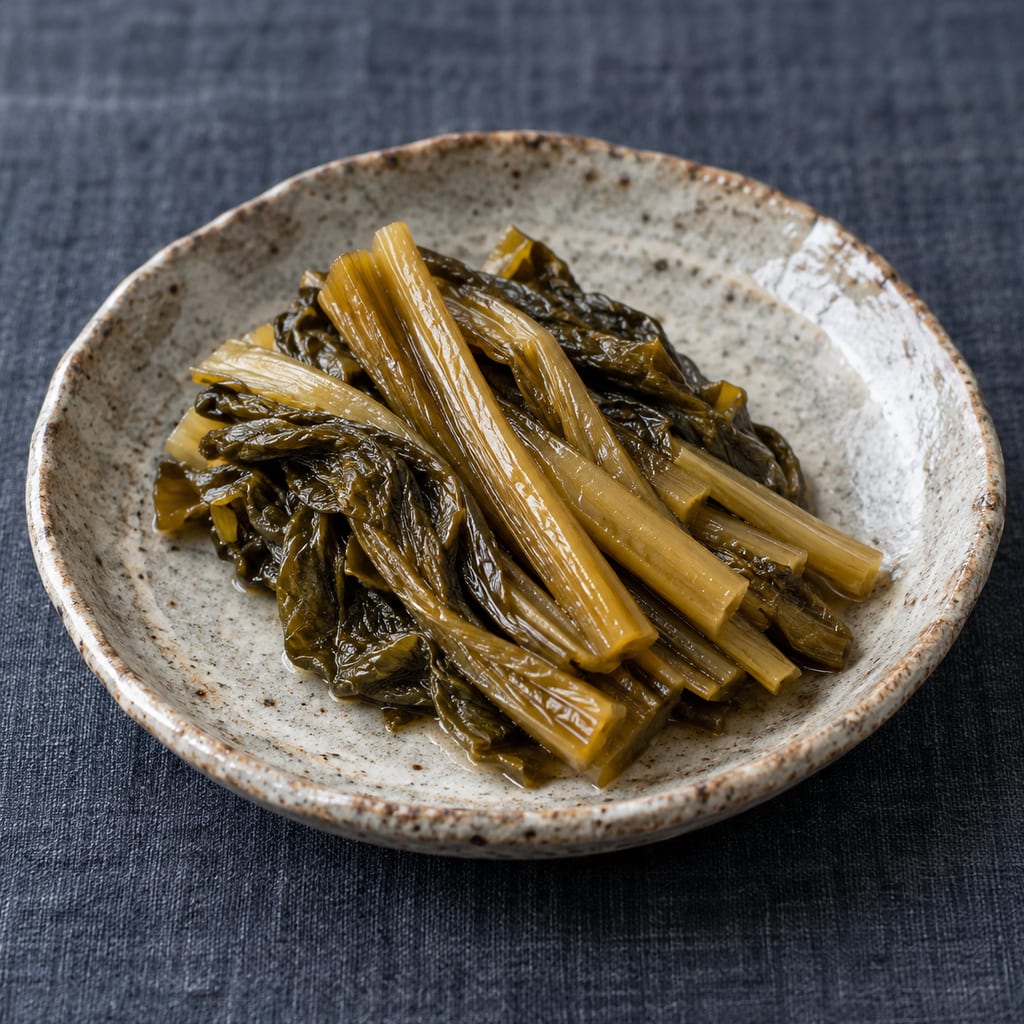
Takana mustard greens from Aso in Kumamoto are salted and pressed into a fresh spring pickle, or aged into a sour furuzuke that is fried and mixed into takana rice.
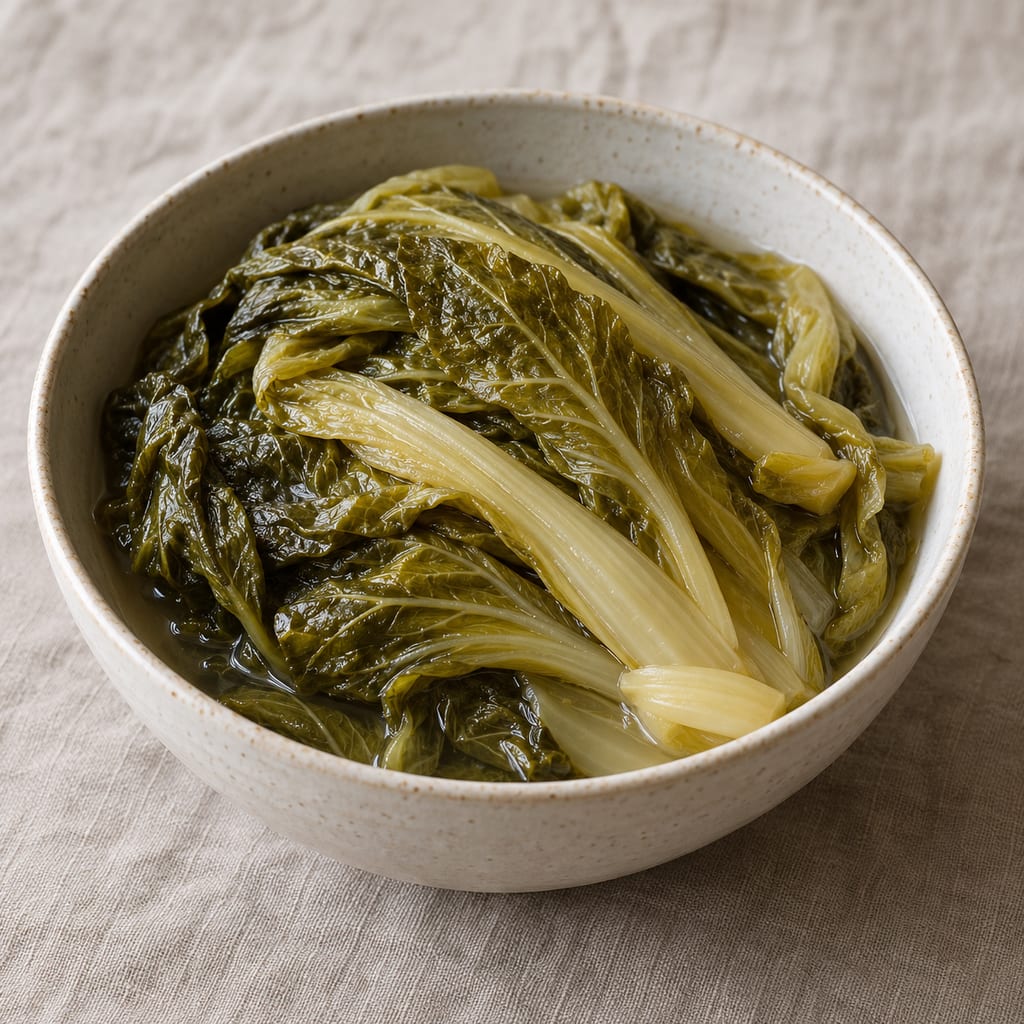
Wilted flat mustard leaves ferment with rice water and salt as a Filipino appetizer and cooking ingredient.
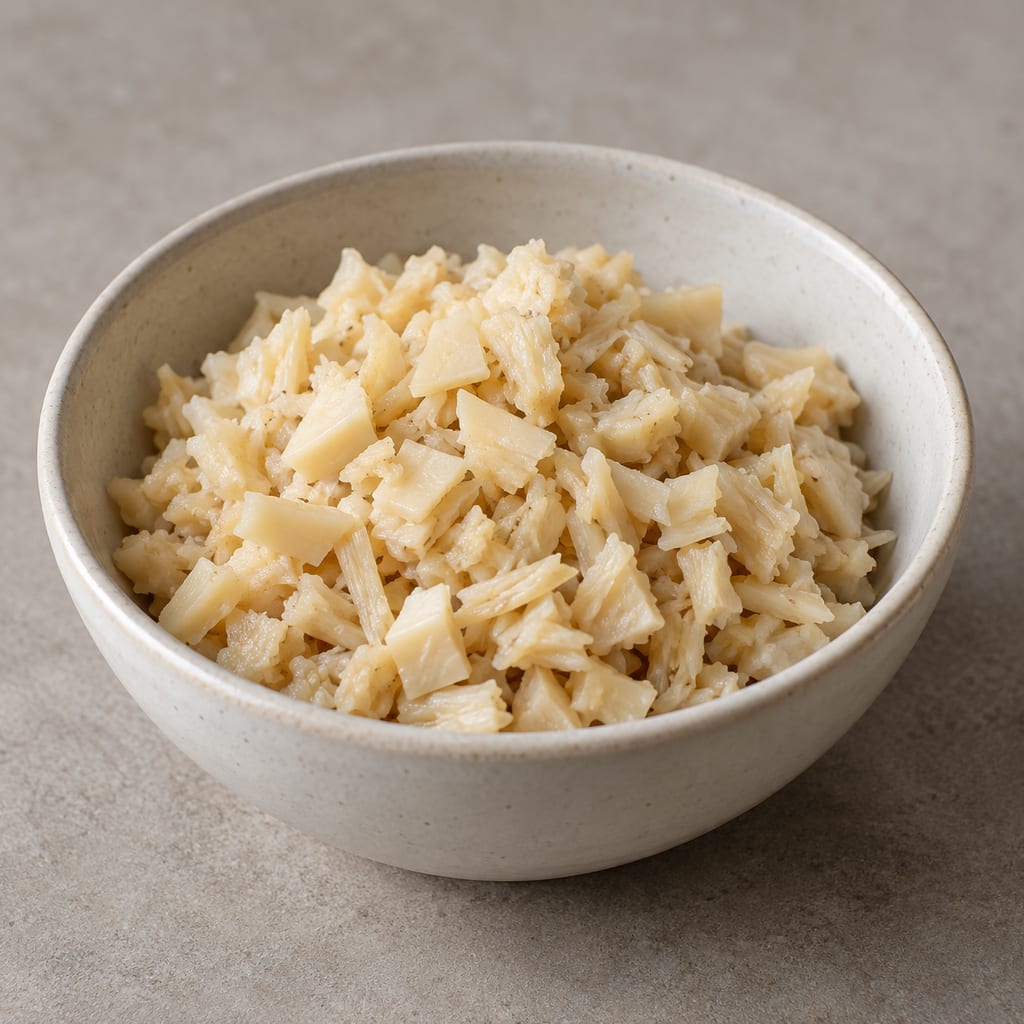
Finely chopped young bamboo shoots packed in leaf-lined baskets, sealed in a forest pit and weighted for one to three months, from Arunachal Pradesh.

Pit-fermented bamboo shoots from Arunachal Pradesh, cut smaller and sun-dried for five to ten days, used in curries.
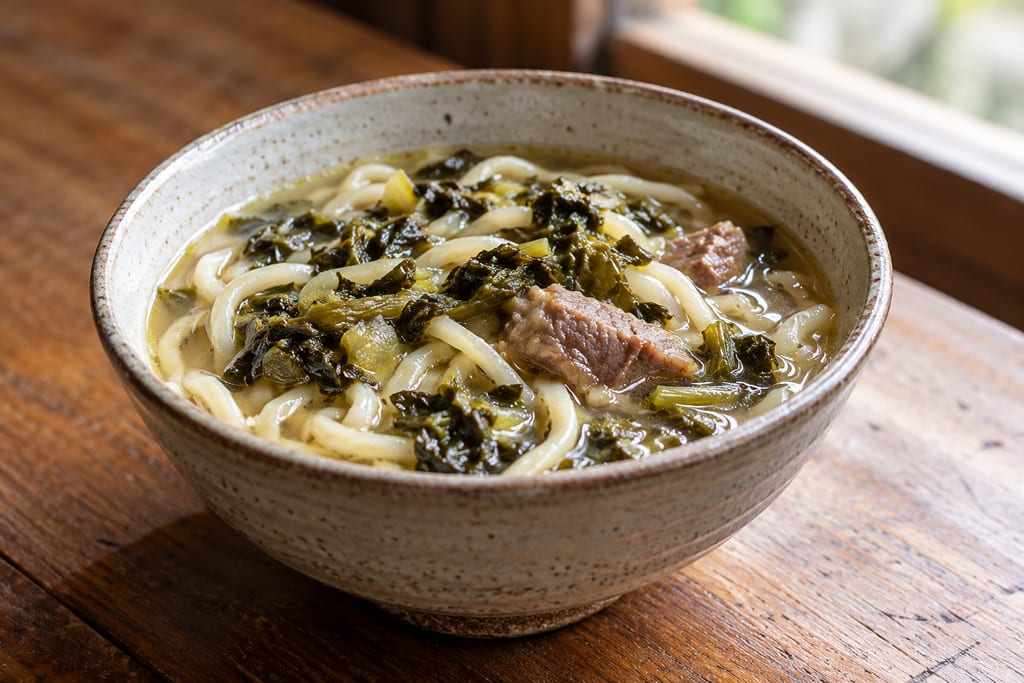
Goyang is a Sherpa fermented wild leafy food of the Darjeeling hills and Sikkim. Rainy-season magane-saag leaves are packed in a bamboo basket, held at room temperature for about a month, then eaten fresh or dried and used in soup.
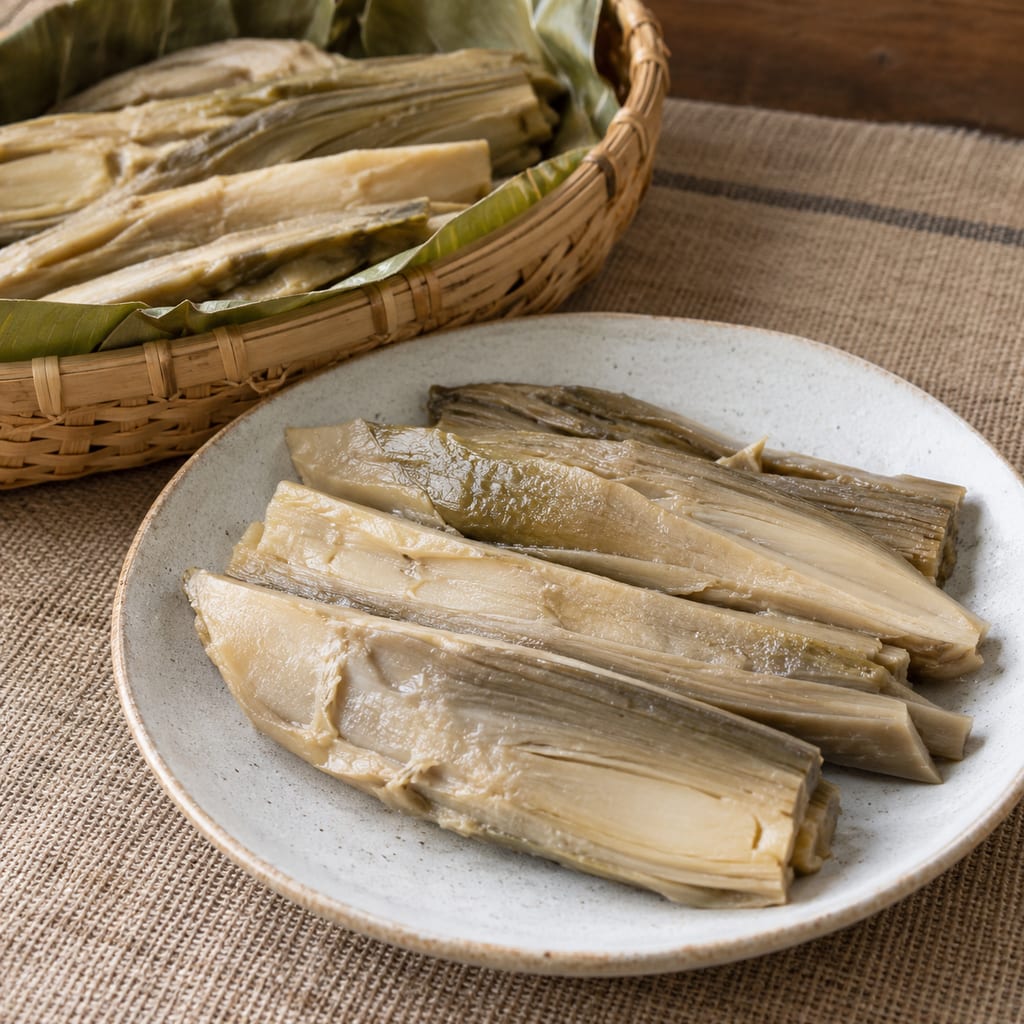
Upper tender bamboo-shoot tips, split or flattened, pit-fermented one to three months in Arunachal Pradesh and eaten in curries.
The original Polish barszcz: young hogweed leaves soured in warm water for a few days, then boiled into soup with egg, butter, cream or millet. Recorded from 1595, with warnings about the sap and lookalikes.
No community contributions have been published for this entry yet.
Sign in to contribute. Published comments and photos are free to read.
FAOInspiration
Fermented Fruits and Vegetables: A Global Perspective, Chapter 6Nepal gundruk context; leaf-wilting, shredding, tightly packed earthenware, warm water at about 30°C, ambient fermentation about 18°C for 5–7 days, and sun-drying; no post-drying storage method is stated.
University of Minnesota ExtensionSafety
Preserving food at home: FermentationProduce fermentation equipment, acidity monitoring and submersion controls.
Springer chapter by Tika Karki, Pravin Ojha and Om Prakash Panta (2016); copy hosted by Nepal Academy of Science and Technology libraryInspiration
Ethnic Fermented Foods of NepalThe cited chapter distinguishes mustard (Brassica juncea) from rayo-sag (Brassica rapa subsp. campestris var. cuneifolia) as separate gundruk substrates; FAO supplies the general pot method used here.
The chapter also describes a different pit process; that procedure is not substituted into the FAO pot method recorded here.