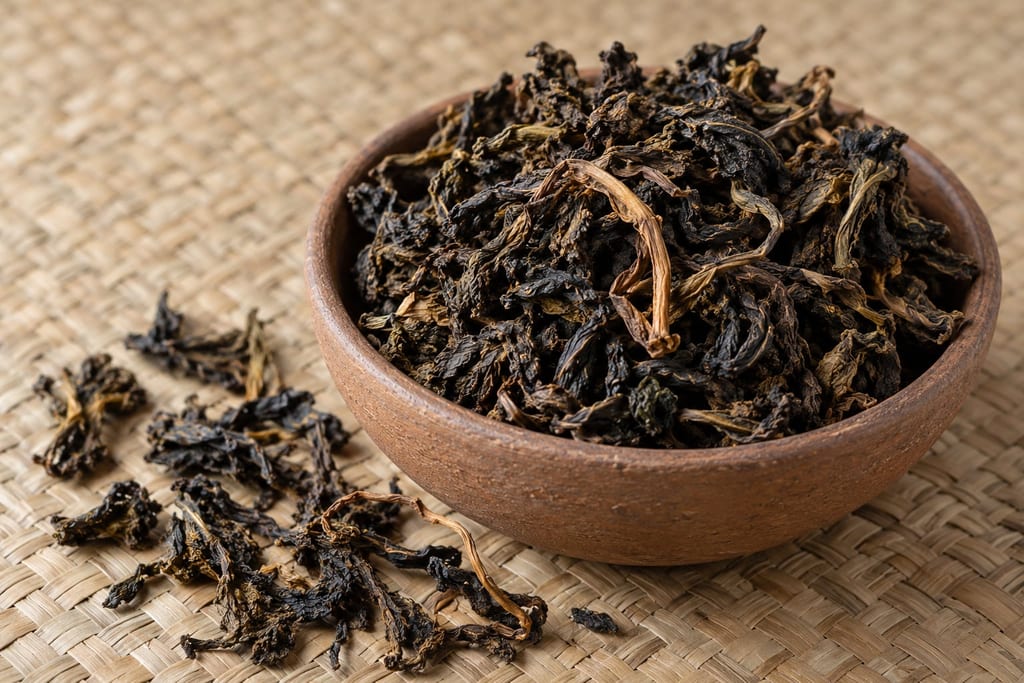
Mustard-leaf gundruk (Brassica juncea)
Mustard leaves wilted, bruised and packed tight into an earthenware vessel to sour without salt, then sun-dried into dark tangled pieces that carry Himalayan meals through the year.
 FermenteaWhere food goes to change
Equipment · Jars, pots and crocks
Gundruk pots and dhungro are fermentation containers documented in Nepal and one Darjeeling household. FAO describes earthenware; a 2024 figure identifies a bamboo-made airtight dhungro buried in a pit within a cow-dung heap.
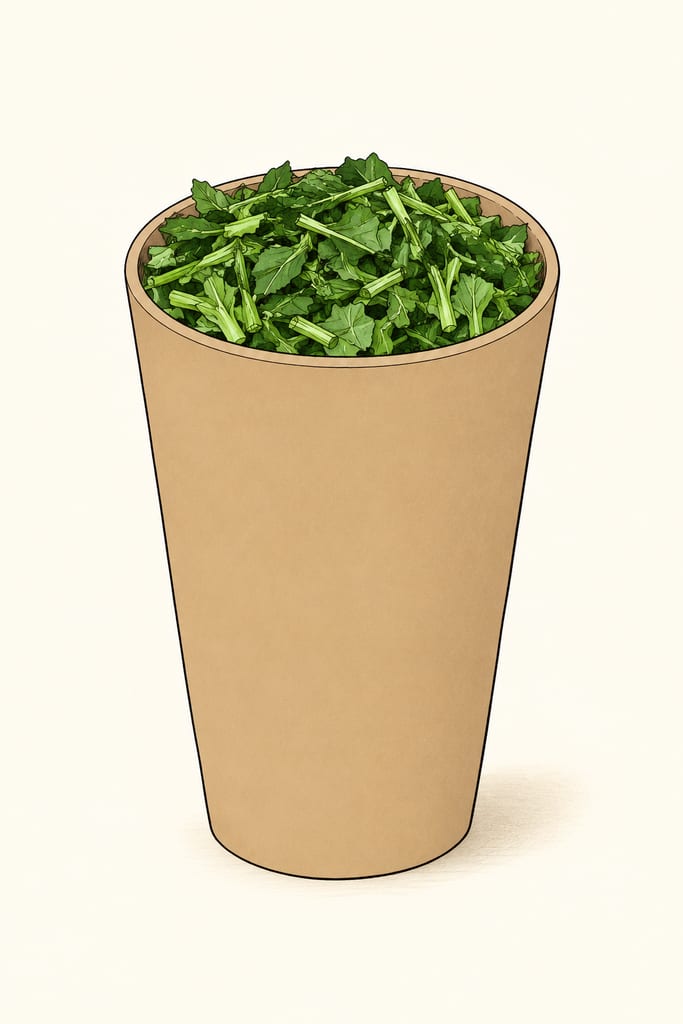
The name covers two related but distinct equipment records. FAO describes gundruk production in Nepal using an earthenware pot. A 2024 field study documents a dhungro in one household at Thulo Phulbari, Darjeeling, in West Bengal, India. Figure 2 identifies it as a bamboo-made airtight container and shows its placement in a pit dug in a heap of cow dung.
That evidence supports the equipment's use in these documented settings, not a claim that every household in Nepal or the Himalaya uses the same vessel. FAO does not give a local pot shape; the Darjeeling study does not specify the dhungro's dimensions or construction details.
In FAO's pot account, shredded leafy vegetables are packed tightly into earthenware, covered with warm water, and left in a warm place. The guide describes five to seven days in that account before the mildly acidic greens are removed and sun-dried. These details describe one published method, not a universal operating specification.
The Thulo Phulbari figure shows a separate sequence: squeezed radish leaves are packed into a bamboo-made airtight dhungro, hot water is poured in, and the open end is covered with plastic. The container is then placed in a pit dug in a heap of cow dung. The researchers describe one household observation; they do not give pit dimensions or establish that the Nepal earthenware-pot method uses this arrangement.
Gundruk is the fermented leafy stage; drying comes afterward. The Frontiers figure includes a final panel of dried greens, while the 2010 study examines fermentation dynamics in gundruk and khalpi. Neither source demonstrates that a particular vessel material or shape causes a specific microbial result.
The inspected records do not provide a standard pot or dhungro size, capacity, exact bamboo construction, maker, purchase route or care instructions. The useful comparison is geographically bounded: an earthenware pot in FAO's Nepal account and a bamboo-made airtight dhungro in one Darjeeling household study.
FAO documents household gundruk fermentation in an earthenware pot; a 2024 field study records one household's dhungro process in Darjeeling. These records establish documented use, not origin dates.
FAO places gundruk production in Nepal and describes earthenware pots; it does not specify a locality or claim that every gundruk vessel is a pot.
The study identifies one surveyed household at Thulo Phulbari, Darjeeling, using a dhungro; it does not establish prevalence across Darjeeling or all Himalayan communities.
Mustard leaves wilted, bruised and packed tight into an earthenware vessel to sour without salt, then sun-dried into dark tangled pieces that carry Himalayan meals through the year.
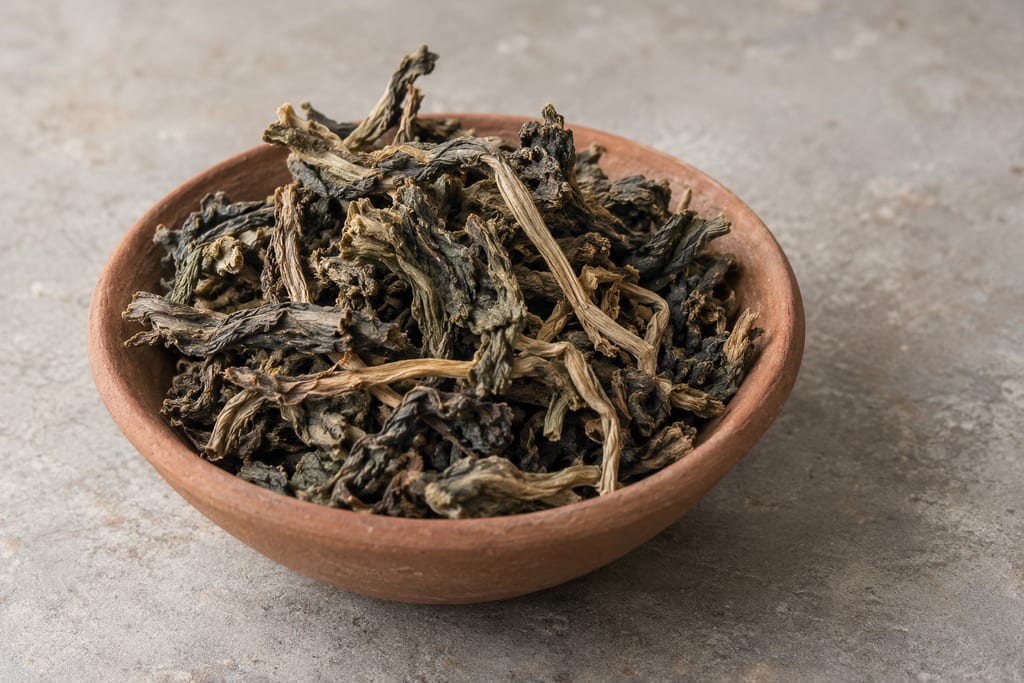
Radish greens wilted, packed into an earthen pot with warm water and fermented without salt, then sun-dried into Nepal's dark, sour gundruk.
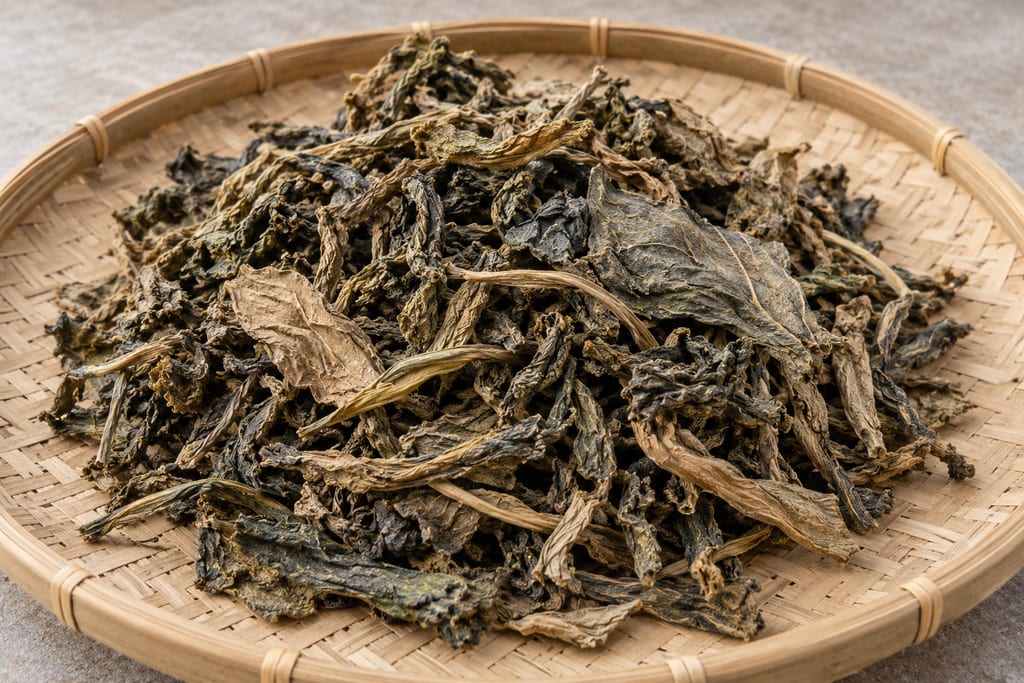
Wilted and shredded Brassica rapa rayo-sag leaves, packed under warm water in earthenware, fermented five to seven days, then sun-dried as Nepali gundruk.
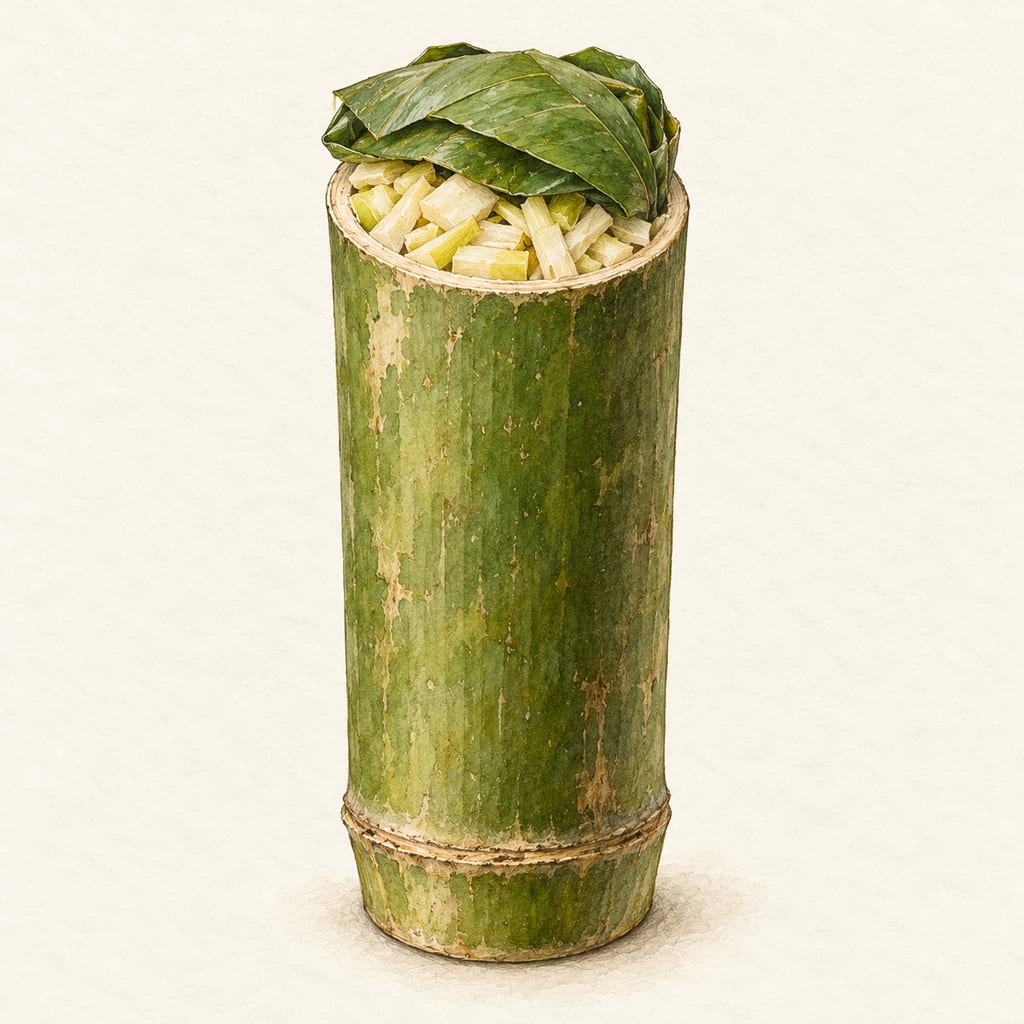
A green hollow bamboo stem holds tightly packed Mesu shoots, with leaves covering the open end during fermentation. The source documents the arrangement, but not a standard size or capacity.

Soft, spreadable Calabrian pork sausage made with a great deal of red chilli and fatty pork, stuffed into natural casings, sometimes smoked and matured while staying soft.

A way to add independent temperature logging to an existing food dehydrator without changing its built-in controls or protections. It is a monitoring method, not a rewiring plan.

Pleurotus cystidiosus is the abalone mushroom, a cultivated oyster-type fungus with dark brown caps that grows more slowly and is more demanding than other Pleurotus species.

A dark, balanced vinegar from Emilia-Romagna made by combining cooked or concentrated grape must with wine vinegar, then acetifying and refining it in wood under a protected specification.

A living dairy inoculum that starts controlled cream fermentation, developing acidity and aroma before sour cream or cultured butter is finished.

A small electric incubator holds jars at a selected temperature for yogurt and other documented warm food preparations. Controls, capacity and vessel arrangement vary by model.

Adygean salt is a seasoned table salt associated with Adygea and the wider North Caucasian culinary tradition. Salt is blended with garlic and a variable selection of herbs and spices; the exact mix depends on the named style and maker.

The African Caesar-group mushroom, Amanita masasiensis, is a wild ectomycorrhizal species of central and southern African woodlands, eaten locally. The genus contains deadly poisonous species, so identification needs care.
No community contributions have been published for this entry yet.
Sign in to contribute. Published comments and photos are free to read.
Food and Agriculture Organization of the United NationsForm · Process · Geography
Fermented Fruits and Vegetables: A Global Perspective, Chapter 6FAO describes gundruk as a household fermented leafy vegetable associated with Nepal.
The described pot method tightly packs shredded leaves in earthenware; warm water is added, and fermentation is followed by sun-drying.
Cited in: Two containers, documented in different places; Packing and covering the greens; Fermentation is followed by drying
Kriti Ghatani, Shankar Prasad Sha, Subarna Thapa, Indrani Sarkar, Gargi Sen and Arnab Sen; Frontiers in Sustainable Food SystemsForm · Process · Geography · Visual reference
Investigating bacterial diversity involved in the production of vegetable-based ethnic fermented food of North Bengal and their metabolic pathways with reverse ecology approachThe authors report observing gundruk preparation in one household at Thulo Phulbari, Darjeeling.
Figure 2 explicitly identifies the dhungro as a bamboo-made airtight container, says hot water is poured in and its open end covered with plastic, and places it in a pit dug in a heap of cow dung.
The figure documents this household process only; it does not establish dimensions, exact bamboo construction, or regional prevalence.
Cited in: Two containers, documented in different places; Packing and covering the greens; Fermentation is followed by drying
Buddhiman Tamang and Jyoti Prakash Tamang; Indian Journal of Microbiology (2010)Process · History
In situ fermentation dynamics during production of gundruk and khalpi, ethnic fermented vegetable products of the HimalayasThe study examines fermentation dynamics in gundruk and khalpi as Himalayan fermented vegetable products.
Its abstract reports changes in lactic acid bacteria during fermentation; it does not establish effects of vessel material or geometry.
Cited in: Fermentation is followed by drying