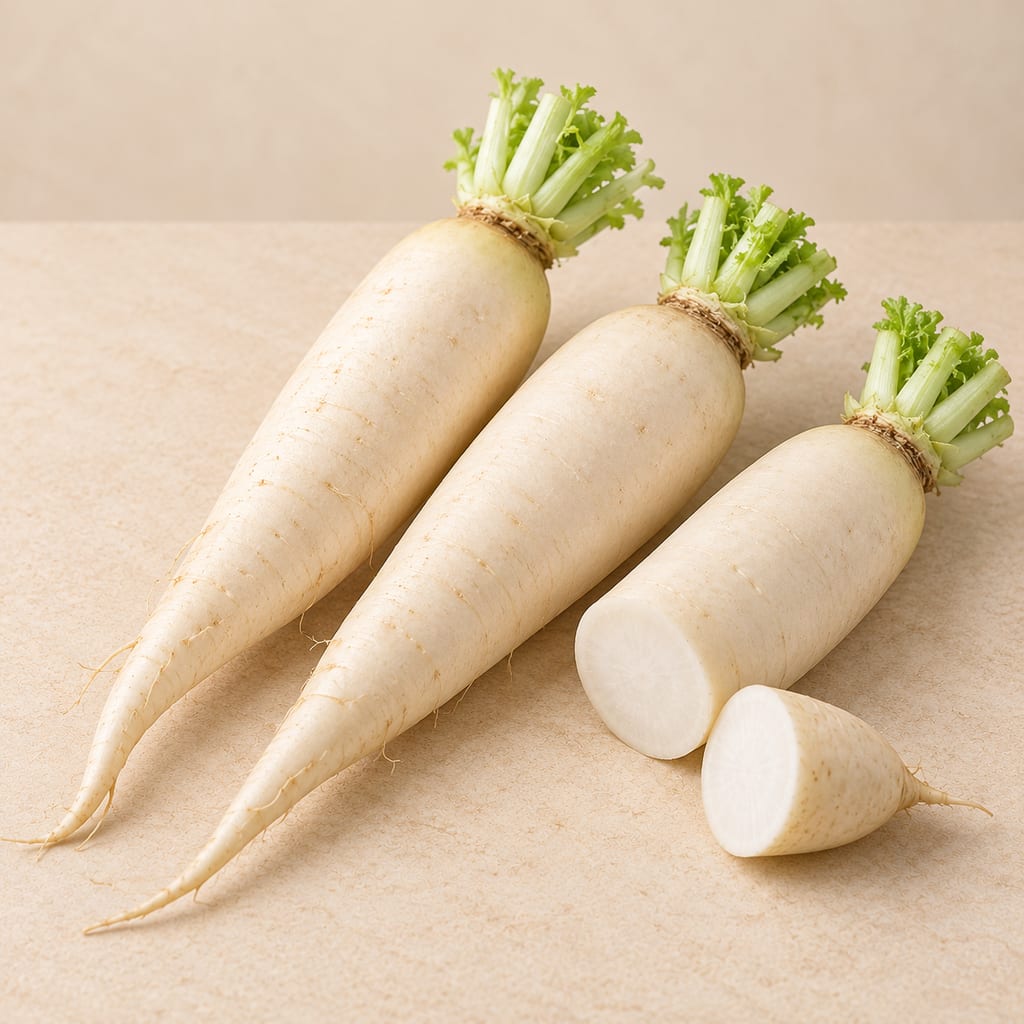
Radish and daikon
Radish and daikon are the crisp, peppery roots, leaves and seed pods of Raphanus sativus, fermented as kimchi, takuan and sinki and eaten raw across Asia and Europe.
 FermenteaWhere food goes to change
Traditional method
Gundruk
Radish greens wilted, packed into an earthen pot with warm water and fermented without salt, then sun-dried into Nepal's dark, sour gundruk.
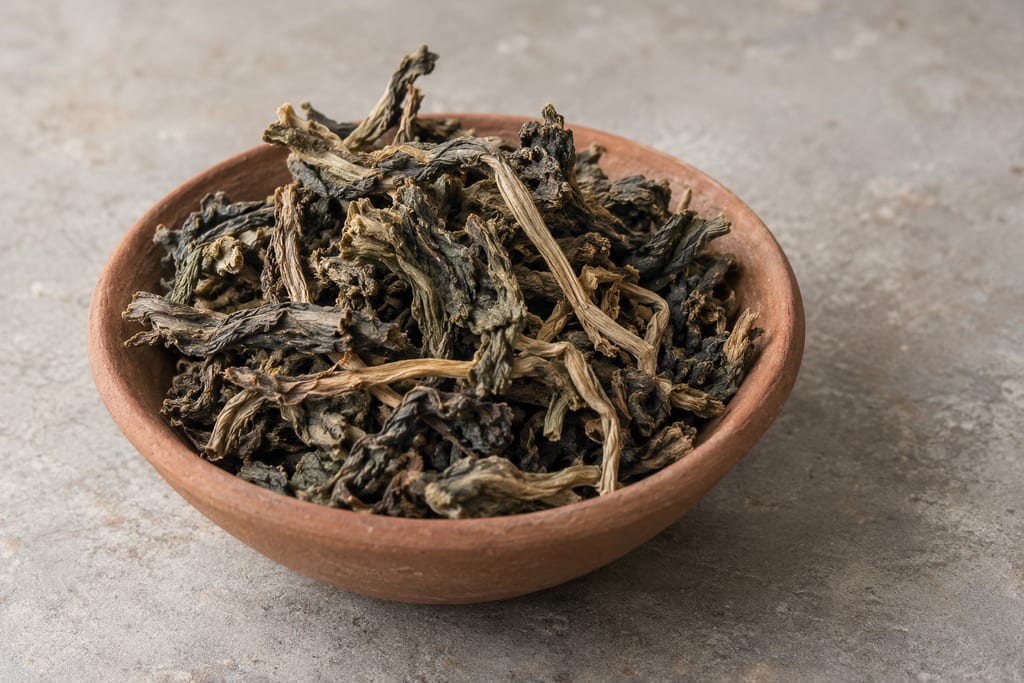
Gundruk is a traditional food made by fermenting leafy vegetables and subsequently drying them. In this version, the leaves come from radish plants, Raphanus sativus L., known in Nepali as mula. Radish greens are mulako saag, making mulako gundruk a useful description of the finished food.
The leaves undergo two distinct forms of preservation. First, naturally occurring microorganisms produce organic acids through lactic fermentation. Second, much of the remaining water is removed by drying. The result is a concentrated, sour vegetable ingredient rather than a moist pickle.
Radish-leaf gundruk is dark, fibrous, pleasantly acidic and quite different in flavour from fresh radish leaves. It may smell earthy or pungent, depending on the fermentation and drying conditions. When cooked, it releases acidity into soups and stews.
Gundruk is frequently grouped with the fermented vegetables of Nepal, Sikkim, Darjeeling and neighbouring Himalayan communities. It is not the same as sinki, which uses radish roots rather than leaves.
Mustard, cauliflower, cabbage and other leafy vegetables can also become gundruk. These are variations of one preservation family, although their plant chemistry and fermentation behaviour are not identical.
There is no securely attested year when gundruk was invented. Its history is primarily preserved through household practice, ethnographic research and food-science investigations rather than early written recipes.
Its geographical association with Nepal and the Eastern Himalayas is well established.
The preservation method responds to a particular agricultural problem. During the harvest season, radishes and leafy brassicas can provide substantially more edible foliage than a household can consume immediately. At other times, especially during colder months or between harvests, fresh greens may be scarce.
Drying raw leaves is possible, but fermentation before drying changes their flavour and makes them an especially useful sour ingredient for meals dominated by grains, pulses and starchy vegetables.
Gundruk became part of a broader food system in which farmers preserved different portions of harvested crops. Radish roots could be stored or made into sinki, while surplus foliage could become gundruk.
The FAO's 1998 reference describes a historical estimate of approximately 2,000 tonnes of annual production in Nepal, predominantly at household level. That estimate documents the food's economic and cultural importance at the time; it is not a current production statistic.
The culinary tradition also extends beyond Nepal's present national boundaries. In Darjeeling and Sikkim, Nepali-speaking communities and other Himalayan groups prepare related fermented greens.
Ethnographic research from these regions describes production in domestic containers, earthenware vessels and occasionally traditional fermentation pits. The methods differ, but all belong to a wider tradition of converting perishable vegetable surpluses into durable, sour foods.
A 2023 ethnographic account from Sikkim also emphasises that fermented foods carry family identity. Methods vary even among households within one community. The knowledge involves participation in harvesting, preparation, shared labour and cooking, rather than simply following written instructions.
These observations are useful because they explain why the historical record contains multiple authentic procedures rather than one universally accepted recipe.
Gundruk is not merely a way of preventing waste.
It provides a distinctive flavour that fresh greens cannot reproduce.
Rice, maize, millet, potatoes and other staples are often relatively mild. A small quantity of fermented, dried greens can add acidity, bitterness, savouriness and aromatic complexity.
The dried material is light and portable compared with fresh vegetables. This makes it practical for storage and transport.
It also allows a household to retain some of its harvest for periods when fields are less productive.
The FAO identifies gundruk as a traditional source of minerals during the off-season. This nutritional role matters, although the process does not preserve every nutrient equally.
Fermentation and drying may reduce particular vitamins and pigments. The FAO discusses substantial carotenoid losses during traditional sun drying, citing a reported loss approaching 90% in the research it summarises.
That is not a universal nutritional analysis of every gundruk product, but it cautions against describing dried fermented leaves as nutritionally identical to fresh greens.
Minerals are more resistant to the chemical changes caused by drying than many vitamins and pigments, although losses through discarded processing liquid are still possible.
The traditional FAO preparation is remarkably simple.
Fresh radish leaves — No fixed batch weight specified — Fermentation substrate
Warm water — Enough to cover tightly packed leaves — Creates the moist fermentation environment
Added salt — None — Traditional salt-free method
Starter culture — None in the spontaneous method — Indigenous microorganisms initiate fermentation
The leaves supply fermentable carbohydrates, structural plant material and naturally associated microorganisms.
Water provides the environment in which microbial metabolism and acid diffusion occur.
The absence of salt is a defining feature. It distinguishes gundruk from sauerkraut, whose established manufacturing methods generally use measured salt additions.
Salt-free fermentation places greater importance on the speed of acidification and the initial microbial community.
A traditional gundruk ferment also does not normally require added vinegar. The desired acidity is produced during fermentation.
The following stages document the FAO process. Its numbers describe the reported method rather than a validated home-preservation schedule.
1. Harvest suitable foliage. Select fresh radish leaves, removing badly damaged or decaying material. Quality matters because fermentation cannot reliably correct already spoiled raw vegetables.
2. Clean the leaves. Remove soil and field debris. In traditional food production, sufficient washing is needed for cleanliness without assuming that the plant must be rendered sterile.
3. Wilt for 1–2 days. The leaves are left until softened. Wilting reduces turgor, making the foliage easier to shred and compress. This preparatory loss of water is different from the final drying stage.
4. Shred or crush. Traditional accounts describe cutting with a knife or sickle. Mechanical disruption helps release cell contents and allows the vegetable to form a compact mass.
5. Pack tightly in an earthenware vessel. The compressed leaves occupy less space and leave fewer large air pockets. Compression also improves contact between vegetable pieces.
6. Add water at approximately 30°C. The FAO specifies enough warm water to cover the material. The 30°C figure describes the added water, not the measured temperature of the entire fermentation period.
7. Ferment for the documented 5–7 days. The pot is kept in a warm location. The same publication describes an ambient temperature around 18°C in the relevant traditional setting.
8. Remove the fermented leaves. Traditional preparation judges the development of acidity through sensory experience. Modern quality control should additionally measure acidity rather than relying on taste.
9. Dry the fermented material. The leaves are spread on mats and dried in the sun. The original account does not establish a universally applicable drying temperature, target water activity or precise number of drying hours.
10. Protect the dried ingredient. Traditional storage requires protection from dampness and contamination. Modern shelf-life claims require measurements of the finished product.
The method combines a moist fermentation stage with a second dehydration stage. Reversing the order, or drying so aggressively that little microbial activity can occur, would produce a different food.
Research into fermented vegetables in the Eastern Himalayas documents a substantially longer process.
In one traditional method, leafy vegetables are wilted for 1–2 days, lightly crushed and tightly packed into an earthen container.
They ferment naturally for approximately 15–22 days.
The product is then sun-dried for 2–4 days.
These figures are supported by research into traditional fermented vegetable products of the Eastern Himalayas.
ScienceDirect
This is not simply an error in the FAO's shorter schedule.
Differences in temperature, packing, leaf condition, vegetable mixtures and household expectations may affect when a batch is considered sufficiently fermented.
The FAO process mentions adding warm water to cover the leaves. Other traditional accounts emphasise crushing and tightly packing the vegetables.
Those changes can alter the available liquid, oxygen conditions and initial microbial development.
A historical record should therefore preserve both documented methods separately.
Gundruk fermentation is a spontaneous microbial succession.
At the beginning, freshly harvested leaves carry mixed microorganisms acquired from soil, water, the growing environment and handling.
Some of these organisms can metabolise sugars into lactic acid.
Others may produce undesirable changes unless the environment becomes sufficiently selective.
As successful fermentation develops, lactic-acid-producing bacteria can become increasingly important.
The FAO identifies Lactobacillus and Pediococcus among the principal bacterial groups. Its account describes early participation by organisms then named Lactobacillus cellobiosus and Lactobacillus plantarum, followed by an increase in acid-producing populations.
It identifies Pediococcus pentosaceus as increasing around the fifth day and subsequently declining.
Older bacterial names appear in historical papers because taxonomy has changed. Lactobacillus plantarum is now generally Lactiplantibacillus plantarum.
Successful acidification changes the microbial environment.
The FAO reports a decline to approximately pH 4.0, with total acid expressed as lactic acid reaching approximately 1% on the sixth day.
These are measurements reported for studied preparations, not automatic results for every batch.
The acid also changes flavour. Fresh radish leaves contain pungent brassica compounds. Fermentation adds acidity and can alter the perception of bitterness and sharpness.
Microbial metabolism produces more than lactic acid alone. Some organisms can generate carbon dioxide, acetic acid and other compounds, depending on the species and metabolic pathways present.
The balance of these products contributes to the complexity of fermented vegetables.
Modern research offers a much more detailed picture than earlier culture-based studies.
A 2026 investigation examined gundruk prepared from cabbage, radish and spinach, comparing laboratory fermentations with traditionally produced examples from parts of the Eastern Himalayas.
The research used culture-dependent methods and analysis of bacterial DNA, including 16S ribosomal RNA sequencing.
The core microbial community included genera such as Lactiplantibacillus, Limosilactobacillus, Weissella, Levilactobacillus, Leuconostoc and Pediococcus.
Lactiplantibacillus plantarum was a particularly important organism in the studied fermented leaves.
The traditional products were more microbiologically diverse than the laboratory preparations.
This matters because a traditional fermentation environment includes more sources of microorganisms and more environmental variability.
The presence of a bacterial DNA sequence, however, does not necessarily prove that the organism was alive at the end of fermentation. Nor does identifying lactic-acid bacteria demonstrate the absence of pathogens.
Modern sequencing helps describe the fermentation ecology. It does not replace microbiological safety testing.
ScienceDirect
Radish belongs to the cabbage family.
Its leaves contain glucosinolates and associated enzymes that can contribute pungent, mustard-like flavours when plant tissue is damaged.
Crushing and shredding break cellular compartments and can permit these reactions.
Fermentation subsequently changes the chemical environment.
Acid development influences enzyme activity, protein behaviour and the stability of certain pigments.
Chlorophyll changes during processing contribute to the darker colour of fermented greens.
Further drying can intensify the colour change through oxidation, pigment degradation and other reactions.
Carotenoids and some vitamins are vulnerable to prolonged exposure to sunlight, heat and oxygen.
Consequently, a darker finished gundruk is not necessarily a more thoroughly fermented product.
Colour alone cannot measure acidification, microbial composition or safety.
The best-known uses are soup and pickle-like accompaniments.
A traditional sour soup, gundruk ko jhol, combines rehydrated or cooked gundruk with liquid and savoury seasonings.
Tomato, chilli, onion and other aromatics appear in household versions.
The dried leaves absorb liquid and release their acidity into the broth.
A frying stage may be used before simmering. Oil distributes fat-soluble aromatic compounds and can change the flavour from sharply vegetal to more rounded and savoury.
Another preparation is gundruk ko achar, where fermented greens become a strongly flavoured accompaniment.
The exact formula varies by household. Some versions combine the prepared greens with chilli, salt, mustard oil or other seasonings.
There is no reason to assume one modern online recipe represents every Nepali community.
The food is particularly compatible with dal bhat: rice, lentils and accompanying vegetable preparations.
It also suits dhindo, the thick porridge made from grains such as millet, maize or buckwheat.
The sourness provides contrast to the comparatively plain starch.
In soup, gundruk becomes soft and contributes flavour to the liquid. In a drier preparation, it retains more of its concentrated leafy character.
The expected finished product is dry, recognisably leafy and distinctly sour after suitable preparation.
Its colour can range from dark olive-green to brown.
A slightly earthy or pungent aroma is characteristic, but the precise character depends on the vegetables, fermentation and drying.
Visible mould growth, putrefaction, unexplained slime or deterioration during storage are warning signs.
A particularly important problem is incomplete drying.
Dense clumps can retain moisture even when exposed surfaces feel dry.
Moist material subsequently stored in a sealed container may support further microbial growth.
An adequate finished moisture or water-activity specification must be established for the intended product and packaging.
Traditional gundruk is made without added salt, so prompt successful acidification is important.
The general food-safety threshold of pH 4.6 or below is useful when assessing the inhibition of Clostridium botulinum, but it is not a complete validation of a drying and storage process.
A safe commercial preparation also needs control of raw material quality, contamination, temperature, the progress of acidification, drying and packaging.
The University of Minnesota recommends measuring pH rather than judging fermentation solely by smell or bubbles.
For historical gundruk, the published durations and temperatures should be described as observed practices. They should not be promoted as universally safe instructions without process validation.
FAO names radish leaves among gundruk substrates. The selected instructions use FAO’s described earthenware-pot method; a different Nepal chapter describes pit and packaging variants that are not combined here.
Scaling: source batch only
Poor brine coverage or inadequate acidity monitoring can allow spoilage; recipe-specific validated limits are not established.
Hazard sourceUse clean food-grade equipment, keep produce submerged and monitor acidity; no universal endpoint is supplied for this recipe.
Control sourceThe cited FAO pot method does not give post-drying packaging, storage conditions or a storage life; this record does not imply shelf stability.
FAO identifies gundruk production in Nepal; the Nepal food-science chapter supports the substrate named for this variation. No precise location is recorded.
Radish and daikon are the crisp, peppery roots, leaves and seed pods of Raphanus sativus, fermented as kimchi, takuan and sinki and eaten raw across Asia and Europe.
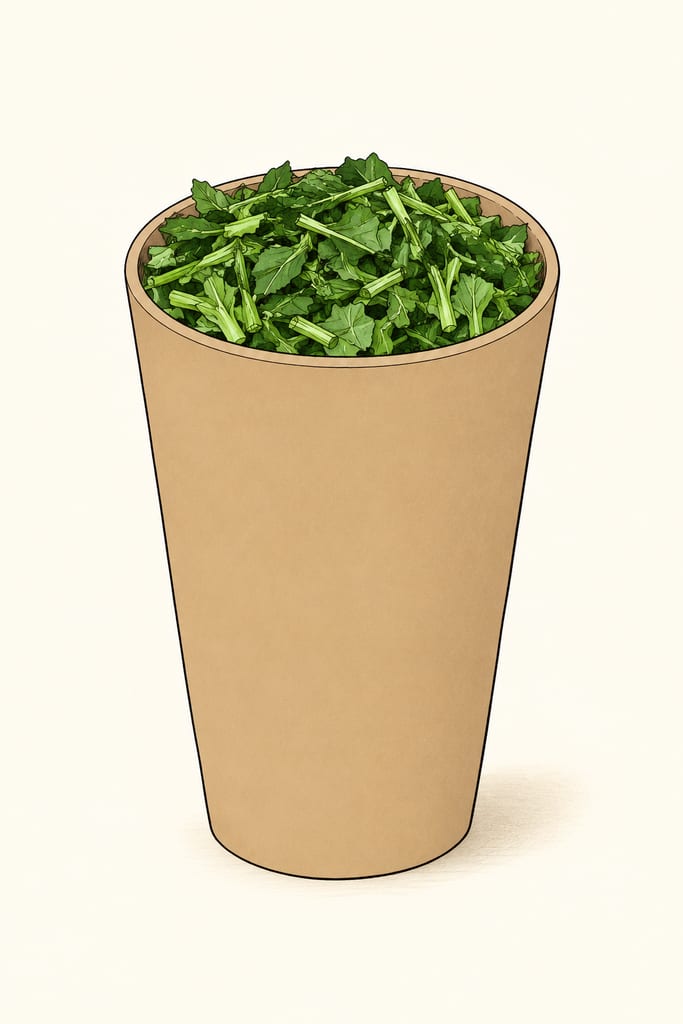
Gundruk pots and dhungro are fermentation containers documented in Nepal and one Darjeeling household. FAO describes earthenware; a 2024 figure identifies a bamboo-made airtight dhungro buried in a pit within a cow-dung heap.
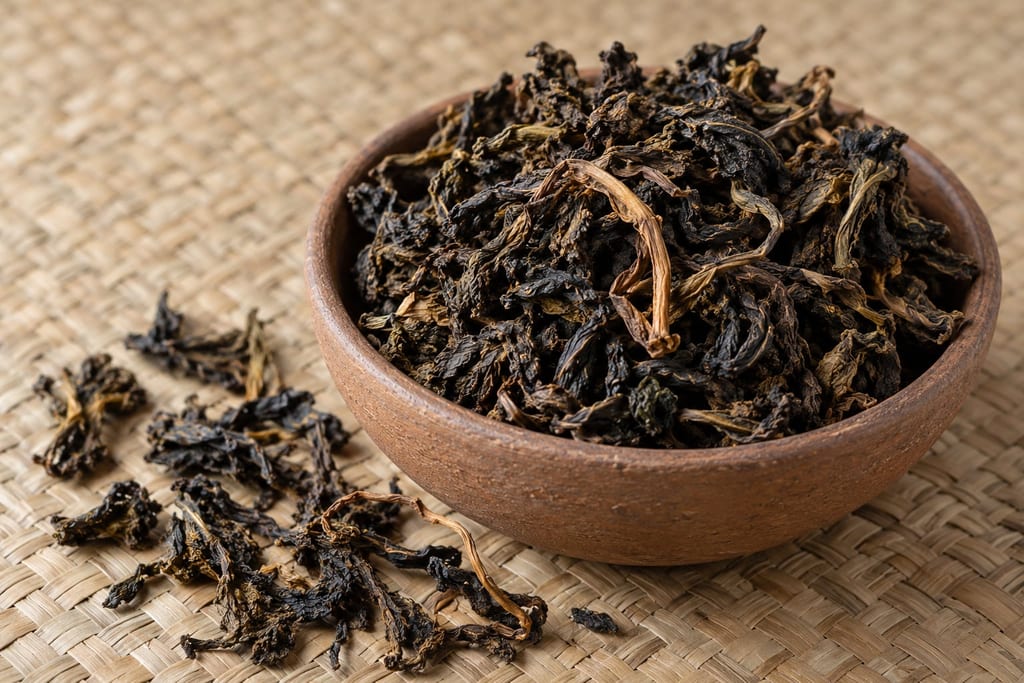
Mustard leaves wilted, bruised and packed tight into an earthenware vessel to sour without salt, then sun-dried into dark tangled pieces that carry Himalayan meals through the year.
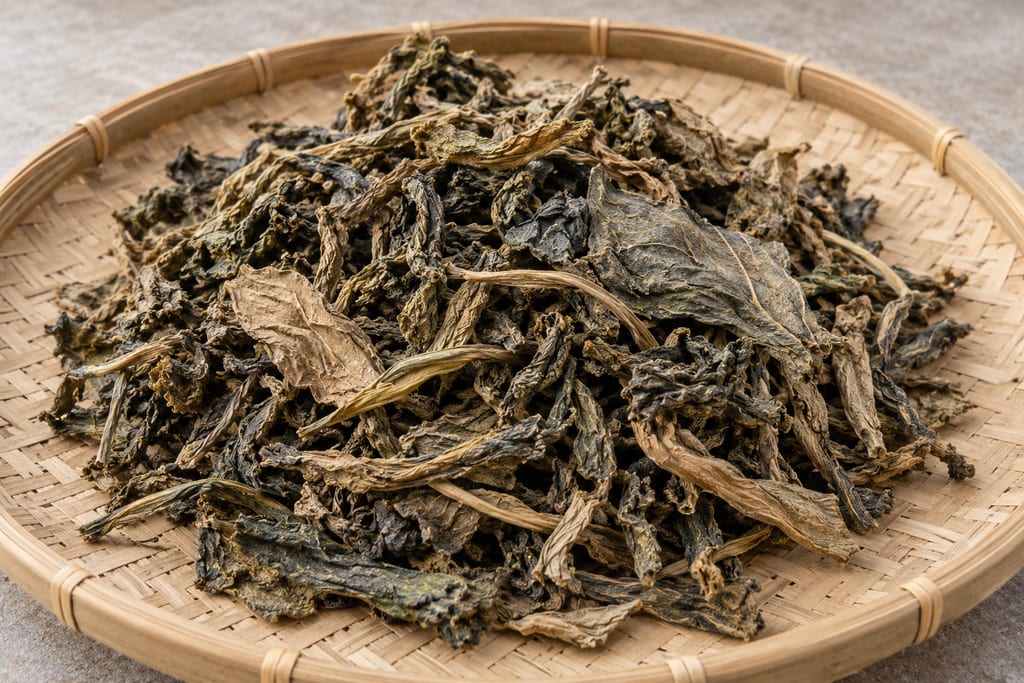
Wilted and shredded Brassica rapa rayo-sag leaves, packed under warm water in earthenware, fermented five to seven days, then sun-dried as Nepali gundruk.
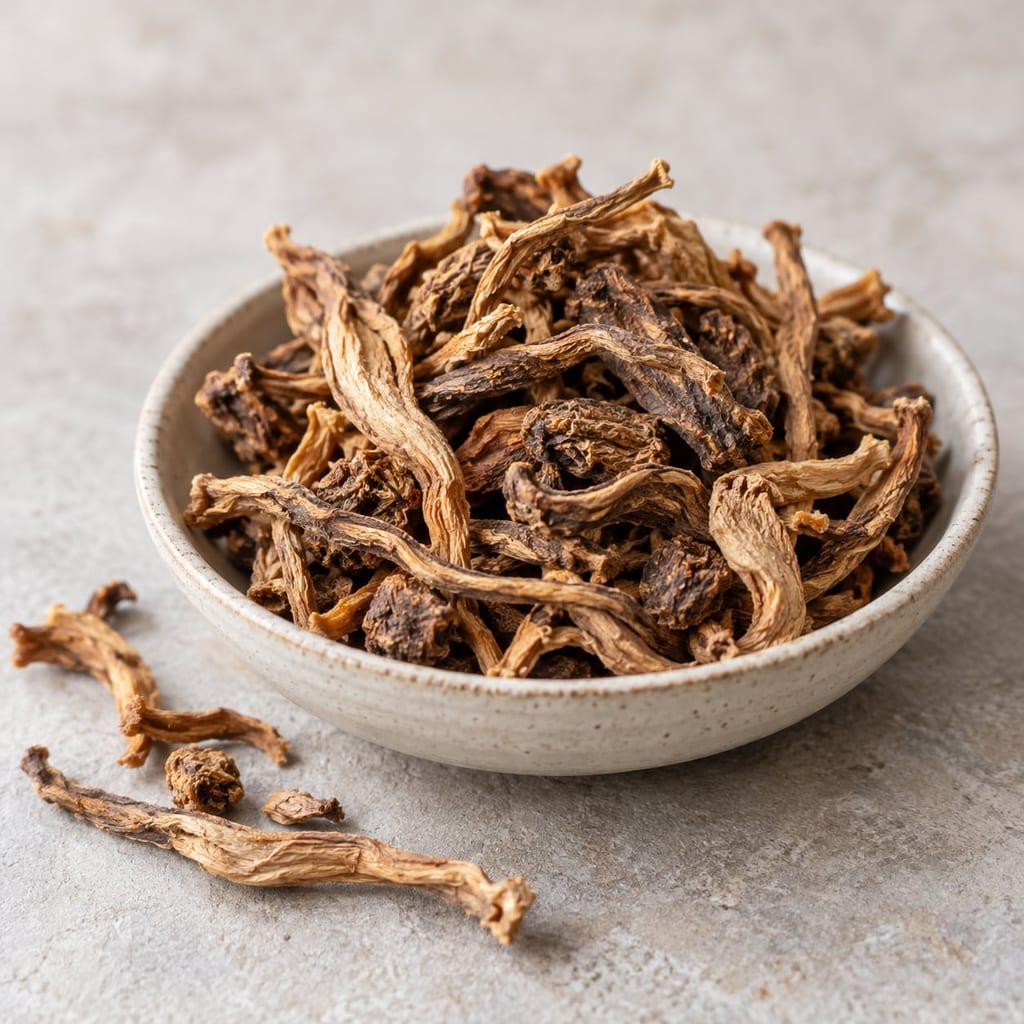
Sinki is a salt-free, fermented radish-taproot product dried after fermentation. Published jar and pit accounts use different conditions; neither supplies a validated home-preservation endpoint.
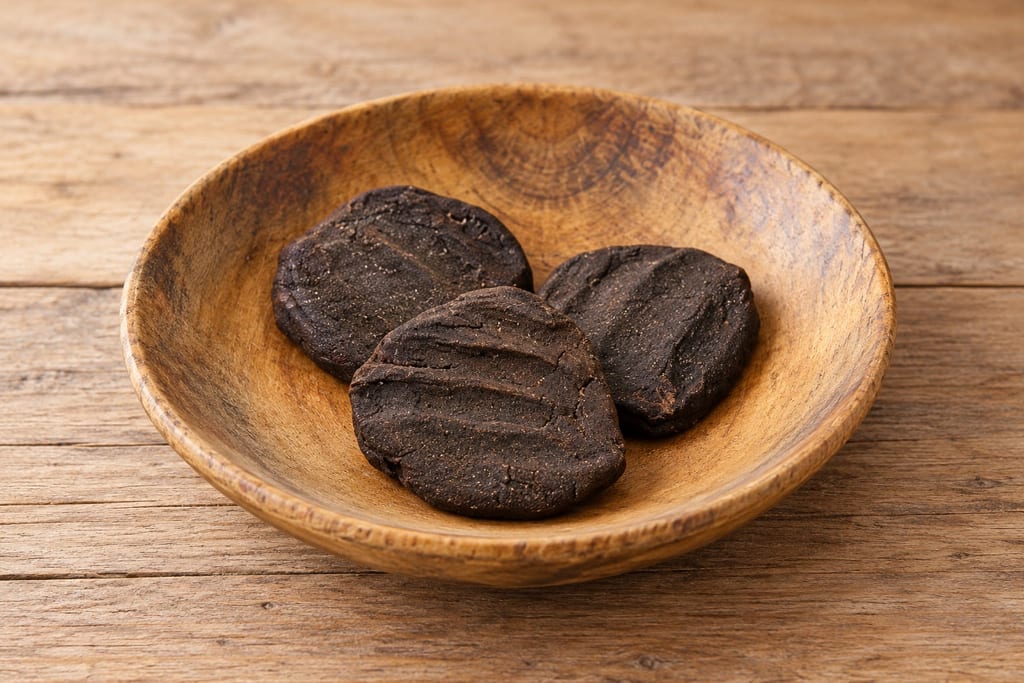
Dried cakes of pounded taro leaves from the Ao Naga in Nagaland, yellowed in a bag, then dried by hot ash or sun and used to flavour meat dishes.
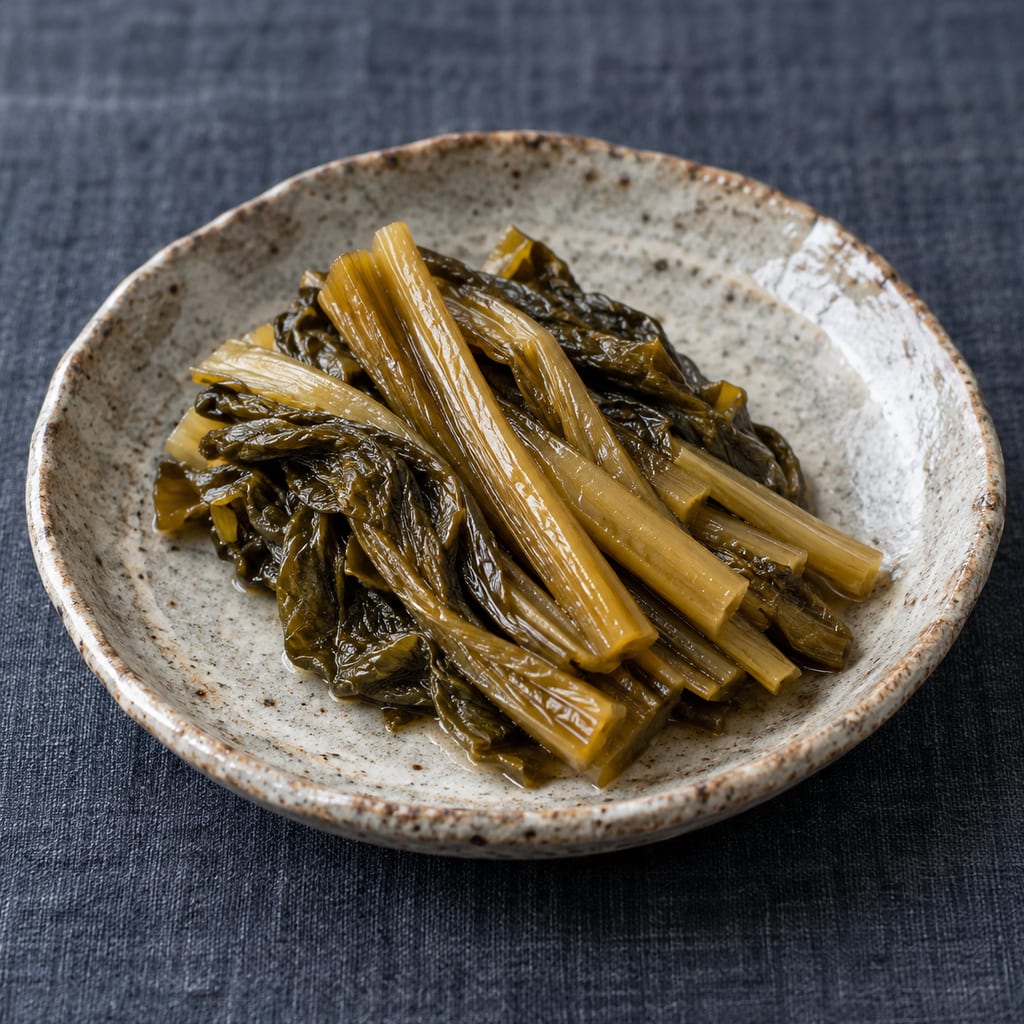
Takana mustard greens from Aso in Kumamoto are salted and pressed into a fresh spring pickle, or aged into a sour furuzuke that is fried and mixed into takana rice.
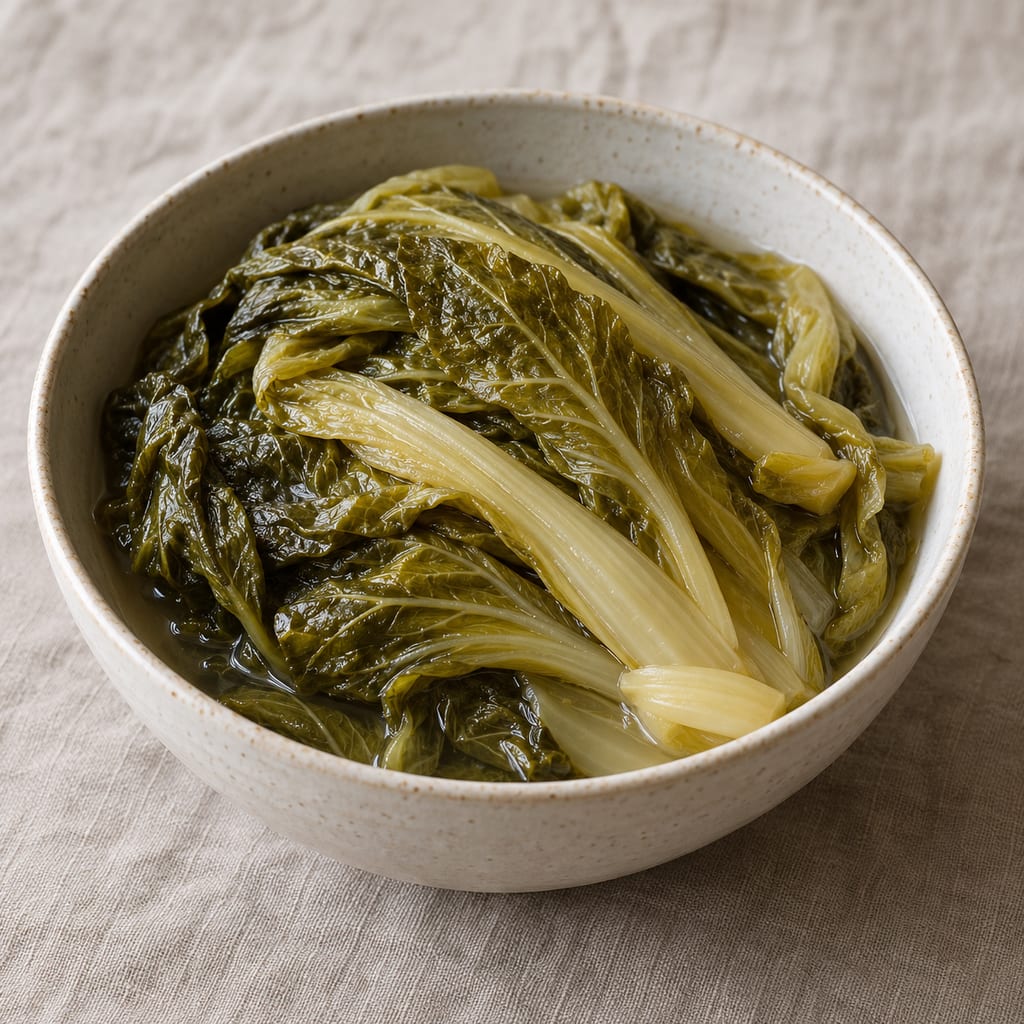
Wilted flat mustard leaves ferment with rice water and salt as a Filipino appetizer and cooking ingredient.
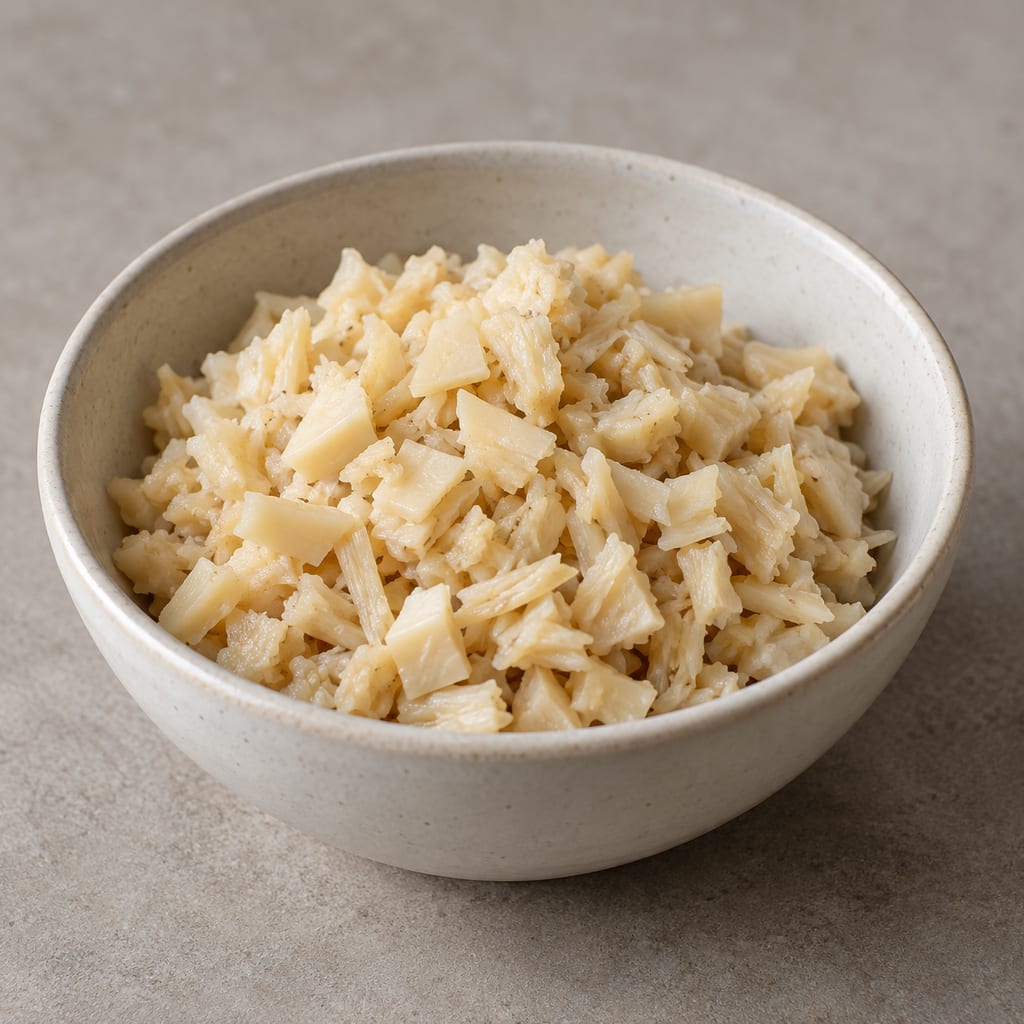
Finely chopped young bamboo shoots packed in leaf-lined baskets, sealed in a forest pit and weighted for one to three months, from Arunachal Pradesh.

Pit-fermented bamboo shoots from Arunachal Pradesh, cut smaller and sun-dried for five to ten days, used in curries.
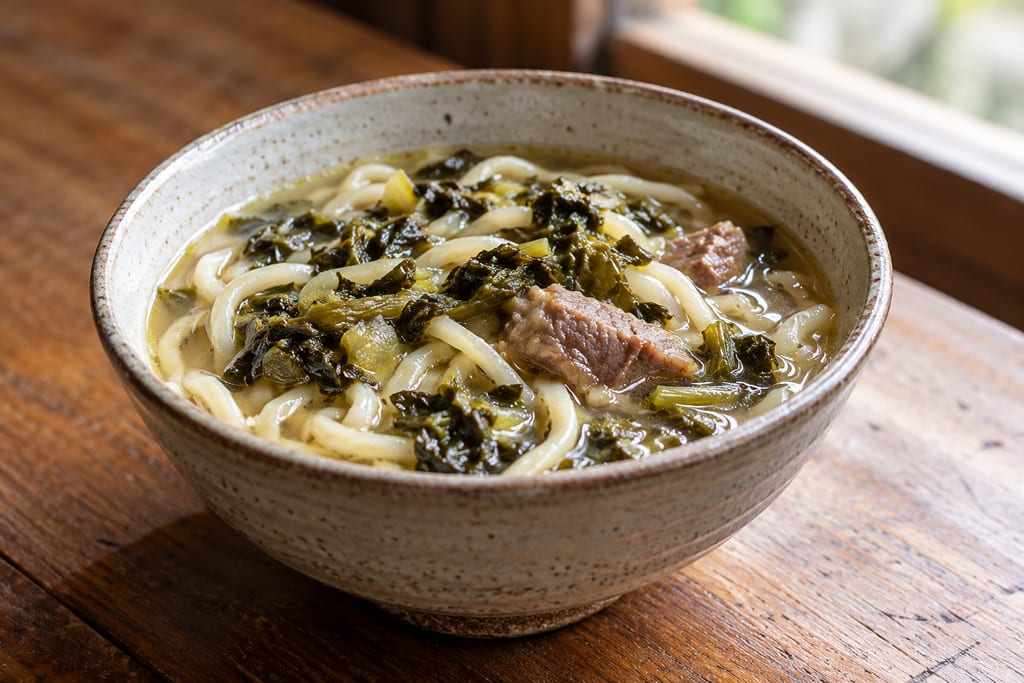
Goyang is a Sherpa fermented wild leafy food of the Darjeeling hills and Sikkim. Rainy-season magane-saag leaves are packed in a bamboo basket, held at room temperature for about a month, then eaten fresh or dried and used in soup.
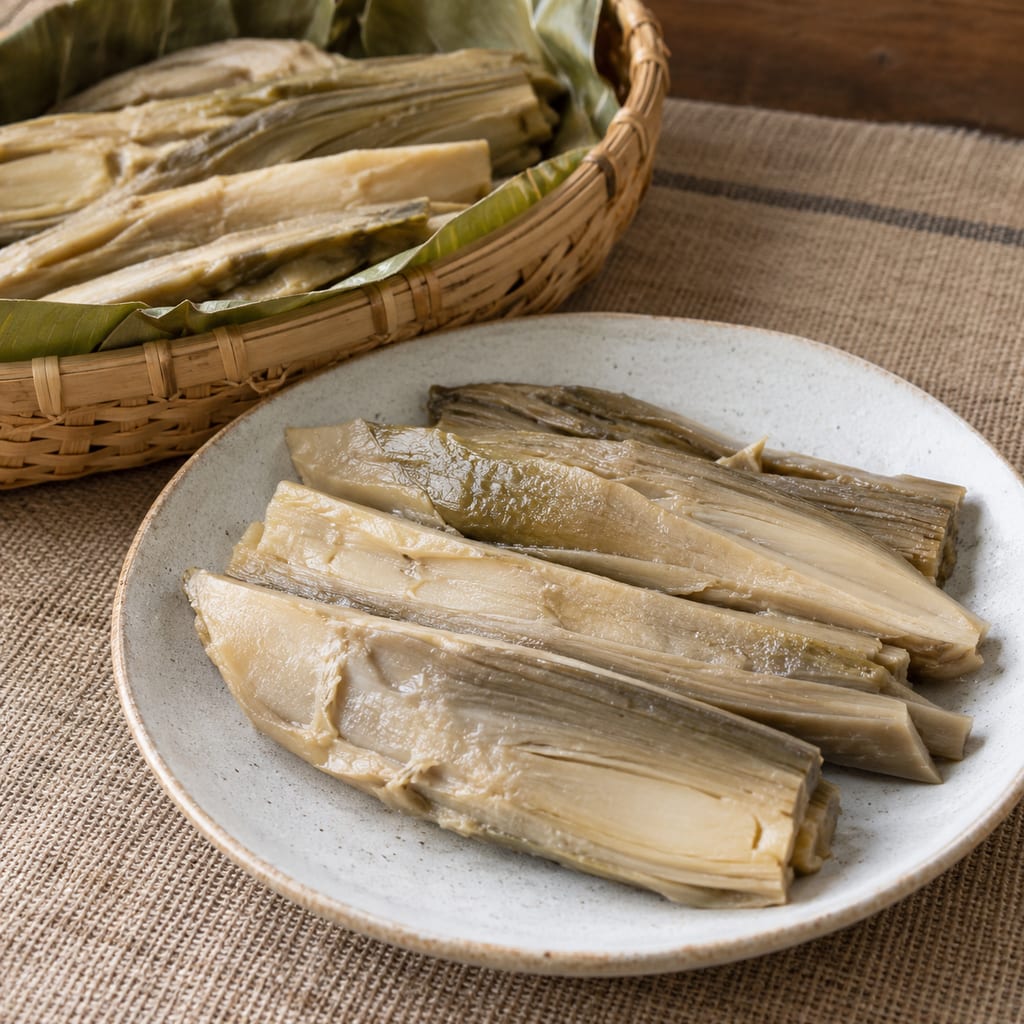
Upper tender bamboo-shoot tips, split or flattened, pit-fermented one to three months in Arunachal Pradesh and eaten in curries.
The original Polish barszcz: young hogweed leaves soured in warm water for a few days, then boiled into soup with egg, butter, cream or millet. Recorded from 1595, with warnings about the sap and lookalikes.
No community contributions have been published for this entry yet.
Sign in to contribute. Published comments and photos are free to read.
FAOInspiration
Fermented Fruits and Vegetables: A Global Perspective, Chapter 6Nepal gundruk context; leaf-wilting, shredding, tightly packed earthenware, warm water at about 30°C, ambient fermentation about 18°C for 5–7 days, and sun-drying; no post-drying storage method is stated.
Cited in: What is radish-leaf gundruk?; The role of gundruk in the Himalayan diet; Ingredients and their functions; The FAO household preparation; A different Sikkim and Darjeeling method; Cooking radish-leaf gundruk; What good gundruk looks and tastes like
University of Minnesota ExtensionSafety
Preserving food at home: FermentationProduce fermentation equipment, acidity monitoring and submersion controls.
Cited in: Ingredients and their functions; The FAO household preparation; A different Sikkim and Darjeeling method; Cooking radish-leaf gundruk; Safety and responsible reconstruction
Springer chapter by Tika Karki, Pravin Ojha and Om Prakash Panta (2016); copy hosted by Nepal Academy of Science and Technology libraryInspiration
Ethnic Fermented Foods of NepalConfirms this leafy substrate as a gundruk variant; its separate pit process and storage method are not substituted into the FAO pot method recorded here.
Cited in: Ingredients and their functions; The FAO household preparation; A different Sikkim and Darjeeling method; What actually happens microbiologically?; Newer microbiome research; Radish-leaf chemistry; Cooking radish-leaf gundruk
Tamang and colleaguesReference
Tamang and colleagues — Identification of predominant lactic acid bacteria in traditional Eastern Himalayan fermented vegetablesCited by the written account of this record.
Cited in: Origins and historical context; What actually happens microbiologically?; Newer microbiome research; Radish-leaf chemistry
TamangReference
Tamang — Ethno-microbiology of ethnic Indian fermented foods, 2022Cited by the written account of this record.
Cited in: What actually happens microbiologically?; Newer microbiome research; Radish-leaf chemistry
Das and colleaguesReference
Das and colleagues — Lactiplantibacillus plantarum dominates the core microbiota of gundruk across leafy substrates, 2026Cited by the written account of this record.
Cited in: What actually happens microbiologically?; Newer microbiome research; Radish-leaf chemistry
The Sikkim ProjectReference
The Sikkim Project — Fermented Food Culture of SikkimCited by the written account of this record.
Cited in: Origins and historical context