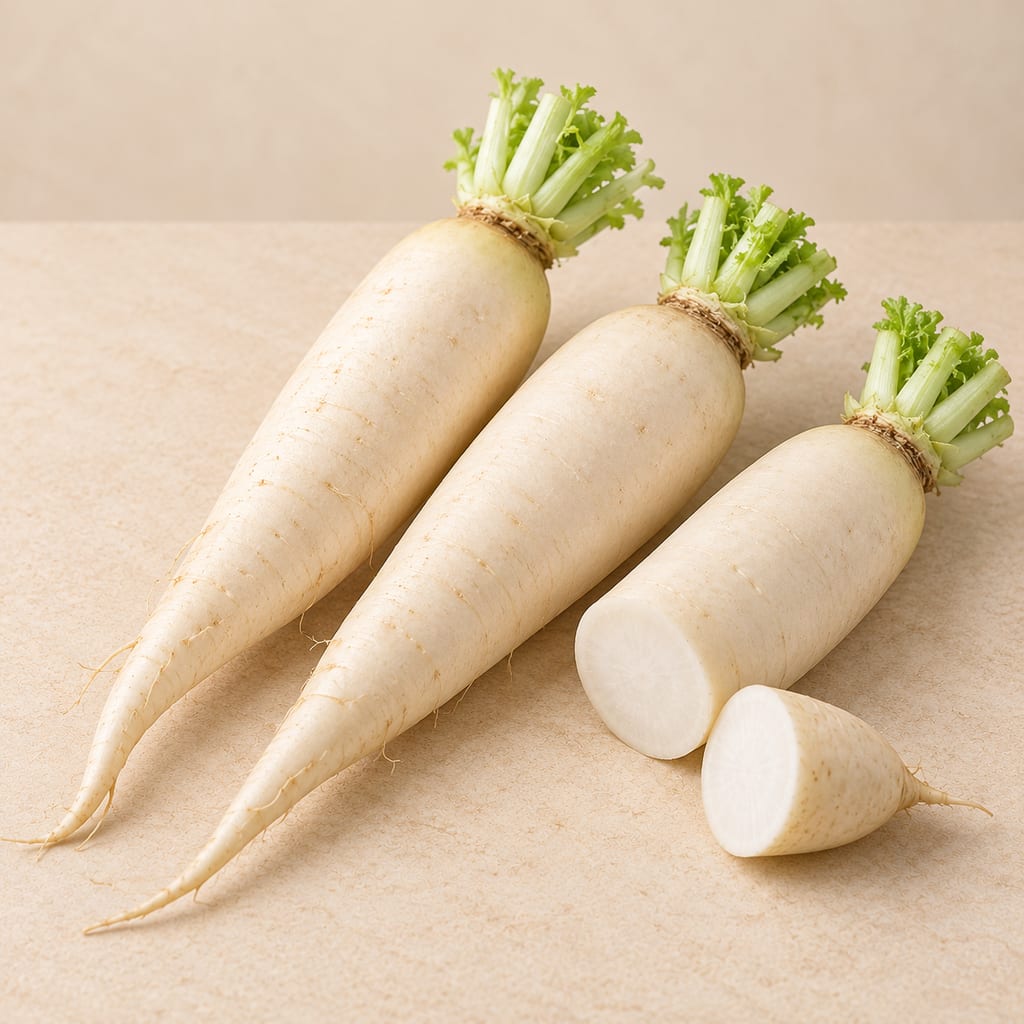
Radish and daikon
Radish and daikon are the crisp, peppery roots, leaves and seed pods of Raphanus sativus, fermented as kimchi, takuan and sinki and eaten raw across Asia and Europe.
 FermenteaWhere food goes to change
Traditional method
Sinki is a salt-free, fermented radish-taproot product dried after fermentation. Published jar and pit accounts use different conditions; neither supplies a validated home-preservation endpoint.
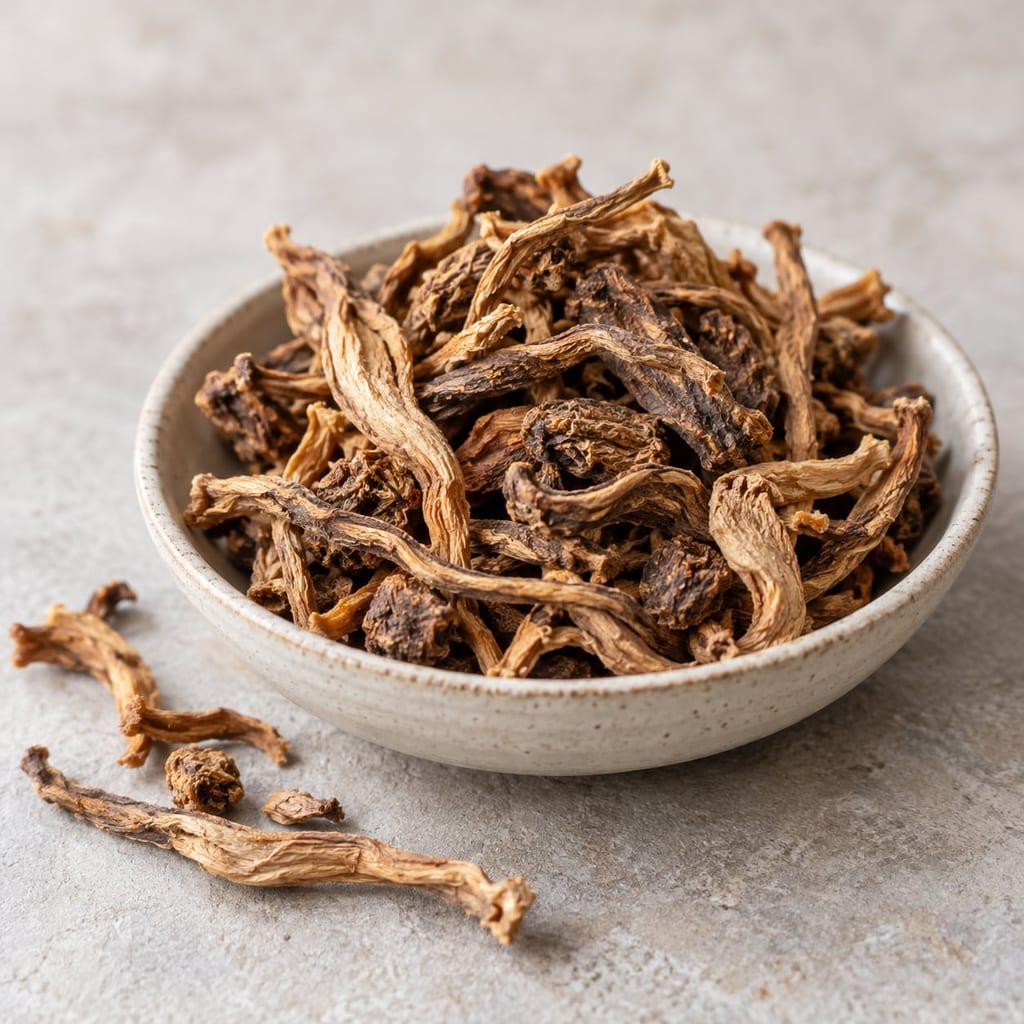
Sinki is a traditional fermented and dried food prepared from radish roots. It belongs to the fermented-vegetable traditions of Nepal, Sikkim, Darjeeling and some communities in Bhutan.
Its principal ingredient is the taproot of Raphanus sativus L., rather than the leaves.
This is the critical distinction between sinki and gundruk. The two foods are often mentioned together because both are traditionally made without added salt, rely on lactic-acid fermentation and may be dried for storage. Yet their textures, raw materials and some of their historical production methods differ significantly.
Fresh radish is crisp, watery and pungent. Fermentation converts it into a sour, softened vegetable. Subsequent drying produces a concentrated ingredient suitable for soups, pickles and other cooked dishes.
Sinki is not necessarily consumed directly after fermentation. The drying stage helps explain why it can be stored and transported, and why it often appears as an ingredient in meals rather than as a fresh pickle.
Traditional sinki may be prepared in jars or underground pits. These different methods are both documented, but they should not be collapsed into one supposedly universal recipe.
The precise invention date of sinki is unknown.
Its documented geographical distribution includes Nepal, Sikkim, Darjeeling and parts of Bhutan.
The food belongs to a broader preservation culture that includes gundruk, fermented bamboo shoots, soybean ferments, dairy products and traditional cereal beverages.
The historical problem it addressed was seasonal availability.
Radishes may be harvested in considerable quantities during the appropriate growing season. Although roots can be stored fresh under favourable conditions, they eventually lose quality, soften or deteriorate.
Fermentation offered a way to transform surplus radishes into a different product that households could use later.
Traditional sinki production was not confined to specialised factories. Ethnographic studies describe rural household production and local marketing.
In parts of Sikkim and Darjeeling, women were particularly important in preparing and selling fermented vegetables.
This gave the preservation practice an economic role as well as a domestic one.
Local accounts also connect the food with family knowledge and seasonal cooperation. Preparing large quantities requires harvesting, cleaning, cutting, arranging the fermentation vessel and later drying the product.
The Sikkim Project's ethnographic account describes village-level preparation and its continuing cultural importance.
A local oral narrative associates the discovery of gundruk and sinki with vegetables buried during conflict and later recovered in fermented form.
Such stories are valuable evidence of cultural memory, but they are not independently verified accounts of the foods' invention.
The most firmly documented modern scientific history begins with investigations into the microorganisms responsible for fermentation, especially work published by Jyoti Prakash Tamang and Prabir Kumar Sarkar in 1993.
Their study remains especially valuable because it examines sinki specifically rather than treating all Himalayan fermented vegetables as one product.
Radish roots contain substantial water, soluble carbohydrates, structural fibre, minerals and characteristic brassica compounds.
Their fresh pungency is associated partly with reactions involving glucosinolates and their breakdown products.
These reactions begin when plant tissues are disrupted.
Shredding or crushing exposes the interior of the radish and releases soluble nutrients.
That makes the material more available to fermenting microorganisms.
It also changes the physical structure of the root.
An intact radish retains a comparatively large distance between its outer surface and the centre. Shredding reduces that distance and produces material that can be packed compactly.
The packing stage matters because large air pockets can interfere with the intended low-oxygen environment.
The radish contains the carbohydrates used by lactic-acid bacteria, but there is no added cereal or sugar in the traditional formula discussed here.
The historical recipe is simple.
Fresh radish taproots — No universal batch weight supplied — Main fermentation substrate
Water — Used for washing and sometimes briefly soaking — Cleaning and preparation
Added salt — None — Traditional salt-free fermentation
Earthenware or glass vessel — Capacity not universally specified — Holds compressed radish
Drying surface — Size unspecified — Supports post-fermentation dehydration
Some traditional pit methods use bamboo sheaths, rice straw, leaves and soil as structural materials.
These are historically documented materials, not recommendations to reproduce a soil-lined fermentation without microbiological validation.
The 1993 sinki investigation established an experimental preparation with 12 days at 30°C as its reported optimum condition.
The FAO subsequently summarised that work.
1. Select fresh radishes. Roots should be suitable for food preparation and free from visible decay. Their quality influences the initial microbial population and the consistency of the substrate.
2. Wash thoroughly. Radish is a soil-grown root, so removing adhering soil is especially important.
3. Wilt for 1–2 days. The FAO preparation describes wilting by exposure to sunlight. This softens the roots and reduces some surface moisture.
4. Shred the roots. Cutting or crushing increases surface area and makes the vegetable easier to compress.
5. Wash the shredded material again. The traditional process includes a second washing before packing.
6. Pack tightly in a jar. Earthenware and glass containers are documented. Compression reduces large trapped air spaces.
7. Allow the documented fermentation. The laboratory optimum was 12 days at 30°C. That is an observed research condition, not a validated general home-preservation endpoint.
8. Remove after fermentation. The radish has become acidic and texturally different from the original fresh material.
9. Dry. Traditional sinki is sun-dried after fermentation. The FAO describes a finished moisture content of approximately 21% in the preparation it summarises.
10. Protect during storage. The finished product requires storage appropriate to its actual moisture, acidity, packaging and intended shelf life.
The reported final moisture content is worth emphasising. Approximately 21% moisture is not the same as a universally safe water activity.
The relationship between moisture content and microbial stability depends on the product's composition.
Therefore, this figure must not be converted into a general safety target without additional evidence.
A particularly distinctive traditional method uses an underground fermentation pit.
Ethnographic research describes pits approximately 2–3 feet in diameter, with dimensions varying by household and location.
The site is selected in a dry place.
The pit is cleaned and prepared, sometimes warmed by a fire.
After the fire has burned out, ashes are removed.
The sides may be plastered with mud and lined with bamboo sheaths and paddy straw.
Prepared radish roots are wilted, crushed, briefly treated with lukewarm water and compressed into the lined pit.
The packed vegetable is covered with dry leaves and weighted using planks or stones.
The upper opening is sealed with mud.
One well-documented Sikkim method allows fermentation for approximately 22–30 days.
After the fermented radish is removed, it is cut and sun-dried for approximately 2–3 days in one published description. Another ethnographic source reports 3–5 days.
Those drying figures describe different observations, not interchangeable guarantees.
ScienceDirect
A pit fermentation is a different processing environment from a clean glass jar.
Soil, structural linings, heat retention, moisture, drainage and the microbial communities associated with the vessel may all influence the final product.
The historical evidence therefore makes pit fermentation a valuable subject for cultural documentation, but not an automatically safe modern home procedure.
The 1993 paper is unusually informative.
Researchers examined 40 sinki samples and isolated 453 strains of lactic-acid bacteria.
The predominant cultured species belonged to groups then called Lactobacillus plantarum and Lactobacillus brevis.
Both appeared in all the analysed samples.
The published trial also identified Lactobacillus fermentum in the original substrate.
Under the research conditions, fermentation began with heterofermentative L. fermentum.
It was followed by L. brevis, another heterofermentative organism.
Later, L. plantarum, a predominantly homofermentative lactic-acid bacterium, became important.
This sequence is significant because it shows fermentation as an ecological succession rather than the action of one organism from beginning to end.
The organisms differ in the products they make from carbohydrates.
Heterofermentative bacteria may generate lactic acid alongside other metabolites and gas.
Predominantly homofermentative organisms direct more of the available carbohydrate into lactic acid.
These changes influence acidity and flavour.
The published trial reported a decline in pH from 6.7 to 3.3.
Titratable acidity increased from 0.04% to 1.28% under its optimised conditions.
These are measured research results, not inevitable endpoints for every traditionally fermented batch.
J-STAGE
A useful technical distinction is that pH and titratable acidity do not mean the same thing.
pH describes the activity of hydrogen ions in the food.
Titratable acidity measures the quantity of acid-neutralising capacity according to the analytical method used.
Two products can have similar pH values but different total amounts of organic acid because their buffering properties differ.
Radish tissue contains substances that influence buffering.
The increase from 0.04% to 1.28% titratable acidity therefore provides information that the pH decline alone does not capture.
Together, the measurements help explain how fermentation produces a strongly sour food.
They also demonstrate why simply counting days cannot substitute for assessing an actual fermentation.
Studies beyond the 1993 investigation have identified additional lactic-acid bacteria associated with traditional sinki and neighbouring fermented vegetables.
These include organisms reported under names such as Lactobacillus casei and Leuconostoc fallax.
Differences between studies can arise from the region sampled, the fermentation stage, processing conditions and laboratory identification methods.
A microbial species found in one sample should not automatically be declared essential to every sinki fermentation.
The overall pattern is more defensible: successful sinki is characterised by the activity of acid-producing microorganisms, with the precise community varying.
Fresh radish has a pungent, crisp, sometimes peppery character.
Fermentation adds substantial acidity.
It can also moderate or transform some of the original pungency.
Shredding, wilting and fermentation soften the root structure.
The subsequent drying stage concentrates flavours and produces a tougher, more compact ingredient.
When cooked, sinki reabsorbs water and softens again.
Because the roots were already structurally changed during fermentation, rehydrated sinki does not regain the crisp texture of freshly cut radish.
Its value is the concentrated sour flavour and characteristic texture.
Sinki is traditionally used as a soup base or as a pickle-like accompaniment.
A particularly useful documented serving method appears in the FAO account.
The dried sinki is rinsed in water for two minutes and squeezed to remove excess water.
It is then fried with salt, tomato, onion and green chilli.
The fried mixture is subsequently boiled in rice water and served hot as a soup alongside the main meal.
The FAO does not give a complete set of ingredient weights or a validated cooking duration for this dish.
Those values should remain unspecified rather than being invented.
The sequence nevertheless explains the dish's flavour development.
Rinsing and squeezing affect the intensity of the preserved ingredient.
Frying creates a savoury aromatic base.
Tomato reinforces acidity and adds body.
Chilli contributes pungency.
Rice water provides liquid and starch, giving the soup a different mouthfeel from plain water.
Sinki can also be prepared as a more concentrated accompaniment rather than a soup.
Its sourness complements rice and other starchy foods.
In Nepal, sinki is closely associated with fermented radish roots prepared for drying and later cooking.
In Sikkim and Darjeeling, ethnographic work documents pit fermentation and local market sales.
Similar foods occur in parts of Bhutan.
The actual practice may differ between households and communities.
The most substantial differences concern vessel construction, fermentation duration, root preparation and subsequent drying.
A recipe database should record the region and the observed process separately.
The fact that both a jar method and pit method produce sinki does not establish that they have identical microbiology or shelf lives.
Successful sinki develops pronounced acidity and a recognisable fermented-radish flavour.
The product may be quite strong-smelling without necessarily being defective.
However, clearly putrid odours, slime, visible mould or signs of tissue decomposition are warning signs.
Drying quality is especially important.
The pieces must be sufficiently stable for their intended storage conditions.
Traditional accounts mention prolonged storage, sometimes extending for years, but such observations cannot establish a guaranteed shelf life for every modern batch.
Water activity, packaging, moisture uptake and contamination determine the actual stability.
A commercial producer should validate these properties directly.
The lack of added salt is an important technical characteristic.
The fermentation depends on suitable acid-producing organisms establishing themselves.
The pit method adds potential environmental contamination hazards.
The published pH of 3.3 demonstrates that effective acidification is possible, but it does not prove that every batch reaches that condition.
The traditional fermentation periods of 12 days and 22–30 days should never be treated as interchangeable safe instructions.
Modern reconstruction requires a process appropriate to the actual equipment and raw material, with validated hygiene, temperature, acidification and drying controls.
Traditional radish-root pickle.
Scaling: source batch only
Traditional sinki packs radish roots without added salt or a brine. The cited studies do not establish general household acidification, drying or storage limits.
Hazard sourceNo validated household batch or safety endpoint is supplied for this salt-free ferment.
The published 12-day, 30°C and approximately 21% moisture observations are not general safety limits.
Smell, taste, bubbles and appearance cannot prove safety.
The source supports this broad area and no precise location.
Radish and daikon are the crisp, peppery roots, leaves and seed pods of Raphanus sativus, fermented as kimchi, takuan and sinki and eaten raw across Asia and Europe.
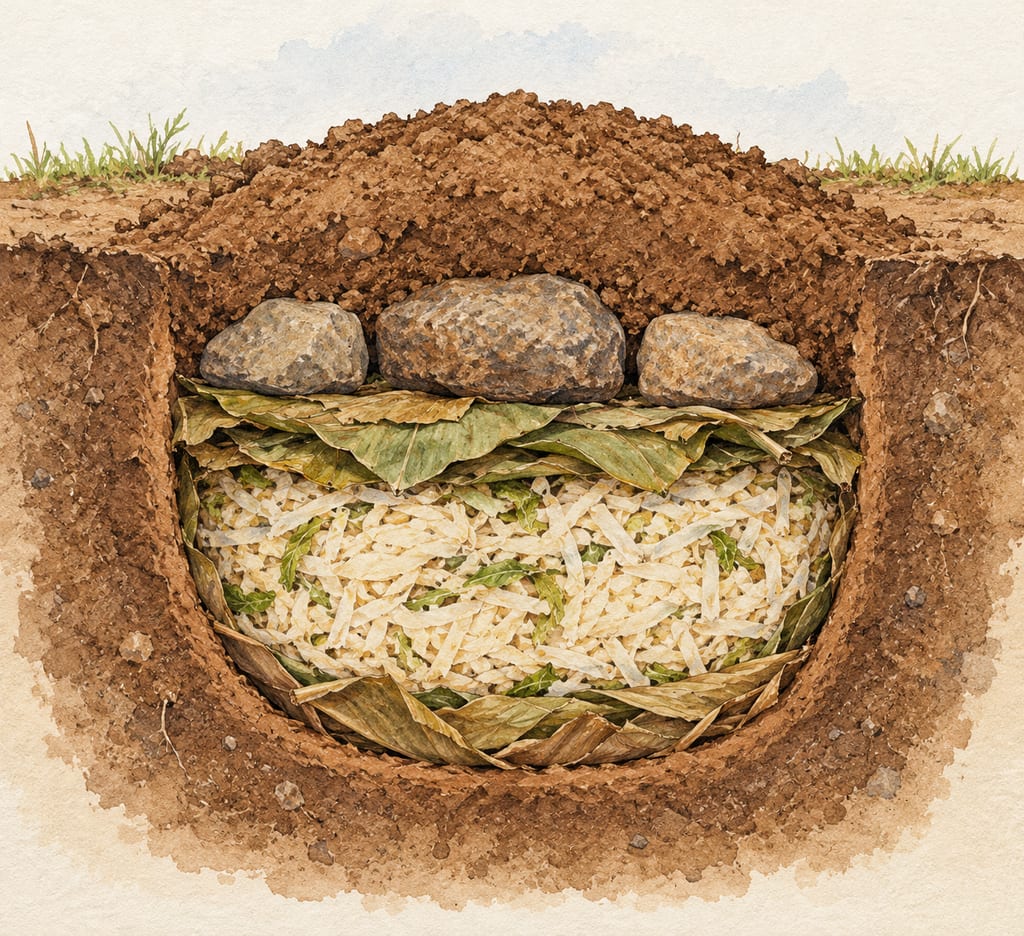
A leaf-lined earthen pit used in documented Himalayan sinki preparation; construction materials and timings vary by source and household.
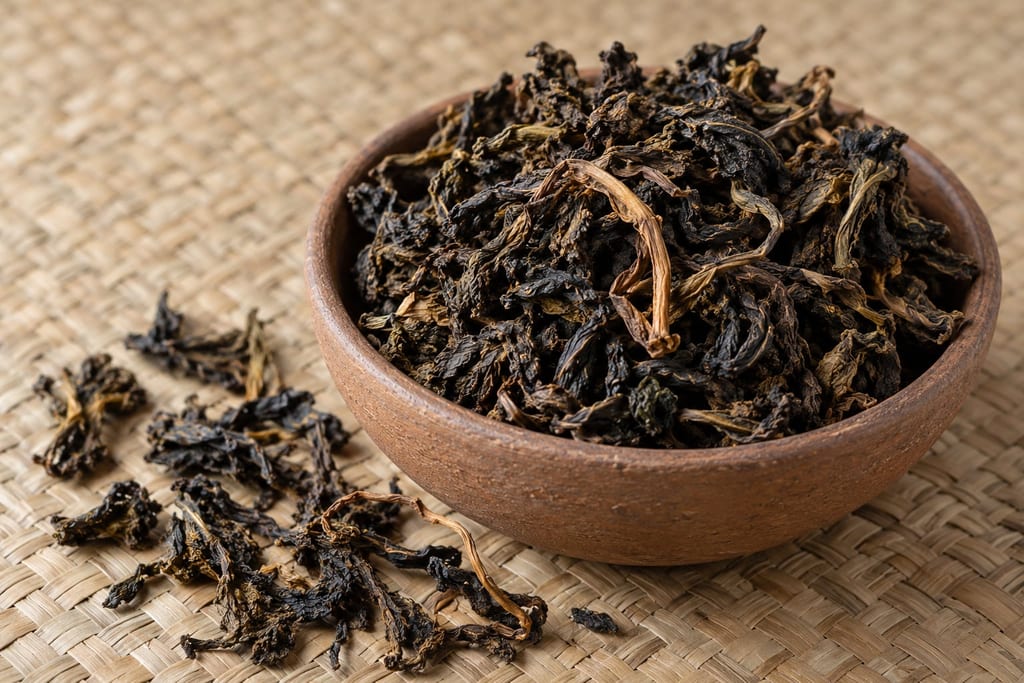
Mustard leaves wilted, bruised and packed tight into an earthenware vessel to sour without salt, then sun-dried into dark tangled pieces that carry Himalayan meals through the year.
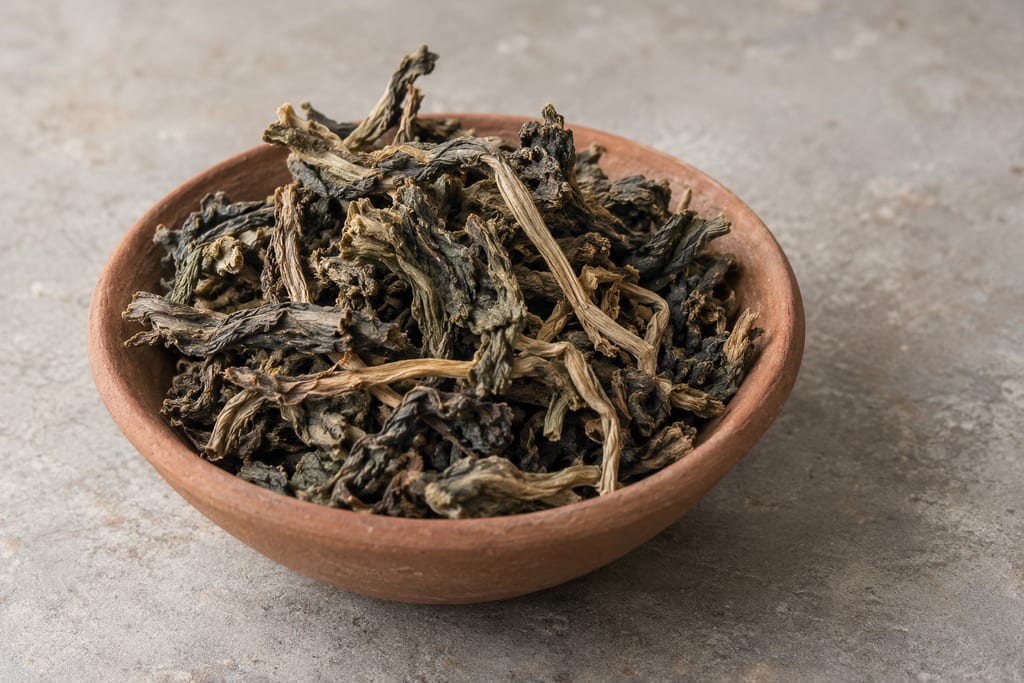
Radish greens wilted, packed into an earthen pot with warm water and fermented without salt, then sun-dried into Nepal's dark, sour gundruk.
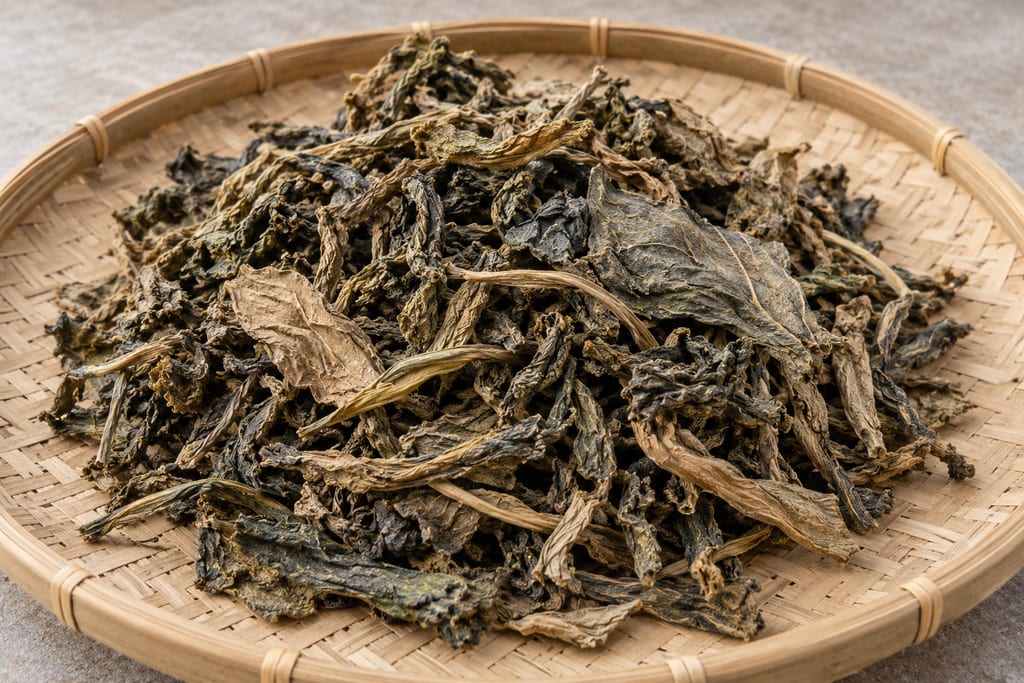
Wilted and shredded Brassica rapa rayo-sag leaves, packed under warm water in earthenware, fermented five to seven days, then sun-dried as Nepali gundruk.
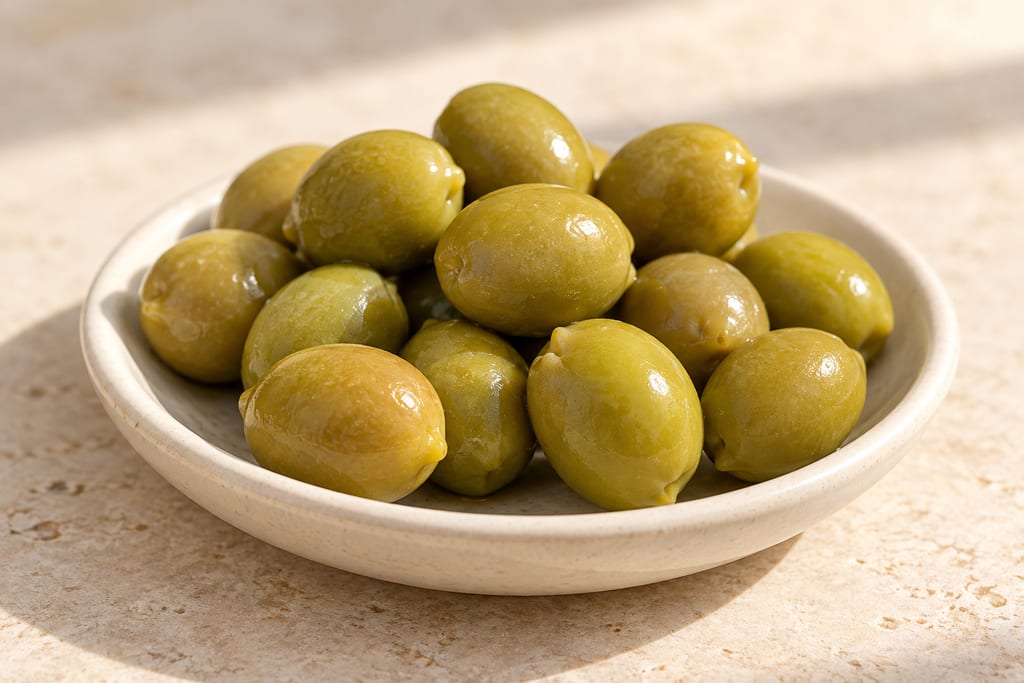
A Portuguese table-olive product from the Negrinha cultivar in northeastern Portugal, sold in three commercial styles, two of them brined fermentations and one oxidised to black.
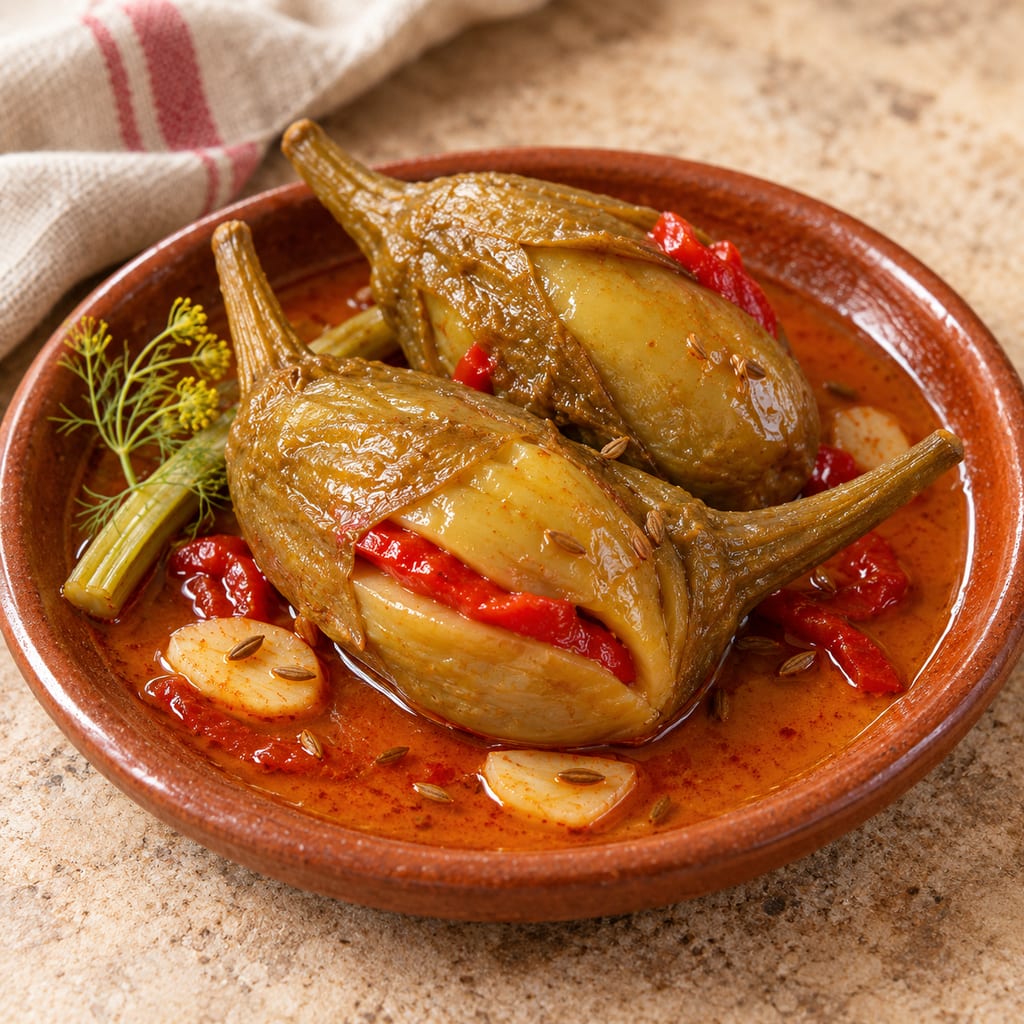
A protected aubergine preserve from Ciudad Real in Spain: tender fruit of the local Dealmagro variety, cooked briefly and then fermented in a vinegared, paprika-seasoned dressing.
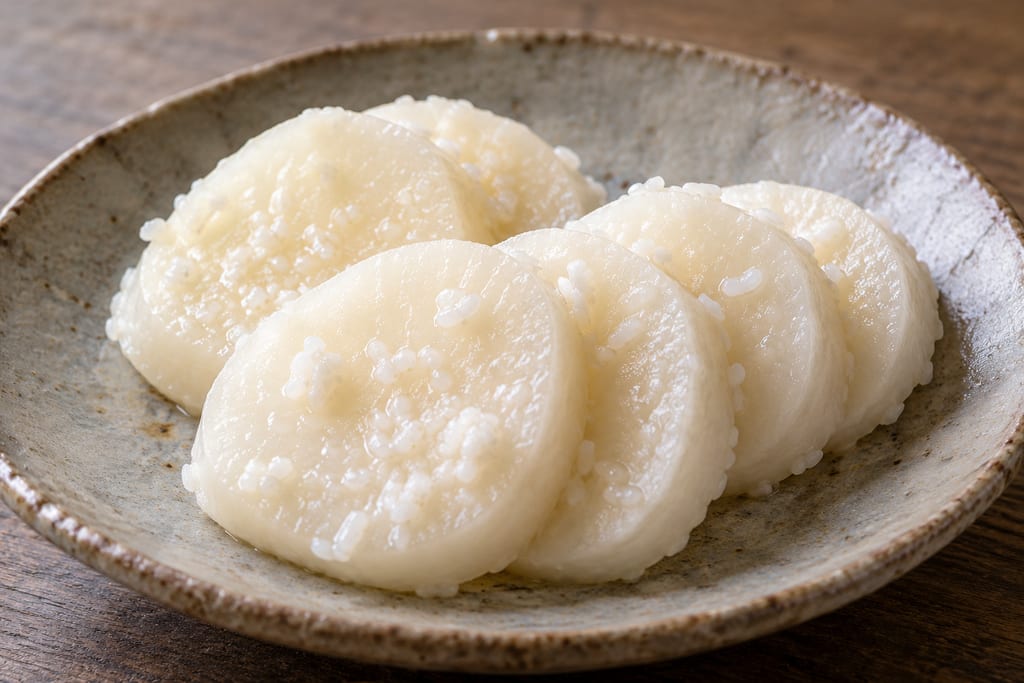
A sweet, crisp Japanese daikon pickle from Tokyo's Nihonbashi district, made by salting fresh radish and dressing it in rice koji, sugar or koji amazake without the heavy drying used for takuan.
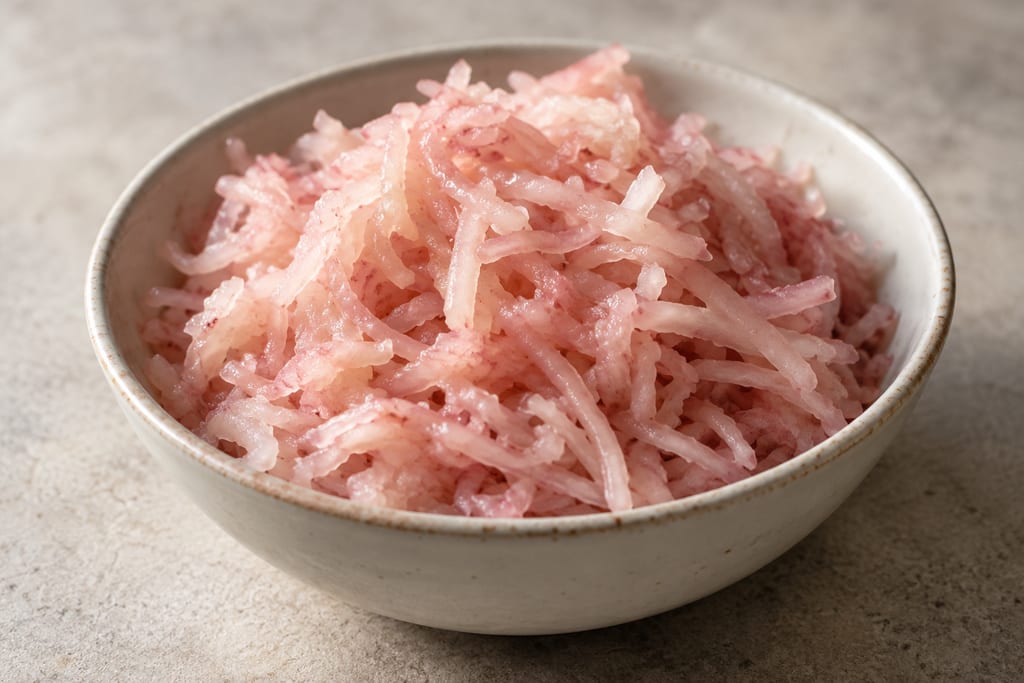
Source-specific Brovada DOP producer method for Friuli Venezia Giulia turnips and red-grape marc. This records a regulated producer process; it is not a validated home-scale recipe.
An industrial fermentation patio places factory-made fiberglass-reinforced polyester olive tanks below floor level, with drainage and transfer infrastructure arranged around the buried vessels.
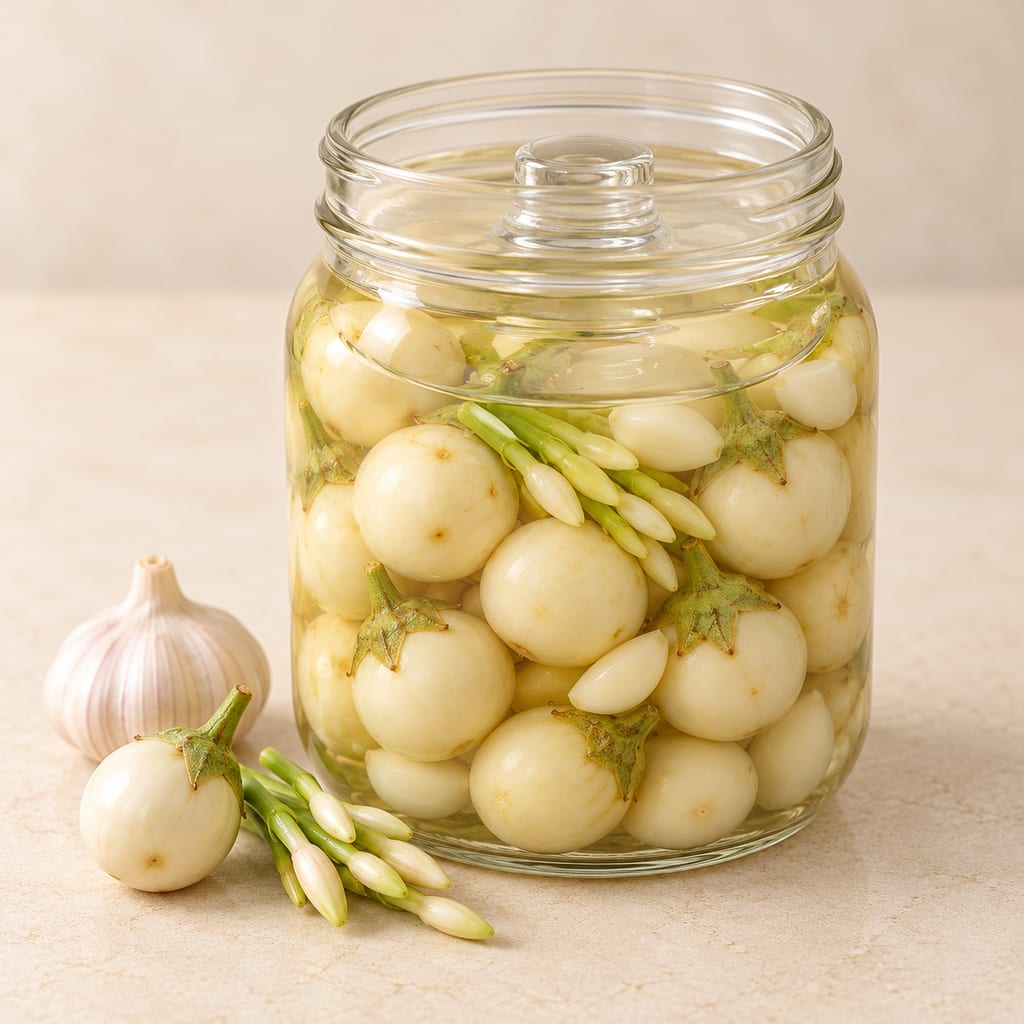
Vietnamese salted and fermented small eggplant, dried on the day of purchase, then held submerged in warm salty water with garlic and galingale flower for a week or longer.
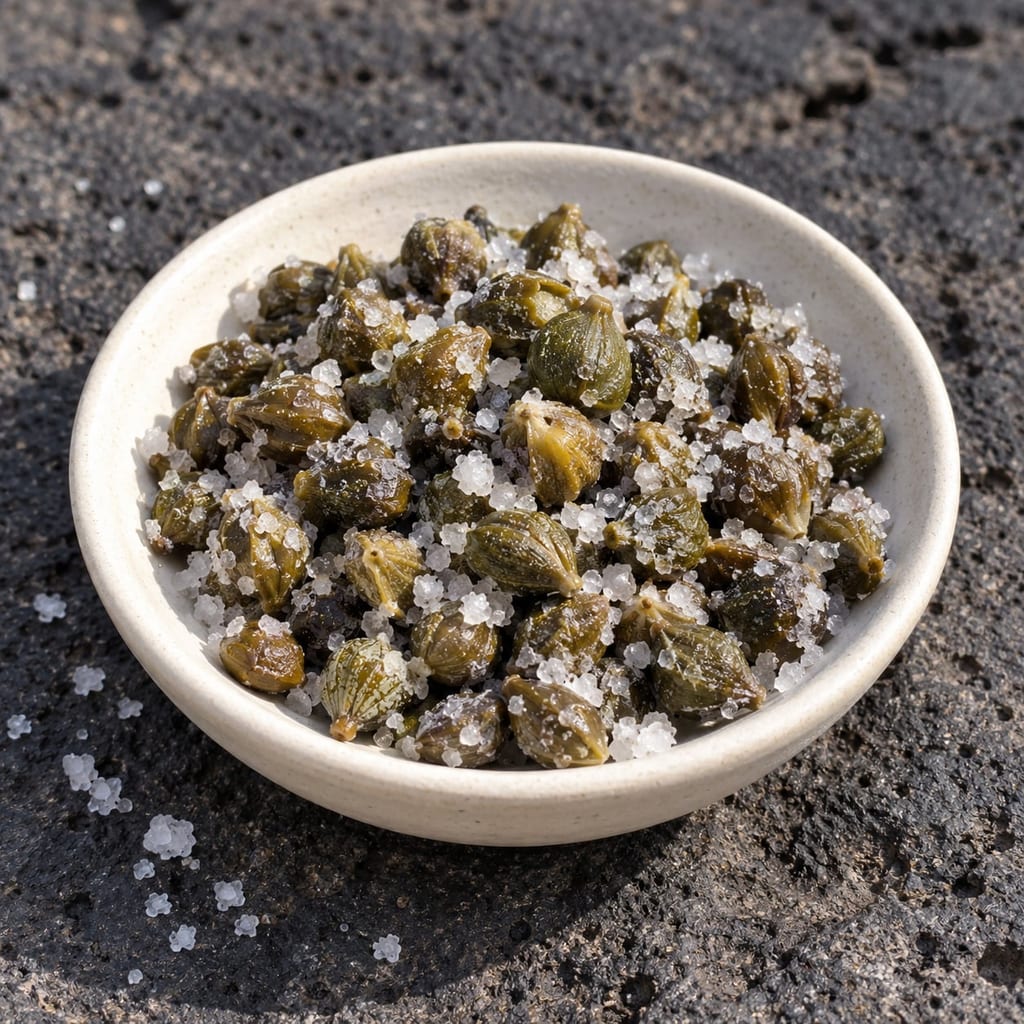
A protected Sicilian product: unopened caper buds from the island of Pantelleria, dry-salted with sea salt in a two-stage process that encourages lactic fermentation.
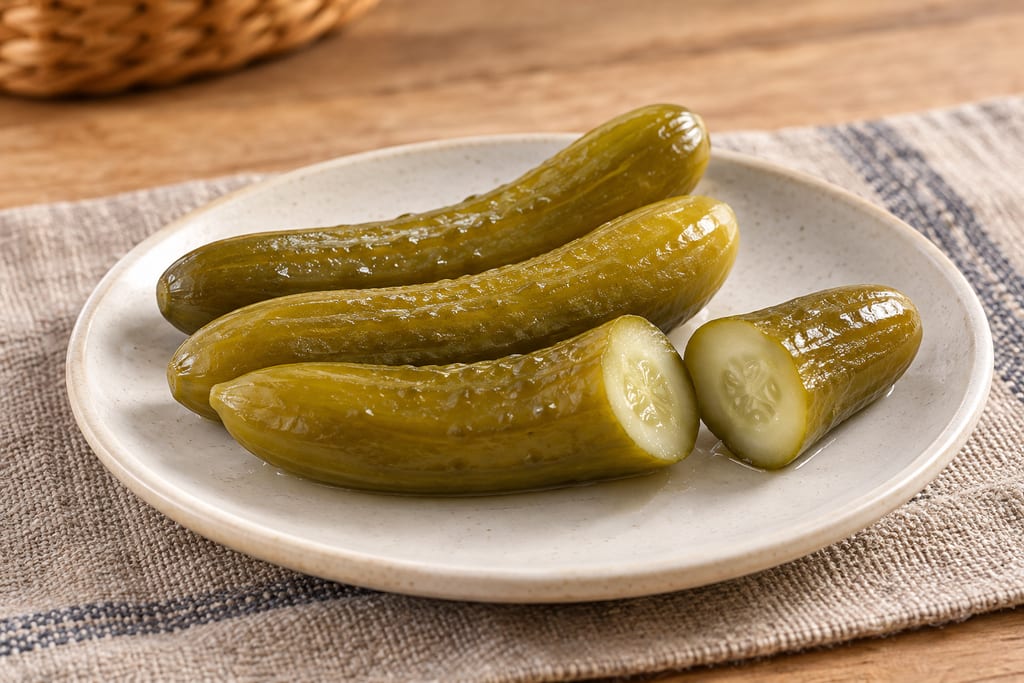
Çubuk turşusu is a registered pickle from Çubuk district in Ankara. Its cucumber variant is sold as Salatalık Turşusu, and a commercial specification sets its brine and room-temperature period.
No community contributions have been published for this entry yet.
Sign in to contribute. Published comments and photos are free to read.
FAOInspiration
Fermented Fruits and Vegetables: A Global Perspective, Chapter 6traditional processes, quantities and timings
Cited in: What is sinki?; Historical and cultural background; Ingredients and equipment; Jar fermentation: the researched process; Underground fermentation in Sikkim; How sinki is actually eaten; Regional variation and household identity; Quality, defects and storage
University of Minnesota ExtensionSafety
Preserving food at home: FermentationProduce fermentation equipment, acidity monitoring and submersion controls.
Cited in: Ingredients and equipment; Jar fermentation: the researched process; How sinki is actually eaten; Regional variation and household identity; Quality, defects and storage; Safety considerations
Tamang and Sarkar, 1993Reference
Tamang and Sarkar, 1993 — Sinki: A Traditional Lactic Acid Fermented Radish Tap Root ProductCited by the written account of this record.
Cited in: Historical and cultural background; Why radish roots are suitable; The 1993 microbiological investigation; The difference between pH and titratable acidity; Other microorganisms; What happens to flavour and texture?; Regional variation and household identity
sciencedirect.comReference
Identification of predominant lactic-acid bacteria in traditional Eastern Himalayan fermented vegetablesCited by the written account of this record.
Cited in: Historical and cultural background; Why radish roots are suitable; The 1993 microbiological investigation; The difference between pH and titratable acidity; Other microorganisms; What happens to flavour and texture?; Regional variation and household identity
Fermented Fruits and Vegetables of AsiaReference
Fermented Fruits and Vegetables of Asia: A Potential Source of ProbioticsCited by the written account of this record.
Cited in: Why radish roots are suitable; The 1993 microbiological investigation; The difference between pH and titratable acidity; Other microorganisms; What happens to flavour and texture?
researchgate.netReference
Traditional Knowledge of Biopreservation in Northeast IndiaCited by the written account of this record.
Cited in: Historical and cultural background; Why radish roots are suitable; Ingredients and equipment; Jar fermentation: the researched process; The 1993 microbiological investigation; The difference between pH and titratable acidity; Other microorganisms; What happens to flavour and texture?; How sinki is actually eaten; Regional variation and household identity; Quality, defects and storage
The Sikkim ProjectReference
The Sikkim Project — Fermented Food CultureCited by the written account of this record.
Cited in: Historical and cultural background; Regional variation and household identity