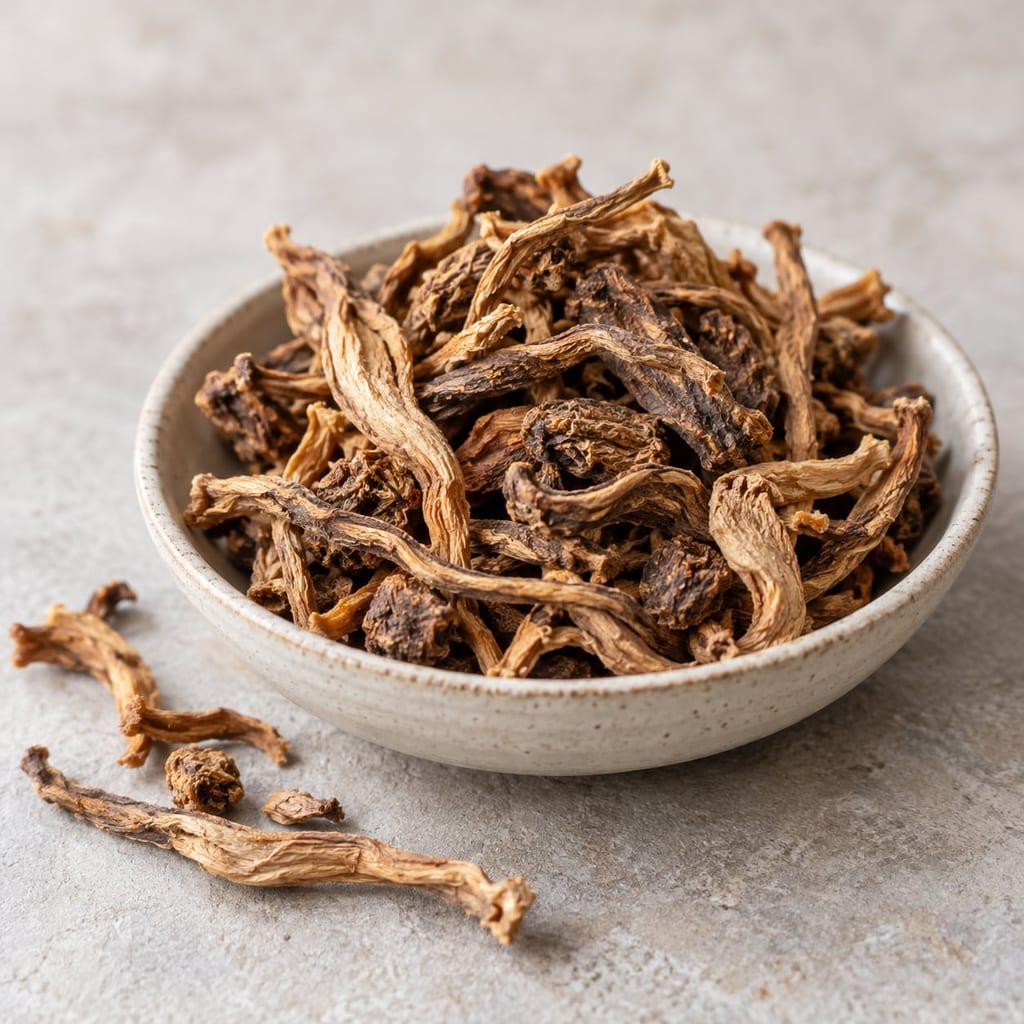
Sinki
Sinki is a salt-free, fermented radish-taproot product dried after fermentation. Published jar and pit accounts use different conditions; neither supplies a validated home-preservation endpoint.
 FermenteaWhere food goes to change
Built structures · Pits and cavities
A leaf-lined earthen pit used in documented Himalayan sinki preparation; construction materials and timings vary by source and household.
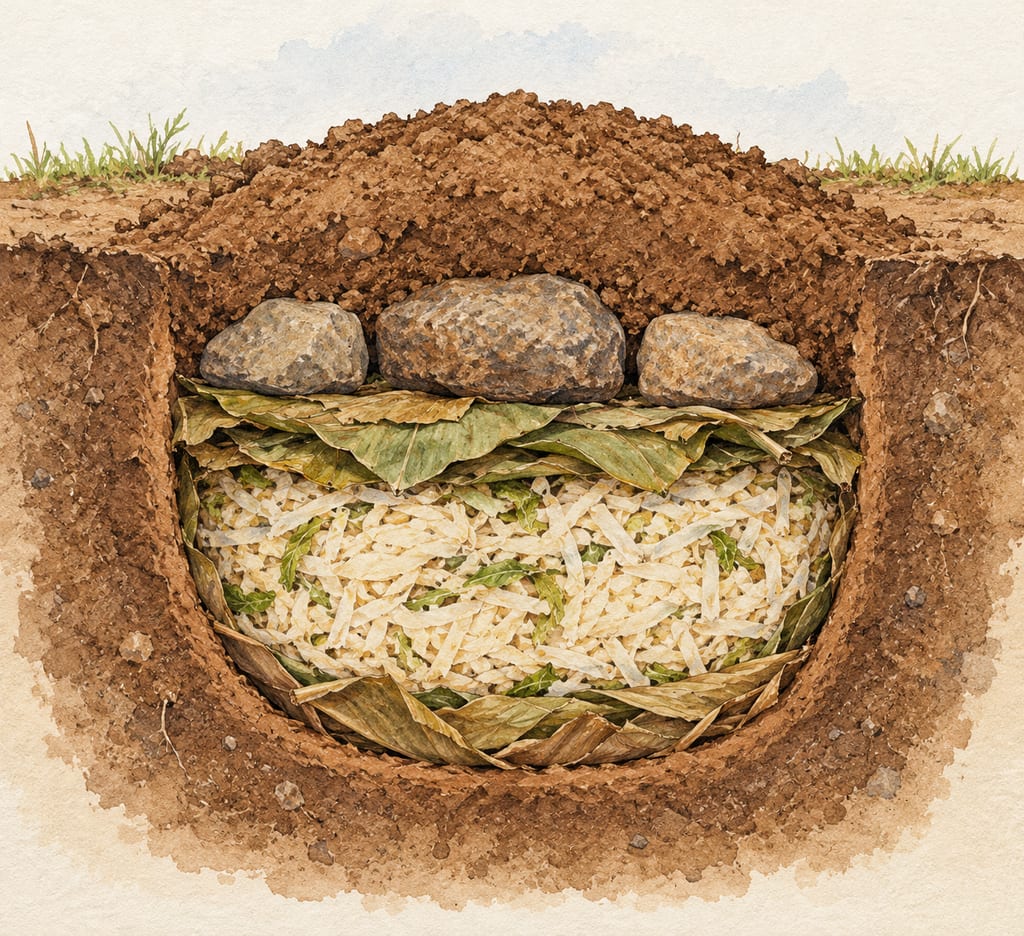
Sinki is a fermented radish taproot preparation associated with the Eastern Himalayas. Some traditional accounts use an earthen pit rather than an earthenware or glass jar. This record describes that below-ground build, not every sinki method: Tamang and Sarkar distinguish their jar experiment from their account of pit preparation, while Ayushi Nirola documents a contemporary pit process in West Sikkim. Their observations should not be collapsed into a single standard design.
Tamang and Sarkar describe pits warmed by burning and cleared of ash before being lined with dried bamboo, banana or radish leaves. Wilted, shredded radish is packed tightly inside; leaves cover it, heavy stones or planks compress the cover, and mud seals the opening. Their account gives about one metre for some pits, while other published descriptions give different dimensions or details. The photograph linked here shows a person digging a Sikkim pit; it does not show the liner or prove the dimensions of the older account.
The closed pit holds the radish during spontaneous fermentation. Published descriptions report about one month or 30–40 days, reflecting variation rather than a prescribed duration. Nirola's field account describes preheating with fire and about a month underground; Tamang and Sarkar's traditional-method account gives a 30–40 day range. Both distinguish the pit stage from the later removal and sun-drying of sinki. The fermentation pit is therefore one stage in a preservation process, not the storage container for the fully dried product.
Tamang and Sarkar place sinki consumption in northeastern India, Nepal and a few places in Bhutan; the specific field account used here documents a household process in West Sikkim. The available sources do not show that one lining, depth, batch size or closure is shared everywhere. They also do not establish an origin date. The Sikkim Project records oral accounts about the food's past, but those narratives are not treated here as proof of a dated historical origin. Sinki is linked to a separate recipe record; jar-fermented sinki remains a distinct method.
Tamang and Sarkar documented sinki and its pit method in 1993; Ayushi Nirola's 2023 field account records a contemporary Sikkim household process. Neither establishes a single origin date, and the page does not repeat origin folklore as history.
A build is made where it stands: moving it means building it again.
A 2023 field account documents pit preparation in West Sikkim; the 1993 study records sinki across a wider region but does not establish one universal pit form.
Sinki is a salt-free, fermented radish-taproot product dried after fermentation. Published jar and pit accounts use different conditions; neither supplies a validated home-preservation endpoint.
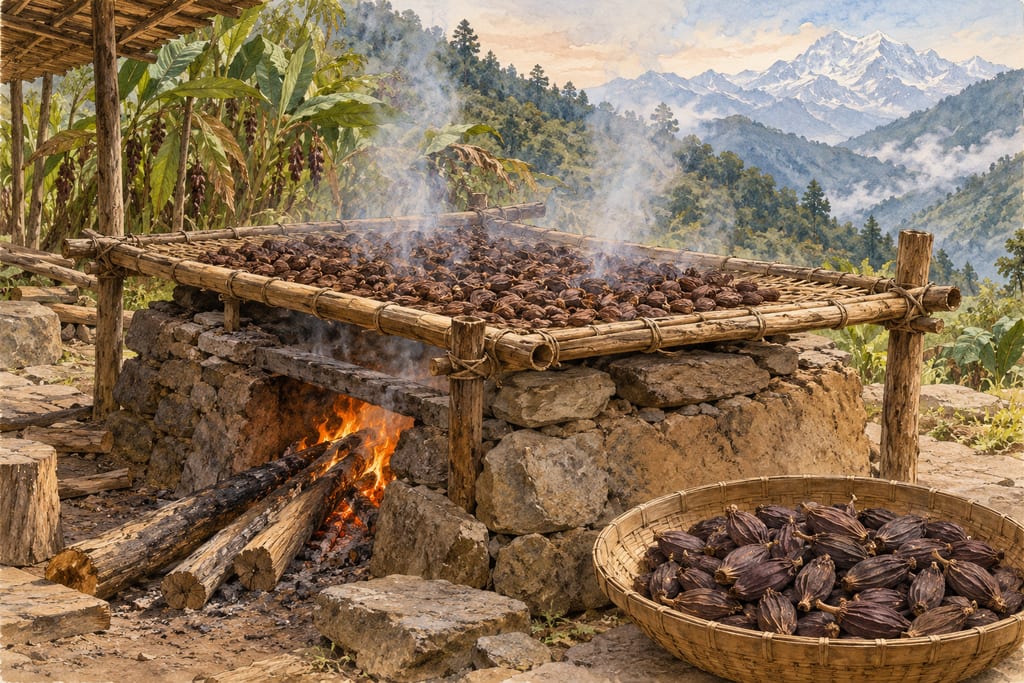
A traditional Sikkim large-cardamom bhatti is a fixed, field-side curing structure: a stone or earth-sided fire chamber supports a raised bamboo-mat drying bed, where capsules are exposed to direct heat and smoke.
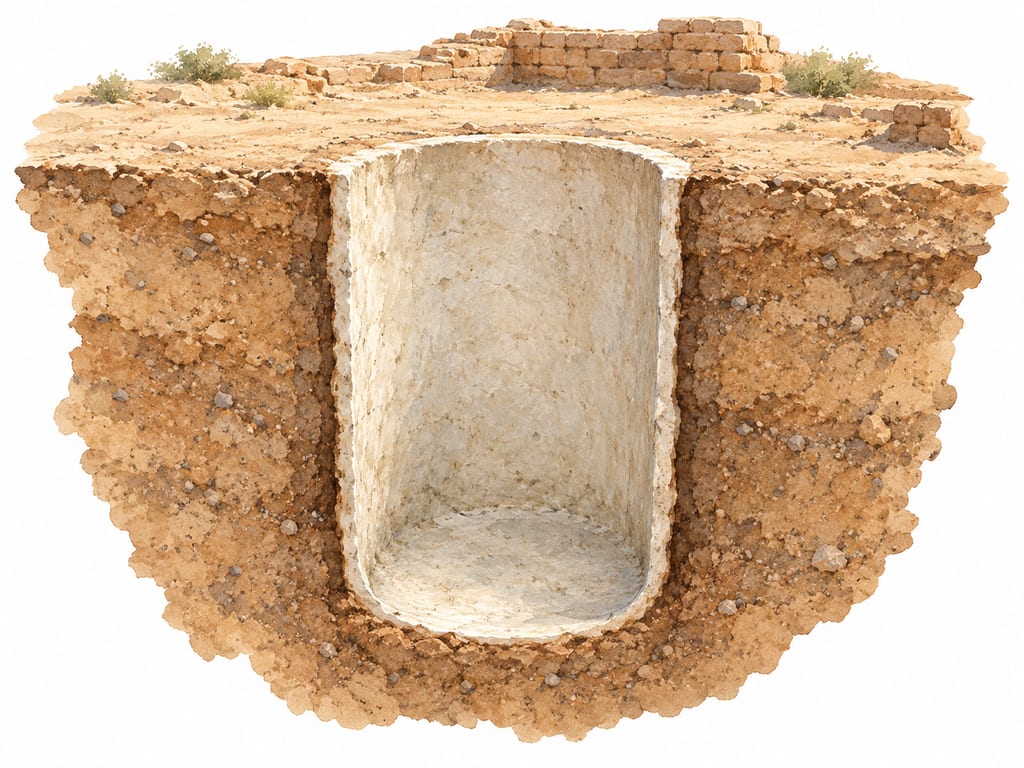
Kalibangan Period I preserves distinct lime-plastered pits and underground ovens. Grain storage is one interpretation of the pits; an earlier excavation account suggests water storage.
No community contributions have been published for this entry yet.
Sign in to contribute. Published comments and photos are free to read.
Journal of General and Applied Microbiology (J-STAGE)Method · Geography
Sinki: A Traditional Lactic Acid Fermented Radish Tap Root ProductDescribes some traditional sinki pit methods with fire-warmed earth, leaf lining, compressed radish, leaf cover, stones or planks and mud sealing.
Reports variations in pit dimensions and fermentation duration; separately reports an experimental glass-jar method, which this page distinguishes from the pit.
Places sinki consumption in northeastern India, Nepal and a few Bhutan communities.
Cited in: The pit used for sinki; Lining, packing and closure; Fermentation happens underground; Regional practice and limits of the record
Sikkim ProjectMethod · Geography · Contemporary use
The Fermented Food Culture of SikkimFieldwork in West Sikkim documents preheating a pit and placing radish in it for around one month before drying.
The source describes one contemporary household process and does not establish a universal pit form or capacity.
Cited in: The pit used for sinki; Lining, packing and closure; Fermentation happens underground; Regional practice and limits of the record