← Equipment

Built structures · Place · Pits and cavities

Kalibangan lime-plastered pits and underground ovens

Kalibangan Period I pits and ovens · Kalibangan underground pits · Kalibangan lime-plastered pits

Loading ratings…

Kalibangan Period I preserves distinct lime-plastered pits and underground ovens. Grain storage is one interpretation of the pits; an earlier excavation account suggests water storage.

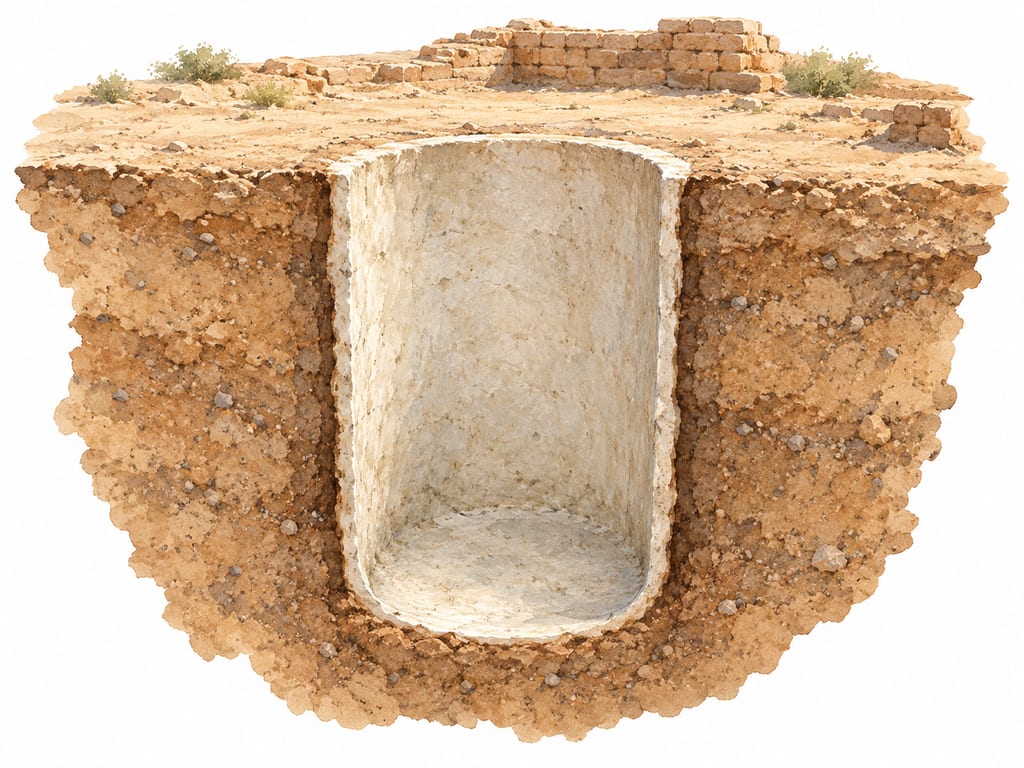
Interpretive cutaway of a possible empty lime-plastered pit below a Kalibangan courtyard, with the surrounding earth visible.

Kalibangan and its Period I settlement

Kalibangan stands in northern Rajasthan beside the now-dry Ghaggar channel. B.K. Thapar's excavation overview describes two mounds and a sequence of occupations, with Period I preceding the later Harappan city. He characterizes the earlier settlement as fortified and records houses arranged around courtyards. The exact terminology varies between “pre-Harappan,” “Early Harappan,” and “Kalibangan I,” so this entry keeps those labels tied to the archaeological period rather than treating them as a uniform cultural name.

The site evidence concerns several kinds of domestic and built features. Excavation summaries describe underground and above-ground ovens as well as separate cylindrical pits lined with lime plaster. These observations come from a particular site and layer; they do not establish one standard household arrangement across the wider Indus region.

Sources for this section

Separate pits from ovens

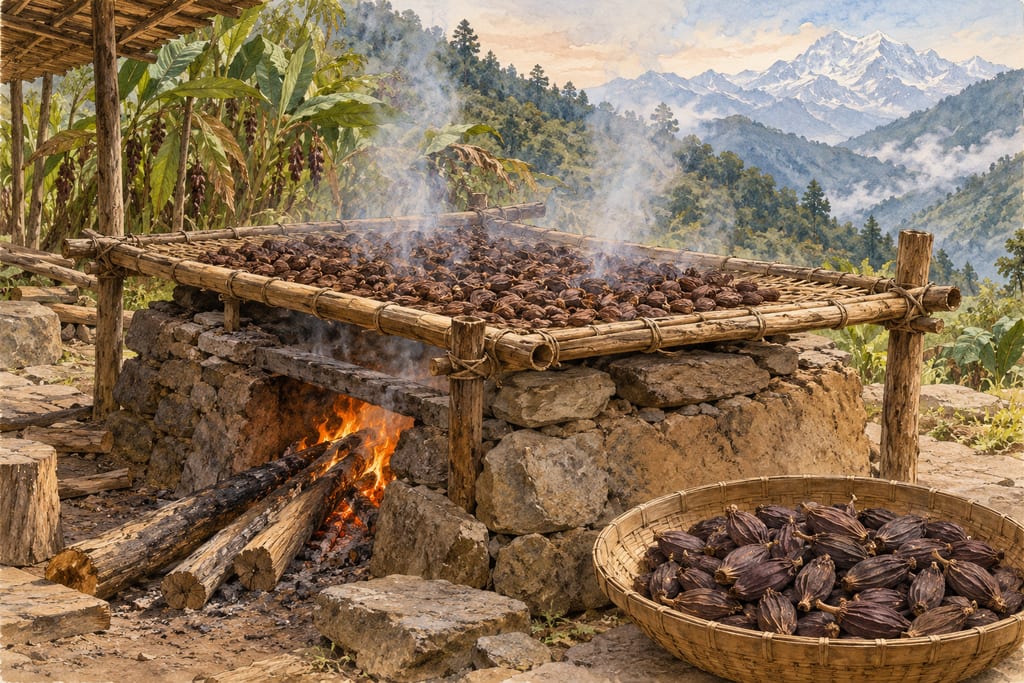
The underground ovens were described as having mud-plastered walls and a slight overhang near the mouth. Above-ground examples had a side opening associated with feeding fuel. Those details refer to ovens, not to the lime-plastered pits. Similarity to a modern tandoor is a comparison of form, not proof of identical use, recipe or continuity.

Tejas Garge cautions that circular fire features at Harappan sites may have served different functions and should be interpreted from their construction and nearby finds. His review quotes an earlier Kalibangan interpretation in which some courtyard pits were thought to store grain while cooking was done in separate ovens. The evidence does not warrant merging the two features into a single grain-baking installation.

Sources for this section

What did the lime-plastered pits hold?

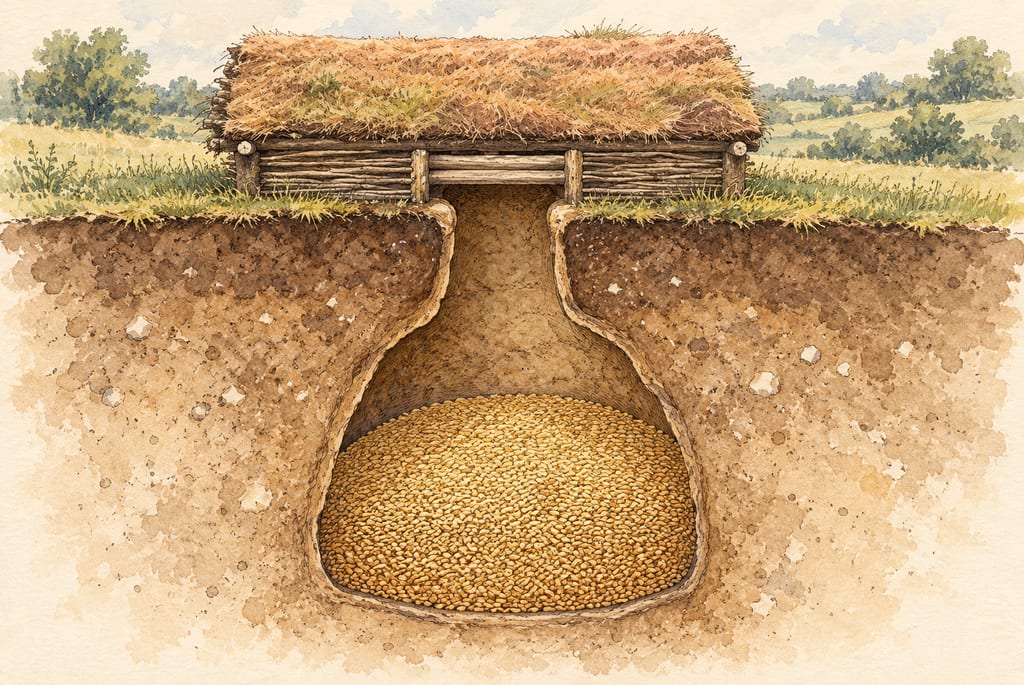
The grain-storage interpretation has a published basis: summaries of the Archaeological Survey of India's work report grain in large jars and underground lime-plastered pits, and a later site account describes wheat as most likely stored in cylindrical lime-lined pits. That remains an interpretation rather than a pit with an identified grain deposit. Garge notes that cereals were not recovered from the relevant pits in the account he discusses.

Thapar's 1975 excavation summary describes cylindrical lime-plastered pits as possibly used to store drinking water. These interpretations conflict, and the consulted evidence does not resolve the function of every pit. The public description therefore names the reported grain use as a possibility, preserves the water-storage interpretation, and leaves exact contents, capacity and construction details unknown.

Sources for this section

Reading the illustration

The outside photograph shows excavated mounds at Kalibangan and is credited to Mohitnarayanan under CC BY-SA 3.0. It does not show a lime-plastered pit. The generated cutaway is an editorial illustration of a possible empty pit below ground, based on the written descriptions of lime-plastered cylindrical pits. It does not establish whether a specific example stored grain or water, or reconstruct a particular excavation.

Sources for this section

Site

SettingDomestic settlement at Kalibangan Period I, where excavators describe houses with courtyards and distinct underground and above-ground ovens.
GroundThe lime-plastered pits are described as cylindrical and underground. Their exact depth, opening, closure and relation to any specific house plan are not established in the consulted accounts.
ClimateNo source here establishes the storage climate or performance of a particular pit.
NotesThe generated cutaway is an interpretive diagram of a possible empty pit, not a site excavation drawing. The linked photograph shows the mound, not a specific pit.

A build is made where it stands: moving it means building it again.

How it is built

Materials

  • Lime plaster — Reported as lining cylindrical pits at Kalibangan. The sources disagree about whether these pits stored grain or water; lining details beyond the lime plaster are not established.
  • Mud plaster — Thapar describes mud-plastered walls on separate underground oven features. Do not transfer this oven material to the lime-lined pits.
  1. Excavators described Period I houses with courtyards at Kalibangan and reported both underground and above-ground oven forms within the domestic settlement.
  2. The ovens are separate features from the cylindrical pits lined with lime plaster. Their resemblance to later tandoors does not establish that every circular fire feature was a bread oven.
  3. Some accounts interpret the lime-plastered pits as grain stores; Thapar's excavation summary instead says they may have stored drinking water. The cited accounts do not settle the pit's contents or purpose.
  4. This entry records archaeological interpretations, not a construction plan, validated storage method or recipe.

Places

Kalibangan

Historical attestation · Locality evidence

B.K. Thapar places the excavated settlement on the left bank of the now-dry Ghaggar in northern Rajasthan. The modern district reference is Hanumangarh; the record does not claim an exact pit coordinate.

Related

Community

No community contributions have been published for this entry yet.

Share what you made

Sign in to contribute. Published comments and photos are free to read.

Sources