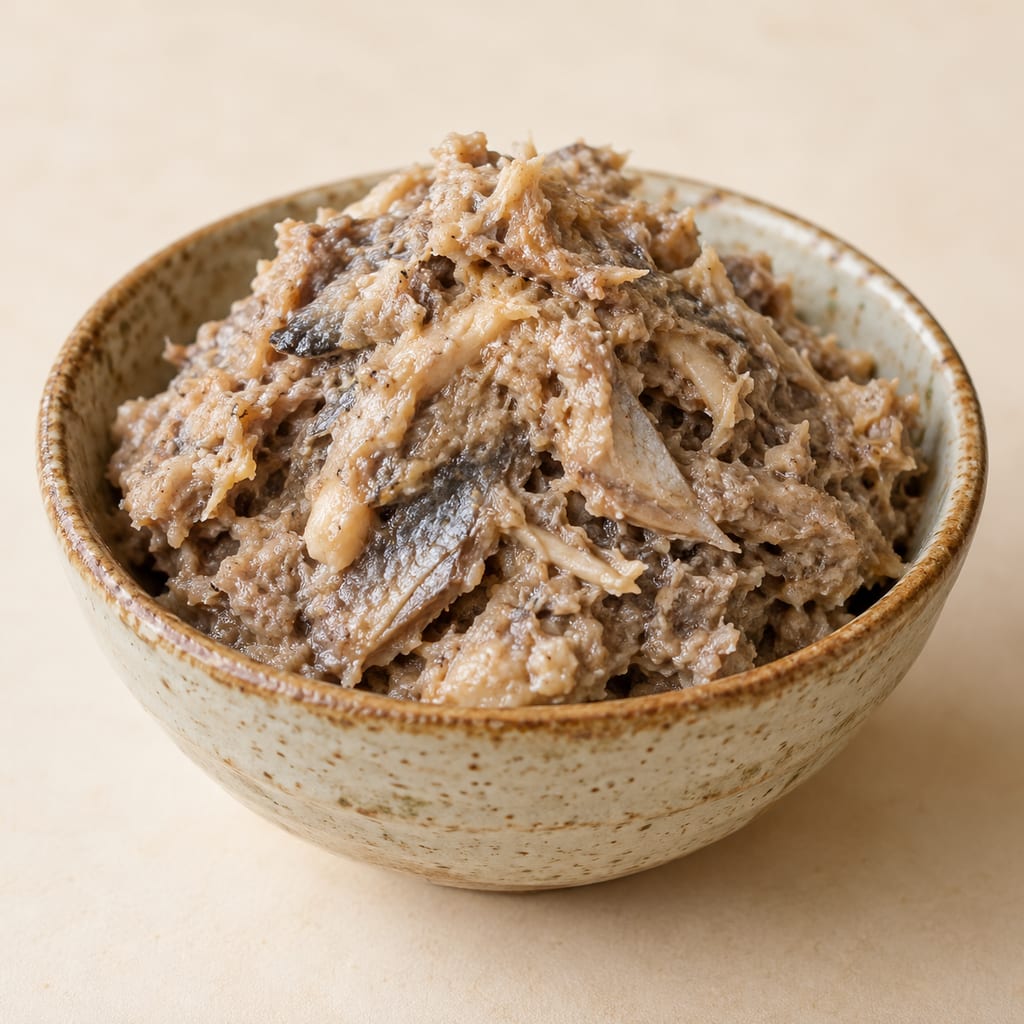
Prahok
Cambodian fermented freshwater fish paste, central to Khmer cuisine. This entry documents source-specific production accounts and study conditions; it does not give a validated household process.
 FermenteaWhere food goes to change
ស្ពៃជ្រក់ · Spee chrout · Cambodian mustard green pickle · Mustard green pickle
Cambodian pickle of blanched Chinese mustard greens, dried, then packed in a sweet-salt brine. Sold in Phnom Penh markets and made at home. The readiness times in the home recipe are not validated.
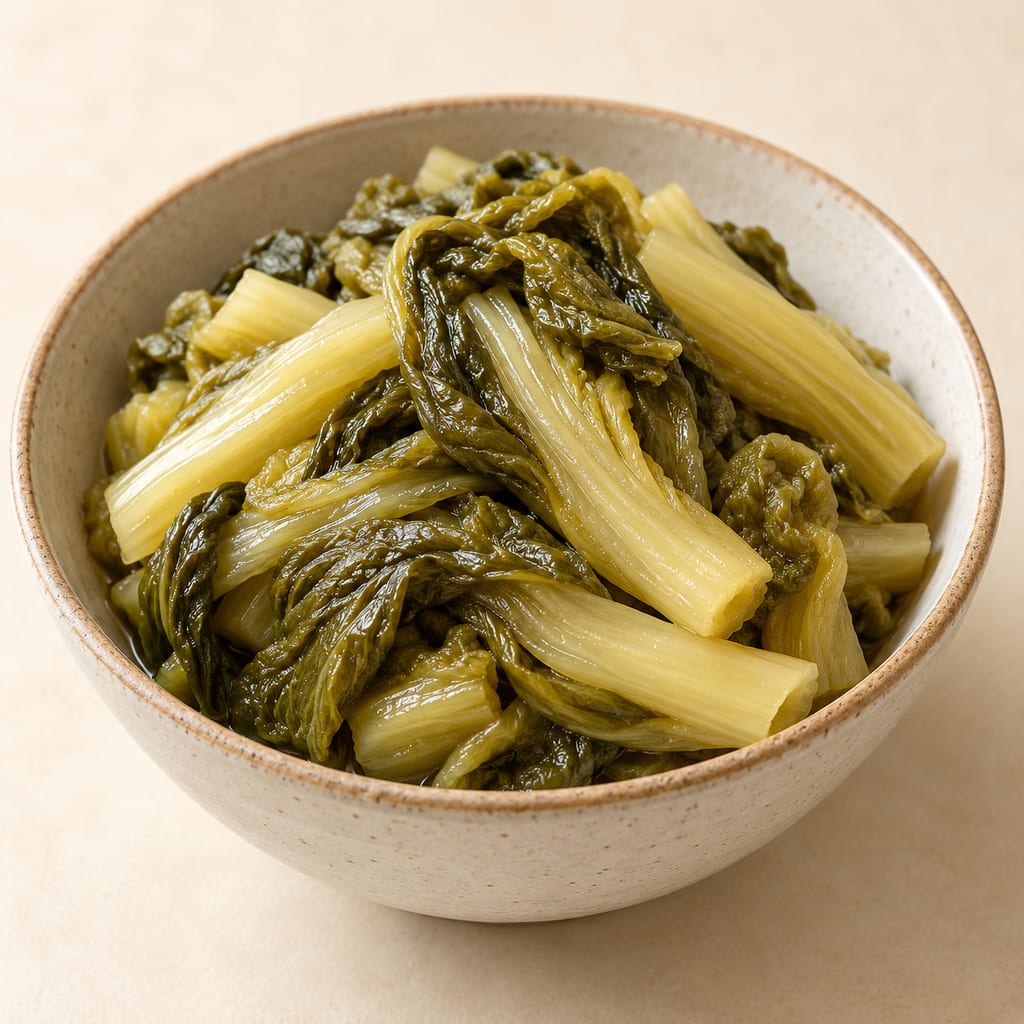
Spey chrourk is a Cambodian fermented mustard green, served as a side dish. A 2019 study prints the name as Spey chrourk and translates it as fermented mustard. The Cambodia Recipe site calls its version spee chrout and describes a related mustard pickle used with rice or in cooked dishes.
The Khmer spelling, pronunciation and cultivar are not verified. The two names may not describe the same method, so they are kept together only as a provisional identification.
The 2019 and 2020 studies sampled retail products collected in Phnom Penh, which were said to come from several Cambodian provinces. They document contemporary commercial samples. They do not trace the production province, an earliest attestation or a harvest season for this product.
A general statement that fermented vegetables are popular snacks in Cambodia is not history specific to this product.
The 2019 study lists Spey chrourk as a side dish. The Cambodia Recipe site describes its spee chrout as a salad served with rice, fish or meat, and as an ingredient in soup or stir-fry. These are reported uses, not a national survey.
The 2019 study records Chinese mustard and salt as the ingredients of the sampled product. Its isolates from the market products were identified by MALDI-TOF and partial 16S sequencing, with Lactobacillus fermentum the most frequent. These were isolates from two market products. They are not evidence of a starter culture or of a succession of organisms.
The 2020 paper, on a set of three retail products, reports pH 3.6 to 3.9, water activity 0.96 to 0.97 and salt 2 to 5 percent by weight. Those are observations of retail samples, not recommended targets. The same paper reports biogenic amines in the samples, and a small retail sample does not establish a household risk level.
The Cambodia Recipe method, dated 10 September 2023, uses 900 g of greens. The greens are blanched in rice-rinse water or plain boiled water, drained, and spread to dry for at least eight hours. Half a tablespoon of salt and one tablespoon of sugar are dissolved in two cups of water, cooled, and poured over the greens in a jar. Chilli is optional. The card gives readiness after two weeks refrigerated, three days in a cool place, or one day with a tablespoon of added vinegar or lime-style acid.
These storage and readiness statements are not validated. They should not be repeated as safe shelf lives. The method names a large pot, a colander, a tray or basket, a small saucepan and a jar. No jar capacity, material, closure or cleaning procedure is given.
No home endpoint, failure criterion or validated storage interval was found. The temperature branches (refrigerator or cool place) have no measured setpoint. The method is research material, not an executable home recipe, and no controlled apparatus is required or proposed.
Related products include the Vietnamese mustard pickle dua muoi (veg-0043), a Thai mustard pickle and Filipino burong mustasa. They are comparisons only, not equivalent processes.
The studies describe market products bought in Phnom Penh. The sources do not date the pickle or give its history.
Scaling: source batch only
The recipe's readiness times are calendar claims with no objective endpoint, no measured temperature and no validated storage period.
Hazard sourceUniversity of Minnesota Extension home-fermentation guidance calls for monitored temperature and acidity, and the recipe gives neither.
Hazard sourceUse a container that suits fermenting food, as the University of Georgia guide describes, and keep the greens under the brine.
Control sourceThe readiness times are calendar claims, not validated safe storage periods.
Smell, taste or appearance do not establish safety.
Market products were bought in Phnom Penh wet markets. The study names several provinces as places of origin for the products it bought, not as production provenance.
The home recipe is published as a Cambodian dish. The sources do not establish a history or a season.
Cambodian fermented freshwater fish paste, central to Khmer cuisine. This entry documents source-specific production accounts and study conditions; it does not give a validated household process.
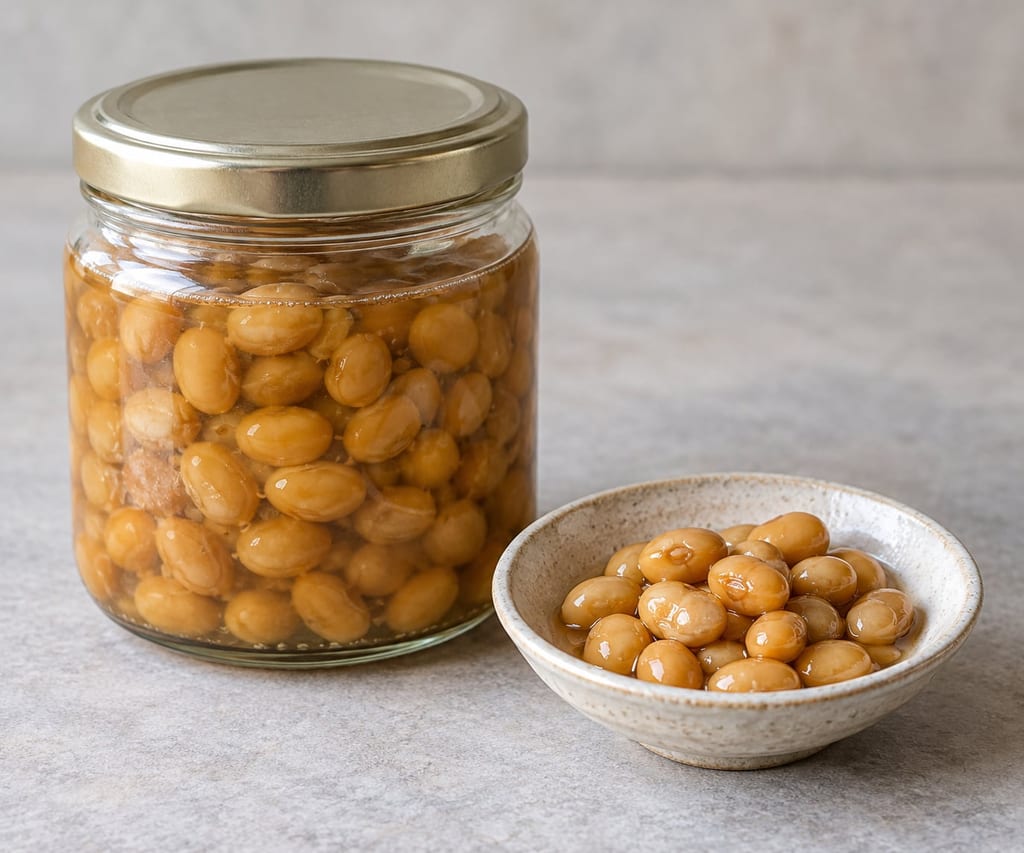
A Cambodian fermented soybean food in which cooked beans ferment into a sticky alkaline mass, then are preserved and matured in salt brine, sometimes sweetened with sugar.
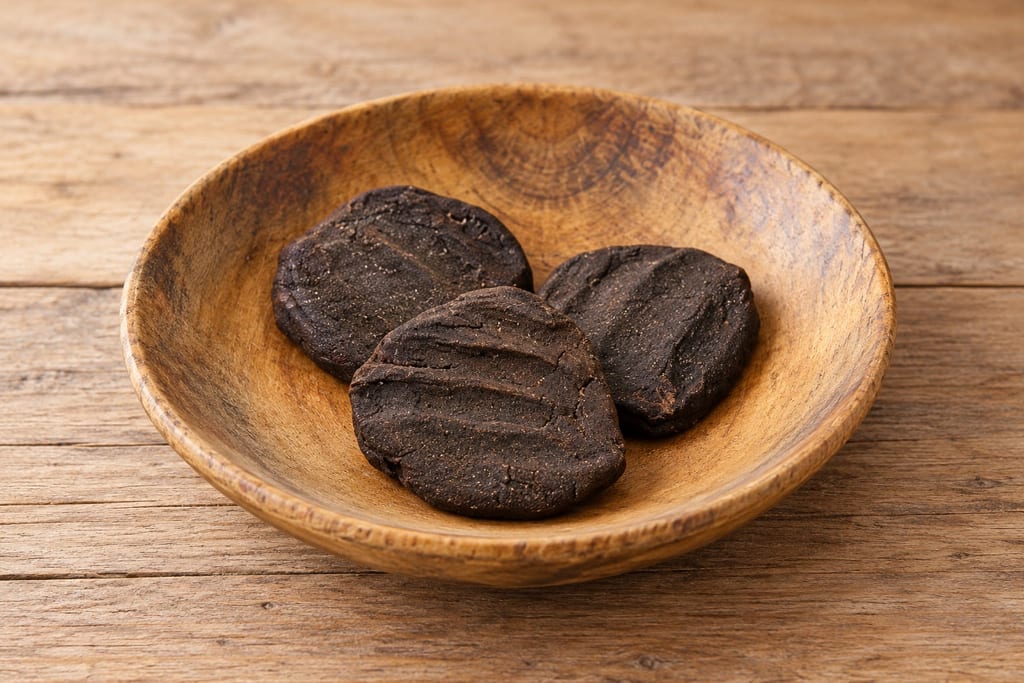
Dried cakes of pounded taro leaves from the Ao Naga in Nagaland, yellowed in a bag, then dried by hot ash or sun and used to flavour meat dishes.
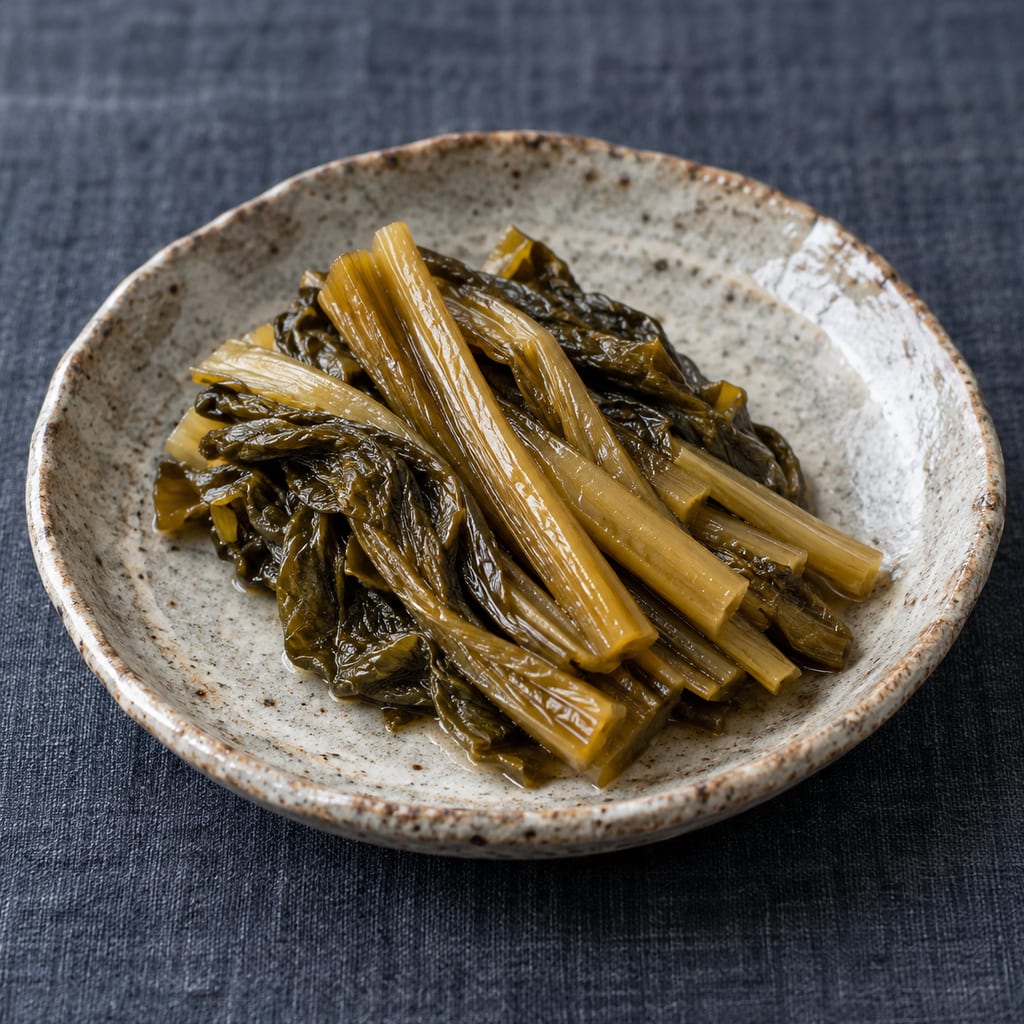
Takana mustard greens from Aso in Kumamoto are salted and pressed into a fresh spring pickle, or aged into a sour furuzuke that is fried and mixed into takana rice.
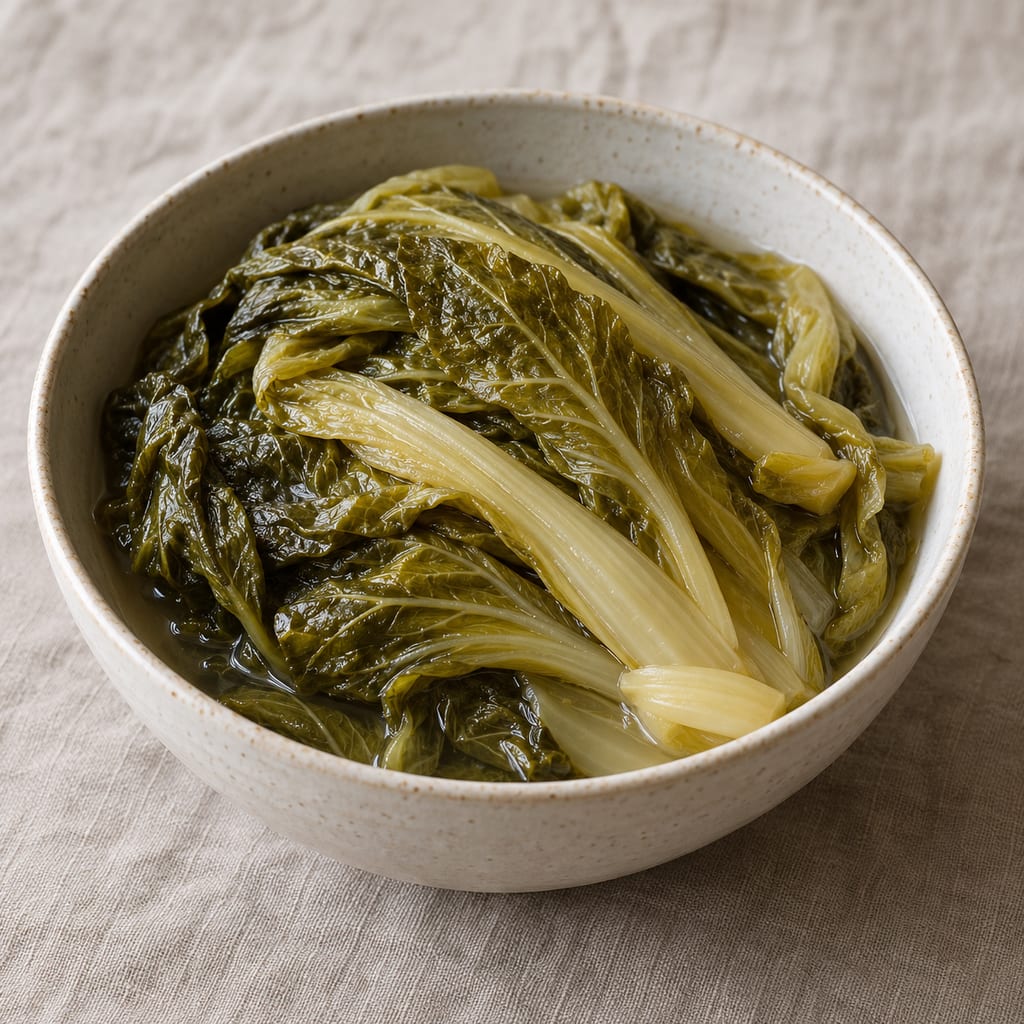
Wilted flat mustard leaves ferment with rice water and salt as a Filipino appetizer and cooking ingredient.
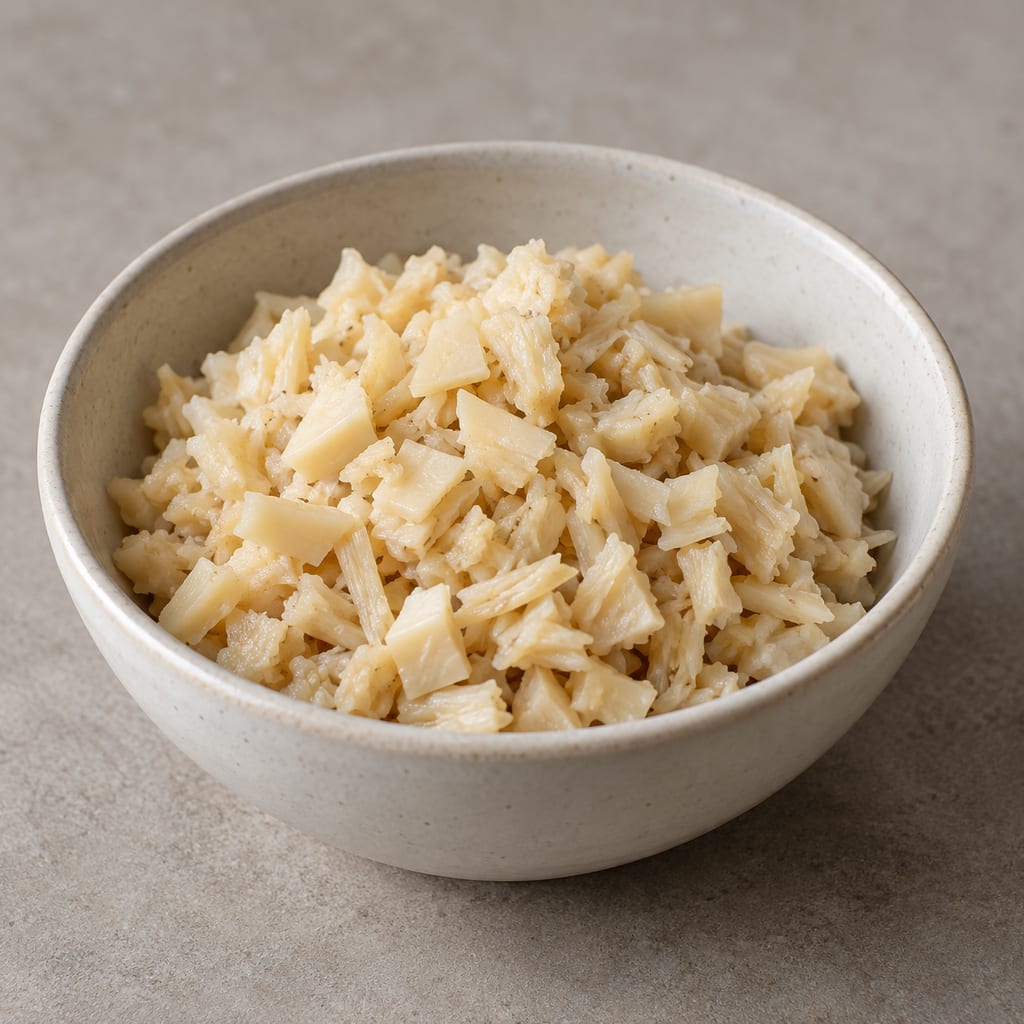
Finely chopped young bamboo shoots packed in leaf-lined baskets, sealed in a forest pit and weighted for one to three months, from Arunachal Pradesh.

Pit-fermented bamboo shoots from Arunachal Pradesh, cut smaller and sun-dried for five to ten days, used in curries.
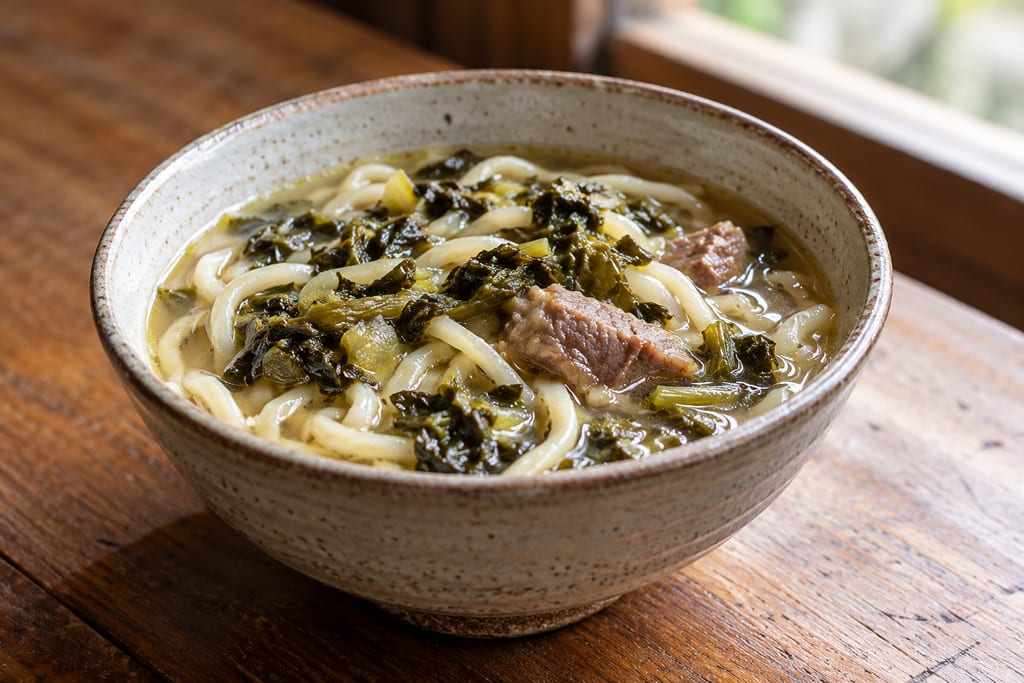
Goyang is a Sherpa fermented wild leafy food of the Darjeeling hills and Sikkim. Rainy-season magane-saag leaves are packed in a bamboo basket, held at room temperature for about a month, then eaten fresh or dried and used in soup.
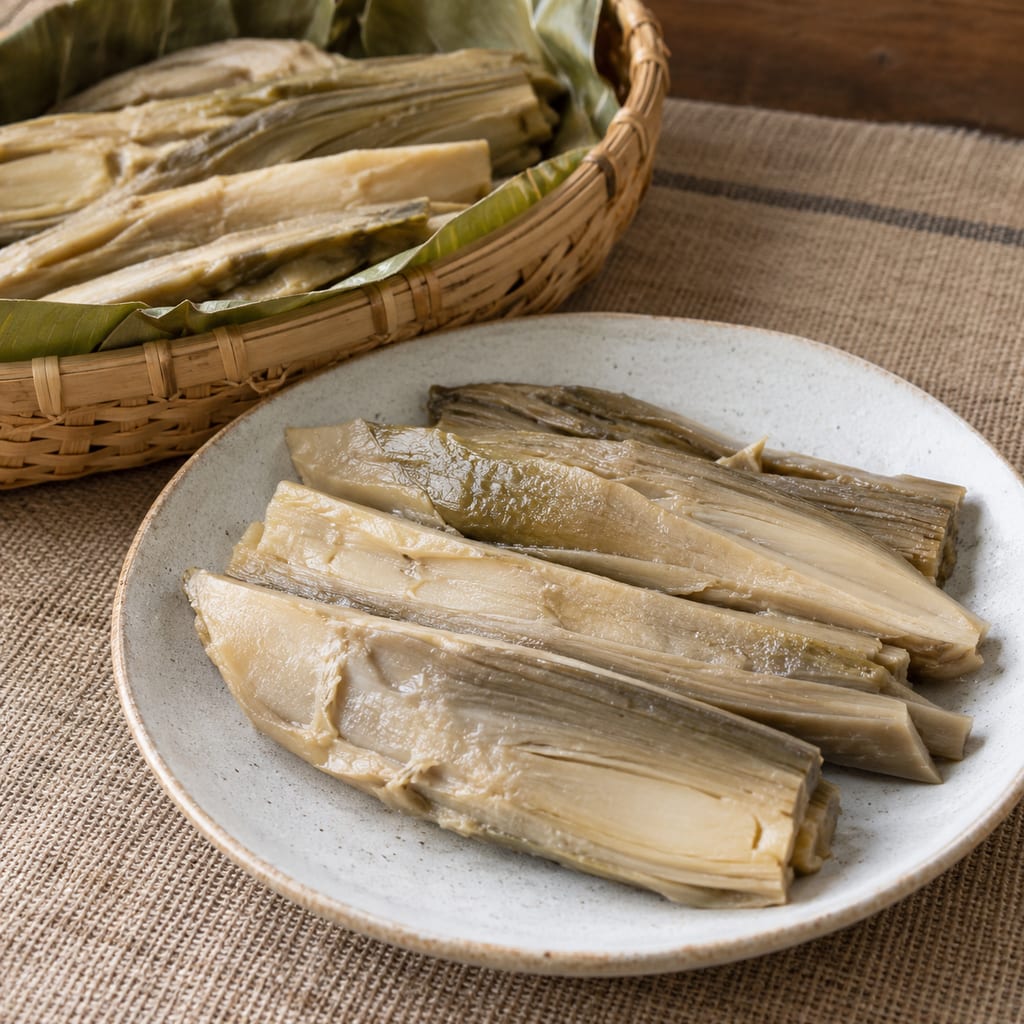
Upper tender bamboo-shoot tips, split or flattened, pit-fermented one to three months in Arunachal Pradesh and eaten in curries.
The original Polish barszcz: young hogweed leaves soured in warm water for a few days, then boiled into soup with egg, butter, cream or millet. Recorded from 1595, with warnings about the sap and lookalikes.
No community contributions have been published for this entry yet.
Sign in to contribute. Published comments and photos are free to read.
Cambodia RecipeMethod · Uses · Safety
Mustard Green Pickle900 g greens, six cups rice-rinse or plain water for blanching, at least eight hours of drying, brine of two cups water with half a tablespoon salt and one tablespoon sugar, optional chile; readiness times stated as claims.
Cited in: What it is and what it is called; Place and history; Uses; Ingredients and microbes; Home method as published; Limits
Biomolecules (MDPI)Identity · History
Identification, Classification and Screening for gamma-Amino-butyric Acid Production in Lactic Acid Bacteria from Cambodian fermented foodsMarket products bought in Phnom Penh wet markets; spey chrourk listed as fermented mustard with Chinese mustard and salt; 13 lactic acid bacteria isolates from two products.
Cited in: What it is and what it is called; Place and history; Uses; Ingredients and microbes; Home method as published; Limits
Foods (MDPI)Safety · Monitor
Biogenic Amine Contents and Microbial Characteristics of Cambodian Fermented FoodsThree market products with pH 3.6 to 3.9, water activity 0.96 to 0.97 and salt 2 to 5 percent; descriptive data only.
Cited in: What it is and what it is called; Place and history; Uses; Ingredients and microbes; Home method as published; Limits
University of Minnesota ExtensionSafety
Preserving food at home: FermentationHome fermentation guidance on monitoring temperature and acidity.
Cited in: What it is and what it is called; Place and history; Uses; Ingredients and microbes; Home method as published; Limits
National Center for Home Food Preservation, University of GeorgiaEquipment
Suitable containers, covers, and weights for fermenting foodGuidance on containers, covers and weights for fermenting food.
Cited in: What it is and what it is called; Place and history; Uses; Ingredients and microbes; Home method as published; Limits