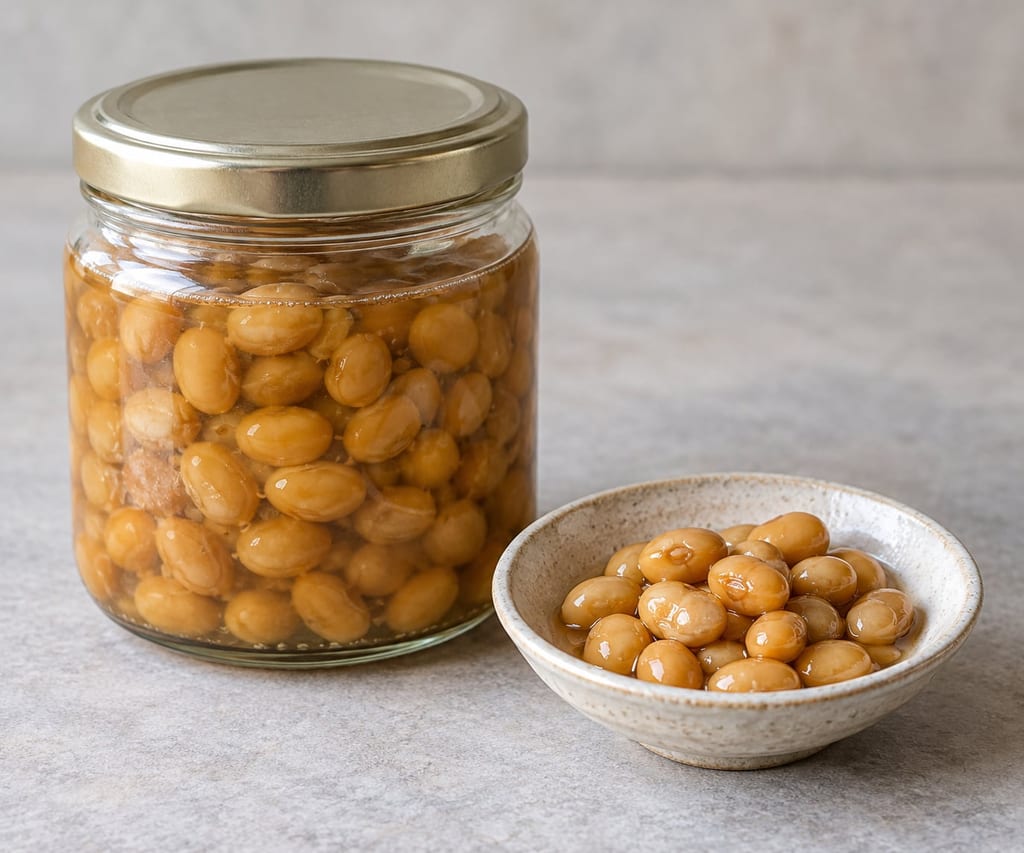
Sieng
A Cambodian fermented soybean food in which cooked beans ferment into a sticky alkaline mass, then are preserved and matured in salt brine, sometimes sweetened with sugar.
 FermenteaWhere food goes to change
ប្រហុក · Prohok · Prohoc
Cambodian fermented freshwater fish paste, central to Khmer cuisine. This entry documents source-specific production accounts and study conditions; it does not give a validated household process.
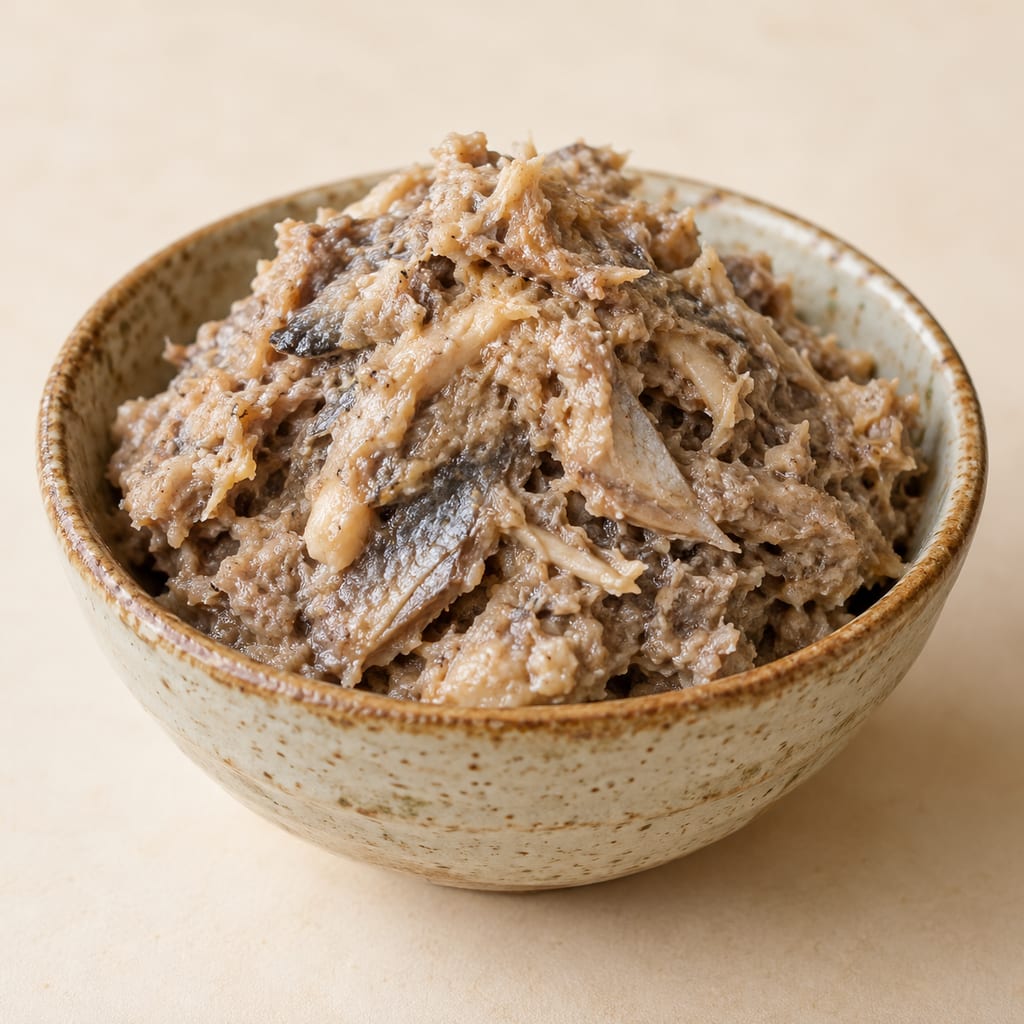
Prahok, also written prohok or prohoc, is a fermented fish paste used across Khmer cooking. It is eaten with rice and vegetables and used to season dips, soups and main dishes. Interviews with Cambodian producers, sellers, cooks and consumers describe Prahok as valued for a pungent aroma and powerful umami.
The sources reviewed do not establish a precise first date. They connect fish preservation to seasonal abundance in the Mekong–Tonle Sap system. This is cultural and regional context, not evidence for a single birthplace.
The seasonal reversal and flooding of the Tonle Sap River support a large freshwater fishery. Research describes processing and preserving fish during peak catches as part of rural household and commercial work, while also noting that regional preferences shape the finished paste. A 2025 Fisheries Administration announcement reported a short January window for making Prahok and dried fish when skies were clear and catch availability was rising. That announcement describes a particular season, not a fixed annual calendar.
The literature distinguishes bone-in and boneless forms and describes producers adapting preparation and added ingredients to maintain local sensory profiles. It reports variations in fish, entrails, salt, sun exposure and additions such as ginger or galangal. These are evidence of multiple practices, not one interchangeable formula.
The literature describes Prahok as pungent and strongly umami, with regional differences in aroma, texture and flavour. Its role is often seasoning rather than a stand-alone dish: Khmer cooks use it in sauces, dips, soups and main dishes, or mix it with rice. The same account describes it alongside vegetables and rice in everyday meals.
A preparation based on Prahok is not automatically the same product as Prahok itself. The paste is distinct from dishes in which it is later cooked with meat, herbs or vegetables.
LeGrand, Borarin and Young's Cambodian field and literature study describes multiple producer practices rather than one recipe. It distinguishes bone-in Prahok ch'oeung from boneless Prahok sach; documents a low-salt overnight stage in baskets, optional handling of the early liquid, and later salt levels that differ by product form; and reports maturation for several months up to a year. LeGrand et al. frame this as a place-specific food practice, not a validated home process.
A 2025 study from Kampong Phluk followed one Channa micropeltes laboratory preparation and compared it with two market products. The laboratory batch used a 20-hour water soak at 3:1 water-to-fish, six hours of pressing, a reported 30% NaCl addition, 400 g PET-bottle portions and six months of incubation at 30 ± 2°C. These are the experimental conditions for that study, not universal directions.
The researchers reported an end-point peroxide value near five times the Codex value cited in their paper, measured biogenic amines, and observed changing microbial DNA profiles. These results concern their study samples; DNA signals alone do not demonstrate viable pathogens or toxin production. The study supports further process-specific evaluation, not a claim that all Prahok is unsafe or that this batch represents every regional form.
Fish-fermentation risks depend on fish species, handling, salt distribution, water activity, pH, temperature, maturation and how the product is eaten. FAO's technical review discusses hazards across fermented-fish categories, including parasites in fish eaten without cooking. It does not supply a universal Prahok recipe or validate the field accounts described here.
WHO notes that foodborne botulism can involve fermented or salted fish when preservation conditions fail. This general hazard is not proof of toxin in a particular Cambodian product. The Prahok study also reported chemical and microbial findings in limited samples; its results do not establish contamination across the food or all producers.
The published sources document distinctive Cambodian practices but do not establish a safe household procedure, measurable finished-product endpoint or storage life for this page. This entry preserves the method as attributed food-history and process documentation. Its timings, sensory checks and salt percentages are not safety instructions.
Prahok is a Cambodian fermented fish paste associated with Khmer food traditions and seasonal fish preservation. Its earliest dated attestation and a single region of origin remain undetermined.
FAO describes parasite hazards among fermented fish products and emphasizes that risk depends on the product and preparation. Its general review does not establish Prahok-specific prevalence or validate this process.
Hazard sourceA 2025 study found an elevated peroxide value and measured biogenic amines and changing microbial profiles in one laboratory preparation and two market products. DNA-based findings do not establish viable hazards, and these results cannot be generalized to every Prahok.
Hazard sourceWHO identifies fermented and salted fish among foods associated with foodborne botulism when preservation conditions fail. This is a general hazard statement, not evidence that a particular Prahok batch contains toxin.
Hazard sourceThese are source-specific documentary process accounts, not a validated home recipe; the sources do not establish a safe household endpoint.
Do not treat reported salt percentages, months of fermentation, smell, taste or appearance as safety limits.
The study findings describe the tested samples only. No home storage recommendation is established.
The study describes Prahok as part of Khmer food culture across Cambodia; this is a national association, not a claim of origin.
The review links Prahok production to seasonal fish abundance around the Tonle Sap and Mekong; this is a documented regional association, not an exclusive origin claim.
A Cambodian fermented soybean food in which cooked beans ferment into a sticky alkaline mass, then are preserved and matured in salt brine, sometimes sweetened with sugar.
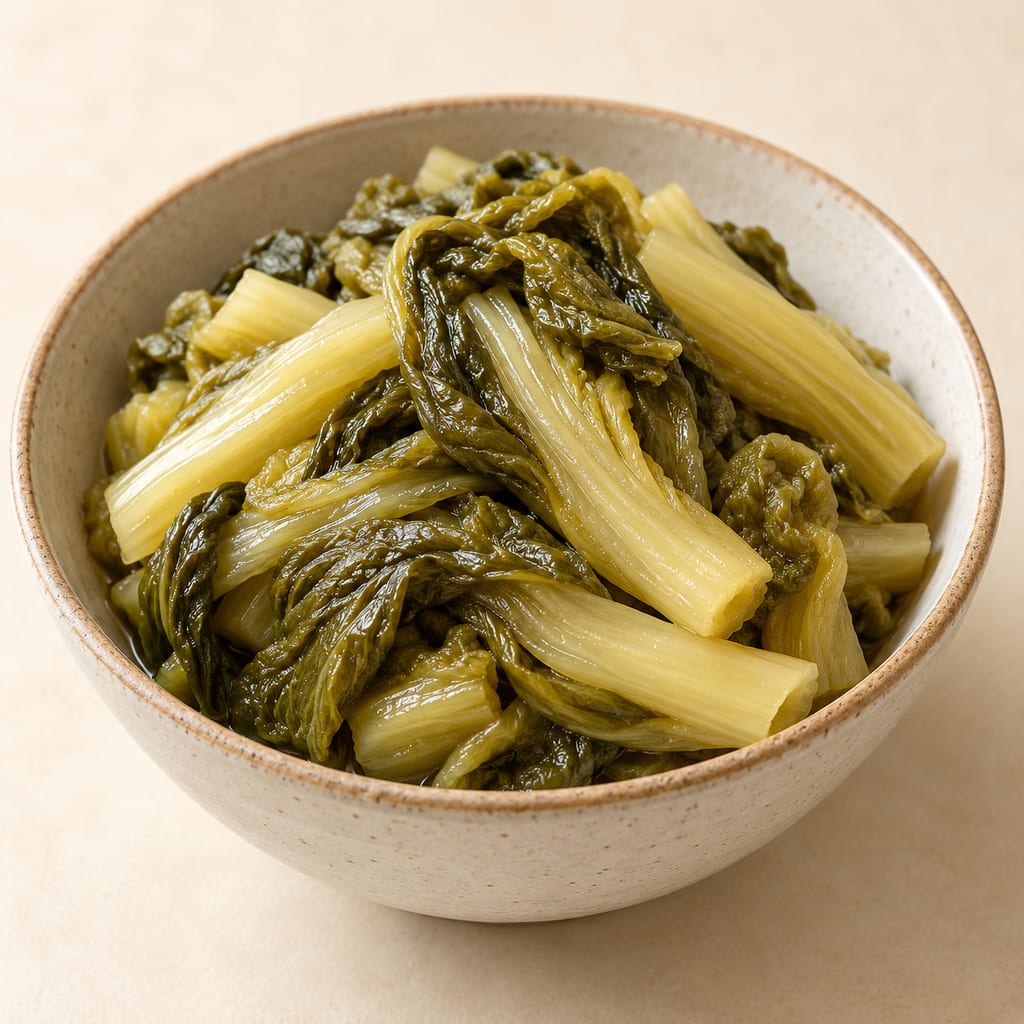
Cambodian pickle of blanched Chinese mustard greens, dried, then packed in a sweet-salt brine. Sold in Phnom Penh markets and made at home. The readiness times in the home recipe are not validated.
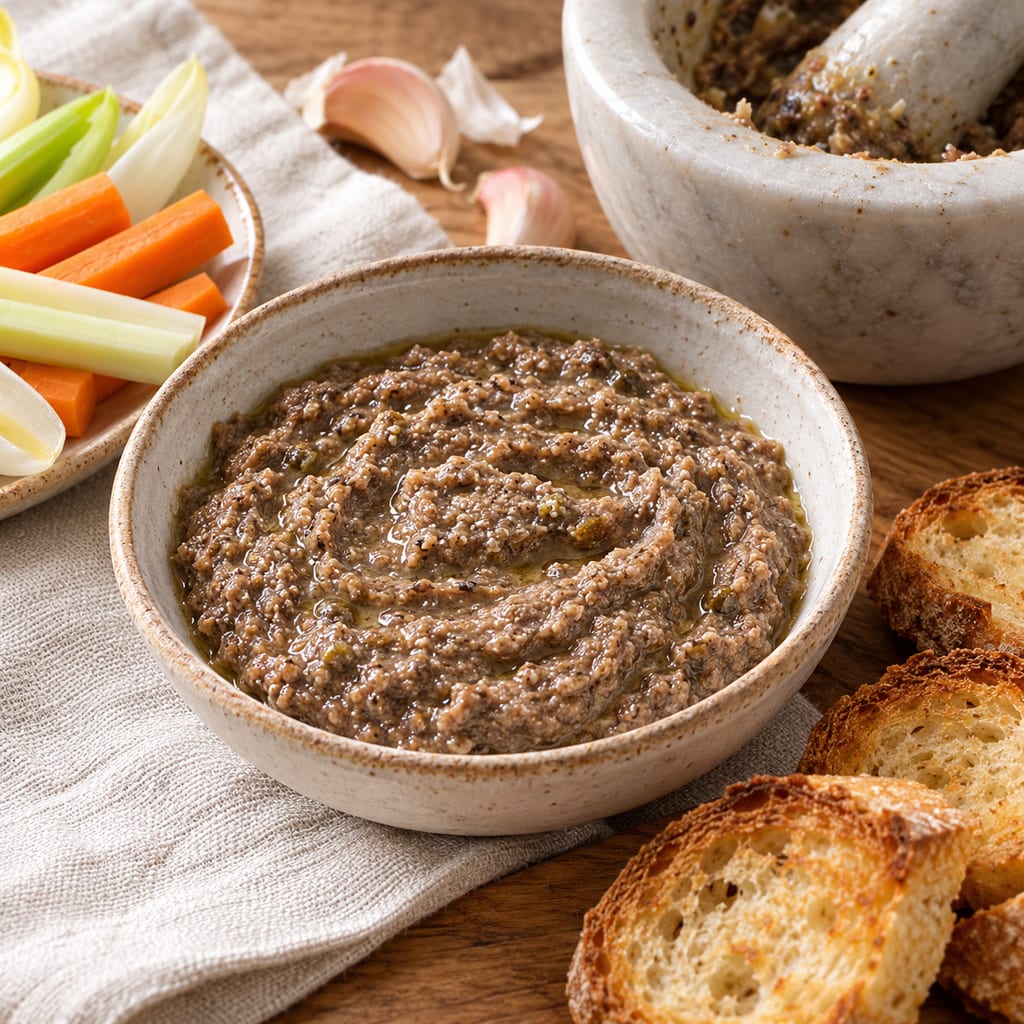
A Provencal dip of anchovies, garlic, capers and olive oil, pounded or blended to a creamy paste and served with raw vegetables, bread and eggs.
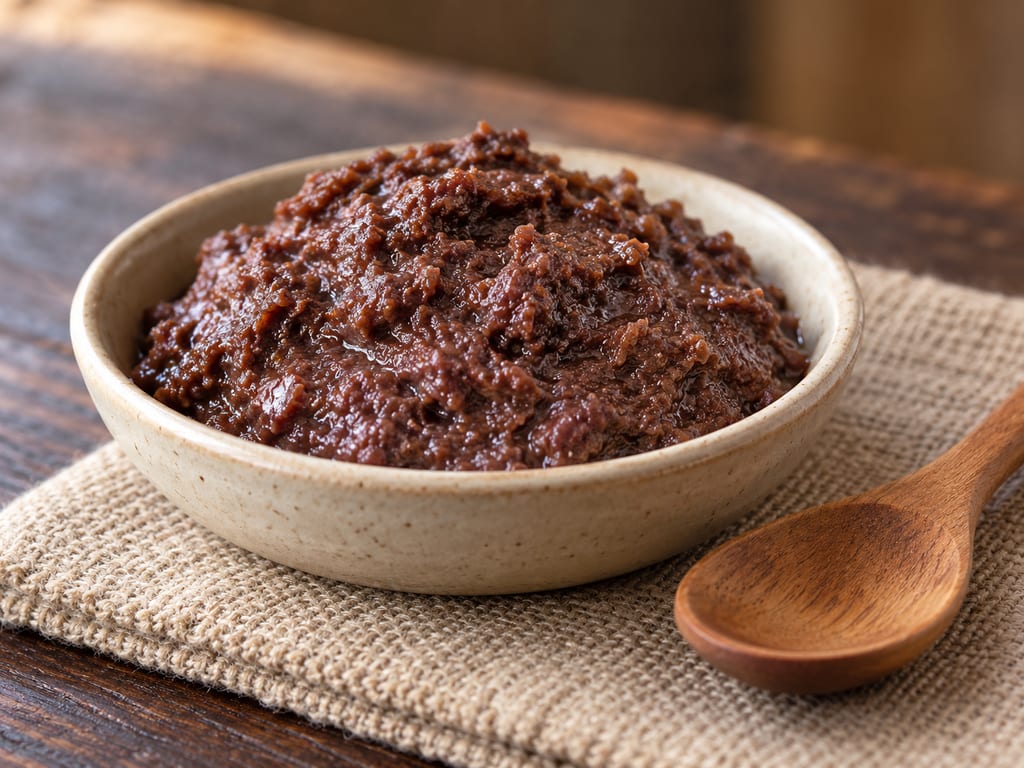
Bagoong isda is a Philippine fish paste: whole small fish salted and left to ferment for a month or more in earthen jars. It is the fish counterpart of bagoong alamang.
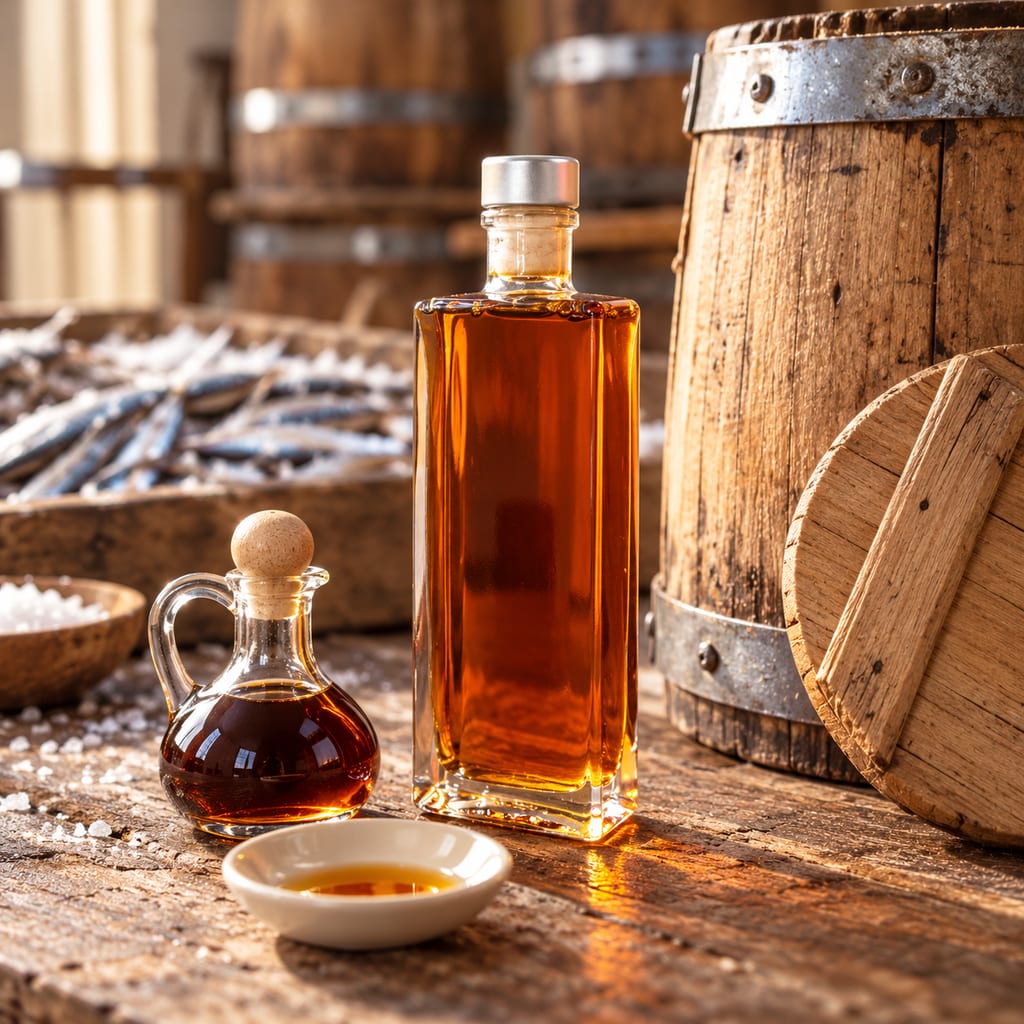
Colatura di alici is the amber liquid drained from salted anchovies matured in wooden containers in Cetara, on the Amalfi coast of Campania, and sold under a protected designation of origin.
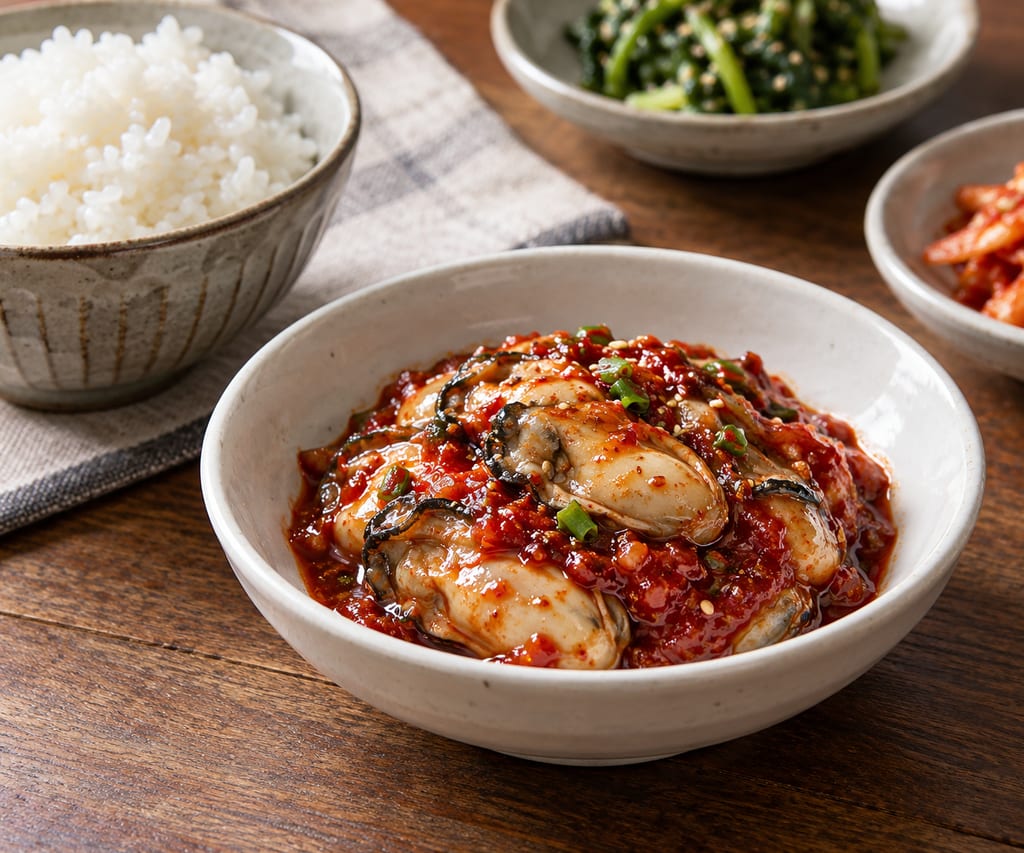
A Korean salted-oyster jeotgal seasoned with chili, associated especially with Seosan and Ganwoldo. This page records its food culture, not a household preparation method.
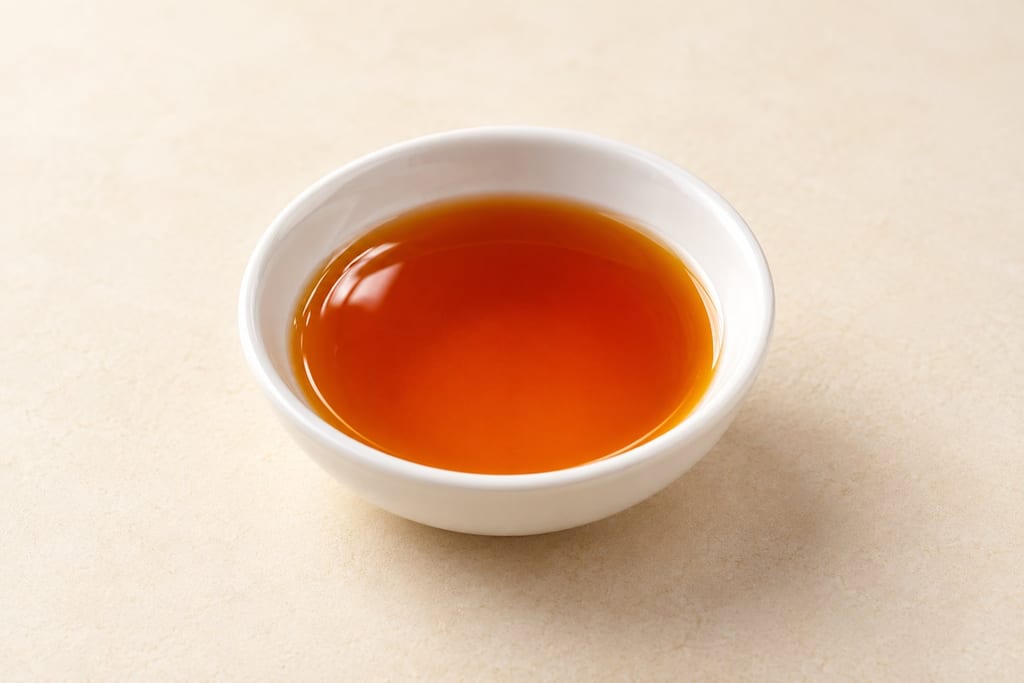
Fish sauce is a clear, salty seasoning made by maturing fish with salt and drawing off the liquid. The broad family includes distinct regional sauces rather than one interchangeable method.
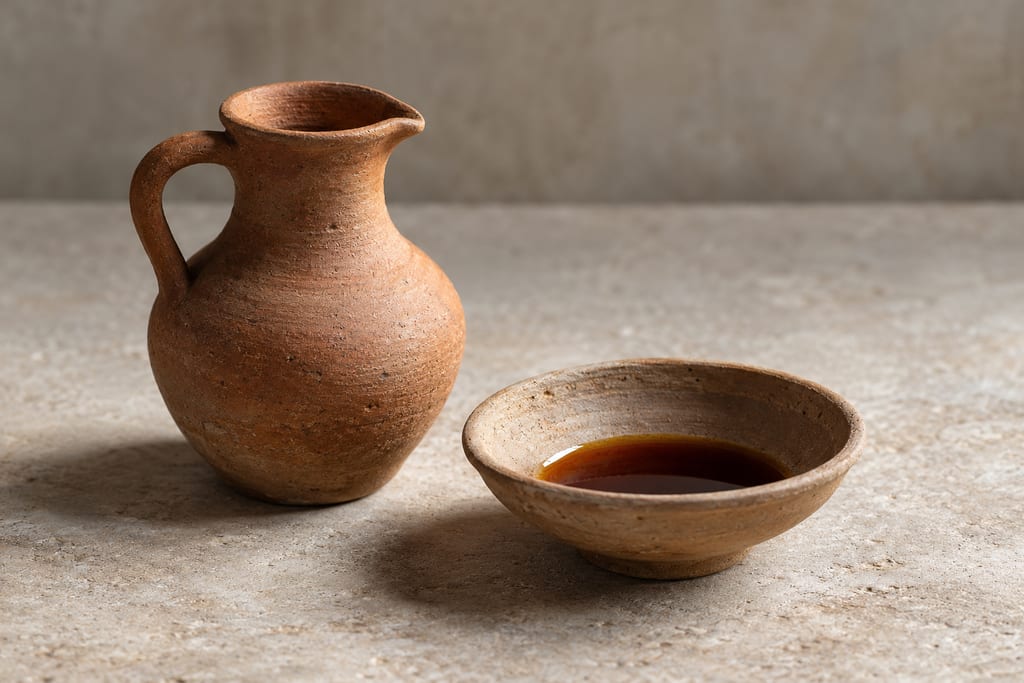
Garum, Greek garos and Latin liquamen, was the fish sauce of the ancient Mediterranean: fish and viscera salted and left in the sun, then drained off as a savoury liquid.
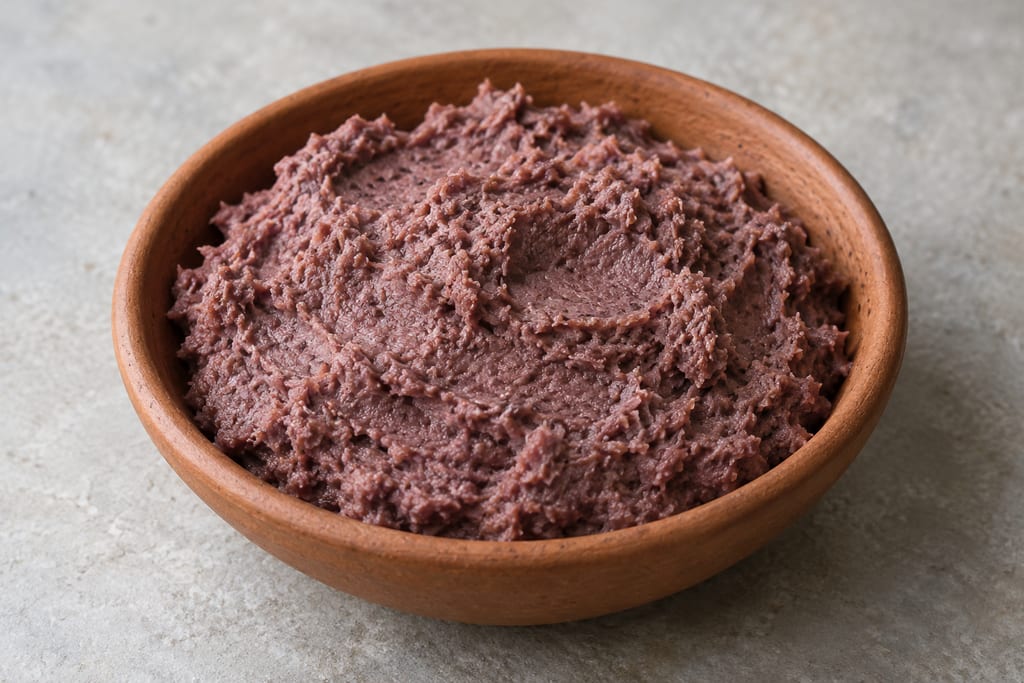
Guinamos is a shrimp paste made on Guimaras in the Philippines: small shrimp salted by hand, sun-dried and trodden by foot until it turns smooth.
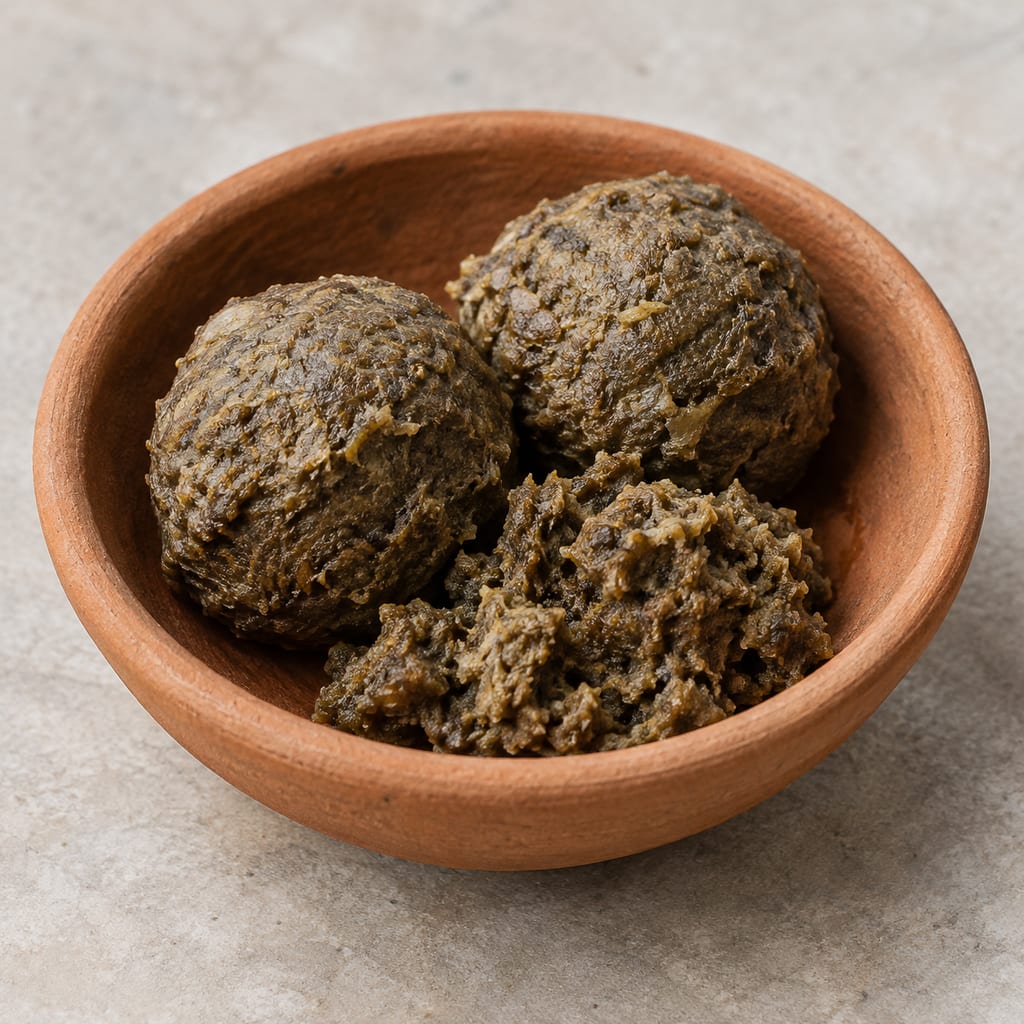
Manipuri fermented fish-and-aroid paste, formed into balls or kept in an earthen pot, used to season Manipuri dishes. Its method is documented in outline only.
No community contributions have been published for this entry yet.
Sign in to contribute. Published comments and photos are free to read.
Journal of Ethnic FoodsHistory · Geography · Taste · Use · Method context
Tradition and Fermentation Science of prohok, an ethnic fermented fish product of CambodiaField interviews and literature review describe Khmer cultural uses and regional variation in Prahok.
The article describes bone-in Prahok ch'oeung and boneless Prahok sach, including distinct source-reported salt levels and several-month-to-one-year maturation.
Some producers use an initial overnight salt stage, may drain or retain early liquid, and may dry and grind fish before later fermentation.
Cited in: A Cambodian fish paste; Seasonal fish and local practice; Flavour and use; What the process studies show
PLOS ONEMethod context · Taste · Safety
Nutritional and microbiological dynamics in the preparation of prahoc fish pasteA laboratory process used Channa micropeltes, a 3:1 water-to-fish soak for 20 hours, six hours of pressing, salt reported at 30% NaCl, 400 g PET-bottle portions and six months at 30 ± 2°C.
One laboratory preparation and two market products were analyzed; the results are not a validated household method.
The paper reports an end-point peroxide value near five times the cited Codex value, biogenic amines, and changing microbial profiles; DNA-based detection does not establish viable pathogens.
Cited in: What the process studies show; Safety evidence and its limits
Food and Agriculture Organization of the United NationsSafety
Assessment and Management of Seafood Safety and Quality, section 9.6: Fermented fishGeneral seafood HACCP guidance groups fish products by relevant process and preparation before consumption.
The section on fermented fish discusses process-dependent hazards including botulism and parasite-related disease; it does not validate the specific Cambodian methods documented here.
Cited in: Safety evidence and its limits
Agence Kampuchea PresseGeography · History
Another Best Time to Make Fermented and Dried Fish to Last Until Jan. 10The Fisheries Administration announcement described increased fish in the Tonle Sap River and a weather-dependent January 2–10, 2025 production window for Prahok and dried fish.
The announcement is a dated seasonal observation, not a fixed annual rule or a recipe method.
Cited in: Seasonal fish and local practice
International Journal of Environmental and Rural DevelopmentHistory · Method context
Small-Sized Fish Paste (Prahoc) Processing in CambodiaThe Cambodian study describes Prahoc as a popular small-fish paste and documents its use in preserving seasonally available fish.
It reports traditional fermentation periods of three to twelve months or longer.
Cited in: What the process studies show
World Health OrganizationSafety
BotulismWHO identifies fermented and salted fish among foods that may be associated with foodborne botulism when preservation conditions fail.
This general hazard guidance does not demonstrate toxin in Prahok or validate a specific Prahok method.
Cited in: Safety evidence and its limits