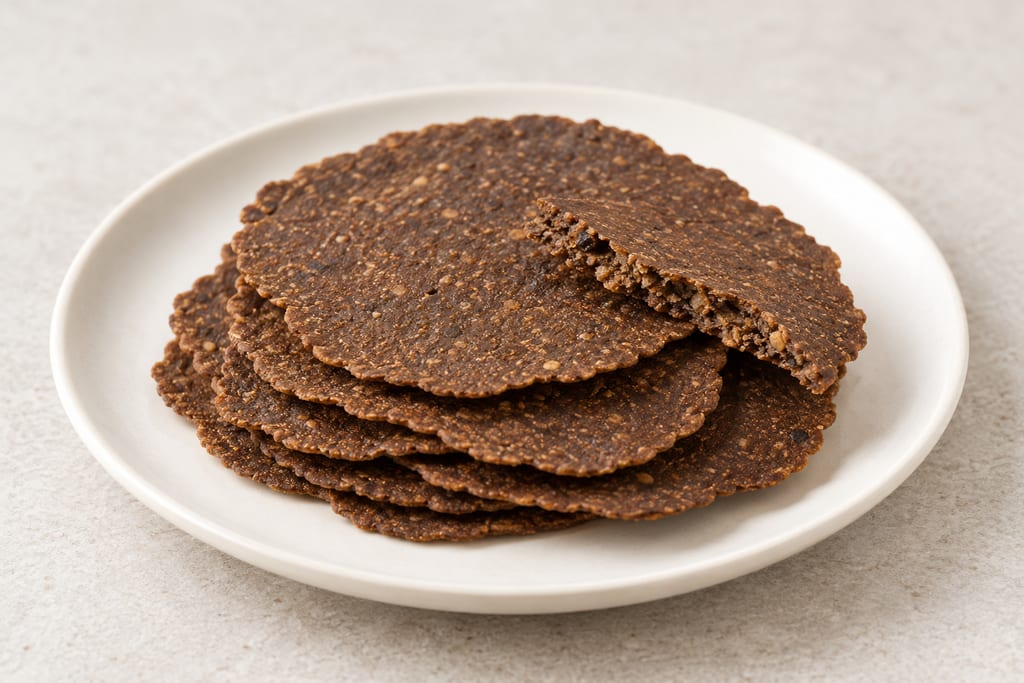
Black soybean thua nao with Bacillus subtilis
Black soybeans cooked, inoculated with a named Bacillus subtilis culture and fermented warm and humid into northern Thailand's thua nao, then optionally dried into thin discs.
 FermenteaWhere food goes to change
Traditional method
សៀង · Siĕng · Khmer fermented soybeans · Cambodian fermented soybeans · Cambodian salted fermented soybeans · សៀងប្រៃ · Sieng prai · Sieng brai · Salted sieng · សៀងផ្អែម · Sieng pha-aem · Sieng pa-aem · Sweet fermented soybeans
A Cambodian fermented soybean food in which cooked beans ferment into a sticky alkaline mass, then are preserved and matured in salt brine, sometimes sweetened with sugar.
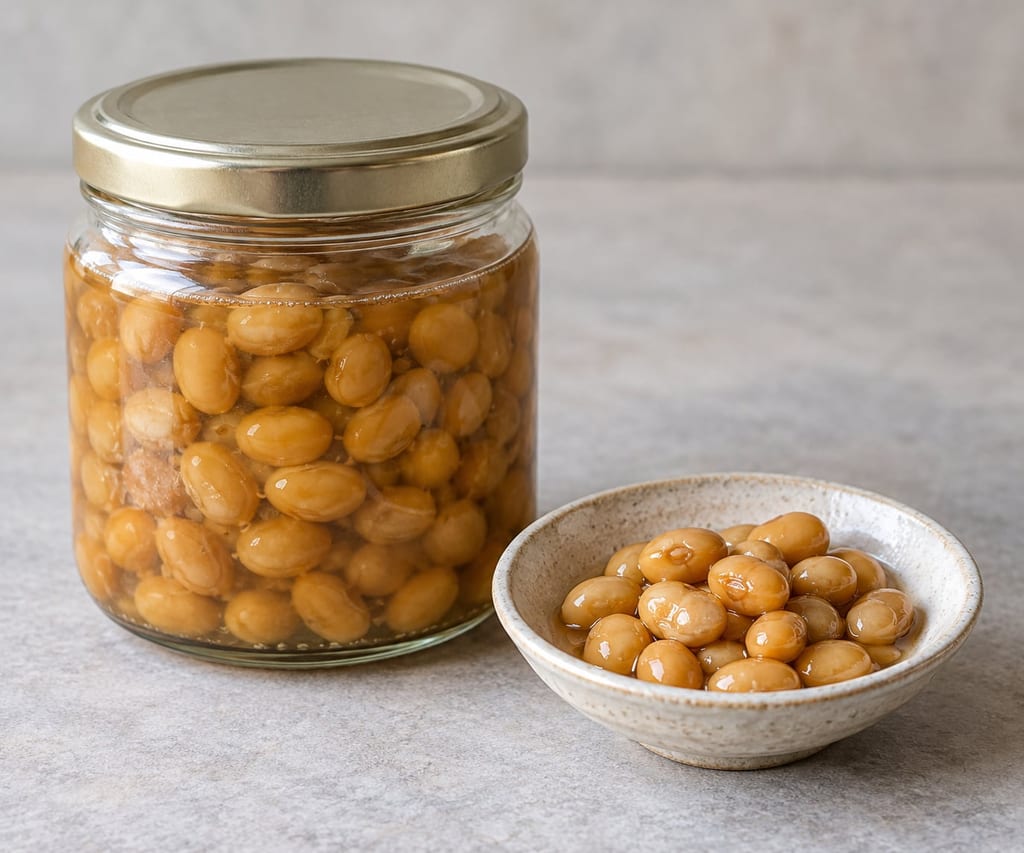
Sieng (សៀង) is a traditional Cambodian fermented soybean preparation associated with Khmer cooking. Whole soybeans are cooked until soft, allowed to undergo bacterial fermentation and subsequently preserved in a salty liquid. The finished food contains softened fermented beans surrounded by brine or a seasoned liquid. It has a concentrated soybean flavour and can be used as a seasoning, a side dish or an ingredient in cooked meals. Its particular combination of a sticky initial fermentation and a later salted stage distinguishes it from several other Southeast Asian soybean ferments.
Two forms are recognised in Cambodian food research: sieng prai (សៀងប្រៃ), the salted version, and sieng pha-aem (សៀងផ្អែម), the sweet version made with salt and sugar. The sweet form is not simply plain fermented soybeans with sugar sprinkled on top. Published and contemporary recipes describe additional processing or maturation in a sweetened liquid. The two forms share a soybean-fermentation tradition but should not be assumed to have identical microbial communities, ingredients or storage characteristics.
The primary substrate is soybean, Glycine max. The initial fermentation is predominantly bacterial and alkaline, with Bacillus subtilis among the important organisms. Cooked soybeans develop a sticky coating and characteristic savoury aroma as bacterial enzymes break down proteins. After this stage, the fermented beans are transferred into brine. The brining stage changes the preservation environment and can favour microorganisms that tolerate salt, including certain lactic acid bacteria.
A 2023 metagenomic investigation identified B. subtilis as the most abundant species in analysed sieng samples, followed by Tetragenococcus halophilus among the prominent detected organisms. Several additional Bacillus species and other bacteria were also detected. This does not mean that all identified species are traditional starter cultures or that every one contributes positively to the food. The complete community includes potential contaminants and organisms whose actual functions were not experimentally demonstrated.
The distinguishing feature of sieng is its two-part production process. First, cooked soybeans undergo fermentation in a relatively open, moist environment, traditionally on bamboo trays. Second, the fermented beans are transferred into a salty liquid for preservation and further maturation. Salt is therefore especially important after the initial stage. In the sweet form, sugar can become an additional major ingredient. The two stages differ in method and in microbiology.
Sieng is recognised in Cambodian food research as a traditional Khmer fermented soybean product, but its exact historical origin has not been established. Soybean cultivation and soybean-based foods have a history in mainland Southeast Asia, and Cambodia belongs to a wider region where bacterial soybean fermentations are prepared. This context does not establish when sieng was first made or whether its present-day salted preparation developed locally or through exchanges with neighbouring food traditions.
The earliest specific published description is a chapter titled Sieng by T. Tanaka in the Japanese book Natto no Kagaku, published in 2008. The book places sieng among the relatives of Japanese natto and other Asian fermented soybean foods. William Shurtleff and Akiko Aoyagi's History of Natto and Its Relatives, which surveys the literature on natto and its relatives, finds nothing earlier. That dates the first written account, not the food: sieng did not first appear in 2008.
A fermented-food handbook published in 2012 described Cambodian sieng as soybeans fermented on bamboo baskets before being soaked in saltwater. It reported approximately two days for the initial bacterial stage and five to seven days in saltwater. The description was attributed to Tanaka's earlier work. It also mentioned occasional additions of tree sap or enzymes, but neither their identity nor their purpose is recorded.
Cambodian researchers began documenting the microbiology of sieng directly during the following decade. Ek Sopheap and Yasuhiro Inatsu presented research on Bacillus subtilis isolated from Cambodian fermented soybeans at a 2016 food-safety conference. A larger study published in 2018 examined 120 samples from nine markets in Phnom Penh, one market in Kandal Province and two local producers in Kandal. It found B. subtilis in 119 samples and identified strains capable of inhibiting other bacteria under laboratory conditions.
A further study published in 2019 investigated antimicrobial Bacillus subtilis strains as potential starter cultures and examined contamination by Bacillus cereus. In 2023, a separate research group published shotgun-metagenomic analysis of sieng, giving a much more detailed account of the microorganisms detected in the product. This work also identified salt-tolerant species and reconstructed bacterial genomes from the sequencing data. It did not establish a single historical strain or prove that the present microbial community is identical to that of earlier generations.
Sieng's recorded history is short: a food recognised in Khmer society, a written description from 2008 and detailed scientific work from 2016 onward. No dated archaeological specimen, Khmer recipe manuscript or other record shows how old the brine-preserved Bacillus fermentation is, so claims of a prehistoric origin are unsupported.
Sieng begins with alkaline bacterial fermentation of cooked soybeans. The initial substrate is rich in proteins, including glycinin and beta-conglycinin, and contains lipids and smaller quantities of available carbohydrates. Bacillus bacteria grow on the cooked beans and secrete extracellular enzymes, particularly proteases. These enzymes break soybean proteins into smaller peptides and free amino acids. Some of the resulting compounds contribute directly to savoury taste, while others become substrates for further microbial reactions.
Bacillus subtilis is particularly important in the first stage. A Cambodian study published in 2018 recovered B. subtilis from 119 of 120 market and producer samples. A separate 2023 shotgun-metagenomic study also found B. subtilis to be the most abundant species in its analysed material. These results support its importance in sieng fermentation, but do not establish that every strain is equally effective or suitable for food production.
Protein breakdown and subsequent amino-acid metabolism contribute to the alkaline character. Deamination reactions can produce ammonia, increasing pH and helping create the characteristic sharp aroma. Sieng samples measured pH values around 7.34–7.8. Sieng is therefore unlike sauerkraut or yoghurt, where acid accumulation provides a major preservation barrier. The sticky texture is consistent with extracellular polymer production by Bacillus strains, including poly-gamma-glutamic acid in comparable soybean fermentations. Its concentration in sieng has not been measured.
The brine stage introduces a different microbial environment. Salt reduces water activity and inhibits many organisms that grow readily in unsalted beans. Salt-tolerant species can become relatively more competitive. Tetragenococcus halophilus, a salt-tolerant lactic acid bacterium, was prominent in the 2023 sieng metagenome. Studies of T. halophilus strains isolated from other salted soybean foods show that some can produce organic acids and possess proteolytic or lipolytic activity under saline conditions. It is not known when T. halophilus enters the product or which reactions it performs, because no batch has been followed through both stages.
Brine maturation should not be confused with the initial Bacillus fermentation. The first stage primarily changes the cooked soybeans through bacterial growth and enzymatic hydrolysis. The second changes the environment through salt and sometimes sugar, while any surviving enzymes and salt-tolerant microorganisms may continue altering flavour. Sugar can contribute sweetness and potentially supply fermentable carbohydrates, but its presence does not establish that alcoholic or lactic fermentation necessarily occurs to a particular endpoint.
Sequencing of the community also reconstructed six high-quality bacterial genomes and predicted metabolic functions from gene annotations. These analyses show biological potential, not measured enzyme activity or metabolites. Finding a species, a metabolic gene or a CRISPR-Cas sequence does not show that the organism is actively producing a flavour compound or providing a health benefit in the finished food.
The traditional process begins with soybeans that are cleaned, soaked where the local method requires it, and boiled until soft. Cooking hydrates the beans, softens their structure and denatures proteins, making them more accessible to microbial enzymes. It also reduces the initial population of microorganisms. One Cambodian account describes soaking for a day and washing the beans three or four times before boiling. Sampling in 2023 confirmed boiling and draining, with no fixed soaking time or batch size.
After cooking, the beans are drained and spread in bamboo trays. Removing excess cooking water creates a moist solid substrate rather than a submerged fermentation. In the traditional spontaneous method the beans remain at room temperature for 24–48 hours. Bacteria associated with the raw materials, environment and preparation equipment can contribute to fermentation. A white viscous coating forms, with strings between the beans. These are signs of the fermentation, not validated microbiological endpoints.
Once the initial fermentation is complete, the beans are transferred into saltwater in bottles or larger containers. This is a separate preservation stage. A 2012 handbook reports an earlier description in which soybeans fermented for two days before being placed in saltwater for five to seven days. No brine concentration or duration is recorded for the 2023 samples, and no universal salinity, minimum water activity or validated shelf life exists for traditional sieng.
A different method, described in a university thesis, uses a powdered starter known as dombae in Khmer or banh men in Vietnamese. The cooked soybeans are mixed with the starter and kept in a cotton bag at a cool location for approximately five to seven days. They are then transferred to a salt-and-sugar solution for several weeks. This is not the same as the spontaneous 24–48-hour method. The starter's microbial composition, quantity, incubation temperature and final brine formulation are not recorded.
A contemporary Khmer-language recipe for sieng pha-aem documents a further variation. It uses 2 kg of soybeans, 10 small pieces of a traditional fermentation starter, 2.5 kg of palm sugar, 400 g of salt and 2 litres of water. The beans undergo an initial two-day starter fermentation. They are then mixed with a cooked sugar-and-salt liquid, simmered and placed in jars for maturation lasting three months or longer. This is a documented modern cooking method, not evidence that all traditional sieng is made with these ingredients or conditions.
Each stage serves a different purpose. Cooking prepares the substrate, primary fermentation develops bacterial growth and enzyme activity, and brining changes the preservation environment. Sugar, when used, changes sweetness and available substrates. Maturation lets flavour develop, but no product-specific microbiological controls exist that would turn these practices into one standardised, safe household procedure.
The clearest documented distinction within Cambodian sieng is between sieng prai, the salted preparation, and sieng pha-aem, the sweet preparation containing both salt and sugar. Cambodian researchers recorded these two forms in 2018 and 2019. They are recognised culinary differences, though no complete classification of regional recipes, proportions or maturation conditions exists.
The salted preparation is particularly relevant to the traditional method described in the 2023 metagenomic paper. Soybeans are initially fermented on bamboo trays and then preserved in brine. The sweetness, final salt concentration and length of maturation may vary between producers. A published 2012 description reports five to seven days in saltwater, while a later account describes preservation for future use without specifying a duration. These are separate accounts, not one universal method.
The sweet version may undergo more extensive seasoning and subsequent ageing. A recent Khmer-language recipe uses palm sugar and salt, along with a traditional powdered starter, and matures the product after heating the seasoned mixture. This is a modern household preparation of unknown age, and a traditional starter does not necessarily bring the same organisms that dominate spontaneously fermented sieng.
Sieng is made across several Cambodian provinces. Samples in 2018 came from markets in Phnom Penh and Kandal and from two producers in Kandal, and six fresh samples in 2023 came from locations including Mondulkiri, Kampong Thom, Siem Reap, Battambang and Phnom Penh. Nothing shows that each province has its own historical recipe or fermentation strain.
Sieng also has relatives in neighbouring food cultures. Myanmar pe poke, Thai thua nao, Nepalese kinema and Korean cheonggukjang share aspects of Bacillus-led soybean fermentation. Sieng differs through the customary use of brine after the initial fermentation. Some broader reviews also associate sieng with Laos, but there is no direct evidence tying Cambodian sieng to a Laotian recipe.
Modern attempts at standardisation provide another form of variation. Cambodian researchers investigated selected B. subtilis strains for antimicrobial activity and possible starter-culture applications. Such work is separate from traditional spontaneous fermentation, and laboratory strains say nothing about historical practice. Salted, sweetened, spontaneous and deliberately inoculated methods stay distinct.
Sieng is eaten as a fermented soybean condiment, side dish or ingredient in Cambodian cooking. Its saltiness, soft bean texture and savoury fermentation flavour make it suitable for dishes served with rice. Sieng is eaten as a curry with boiled rice and used with fish curry. In these preparations, the beans supply fermented soybean flavour and salt rather than functioning as the principal source of starch or bulk.
A documented Cambodian use is teuk sieng (ទឹកសៀង), a sauce made from prepared fermented soybeans. A Khmer-language recipe published by Style Cambodia begins with either salted or sweet sieng. The beans are finely chopped, then cooked with ginger, garlic, chilli, palm sugar or white sugar and water. Cornstarch is added to thicken the finished sauce. The recipe explicitly recommends adjusting the sugar according to whether the starting sieng is salted or sweet.
This sauce illustrates the distinction between the fermented preparation and a subsequent dish. The original sieng provides salt, fermented flavour and softened soybean material. Garlic, ginger and chilli add fresh aromatic notes, while sugar balances saltiness. The cornstarch is a thickener rather than a fermentation ingredient. Cooking combines the flavours and changes the sauce's texture, but it is not a continuation of the original Bacillus fermentation.
Sieng can also be incorporated into fish dishes and other savoury preparations. The fermented beans contribute depth of flavour alongside other ingredients, particularly when they are crushed or stirred into a cooking liquid. No standard quantity or complete curry recipe is recorded for the fish-curry use.
The choice between sieng prai and sieng pha-aem changes the balance of a dish. A sweetened preparation contributes both soybean flavour and substantial sweetness, whereas a salted version may require added sugar in a sauce. Their substitution is therefore not necessarily one-to-one. The specific concentration of salt and sugar in commercially prepared products should be checked rather than inferred from the name alone.
Sieng is the preparation; teuk sieng, curries and other dishes that use it are separate. The salted and sweet forms are versions of the preparation, each with its own method. Keeping them apart keeps the initial soybean fermentation, the later brine maturation and the final culinary uses from being mistaken for one process.
The first stage of sieng fermentation gives softened beans with a sticky surface and a strong fermented soybean aroma. A white viscous material forms threads when the beans are separated. The threads come from extracellular polymer made by Bacillus bacteria, not from spores; spores are bacterial survival structures, which is a different thing.
Sieng samples measured pH 7.34–7.8, which is alkaline. That is a description, not an endpoint proving safe fermentation. The pH does not provide the protective acidity characteristic of many lactic-acid-preserved foods. Adding brine afterward introduces a further preservation barrier, but the effectiveness depends on salt concentration, the final water activity, contamination, temperature and other conditions. No universally safe brine formulation has been established.
Direct Cambodian research has identified significant contamination concerns. Cambodian work on 120 traditional sieng samples isolated 49 Bacillus cereus strains, 12 of which produced enterotoxin in the assays used. Two isolates produced particularly high amounts. This is important evidence that spontaneous fermentation cannot be assumed safe because Bacillus subtilis is also abundant. B. cereus can survive adverse conditions through spore formation, and certain strains can produce toxins associated with foodborne illness.
Antimicrobial B. subtilis strains have been recovered from sieng. Fifteen isolates showed inhibitory activity against Lactobacillus plantarum in an agar assay, and one selected strain, CeM6-7, displayed comparatively strong activity. The later 2019 work investigated another selected strain, CeM6-2, for activity against bacterial indicators. These results point towards controlled starter cultures but do not show that every B. subtilis isolate is harmless or that the selected strains have passed complete commercial food-safety validation.
Sequencing of pooled samples in 2023 detected Tetragenococcus halophilus and several other microorganisms in addition to B. subtilis. Detecting microbial DNA is not equivalent to proving that an organism is alive, actively metabolising or responsible for a specific chemical transformation. The recovery of a metagenome-assembled genome also does not establish that the organism is suitable for use as a starter.
Salt-tolerant bacteria require their own safety assessment. Research on T. halophilus strains from Korean salted soybean products demonstrates that some strains can produce tyramine and other biogenic amines, while others have been selected specifically for lacking histamine-producing ability. These are strain-dependent characteristics. Biogenic amine concentrations in sieng, and whether its T. halophilus populations have those properties, have not been measured.
There are additional uncertainties during the brine stage. A jar that appears stable may still have unsuitable salt distribution, microbial contamination or a shelf life that has not been tested. Sweetened preparations introduce further differences, and traditional starter mixtures may contain several types of microorganisms. Odour, taste, surface appearance and a fixed number of fermentation days cannot substitute for microbiological measurements. Sieng also contains soybeans, a recognised allergen. A production method intended for practical use requires hygienic preparation, suitably assessed starter organisms or validated spontaneous-fermentation controls, measured preservation conditions and tested storage limits.
The earliest specific published description is a chapter by T. Tanaka in the Japanese book Natto no Kagaku (2008). Cambodian researchers documented the food in a 2016 conference report, a 2018 survey of 120 samples and a 2019 starter-culture study, and a 2023 paper sequenced its microbial community. These dates mark documentation, not the origin of the food.
Scaling: source batch only
A Cambodian investigation published in 2019 recovered 49 B. cereus isolates from 120 sieng samples. Twelve isolates tested positive for enterotoxin production in the reported assays, including two showing comparatively high production. This establishes a product-specific microbiological concern.
Hazard sourceThe 2023 metagenomic investigation reported sieng pH values around 7.34–7.8. These values do not provide the low-pH inhibition characteristic of many acid-fermented foods. The measured pH is descriptive and is not a validated safety endpoint.
Hazard sourceThe traditional process relies on naturally occurring bacteria from the preparation environment. Cambodian research detected beneficial fermenters alongside potentially hazardous organisms. The microbial community can vary between producers and batches.
Hazard sourceThe documented traditional method specifies saltwater immersion without stating a salt concentration, final water activity or storage temperature. Brine preservation cannot be assumed effective from immersion duration alone.
Hazard sourceB. cereus can form spores that survive some cooking processes. Certain toxins can persist after reheating, so final cooking cannot reliably correct failures during fermentation and storage.
Hazard sourceTetragenococcus halophilus was prominent in the sieng metagenome. Research on this species in soy sauce demonstrates strain-dependent histamine production. Whether sieng contains comparable concentrations has not been established.
Hazard sourceThe historical production account mentions occasional tree sap or enzyme additions without identifying their composition or processing. Unidentified additives cannot be assigned a food-safety status or substituted into a reproducible recipe.
Hazard sourceSieng contains soybeans, a recognised food allergen. Fermentation does not establish that the product is safe for individuals with soya allergy.
Hazard sourceUse sound, clean soybeans and hygienic equipment to reduce the initial contamination burden.
Control sourceUse a validated cooking and cooling procedure that controls relevant foodborne hazards before fermentation.
Control sourceFor standardised production, evaluate identified and appropriately characterised Bacillus subtilis starter strains rather than assuming every naturally occurring Bacillus isolate is suitable.
Control sourceControl the initial fermentation environment and protect the cooked beans against contamination. Fermentation conditions must be validated for the intended method.
Control sourceEstablish and verify the brine formulation, including salt concentration and the resulting product water activity, before making preservation or shelf-life claims.
Control sourceAssess the potential for Bacillus cereus growth and toxin formation through appropriate microbiological testing and a validated production process.
Control sourceEvaluate the risk of biogenic amine formation during brine maturation, particularly where salt-tolerant microbial strains are present.
Control sourceEstablish storage temperatures, container requirements, shelf life and finished-product microbiological acceptance criteria before supplying sieng for consumption.
Control sourceThis is a traditional production method, not a validated home-fermentation procedure.
The first alkaline soybean fermentation and the later saltwater preservation are separate stages with different microbial and preservation conditions.
The 2-day first fermentation and 5 to 7 days in brine are traditional practice, not demonstrated safety endpoints.
The brine concentration is not recorded. Do not substitute a guessed salt percentage or borrow one from another fermented soybean product.
Bacillus subtilis in the beans does not mean Bacillus cereus or its toxins are absent.
Do not deliberately add Tetragenococcus halophilus or any other species found by sequencing without identifying and assessing the actual strain.
Sequencing identifies microorganisms and predicts their functions; it does not make every detected organism an approved or beneficial starter.
Sticky threads, strong aroma, apparent preservation in brine and alkaline pH are not proof of food safety.
No validated final water activity, storage temperature or shelf life exists for this method.
Do not add unidentified tree sap, enzyme preparations or traditional starter mixtures without identification and a food-safety assessment.
A suspected contaminated batch is not tasted, eaten or salvaged by adding more salt.
Contains soybeans, a recognised allergen.
Black soybeans cooked, inoculated with a named Bacillus subtilis culture and fermented warm and humid into northern Thailand's thua nao, then optionally dried into thin discs.
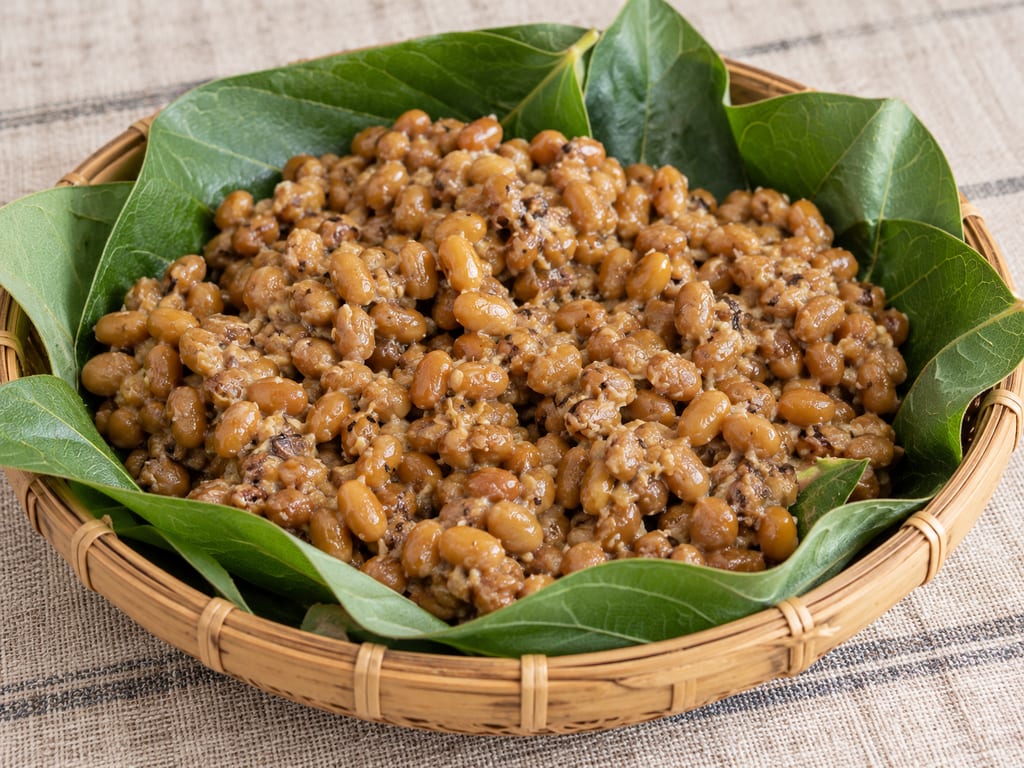
A Mizo alkaline soybean ferment made by holding cooked beans in leaf-lined containers, sometimes with wood ash, until they turn sticky, soft and pungent; eaten fresh or used as a seasoning.
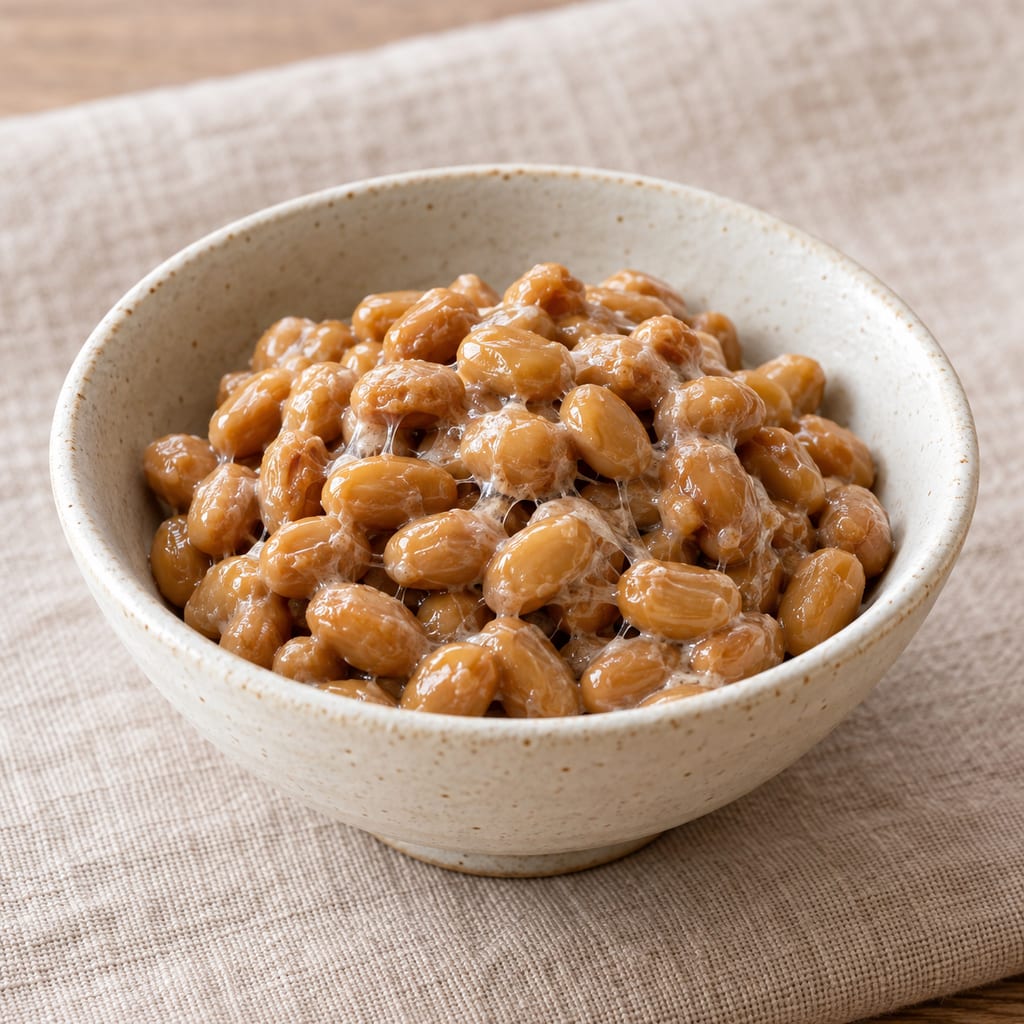
Steamed soybeans fermented by a named strain of Bacillus subtilis into Japan’s sticky, strongly savoury whole-bean food, bound by the thread-forming polymer the bacteria secrete.
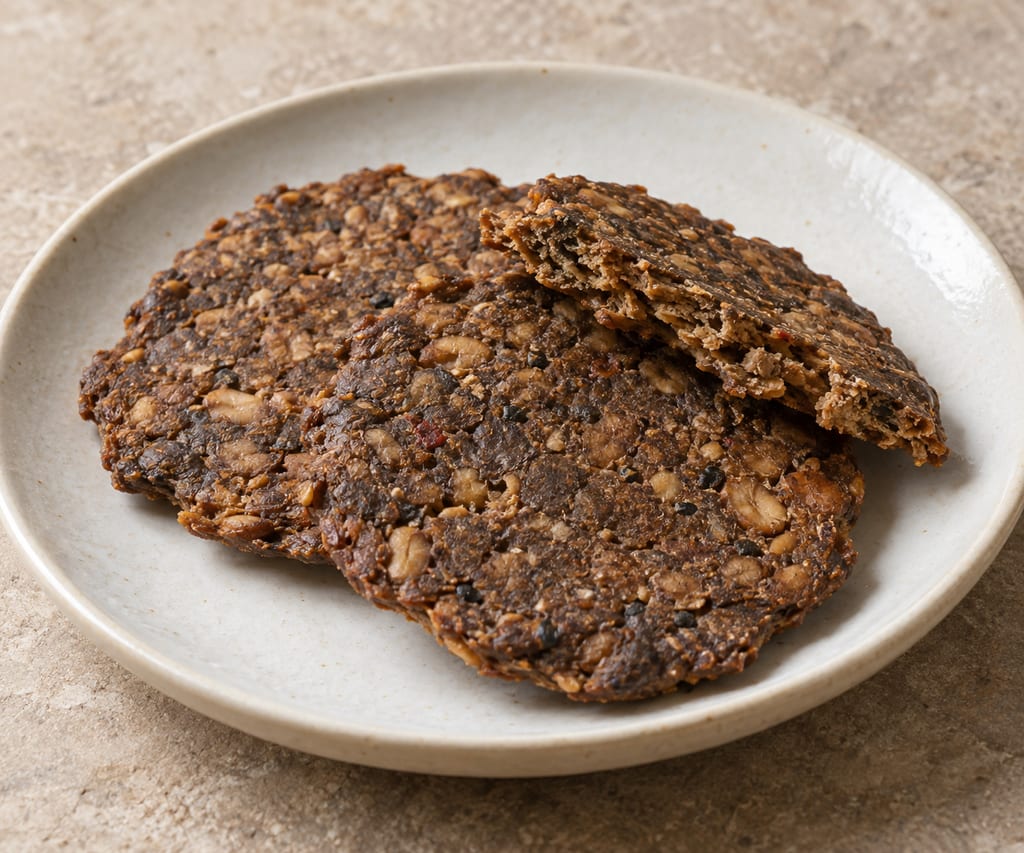
A Myanmar soybean ferment in which cooked beans turn sticky through alkaline bacterial fermentation, then are eaten fresh or seasoned, flattened and sun-dried into savoury wafers.
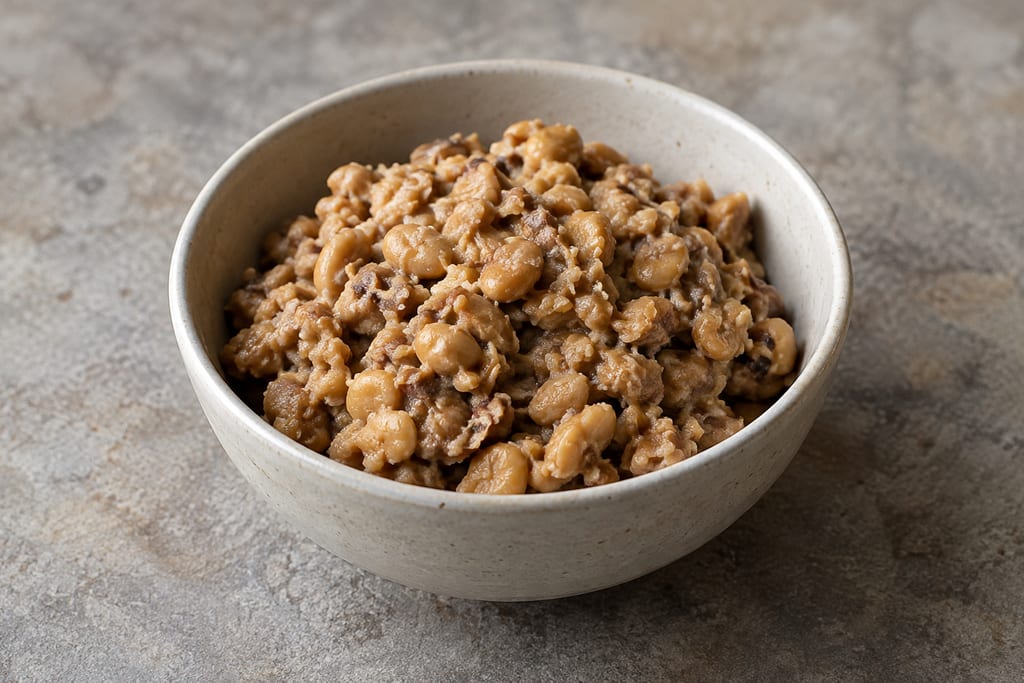
A Khasi and Jaintia fermented soybean food from Meghalaya: cooked beans ferment naturally in leaf-lined baskets above a fire, giving a sticky, pungent, savoury mass.
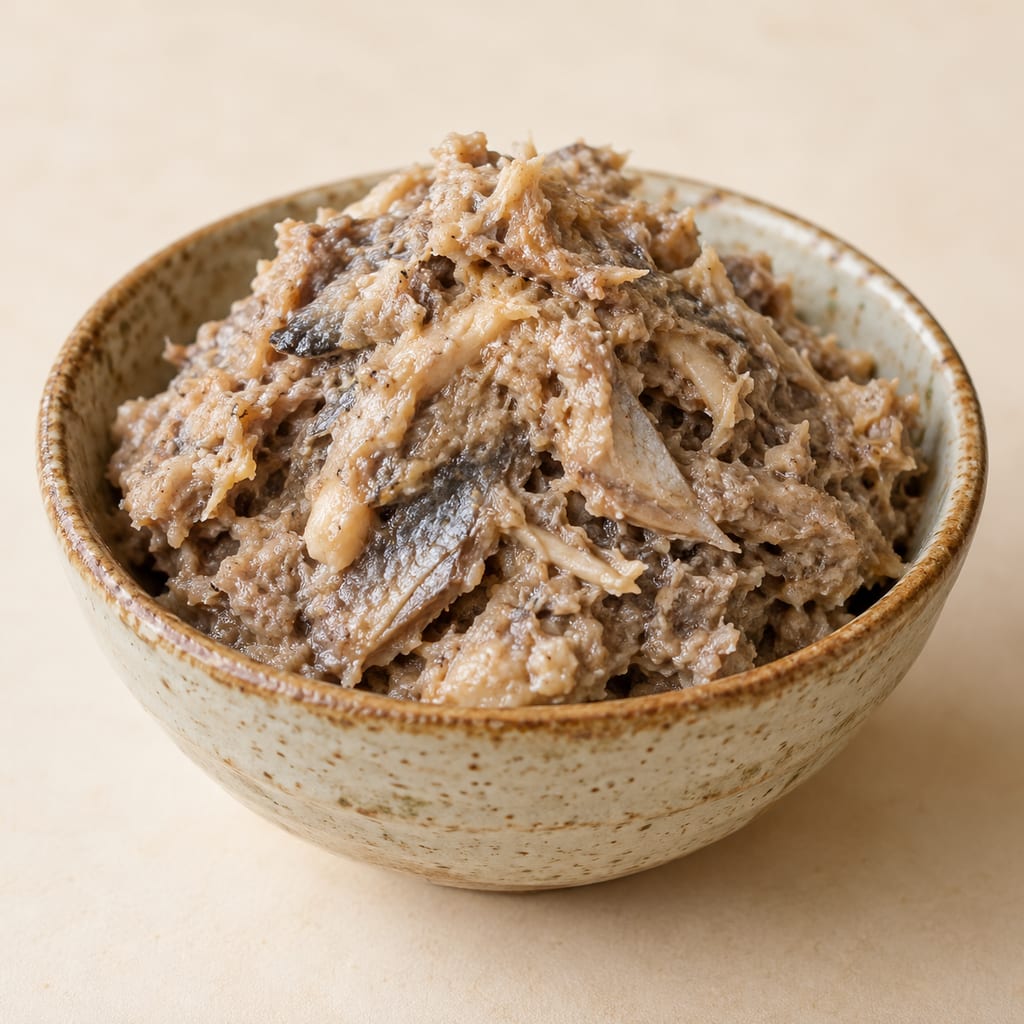
Cambodian fermented freshwater fish paste, central to Khmer cuisine. This entry documents source-specific production accounts and study conditions; it does not give a validated household process.
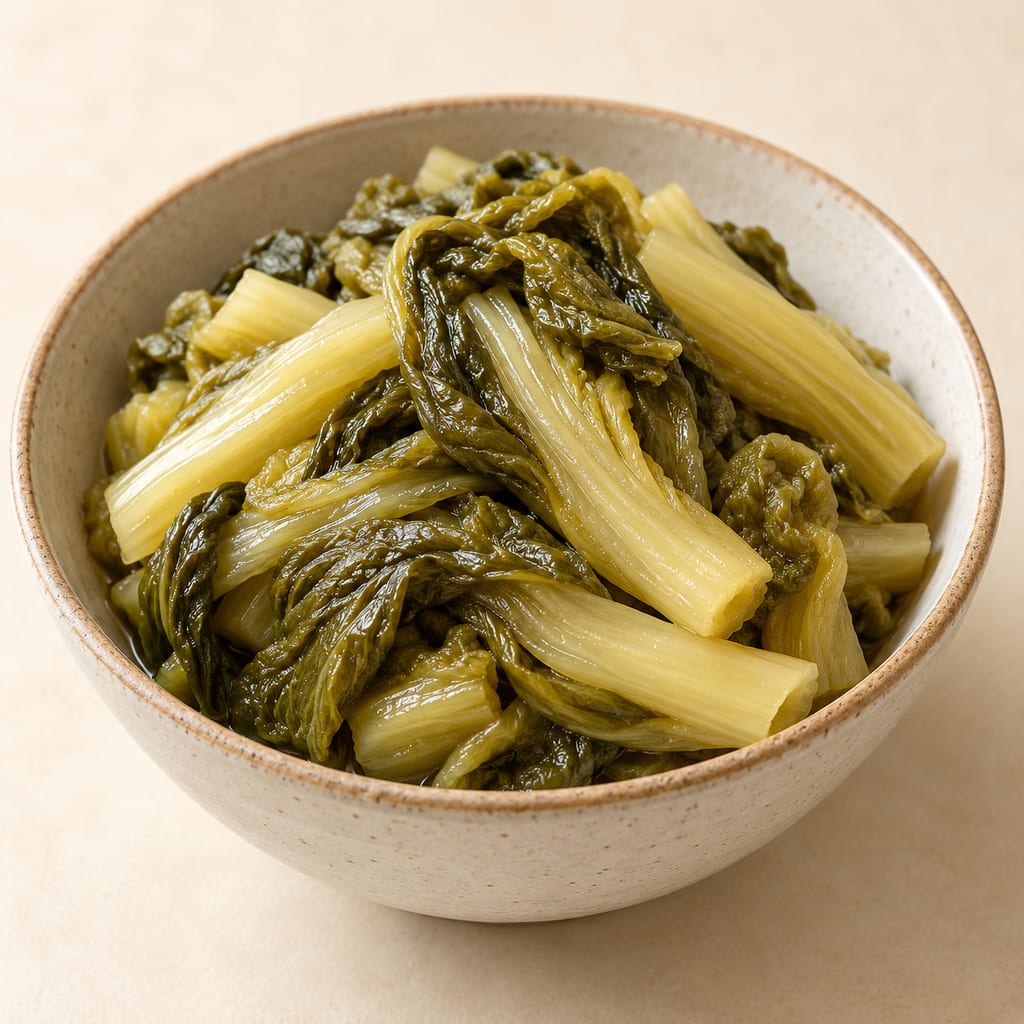
Cambodian pickle of blanched Chinese mustard greens, dried, then packed in a sweet-salt brine. Sold in Phnom Penh markets and made at home. The readiness times in the home recipe are not validated.

Soybeans boiled soft and fermented in a leaf-lined basket by the hearth, then in many Naga households pounded, wrapped in leaves and fermented again into a dark, pungent seasoning paste.
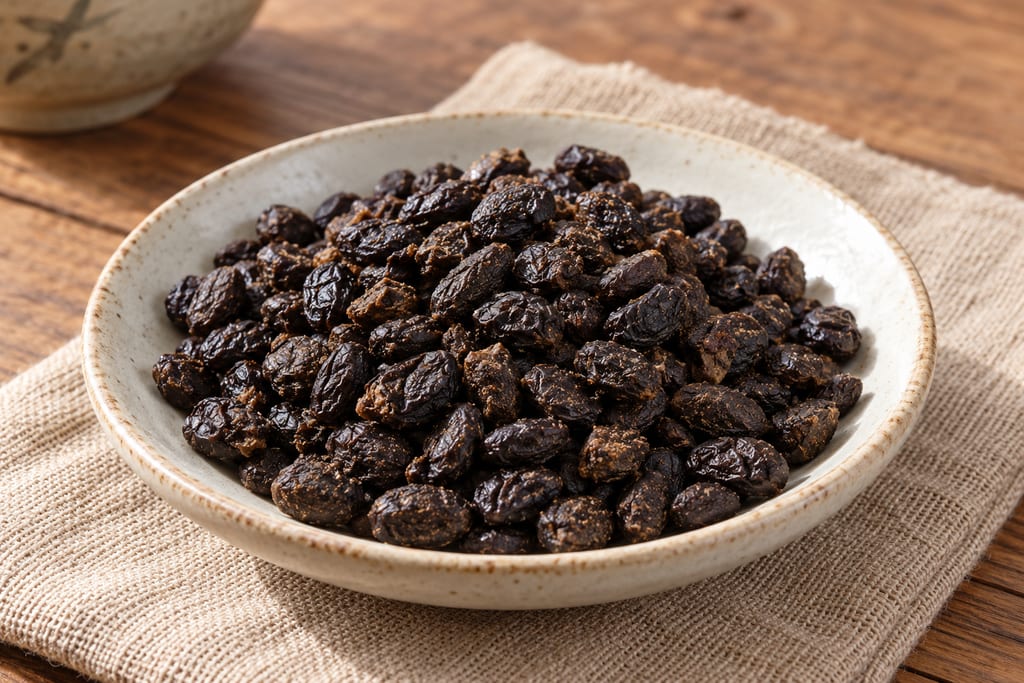
A Chinese fermented soybean condiment in which Bacillus-led bacteria, not moulds, drive the fermentation. Documented in Zunyi, Guizhou, and kept separate from mould-led douchi.
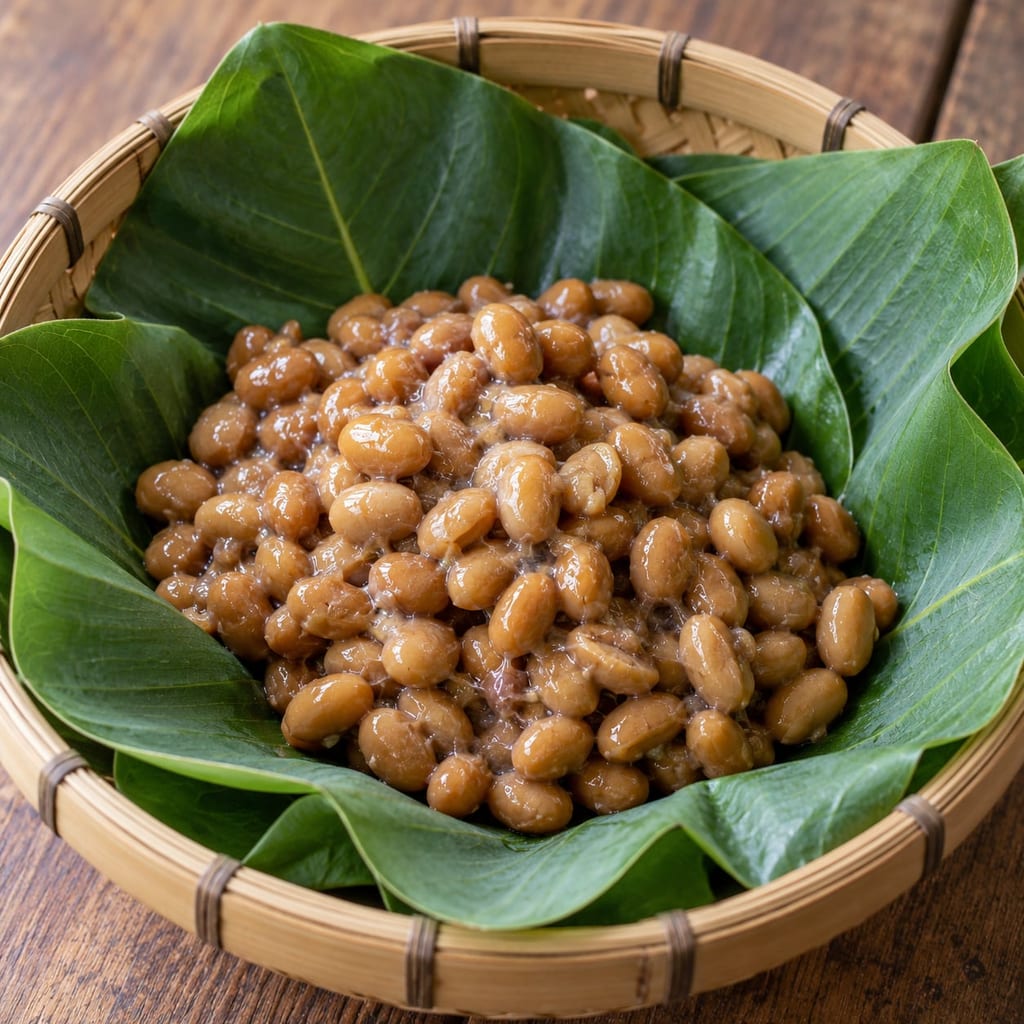
A sticky fermented soybean food of Manipur, made by packing cooked soybeans in leaf-lined bamboo baskets and keeping them warm, related to but distinct from Bekang and Akhone.
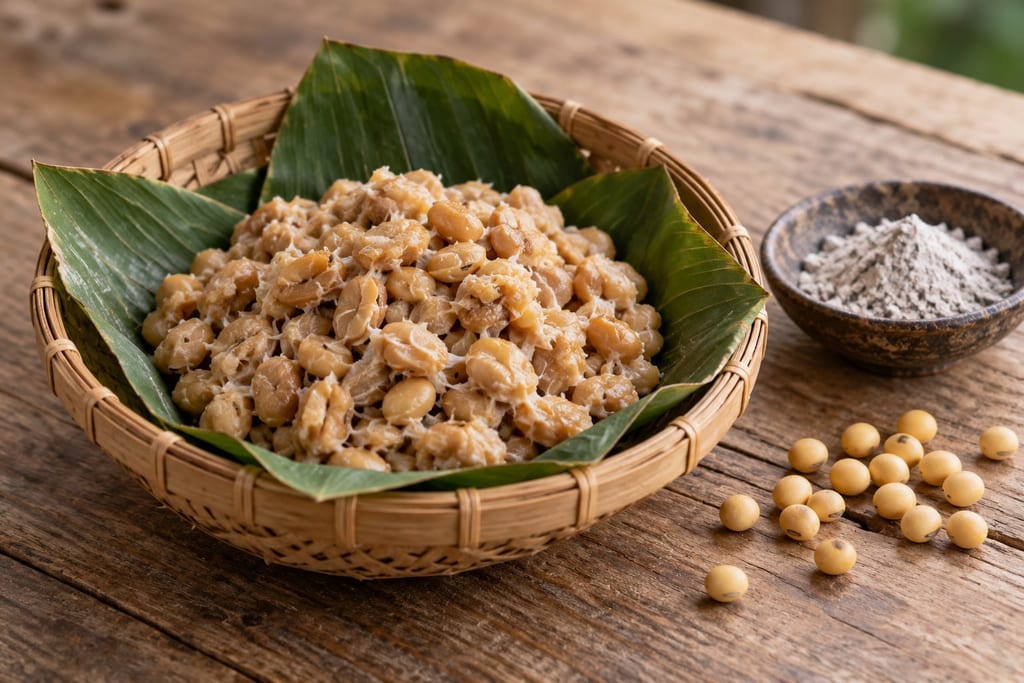
A sticky fermented soybean food of the eastern Himalaya, made here with a measured addition of firewood ash as an alkaline aid to the bacteria that drive it.
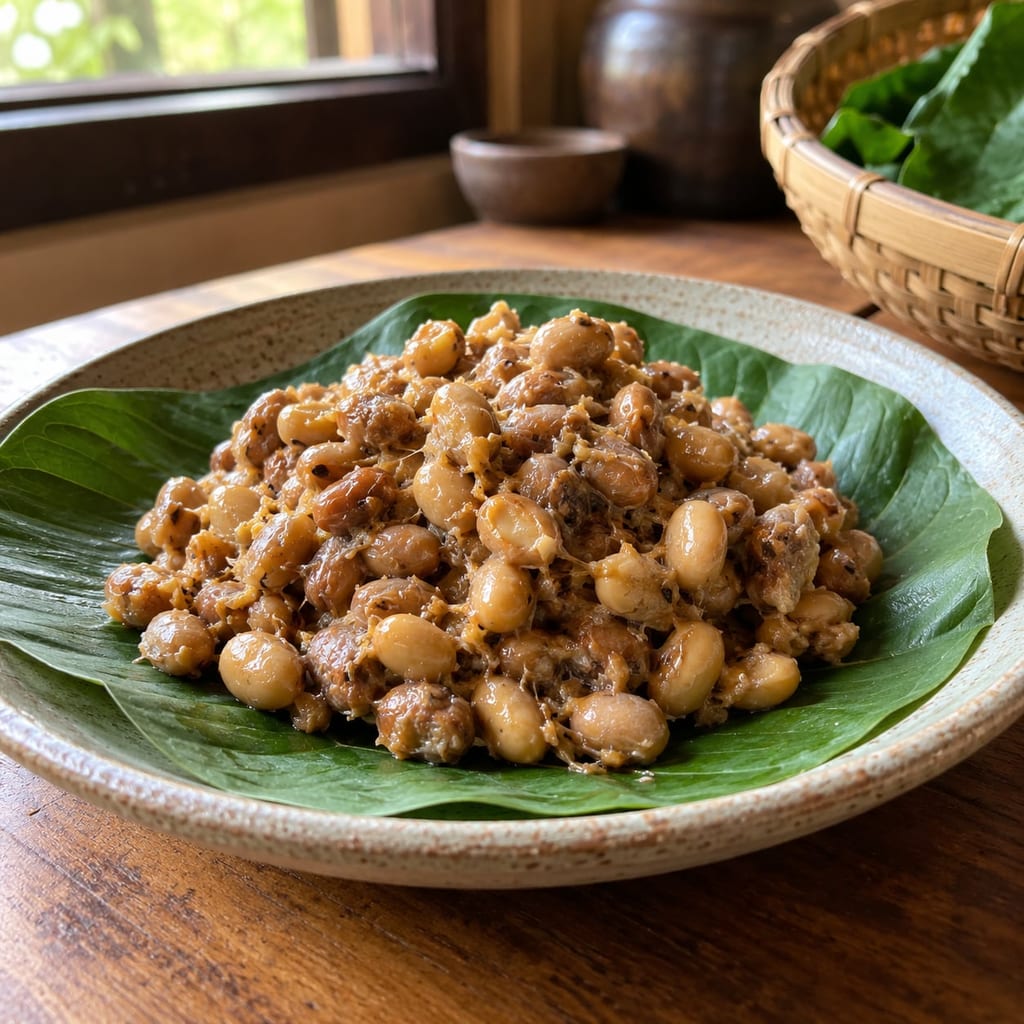
A home kinema made from overnight-soaked white soybeans, cooked, drained hot, wrapped in cloth and insulated to ferment for about a week.
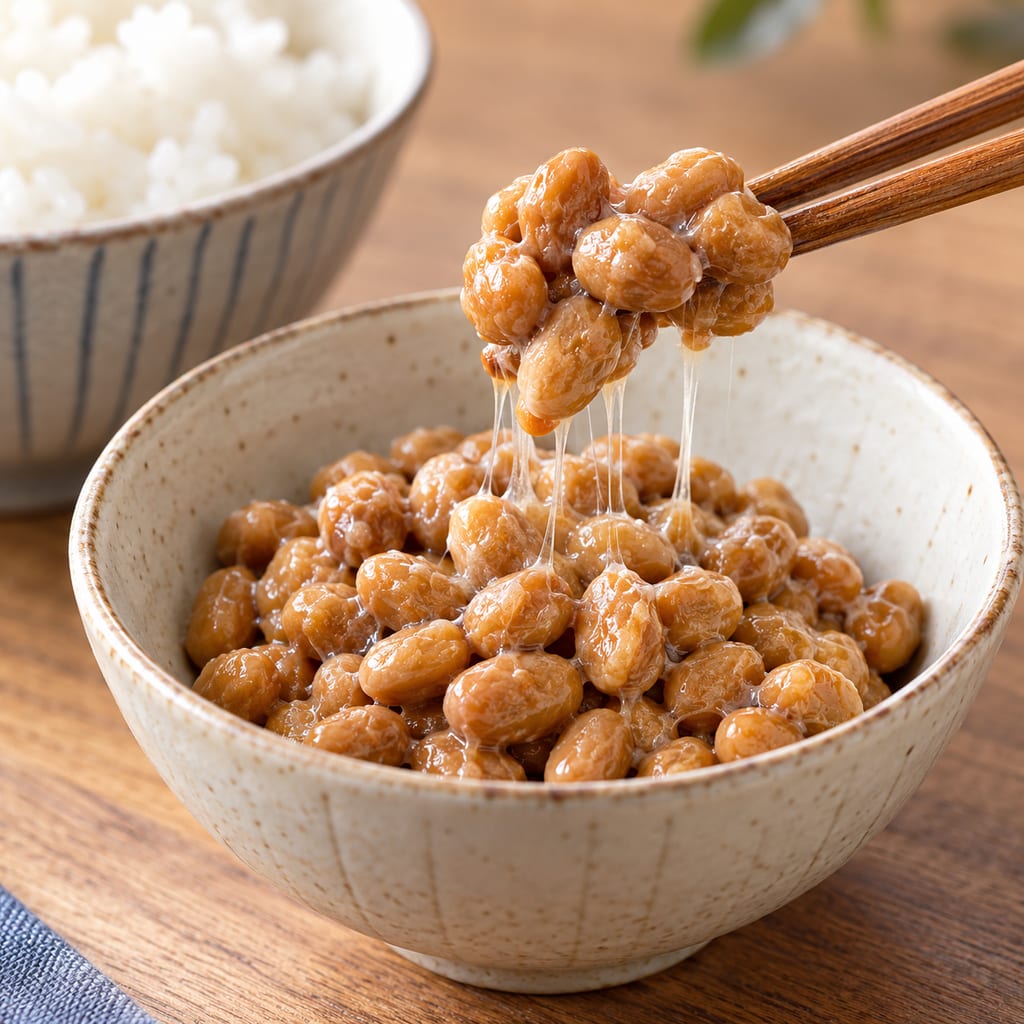
Natto is a Japanese fermented soybean food with a sticky coat and long strings, made by steaming soybeans and inoculating them with a natto Bacillus starter, then keeping them warm.
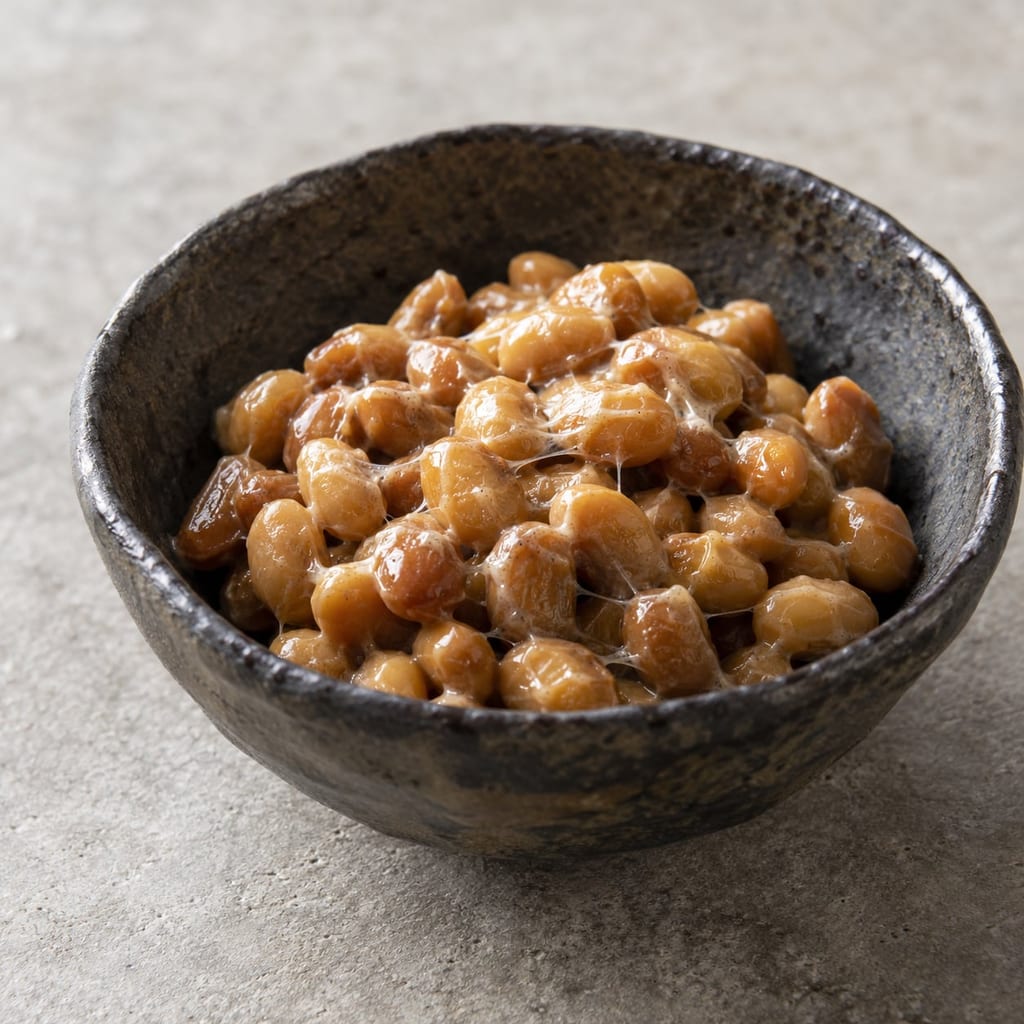
A two-cup soybean batch uses one Cultures for Health Natto Spores packet, a shallow perforated cover, and the supplier’s stated incubation and chilling sequence. The supplier’s instructions are not a validated home process.
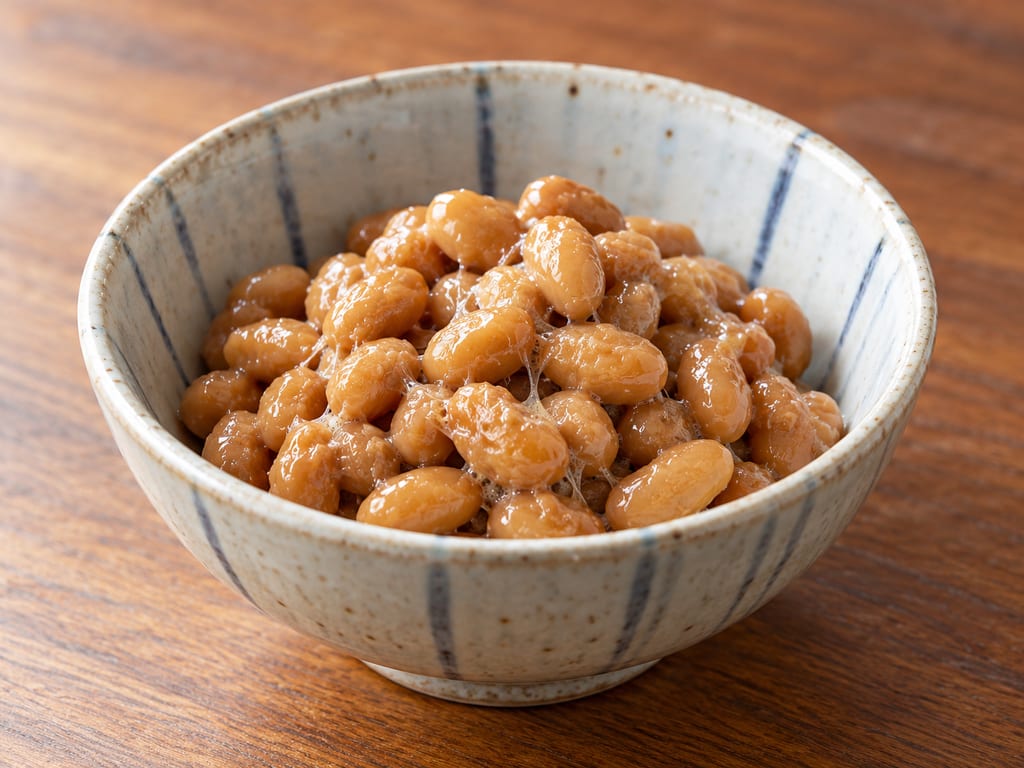
This video account makes natto from soybeans using frozen retail natto as a starter and a yogurt maker. It reports one home batch but leaves the starter mass, soak-water temperature, cooling controls and storage after chilling unstated.

Soft, spreadable Calabrian pork sausage made with a great deal of red chilli and fatty pork, stuffed into natural casings, sometimes smoked and matured while staying soft.

A way to add independent temperature logging to an existing food dehydrator without changing its built-in controls or protections. It is a monitoring method, not a rewiring plan.

Pleurotus cystidiosus is the abalone mushroom, a cultivated oyster-type fungus with dark brown caps that grows more slowly and is more demanding than other Pleurotus species.

A dark, balanced vinegar from Emilia-Romagna made by combining cooked or concentrated grape must with wine vinegar, then acetifying and refining it in wood under a protected specification.

A living dairy inoculum that starts controlled cream fermentation, developing acidity and aroma before sour cream or cultured butter is finished.

A small electric incubator holds jars at a selected temperature for yogurt and other documented warm food preparations. Controls, capacity and vessel arrangement vary by model.

Adygean salt is a seasoned table salt associated with Adygea and the wider North Caucasian culinary tradition. Salt is blended with garlic and a variable selection of herbs and spices; the exact mix depends on the named style and maker.

The African Caesar-group mushroom, Amanita masasiensis, is a wild ectomycorrhizal species of central and southern African woodlands, eaten locally. The genus contains deadly poisonous species, so identification needs care.
No community contributions have been published for this entry yet.
Sign in to contribute. Published comments and photos are free to read.
CRC Press, Taylor & Francis, 2010Method · History · Use
Fermented Foods and Beverages of the World — Chapter 6: Fermented Legumes: Soybean and Non-Soybean Products, Section 6.2.1.11 SiengPrimary source for Block C's traditional production sequence
Traditional Cambodian fermented soybean preparation
Use of bamboo baskets and spontaneous bacterial fermentation
Two days of initial fermentation
Five to seven days of subsequent saltwater immersion
Occasional addition of tree sap or enzymes
Consumption as a seasoning with salt and spices
Absence of exact batch quantities and brine concentration in the published description
The book attributes its description to Tanaka's 2008 work
Food Bioscience, Elsevier, Volume 56, 2023Method · Science · Safety
Metagenomics and metagenome-assembled genomes analysis of sieng, an ethnic fermented soybean food of CambodiaContemporary Cambodian production description
Boiling, draining and fermenting soybeans in bamboo trays
Spontaneous fermentation for 24–48 hours at room temperature
Transfer of fermented beans into brine
Measured alkaline pH around 7.34–7.8
Bacillus subtilis as the most abundant detected microbial species
Detection of Tetragenococcus halophilus and other bacterial species
Reconstruction of six high-quality bacterial metagenome-assembled genomes
Predicted metabolic pathways rather than experimentally demonstrated activities
Figure 1 showing fresh sticky sieng and sieng preserved in brine
Cited in: What it is; History; How it works: bacteria, enzymes and chemistry; How it is made and why each step matters; Regional and historical variations; How it is eaten and used; Reading results, identifying problems and understanding safety
Journal of Food Science and Engineering, David Publishing, Volume 8, 2018Science · Variation
Isolation, Characterization and Bio-Control Activities of Bacillus Subtilis from the Fermented Soybean in CambodiaSurvey of 120 Cambodian sieng samples
Sampling from markets in Phnom Penh and Kandal and local producers in Kandal
Detection of Bacillus subtilis in 119 of 120 samples
Fifteen isolates showing antimicrobial activity in the reported assays
Identification of Bacillus subtilis strain CeM6-7 with comparatively strong inhibitory activity
Use of laboratory assays to assess bacterial antagonism
Documented distinction between salted sieng prai and sweetened sieng pa-aem
Evidence that bacterial strain properties vary and cannot be inferred from species identity alone
Cited in: What it is; History; How it works: bacteria, enzymes and chemistry; How it is made and why each step matters; Regional and historical variations; How it is eaten and used; Reading results, identifying problems and understanding safety
Journal of Food Science and Engineering, David Publishing, 2018Science
Isolation, Characterization and Bio-Control Activities of Bacillus Subtilis from the Fermented Soybean in Cambodia — full-text PDFFull experimental methods for bacterial isolation and antimicrobial testing
Original identification of Cambodian sieng varieties
Confirmation of sample numbers and research locations
Distinction between laboratory-cultured isolates and the microbial population in a fermented food
Journal of Food Science and Engineering, David Publishing, Volume 9, 2019Science · Safety
Application of Antimicrobial Bacillus subtilis Strain as a Starter Culture to Improve Qualities and Safety of Fermented Soybean (SIENG) Produced in CambodiaBacillus cereus contamination identified in traditional sieng samples
Forty-nine B. cereus isolates recovered from 120 samples
Twelve isolates testing positive for enterotoxin production in the reported assays
Two isolates with comparatively high enterotoxin production
Evaluation of antimicrobial Bacillus subtilis strains
Experimental investigation of strain CeM6-2
Potential application of selected strains as starter cultures
Safety limitations of uncontrolled spontaneous fermentation
Cited in: What it is; History; How it works: bacteria, enzymes and chemistry; Regional and historical variations; Reading results, identifying problems and understanding safety
Peer-reviewed open-access review, 2024; PubMed CentralScience · Safety
Enhancing food safety in soybean fermentation through strategic implementation of starter culturesGeneral safety considerations for fermented soybean products
Bacillus subtilis as a functional organism in alkaline soybean fermentation
Importance of strain selection rather than species identification alone
Potential role of selected starter cultures in reducing contamination
Comparative discussion of sieng and other Asian fermented soybean foods
Differences between traditional and controlled fermentation
Cited in: What it is; How it is made and why each step matters; Reading results, identifying problems and understanding safety
FEMS Microbiology Letters, Oxford University Press, 2018Science
Genomic insights into the non-histamine production and proteolytic and lipolytic activities of Tetragenococcus halophilus KUD23Salt tolerance of a studied Tetragenococcus halophilus strain
Strain-specific proteolytic and lipolytic activity
Evidence that some Tetragenococcus strains can be selected for non-histamine production
Comparative biochemical context for the brine stage
The studied strain originated in Korean doenjang, not Cambodian sieng
Cited in: How it works: bacteria, enzymes and chemistry; Reading results, identifying problems and understanding safety
Applied and Environmental Microbiology, American Society for Microbiology, 2023Safety · Science
Ratio of Histamine-Producing/Non-Histamine-Producing Subgroups of Tetragenococcus halophilus Determines the Histamine Accumulation during Spontaneous Fermentation of Soy SauceStrain-dependent histamine production by Tetragenococcus halophilus
Identification of histamine-producing and non-histamine-producing subgroups
Measured changes in histamine during soy sauce fermentation
Importance of strain composition in biogenic amine risk
Comparative safety evidence, not a direct measurement of sieng
Food Standards Australia New ZealandSafety
Bacillus cereus in foodFoodborne illness associated with Bacillus cereus
Bacterial spore formation and survival
Potential toxin persistence following cooking
Hygienic handling and temperature-control principles
Limitations of final reheating as a food-safety control
UK Food Standards AgencySafety
Food allergy and intoleranceRecognition of soya as a food allergen
Need to identify allergenic ingredients in food products
Allergen relevance to fermented soybean preparations
Cited in: Reading results, identifying problems and understanding safety
Business Cambodia, 23 November 2023Use · Context
Cambodian report on the Sreng Hun fermented soybean manufacturing businessContemporary Cambodian commercial production of sieng
Documented manufacture of both sweet and salted versions
Development of retail packaging using bottles and jars
Small-scale Cambodian production in Kampong Thom
Photographic documentation of commercially prepared sieng
Contemporary commercial evidence rather than historical recipe documentation
AEON Online Shopping CambodiaContext · Variation
Sweet Soybean Paste 300gContemporary Cambodian retail example of sweetened fermented whole soybeans
Photographic reference for sieng pha-aem
Commercial presentation of whole soybeans in a sweetened preserving liquid
Evidence of a modern packaged variant, not proof of the traditional salted recipe's ingredient proportions
Asian Food Safety and Security AssociationScience · History
Proceedings of the 3rd AFSA conference, India, 20162016 conference report by Ek Sopheap and Yasuhiro Inatsu on Bacillus subtilis from Cambodian fermented soybeans
Cited in: What it is; History; Regional and historical variations
Style CambodiaUse
របៀបធ្វើទឹកសៀង (How to make teuk sieng)Teuk sieng sauce made from salted or sweet sieng with ginger, garlic, chilli, sugar and cornstarch
Cited in: What it is; How it is eaten and used
Soyinfo CenterHistory
History of Natto and Its Relatives (1405-2012)T. Tanaka's 2008 chapter "Sieng" in Natto no Kagaku as the earliest specific description found
Cited in: History; How it is made and why each step matters; Regional and historical variations; How it is eaten and used
CRC Press, Taylor & Francis, 2012History · Method
Handbook of Fermented Food and Beverage Technology, second editionSieng fermented on bamboo baskets for about two days, then in saltwater for five to seven days
Cited in: History
Frontiers in Microbiology, 2016Science · Context
Review: Diversity of Microorganisms in Global Fermented Foods and BeveragesAlkaline fermented soybean foods of Asia, including sieng and its relatives
Cited in: History; Regional and historical variations; How it is eaten and used
Food Microbiology, 2017Safety · Science
Safety assessment of Tetragenococcus halophilus isolates from doenjang, a Korean high-salt-fermented soybean pasteStrain-dependent biogenic amine production by Tetragenococcus halophilus from salted soybean paste
Cited in: How it works: bacteria, enzymes and chemistry; Reading results, identifying problems and understanding safety
Critical Reviews in Food Science and Nutrition, 2023Science
Soybean fermentation: Microbial ecology and starter culture technologyMicrobial ecology and starter cultures of soybean fermentations
Cited in: How it works: bacteria, enzymes and chemistry
Annals of Microbiology, 2021Science
Impact of Bacillus in fermented soybean foods on human healthBacillus species in fermented soybean foods and the poly-gamma-glutamic acid they make
Cited in: How it works: bacteria, enzymes and chemistry
HAL theses, 2020Method · Variation
Screening of lactic acid bacteria for their use as aromatic starters during fermentation of vegetablesCambodian sieng made with a dombae starter, soaking for a day and a salt-and-sugar solution for several weeks
Cited in: How it is made and why each step matters
YouTubeMethod · Variation
របៀបធ្វើ សៀងផ្អែម (How to make sweet fermented soybeans: traditional Khmer cuisine recipe)Sweet sieng from 2 kg soybeans, 10 pieces of starter, 2.5 kg palm sugar, 400 g salt and 2 litres of water, matured three months or more
Cited in: How it is made and why each step matters; Regional and historical variations; How it is eaten and used
EFSA Journal, European Food Safety Authority, 2016Safety
Risks for public health related to the presence of Bacillus cereus and other Bacillus spp. including Bacillus thuringiensis in foodstuffsRisk assessment of Bacillus cereus and related species in food; spores and toxin-producing strains
Cited in: Reading results, identifying problems and understanding safety